The global retail industry is massive, generating over 27 trillion dollars in sales. It’s projected to pass 30 trillion dollars soon. This growth makes precise inventory control more crucial than ever for success.
Traditional tracking methods are failing. Manual counts and barcode scans are slow and full of errors. They create a gap between what the computer says is in stock and what is actually on the shelf.
This mismatch is a silent profit killer. When a product shows as available online but the shelf is empty, you lose the sale. Customers leave frustrated, often going to a competitor. For retailers, this means lost revenue and damaged loyalty.
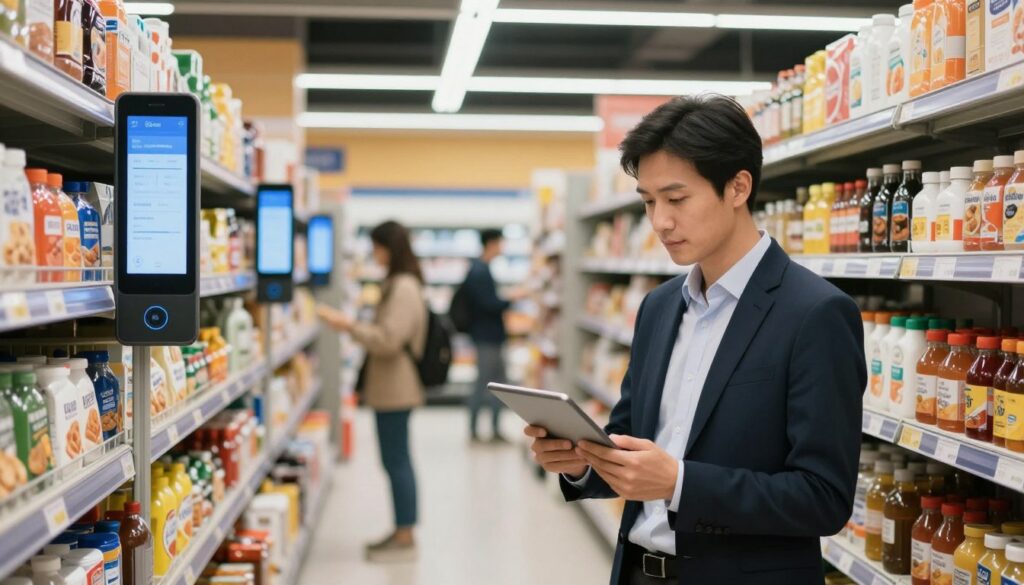
New technology offers a clear solution. Smart shelves equipped with IoT sensors provide constant, automated monitoring. They instantly detect when an item is missing or low. This closes the inventory gap for good.
Adopting this approach protects your sales and keeps customers happy. It aligns with the huge economic impact forecast for IoT technology. This shift is essential for modern retail operations to thrive.
Key Takeaways
- The retail industry’s enormous size makes accurate inventory critical for profitability.
- Old-fashioned manual tracking methods are prone to errors and cannot keep pace.
- Discrepancies between recorded stock and physical shelf stock directly cause lost sales.
- This inventory mismatch damages customer satisfaction and brand loyalty.
- IoT-enabled smart shelves provide real-time, automated monitoring to eliminate these gaps.
- Implementing this technology is a proactive step to prevent revenue loss.
- Smart inventory management is becoming essential for competitive retail operations.
Understanding Shelf Inventory Mismatch in Retail
When a store’s digital records and its physical stock diverge, the result is a costly gap known as shelf inventory mismatch. This occurs when the products actually on the shelf don’t match the inventory data in the system.
It creates two big problems: phantom stock and unrecorded items. Both scenarios hurt sales and store efficiency.
The root causes are often simple human errors. Mistakes during restocking, theft, or items placed in the wrong spot all contribute. There’s also a built-in time lag in old systems.
This mismatch affects every part of a store’s operation. Automated reorders fail. Promises to customers are broken. Shoppers leave for competitors.
Perishable goods face a worse challenge. Expired products can sit on the shelf while the system says they’re available. This leads to frustration and wasted stock.
The financial hit goes beyond a single lost sale. It includes extra labor for emergency restocking, rush shipping fees, and costly markdowns. Customer loyalty suffers when shelves are empty.
Traditional fixes like more manual counts don’t solve the core issue. They are slow and still prone to error. Modern retail needs a better way to track inventory levels accurately.
The Role of IoT and ML in Modern Inventory Management
Two powerful technological forces are converging to solve age-old retail challenges. The Internet of Things (IoT) and Machine Learning (ML) form the core of a new, intelligent approach to stock control.
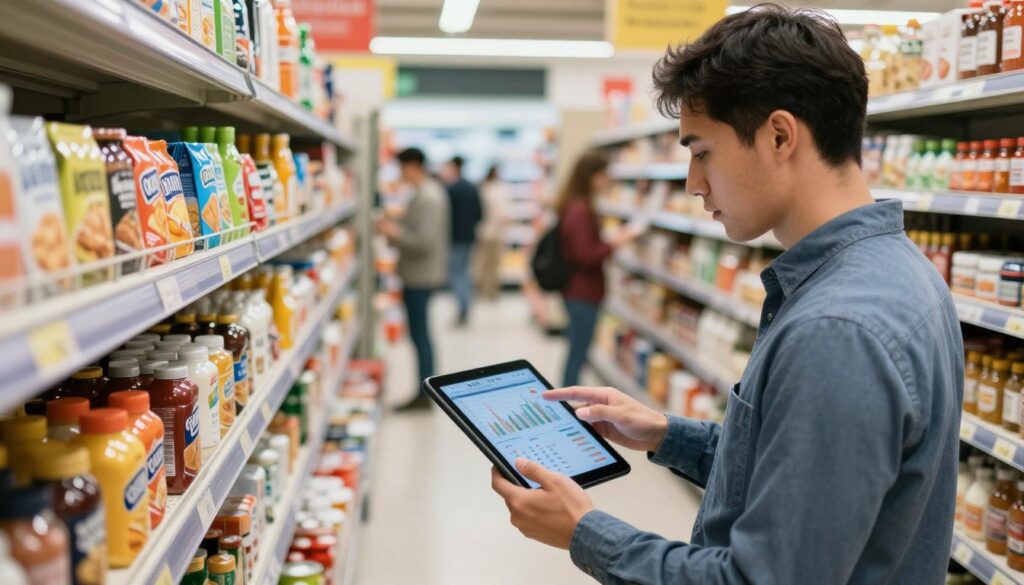
This combination moves far beyond basic automation. It creates a living, learning system for store operations.
Evolution of Retail Technology
Stock tracking has progressed through clear phases. Each step brought more accuracy and less manual work.
Early manual counts were slow and error-prone. Barcode scanners added speed but still required human action. RFID tags improved visibility but offered only periodic updates.
Today, integrated IoT ecosystems provide constant communication. Connected sensors and devices deliver a real-time view of every shelf.
| Technological Phase | Key Mechanism | Data Type | Primary Limitation |
|---|---|---|---|
| Manual Counts | Physical tally sheets | Static, infrequent | High labor cost, human error |
| Barcode Scanning | Laser scanners at POS | Transaction-based | Misses shrinkage, blind between scans |
| RFID Tags | Radio frequency identification | Batch location updates | Cost per tag, limited granularity |
| IoT & ML Systems | Connected sensors & predictive algorithms | Continuous stream, predictive insights | Higher initial integration |
Data-Driven Decision Making
Machine Learning algorithms analyze the vast data from IoT networks. They find patterns humans cannot see.
These tools predict future demand with high accuracy. They consider sales history, seasons, and local events. This allows for proactive restocking before a gap appears.
The result is a fundamental shift in philosophy. Management moves from reactive guesses to empirical strategy. Store operations become optimized through actionable insights, protecting sales and customer trust.
Smart Retail Smart Shelves, Smart Retail System, Smart Inventory Management
The integration of sensors and networking into store shelving creates a perpetual inventory system. These electronically connected shelves automatically track product presence and movement.
They utilize multiple detection technology. Weight sensors, RFID readers, and digital displays work together. This creates a constant data stream within a connected ecosystem.
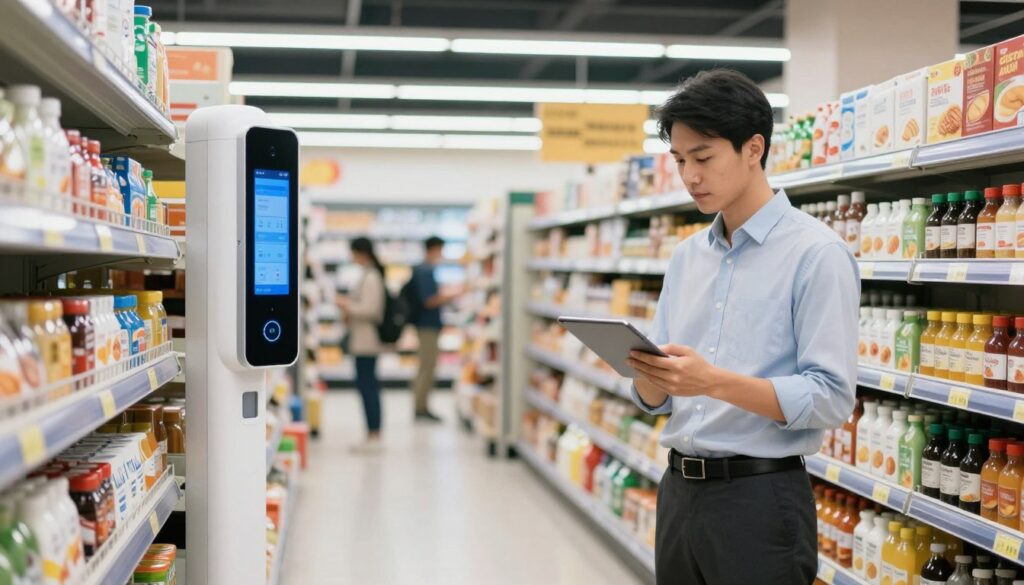
The complete Smart Retail System architecture includes embedded hardware and central databases. Wireless networks transmit real-time data. Sophisticated algorithms then process this information instantly.
This enables true Smart Inventory Management. It replaces manual checks with continuous monitoring. The result is exceptional stock accuracy and major gains in operational efficiency for modern retail operations.
Real-Time Data: Enhancing Inventory Monitoring and Customer Experience
Immediate access to accurate shelf data transforms how stores operate and serve shoppers. This constant flow of information closes the visibility gap that once plagued traditional methods.
It turns every product interaction into a valuable data point for the business.
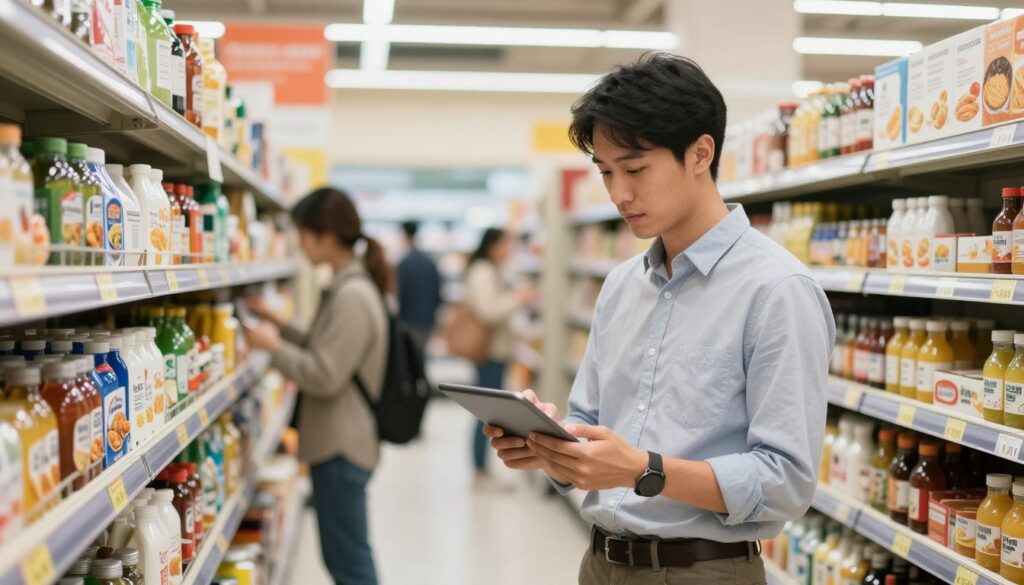
Accurate Stock Monitoring
Connected shelves provide real-time inventory updates. Weight sensors detect the removal of items instantly.
This continuous monitoring ensures inventory levels in the system mirror the physical shelf. Alerts for low stock are generated proactively.
As one industry analyst noted,
“The shift from periodic counts to live tracking is the single biggest leap in retail accuracy.”
This eliminates out-of-stock scenarios before they disappoint a customer.
Personalized In-Store Engagement
The same data stream enriches the shopper’s experience. By understanding which products are picked up, systems can offer tailored recommendations.
Shoppers see relevant deals or product details on integrated displays. This personal touch, driven by live inventory data, makes shopping more efficient and satisfying.
Real-time inventory tracking ensures the products they want are there. It builds trust and encourages return visits.
Implementing Smart Shelves in a Retail Environment
The journey to automated stock tracking begins with a detailed assessment of store infrastructure. Implementing these intelligent systems requires careful integration planning.
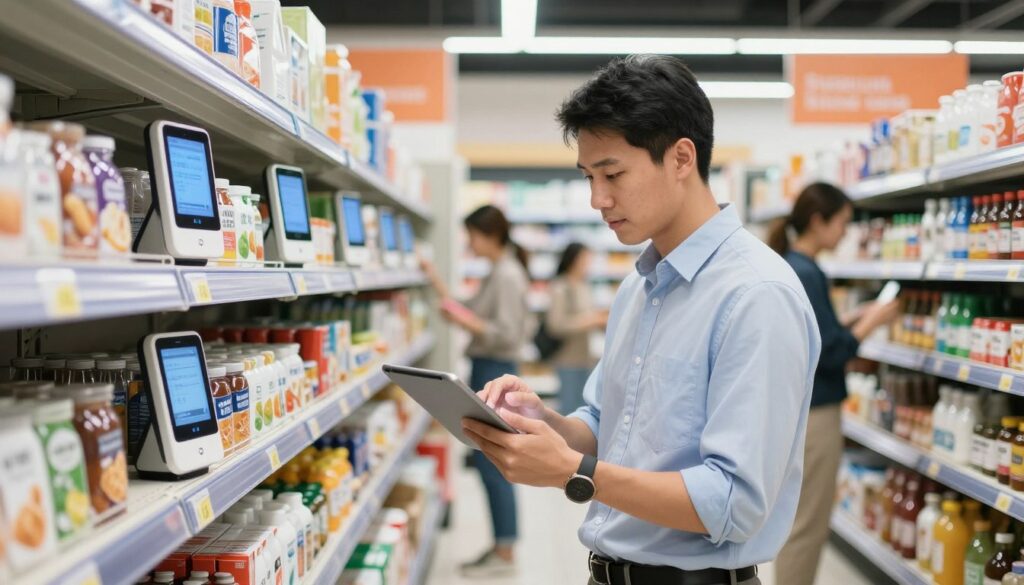
Integration into Existing Store Infrastructure
Successful deployment evaluates electrical power and wireless connectivity. The system must connect with existing inventory software via standard APIs.
Physical installation places weight-sensing platforms beneath shelf surfaces. Each node is calibrated to specific products for accurate baselines.
Optimizing Sensor and Weight Technologies
Choosing the right detection mechanism is crucial for different product categories. Optimized sensors provide reliable data for real-time updates.
| Sensor Technology | Ideal Application | Primary Benefit |
|---|---|---|
| Precision Weight Sensors | Items with uniform mass | Accurate quantity tracking |
| RFID Readers | Tagged merchandise | Individual item identification |
| Computer Vision Systems | Bulk or variable products | Visual verification |
| Environmental Monitors | Perishable goods | Condition and quantity data |
Calibration accounts for product weight variations. Restocking alerts trigger when inventory falls below a set threshold, often three times a single item’s weight.
IoT Communication Protocols and System Architecture
The backbone of any reliable automated shelf system lies in its communication framework and data architecture. Connected technologies must transmit information instantly and accurately.
This constant stream of data enables real-time inventory updates. It ensures the digital record always matches the physical shelf.
Leveraging MQTT and REST for Seamless Connectivity
These systems rely on standard IoT communication protocols. MQTT handles lightweight telemetry from weight sensors efficiently.
Its publish-subscribe model lets shelf sensors broadcast changes without complex configurations. Backend systems then consume this data for analysis.
REST APIs provide the request-response pattern for control. Teams use them to set product parameters or check historical logs.
This dual-protocol approach ensures seamless integration with existing platforms. All sensor readings use validated JSON payloads for consistency.
Advantages of a Robust Relational Database
A structured database is central to these operations. It organizes information into key tables like Products and ScaleReadings.
Each table links to others through defined relationships. This design enforces data consistency and prevents errors.
Queries can quickly identify restocking needs across stores. The system logs every restocking action and weight measurement for audit trails.
Transaction integrity guarantees that simultaneous updates don’t corrupt records. This reliability is vital for accurate inventory levels and timely restocking alerts.
The complete architecture creates a dependable data flow from shelf-level sensors to central servers. It identifies low product quantities and dispatches notifications within minutes.
This IoT ecosystem turns raw sensor readings into actionable insights for integration into daily workflows.
Smart Retail Solutions: Transforming Operations and Customer Engagement
Beyond simple stock tracking, modern retail solutions create a seamless bridge between operational data and personalized customer interactions.
These integrated platforms connect various in-store technologies. They turn raw data into actionable insights for staff and richer experiences for shoppers.
Interactive Displays and Beacon Technology
Digital kiosks use live stock data to show accurate product details and alternatives. This guides customer decisions and prevents frustration from empty shelves.
Beacon technology detects a shopper’s location within the store. It then sends timely promotions to their smartphone for items nearby.
This combination ensures offers are relevant and products are available. It makes the shopping trip more efficient and engaging.
| Technology Component | Primary Function | Key Benefit for Retailers |
|---|---|---|
| Interactive Displays | Provide product info & alternatives | Increases conversion rates |
| Beacon Systems | Deliver location-based promotions | Boosts average transaction value |
| Cashier-less Systems | Automate checkout & payment | Eliminates checkout friction |
| Predictive Analytics | Forecast future product demand | Optimizes stock levels & pricing |
Cashier-less Experiences and Predictive Analytics
Pioneers like Amazon have introduced stores where you just pick items and leave. Sensors and cameras track selections, and payments happen automatically.
This removes the final point of friction. It saves customers valuable time.
Behind the scenes, AI tools analyze behavior and sales trends. They predict future demand to keep shelves full and operations smooth.
Retailers gain powerful insights to optimize pricing and staffing. The entire shopping experience becomes faster, smarter, and more satisfying.
Cost Efficiency and Operational Benefits of Smart Shelving
The economic case for automated shelf monitoring centers on converting wasted labor hours into enhanced customer engagement. This technology delivers clear financial benefits and streamlines store operations.
Reducing Labor Costs and Restocking Errors
Automation slashes labor costs by ending daily manual counts. Freed-up staff time can focus on helping shoppers and building displays.
Precise alerts for restocking cut errors dramatically. Workers get exact product, quantity, and location data. This prevents misplacements and ongoing stock gaps.
The system supports teams by handling repetitive checks. This reduces burnout and lets staff use their skills better. The result is happier employees and improved service.
| Benefit Area | Operational Impact | Financial Outcome |
|---|---|---|
| Labor Optimization | Eliminates manual stock counts; directs staff efficiently | Direct wage savings; higher sales per labor hour |
| Restocking Accuracy | Virtually eliminates misplacement and quantity errors | Reduces lost sales; lowers inventory carrying cost |
| Inventory Efficiency | Enables lower stock levels with same product availability | Frees up capital; reduces shrinkage and storage needs |
| Staff Empowerment | Shifts focus to customer service and merchandising | Improves retention; boosts customer satisfaction scores |
These efficiency gains compound. Better inventory management leads to faster turnover and stronger cash flow. For retailers, the payback period is often swift, with ongoing benefits that grow each year.
Conclusion
The era of guessing what’s on the shelf is ending. It is replaced by data-driven certainty that boosts both profits and loyalty.
Connected shelf technology provides the definitive solution to a costly, age-old problem. It transforms store operations from reactive to proactive.
This shift is now a business imperative. Meeting modern shopper expectations requires this efficiency and accuracy.
Implementing an IoT-powered system turns inventory tracking into a strategic asset. It protects sales and enhances the entire customer experience.
FAQ
What is the main problem smart shelf technology solves?
How do these shelves actually track items?
What kind of data does the system provide to store managers?
Is it difficult to install this into an existing store?
How does this technology improve the shopping experience?
What are the biggest operational benefits for retailers?
What happens to the collected data?
How Iottive Delivers End-to-End Smart Retail Solutions
1. Retail Strategy & Solution Design
Iottive collaborates with retail leaders, digital heads, store operations teams, and supply chain stakeholders to understand customer journeys, inventory challenges, and growth objectives. This phase includes retail use-case validation, omnichannel architecture design, IoT device selection, AI personalization planning, and defining measurable KPIs such as promotion ROI, stock accuracy, and conversion rates.
2. Smart Systems Engineering & Retail Integration
Iottive engineers scalable Smart Retail solutions by integrating IoT sensors, RFID, smart shelves, digital mirrors, edge devices, and cloud platforms. We ensure seamless connectivity between POS systems, ERP, CRM, warehouse systems, and e-commerce platforms. The focus is on real-time visibility, secure data flow, and unified customer and inventory intelligence across stores and digital channels.
3. Pilot Deployment in Stores & Warehouses
Before enterprise rollout, Iottive deploys pilot solutions in selected retail stores, warehouses, or pharmacy locations. This includes testing AI-driven recommendations, smart inventory tracking, cold chain monitoring systems, and digital try-on experiences. Retailers can validate performance, customer engagement impact, and operational feasibility in live environments before scaling across locations.
4. Customer Experience & Retail Intelligence
Iottive builds intuitive dashboards and retail intelligence platforms that provide real-time insights into:
- Customer behavior & segmentation
- Promotion performance & ROI
- Store-level inventory accuracy
- Warehouse efficiency metrics
- Cold chain compliance tracking
- Online conversion and upsell analytics
Advanced analytics, alerts, and AI-driven insights empower retail teams to make faster, data-driven decisions that improve revenue, reduce losses, and enhance customer satisfaction.
5. Enterprise Rollout & Retail Scale-Up
From MVP to multi-location deployment, Iottive supports solution hardening, cloud scalability, cybersecurity, and long-term support. Smart Retail solutions are designed for:
- Multi-store expansion
- Omnichannel integration
- Regional inventory balancing
- Cross-border retail operations
- Continuous optimization using AI insights
Our approach ensures measurable ROI through improved customer engagement, reduced shrinkage, better inventory control, and operational efficiency.
Why Retailers Choose Iottive
- Proven expertise in Smart Retail & IoT-driven transformation
- Deep understanding of store operations, warehousing, and pharmacy compliance
- Seamless integration with POS, ERP, CRM, and e-commerce platforms
- Secure, scalable, and production-ready retail architectures
- Strong focus on measurable business outcomes — not just technology
📧 Contact Email: sales@iottive.com

Transform Your IoT Vision Into Reality.
Get free expert insights, architectures & cost breakdowns.
Drop your email to schedule free meeting.