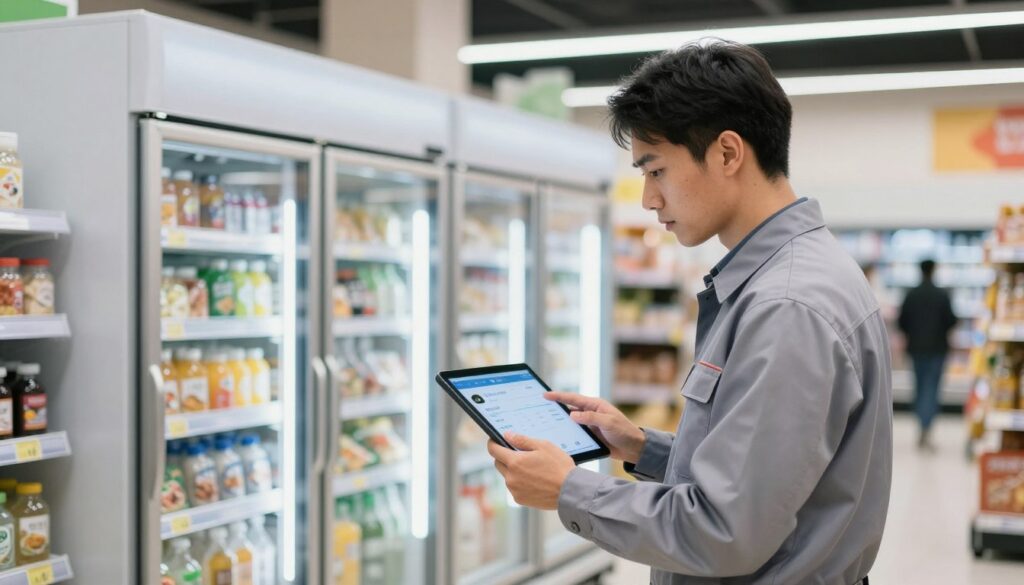
A broken cooler in a store is more than a repair ticket. It’s a direct hit to the bottom line. Spoiled stock, halted operations, and emergency costs add up fast. Without real-time visibility, teams are stuck in a reactive cycle.
Leading companies are changing this game. Giants like Amazon and Walmart invest heavily in connected technology. They create data-driven environments to protect their inventory and meet shopper demands, even during unexpected downtime.
Iottive offers a modern, proactive shield against these failures. By integrating sensors for temperature and performance with edge analytics, the system spots tiny anomalies. It triggers alerts long before a unit fails. This shift from reactive fixing to planned care is transformative.
This approach protects more than product quality. It streamlines management of the supply chain and labor. The result is higher operational efficiency, lower energy use, and seamless customer experiences at the checkout. It turns a major cost center into a pillar of reliability.
Key Takeaways
- Refrigeration failures lead to significant financial loss through spoiled inventory and disrupted store operations.
- A lack of real-time equipment data forces a costly, reactive maintenance model.
- Industry leaders use advanced connectivity and sensor technology to create resilient, data-driven stores.
- Proactive monitoring detects small issues early, preventing major equipment breakdowns and downtime.
- Implementing a data-led approach improves overall business efficiency, reduces waste, and protects product quality.
- This technology directly supports a better, more reliable shopping experience for customers.
- The goal is to transform refrigeration management from a hidden risk into a controlled, optimized process.
Understanding the Retail Landscape in the Age of Smart IoT
Consumer behavior and technological progress are reshaping how goods are sold and managed. The internet of things enables businesses to collect and analyze vast amounts of data. This shift is creating a more responsive and intelligent marketplace.
McKinsey estimates generative AI could unlock $240-$390 billion in value for the retail sector. This potential underscores a fundamental change in approaching customer experience and store operations.
Evolving Customer Expectations and Market Trends
Shoppers now demand seamless, personalized service. They expect frictionless shopping both online and inside physical stores. Meeting these demands requires a deep understanding of buyer habits.
Modern retailers leverage connected devices to gain real-time insights. This data-driven approach allows for tailored interactions that drive sales and build loyalty. The goal is to optimize every touchpoint.
Technological Innovations Transforming Retail
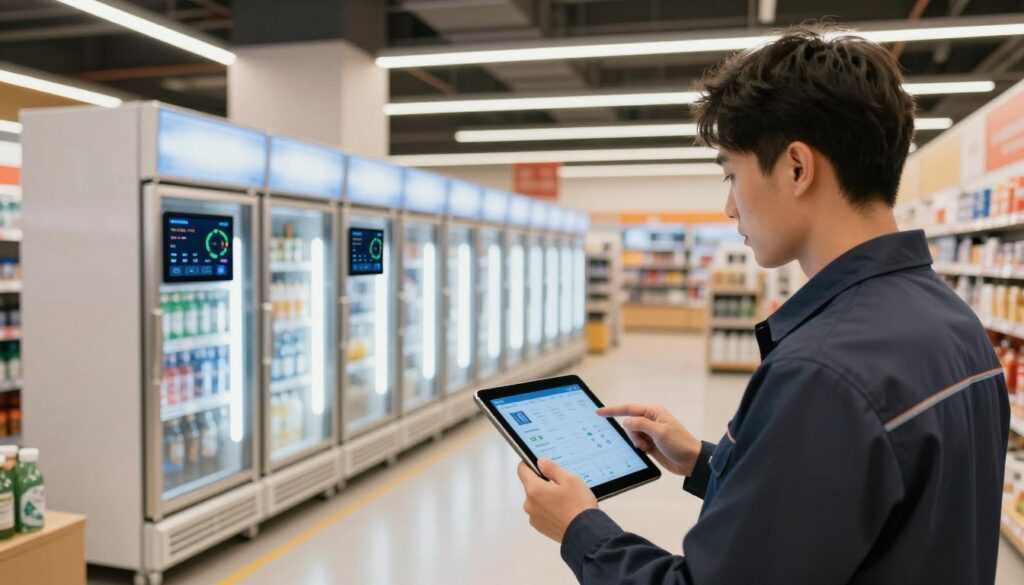
Advanced sensors and connectivity form the backbone of modern systems. These tools provide unprecedented visibility into inventory management and the supply chain. They turn raw information into actionable intelligence.
Such innovations directly improve energy efficiency and operational agility. Analytics help the retail industry anticipate needs and streamline processes. This technology is no longer a luxury; it’s a core component for staying competitive.
Implementing these solutions ensures businesses can deliver consistent, high-quality experiences. The entire industry is moving towards a more connected and intelligent future.
The Role of Retail Predictive Maintenance, Smart Retail Solution, and AIoT in Retail Industry
At the heart of a resilient store is a strategy that anticipates problems rather than just reacting to them. This proactive shield is built on interconnected devices and intelligent analytics.
It transforms essential care from a cost center into a source of reliability.
How Predictive Analytics Prevents Costly Refrigeration Failures
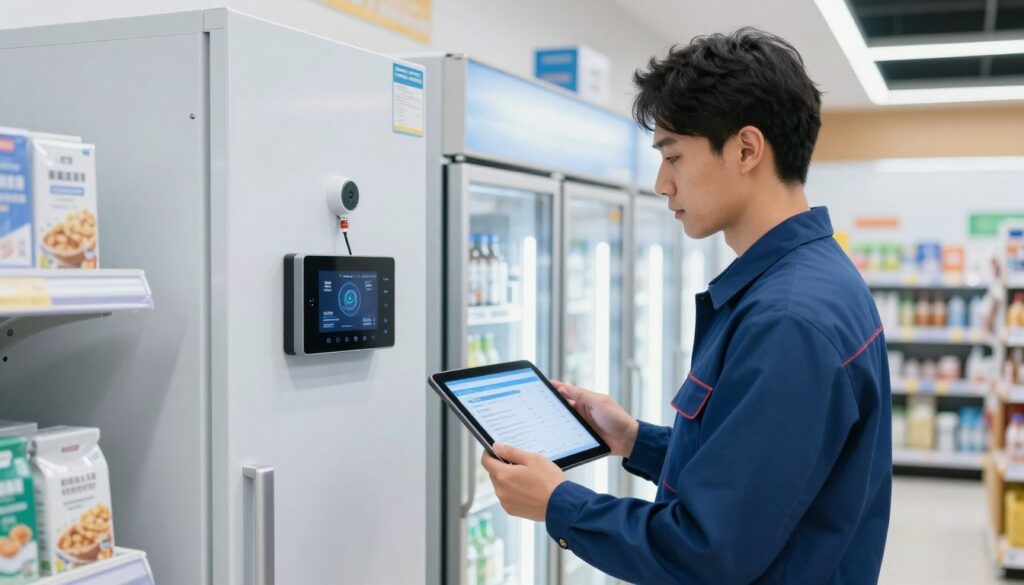
Advanced sensors continuously collect performance data. Sophisticated algorithms then analyze this information for subtle patterns.
“The shift from scheduled checks to condition-based monitoring reduces unplanned downtime by over 30%,” notes a recent industry report on operational efficiency.
For example, Whole Foods uses zone-based climate control. This system monitors temperature and humidity across different store areas.
It preserves product freshness by making tiny adjustments automatically. This is a practical application of these intelligent solutions.
| Maintenance Approach | Data Usage | Cost Impact | Primary Outcome |
|---|---|---|---|
| Reactive (Fix-on-Failure) | None | High emergency repair & spoilage costs | Unplanned downtime & lost sales |
| Preventive (Scheduled) | Low (time-based) | Moderate, includes unnecessary service | Reduced major failures |
| Predictive (Condition-Based) | High (real-time sensor analytics) | Low, planned parts & labor | Maximized uptime & asset life |
This technology provides actionable insights directly to management. Teams can schedule service during off-peak hours.
The result is seamless store operations and protected customer experiences. It ensures every shopping trip meets expectations.
Innovative Approaches to Inventory Management and Preventive Maintenance
The backbone of a profitable store lies in precise control over what’s on the shelves and what’s running behind the scenes. Modern solutions merge real-time inventory oversight with equipment care. This dual strategy prevents loss and ensures smooth operations.
Real-Time Inventory Visibility and Tracking
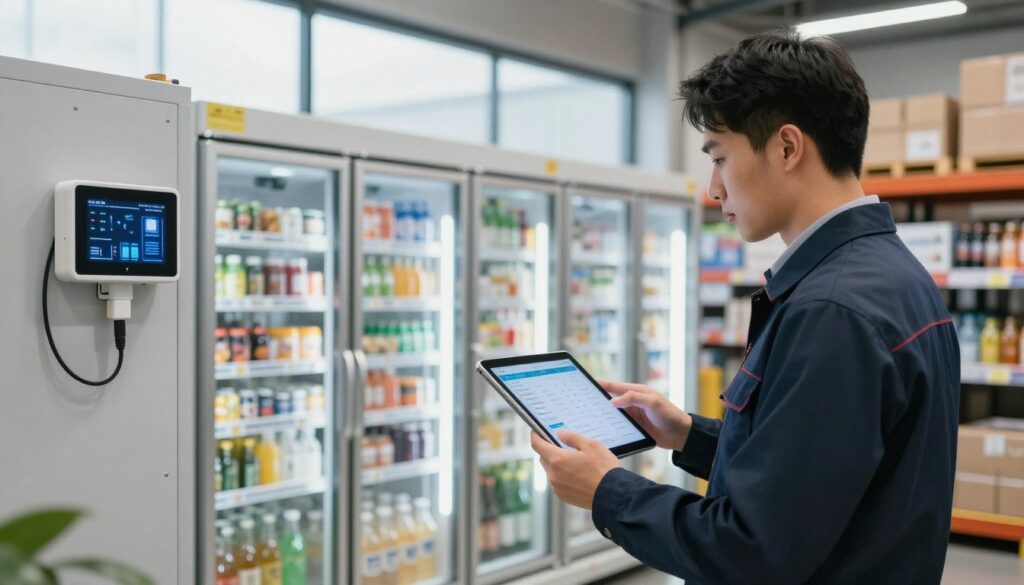
Knowing exactly what you have, right now, is a game-changer. Weight-detecting sensors in produce bins provide continuous data on stock levels.
This live information stream eliminates guesswork. It boosts operational efficiency and cuts waste dramatically. Teams gain actionable insights to keep products moving.
Automated Stock Replenishment Strategies
When inventory dips below a set point, the system can trigger a restock request automatically. This reduces the time and labor staff spend on manual counts.
Automation ensures popular items are always available for customers. It also tightens the supply chain and protects product quality. The business runs on reliable, up-to-the-minute data.
| Management Method | Data Source | Business Impact |
|---|---|---|
| Manual Counts | Periodic staff checks | High error rate, labor-intensive |
| Scheduled Audits | Planned cycle counts | Better accuracy, but delayed response |
| Automated Sensor Systems | Continuous IoT device feeds | Precision, low labor cost, real-time action |
Linking this to preventive maintenance creates a resilient retail environment. Monitoring cooler performance alongside stock levels prevents costly surprises. This integrated approach is the future of store management.
Smart Technologies Enhancing Customer Experience and Operational Efficiency
The final moment of a shopping trip—the checkout—is undergoing a radical transformation. Modern tools now work to elevate the shopper’s journey while streamlining behind-the-scenes work. This dual focus creates a more responsive and profitable business.
Frictionless Checkout and Personalized Engagement
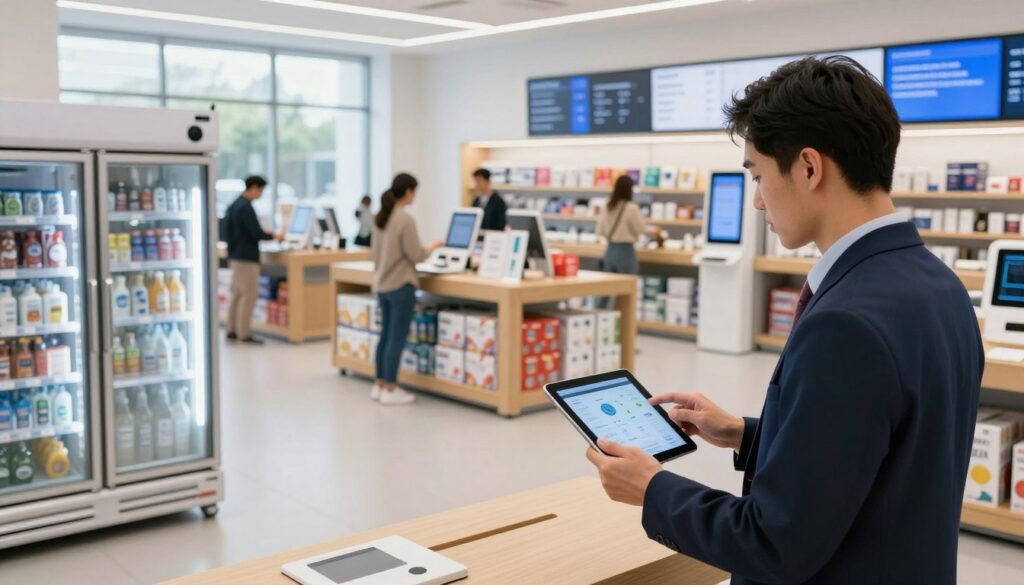
Amazon’s Just Walk Out technology epitomizes this shift. Ceiling cameras and shelf sensors track items automatically. Shoppers are charged as they leave, eliminating lines entirely.
This system does more than speed up the checkout. It reallocates staff to tasks that improve store ambiance and service. Labor costs are better managed, boosting overall operational efficiency.
| Checkout Method | Core Technology | Customer Experience | Operational Impact |
|---|---|---|---|
| Traditional Lane | Manual scanning, cash register | Potential for wait times, standard service | High labor requirement, slower throughput |
| Self-Service Kiosk | Barcode scanners, touchscreen POS | More control, but still requires customer action | Reduced cashier needs, moderate space efficiency |
| Frictionless System | Computer vision, weight sensors, AI analytics | Seamless, fast, and highly convenient | Low direct labor, maximizes space, provides rich behavioral data |
The data from these systems fuels personalized engagement. Analytics reveal shopping patterns, helping retailers offer the right product at the right time.
“Frictionless commerce is about removing points of frustration to build loyalty. The data it generates is the new currency for personalization,” states a report on modern retail trends.
These solutions also optimize energy use and inventory management. Real-time insights ensure shelves are stocked, protecting product quality. The result is a superior experience that keeps customers returning.
Integrating Connectivity and Reliability in Retail Operations
When a primary network fails, the entire shopping experience can grind to a halt. Modern store operations require seamless data flow between systems, sensors, and payment terminals. This infrastructure is the nervous system of a contemporary business.
Multi-Network Failover Solutions for Seamless Transactions
Advanced solutions automatically switch between cellular, Wi-Fi, and satellite links. This keeps point-of-sale systems active during outages.
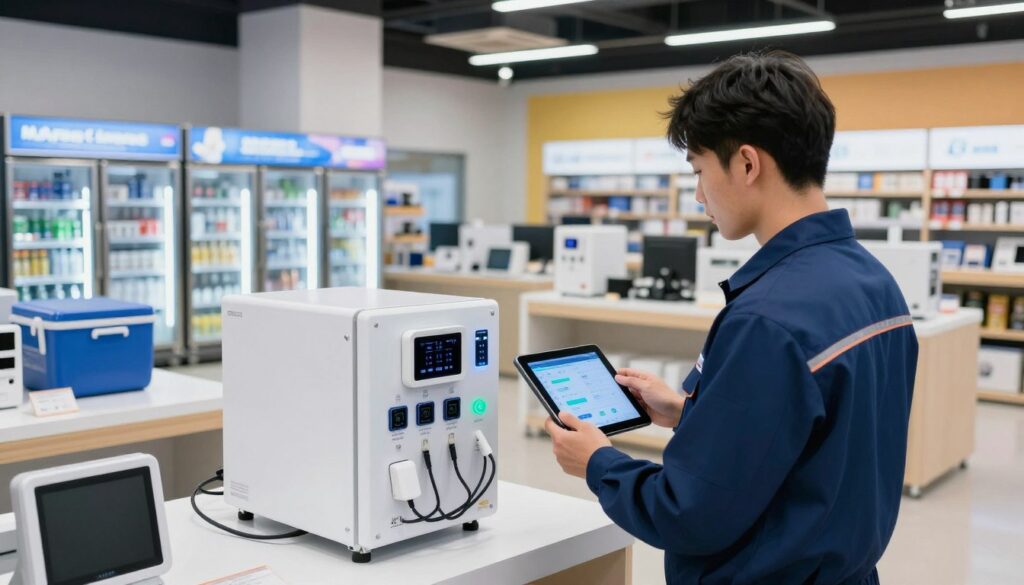
Shoppers complete purchases without interruption. The customer experience remains protected, preserving sales and loyalty.
Centralized POS and System Monitoring
A single dashboard provides real time visibility into all store devices. Lowe’s uses NVIDIA’s digital twin platform for this purpose.
It analyzes shopper movement and staff routing to improve layout efficiency. This centralized management offers powerful insights.
Ensuring Robust Internet and Sensor Connectivity
Reliable links between inventory trackers and backend analytics are critical. They ensure stock levels and product quality data are always current.
These strategies form the backbone of a resilient retail environment.
| Connectivity Strategy | Core Technology | Business Impact |
|---|---|---|
| Single Network | Primary ISP connection only | High risk of complete downtime during outages |
| Multi-Network Failover | Automatic switching between cellular, Wi-Fi, satellite | Continuous operations, protected transaction flow |
| Mesh Sensor Networks | Interconnected devices with redundant pathways | Ultra-reliable data collection from all store areas |
Challenges and Strategies for Implementing Smart Retail Solutions
Businesses aiming to modernize their operations must navigate a complex landscape of legacy infrastructure and new devices. Success requires a deliberate approach to tackle integration, security, and data complexity.
Overcoming Integration, Security, and Complexity Issues
Connecting older systems with modern sensors and devices is a major hurdle. Retailers need seamless data flow between inventory trackers, point-of-sale terminals, and backend analytics.
Protecting customer information is paramount. Every new technology deployment must include robust security protocols for all connected devices.
Companies like UPS show how data-driven strategies solve complex problems. Their ORION system optimizes the supply chain using traffic and weather analytics.
This reduces fuel use and improves delivery efficiency. It’s a model for the industry.
| Challenge Area | Key Issue | Recommended Strategy |
|---|---|---|
| System Integration | Legacy hardware incompatible with new IoT sensors | Phased rollout with middleware and API gateways |
| Data Security | Risk to customer privacy from connected devices | End-to-end encryption and regular security audits |
| Operational Complexity | Managing vast data from multiple store locations | Centralized dashboard with actionable insights |
Addressing these issues lets retailers deploy solutions that boost checkout speed and product management. The result is a stronger, more competitive store operation.
Conclusion
The journey toward a truly intelligent store is defined by turning data into decisive action. The retail industry is shifting from a reactive model to one powered by foresight and analytics.
This transformation is essential. Leveraging real-time insights from connected systems allows retailers to create superior customer experiences. It keeps shoppers engaged and loyal.
Proactive care for equipment and inventory is no longer optional. It is a core requirement for optimizing store operations and controlling costs.
As technology evolves, the ability to gain actionable insights will separate leaders from followers. Businesses that invest now will be ready for tomorrow’s demands.
Ultimately, integrating these intelligent solutions ensures every shopping trip is seamless, efficient, and personalized.
FAQ
How does a predictive maintenance system prevent costly refrigeration breakdowns in stores?
What is the role of Smart IoT and AIoT in modern store operations?
How do smart solutions improve inventory control and prevent stockouts?
Can this technology enhance the shopper’s in-store experience?
What are the biggest challenges when implementing these connected systems, and how are they solved?
Why is reliable connectivity so critical for a smart store’s success?
How Iottive Delivers End-to-End Smart Retail Solutions
1. Retail Strategy & Solution Design
Iottive collaborates with retail leaders, digital heads, store operations teams, and supply chain stakeholders to understand customer journeys, inventory challenges, and growth objectives. This phase includes retail use-case validation, omnichannel architecture design, IoT device selection, AI personalization planning, and defining measurable KPIs such as promotion ROI, stock accuracy, and conversion rates.
2. Smart Systems Engineering & Retail Integration
Iottive engineers scalable Smart Retail solutions by integrating IoT sensors, RFID, smart shelves, digital mirrors, edge devices, and cloud platforms. We ensure seamless connectivity between POS systems, ERP, CRM, warehouse systems, and e-commerce platforms. The focus is on real-time visibility, secure data flow, and unified customer and inventory intelligence across stores and digital channels.
3. Pilot Deployment in Stores & Warehouses
Before enterprise rollout, Iottive deploys pilot solutions in selected retail stores, warehouses, or pharmacy locations. This includes testing AI-driven recommendations, smart inventory tracking, cold chain monitoring systems, and digital try-on experiences. Retailers can validate performance, customer engagement impact, and operational feasibility in live environments before scaling across locations.
4. Customer Experience & Retail Intelligence
Iottive builds intuitive dashboards and retail intelligence platforms that provide real-time insights into:
- Customer behavior & segmentation
- Promotion performance & ROI
- Store-level inventory accuracy
- Warehouse efficiency metrics
- Cold chain compliance tracking
- Online conversion and upsell analytics
Advanced analytics, alerts, and AI-driven insights empower retail teams to make faster, data-driven decisions that improve revenue, reduce losses, and enhance customer satisfaction.
5. Enterprise Rollout & Retail Scale-Up
From MVP to multi-location deployment, Iottive supports solution hardening, cloud scalability, cybersecurity, and long-term support. Smart Retail solutions are designed for:
- Multi-store expansion
- Omnichannel integration
- Regional inventory balancing
- Cross-border retail operations
- Continuous optimization using AI insights
Our approach ensures measurable ROI through improved customer engagement, reduced shrinkage, better inventory control, and operational efficiency.
Why Retailers Choose Iottive
- Proven expertise in Smart Retail & IoT-driven transformation
- Deep understanding of store operations, warehousing, and pharmacy compliance
- Seamless integration with POS, ERP, CRM, and e-commerce platforms
- Secure, scalable, and production-ready retail architectures
- Strong focus on measurable business outcomes — not just technology
📧 Contact Email: sales@iottive.com

Transform Your IoT Vision Into Reality.
Get free expert insights, architectures & cost breakdowns.
Drop your email to schedule free meeting.