Industrial machinery breakdowns strike without warning. This causes massive production halts and expensive repairs. Manual checks and scheduled upkeep often miss the subtle signs of a problem developing deep within a machine.
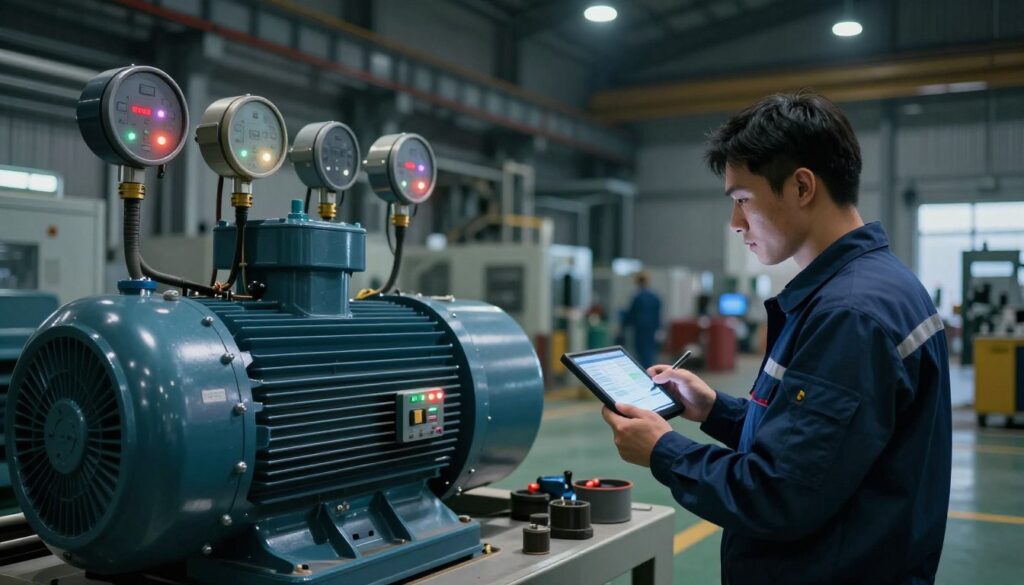
Unplanned stoppages are a huge financial burden. A medium-sized operation can lose around $125,000 for every hour of downtime. For heavy industries, the yearly cost of unexpected outages reached a staggering $59 million in 2023. The losses from a single breakdown can be three to nine times higher than the repair bill itself.
There is a smarter way to manage machinery. A new approach uses networks of sensors to constantly watch over equipment. These sensors track things like vibration, heat, and power use. They send real-time information to central systems.
This data reveals hidden degradation patterns. It allows teams to spot abnormal behavior long before a complete breakdown happens. This shifts the strategy from reactive fixes to proactive health management. Critical issues can be identified weeks or even months in advance.
This guide explores how to implement these modern strategies. They help reduce unplanned stoppages, extend machine life, and make maintenance spending more efficient. Leading providers like Iottive deliver complete solutions that turn maintenance from a cost center into a strategic advantage.
Key Takeaways
- Unplanned equipment downtime costs companies hundreds of thousands of dollars per hour, making early detection systems crucial.
- Traditional time-based maintenance schedules often fail to catch early signs of internal machine degradation.
- Modern sensor technology enables continuous, real-time monitoring of critical performance parameters.
- Shifting from reactive repairs to proactive management allows issues to be identified weeks or months in advance.
- This data-driven approach optimizes repair schedules, extends equipment lifespan, and reduces overall costs.
- Industries with high-value machinery and significant downtime risks are rapidly adopting these solutions.
- Implementing a strategic monitoring program can transform maintenance operations into a competitive advantage.
Introduction: The Future of Maintenance Strategies
Operational reliability has become the cornerstone of competitive manufacturing in today’s demanding industrial environment. Traditional approaches to equipment care are no longer sufficient for modern production requirements.

Industry Challenges and the Need for Proactive Solutions
Manufacturing facilities face unprecedented pressures. Aging infrastructure combines with skilled labor shortages and intensifying production targets. This creates critical reliability challenges that threaten operational continuity.
Unplanned downtime represents the single most expensive problem for industrial operations. The financial impact extends far beyond direct repair expenses. Lost production, damaged materials, and overtime premiums multiply the total cost burden.
How Predictive Maintenance Transforms Operations
This modern approach fundamentally changes the maintenance equation. Organizations can detect developing issues during the extended period between normal operation and complete breakdown. Intervention becomes possible when costs remain minimal and scheduling flexibility maximizes.
Companies implementing comprehensive programs report significant benefits. Maintenance cost reductions of 5-15% are typical. Downtime decreases of 30-50% demonstrate the powerful impact on operational efficiency. This represents not just technological upgrade but fundamental philosophy change.
Asset Failure Prediction, Condition Based Maintenance IoT
The evolution of industrial technology has enabled unprecedented visibility into equipment health and performance. Sophisticated monitoring systems now provide continuous insight into machinery operations.
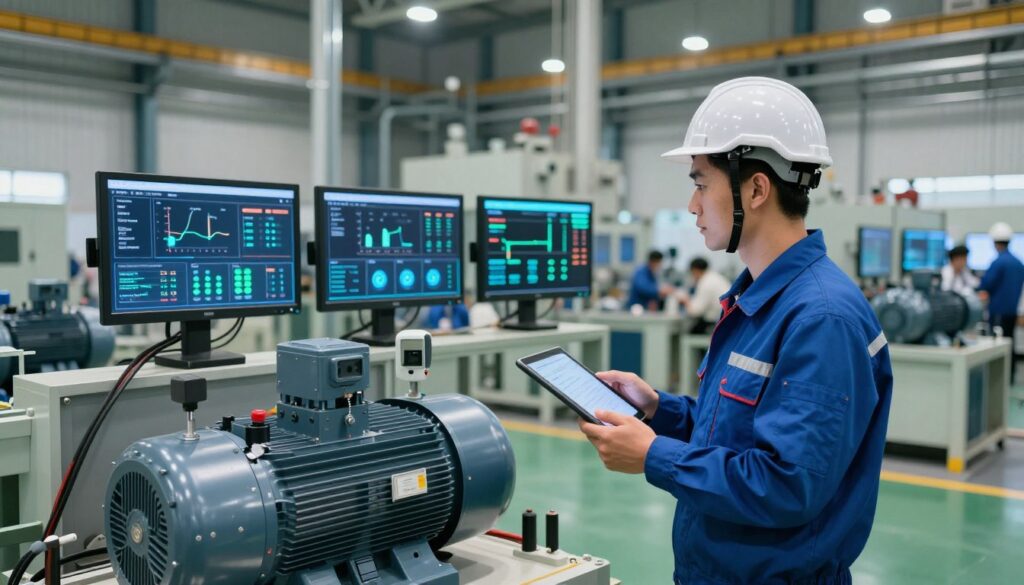
These intelligent networks embed sensors directly into critical machinery components. They measure vital parameters like temperature, vibration, and pressure in real time. This creates a comprehensive view of operational status.
The collected information flows through wireless networks to analytics platforms. These systems establish baseline performance patterns for each piece of equipment. They then identify deviations that signal potential issues.
| Aspect | Traditional Approach | Modern Predictive System |
|---|---|---|
| Data Collection | Manual, periodic checks | Continuous, automated monitoring |
| Maintenance Trigger | Fixed schedules or breakdowns | Actual equipment condition data |
| Intervention Timing | Reactive or predetermined | Proactive based on early warnings |
| Cost Efficiency | Higher waste and downtime | Optimized spending and availability |
When algorithms detect unusual patterns, maintenance teams receive specific alerts. This approach combines the reliability of preventive strategies with the efficiency of data-driven decisions. The result is maximum equipment availability with minimal spending.
Modern implementations use edge computing for local data processing. This reduces bandwidth needs while enabling immediate response to critical situations. The technology has become economically viable across various equipment types.
Understanding IoT Sensors and Their Role in Predictive Maintenance
Sophisticated detection devices form the backbone of modern equipment health monitoring strategies. These intelligent components continuously gather vital information about machinery operations.

Various sensing technologies work together to provide comprehensive oversight. Each type captures specific parameters that indicate potential issues.
Types of Sensors and Their Applications
Vibration sensors detect unusual movement patterns in rotating machinery. They identify imbalances, misalignments, and bearing wear through precise measurement.
Temperature monitoring devices track heat generation in critical components. Thermal sensors spot overheating from friction or electrical problems before damage occurs.
Pressure transducers monitor hydraulic and pneumatic systems for leaks or blockages. They ensure fluid systems operate within safe parameters.
| Sensor Type | Primary Measurement | Key Applications |
|---|---|---|
| Vibration Sensors | Oscillation patterns and frequency | Rotating equipment, motors, pumps |
| Temperature Sensors | Heat levels and thermal changes | Bearings, electrical components, engines |
| Pressure Transducers | Fluid and gas pressure levels | Hydraulic systems, compressors, pipelines |
| Acoustic Sensors | Sound frequency and amplitude | Leak detection, mechanical wear |
Current sensors measure electrical consumption patterns for motor health. Acoustic devices listen for abnormal sounds indicating mechanical problems.
These detection systems provide the foundation for informed decision-making. They transform random checks into systematic, data-driven oversight.
Leveraging Machine Learning and Real-Time Data Analytics
Advanced computational systems are revolutionizing how organizations process equipment information streams. These intelligent platforms transform raw measurements into actionable operational intelligence.
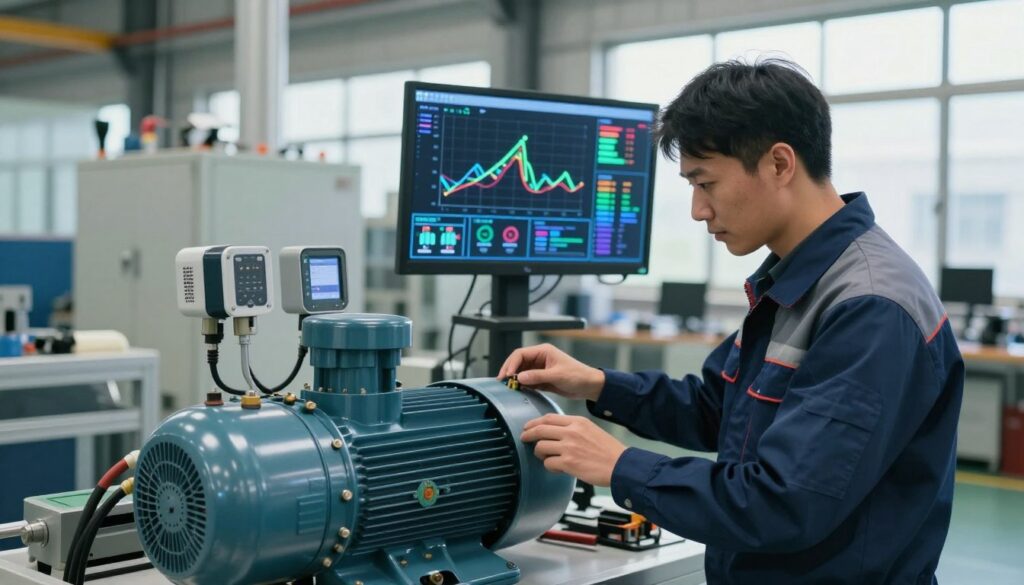
Two primary analytical approaches dominate modern implementations. Rule-based systems establish clear threshold conditions derived from engineering specifications. Machine learning algorithms identify complex patterns that human analysis cannot detect.
AI and ML Algorithms Driving Predictive Models
Supervised learning models train on historical information showing equipment behavior before known issues. They learn to recognize degradation signatures that enable early intervention.
Unsupervised learning establishes normal operating patterns through analysis of healthy equipment data. This approach identifies anomalous conditions without requiring labeled examples.
Three distinct methodologies provide comprehensive oversight:
- Indirect health estimation using known requirements and historical patterns
- Anomaly detection identifying real-time deviations from normal conditions
- Remaining useful life forecasting predicting time until intervention needed
Real-time data analytics platforms aggregate information from multiple sources. They combine continuous measurement streams with operational context for accurate forecasting.
Advanced implementations employ ensemble methods combining multiple algorithms. This leverages strengths of different approaches while compensating for individual limitations.
Continuous model refinement ensures predictive accuracy improves over time. Organizations report significant accuracy gains as algorithms learn equipment-specific patterns.
Integrating Predictive Maintenance into Management Systems
Connecting sensor intelligence with enterprise software creates a closed-loop system that transforms data into action. This seamless connection between detection technology and operational platforms represents the final step in digital transformation.
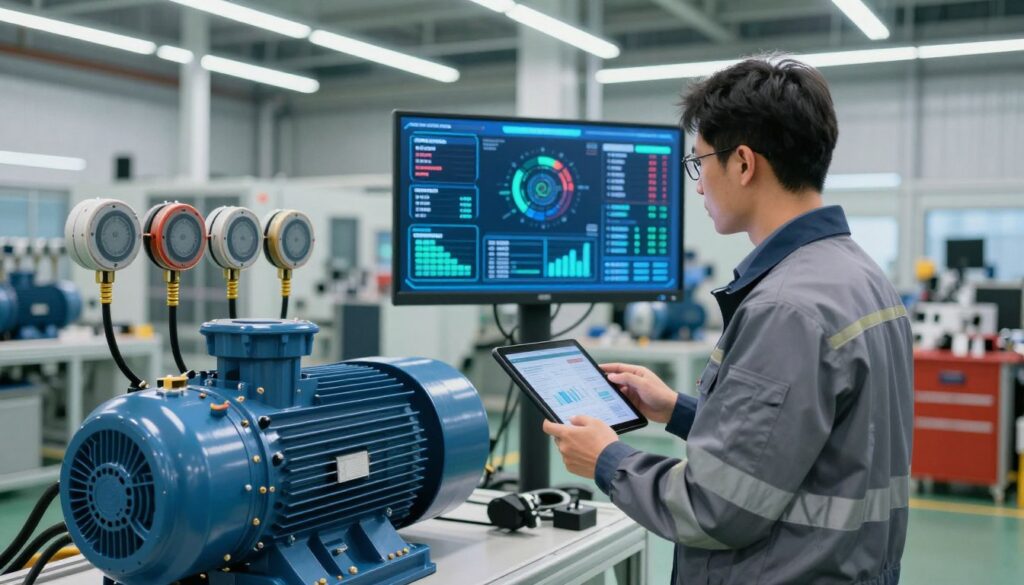
Effective implementation requires careful planning around system integration and workflow automation. These elements ensure that insights become operational improvements.
Best Practices for Seamless CMMS Integration
Successful connection between predictive analytics and computerized maintenance management systems demands strategic planning. Establish clear data exchange protocols that enable bidirectional information flow.
These protocols allow predictive platforms to receive equipment specifications and operational context. In return, they deliver condition assessments and specific repair recommendations. This creates a comprehensive view across all management systems.
Enhancing Workflow Automation with IoT Data
Automated work orders generation represents the most significant operational improvement. When sensors detect abnormal patterns, the system automatically creates detailed repair tickets.
These intelligent work orders specify which components need attention and recommended actions. They also include required parts and optimal timing based on production schedules. This automation transforms upkeep from reactive troubleshooting to proactive execution.
The integration extends value through connections with inventory and production systems. This ensures parts availability and minimizes operational disruption during repairs.
Comparing Preventive, Predictive, and Condition-Based Maintenance Approaches
The landscape of industrial equipment care spans three distinct strategic pathways. Each methodology offers different benefits and suits specific operational needs. Understanding these differences helps organizations select the optimal strategy.
Preventive maintenance operates on fixed schedules. Teams perform inspections and replacements based on time intervals or usage metrics. This approach provides reliability but can waste resources on healthy equipment.
Key Differences and Strategic Implications
Predictive maintenance uses sensor data and analytics to forecast needs. It schedules work only when data indicates impending issues. This maximizes efficiency but requires advanced infrastructure.
Condition-based strategies trigger interventions when parameters exceed thresholds. They react to real-time measurements without forecasting capability. This eliminates unnecessary work while maintaining vigilance.
| Strategy | Trigger Mechanism | Resource Efficiency | Implementation Complexity |
|---|---|---|---|
| Preventive | Fixed schedules | Lower – may maintain healthy assets | Basic – scheduling systems only |
| Condition-Based | Real-time threshold alerts | Medium – eliminates most unnecessary work | Moderate – adds sensor networks |
| Predictive | Analytical failure forecasts | High – intervenes only when needed | Advanced – requires full IoT and analytics |
The strategic implications are profound. Organizations typically begin with preventive programs for non-critical equipment. They advance to condition-based monitoring for moderately critical assets. Predictive strategies deliver maximum value for high-cost downtime scenarios.
Implementation complexity escalates across this spectrum. Each approach represents a different maturity level in operational excellence. The choice depends on equipment criticality and organizational readiness.
Implementing Condition-Based Maintenance in Industrial Operations
Implementing modern oversight strategies requires careful planning and precise execution. Organizations must follow a structured approach to achieve maximum benefits from their investment.
The process begins with identifying machinery where breakdowns would cause significant disruption. Teams prioritize units based on safety impact, production importance, and repair complexity.
Establishing performance baselines forms the crucial foundation. This involves documenting normal operating parameters during healthy periods. These reference points enable accurate anomaly detection later.
Essential Sensor Technologies for Early Failure Detection
Selecting appropriate detection devices depends on equipment characteristics and dominant issues. Different technologies capture specific parameters that signal potential problems.
Vibration monitoring suits rotating machinery like motors and pumps. Thermal sensors track heat generation in electrical components. Pressure transducers monitor hydraulic systems for leaks or blockages.
| Implementation Phase | Primary Activities | Key Outcomes |
|---|---|---|
| Foundation Building | Asset prioritization, baseline establishment | Clear focus areas, performance benchmarks |
| Technology Deployment | Sensor selection, proper installation | Continuous data collection capability |
| System Integration | Dashboard setup, threshold configuration | Real-time visibility, automated alerts |
Real-Time Monitoring and Immediate Response
Modern systems provide instant visibility into machinery health through centralized dashboards. Teams can track multiple parameters simultaneously across different locations.
Setting appropriate thresholds defines when action becomes necessary. These boundaries separate normal operation from conditions requiring intervention. Proper configuration prevents unnecessary alerts while ensuring critical issues receive attention.
Immediate response protocols ensure rapid action when thresholds are exceeded. Automated alerts notify appropriate personnel with specific details. This enables quick decision-making and minimizes disruption.
Optimizing Equipment Reliability and Reducing Downtime
Real-world implementations showcase measurable gains in operational efficiency through advanced monitoring systems. Companies adopting these approaches report substantial improvements across multiple performance dimensions.
Case Studies: Cost Savings and Uptime Improvement
Documented results reveal consistent patterns of improvement. Organizations achieve downtime reductions of 30-50% through early detection capabilities. This prevents catastrophic breakdowns that disrupt production schedules.
Financial benefits extend beyond availability improvements. Companies report direct cost savings of 5-15% by eliminating unnecessary interventions. Emergency repairs typically cost two to three times more than planned work.
| Benefit Category | Typical Improvement | Operational Impact |
|---|---|---|
| Equipment Availability | 30-50% downtime reduction | Increased production capacity |
| Cost Efficiency | 5-15% direct savings | Better budget allocation |
| Component Lifespan | 20-40% extension | Reduced replacement frequency |
| Labor Productivity | 10-25% improvement | More effective workforce |
These comprehensive improvements transform operational performance. The approach delivers rapid return on investment while building sustainable competitive advantages.
Advanced Predictive Models: From Data Collection to Actionable Insights
Modern computational methods elevate continuous monitoring streams into strategic decision-making tools. These sophisticated approaches transform raw measurements into precise operational intelligence.
Time-series analysis tracks how operational parameters evolve across equipment usage cycles. This methodology identifies subtle degradation patterns by monitoring temperature trends, vibration changes, and power consumption shifts.
Probability-based models provide nuanced risk assessment for different operational scenarios. They enable planners to balance intervention costs against potential disruption impacts.
Data fusion techniques combine information from multiple sensor types monitoring the same machinery. This creates comprehensive condition assessments more accurate than any single measurement approach.
Cloud analytics platforms aggregate sensor streams with contextual information from enterprise systems. They incorporate operational history and production schedules into predictive models.
Scalable infrastructure handles massive volumes generated by continuous oversight across equipment populations. Specialized databases optimize storage and retrieval of measurement streams.
Validation methodologies ensure forecast accuracy through comparison against actual outcomes. Continuous refinement based on completed interventions improves model precision over time.
These advanced approaches generate clear maintenance recommendations specifying required actions and optimal timing. They transform complex analytical outputs into practical operational insights.
Best Practices for Sustainable Maintenance Management
Organizations must establish governance structures to ensure long-term success of their maintenance programs. Sustainable management requires clear frameworks defining roles and responsibilities.
Phased implementation helps manage initial investment effectively. Many companies begin with pilot programs monitoring 5-10 critical units. This approach proves value before expanding across broader equipment populations.
Future Trends in IoT and Predictive Analytics
Emerging technologies continue to transform maintenance strategies. Edge artificial intelligence enables sophisticated analysis directly on industrial gateways. Digital twin technology creates virtual models for scenario simulation.
Augmented reality systems overlay sensor data during repair execution. These innovations enhance technician effectiveness and decision-making capabilities.
| Implementation Challenge | Best Practice Solution | Expected Outcome |
|---|---|---|
| Cultural resistance to change | Transparent analytical methods and technician involvement | Increased trust in data-driven predictions |
| Data quality concerns | Regular calibration and validation procedures | Consistent predictive accuracy |
| Cybersecurity risks | Network segmentation and encrypted communications | Protected industrial operations |
| Skills development needs | Comprehensive training programs | Effective alert interpretation |
Change management addresses cultural resistance from teams accustomed to calendar schedules. Building trust in data-driven predictions requires transparency and early success celebrations.
Data quality assurance prevents sensor drift and measurement errors from compromising analytical outputs. Cybersecurity frameworks protect connected industrial networks from potential threats.
“The most successful maintenance programs balance technological innovation with organizational adaptation.”
Skills development ensures personnel can interpret predictive alerts effectively. Leadership teams must make strategic decisions based on condition data and risk assessments.
For organizations ready to implement comprehensive solutions, Iottive offers integrated platforms combining sensor technology and expert guidance.
Contact Us: sales@iottive.com or visit www.iottive.com to explore how advanced predictive maintenance can transform your operations.
Conclusion
Proactive equipment management has evolved from luxury to operational necessity. Organizations implementing predictive maintenance achieve dramatic improvements in uptime and cost control.
This approach prevents costly equipment failures by detecting issues weeks before breakdowns occur. The technology foundation has matured to deliver reliable results across industrial settings.
Success requires integrating advanced monitoring systems with organizational adaptation. Companies report 30-50% downtime reductions and significant equipment reliability gains.
The strategic choice between maintenance approaches depends on specific operational needs. Many organizations benefit from hybrid strategies tailored to their equipment portfolio.
To explore comprehensive solutions that transform your maintenance operations, Contact us for expert guidance can help implement effective predictive maintenance programs for your specific industrial applications.
FAQ
What is the primary advantage of condition-based maintenance over traditional preventive schedules?
How do machine learning algorithms improve predictive models for industrial assets?
What role does vibration analysis play in modern maintenance management systems?
Can predictive maintenance be integrated with existing computerized maintenance management software (CMMS)?
What is the key difference between preventive and predictive strategies in terms of cost?
Contact Us: sales@iottive.com

Transform Your IoT Vision Into Reality.
Get free expert insights, architectures & cost breakdowns.
Drop your email to schedule free meeting.