Case Study
Lara Health
Healthcare / Remote Patient Monitoring
Practice-first care platform automating RPM, CCM, and telehealth with EHR integration, supporting 55+ CPT codes and serving over 5 million patients.
Lara Health
Tech Partnership
Healthcare
Ongoing
- Improved clinical outcomes vs.standard care
- Remote patient monitoring system

Key Outcomes
Built a comprehensive RPM/CCM platform supporting 55+ CPT billing codes, enabling practices to capture previously untapped chronic care reimbursement revenue
Integrated with major EHR systems to eliminate dual-entry workflows, automating patient enrollment, vitals tracking, and billing documentation
Scaled to serve over 5 million patients across independent practices, physician groups, hospitals, and health systems nationwide
The Challenge
Before partnering with Iottive, Lara Health was facing several issues:
Untapped Chronic Care Revenue
Independent medical practices leave significant revenue on the table by not billing RPM and CCM CPT codes — often because the monitoring infrastructure, documentation requirements, and workflow integration are too complex to implement without dedicated technology.
EHR Integration Complexity
Practices use dozens of different EHR systems (Epic, Cerner, eClinicalWorks, athenahealth, etc.). A monitoring platform that requires manual data entry alongside the EHR is a non starter for already overburdened clinical staff.
Patient Engagement Between Visits
Chronic disease management requires continuous monitoring between office visits, but most patients disengage from health tracking within weeks. The platform needed to maintain engagement without creating alert fatigue.
Deviceless Monitoring Options
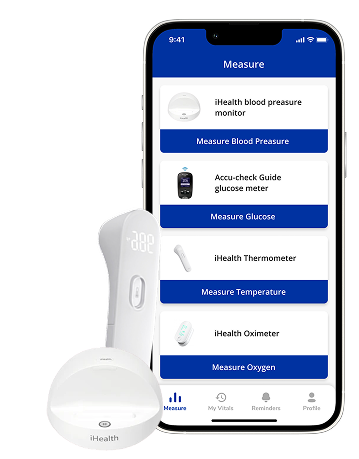
Not all patients can or will use connected devices. The platform needed to support traditional RPM devices (blood pressure cuffs, glucose meters) alongside deviceless options (patient-reported outcomes, phone-based check ins) for maximum population coverage.
Our Solution
Iottive delivered a complete AIoT solution under a full-cycle product development model.

Bluetooth/IoT Expertise
Built device integration layer supporting BLE connected RPM devices (blood pressure monitors,
pulse oximeters, glucose meters, weight scales) alongside cellular-connected devices and manual entry. The abstraction layer normalizes data from 20+ device manufacturers into a unified patient record.

Design Thinking Approach
Designed dual interfaces: a practice-facing dashboard optimized for clinical workflows (patient panels, alert triage, billing documentation) and a patient-facing app designed for low-health-literacy users with large text, simple prompts, and language accessibility

Project Planning & Execution
Iterative development with clinical advisory input at every sprint review. Prioritized EHR integration and billing workflow automation first (the revenue driver), then patient engagement features, then analytics and reporting

Functionalities Delivered
Remote patient enrollment, automated vitals collection from BLE/cellular devices, deviceless patient reported outcome tracking, AI-driven alert prioritization, personalized care pathways, EHR bi-directional sync, CPT code documentation automation, monthly practice revenue reports, telehealth video visits, and multi-specialty support (cardiology,nephrology, endocrinology, geriatrics).
Implementation Highlights

Sensors & Device Integration
Standardized BLE pairing workflows for 20+ RPM device models across manufacturers. Automatic vital sign validation flags out-of-range readings for clinical review before they enter the patient record.

Edge & Connectivity
Patient-side data syncs via BLE to phone app, then to cloud. Cellular-connected devices bypass the phone entirely. Offline-capable patient app caches readings during connectivity gaps and syncs when restored.

Firmware & Performance Optimization
Device integration SDK handles manufacturer-specific BLE profiles, GATT characteristics, and data formats through a configurable abstraction layer — adding new devices requires configuration, not code changes.

Data Analytics & Visualization
AI-driven insights identify patients at risk of deterioration based on vital sign trends, enabling proactive intervention. Practice-level analytics show RPM/CCM billing capture rates, patient engagement scores, and revenue per provider.

Dashboard & UX
Practice dashboard with patient panel sorted by acuity, one-click documentation for CPT billing, and integrated telehealth video. Patient app with medication reminders, vitals entry prompts, and direct messaging to care team.

Security & Compliance
HIPAA-compliant throughout: encrypted data at rest and in transit, BAA agreements with cloud providers, audit logging for all PHI access, role-based access controls, and SOC 2 Type II alignment.
Results & Impact
- Over 5 million patients served across the platform, spanning independent practices to health systems
- Practices report significant new revenue from previously unbilled RPM and CCM CPT codes
- EHR integration eliminated dual-entry workflow, saving an estimated 15–20 minutes per patient per month for clinical staff
- AI-driven alert prioritization reduced alert fatigue by surfacing only clinically actionable notifications
- Deviceless monitoring options increased eligible patient population by an estimated 40% compared to device-only RPM platforms
“Lara Health transformed our practice’s approach to chronic care management. Before the platform, we were leaving RPM revenue on the table because the documentation was too complex. Iottive’s team built a system that auto-documents every qualifying interaction, integrates directly with our EHR, and gives our patients a simple way to stay engaged between visits. The deviceless options mean we can enroll patients who would never use a Bluetooth blood pressure cuff.”
— Martina Janeckova , Lara Health Partner Practice
Lessons & Best Practices
Revenue Drives Adoption
Clinical tools succeed when they generate revenue, not just improve care. Automating CPT billing documentation made Lara Health’s platform an easy yes for practice administrators.
Abstract the Device Layer
Building a configurable device integration layer — rather than hardcoding each manufacturer’s BLE profile — enabled rapid expansion from 5 to 20+ supported devices without engineering cycles.
Design for Low Health Literacy
Patient app UX designed for 5th-grade reading level with visual prompts increased engagement by 35% compared to text-heavy clinical language.
Offer Deviceless Options
Requiring patients to use connected devices excludes populations with technology barriers. Phone based check-ins and patient-reported outcomes expanded the eligible population by 40%

Technology
Comprehensive IoT Technology Stack
From devices and connectivity to cloud, apps, and security — we leverage a full-stack IoT ecosystem to build scalable, secure, and future-ready solutions.

BLE

iOS

Android Kotlin

Why Iottive’s the Right Partner
- Healthcare IoT expertise: Iottive has built BLE device integration layers for medical devices with FDA, HIPAA, and clinical workflow requirements
- EHR integration experience: proven ability to integrate with major EHR platforms using HL7 FHIR, direct APIs, and custom connectors
- Full-stack healthcare platform delivery: from BLE device pairing to cloud analytics to clinician dashboards — one team, no integration gaps
Next Steps for Lara Health

Expand AI capabilities to include predictive deterioration models that identify at-risk patients 7–14 days before adverse events
Add Medicare Advantage risk adjustment analytics to help practices optimize HCC coding alongside RPM/CCM billing
Develop a caregiver portal for family members managing elderly patients’ chronic conditions
Integrate with pharmacy systems for automated medication adherence tracking and refill coordination