A neighborhood can go from normal to tense in seconds when the lights drop. Stores pause card readers, traffic signals blink, and phones light up with the same question: “How long will this take?” In that moment, grid reliability feels personal, and customer trust starts to slip with every minute.
Utilities face the same clock, but with higher stakes. Crews need more than a rough outage map—they need real-time outage alerts that point to the likely fault location, fast. That is the difference between a broad patrol and a targeted fix, especially across complex smart grids in the United States.

This is where Iottive brings a connected-operations model to outage detection systems. By linking field devices at the edge with edge-to-cloud analytics, operators can move from “something is out” to instant fault localization in minutes, and often seconds. The same loop supports cloud dashboards for system-wide visibility, mobile access for field coordination, and OTA updates that keep devices current without rolling trucks.
In practice, outage detection becomes an operations problem, not just a hardware install. Fast sensing, fast analytics, and secure alert delivery work together so teams can isolate issues, reduce risk, and restore service with confidence. And when local networks degrade during major events, resilient, cellular-based notification paths help keep critical signals moving.
Across the next sections, you will see why instant detection matters in U.S. operations, how a smart energy solution turns grid events into clear actions, what architecture supports low-latency decisions, and how connectivity strategies protect awareness when networks fail.
Key Takeaways
- Iottive combines edge devices, cloud dashboards, mobile visibility, and OTA updates into one operating loop.
- Real-time outage alerts reduce guesswork and speed safe, targeted dispatch.
- Edge-to-cloud analytics helps pinpoint faults quickly for instant fault localization.
- Grid reliability improves when detection, analysis, and response are coordinated in seconds.
- A smart energy solution must stay resilient when local connectivity drops during disruptions.
- Over-the-air improvements let utilities scale fixes across fleets without delays.
Why Instant Outage Detection Matters for Smart Grids in the United States
In many regions, U.S. smart grid outages are no longer rare events. They are part of routine planning, especially when reliability targets stay high and patience runs thin.
Instant detection helps utilities act with clarity instead of guesswork. It also helps customers understand what’s happening when the lights go out and time suddenly matters.
How severe weather and grid complexity increase outage risk and restoration pressure
Severe weather outages can move fast and hit wide areas at once. Wind, ice, heat, and flooding push the system past normal limits, raising outage risk on both transmission and distribution lines.
At the same time, grid complexity keeps rising. More sensors, more distributed energy, and more automated switching can improve performance, but they also add more states to interpret under operational pressure.
When alarms stack up, every minute counts toward utility restoration time. Instant detection shortens the time between a fault and a safe, targeted response.
What “reliable outage alerts” prevent in real operations, from equipment damage to service disruption
A fast, reliable outage notification is not just about convenience. It reduces avoidable losses like food spoilage in freezers, damage to sensitive IT equipment, and safety risks when buildings sit dark and unattended.
Alerts also need to keep working during the blackout itself. When power fails, home Wi‑Fi often fails too, so resilient signaling becomes part of service continuity for customers and a planning constraint for utilities.
For operations teams, trustworthy alerts can reduce repeat truck rolls and limit unnecessary switching. That matters when call volume spikes and crews are stretched across multiple circuits.
| Operational moment | What can go wrong without instant detection | What instant detection supports |
|---|---|---|
| Storm-driven feeder trips during severe weather outages | Higher outage risk from delayed isolation and cascading interruptions | Faster triage that limits spread and protects service continuity |
| Customer reporting during U.S. smart grid outages | Conflicting reports and slow outage notification, increasing uncertainty | Verified alerts that align field response with actual grid state |
| Network disruption after power loss | Loss of local Internet signals, extending utility restoration time | Resilient alert delivery even when Wi‑Fi drops |
| Mixed assets and switching paths from grid complexity | Longer diagnosis cycles and more operational pressure on operators | Cleaner fault boundaries to support safer, targeted dispatch |
Why speed to locate faults is the key driver of customer impact, safety, and utility performance
Fault location speed shapes almost every outcome people care about. It influences how long customers sit without heat or cooling, how long critical loads run on backup, and how quickly crews can move from patrol to repair.
In safety-critical systems, decisions often happen in fractions of a second because raw signals get turned into an actionable model. On the grid, faster fault localization reduces time spent in unstable conditions and lowers exposure for lineworkers near damaged equipment.
Speed also has to be dependable. Redundancy, rigorous validation, and secure authenticated updates help keep automated decisions trustworthy when the system is under stress and operational pressure is at its peak.
Outage Detection Systems, Smart Energy Solution, Instant Outage Detection
Modern outage detection systems work best when they act like one connected nervous system. With Iottive’s approach, BLE-enabled edge devices watch local power conditions, then pass clean signals upstream for fast action. That stack supports a smart energy solution that reduces guesswork when the grid gets noisy.

How edge sensors, gateways, and cloud analytics work together to detect and pinpoint faults fast
At the edge, edge sensors capture voltage loss, restore events, and rapid changes that often precede a trip. Nearby IoT gateways collect those readings, time-sync them, and keep traffic light so it moves even in constrained field networks.
From there, cloud analytics compares patterns across feeders and devices to separate a single fault from a wider disturbance. That correlation speeds fault pinpointing because operators see where the first loss occurred and how the event propagated.
How instant notifications enable rapid switching, isolation, and targeted dispatch
Instant outage detection is only useful if the message reaches the right person fast. Iottive-style devices that plug into power can alert the moment service drops and again when power is restored, using text messages or phone calls to cut delay.
Those real-time alerts support rapid switching and isolation because crews are not dispatched blind. The same notifications help supervisors assign the closest truck to the narrowed location, instead of sending a wide patrol.
How edge-to-cloud visibility turns raw grid events into actionable decisions in seconds
When telemetry streams into operational dashboards, teams can watch status changes live and confirm what is still energized. Mobile apps extend that view to field leaders, so switching plans and safety checks stay aligned with the latest signals.
Over time, synchronized data builds actionable grid intelligence. Teams can review anomalies, validate assumptions, and refine detection logic using the same edge-to-cloud trail that drove the initial response.
| Layer | Primary role in the stack | What it delivers to operators |
|---|---|---|
| BLE-enabled edge devices | Detect local loss/restore and fast electrical changes at the source | Clean event markers that reduce uncertainty during first response |
| IoT gateways | Aggregate, time-sync, and forward telemetry from many endpoints | Consistent signals that support fast correlation across a circuit |
| Cloud analytics | Fuse events, compare patterns, and flag likely fault zones | Accelerated fault pinpointing instead of broad “area outage” assumptions |
| Operational dashboards and mobile apps | Visualize live status and push workflows to the field | Shared situational awareness that turns alerts into coordinated action |
Architecture: Edge Sensors, Cloud Dashboards, and Over-the-Air Updates for Grid Reliability
Reliable outage response starts with a clear division of labor between devices in the field and tools in the control room. In Iottive deployments, local intelligence handles time-critical signals, while centralized views help teams act with shared context. That split keeps decisions fast, coordinated, and consistent across the grid.
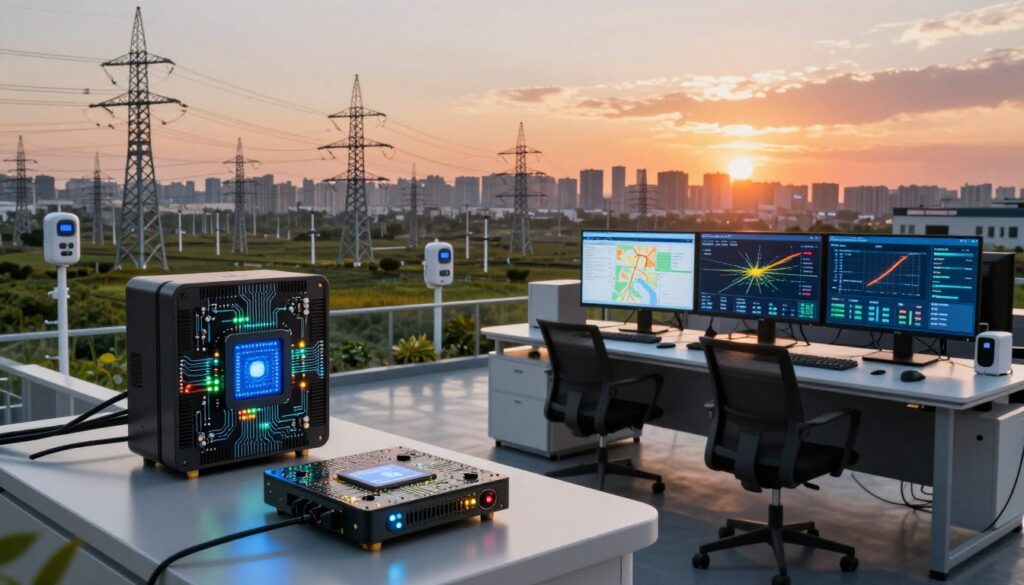
Edge compute for low-latency detection when every second counts
With edge compute, sensors and gateways can flag abnormal current, voltage, or breaker behavior right where it happens. That local logic supports low-latency outage detection even when backhaul links are congested. It also reduces noise, since only high-value events and summarized telemetry need to travel upstream.
Local decisions help operators isolate likely fault zones sooner, instead of waiting for a full cloud round trip. That speed matters when switching actions and crew dispatch depend on minutes, not hours.
Cloud dashboards for system-wide situational awareness and operational triage
Cloud dashboards turn streaming device data into a single operational picture across feeders, substations, and edge endpoints. That view strengthens situational awareness by showing what changed, where it changed, and what else is affected. It also supports utility operations triage, so teams can prioritize the biggest customer impact and the most urgent safety risks first.
When event timelines, device health, and alarm states live in one place, dispatch and engineering can work from the same facts. That reduces back-and-forth calls and speeds up coordinated switching plans.
Over-the-air firmware and configuration updates to roll out fixes and improvements fleet-wide
Modern grid devices cannot rely on truck rolls for every improvement. OTA firmware updates let utilities deploy detection-rule refinements, bug fixes, and performance tuning as fleet-wide updates, with controlled scheduling and audit trails. Good configuration management keeps settings consistent across territories while still allowing site-specific parameters when needed.
For secure updates, best practice includes cryptographic signing of update packages, verification before install, and secure boot checks that prevent tampered code from running. That protects reliability and helps avoid unsafe or unapproved configurations after an update window.
Mobile access for field crews and operators to coordinate response from anywhere
Mobile operations extend the same event context to crews in trucks and supervisors in the field. Alerts, device status, and work notes can travel with the responder, so decisions do not stall when people leave the control room. With role-based access, teams can review changes tied to configuration management and confirm whether recent updates align with the current operating state.
| Architecture layer | Primary job in outage response | What operators gain day-to-day | Security and integrity focus |
|---|---|---|---|
| Field devices with edge compute | Detect local anomalies and trigger low-latency outage detection at the source | Faster alerts, fewer false alarms, clearer fault boundaries | Hardened device identity and integrity checks before actions execute |
| Cloud dashboards | Aggregate telemetry for situational awareness and utility operations triage across many assets | Unified timelines, cross-asset correlation, priority-based dispatch | Access controls, logging, and protected data flows for operational visibility |
| OTA firmware updates and configuration management | Deliver reliability fixes and policy changes as fleet-wide updates without truck rolls | Consistent behavior across devices, faster rollout of improvements | Cryptographic signing, validation gates, and secure updates to block tampering |
| Mobile operations tools | Keep crews synced with alarms, device status, and restoration steps from anywhere | Fewer delays, clearer handoffs, faster confirmations in the field | Authenticated sessions and least-privilege access to prevent unsafe changes |
Instant Fault Localization Workflows in Smart Grid Operations
In smart grid operations, speed depends on a clear fault localization workflow that moves from signal to action without guesswork. When a device reports loss of voltage, abnormal current, or a breaker trip, alerts land in the control room fast. That first ping sets the outage response process in motion, with time-stamped context operators can trust.
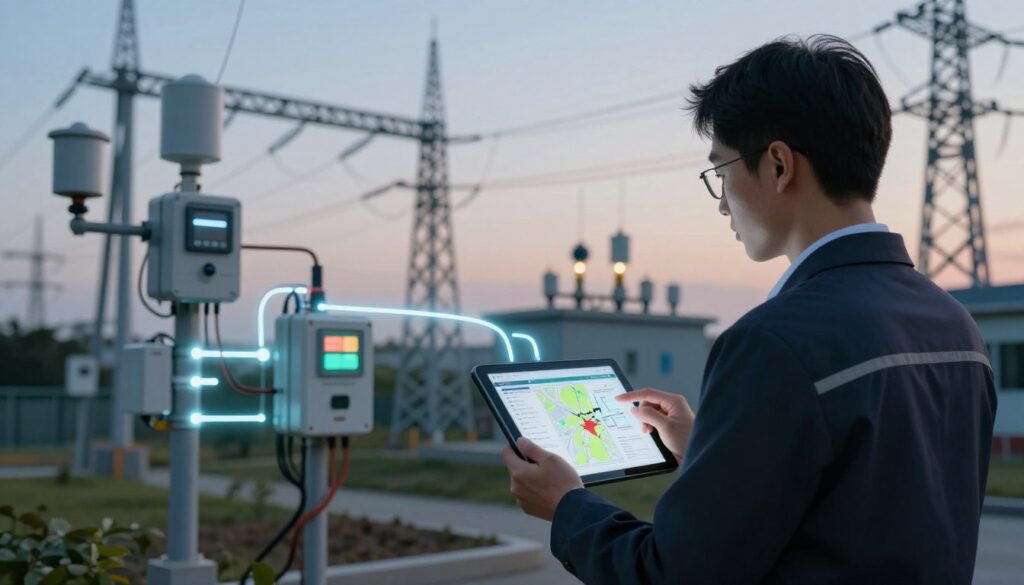
Triage is where teams stop chasing noise. Dashboards roll up alarms by feeder, segment, and device health so operators can narrow the fault zone and reduce false calls. With incident logging in place, each event keeps its chain of evidence, from the first alert to the last operator note.
From there, decisions turn into coordinated work. Control-room switching plans guide isolation and switching so healthy sections stay energized while crews focus on the likely faulted span. Targeted dispatch improves safety and pace because trucks roll with a location, recent readings, and a short list of probable causes.
Verification closes the loop in real time. As voltage returns and readings stabilize, restoration confirmation messages help operators verify service is back on the right devices and the right customers. Operational playbooks also define what to do when data conflicts, such as when a meter shows power but a line sensor still flags an anomaly.
Improvement happens after the lights are on, not months later. With Iottive-style telemetry feeding reports, teams can review timing, device behavior, and crew actions to tune alert thresholds and refine the outage response process. Over-the-air changes can then standardize the updated fault localization workflow across the fleet while incident logging preserves traceability for audits and training.
| Loop Step | Operator View in Smart Grid Operations | Field and Control Actions | Data Captured for Incident Logging |
|---|---|---|---|
| Detect | Loss-of-power and abnormal readings grouped by feeder and time | Acknowledge alerts; validate signal quality before escalation | Event timestamp, device ID, last-good reading, alert type |
| Decide | Mapped fault zone with impacted devices and likely upstream point | Choose isolation and switching steps; set targeted dispatch priority | Decision notes, priority level, affected segments, assumptions used |
| Act | Switching status and crew progress tracked against the outage response process | Remote switching where allowed; field isolation, patrol, and repair | Switch operations, crew arrival time, hazards observed, work orders touched |
| Verify | Restoration confirmation signals across sensors and downstream devices | Confirm backfeed risk cleared; validate readings stay stable under load | Restore time, voltage stability window, exceptions, customer call trends |
| Improve | Trends that show repeat faults, slow handoffs, or noisy devices | Update operational playbooks; adjust thresholds; apply OTA configuration | Root-cause tags, rule changes, before/after performance, training notes |
Connectivity and Resilience When Networks Fail
Smart grid alerts only help if they arrive during the hardest moments. When a feeder drops or a storm hits, local broadband can go dark fast. That is why resilient connectivity has to be designed in, not added later.
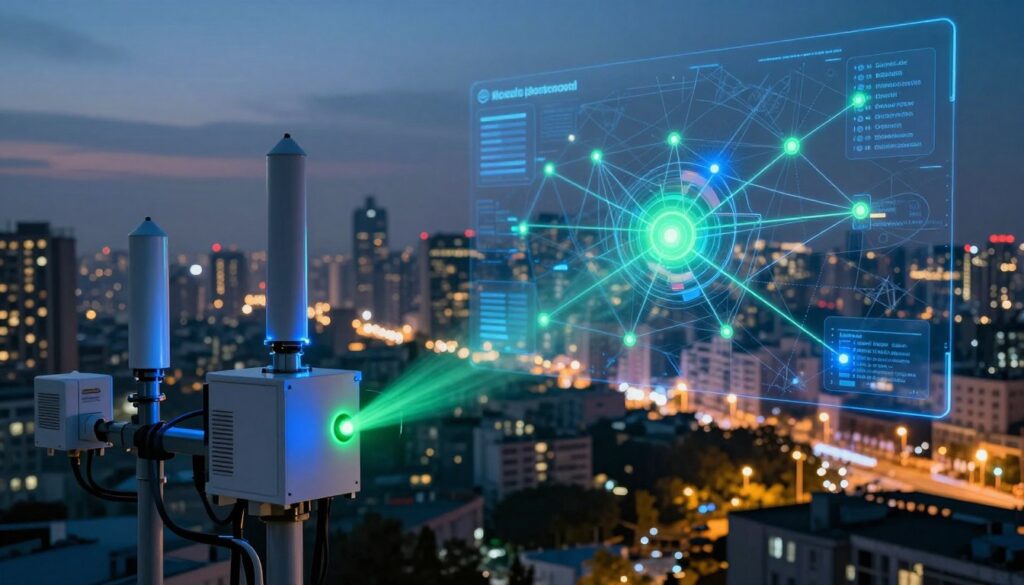
Utilities also need signals they can trust at scale, from a single meter to a whole county. The goal is simple: get clear, time-stamped events without delay, even when normal paths fail.
Why “no Wi‑Fi required” alerting models matter during outages when local Internet drops
Outage conditions create a basic problem: when power fails, Wi‑Fi will too. If alerts depend on a home router, they may vanish right when crews need them most. That is why no Wi‑Fi outage alerts are built to bypass local Internet entirely.
In practice, this supports faster triage and fewer blind spots. It also reduces confusion for customers who assume “no internet” means “no reporting,” even though the grid still needs status signals.
Using cellular networks for reliable outage notifications and restoration confirmations
Cellular outage notifications keep flowing when Wi‑Fi is down, because the device can send events over the carrier network. Many systems can notify stakeholders by text, voice, or email, and some models treat email as a free channel. With unlimited phone numbers, operations teams can notify dispatch, supervisors, and critical facility contacts without rationing recipients.
Modern cellular IoT options like eMTC and NB‑IoT are designed for wide coverage and long device life. eMTC is positioned for nationwide reach in the United States, while both approaches target deployments that can run for 10+ years, and often closer to 20+, with careful power design. That long runway supports consistent restoration confirmation messaging, not just first-alert reporting.
| Design need | What it looks like in the field | Why it helps during major incidents |
|---|---|---|
| no Wi‑Fi outage alerts | Device reports without relying on local routers or broadband | Keeps event visibility when premises Internet drops after a power interruption |
| cellular outage notifications | Text or voice alert paths ride the carrier network | Delivers updates to broad call trees, even when neighborhoods lose Internet |
| NB‑IoT | Cellular IoT mode tuned for coverage and low power | Improves reach in challenging locations while supporting long service life |
| eMTC | Cellular IoT mode positioned for full U.S. coverage | Supports consistent alerting across large territories and mixed terrain |
| restoration confirmation | Clear “power restore” event sent after service returns | Reduces repeat truck rolls and helps close tickets with verified status |
Defense-in-depth reliability: redundancy, health monitoring, and secure alert delivery
Resilience also depends on defense-in-depth. That means redundancy across alert paths, plus health monitoring that watches signal strength, latency, and missed check-ins. When a device trends toward poor reception, teams can correct placement or antennas before the next storm.
Secure alert delivery is part reliability and part security. Encrypted links protect event data in transit, while signed firmware helps ensure only authenticated updates run on the device. Similar to network segmentation and intrusion detection in enterprise systems, these controls reduce the risk that a compromised update degrades outage detection performance.
Reliable systems also show discipline at the factory. Practices like 100% burn-in testing, a functional test that can run up to 30 minutes before shipping, and strict screening for low signal quality turn “should work” into “does work.” That operational rigor supports consistent alerts for both power interruption and power restore events.
Conclusion
Smart grids in the United States cannot rely on slow, manual checks when the lights go out. Utilities need instant outage detection and tight fault localization to cut risk, limit damage, and restore service fast. Outage detection systems that surface clear, verified events help operators act with confidence under pressure.
The Iottive smart grid model ties together edge devices, gateways, cloud dashboards, and mobile access so teams see the same facts at the same time. This smart energy solution turns field signals into prioritized actions, from isolation to targeted dispatch. With this workflow, crews spend less time searching and more time fixing.
Grid resilience is also about staying online when local networks fail. “No Wi‑Fi required” design and cellular alerts keep outage notifications and restoration confirms moving even when cable and fiber are down. That continuity supports safer switching, better coordination, and fewer blind spots during storms.
Finally, performance should improve as the grid grows more complex. Secure, authenticated OTA updates and fleet-wide configuration control keep outage detection systems current without waiting for truck rolls. Telemetry and event history sharpen settings over time, so instant outage detection and fault localization stay dependable season after season.
FAQ
What does Instant Outage Detection mean in a U.S. smart grid?
How does Iottive support end-to-end outage detection and faster fault localization?
Why is instant detection an operations problem, not just a hardware problem?
Why does Instant Outage Detection matter more in the United States?
What real-world losses do “reliable outage alerts” help prevent?
Why is speed-to-locate faults such a critical safety and performance factor?
How do edge sensors, gateways, and cloud analytics work together to pinpoint faults?
What role does edge compute play when every second counts?
How do cloud dashboards improve outage triage?
How do instant notifications translate into faster restoration work?
What does the Iottive “edge + cloud + OTA + mobile app” operational loop look like in practice?
Why must outage alerting work when local Internet fails?
How do “no Wi‑Fi required” models keep notifications flowing during blackouts?
What cellular options support resilient outage notifications in the field?
What kinds of notifications can an instant outage model deliver?
Why are OTA updates essential for outage detection systems at scale?
What security controls should protect OTA firmware and configuration updates?
What is “defense-in-depth” for outage detection and alert delivery?
What reliability practices matter for dependable outage alert devices?
How does mobile access change outage response for operators and field crews?
How does telemetry help utilities improve outage detection over time?
How Iottive Delivers End-to-End Smart Monitoring Solutions for Electrical Utilities
1. Grid Strategy & Solution Design
Iottive collaborates with electrical utility providers, grid operators, substation managers, and digital transformation teams to understand challenges across power transmission and distribution networks.
This phase focuses on:
- Power loss, cable faults, and grid reliability issues
- Transformer failures and substation monitoring gaps
- Regulatory compliance and outage management
We design a custom IoT & AIoT-based electrical monitoring architecture, including:
- Sensor selection: voltage, current, temperature, load, vibration
- Smart meter and feeder monitoring design
- AI-driven fault and anomaly detection models
- KPI definition: outage reduction, energy efficiency, fault detection time, asset uptime
2. Smart Systems Engineering & Grid Integration
Iottive engineers scalable Smart Electrical Monitoring systems by integrating:
- IoT sensors for transformers, feeders, and substations
- Smart meters and energy monitoring devices
- Edge computing gateways for real-time processing
- Firmware-enabled monitoring units
- Cloud platforms with AI analytics
We ensure seamless integration with:
- SCADA systems
- Energy Management Systems (EMS)
- Distribution Management Systems (DMS)
- Utility dashboards and billing systems
This enables:
- Real-time grid visibility
- Secure and continuous data flow
- Centralized monitoring of distributed electrical infrastructure
3. Pilot Deployment Across Grid Infrastructure
Before large-scale rollout, Iottive deploys pilot solutions across selected electrical infrastructure, such as:
- Substations and transformers
- Distribution feeders
- Industrial power networks
- Urban and rural utility grids
Pilot testing includes:
- Real-time fault detection systems
- Load and energy consumption monitoring
- Transformer health and temperature monitoring
- Edge analytics for outage prediction
- Remote grid telemetry systems
Utilities can validate:
- Fault detection accuracy
- System stability
- Operational impact
- Integration feasibility
4. Grid Intelligence & Operational Monitoring
Iottive develops smart dashboards and electrical intelligence platforms providing:
- Real-time voltage, current, and load monitoring
- Fault detection and outage alerts
- Transformer health and performance insights
- Energy consumption analytics
- Grid load balancing visibility
- Predictive maintenance alerts
With AIoT analytics, mobile apps, and web dashboards, utility teams can:
- Detect faults before outages occur
- Reduce downtime and energy losses
- Improve grid reliability
- Optimize load distribution
5. Enterprise Rollout & Utility Scale-Up
From pilot to full deployment, Iottive supports:
- Cloud scalability for utility data platforms
- Edge device and firmware management
- Secure infrastructure monitoring
- Multi-region grid deployment
Solutions are designed for:
- Power transmission networks
- Distribution utilities (urban & rural)
- Smart grid infrastructure
- Renewable energy integration
Continuous optimization is enabled through AI-driven insights and predictive analytics.
Why Electrical Utilities Choose Iottive
- Proven expertise in IoT & AIoT-based electrical monitoring solutions
- Deep understanding of grid infrastructure, substations, and distribution systems
- Seamless integration with SCADA, EMS, and utility platforms
- Secure, scalable, and production-ready architectures
- Strong focus on outage reduction, efficiency, and grid reliability
Contact Us: sales@iottive.com

Transform Your IoT Vision Into Reality.
Get free expert insights, architectures & cost breakdowns.
Drop your email to schedule free meeting.