In today’s industrial landscape, electricity has become a top strategic expense. Prices shift weekly, and audits for sustainability are now standard. Customers and investors ask a critical question: how efficiently does your facility operate?

Factories face unprecedented pressure from rising expenses. Volatile pricing and new regulations drive this change. Stakeholders across the supply chain now expect greener operations.
Old methods for tracking use are no longer enough. Monthly bills and manual checks lack the needed visibility. This gap makes controlling an unpredictable expense very difficult.
The need for better control is now a primary strategic imperative. It directly impacts profitability and market position. Modern facilities require intelligent solutions for real-time insight.
This evolution in optimization turns a major cost into a managed resource. It uses connected analytics to monitor consumption patterns. The goal is proactive decision-making for better financial results.
Key Takeaways
- Electricity is a major and volatile operational expense for industrial facilities.
- Traditional monthly billing does not provide the visibility needed for cost control.
- Stakeholder demand for sustainability makes efficiency a core business requirement.
- Real-time monitoring of power use is essential for identifying waste and peaks.
- Intelligent management systems transform energy from a fixed cost into an optimized resource.
- Proactive analytics enable immediate operational adjustments and long-term financial benefits.
Understanding the Rising Energy Costs in Manufacturing Plants
Manufacturing sites are grappling with a perfect storm of conditions that inflate their power expenditures. This isn’t just about the price per kilowatt-hour. Multiple external and internal forces combine to strain budgets.
Traditional setups rely on monthly bills and manual checks. By the time waste is spotted, the expense is locked in. Modern facilities now track this resource in real-time on dashboards.

Factors Driving Increased Energy Consumption
External pressures are significant. Grid infrastructure strain and volatile fossil fuel prices play a role. Increased industrial demand and renewable integration costs add to the overall supply burden.
Inside the facility, aging infrastructure is a major culprit. Older machines use far more power per unit made. Processes for heating, cooling, and compressed air are the largest consumption categories.
A hidden waste source is standby phantom load. Idle machines still draw power, offering no output. Furthermore, utility peak demand charges can form most of a bill, yet spikes often go unseen.
Impact on Manufacturing Operations
The consequences reach deep into daily operations. Higher per-unit production costs directly erode profit margins. This affects scheduling flexibility and limits capital for new investments.
Facilities become less competitive. Without detailed data, finding the root cause of high costs is guesswork. Leaks in air systems or inefficient lighting create a continuous drain.
This operational impact makes efficient energy management a core business requirement. The goal shifts from simply paying bills to actively controlling a key resource.
The Evolution of IoT Energy Management in Manufacturing
The journey from manual logs to intelligent oversight marks a pivotal shift in industrial resource management. This transformation turns sporadic checks into a continuous stream of actionable information.
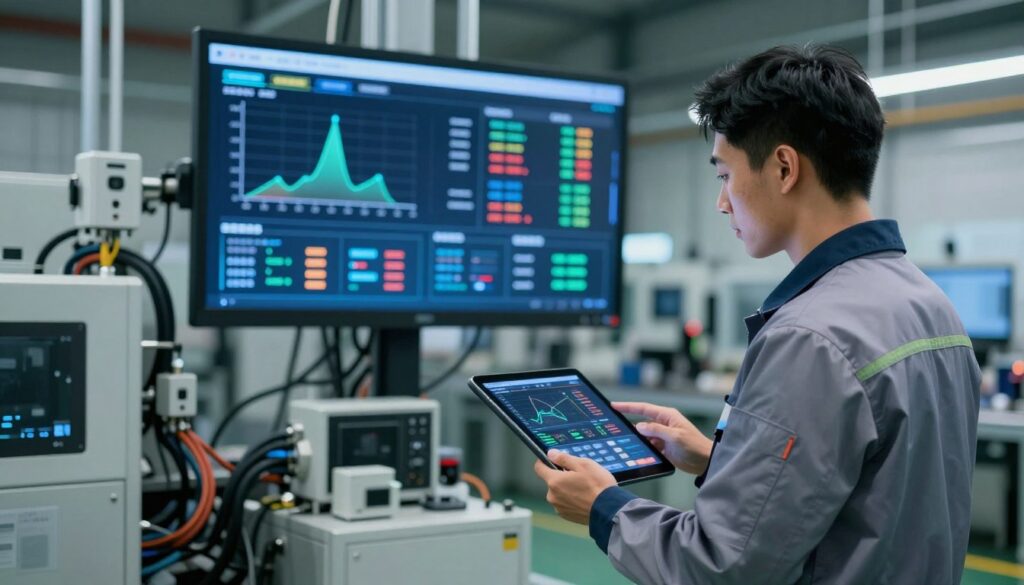
Granular data collection is now possible at every point of use. Connected devices track consumption patterns for machines and facility operations.
The Role of Sensors and Smart Systems
Modern sensors are deployed across all major power consumers. They measure usage in real-time, sending this information to cloud-based platforms.
Sophisticated algorithms then process millions of data points. This reveals inefficiencies and optimization chances hidden from manual checks.
The result is a clear, visual dashboard for all teams. It democratizes access to critical performance insights.
Transitioning from Manual to Automated Controls
Automation eliminates human error and slow response times. Systems can now make adjustments in seconds, not days.
This technology enables a predictive approach to management. It learns normal patterns and flags deviations immediately.
Such control transforms energy from a fixed cost into an optimized variable. Facilities gain a powerful tool for financial and operational improvement.
Harnessing Smart Manufacturing Plant, IoT Energy System, Smart Energy System, BLE System for Energy Efficiency
Strategic cost control in today’s competitive environment is enabled by a mesh of low-power, intelligent sensors and analytics platforms. This integrated approach moves beyond monitoring single machines.
A Smart Manufacturing Plant architecture weaves these components into a unified ecosystem. It optimizes consumption across production lines and facility operations simultaneously.
An IoT Energy System provides the foundational visibility. Distributed sensor networks and cloud analytics deliver a complete picture of energy flows.
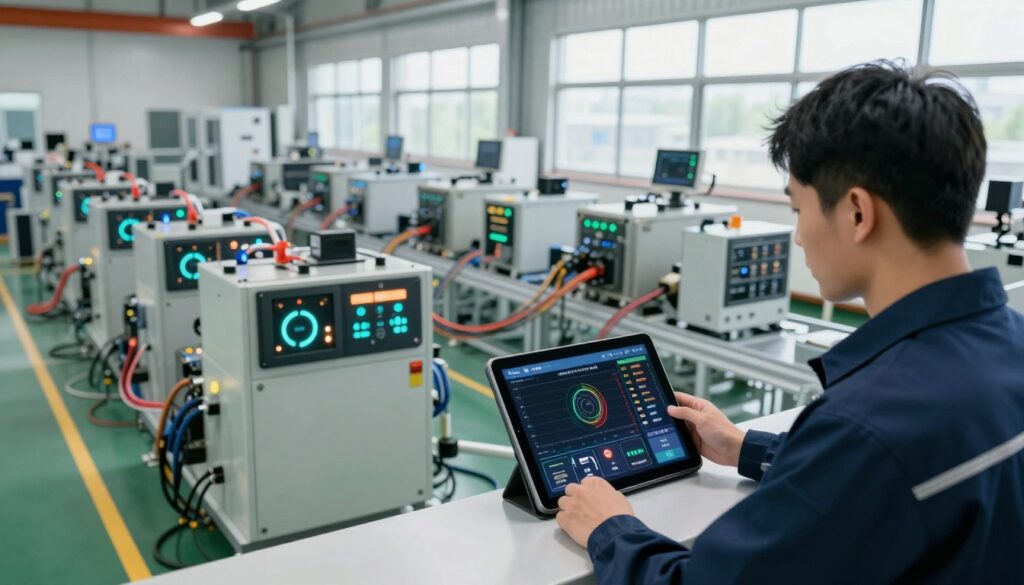
The design of a Smart Energy System turns data into action. It uses secure protocols and predictive algorithms for autonomous optimization.
For connectivity, BLE System technology is ideal. Its ultra-low power allows battery-operated devices to last for years, slashing maintenance costs.
This technology operates in the crowded 2.4 GHz spectrum. Advanced techniques like adaptive frequency hopping manage interference in dense facilities.
Multi-protocol chips combine BLE with other standards on one device. This creates flexible, hybrid networks optimized for diverse needs.
The market for these solutions is projected to grow dramatically. This reflects widespread recognition of their proven return on investment.
Modern implementations support massive, scalable sensor deployments. They eliminate integration barriers and grow alongside operations.
Real-Time Energy Monitoring and Data-Driven Insights
True operational control begins the moment you can see what’s happening, not weeks later when the bill arrives. This shift to live tracking turns a reactive expense into a managed variable.
It provides awareness at the machine and process level. Spikes are detected instantly, enabling a proactive stance.
Integrating IoT Sensors and Cloud Analytics
Connected sensors deployed across a facility feed a continuous stream of usage data to a central platform. This cloud-based architecture is inherently scalable.
Advanced analytics then process this information. They establish normal consumption profiles and automatically flag any deviation.

Immediate Response to Energy Spikes
Automated alert systems notify teams within seconds of an anomaly. This dramatic reduction in response time is a critical advancement.
For facility managers, this monitoring reveals exactly which shift or process consumes the most power. For technical leaders, the structured, time-series data integrates directly with enterprise systems like ERP.
These data-driven insights empower informed decisions on upgrades and scheduling. The result is a closed-loop process for continuous optimization.
Enhancing Predictive Maintenance with Smart Energy Optimization
A machine’s power consumption tells a detailed story about its mechanical condition, offering clues long before audible or visual signs appear. Patterns in this data serve as early warnings. A motor drawing more power than usual may be misaligned or nearing failure.

Early Detection of Equipment Issues
Continuous tracking establishes a normal energy signature for each device. This baseline becomes a reference point for spotting anomalies. Such monitoring shifts maintenance strategy from reactive repairs to planned interventions.
Rotating equipment like pumps and compressors show clear degradation signals. Increased electrical draw often points to bearing wear or lubrication issues. Detecting these changes early prevents costly unplanned downtime.
Compressed air networks benefit significantly. Leaks and pressure irregularities create a continuous drain. Intelligent monitoring spots these inefficiencies that traditional checks miss.
This approach correlates energy data with production schedules and machine cycles. It reveals which assets need attention and the urgency required. The result is a powerful, data-driven maintenance program that protects equipment performance and extends asset life.
Maximizing Operational Efficiency through Advanced Analytics
The true power of modern industrial data lies not in collection but in sophisticated analysis that drives actionable insights. Advanced platforms transform raw numbers into visual intelligence.
Heat Maps and Trend Analysis
Heat maps provide spatial views of consumption across a facility. They instantly highlight zones with disproportionate use. This visual tracking prioritizes efforts for maximum impact.
Trend analysis shows whether efficiency initiatives deliver results. It quantifies improvements over weeks or months. Seasonal patterns inform better planning.
Data-Driven Decision Making
Evidence-based decisions replace guesswork. Analytics quantify the impact of schedule changes before implementation. This approach supports capital investment choices.
Correlation analytics reveal hidden relationships. They connect power use with production volume and shift patterns. This enables sophisticated optimization strategies.
| Discovery Type | Typical Finding | Recommended Action | Expected Gain |
|---|---|---|---|
| Peak Time Usage | High-consumption process during expensive tariff windows | Shift schedule to off-peak hours | 15-25% cost reduction |
| Equipment Inefficiency | Older assets use more power per unit produced | Targeted upgrades or maintenance | 10-20% energy efficiency improvement |
| Process Optimization | Unnecessary standby consumption during breaks | Implement automated shutdown protocols | 5-15% consumption decrease |
Balancing Production and Energy Loads
Sophisticated analytics find optimal points between throughput and power use. They identify chances to move intensive operations to cheaper periods.
Tracking consumption per unit produced becomes a key performance metric. This enables benchmarking and continuous improvement. The result is maximized overall efficiency.
Innovative Solutions for Dynamic Energy Optimization
Cutting-edge communication protocols and autonomous controls are redefining how facilities manage their power consumption. These advanced solutions move beyond simple monitoring to actively optimize usage in real-time.
Adaptive Frequency Hopping and Dynamic Power Management
Reliable data collection in electromagnetically challenging environments demands robust technology. Adaptive frequency hopping allows sensor networks to maintain clear communication by automatically switching between available channels.
This technique avoids interference from Wi-Fi and other industrial equipment. Dynamic power management strategies optimize the infrastructure’s own energy use.
Sensors and gateways adjust their transmission power and operational modes based on real-time requirements. These control systems ensure reliable operation without constant oversight.
Autonomous Adjustments and Cost Reduction
The pinnacle of these solutions is advanced automation that requires no manual intervention. These systems can automatically throttle non-critical loads during peak tariff hours without impacting output.
Such autonomous adjustments lead to direct and sustained savings. They eliminate standby power waste through automatic equipment shutdowns.
This automation also optimizes HVAC operation based on actual occupancy rather than fixed schedules. Multi-protocol solutions combine different communication protocols for optimal performance.
This creates flexible, hybrid networks suited for diverse industrial tasks. The result is a significant reduction in operational costs. These savings directly improve the bottom line.
Strategic Integration of Energy and Dispatch Systems
The most significant waste often occurs not during production, but in the spaces between processes. Finished goods idling in loading bays consume power for lighting and climate control unnecessarily. This highlights a critical gap in traditional operational management.
Streamlining Production and Logistics
Delays from manual paperwork keep products in storage areas longer. Streamlined dispatch systems using mobile scanning fix this. They connect directly to enterprise platforms like SAP.
This integration slashes idle time. HVAC and lighting in warehouses then operate more efficiently. Real-time visibility into the supply chain enables just-in-time logistics.
Leveraging ERP and MES Integrations
Linking consumption data with Manufacturing Execution Systems is transformative. It allows precise calculation of energy used per unit produced. This accuracy is vital for cost accounting and sustainability reports.
Centralized platforms provide oversight across multiple buildings. They simplify tracking and benchmark performance. Applications range from industrial infrastructure to commercial buildings.
Institutions use this for occupancy-based control in classrooms. It also ensures proper temperature and conditions for sensitive storage. This convergence turns data into a strategic metric for businesses.
Conclusion
The conclusive evidence from deployments across sectors reveals that intelligent resource management is a growth engine, not just a cost center. The shift from reactive expense tracking to proactive optimization is fundamental.
Real-time monitoring and data analytics deliver measurable benefits. These include direct cost savings and improved operational efficiency.
Enterprise-grade security with robust encryption and access control protects this critical data. Scalable cloud or on-premises systems support thousands of connected devices reliably.
This integration transforms energy data into strategic business intelligence. The imperative is clear: leveraging this intelligence is now a core competitive advantage.
FAQ
What are the main reasons energy expenses keep going up in factories?
How does modern technology move beyond basic manual meter readings?
Can these solutions really help lower my facility’s power bills?
How does real-time monitoring protect my operations from unexpected issues?
What is the connection between energy management and equipment upkeep?
How do analytics turn raw data into actionable plans for my team?
What are some technical features that ensure these systems work reliably in busy plants?
How does energy data integrate with broader production and logistics software?
How Iottive Delivers End-to-End IIoT Solutions
1. Concept & Solution Design
Iottive works closely with plant teams, engineering leaders, and stakeholders to understand operational challenges, asset behavior, and production goals. This phase includes use-case validation, system architecture design, sensor selection, connectivity planning, and defining measurable business outcomes.
2. Engineering & System Integration
Iottive engineers industrial-grade IIoT solutions by integrating sensors, PLCs, SCADA systems, gateways, and industrial protocols such as OPC UA, Modbus, MQTT, and BLE. The focus is on reliable data acquisition, secure communication, and seamless integration with existing automation infrastructure.
3. Prototyping & Pilot Deployment
Rapid prototyping enables manufacturers to validate concepts on the shop floor before full-scale rollout. Iottive develops functional prototypes, edge analytics, dashboards, and mobile applications to test performance, data accuracy, and operational feasibility in real manufacturing environments.
4. Product Experience & Data Intelligence
Iottive designs intuitive web and mobile dashboards that provide real-time visibility into machine health, production metrics, and operational KPIs. Advanced analytics, alerts, and visualization tools empower plant teams to take proactive, data-driven decisions with minimal complexity.
5. Commercialization & Scale-Up
From MVP to enterprise deployment, Iottive supports product hardening, scalability, cloud or hybrid deployments, and long-term maintenance. Solutions are designed for multi-plant rollout, system expansion, and continuous optimization—ensuring measurable ROI and operational impact.
Why Manufacturers Choose Iottive
- Proven experience in Industrial Automation & IIoT
- Strong understanding of real shop-floor challenges
- Seamless integration with existing PLC/SCADA systems
- Scalable, secure, and production-ready architectures
- Focus on business outcomes, not just technology
📧 Contact Email: sales@iottive.com

Transform Your IoT Vision Into Reality.
Get free expert insights, architectures & cost breakdowns.
Drop your email to schedule free meeting.