Manufacturing facilities face a silent threat to their bottom line. Rising electricity bills, driven largely by demand charges during periods of high use, can erode profitability without warning.
Often, plant managers lack the granular visibility needed to see which machines or processes are causing these costly spikes. This blind spot makes effective management nearly impossible.
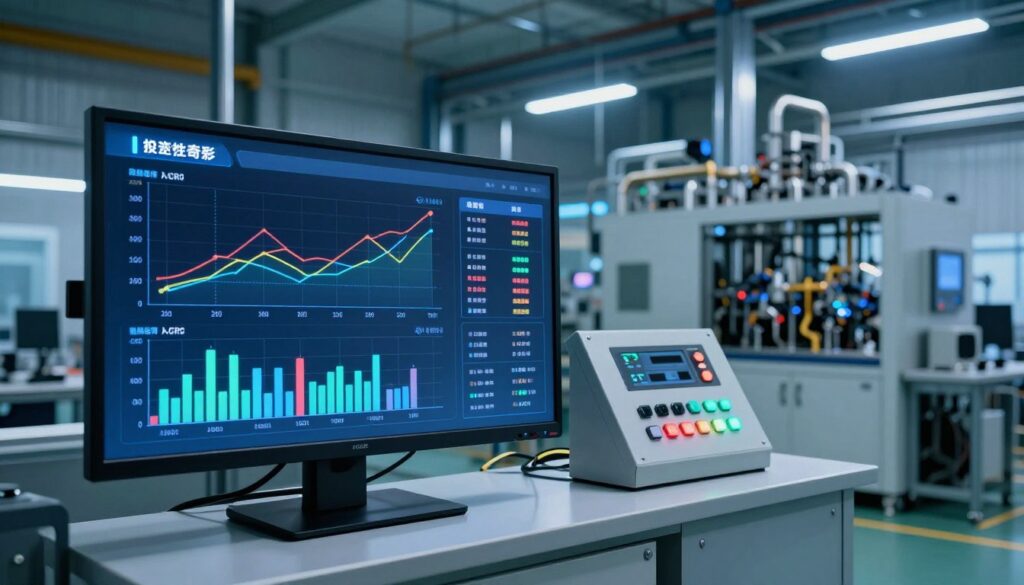
Modern industrial energy monitoring systems change this dynamic. Tools like the eGauge Pro have delivered real-time, second-by-second data since 2008, capturing even minor fluctuations in power draw.
This level of detail is crucial. Advanced setups can track up to 64 separate power sources simultaneously, from individual production lines to HVAC systems.
With this comprehensive data, businesses can move from reactive bill-paying to proactive control. Iottive integrates this intelligence into a cohesive platform for smarter decision-making.
The result is a dual win: significant operational savings and a reduced environmental footprint. This guide explores the practical steps to achieve both.
Key Takeaways
- Gain real-time, machine-level visibility into power usage to uncover hidden inefficiencies.
- Avoid expensive utility demand charges by identifying and managing periods of highest consumption.
- Integrate renewable sources and storage to create a more resilient and sustainable power profile.
- Leverage proven technology that provides second-by-second data for accurate analysis and forecasting.
- Monitor dozens of energy streams from a single platform for complete facility oversight.
- Reduce operational costs and carbon emissions through data-driven optimization strategies.
Overview of Peak Energy Challenges in Manufacturing Plants
Manufacturing plants frequently encounter steep, hidden fees on their electricity statements due to collective high usage periods. Utility providers implement these peak demand rates to discourage spikes that threaten the stability of the entire electrical grid.
The financial impact is direct and substantial. These demand charges can add hundreds of dollars to a facility’s monthly utility bills, eroding profit margins without warning.
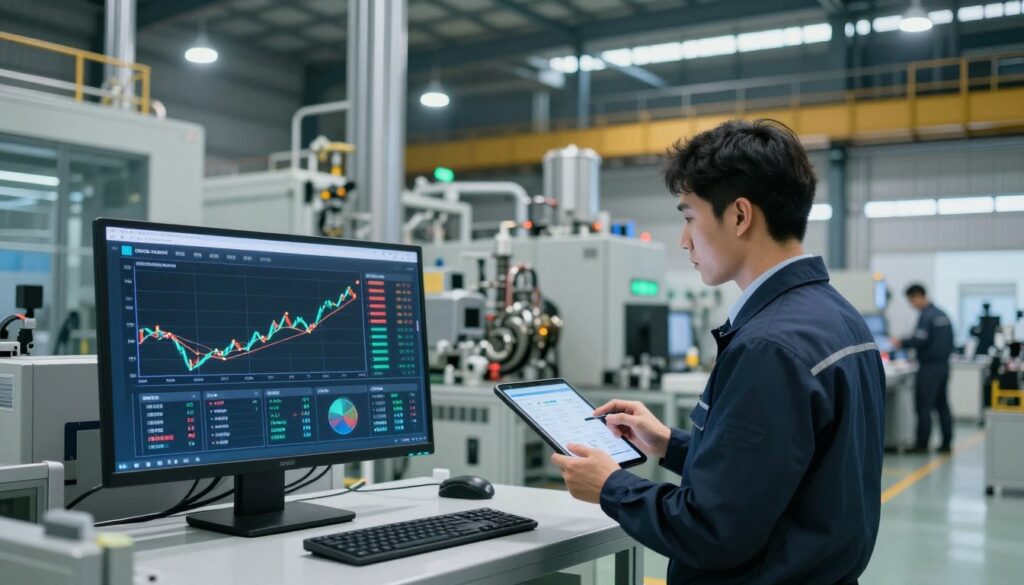
Traditional utility meters are a major part of the problem. They provide a total monthly usage figure but fail to track which specific machines or processes drive these costly spikes. This leaves site managers without the actionable data needed for effective control.
Identifying the liable equipment requires high-resolution submetering hardware. By analyzing detailed load profiles, managers can pinpoint exactly when and where peak demand occurs during production cycles.
Overcoming these challenges demands a fundamental shift. Moving from simple monthly kWh tracking to a granular, real-time view of power consumption is essential for true cost management and operational efficiency.
Why Industrial Energy Monitoring is Essential
Modern manufacturing requires more than just total power readings to optimize efficiency and reduce expenses. Detailed visibility into electrical loads transforms how facilities manage both equipment health and electricity costs.
Traditional submetering hardware creates significant limitations. These outdated systems often lack modern communication features and incur high maintenance expenses.
The eGauge Pro system represents a fundamental advancement. With 30 CT inputs, a single unit can replace 10-15 traditional submeters, dramatically lowering installation costs.
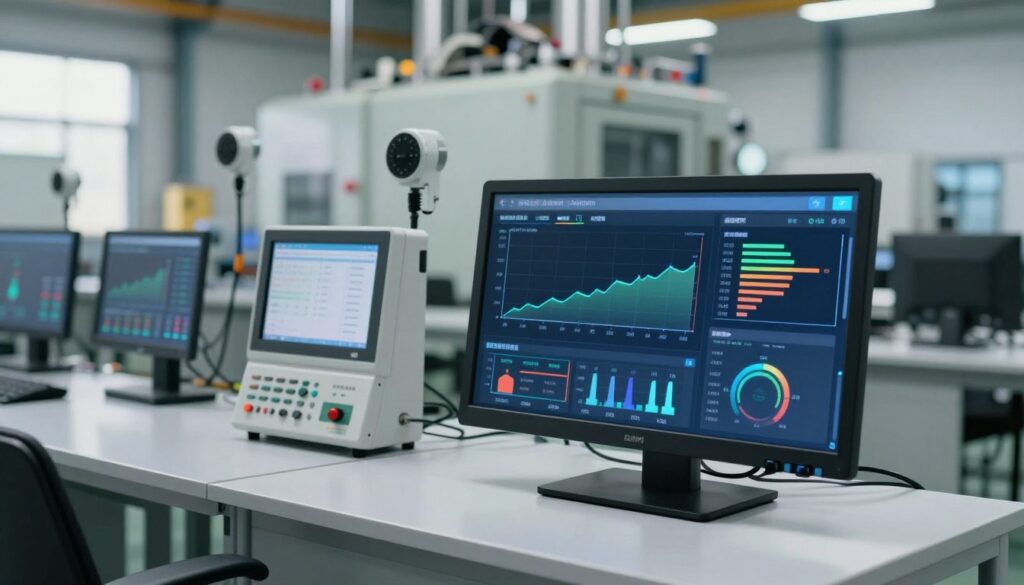
This consolidated approach enables proactive equipment maintenance. Managers can identify potential issues before they disrupt production lines, preventing costly downtime.
Modern solutions track data from up to 64 different sources. They support cellular, WiFi, and Bluetooth communication for flexible integration.
| Feature | Traditional Submeters | Modern Monitoring System |
|---|---|---|
| Installation & Hardware Cost | High (multiple units needed) | Low (single consolidated unit) |
| Maintenance Burden | Significant ongoing expense | Minimal with modern components |
| Data Granularity & Sources | Limited, often single-point | High, up to 64 sources tracked |
| Communication & Integration | Basic or non-existent | Cellular, WiFi, Bluetooth enabled |
| Primary Benefit | Basic usage tracking | Proactive management & cost control |
Organizations without proper monitoring often pay for electricity they don’t effectively use. Poor power quality and unmetered consumption create hidden expenses on monthly bills.
Transitioning to advanced systems delivers clear savings. It provides the data needed for informed decision-making across the entire facility.
Smart Energy: The Future of Energy Management in Industry
Forward-thinking factories are adopting integrated platforms that turn raw electrical data into actionable insights. This approach moves beyond basic meters to create a cohesive management ecosystem.
Modern systems rely on three core components. A centralized gateway acts as the brain, collecting information from all connected devices and equipment.
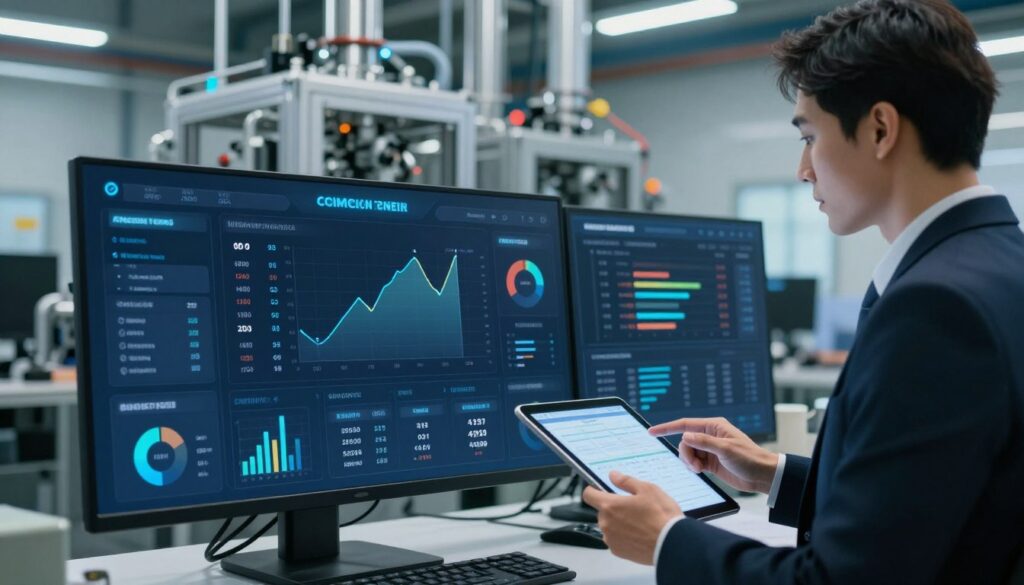
The software layer uses sophisticated algorithms to set rules. It prioritizes power usage and manages loads to maximize self-sufficiency and efficiency.
Providers like McPherson Controls offer advanced solutions that prioritize customization. This allows any business to tailor its power strategy, drawing electricity during cheaper off-peak periods to cut costs.
The user interface completes the system. It lets teams visualize live and historical data, track key performance indicators, and manage control across an entire facility.
This holistic platform delivers significant savings and helps companies meet sustainability goals. It represents the definitive future of industrial power analysis and demand response.
Real-Time Data: Enhancing Efficiency and Decision Making
Granular, second-by-second updates move facility management from a guessing game to a precise science. Tools like the eGauge Pro provide graphical updates precise enough to see the effect of powering a single LED bulb. This immediacy collapses the decision-making timeline.
Benefits of Real-Time Data Analysis
Managers see the direct impact of initiatives instantly. This allows for immediate verification of savings and operational tweaks.
More importantly, it enables proactive equipment care. Advanced users leverage this speed to tackle voltage imbalances and harmonic distortion before they cause damage. This prevents costly downtime and repairs.
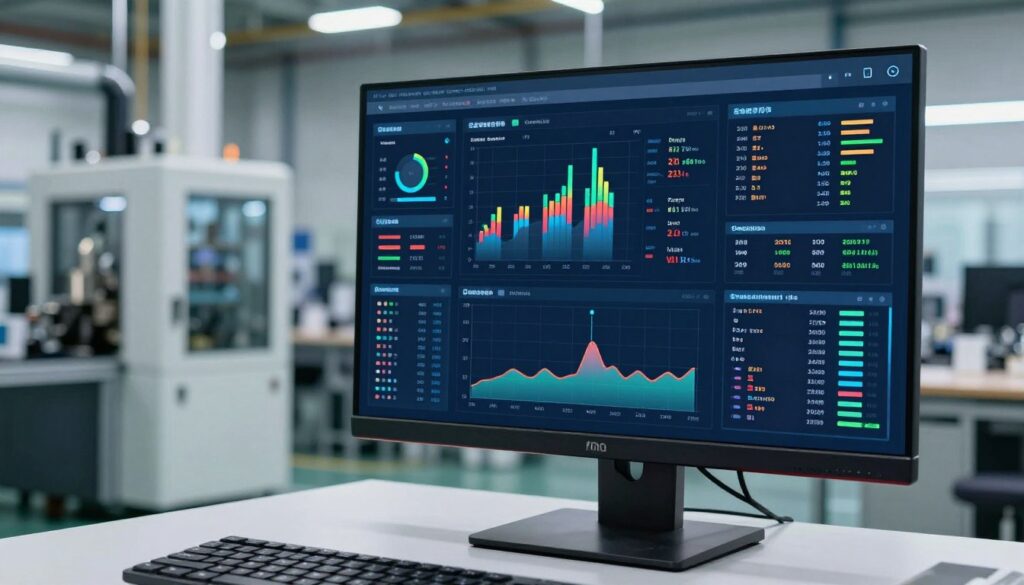
The need to review historical reports for basic insights is eliminated. Decisions are based on live conditions, streamlining the entire management process.
Case Examples from Modern Manufacturing
Forward-looking plants use this visibility to spot waste as it happens. They can then take corrective action within the same production cycle, not weeks later.
Advanced analytic tools allow deep research into power quality. Teams analyze power factor, phase offsets, and polarity with full control. This level of analysis drives further efficiency gains.
Ultimately, this real-time approach transforms raw data into a powerful tool for controlling costs and boosting overall facility performance.
Integrating Hardware and Software for Comprehensive Energy Data Insights
The true power of an energy monitoring system lies in its ability to transform raw electrical signals into actionable business intelligence. This seamless integration turns collected measurements into a powerful platform for strategic decision-making.
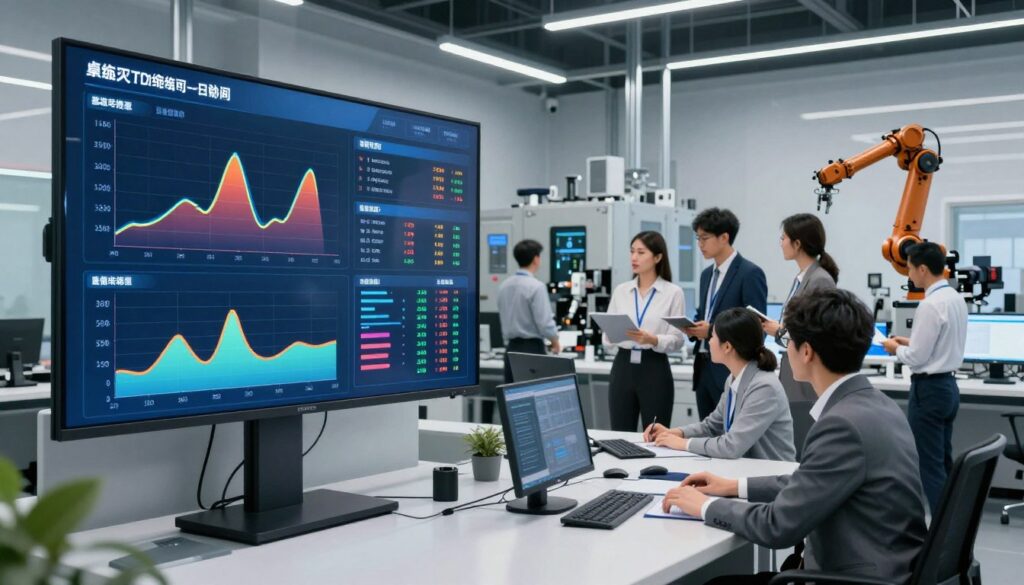
Advanced Analytics Tools and Techniques
Sophisticated software provides deep diagnostic tools. For example, an oscilloscope feature allows expert users to research power quality with precision.
Companies can feed data into secondary databases. This enables complex calculations that standard monitoring software cannot handle, driving greater efficiency.
Leveraging Spreadsheet Exports and JSON API Integration
CSV exports are perfect for bill generation and advanced analysis. They work seamlessly with programs like Microsoft Excel.
The JSON API, offered at no cost, expands the data toolset. Developers can integrate external sources like weather information to understand climate control usage patterns and related costs.
| Data Access Method | Primary Use Case | Key Benefit |
|---|---|---|
| CSV Export | Advanced calculations & billing reports | Universal spreadsheet compatibility |
| JSON API | Integrating third-party data (e.g., weather) | Enables custom applications & insights |
| Oscilloscope Tool | Deep power quality research | Granular diagnostic capability for experts |
This combination of hardware and software features makes modern solutions like the eGauge Pro a dominant contender in the submetering market.
Effective Strategies for Monitoring peak energy consumption
A strategic framework is essential for pinpointing the exact sources of costly power surges within a facility. This approach moves beyond simple tracking to actively manage demand.
Advanced systems like the eGauge Pro capture a location’s baseline load and identify spike patterns. This data pinpoints liable equipment and determines when peak charges occur.
Managers use this intelligence to modify load profiles effectively. They ensure operations stay within the limits set by utility providers, avoiding penalty costs.
Proactive monitoring compares similar loads and provides early warnings. This helps prevent capital loss from overloaded or failing equipment before damage happens.
| Strategic Action | Tool/Data Used | Primary Outcome |
|---|---|---|
| Identify High-Usage Areas | Baseline load analysis from submeters | Pinpoint exact sources of demand charges |
| Modify Operational Schedules | Real-time consumption data | Stay within utility limits and avoid fees |
| Compare Equipment Performance | Load comparison alerts | Prevent failures and reduce repair costs |
| Implement Load Shifting | Historical usage patterns | Lower peak demand and overall electricity bills |
Implementing these strategies helps building managers address issues proactively. It ensures long-term reliability for the entire facility while achieving significant savings.
Data Collection and Accuracy: Utilizing Smart Meters and Sensors
The precision of energy insights depends entirely on the quality and granularity of the underlying measurement technology. Foundational hardware like current transformers captures raw electrical signals from each circuit or machine.
Sensor Technologies and Wireless Integration
Current sensors, or CTs, measure alternating current directly at the source. They provide high-accuracy readings, typically averaging consumption every 30 seconds.
Modern versions leverage wireless, energy-harvesting designs. These units clip around power cables without needing batteries or disruptive wiring during setup.
Available in ranges from 1A to 600A, they accommodate various cable diameters. This flexibility ensures compatibility with different machines across a facility.
Data Aggregation and Granular Monitoring
Smart gateways collect readings from all sensors. They convert this data into industry-standard JSON format for cloud or local server transmission.
This process enables tracking of every individual machine’s electricity use. Organizations can pinpoint exactly where power is used most and where waste occurs.
Because these meters are platform agnostic, they integrate with any IoT software. This expands the potential for customized data analysis and insight across facilities.
Enhancing Energy Management with Alerts and Automated Responses
Automated alerts serve as the first line of defense against unexpected equipment failures. They transform how a facility responds to operational anomalies, shifting from reactive fixes to proactive control.
Proactive Alert Systems for Equipment Monitoring
Advanced systems like the eGauge Pro send instant notifications via text and email. This allows teams to monitor for unusual activity and address problems before they escalate.
Commercial assets, such as refrigeration units, require constant oversight. A system collapse can mean significant capital loss and unhappy stakeholders.
Setting up automatic warnings for elevators and HVAC units speeds up repairs. Property managers can keep tenants satisfied and maintain smooth operations.
These automated responses free up valuable time for professionals. Instead of babysitting troublesome equipment, they can expand their service offerings.
Renewable energy stakeholders rely on these alerts to protect their investments. They ensure systems provide expected returns and address any downtime without delay.
Alerts can be configured for inadequate performance, like a drop in solar PV production. This enables building managers to intervene swiftly, preventing serious damage to operations.
Optimizing Manufacturing Operations Through Energy Data Insights
Optimizing plant operations begins with understanding the specific power characteristics of each machine. Detailed data reveals hidden inefficiencies that impact both equipment health and utility bills.
This intelligence transforms how managers maintain their facility and control expenses.
Load Analysis and Submetering Benefits
Load analysis pinpoints machines causing low power factor. This condition leads to higher electricity costs from utility providers.
Advanced solutions like the eGauge Pro measure power factor on up to 30 sources at once. This saves large plants the time of moving a single circuit meter.
Submetering brings fairness to multi-tenant buildings. It allocates energy costs accurately based on actual consumption.
Tenant satisfaction improves when bills reflect real usage. This also encourages lower overall energy use.
| Approach | Cost Accuracy | Tenant Impact | Operational Insight |
|---|---|---|---|
| Traditional Allocation (Square Footage) | Low – Estimates only | Often leads to disputes | None – No machine-level data |
| Modern Submetering | High – Based on actual use | Promotes fairness & conservation | High – Identifies inefficient equipment |
Tracking power quality values ensures you aren’t bleeding money. Understanding these metrics is difficult without a proper power meter.
Operations improve by using data to verify equipment health. Problems are identified before they disrupt the business.
A single interface provides all necessary data. Building managers save time and avoid errors in performance analysis.
Case Studies: Successful Industrial Applications
Across various sectors, documented successes reveal the tangible benefits of integrating precise data collection with renewable sources. These real-world applications provide a blueprint for achieving both financial and operational goals.
Real-world Examples of Energy Savings
Revenue-grade accuracy is critical for investors. Tools like the eGauge Pro track Solar Renewable Energy Credits (SRECs) with precision, turning solar PV production into a verifiable income stream.
This level of analysis ensures photovoltaic and wind systems operate at maximum returns. Continuous monitoring prevents unexpected drops in production, safeguarding investments.
Battery storage solutions are gaining traction in commercial settings. When sized correctly using detailed data, they effectively reduce peak demand charges from the utility grid.
Pairing batteries with solar arrays amplifies savings. It allows a facility to align its electricity use with solar availability, cutting costs and boosting self-sufficiency.
Simplifying inverter management is another key advantage. The platform works with all brands, eliminating complex communication protocols and streamlining oversight.
These case studies prove that preventing production loss through vigilant performance tracking improves overall efficiency. The result is lower utility bills and a stronger bottom line.
The Role of Cloud-Based Platforms and User Interfaces in Energy Monitoring
The evolution of user interfaces in energy monitoring has shifted control from static reports to dynamic, interactive dashboards. These cloud-based platforms provide a single point of access for overseeing multiple facilities from any location.
This accessibility transforms raw data into a strategic business tool. Managers gain a unified view of operations without being on-site.
Interactive Graphical Interfaces and Toolsets
Modern software like the eGauge UI offers powerful graphical tools. Users can view historical and live data for up to 30 years through a convenient interface.
The interactive graphs allow teams to combine and compare multiple data points. They can adjust the view to focus on specific areas of interest for deeper analysis.
This visual approach simplifies complex electrical measurements. It empowers faster decision-making and better control over systems.
System Integration and Customization Capabilities
Integration is enhanced by portfolios like eGuard. This platform is designed for site administrators who need a summary of many devices from one place.
Customization capabilities are a key advantage. Users can organize the portfolio by site name, production value, or even device temperature for better management.
The ability to place a company logo on the interface provides a tool for self-promotion for installers. It strengthens brand presence directly within the monitoring solutions.
Local storage ensures energy information is available for the lifetime of the meter. It bypasses the need to rely on third-party servers, enhancing data security and longevity.
Facility managers can download information directly from a web browser. This streamlines reporting and reduces operational costs.
Conclusion
Adopting a data-centric approach to power management is no longer optional for competitive manufacturing sites. Intelligent systems are essential for optimizing usage and boosting operational efficiency.
By leveraging advanced tools like the eGauge Pro, businesses gain the visibility needed to reduce peak demand and lower electricity bills. The integration of hardware and software creates a robust foundation for tracking consumption and identifying areas for significant cost savings.
Proactive monitoring and automated alerts ensure equipment failures are addressed immediately. This prevents capital loss and maintains high production standards across the facility.
As the market for efficient solutions grows, adopting these technologies is critical for long-term sustainability and competitive advantage. Organizations that prioritize data-driven decision-making will be better positioned to navigate the complexities of modern industrial energy requirements.
FAQ
What is the biggest challenge in managing power use for a factory?
How does real-time information improve operational efficiency?
What are the core components of a modern monitoring system?
Can this technology help with sustainability goals?
How do alerts and automated responses work?
What is submetering and why is it valuable?
How does a cloud-based platform benefit my business?
Is this type of system difficult to integrate with existing equipment?
How Iottive Delivers End-to-End IIoT Solutions
1. Concept & Solution Design
Iottive works closely with plant teams, engineering leaders, and stakeholders to understand operational challenges, asset behavior, and production goals. This phase includes use-case validation, system architecture design, sensor selection, connectivity planning, and defining measurable business outcomes.
2. Engineering & System Integration
Iottive engineers industrial-grade IIoT solutions by integrating sensors, PLCs, SCADA systems, gateways, and industrial protocols such as OPC UA, Modbus, MQTT, and BLE. The focus is on reliable data acquisition, secure communication, and seamless integration with existing automation infrastructure.
3. Prototyping & Pilot Deployment
Rapid prototyping enables manufacturers to validate concepts on the shop floor before full-scale rollout. Iottive develops functional prototypes, edge analytics, dashboards, and mobile applications to test performance, data accuracy, and operational feasibility in real manufacturing environments.
4. Product Experience & Data Intelligence
Iottive designs intuitive web and mobile dashboards that provide real-time visibility into machine health, production metrics, and operational KPIs. Advanced analytics, alerts, and visualization tools empower plant teams to take proactive, data-driven decisions with minimal complexity.
5. Commercialization & Scale-Up
From MVP to enterprise deployment, Iottive supports product hardening, scalability, cloud or hybrid deployments, and long-term maintenance. Solutions are designed for multi-plant rollout, system expansion, and continuous optimization—ensuring measurable ROI and operational impact.
Why Manufacturers Choose Iottive
- Proven experience in Industrial Automation & IIoT
- Strong understanding of real shop-floor challenges
- Seamless integration with existing PLC/SCADA systems
- Scalable, secure, and production-ready architectures
- Focus on business outcomes, not just technology
📧 Contact Email: sales@iottive.com

Transform Your IoT Vision Into Reality.
Get free expert insights, architectures & cost breakdowns.
Drop your email to schedule free meeting.