In fast-paced medical settings, every minute counts. Staff often waste precious time searching for vital gear like ventilators or infusion pumps. This delay can impact patient care and frustrate your team.
Iottive addresses this core operational challenge. Our system uses smart sensors and cloud dashboards to provide instant visibility. You gain control over your mobile medical inventory.
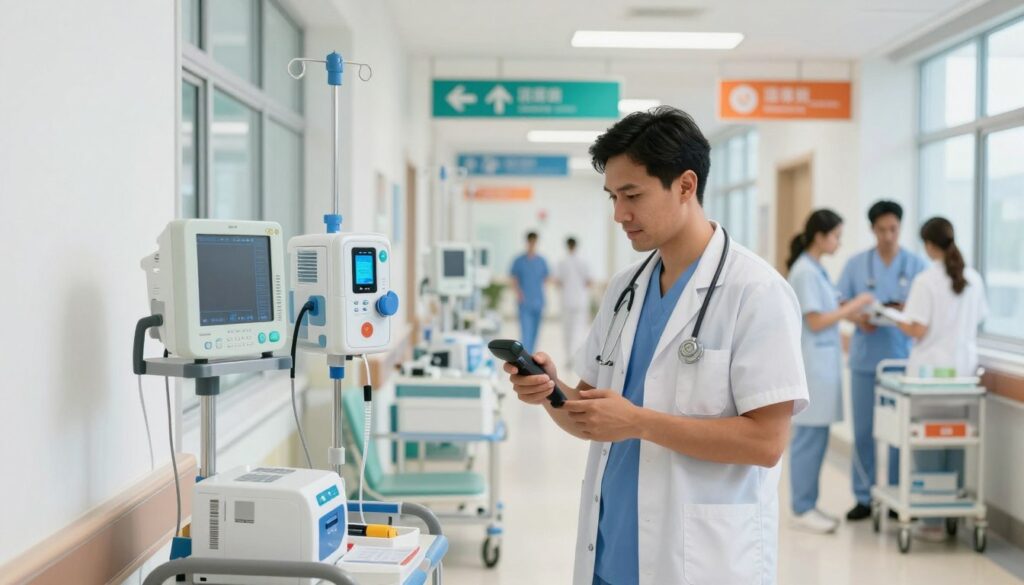
Data shows progress. About 25% of U.S. medical facilities have adopted RTLS technology to boost efficiency. This shift transforms how resources are managed and located.
Implementing a smart tracking framework does more than find devices. It improves equipment utilization and speeds up clinical response. The result is a smoother workflow and enhanced safety for everyone.
Key Takeaways
- Searching for mobile medical devices wastes critical staff time and delays care.
- Iottive provides a solution using sensor networks and cloud software for instant location data.
- Gaining real-time visibility into equipment movement streamlines complex facility operations.
- Technologies like Bluetooth Low Energy (BLE) enable precise tracking without major infrastructure changes.
- Improved asset utilization leads to faster patient response and better operational outcomes.
- A significant portion of U.S. healthcare providers are already using similar systems to enhance efficiency.
- Integrating smart tracking into workflows is a strategic step toward modernized, efficient care delivery.
Introduction: The Cost of Inefficient Equipment Search
The hidden financial drain from misplaced medical gear is a silent crisis in modern healthcare facilities. This inefficiency creates a dual burden, straining budgets while hampering care delivery.
Asset Loss and Operational Inefficiencies
Research reveals a startling fact. Between 10% and 20% of a facility’s mobile assets are lost or stolen during their use. Each missing item carries an average replacement cost of $3,000.
This constant loss forces institutions to over-purchase. They often buy 10-20% more gear just to maintain availability. It is a costly cycle of waste.

Impact on Hospital Budgets and Patient Care
The time cost is equally severe. Nurses can spend nearly an hour each shift just looking for needed apparatus. Nationally, this search time contributes to an estimated $14 billion in lost productivity every year.
These delays do more than hurt budgets. They directly impact those needing help. Critical procedures get postponed, and clinical teams face increased strain.
| Cost Area | Annual Impact | Primary Cause | Mitigation Strategy |
|---|---|---|---|
| Lost/Stolen Equipment | 10-20% of mobile inventory | Poor visibility and manual logs | Implement digital tracking solutions |
| Staff Productivity Loss | $14 billion (U.S. total) | Excessive search times per shift | Provide instant location data |
| Patient Care Delays | Increased clinical workload | Unavailable critical resources | Ensure equipment access and availability |
Understanding Hospital Asset Tracking Challenges
One of the most persistent operational headaches in healthcare is knowing where critical gear is at any given moment. This visibility gap stems from several deep-rooted issues.
Common Sources of Equipment Mismanagement
Many institutions still rely on manual logs or spreadsheets. These outdated methods are prone to human error. They offer little insight into current resource location.
Departmental hoarding is another major problem. Units may stockpile items like infusion pumps. This creates artificial shortages and bottlenecks in daily workflows.

The Role of Existing Infrastructure
Modern solutions don’t always require a full overhaul. Current Wi-Fi networks can often support new sensor technology.
Leveraging this existing setup reduces installation costs and complexity. It allows for a more scalable deployment of advanced management systems.
| Common Challenge | Primary Cause | Operational Impact | Potential Solution |
|---|---|---|---|
| No Live Data | Manual logs & spreadsheets | Slow search times, errors | Automated digital tracking |
| Resource Hoarding | Departmental silos | Bottlenecks, over-purchasing | Centralized visibility tools |
| High Implementation Cost | Perceived need for new hardware | Delayed technology adoption | Leverage existing Wi-Fi with BLE |
How Ineffective Equipment Searches Disrupt Workflows
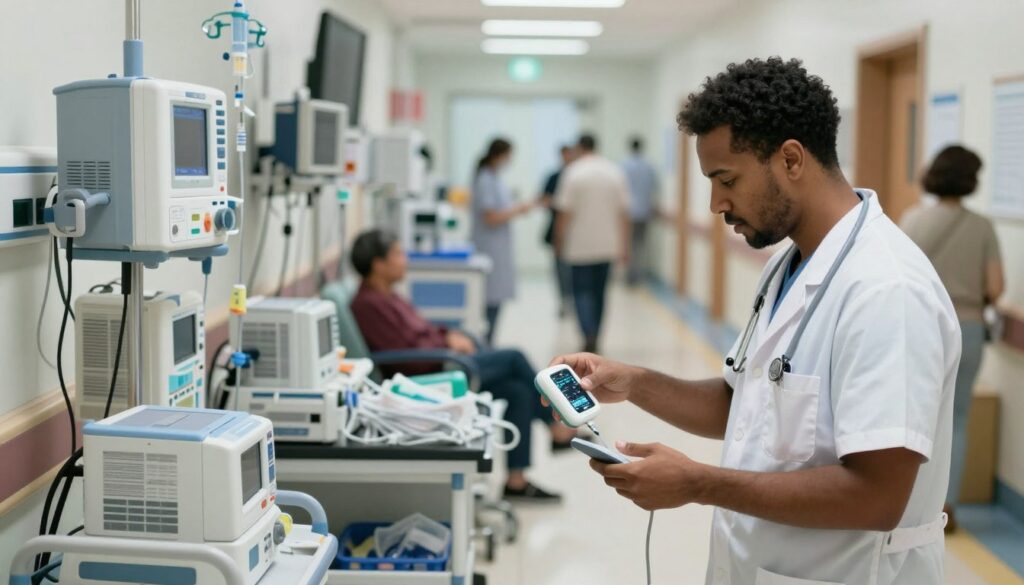
When nurses become detectives searching for gear, the core mission of providing care suffers. This daily hunt fractures clinical routines and creates a cascade of negative effects. The data is clear. At one facility, staff spent up to eight minutes finding a single apparatus.
This added up to 91 full clinical staff days lost each year. That is time stolen from vital duties.
Time Wasted by Staff
Excessive search time pulls clinical professionals away from their patients. It leads to frustration and contributes to burnout. Their primary focus should be on healing, not on locating missing resources.
Consequences for Patient Safety
Delays have a direct human cost. When a critical device like an infusion pump is missing, treatment cannot begin. Urgent procedures get postponed, compromising outcomes and well-being.
Reliable access to tools is a cornerstone of safe medical practice. Inefficient searches undermine this foundation.
| Disruption Area | Impact on Staff | Impact on Patient Safety |
|---|---|---|
| Prolonged Search Times | Lost clinical hours, increased stress, burnout risk | Delayed initiation of treatments and therapies |
| Unavailable Critical Devices | Workflow bottlenecks, improvisation under pressure | Potential compromise in urgent care and procedure timelines |
| Cumulative Operational Drag | Decreased job satisfaction, diverted focus | Overall reduction in care environment predictability and reliability |
Addressing this disruption is not just about finding things faster. It is about restoring the integrity of clinical workflows and safeguarding those who depend on them.
Hospital asset tracking, IoT equipment tracking, real-time location systems – Iottive Pvt. Ltd.
Bluetooth Low Energy signals are quietly transforming inventory management across the care sector. This technology uses minimal power to send data, making it perfect for large, complex medical facilities. It provides a scalable foundation for modern resource monitoring.
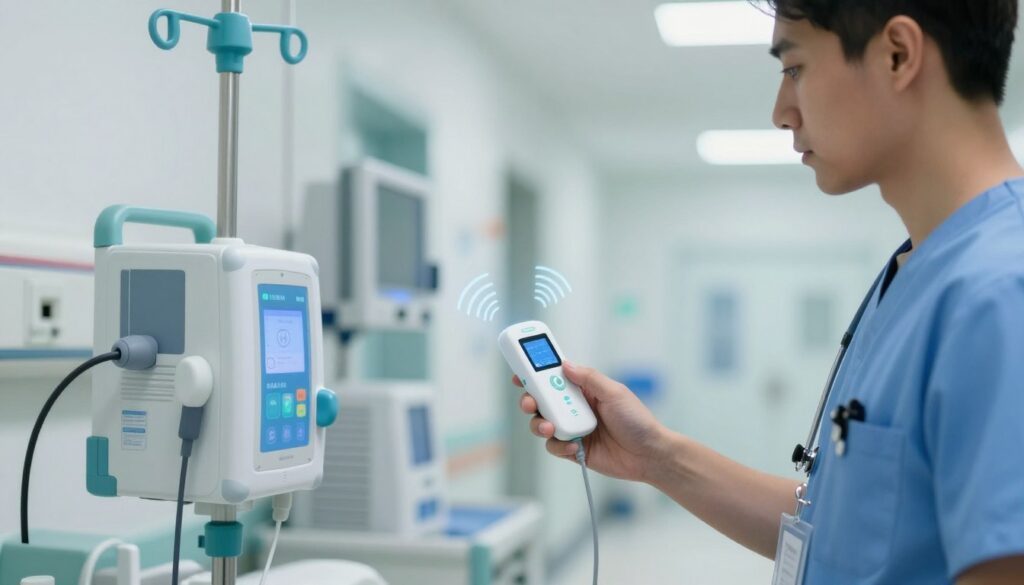
The shift to digital solutions moves institutions beyond outdated manual logs. Automated frameworks give staff instant visibility into where critical apparatus is located. It’s like having an indoor GPS for every vital tool.
These small, lightweight sensors can be attached to thousands of different devices. From infusion pumps to wheelchairs, nothing gets lost in the shuffle. This seamless integration doesn’t interfere with daily clinical workflows.
Deploying such a system unlocks unprecedented operational clarity. Leaders gain data to make smarter decisions about resource allocation. The final benefit is a direct positive impact on patient outcomes and facility efficiency.
“Adopting precise positioning technology is a strategic leap toward smarter, more responsive care delivery.”
This approach represents a fundamental upgrade in how medical resources are managed. It turns guesswork into reliable, actionable information.
The Power of BLE in Real-Time Location Systems
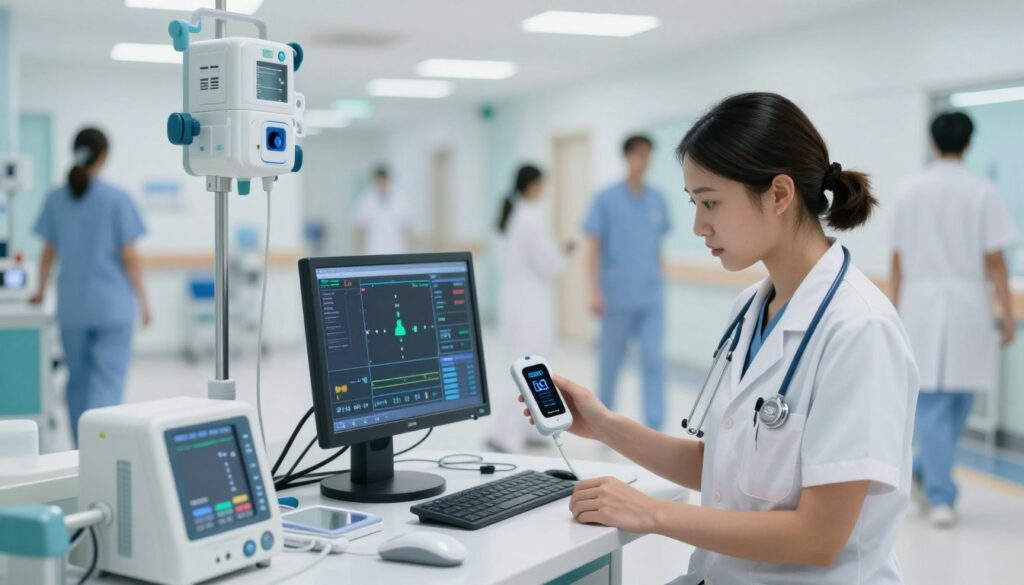
Adopting a smart framework for managing mobile resources transforms guesswork into certainty. This technology provides the backbone for efficient operations in complex care settings.
Key Advantages in Healthcare Environments
Bluetooth Low Energy strikes a perfect balance. It delivers high accuracy and exceptional power efficiency at a low cost.
The tags are incredibly small and lightweight. They attach to thousands of items, from wheelchairs to portable monitors, without getting in the way.
This setup remains reliable even in tough settings. It works well around metal apparatus and lead-lined walls, ensuring consistent performance.
Scalable and Cost-Effective Deployment
Growth is simple. You expand the system by adding more tags or gateways as needed. There’s no need for a massive, upfront overhaul.
BLE tags can last for months or years on a single coin-cell battery. This drastically cuts down on maintenance costs and effort.
It presents a cost-effective alternative to older, complex systems. Facilities gain powerful live visibility without the traditionally high infrastructure expense.
Integrating RTLS with Existing Hospital Infrastructure
Deploying advanced systems doesn’t require starting from scratch. Existing infrastructure can be leveraged for a smooth and cost-effective deployment.
This integration strategy turns current network investments into a powerful management tool. It minimizes operational disruption while maximizing return.
Leveraging Wi-Fi and BLE Networks
Many facilities already have robust Wi-Fi from major providers. Vendors like Cisco, HPE Aruba, and Juniper Mist offer BLE-enabled access points.
These points act as ready-made data gateways. Using them slashes upfront capital expenditure significantly.
Utilizing Gateways and Repeaters
Gateways and repeaters are critical for complete coverage. They relay signals to eliminate dead zones in large buildings.
Strategic placement of these components is vital. It guarantees the pinpoint accuracy needed across multiple floors.
| Infrastructure Component | Primary Function | Key Benefit for Facility |
|---|---|---|
| BLE-Enabled Access Point | Collects tag signals & transmits data | Leverages existing Wi-Fi, reducing costs |
| Gateway | Central hub for processing location data | Provides real-time system visibility and control |
| Repeater | Extends wireless signal range | Eliminates coverage gaps, ensuring full-building accuracy |
This integrated model transforms passive infrastructure into an active clarity engine.
Real-World Success Stories and Data Insights
A major European teaching facility offers a clear blueprint for success in managing mobile medical resources. The results provide undeniable proof of concept for similar institutions.
Case Study Highlights
AZ Groeninge, a teaching hospital in Belgium, tagged over 7,800 mobile devices. This represented 81% of their total mobile inventory.
The implementation of this BLE-based framework provided unprecedented clarity. Facility leaders gained instant visibility into resource location and usage patterns.
One of the most dramatic outcomes was a reduction in apparatus downtime. The solution cut lost days by over 64,000 annually.
Actionable data allowed managers to identify underused resources. They could then redistribute items like infusion pumps to departments with higher demand.
This focus on high-value gear delivered a rapid return on investment. It also led to measurable gains in team productivity and patient care quality.
| Key Metric | Before Implementation | After Implementation | Impact |
|---|---|---|---|
| Tagged Mobile Devices | Manual logs, unknown location | 7,800+ devices tracked (81% of inventory) | Complete resource visibility |
| Annual Equipment Downtime | Significant, unquantified loss | Reduced by 64,000+ days | Massive operational efficiency gain |
| Resource Allocation | Departmental hoarding, shortages | Data-driven redistribution | Optimized utilization, reduced over-purchasing |
| ROI Focus | Scattered capital expenditure | Concentrated on high-value assets | Faster financial returns, improved care access |
This case study validates the approach. Smart management technology creates a direct path to better outcomes.
Optimizing Equipment Utilization for Enhanced Patient Care
Understanding usage patterns for mobile X-ray units and similar gear allows managers to anticipate demand and prevent shortages. This proactive approach ensures critical apparatus is always ready for patient care. It dramatically cuts down on costly emergency rentals or last-minute purchases.
Streamlining Resource Allocation
Analytics reveal which items are seldom used. Leaders can then remove these underutilized pieces from the active inventory. This action saves valuable storage space and reduces associated holding costs.
Efficient allocation gives clinical teams their time back. Nurses spend fewer minutes hunting for tools. They can focus their energy on providing direct, compassionate support to those in need.
| Key Performance Metric | Before Streamlined Allocation | After Streamlined Allocation | Primary Benefit |
|---|---|---|---|
| Diagnostic Tool Availability | Unpredictable, often bottlenecked | High, meets peak department demand | Faster patient throughput |
| Average Clinical Search Time | 8+ minutes per incident | Under 2 minutes | Increased staff productivity |
| Patient Wait for Routine Procedure | Longer, variable delays | Minimized and predictable | Improved care experience |
| Excess Inventory Storage Cost | Significant monthly expense | Reduced by strategic removal | Lower operational overhead |
This data-driven management philosophy creates a smoother workflow. It directly contributes to a better environment for everyone by minimizing wait times.
Streamlining Maintenance and Compliance with IoT Solutions
Proactive upkeep of medical devices is a cornerstone of reliable clinical operations. Smart solutions automate this critical function, shifting from reactive fixes to scheduled care.
For instance, AZ Groeninge slashed repair cycles from 20 days to just 3-4 days using automated scheduling. This dramatic improvement showcases the power of data-driven management.
Preventive Maintenance Scheduling
Automated alerts notify staff when a device is due for service. This ensures apparatus remains in peak condition, reducing unexpected failures during patient treatment.
It transforms upkeep from a chore into a streamlined process.
Data-Driven Compliance Strategies
These systems maintain a digital audit trail of all service activities. Facilities can quickly locate gear for mandatory inspections, avoiding regulatory fines.
Proof of compliance is always at hand for external audits.
| Aspect | Traditional Approach | Smart Approach | Key Benefit |
|---|---|---|---|
| Service Scheduling | Manual logs, calendar reminders | Automated alerts based on usage | Prevents missed maintenance |
| Compliance Tracking | Paper records, difficult to locate | Digital audit trail, easy retrieval | Simplifies regulatory inspections |
| Repair Cycle Time | Weeks of downtime (e.g., 20 days) | Days (e.g., 3-4 days) | Faster return to service |
| Audit Preparedness | Last-minute scrambling for documents | Instant access to complete history | Reduces stress and risk of fines |
Improving Hospital Inventory and Resource Management
Waste reduction in healthcare starts with knowing exactly what you have and where it is. This clarity is the foundation of smart inventory management.
Reducing Over-Purchasing and Waste
Without accurate counts, facilities often buy items they already own. This leads to unnecessary spending and cluttered storage spaces.
Precise visibility curbs this loss. For example, one institution saved €35,000 yearly on wheelchairs alone. These funds can then support direct patient care initiatives.
Achieving Accurate, Real-Time Inventory Visibility
Managers need a live view of all mobile resources. They can see how many infusion pumps are in use or available instantly.
This data-driven approach informs smarter procurement choices. Leaders decide to repair or replace based on actual usage, not guesswork.
The entire environment benefits from this operational harmony. Staff spend less time searching and more time delivering quality support.
Technological Innovations Driving Healthcare Efficiency
Emerging sensor technologies are unlocking new levels of precision and connectivity within care facilities. These advancements move beyond basic location data to offer deeper operational intelligence.
Emerging Trends in RTLS and BLE Solutions
Ultra-Wideband (UWB) is a key innovation. It provides sub-meter accuracy, ideal for monitoring surgical instruments in operating rooms. This precision, down to 30 centimeters, enhances safety and workflow.
Modern Bluetooth Low Energy (BLE) solutions are also evolving. New multi-mode tags can connect to both clinical networks and standard receivers. This flexibility simplifies deployment across complex environments.
Key trends shaping the future include:
- Integration toward a “Smart” model where every resource is connected.
- Systems that analyze patient movement and staff patterns for better planning.
- Continued investment in these tools is vital for maintaining high care standards.
These innovations provide managers with unprecedented visibility into their inventory. They help optimize the use of thousands of devices, from infusion pumps to wheelchairs. The result is a more efficient, data-driven environment for everyone.
Conclusion
The journey from chaotic searches to streamlined operations is now a tangible reality for forward-thinking medical centers.
Implementing intelligent BLE-based frameworks is a strategic move. It eliminates wasted staff time and misplaced apparatus. Following the lead of institutions like AZ Groeninge proves significant cost savings and efficiency gains are achievable.
Live visibility into your resources ensures critical devices are always ready. This directly enhances the quality of patient care and clinical safety.
The transition to automated management systems is no longer just an innovation. It is a necessary standard for modern, efficient healthcare delivery.
Now is the moment for facility leaders to take that first step. Embrace smarter data-driven solutions for a more productive and safer environment.
FAQ
What is the main financial benefit of implementing a real-time location system?
How does this technology improve patient safety and care quality?
Can this solution work with our facility’s current Wi-Fi network?
What kind of equipment and resources can be managed with these tags?
How does the data from the tracking system help with preventive maintenance?
What is the typical return on investment for a healthcare RTLS deployment?
How Iottive Delivers End-to-End Smart Retail Solutions
1. Retail Strategy & Solution Design
Iottive collaborates with retail leaders, digital heads, store operations teams, and supply chain stakeholders to understand customer journeys, inventory challenges, and growth objectives. This phase includes retail use-case validation, omnichannel architecture design, IoT device selection, AI personalization planning, and defining measurable KPIs such as promotion ROI, stock accuracy, and conversion rates.
2. Smart Systems Engineering & Retail Integration
Iottive engineers scalable Smart Retail solutions by integrating IoT sensors, RFID, smart shelves, digital mirrors, edge devices, and cloud platforms. We ensure seamless connectivity between POS systems, ERP, CRM, warehouse systems, and e-commerce platforms. The focus is on real-time visibility, secure data flow, and unified customer and inventory intelligence across stores and digital channels.
3. Pilot Deployment in Stores & Warehouses
Before enterprise rollout, Iottive deploys pilot solutions in selected retail stores, warehouses, or pharmacy locations. This includes testing AI-driven recommendations, smart inventory tracking, cold chain monitoring systems, and digital try-on experiences. Retailers can validate performance, customer engagement impact, and operational feasibility in live environments before scaling across locations.
4. Customer Experience & Retail Intelligence
Iottive builds intuitive dashboards and retail intelligence platforms that provide real-time insights into:
- Customer behavior & segmentation
- Promotion performance & ROI
- Store-level inventory accuracy
- Warehouse efficiency metrics
- Cold chain compliance tracking
- Online conversion and upsell analytics
Advanced analytics, alerts, and AI-driven insights empower retail teams to make faster, data-driven decisions that improve revenue, reduce losses, and enhance customer satisfaction.
5. Enterprise Rollout & Retail Scale-Up
From MVP to multi-location deployment, Iottive supports solution hardening, cloud scalability, cybersecurity, and long-term support. Smart Retail solutions are designed for:
- Multi-store expansion
- Omnichannel integration
- Regional inventory balancing
- Cross-border retail operations
- Continuous optimization using AI insights
Our approach ensures measurable ROI through improved customer engagement, reduced shrinkage, better inventory control, and operational efficiency.
Why Retailers Choose Iottive
- Proven expertise in Smart Retail & IoT-driven transformation
- Deep understanding of store operations, warehousing, and pharmacy compliance
- Seamless integration with POS, ERP, CRM, and e-commerce platforms
- Secure, scalable, and production-ready retail architectures
- Strong focus on measurable business outcomes — not just technology
📧 Contact Email: sales@iottive.com

Transform Your IoT Vision Into Reality.
Get free expert insights, architectures & cost breakdowns.
Drop your email to schedule free meeting.