How Smart Parking Systems Are Making Cities Efficient

One evening in Los Angeles, a driver spent 20 minutes circling a single block. That extra time burned fuel
and frayed nerves, mirroring a citywide pattern where cruising makes up about 30% of urban traffic.

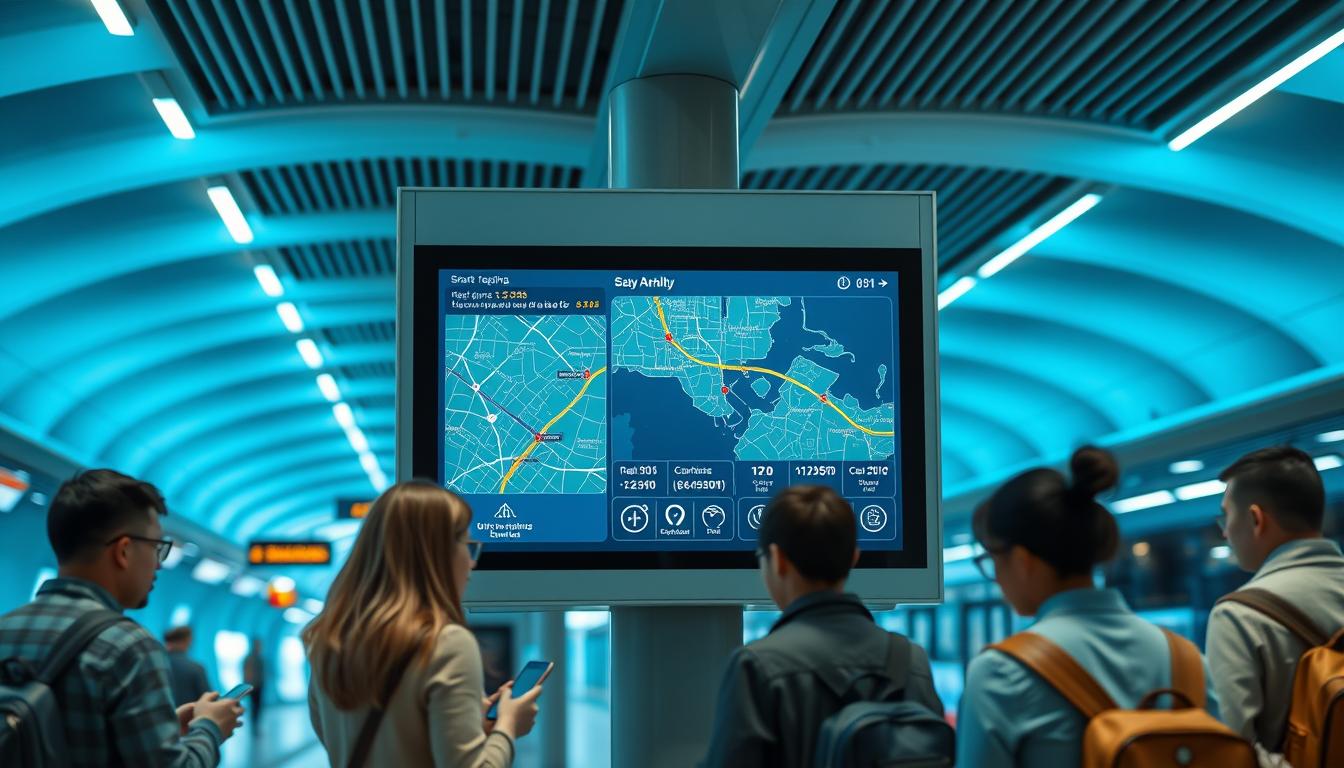
Modern smart parking systems use sensors, gateways, cloud platforms, and an app to turn live data
into spot availability and short routes. This cuts search time for drivers and trims congestion.

smart parking sensors

The result is both environmental and economic: less cruising means lower emissions and better use of existing
space. Cities can pilot small networks, scale to citywide coverage, and rely on partners like Iottive for BLE apps, cloud integration, and end-to-end solutions.

Key Takeaways

  • Real-time guidance from sensors and apps reduces search time for drivers.
  • Better availability data lowers traffic and cuts fuel use and emissions.
  • Scalable systems let cities grow from pilots to full deployments.
  • Dynamic pricing and demand forecasting improve space utilization.
  • Expert vendors provide integration across devices, cloud, and user interfaces.

The present-day parking challenge in U.S. cities and why it matters now

Cruising for a space now drives measurable congestion, higher emissions, and frustration for city
drivers.

parking

Studies show roughly 30% of urban traffic comes from drivers searching for parking. In one Los Angeles business
district, cruising equaled 38 trips around the globe, burned 47,000 gallons of gasoline, and released 730 tons of
CO2 in a year.

The daily effects are clear. Drivers face longer time spent circling blocks, added stress, and unpredictable trip
times. That frays the user experience and can reduce foot traffic for local businesses.

  1. Traffic and fuel waste: searching parking increases congestion and emissions across metro areas.
  2. City operations: enforcement and revenue collection strain under uneven curb use.
  3. Supply pressure: rising urban populations mean fixed space cannot keep up without better management.

Legacy systems lack live data and transparency. This creates pockets of empty stalls while other blocks
stay full. Modern data-driven systems and digital solutions are now essential to balance demand and guide drivers
quickly to open space.

Issue Legacy systems Data-driven outcome
Visibility No real-time availability Live spot status reduces search time
Enforcement & revenue Manual checks, delays Automated reports, fair billing
Space utilization Uneven use, hotspots Balanced occupancy across areas

What a smart parking system is and how AIoT makes it work

A modern system turns sensors, networks, and cloud logic into an on-demand guide for drivers.

In short: smart parking systems are AIoT platforms that link on-spot detectors, gateways,
cloud analytics, and a user-facing app to show live availability and simplify the journey.

From sensors to smartphones: the end-to-end loop

Sensors and cameras detect occupancy at the curb or lot. Gateways then relay those signals over LoRaWAN, NB‑IoT, or
Wi‑Fi to central cloud services.

Cloud engines fuse raw data, run pattern recognition, and produce real-time availability and short-term forecasts.
The mobile app and web portal present routes, pricing, reservations, and payments in one flow.

  • Accuracy: AI fuses multiple signals to spot anomalies and raise trust in availability.
  • Edge filtering: Local devices aggregate messages to cut latency and lessen cloud load.
  • Reservations & payments: Users can book a spot, navigate to it, and complete checkout
    without leaving the app.
  • Modular rollout: Cities can pilot small zones, reuse legacy meters, and scale coverage as
    demand grows.

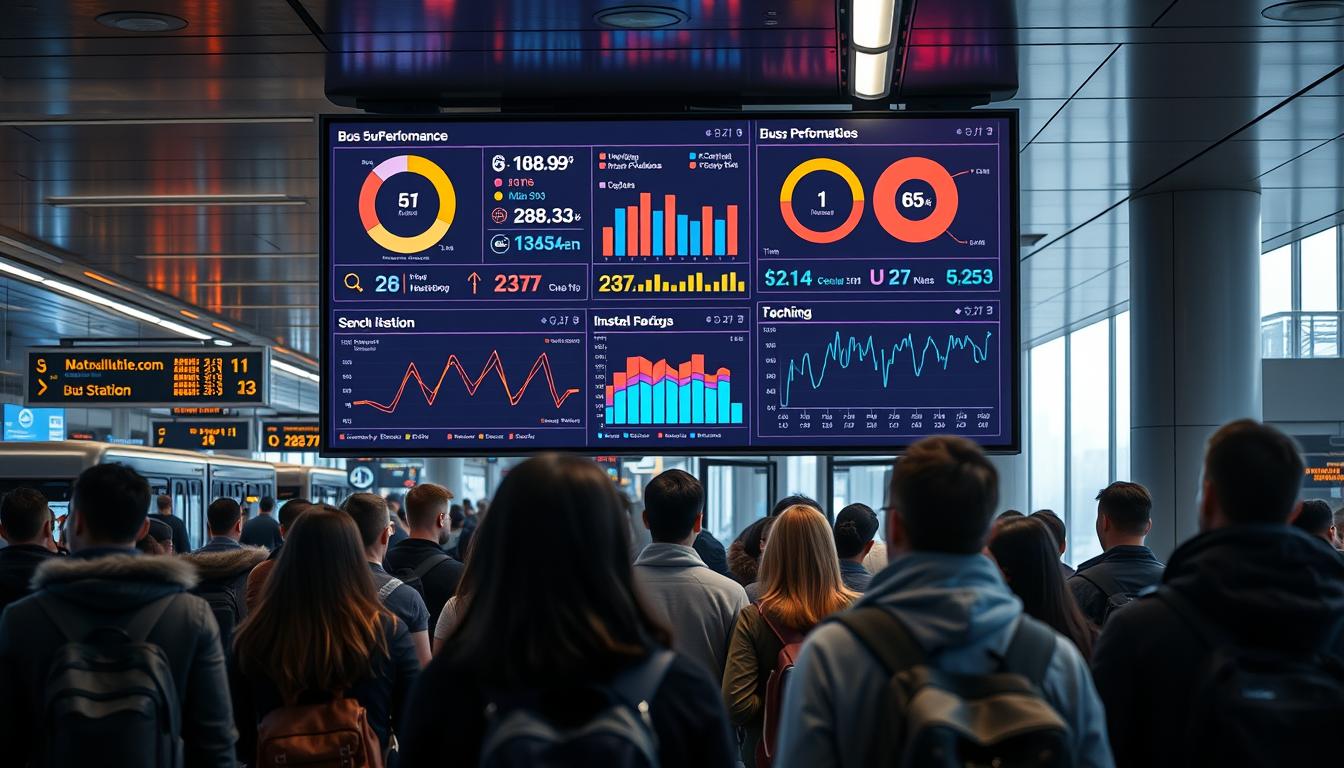
Operations teams get dashboards that track KPIs and live status. That same architecture supports
reporting and optimization so operators can tune pricing, enforcement, and space use with real-time data.

AI & IoT smart parking architecture that scales for cities

A layered architecture ties user interfaces, edge devices, and back-end services into a single, scalable
city platform.

User-facing layers: mobile app and web portal

The user layer presents live availability, reservations, pricing, and account tools via a mobile app and web
portal. It guides drivers to an open space, handles payments, and offers operator dashboards for management.

Cloud platforms for real-time processing and storage

Cloud services ingest telemetry, store time-series data, and run ML models for short-term forecasts and alerts.
APIs expose those results so cities and vendors can build further solutions and integrate with transit systems.

Gateways and edge intelligence to reduce latency

Gateways filter messages, normalize payloads, and queue telemetry when backhaul is intermittent. Local edge logic
lowers round-trip time and reduces cloud load, while MQTT is used for efficient publish/subscribe messaging.

On-spot sensors and lot infrastructure

Stall-level sensors, cameras, barriers, signage, and power systems enable real-time operations at scale. Device
twins and autoscaling cloud resources support multi-site deployments, tenant isolation, and the security practices
cities require.

Core IoT sensors that detect vehicle presence accurately

Picking the correct detector mix is the first step to reliable vehicle occupancy data. Different
sensors suit curbside lanes, garages, and open lots. Choice depends on accuracy needs, weather, and installation
cost.
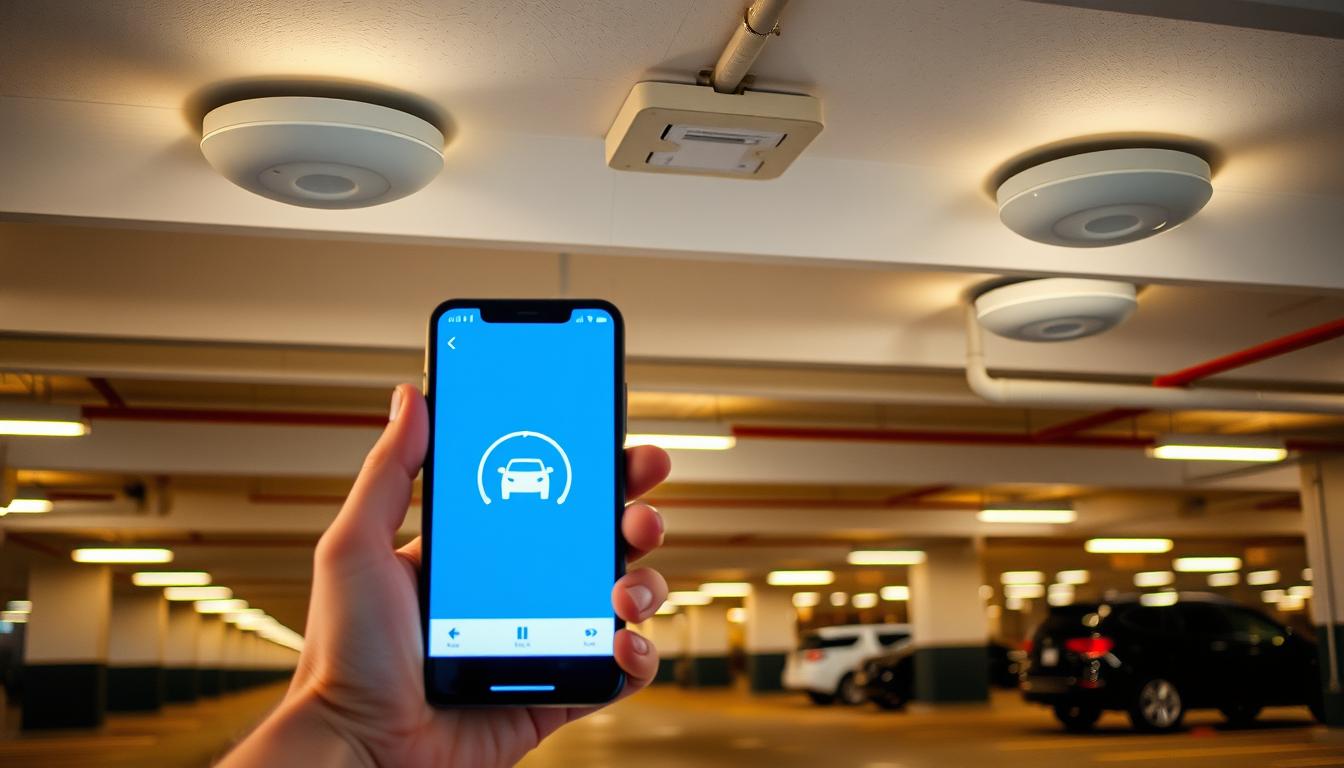
Magnetic, ultrasonic, infrared, radar, and inductive loops

Common field devices include ground-embedded magnetic probes, overhead ultrasonic units, infrared detectors, radar
modules, and inductive loops. Each modality senses a different physical change to detect vehicle presence.

  • Magnetic: senses disturbances in the earth’s magnetic field from a metal mass. Good for
    curbside stalls and low power needs.
  • Ultrasonic: measures acoustic reflections from a vehicle under a canopy or ceiling. Works well
    indoors but needs clear mounting.
  • Infrared: detects heat signatures and works for short-range occupancy checks in controlled
    lighting.
  • Radar: uses radio wave reflections and performs robustly in harsh weather and varied lighting.
  • Inductive loops: count vehicles by measuring changes in inductance at the pavement. High
    accuracy but invasive to install.

Computer vision and occupancy detection cameras

Video with computer vision adds licence-plate capture, lane analytics, and multi-space sensing from a
single device. Modern models tackle occlusion and low-light scenes to estimate which parking spaces are occupied.

Blending sensors and vision improves resilience. Vision fills gaps in sensor fields, while spot
sensors reduce false positives during weather or interference.

Sensor Type Strengths Trade-offs
Magnetic Low power, low cost, good curb accuracy Limited range, ground work for install
Ultrasonic Ceiling-mounted for garage stalls, non-invasive Sensitive to mounting, affected by noise
Infrared Simple heat-based detection, compact Less reliable in variable temperatures
Radar All-weather, long range, robust Higher cost, potential interference
Inductive loop Very accurate per-stall detection Pavement cuts, higher installation effort
Computer vision Multi-space coverage, ALPR, analytics Privacy concerns, bandwidth and compute needs

Calibration, routine health checks, and remote diagnostics keep data accurate over time. Operators should weigh
installation complexity, power draw, and network needs when selecting sensors for garages versus curbside
environments.

Data flow, protocols, and real-time updates that drivers can trust

Reliable data flow is the backbone that turns raw sensor events into timely guidance for drivers.
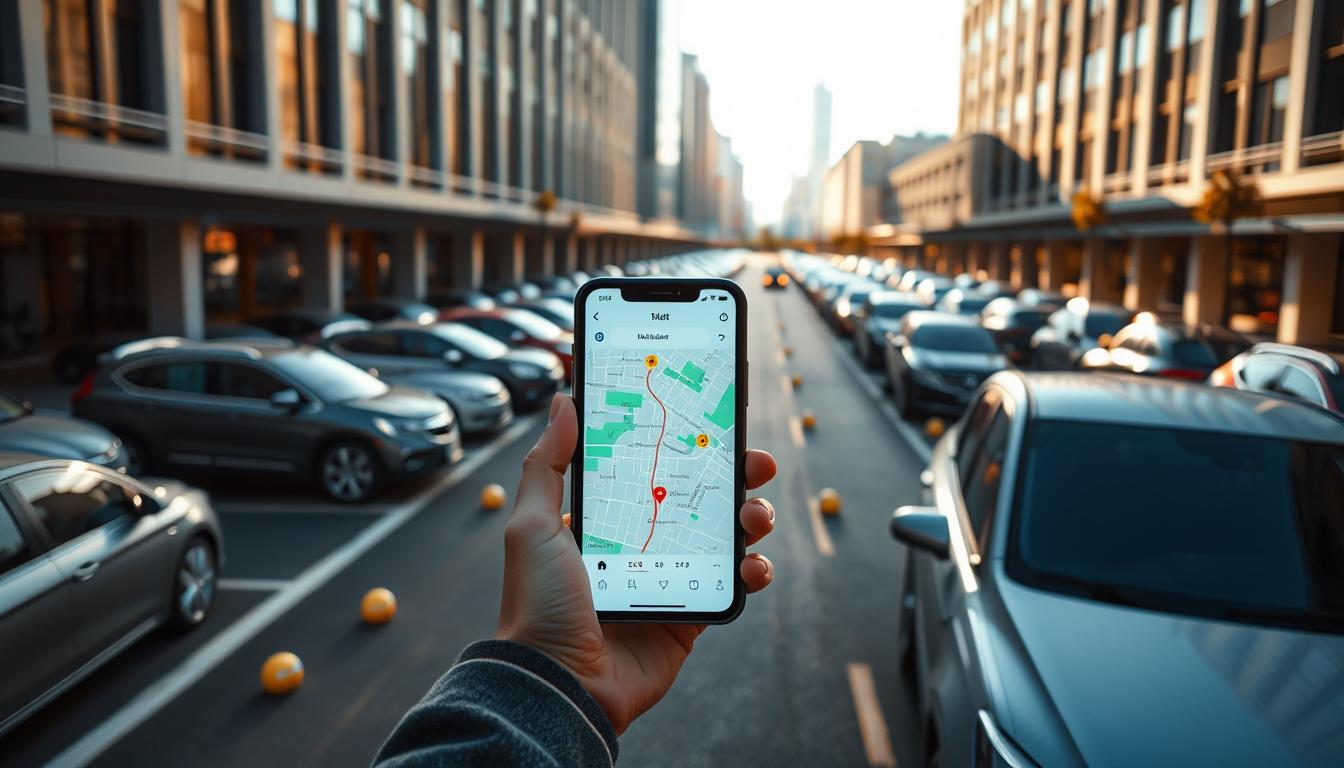
From LoRaWAN, NB‑IoT, or Wi‑Fi to MQTT and cloud ingestion

Sensors publish occupancy events over LPWAN or Wi‑Fi to local gateways. Gateways forward telemetry to cloud
services using MQTT or HTTPS for low-latency delivery.

Turning raw signals into dependable availability

Cloud pipelines run de-duplication, filtering, and aggregation to convert noisy inputs into a single availability
state per stall.

Confidence scoring fuses sensor and camera signals to reduce false positives and false negatives.

  • Edge inference reduces round-trip time for guidance when drivers approach a destination.
  • Defined SLAs for data freshness keep updates within seconds for high-demand zones.
  • Observability—metrics, traces, and dashboards—verifies correctness and aids troubleshooting.
  • Standardized APIs enable integration with navigation providers, enforcement platforms, and city data hubs.
Stage Function Outcome
Device Detect occupancy events Low-power, local signals
Gateway Normalize and forward Resilient telemetry delivery
Cloud Clean, fuse, score Reliable availability for user displays
Edge Inference and caching Lower latency for guidance

Connected parking analytics: using AI to optimize space and time

Data-driven models convert historical patterns and live feeds into forecasts that guide daily
operations and long-term planning.

Predictive availability forecasts stall occupancy so operators can align staffing, enforcement, and
signage. Drivers gain better confidence about arriving times and likely availability.

Predictive availability and demand forecasting

Machine learning blends time-series and live telemetry to forecast short-term demand by block and hour. That
forecast helps cities reduce cruising and improve space utilization.

Dynamic pricing aligned with live demand patterns

Price signals respond to occupancy to smooth peaks and boost turnover. Dynamic rates increase revenue stability
while keeping access fair near key destinations.

Traffic flow analysis and heatmaps for planning

Ingress/egress counts and curb activity produce heatmaps that reveal hotspots and time-of-day trends. Planners use
these visuals to reallocate curb rules and coordinate with broader traffic flow systems.

  • Definition: application of ML to reveal patterns, forecast occupancy, and optimize space
    utilization.
  • Outcomes: less time searching, lower emissions, and steadier revenue for operators.

AI mobility apps that elevate the driver experience

When discovery, booking, and checkout live in one place, drivers spend less time circling and more time
arriving.

Modern AI mobility apps consolidate discovery, reservations, navigation to parking spots, and
contactless payments into one cohesive flow. Real-time availability detection feeds the map so the user can reserve
a slot and head straight to it with turn-by-turn guidance via Google Maps or Mapbox.

Reservations, navigation, and contactless payments

Secure payment flows support stored methods and fast checkout. Many solutions use Stripe or PayPal for tokenized
cards and digital receipts.

  • Reserve a slot in seconds and store multi-vehicle profiles for quick selection.
  • Navigation hands off to maps for precise routing and ETA updates.
  • Voice search and accessibility options speed discovery in multi-level facilities.

ALPR for seamless entry and ticketless operations

License plate recognition enables automatic gate opens and ticketless billing. Plate recognition
reduces queues at entry and exit and ties sessions to a user account for smooth invoicing.

Predictive guidance suggests arrival windows or nearby alternatives when availability looks tight. Push
notifications and trip history keep the driver informed and in control.

smart parking IoT, AI mobility apps, connected parking analytics

A three-part system links field sensors, a user-facing app, and real-time models to cut cruising and
improve curb use.

The first layer captures ground truth occupancy with on-stall detectors and cameras. This field telemetry gives
operators accurate, second-by-second data for each stall.

The second layer delivers that availability to drivers through a convenient app. Users get turn-by-turn guidance,
reservations, and live status so they arrive with confidence.

The third layer runs models that turn behavior and history into policy. Forecasting and dynamic pricing adjust
rates, curb rules, and signage to match demand.

Feedback loops keep the triad adaptive: user choices feed models, the models update guidance, and
the system tunes supply-side levers like time limits or rates.

Function Input Outcome
Sensing Stall telemetry Accurate occupancy
User layer Real-time availability Faster arrivals, less cruising
Analytics Behavior + history Dynamic pricing, better turnover

Platform interoperability matters. Sharing anonymized feeds with transit, micromobility, and venues supports
coordinated demand management.

KPIs to track include reduced cruising time, higher turnover per stall, revenue per space, and
user satisfaction. Robust privacy, security, and governance keep public trust as deployments scale.

Operational benefits for municipalities, operators, and drivers

Real-time visibility turns scattered curbside activity into clear operational choices for cities and
vendors.

City teams gain centralized dashboards that show occupancy, revenue, and alerts in one view. This improves response
time and helps prioritize maintenance or enforcement without guesswork.

Reduced congestion, fuel use, and emissions

Lower cruising cuts emissions: deployments in busy corridors have shown up to a 40% drop in
vehicle emissions by reducing search time.

Fewer vehicles circling means less fuel burned and lower traffic congestion, supporting municipal climate goals.

Higher space utilization and better parking operations

Higher turnover raises effective capacity so cities get more use from existing assets without new construction.

Better space utilization and targeted pricing increase revenue and save capital and time on expansion projects.

Stronger security and enforcement with real-time alerts

Automated compliance, ALPR, and rule-driven alerts reduce unauthorized use and speed violation handling.

Operators and enforcement teams work from the same evidence, making enforcement fairer and less intrusive for the
user.

Implementation hurdles and how to address them

A clear rollout plan can turn resistance into momentum for citywide deployments. Start with
governance that names roles across departments, operators, and the public. Publish transparent KPIs and a phased
timeline to build trust.

Organizational readiness, cost, and stakeholder buy-in

Mitigate budget concerns with a pilot-to-scale financing model. Use SaaS pricing, hardware leasing, and measured
pilots that show benefits in reduced search time and lower traffic.

Data privacy, correctness, and standard tool availability

Privacy-by-design limits collection, anonymizes records, and enforces retention rules. Maintain
correctness with sensor fusion, routine calibration, and continuous validation so users trust live availability.

Bridging legacy systems and talent gaps

Integrate meters, gates, and back offices via APIs and adapters to avoid rip-and-replace. Close talent gaps through
vendor partnerships and training programs that upskill staff in cloud and edge management.

Practical checklist:

  • Governance, KPIs, and phased rollout plans.
  • Pilot financing and cost-to-benefit tracking.
  • Data minimization, compliance controls, and validation routines.
  • API-led integration and workforce development partnerships.

Business models and revenue levers for smart parking solutions

Monetization mixes subscriptions, device sales, and per-use charges to fund deployments.

Recurring SaaS revenue typically comes from tiered subscriptions for operations dashboards, API access,
and data analytics. Fees scale with deployment size and feature sets, giving predictable income for operators and
cities.

Hardware sales add upfront revenue. Sensors, gateways, meters, and access controllers sell with optional warranties
and maintenance packages to extend lifetime value.

Transaction fees and premium user features drive per-use income. Operators can charge a small percentage on digital
payments, offer fleet accounts, or sell subscriptions for priority access in an app.

Additional levers include dynamic pricing to match demand, short-term space rentals, premium services like EV
charging and valet, and revenue from digital signage and geotargeted advertising.

Revenue Lever Model Typical Outcome
SaaS subscriptions Tiered access, APIs, dashboards Recurring predictable ARR
Hardware & services Device sales, install, maintenance Upfront cash + service margins
Transactions & premium Payment fees, fleet plans, VIP passes Variable, scales with usage
Data & reporting Custom reports, forecasting High-margin enterprise contracts
Demand levers Dynamic pricing, rentals, ads Higher yield per parking space

Integrating with smart city infrastructure and mobility systems

When curb availability feeds traffic centers in real time, signal timing can adapt to reduce congestion. This link
turns stall-level status into actionable control across urban systems.

Data sharing across traffic, public transit, and urban planning

Traffic management platforms ingest stall and garage feeds to avoid spillback and smooth traffic flow. Coordinated
signals and dynamic lane controls keep entry points clear and reduce queuing.

Transit partners receive availability feeds so their app can suggest park-and-ride options when downtown supply is
low. That improves multimodal choices and lowers single-occupant trips.

Planners use longitudinal data to refine curb rules, set price schedules, and allocate accessible space for equity
goals. Heatmaps and KPIs help evaluate policy outcomes over months and years.

Event and interoperability benefits

  • Pre-stage guidance and surge pricing around venues to smooth arrivals and departures.
  • Open standards and APIs prevent vendor lock-in and enable city-wide solutions to interoperate.

From MVP to full rollout: a practical development roadmap

Begin pilots with a narrow zone and a tight scope to prove value quickly. Start by validating core
features that matter most to drivers and operators: live availability, reservations, and secure payments. Use a
single lot or a short curb corridor to collect real-world data and KPIs.

Defining scope, UX, and core features for a pilot

Define clear KPIs—reduce time to find parking, increase adoption, and meet accuracy targets.
Design the user flow so discovery and booking take seconds. Test a lightweight mobile app with real users and
iterate on UI based on session metrics and surveys.

AI model integration, payments, and security hardening

Choose detection models like YOLO or MobileNet for stall-level inference and forecasting. Host
model training and deployment on AWS, Azure, or GCP and monitor drift with MLOps tools.

Integrate mapping (Google Maps or Mapbox) and payments (Stripe or PayPal). Enforce PCI compliance, use OAuth 2.0
and JWT for identity, and apply data minimization across the lifecycle.

Scaling, monitoring, and continuous improvement

Move from pilot to production using containerization (Docker) and orchestration (Kubernetes). Implement CI/CD
pipelines for safe releases and automated tests.

Set up observability, SLOs, and incident response. Use analytics to collect feedback and run iterative releases
that improve accuracy, uptime, and user satisfaction.

Feature set and tech stack to build a future-ready parking platform

A clear feature plan and a modular stack let cities deliver reliable curb services today and scale
tomorrow.

Must-have features include real-time availability, stall-level occupancy detection, reservations,
contactless payments, and ALPR for ticketless entry. Add account management, billing, and robust reporting so
operators can do day-to-day management with confidence.

Advanced capabilities lift the user experience: AR indoor guidance for garages, conversational
chatbots for support, ML demand forecasting, and anomaly detection to catch fraud or sensor drift. Include computer
vision where wide-area sensing or plate recognition adds value.

Recommended modular stack

Layer Examples Notes
Client React Native, Flutter, Swift, Kotlin mobile app + web UI
Backend Django / Node.js, PostgreSQL, MongoDB API-first, multi-tenant
ML & Edge TensorFlow, PyTorch, MQTT, edge Python computer vision, forecasting
Cloud & DevOps AWS/Azure/GCP, Docker, Kubernetes, Jenkins scalable, observable

Security &ops demand OAuth/JWT, SSL, cert management, encrypted OTA updates, and PCI-compliant
payment flows (Stripe/PayPal). Test performance under event surges and multi-lot scale to ensure uptime and smooth
user experience.

About Iottive: your partner for end-to-end IoT, AIoT, and mobile parking solutions

Iottive’s engineering teams focus on secure, scalable platforms that
fuse device telemetry with clear user flows.
The company builds BLE-enabled mobile solutions, cloud
integration, and custom hardware to help cities and operators manage curb and lot space more effectively.

Expertise in BLE app development and cloud integration

Iottive delivers rapid prototypes and MVPs that reduce
risk and speed time-to-value. Their teams craft BLE app experiences, APIs, and back-end services that turn sensor
signals into actionable status for drivers and operators.

Industries served

  • Healthcare
  • Automotive
  • Smart Home
  • Consumer Electronics
  • Industrial IoT

Get in touch

Visit: www.iottive.com | Email: sales@iottive.com

Conclusion

A focused deployment that ties sensors to user guidance can quickly prove value for drivers and operators
alike.
AIoT-powered smart parking aligns real-time sensing, routing, and forecasting to cut
cruising, lower emissions, and save time.

Across stakeholders the benefits are clear: less time to find a spot for drivers, higher utilization and revenue
for operators, and reduced congestion for cities. Durable impact requires scalable systems,
privacy-by-design, and integration with broader city infrastructure.

Start with a narrow MVP, measure KPIs, and iterate using live data and user feedback. For end-to-end support—from
sensors to mobile and cloud—engage expert partners like Iottive: www.iottive.com
| sales@iottive.com. They help cities deliver robust
solutions that reclaim curb space and improve daily life.

FAQ

What problems do modern cities face with on‑street parking and why act now?

Urban areas in the U.S. face rising vehicle counts, limited curb space, and unpredictable demand. These issues increase search time, congestion, emissions, and lost revenue for cities. Deploying availability detection and real‑time guidance reduces cruising time and improves curb management, making traffic flow smoother and streets safer.

How does an end-to-end system detect and show available spaces to drivers?

Sensors at the curb or in lots detect vehicle presence and send signals via low‑power networks or Wi‑Fi to gateways. Edge processing filters data, then cloud services aggregate and publish availability to mobile and web interfaces. The loop closes when navigation or reservation features direct drivers to the confirmed spot.

Which on‑spot detection technologies are most reliable for occupancy sensing?

Inductive loops, magnetic sensors, ultrasound, and radar provide robust presence detection in many settings. Camera‑based computer vision adds plate recognition and lane‑level accuracy. Choosing the right mix depends on installation cost, lighting, weather, and desired features like ALPR.

What communication protocols keep real‑time updates dependable?

Networks such as LoRaWAN and NB‑IoT offer long range and low power for sensors, while Wi‑Fi and LTE support higher throughput. MQTT and HTTPS move telemetry to cloud platforms, where APIs feed apps with low latency and high availability for drivers and operators.

How do analytics and machine learning improve space utilization?

Historical occupancy and transaction data let models predict peak demand, forecast availability windows, and suggest dynamic pricing. Heatmaps and flow analysis reveal bottlenecks so cities can reallocate curb space, adjust signage, and optimize enforcement for better utilization.

What user features should a driver expect from a modern mobility app?

Core features include live availability maps, turn‑by‑turn navigation to reserved or nearest space, contactless payment, and booking. Advanced functions add estimated time to spot, expansion of AR guidance, and automated entry/exit via license plate recognition for ticketless operation.

How does license plate recognition (ALPR) enhance operations?

ALPR automates entry, exit, and payment reconciliation, reducing queuing and manual checks. It supports permit checks, enforcement alerts, and event management. Proper privacy controls and secure storage are essential when using plate data.

What operational benefits do cities and operators gain after rollout?

Benefits include reduced congestion and emissions, higher turnover and revenue from better utilization, faster enforcement with real‑time alerts, and improved traveler satisfaction. Data also supports long‑term planning and coordination with transit and traffic systems.

What common implementation hurdles should be expected and how can they be mitigated?

Challenges include upfront hardware cost, stakeholder alignment, integration with legacy systems, and data governance. Start with a focused pilot, define clear KPIs, choose interoperable standards, and set privacy policies to build trust and measure value before scaling.

Which business models make deployments financially viable?

Typical models combine SaaS subscriptions for software, hardware sales or leases, transaction fees for payments, and premium services like analytics. Dynamic pricing, reserved spaces, and advertising also create recurring revenue streams for operators and municipalities.

How do you ensure data privacy and accuracy in these systems?

Implement encryption in transit and at rest, role‑based access, and data retention limits. Validate sensor feeds with cross‑checks—camera verification or loop sensors—to reduce false positives. Regular audits and transparent privacy notices help maintain compliance and public trust.

How do these systems integrate with broader city mobility and traffic platforms?

Use open APIs and standardized data formats to share availability, demand forecasts, and curb usage with transit agencies and traffic management centers. Shared datasets enable coordinated signal timing, multimodal routing, and smarter curb allocation across agencies.

What roadmap steps deliver a successful pilot to full city rollout?

Start by defining scope, user experience, and KPIs for a small area. Deploy sensors and a minimal app with reservation and payment. Integrate edge filtering and cloud analytics, then iterate on ML models and security. Scale by expanding geographies, adding features, and automating operations.

What core features and tech stack are recommended for a future‑ready platform?

Must‑have features include real‑time availability, reservations, and payments. Recommended stack: resilient sensors, edge gateways for preprocessing, cloud platforms for storage and ML, MQTT/REST APIs, and mobile/web front ends. Add monitoring, DevOps, and fraud detection for reliability and security.

Which industries and use cases benefit from this technology beyond municipal curb management?

Commercial operators, airports, hospitals, retail centers, and campuses gain from reduced search time, better revenue capture, and improved user experience. Industries like automotive and logistics use these systems for fleet routing and loading zone management.

Who can enterprises contact for end‑to‑end product and integration services?

Look for firms with experience in BLE apps, cloud/mobile integration, hardware design, and custom deployments. Check vendor portfolios for cross‑industry projects in healthcare, automotive, and industrial IoT, and request references to verify delivery and support.
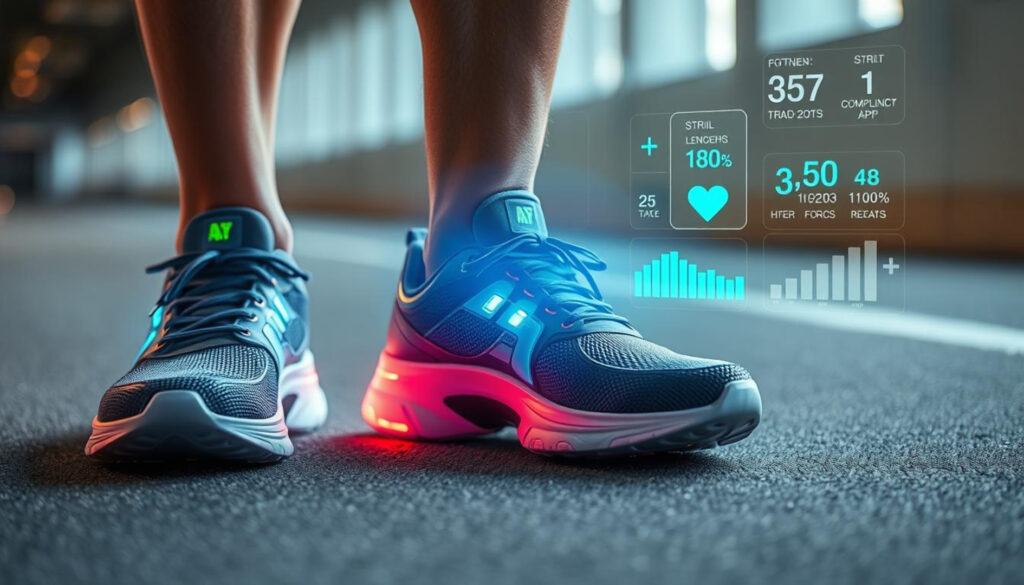
From Step to Stat: Smart Shoes That Redefine Running Analytics

smart shoes

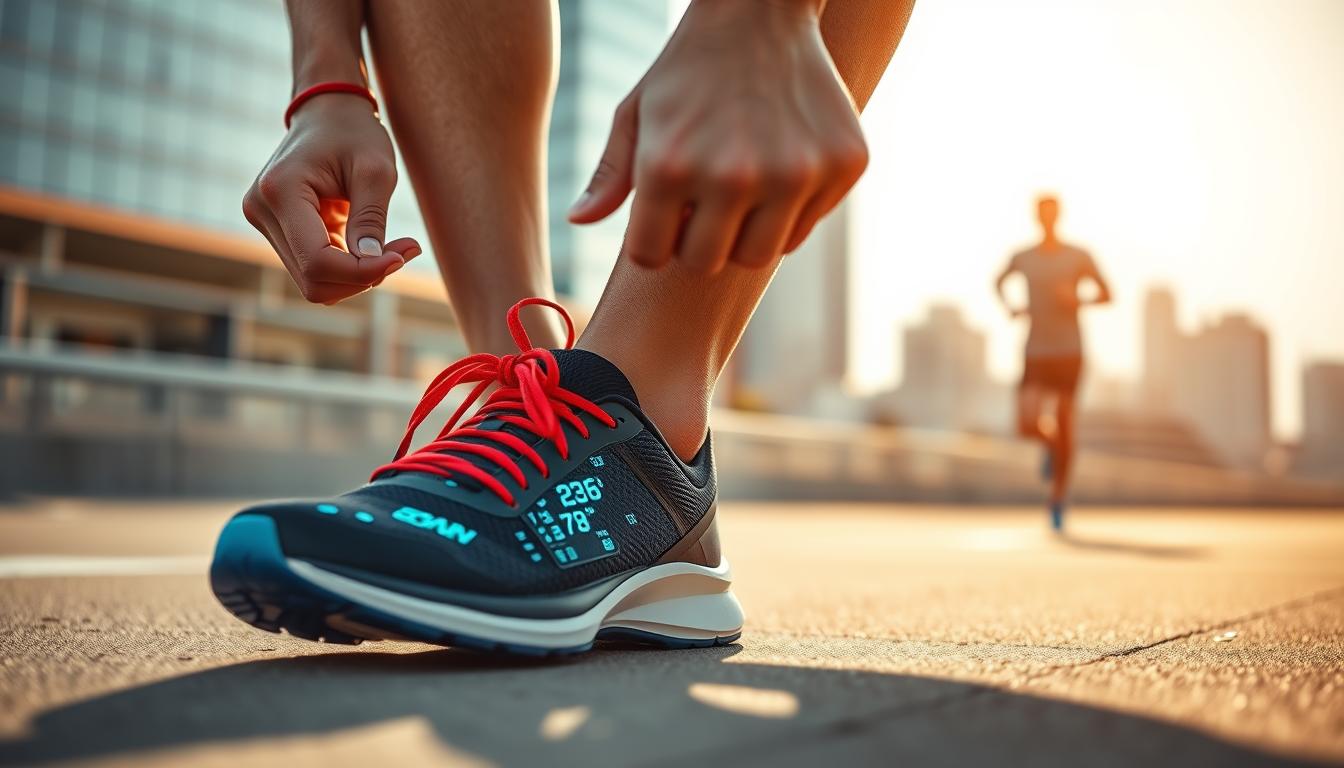
On a humid morning in Boston, a coach handed a novice a pair of smart shoes and a phone app. The
runner laughed at first, then paused at the first report. Within a mile, stride gaps and pressure points showed up
as clear, usable analysis.

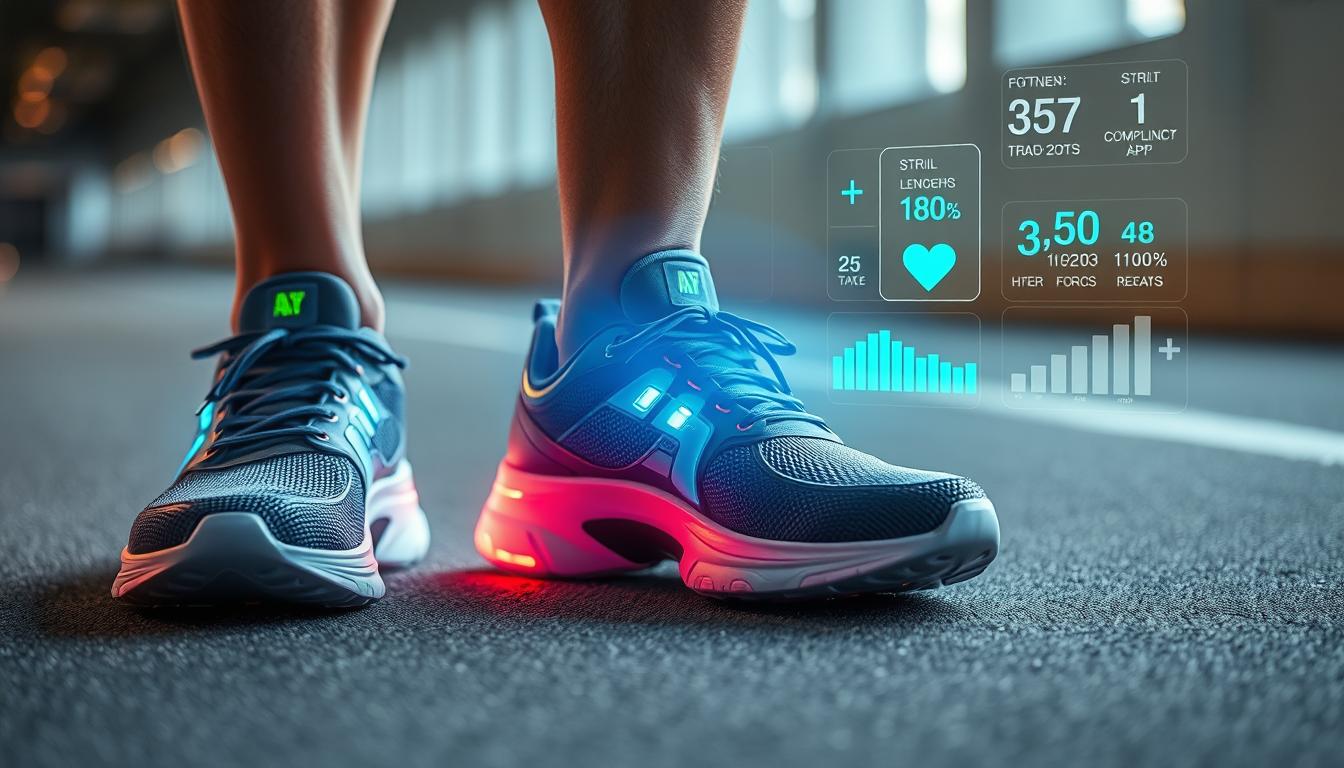
That small moment shows how modern shoes translate each step into meaningful
data. Embedded sensors like accelerometers, gyroscopes, and pressure arrays feed
lightweight Bluetooth LE links. The result is fast syncing and long battery life.

Today’s category bridges performance needs and health use cases. From gait deviation detection to rehab tracking,
the tech helps athletes and patients alike. This section previews product features, buyer criteria such as battery
life and app quality, and market trends.

Iottive brings expertise in BLE app development and cloud
integration for device makers. For product integrations and custom platforms, visit www.iottive.com or email sales@iottive.com.

Key Takeaways

  • Embedded sensors turn steps into actionable analysis for users.
  • Bluetooth LE enables efficient, real-time syncing with apps.
  • Design choices—battery, comfort, and app UX—drive buyer value.
  • Use cases span performance coaching to medical monitoring.
  • Look for solutions that balance specs with everyday usability.

Why Smart Running Footwear Matters Now

Advances in sensor accuracy have turned everyday footwear into a real-time movement lab.

Modern shoes capture subtle motion and pressure signals that help runners improve efficiency and
cut injury risk.

Smartphone ubiquity makes setup and syncing simple. That means more users get immediate cadence cues, pace nudges,
and form alerts while they train.

footwear analysis

Behind the scenes, better sensors and refined algorithms translate raw signals into clear
analysis. Runners see actionable tips mid-run or a concise report after finishing.

The same data foundation supports practical health features: temperature or pressure warnings can flag a developing
sore or ulcer early.

Today’s value is in usable insights, not generic step counts. Reliable Bluetooth links, accurate timing, and
contextual feedback separate helpful products from gimmicks.

Iottive builds Bluetooth-enabled app and cloud pipelines that lift the UX of this technology
without compromising comfort or durability.

  • Actionable in-ride guidance and post-run reports
  • Health alerts layered on performance tracking
  • Reliability and fit remain non-negotiable

IoT Smart Shoes Buyer’s Guide: Features That Provide Real-Time Value

Choosing the right feature set starts with understanding which sensors deliver real-time benefits
you’ll actually use. Focus on what improves gait insight, comfort, and timely feedback.

Must-have sensors: Pressure arrays map contact timing and load distribution. IMUs (accelerometers
and gyros) track motion, cadence, and stride length. Temperature sensors flag hot spots that may indicate
inflammation or ulcer risk.

Sensor fusion blends these inputs to improve gait monitoring. Fusion reveals pronation patterns, ground contact
time, and subtle asymmetries that single signals miss.

  • Connectivity vs. battery: Bluetooth LE gives low power and steady mobile syncing. Wi‑Fi offers
    more bandwidth but drains batteries faster and complicates pairing.
  • Battery trade-offs: Duty cycle, sampling rate, and on-shoe processing drive autonomy. Local
    processing extends life versus continuous streaming.
  • Comfort and durability: Look for robust insole layers, encapsulated electronics, and flexible
    interconnects that preserve comfort.

buyer guide sensors

Feature Benefit Trade-off When to pick
Pressure arrays Contact timing & load maps Added cost, placement sensitivity Injury prevention, gait monitoring
IMU (accel + gyro) Motion, cadence, stride data Sampling affects battery Form coaching, cadence feedback
Temperature sensor Localized inflammation cues Requires calibration, privacy rules Health monitoring, diabetic care
Bluetooth LE vs Wi‑Fi Mobile pairing vs bandwidth Power vs data rate Daily use vs high-data labs

Test onboarding, pairing, and firmware updates. Check privacy settings for health features. Iottive’s BLE app
development and cloud integration expertise helps brands balance connectivity, battery autonomy, and user experience
to maximize long-term value.

Product Roundup: Best IoT Smart Shoes for Running Performance

A hands-on product roundup helps buyers match sensor depth to training goals and budget.

smart shoes performance

Top picks span clinical platforms like Pedar and F-Scan to wearable systems such as Moticon
OpenGo. Pedar and F-Scan offer dense pressure arrays and high sampling rates for clinical-grade analysis. Moticon
prioritizes wireless convenience and easier field use.

Top running picks with stride, ground contact time, and form analysis

Choose based on what you need: high sampling for precise ground contact time or on-shoe processing for real-time
form cues. Higher sample rates improve interval feedback but reduce battery life.

Smart insoles vs. fully integrated options

Insoles retrofit many shoes and deliver detailed pressure maps. Integrated designs win on ergonomics and seamless
tracking during long runs.

Solution Strength Trade-off Best for
Pedar Calibrated pressure arrays Higher cost, lab focus Clinical gait labs
F-Scan High sampling fidelity Complex setup Research & rehab
Moticon OpenGo Wireless autonomy Lower sensor density Field testing & athletes
Consumer insoles Easy retrofit Variable durability Data-curious runners

Selection tip: test fit alignment, check firmware cadence, and favor products with stable apps and
reliable BLE/mobile-cloud stacks. Iottive supports teams
building these pipelines to speed go-to-market and lift long-term user value.

Connected Running Analytics: What Data Runners Actually Use

Not every metric is equally useful. Runners and coaches focus on a short list that changes
training and prevents injury.

Key gait metrics are cadence, stride length, ground contact symmetry, and pronation tendencies. These
numbers show form, reveal imbalance, and guide shoe choice or drills.

gait

Stride, cadence, pronation, and pressure maps for injury prevention

Pressure and IMU data map foot loading and cadence. Pressure maps expose hotspots that often match overuse risks.
Those maps help decide insoles, shoes, or technique tweaks.

Training load, recovery, and calories burned accuracy

Training load blends session intensity, volume, and impact surrogates to suggest recovery windows. Calories burned
vary by model; consistency beats raw accuracy for trend tracking.

  • Actionable insights: cadence nudges, midfoot strike cues, and asymmetry alerts after injury.
  • Watch contact time and vertical oscillation for fatigue signals during a run.
  • Validate new metrics against perceived exertion and race results.

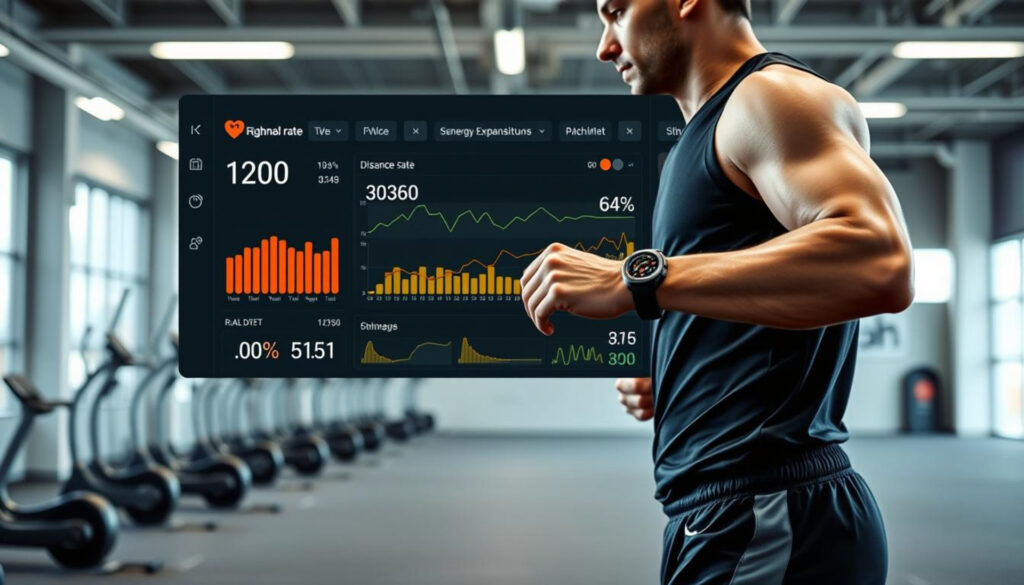
Iottive’s mobile-cloud integration delivers clean dashboards and trend visualizations so users act
on analysis without overload. Keep sensors calibrated and alerts context-aware to preserve trust in the data.

AI Sports Footwear Innovations Shaping the 2020s

Putting models on the insole changes how systems balance latency, battery life, and personalization. Designers must
choose between instant, on-device cues and richer cloud-based profiling.

On-shoe inference gives near-zero delay for coaching cues. It reduces uplink needs and protects
short-term privacy. Cloud analysis enables deep personalization and long-term trend models that adapt to a
user over weeks or months.

How deep learning reads motion

Multivariate models fuse accelerometer and pressure streams to classify gait, flag anomalies, and estimate injury
risk. Sampling rates and chosen features directly affect model accuracy and power draw.

Approach Benefit Cost Best use
On-device inference Low latency, instant cues Higher local compute, power use Real-time coaching
Cloud analytics Deep personalization, large models Latency, bandwidth needs Long-term trend analysis
Hybrid updates Firmware model refreshes Complex deployment Balance reliability & improvements
Energy-harvesting systems Extended autonomy Added hardware complexity Low-power, long-term use
  • Privacy by design limits raw data transfer and uses on-device summaries.
  • Personalization loops build baselines to refine fatigue and asymmetry thresholds.
  • Fail-safes revert to rule-based cues when model confidence is low.

Iottive builds embedded inference and cloud pipelines that match model placement to battery and performance goals,
while keeping firmware updates and user privacy front of mind.

Inside the Tech: Sensors, Connectivity, and Energy in Smart Shoes

Sensor choice and system design determine how well a product turns motion into useful signals.
Engineers must balance sensitivity, durability, and power to support accurate monitoring without bulky
batteries.

Pressure sensing options

Pressure arrays come in four common types: piezoresistive, capacitive, piezoelectric, and resonant. Piezoresistive
sensors are cost-effective and simple to read but drift over time.

Capacitive types offer higher sensitivity and lower drift but need careful encapsulation. Piezoelectric sensors
suit dynamic loads; resonant elements give high fidelity in labs yet raise integration cost.

IMUs for motion intelligence

IMUs merge accelerometers and gyroscopes to detect steps, orientation, and stride dynamics. Axis alignment and
mounting repeatability are critical to reliable data.

On-device fusion reduces uplink needs by extracting step events and features before wireless transfer.

Temperature and sweat biosensing

Temperature options include RTD, NTC, thermocouple, IR thermopile, and digital ICs. IR sensors can be useful when
contact is inconsistent.

Sweat biosensors can hint at hydration or glucose trends but require calibration and comfort-aware placement for
valid health signals.

Connectivity and energy realities

Bluetooth LE is the common link for low-power data transfer. Designers must handle packet
loss, burst buffering, and sync strategies during intense sessions.

Energy harvesting—mechanical-to-electrical—can extend battery life but complicates hardware and cost. Firmware
power modes, compression, and edge feature extraction deliver the best autonomy per gram of battery.

Mechanical and lifecycle considerations

Use flexible PCBs, robust encapsulation, and strain relief to survive repeated loading and moisture. Component
choices affect maintenance, warranty costs, and long-term value.

Iottive’s BLE app development and hardware-software integration expertise helps teams achieve
robust syncing, low-latency telemetry, and efficient battery usage across these trade-offs.

From Adidas “1” to AIoT: The Evolution of Smart Footwear

A. The journey from microprocessor cushioning to full-stack personalization spans two decades of hardware and app
milestones.

In 2005, the Adidas “1” introduced microprocessor-controlled cushioning and proved consumer footwear could embed
real control logic. By 2012, Nike+ used smartphones to scale tracking to millions and normalized app-driven
experiences.

In 2016 Under Armour added built-in tracking to mainstream models, tightening the link between sensors and daily
use. The 2020s brought deeper machine learning, broader device ecosystems, and device-grade health features.

Key shifts include component miniaturization for comfort, BLE standardization for reliable
pairing, and firmware updates that extend product life. Community data now refines models and guides product
updates.

  • Trace: from cushioning control to sensor-rich platforms
  • Scale: smartphone adoption unlocked cloud services and better apps
  • Future: healthcare validation and sustainability will shape new milestones
Milestone Year Impact
Adidas “1” 2005 Introduced on-device control for comfort
Nike+ 2012 Made phone-linked tracking mainstream
Under Armour smart models 2016 Embedded sensors in consumer lines
AIoT era 2020s Personalization, health features, and OTA model updates

Iottive helps brands modernize legacy concepts with today’s BLE, machine learning, and cloud
stacks to deliver reliable, wearable technology experiences that users trust.

Healthcare-Grade Smart Footwear: Beyond Fitness Tracking

Healthcare teams increasingly rely on localized pressure and temperature readings
to guide care for vulnerable feet. Precise deltas in load and warmth can flag early tissue stress and reduce ulcer
risk in diabetes through timely intervention.

Rehabilitation use cases include step-quality scoring, asymmetry detection, and adherence tracking
that clinicians review remotely. IMU thresholds and pattern recognition enable reliable fall detection and
real-world event capture for older adults.

Clinical deployment needs documented repeatability, validated accuracy, and clear protocols for data handling.
Privacy, consent, and secure transmission are essential to preserve patient trust and meet regulatory guidance for
health monitoring.

  • Integration: EHR and telehealth dashboards allow remote clinician review and
    clinician-configured alerts.
  • Wearability: Comfort, washable encapsulation, simple charging, and long battery life drive
    long-term adherence.
  • Accessibility: Large-text interfaces, voice prompts, and caregiver notifications improve
    outcomes for diverse users.

Design note: durable, repeatable sensors and validated analysis are prerequisites before clinical use.
Iottive’s IoT & AIoT Solutions and compliance-aware cloud integration support healthcare-grade deployments that
prioritize data privacy, reliability, and clinician workflows.

Industrial and Occupational Use Cases for Smart Shoes

Workplace movement data turns everyday tasks into measurable signals that safety teams can act on.
In construction, logistics, and manufacturing, pressure and motion streams reveal risky patterns such as
overreaching, twisting, or long static loading.

Ergonomics monitoring, posture insights, and worker safety

Pressure maps and IMU-derived features detect prolonged time on feet and unsafe postures. Those signals feed
role-based dashboards so supervisors and individuals see different views of the same data.

Practical outcomes include fewer musculoskeletal injuries, smarter task allocation, and targeted training
programs that reduce strain. Operations teams use these insights to improve scheduling and reduce overtime fatigue.

  • Rugged design: slip resistance, sealed sensors, and impact-rated housings for real sites.
  • Operational needs: shift-long battery life, reliable syncing in RF-noisy environments, and
    fleet firmware management.
  • Policy: clear privacy, consent, and labor rules to protect workers and maintain trust.

Iottive delivers custom systems and mobile dashboards that turn
movement signals into safety and productivity insights. Framing benefits as cost savings and reduced incident rates
helps win support from safety and operations leaders in the market.

Mainstream Market Snapshot: IoT smart shoes, AI sports footwear, connected running analytics

The consumer market is moving fast. North America leads adoption while APAC growth is picking up as incomes rise
and more people move to cities.

Buyers want three things: simple setup, dependable syncing, and clear everyday insights. Social features like
challenges and shared milestones boost engagement and retention.

Platform ecosystems that link shoes, watches, and fitness apps make products stickier. Price tiers are emerging:
entry-level trackers, mid-range lifestyle models, and premium analytics systems for serious users.

Retail and e-commerce education reduces returns by setting fit and feature expectations.
Durability, transparent warranty terms, and visible firmware support give shoppers confidence.

Consumer Need Why it Matters How Brands Win Example KPI
Easy pairing Reduces setup friction Robust BLE apps, clear guides First-run success rate
Social sharing Boosts motivation Integrated leaderboards Monthly active users
Privacy & updates Builds trust Transparent settings, firmware roadmap Churn rate
Durability & warranty Drives purchase confidence Longer warranty, rugged design Return frequency

Iottive partners with consumer brands to scale
mainstream-ready platforms with dependable BLE apps and mobile-cloud pipelines. Clear data controls and influencer
outreach help normalize these products in daily fitness routines.

Smart Shoe Market Outlook: Size, Segments, and Growth

Two headline forecasts highlight how assumptions change projections for the next decade.

Market size and CAGR through 2032

One estimate values the market at USD 155M in 2023, growing to USD 270.9M by 2032
at a 6.40% CAGR (2024–2032).

Another study projects a larger expansion: from USD 269M in 2023 to USD 2.1B by
2033
at a 22.7% CAGR. These gaps show why methodology and scope matter for any market forecast.

Segment leaders and user mix

Running products hold the largest share, and male end-users lead adoption and spend. Price tiers—from basic
trackers to premium platforms—shape who buys and why.

Drivers, restraints, and ecosystem opportunities

Health awareness, habitual fitness tracking, and richer app ecosystems drive demand. Key restraints include
hardware durability, sensor reliability, and ongoing software maintenance.

  • Opportunities: interoperable ecosystems that link apps, watches, and cloud analysis.
  • Regional note: North America leads now; APAC is the fastest-growing market.
  • Design priorities: comfort, battery life, accurate metrics, and clear consumer value.

Iottive helps brands capture growth with scalable mobile-cloud backends, BLE apps, and custom product
development that align features to segment needs and support robust analysis at scale.

Regional Insights: Where Adoption Leads and Why

Where consumers live and shop matters as much as what a product can measure. North America leads the market thanks
to deep fitness ecosystems, broad retail distribution, and strong mobile infrastructure.

APAC is the fastest-growing region. Urbanization, rising disposable income, and wide e-commerce reach push demand
for entry models that scale quickly.

Europe balances growth with strict data rules. Consumers expect wellness features, clear privacy controls, and
regional certification before trust builds.

  • Localization: language, sizing standards, and privacy norms change product expectations and UI
    needs.
  • Partnerships: local retailers and running communities speed adoption through demos and trials.
  • Logistics & support: reliable after-sales, repair networks, and warranty plans reduce
    returns and boost lifetime value.

Price sensitivity in emerging markets favors simpler entry models, while mature markets pay for richer analysis and
integration. Regulatory nuances for health-leaning features affect rollout timing and required clinical evidence.

Iottive supports localized app rollouts and regulatory alignment across North America, Europe, and
APAC to help brands stagger features and scale by region.

Integration Playbook: Bringing Footwear, Apps, and Cloud Together

Bridging on-device firmware with cloud services is what turns prototypes into reliable products. A clear
architecture keeps teams aligned and reduces field issues.

BLE app development and mobile-cloud pipelines

Map the stack: on-shoe firmware → BLE transport → mobile SDK → cloud analytics and secure APIs. Tune connection
intervals, MTU, and buffering to balance power and throughput.

Design mobile-cloud pipelines that convert raw packets into indexed features for fast analysis and long-term trend
models. Add clock-drift correction, loss recovery, and telemetry quality checks.

Data privacy, security, and compliance for consumer health data

Encrypt in transit and at rest, enforce role-based access, and define retention policies for
health-adjacent records. Use consent flows, granular permissions, and transparent policies as default.

Area Best practice Why it matters Example KPI
BLE transport MTU tuning & reconnection logic Stable syncing, lower drops Pair success rate
Telemetry Time sync & buffering Accurate analysis Packet loss %
Security Encryption & access control Regulatory compliance Audit pass rate
Delivery CI/CD for app & firmware Safe rollouts Crash-free sessions

Iottive specializes in BLE app development, cloud & mobile integration, and end-to-end
solutions that link devices, systems, and user experience. For platform support and integration smart services,
contact www.iottive.com or sales@iottive.com.

User Experience Meets Biomechanics: Designing for Comfort and Insight

Designing a product that people wear every day starts with balancing human comfort and precise
biomechanics. Good material stacks preserve sensor fidelity while keeping the insole soft and supportive.

Material choices, insole design, and sensor placement

Layer cushioning to isolate sensors from shear while maintaining normal pressure patterns under
the foot. Use thin, durable encapsulation over pressure arrays to prevent drift and protect electronics
from moisture.

Place arrays under the heel and forefoot and mount IMUs on a stable midsole region to capture repeatable motion
patterns. Offer trim lines on insoles so sizing matches anatomical landmarks.

Reducing friction: charging, updates, and pairing reliability

Favor ergonomic charging—wireless pads or pogo pins that align easily—and OTA firmware that resumes after
interruption. Build pairing flows that handle interference, re-authentication, and multi-device scenarios to keep
the user experience smooth.

Area Design choice User benefit
Material stack Encapsulated cushion layers Comfort + sensor fidelity
Sensor layout Heel/forefoot arrays, midsole IMU Repeatable pressure & motion patterns
Charging & OTA Wireless/pogo + resumable updates Higher compliance, low disruption

Iottive helps teams prototype UX flows that balance biomechanics accuracy with everyday
convenience. Test across diverse users to validate insight clarity and long-term hygiene of the platform.

Challenges to Watch: Fit, Complexity, and Cost vs. Value

Product teams often discover that every added capability brings trade-offs in fit, assembly, and price. Design
choices can erode comfort and push a product above its target price if not carefully scoped.

Compute and sensor selection affect the bill of materials, manufacturing steps, and serviceability. High-sample
sensors and on-device inference raise component cost and test complexity, increasing returns risk when pairing or
updates fail.

Field validation is essential: lab results must translate into user-perceived benefits in real
conditions. Without robust trials, market claims on accuracy and analysis become a liability, not an advantage.

  • Value-first roadmap: start with reliable core metrics, then layer advanced insights that users
    actually use.
  • Modularity: design replaceable modules to simplify repairs and extend product life.
  • Regulatory & privacy: health-leaning features add overhead for compliance and secure data
    handling.
  • Supply chain: specialized sensors and flexible electronics require vetted suppliers to avoid
    delays and quality issues.

Iottive’s end-to-end approach helps teams de-risk complexity, optimize BOM, and align features to user
value. Transparent marketing and continuous feedback loops keep expectations realistic and improve
long-term product trust in the market.

Partner with Iottive to Build Your Next Smart Shoe Platform

Brands accelerating from prototype to production rely on partners who can own firmware, mobile, and cloud
workstreams.

Iottive delivers end-to-end support for smart shoe projects. Our services cover firmware, mobile
SDKs, analytics pipelines, and admin portals. We focus on stable connectivity, battery-friendly
telemetry, and dependable OTA updates.

We offer co-design on sensor selection, placement, and calibration so gait and health analysis are
reliable in real use. Workflows include PoCs, pilot programs, and scaled rollouts with observability built-in.

  • Integration: firmware → BLE transport → mobile SDK → cloud APIs
  • Compliance: security and privacy frameworks for consumer and healthcare-grade data
  • Platform links: Apple Health, Google Fit, and third-party training integrations
Block What we deliver Benefit When to engage
Firmware Low-power sampling & feature extraction Longer battery life, robust telemetry Prototype → pilot
Mobile SDK Pairing flows & UI components Higher first-run success, lower churn Pre-launch & updates
Cloud & Admin Dashboards, device fleet management Operational visibility, secure storage Pilot → scale
Validation Sensor calibration & clinical-grade testing Trustworthy metrics for users and clinicians Health market entry

We draw on experience across Healthcare, Automotive, Consumer Electronics, and Industrial systems to reduce
time-to-market. Expect measurable outcomes: improved user retention, fewer pairing failures, and lower return rates.

Get started: schedule a discovery session or scoping workshop at www.iottive.com or email sales@iottive.com. Partner with Iottive to turn device concepts into
market-ready products that users trust.

Conclusion

strong, The latest platforms focus on usable metrics, reliable pairing, and long-term value for
users in the evolving market for smart shoes.

Modern shoes convert each step into clear analysis that improves training and lowers injury risk. Integrated
sensors capture pressure, IMU motion, and temperature, then turn raw data into timelier cues.

Buyers should weigh sensor fidelity, connectivity and battery life, comfort, and app quality when comparing
footwear. AI helps personalize guidance, while healthcare and industrial uses prove the tech’s reach beyond simple
fitness tracking.

Fit, cost, and system complexity remain real constraints. Choose products with robust firmware, strong privacy
policies, and ecosystem interoperability. For platform design, trials, or scaled rollouts, contact Iottive: www.iottive.com | sales@iottive.com.

FAQ

What key metrics do these intelligent running shoes track?

Most models measure cadence, stride length, ground contact time, and pressure distribution. Many also add IMU-based motion data (accelerometer and gyroscope) for gait and pronation analysis, plus temperature or sweat sensing for basic health signals.

Which sensors should I look for when buying performance-focused footwear?

Prioritize pressure sensors, an IMU suite (accelerometer and gyroscope), and a reliable temperature sensor. These give the core inputs for gait analysis, load monitoring, and early signs of overheating or localized pressure that can lead to injury.

How do connectivity choices affect battery life and data quality?

Bluetooth Low Energy (BLE) conserves power and works well for live sync to phones. Wi‑Fi moves larger datasets faster but drains battery sooner. On‑shoe processing reduces wide data transfers and saves energy, while cloud uploads enable deeper analytics at the cost of more frequent syncing.

Are integrated sensor shoes better than sensor insoles?

Integrated shoes offer seamless data capture and consistent sensor placement, improving reliability. Insoles are modular and cost-effective, letting you upgrade existing footwear. Choose based on budget, desired durability, and whether you need multi‑shoe flexibility.

How accurate are calorie and training load estimates from footwear?

Estimates vary by algorithm and sensor quality. When motion data is combined with individual metrics (weight, age, VO2 estimates), accuracy improves. Expect close approximations for activity-based calories but some variance for metabolic rate estimates compared with lab tests.

Can these products help prevent injuries?

Yes. Pressure maps, asymmetry detection, and abnormal gait alerts can identify risk patterns early. Paired with coaching features that suggest cadence changes or strength work, they support injury prevention but don’t replace professional medical advice.

Do on‑shoe AI features work without internet access?

Some shoes run inference on-device for latency‑sensitive feedback, so basic coaching and alerts work offline. Advanced personalized models and long‑term trend analysis often require cloud connectivity to process larger datasets.

What are the practical maintenance and durability concerns?

Expect to manage battery charging, firmware updates, and occasional sensor recalibration. Water resistance, sole wear, and connector longevity matter—choose brands known for build quality and clear maintenance guidance.

How is health data protected when apps sync with cloud services?

Look for end‑to‑end encryption, clear privacy policies, and compliance with regional health data standards like HIPAA where applicable. Reputable vendors publish security practices and allow users to control data sharing.

Which brands have led the evolution of intelligent footwear?

Major milestones include Adidas’s early connected models, Nike’s fuel‑tracking efforts, and Under Armour’s partnerships around wearables. Today, several athletic and medical device companies advance on‑shoe sensing and analytics.

Are there clinically validated options for medical use?

A few systems target clinical markets with validation studies, particularly for diabetic foot care and rehabilitation. For medical applications, choose devices with peer‑reviewed evidence and regulatory clearances.

How should developers integrate shoe data into mobile and cloud platforms?

Use BLE for near‑real‑time sync, implement robust mobile SDKs, and design a scalable pipeline to cloud analytics. Prioritize low‑power data formats, user consent flows, and secure storage for personal health metrics.

What performance trade-offs exist between comfort and sensing capability?

Adding sensors, batteries, and rigid housings can affect fit and weight. The best designs place sensors to minimize pressure points and use lightweight power systems to preserve comfort while retaining accurate measurements.

How do temperature and sweat sensors add value beyond motion data?

Thermal and moisture signals help detect overheating, localized inflammation, or blister risk. Combined with pressure maps, they enrich context for injury prevention and recovery monitoring.

What should a buyer consider about price versus features?

Match features to goals: casual runners need basic cadence and distance; competitive athletes benefit from detailed ground contact and form analytics; clinicians require validated metrics. Higher price often buys durability, better sensors, and stronger app ecosystems.

IoT: Perfect Solution for Healthcare Systems

A short story: At a busy U.S. hospital, a nurse once rushed between floors hunting for a vital
infusion pump. A real-time tag pinged from a laptop, and the pump was found in minutes. That small win turned a long
delay into immediate care.

This guide explains how connected sensors, devices, and platforms turn real-time clinical and operational
data into safer, higher-quality patient care. You will learn foundational concepts, reference architectures, and
high-value use cases that matter to American providers.

We describe RTLS with BLE, RFID, and Wi‑Fi, plus environmental monitoring and wearables that capture vitals. Cisco
Catalyst and Meraki access points can act as gateways, helping centralize device visibility and alerts across sites.

Why now: Aging populations, rising chronic disease, and staffing gaps push hospitals to adopt
resilient, network-friendly technologies that scale. This section sets the stage for practical steps to improve
outcomes, speed interventions, and avoid vendor lock-in.

Key Takeaways

  • Connected devices and sensors make real-time monitoring actionable for providers.
  • RTLS, wearables, and environmental sensors reduce delays and improve outcomes.
  • Network gateways like Cisco Catalyst and Meraki simplify deployments.
  • Open ecosystems and centralized management ease scaling across systems of care.
  • Security, compliance, and interoperability are non-negotiable for U.S. adoption.

What Is Healthcare IoT and Why It Matters Now in the United States

Real-time device telemetry and sensor feeds turn episodic visits into continuous patient observation across care
sites.

Defining the system

Healthcare iot healthcare is a network of connected devices and sensors that stream clinical and
operational data into workflows. These signals enable continuous monitoring, automated alerts, and faster decisions
that improve patient care.

Present-day pressures

U.S. systems face aging populations, rising chronic conditions, and persistent staffing shortages. COVID-19 showed
the need to scale remote-ready technologies to manage capacity and cost.

Continuous monitoring captures vitals, behavior, and environmental context so providers intervene earlier
and cut unnecessary readmissions.

Device Type Data Collected Primary Benefit
Clinical wearables Heart rate, SpO2, activity Early warning of decline
Environmental sensors Temp, humidity, air quality Compliance and infection control
RTLS tags & telemetry Location, equipment status Faster time-to-care and asset use

Why timing matters: value-based payment and capacity limits reward technologies that boost
visibility and reduce time to treatment. Strong connectivity and device management keep data reliable and equitable
across rural and urban populations. The next section maps how sensors, networks, and analytics form a secure,
scalable architecture.

Inside an IoT Healthcare Architecture: From Sensors to Insights

A layered architecture turns raw sensor signals into clinical alerts and operational dashboards.

Perception layer

Perception layer: sensing vitals and equipment state

Wearables, biosensors, RFID tags, cameras, and GPS modules collect heart rate, blood pressure, glucose, movement,
temperature, humidity, and asset location.
These inputs help teams monitor patients and track equipment in real
time.

Network layer

Network layer: moving signals reliably

BLE handles low-power proximity tasks. Wi‑Fi delivers high throughput across campuses. RFID supports precise
tracking.
LPWAN (NB‑IoT/LoRaWAN) spans long range with low power, while 4G/5G provides mobility and resilience.

Application and analytics

Application layer and data: turning streams into workflows

Dashboards, alert rules, and API-based integration feed EHRs and service desks. Edge computing reduces latency for
critical monitoring and lowers bandwidth needs.
AI/ML on curated data enables anomaly detection and predictive
maintenance of equipment.

Layer Key Components Primary Benefit
Perception Wearables, biosensors, RFID, cameras Continuous vitals and asset telemetry
Network BLE, Wi‑Fi, LPWAN, 4G/5G, RFID Reliable signal transport across facilities
Application & Data Dashboards, edge nodes, AI/ML, APIs Actionable alerts and integrated workflows

Governance and integration matter. Role-based access, encryption in transit and at rest, and audit
logs protect sensitive data.
Using Cisco Catalyst and Meraki access points as gateways can reduce additional
hardware and speed deployment across existing infrastructure.

Core Technologies Powering Smart Hospitals and Remote Care

Modern hospitals depend on a set of complementary technologies to track equipment, monitor conditions, and
keep patients safe.
These building blocks turn raw signals into timely actions that reduce delays and cut
costs.

RTLS with BLE and RFID

Real-time location systems use BLE tags, RFID, and Wi‑Fi to map assets, tagged patients, and staff. This
reduces search time for medical equipment and speeds responses during critical events.

Environmental monitoring

Temperature, humidity, and air-quality sensors stream data for pharmacy refrigerators, labs, ORs, and patient
rooms. Automated alerts protect medications and keep compliance logs for audits.

Clinical wearables

Wearables capture heart rate, blood pressure, glucose, and movement for remote monitoring and fall detection. These
devices support early intervention and fewer unnecessary visits.

Gateways, onboarding, and analytics

Using existing Wi‑Fi access points as gateways simplifies deployments and enforces secure onboarding and
segmentation. Wayfinding and occupancy analytics guide visitors, reduce missed appointments, and focus cleaning on
high-traffic areas.

Lifecycle and governance: battery life, calibration, firmware updates, and centralized maintenance
keep sensors and equipment reliable. Together, these technologies boost staff efficiency and improve the patient
experience across hospital and remote care systems.

High-Impact Use Cases for Healthcare Providers and Patients

High-value use cases link patient-facing devices and facility sensors to dashboards that drive faster
treatment and lower costs.

Remote patient monitoring and real-time alerts

At-home blood pressure cuffs, glucose monitors, and smart inhalers capture health data and send it to care teams.
Clinician dashboards surface prioritized alerts when thresholds are crossed.

That real-time visibility enables prompt outreach, medication changes, or clinic visits that cut
readmissions and speed treatment.

Operations: space use, predictive maintenance, and safety

Sensors track room occupancy, equipment use, and environmental status to plan cleaning and allocate staff.
Predictive maintenance flags failing medical equipment before it causes downtime.

Asset tracking and inventory

RFID and BLE tagging reduces lost equipment and manual searches. Faster device location shortens time-to-care and
trims unnecessary reorders.

Telemedicine, medication management, and assisted living

Reliable connectivity supports video consults and remote diagnostics alongside continuous monitoring. Automated
dispensers and reminders improve adherence for chronic conditions.

Passive sensors detect falls and track sleep patterns to support aging in place while reducing caregiver burden.

Measurable outcomes: faster interventions, fewer adverse events, and higher patient and caregiver
satisfaction when devices and dashboards integrate with clinical workflows.

Tangible Benefits: Outcomes, Operational Efficiency, and Cost Control

Streams of location and condition data let teams find equipment fast and fix problems before they affect care.

Proactive care delivery: Continuous monitoring enables earlier detection and faster intervention.
That leads to better patient outcomes and fewer costly readmissions.

Operational efficiency improves when routine checks are automated. Fewer manual rounds, faster access to
devices, and occupancy insights shorten wait times and boost throughput.

  • Staff relief: clinicians spend more time with patients and less on searches and paperwork.
  • Cost control: tracked assets reduce loss and prevent excess purchases.
  • Medicine protection: monitored storage cuts spoilage and waste.

“Automated, time-stamped logs simplify audits and make compliance more reliable.”

Compliance and safety: Environmental alerts, staff duress signals, and audit-ready records reduce
risk. Standardized dashboards give providers consistent data to benchmark operations and improve treatment across
sites.

Implementing an IoT Smart Healthcare Solution: Integration, Security, and Scale

Start with a clear integration plan that maps device roles, data flows, and clinical touchpoints across
sites.

Adopt an open ecosystem to preserve device choice and cut pilot time. Cisco Spaces works with Catalyst and Meraki
access points as gateways to use existing wireless infrastructure and avoid extra hardware.

Open ecosystems in practice

Choose pre-certified vendors to speed deployment. A supported BLE framework with 50+ vendors reduces
vendor lock-in and helps providers pick the best devices for tracking, environmental monitoring, and staff safety.

Centralized device management

Central dashboards show device status, connectivity, firmware state, and alerts. That visibility reduces downtime,
lowers mean time to repair, and improves operational efficiency.

Avoiding vendor lock‑in

Leverage network-friendly onboarding, segmentation, and APIs to integrate data with EHRs and service desks. Build
governance with runbooks, SLAs, and cross-functional ownership to sustain operations.

  • Start with assess → pilot → measure → expand.
  • Embed security by design: segmentation, strong authentication, and encryption aligned to HIPAA.
  • Use gateways on existing infrastructure to speed rollouts and reduce capital expense.

Challenges Today and What’s Next: Security, Interoperability, and Emerging Technologies

Securing patient trust and connecting diverse systems remain the top obstacles as hospitals scale device
fleets and analytics.
Providers must build controls that protect data and still let clinicians act
quickly.

Security and privacy by design

Encrypt data in transit and at rest, require device authentication, and apply network segmentation
to reduce risk. Regular firmware updates and patching close common attack paths.

HIPAA-aligned controls—least-privilege access, detailed audit logs, and role-based policies—help meet
compliance and protect patients.

Interoperability and data standards

Fragmented formats slow integration. Adopt open APIs and common protocols to let devices and systems share
real-time alerts and clinical state without silos.

Standardized feeds improve clinical workflows and speed evidence gathering for pilots and scale-up.

Regulatory and reimbursement considerations

Policy gaps and unclear reimbursement can block projects. Align pilots to measurable outcomes and collect evidence
to support funding and wider adoption.

Future trends to watch

5G and improved connectivity enable higher device density and low-latency use cases. Edge computing keeps critical
processing local for faster alarms and privacy. AI on streaming data supports early warning scores and predictive
maintenance. Where appropriate, blockchain can add tamper-proof audit trails for consented sharing.

“Resilience planning ensures monitoring and alerts persist during outages or disasters.”

  • Encrypt and authenticate everywhere.
  • Use open APIs for integration.
  • Design pilots to prove outcomes and funding.
  • Plan for edge, AI, and resilient infrastructure.

Conclusion

Connecting device fleets, analytics, and clinical workflows turns scattered signals into clear, timely actions for
patients and staff. , Devices and sensors feed trusted data that helps providers detect decline earlier, shorten response time, and improve patient outcomes.

Open ecosystems and centralized management reduce complexity and speed time to value. They also make operations
more efficient and deliver clear benefits for care teams and patients.

Security, interoperability, and governance must guard trust while programs scale. Prioritize high-impact pilots—patient monitoring, asset tracking, and environmental compliance—then expand based on measured results.

Assess readiness, run strategic pilots, and build a roadmap to scale patient monitoring and operations confidently. As networks, analytics, and edge compute mature, iot solutions will deepen impact on health, costs, and experience.

FAQ

What is healthcare IoT and why does it matter now in the United States?

Healthcare IoT refers to connected devices, sensors, and systems that collect real‑time clinical data to support patient care. It matters now because rising chronic disease, workforce shortages, and post‑pandemic demand for scalable remote care push providers to adopt remote monitoring, telehealth, and automated workflows to improve outcomes and reduce costs.

How does a typical connected healthcare architecture work from sensors to insights?

The architecture starts with a perception layer of clinical wearables, biosensors, and telemetry on medical equipment. Data travels via a network layer using BLE, Wi‑Fi, RFID, LPWAN, or 4G/5G to gateways and edge nodes. Application layers provide dashboards, alerts, and workflow integration, while analytics and AI/ML on secure pipelines turn raw signals into clinical insights.

Which network technologies are best for real‑time monitoring in hospitals?

Choice depends on the use case. BLE and Wi‑Fi suit indoor patient monitoring and RTLS. LPWAN covers low‑power, wide‑area sensors. 4G/5G enables high‑bandwidth telemetry and low‑latency remote procedures. A hybrid approach often delivers the best balance of latency, coverage, and power consumption.

What types of clinical wearables and sensors are commonly used?

Common devices include heart rate monitors, blood pressure cuffs, continuous glucose monitors, pulse oximeters, and motion trackers. Environmental sensors for temperature, humidity, and air quality also support infection control and compliance. These devices feed continuous data for early intervention and better care plans.

How do asset tracking and RTLS improve hospital operations?

RTLS with BLE or RFID locates equipment and patients in real time, reducing time spent searching for devices, shrinking downtime, and improving workflows. That leads to faster treatment, lower capital expenses through better utilization, and enhanced patient safety by preventing equipment shortages.

What are high‑impact use cases for providers and patients?

Key use cases include remote patient monitoring with real‑time alerts, smart operations such as predictive maintenance and space optimization, inventory and asset management, telemedicine integration, medication adherence tracking, and ambient assisted living for chronic care.

What measurable benefits can hospitals expect from deploying connected systems?

Providers can achieve earlier interventions and improved clinical outcomes, streamlined workflows and reduced delays, lower operational costs from optimized asset use, and stronger compliance through automated reporting and audit trails.

How should organizations approach integration and scale to avoid vendor lock‑in?

Adopt open ecosystems and standards, use gateways that support multiple protocols, and select interoperable platforms. Centralized device management with multi‑site visibility helps maintain control, while choosing pre‑certified vendors accelerates deployment and reduces proprietary dependency.

What security and privacy measures are essential for connected deployments?

Security by design is critical: strong encryption, device authentication, network segmentation, and continuous monitoring. Align systems with HIPAA and other regulations, enforce role‑based access, and maintain secure data pipelines from edge to cloud to protect patient information.

How do analytics like edge computing and AI add value?

Edge computing reduces latency and preserves bandwidth by processing data locally for immediate alerts. AI and machine learning analyze trends, predict deterioration, and prioritize workflows, enabling proactive care and reducing clinician burden.

What regulatory and reimbursement hurdles affect adoption?

Providers must meet HIPAA and FDA requirements where applicable, demonstrate clinical validity for remote monitoring, and navigate reimbursement policies for telehealth and RPM. Clear pathways and pilot data often support sustainable adoption and payer coverage.

What emerging technologies will shape the next phase of connected care?

Next‑gen trends include expanded 5G use, more sophisticated edge analytics, AI‑driven clinical decision support, enhanced device interoperability, and explorations of blockchain for auditability. These advances promise lower latency, better insights, and tighter security.

How can facilities ensure compliance and safety with environmental monitoring?

Deploy calibrated temperature, humidity, and air‑quality sensors linked to alerting systems and automated logs. Integrate environmental data into compliance workflows to support sterile storage, infection control, and audit readiness.

Let’s Get Started

Inside the Future of V2I: How AI is Connecting Vehicles & Infrastructure

On a rainy Tuesday in Tampa, a commuter tapped his brake less and smiled more. His dashboard had warned of a sudden hazard ahead, and a nearby signal adjusted to ease congestion. That brief moment showed how modern systems can change a commute.

The story is a snapshot of how vehicles and roadside equipment share information to cut crashes and calm traffic. Real-time, two-way data helps spot hazards, tune signals, and guide drivers toward safer choices.

VICAD—the link between vehicle sensing, roadside systems, cloud analytics, and governance—turns raw data into timed actions. Pilot projects in the U.S. show fewer emergency brakings and modest travel-time gains when these systems work together.

Companies like
Iottive
bring end-to-end expertise in connected sensors, BLE apps, and cloud/mobile platforms to help scale these deployments. This guide will map the key systems, real-world benefits, and the governance needed for safe development.

Key Takeaways

  • Real-time data exchange links vehicles and infrastructure to improve safety and ease traffic.
  • Cooperative systems like VICAD turn sensor inputs into actionable, safety-focused outcomes.
  • Pilot results show measurable drops in forward collisions and emergency braking events.
  • Deployment needs clear governance for privacy, encryption, and trusted data flows.
  • Vendors such as
    Iottive
    offer end-to-end solutions for scaling deployments across cities.

The state of AI-powered V2I and IoT smart roads in the United States today

Cities and highways are upgrading to systems that sense conditions and alter signal timing in real time.

Why this matters: American road infrastructure is shifting from fixed assets to adaptive, sensor-rich platforms. Embedded sensors, connected signals, and gateways now continuously sense, compute, and coordinate movement for safer travel.

Why real-time data exchange is the new backbone of transportation systems

Real-time information between vehicles, signals, and management systems underpins safety-critical applications. Live feeds reduce surprises for drivers and help control traffic flow during peak periods.

From static roads to adaptive infrastructure: what’s changed and why it matters

Pilots show measurable gains: highway travel times improve about 10.4% and intersection queues shrink nearly 20%. Adaptive signals can cut CO2 by up to 30% and raise overall traffic efficiency by more than a third.

  • Baseline assets: roadside sensors, connected signals, and vehicle gateways.
  • Funding: federal grants and PPPs speed development and scale.
  • Operational shift: agencies move from static timing plans to continuous, data-driven management.

Vendors such as Iottive build end-to-end solutions—pairing BLE, mobile, and cloud to link roadside devices, vehicles, and platforms for U.S. agencies. Standards alignment and workforce development remain key to citywide deployment.

V2X fundamentals: How vehicles, infrastructure, and networks communicate

V2X is the umbrella for vehicle communication with other vehicles, roadside systems, pedestrians, and cloud services. It defines how information moves and which messages get priority when seconds matter.

V2V, V2I, V2P, and V2N in practice

V2V shares speed, position, and direction for collision avoidance. NHTSA estimates V2V and V2I safety apps could eliminate or mitigate up to 80% of non‑impaired crashes, especially at busy intersections.

V2I sends green‑light speed advisories and optimized signal timing. V2P warns drivers of pedestrians and cyclists via phones and wearables. V2N links vehicles to cloud systems for rerouting and fleet coordination.

Where edge analytics amplify situational awareness

Edge computing lives in vehicle ECUs and roadside units to fuse sensor streams and act on real‑time data. Ultra‑reliable, low‑latency channels carry safety messages with strict priorities so warnings reach drivers in time.

  • Message types: status, warning, and control — prioritized by time sensitivity.
  • Perception boost: shared intent extends line‑of‑sight and aids cooperative maneuvers.
  • Data governance: authentication, anonymization, and minimal fields keep exchanges safe.

Iottive’s BLE app development and cloud/mobile integration enable secure edge‑to‑cloud data exchange for pilots and production programs that test these systems in real traffic.

AI V2I connectivity, IoT smart roads, autonomous mobility integration

When on-vehicle sensors meet roadside processing and cloud analytics, detection confidence rises and false alerts fall.

Core components: sensors, roadside units, traffic signals, and cloud platforms

Perception layers use cameras, radar, and LiDAR to gather local views. Roadside units handle short‑range processing and messaging.

Signals and cloud link local insights to citywide optimization and operator dashboards for real‑time management.

VICAD architecture: Vehicle, Infrastructure, Cloud, and Data working together

The VICAD model syncs on‑board intelligence with field sensing and cloud analytics. This mix boosts detection of occluded hazards and improves decision quality.

“Merging infrastructure sensing with vehicle perception adds a vital layer of redundancy for intersection safety.”

From ADAS to cooperative driving: enabling safer autonomous driving

Shared intent messages help vehicles negotiate merges and unprotected turns. Operators use dashboards to monitor KPIs, send updates, and manage device health.

Layer Function Benefit
Perception Cameras, radar, LiDAR Hazard detection, blind‑spot coverage
Edge units Local fusion & messaging Low latency warnings
Signal control Adaptive timing Reduced delay, clearer routing
Cloud Analytics & dashboards Citywide optimization, OTA updates


Iottive
designs custom platforms that connect sensors, RSUs, and cloud services with BLE and mobile apps to support pilots and production deployments.

5G, DSRC, and C‑V2X: The communications stack enabling real-time responsiveness

Modern transport relies on layered wireless links to deliver life‑critical alerts in milliseconds. The communications stack blends 5G and short‑range radio protocols to move information that prevents collisions and clears intersections.

Why latency matters: millisecond‑level delays separate a near miss from a crash. Short‑range radios like DSRC and IEEE 802.11p offer predictable range and low delay for intersection use. C‑V2X delivers broader coverage and longer reach but needs spectrum and vendor alignment.

5G brings ultra‑low latency and high bandwidth for real time HD map updates, remote operation, and scaling connected devices in dense urban canyons. Edge preprocessing prioritizes safety messages while the cloud aggregates data for learning and system development.

Interoperability and security: regions use ITS‑G5, C‑V2X, and IEEE variants, so multi‑mode gateways ease transitions. Architectures must include mutual authentication and signed messages to keep networks and infrastructure trusted during peak traffic and emergencies.

  • DSRC vs C‑V2X: spectrum, range, and deployment trade‑offs for city vs corridor use.
  • Edge + cloud: prioritize safety messages at the edge, aggregate in cloud for updates.
  • Cybersecurity: authentication, message signing, and robust failover across systems.


Iottive
integrates mobile and cloud services with roadside communication stacks to support DSRC and C‑V2X pilots and enable scalable rollouts.

AI and data pipelines: Turning sensor streams into decisions in real time

Sensor streams must be turned into clear actions within fractions of a second to prevent crashes and ease delays. The end-to-end pipeline ingests, cleans, fuses, infers, decides, and acts across vehicle, roadside edge, and cloud tiers.

Edge vs. cloud analytics for time-critical safety and traffic flow

Edge handles sub-100 ms safety decisions and local alerts. It filters and forwards key information to the cloud.

Cloud supports fleet learning, long‑range optimization, and policy management. Iottive’s cloud & mobile integration links edge devices to secure data lakes and dashboards.

HD maps, predictive maintenance, and signal optimization

HD map streaming and change detection keep vehicles and signals aligned with work zones and incidents.

Predictive maintenance cuts repair costs by about 25% and spots needs up to 90% faster than manual methods.

Data governance, privacy, and public trust

“Transparent retention, minimal collection, and role-based access build citizen confidence.”

  • Encrypt data in transit and at rest.
  • Apply anonymization and differential privacy.
  • Run audits, red-team tests, and clear public communications.
Stage Role Outcome
Ingest & Clean Edge/vehicle Reduce noise, keep latency low
Fuse & Infer Edge Sub-100 ms safety alerts
Decide & Act Edge/Signal Immediate warnings, adaptive timing
Aggregate & Learn Cloud Citywide optimization, maintenance planning

Proven benefits: Safety, efficiency, and sustainability outcomes you can measure

Real-world trials reveal that targeted alerts and adaptive signal timing drive measurable safety and energy wins on busy corridors.

Crash prevention and hazard detection in busy intersections

Targeted warnings and anomaly detection reduce conflict points where pedestrians, bikes, and vehicles meet. Tampa’s pilot cut forward collision conflicts by 9% and emergency braking incidents by 23%.

Improved traffic flow, reduced idling, and lower emissions

Adaptive signals smooth arrivals and enable platoons, lowering stops and delays. The same pilot showed travel times fell by 2.1% and idle minutes by 1.8%.

Optimized timing can cut emissions by roughly 32–40%, which trims fuel consumption and greenhouse gases while easing driver stress.

Energy optimization and EV charging strategies on connected corridors

Systems that steer electric vehicles to available chargers and to off‑peak windows reduce grid strain and improve charge access. Energy-aware lighting and roadside equipment can dim or shift schedules to cut operating costs.

“Outcome-based KPIs — crash surrogates, person-throughput, idle minutes, and emissions per mile — help cities measure real progress.”

  • Quantify intersection safety gains from alerts and anomaly detection.
  • Link adaptive control to fewer stops, smoother traffic flow, and emission drops.
  • Reduce fuel consumption, tire/brake wear, and improve transit on-time performance.
  • Steer electric vehicles to chargers and off-peak windows to balance the grid.
  • Use energy-aware lighting to trim operational cost and emissions.


Iottive’s
end-to-end solutions support energy-aware applications and electric vehicle integrations across roadside and mobile apps, making these outcomes measurable and repeatable.

Real-world case studies and pilots shaping deployment

Field pilots reveal how coordinated signaling and in-vehicle alerts change driver behavior at busy intersections.

Tampa connected vehicle pilot: signal prioritization and conflict reduction

Architecture and message sets: Tampa’s THEA pilot linked vehicle beacons and roadside signal controllers to prioritize phases and send timely warnings. Message logic gave proactive green timing to reduce conflict points and warn drivers of potential hazards.

Metrics: The deployment yielded 9% fewer forward collision conflicts, 23% fewer emergency braking events, 2.1% reduced travel time, 1.8% lower idle time, and 56% participant satisfaction.

Bus signal priority improved transit reliability while keeping cross‑traffic safe. Operators used dashboards to track performance and validate outcomes.

Michigan lessons: unified datasets and common languages

Michigan pilots stressed model alignment, shared semantics, and governance to avoid vendor lock‑in. Agencies adopted common schemas, API contracts, and phased testing to speed development and cut integration delays.

“Standardized data and repeatable testing protocols are the glue for scale.”

  • Translate Tampa patterns into reusable data schemas and API contracts.
  • Validate systems in realistic field conditions before citywide rollout.
  • Use BLE apps and cloud reporting to link participants, verify KPIs, and support pilot-to-scale execution.

Challenges to scale: Reliability, security, bandwidth, and power constraints

Large-scale rollouts stress networks in ways that lab tests rarely reproduce, especially under peak traffic and severe weather.

Communication reliability in dense urban settings and adverse weather

Urban canyons and heavy rain create multipath, blockage, and fading that hurt message delivery. Antenna diversity, sectorized radios, and cellular fallback reduce outages.

Designers should layer short‑range links with wide‑area links and plan for physical obstructions. This mix preserves safety messages when the environment degrades.

Cybersecurity, encryption, and authentication for resilient networks

Security must be baked in: a stack of PKI, certificate revocation, signed messages, and zero‑trust access keeps roadside and cloud edges trusted.

Regular certificate rotation, logging, and tamper detection help operations spot compromises and restore service fast.

Bandwidth, latency, and edge strategies for peak-load performance

Prioritize safety and control messages during spikes and compress or delay telemetry that is non‑critical. Dynamic bandwidth allocation and QoS rules maintain low latency for urgent alerts.

Edge buffering and local decision logic allow systems to act for seconds or minutes when backhaul drops, avoiding degraded safety at intersections.

Energy‑efficient devices and maintenance at roadside scale

Energy tactics lower OPEX: solar‑assisted cabinets, duty‑cycled sensors, and efficient compute modules extend field life. Remote diagnostics and OTA updates cut truck rolls.


Iottive
designs low‑power IoT hardware and secure mobile/cloud pipelines to minimize maintenance cycles and protect sensitive mobility data.

“Resilience is as much about lifecycle management as it is about peak performance.”

  • RF mitigation: antenna diversity and fallback paths for urban blockage.
  • Security stack: PKI, revocation lists, signed messages, and zero‑trust policies.
  • Bandwidth tactics: prioritize safety, compress telemetry, and use edge buffering.
  • Lifecycle ops: remote health checks, OTA, and spare‑parts planning at scale.

Policy, funding, and PPPs: Accelerating smart infrastructure adoption

Public trust and clear liability rules often determine whether a pilot grows into citywide development.

Federal grants and programmatic funding map the first steps for infrastructure upgrades. BUILD grants and corridor investments, such as the I‑70 Mountain Corridor private upgrades, show how public dollars plus private capital speed deployment and reduce taxpayer burden.

Federal grants, standards, and adaptive regulatory frameworks

Standards enable cross-vendor interoperability, secure networks, and long-term maintainability. Adaptive regulation that shortens approval cycles can cut repair and rollout costs by roughly 25%.

Public-private partnerships and economic development impacts

PPPs blend public oversight with private innovation to fund large-scale development. These models create construction jobs, attract tech firms, and improve logistics efficiency.

Liability, insurance, and building public confidence

Clear liability allocation helps insurers price risk for vehicles and field equipment. New insurance approaches are emerging as a key part of the market, which some forecasts place near $1.5T by 2030.

  • Map funding avenues to safety, efficiency, and sustainability outcomes.
  • Use standards to protect security and long-term management.
  • Structure PPPs to de-risk pilots and document ROI through phased reporting.
  • Engage the public with privacy policies, open dashboards, and independent audits.

“Staged pilots and transparent reporting de-risk implementation and build political will.”


Iottive
partners with agencies and OEMs to meet standards, document ROI, and de-risk implementation through staged pilots and clear reporting. That approach helps scale development while keeping data and safety central to transportation systems planning.

Implementation roadmap: From pilot to citywide autonomous mobility integration

A phased approach reduces risk, limits cost overruns, and speeds measurable benefits.

Start with readiness: run an asset and data readiness review to match architectures to corridor priorities and budgets.

Align stakeholders early—transportation agencies, vendors, and community groups—so governance, procurement, and privacy policies move in step.

Pilot design and KPIs

Co‑create MVP pilots with clear safety and efficiency KPIs such as conflict surrogates, idle‑time reduction, and citizen feedback loops.

Use unified datasets and common communication languages to avoid vendor lock‑in and speed validation, as demonstrated in Michigan pilots.

Scaling and operations

Define iteration cadence, scaling thresholds, and interoperability tests before expansion. This prevents delays that can raise costs by up to 150% per lane annually.

Establish 24/7 management for incident response, device health, and configuration. Integrate continuous improvement with model updates, firmware patches, and seasonal playbooks.

  • Align procurement, privacy compliance, and workforce training with long‑term sustainability.
  • Document KPIs and handoffs so operations and vendors share one source of truth.

“Pilot programs refine strategy before larger rollouts; clear KPIs and managed services turn lessons into repeatable deployment.”


Iottive
offers readiness assessments, architecture recommendations, MVP pilots, KPI frameworks, and managed services to operate and evolve these systems and vehicle‑to‑field programs.

Where V2I meets industries: Healthcare, logistics, and smart city ecosystems

Hospitals, freight depots, and city control centers now rely on vehicle-to-field links to speed response and cut delays. These cross-sector ties let operators clear corridors, sync intersections, and move goods with fewer stops.

Healthcare and emergency response: Preemption and precision routing

Emergency preemption clears lanes and holds cross traffic so ambulances and fire services reach incidents faster. Precision routing factors in closures, weather, and demand to reduce response times and improve outcomes.

Freight and fleet: Platooning, fuel consumption, and operational efficiency

Platooning stabilizes headways, lowers drag, and trims fuel consumption for long hauls. Fleet telematics linked to city signals cut dwell at loading docks and boost schedule reliability.

Example: Iottive connects emergency vehicles, fleet apps, and roadside controllers via BLE and cloud APIs to support preemption, routing, and telematics. Shared data across agencies and private operators unlocks network-level gains in traffic flow and overall efficiency for transportation systems in U.S. cities.

Why Iottive for end-to-end IoT/AIoT smart road solutions


Iottive
delivers complete systems that move from sensors to apps with clear KPIs and rapid pilots. Our work pairs rugged field devices, BLE-enabled gateways, and cloud platforms to make data useful for operations teams and vendors.

Our expertise: BLE app development, cloud & mobile integration, custom IoT products

We build BLE apps and mobile clients that link vehicles and field devices to secure cloud services. Our engineering teams deliver firmware, backend APIs, and mobile UX focused on reliability and fast deployment.

From sensors to apps: Vehicle connectivity and data exchange at scale

Standards-based APIs and interoperable architectures let agencies scale device fleets and networks. We operationalize vehicle connectivity, encrypted data pipelines, and certificate management to meet agency and OEM requirements.

Contact us to accelerate deployment

Services include discovery workshops, proof-of-concept builds, and phased citywide rollouts. Reach us:
www.iottive.com | sales@iottive.com

Offering Benefit Use Case
Rugged sensors & gateways Field reliability, low OPEX Corridor sensing, EV charging detection
BLE & mobile apps Driver alerts, fleet apps Emergency preemption, fleet routing
Cloud & APIs Analytics, KPI reporting Pilot validation, ROI storytelling

Conclusion

Real‑world programs tie local sensing to signal logic, turning raw observations into faster, safer traffic responses. Pilots show clear wins: fewer conflicts and emergency brakings in Tampa, shorter travel and idle times, lower queues, and emissions down as much as 30% in tested corridors.

Standards, low‑latency links, and governed data pipelines make deployments resilient and trustworthy. Funded pilots and PPPs unlock scale while unified datasets and encryption keep systems reliable and auditable.

Assess, pilot, prove KPIs, and scale with continuous improvement and transparent reporting.

Iottive

stands ready to partner across strategy, engineering, and operations to deliver measurable safety, efficiency, and sustainability outcomes. Contact: www.iottive.com | sales@iottive.com

FAQ

What is the role of real-time data exchange in modern transportation systems?

Real-time data exchange enables vehicles and roadside systems to share timely information about traffic, road conditions, signal status, and hazards. This continuous flow helps traffic managers optimize signal timing, reduces congestion, and supports faster emergency response. By combining sensor feeds, edge analytics, and cloud platforms, cities can improve safety and energy efficiency while lowering fuel consumption and emissions.

How do vehicles, infrastructure, and networks communicate in a V2X setup?

Vehicles communicate with each other, with roadside units, with pedestrians, and with network services using a layered communication stack such as 5G, DSRC, or C‑V2X. Messages include position, speed, and intent for collision avoidance and signal phase information for smoother intersections. Edge computing and machine learning amplify situational awareness by processing local sensor data before sending summarized insights to the cloud.

What are the key components of a roadside system that supports connected and cooperative driving?

Core components include roadway sensors (cameras, radar, LIDAR), roadside units and traffic signal controllers, centralized cloud platforms, and APIs for vehicle and fleet integration. Together these parts collect telemetry, run analytics, and deliver actionable alerts to vehicles and traffic operations centers, enabling cooperative functions like signal priority and platooning.

How does edge analytics differ from cloud analytics for time-critical decisions?

Edge analytics processes data close to the source, minimizing latency for safety-critical functions such as collision avoidance and emergency vehicle preemption. Cloud analytics handles longer-term tasks like HD map updates, predictive maintenance, and city-wide traffic optimization. A hybrid pipeline balances immediate responsiveness with scalable model training and historical trend analysis.

What communication technologies enable ultra-low latency for collision avoidance and alerts?

Ultra-low latency is achieved using cellular networks such as 5G and dedicated short-range communications (DSRC), or cellular-based C‑V2X. These options support rapid message delivery, high reliability, and prioritized traffic for public safety. Network slicing and edge compute also help guarantee timely performance during peak loads.

How do connected systems improve energy use and EV charging integration?

Connected infrastructure optimizes traffic flow to reduce idling and stop-and-go conditions, cutting fuel consumption and emissions. For electric vehicles, platforms can coordinate charging schedules, provide route-aware range predictions, and manage smart charging stations to balance grid demand and reduce peak loads, enhancing sustainability and operational efficiency.

What measurable safety benefits have pilots demonstrated in the United States?

Pilots like the Tampa connected vehicle program have shown reduced signal conflicts and faster emergency vehicle clearance. Michigan pilots have highlighted the value of unified datasets for consistent messaging. These tests report fewer near-misses, better intersection awareness, and improved response times—translating to lower crash risk and better public safety outcomes.

What are the main cybersecurity and privacy concerns for connected road systems?

Key concerns include secure message authentication, encryption, and device hardening to prevent spoofing or tampering. Data governance policies must control access, protect personal information, and maintain transparency to build public trust. Regular audits, patching, and multi-factor authentication help maintain resilience against attacks.

How do standards and interoperability affect regional deployments?

Interoperability ensures vehicles and roadside equipment from different vendors work together across cities and states. Aligned standards reduce integration costs and simplify scaling. Regional coordination of protocols, message sets, and certification processes helps avoid fragmentation and speeds wider adoption.

What factors should cities consider when moving from pilot projects to citywide deployment?

Cities should perform readiness assessments, align stakeholders, select scalable architectures, and define KPIs for safety, congestion, and emissions. Pilot design must include iterative scaling, maintenance plans, and operations teams for real-time management. Public-private partnerships and sustainable funding models are also critical for long-term success.

How can freight and fleet operators benefit from connected road infrastructure?

Freight and fleet operators gain from platooning, optimized routing, reduced fuel consumption, and predictive maintenance. Real-time data exchange improves ETA accuracy, lowers idle time, and boosts operational efficiency. Integration with telematics and cloud services helps fleets scale these benefits across routes and terminals.

What role do public-private partnerships and federal funding play in deployment?

Federal grants and adaptive regulations can accelerate infrastructure upgrades by lowering upfront costs. Public-private partnerships provide technical expertise, shared investment, and faster procurement. Together they support economic development, encourage innovation, and spread risk while building public confidence in new systems.

What are common technical challenges to scaling connected road solutions?

Common challenges include maintaining communication reliability in dense urban areas and adverse weather, ensuring sufficient bandwidth and low latency, and powering roadside devices efficiently. Solutions include redundancy, edge strategies for peak loads, efficient device design, and robust encryption to meet security and performance needs.

How do data governance and transparency influence public acceptance?

Clear policies on data use, retention, and anonymization build trust. Open communication about how data improves safety and reduces emissions helps gain public buy-in. Independent oversight, privacy safeguards, and accessible reporting on outcomes reinforce accountability and foster acceptance of connected services.

How can cities measure the ROI of connected infrastructure projects?

Cities can track metrics such as crash rates, emergency response times, vehicle hours of delay, fuel consumption, and emissions. Measuring changes in traffic throughput, signal efficiency, and EV charging utilization provides quantifiable evidence of safety, environmental, and economic benefits to justify continued investment.

Tracking Fitness Smarter: IoT Bands for Real-Time Sports Insights

Imagine a coach at halftime tapping an app and seeing real-time workload and recovery for every player.

Last season a college runner shared how a simple wrist readout cut her injury risk and boosted race pace. That moment showed how connected wearables can turn raw sensor streams into coaching-grade insight.

This Ultimate Guide will define an IoT fitness band, a wearable sports tracker, and a BLE athlete device. It will explain how BLE-centered links and edge-to-cloud analytics turn sensors into action during workouts.

Market momentum matters: forecasts show the wearables and iot market rising sharply through 2029. Whether you build hardware, pick SDKs, or plan a cloud pipeline, this guide bridges strategy and hands-on engineering.

Iottive is introduced as an end-to-end partner for BLE apps, cloud/mobile integration, and secure, scalable data systems. Contact: www.iottive.com | sales@iottive.com

Key Takeaways

  • Real-time insights come from fast connectivity, edge analytics, and clean data flows.
  • Market growth and shipment forecasts make now the time to invest in wearables.
  • The guide covers sensors, connectivity, AI coaching, security, and OTA reliability.
  • Examples like Apple Watch, WHOOP, and Garmin show real-world use cases.
  • Iottive offers practical help for apps, firmware, and cloud integration.

Why Wearable Sports Tech Matters Today

Real-time readouts are turning raw sensor output into actionable coaching advice.

User intent here is simple: learn how to plan, build, or integrate connected gear that improves performance, recovery, and safety.

User intent and what you’ll learn in this Ultimate Guide

This guide walks product leaders and engineers through market trends, sensor stacks, connectivity, edge/cloud pipelines, AI coaching, and coach-facing dashboards.

Outcomes include better training decisions, proactive recovery, in-session adjustments, and higher engagement in consumer fitness apps.

  • Clarify use cases and map metrics like heart rate, HRV, acceleration, and sleep to KPIs.
  • Choose the right category of devices, SDKs, and APIs to speed development and cut risk.
  • Address privacy, secure data flows, and OTA updates as core requirements.
Sector Example Use Key Benefit
Healthcare Remote patient monitoring Reduced readmissions
Retail & Logistics AR-assisted workflows, tap-to-pay Faster operations
Fitness industry Real-time coaching and recovery Improved performance

Iottive helps stakeholders prioritize features, define MVP scope, and design scalable app and cloud architecture aligned to measurable outcomes.

The Evolution and Market Momentum of Wearables and IoT

A decade ago step counts ruled; today sensors, edge AI, and cloud sync shape training decisions. The pace of change matters for product teams and brands planning scale.

From pedometers to AI-powered smart wearables

Early pedometers tracked steps. Modern sensor suites measure heart, motion, and sleep. On‑device processing now reduces latency and protects privacy while surfacing actionable guidance.

Key 2024–2025 stats: shipments, adoption, and trendlines

Market value is projected from $70.30B (2024) to $152.82B (2029). IDC reports ~538M shipments in 2024 with growth past 600M by 2028. The fitness tracker market alone was $55.5B in 2024 and may exceed $94B by 2027.

What rapid growth means for app builders and brands

Growth forces focus on interoperability, privacy, and OTA reliability to keep users engaged. Popular names like Apple Watch and Garmin set expectations for precision and battery life.

  • Broaden personas as rings, smart clothing, and AR expand the product set.
  • Prioritize flexible app architecture and measurable rollout metrics—active units, sync reliability, retention, and subscription conversion.
  • Take look at partnering with experienced IoT partners to speed development and avoid costly rewrites.

IoT fitness band, wearable sports tracker, BLE athlete device: Core Definitions

Choosing the right hardware begins with clear definitions of common product classes and their trade-offs. Each class targets different goals: long battery life, high-fidelity streams, or comfort for continuous wear. Iottive helps teams map those trade-offs to budget, roadmap, and KPIs.

  • IoT fitness band: A lightweight, sensor-focused piece built for long uptime and continuous monitoring of core metrics like heart rate and sleep. It favors battery life and simple sync intervals.
  • Wearable sports tracker: Multi-sensor hardware—wrist, chest, or apparel—that often adds GPS/ANT+, sport modes, and richer analytics for performance tracking.
  • BLE athlete device: A performance-grade Bluetooth Low Energy strap or pod made for low-latency, high-reliability streaming during sessions and matches.

Overlap and contrasts: All three capture biometrics and motion, but they differ in form factor, connectivity options (BLE, Wi‑Fi, 5G, LPWAN), SDK openness, and battery trade-offs. Examples include Oura Ring, WHOOP Strap, and medical products like FreeStyle Libre.

Mobile and cloud implications: Choice affects data models, sync cadence, storage policies, and compliance. Wellness-class products often use relaxed validation, while medical-grade offerings require strict integrity, testing, and regulatory controls.

Sensor Stack and Athlete Metrics That Matter

Good metric design starts with picking sensors that match the training question you want to answer.

Core biosensors capture physiology: optical heart rate for continuous pacing, HRV proxies for recovery, ECG for rhythm checks, SpO2 for oxygen saturation, body temperature trends, and respiration for load.

Motion and biomechanics

Accelerometers and gyroscopes map movement and form. GPS provides speed and distance outdoors. RFID offers low-latency position tracking indoors.

Linking metrics to outcomes

HRV guides recovery windows. Sleep quality affects next-day power and injury risk. Temperature shifts can flag illness or overtraining.

  • Sampling rates and on-device filtering matter during high movement; validation harnesses improve accuracy.
  • GPS trades range for latency; RFID gives precise indoor location with lower delay.
  • Fusing biometric and motion data raises confidence in load, fatigue, and injury estimates.

Consumer and medical products differ in calibration, accuracy targets, and regulatory controls. Iottive builds sensor integrations and validation harnesses to ensure metric accuracy across heart rate, HRV, SpO2, body temperature, respiration, GPS, and RFID.

Metric Typical Sensor Key Outcome
Heart rate Optical HR / ECG Intensity control, recovery pacing
HRV RR intervals from optical/ECG Daily recovery readiness
SpO2 Optical sensor Oxygen monitoring, altitude adaptation
Motion & biome Accel + gyro + GPS/RFID Form analysis, speed, and position
Sleep & temp Actigraphy + temp sensors Recovery tracking, illness detection

Connectivity Deep Dive: Why BLE Leads for Sports Wearables

Choosing the right radio and protocol decides whether real-time metrics reach a coach or die in a noisy arena.

Low-energy Bluetooth dominates because it balances power and throughput for continuous heart and motion streams. Many modern devices also include ANT+ for multi-sensor pairing and classic Bluetooth or Wi‑Fi for higher-bandwidth transfers like bulk sync or firmware updates.

Protocol trade-offs in real-world use

Compare options in practice:

Protocol Strength When to use
Low-energy Bluetooth Low power, good latency Real-time HR/IMU streaming, long sessions
Classic Bluetooth / Wi‑Fi High throughput Bulk sync, firmware downloads, cloud uploads
ANT+ Robust multi-sensor broadcast Broadcasting to head units and multiple receivers
LoRaWAN / LPWAN Long range, tiny payloads Endurance tracking, remote asset telemetry

Practical trade-offs for sessions and arenas

High sample rates for HR and IMU need more power. Tune sampling to the training question to preserve battery life.

In crowded RF environments, use adaptive retries, larger MTU sizes, and managed connection intervals to reduce packet loss.

“Reliable pairing and encrypted channels are non‑negotiable when personal health data flows in real time.”

OTA management matters: use staged rollouts over BLE and Wi‑Fi to limit field risk and ensure secure firmware updates.

Iottive optimizes connection intervals, MTU settings, and retry policies as part of multi-protocol development. That tuning balances latency, throughput, and battery so teams get consistent, secure data during training and matches.

From Device to Insight: Data Pipeline Architecture

A clear data pipeline turns raw telemetry into coach-ready insight in seconds. A robust flow maps sampling, preprocessing, transfer, and storage so teams get fast, reliable feedback during training.

On‑device processing, mobile app sync, and edge analytics

Run basic filtering and feature extraction on the hardware to cut bandwidth and latency. Send summarized packets to the app for buffering when the connection pauses.

Edge analytics handles immediate alerts and low-latency coaching cues. The mobile app can host heavier fusion work before cloud ingestion.

Cloud ingestion, secure data storage, and real-time dashboards

Ingest buffered streams into queues and store in time-series stores and feature repositories. Role-based dashboards show live metrics for coaches, players, and admins.

Encrypt in transit and at rest, tokenize sessions, and rotate keys to protect sensitive metrics. Iottive unifies cloud and mobile integration to deliver consistent models and scalable analytics.

OTA updates and firmware management for reliability

Use versioning, delta updates, staged rollouts, and Nordic DFU-style flows to reduce field risk. Plan rollbacks and monitor update success rates.

“Reliable OTA and strong encryption keep real-time streams trustworthy.”

  • Map end-to-end: sampling → preprocess → transfer → cloud ingestion.
  • Monitor sync success, crash reports, and degraded streams.
  • Design dashboards for low-latency monitoring and clear action cues.

AI and AIoT: Personalized Coaching and Injury Prevention

Personalized coaching is shifting from hindsight reports to moment-by-moment guidance. Iottive builds AIoT solutions that fuse heart, motion, and context to provide personalized recommendations and proactive risk alerts.

Adaptive training plans use HRV, heart rate, fatigue markers, and biomechanics to tune load per session. Models interpret HRV trends and motion signatures to suggest training intensity and rest windows.

Early warning and modeling

Impact sensors and IMU streams spot spikes that precede soft-tissue strain or concussion risk. Feature engineering extracts peak acceleration, load symmetry, and fatigue drift. Sleep and stress context raise prediction accuracy.

“Explainable models help coaches trust recommendations and act with confidence.”

  • Edge models for low latency; cloud for continual learning and model updates.
  • Fairness and transparency ensure outputs are explainable to users and coaches.
  • Mental health trends are flagged as guidance, not diagnosis, with recovery protocols suggested.
Capability Signal Benefit
Adaptive load HRV, HR Safer progression
Strain detection IMU peaks Early intervention
Readiness scoring Sleep + stress Better session timing

Iottive integrates these AI workflows into mobile and cloud apps with MLOps, monitoring, and secure updates for reliable production development.

Real-Time Game and Training Insights for Coaches and Teams

Coaches need crisp, live feeds to spot fatigue before a player slows down. Low-latency streams let staff act the moment a pattern emerges, not after the match ends.

Live speed, distance, acceleration, and load monitoring

GPS, RFID, and IMU streams combine to show speed, distance, acceleration, and player load. Sewn-in chips and team kits deliver position and peak‑g forces to coach dashboards in seconds.

In-session decisions: substitutions, tactics, and workload balance

Use these metrics to time subs, tweak press intensity, and balance minutes across lines. Clear thresholds and color coding make alerts glanceable during fast play.

  • Reliability: adaptive retries, antenna placement, and RF zoning reduce packet loss in crowded stadiums.
  • UI best practices: simple thresholds, big color cues, and one-tap actions for quick decisions.
  • Privacy: role-based access and consent frameworks keep medical data restricted to staff.
  • Post-session: export cleaned datasets and sync highlights with video review tools.

Resilience matters: offline caching and eventual sync prevent data loss during connectivity dips. Iottive builds low-latency pipelines and coach-facing apps that prioritize clarity and stable monitoring for real match use cases.

Sports Use Cases Across Levels: Pros, Colleges, and Everyday Athletes

From varsity fields to neighborhood tracks, connected tools are shaping training at every level. Pro leagues pair goal-line sensors and VAR to give referees fast, reliable evidence during high-pressure calls.

Colleges and academies use GPS vests and RFID tags to monitor load, speed, and positional work. Those programs focus on development and injury prevention with daily monitoring and tailored drills.

Consumers rely on rings, smart watches, and bands for health monitoring and daily goals. Products like Apple Watch and Samsung Galaxy Watch offer ECG, SpO2, and GPS. Oura and WHOOP emphasize sleep and recovery, while medical wearables such as FreeStyle Libre and Zio Patch support continuous clinical monitoring.

Integration notes: SDKs from Apple, Garmin, and others shape app strategies. Wellness apps should avoid medical claims unless cleared by regulators.

  • Grassroots access improves equity — affordable trackers bring pro-level insights to more users.
  • Pick hardware by sport, age, and competition level: GPS for outdoor team play, IMU for form, rings for sleep focus.
  • Iottive unifies diverse ecosystems into consistent, scalable apps across pro, college, and consumer tiers.
Level Common Tools Primary Benefit
Professional Goal-line, VAR, GPS vests Accurate officiating and tactical choices
College/Academy GPS vests, RFID, IMU Development insights, injury prevention
Consumer Rings, watches, bands, medical devices Daily health monitoring and recovery

Designing the Companion Mobile App Experience

A focused mobile interface helps users glance at readiness and sleep quality without confusion. The companion app should surface key metrics fast and teach what each one means.

Visualizing heart rate, sleep, and training load simply

Show a clear timeline for data heart signals and HRV. Use compact charts for short sessions and exploded views for deep dives.

Keep color, labels, and one-tap tooltips so users interpret sleep quality and load quickly.

Gamification, community, and privacy-first UX

Engagement features like streaks, badges, and leaderboards boost retention. Social feeds and challenges encourage referrals.

Pair those with granular consent screens, easy sharing controls, and simple deletion options to protect user trust.

“Design for quick decisions, clear consent, and gradual learning — users will stick with what feels fair and helpful.”

  • Onboarding: auto-calibrate sensors, set baselines, and tailor goals with minimal steps.
  • Accessibility: high contrast, scalable text, and voice support for inclusive use.
  • Notifications: action-driven prompts, limited frequency, and smart quiet hours.
  • Modular architecture: iterate on features and experiments without heavy rewrites.
Feature Benefit Example Pattern
Heart & HRV view Instant intensity cues Mini timeline + peak markers
Sleep quality card Better recovery decisions Score + actionable tips
Community challenges Higher retention Weekly goals + leaderboards

Security, Privacy, and Compliance in Wearable Data

Protecting personal telemetry starts with simple, enforced controls across transport, storage, and admin tools. Sensitive health streams demand layered defenses from the sensor link to cloud analytics.

Encryption, key management, and access control

Encrypt in transit and at rest using TLS 1.2+/AES-256. For transport over short-range radios, use authenticated pairing and session keys.

Rotate keys, enforce HSM-backed key storage, and require MFA for admin consoles. Role-based access limits who can view raw health records.

Minimization, anonymization, and consent

Store only needed metrics and use deterministic or differential anonymization for analytics. Keep raw PHI separate and tokenized for lookup only when required.

Design consent flows, parental controls, and easy deletion to honor data subject rights under CCPA and similar laws.

“Security-by-design and periodic penetration testing make data protections real, not just policy.”

Control Best Practice Benefit
Transport encryption TLS / Authenticated session keys Protects streams in transit
Data storage AES-256 + tokenization Limits exposure of PII
Admin access MFA + RBAC + audit logs Prevents insider misuse
Compliance HIPAA & CCPA alignment Reduces legal risk

Iottive implements encryption, anonymization, role-based access, and compliance-ready architectures for both medical devices and wellness products. We run vendor due diligence, build incident response playbooks, and provide breach notification support to keep teams and users safe.

Building Your Wearable Solution: Development Roadmap

Begin by mapping the coach and player journeys, then convert those flows into clear success metrics. Use a short discovery sprint to define target personas, priority use cases, and the minimal set of metrics that prove value.

Discovery, selection, and early planning

Identify which equipment and devices meet your use cases. Score options by accuracy, battery life, SDK maturity, and integration cost.

Deliverables: persona maps, success KPIs, chosen device category, and an MVP scope for app development.

Multi-platform SDK and API strategy

Evaluate third-party SDKs, prefer those with clear docs and stable APIs. Abstract raw streams to a common schema to handle fragmentation across vendors.

Integration patterns and connectivity resilience

Design GATT profiles for compact telemetry and retries for intermittent links. Buffer and sync logic in the app avoids data loss during short dropouts.

QA, release engineering, and cloud scale

Test metric accuracy, end-to-end latency, and battery under real sessions. Build OTA firmware pipelines, mobile CI/CD, and staged rollouts to reduce field risk.

Phase Primary Outcome Key Checks
Discovery Validated use cases & KPIs Persona tests, success metrics
Integration Stable multi-vendor sync SDK evaluation, schema mapping
QA & Release Reliable in-field behavior Accuracy tests, latency profiling, OTA success rate
Scale & Governance Secure, real-time analytics Schemas, retention, lineage, RBAC

Data governance matters: define schemas, retention, and lineage early to support both real-time and batch analytics. Decide which ML features to build and which to license.

“Ship small, measure fast, and iterate on metrics that drive behavior.”

Iottive offers end-to-end support—from discovery and device selection to SDK/API integration, QA, and scalable cloud analytics—to keep development on schedule and aligned to measurable outcomes.

Monetization and Business Models in Fitness Wearables

Turning sensor streams into steady income starts with a simple value ladder. Offer clear, incremental value so users upgrade when benefits are obvious.

Subscriptions, AI coaching, and B2B partnerships

Subscription tiers work well: free basic metrics, mid-tier recovery insights, and premium AI coaching plus team dashboards.

Positioning tip: sell outcomes — better recovery, lower injury risk, and time saved for coaches.

  • License dashboards to teams, insurers, or gyms for stable B2B revenue.
  • Offer data-driven services like benchmarking and predictive maintenance for gym equipment.
  • Bundle hardware with retail partners or employer wellness programs to widen reach.

“Monetization must map to measurable user value and easy upgrade paths.”

Model Offer Success Metric
Subscription Recovery + AI coaching ARPU, churn
B2B licensing Team dashboards LTV, contract value
Data services Benchmarking engagement, referrals

Common hurdles include development costs, privacy compliance, SDK fragmentation, and battery limits. Mitigate these with staged rollouts, strong encryption, API standardization, and careful app development.

Iottive helps teams design pricing experiments, instrument analytics, and attribute revenue to features so product and business decisions stay aligned with real user outcomes in the fitness industry.

Interoperability, Device Fragmentation, and Vendor Lock-In

When products speak different protocols, a clear abstraction layer keeps feature velocity high.

Fragmentation comes from varied radios, SDK quality, firmware cadence, and inconsistent data schemas. Left unchecked, this raises integration costs and risks long-term lock-in.

Best practices to future-proof your stack

API-first design and modular adapters make onboarding new products fast. Normalize incoming streams so analytics and the app see a single schema.

  • Map fragmentation sources: protocols, SDKs, firmware schedules, and schemas.
  • Use versioned contracts and tolerant parsers to allow schema evolution without breaking reports.
  • Favor open standards and document fallbacks for proprietary constraints.
  • Run contract tests and vendor monitoring to catch regressions early.
  • Procure with portability clauses to avoid single-vendor reliance and protect data access.

Iottive implements abstraction layers and adapter patterns that let teams support heterogeneous fleets while keeping development pace steady. Roadmaps stay flexible to add rings, smart clothing, or other emerging categories without rework.

“Design for many vendors, not just one — it saves time and protects value.”

Trends to Watch: Smart Clothing, Rings, AR/VR, and Beyond

New form factors—textile sensors, discreet rings, and head-mounted AR—are expanding where and how we capture meaningful body signals. These shifts will change coaching, recovery, and daily monitoring across the fitness industry.

Where the industry is headed next

Smart clothing now captures posture, muscle activation, and form for coaching-grade feedback. Smart rings continue to gain adoption because they work 24/7 and excel at sleep and readiness signals.

AR glasses and VR platforms create guided form correction and immersive classes. These interfaces lift home engagement and add new training contexts for coaches and users.

  • Sensor miniaturization and battery advances let sensors move to new wear locations with better comfort.
  • On‑device AI reduces reliance on connectivity and makes real‑time guidance more reliable.
  • Privacy expectations rise as always-on wearables enter more life contexts.

Integration tips: add new categories with adapter layers, normalize schemas, and validate SDK maturity before wide rollout. Iottive evaluates vendor SDKs, roadmap fit, and total cost of ownership to help teams adopt smart apparel, rings, AR/VR, and other emerging devices without refactoring core systems.

Why Iottive: End-to-End IoT, AIoT, and BLE App Development for Sports

From prototype to global rollout, Iottive guides teams through product development that connects sensors, apps, and cloud analytics. We focus on practical outcomes: reliable telemetry, clear dashboards, and secure data flows for coaches and users.

Our expertise: IoT & AIoT solutions, BLE apps, cloud & mobile integration

Core strengths: BLE app development, multi‑device SDK integrations, and scalable cloud data pipelines that feed real‑time dashboards.

We build OTA firmware pipelines (Nordic DFU patterns), web BLE integrations, and MLOps for AI‑driven personalization.

Industries served and how we deliver secure, real-time data products

We serve Healthcare, Automotive, Smart Home, Consumer Electronics, and Industrial sectors. Our teams ship secure, compliant platforms with encryption, RBAC, and privacy‑first UX.

QA & field testing: sensor accuracy, latency profiling, and battery endurance under real training conditions ensure products work at scale.

Contact

Engagement models: discovery and rapid prototyping, pilot deployments, then global scale‑out with ongoing support.

“Validate your roadmap, scope an MVP, or scale existing products with a partner who knows end‑to‑end integration.”

Get in touch:www.iottive.com | sales@iottive.com

Conclusion

When telemetry is reliable and fast, training choices shift from guesswork to evidence. Clear, timely data helps coaches, players, and staff see readiness, load, and recovery in the moment.

Recap: sensors, low-latency connectivity, and edge-to-cloud pipelines turn signals into real-time performance insight. The benefits iot shows across pro, college, and consumer fitness include better training decisions, faster recovery plans, and safer play. Iottive supports end-to-end delivery of secure, real-time products.

Take a look at interoperability to avoid vendor lock-in as new devices and technology arrive. Prioritize privacy-first UX, strong encryption, compliance readiness, and robust OTA management. Define top use cases and success metrics before choosing SDKs.

Business models like subscriptions, AI coaching, and B2B services sustain growth when backed by accurate, timely analytics. Contact Iottive for a discovery session and technical assessment: www.iottive.com | sales@iottive.com.

FAQ

What metrics do modern wearables track for sports and health?

Modern trackers capture heart rate, heart rate variability (HRV), ECG, SpO2, skin temperature, and respiration. They also record motion data with accelerometers and gyroscopes, GPS for speed and distance, and sleep stages to assess recovery. These signals help coaches and users monitor training load, fatigue, and overall well‑being in real time.

How does Bluetooth Low Energy compare to Wi‑Fi or ANT+ for real‑time sports use?

Bluetooth Low Energy (BLE) balances low power draw with sufficient data throughput and device compatibility, making it ideal for continuous heart rate and sensor sync during activity. Wi‑Fi offers higher bandwidth but drains batteries faster. ANT+ is reliable for some sports sensors but has narrower ecosystem support. BLE’s ubiquity in phones and companion apps is a major advantage.

How accurate are heart rate and HRV readings from wrist sensors?

Optical heart rate sensors perform well for steady-state exercise and daily monitoring but may lose accuracy during very high‑intensity, rapid wrist movement. Chest straps and ECG-capable wearables deliver higher precision. For HRV, on-wrist readings are useful for trends and recovery guidance, while clinical-grade ECG remains the gold standard for diagnostics.

Can these systems provide real‑time coaching and injury risk alerts?

Yes. With on‑device processing and edge analytics, systems can deliver adaptive training cues and flag early signs of injury risk using patterns in HRV, load, and biomechanical data. AI models analyze trends and trigger alerts or modified plans in the companion mobile app for coaches and athletes.

What is the typical data flow from sensor to dashboard?

Data usually flows from the sensor to a paired smartphone via BLE, where initial processing and buffering occur. The app syncs with cloud services for further analytics, long‑term storage, and dashboard visualization. Secure APIs enable real‑time dashboards for teams and OTA updates to manage firmware.

How is user data secured and what compliance should I consider?

Secure implementations use encryption in transit (TLS) and at rest, role‑based access control, and anonymization for analytics. For medical or quasi‑medical features, HIPAA and local privacy laws like CCPA must be considered. Regular audits and strong key management reduce breach risk.

What are best practices to maximize battery life without losing essential data?

Balance sampling rates and on‑device processing: perform initial feature extraction on the sensor, batch sync to the phone, and use event‑driven high‑rate sampling only when needed. Optimize BLE connection intervals and enable adaptive sensing profiles for different activity modes.

How can app builders support multiple vendor products and avoid lock‑in?

Use vendor SDKs and open standards where possible, design a modular SDK/API layer, and implement a device abstraction that normalizes sensor outputs. This lets you add new hardware without heavy rework and reduces vendor dependency over time.

Are these wearables suitable for clinical monitoring or medical use?

Many consumer products provide wellness insights but are not medical devices. For clinical use, choose FDA‑cleared or CE‑marked hardware and follow regulatory requirements for data handling, validation, and reporting. Medical deployments usually require stricter accuracy, documentation, and privacy controls.

What analytics and AI features deliver the most value to athletes and teams?

Useful features include personalized training plans based on HRV and recovery, fatigue prediction, workload balancing, and biomechanical risk detection. Visual dashboards with live metrics like speed, acceleration, and load help coaches make in‑session decisions and substitutions.

How do you validate sensor accuracy and system latency before launch?

Conduct lab and field tests comparing sensors to reference instruments (ECG, spirometers, motion capture). Measure end‑to‑end latency from sensing to dashboard and test across network conditions. Run user trials to evaluate real‑world performance and battery impact.

What monetization models work best for companion apps?

Successful models include subscription tiers for advanced coaching, paywalled analytics dashboards for teams, one‑time hardware bundles with premium app features, and B2B partnerships with clubs or health providers. Data‑driven services and AI coaching often drive recurring revenue.

How can developers ensure good UX for visualizing heart rate and sleep data?

Prioritize clear, concise visuals with trend indicators and actionable advice. Use color and simple thresholds to show zones (rest, aerobic, peak). Offer summaries and deep dives, let users customize goals, and keep privacy settings prominent and easy to manage.

What trends should product teams watch for in the next 2–3 years?

Expect growth in smart clothing and rings, tighter AR/VR integrations, improved on‑device AI for faster insights, and broader interoperability standards. Advances in low‑power sensors and biometric accuracy will expand use cases for both elite sports and everyday wellness.

Let’s Get Started

Smarter Safety: How AI Helmets Are Changing Player Protection

On a wet afternoon, a high school coach watched his phone ping as a player sat out after a hard collision. The alert came from a connected head unit that recorded force, heart rate changes, and location. In minutes, trainers reviewed the data and removed guesswork from the decision to pause play.

That shift—from passive gear to proactive protection—defines today’s technology. Companies such as VCT InSite, Riddell, and Catapult have shown how rugged attachments and cloud analytics turn helmets into data hubs that send real-time alarms, record vital signs, and track position with BLE, GPS, or LoRa.

Iottive offers end-to-end IoT and mobile expertise to build these solutions, from firmware to cloud dashboards. In the sections ahead, readers will learn how impact sensing, vital-sign monitoring, and app alerts help reduce preventable injuries and guide training choices.

Key Takeaways

  • Connected gear turns helmets into proactive platforms for incident alerts and analysis.
  • Objective data cuts response time and improves on-field decisions.
  • Core features include impact analysis, vital signs, and indoor/outdoor positioning.
  • Real deployments prove rugged designs and cloud analytics work in the field.
  • Iottive can deliver firmware, BLE apps, and cloud integrations for pilots and rollouts.

The new playbook for safety: Why AI-powered helmets matter now

Continuous streams of athlete data are changing how staff detect injuries and manage workloads. Objective biometrics and impact metrics from wearables and a smart helmet move teams from opinion to evidence.

Nearly 50% of professional injuries are preventable when monitoring and early detection are in place. In leagues such as the NFL and NBA, Riddell’s InSite and Catapult systems give real-time exposure, load, and fatigue insights. Those signals prompt quicker checks and better on-field choices.

The benefits compound across a season. Early fatigue alerts, prompt concussion screening after notable hits, and smarter load plans cut missed time and keep key players available longer.

Modern connectivity lowers the bar for adoption: BLE pairs devices quickly indoors, GPS and LoRa extend outdoor coverage, and cloud dashboards make data easy to review. Clear workflows help coaches make better decisions about substitutions, drills, and recovery.

  • Trust through transparency: Objective records show consistent care aligned with player needs.
  • Operational value: Fewer disruptions and steadier team performance over time.
  • Expert partners matter: Iottive builds BLE app development, cloud, and mobile integration so staff can act on data fast. Contact: www.iottive.com | sales@iottive.com.

What is an AI smart helmet? Components, capabilities, and how it works

Modern protective headgear combines embedded sensors and edge analytics to turn raw signals into immediate alerts and longer-term trends.

Core architecture blends a low-power microcontroller, impact units, and vitals sensors that continuously collect and pre-process signals on the unit.

Forehead thermistors give accurate body temperature readings. Optical modules track heart rate and SpO2 during activity. Environmental sensors measure AQI and humidity to flag heat or air-related risk.

Connectivity that keeps you covered

Indoor links rely on BLE and beacons for close-range location. Outdoors, GPS pairs with LoRa for long-range coverage and efficient uplinks. Automatic switching preserves battery life.

On-helmet intelligence vs. cloud insights

Edge models filter noise and flag high-priority events in milliseconds. Cloud analytics aggregate sessions to reveal baselines and trends for coaches.

  • Ruggedized shells, water resistance, and optional solar covers extend runtime and durability.
  • Firmware and BLE apps handle pairing, secure provisioning, and payload transfer to dashboards.

Iottive delivers custom products and end-to-end solutions, including BLE app development and cloud integration for helmet platforms.

smart sports helmet, AI motion tracker, IoT safety device

Teams now use sensor platforms to capture head kinematics, physiological cues, and location in real time.

From buzzwords to benefits: what each delivers on the field and in training

Define the platform: A helmet is a sensor-rich platform that logs impacts, head kinematics, and vitals to inform coaches and medical staff.

Role of an AI motion tracker: Advanced analysis detects rotational patterns and sudden accelerations tied to concussion risk. These models flag high-risk events so staff can act fast.

How an IoT safety device architecture helps: Embedded SOS buttons, audible alarms, and integrated comms let teams coordinate responses. BLE, GPS, and LoRa provide reliable positioning across venues.

  • Earlier sideline checks and targeted drills to correct head posture.
  • Continuous wearables data reduces guesswork and supports better decisions on substitutions and recovery.
  • In-training uses include overload detection, heat checks, and personalized alert thresholds.

User experience matters: Simplified pairing, automatic network switching, and clear audible cues make the system easy to act on mid-play.

Post-session value: Session summaries convert raw metrics into coaching insights that make better conditioning plans and next-practice objectives.

Iottive’s IoT & AIoT Solutions turn these capabilities into working products with BLE app development and cloud and mobile integration tailored to performance and player health.

Real-time health monitoring that reduces risk and speeds recovery

Real-time vitals give coaches a live window into athlete readiness and emerging risk.

Vitals that matter: heart rate, body temperature, SpO2, and fatigue indicators

Continuous heart rate trends reveal rising load and early overexertion. Tracking heart rate alongside body temperature highlights heat stress and dehydration risks before performance drops.

SpO2 and breathing patterns matter during altitude work or high-intensity intervals. Low oxygen saturation can change exertion recommendations and feed into fatigue models.

  • Live thresholds trigger in-session alerts from the unit’s UX—LEDs, haptics, or short tones that warn athletes discreetly.
  • Wearables also record muscle activity and impact forces that enrich physiological context for coaching decisions.

Recovery signals: HRV, sleep trends, and load management

Nocturnal HRV, sleep quality, and resting heart rate shifts form the backbone of recovery monitoring.

Lower HRV and poor sleep predict reduced readiness. Coaches use real-time data and post-session summaries to adjust intensity, schedule active recovery, or request medical checks.

Metric What it shows In-session action Post-session use
Heart rate Load and exertion Trigger pacing or substitution Evaluate conditioning progress
Body temperature Heat stress risk Hydration break or cool-down Adjust heat-acclimation plans
HRV & Sleep Recovery state Delay high-load drills Tailor training volume
SpO2 / Respiration Oxygenation and breathing strain Modify intensity at altitude Inform conditioning programs

Iottive designs mobile apps and cloud dashboards that surface vitals, HRV, and sleep trends. Team staff compare baselines, flag outliers, and schedule recovery while keeping privacy-aware consent flows in place.

Impact and head-movement detection: A smarter path to concussion safety

On-helmet sensors now separate routine contact from serious impacts by analyzing direction and force in real time.

Linear and rotational acceleration tracking both matter. Linear measures show blow magnitude. Rotational metrics reveal twisting that links more closely to concussion risk. Together they give better context than simple threshold counts.

Event classification uses local models to label contacts as routine or high-risk. Edge processing flags dangerous patterns in milliseconds and sends prioritized alerts via BLE to sideline phones and apps.

Reliable calibration and consistent sensor placement reduce false positives and missed events. Cumulative load tracking across practices and games helps teams plan medically informed rest.

  • Synced video and data timelines let staff reconstruct incidents for review.
  • Wearables-based analytics prompt faster checks but do not replace clinical assessment.
  • Aggregated metrics inform equipment fit and technique coaching to lower future risk.

Iottive supports on-helmet analytics and cloud models for impact classification, with BLE and mobile integrations for fast sideline alerts and actionable data for staff.

Never out of reach: location tracking, SOS, and real-time communication

Real-time location updates turn an alert into action by showing exactly where help is needed.

Seamless positioning combines BLE beacons for indoor arenas with GPS + LoRa for large outdoor fields. BLE maps arenas for micro-location and routing. GPS and LoRa keep full outdoor coverage and long-range tracking.

How automatic switching works

The system switches modes automatically as athletes move. Staff see current positions without toggles. This conserves battery and keeps location feeds accurate across environments.

Emergency flows and two-way response

An SOS press triggers an audible alarm on the helmet, an in-app alert, and escalation paths for medics. Onboard speakers and microphones enable two-way guidance so responders can talk to players during a crisis.

  • Faster response: Location context directs medics to exact coordinates or locker-room corridors.
  • Low power: Optimized transmissions preserve runtime during long events.
  • Controlled access: Role-based permissions let only authorized workers view live location and initiate protocols.

Iottive provides BLE app development and cloud & mobile integration for indoor positioning, outdoor tracking, and SOS workflows so organizations deploy a reliable, privacy-aware system fast.

From data to decisions: dashboards, alerts, and coach-friendly analytics

Clear, role-focused dashboards surface exceptions so staff act fast. Impact events, vitals outside limits, or odd movement patterns appear as prioritized cards for coaches and medical teams.

Alert logic combines thresholds and trend detection to send concise notifications with real-time data context. Rules can be time-based, player-specific, or tied to recovery scores.

Coach views summarize sessions with heat maps, player load charts, and recovery readiness scores. Session summaries and comparative reports show personal baselines and team norms to help staff make better decisions.

  • Monitoring features: rapid acknowledgment, incident logging, and export for medical review.
  • Integration: athlete profiles, consent controls, and medical notes keep data use compliant.
  • Technology: secure APIs, encrypted storage, and scalable pipelines support multi-team deployments.

How this helps: analytics turn raw streams from wearables and a smart helmet into clear recommendations. Teams use those insights to adjust drills, manage workloads, and plan safe return-to-play paths.

How to roll out smart helmets in your organization

A phased rollout with measurable targets helps organizations prove value fast. Start small, define success, and plan consent and data handling before hardware ships.

Designing a pilot: goals, metrics, and athlete consent

Define scope with clear goals — reduced heat incidents, faster concussion triage, or improved recovery. Record baseline metrics and consent forms so every athlete and worker understands data use.

Integration: mobile apps, BLE pairing, and cloud data pipelines

Plan provisioning with labeled units, firmware versions, and pairing checklists to speed setup. Architect secure cloud ingestion and role-based access for protected data flows.

Implementation notes: use encoded compact payloads to boost battery life and custom algorithms to stabilize indoor localization in crowded areas. Forehead-mounted temperature sensors improve body readings.

Change management: coach/athlete training and policy alignment

Train coaches and athletes on alerts, SOS flows, and dashboard summaries. Test fit, comfort, and replacement processes. Establish retention, sharing, and medical oversight policies that align with league rules.

  • Iottive supports end-to-end pilots: provisioning, pairing flows, cloud ingestion, analytics, privacy controls, and stakeholder training.
  • Contact: www.iottive.com | sales@iottive.com

Common challenges and practical fixes

Field deployments often surface unexpected challenges that teams must solve quickly to keep players and workers protected. Practical fixes combine hardware tweaks, firmware choices, and clear policies so operations run smoothly.

Data privacy, consent, and secure storage

Protecting athlete information starts before a unit ships. Enforce strong encryption in transit and at rest. Use secure cloud storage, role-based access, and transparent consent flows so everyone knows how information is used.

Accuracy, battery life, and ergonomics

Place the temperature sensor on the forehead strap for reliable body readings. Use smaller encoded strings and adaptive sampling to cut transmissions and extend runtime.

  • Sensor accuracy: run calibration routines and periodic validation versus clinical tools.
  • Runtime: adopt power-aware firmware schedules and compact payloads to save battery.
  • Comfort: reduce circuit weight with multi-layer PCBs and balance attachments for wearability.

“Implement incident logs and escalation playbooks so staff refine thresholds and keep responses consistent.”

Iottive combines UX-first design, secure cloud workflows, and modular hardware to deliver practical solutions for these issues.

Why partner with Iottive for custom smart helmet and AIoT solutions

Cross-industry lessons speed delivery and reduce risk. Iottive turns rugged field experience into repeatable roadmaps that help teams launch reliable platforms faster.

BLE app development, cloud and mobile integration that just works

Iottive builds BLE apps, firmware, and cloud back ends that synchronize under demanding conditions. Our engineering stacks include OTA updates, alerting engines, and secure provisioning so units pair and report reliably.

Proven expertise across sports, industrial, and healthcare use cases

We apply lessons from industrial smart installations—BLE/GPS/LoRa positioning, SOS flows, rugged materials, and solar-assisted power—to deliver proven helmet technology for athletic programs.

Build your solution: www.iottive.com | sales@iottive.com

  • Modular features from impact sensing to location and health metrics, tailored per sport and level.
  • Design for varied work environment conditions with weatherproofing and usability choices.
  • Engagement models: discovery, pilot, iterative scale, and ongoing support to match team calendars.

Result: validated solutions that combine product accelerators and multi-domain know-how so stakeholders can scope pilots and timelines with confidence.

Conclusion

Modern field programs now pair on-body vitals with impact and location feeds to turn raw signals into usable insights. Integrated wearables and calibrated sensors monitor heart rate, temperature, and body motion so staff get timely, real-time data across training levels.

, A unified system combines positioning, impact detection, and clear alert features to speed tracking and detection. Post-session analytics quantify stress levels and guide safe return-to-play steps. Ergonomics, battery strategy, and rugged design are essential so athletes accept continuous use.

Pilot with defined metrics, privacy controls, and a tight toolset. End-to-end solutions from experienced partners can tailor sensing packages and analytics to your needs. Contact: www.iottive.com | sales@iottive.com .

FAQ

What is a smarter helmet and how does it protect players?

A smarter helmet combines on-helmet sensors and cloud analytics to monitor impacts, vital signs, and environmental conditions. Sensors measure head acceleration, heart rate, body temperature, and blood oxygen. Real-time alerts and coach dashboards help medical staff spot concussion risk and heat or respiratory stress faster, so teams can remove at-risk players and start care immediately.

Which core sensors are typically included and why do they matter?

Typical sensor sets include accelerometers/gyros for impact and head movement, PPG or ECG for heart rate, skin thermistors for body temperature, pulse oximetry for SpO2, and air quality/humidity monitors. Each metric helps detect acute injury, heat illness, or breathing issues. Combined signals improve confidence in event detection versus single-sensor alerts.

How does connectivity work indoors and outdoors?

For indoor arenas, low-energy Bluetooth beacons and local gateways provide precise positioning and low-latency telemetry. Outdoors, GPS combined with long-range radio like LoRa gives wider-area tracking and reduced data costs. This hybrid approach keeps data flowing in both training halls and open fields.

Do these helmets process data on the device or in the cloud?

Modern systems use a hybrid model. On-helmet computing handles immediate event detection and low-latency alarms. Aggregated data and advanced analytics run in the cloud to produce player trends, fatigue models, and coach-facing dashboards. This balances speed, battery life, and richer insights.

How do real-time vitals monitoring and recovery metrics reduce risk?

Continuous vitals like heart rate, temperature, and SpO2 flag acute problems such as heat stress or hypoxia. Recovery metrics—HRV, sleep patterns, and workload history—help staff adjust training loads and return-to-play decisions. Objective data shortens diagnosis time and guides safer rehabilitation.

Can the helmet detect concussions or just impacts?

Helmets detect impact magnitude and head kinematics, which indicate concussion risk but cannot diagnose a concussion alone. Combining impact data with symptoms, cognitive tests, and vitals improves identification. The system is a decision-support tool, not a substitute for medical evaluation.

How do location tracking and emergency features operate during an incident?

Positioning systems provide real-time coordinates in the facility or on the field. Built-in SOS buttons and automated alarms send alerts to sideline staff and emergency contacts with the player’s location. Rapid communication protocols help shorten response time and coordinate care.

What kind of analytics and alerts do coaches receive?

Coaches get dashboards showing live status, trends, and risk flags. Alerts can be tuned for impact thresholds, abnormal vitals, or fatigue warnings. Exportable reports assist load management, injury prevention planning, and post-game review.

How should an organization pilot and scale a helmet program?

Start with a defined pilot: set safety and performance goals, select metrics, and obtain athlete consent. Test BLE pairing, app workflows, and cloud pipelines. Train coaches and medical staff on policies, then iterate on thresholds and integration before wider rollout.

What are common technical challenges and practical fixes?

Typical issues include battery life, sensor accuracy, and helmet fit. Fixes involve duty-cycling sensors, field calibration routines, ergonomic shell design, and regular firmware updates. User training reduces false alarms from improper wear.

How is athlete data protected and who owns it?

Secure systems use encryption in transit and at rest, role-based access, and consent-driven data policies. Organizations should define ownership and retention rules upfront and comply with applicable privacy laws and league or institutional guidelines.

Can helmet systems integrate with existing team apps and platforms?

Yes. Modern solutions expose APIs, mobile SDKs, and cloud connectors for roster syncing, medical records, and performance platforms. Integration planning ensures data flows to coach apps and EMR systems without manual entry.

What organizations benefit most from adopting this technology?

School athletic programs, professional teams, sports medicine clinics, and occupational groups working in hazardous environments benefit. Any organization prioritizing swift incident detection, data-driven recovery, and worker or athlete health gains from these solutions.

Who can help build or customize a helmet solution?

Vendors with experience in BLE app development, cloud integration, and field deployment can tailor solutions. Look for partners with proven work across sports, industrial, and healthcare projects to ensure interoperability and regulatory awareness. For example, companies offering BLE app development and end-to-end IoT/AIoT services can accelerate pilots and scale.

Let’s Get Started

How IoT is Revolutionizing Hospital Inventory Management

One evening a nurse opened a supply closet and could not find a critical kit. She remembered a scheduled procedure in an hour and felt the clock tick. A simple tag and a dashboard later, the kit was located and the case stayed on time.

This small story shows the power of connected sensors, real-time data, and artificial intelligence to keep care moving. Modern healthcare systems combine RFID, barcode scanners, weight sensors, and cloud platforms to track items from shelf to procedure room.

Expectations are high: real-time stock monitoring, predictive replenishment, and automated alerts for expiries and recalls. These advances transform supply chain visibility and reduce waste.

Organizations like Iottive help hospitals deploy BLE apps, device integration, and end-to-end platforms for rapid pilots and scaled rollouts. The result is fewer delays, better compliance, and measurable ROI.

Key Takeaways

  • Connected sensors and analytics improve accuracy and readiness in healthcare.
  • Predictive models use schedules, usage history, and lead times to prevent shortages.
  • Automation cuts waste, flag expiries, and supports compliance.
  • Interoperable data and clinician-first design are vital for adoption.
  • Pilots in high-impact units scale to enterprise benefits with clear KPIs.

Why Hospital Inventory Management Needs a Digital Overhaul

Paper logs and scattered spreadsheets create daily blind spots that put care at risk. Legacy record keeping hides real-time stock levels, expiries, and item locations. That missing visibility creates operational stress for clinical teams.

Legacy gaps: paper logs, siloed systems, and manual counts

Departments using disconnected systems and clipboards distort data across shifts. Manual counts take staff away from patients and waste valuable time.

Operational risks: stockouts, overstocking, expiries, and staff time loss

  • Blind spots: Paper and siloed systems hide expiries and item locations across departments.
  • Risk to patients: Stockouts cause delays or cancellations; undetected expiries threaten safety.
  • Hidden labor costs: Clinicians and supply techs spend excessive time hunting, recounting, and reconciling.
  • Data ripple effects: Late or inaccurate updates skew procurement, billing, and compliance audits.

The solution is not digitizing clipboards. Replatform on cloud ERPs with automated capture (barcode/RFID/mobile), clinician-first UX, and enterprise interoperability. Vendors like Iottive bring healthcare and industrial experience to replace spreadsheets with integrated mobile, BLE, and cloud solutions tailored to clinical workflows.

The Foundation: Digital Transformation of Healthcare Supply Chains

A unified cloud system is the backbone that stops duplicate orders and frees clinicians from manual checks. Cloud ERP software centralizes procurement, pharmacy, materials, and procedural demand into a single source of truth.

That single record reduces errors and improves reporting across facilities. Role-based access and standardized catalogs normalize SKUs, UDIs, and locations for reliable analytics and governance.

Cloud ERP for enterprise-wide visibility and data centralization

Centralized data aligns purchase orders, par levels, and case schedules so teams see the same status in real time. This prevents duplicate buys and shortens procurement cycles.

Automating data capture with barcode, RFID, and mobile apps

Automated capture—barcode at withdrawal, RFID/UHF readers, and mobile applications—removes manual logging delays and updates counts instantly. Consistent scanning practices and training sustain data quality.

From reactive to proactive: analytics-driven decisions

Predictive dashboards flag slow movers, looming expiries, and supplier issues. Integration with EHR scheduling lets replenishment follow procedure calendars.

Governance, clean item masters, robust networks, and API integrations prepare the system for future artificial intelligence and machine learning layers that forecast demand and optimize par levels.

  • Fewer emergency orders and lower on-hand stock without risking availability.
  • Iottive delivers cloud & mobile integration and BLE app development to connect scanners and sensors to cloud ERPs. Contact: www.iottive.com | sales@iottive.com

IoT hospital inventory: Real-time visibility from shelf to procedure room

Real-time sightlines into shelves and carts turn guesswork into predictable supply flows. AI-enhanced RFID, vision systems, and weight-based bins create a live picture of consumables and equipment across clinical areas.

UHF tags, antennas, and secure cabinets give continuous tracking of implants and devices, preserving chain-of-custody and reducing missing-item delays.

Automated point-of-use accuracy

Computer vision on shelves and bins recognizes SKUs and counts items at the moment of use. That improves charge capture and documentation without extra clicks.

Wireless weight sensors convert changes into consumption events, replacing manual PAR rounds and shortening replenishment cycles.

“Gateways stream telemetry so cloud dashboards show live counts, location history, and expiry flags.”

  • Gateways send telemetry to cloud platforms, updating counts and recall status in real time.
  • Asset tracking tags cut search time for pumps, scopes, and monitors, lowering rentals and losses.
  • Environmental sensors monitor temperature and humidity for sensitive supplies and trigger alerts when thresholds breach.
  • Exception workflows handle unreadable tags and vision occlusions, prompting quick reconciliation.
System Function Benefit
UHF RFID + Cabinets Continuous location & custody Fewer missing devices; audit trail
Computer Vision Shelves SKU recognition at point of use Accurate charge capture; less clinician work
Weight-Based PAR Bins Real-time usage events Eliminates manual counts; timely replenishment
Gateways & Cloud Telemetry streaming & analytics Live dashboards and expiry alerts

Interoperability with ERP, EHR, and MMIS ensures clinical use updates supply status and reordering automatically. Vendors such as Iottive deliver end-to-end offerings—BLE apps, sensors, gateways, and cloud dashboards—so teams gain visibility without adding steps. Contact: www.iottive.com | sales@iottive.com.

From Data to Decisions: AI-Based Hospital Logistics

Data-driven models turn historic usage into clear, actionable forecasts for each service line. These systems ingest consumption history, procedure schedules, lead times, and environmental signals to predict demand by location and case.

Advanced forecasting and par optimization

Supervised and time-series machine learning translate multi-source data into item-level forecasts. Models produce demand curves by procedure, shift, and location.

Optimization engines then compute par levels that balance stockout risk with carrying cost. Automated replenishment triggers orders once thresholds are hit, cutting manual requisitions and rush buys.

Anomaly detection, expiry and standardization

Anomaly algorithms flag sudden usage spikes, potential leaks, or documentation errors for rapid review.

Expiry and recall intelligence quarantines affected lots and notifies staff to prevent never events. Dashboards also highlight slow movers and preference-card variation for SKU rationalization.

Capability Method Primary Benefit
Demand Forecasting Time-series ML + supervised models Better case readiness; fewer rush orders
Par Optimization Cost-risk optimization Lower carrying costs; reliable availability
Anomaly & Recall Outlier detection & rule engines Faster investigation; safety protection

Model governance includes retraining cadence, drift monitoring, and clinician validation. Explainable artificial intelligence helps supply and clinical leaders accept system recommendations.

Iottive builds machine learning pipelines and mobile-cloud integrations that tie sensor feeds, schedules, and ERP signals to automate replenishment and compute par levels across service lines. Contact: www.iottive.com | sales@iottive.com.

Smart Hospital Management Benefits: Cost, Accuracy, and Efficiency

Digital supply chains shrink hidden costs and free clinical teams to focus on care. By automating capture and forecasting, organizations cut manual steps and create measurable savings.

Process cost reductions and revenue uplift

Digitally transformed supply chains can reduce process costs by up to 50% and increase revenue by about 20% across the industry.

Lower carrying costs, fewer emergency orders, and fewer write-offs follow from AI-driven demand signals and tighter expiry control.

Audit-ready compliance and error reduction

Automated tracking creates digital logs that boost traceability for Joint Commission and FDA reviews.

Proactive expiry alerts and clear lot histories reduce recall risk and improve audit accuracy.

  • Real savings: reduced carrying costs and avoidance of rush procurement.
  • Efficiency gains: routine counts and approvals become automated, returning time to patient care.
  • Accuracy improvements: fewer discrepancies and stronger fiscal controls for executives.
  • Revenue uplift: better charge capture in procedural areas reduces leakage.
  • Sustainability: less waste from overstocking and expiries.

“Iottive’s end-to-end solutions reduce process costs and support audit-ready traceability with sensors, BLE apps, and cloud dashboards that fit clinician workflows.”

ROI is clear: presentable cost savings, predictable budgets, and improved staff satisfaction make a strong case to boards and executives.

Impact on Patient Care and Safety

Clear, current supply data turns uncertainty at the bedside into predictable procedure readiness.

Ensuring procedure readiness and avoiding cancellations

Accurate point-of-use capture links the right size, type, and brand to each scheduled case. That reduces late starts and cancellations that harm patient care.

Automated checks at the cart or cabinet confirm availability before the team begins prep. This helps on-time starts and lowers stress for clinicians and patients.

Real-time expiry and recall safeguards to prevent never events

AI-powered signals surface near-expiry stock and recalls in real time. Systems prompt first-to-expire use and quarantine affected lots to stop improper items from reaching the bedside.

Automated alerts and point-of-use confirmations prevent inadvertent use of noncompliant items and improve safety for patients.

Operational and clinical benefits

  • Closed-loop tracking documents chain-of-custody for implants and medications used in patient care.
  • Automated documentation reduces missed charges and keeps patient records accurate.
  • Exception workflows let clinicians substitute safely while preserving audit trails and compliance.
  • Faster root-cause logs speed investigations and support accreditation readiness.
Safety Feature How It Works Patient Impact
Point-of-use capture Mobile scan or sensor confirmation at withdrawal Fewer missing items; on-time procedures
Expiry & recall alerts Real-time flags and quarantines Reduces never-event risk; protects patients
Closed-loop tracking Lot-level chain-of-custody logging Audit readiness; trust in care delivery
Automated documentation Seamless mobile workflows tied to records Accurate billing; clearer patient charts

Iottive platforms support point-of-use capture and automated recall/expiry alerts to protect patients while minimizing clinician documentation burden. Contact: www.iottive.com | sales@iottive.com.

Key Technologies Powering Modern Inventory Systems

Modern systems layer simple sensors and cloud services to turn scattered stock lists into live operational views.

Tags, readers, and reliable device stacks

Connected tags and readers form the basic technology: UHF tags for cabinet counts, BLE for mobile asset tracking, and secure gateways to stream events. Device management, firmware updates, and hardened radios deliver clinical-grade reliability.

Image recognition, NLP, and AI/ML layers

Computer vision automates SKU recognition and OR charge capture. Natural language processing converts handwritten implant sheets into structured records for EHRs and ERPs.

Machine learning and artificial intelligence models forecast demand, set par levels, and recommend standardization. These models reduce rush orders and lower carrying cost.

“Modular components let teams pilot sensors, tune models, and scale without replacing core systems.”

  • Cloud platforms enable interoperability, role-based access, and secure scaling.
  • Analytics dashboards show par trends, expiries, and supplier performance in one view.
  • APIs and FHIR/HL7 patterns prevent data silos and speed integration.
Component Function Benefit
UHF tags & cabinets Automated cabinet-level counts Fewer missing items; faster audits
Computer vision Point-of-use SKU capture Better charge accuracy; less manual work
ML models Demand forecasting & par optimization Lower stockouts; reduced carrying costs
Cloud APIs Interoperability & secure updates Scalable deployments; central governance

Iottive builds BLE apps, custom connected platforms, and cloud/mobile integrations to enable rapid POCs and scale from sensors to dashboards. Contact: www.iottive.com | sales@iottive.com.

Data Quality and Integration: The Make-or-Break Factors

Clean, consistent item records let analytics turn raw signals into reliable guidance. High-quality data is the cornerstone for any predictive application that supports procedure readiness and compliance.

Start with item master hygiene: standardized UDIs, vendor IDs, and complete attributes reduce mismatches and reconciliation work. Catalog unification across facilities removes duplicates and variant naming that confuse downstream models.

Integration matters. Synchronize consumption, purchasing, finance, and clinical documentation so systems share the same authoritative information. Use HL7/FHIR and secure APIs to preserve interoperability and avoid vendor lock-in.

Practical controls and governance

  • Validation checks: automated data rules and exception queues keep dashboards and forecasts trustworthy.
  • Change control: mapping governance for code sets, lot/serial tracking, and updates prevents drift.
  • Governance roles: assign data stewards and KPIs for ongoing quality stewardship.

Poor data degrades forecasts, par optimization, and anomaly detection. Phased integration—begin with high-value service lines—delivers quick wins and builds confidence for enterprise rollouts.

Iottive’s cloud and mobile integration teams help cleanse item masters, unify catalogs, and connect EHR/ERP/MMIS so AI models receive complete, accurate signals. Contact: www.iottive.com | sales@iottive.com.

Workflow Design and Change Management

Designing workflows around clinical motion helps tools become part of the shift, not extra work. This approach speeds adoption and reduces interruptions in care at the point of use.

Clinician-first UX at the point of use

Tap-to-scan, auto-capture on removal, and hands-free sensing are UX patterns that match clinical steps. These flows cut taps and save time for staff during prep and procedures.

Training, role shifts, and adoption KPIs

Shift training to microlearning modules and role-based onboarding so staff can learn in short segments. Super-user networks and clinician champions provide peer coaching and rapid feedback loops.

Role redesign moves clerks from counting to data stewardship and analytics oversight. That frees nurses for patients and builds internal expertise in system analysis.

  • Adoption KPIs: scan compliance, exception rates, documentation completeness, and time saved per shift.
  • Change playbook: communication cadence, quick-win milestones, and SLAs for issue resolution.
  • Human factors testing validates safety and lowers cognitive load; continuous improvement cycles refine processes and learning across sites.

“Phased pilots in pharmacy and surgical suites produce early wins and help organizations tune models and training.”

Iottive designs clinician-first mobile UX and BLE-enabled flows, paired with training and adoption analytics to sustain use. Contact: www.iottive.com | sales@iottive.com.

Regulatory, Privacy, and Security Considerations

Clear traceability and risk controls are non-negotiable when systems record device and lot histories. Compliance and security protect patients, clinicians, and institutions. Inventory records must satisfy FDA and Joint Commission traceability, including UDI capture and expiry tracking.

UDI, FDA, and accreditation traceability

UDI capture and lot/serial logging enable chain-of-custody for medical devices across the care continuum. Audit-ready logs must record withdrawals, access history, and configuration changes for timely recalls and inspections.

Privacy, cybersecurity, and responsible AI

Secure device onboarding, encryption in transit and at rest, and mobile hardening reduce attack surface. Least-privilege access and role-based controls protect sensitive information and support segregation of duties.

  • Bias monitoring, explainability, and documented validation are required for artificial intelligence models used in healthcare.
  • Incident response, vulnerability management, and regular red-team tests keep systems resilient.
  • Business continuity and disaster recovery testing ensure supply availability during outages.
Requirement Practice Outcome
UDI & lot tracking Automated capture + lot-level logs Fast recalls; audit readiness
Access & change logs Immutable audit trails Chain-of-custody & compliance
Cyber hygiene Encryption, hardening, patching Reduced breach risk
AI governance Validation, explainability, bias checks Trustable model recommendations

Iottive implements privacy-by-design architectures, secure mobile/cloud integrations, and audit-ready logs to support traceability and accreditation audits. Contact: www.iottive.com | sales@iottive.com.

Measuring Success: KPIs and ROI for AI-Driven Inventory

A compact set of metrics lets teams prove value from day one. Define baseline measures, then compare post-implementation results to show clear gains in cost control and operational efficiency.

Focus on outcomes that matter to clinicians and finance. Track waste rates, expiries avoided, and emergency orders to link system improvements to patient-ready supplies and lower costs.

Waste reduction, stockout avoidance, and labor hours saved

  • Measure waste rate, backorders, and service-level attainment before and after deployment.
  • Record time reclaimed from automated counts and replenishment workflows.
  • Quantify stockout avoidance and impacts on cancellations and reschedules.

Forecast accuracy, charge capture integrity, and cost-to-serve

Track forecast accuracy by item and location and tie it to turns and carrying costs. Monitor charge capture completeness in ORs to reveal revenue uplift from improved documentation.

“AI dashboards highlight slow movers, near-expiry stock, and anomalies while predictive models anticipate demand.”

KPI Metric Benefit
Forecast accuracy MAPE by SKU/location Lower carrying costs; fewer rush buys
Labor savings Hours per week reclaimed More time for clinical tasks
Charge capture % completeness in OR Revenue integrity; fewer missed charges

Present ROI with payback period, NPV, and sensitivity to adoption and data quality. Iottive provides dashboards and reports to track forecast accuracy, scan compliance, expiries avoided, stockout incidents, labor hours reclaimed, and revenue uplift from complete charge capture. Contact: www.iottive.com | sales@iottive.com.

High-Value Use Cases Across the Hospital

High-impact clinical areas show the fastest return when tracking and analytics meet clear workflows.

Start where missing items and slow replenishment cause the biggest harm to patients and schedules. Focused pilots in surgical suites, pharmacies, and asset pools create measurable wins that scale across the enterprise.

Operating rooms and cath labs: implants and consumables

Automated UHF RFID cabinets secure implants and tissue while tracking lot and expiry data in real time.

Vision-based capture improves OR charge capture and closes data gaps that lead to lost reimbursement.

Pharmacy and medication management

Perpetual counts tied to temperature monitoring keep meds safe and reduce waste.

Lot/serial tracking and recall workflows integrate with EHR orders to speed responses and protect patients.

High-value equipment tracking and utilization

Mobile tracking shortens time to locate pumps, scopes, and monitors and lowers rental costs.

End-to-end tracking supports demand-driven replenishment, minimizes missed cases, and aligns preference cards with forecasts.

“Iottive’s smart cabinets, mobile apps, and cloud dashboards support OR implant tracking, pharmacy workflows, and mobile asset location across hospitals and ASCs.”

  • Identify slow movers and standardize equivalent supplies to rationalize vendors.
  • Provide dashboards for materials teams, nurse managers, and service-line leaders.
  • Use KPIs to prioritize scaling from high-value areas to the rest of the enterprise.
  • Share lessons on workflow fit, training, and exception handling to accelerate rollouts.

Contact: Iottive’s smart cabinets and cloud dashboards support rapid pilots and full deployments. Contact: www.iottive.com | sales@iottive.com.

Implementation Roadmap: From Pilot to Enterprise Scale

Start in one service line—pharmacy or a surgical suite—to prove the model, refine workflows, and deliver measurable wins.

Begin with clear pilot goals that target stockouts, expiries, scan compliance, and reductions in time-on-task. Assess data readiness: clean item masters, catalog unification, and integration mappings are essential before live trials.

Pilot design, data readiness, and success benchmarks

Plan infrastructure: wireless coverage, device procurement, security settings, and cloud tenancy. Validate compliance artifacts like UDI traceability, audit logs, and recall workflows during the pilot.

Phased rollouts and continuous model tuning

Establish governance with roles, change control, and SLAs. Run user-centered training and capture feedback for rapid learning cycles. Use phased rollouts by service line and facility, reusing templates from the pilot to reduce disruption.

  • Measure ROI milestones and publish executive dashboards to keep sponsorship.
  • Tune models with scheduled retraining and drift monitoring.
  • Bake in interoperability standards to avoid vendor lock-in and enable future applications.

Iottive supports rapid POCs with BLE and IoT kits, cloud dashboards, data cleanup, and scalable deployments to help healthcare providers move from pilot to enterprise-grade solutions. Contact: www.iottive.com | sales@iottive.com.

Future Trends: AIoT, Computer Vision, and Autonomous Supply Chains

By moving analysis closer to where supplies are used, systems respond faster to demand and interruptions.

Iottive’s AIoT roadmaps combine edge sensors, computer vision, and cloud artificial intelligence to enable autonomous replenishment and continuous preference card optimization.

Demand sensing with external signals and outbreak patterns

Demand sensing fuses internal consumption with external indicators like seasonality and outbreak patterns. Machine learning models blend staffing shifts, public health trends, and supplier data to predict near-term needs.

Preference card optimization and supplier performance AI

Computer vision automates counts and quality checks at receiving and storage. Continuous analytics spot preference-card variation and suggest standardization without harming clinical outcomes.

  • Supplier performance AI rates timeliness, quality, price, and risk for smarter sourcing.
  • Closed-loop replenishment auto-triggers orders while humans review exceptions.
  • Next-gen NLP ties unstructured notes to structured data for richer analysis.
  • Digital twins simulate surge scenarios to stress-test strategies.

“Edge-first architectures and responsible governance make autonomy safe and scalable.”

About Iottive: End-to-End IoT, AIoT, and Mobile for Smart Hospitals

The company pairs edge devices with cloud services to deliver measurable results for care teams. Iottive focuses on healthcare systems and facilities that need reliable tracking, seamless workflows, and audit-ready logs.

BLE apps, cloud/mobile integration, custom platforms

Clinician-friendly tools include BLE-enabled mobile apps for fast point-of-use capture and role-based workflows. Custom platforms integrate RFID, weight sensors, and vision systems with cloud software and EHR/ERP/MMIS for enterprise visibility.

From sensors to dashboards: rapid POCs to enterprise deployments

  • Rapid pilots in ORs, pharmacies, and supply rooms validate returns and refine workflows.
  • Secure designs include privacy-by-design, encryption, and audit-ready logging for compliance.
  • Analytics dashboards map to hospital KPIs and show ROI on waste, labor, and charge capture.
Capability What it does Primary benefit
BLE mobile apps Clinician capture & workflows Faster documentation; fewer missed charges
Sensor integrations RFID, weight, vision fusion Automated tracking across systems
Cloud analytics Forecasting & dashboards Actionable KPIs and ROI

“Iottive delivers end-to-end healthcare solutions from device firmware to cloud analytics.”

Contact:www.iottive.com | sales@iottive.com

Conclusion

Real-time tracking and analytics make supply readiness measurable and repeatable across service lines. AI-driven, digitized inventory that blends cloud ERPs, RFID/vision sensors, and analytics improves availability, cuts waste, and strengthens compliance for healthcare teams.

Phased rollouts, clean data, and clinician-first UX underpin lasting change. These systems turn manual tasks into automated workflows that reduce cancellations, surface expiry and recall risks in real time, and reclaim labor hours for patient care.

Operational gains include lower costs, better audits, and faster access to supplies. Iottive stands ready to partner with US hospitals on end-to-end implementations that deliver measurable ROI and safer, more efficient patient care. Contact: www.iottive.com | sales@iottive.com.

FAQ

What are the main problems caused by legacy paper logs and siloed systems?

Paper records and disconnected systems create gaps in visibility, leading to manual counts, data entry errors, and delayed decision-making. These issues increase the risk of stockouts, overstocking, expired supplies, and unnecessary staff time spent on inventory reconciliation.

How does centralizing data with a cloud ERP improve supply chain visibility?

A cloud enterprise resource planning platform consolidates catalog, purchase, and usage data across departments. It provides a single source of truth that enables faster analytics, unified reporting, and coordinated replenishment across facilities, reducing waste and improving procurement efficiency.

What automated capture methods work best at the point of use?

Common options include barcode scanning, UHF RFID tagging, wireless sensors on cabinets, and weight-based bins. Mobile apps for bedside scanning also streamline workflows. Combining methods increases accuracy for items used in operating rooms, pharmacies, and procedure suites.

How can analytics change inventory from reactive to proactive management?

Analytics use historical usage, clinical schedules, seasonality, and lead times to forecast demand. That enables automated replenishment, dynamic par levels, and predictive alerts for potential shortages or expiries—reducing emergency orders and stock-related care delays.

What role does machine learning play in forecasting and replenishment?

Machine learning models identify patterns across large datasets to improve forecast accuracy, adjust for seasonality or outbreaks, and recommend optimal reorder points. These models support automated purchase suggestions and intelligent safety stock calculations.

How are expiries, recalls, and anomalies detected in real time?

Systems combine item master data with scan events and sensor inputs to flag approaching expirations or mismatched lot numbers. Anomaly detection algorithms spot unusual usage or movement patterns and trigger alerts for investigation or quarantine.

What measurable benefits can organizations expect from digitizing supply chains?

Typical outcomes include reduced procurement and carrying costs, fewer canceled procedures, improved charge capture, lower wastage, and labor savings from automation. Many facilities also report faster audits and improved compliance.

How does improved asset and supply tracking impact patient safety?

Accurate tracking ensures procedure readiness by guaranteeing the right items are available and not expired. It reduces the chance of never events related to recalls or using mislabeled products, and it shortens time-to-treatment when equipment and implants are locatable.

Which technologies should hospitals prioritize for a reliable system?

Prioritize a scalable cloud platform, reliable tagging (UHF RFID and barcodes), robust analytics and machine learning layers, and secure mobile applications for clinical workflows. Interoperability with electronic health records and purchasing systems is essential.

Why is clean master data essential for optimization efforts?

Accurate item masters and unified catalogs ensure consistent identifiers, descriptions, and unit measures. Clean data feeds reliable forecasts, prevents duplicate SKUs, and enables traceability for recalls and regulatory reporting.

How do you ensure clinician adoption during rollout?

Design clinician-first user interfaces at the point of care, involve end users in pilot planning, provide targeted training, and track adoption KPIs. Clear role adjustments and ongoing support smooth the transition and sustain gains.

What privacy and security safeguards are required for connected systems?

Implement encryption in transit and at rest, role-based access controls, audit logging, and regular vulnerability assessments. Ensure compliance with healthcare privacy regulations and adopt responsible AI practices for model governance.

Which KPIs best demonstrate ROI for an AI-driven supply program?

Track waste reduction, avoided stockouts, labor hours saved, forecast accuracy, charge capture improvements, and cost-to-serve metrics. These indicators link operational gains to financial and clinical outcomes.

What are high-value use cases to pilot first?

Focus on operating rooms and cath labs for implants and consumables, pharmacy medication management, and tracking of high-value portable equipment. These areas yield quick wins through reduced cancellations and improved utilization.

How should organizations structure a pilot before enterprise rollout?

Define clear success benchmarks, ensure data readiness, select representative sites, and plan phased rollouts. Continuously tune models and workflows based on user feedback and measured KPIs to scale effectively.

What future capabilities will shape supply chains in healthcare?

Expect tighter integration of edge sensors, computer vision for automated counts, AI-driven supplier performance scoring, and autonomous replenishment informed by external demand signals like outbreak data and scheduling systems.

How can vendors support rapid proof-of-concept to enterprise deployments?

Look for partners who offer modular platforms, mobile and BLE applications, sensor integrations, and cloud/mobile dashboards. Vendors should support quick POCs, data integration services, and a clear path to scalable enterprise implementations.

Let’s Get Started

The Rise of IoT in Smart Public Transportation

One morning in Chattanooga, a commuter checked arrival info and decided to walk to a nearby stop. The bus arrived early, and the rider saved time and frustration. That quick decision came from real-time systems that now shape how people move in many American cities.

Connected sensors, cloud services, and rider-facing interfaces are converging to improve reliability, lower energy use, and enhance the user experience. Pilots in the southern United States — including microtransit runs in Clifton Hills and dashboard work in Nashville called Vectura — show measurable gains in on-time performance and energy impact.

Iottive and partners combine BLE devices, mobile integration, and developer-friendly APIs to deliver end-to-end solutions. These platforms unify vehicle telemetry, GPS, fuel and EV state data so agencies can act on insights that once arrived too late.

Key Takeaways

  • Real-time information and connected systems boost reliability and rider satisfaction.
  • AI-led planning and energy models reduce costs and improve performance.
  • Evidence from U.S. pilots supports wider rollouts across cities.
  • Iottive offers BLE, cloud, and mobile expertise to speed deployment.
  • Unified data from vehicles and riders enables timely, actionable insights.

Why IoT Is Transforming Public Transit Operations Today

Real-time sensors and low-latency cloud links are reshaping how agencies run daily services. Operators now get live vehicle and fleet signals that drive faster decisions. This reduces delays and shortens wait times during disruptions.

Data-driven reliability comes from feeds on traffic, vehicle health, and demand hotspots. When control rooms see headway gaps or rising traffic, staff dispatch resources or reroute vehicles to keep schedules stable.

Energy gains follow from telemetry that models consumption for electric, hybrid, and diesel fleets. Agencies can set speeds, routes, and dispatch patterns to lower energy per passenger-mile without cutting capacity.

Services are shifting from fixed timetables to flexible, demand-responsive microservices. Pilot work with CARTA and WeGo shows on-demand models can boost equity in low-density areas while tying into high-capacity lines.

  • Timely insights improve schedule adherence and reduce passenger wait time.
  • Operations teams use traffic and vehicle data to act proactively.
  • Integrated planning, field work, and governance turn data into daily action.

Iottive delivers IoT & AIoT Solutions and Cloud & Mobile Integration that enable accurate, low-latency data flows for reliable, energy-aware decisions in transportation services. For implementation advisory or product development support, contact www.iottive.com | sales@iottive.com.

Blueprint for a Connected Transit System Architecture

Modern systems link vehicle sensors, edge processing, and cloud APIs to turn streams of telemetry into timely service decisions. This blueprint shows how devices, connectivity, cloud services, user interfaces, and AI work together.

Devices and data

On-vehicle devices capture gps, engine speed, fuel use, EV state of charge, occupancy counts, and environmental metrics. These feeds create a ground-truth operational picture for planners and operators.

Connectivity and edge

BLE links peripherals, cellular handles backhaul, and V2X/5G readiness supports low-latency links. Edge nodes filter and enrich streams so control centers and apps receive concise, accurate information.

Cloud and integration

Data lakes store raw and historical records; APIs enable interoperability with agency systems and vendor modules. Strong governance protects privacy and controls access.

Apps, UX and AI

Rider-facing apps provide ETAs, virtual stops, and payments. Driver and dispatcher tools handle live routing and headway control. An AI engine runs demand forecasting, dynamic routing, and energy models to provide real-time value.

Layer Key Components Primary Benefit
Edge & Devices GPS, engine telemetry, occupancy, sensors Accurate operational picture
Connectivity BLE, cellular, V2X/5G Timely information delivery
Cloud & APIs Data lakes, APIs, governance Interoperability and analysis
Applications & AI Rider apps, driver tools, forecasting models Better user experience and decisions

Iottive’s BLE App Development, Custom IoT Products, and Cloud & Mobile Integration help agencies connect on-vehicle devices, secure pipelines, and deliver high-quality rider and driver applications as part of modular, incremental deployments.

How to implement IoT bus tracking, public transport app, smart transit optimization

A pragmatic first step is to audit current services, data quality, and fleet readiness so projects start on solid ground.

Assess service maps, telemetry coverage, and crew workflows. Confirm which routes collect reliable information and where gaps remain.

Define KPIs tied to agency goals: on-time performance, headway adherence, wait time, occupancy, and energy per passenger-mile. Add equity targets for underserved neighborhoods.

Select devices and telematics that capture consistent vehicle and energy data. Ensure ingestion, governance, and maintainable maintenance plans.

  • Build or integrate rider apps with live ETAs, virtual stops, accessibility, and payment flows.
  • Deploy AI-driven routing for microservices, paratransit, and fixed lines; calibrate against local traffic.
  • Pilot in a focused zone—mirror Clifton Hills’ 27-day approach—then refine with rider and driver feedback.
  • Scale with standards, security-by-design, and robust APIs so agencies can sustain and extend solutions.

Iottive provides device selection, BLE integration, cloud ingestion, custom mobile/web apps, AIoT analytics, and managed support to move pilots to production. Contact www.iottive.com | sales@iottive.com .

Field-Proven Insights from U.S. Pilots and Operations

Short, focused pilots delivered clear operational lessons that agencies could act on quickly. Chattanooga’s Clifton Hills run tested a SmartTransit system over 27 service days (June–July 2024). A single vehicle, a driver, and a booking agent operated from 9 am to 3 pm to gather dense, repeatable data.

Chattanooga CARTA: Clifton Hills microtransit

The constrained window gave teams rapid feedback on routing, rider flows, and energy use. That design made iteration fast and low risk. Results formed a practical case for scaling feeder services to fixed lines.

Nashville WeGo: Vectura dashboard

Vectura supplies operators with live headway and ridership views. Dispatchers use the dashboard to spot late trips or crowding and reassign resources before delays cascade.

Operational and energy gains

Data-informed routing and dynamic dispatch improved on-time performance and lowered energy per passenger-mile in trials. Prior CARTA paratransit tests also showed major gains, validating cross-service scaling.

  • Research algorithms moved from papers (ICCPS 2024, AAMAS 2024) into daily tools.
  • Partnerships with universities sped innovation while protecting equity and operations.
  • Iottive helps agencies turn pilot insights into scalable products with sensors, dashboards, and mobile integration.

Measuring Performance: KPIs that Drive Transit Excellence

Meaningful metrics transform day-to-day sensor feeds into actionable decisions for fleets and operators. Clear KPIs guide planning, operations, and reporting so agencies can improve service and energy use.

On-time performance, headways, and wait times

Define on-time windows and measure headway adherence with provide real-time alerts. Use real-time data pipelines to update dashboards and trigger dispatcher notifications when gaps appear.

Ridership, occupancy, and equitable access metrics

Track passengers and occupancy by zone and hour. Report public transportation access by neighborhood to ensure underserved areas gain measurable service gains.

Energy per passenger-mile, total energy, and emissions

Analyze fleet energy using high-dimensional telemetry: engine speed, GPS, fuel use, and EV state-of-charge. These predictors let planners cut energy per passenger while keeping capacity.

System reliability, maintenance predictability, and cost-effectiveness

Monitor condition-based signals to reduce unplanned downtime and lower maintenance costs. Trend lines at vehicle and fleet levels reveal efficiency bottlenecks by day part and event.

KPI How to measure Action
On-time performance Arrival vs. schedule, headway variance Alerts, dispatcher workflows, schedule tweaks
Ridership & equity Boardings by zone/time Reroute, add service, target outreach
Energy & emissions Energy per passenger-mile, total kWh/fuel Route changes, vehicle assignment, charging plans
Reliability Condition-based failures, predictive maintenance Planned service windows, spare vehicle allocation

Iottive’s Cloud & Mobile Integration and IoT & AIoT Solutions help agencies define, instrument, and monitor KPIs. Linking field devices to dashboards closes the loop and drives continuous improvement across transportation systems.

Overcoming Challenges with Governance and Technology

Governance and platform design must work together to turn pilot projects into durable city-wide systems. Clear rules protect riders and enable operational use of multimodal information. Consent, anonymization, and role-based access keep personal data safe while letting agencies analyze trends.

Data privacy and security across multimodal datasets

Privacy-preserving techniques and audit trails are essential. Use encryption, secure device onboarding, and continuous monitoring to stop breaches before they affect service.

Interoperability, standards, and scalable cloud/edge infrastructure

Adopt standards-based APIs and modular edge/cloud stacks so systems scale under peak loads. Open interfaces let vendors and cities integrate without lock-in.

Equity, funding, and lifecycle maintenance

Design rules that prioritize low-density and underserved neighborhoods. Combine DOE, NSF, and FTA grants with state funds and public–private partnerships to finance phased rollouts.

  • Maintenance: secure updates, device health monitoring, and preventive maintenance keep services reliable.
  • Integration: coordinate microtransit, paratransit, and fixed routes for system-wide gains.
  • Playbook: pilot, validate, train staff, and expand in phases to reduce risk.

“Align agencies, cities, and community partners around transparent KPIs to build lasting trust.”

Iottive’s End To End IoT/AIoT/Smart Solutions include secure onboarding, data encryption, standards-based APIs, and lifecycle maintenance to help agencies scale safely and affordably. Contact: www.iottive.com | sales@iottive.com.

Conclusion

When agencies pair field‑proven devices with clear KPIs, governance, and staff training, daily operations grow more predictable and energy-aware.

Connected information flows and purpose‑built apps now enable more dependable buses, better service, and lower energy impact for passengers.

Cities can move from pilots to scaled operations by investing in interoperable architecture, setting measurable goals, and maintaining strict data governance. Demand forecasting, dynamic planning, and route changes cut travel time variability and help manage traffic disruptions.

Well‑instrumented vehicles and predictive maintenance reduce breakdowns and support safer, smoother service. Align funding, staffing, and vendor partnerships to close the strategy‑to‑execution gap.

For consultations or RFP support, leverage Iottive’s end‑to‑end capabilities — devices, cloud, analytics, and rider/driver apps: www.iottive.com | sales@iottive.com.

FAQ

What are the main benefits of deploying connected vehicle systems in modern public transportation?

Connected vehicle systems provide real-time location, engine telemetry, and passenger load data that improve reliability, reduce wait times, and boost energy efficiency. Agencies gain operational visibility for scheduling and maintenance, while riders see more accurate arrival info and smoother trip planning.

Which sensors and telematics are essential for monitoring fleet performance?

Essential devices include GPS for location, engine telemetry for vehicle health, occupancy sensors for load monitoring, and environmental sensors for temperature and air quality. These inputs feed analytics that predict maintenance needs and optimize routes.

How do rider-facing apps and driver tools differ in functionality?

Rider apps focus on live arrivals, trip planning, fare options, and accessibility features. Driver and dispatcher tools prioritize real-time dispatching, route adjustments, headway management, and incident alerts to maintain on-time performance and safety.

What connectivity options support edge processing and low-latency services?

Common links include cellular LTE/5G, Bluetooth Low Energy for short-range device pairing, and emerging V2X for vehicle-to-infrastructure messaging. Edge compute nodes reduce latency for local decisioning while cloud platforms handle aggregation and long-term storage.

How can agencies measure return on investment for fleet digitization?

Define KPIs such as on-time performance, headway adherence, average wait time, occupancy rates, energy per passenger-mile, and maintenance cost per vehicle. Compare baseline metrics with post-deployment results to quantify efficiency, ridership gains, and emissions reduction.

What role does AI play in routing and demand forecasting?

AI models forecast demand patterns, optimize route assignments, and enable dynamic microtransit that matches vehicle allocation to rider needs. Algorithms can also minimize energy use and balance loads across services to improve cost-effectiveness.

How should a transit agency begin a pilot for demand-responsive microservices?

Start with a defined service zone and clear equity objectives. Assess data readiness, select appropriate sensors and telematics, deploy rider apps with virtual stops, and run a short pilot to collect operational and user feedback before scaling.

What are common cybersecurity and privacy considerations?

Protect GPS and personal data with end-to-end encryption, robust access controls, and data minimization policies. Follow federal and state privacy laws, anonymize trip records where possible, and conduct regular security audits to prevent breaches.

How can agencies ensure interoperability across legacy systems and new platforms?

Adopt open standards, use APIs for data exchange, and select middleware that integrates with existing scheduling, fare collection, and maintenance systems. Prioritize modular architectures that allow phased upgrades without service disruption.

What funding and partnership models support large-scale deployments?

Agencies commonly use federal grants, state funding, public-private partnerships, and vendor financing. Collaborative pilots with technology vendors and universities can reduce upfront risk and provide independent evaluation of performance gains.

How do agencies address equity when rolling out advanced mobility services?

Incorporate equity metrics into KPIs, design services that cover low-density neighborhoods, provide multilingual rider interfaces, and ensure fare policies don’t exclude low-income users. Community engagement during planning helps align services with local needs.

Can smaller transit operators adopt real-time systems affordably?

Yes. Start with scalable telematics and cloud services that offer pay-as-you-go pricing. Focus on high-impact routes or zones for pilots, and leverage shared platforms or regional consortia to lower costs and technical burden.

What real-world examples demonstrate measurable gains from smart fleet solutions?

Recent U.S. pilots show improved headway adherence and energy savings in targeted zones. Agencies like Chattanooga CARTA and Nashville WeGo reported operational insights and ridership improvements after deploying live monitoring and dashboard tools.

How do maintenance and reliability improve with continuous vehicle monitoring?

Continuous telemetry enables predictive maintenance by flagging engine issues and abnormal performance early. This reduces unplanned downtime, lowers repair costs, and improves fleet availability for scheduled service.

Let’s Get Started

The Future of Sports Watches: AI-Powered Injury Prediction Devices

When a college coach noticed a starter stalling in the last quarter, he did more than bench the player. He checked real-time metrics and saw subtle shifts in load and recovery. That small flag led to a rest day and, weeks later, fewer missed contests for the team.

This is how modern performance care starts — with timely data that turns concern into action.

The category has moved from simple step counters to integrated IoT systems that synthesize sensor streams into clear guidance for teams and individuals. Brands like Catapult, STATSports, WHOOP, Oura, and Polar show how continuous monitoring can support injury prevention and better player availability.

Iottive stands out as an end-to-end partner for BLE-connected platforms, cloud analytics, and mobile apps that help translate raw metrics into safer training cycles and measurable returns.

Key Takeaways

  • Modern devices blend sensors, cloud, and analytics to reduce risk and boost performance.
  • Nearly half of pro injuries are preventable with real-time data and timely decisions.
  • Buyers should seek validated solutions that show measurable reductions in missed play.
  • Iottive offers BLE app development and scalable IoT platforms for sports teams.
  • Secure handling of health data builds trust and long-term adoption across the industry.

Why AI-Powered Sports Watches Matter Right Now

Real-time data from continuous monitoring changes how staff protect players. Nearly 50% of professional injuries are preventable when teams spot load and stress early. That fact turns population-level stats into individual actions.

From monitoring to action: steady streams of heart rate, load, and recovery scores let coaches make low-latency decisions. When fatigue builds, staff can cut minutes, delay high-intensity drills, or mandate recovery days. These small changes reduce soft-tissue injuries and keep performance stable across a season.

Teams justify investment with fewer lost training days and more consistent availability. Practical buy-side checks matter: comfort, battery life, reliable sensors, and easy syncing for staff tablets and phones.

How this works in practice

  • Consistent monitoring transforms the “50% preventable” stat into earlier, personalized interventions.
  • Real-time transmission enables prompt tapering when fatigue spikes, lowering risk and healthcare costs.
  • Iottive’s BLE and mobile-cloud integration supports low-latency flows so coaches act on clear, timely signals.
Metric Action Trigger Team Benefit
Heart rate variability Drop vs. baseline Enforce recovery; fewer soft-tissue injuries
Load accumulation Threshold exceeded Reduce minutes; preserve long-term performance
Sleep score Consistent low scores Reschedule high-intensity training

Understanding the Tech: IoT, AI, and Wearable Sensors in Sports

A compact array of sensors now captures movement, sleep, and muscle activity to inform daily training choices.

Core sensor stack: GPS maps movement, HRV tracks autonomic balance, IMUs (accelerometer + gyroscope) log biomechanics, and EMG measures muscle activation. Each stream feeds risk profiling and readiness scoring.

Bluetooth Low Energy handles continuous streaming from wrist units to phones, while ANT+ and Wi‑Fi sync bulk files. Edge models send instant alerts on the band; cloud analytics run cohort analysis and long-term trend models.

How signals become insight

  • Preprocessing and calibration align timestamps and sampling rates to avoid false alarms.
  • CNNs extract spatial features; RNN/LSTM models parse time-series to spot gait changes and fatigue.
  • Firmware, mobile apps, and secure APIs must interoperate so coaching staff trust the analysis.
  • Choose devices by sport: GPS-heavy for field play, IMU-rich solutions for court work, EMG for rehab.

Pipeline summary: acquisition → preprocessing → feature extraction → classification → alerts and dashboard metrics that guide performance and recovery decisions.

AI sports watch, IoT wearable injury prediction, athlete smart device

To move from guesswork to guided action, platforms now aggregate data from multiple body locations and validated sensors.

What counts as an athlete smart device: team-grade solutions deliver higher sampling rates, rugged housings, and exportable raw files. These systems prioritize accuracy, calibration tools, and documented APIs over consumer convenience.

An advanced watch often doubles as an edge hub, collecting streams from chest straps, foot pods, and smart textiles. That fusion boosts analytics quality and lets staff run fatigue and recovery models with confidence.

Common applications include risk scoring, recovery tracking, session RPE validation, and technique cues from IMU signatures. Open SDKs and clear export options matter for integrating team workflows and third‑party analytics.

Team-grade Consumer-grade Coaching impact
High sampling, validated sensors Lower sample rate, closed files Actionable metrics and fewer false alerts
Calibration tools, rugged fit Comfort focus, limited tuning Reliable long-term monitoring
APIs, multilingual apps Proprietary apps only Scales across rosters and languages

Privacy and consent frameworks let staff trend health while protecting rights. Modular platforms let organizations start with individuals and scale to full teams without replatforming. Iottive integrates custom BLE apps and cloud services so buyers tailor applications by roster, sport, and workflow.

How AI Predicts Injuries and Prevents Overtraining

Modern pipelines translate continuous heart rate and motion streams into timely risk signals. Raw data is ingested from sensors, then cleaned and synchronized to remove noise. Features such as HRV trends, stride symmetry, and load accumulation are extracted for modeling.

From HRV and gait to deep learning: models often use LSTM or convolutional architectures to spot temporal patterns. Edge inference can trigger instant alerts while cloud models refine risk over days and weeks.

From HRV and gait to deep learning: the injury prediction pipeline

Pipeline steps are simple to describe and critical to get right:

  • Raw sensor ingestion and timestamp alignment.
  • Preprocessing and feature extraction (HRV, ACWR, gait metrics).
  • Model inference (e.g., LSTM for time series) and confidence scoring.
  • Coaching alerts with suggested actions and contextual data.

Explainable models and transferability across sports

Review of 68 studies shows meaningful predictive power: soccer RCT AUC=0.87, team sport DNNs AUC~0.85, and cohort accuracies >80% with IMUs and HRV. Those results support practical use when models are validated and transparent.

Threshold Signal Recommended action
HRV drop >20% Autonomic stress Reduce intensity; schedule recovery day
ACWR >1.5 Rapid load increase Taper minutes; modify drills
Gait asymmetry >10% Biomechanical instability Neuromuscular rehab; technique work

Common pitfalls include false positives, sensor placement drift, and limited cross-sport generality. Explainable outputs—saliency on HRV trends, sudden load spikes, or stride changes—help coaches justify adjustments.

Iottive supports end-to-end pipelines from sensor ingestion to model deployment, enabling explainable outputs that teams can trust across multiple sports. Ongoing retraining and governance ensure models remain reliable as rosters and seasons evolve.

Key Buying Criteria: Features That Actually Prevent Injuries

Buying the right system starts with clear validation of what each sensor measures and why it matters for day-to-day training. Focus on signal fidelity and published accuracy, not only marketing claims.

Sensor stack essentials

Core sensors should include reliable heart rate and HRV, accelerometers, gyros, and optional EMG for muscle load. Pair GPS or IMU motion capture with heart streams for richer performance and prevention signals.

Real-time alerts and analytics

Edge alerts on the band reduce reaction time, while cloud analytics provide trend scoring like readiness and strain. Both are needed for immediate and longitudinal decisions.

Practical checks

  • Battery life and comfort determine adoption and data completeness.
  • Calibration workflows and placement guides keep metrics consistent across seasons.
  • Confirm BLE throughput, pairing stability, and data portability to avoid gaps and vendor lock-in.

“Demand published validation—test-retest reliability and field accuracy under movement and sweat.”

Criterion Why it matters What to verify
Sensor fidelity Accurate metrics drive action Published AUC, test-retest, placement consistency
Alerts (edge vs cloud) Different decision windows Latency specs, offline edge inference, cloud trend models
Comfort & battery User adherence and coverage Hours per charge, strap options, sweat resistance
Integration & validation Scales to workflows APIs, BLE throughput, clinical or field studies

Top Categories and Leading Devices for Athletes and Teams

Top-tier platforms focus on what teams need most: clear load metrics and recovery scores that guide daily decisions.

Load and movement tracking: Catapult and STATSports capture external load, high-speed runs, and accelerations using GPS and IMU arrays. Their dashboards break sessions into positional heatmaps and sprint counts. Coaches use that output to quantify session intensity and manage minutes.

Recovery and readiness: WHOOP and Oura aggregate HRV, sleep stages, and strain into daily readiness scores. Polar blends heart rate and GPS into training guidance for endurance and mixed sessions. Teams use these scores to tune training dose and reduce fatigue-related injuries.

Typical workflows knit both streams together: pre-session readiness checks, in-session monitoring, and post-session debriefs with positional and physiological context. Movement signatures help coaching staff spot late-game fatigue and change substitutions to protect players.

“Centralizing data from multiple sources creates a single source of truth for coaching, science, and medical teams.”

Category Leading Options Coach Value
External load & movement Catapult, STATSports High-speed metrics, session intensity
Recovery & readiness WHOOP, Oura, Polar HRV, sleep, strain to guide recovery
Integration & export Iottive-enabled platforms Unified dashboards, custom analytics

Pricing and ecosystem: Expect hardware bundles, annual software licenses, and export options. Verify API access and compatibility with athlete management systems before buying.

Validation and fit matter: choose form factors—vests, straps, or wrist—based on sport and comfort to ensure compliance across pros, colleges, academies, and ambitious amateurs. Iottive can integrate these devices into unified mobile apps and cloud dashboards to simplify workflows across coaching, science, and medical teams.

From Data to Decisions: IoT Health Analytics Platforms

Good platforms filter noise and surface trends that matter for performance and prevention across a roster. Coaches need clear, contextual insights that link load and readiness to practical actions.

Dashboards coaches use: training load, ACWR, and trend spotting

Core widgets should show ACWR charts (highlight >1.5), readiness scores driven by HRV and sleep, and squad-level injury flag trends.

Multi-source feeds—wearable streams, EHR notes, and session logs—raise signal quality. Context matters: travel, heat, and schedule congestion change how coaches read a trend.

Integrations with EHRs, athlete management systems, and mobile apps

Role-based access keeps health data private while giving S&C, medical, and coaches tailored views. Near real-time sync lets staff make on-the-fly adjustments during practice.

Iottive provides cloud and mobile integration that pulls BLE device data, applies models, and surfaces coach-ready insights for training and recovery decisions.

  • Rate and threshold alerts trigger tapered sessions or modified drills to prevent overload.
  • Model monitoring and periodic re-training keep predictions aligned with roster changes.
Widget Core Signal Coach Action
ACWR chart Acute/chronic load (threshold >1.5) Reduce sprint volume; modify session
Readiness score HRV decline + poor sleep Assign recovery modalities; limit minutes
Trend board Squad & position flags Compare roles; prioritize rehab
Integration log EHR & session notes Document context for return-to-play

“Analytics platforms turn raw streams into timely decisions that preserve performance and reduce risk.”

Sport-Specific Guidance: Matching Devices to Your Discipline

Sport-specific monitoring focuses data collection where movement and load matter most.

Field play: Recommend GPS vests plus IMUs to capture high-speed runs, accelerations, and decelerations. This combo helps coaches spot load spikes that signal higher soft-tissue risk.

Court play: Use IMU-rich wearable devices to track jump counts, landings, and lateral loads. Those signals guide training programs that reduce overuse and protect performance.

Endurance: Runners and triathletes benefit from gait IMUs, cadence, ground contact time, and heart rate pairing. These metrics tune training programs and help prevent repetitive strain.

  • Combat & contact: include impact sensors to log collision load and flag acute head or soft-tissue events.
  • Universal: track sleep and HRV across all disciplines to separate under-recovery from under-fitness.
  • Practical checks: follow placement rules, confirm competition compliance, and verify in-game tracking allowances.

How to adjust training: Use readiness and load dashboards to progress volumes gradually and avoid ACWR spikes. Clear coaching cues from platform analytics make decisions faster and keep data continuous as teams scale.

“Choose platforms that translate sport-specific movement patterns into clear coaching actions and scale from an individual to a full roster without breaking data continuity.”

Security, Privacy, and Compliance for Athlete Data

Trust depends on mixing robust encryption with simple, revocable consent for each participant.

Protecting sensitive health and performance data starts with proven technical controls and clear policies. Iottive implements secure data storage with AES-256 at rest and TLS 1.2+ in transit to protect device‑to‑app and app‑to‑cloud pathways.

Encryption, access control, and consent practices

Use role-based access so coaches view training metrics while medical staff manage protected health records. Keep audit logs for every access and change to support accountability and compliance readiness.

Standardize digital consent and revocation flows. Tell athletes what data is collected, why it is used, who can see it, and how long it is kept.

  • Encrypt in transit (TLS 1.2+) and at rest (AES-256).
  • Limit collection with privacy-by-design and defined retention windows.
  • Run bias checks on algorithms and explain model outputs to avoid opaque decisions.
  • Deliver signed firmware updates to prevent tampering at the device level.

Policy alignment matters: follow HIPAA-adjacent practices where relevant and adapt to league or institutional rules. Clear communication preserves trust and lowers legal and ethical risk.

“Transparent consent, strict controls, and explainable models keep monitoring useful while protecting athlete rights.”

Iottive pairs secure architecture with consent workflows to help organizations meet regulatory needs and foster adoption across the industry.

Implementation Playbook: Pairing, Syncing, and Scaling

A smooth implementation depends on enrollment workflows, firmware hygiene, and practical coaching buy-in.

Build reliable BLE apps and update paths first. Develop custom BLE pairing flows that support QR-code enrollment and automated profile assignment. Use Nordic DFU libraries or equivalent to manage secure firmware updates and schedule DFU windows during low-activity times.

Design mobile-cloud sync rules that permit offline capture and catch-up uploads. This prevents data loss during travel or weak connectivity. Define naming conventions so each athlete maps to the right roster and position across seasons.

Pilot to rollout: onboarding and training

Start with a motivated subgroup to validate placement, calibration, and alert thresholds. Iterate quickly and document calibration steps.

Train coaches and staff in interpreting readiness, load, and alert types. Provide concise SOPs for game days versus training days and include backup devices and sync contingencies.

  • Plan provisioning and scaled pairing with QR enrollment and automated profile assignment.
  • Use DFU workflows for non-disruptive firmware updates during off-hours.
  • Set mobile-cloud rules for offline capture and catch-up uploads to avoid gaps.
  • Pilot placement and calibration, then expand after validation.
  • Deliver coach and athlete education on care, charging, and interpreting data.

Operationalize QA and measure outcomes. Implement missing-data flags, outlier detection, and dashboards for sensor health. Track availability, performance markers, and incident rates to document ROI and guide continuous improvement.

“Plan provisioning, secure updates, and staff training before full roster rollout to keep monitoring consistent and reliable.”

Phase Core Actions Success Metric
Pilot Enrollment, placement checks, threshold tuning Data completeness >95%, calibrated alerts
Scale Mass pairing, DFU scheduling, roster mapping Zero pairing backlog; stable sync across sessions
Operate QA dashboards, SOPs, staff refresh training Reduced downtime; measurable availability gains

How Iottive Helps: End-to-End IoT/AIoT Solutions for Wearable Injury Prevention

Iottive packages BLE pairing, secure sync, and coach-ready dashboards into a single rollout plan that cuts time-to-value. The company builds custom BLE mobile apps, integrates multiple sensor stacks, and deploys secure cloud analytics to turn raw data into clear performance and prevention insights.

Custom BLE apps, analytics, and smart device integration

Fast pairing and stable streaming matter. Iottive delivers mobile apps that pair reliably, handle DFU updates, and present unified dashboards across Catapult, STATSports, WHOOP, Oura, and Polar.

Edge alerts and cloud pipelines combine immediate notifications with deeper trend models so coaching staff can act during training and review long-term data for load management.

Industries served: cross‑industry rigor meets sports-ready know-how

Iottive applies lessons from Healthcare, Automotive, Smart Home, Consumer Electronics, and Industrial sectors to sports programs. That cross-industry rigor boosts security, calibration, and deployment speed.

Build your custom platform: cloud, mobile, and analytics pipelines

  • Custom BLE apps that pair quickly and stream reliable data.
  • Integration of multiple devices and sensors into one platform for unified insights.
  • Secure cloud architectures with analytics pipelines and role-based access.

Get started: scope a pilot or full rollout at www.iottive.com or contact sales@iottive.com for a roadmap tailored to training, heart rate streams, and roster scale.

Conclusion

A clear decision rule that ties a metric to an immediate action is the difference between noise and prevention.

Invest in validated systems that convert continuous data into simple coach-facing actions to prevent injuries and sustain performance.

Readiness frameworks that blend heart rate variability, sleep, and load guide daily training and support faster recovery. Proven thresholds—HRV drops >20% and ACWR >1.5—help teams act before problems grow. Elite studies report AUCs up to ~0.87 for risk models, showing real value when models are explainable and governed.

Start with a pilot, formalize decision rules, protect privacy with encryption and consent, and scale with unified dashboards that serve coaches and athletes. Iottive stands ready to build the custom BLE apps, integrations, and analytics you need to operationalize prevention and elevate athlete performance.Contact www.iottive.com | sales@iottive.com.

FAQ

What does a predictive training monitor do for performance and safety?

A predictive training monitor collects physiological and movement data to flag rising risk markers such as fatigue, abnormal gait, or elevated load. It helps coaches and staff adjust sessions, prescribe recovery, and reduce the chance of time-loss problems by turning raw metrics into actionable guidance.

Which sensors matter most for early risk detection?

Core sensors include optical or chest heart-rate measurement, heart-rate variability (HRV), accelerometers and gyroscopes for movement, and electromyography for muscle activity. These feed analytics that detect overload, asymmetry, and neuromuscular fatigue.

How does real-time monitoring change training decisions?

Real-time alerts let staff modify intensity or volume immediately—swap a drill, shorten a set, or initiate recovery protocols. That reduces cumulative stress and lowers the chance of sudden breakdowns linked to fatigue and poor movement patterns.

What role do edge and cloud models play in risk scoring?

Edge models deliver instant scoring and alerts on the unit for immediate action. Cloud models handle heavy analytics, trend detection, and cross-athlete comparisons. Combining both provides fast responses and deep longitudinal insight.

Can these systems work across multiple sports and levels?

Yes. Transferable models and sport-specific calibration allow platforms to adapt to team football, track and field, or individual endurance disciplines. Validation studies and localized training data improve accuracy for each use case.

How should teams validate device accuracy and claims?

Look for independent validation papers, peer-reviewed studies, or third-party lab tests. Check raw-signal access, calibration procedures, and whether the vendor shares algorithms, error rates, and population details used in testing.

Which commercial options focus on load and movement tracking?

Proven systems include Catapult and STATSports for external load and positional analytics. These platforms emphasize GPS, inertial sensing, and team-level dashboards used by professional programs.

What about devices geared to recovery and readiness?

Products such as WHOOP, Oura, and Polar provide sleep, HRV, and readiness insights. They prioritize overnight monitoring and recovery scoring to guide day-to-day readiness decisions for training and competition.

How do analytics platforms translate data into coach-facing dashboards?

Platforms compute training-load metrics like acute:chronic workload ratio (ACWR), session RPE aggregates, and trend lines. Dashboards highlight outliers, flag rising risk, and enable drill-downs into individual sessions and wearable metrics.

Can platforms integrate with athlete medical records and management systems?

Most enterprise platforms support integrations via APIs or HL7/FHIR connectors to link with electronic health records and athlete management systems. This creates a consolidated view for clinicians and performance staff.

What security and privacy measures should teams require?

Require end-to-end encryption, role-based access control, anonymization for research, and clear consent workflows. Confirm compliance with applicable laws and industry standards to protect personal health information.

How do organizations run a pilot before full rollout?

Start with a small cohort, test pairing and firmware update flows, validate data quality, and iterate dashboards. Use pilot feedback to refine protocols, training for staff, and integration points before scaling.

What are practical battery-life and comfort expectations?

Aim for multi-day battery life with quick charging for team use. Comfort depends on form factor—wristbands suit recovery monitoring, while chest straps or garment sensors often yield higher signal fidelity during intense activity.

How important is signal calibration and ongoing quality control?

Vital. Regular calibration, signal verification, and artifact filtering ensure reliable metrics. Poor data quality leads to false alerts or missed issues, undermining trust in the system.

How does federated learning or explainable modeling help deployment?

Federated approaches let organizations improve models without sharing raw data, protecting privacy. Explainable models provide interpretable reasons for alerts, helping coaches accept recommendations and adjust training with confidence.

What industry experience should a solution partner offer?

Seek vendors with cross-domain expertise—healthcare data handling, embedded BLE app development, cloud analytics, and experience deploying for teams or clinics. That mix shortens time to value and eases regulatory navigation.

Which metrics should appear on a minimal viable dashboard?

Include heart-rate trends, HRV baseline, load per session, movement asymmetries, sleep quality, and a composite readiness or recovery score. These provide an actionable snapshot without overwhelming staff.

How can smaller programs access high-quality monitoring affordably?

Prioritize essential sensors and cloud subscription tiers that scale. Use phased deployments, open APIs to combine lower-cost devices with centralized analytics, and leverage shared pilot data to negotiate better pricing.

What legal and ethical issues arise when monitoring minors?

Obtain parental consent, limit data sharing, anonymize datasets for research, and enforce strict access controls. Comply with child-protection laws and the policies of governing bodies to avoid liability.

How do sleep and recovery tracking factor into reducing workload-related harm?

Sleep metrics and recovery scores reveal insufficient rest or autonomic strain that raise vulnerability to overuse problems. Incorporating these measures lets staff adjust load and prescribe targeted recovery interventions.

What makes a roster-wide implementation successful?

Clear protocols, staff training, athlete buy-in, reliable pairing workflows, and routine data reviews. Success hinges on turning alerts into simple, consistent actions that integrate with daily routines.

How should teams measure return on investment?

Track reductions in time-loss incidents, days missed, rehospitalization or re-injury rates, and performance continuity. Also measure staff time saved through automation and improvements in player availability.

Let’s Get Started

How AI Analytics Is Helping Hospitals Operate Smarter and Faster

One evening a nurse noticed fewer patients in the waiting room. A new predictive system had flagged a rising risk in one ward. Staff moved resources before the crowd built up. The change felt like relief and a small victory.

This introduction shows how artificial intelligence fused with connected devices turns raw data into point-of-care decisions. Bedside monitors, cloud models, and quick alerts help teams act faster. The result is smoother workflows and better patient care.

In this guide we map a practical, data-backed roadmap for healthcare providers. You will see how bedside sensors stream data, models analyze signals, and clinicians get clear insights to prioritize care. We also highlight market growth and why pilots now capture early gains.

Key Takeaways

  • Artificial intelligence and connected devices turn continuous data into timely clinical actions.
  • Predictive models cut wait times and help staff allocate resources ahead of demand.
  • Integration with EHR and monitoring systems unlocks hidden signals in waveforms and notes.
  • Early pilots deliver measurable gains: fewer emergencies, faster imaging, and lower readmissions.
  • Iottive offers Bluetooth-focused, mobile-integrated IoT and AIoT solutions to bridge devices and enterprise systems.

Why Smart Hospitals Need AI Analytics Now

When wards fill and resources tighten, streaming data becomes a clinical safety net.

From reactive care to proactive, data-driven operations

Rising acuity, staffing gaps, and fiscal pressure are forcing healthcare teams to rethink workflows. Continuous monitoring and real-time scoring turn raw data into early warnings. These alerts let clinicians act hours earlier, preventing emergent events and shortening stays.

Faster decisions, lower risk, and better patient experience

Continuous analytics reduces unnecessary alarms and flags true deterioration. That means fewer unplanned ICU transfers and smoother ED-to-bed flow.

  • Improved throughput and resource alignment keep operations moving.
  • Predictive signals detect pattern shifts in vitals and labs before decline.
  • Staff remain the decision-makers, supported by trustworthy, actionable alerts.
Challenge What streaming data provides Measured outcome
High patient acuity Continuous scoring of vitals and trends Fewer code blues, early interventions
Staffing limits Automated routing and prioritized tasks Faster time-to-decision, better efficiency
Financial pressure Operational dashboards and predictive capacity Lower length of stay, improved outcomes

Getting started means identifying top pains, validating data availability, and running a focused pilot with clear governance.
Iottive
builds end-to-end IoT and mobile platforms that help providers deliver safer patient care with integrated Bluetooth devices and cloud/mobile capabilities. Contact: www.iottive.com | sales@iottive.com.

What Is AIoT in Healthcare and How It Powers Smart Hospitals

Edge models and bedside sensing compress hours of uncertainty into minutes of action. AIoT in healthcare fuses predictive models with connected devices so systems sense and act on patient data streams in milliseconds.

Core layers include sensors and bedside devices, secure connectivity, edge or cloud analytics, and clinician-facing workflows that inform decisions.

AI + IoT synergy: continuous sensing, real-time analytics, timely action

Devices collect continuous data and models score risk at the edge for low latency. Cloud learning refines models across fleets and supports remote patient programs.

Market momentum and adoption drivers in the United States

Demand for continuous patient monitoring, predictive maintenance, and operational automation drives rapid uptake. The market is expanding fast, offering clear gains in throughput and patient care.

Where intelligence belongs: bedside, imaging, and beyond

On-prem or edge runs best for bedside monitoring and rapid triage. Cloud services fit imaging fleet learning and remote monitoring at home.

“Predictive scoring from multi-signal patient data can prioritize radiology reads and surface early-warning scores.”

Layer Function Benefit
Sensors & devices Capture vitals, waveforms, wearables Reliable sensing for continuous monitoring
Connectivity Secure, low-latency links (BLE, wired) Timely alerts without workflow friction
Edge / Cloud Local scoring; fleet model updates Fast action and continual improvement

Integration with EHR and PACS keeps clinicians in control and preserves routines. Iottive’s BLE apps and custom IoT platforms connect bedside monitors and wearables to cloud/mobile integration for hospital use cases. Contact: www.iottive.com | sales@iottive.com.

AI hospital analytics

Consolidating vitals, images, and chart text into prioritized alerts helps clinicians spot danger sooner.

Turning multi-source patient data into actionable insights

Define it: Applied artificial intelligence unifies patient data from bedside monitors, EHR, PACS, and wearables to inform bedside care.

Time-series models score continuous vitals and waveforms to surface subtle deterioration before thresholds trigger. CNN-based imaging speeds critical-read detection and boosts diagnostic accuracy. NLP pulls context from clinical notes to enrich structured signals for better decisions.

From patterns to predictions: anomaly detection and early warnings

Models move from recognizing patterns to predicting risk by learning trend shifts, not just single spikes. That lets teams act earlier than rule-based alerts and reduce emergency events.

  • Clear risk levels, trend explanations, and recommended next steps fit clinical workflows.
  • Data quality—sampling rates, labels, and audit trails—underpins trustworthy outputs.
  • Ongoing model monitoring and recalibration keep accuracy across units and populations.
  • Human-in-the-loop validation ensures alerts are clinically appropriate before go-live.
Function Technique Outcome
Continuous scoring Time-series ML on vitals and waveforms Early detection of decline; fewer code blues
Imaging triage CNNs for CT/X‑ray prioritization Faster reads and higher diagnostic accuracy
Context enrichment NLP on clinical notes Richer risk context; better triage decisions
Governance Monitoring, audits, human review Sustained model performance and clinician trust

Practical note: Iottive’s end-to-end IoT and mobile approach helps unify patient data from BLE devices, mobile apps, and hospital systems to generate timely insights. Contact: www.iottive.com | sales@iottive.com.

Core Use Cases That Deliver Immediate Value

Real-time signals from bedsides and wearables turn scattered readings into timely clinical actions.

Early deterioration and sepsis alerts with continuous vitals

Continuous monitoring of HR, RR, SpO₂, movement, and labs captures patterns that precede crises.

On-prem scoring with low latency helped systems cut code blues by 35% and unplanned ICU transfers by 26% in Mount Sinai–style pilots.

Radiology triage for faster critical reads

Automated triage flags suspected ICH, PE, and pneumothorax so radiologists see high-risk studies first.

Results include large time savings and added throughput—about 145 work-days saved per year and 1,500 extra reads with strong NPV.

Remote patient monitoring to cut readmissions

RPM programs learn personal baselines and alert teams to risky deviations. Passive sensors plus targeted outreach can lower 30-day readmissions by up to 77%.

Predictive maintenance for imaging and critical assets

Device telemetry forecasts faults on MRI/CT and OR equipment to protect schedules and revenue.

Reducing alarm fatigue while improving true positives

Denoising filters and unit-calibrated models reduce false alerts and raise true positive rates, easing clinician burden without missing events.

“Integration with EHR, PACS, nurse call, and secure messaging delivers insights where care teams work.”

Iottive integrates BLE wearables, pumps, and monitors with cloud and mobile apps to enable sepsis alerts, radiology triage, RPM, and asset monitoring programs. Contact: www.iottive.com | sales@iottive.com.

Inside the Smart Hospital: Operational Automation with AIoT

Real-time status and forecasted admits let staff move patients and housekeeping before delays pile up.

Capacity management uses predictive signals to anticipate admissions and accelerate ED-to-bed placement. By forecasting discharges, teams reduce boarding and keep throughput steady.

Orchestration ties real-time bed status to housekeeping ETAs and transport priority lists. That coordination shortens turnaround and lowers wait times for incoming patients.

Inventory, asset tracking, and equipment uptime

RTLS and BLE beacons cut asset loss and boost utilization for pumps, monitors, and wheelchairs across floors. Staff find equipment faster and free devices for patient care.

Predictive maintenance on MRI/CT/OR equipment forecasts faults, reducing unplanned downtime and protecting high-revenue schedules.

Staff productivity and workflow optimization

Alarm denoising and targeted outreach let staff focus on the highest-risk patients, which reduces fatigue and overtime.

Integrated dashboards connect data from devices and hospital systems to guide daily operations and surface resource gaps for managers.

“Automation should complement clinical judgment, not replace it — alerts help teams act sooner and with more confidence.”

Management practices that align clinical leadership, IT, and biomed around shared KPIs make adoption stick. Training and change management help staff trust prioritized worklists and new workflows.
Iottive delivers BLE/RTLS asset tracking, mobile apps for staff workflows, and platforms that improve uptime and productivity. Contact: www.iottive.com | sales@iottive.com.

Architecture Choices: Edge, Cloud, or Hybrid for AIoT Solution

Architectural choices define trade-offs between speed, privacy, and total cost of ownership. Pick a pattern that maps clinical needs to practical constraints.

Latency, residency, and where to place models

Edge inference fits latency-sensitive bedside use cases and keeps patient data local for compliance. That reduces round-trip time and preserves privacy.

Cloud training suits distributed home programs and fleet learning. Centralized updates improve model accuracy across many sites.

Hybrid patterns for scale, cost, and updates

Best practice: run local inference for speed and privacy, and use cloud pipelines for model management and retraining.

  • Bandwidth savings: edge filtering lowers cloud egress and cut costs—radiology pilots reported ~30% cloud cost reduction.
  • Integration: gateways bridge EHR/PACS, device streams, and mobile endpoints for seamless operations.
  • Performance: design for fast inference, graceful failover, and retry paths to protect safety workflows.
Pattern Strength Best use
Edge Low latency, strong data residency Bedside scoring, urgent alerts
Cloud Fleet learning, elastic compute Remote monitoring, model training
Hybrid Balanced cost and consistency Hospital operations and distributed RPM

Model lifecycle practices—A/B testing, silent validation, and controlled rollouts—keep accuracy and trust high. Cost control uses event-driven compute, storage tiers, and scheduled training aligned to demand cycles.

“Iottive architects BLE-to-edge and cloud pipelines with mobile integration to balance latency, compliance, and scalability.”

Decision checklist: match clinical SLAs, data residency rules, integration needs, and available resources to pick the right design.

Data Foundations: Sensors, Signals, and Interoperability

A clear data backbone turns scattered device feeds into timely context for care teams.

From bedside monitors to imaging suites, continuous telemetry, wearables, infusion pumps, and imaging devices all feed clinical systems. EHR, PACS/VNA, and RTLS provide the backbone that ties those feeds to patient records and asset location.

Key components that power reliable patient data

  • Inventory: ICU monitors, telemetry boxes, wearables, infusion pumps, and CT/MRI modalities supplying raw signals.
  • Backbone systems: EHR for chart and orders, PACS for images, and RTLS for asset tracking and workflows.
  • Standards: HL7/FHIR for vitals, orders, and documentation; DICOM for image routing and retrieval.
  • Messaging: Secure alert channels and mobile push to deliver timely insights to clinicians on workstations and phones.

Operational and governance essentials

Maintain timestamp alignment, sampling consistency, and strict onboarding for device identity and provisioning. That preserves signal quality for reliable monitoring and model performance.

Area Practice Benefit
Integration Bi-directional FHIR APIs and DICOM routing Read signals in; write actionable results back to systems
Data quality Timestamp sync, sampling checks, completeness monitoring Fewer blind spots; trustworthy patient data
Governance Access control, consent management, audit trails HIPAA-aligned privacy and traceability

Practical impact: Robust interoperability shortens project timelines and makes scaling across units faster and safer. Iottive specializes in BLE app development, cloud and mobile integration, and custom IoT products that connect sensors with EHR/PACS/RTLS backbones. Contact: www.iottive.com | sales@iottive.com.

Models That Work: Time-Series ML, CNNs for Imaging, and NLP on Clinical Notes

Modern clinical models turn continuous streams into clear, time-lined risk signals that staff can act on. These methods combine vital traces, images, and notes so care teams see meaningful alerts instead of noise.

Continuous scoring of vitals and waveforms to predict risk

Time-series models learn pre-crisis patterns in vitals and waveforms. They forecast sepsis or respiratory failure and raise earlier escalation flags.

CNN-enabled image analysis to prioritize critical reads

Convolutional networks detect CT and X‑ray findings that change management. Prioritizing these studies speeds radiology turnaround and improves diagnostic accuracy.

NLP unlocks value in unstructured documentation

NLP extracts context from notes to enrich structured inputs. Large clinical language models pull history, comorbidities, and red flags into risk scoring.

  • Multimodal fusion of signals, images, and text raises overall accuracy beyond single-source models.
  • Calibration by unit and diagnosis keeps false positives low and clinical trust high.
  • Validation uses retrospective tests, silent prospective runs, and human review before live alerts.
Model Type Primary Input Clinical Benefit
Time-series ML Vitals & waveforms Early deterioration alerts, faster intervention
CNN (imaging) CT/X‑ray Prioritized reads; higher diagnostic accuracy
NLP Clinical notes Richer context; better triage decisions

“Transparent risk scores, feature importance, and exemplar patterns build clinician confidence.”

Iottive builds ML pipelines for time-series vitals, CNN triage, and NLP extraction with cloud and mobile integration to sustain model performance and safe integration into workflows. Contact: www.iottive.com | sales@iottive.com.

Security, Privacy, and Compliance by Design

Protecting patient data starts with minimal collection and strong controls at every connection point.

Privacy-by-design means encrypting streams, applying least-privilege access, and logging every read or prediction. These practices reduce risk and speed regulatory approval for pilots.

HIPAA requires data minimization, audit trails for access, and safeguards for data at rest and in motion. Implementing per-request logs and retention limits makes audits smoother.

Cybersecurity for connected devices and networks

Baseline network monitoring spots anomalous traffic and firmware changes early. Rapid isolation and remediation protect equipment and preserve clinical performance.

Vendors should support secure firmware updates, tamper-resistant provisioning, and periodic penetration testing. Segregation of environments and secure APIs limit blast radius during incidents.

Operational controls and governance

  • Role-based access and encrypted BLE links for device-to-gateway trust.
  • Change control for models, scheduled security testing, and risk assessments.
  • Incident response playbooks and continuity plans to keep care operations running.
  • Staff training on phishing and device hygiene to reduce human-factor breaches.
Area Control Benefit
Access Least-privilege roles, MFA Fewer unauthorized reads; clear audit trail
Transmission Encryption in motion & at rest Protected patient records and predictions
Device Firmware signing & behavior monitoring Faster threat detection; safer equipment
Governance Risk reviews, testing, consent policies Smoother compliance and faster approvals

“Design security into every pipeline so clinical teams can trust outputs and focus on care.”

Iottive follows secure-by-design principles: privacy controls, encrypted BLE, and regulated cloud/mobile integrations for healthcare. Contact: www.iottive.com | sales@iottive.com.

Measuring What Matters: KPIs and ROI for Hospital AIoT

Meaningful measurement turns pilot data into repeatable value across departments. Decide which clinical and operational metrics will prove impact before you start. Clear baselines make attribution and scaling easier.

Clinical outcomes

Headline KPIs should include fewer code blues, reduced unplanned ICU transfers, and lower 30‑day readmissions.

Use readmission avoidance at ≈$16,000 per case to quantify savings. Track patient safety and recovery as primary outcome measures.

Operational metrics

Measure radiology turnaround time, bed‑days saved, device uptime, and throughput. These show how care delivery and resource management improve.

Operational gains drive efficiency and free staff time for direct patient care.

Finance‑ready ROI model

List benefits: bed‑days saved, readmissions avoided, clinician hours saved, added imaging throughput, equipment uptime, and cloud/bandwidth savings.

Apply a confidence factor α, subtract recurring opex O, include one‑time cost K, then compute payback and NPV over T years at discount r.

Item Value Notes
Clinician time saved $208,800 1,160 hours @ $180/h
Cloud & bandwidth $36,000 30% of $120k
Extra imaging margin $90,000 1,500 reads @ $60

With α=0.7, O=$120k, K=$300k, payback ≈2.62 years and 4‑year NPV ≈+$62,000 at 10% discount in the worked example.

  • Baseline first: collect pre‑deployment data for valid comparison.
  • Silent validation: run models without alerting to confirm signal quality.
  • Dashboards: combine clinical, operations, and finance views for clear decisions.
  • Periodic review: update KPIs to validate sustained efficiency and compliance.

“KPI discipline speeds approvals and helps leadership justify scale.”

Iottive supports KPI frameworks and ROI modeling for deployments and integrates dashboards that quantify clinical and financial impact. Contact: www.iottive.com | sales@iottive.com.

From Idea to Impact: A One-Week Pilot Playbook

Kickstarting a focused pilot in seven days turns questions about feasibility into measurable outcomes. This approach aligns clinical owners, IT, biomed, and compliance around one clear use.

Day-by-day planning checks signals, labels, pipelines, and guardrails. The team sizes scope, selects a high-leverage use, and produces a one‑page decision brief with baseline and targets.

Day-by-day plan

  • Frame the pain, list desired care and operational outcomes, and name owners.
  • Verify signals and patient data: sampling, labels, and EHR/PACS connectivity.
  • Assess feasibility: rules vs models, edge vs cloud, and failover paths.
  • Size the pilot, confirm compliance controls, and finalize the one-pager decision doc.

Silent validation and safety

Run silent mode under HIPAA with audit trails to tune thresholds and prove lift versus rules. Confirm override paths, failover, and rollback steps before touching live workflows.

Step Goal Measure
Data & integration checks Signal quality & EHR/PACS links Connected sources, timestamps aligned
Silent validation Threshold calibration False alert rate, true positive lift
Live pilot (30 days) Safe go‑live with rollback Alarm burden, turnaround time, bed‑days

Governance includes audit logs, clinician overrides, and clear escalation. Train staff and collect tight metrics so insights convert to dollars for CFO review.

“A rapid, governed sprint reveals whether integration and models deliver real value before scale.”

Iottive runs end‑to‑end pilots: BLE integration, cloud/mobile setup, EHR/PACS connections, silent validation, and safe go‑live to prove performance for healthcare teams.

Real-World Results: Proven AIoT Patterns in Hospitals and at Home

Real deployments turn everyday vitals and simple home sensors into actionable alerts that change outcomes.

Mount Sinai–style early warnings

Pattern: ingest multi-signal data (HR, RR, SpO₂, movement, labs), run on-prem scoring, and route prioritized alerts to stations and mobile devices.

Results included 35% fewer code blues and 26% fewer unplanned ICU transfers. These outcomes show that fast, local scoring helps clinicians intervene earlier and avoid escalation.

Post-discharge monitoring at home

A home pilot with ~140 seniors used kettles, fridges, and motion sensors to learn routines and detect deviations. Over 12 weeks per patient, the program cut unplanned readmissions by 77% within six months.

This model is low burden for patients. It triggers targeted outreach when sensors show concerning change, rather than sending frequent, noisy alerts.

Radiology triage: time and capacity

Automated triage saved 1,160 clinician hours (about 145 work-days), enabled 1,500 extra reads, and reduced cloud costs by ~30%. A worked ROI showed payback ≈2.62 years and a 4‑year NPV ≈+$62,000 at 10% discount.

Replication steps: ensure robust data capture, integrate with clinical systems, and keep human-in-the-loop oversight so clinicians validate alerts and refine thresholds.

“Continuous signals routed to timely action produce consistent, scalable improvements across care settings.”

Use Case Primary Signals Measured Outcome
Early warnings (bedside) HR, RR, SpO₂, movement, labs 35% fewer code blues; 26% fewer ICU transfers
Post-discharge RPM (home) Motion, appliance sensors, routine patterns 77% reduction in unplanned readmissions
Radiology triage Imaging queues, priority scores 1,160 hours saved; 1,500 extra reads; +$62k NPV

Iottive platforms support bedside early warnings, remote monitoring, and radiology triage with BLE, mobile, and cloud integration to replicate these outcomes. Contact: www.iottive.com | sales@iottive.com.

Common Pitfalls and How to Avoid Them

Common technical and workflow gaps can turn promising pilots into stalled projects. Early planning focused on integration, governance, and clarity of ownership prevents wasted time and poor outcomes.

Data gaps, blocked integrations, and process variability

Insufficient data history, vendor‑locked device APIs, and missing outcome labels block model training and validation. Fix this by inventorying sources and preserving raw traces for audits.

Process variability across shifts undermines performance. Standardize workflows before layering automation so staff get consistent triggers and know how to respond.

Explainability requirements and clinical governance

Explainability matters in dosing and high‑stakes care. Use transparent models or interpretable layers and keep audit trails for every decision. Name a clinical owner to champion safety, align staff, and run reviews.

  • Resolve EHR/PACS and messaging integrations early so insights reach clinicians reliably.
  • Adopt model change control, clinical review boards, and ongoing performance monitoring to catch drift.
  • Pilot in silent mode to quantify lift before changing live workflows.
  • Prefer vendor‑neutral architectures to future‑proof interoperability and reduce lock‑in risk.

“Standardize first, optimize next — governance and explainability keep performance steady and compliance simple.”

Iottive helps identify integration gaps, standardize workflows, and design explainable models and governance for safe adoption. Contact: www.iottive.com | sales@iottive.com.

Future Trends Shaping AIoT in U.S. Healthcare

Advances in on-device compute and faster networks will reshape how systems turn continuous data into timely decisions. Edge acceleration moves inference closer to sensors so alerts arrive in milliseconds and care teams can act faster.

Edge advances, model personalization, and 6G horizons

Edge acceleration enables on-device inference for latency-critical patient monitoring and rapid risk scoring. Local models reduce cloud traffic and keep sensitive data near the source.

Model personalization adapts to individual baselines so systems detect real changes for patients, raising sensitivity while cutting false alarms.

Emerging 6G will offer higher bandwidth and ultra-low latency in home and hospital settings, unlocking richer telemetry from wearables and implantables.

Human-in-the-loop and trust-centered design

Keep clinicians central. Human-in-the-loop workflows pair automated scores with clinician review to build trust and improve outcomes.

  • Self-supervised learning helps models learn from scarce labels common in healthcare.
  • Privacy-preserving techniques let fleets learn without moving raw data off-device.
  • Resilient architectures ensure always-on performance under variable network conditions.

“Cross-disciplinary collaboration and ethics-first governance will guide safe innovation.”

Practical advice: pilot on today’s infrastructure while planning roadmaps that align edge, BLE evolution, and mobile-cloud convergence. Iottive tracks these trends and helps map personalized, trustworthy roadmaps for scale. Contact: www.iottive.com | sales@iottive.com.

About Iottive: Your Partner for Bluetooth-Connected, AIoT, and Mobile Healthcare Solutions

Iottive helps clinical teams connect Bluetooth devices to secure cloud and mobile apps so data flows where it matters.

Specializing in BLE app development and full-stack integration,
Iottive
builds reliable data pipelines and mobile interfaces that fit clinical workflows. Teams get device firmware guidance, secure ingestion, and EHR-friendly interfaces that speed pilots and reduce risk.

Expertise: BLE apps, cloud & mobile integration, and custom IoT platforms

Capabilities: firmware guidance, BLE app development, secure data routing, and system integration. Iottive aligns pipelines to FHIR and DICOM so clinical teams see results in familiar systems.

End-to-end delivery for Smart Hospital and RPM programs

Iottive delivers edge inference and cloud learning platforms with clinician dashboards. Engagements include discovery, pilot build, silent validation, and scaled rollouts with training and support.

Service What it provides Benefit
BLE & device firmware Trusted pairing, provisioning Reliable device links and fewer dropouts
Cloud & mobile integration Secure ingestion, FHIR/DICOM hooks Data flows into clinical systems
Custom IoT platform Edge inference, dashboards Faster alerts and operational insight
Pilot to scale Silent validation, KPI reporting Clear ROI and executive-ready outcomes

Security-by-design guides deployments with audit trails, HIPAA controls, and tested governance. Cross-industry experience in consumer and industrial IoT accelerates safe adoption in healthcare.

“Iottive bridges devices, data, and clinical workflows to deliver measurable outcomes.”

Contact: www.iottive.com | sales@iottive.com

Conclusion

Converting continuous signals into clear tasks lets teams lower risk and improve outcomes. Continuous data streams feed timely alerts that help staff act before problems escalate.

Proven use cases—early warnings, radiology triage, RPM, and predictive maintenance—deliver measurable clinical and financial gains across hospital systems.

Pick an architecture that balances latency, privacy, and scale. Combine strong governance and compliance with human-in-the-loop workflows so clinicians retain control and trust results.

Start small: run a focused, one-week pilot, track KPIs, and validate ROI. For help with BLE, mobile, and integration work, contact Iottive to plan a pilot tailored to your providers and staff.

Contact:
www.iottive.com | sales@iottive.com

FAQ

What does intelligent analytics do for patient care and clinical workflows?

Intelligent analytics ingests continuous signals from bedside monitors, wearables, and electronic records to spot trends and early deterioration. It provides clinicians with prioritized alerts, risk scores, and visualizations that reduce response time, improve decision making, and streamline handoffs across emergency, ICU, and ward settings.

How does combining sensors and machine learning improve operational performance?

Combining distributed sensors with time-series models and imaging classifiers enables real-time equipment monitoring, inventory tracking, and predictive maintenance. Hospitals gain uptime for MRI/CT, faster radiology triage, and more accurate capacity forecasts that lower bottlenecks and raise throughput.

Where should models run: at the edge, in the cloud, or hybrid?

Latency-sensitive scoring and device control work best at the edge, while heavy model training and long-term analytics fit the cloud. Hybrid architectures let teams place inference near patients for fast alerts while keeping scalability, cost control, and backup in centralized environments.

What interoperability standards are essential for integration?

Proven projects rely on HL7/FHIR for clinical data, DICOM for imaging, and secure messaging for device telemetry. Adopting these standards reduces integration time, preserves data fidelity, and supports vendor-neutral workflows across EHRs, PACS, and RTLS.

How can remote monitoring reduce 30‑day readmissions?

Continuous vitals and structured follow-up enable early detection of deterioration after discharge. Programs that combine wearables, mobile engagement, and clinician workflows catch complications sooner, support timely interventions, and materially cut avoidable readmissions.

What measures ensure patient privacy and regulatory compliance?

Design controls include HIPAA safeguards, role-based access, encryption in transit and at rest, audit trails, and data minimization. Regular risk assessments and device-level cybersecurity protect connected equipment and maintain compliance across care settings.

How do teams validate alerts to avoid alarm fatigue?

Validation starts with retrospective performance testing, silent-mode pilots, and tuning thresholds by specialty. Routing rules, clinical governance, and human-in-the-loop review improve precision and reduce nuisance alerts while preserving true positive detection.

What KPIs should leaders track to show value?

Track clinical outcomes (code blues, ICU transfers, readmissions), operational metrics (turnaround time, bed-days, equipment uptime), and financial indicators (OPEX impact, payback period, and NPV). These metrics align clinical benefit with return on investment.

How long does a practical pilot take and what should it include?

A focused one-week pilot can demonstrate feasibility. Day-by-day work includes framing clinical pains, validating data feeds, running silent-mode scoring, and measuring alert fidelity. Rapid pilots accelerate selection and reduce deployment risk.

What common pitfalls slow deployment and how are they avoided?

Typical issues include data gaps, blocked integrations, and inconsistent clinical workflows. Avoid them with early data checks, clear integration plans, stakeholder alignment, and explainability requirements that meet clinical governance needs.

How does image triage speed critical reads?

Convolutional models prioritize studies with critical findings so radiologists can address them first. This reduces turnaround time for life‑threatening cases, increases capacity, and contributes to measurable ROI in busy imaging centers.

What role does predictive maintenance play for critical assets?

Predictive models use telemetry and usage patterns to forecast failures for MRIs, ventilators, and pumps. Scheduled interventions reduce downtime, lower repair costs, and preserve clinical throughput and patient safety.

Can unstructured clinical notes be used to improve decision support?

Yes. Natural language processing extracts problem lists, symptoms, and social determinants from narrative notes. This structured insight enhances risk models, supports cohort identification, and informs personalized care pathways.

How do vendors balance scalability with cost control?

Scalable designs use modular deployment, containerized services, and hybrid compute. Teams tune model update frequency, edge vs. cloud inference, and data retention to manage cloud spend while maintaining performance and compliance.

How are clinicians kept in the loop when models evolve?

Change control includes clinical steering committees, explainability reports, periodic retraining with monitored performance, and staged rollouts. These practices build trust and ensure models remain safe and relevant to care pathways.

Let’s Get Started