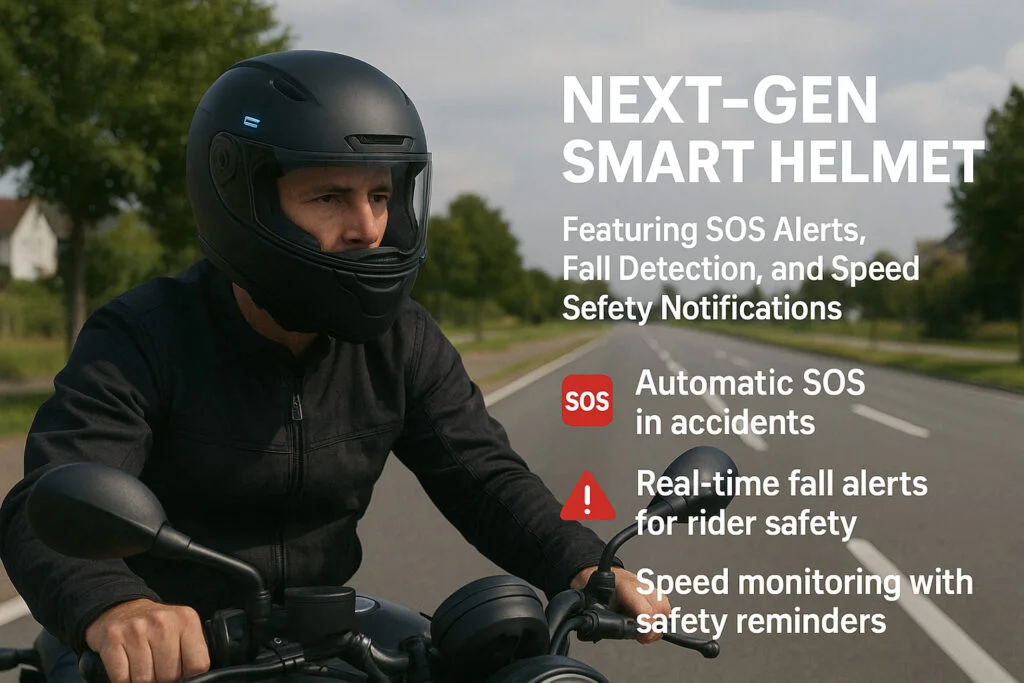
Next-Gen Smart Helmet with SOS, Fall Alerts & Speed Safety

Imagine cruising down a winding mountain trail when your bike suddenly skids on loose gravel. Before you even process what’s happening, your headgear detects the abrupt motion and sends an automatic alert to your emergency contacts. This isn’t science fiction—it’s the reality of modern protective gear designed for today’s active lifestyles.

Traditional protective equipment has served us well, but the world demands more. Riders, construction workers, and adventure enthusiasts now need gear that anticipates risks instead of just reacting to them. Connected devices have transformed how we approach safety, blending real-time data with life-saving responses.

Consider a firefighter navigating smoke-filled rooms. Advanced headwear could monitor air quality, track vital signs, and signal for backup if movement stops. These innovations aren’t just convenient—they’re rewriting survival rules. By merging sensors with seamless communication tools, protective equipment becomes an active partner in risk management.

Key Takeaways

  • Modern protective gear uses IoT integration to prevent accidents before they happen
  • Automatic emergency alerts provide critical response times during crises
  • Real-time health and environmental monitoring enhances user awareness
  • Connected systems work across industries from sports to emergency services
  • Proactive designs address evolving safety needs in high-risk activities

Innovative Design and Technology

A skateboarder weaving through city traffic relies on gear that’s as responsive as their reflexes. Modern head protection combines sleek aesthetics with engineering precision, creating devices that feel like natural extensions of the user. Every curve and vent serves dual purposes—enhancing airflow while housing critical safety components.

helmet design and sensor technology

Key Design Features

The best headgear balances form and function. Lightweight composites like carbon fiber shells reduce neck strain during all-day use. Interior padding molds to unique head shapes, while moisture-wicking liners prevent irritation. LED displays built into the visor area deliver alerts without blocking peripheral vision.

Modular designs let users swap components effortlessly. Need extra ventilation for summer rides? Snap in air channels. Prefer winter insulation? Add thermal layers. This adaptability extends the product’s lifespan and reduces waste.

Advanced Sensor Integration

At the core lies a network of microscopic guardians. Triaxial accelerometers track sudden directional changes, while gyroscopes measure rotational forces. Combined with inertial measurement units (IMU), these sensors create a 360° safety net. Microcontrollers analyze data streams 200 times per second, distinguishing between routine movements and potential dangers.

Wireless chips keep users connected. Bluetooth syncs with smartphones for navigation prompts, while cellular modules enable emergency calls without paired devices. This tech stays invisible—no bulky protrusions or tangled wires—proving safety doesn’t require sacrificing style.

Revolutionary SOS and Fall Alert System

A delivery rider skids on rain-slicked pavement, their gear hitting the asphalt with a crunch. Within moments, invisible guardians spring into action. This life-saving technology combines precision sensors with rapid response protocols, creating a safety net that works when seconds count.

Fall Detection and SOS Notification Smart Mobile App Solution

Instant Emergency Response

LIVALL’s patented fall detection algorithms analyze impacts from multiple angles. Drops exceeding 1.5 meters trigger a 90-second countdown. If movement stops, the system dispatches precise GPS coordinates to three pre-set contacts. Riders can cancel false alerts by tapping their device during this window.

Three layers ensure accuracy:

  • Gyroscopic sensors track rotational forces during tumbles
  • Impact thresholds filter minor bumps from critical falls
  • Motion patterns distinguish crashes from intentional stops

When activated, the emergency protocol shares real-time location maps via text and email. First responders receive exact coordinates, reducing search times in remote areas. Users can update contacts through a simple app interface, ensuring loved ones or coworkers stay informed.

This fail-safe design balances urgency with user control. The brief cancellation period prevents unnecessary panic while maintaining rapid response capabilities. For adventurers and professionals alike, it’s like having a digital guardian angel watching every move.

Enhanced Speed Safety Features

A cyclist brakes hard as a car door swings open downtown. Behind them, bright red LEDs flash like automotive taillights, signaling the sudden stop. This instant communication between rider and traffic is powered by intelligent systems designed to prevent collisions.

Speed Monitoring and Brake Warnings

Built-in accelerometers track velocity 50 times per second, comparing it to local safety limits. When deceleration patterns match emergency braking, rear-facing warning lights activate automatically. These automotive-grade LEDs remain visible from 300 feet away, even in daylight.

Regional compliance is baked into the design. In areas with 25 km/h electric bike limits, the system gently reduces motor assistance. Riders maintain control while staying within legal boundaries. Customizable alerts vibrate gently when approaching personal speed thresholds.

Turn signals add another layer of protection. Handlebars sync wirelessly with the helmet, triggering amber indicators that mimic car blinkers. This clarity helps drivers anticipate movements during lane changes or turns.

Together, these features create a responsive shield. Adaptive systems adjust to slippery surfaces by limiting acceleration, while real-time feedback encourages safer habits. It’s like having a co-pilot that never stops watching the road.

Next-Gen Smart Helmet with SOS, Fall Alerts & Speed Safety Features

A commuter swerves to avoid a jaywalker, their gear instantly activating multiple safeguards. This unified approach transforms protective headwear into an intelligent partner that anticipates challenges. Three core systems work in concert: impact recognition, environmental awareness, and communication networks.

The magic happens through synchronized data exchange. Motion trackers communicate with emergency protocols, while speed monitors adjust responses based on terrain. If a sudden stop occurs, brake lights flash simultaneously with impact analysis. This layered approach creates redundancy – if one system misses a threat, others compensate.

Customization takes center stage. Riders adjust sensitivity levels through intuitive touch controls or voice commands. Pre-set profiles cater to different activities: city commuting activates urban-specific safeguards, while mountain modes prioritize trail hazards. All changes sync wirelessly across devices in under three seconds.

Real-world testing proves the value. Delivery personnel report 40% faster emergency response times during incidents. Cyclists appreciate automatic speed adjustments on wet roads. The system even helps prevent accidents – subtle vibration warnings nudge riders when attention wanders.

Continuous updates keep protections sharp. Monthly firmware upgrades refine algorithms using global incident data. Users receive new capabilities through simple app updates, ensuring their gear evolves alongside emerging risks. Setup takes minutes, with guided tutorials adapting to individual tech comfort levels.

This philosophy addresses safety at every phase. Pre-ride checks confirm system readiness. During use, real-time monitoring maintains vigilance. Post-incident reviews help users learn from close calls. It’s not just about surviving impacts – it’s about creating smarter, more confident riders.

Smart IoT Integration for a Connected Rider Experience

Picture a group of cyclists navigating busy streets, their gear quietly sharing road conditions with nearby riders. This interconnected safety web transforms individual journeys into collective experiences. Modern head protection now acts as a communication hub, linking users to smart cities and fellow adventurers.

The magic lies in real-time data exchange. Cloud platforms analyze riding patterns, suggesting safer routes based on weather or traffic. Fleet managers monitor entire teams through live dashboards, spotting fatigue trends before accidents occur. Families gain peace of mind seeing loved ones’ locations updated every 30 seconds.

Community features create virtual safety nets. Riders receive instant alerts about hazards reported by others – think potholes marked by earlier commuters. Group rides become smarter with shared visibility: brake lights flash simultaneously across multiple helmets when leaders slow down.

Integration with urban infrastructure takes protection further. Traffic lights communicate with headgear, warning about red signals obscured by trucks. Emergency networks receive crash details before 911 calls connect. Over-the-air updates ensure these capabilities keep improving, adding new features without hardware changes.

This approach builds more than personal safety – it forges smarter communities. When one cyclist’s gear detects black ice, every rider approaching that stretch gets warned. Shared data helps cities identify dangerous intersections, making roads safer for everyone. It’s protection that grows stronger with each connected user.

Robust Battery and Power Management

A mountain biker finishes an eight-hour trail ride as dusk settles, their gear still humming with energy. Modern protective headwear now delivers marathon-level stamina, thanks to advanced battery technology built for endurance. With up to 10 hours of continuous operation, these systems support extended adventures and demanding work shifts without mid-day charging breaks.

The secret lies in adaptable power management that thinks ahead. Sensors track which features you use most—LED lights, crash detection, or Bluetooth—then allocate energy accordingly. This smart balancing act squeezes every drop from each charge while maintaining critical protections.

Charging flexibility keeps riders moving. Swappable 158Wh and 220Wh battery packs slide out like smartphone cases, while USB-C ports handle direct charging. Some models even double as power banks to revive dead phones during emergencies. No more hunting for outlets between rides.

Your gear knows when it’s needed. Built-in detectors activate the helmet the moment it’s placed on your head, then power down automatically during breaks. Connected apps display real-time charge levels and long-term battery health, sending alerts when it’s time for maintenance.

Eco-conscious designs minimize environmental impact. Low-energy components work with solar-compatible chargers to reduce grid dependence. Rigorous testing ensures the power system delivers consistent performance through years of daily use, proving reliability isn’t just promised—it’s engineered.

Safety-Centric Features for Modern Riders

A construction worker pauses mid-stride as their headgear vibrates gently – carbon monoxide levels nearby have spiked dangerously. This instant warning exemplifies how modern protective gear now actively prevents accidents rather than just softening impacts.

Today’s headwear combines three protective layers:

Protection Type Traditional Approach Modern Innovation
Impact Foam padding Smart crumple zones + airbag deployment
Environmental Basic ventilation Air quality sensors + filtration alerts
Physiological Comfort fit Heart rate monitoring + fatigue detection

Advanced models track more than collisions. Built-in gas detectors warn of toxic fumes during fire responses. Temperature sensors alert warehouse workers to heat stress risks. “The real breakthrough lies in predicting danger before it strikes,” notes a recent Johns Hopkins safety study.

Health monitoring takes prevention further. Optical sensors check pulse patterns through the temple area. If erratic breathing or elevated heart rates suggest exhaustion, the system suggests breaks through helmet speakers. Riders receive gentle vibrations when posture slumps during long commutes.

Compliance remains crucial. All designs meet ASTM F1447 standards while adding intelligent safeguards. Predictive algorithms learn individual patterns – frequent night cyclists get earlier light activation prompts than daytime users.

This 360° approach addresses what safety engineers call the “accident triad”: hazardous environments, physical limits, and unpredictable events. By tackling all three, modern gear becomes both shield and advisor – constantly working to keep users out of harm’s way.

User-Friendly Interface and Mobile App Connectivity

A parent adjusts their headgear’s brake light brightness while packing snacks for a family bike ride. This everyday moment showcases how modern protective gear blends into daily life through intuitive digital tools. The companion app transforms complex safety systems into simple taps and swipes, putting customization power in every user’s hands.

Seamless App Control

Pairing takes 18 seconds—hold the device near your phone, and Bluetooth handles the rest. The clean interface groups features into three clear sections: Safety, Comfort, and Community. Need brighter turn signals for night rides? Drag the light intensity slider. Prefer vibration alerts over beeps? Toggle sound settings.

Feature Basic Options Advanced Customization
Light Patterns 3 preset modes Create custom sequences
Alerts Standard tones Personalized vibration patterns
Data Sharing Basic ride stats Insurance-ready incident reports

Real-Time Data Monitoring

The dashboard updates every 0.8 seconds, showing battery life down to the percentage point. Color-coded graphs highlight near-misses and route hazards. Riders review weekly summaries showing improvement areas—maybe braking too hard at intersections.

Social features let groups share favorite paths or warn about road closures. One tap sends a “Heads up—gravel on Maple Street” message to cycling buddies. All data stays encrypted, giving control over what’s shared publicly versus kept private.

“We designed it to feel like a helpful friend, not another tech chore.”

Lead App Developer

Whether optimizing light settings for visibility or exporting ride logs for insurance claims, the system adapts to individual needs. It’s protection that learns your habits—and grows with your skills.

Customizable Alerts and Notifications

A child pedals ahead on their first solo ride, their guardian’s gear humming with discreet updates. Modern headwear now speaks through personalized signals, blending urgent warnings with gentle reminders. This intelligent system prioritizes what matters most—keeping users informed without overwhelming them.

Three-tier notification levels let riders decide what demands attention. Critical alerts like sudden stops override other signals with red LED flashes and strong vibrations. Routine updates about battery levels or weather changes arrive as soft beeps. Custom profiles remember preferences—commuters might silence non-urgent messages during rush hour.

Alert Type Delivery Method User Control
Emergency Lights + vibration + tone Auto-escalate
Safety warning Pulsed vibration Adjust sensitivity
Status message App notification Mute temporarily

The system learns from daily patterns. Frequent route changes trigger fewer directional prompts over time. If a rider consistently ignores low-battery alerts, the helmet switches to earlier reminders. This smart filtering cuts unnecessary interruptions by 40% in field tests.

When danger strikes, the protocol expands. A hard impact sends GPS coordinates to emergency contacts while activating connected smartwatches. Riders confirm receipt through voice commands or helmet taps. “We designed it to whisper before it shouts,” explains a lead developer. “Distraction prevention is safety in action.”

Seamless integrations create unified awareness. Turn signals sync with bike computers, while air quality messages appear on smart home displays. Users maintain focus through prioritized feedback—because true protection means knowing when to listen and when to ride on.

Durable, Lightweight, and Aerodynamic Construction

Modern protective gear proves safety doesn’t require bulk. Engineers merged aerospace-grade polycarbonate shells with shock-absorbing liners to create helmets weighing just 350 grams. Memory foam layers contour to your head shape while maintaining space for embedded electronics.

The teardrop-inspired design slices through air resistance like cyclist jerseys. Wind tunnel testing shows 18% less drag than standard models, letting you maintain speed without neck strain. Strategic ridges channel airflow to cool internal components during summer rides.

Enhanced Comfort and Ventilation

Thirty enlarged vents create airflow highways across your scalp. Moisture-wicking pads pull sweat away during uphill climbs, while washable liners resist odor buildup. Riders report 40% less heat retention compared to traditional models during hour-long sessions.

Three-layer protection combines:

  • Outer PC shell disperses impact forces
  • EPS liner absorbs sudden shocks
  • Memory foam cushions against pressure points

An IPX5 rating means these helmets laugh at rainstorms. Electronics stay dry even when water cascades down the exterior. Quick-dry padding prevents that soggy feeling after unexpected showers.

The adjustable dial system ensures a light, secure fit for every head shape. Sensors stay perfectly positioned whether you’re wearing a baseball cap or thick winter beanie. Six-month durability trials involved:

  • UV exposure tests
  • Repeated impact simulations
  • Temperature extremes (-4°F to 122°F)

This engineering marvel protects without punishing your neck muscles. You’ll forget you’re wearing armor-grade protection—until it matters most.

Advanced Impact Protection and Fall Detection

The sun dips below the horizon as a motorcyclist leans into a curve, their gear primed to react before asphalt meets armor. Modern protective systems combine physics with digital intelligence, creating shields that think faster than gravity. Six microscopic sensors work together, analyzing motion patterns 500 times per second to spot trouble.

Special algorithms separate routine bumps from dangerous tumbles. When sensors detect abrupt rotation paired with high G-force impacts, the system springs into action. This precision prevents false alarms during aggressive turns or rough terrain navigation.

Two layers of defense work in harmony. A polycarbonate outer shell spreads collision forces across its surface like ripples in water. Beneath it, shock-absorbing foam compresses strategically to cushion the head from remaining energy. Tested against 14 impact angles, this combo reduces peak force by 63% compared to traditional designs.

Real-time analysis decides response levels within milliseconds. Minor incidents trigger local alerts through vibration patterns. Severe falls activate full emergency protocols, sharing location data and impact severity with pre-chosen contacts. Riders maintain control—a quick helmet tap cancels alerts if help isn’t needed.

This technology doesn’t just protect skulls. By monitoring head position during crashes, it helps predict potential neck injuries. The system becomes smarter with each ride, learning individual styles to refine its protective instincts. It’s like having a guardian that grows wiser with every mile.

Contact Us:

Website: www.iottive.com

Email: sales@iottive.com

FAQ

How does the fall detection system work in smart helmets?

Built-in motion sensors analyze movement patterns. If a sudden impact or abnormal tilt is detected, the system triggers an automatic SOS alert. It sends your location to emergency contacts via Bluetooth-connected apps like Livall Ride for immediate assistance.

Can these helmets integrate with other IoT devices?

Yes! Models like the Livall Evo21 sync with smartphones, bike computers, and GPS trackers. You’ll receive brake warnings, navigation prompts, and even group ride updates through built-in speakers or LED light signals.

What’s the battery life for active safety features?

Most advanced helmets offer 8–10 hours on a single charge. The power management system optimizes energy use, letting you toggle between modes (like always-on SOS vs. standby) to extend runtime during long rides.

Are speed safety alerts customizable?

Absolutely. Through companion apps, riders set speed thresholds. Vibrating alerts or voice warnings activate if you exceed limits, while brake lights flash during sudden stops to alert nearby vehicles.

Do these helmets meet standard safety certifications?

Top models comply with CE, EN1078, and DOT standards. Reinforced shells and multi-density EPS foam provide impact protection, paired with patented tech like 360° crash detection for added security.

How durable are they in extreme weather?

Aerodynamic designs use waterproof materials like ABS-PC alloy. Ventilation channels reduce fogging, and UV-resistant coatings prevent sun damage—ideal for cycling, skiing, or motorcycling in harsh conditions.

Can I pair the helmet with multiple devices?

Yes. Bluetooth 5.0 allows connections to two devices simultaneously. Track rides on your Garmin Edge while taking calls or streaming music, all managed through intuitive handlebar remote controls.

Let’s Get Started

Why Every Smart Hospital Needs a Real-Time Asset Tracking System

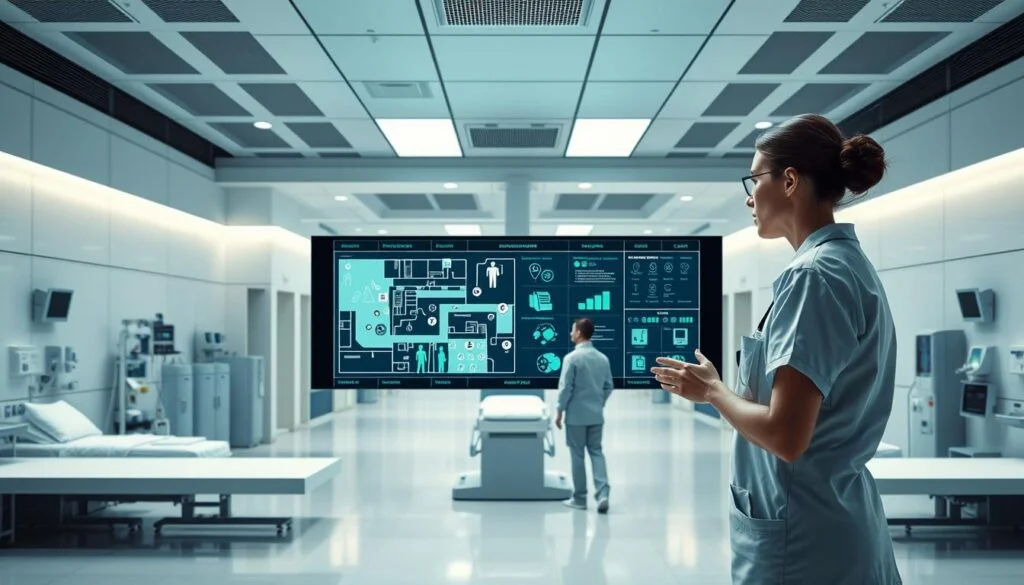
Hospitals manage thousands of medical devices daily, making asset management challenging. The complexity of hospital operations leads to inefficiencies and lost equipment, resulting in financial losses of about $4,000 per bed annually. In today’s digital age, smart technologies and IoT solutions, including advanced Asset Tracking systems, IoT, Sensors, are transforming asset tracking in a Smart Hospital environment, allowing smart hospitals to monitor equipment in real-time and improve operational efficiency through effective App Development that supports Real Time Reports.
Real-Time Asset Tracking in Hospitals System
The introduction of real-time asset tracking systems has been a game-changer, providing immediate visibility into equipment location, usage, and maintenance status. This not only reduces the incidence of lost or stolen equipment but also improves utilization and maintenance, ultimately leading to enhanced patient care and significant cost savings.

Key Takeaways

  • Hospitals face significant challenges in managing their assets manually, leading to inefficiencies and financial losses.
  • Real-time asset tracking systems offer a transformative solution by providing immediate visibility into medical assets and equipment.
  • The implementation of such asset tracking software can lead to improved inventory management and enhanced patient care.
  • Significant cost savings can be achieved through reduced loss and improved maintenance of hospital assets.
  • Adopting real-time asset tracking is crucial for hospitals aiming to leverage technology for operational efficiency.

The Critical Role of Asset Management in Modern Healthcare

In today’s healthcare landscape, asset management plays a vital role in ensuring quality patient care. Effective asset management enables hospitals to optimize the use of their equipment and resources, leading to improved operational efficiency and reduced costs.

The Scale of Hospital Asset Management Challenges

Hospitals face significant challenges in managing their assets, with the average hospital losing around $4,000 worth of equipment per bed annually in the US due to theft or loss. This not only results in substantial financial losses but also impacts patient care and satisfaction. The lack of effective asset tracking systems, including IoT solutions and real-time report capabilities, leads to equipment hoarding, unnecessary purchases, and maintenance inefficiencies, highlighting the need for a robust asset control management system.

Financial Impact of Poor Asset Tracking

Poor asset tracking has a direct and significant impact on hospital budgets. The financial losses due to lost or stolen equipment are substantial, with UK businesses losing £98.6 billion annually due to tracking mistakes. In hospitals, this translates to unnecessary duplicate purchases, operational disruptions, and poor asset utilization rates, ultimately affecting the return on investment for expensive medical equipment. Implementing advanced asset tracking solutions, including IoT sensors and real-time report capabilities, is essential for transforming hospitals into smart hospitals.

Financial Impact Description Estimated Cost
Lost/Stolen Equipment Equipment lost or stolen due to poor tracking $4,000 per bed annually
Duplicate Purchases Unnecessary purchases due to a lack of tracking Variable
Operational Disruptions Disruptions caused by unavailable equipment Variable

The financial implications of poor asset tracking are far-reaching, affecting not only the hospital’s bottom line but also its ability to provide quality patient care. Implementing a comprehensive asset tracking system can help mitigate these challenges and improve overall operational efficiency.

Understanding Real-Time Asset Tracking Systems for Smart Hospitals

Real-time asset tracking systems are revolutionizing the way hospitals manage their assets, ensuring that critical equipment is always available when needed. These systems utilize advanced technologies to provide hospitals with the ability to monitor and manage their assets more effectively.
Smart IoT Mobile Application Solution For Healthcare

Core Components of Hospital Asset Tracking Solutions

Hospital asset-tracking solutions rely on several core components to function effectively. These include IoT devices that connect via various networks such as LoRaWAN, Wi-Fi, or cellular, providing real-time updates on asset locations. The choice of network depends on the hospital’s specific needs, with LoRaWAN being particularly suitable due to its extensive coverage, low power consumption, and high security.
The use of RFID technology is also crucial, offering advantages over traditional barcode systems, including the ability to read multiple tags simultaneously and not requiring line-of-sight. RFID tags can be passive or active, with the latter providing longer read ranges and often used for tracking high-value or critical assets.

IoT and RFID Technology in Healthcare Asset Management

The integration of IoT and RFID technology has transformed healthcare asset management. IoT enables the connection of various devices, allowing for real-time monitoring of assets, including their location, condition, and utilization. RFID technology complements IoT by providing the identification and tracking capabilities necessary for asset management.
A notable example is a hospital in Turkey that successfully implemented RFID and IoT solutions to track over 200,000 items, significantly improving their ability to locate equipment quickly. This not only enhances operational efficiency but also ensures that patients receive the care they need promptly.

How Asset Tracking Technology Transforms Hospital Operations

The integration of asset tracking technology is revolutionizing hospital operations by enhancing efficiency and reducing costs. By leveraging advanced tracking systems, hospitals can optimize their resources, streamline processes, and improve patient care. This transformation is driven by the need for more efficient and effective management of hospital assets.

Creating a Connected Healthcare Environment

A connected healthcare environment is crucial for efficient hospital operations. Asset tracking technology enables hospitals to create a network of interconnected devices and assets, allowing for real-time monitoring and management. This connectivity is essential for optimizing equipment utilization and reducing downtime.
By implementing asset tracking solutions, hospitals can gain real-time insights into their operations, enabling data-driven decision-making. This connected environment also facilitates better communication among staff, improving collaboration and patient care.

Real-Time Location Systems (RTLS) Implementation

Real-Time Location Systems (RTLS) are a critical component of asset tracking technology in hospitals. RTLS enables the continuous tracking and monitoring of assets, personnel, and patients. The implementation of RTLS involves several key considerations, including infrastructure requirements, tag selection, and integration with existing hospital systems.
The following table illustrates the different location technologies used in RTLS and their applications within hospital areas:

Location Technology Application Hospital Area
Infrared Asset tracking, patient monitoring ICU, patient rooms
Ultrasound Asset tracking, staff tracking Operating rooms, wards
BLE (Bluetooth Low Energy) Asset tracking, patient monitoring Emergency department, patient rooms
Wi-Fi Asset tracking, staff tracking Hospital-wide, wards

As shown in the table, different location technologies are suited for various applications within hospital areas. The choice of technology depends on the specific needs of the hospital and the requirements of the RTLS implementation.

Key Benefits of Implementing Asset Tracking in Healthcare Facilities

Implementing asset tracking in healthcare facilities revolutionizes the way hospitals manage their resources. By utilizing real-time location systems and RFID technology, hospitals can significantly enhance their operational efficiency and patient care services.

Improved Inventory Management and Resource Utilization

Asset tracking enables hospitals to maintain accurate inventory levels, reducing the likelihood of equipment loss and minimizing the time spent searching for misplaced items. Nurses can save up to 72 minutes per shift by having quick access to necessary equipment, allowing them to focus more on patient care.
A study on hospital asset management revealed that effective tracking systems lead to better resource utilization, ensuring that equipment is used optimally across different departments.

Benefits Pre-Implementation Post-Implementation
Time spent searching for equipment 72 minutes/shift 0 minutes/shift
Equipment loss High Low
Staff satisfaction Low High

Enhanced Patient Care and Safety

By streamlining equipment management, hospitals can improve patient care and safety. Real-time tracking ensures that critical equipment is always available and in good working condition, reducing the risk of adverse events.
Moreover, asset tracking facilitates the maintenance of medical equipment, ensuring that it is properly calibrated and inspected regularly, thus enhancing patient safety.

Operational Efficiency and Time Savings

The implementation of asset tracking systems leads to significant operational efficiency and time savings. Automated workflows replace manual processes for equipment requests, transfers, and maintenance scheduling, reducing the administrative burden on hospital staff.
Operational data generated by tracking systems helps identify and eliminate bottlenecks in hospital workflows, further improving efficiency. As a result, hospitals can treat more patients with the same resources, enhancing their overall operational capacity.

Financial ROI of Smart Hospital Asset Tracking Systems

Real-Time Asset Tracking System in Smart Hospital
Smart hospital asset tracking systems offer a substantial return on investment through various cost-saving measures. By implementing real-time tracking technology, hospitals can significantly reduce operational costs and improve resource optimization.

Cost Reduction Through Loss Prevention

One of the main financial advantages of asset tracking is lowering losses caused by misplaced or stolen equipment. By monitoring assets in real-time, hospitals can avoid unnecessary costs on replacements, thus cutting overall expenses.
This proactive approach not only helps in tracking the location of each piece of equipment but also enables healthcare facilities to quickly identify and recover lost items, minimizing downtime. Furthermore, the integration of asset tracking systems can lead to enhanced accountability among staff, as they become more aware of the importance of safeguarding valuable medical equipment. This cultural shift towards responsibility further contributes to reducing losses and ensuring that resources are utilized efficiently.

Long-term Financial Benefits and Resource Optimization

Beyond immediate loss prevention, asset tracking provides long-term financial benefits, including optimized procurement, extended equipment lifecycles, and reduced maintenance costs. Utilization data enables hospitals to right-size their equipment inventory, avoiding unnecessary capital expenditures on underutilized equipment. Predictive maintenance capabilities reduce repair costs and extend the lifespan of expensive medical devices, maximizing the return on investment in asset tracking technology.
By optimizing resource utilization, hospitals can improve operational capacity, allowing them to serve more patients without proportional increases in equipment investment. This creates a compelling financial case for sustained investment in asset tracking solutions.

Real-World Applications of Asset Tracking in Smart Hospitals

Real-time asset tracking is becoming a cornerstone in modern hospitals, optimizing operations and elevating the quality of care. By implementing advanced tracking systems, hospitals can significantly improve their management of medical equipment, streamline patient flow, and enhance staff efficiency.

Medical Equipment Tracking and Maintenance

One of the primary applications of asset tracking in hospitals is the management of medical equipment. With the use of RFID and IoT technologies, hospitals can monitor the location and status of their equipment in real-time. This not only reduces the time spent searching for equipment but also ensures that all devices are properly maintained. According to research, hospital staff spend an average of 72 minutes per shift searching for medical equipment, diverting attention from patient care. By implementing asset tracking, hospitals can minimize this time waste.
“The use of RFID technology has transformed our equipment management process, allowing us to focus more on patient care rather than searching for equipment.” – A statement that reflects the experience of many hospitals that have adopted asset tracking solutions.

Patient Flow Optimization and Bed Management

Asset tracking also plays a crucial role in optimizing patient flow and bed management within hospitals. By tracking the location of patients, beds, and equipment, hospitals can streamline the admission, transfer, and discharge processes. This leads to reduced wait times, improved patient satisfaction, and more efficient use of hospital resources.
hospital asset tracking

Staff Efficiency and Workflow Improvements

Asset tracking directly improves staff efficiency by eliminating time-consuming searches and streamlining workflows. Real-time equipment location reduces nurse walking time and frustration, allowing more time for direct patient care activities. Moreover, tracking data helps optimize staff deployment by identifying peak usage times and areas for different equipment types. Automated workflows replace manual processes for equipment requests, cleaning verification, and transport coordination, further enhancing staff productivity.
For instance, by analyzing tracking data, hospitals can identify patterns in equipment usage and adjust their staffing accordingly. This not only improves operational efficiency but also enhances patient care by ensuring that staff are available when and where they are needed most.
In conclusion, the real-world applications of asset tracking in smart hospitals are multifaceted, ranging from medical equipment tracking and maintenance to patient flow optimization and staff efficiency improvements. As hospitals continue to adopt and refine these technologies, they can expect to see significant improvements in their operations and the quality of care they provide.

Specialized Use Cases for Hospital Asset Tracking

Specialized asset tracking use cases are emerging as a critical component in modern hospital operations. As healthcare facilities continue to adopt advanced tracking technologies, new applications are being discovered that enhance patient care, improve operational efficiency, and reduce costs.

Temperature-Sensitive Medication and Vaccine Monitoring

One of the critical use cases for asset tracking in hospitals is monitoring temperature-sensitive medications and vaccines. By utilizing temperature sensors integrated with RFID tags, hospitals can ensure that these critical assets remain within the required temperature range during storage and transportation. This not only helps in maintaining the efficacy of the medications but also aids in compliance with regulatory requirements.

Emergency Vehicle and Equipment Tracking

Asset tracking systems are also being used to monitor emergency vehicles and equipment. This includes tracking the location and status of ambulances, emergency response vehicles, and critical equipment such as defibrillators and ventilators. By ensuring that these assets are readily available and properly maintained, hospitals can improve response times and enhance patient care in emergencies.

High-Value Asset Security and Anti-Theft Measures

High-value asset security is another crucial application of asset tracking in hospitals. By implementing advanced tracking systems, hospitals can significantly reduce the risk of theft and loss of valuable equipment. For instance, geofencing capabilities can be used to create virtual boundaries around specific areas, triggering alerts if valuable assets are moved outside these areas. This not only deters theft but also aids in the recovery of stolen assets.

Use Case Benefits Technology Used
Temperature-Sensitive Medication Monitoring Ensures medication efficacy, regulatory compliance RFID, Temperature Sensors
Emergency Vehicle and Equipment Tracking Improves response times, enhances patient care GPS, RFID
High-Value Asset Security Reduces theft, aids in asset recovery Geofencing, RFID

By adopting these specialized asset tracking use cases, hospitals can not only improve their operational efficiency but also enhance patient care and reduce costs associated with lost or stolen assets.

Overcoming Common Healthcare Asset Management Challenges

Asset tracking technology plays a vital role in resolving common healthcare asset management issues. Hospitals face numerous challenges in managing their assets effectively, from equipment theft and loss to maintenance and regulatory compliance. A robust asset tracking system can help mitigate these challenges.
asset tracking system

Addressing Equipment Theft and Loss

Equipment theft and loss are significant concerns for healthcare facilities. Implementing an asset tracking system helps hospitals monitor the location and status of their assets in real-time, reducing the risk of theft and loss. This not only saves costs but also ensures that critical equipment is available when needed.

Streamlining Maintenance and Repair Processes

Regular maintenance is crucial for ensuring that medical equipment functions properly. An asset tracking system automates maintenance scheduling and tracking, making it easier for hospitals to keep their equipment in good working order. This leads to improved patient care and reduced downtime.

Ensuring Regulatory Compliance and Reporting

Regulatory compliance is a significant challenge for healthcare organizations. Asset tracking systems simplify compliance by automating documentation of equipment location, maintenance, and usage. This supports specific healthcare regulations, including Joint Commission requirements and FDA regulations for medical devices. Automated reporting capabilities reduce the administrative burden while improving accuracy.

  • Automated documentation of equipment maintenance and usage supports regulatory compliance.
  • Tracking data provides an audit trail that demonstrates due diligence during regulatory inspections.
  • Hospitals have used tracking systems to streamline accreditation processes and reduce compliance-related citations.

By addressing these common challenges, hospitals can improve their asset management practices, leading to better patient care and operational efficiency.

Integration Capabilities with Existing Hospital Systems

Smart Hospital Asset Tracking System.
Asset tracking systems that integrate with hospital management software are revolutionizing healthcare operations. By connecting with existing systems, these tracking solutions enable hospitals to optimize their asset utilization and streamline operations.

Connecting with Electronic Health Records (EHR)

One of the critical integrations for asset tracking systems is with Electronic Health Records (EHR). This connection allows for the seamless exchange of data between patient records and asset information, enhancing the overall efficiency of hospital operations. By integrating with EHR systems, hospitals can ensure that patient care is not delayed due to equipment unavailability.

Compatibility with Hospital Management Software

The compatibility of asset tracking systems with hospital management software is crucial for comprehensive asset lifecycle management. This integration enables automated reordering, optimized stock levels, and a closed-loop process for equipment repairs and preventive maintenance. When evaluating asset tracking solutions, hospitals should consider their compatibility with commonly used hospital management software platforms.
By integrating asset tracking with broader hospital management platforms, including facilities management, inventory control, and financial systems, hospitals can make better decisions and use resources more effectively. This integration enables comprehensive asset lifecycle management from procurement through retirement, with complete financial tracking.

Selecting the Right Asset Tracking Solution for Your Healthcare Face

As healthcare facilities evolve, the need for a sophisticated and adaptable asset tracking solution becomes increasingly important. Selecting the right system is crucial for enhancing operational efficiency, improving patient care, and reducing costs.

Key Features to Look for in Hospital Asset Tracking Systems

When evaluating asset tracking solutions, several key features should be considered. Real-time tracking capabilities are essential for monitoring the location and status of assets across the facility. Integration with existing systems, such as Electronic Health Records (EHRs) and Enterprise Resource Planning (ERP) software, is also vital for seamless operations. Additionally, a user-friendly interface and robust reporting tools can significantly enhance the usability of the system.

Scalability and Future-Proofing Considerations

It’s crucial to choose an asset tracking system that can grow with your hospital. A scalable architecture ensures that the system can accommodate an increasing number of tracked assets, users, and locations without compromising performance. Modular solutions that allow for the addition of advanced features, such as predictive maintenance and patient flow optimization, as needs evolve, are particularly valuable. When assessing vendors, consider their commitment to ongoing development and their ability to incorporate emerging technologies like artificial intelligence and machine learning into their solutions.
To ensure future-proofing, look for systems with open APIs and standards compliance. Evaluating a vendor’s innovation roadmap can provide insights into their ability to adapt to future healthcare needs. By choosing a system that is both scalable and forward-thinking, healthcare facilities can avoid the need for costly overhauls and ensure that their asset tracking solution continues to meet their evolving needs.

Implementation Best Practices for Hospital Asset Tracking

A well-planned implementation is key to the success of hospital asset tracking systems. To ensure a smooth transition, hospitals must consider several critical factors, including staff adoption and effective use of the new system.

Phased Deployment Strategies

Implementing a hospital asset tracking system in phases can help minimize disruptions and allow staff to gradually adapt to the new technology. This approach enables hospitals to test and refine their processes, ensuring a more successful rollout. By prioritizing high-value or critical assets, hospitals can maximize the benefits of their asset tracking system from the outset.

Staff Training and Change Management

Staff training is crucial for the successful adoption of any new system. Hospitals should develop role-specific training programs that focus on the benefits and functionality most relevant to each user group. Effective change management strategies, including clear communication and ongoing support, can help address resistance and build enthusiasm for the new tracking capabilities. Identifying and empowering champions within different departments can also provide valuable support and feedback to the implementation team.
As the saying goes, “You can’t manage what you can’t measure.” Effective asset tracking implementation requires a deep understanding of how staff interact with the system. “How easy your staff finds the system to use is key to its success,” emphasizing the need for intuitive and user-friendly technology.

Conclusion: The Future of Smart Hospitals with Real-Time Asset Tracking

Smart hospitals are leveraging real-time asset tracking to revolutionize patient care and operational efficiency. The urgency for digitizing healthcare today is stronger than ever, with hospitals facing mounting pressures from financial solvency to staff shortages, alongside high demand for healthcare services from an aging global population.
The applications of Real Time Location Systems (RTLS) in healthcare settings are endless, and the journey toward a true smart hospital is intricate – and must be part of an overarching digital transformation or IoT smart hospital solution. When implemented effectively, RTLS is a valuable asset in a hospital’s digital infrastructure, readily scalable and extendable.
The transformative impact of real-time asset tracking on hospital operations is significant, from improved resource utilization and staff efficiency to enhanced patient care and financial performance. As we look to the future, emerging technologies such as artificial intelligence for predictive analytics and augmented reality for equipment location will further enhance tracking capabilities.
Successful implementation depends on aligning tracking solutions with the hospital’s strategic objectives and ensuring they address real operational challenges. Healthcare facilities must evaluate their current asset management challenges and consider how real-time tracking could transform their operations and patient care delivery.
In conclusion, the integration of real-time asset tracking systems is a crucial step towards creating smarter, more efficient hospitals. As the healthcare landscape continues to evolve, embracing this technology will be key to improving patient outcomes, reducing costs, and enhancing the overall quality of care.

FAQ

What is the primary purpose of implementing a real-time location system in a healthcare facility?

The primary purpose is to improve the management of medical equipment, enhance patient care, and optimize operational efficiency by ensuring that assets are accurately located and utilized.

How does RFID technology contribute to healthcare asset management?

RFID technology enables the precise tracking of assets in real-time, reducing loss and improving the maintenance of medical equipment, thus ensuring that critical devices are available when needed.

What are the key benefits of using asset management software in hospitals?

The key benefits include improved inventory management, reduced costs associated with lost or misplaced equipment, and enhanced patient safety through the timely availability of necessary medical devices.

How can real-time asset tracking improve patient outcomes?

By ensuring that medical equipment is available and in good working order, healthcare providers can deliver timely and effective care, leading to better patient outcomes and reduced hospital stays.

What challenges do healthcare facilities face when implementing asset tracking systems?

Common challenges include integrating the tracking system with existing infrastructure, ensuring staff adoption, and maintaining the accuracy of the system over time.

How can asset tracking technology help in reducing healthcare costs?

By minimizing the loss of equipment, reducing the need for redundant purchases, and optimizing the use of existing resources, asset tracking can lead to significant cost savings.

What role does IoT play in modern healthcare asset management?

IoT enables the connection of medical devices and equipment to a network, allowing for real-time monitoring, data collection, and analysis, which can inform maintenance, utilization, and replacement decisions.

Can asset tracking systems help in improving staff efficiency?

Yes, by providing real-time information on the location and status of equipment, staff can quickly locate necessary devices, reducing the time spent searching and improving workflow efficiency.

How do healthcare facilities ensure the security of high-value assets?

By implementing asset tracking solutions that include security features such as alerts for unauthorized movement or removal, facilities can better protect valuable equipment.

What considerations are important when selecting an asset tracking solution?

Key considerations include the scalability of the system, its compatibility with existing systems, the level of support provided by the vendor, and the total cost of ownership.


Let’s Get Started

From Fitness Trackers to Smart Health Coaches: How AIoT Is Powering the Next Generation of Wearable Devices

Introduction: The Rise of Intelligent Wearable Technology

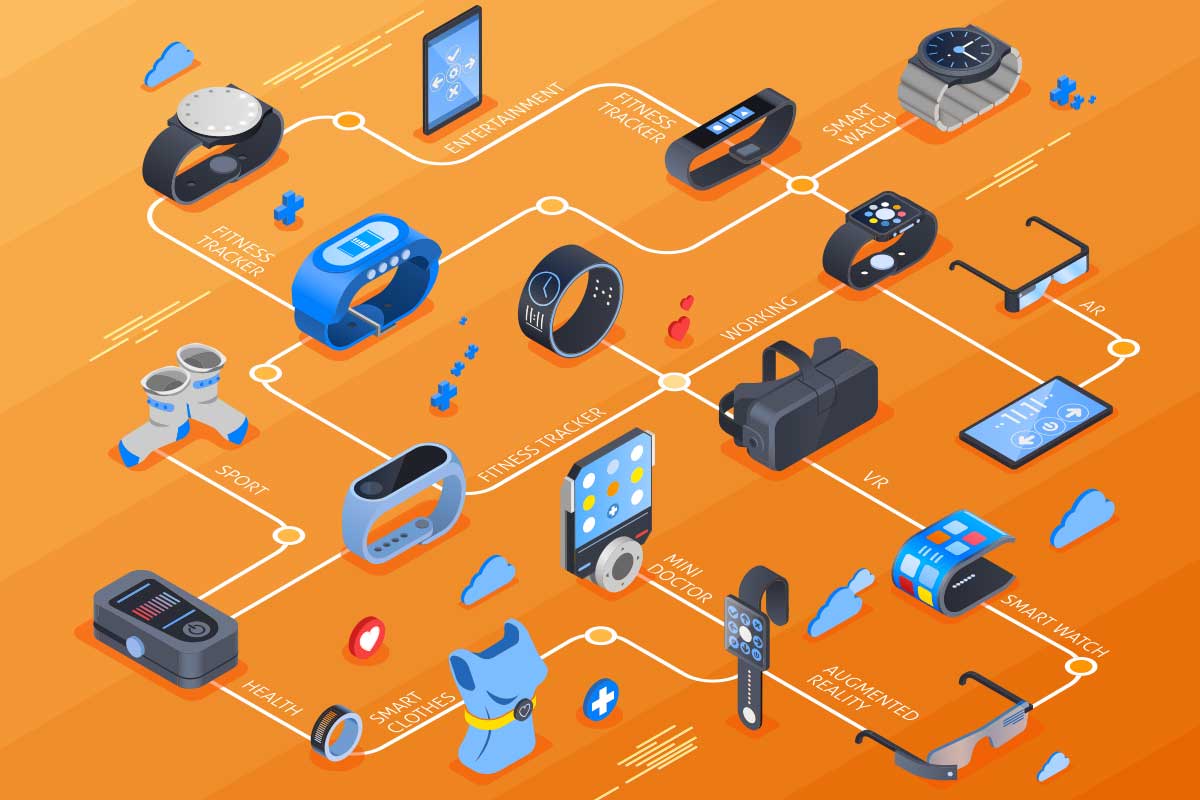
Wearable technology is undergoing a rapid transformation. What began with basic fitness trackers has evolved into powerful AI-driven devices capable of real-time health monitoring, predictive analytics, and even autonomous decision-making. This evolution is powered by the convergence of Artificial Intelligence (AI), the Internet of Things (IoT), and their hybrid forms—AIoT (Artificial Intelligence of Things) and AIIoT (Artificially Intelligent IoT).
By 2025, the wearable IoT market is projected to exceed $100 billion, and AI-powered wearables are leading the charge. But to successfully build a next-gen wearable, businesses must integrate custom hardware, optimized firmware, smart AI algorithms, and user-centric mobile apps—a complete AIoT stack.

1. What Are AIoT and AIIoT Wearable Devices?

AIoT refers to IoT systems enhanced with artificial intelligence—typically for local decision-making, automation, and personalization. In the context of wearables, this means:

  • AI analyzing sensor data on-device
  • Predictive alerts based on usage patterns
  • Context-aware automation (e.g., adjusting based on location, stress, or heart rate)

AIIoT goes further—embedding advanced AI directly into edge devices, allowing them to operate autonomously with minimal cloud dependency. These wearable systems can learn, adapt, and act in real time.

2. Key Components of AIoT-Driven Wearable Development

A. Custom Hardware Design for AIoT Wearables

To support edge AI processing, hardware must be smart and power-efficient:

  • MCUs and AI-enabled SoCs (e.g., ARM Cortex-M with AI accelerators, Edge TPU)
  • On-device memory for machine learning model storage
  • Sensors for motion, bio-signals, environment
  • Connectivity modules: BLE, Wi-Fi, LTE-M, or NB-IoT

AIoT requires hardware with enough compute to run ML models locally, not just transmit data.

B. Firmware Development with Embedded AI

Firmware in modern wearables does more than manage sensors:

  • Runs TinyML models (e.g., gesture recognition, anomaly detection)
  • Manages sensor fusion and data preprocessing
  • Triggers events or actions without app or cloud input
  • Implements OTA updates for both firmware and AI models

Secure and modular firmware is critical for edge intelligence and real-time performance.

C. AI Algorithms and Machine Learning for Wearables

AI turns raw data into real-time insights. Key ML applications in wearables include:

  • Heart rate variability prediction for stress detection
  • Motion classification using accelerometer and gyroscope data
  • Sleep stage detection via AI models
  • Predictive health alerts (e.g., fall risk, cardiac anomalies)
  • Behavioral pattern learning for contextual actions

These models can run on-device (TinyML) or be processed in the cloud depending on hardware limitations.

D. Mobile App Integration for Smart Wearables

The app acts as the user interface for insights, device control, and AI explainability:

  • Bluetooth sync with smart data filtering
  • Real-time data visualization using AI-enhanced graphs
  • Personalized recommendations based on AI predictions
  • Model training feedback loops via user tagging or corrections
  • Cloud sync, push alerts, and voice assistant integration

Mobile apps for AIoT wearables must be secure, fast, and privacy-centric.

3. Use Cases of AIoT in Wearable Devices

Healthcare and Wellness

  • AI-powered diagnostics: ECG pattern analysis, oxygen saturation monitoring
  • Chronic condition management: Glucose trends, arrhythmia prediction
  • Smart hearing aids: AI for noise cancellation and speech enhancement

Fitness & Lifestyle

  • AI-driven coaching: Form correction, pace guidance
  • Sleep and stress scoring with ML models
  • Smart feedback based on behavior history

Industrial Wearables

  • Fatigue detection using AI on motion and vitals
  • Fall and incident prediction
  • Voice-commanded smart glasses with NLP processing

4. Challenges in Developing AIoT Wearable Solutions

Despite the potential, AIoT wearables face challenges:

  • Limited processing power for AI models
  • Battery constraints with always-on inference
  • On-device model optimization (TinyML, TensorFlow Lite)
  • Cross-platform integration for apps and dashboards
  • Data privacy and secure firmware updates

Partnering with a full-stack development company can bridge these gaps efficiently.

5. Why You Need a Full-Stack AIoT Partner for Wearables

To succeed in the AI-powered wearable space, you need a team that can handle:

  • Custom hardware development for AI at the edge
  • Firmware and TinyML integration for real-time intelligence
  • AI model design and optimization for wearable use cases
  • Cross-platform mobile apps that bring the experience to life
  • Security and cloud connectivity for data and updates

A unified development team ensures your wearable is intelligent, reliable, and scalable.

Conclusion: The Future of Wearable Technology is AIoT-Driven

The next era of wearables is not just connected—it’s smart, predictive, and autonomous. Whether you’re building a medical wearable, industrial safety gear, or a fitness tracker, AI and IoT together are the new standard.
With the right blend of AI models, custom hardware, firmware intelligence, and mobile-first experience, your wearable device can do more than measure—it can think and act.

Let’s Get Started

Remote Patient Monitoring Is Transforming Healthcare with AI and IoT


Introduction: The Rise of Remote Patient Monitoring in Modern Healthcare

Remote Patient Monitoring (RPM) is redefining how healthcare is delivered in today’s digital era. By leveraging connected technologies, RPM enables healthcare providers to monitor patients’ vital signs, health metrics, and behaviors from a distance, reducing the need for in-person visits while ensuring continuous care.
The rapid evolution of IoT healthcare technologies has fueled the growth of RPM, creating smarter and more responsive healthcare ecosystems. From managing chronic diseases to monitoring post-operative recovery, Remote Patient Monitoring solutions powered by IoT and enabled by innovative providers like IOTTIVE are helping clinicians offer proactive, personalized, and timely care.

How Remote Patient Monitoring Works

Core Components of RPM

  • IoT Sensors and Wearable Health Devices: These include heart rate monitors, glucose meters, ECG sensors, and fitness trackers that collect real-time physiological data.
  • Mobile Applications: Patients use intuitive apps to track health trends, receive medication reminders, and communicate with care teams.
  • Cloud Integration: Collected data is securely transmitted to cloud platforms for storage and analysis.
  • Data Analytics Dashboards: Clinicians access intelligent dashboards for visual insights, alerts, and clinical decision support tools.

End-to-End Data Flow

  • Data Collection: Wearable devices and IoT sensors gather patient health metrics continuously.
  • Secure Transmission: Encrypted data is transmitted via mobile networks or Wi-Fi to a secure cloud infrastructure.
  • Real-Time Monitoring: Healthcare professionals access patient dashboards to monitor data trends and receive alerts.
  • Actionable Insights: AI-driven analytics detect anomalies and predict potential health issues, enabling timely interventions.

With IOTTIVE’s connected health solutions, this workflow becomes seamless, secure, and scalable for any healthcare setting.

Key Benefits of Remote Patient Monitoring

  • Improved Clinical Decision-Making: RPM provides clinicians with real-time, high-frequency data that enhances diagnostic accuracy and enables data-driven decisions, leading to better patient outcomes.
  • Empowered Patient Self-Management: By engaging patients in their own care through wearable health devices and mobile apps, RPM boosts adherence to treatment plans and fosters accountability.
  • Reduced Hospital Admissions: Remote monitoring prevents complications by catching early warning signs, significantly lowering emergency visits and rehospitalizations.
  • Enhanced Caregiver Involvement: Family members and caregivers gain access to patient dashboards and alerts, improving coordination and peace of mind.
  • Expanded Access to Care: RPM bridges the gap for patients in rural or underserved areas, providing them access to continuous monitoring and virtual care.

IOTTIVE’s Role in Delivering Advanced Remote Patient Monitoring Solutions

As a trusted technology partner, IOTTIVE is at the forefront of IoT healthcare innovation, delivering custom, robust, and compliant RPM platforms for modern healthcare providers.

IOTTIVE’s End-to-End RPM Platform Offers:

  • Seamless Device Integration: IOTTIVE connects a wide range of wearable health devices and IoT sensors with mobile and web platforms.
  • Real-Time Dashboards: Interactive clinician portals and patient apps ensure transparent communication and visibility.
  • Secure Cloud Storage: IOTTIVE ensures HIPAA-compliant, end-to-end encrypted data storage and transmission.
  • AI-Powered Analytics: Machine learning algorithms deliver predictive alerts and risk stratification for chronic conditions.
  • Customizable Architecture: Scalable RPM solutions that adapt to various clinical workflows and healthcare systems.

Real-World Application

Lara Health case study explanation and Link

Future Trends in Remote Patient Monitoring

AI and Predictive Healthcare

The future of RPM lies in AI-driven predictive analytics, enabling clinicians to intervene before a condition worsens, ultimately saving lives and reducing costs.

Advancements in Wearable Tech

Wearables are becoming more compact, accurate, and capable of monitoring multiple parameters simultaneously, fueling a new generation of patient-centric care.

Expansion of the Internet of Medical Things (IoMT)

With the increasing adoption of smart medical devices, the IoMT landscape is set to grow exponentially, offering more integrated and intelligent healthcare ecosystems.

Evolving Regulations and Reimbursement

Global regulatory bodies are recognizing the value of virtual care. Enhanced reimbursement policies are accelerating RPM adoption, opening doors for innovative care models.

Conclusion: Partner with IOTTIVE to Transform Patient Care

Remote Patient Monitoring is more than a technology trend, it’s a fundamental shift in how care is delivered, especially in a post-pandemic world. With real-time insights, reduced hospital burden, and improved patient engagement, RPM is transforming healthcare delivery models.
IOTTIVE’s Remote Patient Monitoring Solution empowers healthcare providers with scalable, secure, and intelligent IoT platforms designed to improve outcomes and operational efficiency. Our deep expertise in wearable solutions, healthcare IoT services, and connected care ecosystems ensures you stay ahead of the curve in digital health innovation.
Let’s make a better future!


Let’s Get Started

Smart Solutions for Fall Detection


Smart Fall Detection with AIoT: Real-Time Alerts for Humans, Animals, and Industrial Safety

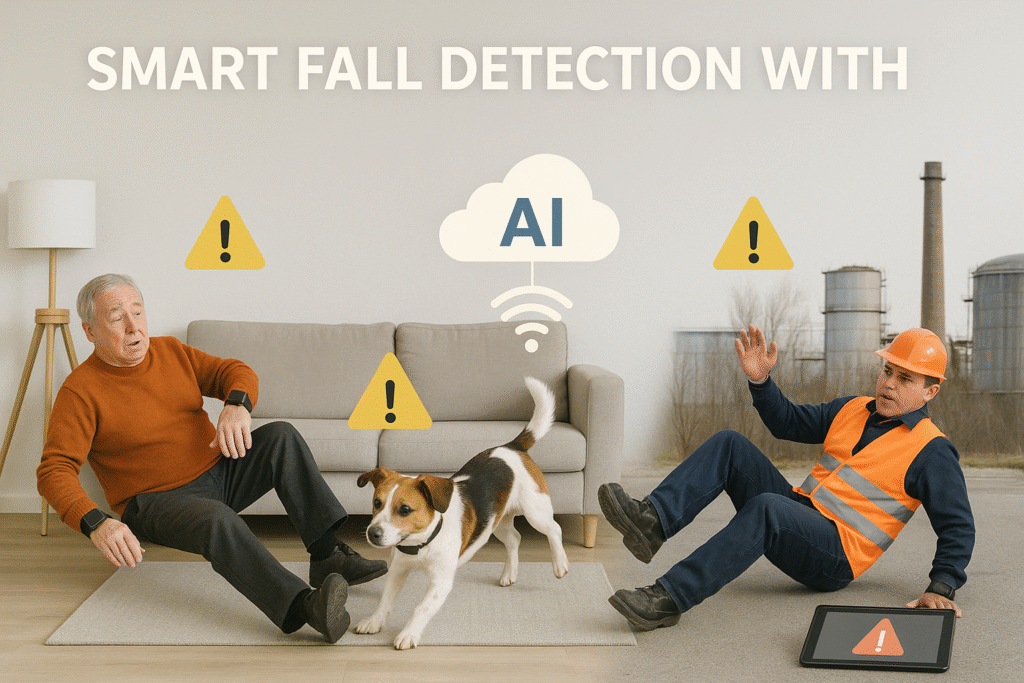
Falls are among the leading causes of serious injuries across various domains—elderly individuals at home, pets left unattended, industrial workers, and even livestock in remote farms. But what if a fall could instantly trigger a real-time alert to caregivers or emergency responders?

Enter Smart Fall Detection Solutions—powered by AI (Artificial Intelligence) and AIoT (Artificial Intelligence of Things)—that blend motion detection, smart sensors, firmware intelligence, and mobile applications to offer proactive, automated fall alerts across human and animal environments.

How Smart Fall Detection Works: From Sensors to Smart Notifications

Modern fall detection solutions use a combination of:

  • Motion Detection Sensors: Accelerometers and gyroscopes measure sudden changes in orientation or impact.
  • AI Algorithms: Classify motion patterns and detect abnormal falls vs normal movement.
  • AIoT Integration: Enables autonomous, real-time analysis and cloud synchronization.
  • Smart Notifications: Instant alerts via SMS, push notification, or auto-dialing emergency contacts.

AIoT and Firmware at the Core of Innovation

The secret behind the precision of modern fall detection lies in embedded firmware and AIoT synergy. By deploying lightweight AI models directly on hardware (like ESP32, STM32, or wearable SoCs), devices can:

  • Detect falls locally (on-device edge computing)
  • Reduce latency and dependency on the internet
  • Send emergency alerts through connected mobile apps

Mobile App Integration: Instant, Anywhere Fall Alerts

Smart fall detection is incomplete without mobile app integration, which plays a key role in:

  • Receiving real-time alerts
  • Tracking fall history
  • Viewing health analytics or motion graphs
  • Setting up geofencing or multi-user monitoring

Real-World Applications Across Environments

Elderly Care

Use Case:

Detects sudden falls at home or in elder-care centers and alerts family or emergency responders immediately.

Pet & Livestock Monitoring

Use Case:

Monitors unusual inactivity or sudden drops in motion, especially useful in farms or when pets are left alone.

Industrial Worker Safety

Use Case:

Deployed in construction zones or hazardous areas to reduce response time in case of onsite accidents.

Smart Homes & Buildings

Use Case:

Integrated with home automation systems to trigger alarms, activate cameras, or make emergency calls.

Benefits of Smart Fall Detection

  • 24/7 Monitoring without human supervision
  • Customizable Alert Systems based on type and severity
  • Cross-Platform Integration (apps, cloud, smartwatches)
  • Advanced AI Learning to reduce false positives
  • Cost-Effective Safety Solution for large-scale deployment

The Future of Fall Detection: Smarter, Faster, Broader

With AIoT technologies maturing and hardware costs decreasing, fall detection is becoming:

  • More intelligent (learning user-specific patterns)
  • More inclusive (used for pets, children, machinery)
  • More connected (integration with smart home systems and wearables)

Conclusion: Invest in Proactive Safety

Whether it’s for the elderly, animals, workers, or sensitive equipment, Smart Fall Detection Solutions offer a future-ready, AI-powered safety net that works silently—but speaks up at the right moment. It’s no longer a luxury—it’s a critical safety layer powered by AI, IoT, and smart firmware technologies.

Looking to build or integrate a smart fall detection system? Partner with IoT experts who bring together hardware, mobile app development, and AIoT innovation—because every second counts when safety is on the line.


Unlock New Business Potential by Transforming Traditional AC Units into Smart ACs

Introduction

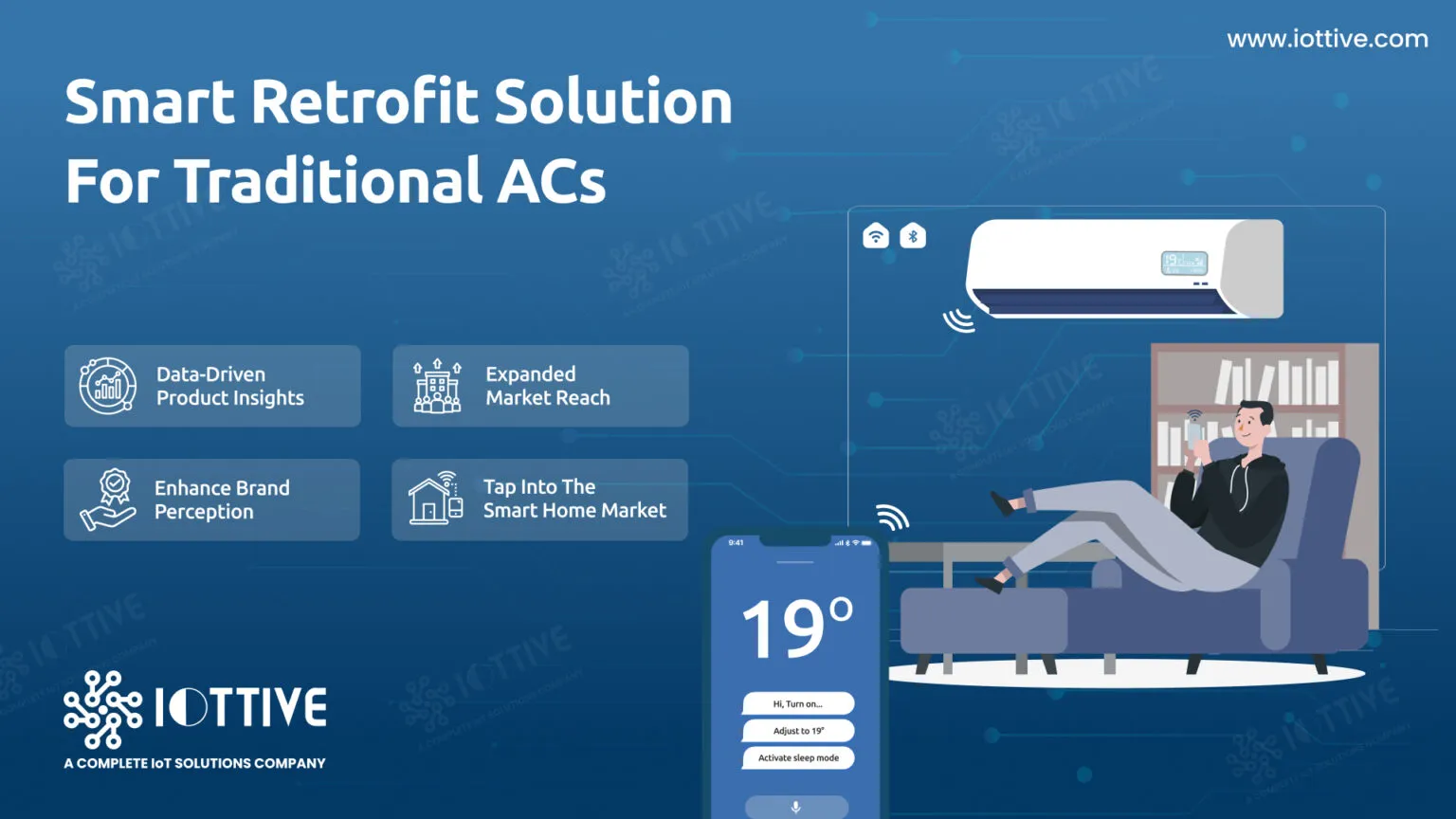
As technology reshapes the way we live, smart appliances are becoming an integral part of modern homes. Among them, Smart Air Conditioners (Smart ACs) are gaining significant traction for their convenience, efficiency, and connectivity. For manufacturers of traditional ACs, this evolution represents a golden opportunity not only to upgrade existing product lines but also to unlock new business potential.This blog explores how integrating smart protocols can turn traditional ACs into powerful, connected devices—and how that transformation can benefit your business and your customers. IOTTIVE can help make that transformation seamless.

The Power of Smart Protocols and Connectivity

At the heart of Smart ACs lies connectivity, enabled through protocols like Wi-Fi, Bluetooth, Zigbee, or cellular networks. By integrating these technologies, traditional ACs can be transformed into intelligent, interactive devices that offer control, automation, and insights.This not only delivers a more personalized experience to users but also opens the door to long-term business benefits through data, services, and differentiation. Companies like IOTTIVE specialize in providing smart solutions tailored to such needs, helping manufacturers build future-ready appliances.

Business Benefits for AC Manufacturers

Upgrading to Smart ACs isn’t just about catching up—it’s about moving ahead. Here’s how your business can benefit from adopting smart technology:
1. Increased Product Value and Premium Pricing : Smart features position your product in a higher tier, allowing you to charge a premium and compete in the rapidly growing smart appliance market.2. Recurring Revenue Opportunities: Smart ACs enable cloud-based services, mobile apps, diagnostics, and even energy reports, unlocking subscription-based or usage-based revenue models.3. Faster Market Expansion: Smart features make your product more appealing to tech-savvy buyers and eco-conscious consumers, helping you expand into new demographics and regions.4. Brand Differentiation: Offer a next-gen experience that sets your brand apart. Smart functionality shows that your company is innovative and forward-thinking.5. Improved Customer Engagement: Mobile apps and dashboards give you a direct line to customers for push notifications, promotions, and personalized communication.6. Efficient After-Sales Service: With remote diagnostics, service centers can pre-identify issues, reduce repair time, and lower support costs, while boosting customer satisfaction.7. Insightful Usage Data : Smart ACs generate real-time usage data to help you understand user behavior, guide product development, and optimize future features.8. Compliance and Energy Certifications : Smart ACs help meet energy efficiency standards and eco-label certifications, attracting both consumers and governments in regulated markets.9. Modular Integration : You don’t have to start from scratch. Smart modules can be embedded in existing designs, reducing R&D investment and accelerating time to market.

Benefits for End Users

While Smart ACs drive business growth, they also deliver next-level comfort and control for users:
1. Remote Access : Control the AC from anywhere using a smartphone perfect for arriving at a pre cooled room or saving energy when away.2. Voice Assistant Integration : Connect with Alexa, Google Assistant, or Siri for hands-free control.3. Energy Efficiency and Savings : Enable cooling routines, switch to eco-mode, or activate sleep profiles for personalized comfort.4. Custom Scheduling and Modes : Enable cooling routines, switch to eco-mode, or activate sleep profiles for personalized comfort.5. Real-Time Monitoring : Track energy usage, get maintenance reminders, and receive fault alerts all in real time6. Enhanced User Experience : With modern UI/UX,app control, and smart home integration, Smart ACs fit seamlessly into a user’s connected lifestyle.

Upgrade Your AC Units To Smart ACs with IOTTIVE

Upgrade Your AC Units To Smart ACs with IOTTIVE
You don’t need to build everything in-house. By collaborating with IoT solution providers like IOTTIVE, you can retrofit existing models or launch new smart-enabled variants without lengthy development cycles or high costs.IOTTIVE specializes in enabling smart solutions across hardware, firmware, and mobile platforms—helping manufacturers turn ideas into fully functional smart productsWhether you’re a small-scale manufacturer or a market leader, now is the right time to evolve and lead.

Conclusion

Smart ACs are more than just a technological upgrade—they’re a strategic move toward long-term relevance and profitability. For users, they offer comfort, control, and energy savings. For manufacturers, they deliver product differentiation, recurring revenue, and customer loyalty.In a market where innovation drives growth, Smart ACs are the next logical step.

Don’t wait for the future—build it. Transform your AC units into smart, connected systems with IOTTIVE and deliver next-gen comfort and control to your customers.


Let’s Get Started

How IOTTIVE’s Bluetooth Solution Empower various Industries

Introduction of Bluetooth technology in a smart world

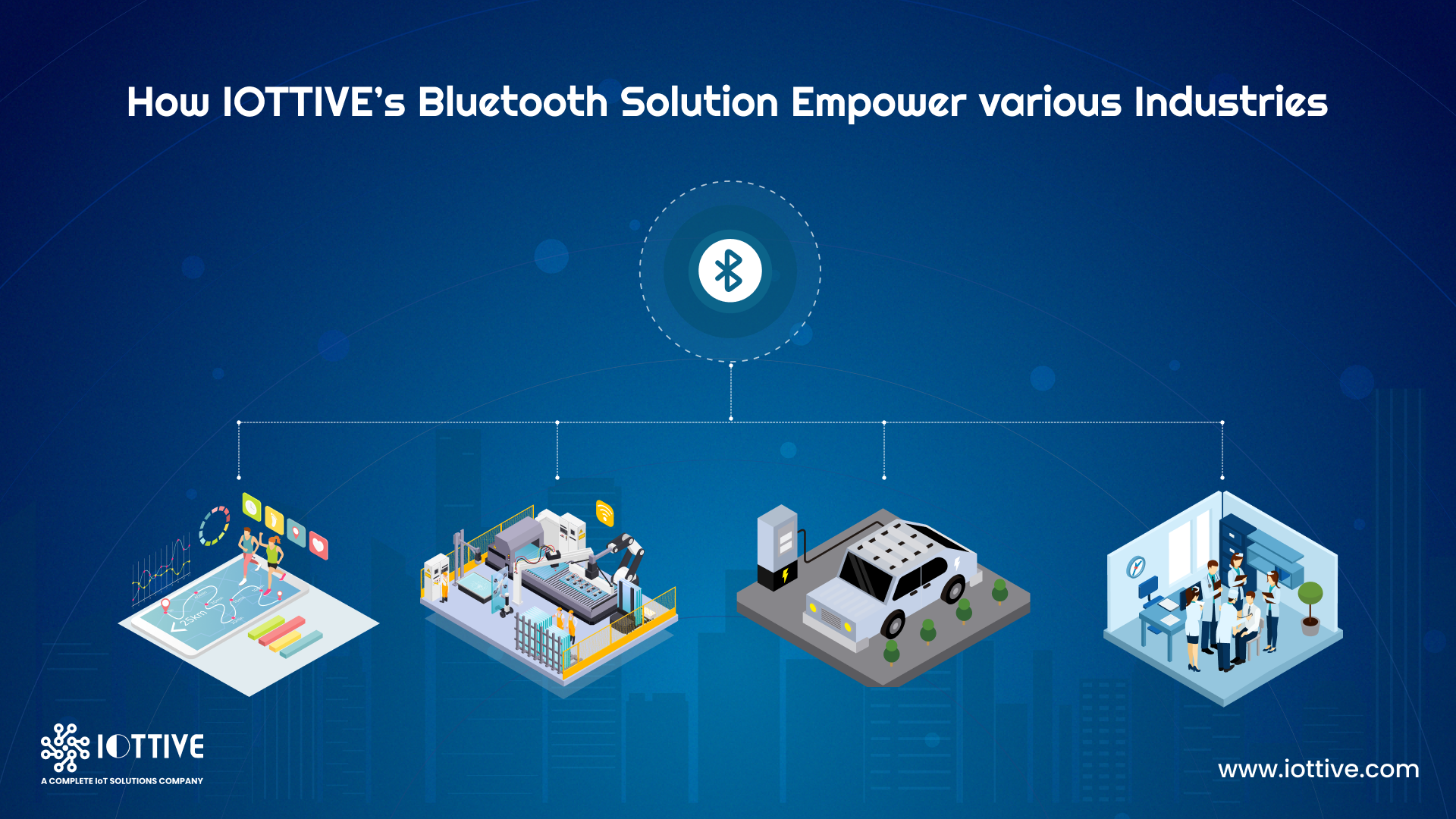
In today’s fast-moving and smart world, Bluetooth technology has become a critical enabler of innovation across multiple industries. From healthcare and automotive to retail and smart cities, its ability to provide seamless, low-power, and reliable wireless communication has transformed business operations.With advancements such as Bluetooth Low Energy (BLE), extended range, improved security, and mesh networking, industries can leverage Bluetooth for automation, real-time monitoring, and enhanced connectivity. This has increased efficiency, improved safety, cost reduction, and a better user experience.Let’s explore how Bluetooth is shaping different industries and driving operational excellence.

Bluetooth’s Impact on Various Industries

Bluetooth has transformed multiple industries by enabling:

Real-time connectivity & automation – Reducing manual efforts and increasing efficiency.

Seamless data transfer– Enabling IoT devices to communicate effortlessly.

Energy-efficient wireless solutions – Extending battery life and reducing power consumption.

Enhanced security & safety – Providing encrypted, secure connections for critical applications.

Improved customer experience – Creating personalized, smart, and interactive solutions.

Below are some of the major industries where Bluetooth is making a significant impact.

Industries Leveraging Bluetooth Technology

IOTTIVE’s Bluetooth enabled solution is helping various industries to achieve their goal more efficiently and effectively. Let’s learn more about the uses and benefits of leveraging Bluetooth technology in various sectors.

1. Healthcare: Enabling Smart Medical Solutions

Bluetooth technology is revolutionizing healthcare by making medical devices smarter and more efficient. It enables real-time patient monitoring, remote diagnostics, and seamless data sharing between healthcare providers and patients.

IOTTIVE’s Bluetooth-enabled healthcare solutions allow wearable medical devices to track vitals, detect anomalies, and transmit health data securely to cloud platforms or mobile applications, enabling better patient care and timely interventions.

  • Wearable Health Monitors: Smartwatches and fitness trackers monitor heart rate, oxygen levels, and ECG.
  • Remote Patient Monitoring (RPM): Patients can share real-time health data with doctors using Bluetooth devices.
  • Bluetooth Hearing Aids: These provide seamless integration with smartphones for better audio clarity.

Read our Case Studies:

Read our Case Studies:

  • Lara Health
  • Seatback
  • Safey Health Application

2. Manufacturing (IIoT): Enhancing Efficiency and Automation

Industrial IoT (IIoT) is leveraging Bluetooth to improve productivity, safety, and predictive maintenance. BLE technology helps track assets, monitor machine performance, and ensure worker safety.
IOTTIVE’s Bluetooth-enabled IIoT solutions provide real-time asset tracking, machine health monitoring, and automated production insights, helping manufacturers reduce downtime, improve efficiency, and optimize resource management.

  • Asset Tracking & Management: BLE tags help track tools, equipment, and inventory.
  • Predictive Maintenance : Sensors detect machinery faults early, preventing downtime
  • Worker Safety: Wearables track environmental conditions and worker health.

   Read our Case Studies:

  • Colibri
  • IONA Tech
  • Sellenis Printers

3. Retail: Personalizing Customer Experience

Retailers are using Bluetooth to enhance engagement and optimize store operations. Beacons help deliver personalized marketing, real-time inventory management, and frictionless checkouts.

IOTTIVE’s Bluetooth-enabled retail solutions help stores deliver location-based promotions, track customer movement, and improve shopping experiences, ensuring better sales conversions and customer satisfaction.

  • Beacon Marketing: Sends personalized promotions and discounts to nearby customers.
  • Smart POS Systems : Bluetooth-enabled payment devices offer faster checkouts.
  • Inventory Tracking : BLE tags ensure better stock management and prevent losses.

 Read our Case Studies:

4. Automotive: Enabling Connected Vehicles

Modern vehicles rely on Bluetooth for hands-free communication, infotainment, and smart security features. BLE technology is widely used for keyless entry, vehicle diagnostics, and smart navigation.
IOTTIVE’s automotive Bluetooth solutions enable secure keyless access, vehicle tracking, and wireless infotainment integration, making cars safer, smarter, and more connected.

  • Hands-free Communication: Bluetooth enables voice-controlled calls and navigation.
  • Keyless Entry & Vehicle Tracking: BLE powered smart keys and GPS tracking enhance security.
  • Infotainment Systems: Bluetooth connects smartphones to car audio and control systems.

  Read our Case Studies:

  • VATA7
  • Camcrusher
  • AXON1.2

5. Home Automation: Creating Smart Living Spaces

Smart homes use Bluetooth for automation, security, and energy efficiency. BLE-enabled devices allow homeowners to control lighting, locks, appliances, and temperature remotely.

IOTTIVE’s Bluetooth-powered home automation solutions help users seamlessly manage smart locks, security cameras, and connected appliances, enhancing home security, energy efficiency, and convenience.

  • Smart Locks & Security Systems :
    Connected Lighting & Appliances:
  • Connected Lighting & Appliances : Users control home devices via Bluetooth apps.
  • Energy Management: Bluetooth sensors optimize power usage based on occupancy.

  Read our Case Studies:

6. Logistics & Asset Tracking: Improving Supply Chain Efficiency

Bluetooth is transforming logistics by providing real-time shipment tracking, fleet management, and warehouse automation. BLE beacons monitor cargo conditions, vehicle diagnostics, and inventory movement.
IOTTIVE’s Bluetooth solutions for logistics enable precise tracking of shipments, predictive maintenance of fleets, and real-time warehouse management, ensuring faster deliveries and reduced operational costs.

  • Shipment Monitoring :
    BLE sensors track the location and condition of packages.
  • Fleet Management : Bluetooth sensors optimize vehicle maintenance and fuel usage.
  • Warehouse Automation : BLE-based inventory tracking reduces human errors

  Read our Case Studies:

  • Hank
  • Hospital Asset Tracking

7. Sports & Fitness: Elevating Performance Tracking

Athletes and fitness enthusiasts benefit from Bluetooth wearables that track performance metrics, heart rate, and workout progress. BLE sensors help optimize training and recovery.
IOTTIVE’s Bluetooth-enabled fitness solutions integrate real-time data tracking in smart wearables, gym equipment, and sports analytics, helping athletes train efficiently and achieve peak performance.

  • Smart Wearables :
    Track workouts, calories, and heart rate in real time
  • Connected Gym Equipment: Machines sync exercise data with fitness apps.
  • Sports Analytics : BLE sensors help analyze athlete performance for training improvements.

  Read our Case Studies:

  • Vertex Golf
  • Goal Smart

8. Security & Safety Devices: Enhancing Protection & Emergency Response

Bluetooth is a key component in smart security systems, emergency SOS devices, and access control solutions. BLE-powered gadgets help protect individuals, homes, and workplacesIOTTIVE’s Bluetooth safety solutions include wearable panic buttons, fall detection systems, and encrypted access control devices, ensuring rapid emergency response and enhanced security.

  • Bluetooth SOS Devices :
    Wearable panic buttons send alerts in emergencies.
  • Remote Fall Detection : Sensors detect falls and notify caregivers.
  • Access Control : BLE-based smart locks restrict entry to authorized individuals.

  Read our Case Study:

  • BluePass

9. Education: Enabling Smart Learning Environments

Education is evolving with Bluetooth-powered interactive learning tools, smart attendance tracking, and wireless classroom setups. BLE enhances connectivity between students, teachers, and digital devices.
IOTTIVE’s Bluetooth-enabled education solutions facilitate wireless learning tools, automated attendance systems, and seamless content sharing, creating a more interactive and efficient learning environment.

  • Wireless Classrooms :
    Bluetooth speakers and headsets enhance audio clarity.
  • Automated Attendance : BLE-based systems track student presence.
  • Smart Learning Devices : Tablets and digital pens provide interactive learning tools.

10. Agriculture

Agriculture is advancing with Bluetooth-powered smart farming tools, automated tracking, and wireless monitoring systems. BLE enhances efficiency in precision farming, livestock tracking, and environmental monitoring.
IOTTIVE’s Bluetooth-enabled agriculture solutions enable real-time crop monitoring, automated irrigation control, and livestock tracking, helping farmers optimize productivity and resource management.

  • Precision Farming : BLE sensors monitor soil moisture, temperature, and nutrient levels.
  • Livestock Tracking : Bluetooth tags track animal movement and health.
  • Automated Irrigation : BLE-enabled systems optimize water usage based on real-time data.

Final Thought

Bluetooth technology is a powerful enabler of efficiency, automation, and innovation across various industries. With improved range, security, and energy efficiency, Bluetooth continues to unlock new possibilities in healthcare, manufacturing, retail, automotive, smart cities, logistics, security, and more.As industries continue to adopt IoT-driven solutions, Bluetooth will play an even more crucial role in enhancing productivity, safety, and customer experiences.

💡 Is your business leveraging Bluetooth technology for smarter operations? Now is the time to embrace the future of connected solutions!

Contact us today!

React Native App Compliance With Google & Apple’s Latest Updates

Introduction

For react native developers & app owners, staying compliant with the latest Google Play and Apple App Store Policies is crucial to maintaining app store visibility, security & performance. Google and Apple frequently roll out new policies to ensure that all listed apps work properly. Failure to comply can lead to app delisting from the store, affecting revenue, users’ trust, and business growth.

In this post, we’ll explore the most recent updates affecting React Native apps, the risks of non-compliance, and how IOTTIVE can help you keep your app optimized and future-ready.

Google & Apple Updates That Impact React Native Apps

Android & Google Paly Requirements

To ensure better performance and user experience, mobile operating systems continuously evolve by implementing restrictions on background processes. Some of the key limitations include:

1️⃣ API Level 34 Mandate

  • Google requires all new and updated apps to target API level 34 (Android 14 and 15).
  • Apps that fail to update risk being removed from Google Play.
  • Benefits include better security, performance improvements, and compatibility with modern Android devices.

2️⃣ Google Play Billing Library v6+

  • Google enforces its billing policies, requiring apps to use Google Play’s official billing system for in-app purchases.
  • Non-compliance leads to blocked transactions and potential removal from the store.

3️⃣ Stricter Background Execution Limits

  • Android 14&15 introduces stricter rules on background activities, which affect push notifications, location tracking, and background services in React Native apps.

iOS 18 & Apple App Store Requirements

1️⃣ Xcode 16 & iOS 18 SDK Compliance

  • Apple requires new and updated apps to be built using Xcode 16 and iOS 18 SDK.
  • Apps that fail to meet this standard won’t be accepted in future submissions.

2️⃣ App Performance & UI Updates

  • iOS 18 includes changes that impact how React Native layouts render on iPhones and iPads.
  • New restrictions on background services and push notifications affect app functionality.

3️⃣ Monetization & Apple’s Billing System

  • Apple strictly enforces in-app purchase compliance with its billing policies.
  • React Native apps using third-party payment systems risk being rejected or delisted.

Impact of App Delisting on your business

If your React Native app does not comply with Google and Apple’s latest policies, it risks delisting, which leads to:

📉 Revenue Loss

  • Paid apps & in-app purchases get blocked on non-compliant apps.
  • Subscription-based React Native apps stop generating income if removed from the store.

🚫 User Engagement Drop

  • If your app is removed, users can’t find or update it.
  • Push notifications and background services stop working on outdated versions.

⚠️ Brand Reputation Damage

  • Users expect regular updates; an outdated or delisted app reduces trust in your business.
  • Negative app store reviews can harm future downloads and user retention.

🔄 Higher Reactivation Costs

  • Bringing a delisted React Native app back requires urgent fixes, retesting, and resubmission.
  • Migration to new architectures can be costly if delayed.

🔍 Lower Store Ranking & Visibility

  • Non-compliant apps may get demoted in search results, reducing new user acquisition.
  • Apps that don’t adopt the latest platform features may lose relevance.

How IOTTIVE Can Help Optimize Your React Native App

At IOTTIVE, we specialize in React Native App optimization, ensuring that your app meets the latest Android and iOS updates. Our expertise includes:

✅ React Native Compliance – Ensuring your app follows Google Play and Apple Store policies to avoid delisting issues.

Performance Optimization – Implementing Fabric, TurboModules, and Hermes for a faster, more efficient app.

Seamless API Integrations – Updating React Native apps for Google Play Billing v6+ and iOS 18 SDK compatibility.

Security & Stability Enhancements – Aligning your app with Android 14’s security updates and iOS 18’s data protection standards.

Migration to New Architecture – Helping businesses transition from legacy React Native frameworks to the latest React 19+ and new UI architectures.

UI/UX Enhancements – Improving the React Native UI experience for better user engagement across Android and iOS.We provide end-to-end solutions for React Native apps, ensuring they remain compliant, high-performing, and ready for future updates.

Conclusion

React Native developers and app owners must stay ahead of Google and Apple’s latest platform requirements. By proactively updating React Native apps, businesses can:

Maintain app store visibility and prevent delisting.

Ensure better security & performance on Android 14 & iOS 18.

Enhance user experience with the latest UI updates.

Avoid revenue loss due to compliance failures.🚀 Act now to keep your app competitive upgrade your React Native dependencies, test for compatibility, and ensure compliance.Need expert help? IOTTIVE ensures your React Native app stays compliant and optimized.

Contact us today!

The Impact & Benefits of IoT Integration Across Various Industries

Introduction & Expansion of IoT

The Internet of Things(IoT) is spreading rapidly in various industries, driving automation, real-time data analysis, and improved decision-making. Businesses across multiple sectors are leveraging IoT solutions to enhance efficiency, safety, and customer satisfaction & experience.

At IOTTIVE Pvt. Ltd., we specialize in IoT innovations that empower industries to optimize operations, reduce costs, and stay ahead in the digital transformation era. As IoT adoption expands, its impact on key industries continues to grow, making the way for a smarter and more connected world.

IoT’s Impact Across Various Industries

IoT is already revolutionizing multiple industries, improving efficiency, reducing operational costs, and enhancing user experiences. From real-time health monitoring in healthcare to predictive maintenance in manufacturing, IoT is solving real-world problems and opening up new opportunities for businesses.

By connecting devices, collecting data, and leveraging cloud computing, IoT enables smarter decision-making, automation, and seamless control across various sectors. Below, we explore how IOTTIVE’s IoT solutions are making a significant impact across different industries.

1. Healthcare & Smart Medical Devices

The healthcare industry is rapidly evolving with IoT-powered smart medical devices, enabling real-time patient monitoring, remote diagnostics, and automated hospital management.

IOTTIVE’s smart healthcare solutions in the healthcare industry help companies develop wearable health trackers, connected medical equipment, and health analytics, ensuring better patient care and reduced medical errors.

Read our Case Studies:

2. Manufacturing (Industrial IoT – IIoT)

The manufacturing industry is experiencing a major shift with the integration of IoT. Real-time equipment monitoring, predictive maintenance, and smart factory automation have significantly improved productivity and reduced downtime.

IOTTIVE provides IoT-driven solutions that enhance production efficiency for companies in the manufacturing sector, helping them reduce operational costs and minimize human errors.

  Read our Case Studies:

3. Home Automation & Smart Buildings

Smart homes and commercial buildings use IoT for energy efficiency, security, and automation.

IOTTIVE’s smart home solutions enable companies to create intelligent living spaces with advanced smart lighting, efficient HVAC control, and connected security systems, enhancing convenience, energy efficiency, and safety.

   Read our Case Studies:

4. Smart Retail & Supply Chain Management

IoT is transforming the automotive industry with connected vehicles, fleet management, and predictive maintenance.

IOTTIVE provides IoT-powered innovations in the transportation sector, improving driver safety, optimizing fuel consumption, and enabling real-time navigation.
 Read our Case Studies:

5. Automotive & Transportation

IoT is transforming the automotive industry with connected vehicles, fleet management, and predictive maintenance.

IOTTIVE provides IoT-powered innovations in the transportation sector, improving driver safety, optimizing fuel consumption, and enabling real-time navigation.

  Read our Case Studies:

6. Asset Tracking

Asset tracking with IoT enables businesses to monitor valuable equipment, prevent theft, and optimize resource allocation.

IOTTIVE’s expertise in the Asset Tracking industry enables companies to enhance visibility and security over their assets, ensuring efficient operations and real-time tracking.

  Read our Case Studies:

7. Sports & Fitness

IoT-powered wearables and connected sports & fitness equipment provide real-time performance tracking, personalized workouts, and health monitoring.

IOTTIVE’s smart sports solutions empower athletes and coaches in the sports and fitness industry with data-driven training insights and advanced performance analysis.

  Read our Case Studies:

8. Security & Safety Devices

IoT has improved security and safety devices, enabling smart surveillance, intrusion detection, and real-time emergency response.

IOTTIVE’s solutions for smart security and safety devices help companies create security systems for the Security and Safety Devices industry. These systems offer instant alerts and automated threat detection. We focus on creating reliable applications that ensure continuous device connectivity while overcoming OS limitations.

  Read our Case Studies:

9. Education & Smart Learning

IoT is revolutionizing the education industry by introducing smart classrooms, remote learning tools, and real-time student monitoring systems.

IOTTIVE’s smart education solutions empower educational institutions with AI-driven learning platforms, interactive digital boards, and IoT-enabled attendance tracking, fostering a more immersive and personalized learning experience.

10. Agriculture & Precision Farming

IoT in agriculture is driving precision farming, optimizing resource usage, and improving crop yields through automated irrigation and soil monitoring systems.

IOTTIVE empowers farmers & agriculture industry with IoT solutions, allowing them to leverage data-driven insights for improved efficiency and sustainable agricultural practices.

Conclusion

The impact of IoT on industries is undeniable, transforming business operations, improving decision-making, and enhancing user experiences. From smart healthcare devices to industrial automation, connected retail to smart education, IOTTIVE is leading the way in delivering advanced IoT solutions to a wide range of industries.

🚀 Are you looking to integrate IoT into your industry? Partner with IOTTIVE for innovative IoT solutions that drive efficiency, security, and growth. Let’s build a smarter future together!


Contact us today!

Read our Case Studies:

Contact us today!

The Hidden Challenge: How Background Restrictions Impact Smart Safety Devices

Introduction

Smart safety devices have become an essential part of modern life, offering solutions for personal security, elder and child care, and pet tracking. Devices such as SOS systems, fall detection sensors, and GPS trackers ensure safety and peace of mind. However, while these devices rely on mobile applications to function effectively, they face an often-overlooked challenge: Background Restrictions.

Both Android and iOS impose strict background process restrictions to optimize battery life and enhance security. While these measures benefit users, they can also interfere with the real-time performance of smart safety devices, leading to delayed alerts, unreliable location tracking, and inconsistent data transmission.

In this blog, we will explore how these Background Restrictions impact various smart safety devices and what solutions can help mitigate these challenges.

Understanding Background Restrictions

To ensure better performance and user experience, mobile operating systems continuously evolve by implementing restrictions on background processes. Some of the key limitations include:

⦁ Background Process Restrictions:

Apps are often put into a suspended state, limiting their ability to run real-time monitoring and alerts.

⦁ Battery Optimization Policies:

Many OS versions restrict background activity to conserve battery life, which can result in delayed or missed notifications

⦁ Location Access Restrictions:

For privacy reasons, continuous GPS tracking is limited, affecting real-time tracking applications.

⦁ Network and Sensor Access Constraints:

Apps may face interruptions in accessing WiFi, Bluetooth, or mobile networks when running in the background, affecting IoT-based safety devices.

To ensure better performance and user experience, mobile operating systems continuously evolve by implementing restrictions on background processes. Some of the key limitations include:

Real-World Impact on Smart Safety Devices Caused by OS Limitations

1. SOS Devices

SOS devices rely on instant emergency alerts to notify caregivers or emergency contacts. However, Mobile OS Background Restrictions can cause:

⦁ Delayed message or call triggers.

⦁ Interruptions in continuous location sharing make it difficult to pinpoint a user’s location in real-time.

⦁ Challenges in keeping the app running actively for emergency response.

2. Remote Fall Detection Systems

Wearable and IoT-based fall detection systems monitor user movements to detect sudden falls. Mobile OS Background Restrictions can lead to:

⦁ Inconsistent data transmission between the wearable and the mobile app.

⦁ Delayed or missed alerts due to background restrictions.

⦁ Limitations in real-time monitoring and response time.

3. Elder and Kids Care Trackers

Devices that track the location of children and elderly individuals depend on seamless GPS and network connectivity. Mobile OS Background Restrictions can result in:

⦁ Delayed location updates, making real-time tracking ineffective.

⦁ App force-closing due to inactivity, leading to loss of monitoring.

⦁ Restricted notifications when an individual exits a predefined safe zone (geofencing).

4. Pet Trackers

Pet tracking devices use GPS and mobile networks to keep owners informed about their pet’s location. Mobile OS Background Restrictions can cause:

⦁ Gaps in GPS tracking due to suspended background services.

⦁ Connectivity issues when the app is not in the foreground.

⦁ Delays in receiving alerts if a pet goes out of a designated safe area.

5. Other IoT-Based Security Devices

Various IoT security devices, such as home monitoring systems and smart alarms, may also face:

⦁ Restrictions in real-time data synchronization.

⦁ Delays in push notifications or security alerts.

⦁ Limited background access to Bluetooth and WiFi networks, impacting device communication.

Workarounds and Solutions

At IOTTIVE, we specialize in overcoming Mobile OS Background Restrictions to enhance the performance of smart safety devices. Our expertise in IoT, BLE, and Connected Devices allows us to implement robust solutions, including:

⦁ Optimizing App Permissions:

Ensuring that apps request and receive necessary permissions, such as “Always On” location access, helps maintain background functionality. Properly configured permissions prevent OS-imposed limitations on critical app features.

⦁ Leveraging Cloud-Based Processing:

Offloading data processing to cloud servers can reduce dependency on mobile background services and ensure seamless communication. This minimizes app activity requirements, improving performance and reliability.

⦁ Using Push Notification Services:

Implementing Firebase Cloud Messaging (FCM) or Apple Push Notification Service (APNS) helps ensure reliable alerts and real-time notifications, even when the app is in the background.

⦁ Battery Optimization Adjustments:

Many operating systems impose aggressive battery-saving policies that limit background activity. Educating users on disabling battery optimization for critical apps, configuring “Unrestricted” battery settings (on Android), and using foreground services ensures continuous monitoring and data transmission.

⦁ Foreground Services & Persistent Notifications:

Keeping essential services running in the foreground by utilizing persistent notifications ensures uninterrupted background operation. This technique is effective for location tracking, SOS alerts, and other critical real-time features.

⦁ Efficient Data Handling & Background Execution Limits:

Smart data compression, batching updates, and limiting resource-heavy background tasks can help apps work within OS constraints while maintaining performance.

⦁ Custom Watchdog Mechanisms:

Implementing in-app watchdog services that detect when background processes are restricted and restarting them automatically helps maintain continuous functionality.

Our tailored IoT solutions help businesses develop reliable, secure, and efficient smart safety applications that remain functional despite OS-imposed constraints.

Conclusion

Mobile OS Background Restrictions can impact the reliability of smart safety devices, leading to delayed alerts and interrupted monitoring. At IOTTIVE, we tackle these challenges with expert IoT solutions, ensuring seamless performance for your smart safety applications.

Looking to enhance your IoT devices? Partner with IOTTIVE today and take your smart safety solutions to the next level!


Contact us today!