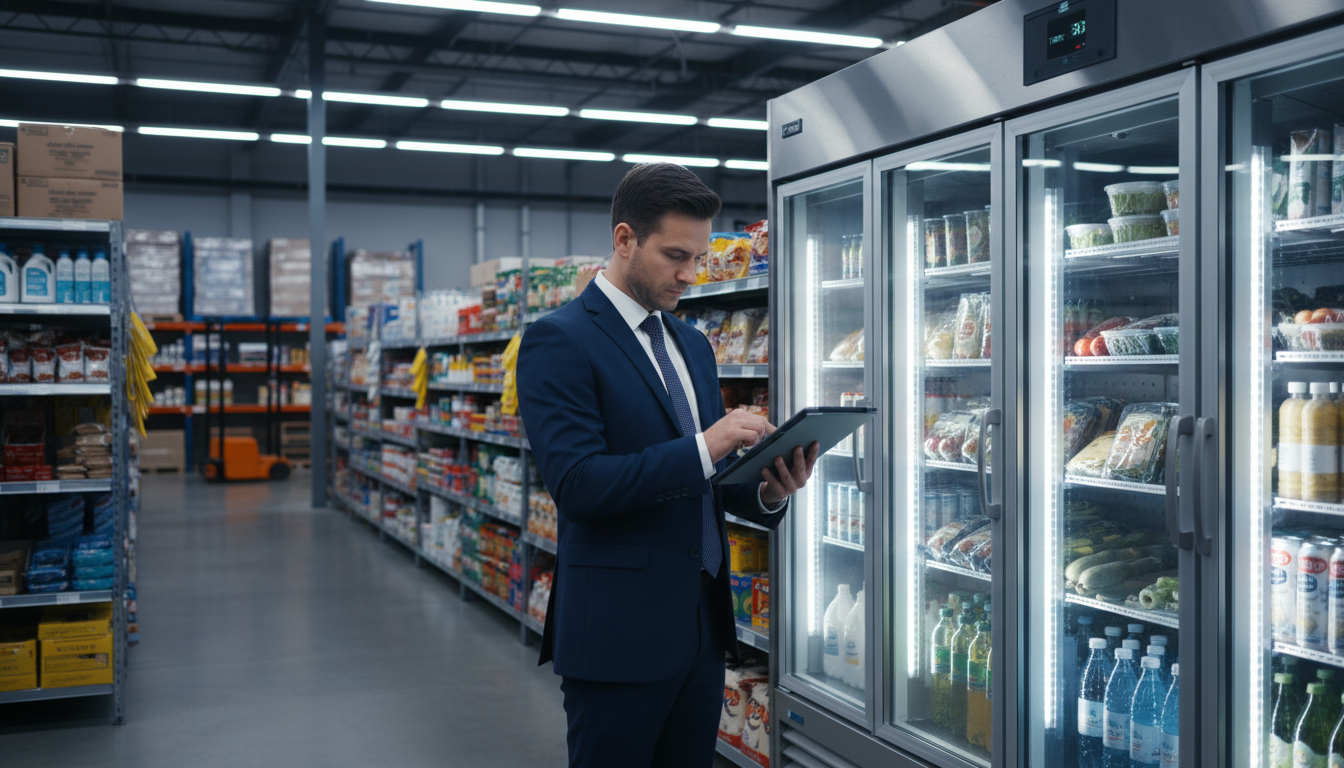
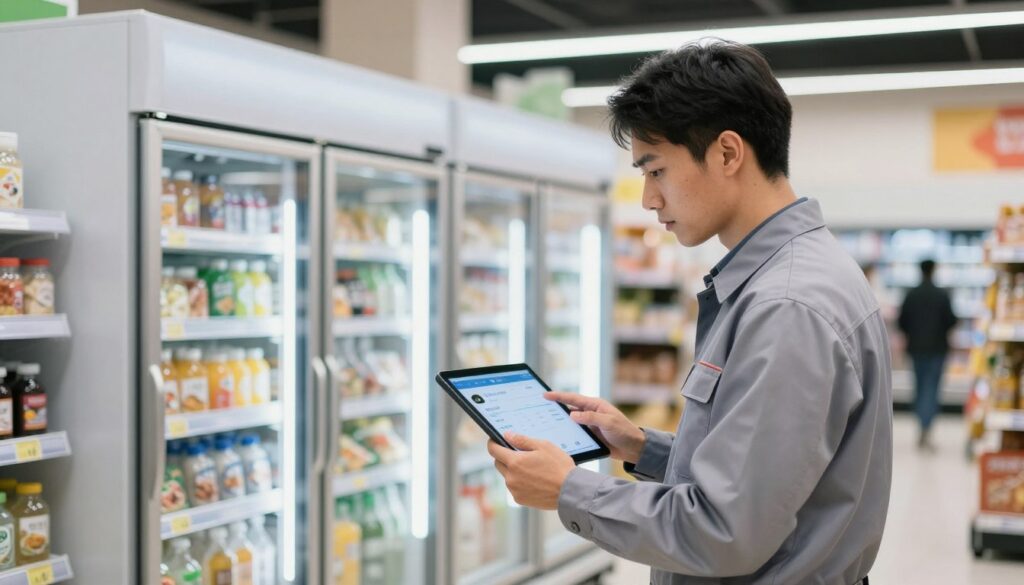
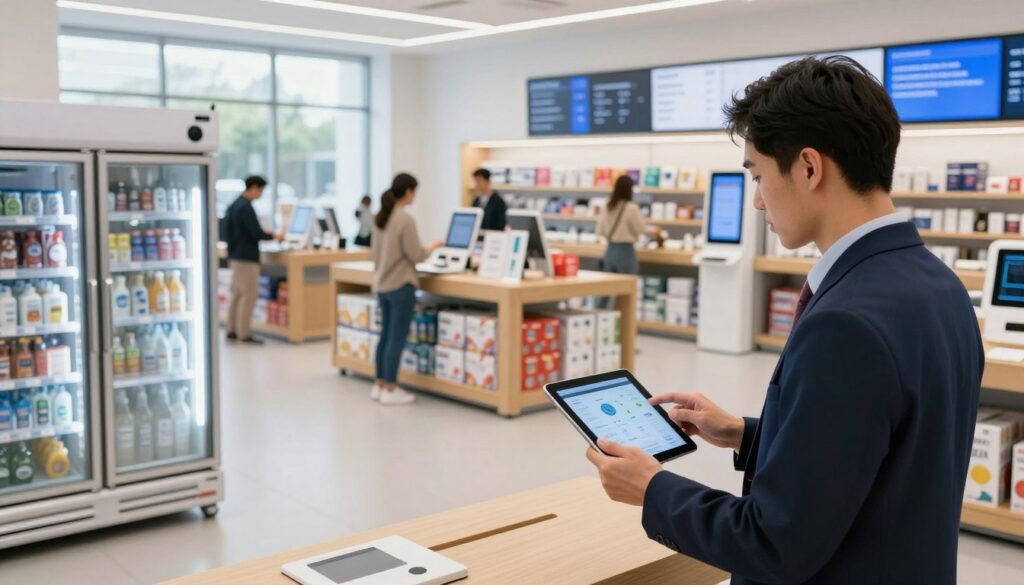
It’s 6 a.m. when the store manager walks into the frozen food aisle. The compressor hums quietly, but the display case feels warm. By noon, thousands of dollars in ice cream, frozen meals, and specialty items are ruined. Emergency repair crews arrive too late, and customers leave disappointed.
This scenario plays out across thousands of grocery stores, supermarkets, and convenience outlets every week. Retail refrigeration failures drain billions annually through spoiled inventory, compliance violations, and lost shopper trust. Traditional approaches to equipment failure prevention simply react after damage occurs.
Industry leaders like Amazon and Walmart recognize this vulnerability. They’ve invested heavily in smart retail technology and commercial refrigeration monitoring to protect their operations. Now, businesses of all sizes can access this same protection.
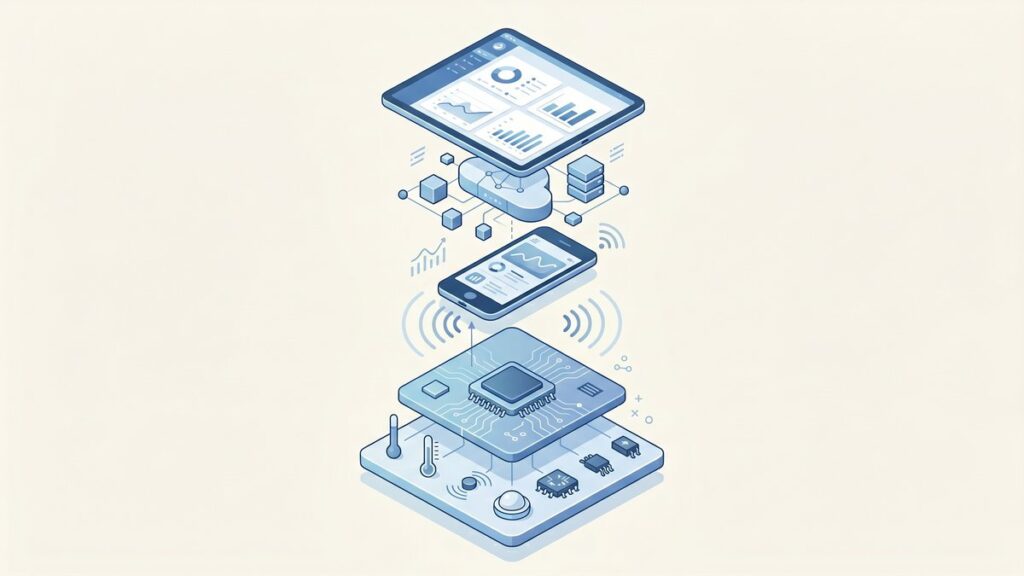
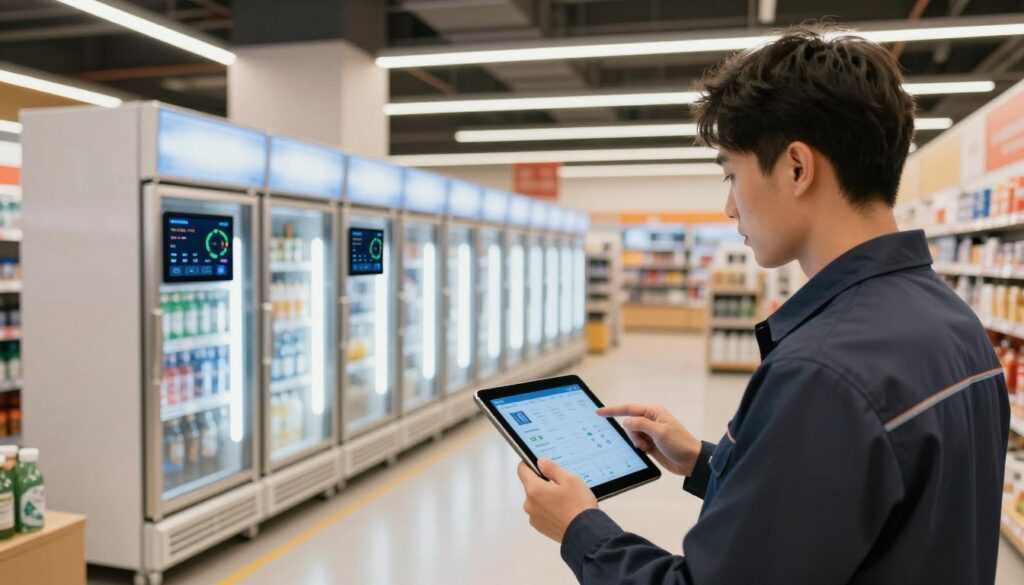
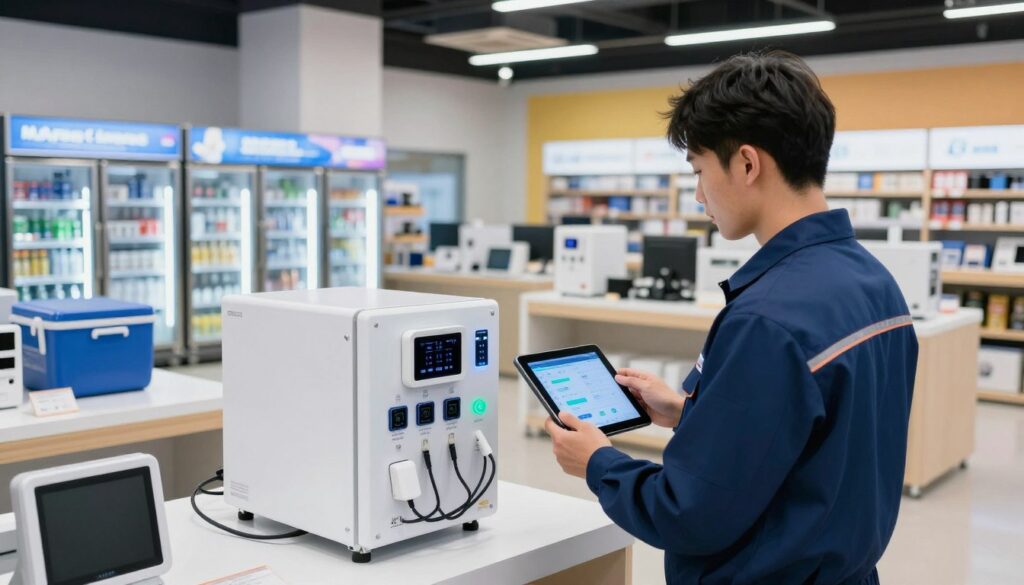
Iottive delivers enterprise-level safeguards through advanced IIoT sensors combined with predictive analytics. The platform tracks temperature, vibration, and performance patterns continuously. Edge analytics spot tiny anomalies and trigger alerts long before a unit fails, transforming refrigeration from hidden risk into controlled asset.
Key Takeaways
- Refrigeration breakdowns cost billions annually through spoiled inventory and emergency repairs
- Traditional reactive approaches leave stores vulnerable to catastrophic equipment failures
- Connected sensors provide real-time visibility into cooler and freezer performance
- Early warning systems detect problems before breakdowns occur, enabling scheduled fixes
- Leading companies invest in monitoring technology to protect products and customer satisfaction
- Modern platforms make enterprise-level protection accessible to operations of all sizes
The Hidden Crisis: Retail Refrigeration Failures Cost Billions Annually
Retail refrigeration failures constitute an underestimated threat that drains billions from the industry annually through spoilage, downtime, and emergency interventions. These refrigeration-dependent operations face mounting pressure as equipment ages and operational demands increase. Without real-time monitoring capabilities, retailers operate in the dark until catastrophic failures force immediate action.
The problem extends beyond isolated incidents. Equipment breakdowns create ripple effects that impact product quality, customer satisfaction, and bottom-line profitability. Most retailers lack the visibility needed to detect small issues before they escalate into major system failures.
Traditional maintenance approaches leave critical gaps in protection. Reactive strategies guarantee maximum losses, while scheduled maintenance misses developing problems between service intervals. This vulnerability exposes retailers to unnecessary risk and preventable financial damage.
Understanding the Massive Infrastructure Investment at Risk
The scale of commercial cooling systems in retail environments represents a staggering capital investment. A typical grocery store operates between 20 and 40 separate refrigeration units across various departments. These include walk-in coolers, reach-in refrigerators, display cases, and dedicated cold storage facilities.
Multi-location retail chains manage thousands of critical cooling assets simultaneously. The total equipment value can reach millions of dollars for regional operators and tens of millions for national chains. This infrastructure requires constant performance optimization to deliver acceptable return on investment.
Each refrigeration unit serves as a critical point of failure. When one system goes down, it threatens the inventory it protects and creates operational disruptions throughout the store. Retail equipment downtime in refrigerated sections directly impacts the most profitable departments where margins on fresh and frozen products drive overall store performance.
The dependency on these systems makes equipment reliability non-negotiable. Retailers cannot afford extended outages in refrigerated sections without significant product loss and revenue impact. Yet many organizations still lack the monitoring infrastructure to protect these valuable assets effectively.
Technical Breakdown: What Actually Causes Equipment to Fail
Refrigeration system failures stem from multiple technical and operational factors. Understanding these equipment failure causes enables better prevention strategies. The most common failure modes each carry distinct warning signs that predictive systems can detect.
Compressor degradation represents the most expensive failure type. Inadequate maintenance allows wear and contamination to reduce compressor efficiency until complete failure occurs. This single component often accounts for 40-50% of total system replacement cost.
Refrigerant leaks develop from corrosion, vibration, or connection failures. These leaks gradually reduce cooling capacity before causing complete system shutdown. Even small leaks compromise temperature control and energy efficiency long before they become obvious.
Additional maintenance challenges include:
- Condenser coil fouling that blocks heat transfer and forces systems to work harder
- Evaporator fan motor failures that prevent proper air circulation
- Thermostat malfunctions that create temperature swings and product damage
- Door seal deterioration that allows warm air infiltration and frost buildup
- Electrical component breakdowns in control boards and contactors
Each failure mode connects to specific operational triggers. Deferred maintenance allows preventable problems to worsen. Environmental stress from extreme weather or poor ventilation accelerates component wear. Equipment age naturally increases failure probability as parts reach end of service life.
Operational overload also contributes significantly. Commercial cooling systems pushed beyond design capacity experience accelerated degradation. Overloaded units run longer cycles with inadequate rest periods, leading to premature component failure.
| Failure Type |
Primary Cause |
Warning Signs |
Average Downtime |
| Compressor Failure |
Wear, contamination, inadequate lubrication |
Unusual noise, reduced cooling, increased runtime |
4-8 hours |
| Refrigerant Leak |
Corrosion, vibration, connection failure |
Gradual temperature rise, frost patterns, hissing sounds |
2-6 hours |
| Condenser Issues |
Dirt accumulation, blocked airflow |
High discharge pressure, frequent cycling |
1-3 hours |
| Fan Motor Failure |
Bearing wear, electrical problems |
Poor air circulation, temperature stratification |
2-4 hours |
| Control System Fault |
Sensor failure, wiring issues, board damage |
Erratic operation, incorrect readings, alarms |
1-5 hours |
The Critical Flaws in Conventional Maintenance Strategies
Traditional maintenance approaches fundamentally fail to prevent costly refrigeration system failures. These outdated methods leave retailers vulnerable to unexpected breakdowns despite regular service investments. The gap between conventional practices and actual equipment needs creates unnecessary risk.
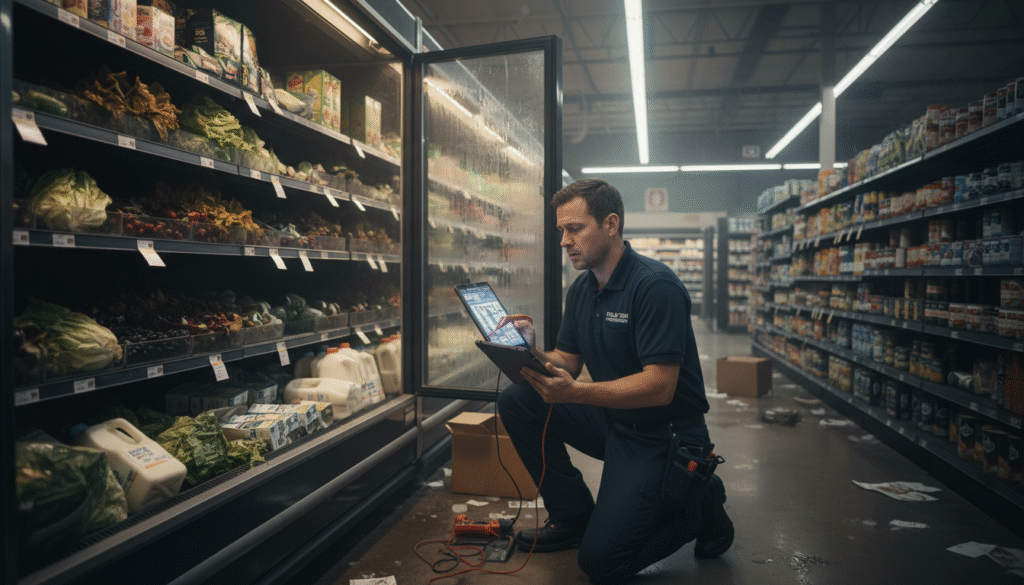
Reactive maintenance represents the worst-case scenario. This “fix it when it breaks” approach guarantees maximum retail equipment downtime and product loss. Emergency service calls typically cost 150-300% more than scheduled maintenance due to after-hours premiums and rush parts ordering.
Time-based preventive maintenance offers improvement but still falls short. Scheduled service occurs at fixed intervals regardless of actual equipment condition. This approach wastes resources on unnecessary service while missing problems that develop between scheduled visits.
The core problem is lack of visibility. Maintenance teams operating without real-time performance data cannot distinguish healthy equipment from units approaching failure. They rely on inspection snapshots that miss gradual degradation occurring between service calls.
This blind operation creates several critical vulnerabilities:
- Developing problems go undetected until they cause failures
- Service resources get allocated inefficiently across equipment inventory
- Critical units receive the same attention as low-priority equipment
- No baseline exists for comparing current performance against historical norms
Commercial cooling systems require continuous monitoring to catch early warning signs. Temperature fluctuations, runtime increases, and efficiency losses all signal developing problems. Traditional maintenance misses these indicators entirely.
The result is predictable: unexpected failures that could have been prevented with proper monitoring. Retailers continue losing product, revenue, and customer confidence because their maintenance strategy cannot identify problems before they escalate. This fundamental limitation makes the case for predictive approaches that leverage real-time data and analytics.
Financial Impact: Breaking Down the True Cost of Refrigeration Downtime
Refrigeration failures trigger a cascade of costs that extend far beyond the initial equipment repair invoice. The true financial burden encompasses immediate inventory destruction, premium service charges, lost revenue opportunities, and long-term brand equity erosion. Understanding these layered retail financial losses helps business owners recognize why preventive strategies deliver such compelling returns on investment.
Many retail operators focus exclusively on repair bills when calculating refrigeration downtime costs. This narrow perspective dramatically underestimates the actual financial impact. A comprehensive cost analysis reveals multiple expense categories that compound quickly during equipment failures.
The Immediate Sting: Product Loss and Spoilage
When a walk-in cooler stops maintaining safe temperatures, the clock starts ticking on thousands of dollars in perishable inventory. A single refrigeration unit failure typically generates $5,000 to $25,000 in immediate product spoilage losses for average-sized retail locations. Larger facilities or widespread system failures affecting multiple units can exceed $100,000 in destroyed inventory from a single incident.
These losses represent far more than wholesale replacement costs. The calculation must include embedded labor expenses, transportation fees, and the retail markup value that vanishes when products hit the dumpster instead of reaching customers.
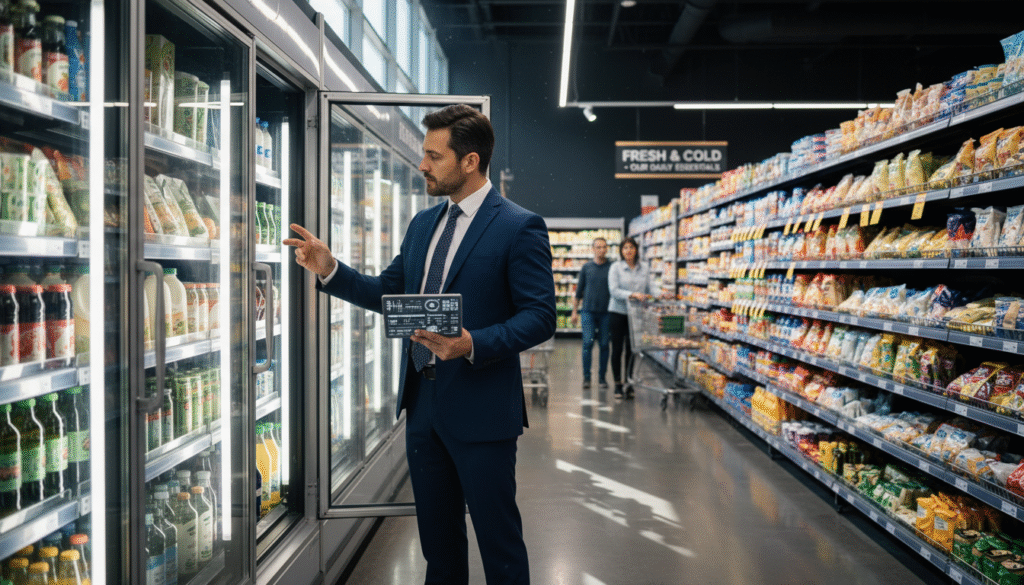
Different product categories face varying vulnerability timeframes during temperature control failures:
- Fresh meat and seafood – Safe holding period of just 24-72 hours before mandatory disposal
- Dairy products – Shelf life typically ranges from 1-2 weeks under proper refrigeration
- Prepared foods and deli items – Extremely short safe window, often less than 24 hours
- Frozen goods – Can withstand brief temperature fluctuations but suffer quality degradation
- Temperature-sensitive pharmaceuticals – Strict storage requirements with zero tolerance for deviations
Grocery retailers stock an average of 3,000-5,000 refrigerated SKUs at any given time. Even partial inventory loss creates significant financial strain. Product spoilage losses accumulate especially rapidly in high-volume operations during peak shopping periods.
Premium Pricing: Emergency Repair Expenses and Urgent Labor
Equipment failures rarely occur during convenient business hours. When refrigeration systems go down on weekends, holidays, or overnight, emergency repair expenses command premium rates that dwarf standard service costs. After-hours service calls typically carry 150-200% price premiums compared to scheduled maintenance appointments.
Expedited parts shipping adds another costly layer. Specialized refrigeration components often require overnight or same-day delivery to minimize downtime. These rush shipments can cost 3-5 times standard shipping rates.
Overtime labor charges compound the financial burden. Technicians called in during off-hours earn premium wages, and complex refrigeration repairs often require multiple specialists. A repair that might cost $800 during regular business hours can easily exceed $2,500 as an emergency callout.
Emergency repairs frequently address immediate symptoms rather than underlying root causes. This reactive approach leads to repeat failures and additional service calls. The equipment limps along until the next breakdown, creating an expensive cycle of crisis management.
| Cost Category |
Emergency Scenario |
Preventive Maintenance |
Financial Difference |
| Service Call Fee |
$350-$600 |
$125-$200 |
180% premium |
| Labor Rate (per hour) |
$175-$250 |
$85-$125 |
105% premium |
| Parts Shipping |
$150-$400 |
$25-$75 |
300% premium |
| Average Total Repair |
$2,500-$5,000 |
$600-$1,200 |
315% premium |
The Silent Killer: Long-Term Revenue Erosion and Reputation Damage
While immediate costs grab attention, the long-term revenue impact of refrigeration failures often inflicts deeper financial wounds. Customers who encounter empty shelves or limited selection due to equipment downtime don’t simply wait for restocking. They redirect their purchasing to competitors, and many never return.
Each stock-out incident chips away at customer loyalty and brand equity. Research shows that 37% of customers switch to competing retailers after encountering out-of-stock conditions on desired products. These defections represent permanent revenue loss, not just delayed purchases.
Brand reputation damage accelerates through social media amplification. A single customer’s negative experience with spoiled food or empty refrigerated sections can reach thousands of potential shoppers within hours. Online reviews mentioning food safety concerns or quality issues create lasting digital footprints that influence purchasing decisions for years.
The financial mathematics of customer defection reveal why retention matters so intensely. Acquiring new customers costs 5-25 times more than retaining existing ones. Losing established customers to preventable refrigeration failures means sacrificing not just immediate sales but the entire lifetime value those relationships represented.
Trust, once broken, proves extraordinarily difficult and expensive to rebuild. Retailers that experience publicized food safety incidents linked to refrigeration failures face uphill battles restoring consumer confidence. Marketing campaigns and promotional discounts designed to win back customers add substantial costs to the original failure impact.
Hidden Liabilities: Insurance and Legal Exposure
Refrigeration failures create insurance and liability implications that extend far beyond the immediate incident. Property insurance claims for spoiled inventory trigger premium increases that persist for multiple policy years. Insurers view equipment failures as preventable risks, and repeated claims can result in coverage exclusions or policy non-renewal.
The liability exposure becomes severe if compromised products reach consumers. Foodborne illness outbreaks traced to temperature control failures generate catastrophic legal costs. Defense attorney fees, settlement payments, and potential punitive damages can financially devastate retail operations.
Regulatory agencies impose substantial fines for food safety violations. The FDA and state health departments conduct investigations following refrigeration-related incidents. Violations can result in fines ranging from $10,000 to $500,000 depending on severity and scope. Repeat offenders face escalating penalties and potential facility closures.
Product recall expenses compound the financial damage. If refrigeration failures go undetected and affected products enter the supply chain, mandatory recalls create enormous costs. The average food recall costs companies $10 million in direct expenses, not including brand damage and lost sales.
“The financial impact of equipment failures extends into insurance premiums, legal liability, and regulatory compliance costs that many retailers fail to anticipate until after a catastrophic incident occurs.”
Understanding the complete spectrum of refrigeration downtime costs transforms the business case for predictive maintenance. When decision-makers recognize that equipment failures threaten profitability, customer relationships, and business continuity simultaneously, investment in prevention becomes the only financially rational strategy. The question shifts from whether to implement monitoring systems to how quickly deployment can occur.
Operational Consequences Beyond the Balance Sheet
While dollar losses grab attention, the operational consequences of refrigeration breakdowns create systemic disruptions across food safety compliance, customer satisfaction, and staff effectiveness that threaten the foundation of retail operations. These failures trigger regulatory scrutiny, erode customer trust, and overwhelm workforce capacity in ways that compound over time. The operational disruption extends into every department, creating challenges that persist long after equipment restoration.
Understanding these broader impacts reveals why predictive maintenance delivers value far beyond preventing equipment replacement costs. The operational chaos generated by unexpected refrigeration failures can undermine years of reputation building and operational excellence. Retailers must account for these hidden consequences when evaluating prevention strategies.
Food Safety Compliance Violations and Legal Risks
The regulatory environment governing retail refrigeration establishes strict requirements that leave zero margin for error. The FDA Food Code mandates specific temperature ranges for different product categories—41°F or below for refrigerated foods, 0°F or below for frozen items. State and local health departments enforce these standards through regular inspections and complaint-driven investigations.
When refrigeration systems fail, food safety compliance violations occur automatically if temperature excursions are not properly documented and immediately addressed. Health inspectors can issue citations that range from minor infractions to critical violations requiring immediate corrective action. Repeat violations or serious temperature control failures can trigger temporary closure orders that halt all food sales until compliance is restored.
These violations create public records that appear in health department databases accessible to consumers and media outlets. A single compliance failure can generate negative publicity that damages brand reputation across entire market regions. The transparency of modern health inspection reporting means violations quickly become public knowledge through restaurant rating websites and local news coverage.
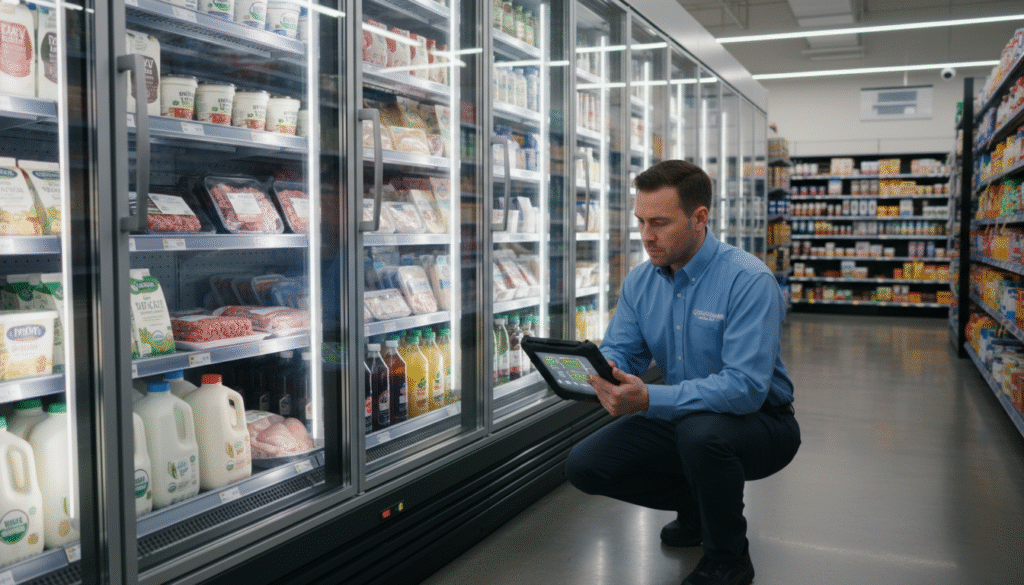
The legal risks extend beyond administrative penalties into criminal and civil liability territories. Retailers who knowingly sell temperature-abused food products face potential criminal charges for distributing adulterated goods. Individual customers who suffer foodborne illness can file civil lawsuits claiming damages from negligent food handling practices.
The most severe exposure comes from class-action litigation when systematic food safety failures affect multiple customers. These cases can generate millions in settlement costs and legal fees, far exceeding the value of lost inventory. Documentation of regulatory violations provides plaintiff attorneys with ready evidence of negligent practices.
HACCP documentation requirements add another compliance layer that refrigeration failures complicate. Retailers must maintain detailed temperature logs demonstrating continuous compliance with critical control points. Equipment failures create documentation gaps that auditors and inspectors interpret as compliance failures, even when no actual food safety incident occurred.
Customer Experience Disruption and Lost Sales
Refrigeration failures create immediate and visible disruptions to the shopping experience that drive customers toward competitors. Empty display cases signal operational dysfunction the moment customers enter the store. Plastic sheeting covering inoperable refrigerated sections announces equipment problems that undermine confidence in store management.
Out-of-stock refrigerated items force incomplete shopping trips that fail to meet customer needs. Shoppers who cannot purchase intended products typically complete their refrigerated shopping at competing stores rather than making return trips. Each incomplete transaction represents both immediate lost revenue and potential permanent customer migration to alternative retailers.
The customer experience impact extends beyond individual transactions into long-term loyalty erosion. Customers develop shopping patterns based on reliability expectations—stores that consistently stock desired products earn repeat visits, while unreliable retailers lose habitual traffic. A single refrigeration failure can disrupt shopping patterns that took years to establish.
Modern consumers share negative experiences through online reviews and social media platforms that amplify individual incidents. Equipment failures generate frustrated customer posts that reach hundreds of potential shoppers. The reputational damage from visible operational problems persists long after equipment restoration, as online reviews remain permanently accessible.
| Operational Impact Area |
Immediate Consequences |
Long-Term Effects |
Recovery Timeline |
| Food Safety Compliance |
Temperature violations, mandatory product disposal, health inspector citations |
Public violation records, increased inspection frequency, legal liability exposure |
6-12 months for compliance history improvement |
| Customer Experience |
Empty display cases, out-of-stock items, incomplete shopping trips |
Customer migration to competitors, negative online reviews, loyalty program attrition |
3-6 months to rebuild shopping patterns |
| Staff Productivity |
Emergency response protocols, product removal labor, service coverage gaps |
Employee stress and turnover, reduced morale, degraded service standards |
2-4 weeks to restore normal operations rhythm |
| Retail Operations |
Workflow disruption, inventory system complications, vendor coordination challenges |
Operational inefficiency, increased labor costs, supply chain relationship strain |
4-8 weeks to normalize operational metrics |
The seamless customer experiences that define retail excellence depend on reliable infrastructure that never forces shoppers to adjust expectations. Refrigeration failures break this reliability contract, creating friction points that drive customers toward competitors offering consistent product availability.
Staff Productivity Loss During Equipment Failures
Equipment failures trigger emergency response protocols that pull employees away from customer service duties and scheduled responsibilities. Maintenance emergencies require immediate attention that disrupts carefully planned staffing allocations. The chaos of crisis management degrades overall team performance across all departments.
Staff productivity plummets as employees shift from routine operations to damage control mode. Product removal from failing refrigeration units consumes significant labor hours that could otherwise support customer service or merchandising activities. Teams must manually sort inventory to identify salvageable items versus products requiring disposal.
Emergency cleaning and sanitization of affected refrigeration units requires all-hands response that diverts workers from their primary roles. Management personnel must document incidents for insurance claims and compliance reporting, consuming hours that should focus on strategic planning and team development. The administrative burden of refrigeration failures extends far beyond immediate physical response.
The stress and disruption of managing refrigeration emergencies impacts employee morale and retention. Workers facing repeated crises without adequate preventive systems experience job dissatisfaction that drives turnover. Training new employees to replace departing staff creates additional productivity losses as inexperienced workers learn operational procedures.
Coverage gaps emerge when experienced employees focus on emergency response rather than customer interaction. New or less-trained staff members handle customer needs during crises, potentially delivering substandard service that compounds the negative customer experience. The productivity impact cascades through the organization, affecting service quality across all customer touchpoints.
These operational consequences demonstrate that refrigeration failures create systemic disruptions affecting every aspect of retail operations. The compliance violations, customer experience degradation, and workforce productivity losses collectively undermine competitive positioning in ways that financial metrics alone cannot capture. Preventing these operational disruptions through predictive maintenance delivers value that extends far beyond equipment replacement cost savings.
What Is Retail Predictive Maintenance and How Does It Work
Retail refrigeration management stands at a technological crossroads where data-driven insights replace guesswork and emergency responses. The shift from reactive fixing to planned care is transformative for businesses that depend on temperature-controlled environments. Predictive maintenance technology uses continuous equipment monitoring to identify problems before they cause failures, reducing unplanned downtime by over 30% compared to traditional approaches.
This advanced strategy moves beyond scheduled maintenance intervals to condition-based maintenance that responds to actual equipment health. Retailers gain the ability to address developing issues during convenient timeframes rather than facing emergency situations. The result is maximized uptime, extended asset life, and significantly lower total maintenance costs.
From Reactive Failures to Proactive Prevention
Understanding the fundamental differences between maintenance philosophies reveals why predictive approaches deliver superior outcomes. Traditional reactive maintenance accepts equipment breakdowns as inevitable and responds only after failures occur. This run-to-failure strategy creates maximum operational disruption and drives the highest total costs.
Preventive maintenance represents an improvement by performing scheduled service at fixed intervals regardless of actual equipment condition. While this time-based approach reduces catastrophic failures, it wastes resources on unnecessary service and misses developing problems between scheduled intervals. The maintenance team might replace components that still have useful life remaining while overlooking issues that emerge just after inspection.
Predictive maintenance technology transforms this paradigm by using real-time performance data to schedule maintenance precisely when needed. Equipment tells maintenance teams exactly what attention it requires and when intervention becomes necessary. This condition-based maintenance approach eliminates both premature component replacement and unexpected failures.
| Maintenance Approach |
Service Trigger |
Cost Impact |
Primary Outcome |
| Reactive (Run-to-Failure) |
Equipment breakdown |
Highest total cost |
Maximum downtime and disruption |
| Preventive (Time-Based) |
Fixed schedule intervals |
Medium cost with waste |
Reduced failures but inefficient resource use |
| Predictive (Condition-Based) |
Real-time sensor analytics |
Lowest total cost |
Maximized uptime and asset life |
| Prescriptive (AI-Optimized) |
Machine learning recommendations |
Optimized efficiency |
Autonomous maintenance scheduling |
Continuous Intelligence Through Advanced Sensor Networks
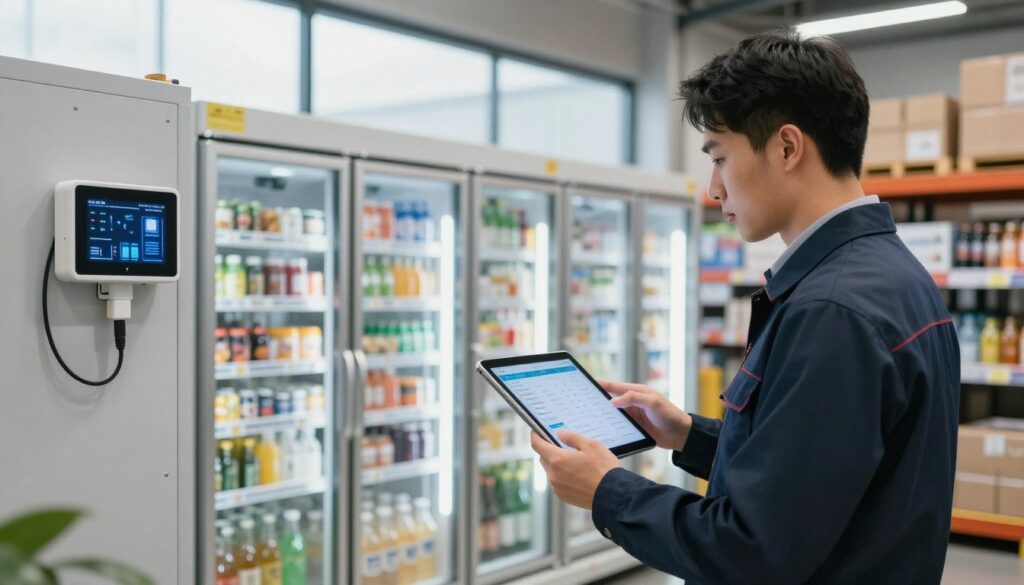
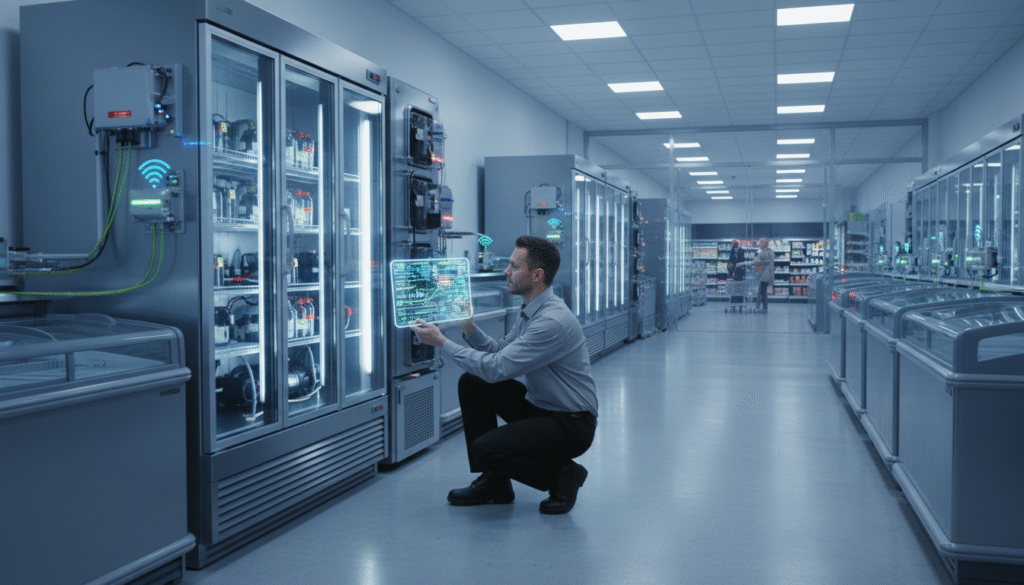
The foundation of predictive maintenance rests on IIoT sensors that continuously collect performance data from refrigeration equipment. These specialized devices monitor critical parameters that indicate equipment health and identify developing problems long before they cause failures. Industrial Internet of Things technology creates a real-time digital representation of every refrigeration unit’s operational status.
Temperature sensors form the first line of defense by continuously tracking refrigerated space conditions. These devices detect temperature excursions before product becomes compromised, protecting inventory value and food safety compliance. Modern sensors measure with precision to within 0.1 degrees and transmit readings every few minutes.
Vibration sensors mounted on compressors and motors identify bearing wear and mechanical degradation through changes in vibration patterns. Healthy equipment produces consistent vibration signatures, while developing problems create distinctive changes that sensors detect immediately. This real-time equipment monitoring enables maintenance teams to address bearing issues before they cause compressor failure.
Current sensors track electrical consumption patterns that reveal motor stress and component deterioration. Unexpected increases in amperage draw indicate mechanical resistance or electrical problems requiring attention. Pressure sensors monitor refrigerant system performance, detecting leaks or restrictions that reduce cooling efficiency.
Humidity sensors track defrost cycle effectiveness and identify airflow problems that compromise temperature stability. These IIoT sensors transmit data continuously via wireless protocols, eliminating the need for manual readings and creating comprehensive equipment health records. The sensor network operates autonomously, collecting millions of data points that would be impossible to gather through manual inspection.
Intelligence That Predicts Problems Before They Occur
Raw sensor data becomes actionable intelligence through sophisticated machine learning analytics that identify patterns invisible to human observation. Advanced algorithms establish baseline performance signatures for each refrigeration unit during normal operation. The system learns what healthy equipment looks like under various conditions and operating loads.
Anomaly detection compares current performance against these established baselines to identify deviations from normal operating parameters. The system distinguishes between harmless variations and meaningful changes that signal developing problems. This pattern recognition operates continuously, analyzing data streams in real time to catch issues at their earliest stages.
Predictive algorithms forecast remaining useful life based on degradation trends observed in component performance. The system calculates when specific components will likely require service based on their current condition and historical deterioration rates. This forward-looking analysis enables maintenance planning weeks in advance rather than emergency responses.
Machine learning analytics also prioritize alerts by distinguishing urgent threats from minor variations. The system learns which conditions require immediate attention and which can wait for scheduled maintenance windows. This intelligent filtering prevents alert fatigue while ensuring critical issues receive prompt response.
The analytics platform continuously refines its predictive accuracy by learning from outcomes. When maintenance confirms a predicted issue, the system strengthens those pattern associations. This real-time equipment monitoring combined with advanced analytics transforms maintenance from a reactive necessity into a strategic advantage.
Metrics That Reveal Equipment Health Status
Specific refrigeration performance metrics serve as reliable indicators of equipment condition and predict maintenance needs. These key performance indicators provide objective measurements that guide maintenance decisions and validate equipment health. Understanding these metrics enables retailers to recognize warning signs before they escalate into failures.
Compressor run time percentage indicates how frequently the unit cycles on and off to maintain temperature. Excessive run time suggests the system works harder than normal, possibly due to refrigerant loss, condenser fouling, or door seal problems. Conversely, short cycling indicates control issues or refrigerant overcharge.
Temperature stability and recovery time after door openings reveal the system’s cooling capacity and efficiency. Healthy units quickly return to setpoint after thermal loads, while struggling equipment shows prolonged recovery periods. This metric provides early warning of declining performance before product is compromised.
Defrost cycle frequency and duration indicate evaporator coil condition and airflow effectiveness. Units requiring more frequent or longer defrost cycles may have airflow restrictions or humidity problems. These refrigeration performance metrics help identify maintenance needs before they affect product storage conditions.
| Performance Indicator |
What It Measures |
Warning Signs |
Predicted Issues |
| Compressor Run Time |
Operating duty cycle percentage |
Above 70% continuous operation |
Refrigerant loss, condenser problems, capacity decline |
| Temperature Recovery |
Time to restore setpoint after door opening |
Recovery exceeding 15 minutes |
Reduced cooling capacity, airflow restrictions |
| Energy Consumption Pattern |
Kilowatt-hours per operating cycle |
Increase above 15% baseline |
Mechanical resistance, electrical problems, efficiency loss |
| Defrost Cycle Duration |
Minutes required for complete defrost |
Extending beyond normal range |
Evaporator coil restrictions, airflow problems |
| Refrigerant Pressure Differential |
High-side to low-side pressure ratio |
Ratio deviation above 10% |
System leaks, restrictions, component failure |
Energy consumption patterns provide powerful diagnostic information about mechanical and electrical health. Gradual increases in power usage indicate developing inefficiencies that drive operating costs higher. Sudden changes signal component problems requiring investigation.
Refrigerant pressure differentials between high-side and low-side measurements reveal system charge levels and restriction problems. Abnormal pressure relationships indicate leaks, blockages, or compressor valve issues. Monitoring these metrics through condition-based maintenance enables precise diagnosis and targeted repairs.
These key performance indicators work together to create a comprehensive health assessment for each refrigeration unit. The combination of metrics provides diagnostic clarity that single measurements cannot achieve. Retailers using these refrigeration performance metrics gain unprecedented visibility into equipment condition and maintenance requirements.
Iottive’s Smart Retail Solution: Preventing Failures Before They Happen
Preventing refrigeration failures starts with continuous monitoring, intelligent analytics, and automated response mechanisms working in perfect harmony. The Iottive platform brings these elements together into a unified system that transforms refrigeration assets from silent risk factors into communicative, self-reporting equipment. This smart retail solution protects product quality while streamlining operations across every location in your retail network.
Traditional refrigeration systems operate in darkness until something breaks. Iottive changes that paradigm completely by making every unit visible, measurable, and manageable from a single control center. The result is a shift from reactive emergency response to proactive management that prevents problems before customers ever notice.
Wireless Sensor Networks That See Everything
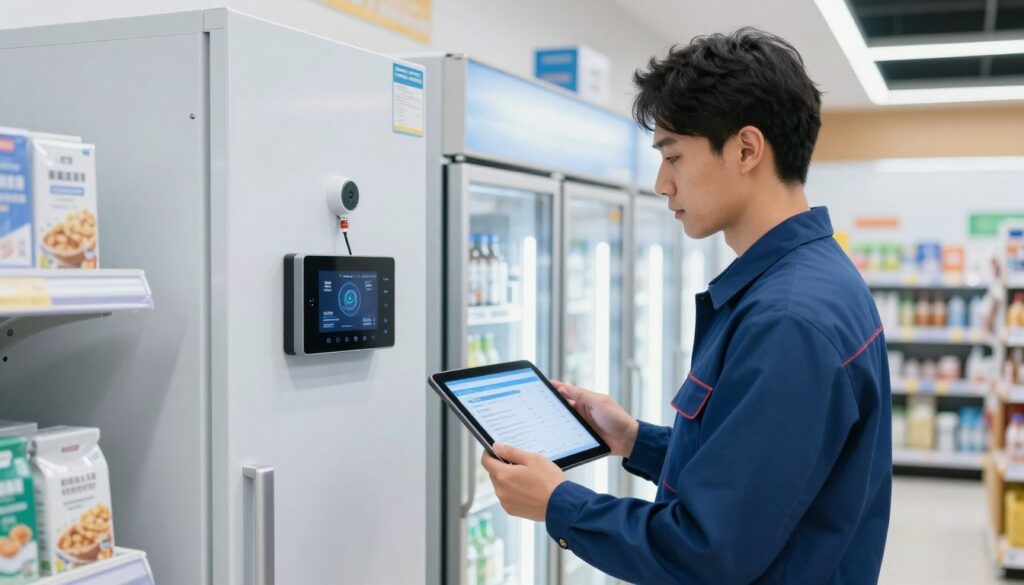
The Iottive platform begins with a comprehensive sensor network that attaches directly to existing refrigeration equipment. These wireless devices require no equipment modification or operational shutdown during installation. Technicians mount sensors in minutes, and the system starts collecting data immediately.
Each sensor captures multiple performance indicators simultaneously. Temperature readings track the internal environment of every refrigerated case and walk-in cooler. Humidity sensors detect moisture levels that signal potential issues with door seals or defrost cycles.
Compressor performance monitors measure vibration patterns, runtime cycles, and energy draw. Door status sensors track how often units open and how long they remain unsealed. This multi-dimensional view creates a complete health profile for every piece of equipment.
The refrigeration monitoring system processes this data locally through edge computing devices installed at each location. These intelligent processors analyze information in real-time, identifying anomalies within seconds of their occurrence. Critical threats trigger immediate alerts without waiting for cloud transmission.
Intelligence That Distinguishes Noise from Genuine Threats
Alert fatigue destroys the effectiveness of many monitoring systems. Too many false alarms train staff to ignore notifications, defeating the entire purpose of automated monitoring. Iottive solves this problem through machine learning algorithms that understand normal operational variations.
The platform implements multi-threshold alert logic that categorizes issues by severity. Minor temperature fluctuations that self-correct within minutes generate informational logs but no urgent notifications. Developing concerns that show progressive deterioration trigger advisory alerts to maintenance teams.
Critical threats demand immediate action. When sensor data indicates imminent failure, the system escalates notifications through predetermined protocols. The right person receives the right information at the right time based on issue severity and required response speed.
Predictive alerts represent the most valuable capability of the Iottive system. By analyzing performance trends over time, the platform identifies degradation patterns that precede failures by 24 to 72 hours. This advance warning enables scheduled maintenance during off-peak hours rather than emergency service calls at premium rates.
Machine learning continuously refines alert accuracy. The system learns from every event, distinguishing between harmless variations and genuine developing problems. Over time, prediction accuracy improves while false positive rates decline.
Integration That Respects Existing Investments
Retail operations already depend on multiple technology systems. Point-of-sale platforms track transactions, inventory management software monitors stock levels, and facility management tools coordinate maintenance activities. Adding another disconnected system creates information silos and operational complexity.
The Iottive platform takes a different approach through comprehensive retail technology integration. The system connects seamlessly with existing infrastructure through standard APIs and data protocols. Refrigeration performance data flows into inventory systems, enabling automatic adjustments when cooling capacity changes.
Work order systems receive automated maintenance requests when the platform detects developing issues. Facility management dashboards display refrigeration status alongside HVAC, lighting, and security information. This unified visibility eliminates the need to check multiple systems for complete operational awareness.
Integration happens without wholesale technology replacement. Retailers preserve existing investments while adding transformative predictive capabilities. The implementation process respects operational continuity, with staged rollouts that minimize disruption.
| Integration Category |
Connected Systems |
Data Exchange |
Business Impact |
| Inventory Management |
Stock tracking, ordering systems |
Temperature events, capacity alerts |
Automated product relocation during equipment issues |
| Facility Operations |
CMMS, work order platforms |
Maintenance requests, performance data |
Proactive service scheduling, reduced emergency calls |
| Energy Management |
Utility monitoring, demand response |
Consumption patterns, efficiency metrics |
Optimized runtime, lower energy costs |
| Compliance Systems |
Food safety, audit platforms |
Temperature logs, incident reports |
Automated documentation, simplified inspections |
Visibility From Anywhere, Anytime
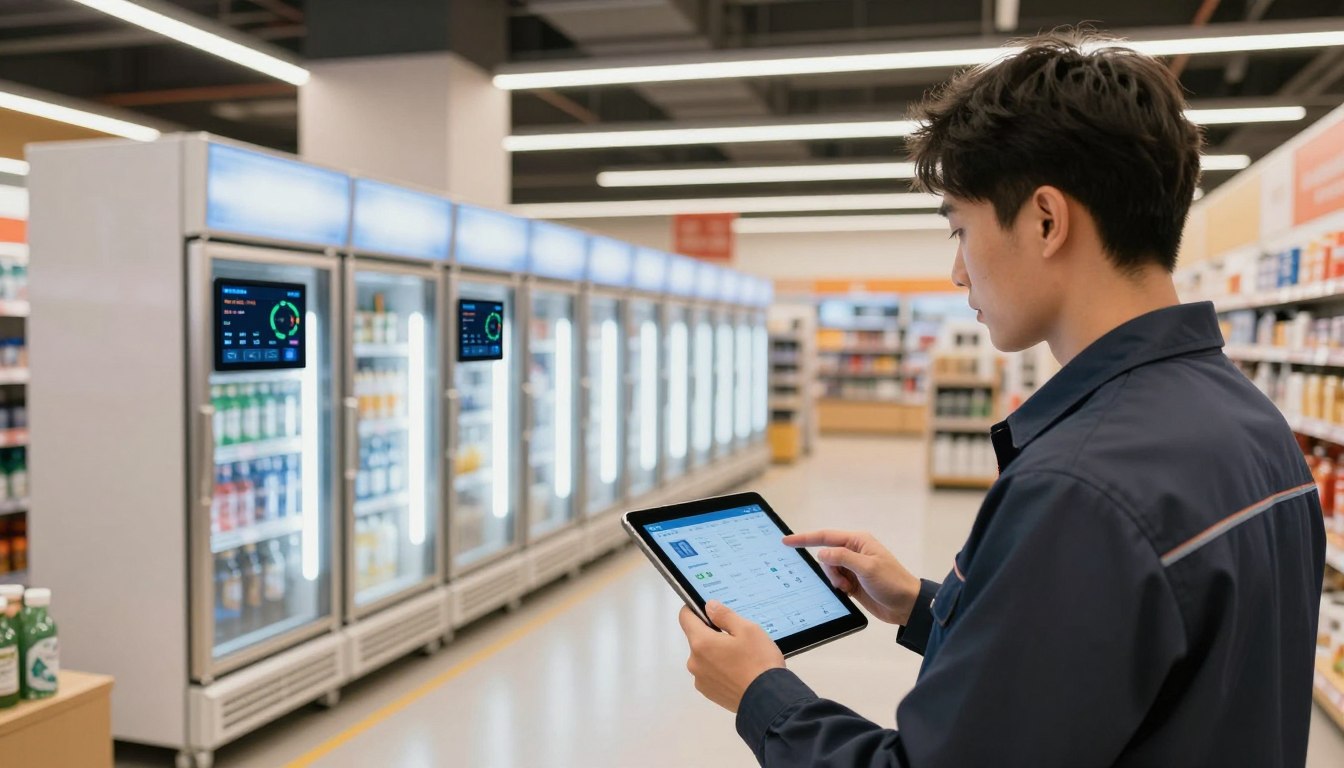
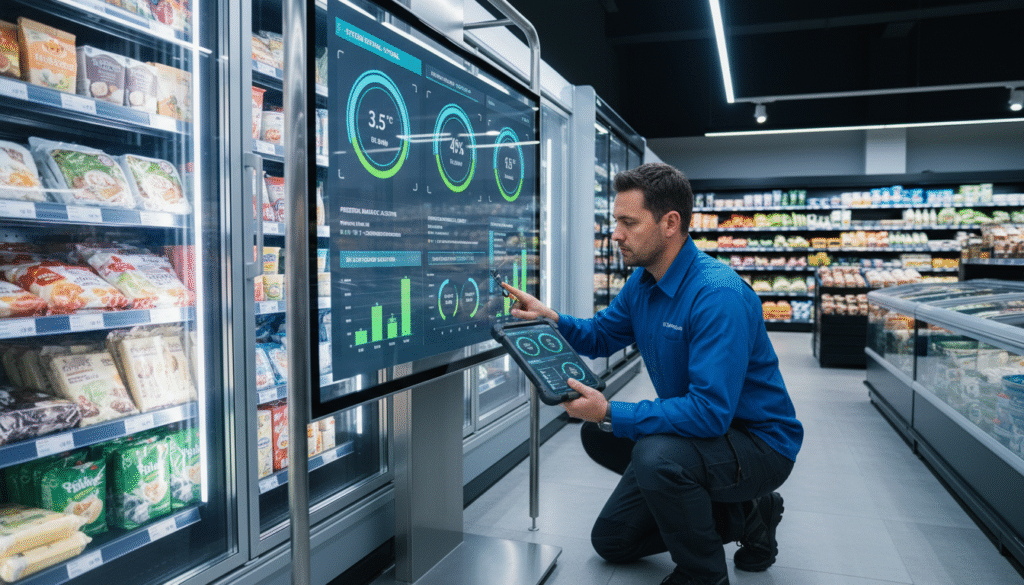
Effective remote equipment management requires more than data collection—it demands intuitive interfaces that transform raw information into actionable intelligence. The Iottive dashboard delivers this clarity through visual displays designed for quick comprehension.
Facility managers view all refrigeration assets across multiple locations from a single screen. Color-coded status indicators show at-a-glance health for every unit. Green signals normal operation, yellow indicates developing concerns requiring attention, and red demands immediate response.
Performance trending charts reveal degradation patterns over days and weeks. A compressor showing gradually increasing runtime signals declining efficiency long before complete failure. Door sensors tracking frequent openings highlight staff training opportunities or scheduling adjustments needed to reduce temperature stress.
Energy consumption analytics quantify efficiency opportunities across the entire equipment fleet. The platform identifies units consuming excessive power relative to their cooling load, pinpointing candidates for repair or replacement. These insights transform energy management from guesswork into data-driven decision-making.
Mobile access extends monitoring capabilities beyond the desktop. Regional managers traveling between locations check system status from smartphones or tablets. After-hours alerts reach the appropriate personnel regardless of their physical location, ensuring rapid response to emerging issues.
The dashboard adapts to different user roles and responsibilities. Store-level staff see details for their location, while corporate facilities teams access enterprise-wide visibility. Customizable views ensure each user sees relevant information without overwhelming detail.
Documentation That Happens Automatically
Food safety regulations require meticulous temperature record-keeping. Health department inspections demand proof of continuous monitoring and rapid response to temperature excursions. Traditional manual logging creates compliance burdens that consume staff time and introduce human error.
Compliance automation through the Iottive platform eliminates these challenges entirely. The system maintains continuous temperature logs for every refrigeration asset automatically. No manual readings, no paper forms, no forgotten checks during busy periods.
When temperature excursions occur, the platform documents the event with precise timestamps, duration, affected equipment, and response actions taken. This automated incident documentation satisfies HACCP requirements without additional staff effort. Every data point remains securely stored and instantly retrievable.
Scheduled compliance reports generate automatically for health department inspections. Managers download comprehensive documentation showing months of continuous monitoring, alert responses, and corrective actions. What once required hours of preparation now takes minutes.
Audit trails demonstrate due diligence in equipment management and food safety protocols. If questions arise about historical performance or response procedures, complete records provide definitive answers. This documentation protects retailers from liability while proving commitment to safety standards.
The platform maintains data security through encrypted transmission and storage. Access controls ensure only authorized personnel view sensitive operational information. Compliance with data protection regulations happens automatically through built-in security architecture.
Proven ROI and Implementation: The Business Case for Iottive Predictive Maintenance
Every dollar invested in predictive maintenance should generate measurable value through reduced failures, extended equipment life, and lower operating costs. The business case for Iottive’s platform rests on documented financial returns that transform refrigeration systems from cost centers into strategic assets. Retail leaders implementing this technology see quantifiable improvements across operations, compliance, and customer satisfaction.
Advanced connectivity and sensor technology create resilient, data-driven stores that improve overall business efficiency. This approach reduces waste and protects product quality while delivering a better shopping experience. The predictive maintenance ROI becomes evident within the first year of deployment through multiple value streams.
Dramatic Decreases in Equipment Failures and Service Calls
Retailers implementing Iottive’s platform experience 30-50% reduction in unplanned equipment downtime as developing issues are addressed during scheduled maintenance windows. Technicians resolve minor problems before they escalate into complete system failures. This proactive approach eliminates the disruption and urgency that characterize reactive maintenance.
Emergency repair calls decrease by 60-75% when sensor data identifies performance degradation early. The premium costs associated with after-hours service, expedited parts shipping, and overtime labor virtually disappear. Maintenance cost reduction becomes immediately visible in monthly operating budgets.
Product spoilage losses drop by 40-60% through early intervention before temperature excursions compromise inventory. The platform detects subtle refrigeration performance changes that would go unnoticed until merchandise damage occurs. These savings alone often justify the entire platform investment.
Documented implementations consistently deliver 12-18 month return on investment through combined savings across downtime, repairs, and product protection. These are not theoretical projections but actual outcomes from operating retail environments. The financial case strengthens each year as benefits compound.
Extended Equipment Lifespan and Energy Efficiency Gains
Predictive maintenance extends refrigeration equipment lifespan by 20-30% through optimal service timing. The platform prevents catastrophic failures and cascade damage that occur when minor issues go unaddressed. Equipment reaches and exceeds manufacturer design life expectations.
Proper maintenance timing protects compressors, condensers, and other critical components from stress that accelerates wear. Capital replacement cycles extend significantly, deferring major investments while maintaining reliability. Equipment lifespan extension represents substantial long-term value creation.
Energy consumption decreases 10-15% as the platform identifies efficiency degradation and prompts corrective action. Dirty condenser coils, refrigerant charge issues, and airflow restrictions are detected before they significantly impact performance. Energy efficiency improvements reduce utility costs month after month.
Compressor optimization reduces runtime while maintaining temperature stability. The system learns ideal operating patterns for each store location and alerts managers to deviations. These efficiency gains contribute to sustainability goals while improving financial performance.
Documented Case Studies from U.S. Retail Implementations
Real-world retail case studies provide proof beyond technical claims. A regional grocery chain with 47 locations across the Midwest eliminated 89% of refrigeration-related product losses in the first year after deployment. The platform detected developing compressor issues and door seal problems before temperature fluctuations affected merchandise.
A convenience store operator managing 12 locations in Texas reduced maintenance costs by $47,000 annually through predictive intervention. Emergency service calls dropped from 43 incidents yearly to just 7. Scheduled maintenance became more efficient as technicians arrived with precise diagnostic information.
A specialty food retailer in the Pacific Northwest achieved zero health department violations related to temperature control after implementation. Automated compliance documentation provided complete refrigeration records for inspections. Customer confidence improved as product quality became consistently reliable.
| Retail Implementation |
Primary Benefit |
Quantified Result |
Timeframe |
| Regional Grocery Chain (47 stores) |
Product Loss Prevention |
89% reduction in spoilage incidents |
First 12 months |
| Convenience Store Operator (12 locations) |
Maintenance Cost Savings |
$47,000 annual reduction |
Year one implementation |
| Specialty Food Retailer (8 stores) |
Compliance Achievement |
Zero temperature violations |
18 months post-deployment |
| Multi-State Pharmacy Chain (156 locations) |
Equipment Lifespan Extension |
27% increase in replacement cycle |
Three-year study period |
These implementations demonstrate consistent value delivery across different retail formats and geographic markets. Each organization experienced rapid ROI through their specific operational priorities. The platform adapts to diverse business requirements while maintaining performance standards.
Assessment and Implementation Process
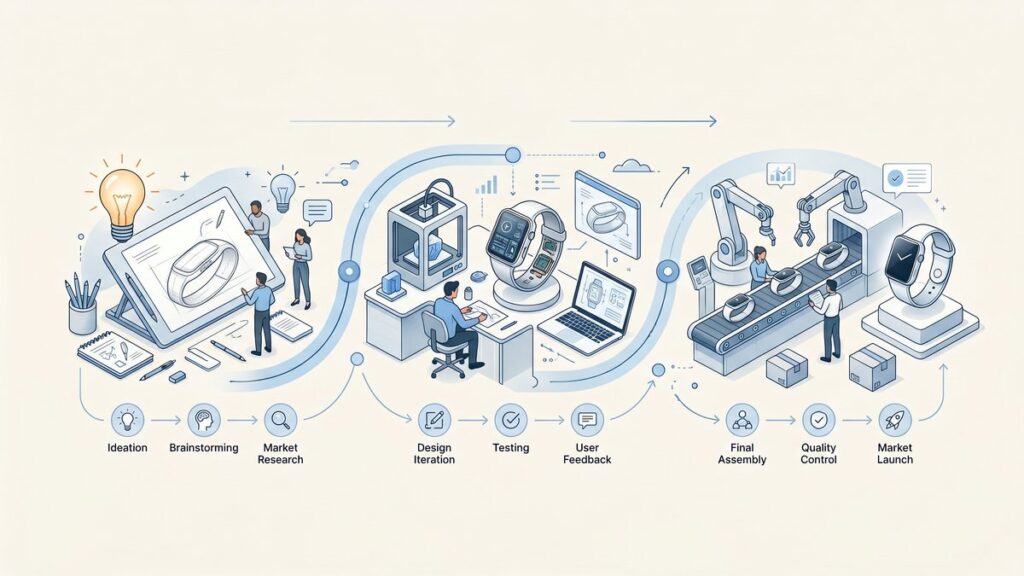
Iottive collaborates with retail leaders, digital heads, store operations teams, and supply chain stakeholders to understand customer journeys and operational challenges. The implementation process begins with comprehensive consultation to identify specific refrigeration concerns and business objectives. This foundation ensures the platform addresses actual needs rather than generic capabilities.
Site assessment evaluates existing refrigeration assets, infrastructure, and monitoring gaps. Technical teams examine equipment types, age, maintenance history, and current failure patterns. This analysis identifies highest-priority locations and systems for initial deployment.
The implementation process includes these structured phases:
- Retail use-case validation confirms the platform addresses specific operational challenges
- Omnichannel architecture design integrates monitoring with existing retail systems
- IoT device selection matches sensors to equipment types and monitoring requirements
- AI personalization planning configures alert thresholds for store-specific conditions
- Measurable KPI definition establishes success metrics including stock accuracy and conversion rates
Pilot program deployment in representative locations validates performance and refines configuration. Initial installations provide learning opportunities that improve subsequent rollouts. Lessons from pilot stores accelerate deployment across additional locations.
Phased rollout incorporates optimization insights as the platform expands. Cloud scalability and cybersecurity measures protect operations throughout deployment. Long-term support ensures continuous performance as business needs evolve.
Scalability for Single Stores to Multi-Location Chains
The platform architecture supports deployments from single-location independent retailers to national chains with hundreds of stores. Scalable solutions grow transparently as business expands without requiring infrastructure redesign. Independent grocers and pharmacy chains use identical core technology tailored to their operational scale.
Cloud-based infrastructure eliminates server investments and scales automatically with location count. Multi-store expansion occurs without capital equipment purchases or IT infrastructure additions. Regional inventory balancing and cross-border retail operations receive enterprise-grade monitoring without enterprise complexity.
Enterprise features serve complex organizational structures through role-based access and multi-location dashboards. Corporate facilities teams view system-wide performance while store managers focus on their locations. Omnichannel integration connects refrigeration monitoring with inventory management and customer experience platforms.
Continuous optimization using AI insights improves performance as the platform learns operational patterns across locations. Geographic and seasonal variations are incorporated into predictive models. The system becomes more accurate and valuable over time.
Training, Support, and Ongoing Optimization
Comprehensive user training prepares store managers, maintenance technicians, and corporate facilities teams for platform operation. Training programs address different user roles with relevant functionality and responsibilities. Teams become proficient quickly through hands-on exercises and real-world scenarios.
Technical support operates 24/7 to address platform and sensor issues whenever they arise. Support teams understand retail operations and respond with urgency appropriate to business impact. Most issues resolve remotely without site visits or operational disruption.
Regular system health reviews and performance optimization maintain peak effectiveness. Iottive specialists analyze alert patterns, response times, and outcome data to refine configurations. These reviews identify opportunities for improved accuracy and additional value delivery.
Continuous platform enhancements deliver new capabilities without additional investment. Software updates add features, improve analytics, and expand integration options. Retailers benefit from ongoing development funded across the entire customer base.
The combination of proven returns, manageable implementation, and long-term support establishes Iottive predictive maintenance as a strategic investment rather than an operational expense. Documented predictive maintenance ROI removes financial uncertainty while transforming refrigeration from cost center to competitive advantage.
Conclusion
Refrigeration management no longer belongs in the category of hidden operational risks. The retail refrigeration solution landscape has shifted from reactive crisis response to intelligent, data-driven control. Retailers who embrace this IIoT transformation gain measurable advantages across every performance metric.
Predictive maintenance implementation delivers documented results within 12-18 months. Product losses decrease. Emergency repair costs drop. Compliance documentation becomes automated. Equipment lifespan extends. Energy consumption falls. These financial returns compound year after year.
The business case extends beyond cost reduction. Proactive equipment management enables operational excellence that customers notice and value. Stores maintain consistent product availability. Shopping experiences remain seamless. Brand reputation strengthens through reliability.
Retailers operating without predictive systems accept unnecessary financial exposure and competitive disadvantages. Modern retail demands infrastructure that performs with certainty. Point-of-sale systems and inventory platforms are considered essential. Refrigeration monitoring deserves the same priority.
Iottive provides the proven platform, implementation expertise, and ongoing support that makes this transformation accessible for operations of any size. The assessment process identifies specific opportunities within your refrigeration infrastructure. Implementation integrates smoothly with existing systems. Results appear quickly and grow continuously.
Contact Iottive to begin converting refrigeration from liability into managed, optimized asset. Join the retailers who have eliminated emergency disruptions, protected inventory value, and established the reliable operations that successful retail requires.
FAQ
What is the average annual cost of refrigeration failures for a typical grocery store?
A single refrigeration failure can result in $5,000-$25,000 in immediate product spoilage for one walk-in cooler, while widespread system failures affecting multiple units can exceed $100,000 in lost inventory per location. Beyond direct product loss, retailers face emergency repair premiums of 150-200% above standard rates, after-hours service charges, expedited parts shipping, and long-term customer defection costs. Industry data shows refrigeration breakdowns contribute to billions in annual losses across U.S. grocery stores, supermarkets, convenience stores, and food service operations when combining product spoilage, emergency repairs, compliance violations, and revenue loss from stockouts.
How does predictive maintenance differ from traditional preventive maintenance?
Preventive maintenance follows fixed time-based schedules (monthly, quarterly, or annually), performing service regardless of actual equipment condition—resulting in wasted resources on unnecessary service while potentially missing developing problems between scheduled intervals. Predictive maintenance uses real-time performance data from IIoT sensors to monitor actual equipment health continuously, identifying developing issues through pattern recognition and anomaly detection. This condition-based approach schedules maintenance precisely when needed based on equipment degradation trends, not arbitrary calendar dates. Industry data confirms predictive approaches reduce unplanned downtime by over 30% compared to traditional methods while extending equipment lifespan by 20-30% through optimal service timing.
What types of sensors does Iottive use to monitor refrigeration equipment?
Iottive deploys a comprehensive wireless sensor network that captures critical refrigeration performance indicators: temperature sensors continuously monitor refrigerated space conditions and detect excursions before product compromise; vibration sensors on compressors and motors identify bearing wear and mechanical degradation; current sensors detect electrical anomalies indicating motor stress or component failure; pressure sensors monitor refrigerant system performance; and humidity sensors track defrost cycle effectiveness. These sensors attach to existing equipment without requiring modification or shutdown, transmitting data continuously via wireless protocols to create a real-time digital representation of equipment health across all refrigeration assets.
How quickly can Iottive’s system detect refrigeration problems before product is lost?
Iottive’s platform provides predictive warnings 24-72 hours in advance of likely failures, enabling planned service during off-peak hours rather than emergency response. The system uses multi-threshold alert logic to differentiate between minor variations, developing concerns, and critical threats, with immediate notifications for urgent temperature excursions that could compromise product safety. Edge computing devices process data locally for immediate threat detection, while machine learning algorithms continuously analyze performance patterns to identify degradation trends before they reach failure thresholds. This early warning capability enables intervention before temperature excursions compromise inventory, documented to deliver 60-75% decrease in product spoilage losses compared to reactive maintenance approaches.
What is the typical return on investment timeline for implementing Iottive predictive maintenance?
Documented retail implementations demonstrate 12-18 month ROI on platform investment through quantifiable savings: 30-50% reduction in unplanned equipment downtime, 60-75% decrease in emergency repair calls and associated premium costs, and 40-60% reduction in product spoilage losses. These measurable outcomes represent first-year savings that typically exceed implementation costs within the ROI window. Beyond immediate returns, lifecycle benefits compound annually through 20-30% extended equipment lifespan, 10-15% energy consumption reduction, and elimination of compliance violations with associated fines and legal costs. A convenience store operator documented $47,000 in annual maintenance cost reduction across just 12 locations, while a regional grocery chain eliminated 89% of refrigeration-related product losses in the first year.
Can Iottive’s platform integrate with my existing retail management systems?
Yes. Iottive’s platform connects seamlessly with existing retail infrastructure including point-of-sale systems, inventory management platforms, facility management software, and work order systems, creating unified operational visibility without requiring wholesale technology replacement. The integration approach respects existing technology investments while adding transformative predictive capability. Cloud-based architecture eliminates server investments and scales transparently from single-location independent retailers to national chains with hundreds of stores. The platform provides role-based access, multi-location dashboards, and corporate reporting to serve complex organizational structures, with mobile access enabling facilities managers to monitor operations across all locations from anywhere.
How does predictive maintenance help with food safety compliance and health department inspections?
Iottive’s automated compliance documentation transforms regulatory requirements from operational burden to background process. The platform provides continuous temperature logging that satisfies FDA Food Code requirements and HACCP documentation standards, with automated incident documentation and audit trails demonstrating due diligence. Scheduled compliance reports are generated automatically for health department inspections, eliminating manual record-keeping. The system prevents the temperature excursions that trigger compliance violations, health department citations, mandatory product disposal under inspector supervision, and potential temporary closure orders. Retailers using Iottive have documented zero health department violations related to temperature control after implementation, eliminating regulatory fines, legal exposure, and the public records that damage business reputation.
What happens during the Iottive implementation process?
Implementation follows a structured process designed to minimize disruption and validate performance: Initial consultation with retail leaders, operations teams, and facility managers to understand specific challenges and objectives; site assessment to evaluate existing refrigeration assets and infrastructure requirements; pilot program deployment in representative locations to validate performance and refine configuration based on actual operating conditions; phased rollout across additional locations with lessons learned incorporated; and continuous optimization as the platform learns store-specific operational patterns. The process includes comprehensive user training for store managers, maintenance technicians, and corporate facilities teams, with 24/7 technical support for platform and sensor issues, regular system health reviews, and ongoing platform enhancements delivered without additional investment.
How many refrigeration units does a typical grocery store operate, and can Iottive monitor all of them?
Grocery stores typically operate 20-40 refrigeration units per location, including walk-in coolers, reach-in refrigerators, display cases, and cold storage facilities. Multi-location chains manage thousands of critical cooling assets representing millions of dollars in capital expenditure. Iottive’s wireless sensor network scales to monitor all refrigeration assets across single or multiple locations, providing unified visibility of enterprise-wide refrigeration infrastructure. The cloud-based platform aggregates data from all monitored units into centralized dashboards while maintaining location-specific detail, enabling both corporate-level oversight and store-level operational management. This comprehensive coverage transforms every refrigeration unit from silent equipment into communicative assets that continuously report operational status and health.
What specific refrigeration failure modes can Iottive’s predictive analytics detect?
Iottive’s analytics identify the full spectrum of refrigeration degradation patterns: compressor degradation from inadequate maintenance detected through runtime percentage changes and vibration signatures; refrigerant leaks identified by pressure differential anomalies and extended cooling cycles; condenser coil fouling that reduces heat transfer efficiency revealed through temperature recovery delays; evaporator fan motor failures detected by airflow pattern changes and temperature stratification; thermostat malfunctions identified through erratic cycling or temperature instability; door seal deterioration revealed by increased runtime and humidity patterns; and electrical component breakdowns detected through current draw anomalies. Pattern recognition algorithms establish baseline performance signatures for each unit, with anomaly detection identifying deviations from normal operating parameters before they escalate to failures requiring emergency intervention.
How does refrigeration failure impact customer experience beyond out-of-stock items?
Refrigeration failures create cascading customer experience disruptions: empty display cases create negative first impressions that signal operational dysfunction; incomplete shopping trips when key items are unavailable drive customers to competitors for immediate needs and potentially future purchases; plastic sheeting over refrigerated sections visibly communicates problems and raises food safety concerns; and the inability to fulfill customer needs generates frustration and brand switching. Each disrupted customer interaction represents both immediate lost revenue and long-term loyalty erosion. Social media amplification of food safety concerns or operational problems can damage brand equity built over decades, with negative reviews and photos reaching thousands of potential customers. Retailers document that customers who encounter stockouts shift purchasing to competitors, representing not just lost immediate sales but potentially permanent customer defection worth thousands in lifetime value.
What are the most common causes of retail refrigeration equipment failure?
Technical analysis identifies specific failure modes with operational triggers: Compressor degradation from inadequate maintenance, refrigerant contamination, or operational overload; refrigerant leaks caused by corrosion, vibration-induced connection failures, or physical damage; condenser coil fouling from dust, grease, and debris accumulation that reduces heat transfer efficiency; evaporator fan motor failures from bearing wear, electrical issues, or environmental stress; thermostat malfunctions causing temperature instability and improper cycling; door seal deterioration from wear, damage, or improper closure allowing warm air infiltration; and electrical component breakdowns including contactors, relays, and control boards. Each failure mode connects to operational triggers—whether deferred maintenance, environmental stress, equipment age exceeding design life, or operational patterns that exceed equipment specifications.
How does Iottive reduce false alarms while maintaining sensitivity to real threats?
Iottive employs machine learning algorithms that continuously refine alert thresholds based on each unit’s specific operational patterns, seasonal variations, and usage cycles. The platform distinguishes between normal operational variations (brief temperature increases during restocking or peak customer traffic) and genuine degradation trends through pattern recognition that considers context, duration, and trend direction. Multi-threshold alert logic categorizes issues by severity and urgency, escalating only those requiring immediate response while tracking minor variations for trend analysis. This approach prevents alert fatigue—the desensitization that occurs when personnel receive excessive false positives—while maintaining high sensitivity to genuine threats. The system learns store-specific patterns, such as delivery schedules and peak operating hours, incorporating this context into alert decisions to reduce unnecessary notifications while ensuring critical threats receive immediate escalation.
What energy efficiency improvements can retailers expect from predictive maintenance?
Documented implementations show 10-15% energy consumption reduction through predictive maintenance optimization. The platform identifies efficiency degradation that increases energy use without equipment failure: condenser coil fouling requiring longer compressor runtime, refrigerant charge imbalances reducing cooling efficiency, door seal problems allowing conditioned air loss, and thermostat drift causing excessive cycling. By prompting corrective action when efficiency metrics deviate from baseline, the system maintains optimal performance throughout equipment life rather than accepting gradual degradation until failure. Compressor optimization through defrost cycle refinement and temperature stability improvements reduces runtime while maintaining product safety. Energy analytics provide visibility into consumption patterns across all locations, enabling identification of outlier units and validation of service effectiveness through before-and-after consumption comparison.
Can Iottive’s platform monitor refrigeration equipment from different manufacturers?
Yes. Iottive’s sensor-based monitoring approach is manufacturer-agnostic, attaching to existing equipment regardless of brand or model without requiring integration with proprietary control systems. This universal compatibility enables comprehensive monitoring across mixed equipment environments typical in retail operations—where walk-in coolers, reach-in units, display cases, and specialty refrigeration may come from different manufacturers across various installation dates. The platform creates unified visibility and consistent analytics across all refrigeration assets regardless of underlying equipment diversity. This approach also protects technology investment as equipment is replaced or upgraded over time, with sensors transferring to new units while maintaining historical performance data and institutional knowledge about location-specific operational patterns.
How does predictive maintenance extend refrigeration equipment lifespan?
Predictive maintenance extends equipment lifespan by 20-30% through optimal service timing that prevents catastrophic failures and cascade damage. When compressors fail catastrophically due to undetected degradation, the failure often damages related components including motors, electrical systems, and refrigerant circuits—requiring extensive repairs or complete replacement. Early intervention based on predictive warnings addresses developing issues (bearing wear, refrigerant loss, electrical degradation) before they escalate to component destruction. This approach maintains equipment within designed operating parameters throughout its service life rather than cycling between degraded performance and emergency repair. Proper maintenance timing also prevents secondary damage—when one failing component stresses related systems, accelerating their degradation. The compounding effect of preventing both primary failures and secondary damage extends total equipment life well beyond manufacturer estimates based on typical reactive maintenance patterns.
What happens if internet connectivity is lost at a retail location?
Iottive’s architecture includes edge computing devices that process data and generate alerts locally, ensuring critical monitoring continues during connectivity interruptions. Local processing enables immediate threat detection and on-site alerting even without cloud connection. The edge devices buffer performance data during outages, transmitting stored information automatically when connectivity restores to maintain complete historical records without data loss. This hybrid architecture balances the advantages of cloud-based centralized monitoring with the reliability requirements of critical infrastructure monitoring. For multi-location operations, corporate visibility may be temporarily limited to connected locations during outages, but each store maintains full local monitoring capability, ensuring that connectivity issues at one location or in transit networks don’t compromise refrigeration monitoring and protection across the enterprise.
How does Iottive’s solution compare to simply upgrading to newer refrigeration equipment?
Equipment replacement represents massive capital expenditure—commercial refrigeration units cost $5,000-$50,000+ per unit depending on size and application, with walk-in cooler installations reaching six figures. For a grocery store operating 20-40 units, wholesale equipment replacement could exceed $500,000-$1,000,000 per location. Iottive’s predictive maintenance extends the productive lifespan of existing equipment investment by 20-30%, deferring capital replacement while maintaining performance and reliability. Even new equipment benefits from predictive monitoring—ensuring optimal performance from installation, identifying installation defects during warranty periods, and preventing the gradual efficiency degradation that reduces ROI on equipment investment. The platform provides technology-enhanced longevity at a fraction of replacement cost, with documented 12-18 month ROI making it financially superior to premature equipment replacement while delivering many of the same operational benefits.
What training is required for store managers and maintenance staff to use Iottive effectively?
Iottive provides comprehensive user training tailored to different roles: store managers receive dashboard training focused on alert interpretation, response protocols, and compliance reporting; maintenance technicians learn to use predictive insights for service prioritization and root cause diagnosis; corporate facilities teams master enterprise-wide monitoring, performance trending, and multi-location optimization. The training approach emphasizes practical application rather than technical complexity, recognizing that end users need operational proficiency, not engineering expertise. Intuitive interface design minimizes learning curves, with color-coded status indicators, plain-language alerts, and guided workflows for common tasks. Ongoing 24/7 technical support provides assistance for platform questions, alert interpretation, and troubleshooting, ensuring users have expert resources available beyond initial training as they encounter new scenarios or expand platform utilization across additional use cases.
How does Iottive handle refrigeration monitoring for specialty applications like pharmacy cold storage?
Iottive’s platform accommodates specialty refrigeration requirements including pharmaceutical cold storage, which demands stricter temperature control and more rigorous documentation than standard food refrigeration. The system supports custom temperature thresholds for different product categories, tighter alert parameters for temperature-sensitive medications, and enhanced compliance reporting meeting pharmacy regulatory requirements. The same sensor and analytics infrastructure that monitors grocery refrigeration adapts to specialty applications including floral coolers, wine storage, prepared food holding, and frozen goods—each with application-specific temperature ranges, acceptable variation limits, and compliance documentation standards. This flexibility enables retailers operating multiple refrigeration categories to standardize on a single monitoring platform rather than managing separate systems for different applications, simplifying operations while ensuring appropriate monitoring for each product category’s specific requirements.
How Iottive Delivers End-to-End Smart Retail Solutions
1. Retail Strategy & Solution Design
Iottive collaborates with retail leaders, digital heads, store operations teams, and supply chain stakeholders to understand customer journeys, inventory challenges, and growth objectives. This phase includes retail use-case validation, omnichannel architecture design, IoT device selection, AI personalization planning, and defining measurable KPIs such as promotion ROI, stock accuracy, and conversion rates.
2. Smart Systems Engineering & Retail Integration
Iottive engineers scalable Smart Retail solutions by integrating IoT sensors, RFID, smart shelves, digital mirrors, edge devices, and cloud platforms. We ensure seamless connectivity between POS systems, ERP, CRM, warehouse systems, and e-commerce platforms. The focus is on real-time visibility, secure data flow, and unified customer and inventory intelligence across stores and digital channels.
3. Pilot Deployment in Stores & Warehouses
Before enterprise rollout, Iottive deploys pilot solutions in selected retail stores, warehouses, or pharmacy locations. This includes testing AI-driven recommendations, smart inventory tracking, cold chain monitoring systems, and digital try-on experiences. Retailers can validate performance, customer engagement impact, and operational feasibility in live environments before scaling across locations.
4. Customer Experience & Retail Intelligence
Iottive builds intuitive dashboards and retail intelligence platforms that provide real-time insights into:
- Customer behavior & segmentation
- Promotion performance & ROI
- Store-level inventory accuracy
- Warehouse efficiency metrics
- Cold chain compliance tracking
- Online conversion and upsell analytics
Advanced analytics, alerts, and AI-driven insights empower retail teams to make faster, data-driven decisions that improve revenue, reduce losses, and enhance customer satisfaction.
5. Enterprise Rollout & Retail Scale-Up
From MVP to multi-location deployment, Iottive supports solution hardening, cloud scalability, cybersecurity, and long-term support. Smart Retail solutions are designed for:
- Multi-store expansion
- Omnichannel integration
- Regional inventory balancing
- Cross-border retail operations
- Continuous optimization using AI insights
Our approach ensures measurable ROI through improved customer engagement, reduced shrinkage, better inventory control, and operational efficiency.
Why Retailers Choose Iottive
- Proven expertise in Smart Retail & IoT-driven transformation
- Deep understanding of store operations, warehousing, and pharmacy compliance
- Seamless integration with POS, ERP, CRM, and e-commerce platforms
- Secure, scalable, and production-ready retail architectures
- Strong focus on measurable business outcomes — not just technology
📧 Contact Email: sales@iottive.com