
How AI is Transforming Smart Traffic Management in 2025

On a rainy Monday morning, a bus driver in San Jose sighed at a long line of cars. Within weeks, adaptive signals shifted green for buses. The driver cut ten minutes from the route, and more riders boarded.

This story shows how modern systems fuse camera, radar, and lidar with machine learning. Cities like Los Angeles and San Francisco already report fewer delays and lower emissions. San Jose’s signal priority improved bus travel times by over 50% and raised ridership.

By 2025, U.S. cities will scale sensors, adaptive signals, and cloud dashboards to reduce congestion and boost commuter safety. Platforms send live data to dashboards, predict jams, and sync signals across corridors. Successful programs pair technology with governance, training, and iterative tuning so benefits reach every neighborhood.

Iottive offers end-to-end IoT, AIoT, and mobile app expertise to help cities connect devices, apps, and cloud platforms for safer, smoother transportation.

Key Takeaways

  • Adaptive signals and sensors cut delays and emissions in real deployments.
  • Predictive analytics and mobile dashboards turn fragmented systems into coordinated networks.
  • Bus priority and synced corridors deliver measurable rider and time gains.
  • Governance, training, and equity are as vital as the technology.
  • Iottive can be a partner for end-to-end IoT and AIoT integration.

Why 2025 Is a Turning Point for Smart Traffic in U.S. Cities

Rising commute times, stricter climate targets, and new enforcement pilots have converged to make 2025 a watershed year for city mobility.

Macro drivers are clear: aging infrastructure, population growth, and climate goals push local leaders to modernize transportation systems. New pilots and laws are unlocking funds and political will to scale projects with measurable gains.

Recent results underline the shift. California’s I‑210 corridor uses real‑time sensors and machine learning to adjust signals and ramp meters during incidents. New York’s school‑zone speed cameras cut speeding by over 70%. Congestion pricing in Manhattan removed about one million vehicles in its first month and sped crossings by 10%–30%.

  • Tech convergence: real‑time sensing, cloud analytics, and edge decisioning make adaptive systems practical at scale.
  • Expected outcomes: more predictable travel time, fewer crashes, and lower emissions become baseline demands from residents and businesses.
  • Deployment strategy: phase upgrades on worst corridors, leverage grants, and use vendor playbooks so midsize cities can replicate big‑city wins.

Operational success depends on workforce readiness and phased procurement to manage costs. Iottive supports agencies with end‑to‑end solutions and mobile/cloud integration to accelerate rollouts and cut implementation risk.

Defining the Stack: AI traffic control, IoT smart roads, connected traffic management

Modern signal stacks now shift timing in seconds, using live sensor feeds and adaptive algorithms.

From fixed-time signals to adaptive, ML-driven control

Old systems ran on fixed plans that fit average demand. New approaches use machine learning and fast algorithms to change green time as volumes shift.

That switch lets corridors react within seconds, improving flow and cutting stops for vehicles and transit.

IoT smart roads: sensors, cameras, radar, and edge analytics

Field devices now include cameras, lidar, HD3D radar, and iot sensors. On-device processing classifies cars, bikes, and pedestrians up to 20 times per second with ~98.7% accuracy.

Edge analytics reduce latency and backhaul load, keeping functions reliable in poor weather or low light.

Connected traffic management: V2I/V2X data unifying roads, vehicles, and control centers

V2I messages let buses and emergency vehicles request priority while app streams help centers reroute incidents in real time.

  • Standards and APIs integrate signals, detectors, and controllers into one coherent system.
  • Interoperability avoids vendor lock-in and scales across corridors.
  • Real-time classification adjusts green splits, offsets, and phases to protect vulnerable road users and smooth flow.

Iottive builds custom platforms that link BLE devices, AIoT sensors, mobile apps, and cloud dashboards. The result: fewer stops, smoother flow, and more reliable service for all vehicles.

Lessons from California: Real-world AIoT deployments shaping urban mobility

California’s pilots offer a clear playbook: start on busy corridors, measure fast, and scale what works.

Los Angeles expanded ATSAC from 118 signals in 1984 to 4,850 adaptive traffic signals citywide. The program cut delays by 32% and trimmed emissions about 3%, easing congestion on major arterials.

San Francisco used lidar and IoT sensors at Mission Bay intersections to favor buses and protect pedestrians. That corridor-level experiment shows how high-resolution detection changes timing where it matters most.

San Jose deployed AI signal priority that raised bus travel speeds by over 50% and boosted VTA ridership 15% in early 2024. Faster, more reliable public transportation drove rider confidence.

AB 645 authorized automated speed cameras in LA, SF, San Jose, Long Beach, and Glendale. These pilots will shape statewide best practices for safety and enforcement, pairing enforcement with adaptive timing for better outcomes.

  • Integrate sensor feeds with crowd-sourced data to improve situational awareness in control centers.
  • Bus-mounted cameras keep lanes clear and support faster service and lane adherence.
  • Begin with high-crash, high-delay corridors; corridor-first strategies scale to full networks.

Iottive can integrate sensors, mobile apps, and cloud analytics to help other cities replicate these results and improve safety, congestion, and transit reliability.

How to Implement Smart Traffic Management: A step-by-step city roadmap

Begin with data and clear goals so investments solve the biggest problems first.

Assessment and goal-setting: Start by quantifying delay, crash hotspots, transit reliability gaps, and emissions. Rank corridors and routes by potential benefit and costs. Use short surveys and archived sensor data to set measurable targets.

Assessment and goal-setting

Define KPIs for commute time, safety, and mode shift. Tie targets to grants and city plans.

Pilots and proof-of-value

Launch focused pilots in school zones or busy transit corridors. Pilots validate outcomes, build support, and reduce procurement risk.

Systems integration

Integrate signals, detectors, vehicle data feeds, and predictive analytics into center workflows. Ensure APIs and standards to avoid vendor lock-in.

Partnerships and funding

Work with universities, vendors, and state agencies to access research and grants. Note global examples: Iteris in San Antonio and Kapsch in Brazil show scalable models.

Deployment and change management

Sequence cabinet upgrades and field communications to limit disruption. Train ops staff on dashboards, alerts, and playbooks.

Continuous optimization

Adopt closed-loop tuning using real-time and historical data to refine timing, thresholds, and detection logic over time.

“Measure fast, iterate faster: pilots that feed real data into tuning win public trust and performance.”
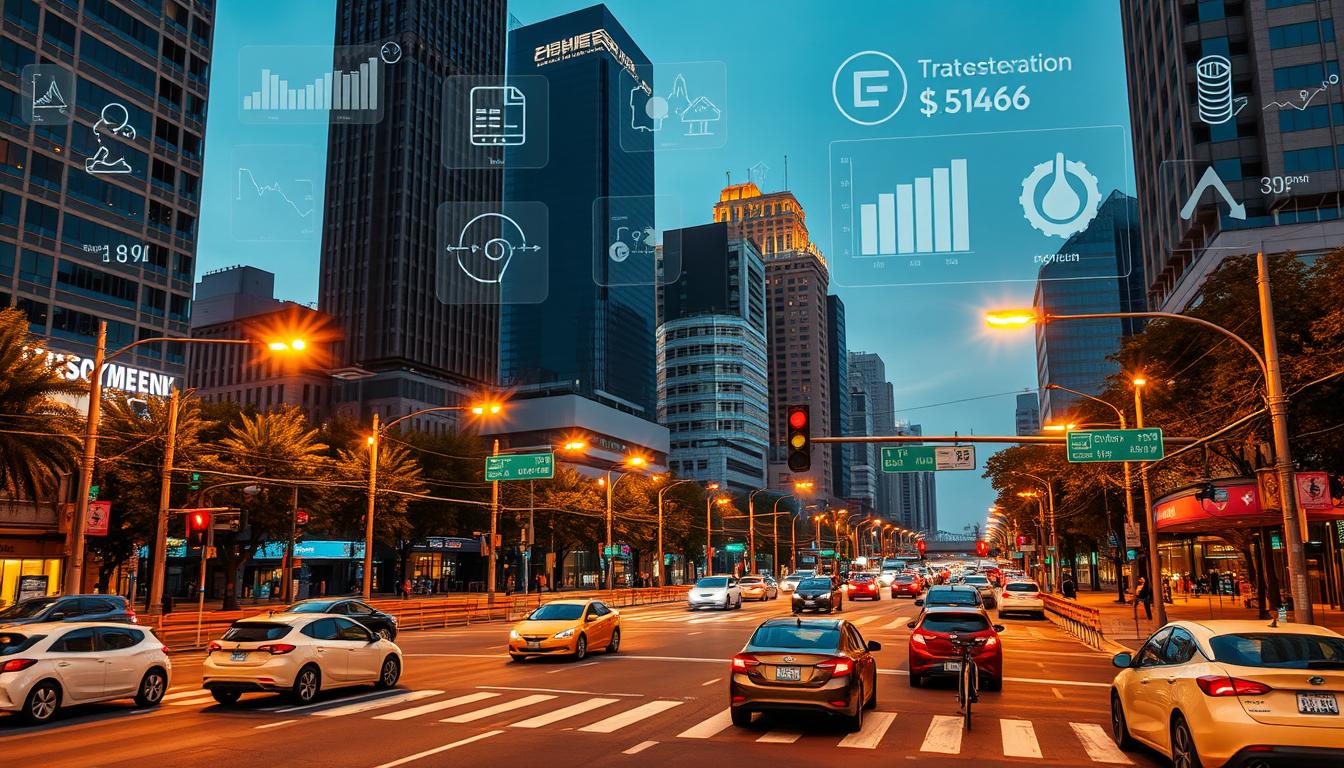
Phase Focus Outcome
Assessment Delay, safety, emissions Prioritized corridors
Pilot School zones, transit routes Proof of value
Integration Signals, sensors, analytics Unified operations
Deployment Training, sequencing Stable performance

Iottive can support pilots through full deployment with custom products, BLE integrations, field apps, and cloud dashboards for performance tracking.

Core Technologies You’ll Need for Intelligent Traffic Flow

New sensor stacks combine vision and radar to keep signals responsive in darkness and heavy rain.
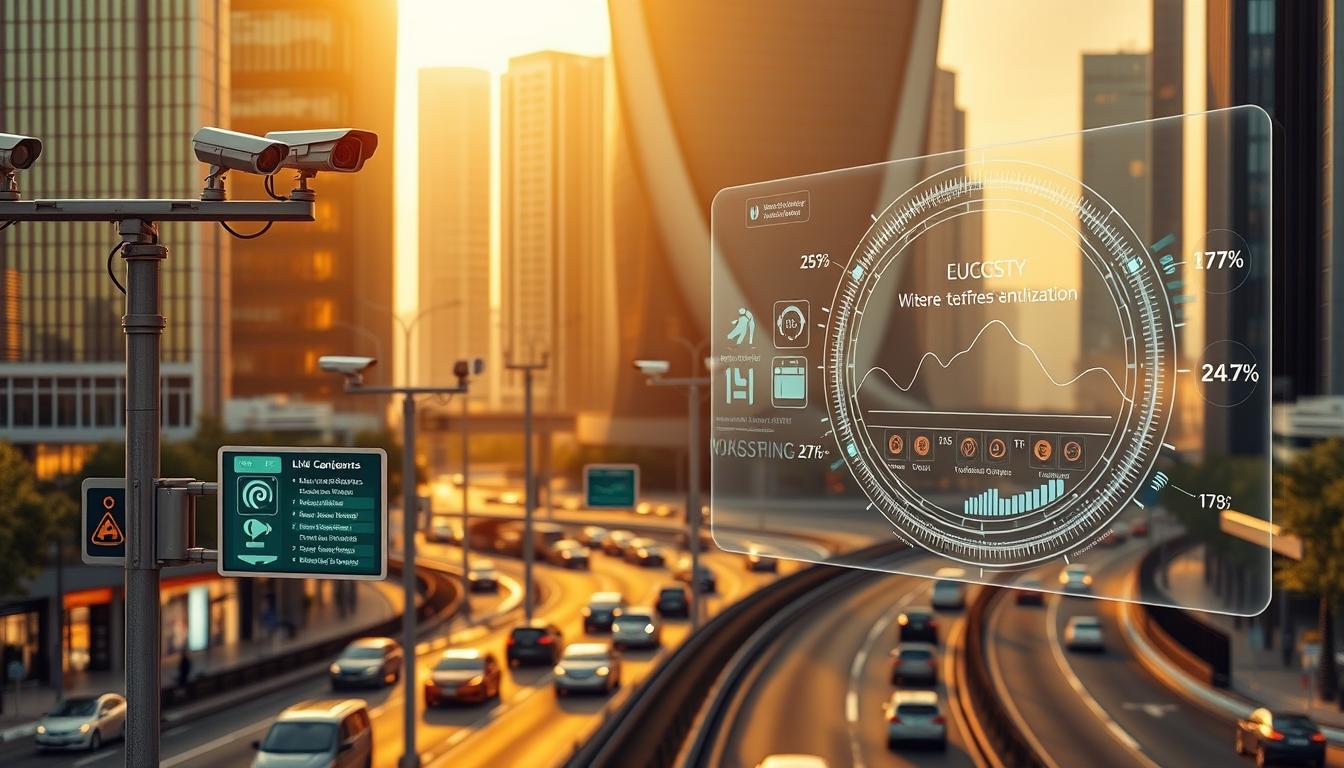
AI-powered sensors: Computer vision, HD3D radar, and multimodal detection

Vision plus radar improves classification, speed measurement, and night‑and‑rain robustness. Modern units fuse HD3D radar with video and run inference up to 20 times per second with accuracy near 98.7%.

These sensors spot pedestrians, bikes, and vehicles while reducing false detections in poor weather.

Adaptive signal control: Reinforcement learning and transit priority

Reinforcement learning tunes splits, offsets, and phases across corridors. The result: up to 25% lower travel time and 40% lower wait times on prioritized routes.

Edge computing and AIoT: Low-latency decisioning at the intersection

Edge inference in signal cabinets cuts latency for safety functions and keeps bandwidth use low. Local processing also keeps vital detections working when backhaul is limited.

Connected vehicles and V2I: Priority for buses and emergency response

V2I enables bus priority requests, EMS preemption, and advisory speed messages to smooth platoons and shorten response times for emergency vehicles.

Cloud platforms and mobile integration: Dashboards, APIs, and data lakes

Iottive designs AIoT sensor integrations, BLE apps for technicians, and cloud analytics with open APIs. Dashboards track KPIs, manage models, and store long‑term data for audits and planning.

Technology Primary Benefit Typical Impact
Radar + Vision sensors Robust detection day/night ~98.7% accuracy; 20 Hz processing
Adaptive signal systems Corridor-wide timing Up to 25% faster trips
Edge inference Low latency safety Reliable function in bad weather
V2I services Priority for buses/EMS Reduced response and dwell times

Data, Privacy, and Cybersecurity for Connected Traffic Systems

Protecting privacy begins at the point of capture, not after data leaves the device.

Data governance must be explicit: collect only what you need, set clear retention windows, and assign role-based access. Cities deploying cameras and sensors now publish retention policies and limit raw video storage for school zones and other sensitive areas.

AB 645 pilots in California show how policy and enforcement combine with privacy oversight. Bus-mounted enforcement programs in San Francisco and Oakland pair measurable safety gains with strict evidence-handling rules and audit logs.

Privacy-by-design

Use on-device anonymization, hashing, and aggregation to remove personally identifiable information before data leaves the field. On-device processing keeps sensitive details local while sending only aggregated metrics to the cloud.

Cyber resilience

Segment field networks, require certificate-based authentication, and run continuous monitoring with intrusion detection. Vendor obligations should include firmware signing, a secure development lifecycle, and third-party audits.

  • Define collection minimization, retention windows, and role-based access that match public expectations.
  • Adopt on-device redaction and aggregation to protect drivers and pedestrians in schools and hospitals.
  • Implement network segmentation, certificate auth, and continuous intrusion detection for critical systems.
  • Keep policy transparent; publish audit logs, evidence rules, and incident response plans.

Iottive supports privacy-by-design with on-device processing, anonymization, secure BLE/mobile integrations, and cloud security best practices to help cities deploy safe, resilient transportation solutions.

Measuring Impact: KPIs and outcomes smart cities should track

Measuring what matters lets agencies show progress to riders and policymakers.

Start with clear baselines and use consistent data so changes are verifiable. Dashboards should surface travel times, wait time, priority activations, and near-miss analytics.

Mobility and reliability

Core mobility KPIs include corridor travel time, intersection delay, reliability buffers, and on-time bus performance. Use travel and dwell-time analytics to refine signal priority and bus lane strategies.

Safety improvements

Track speeding prevalence, crash frequency and severity, and near-miss events detected by sensors. San Francisco’s bus-mounted enforcement cut transit lane violations by ~47%.

Economic and environmental gains

Quantify fuel savings, emissions reductions, and cost avoidance from smoother flow. LA’s ATSAC reported a 32% delay drop and a 3% cut in emissions; San Jose saw 50%+ faster bus travel and 15% ridership growth.

  • Measure equity outcomes across neighborhoods and high-injury networks.
  • Monitor operational KPIs: sensor uptime, signal availability, and mean time to repair.
  • Link KPIs to phases: pilot baseline, post-deployment delta, and year-over-year change.

Iottive’s cloud dashboards and mobile apps can export reports for agencies and the public, making results transparent and actionable for city leaders and stakeholders.

Why Partner with Iottive for End-to-End IoT/AIoT Traffic Solutions

Iottive helps cities stitch field devices, cloud analytics, and mobile workflows into one reliable system.

Our expertise spans BLE app development, cloud and mobile integration, device firmware, and secure platforms. We deliver end-to-end solutions that connect sensors, cameras, lights, and controllers with dashboards and open APIs.

From sensors to apps

We build custom platforms and apps for maintenance crews, priority request workflows, and public mobility dashboards. Our teams prototype hardware, run lab tests, and do field calibration so systems work from day one.

Industries served and next steps

Iottive serves healthcare, automotive, smart home, consumer electronics, and industrial sectors. We support pilots, scaling plans, cybersecurity hardening, and training for ongoing operations management.

  • End-to-end capabilities: sensor integration, firmware, BLE connectivity, mobile apps, and secure cloud services.
  • Interoperability: systems that link signals, sensors, cameras, and analytics into one operations view.
  • Lifecycle support: prototyping, lab validation, field deployment, analytics, and continuous optimization.

Discuss corridor priorities, safety hotspots, and road challenges with our team. Visit www.iottive.com or email sales@iottive.com to start a discovery session.

Conclusion

Cities now turn intersections into responsive networks that cut delays and protect people. California examples show this works: LA’s ATSAC cut delay by 32%, San Jose boosted bus speeds over 50%, and AB 645 pilots guide policy and practice. These wins prove that intelligent traffic solutions can improve daily mobility and reduce emissions.

Smart traffic management and adaptive signals deliver measurable safety and efficiency gains for vehicles, buses, and pedestrians. Clear KPIs and public reports keep programs accountable and fundable.

Move from planning to pilots on high‑impact corridors. For end‑to‑end support to plan, pilot, and scale programs that deliver measurable performance, contact Iottive at www.iottive.com or sales@iottive.com.

FAQ

How is artificial intelligence changing intelligent traffic management in 2025?

AI is enabling adaptive signal timing, real-time route optimization, and predictive incident detection. Machine learning models forecast congestion and adjust signal plans to reduce delays, while edge analytics process sensor and camera inputs at intersections to cut latency. The result is smoother vehicle flow, improved transit reliability, and lower emissions.

Why is 2025 a turning point for urban mobility in U.S. cities?

Cities now combine matured sensor stacks, more affordable connectivity, and proven algorithms. Federal and state funding plus pilot successes in major metros have accelerated deployments. This convergence makes system-scale upgrades financially and operationally viable, letting agencies move from pilots to network-wide implementations.

What components make up the modern stack for connected signal systems?

The stack includes adaptive signal controllers, road-side sensors (cameras, radar, lidar), edge compute nodes, vehicle-to-infrastructure links, and cloud analytics. Integration layers tie these elements into traffic management centers and transit operations to enable coordinated decisioning across corridors and modes.

How do adaptive, ML-driven signal systems differ from fixed-time signals?

Fixed-time plans run on static schedules. Adaptive systems ingest live data and use reinforcement learning or optimization to change timings dynamically. They respond to demand fluctuations, incidents, and transit priority requests, improving throughput and reducing idle time at intersections.

What types of sensors are used on instrumented corridors?

Deployments use video analytics, HD radar, lidar, loop detectors, and environmental sensors. Multimodal detection captures pedestrians, cyclists, buses, and private vehicles. Combining modalities improves accuracy for vehicle counts, speed estimates, and anomaly detection.

How does vehicle-to-infrastructure (V2I) data improve operations?

V2I provides direct vehicle telemetry and priority requests from buses or emergency vehicles. That data enables faster, more precise signal adjustments, smoother transit corridors, and enhanced safety features like speed warnings and red-light preemption.

What lessons have California deployments provided for other cities?

California projects demonstrated measurable gains: large-scale adaptive systems cut delays and emissions, corridor pilots with high-resolution sensing validated bus priority benefits, and enforcement camera pilots showed how automated speed programs can reinforce safety goals. These real-world results guide procurement and scaling strategies.

Can you give examples of measurable outcomes from deployments?

Examples include substantial delay reductions across urban networks, faster bus travel times with signal priority, and modest emissions cuts tied to smoother flow. Transit agencies also report improved on-time performance and rising ridership where priority was implemented.

What steps should a city follow to implement an end-to-end intelligent flow program?

Start with a needs assessment and clear goals, run targeted pilots for proof of value, integrate signals, sensors, and vehicle data into a unified platform, secure partnerships and funding, train operations staff, and then iterate through continuous tuning using live and historical data.

How important are pilots and proof-of-value projects?

Pilots reduce risk by validating technology, vendor claims, and operational impacts in a confined area. They help define measurable KPIs, inform procurement specifications, and build stakeholder support before network-wide rollout.

What core technologies are essential for improving intersection performance?

Key elements include computer vision or radar detection, adaptive signal controllers with modern APIs, low-latency edge compute, V2I communications for priority, and cloud platforms for analytics, reporting, and integration with transit management systems.

How should agencies handle data governance and privacy?

Establish clear policies on what data to collect, retention windows, and role-based access. Apply privacy-by-design practices like anonymization and on-device processing for identifiable data. Maintain transparency with the public about data use and protections.

What cybersecurity measures are recommended for connected intersection networks?

Employ network segmentation, encryption, regular vulnerability scanning, intrusion detection, and strict patch management. Follow federal and state guidance and run incident response drills to ensure resilience against breaches.

Which KPIs best capture the impact of intelligent flow systems?

Track travel time and variability, intersection delay, transit on-time performance, crash rates and near-miss events, fuel consumption or emissions estimates, and cost avoidance metrics tied to reduced congestion and improved reliability.

How can partnerships accelerate deployment and lower costs?

Collaborations with universities, regional agencies, technology vendors, and federal grant programs bring technical expertise, shared infrastructure, and funding. Public–private partnerships can speed procurement, provide managed services, and reduce upfront capital burdens.

What kinds of organizations does Iottive work with for end-to-end solutions?

Providers like Iottive partner with city transportation departments, transit agencies, healthcare systems, automotive firms, consumer electronics companies, and industrial operators to deliver integrated sensor platforms, BLE app development, and cloud/mobile integration across deployments.
Let’s Get Started

How IoT-Powered Sports Wearables Are Transforming Athletic Performance

It started on a practice field at dusk: a veteran coach watched a starter slow his sprint by a few steps and felt something was off. The next day, sensor data showed rising fatigue and an irregular impact pattern. That early flag led to rest, targeted therapy, and a saved season.

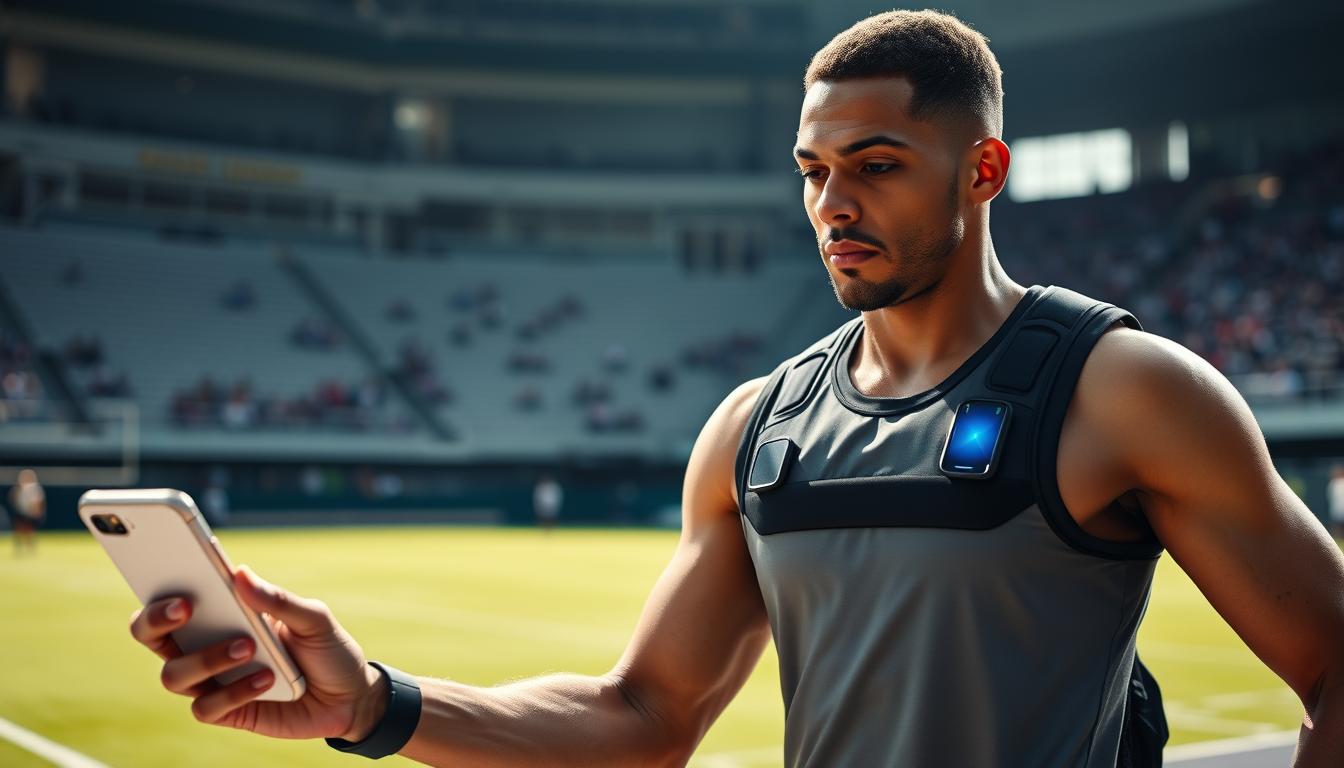
Today, internet things link tiny sensors, BLE radios, and cloud platforms to turn raw signals into clear guidance. This flow — measure, analyze, act — helps teams lower injury risk and boost performance by giving coaches timely, actionable information.

Iottive supports this shift by building end-to-end IoT and BLE solutions that unite data from many devices into one source of truth. The result is real-time data streams that improve health, speed recovery, and inform smarter training plans.

Key Takeaways

  • Connected sensors capture heart rate, movement, and impact forces for early risk detection.
  • Real-time data replaces guesswork, giving coaches millisecond-level insights.
  • Iottive delivers BLE, cloud, and mobile integration to unify device information.
  • Continuous monitoring supports proactive care and reduces missed games.
  • The guide will cover tech stacks, real examples, and a practical adoption roadmap.

The state of IoT in sports today: real-time, data-driven, and athlete-first

Today, teams rely on constant telemetry to turn daily observations into precise coaching actions. This athlete-first approach centers on continuous measurement that supports better health and higher performance.

From intuition to insight: measuring what matters in the present

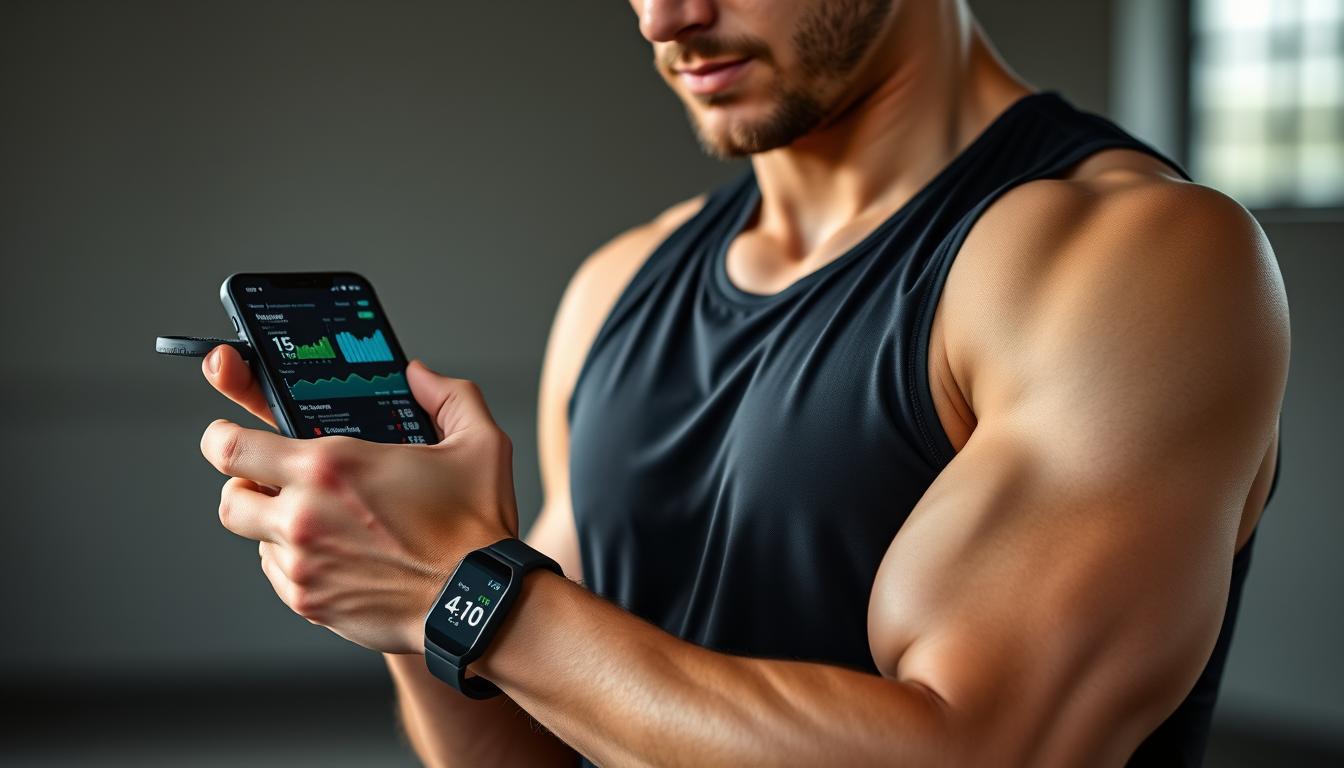
Wearables and connected devices stream heart rate, motion, and workload into dashboards for staff and athletes. Continuous monitoring replaces one-off checks and makes training decisions measurable.

Why timing, precision, and milliseconds now decide outcomes

Low-latency links and edge analysis let coaches act in real time during practice and games. Small timing wins — sub-second alerts and fast analysis — can change substitutions, drill intensity, and recovery plans.

  • Continuous visibility lets coaches tailor workloads across training and competition.
  • Real-time data and analysis remove guesswork and enable session-by-session adjustments.
  • Reliable connectivity and strong device management keep signals flowing during travel and play.
  • Structured analysis turns high-volume feeds into simple, athlete-centered guidance for safer, proactive care.

The role of technology is to augment coaching judgment, not replace it. When teams embed these systems into daily routines, every level — from elite clubs to youth fitness programs — benefits.

What are IoT-based Smart Sports Wearable Devices with Mobile App Integration, AI sports?

A network of sensors, radios, and cloud tools converts raw activity into clear coaching cues. Define these systems as connected wearable devices that capture vital signs and motion, then send streams to apps and analytics platforms.

Core components: sensors, connectivity, cloud, and mobile apps

The architecture pairs on-body sensors and low-energy radios to a phone or edge gateway. That link moves sensor data into cloud pipelines for storage and analysis.

Firmware, secure BLE protocols, streaming APIs, and dashboards make up the rest of the system. Iottive specializes in BLE app development and cloud & mobile integration to tie these pieces together.

Continuous feedback loop: measure, analyze, act

Analysis turns noisy signals into simple feedback: training targets, technique cues, and health alerts. Coaches and athletes see the same insight in the app, which closes the loop and speeds adjustments.

Design and development span prototyping sensor integrations to fleet scale and OTA updates. The result supports elite performance and everyday fitness use while keeping health front and center.

Key athlete metrics that wearables track for performance and safety

Key biological and mechanical metrics reveal when to push and when to rest. That clarity comes from combining physiological signals and motion data into daily readiness scores.

Heart rate and heart rate variability (HRV) provide a window into autonomic balance. Coaches use rate and HRV trends to separate stress from recovery and set daily loads.

Oxygen saturation and temperature trends can flag dehydration or exertional strain. These signals help staff adjust hydration plans and cooldowns before small problems grow.

“Combining heart, rate variability, and movement data gives a clearer picture of fatigue than any single metric.”

Motion metrics—acceleration, deceleration, and asymmetry—spot workload spikes and faulty mechanics. Footwear sensors and torso units measure impact forces to trigger immediate checks after heavy collisions or hard landings.

  1. Sleep and fatigue scores guide session intensity and recovery choices.
  2. Long-term tracking defines baselines and catches subtle drops in performance.
  3. Comfortable wearable technology encourages consistent use so data stays reliable.
Metric What it shows Practical action
Heart rate / HRV Autonomic balance, stress vs. recovery Adjust training load, plan recovery
Oxygen / Temp Hydration and exertional strain Modify fluids, extend cooldown
Movement & Impact Mechanics, collision risk Technique correction, sideline checks
Sleep & Readiness Recovery quality and readiness levels Change session intensity, prioritize rest

Iottive integrates BLE sensors and simple dashboards to capture high-fidelity heart rate, HRV, oxygen, movement patterns, and sleep. The goal is clear: turn monitoring data into color-coded guidance that coaches and an athlete can act on quickly.

Inside the tech stack: BLE sensors, edge devices, cloud analytics, and mobile UX

A dependable tech stack turns raw sensor streams into actionable coaching cues in seconds.

Why BLE dominates on-body links: low power, stable pairing, and enough throughput for motion and heart-rate sampling make it the default choice for athlete monitoring.

Edge aggregation and low-latency routing

Gateways and edge boxes collect multiple sensor streams when phones are absent or networks lag. They buffer packets and maintain continuity so monitoring stays reliable during drills.

5G and on-field decisions

5G backhaul moves time-sensitive telemetry to coaching tools fast. That speed supports substitution calls and in-play form prompts that depend on near-instant feedback.

Cloud pipelines and model training

Cloud platforms ingest, normalize, and store large historical records. These pipelines allow model training for workload forecasting, anomaly detection, and personalized recommendations.

Secure app feedback and UX

Secure mobile integration converts complex feeds into clear coaching actions. Minimal taps, glanceable visuals, and contextual alerts keep athletes focused and safe.

  • Device management: OTA updates, provisioning, and diagnostics keep fleets healthy and reduce downtime.
  • Interoperability: Open APIs and SDKs ease integration with team systems and video tools.
  • Sampling tradeoffs: Pick rates that balance fidelity and battery life for long training use.

Iottive delivers BLE app development, cloud and mobile solutions that connect low-power sensors to robust pipelines and athlete-centered apps for better health and performance.

AI’s role in turning raw signals into actionable coaching intelligence

Raw sensor streams only become helpful when systems turn them into clear, timely coaching cues. Iottive builds artificial intelligence solutions that fuse on-body data and cloud models to detect meaningful patterns, predict risk, and automate concise feedback loops for coaches and athletes.

Pattern detection for early risk flags and workload optimization

Pattern recognition finds abnormal loads and asymmetries before they worsen. Algorithms run continuous analysis on heart, motion, and impact traces to flag unusual trends. That early flag lets teams change training loads or technique immediately.

Personalized training plans and adaptive recovery guidance

Models use longitudinal data to set individual targets and microcycles. Day-to-day readiness scores drive adaptive recovery guidance—rest, mobility, or modified conditioning—so health and performance improve together.

  • On-device inference gives instant cues during drills to cut latency.
  • Feedback is specific and brief—one cue at a time—to boost adherence under pressure.
  • Continuous model evaluation and coach override keep recommendations transparent and safe.
Capability What it delivers Coach action
Pattern detection Early risk flags from workload trends Adjust session intensity or technique
Personalization Tailored targets and microcycles Modify plans for each athlete
Adaptive recovery Day-by-day readiness guidance Prescribe rest, mobility, or light conditioning
Privacy & edge processing Minimal data sharing, local inference Maintain trust and reduce latency

Result: technology that augments coach judgment, improves health, and elevates performance without adding data-science overhead.

From prevention to protection: how wearables reduce sports injuries

Preventing injuries starts by turning motion into timely alerts that coaches can act on. Real-time biomechanical monitoring finds technique faults and gives short cues that lower joint load and muscle strain.

Biomechanics monitoring to correct form before damage occurs

Technique cues appear as brief feedback when a repetition creates unsafe angles or asymmetry. That lets staff correct form before tissue breakdown starts.

Concussion and impact sensing for rapid sideline decisions

Impact sensors register force and direction against thresholds. When collisions exceed limits, medical staff receive immediate alerts for on-field evaluation and faster return-to-play choices.

Overtraining detection using HRV, strain, and fatigue signals

Heart rate and rate variability trends, plus load tracking, reveal rising stress and fatigue. Teams scale training days and adjust volume to reduce overuse and soft-tissue injury risk.

  • Track cumulative loads to avoid sudden spikes that raise injury risk.
  • Automatic logs and clear alerts simplify athlete and coach workflows for better compliance.
  • Coordinated sharing among coaching, medical, and performance staff speeds safer decisions.

Iottive integrates concussion-capable sensors, workload tracking, and HRV analytics into unified workflows. This coordinated data flow shortens detection times, speeds recovery planning, and protects athlete health so key players stay available during critical periods.

Real-world adoption: pro and elite examples shaping best practices

Pro teams now turn field events into actionable signals that guide real-time care and strategy. These examples show how technology and workflows combine to protect athletes and raise performance.

NFL helmet impact systems

Riddell InSite captures magnitude and location of head impacts. That impact data speeds sideline checks and shortens time to clinical decisions.

NBA player-load tracking

NBA clubs use Catapult to monitor load and fatigue levels. Coaches align practice intensity to game schedules using daily tracking and thresholds.

European football GPS tracking

Clubs deploy GPS wearables to log distance, sprint counts, and acceleration. That tracking informs substitutions and training volumes every match day.

  • Fitness trackers and sensors track heart rate and oxygen for health checks.
  • Patterns in elite data—spikes or asymmetries—predict performance drops and higher injury risk.
  • Unified dashboards let coaches, medics, and analysts act from the same data.
  • Automated capture during practice improves compliance and data quality.
  • Shoe sensors and smart devices refine mechanics to reduce repetitive strain.
Example What it measures Typical use
NFL helmets (Riddell) Impact magnitude & location Immediate concussion protocol
NBA load systems (Catapult) Player load & fatigue Adjust practice intensity
European GPS units Distance, sprints, accel. Substitution & workload planning

Iottive’s end-to-end expertise maps these elite use cases into unified pipelines. By integrating sensor data, cloud dashboards, and clear clinician views, teams scale best practices from pro squads to college and youth programs.

Smart equipment and connected training environments

Balls, bats, and shoes now contain tiny sensors that log technique, rhythm, and landing forces. These tools turn practice into measurable skill work. Iottive builds custom products and cloud backends to make that logging invisible and reliable.

Sensors in balls, bats, and shoes for technique and gait analysis

Embedded sensors quantify tempo, angle, and force to speed skill acquisition. Shoe sensors provide gait analysis and spot asymmetry or poor foot strike.

That analysis points to drill changes or footwear swaps. Impact monitoring during plyometrics helps manage lower-limb load and reduce injury risk.

Connected gyms: automated logging, compliance, and oversight

Connected gyms automate set and rep detection, log power output, and track adherence. Data streams from machines and wearables merge to show activity quality and performance progress.

Benefits: invisible logging, coach dashboards, alerts for out-of-prescription lifts, and patterns that guide warm-up corrections. Development choices focus on durability, battery life, and calibration for high-intensity use.

Tele-exercise and remote coaching: extending the training arena to anywhere

Coaches can now deliver structured, data-driven workouts anywhere, backed by live biometrics and clear guidance.

Mobile platforms and wearables enabling guided, personalized sessions

Tele-exercise combines apps, wearable devices, and environmental sensors to run guided workouts and remote monitoring. This setup lets coaches prescribe sessions that match an athlete’s readiness and schedule.

Guided sessions use heart rate, heart rate variability, and oxygen checks to tailor intensity. Activity logs and progress dashboards keep both coach and athlete accountable outside the facility.

AI-driven form feedback and adaptive intensity for at-home athletes

Artificial intelligence analyzes movement in real time to give short, actionable feedback during reps. That real time cueing helps correct form and reduce injury risk.

Adaptive intensity adjusts targets mid-session based on live monitoring and historical analysis. Simple cues during exercise and brief post session summaries reinforce learning and drive adherence.

  • Remote sessions integrate calendars, messaging, and video for a cohesive coaching flow.
  • Fitness trackers and smart devices broaden access and support varied training locations.
  • Safety thresholds alert coaches when high-intensity efforts exceed safe limits.

Result: tele-exercise expands reach without lowering quality. Iottive delivers mobile development and AIoT integration so coaches can run personalized programs with consolidated progress views, live feedback, and reliable monitoring of health and activity.

Designing athlete-centric mobile app experiences that drive adherence

Athlete-focused apps turn sensor streams into clear, daily prompts that athletes actually follow.

Iottive designs BLE-connected UX that unifies sensor data into a simple daily view. Glanceable tiles show today’s plan, readiness levels, and recovery recommendations tied to sensor inputs.

Real-time feedback, alerts, and recovery recommendations

Real-time cues are short and context-aware. Alerts trigger only when a threshold is met so athletes avoid notification fatigue.

Automated logging captures heart rate, movement, and activity so recovery advice reflects current condition. Suggestions are actionable: rest, mobility, or modified sessions.

Motivation loops: goals, progress visuals, and smart nudges

Clear goals, streaks, and progress visuals create reinforcement loops. Smart nudges—timed reminders and positive micro-feedback—boost adherence and daily fitness.

Apps also unify multiple devices into one summary and offer coach monitoring views for adherence and intensity compliance.

  • Offline support and battery-efficient sampling help reliable use on the road.
  • Simple tracking for pain, sleep, and stress gives richer health context.
  • Privacy controls let athletes manage data sharing inside a team.

Development choices focus on accessibility, calendar sync, and messaging to reduce friction. The result is a practical solution that turns monitoring into better performance and lasting habit change.

Data governance, accuracy, and privacy in sports wearables

Protecting athlete information starts with clear rules on collection, storage, and access. Athlete physiological data is highly sensitive and demands strict governance that spells out data minimization, retention policies, and audit logs.

Calibration and reliability matter. Rigorous calibration protocols, validation studies, and periodic accuracy checks reduce false positives and missed events. Regular device maintenance preserves trust across seasons.

Security by design

Iottive applies security by design across IoT and AIoT solutions: encryption in transit and at rest, hardware root of trust, secure provisioning, role-based access, and compliance-aligned architectures. Cloud practices include segmented VPCs, key management, and continuous monitoring to protect system scale.

Clear data-sharing policies ensure consent and transparency between athletes, coaches, and medical staff. Risk assessments and incident response plans let organizations act fast when quality or security issues appear.

  • Explain what is collected, why, and how it benefits athlete health and performance.
  • Balance rich collection and privacy to meet operational and accessibility challenges.
  • Maintain audit logs and periodic reviews so analysis stays reliable and defensible.

Result: strong governance and measurable safeguards build trust, enabling broader adoption of wearables and internet things while protecting athlete information and reducing risk.

Implementation roadmap: from pilot to scale in teams and programs

Start pilots by mapping clear goals and measurement windows so every stakeholder knows what success looks like. Define baselines for performance, injury risk, and recovery timelines before any procurement or development work begins.

Defining KPIs: performance, injury risk, and recovery benchmarks

Choose three primary KPIs that a pilot will move: performance trends, injury-reduction rates, and days-to-recovery. Track these against a baseline and set short timelines for evaluation.

Device selection, BLE integration, and cloud/mobile setup

Select devices for accuracy, comfort, and battery life. Plan BLE integration and app workflows that make monitoring natural during practice and fitness sessions.

Change management: educating athletes, coaches, and medical staff

Deliver role-based training that covers device use, metric interpretation, and escalation paths. Establish governance early: consent, privacy, and access controls to protect athlete health and data.

  • Run a structured pilot with timelines, baselines, and success criteria.
  • Iterate on analysis and alerts to cut noise and boost actionability.
  • Prepare procurement, device management, and support for scale.

Iottive supports pilots through scale: device selection, BLE development, cloud and mobile integration, security, and team training across healthcare and sports programs.

Future trends: 5G, edge AI, AR/VR overlays, and expanding accessibility

Edge compute and next‑gen connectivity are changing how coaches and athletes get feedback. Iottive’s AIoT roadmap highlights edge inference, 5G-enabled streaming, and AR interfaces that deliver instant, on-field guidance and immersive visualizations.

On-device intelligence for instant coaching cues

On-device models run pattern detection—joint angles, bar paths, and ground contact times—so corrections appear without a cloud round trip. That reduces latency and preserves privacy by keeping sensitive signals local.

Immersive stats and technique visualization for athletes and fans

5G uplinks improve uplink reliability and throughput, enabling richer real-time data streams during training and competition. AR overlays show technique and workload in context, engaging athletes and broadcast audiences.

Impact: these solutions converge across connected equipment, edge analysis, and intuitive UX to boost performance and widen access. As costs drop, more clubs and academies can deploy capable systems, and broadcasters can weave live athlete stats into storytelling.

Cost, ROI, and scaling considerations for organizations

Clubs that track cost drivers and ROI early avoid surprises when they expand monitoring across sites.

Break down the main costs: purchase of devices, connectivity, cloud storage and compute, software licenses, ongoing support, and regular refresh cycles. Budget for training and change management so adoption sticks.

Measure return by outcome: fewer injuries, faster recovery, steadier performance, and smarter training efficiency drive savings. Use availability, minutes lost to injury, and objective performance KPIs to calculate rate of return.

  • Start small: pilot high-impact teams or use cases to prove value before wider rollouts.
  • Plan for scale challenges: procurement, inventory control, fleet support, and staff training.
  • Adopt a robust data and information strategy to avoid vendor lock-in and protect long-term health records.
KPI What to track Impact on ROI
Availability Players fit for selection Reduced games missed
Minutes lost Time sidelined per season Labor & medical cost savings
Performance metrics Objective output per session Training efficiency gains

Finally, weigh development of custom features against their operational benefit. Predictive monitoring lowers catastrophic risk and improves compliance. Balance accuracy, privacy, and usability to ensure solutions succeed across health and fitness programs.

Iottive: End-to-end IoT and AIoT development for smart sports wearables

From prototype sensors to fleet-scale systems, Iottive builds complete pipelines that speed adoption and cut operational risk. The team unifies firmware, BLE connectivity, cloud analytics, and athlete-focused UX into one delivery flow.

Expertise and core services

IoT & AIoT solutions span device firmware, BLE application development, and cloud pipelines for reliable data capture. Iottive offers development and integration services that turn prototypes into production platforms.

Custom products and use cases

Custom development covers connected equipment, readiness analytics, and coaching dashboards that deliver real-time coaching feedback using artificial intelligence models. An example ties sensors, data pipelines, and inference to give instant cues during training.

Industries, security, and onboarding

Iottive serves Healthcare, Automotive, Smart Home, Consumer Electronics, and Industrial IoT. Security-by-design and healthcare-grade data governance protect athlete health records. Pilot design, KPI mapping, and change management ease deployment and adoption.

Ready to start: contact www.iottive.com or sales@iottive.com to scope development, prototyping, and full-scale rollout of wearable technology and smart devices for fitness and activity tracking.

Conclusion

High-frequency signals are finally becoming usable information for everyday training and recovery decisions. Connected devices and wearables turn continuous data into simple, timely feedback that improves on-field performance and daily fitness choices.

At the center is athlete health and steady recovery. Personalization, safety monitoring, and readiness checks raise competitive levels while protecting long-term availability.

Real progress needs regular use, clear workflows, and measurable KPIs. Start small: pilot focused activity, track outcomes, and scale an architecture that protects information and privacy.

Iottive can help teams translate this guide into action through IoT strategy, BLE product development, and secure cloud solutions. Contact www.iottive.com | sales@iottive.com.

FAQ

What metrics do modern wearables track to improve athletic performance?

Most current wearables monitor heart rate, heart rate variability (HRV), blood oxygen (SpO2), movement patterns (accelerometry and gyroscope), impact forces, sleep stages, and activity workload. Combined, these metrics help coaches assess stress, recovery, readiness, and injury risk in real time.

How does low‑latency connectivity like BLE or 5G affect coaching decisions?

Low‑latency links deliver near‑instant telemetry so coaches and edge AI can issue cues during training or competition. BLE suits on‑body sensors for short range, while 5G and edge processing enable fast model inference and live tactical feedback for on‑field decisions.

Can wearables detect concussion or head impacts reliably?

Impact sensors in helmets and mouthguards can flag high‑g events and concussion risk patterns. They provide rapid alerts but should complement clinical assessment, video review, and sideline protocols rather than replace medical judgment.

How does heart rate variability (HRV) help prevent overtraining?

HRV reflects autonomic balance. Drops in HRV over days often signal elevated stress or insufficient recovery. Tracking HRV trends lets practitioners adjust load, schedule recovery, and reduce overtraining and illness risk.

What role does edge AI play versus cloud analytics?

Edge AI runs inference on or near the device for instant alerts and reduced latency. Cloud analytics handle heavy model training, long‑term trend analysis, and multi‑athlete datasets. A hybrid approach gives both speed and depth.

How accurate are consumer fitness trackers compared to medical sensors?

Consumer trackers offer useful trends but vary in absolute accuracy for metrics like SpO2 and VO2 estimates. Clinical sensors and validated lab tests remain gold standards. Teams typically validate devices against reference equipment before deployment.

What privacy and data governance measures should teams enforce?

Implement encryption in transit and at rest, strict role‑based access controls, consented data sharing, and compliance with HIPAA or regional laws. Clear data retention policies and athlete opt‑in/opt‑out choices are essential.

How do AI models detect early injury risk from wearable data?

Models learn patterns in workload spikes, asymmetries in movement, declining HRV, and repeated high impacts. When these features cross validated thresholds, the system issues risk flags so coaches can modify training or arrange assessments.

What is the typical implementation roadmap for teams adopting connected wearables?

Start with a pilot to define KPIs (performance, injury incidents, recovery metrics), select validated devices, integrate BLE and cloud pipelines, train staff on interpretation, then scale while monitoring ROI and adherence.

How do mobile apps increase athlete adherence to training programs?

Effective apps provide timely feedback, clear progress visuals, personalized goals, smart nudges, and recovery recommendations. Gamification, social features, and coach messages also boost engagement and compliance.

Can wearables personalize training plans for each athlete?

Yes. By combining physiological signals, workload history, and performance outcomes, AI can generate individualized sessions and adaptive recovery guidance that adjust as the athlete responds.

What are common technical challenges when deploying large fleets of sensors?

Challenges include battery life management, reliable BLE pairing, data synchronization, firmware updates, and ensuring consistent sensor placement. Robust QA, automated provisioning, and device lifecycle policies reduce failures.

How do teams validate the quality of sensor data before using it for decisions?

Use calibration routines, baseline comparisons to lab measures, signal quality scoring, and cross‑validation across sensors. Establish thresholds for acceptable data and reject noisy or incomplete streams.

Are connected balls, bats, and shoes useful for technique improvement?

Embedded sensors provide stroke, spin, release point, strike location, and gait metrics. Coaches use these objective signals to refine technique, quantify asymmetries, and monitor equipment‑related trends over time.

What future trends will most impact athlete monitoring?

Expect on‑device AI for instant coaching cues, tighter 5G/edge integration for stadium‑scale telemetry, AR overlays for technique visualization, and broader accessibility as costs drop and standards improve.

How should organizations measure ROI for wearable programs?

Track reductions in injury rates, days lost, performance improvements, athlete availability, and operational efficiencies. Combine quantitative KPIs with qualitative feedback from athletes and staff to assess value.

How do wearables support remote coaching and tele‑exercise?

Real‑time metrics and video coupling enable guided sessions, automated form feedback, and adaptive intensity adjustments. Coaches can monitor load and recovery across distributed athletes and deliver scalable, personalized programs.

Which industries beyond professional teams benefit from these solutions?

Healthcare, rehabilitation, consumer fitness, military training, and occupational safety all leverage the same sensor, cloud, and app stack to monitor health, performance, and risk at scale.

How can smaller clubs or schools adopt this technology affordably?

Start with focused pilots using validated consumer or semi‑pro devices, prioritize high‑impact metrics (load, HRV, impacts), leverage shared cloud services, and partner with vendors who offer scalable pricing and support.

Who provides end‑to‑end development and integration services for these systems?

Specialist firms deliver BLE firmware, embedded sensors, cloud analytics, and mobile app development. For example, Iottive offers IoT and AIoT solutions, BLE app development, and custom device integration for sports and health use cases.

Let’s Get Started

Remote Patient Monitoring with IoT: The Future of Connected Care

When a night nurse spent 20 minutes searching for an oxygen unit, a shift of care slowed and costs rose. That small delay illustrated a bigger issue: fragmented workflows and missing devices cost hospitals time and money.

Modern connectivity changes the scene. By linking wearables, clinical gear, and staff tools, iot healthcare solutions deliver continuous vital signs and real-time data to clinicians. This reduces errors, speeds decisions, and improves patient care.

Reliable wireless range, higher transmit power, and strong receiver sensitivity keep signals steady across thick walls and metal infrastructure. Security matters too; hardware-level certifications like PSA Level 3 Secure Vault protect information in regulated markets.

For U.S. leaders evaluating smart hospital IoT systems, expect seamless EHR integration, secure device-to-cloud workflows, and clear ROI from fewer readmissions and faster clinician response. Iottive brings BLE app development, device integration, and custom platforms to guide pilots from proof to scale.

Key Takeaways

  • Connected devices deliver continuous vital signs and timely data for better decisions.
  • Robust RF design and high TX power improve reliability in dense hospital environments.
  • Security at the SoC level is essential for compliance and trust.
  • Integrated platforms reduce clinician time lost to manual tasks and device searches.
  • Choose partners that offer BLE apps, cloud integration, and end-to-end support like Iottive

Why IoT Patient Monitoring Matters Now in the United States

Across American hospitals, limited resources and heavier caseloads create a fast-growing need for real-time connectivity. Rising volumes and clinician burnout mean leaders must reclaim staff time and improve workflow efficiency without lowering care quality.

“An average $500,000 is lost for every 20 minutes removed from a nurse’s shift.”

Quantify the urgency: connected solutions restore minutes and hours to staff schedules by automating routine tasks and reducing time spent locating equipment. This directly protects clinical capacity and facility budgets.

From wearables to clinical-grade devices: the market moved beyond fitness trackers to systems that track heart rate, ECGs, and glucose trends. Continuous data enables timely interventions and lowers readmission risk.

Operationally, networks reveal staff movements and patient journeys so leaders can cut idle time and streamline processes across facilities. Providers gain better situational awareness and can prioritize care for higher-need patients.

Iottive builds Bluetooth-connected solutions and custom platforms that help U.S. healthcare providers modernize patient care and operations, from pilot projects to full-scale deployment.

Core Benefits of IoT Patient Monitoring and Smart Hospital IoT Systems

When devices share reliable signals, teams spot deterioration before it becomes an emergency. That shift from intermittent checks to continuous insight improves outcomes and reduces avoidable readmissions.

Proactive care

Real-time vital signs — heart rate, blood pressure, oxygen saturation, and glucose levels — feed alerts and analytics. Early detection of abnormal signs prompts timely interventions and cuts readmission risk.

Operational gains

Automated tracking of equipment and asset locations saves staff time and lowers losses. Streamlined workflows free clinicians to spend more time on direct care, improving overall efficiency.

Data accuracy and accessibility

Proactive care

Real-time vital signs — heart rate, blood pressure, oxygen saturation, and glucose levels — feed alerts and analytics. Early detection of abnormal signs prompts timely interventions and cuts readmission risk.

Operational gains

Automated tracking of equipment and asset locations saves staff time and lowers losses. Streamlined workflows free clinicians to spend more time on direct care, improving overall efficiency.

Data accuracy and accessibility

Automated capture removes transcription errors. Clean data flows into EHRs so clinicians and providers access reliable information to guide decisions and counseling.

Patient experience

At-home and in-clinic tools make care more convenient and safer. Personalized trends let teams tailor treatment for chronic conditions like diabetes and hypertension.

Iottive’s end-to-end IoT/AIoT expertise ensures benefits are realized across device connectivity, cloud integration, and user experience.

High-Impact Use Cases Buyers Should Prioritize

Targeted deployments deliver measurable gains when buyers focus on high-impact clinical and operational use cases. Start with projects that reduce readmissions, cut asset loss, and speed response times.

Clean data flows into EHRs so clinicians and providers access reliable information to guide decisions and counseling.

Patient experience

At-home and in-clinic tools make care more convenient and safer. Personalized trends let teams tailor treatment for chronic conditions like diabetes and hypertension.

Iottive’s end-to-end IoT/AIoT expertise ensures benefits are realized across device connectivity, cloud integration, and user experience.

High-Impact Use Cases Buyers Should Prioritize

Targeted deployments deliver measurable gains when buyers focus on high-impact clinical and operational use cases. Start with projects that reduce readmissions, cut asset loss, and speed response times.

Remote monitoring for chronic conditions and post-acute care

Continuous streams of heart rate, glucose, and ECG data enable rapid interventions for diabetes, cardiac disease, and hypertension. Philips’ cardiac monitoring is a strong example for arrhythmia detection and clinician alerts that reduce preventable readmissions.

Asset and inventory tracking

Tagging pumps, ventilators, and specialty equipment cuts losses and prevents overbuying. Real-time tracking saves staff time locating tools and keeps facilities stocked for urgent needs.

Smart beds and connected rooms

Pressure and posture sensing reduce falls and pressure injuries. Mount Sinai’s deployments show how beds and room integrations improve safety and workflow for bedside teams.

Automated alerts and emergency response

Threshold and trend alarms speed escalation across inpatient and outpatient settings. Integrate fall detection and abnormal vital alerts to close the gap between an event and action.

IoT-assisted procedures and post-op analytics

Robotic and connected surgical tools increase precision and capture intraoperative data for recovery pathways. Cleveland Clinic’s connected post-surgery kits spot early complications and support timely intervention.

  • Quick wins: chronic care pilots and asset tags that show ROI fast.
  • Scale goals: workflow integration so tracking and alerts flow into familiar clinical tools.
  • Operational readiness: verify maintenance, cybersecurity updates, and clinical governance before rollout.

Architecture 101: From Connected Medical Devices to Cloud and Mobile

Design begins with a clear data path. Start at the device layer and plan through radios, gateways, cloud ingestion, and clinician apps. This keeps equipment and wearables feeding usable data to care teams and operations staff.

Device layer

Sensors, wearables, and clinical medical devices collect vital streams in real time across wards and at home. Choose medical devices with secure elements and long battery life to lower maintenance and support continuous tracking.

Connectivity choices

Use BLE for low-power device links and Wi‑Fi for high throughput. Gateways bridge protocols and translate data when radios face interference from metal and electromechanical noise.

RF resilience and power design

Plan for harsh RF conditions with radios offering 20 dBm TX power and high receiver sensitivity. Favor ultra‑low power SoCs like BG27 with DCDC and Coulomb Counter features to extend field lifecycles.

Cloud, mobile integration, and interoperability

Implement standardized data pipelines: ingest, normalize, store, and stream to analytics engines. Build clinician and patient apps that simplify setup, alerts, and trend review.

Interoperability matters: expose FHIR/HL7 APIs so EHR workflows include the same data clinicians already use. Define governance, SLAs, and ownership to keep operations reliable.

Layer Key components Design focus Outcome
Device Sensors, wearables, medical devices Security, battery life, certified chipsets Continuous, accurate data
Connectivity BLE, Wi‑Fi, gateways RF resilience, coexistence, throughput Reliable links across facilities
Cloud & Apps Ingestion, storage, mobile clients Normalization, APIs, analytics Actionable insights for care and operations
Integration FHIR/HL7, APIs, governance Interoperability, SLAs, support Seamless workflows in EHRs

Iottive delivers BLE app development, cloud/mobile integration, and custom platforms to unify data and connect medical devices with enterprise systems. Built correctly, architecture turns continuous streams into useful analysis and timely alerts for hospitals and facilities.

Security, Privacy, and Compliance You Can’t Compromise

Protecting clinical data starts at silicon and extends to people and processes. The medical market is highly regulated and a frequent target for attacks on patient privacy and record data. Secure design reduces risk and preserves trust in care delivery.

Threat surface and device-to-cloud hardening

Connected devices, mobile apps, gateways, and cloud endpoints expand exposure. Enforce secure boot, firmware signing, encrypted storage, and TLS to protect data in transit and at rest.

HIPAA-aligned handling, access control, and auditability

Require strong authentication, role-based access, least-privilege permissions, and full audit trails for all information access. Design retention and breach workflows to meet HIPAA obligations and patient rights.

Selecting components with proven, certified security

Prefer chipsets with PSA Level 3 Secure Vault and documented secure development lifecycles. Implement OTA updates, SBOM tracking, and vulnerability management to keep monitoring safety over time.

  • Data minimization: collect only essential health fields; use tokenization or anonymization.
  • Incident readiness: maintain runbooks for detection, containment, and recovery.
  • Vendor diligence: require attestations, pen-test reports, and continuous compliance evidence.

Iottive delivers secure, compliant deployments built with BLE, cloud, and mobile designed for healthcare privacy and auditability. Pair technical controls with staff training to keep patients and information safe.

Evaluating Vendors and Platforms: A Practical Checklist

Selecting a partner requires clear proof of uptime, security, and long-term support. Use this checklist to compare offerings on clinical accuracy, lifecycle support, and operational fit.

Clinical-grade accuracy, reliability, and uptime SLAs

Demand validated accuracy for medical devices and clear labeling for intended use. Require uptime SLAs that protect patient safety and care continuity.

Battery life, maintenance, and lifecycle support

Verify battery performance under real-world duty cycles and ask about field-replaceable options.

Look for ultra-low power designs and tools like Coulomb Counters that extend device life over a decade.

Scalability, interoperability, and total cost of ownership

Confirm FHIR/HL7 integrations, open APIs, and proven EHR connectors to reduce custom work.

Model TCO across hardware, cloud, software licenses, maintenance, and inventory impact.

  • Connectivity resilience: test radios in challenging RF and coexistence scenarios.
  • Security posture: require chipset certifications, secure OTA updates, and rapid vulnerability response.
  • Analytics readiness: confirm data quality, labeling, and pipelines so staff can act on insights and tracking workflows.
  • Support model & tooling: demand responsive services, training, and easy tools for IT and biomed teams.

Iottive offers end-to-end IoT/AIoT services, BLE apps, and custom platforms with lifecycle support to meet clinical and operational needs. Validate references, run pilot tests, and require a clear roadmap before scaling.

Building the Business Case: ROI, Costs, and Time-to-Value

Leaders need clear financials before committing to new care technologies. Start by mapping baseline costs and the specific pain points that drive waste, such as time lost searching for equipment or avoidable readmissions.

Where savings accrue:

  • Fewer admissions and shorter stays: early alerts and predictive analysis reduce complications and cut direct costs.
  • Return staff time: streamline documentation and equipment location so clinicians spend more time on patient care and less on manual tasks.
  • Better asset utilization: track high-value devices to avoid losses and unnecessary purchases, improving readiness for procedures.
  • Higher quality data: cloud analytics and clean information help target interventions and lower downstream resource use.

Design pilots with a defined cohort, baseline metrics, and clear success criteria tied to admissions, response time, and staff efficiency. Capture both clinical and operational KPIs: time saved, alert-to-action intervals, readmission rates, and patient-reported outcomes.

Cost modeling and risk planning: include devices, connectivity, cloud, integration, training, and support to show a transparent TCO and time-to-value. Factor in RF site surveys, security assessments, and change management to protect care delivery during rollout.

Funding strategy: phase deployments to deliver early wins and recycle savings into scale. Iottive helps quantify ROI through pilots that integrate BLE devices, cloud analytics, and mobile apps, then scale to enterprise-wide deployments.

Partnering for Success: How Iottive Delivers End-to-End IoT/AIoT Healthcare Solutions

Effective deployments blend firmware, apps, and cloud services into a single, supported offering.

BLE app development and smart device integration for connected care

BLE expertise: design and build Bluetooth apps and firmware that pair quickly, stream data reliably, and minimize power draw for connected care.

Custom IoT platforms with cloud & mobile to unify patient and operations data

Custom platforms: deliver cloud and mobile solutions that unify operational and patient data, support alerts, dashboards, and analytics for care teams.

From prototype to production: secure, scalable, and compliant deployments

Security-first deployments use certified components, encrypted pipelines, and audit trails from prototype through production. Iottive architects for scale so devices and infrastructure onboard without performance loss.

Industries served and healthcare-specific expertise

  • Interoperability with EHRs and clinical workflows to increase adoption.
  • Cross-domain lessons from Automotive, Smart Home, and Industrial IoT hardened for healthcare.
  • Lifecycle support: updates, monitoring, and enhancements that keep systems aligned with clinical needs.

Get in touch: www.iottive.com | sales@iottive.com

Conclusion

,When data flows cleanly from devices to apps, teams gain the confidence to act fast.

Connected devices and rich data turn reactive workflows into proactive patient care that improves outcomes and safety.

Hospitals and providers that align technology with clinical need see faster time-to-value and lasting benefits.

Prioritize security, interoperability, and pragmatic pilots. Protect health information with certified components, strong access controls, and auditable designs so providers trust the solution.

Scale thoughtfully: start with focused pilots, measure results, invest in training, then expand across facilities.

Choose partners who understand clinical constraints and lifecycle support. Iottive can help U.S. healthcare organizations plan, build, and scale secure IoT/AIoT solutions—from BLE apps and connected devices to cloud platforms.

Next step: visit www.iottive.com or email sales@iottive.com to begin your iot healthcare journey.

FAQ

What is remote patient monitoring and how does it improve care?

Remote patient monitoring uses connected medical devices and wearables to gather vital signs and health data outside clinical settings. This continuous feed enables early detection of deterioration, timely interventions, and fewer readmissions. Care teams gain better visibility into chronic conditions like heart failure and diabetes, while patients enjoy more convenient, personalized care.

Why is connected monitoring increasingly important for U.S. healthcare providers?

Rising demand, workforce shortages, and cost pressures push providers to adopt solutions that boost efficiency. Connected monitoring streamlines workflows, reduces time spent on manual checks, and helps hospitals manage resources and beds more effectively. It supports value-based care goals by improving outcomes and lowering avoidable utilization.

What types of devices are used in modern connected care programs?

Programs combine clinical-grade sensors, wearables, smart beds, and asset tags. Devices range from continuous glucose monitors and cardiac telemetry to pulse oximeters and infusion pumps. Integrating these devices with apps and gateways creates a reliable data pipeline for clinical decisions and operational analytics.

How do hospitals handle data integration with electronic health records?

Effective deployments use interoperability standards and APIs to push device data into EHRs and clinical workflows. Middleware or platforms translate device formats, normalize streams, and enforce governance. The result is fewer manual entries, more accurate records, and faster clinician access to actionable information.

What are the main operational benefits beyond clinical improvement?

Facilities see time savings, reduced equipment loss through asset tracking, and lower supply waste. Automated alerts and location services speed response times. These gains translate into lower operating costs, better staff productivity, and improved patient throughput.

How do providers choose connectivity for a medical environment?

Selection depends on range, reliability, and interference tolerance. Many deployments use BLE for low-power wearables, Wi‑Fi for high-bandwidth devices, and gateways to bridge networks in complex RF environments. Redundancy and network segmentation help maintain uptime and security.

What security and privacy measures must be in place?

Device-to-cloud encryption, strong access controls, and audit trails are essential. Systems should meet HIPAA requirements and incorporate device hardening, secure firmware updates, and certificate-based authentication. Choosing vendors with certified security practices reduces risk across the deployment.

Which use cases deliver the fastest return on investment?

High-impact pilots include remote care for chronic disease management, post-acute monitoring to prevent readmissions, asset tracking to reduce equipment purchases, and smart-room features that prevent falls and pressure injuries. These areas drive measurable savings and quick time-to-value.

What should buyers evaluate when selecting a vendor or platform?

Prioritize clinical-grade accuracy, uptime SLAs, and proven interoperability with EHRs. Assess battery life and maintenance needs, scalability, and total cost of ownership. Verify regulatory compliance and ask for references from similar facilities.

How do pilots scale to full production without disrupting operations?

Start with clear clinical goals, defined KPIs, and a phased roll-out. Keep integrations lightweight at first, validate workflows, and train staff. Use pilot data to refine alerts, workflows, and support plans before broad deployment to minimize disruption.

What role do analytics and AI play in connected care?

Analytics surface trends, predict deterioration, and prioritize alerts to reduce alarm fatigue. Machine learning models can flag early signs of sepsis or respiratory decline and support clinical decision-making. Robust analytics turn raw telemetry into actionable insight for providers.

How can facilities ensure reliable device maintenance and lifecycle support?

Define maintenance schedules, remote diagnostics, and replacement policies up front. Work with vendors that offer lifecycle management, extended warranties, and field service. Asset tracking also helps monitor device status and streamlines preventive maintenance.

Are there common pitfalls to avoid when deploying connected solutions?

Avoid overcomplicating workflows, neglecting staff training, and skipping interoperability testing. Underestimating network capacity or security needs can cause failures. Clear governance, pilot validation, and vendor accountability reduce these risks.

How do connected monitoring programs affect patient experience?

They increase convenience, reduce clinic visits, and enable more personalized care plans. Patients report higher satisfaction when devices are easy to use and data drives clear, timely communication from care teams. Proper onboarding and support sustain engagement.

What compliance standards should organizations confirm before purchase?

Confirm HIPAA alignment, relevant FDA guidance for medical devices, and cybersecurity frameworks such as NIST. Look for vendors with documented certifications and third-party security assessments to ensure regulatory readiness.

How do asset-tracking systems reduce costs in healthcare facilities?

Real-time location services cut search time for critical equipment, lower replacement purchases, and improve utilization. Tracking reduces theft and loss, optimizes inventory levels, and enables faster response for clinical needs.

Can connected systems support both inpatient and outpatient workflows?

Yes. Platforms designed for interoperability and secure mobile access can span acute, ambulatory, and home settings. Unified data views let clinicians follow patients across care transitions and coordinate interventions more effectively.

What metrics should organizations track to measure success?

Track readmission rates, length of stay, staff time savings, equipment utilization, alarm response times, and patient satisfaction. Financial KPIs like cost per avoided admission and total cost of ownership help quantify ROI.

Let’s Get Started