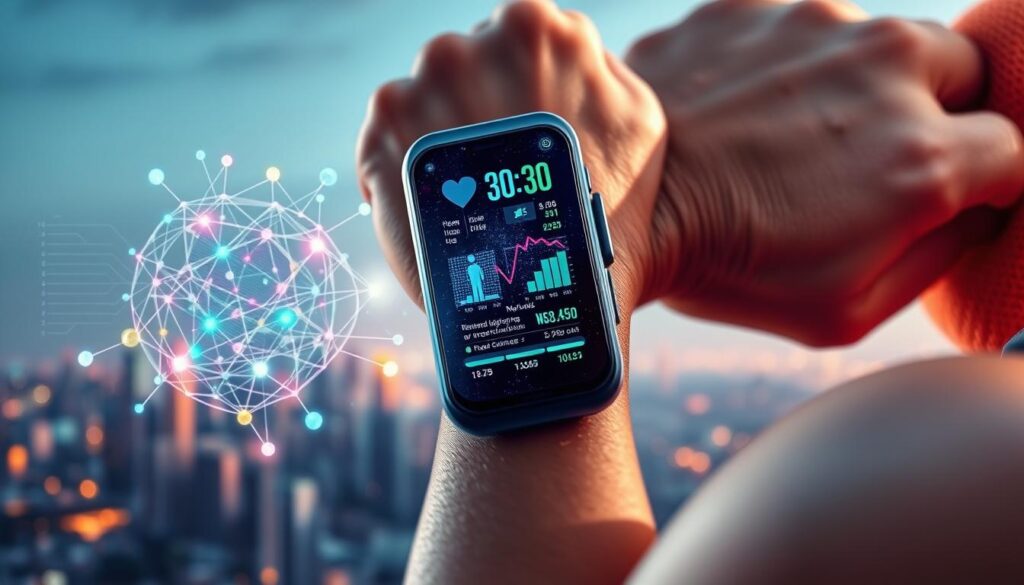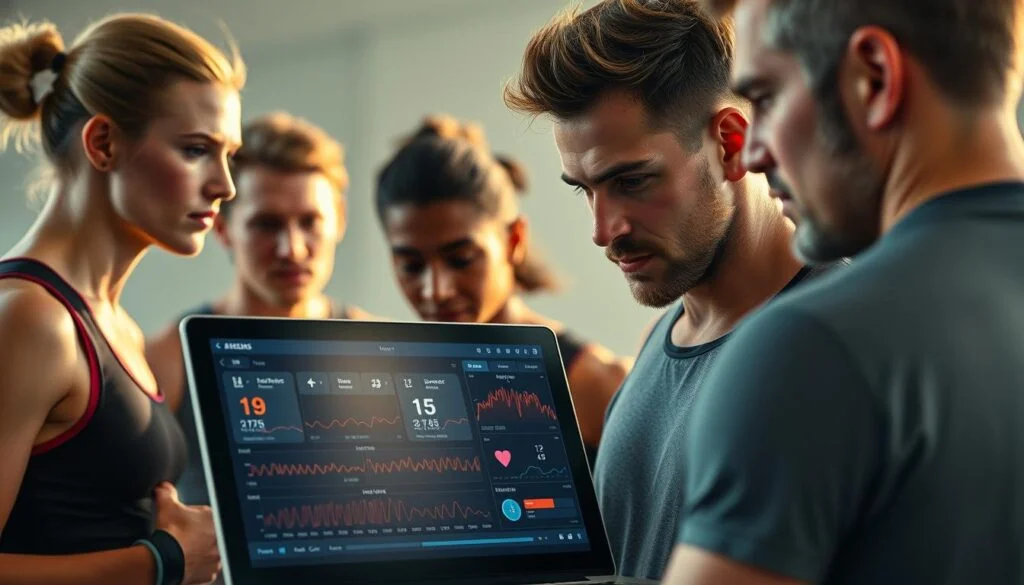
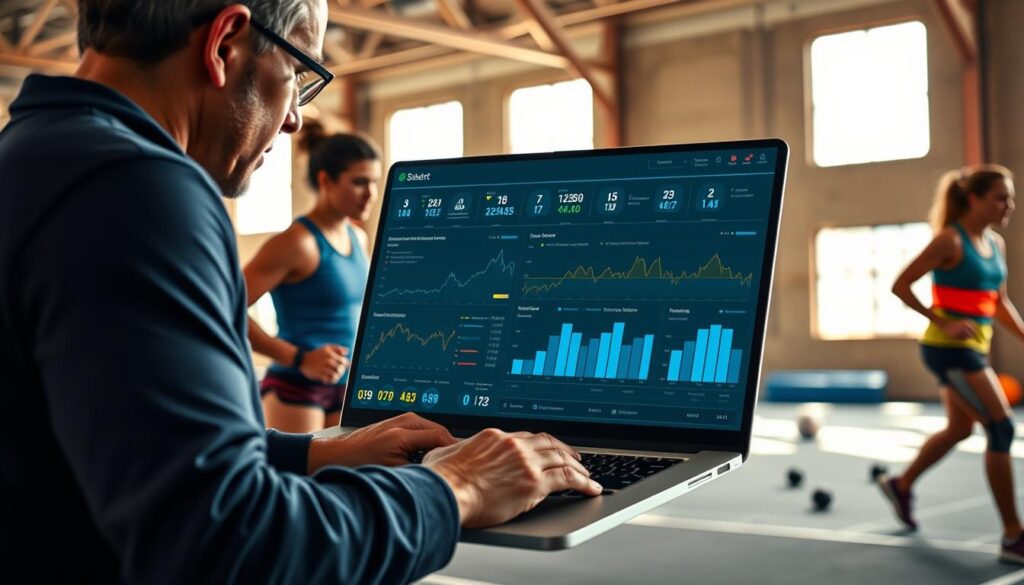
Two seasons ago, a high school coach brought a single device to practice and watched a quiet shift in how the team prepared. One clear dashboard turned guesswork into coaching decisions, and players began to recover smarter.
Today the market is booming: forecasts point to a multi‑billion dollar wearable market and rapid growth in related technology. Modern devices give real‑time data on HRV, muscle fatigue, VO2 estimates, and recovery. Brands like Oura Ring, Apple Watch Ultra, and Catapult show how varied options can be.
Choosing the right sports performance tracker means matching features to roster needs, from simple heart metrics to advanced GPS and EMG textiles. Integration matters: BLE, cloud sync, and mobile apps must work together without siloing insights.
Iottive builds end‑to‑end IoT and BLE solutions that connect devices, firmware, and apps so teams get usable data fast. Avoid feature overload and ownership gaps. Start with clear goals, secure data flows, and a partner who can scale with your program.
Key Takeaways
- Select devices that map to coachable goals, not gadget lists.
- Look for real‑time metrics like HRV and movement workloads to inform recovery.
- Prioritize BLE, cloud, and mobile integration to keep data flowing.
- Avoid siloed platforms and choose partners who offer end‑to‑end solutions.
- Balance budget and adoption: smaller programs can scale affordably.
- Iottive can help architect custom solutions that grow with your team.
Why Sports Performance Tracking Matters Now
Investment and adoption curves are tipping now; teams that delay risk falling behind. Rapid growth in the market is not just hype. Wearable tech is projected to hit USD 186.14B by 2030 (13.6% CAGR), while sports technology is forecast at USD 86.22B by 2033 (16.62% CAGR).
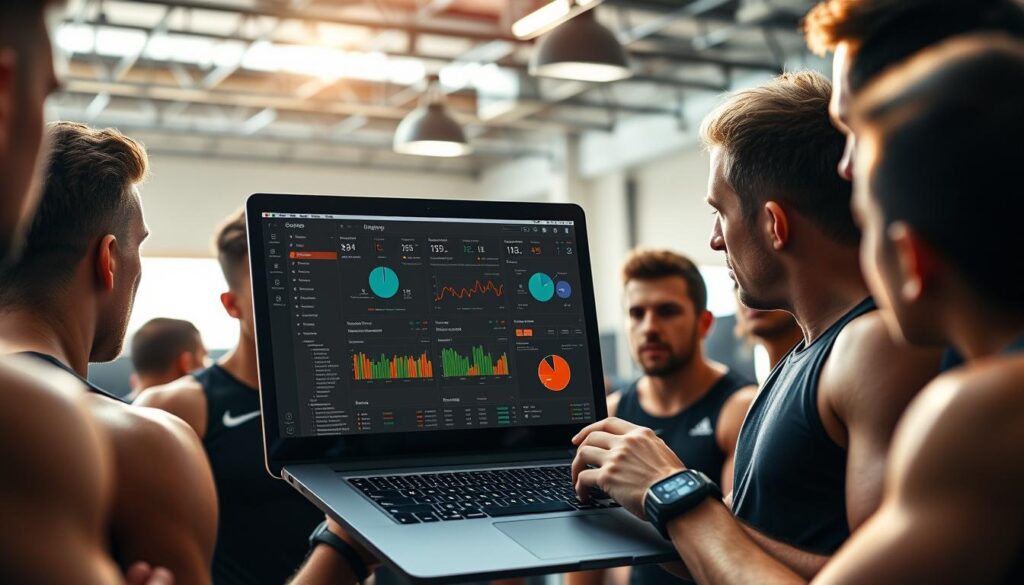
Market momentum: Wearables to $186.14B by 2030, sports tech to $86.22B by 2033
That influx of capital means more devices, lower costs, and faster integration. In the NFL, roughly 250 trackers can capture 200+ data points per play. Those numbers show how sensors change coaching decisions in real time.
From clipboards to AI: Real-time, predictive, and personalized performance
With AI sports analytics and machine learning, teams move from basic analysis to predictive analytics. Modern devices add HRV, sleep architecture, stress markers, and fatigue models.
- Faster insights: real-time data shortens feedback loops during practice.
- Injury prevention: models flag risk and help coaches reduce exposure.
- Fan engagement: broadcasts gain live heat maps and richer metrics.
Iottive helps teams respond to market growth by building scalable IoT and BLE-connected apps, plus integrated cloud/mobile platforms tailored for U.S. organizations. Contact: www.iottive.com | sales@iottive.com.
sports performance tracker
The right ecosystem blends rugged field sensors with daily wellness devices to create a single source of truth.
Defining the category: A practical system is more than a gadget. It combines field devices like Catapult Vector units, smart textiles (Hexoskin, Sensoria), and consumer rings or watches (Oura, Apple Watch Ultra, Samsung Galaxy Watch 6 Pro) into unified systems that collect, sync, and turn tracking into coach-ready metrics.
Team vs. individual needs: Start with roster-wide standards—GPS load and heart rate zones—then add role-specific metrics for positional demands. Balance rugged hardware for contact sessions with consumer tools that capture recovery and daily health.
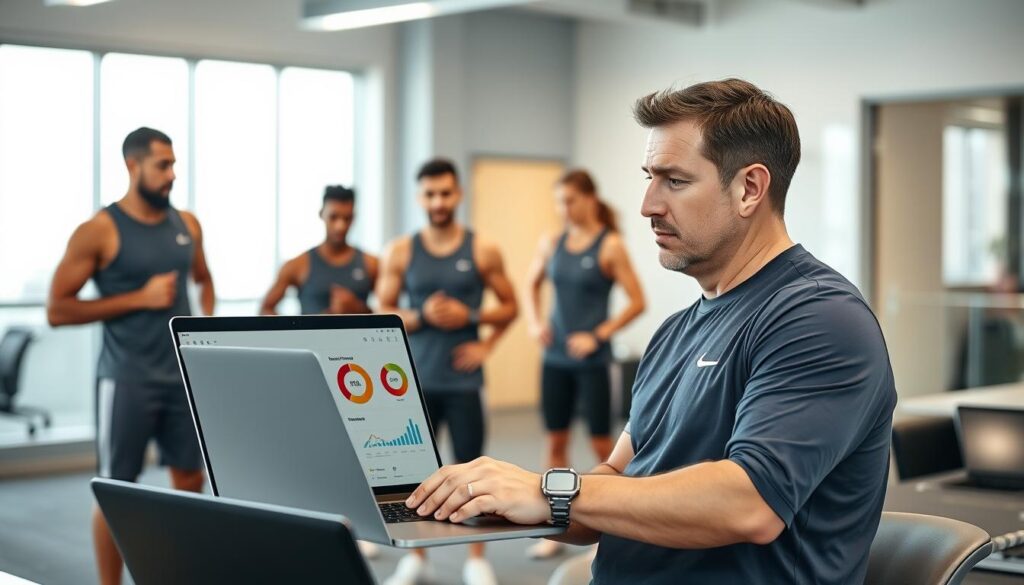
- Prioritize platforms that unify data across strength, medical, and tactical staff.
- Choose sensors that match your sport: EMG, pressure insoles, bio-patches, and GPS.
- Ensure quick setup, reliable syncing, and clear dashboards for busy coaches.
| Component | Use | Example |
|---|---|---|
| GPS & motion | Workload and speed | Catapult Vector S7/T7 |
| Smart textiles | EMG and posture | Hexoskin, Sensoria |
| Consumer recovery | Sleep and HRV | Oura, Apple Watch Ultra |
Partner note: Iottive builds custom IoT solutions—BLE app development, sensor integration, and cloud/mobile platforms—to unite devices, data, and team workflows. Contact: www.iottive.com | sales@iottive.com.
Key Metrics That Move the Needle
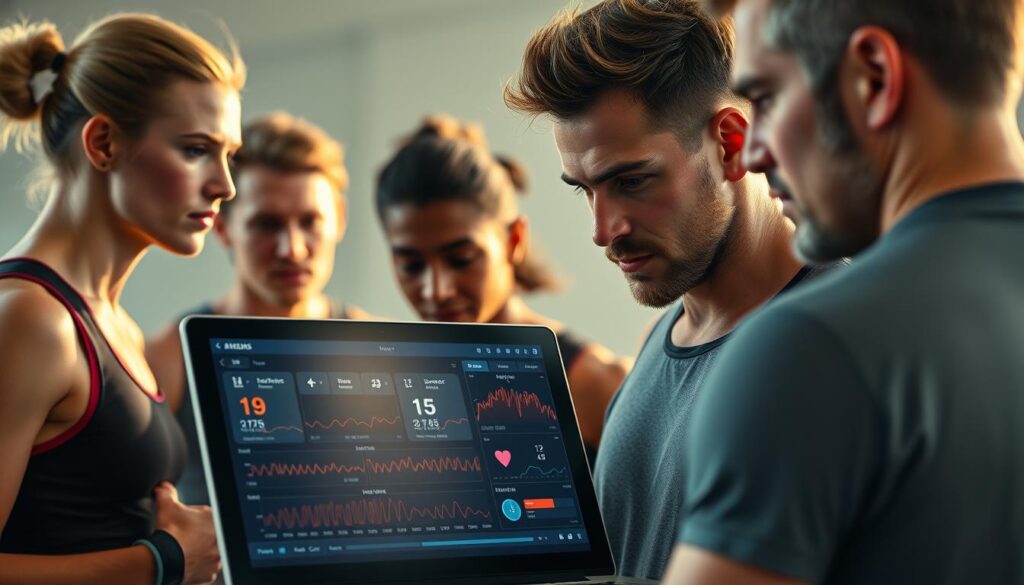
Good metrics separate guesswork from action by showing what to change next. Below are the core signal groups coaches and medical staff should monitor to guide sessions, reduce risk, and sharpen results.
Cardio intelligence
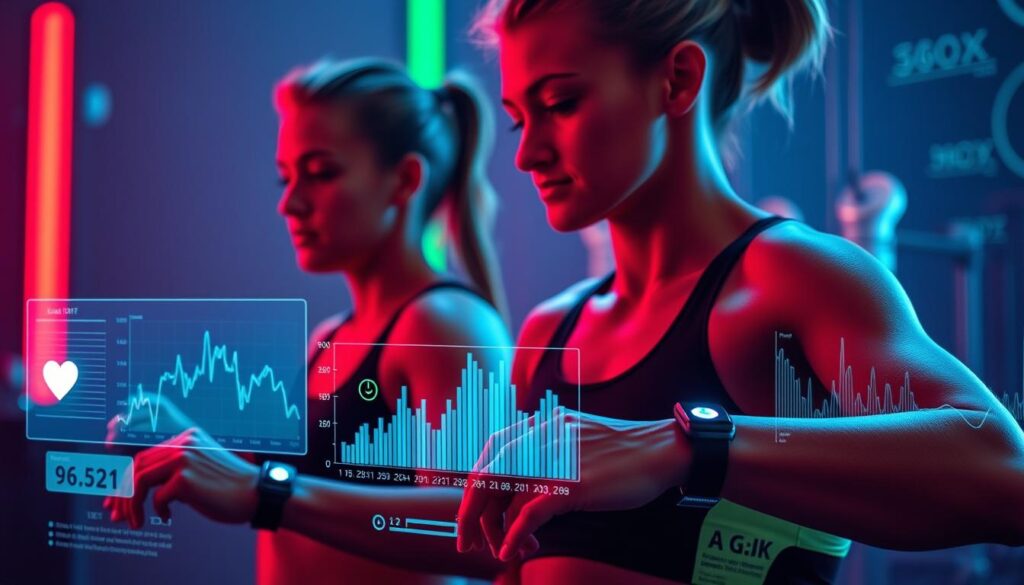
Heart rate zones and trends drive conditioning plans. Devices like Polar and Whoop provide heart rate variability and rate variability trends that flag readiness and early overload.
Biomechanics and movement
Smart textiles and pressure footwear (Hexoskin, pressure insoles) reveal gait, jump forces, and asymmetries. Tracking movement patterns helps tune mechanics and lower unnecessary load.
Recovery and readiness
Sleep architecture and fatigue modeling turn nightly data into next-day guidance. Use these metrics to schedule hard sessions when recovery is high and scale back when readiness drops.
Environment and context
Heat, humidity, altitude, and air quality change risk profiles. Contextual sensors let coaches adjust intensity and hydration before problems occur.
- Iottive can integrate cardio, biomechanical, and environmental sensing into custom dashboards via BLE, cloud, and mobile apps for coaches and medical teams. Contact: www.iottive.com | sales@iottive.com.
| Metric | Why it matters | Example source |
|---|---|---|
| Heart rate zones | Individualize conditioning | Polar |
| Movement patterns | Improve mechanics, reduce load | Hexoskin / insoles |
| Sleep & readiness | Schedule intensity | Whoop |
What’s Inside Today’s Wearables
Modern consumer and pro gear now packs a surprising mix of sensors and form factors into small, rugged housings.
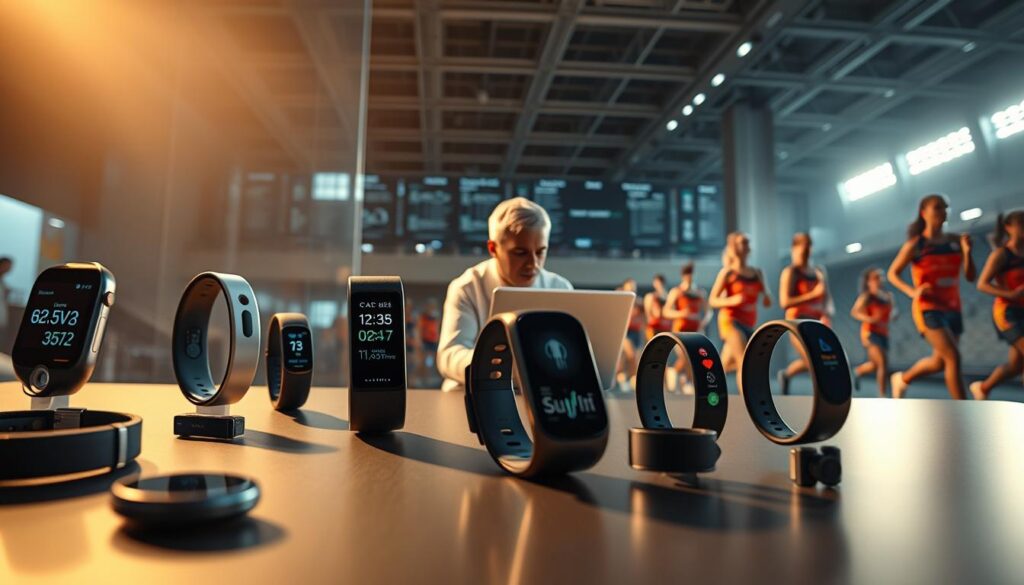
Sensor suites have expanded beyond simple heart and GPS. Today’s systems pair GPS, EMG in smart textiles, pressure insoles, and bio-patches to capture movement, metabolic signals, and biomechanics.
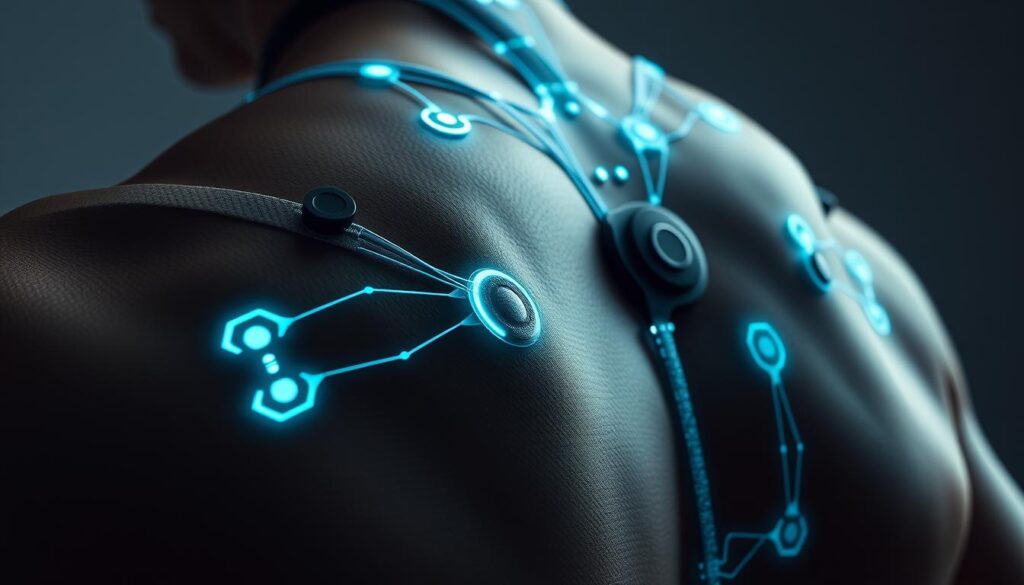
Smart textiles from Hexoskin and Sensoria add EMG and posture cues. Rings like the Oura Ring 4 deliver HR, temperature, sleep, and stress insights in a low‑profile form factor.
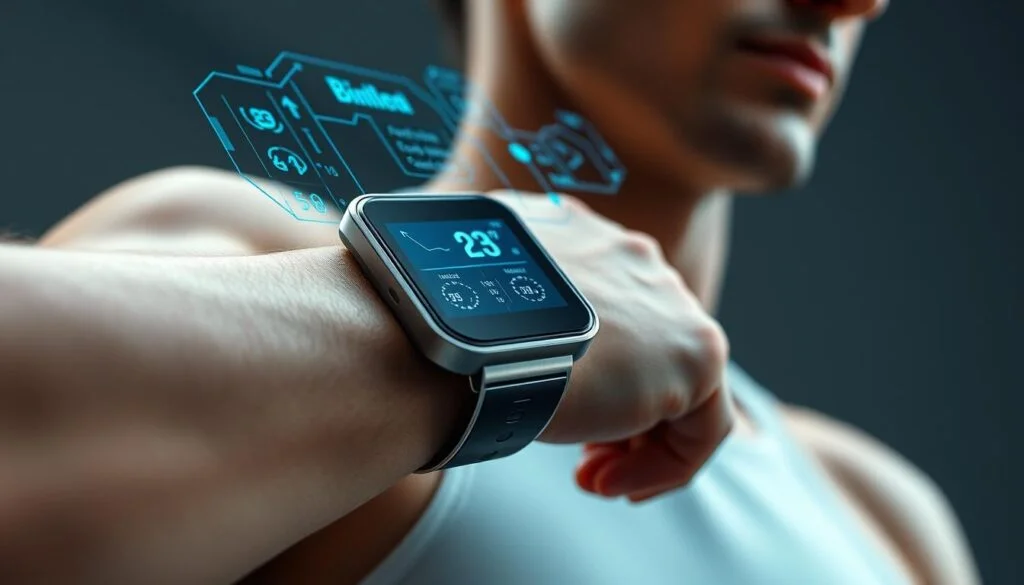
Watches such as Apple Watch Ultra and Samsung Galaxy Watch 6 Pro add VO2, ECG, SpO2, and blood pressure trends. Biometric patches track lactate, electrolytes, hydration, and core temperature for on‑the‑spot metabolic feedback.
Real-time coaching and next-gen form factors
Live audio prompts, vibration cues, and automated alerts keep users on pace and in target heart ranges. Smart contact lenses are emerging to overlay AR cues and monitor glucose without bulk.
Iottive develops BLE-connected apps and custom IoT products that integrate GPS, EMG textiles, pressure insoles, and bio-patches into unified mobile and cloud experiences. Contact: www.iottive.com | sales@iottive.com.
| Sensor | What it measures | Common form |
|---|---|---|
| GPS & motion | Position, speed, work rate | Vests, small units |
| EMG & textiles | Muscle activation, posture | Smart shirts (Hexoskin, Sensoria) |
| Pressure insoles | Ground contact, force maps | Footwear inserts |
| Bio-patches & rings | Metabolic markers, HR, temp | Adhesive patches, Oura Ring 4 |
AI Sports Analytics: From Data to Decisions
Modern pipelines transform hundreds of live signals into decisions coaches can trust.
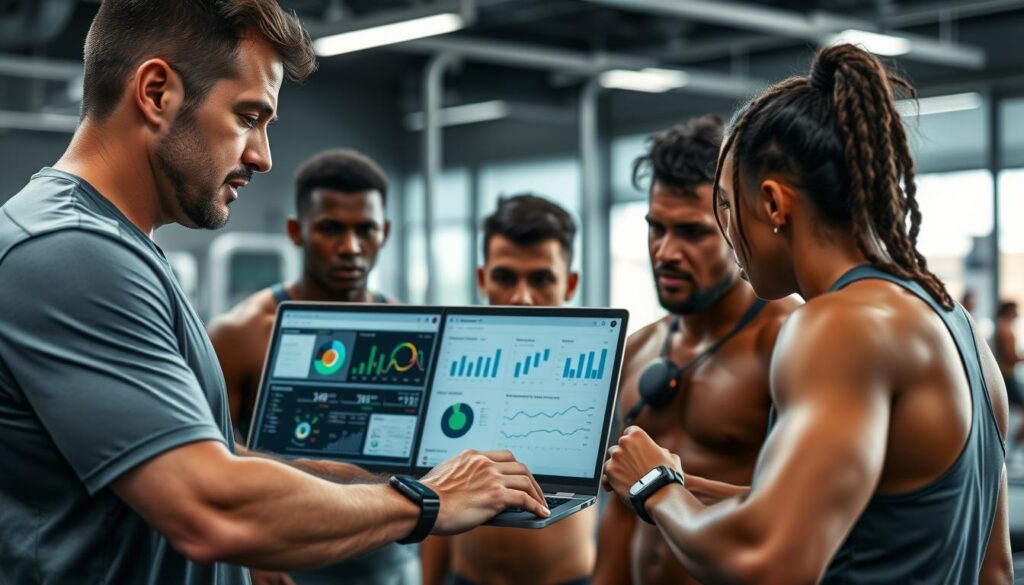
Predictive analytics flag injury risks and suggest optimal training loads before problems appear. Supervised models use heart rate, rate variability, workload, and movement patterns to score short‑term risk.
Predictive analytics: Injury risk flags and optimal training load
Predictive analytics combine labeled injury histories with current session data. This helps staff reduce injuries and tailor daily plans.
Personalized training: Athlete-specific plans, role demands, recovery windows
Machine learning and clustering build individual baselines. Models adapt plans by role, recovery, and historical response.
Tactical intelligence: Heat maps, positional analysis, match-up optimization
Real-time data feeds tactical dashboards for lineup, spacing, and matchup choices. These insights support in‑game decisions and fan engagement displays.
Long-term development: Talent ID, performance ceilings, career modeling
Systems learn across seasons to forecast ceilings and career arcs. That long view helps scouts and coaches plan growth and recovery cycles.
| Use case | Methods | Output |
|---|---|---|
| Injury prevention | Supervised models, workload ratios | Risk scores, alert windows |
| Personal plans | Unsupervised clustering, adaptive models | Role‑specific sessions, recovery timing |
| Tactical ops | Positional heat maps, pattern detection | Sub plans, matchup insights |
Iottive builds AIoT pipelines that link devices to cloud models for predictive analytics, personalized programs, and real-time coaching dashboards. Contact: www.iottive.com | sales@iottive.com.
Sport-Specific Considerations for Wearable Athlete Training
Different disciplines demand different sensors and KPIs to turn raw signals into useful coaching cues. Match gear to context so data informs clear decisions without overwhelming staff.
Field sports: load and collision monitoring
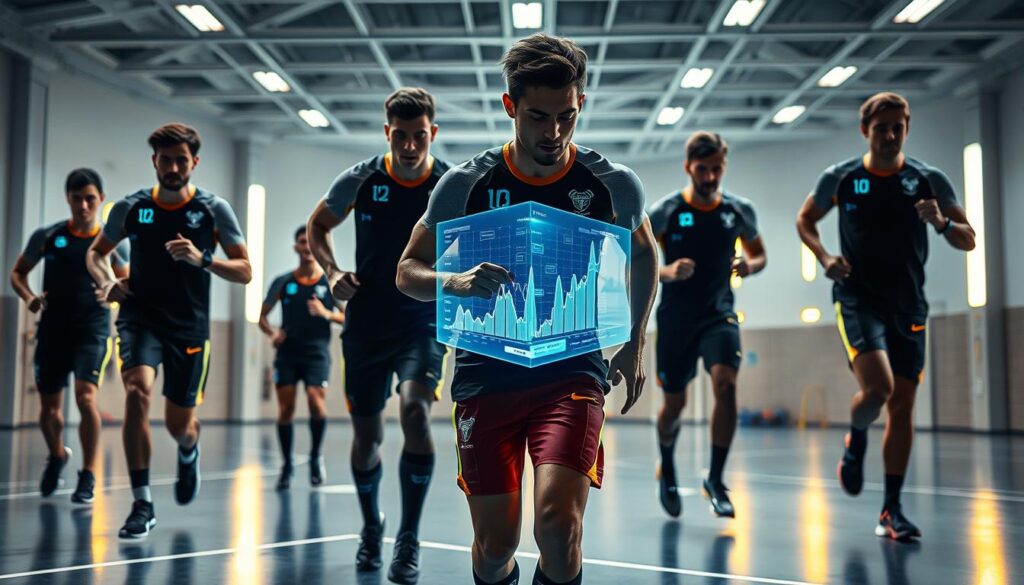
Catapult GPS systems offer centimeter-level movement tracking and heat maps for tactical analysis. Use GPS vests to quantify workload across practices and matches.
Collision monitoring helps manage contact and supports injury prevention strategies by flagging high-impact exposures early.
Court sports: jumps, lateral work, substitutions
Basketball setups capture vertical jump force, landing impact, and lateral movement metrics. These signals guide fatigue-based substitutions and drill design.
Endurance disciplines: power and metabolic thresholds
Integrate power meters, pace, and heart rate trends to set metabolic thresholds. That approach balances intensity, efficiency, and recovery across long cycles.
Aquatics: waterproof biometrics and stroke timing
Waterproof sensors record stroke efficiency, breathing patterns, and turn timing without breaking rhythm. Low-drag devices keep data valid in swim conditions.
Precision sports: swing mechanics and impact physics
Tennis and golf motion-capture tools analyze swing mechanics and impact physics. Use those insights to correct mechanics and avoid overuse injuries.
- Set sport-specific movement patterns and KPIs that align with tactical plans and conditioning blocks.
- Choose devices that fit the environment—secure vests, low-drag swim modules, or lightweight racquet sensors.
- Blend health and fitness metrics with on-field data so development stays sustainable.
| Discipline | Core sensors | Key KPI |
|---|---|---|
| Field | GPS vests, impact sensors | Workload, collision counts |
| Court | IMU jump sensors, lateral motion | Jump force, landing load |
| Endurance | Power meters, HR monitors | FTP, pace efficiency |
| Aquatics | Waterproof bio-patches | Stroke rate, turn time |
| Precision | Motion capture, impact sensors | Swing speed, impact angle |
Iottive can tailor sensor fusion and dashboards to sport-specific KPIs—from GPS collision monitoring in football to jump analysis in basketball and stroke metrics in swimming. Contact: www.iottive.com | sales@iottive.com.
Integration, Platforms, and Data Strategy
When platforms speak the same language, staff spend less time reconciling numbers and more time acting.
Start by centralizing systems so every coach sees one consistent set of metrics. A unified platform prevents silos and standardizes how teams measure load, intensity, and readiness.
Unified data platforms: Breaking down silos and standardizing metrics
Central systems ingest streams from many devices and normalize definitions. That makes analysis comparable across drills, departments, and seasons.
Video + wearables: Biomechanical validation and complete profiles
Combine film and sensor streams to confirm what metrics mean in context. Video adds biomechanical clarity and helps convert raw signals into actionable insights for coaches.
Edge, 5G, and latency: Faster loops for real-time coaching
Edge processing and 5G cut lag so alerts and cues happen on the sideline. Faster loops improve on-field adjustments and help staff act on fresh monitoring data.
| Focus | Benefit | Example |
|---|---|---|
| Centralization | Consistent metrics for all staff | Unified dashboard |
| Video fusion | Biomechanical validation | Sync sensor + film |
| Edge & 5G | Low latency alerts | On-field feedback |
Iottive specializes in BLE app development and cloud & mobile integration to unify wearables, smart devices, and custom IoT products into secure, scalable platforms. Contact: www.iottive.com | sales@iottive.com.
Privacy, Ethics, and Policy for Teams in the United States
Managing personal biometric records requires policies as precise as the sensors that collect them. Teams must balance daily monitoring with clear consent, robust security, and fair use so data becomes a tool for care rather than a source of risk.
Biometric data governance: Define ownership and consent up front. Make it clear what is collected, how long it is retained, and who can access it. Build role-based access so coaches, medical staff, and admins see only what they need.
Encryption, consent, and secure systems
Encryption at rest and in transit protects sensitive health and injury records. Require vendors to support modern standards and document incident response and deletion workflows when people leave a program.
Fairness and explainability
Algorithms can bias outcomes if training sets are narrow. Use explainability tools like LIME and SHAP so recommendations produce clear, testable insights. Vendors should disclose model behavior so coaches can trust and challenge results.
Operational best practices:
- Document consent and ownership policies for athletes and staff.
- Apply strong encryption and strict access controls across systems.
- Audit datasets and models for bias; include diverse reviewers.
- Limit fan engagement content to avoid exposing health or injury details.
- Train staff on ethical data use and maintain clear offboarding processes.
Equity matters in the current market. Pursue partnerships, grants, and shared programs to reduce gaps in access to modern technologies. Iottive designs systems with encryption, consent workflows, and role-based access to help U.S. teams operationalize data ownership and compliance. Contact: www.iottive.com | sales@iottive.com.
How Iottive Helps Teams Build the Right System
Iottive turns scattered device signals into a single, usable platform for coaches and staff. We engineer end-to-end solutions that link hardware, firmware, BLE apps, and cloud services so daily work is simpler and faster.
IoT & AIoT end-to-end: BLE app development, cloud/mobile integration
Our BLE app development ensures reliable pairing, low-latency syncing, and robust data capture across complex sessions. Cloud and mobile integration deliver secure pipelines, role-based dashboards, and alerting for timely decisions.
Custom trackers and smart textiles: Sensor fusion for team-specific KPIs
We design custom devices and smart textiles that fuse sensors into clear metrics—jump force, collision counts, or stroke timing—so coaches see actionable summaries, not raw streams.
From prototype to platform: Scalable IoT products with real-time analytics
From prototype to production, we build scalable systems that evolve with your needs. Edge and 5G support low-latency monitoring, while our analytics layer surfaces next steps for staff, not just charts.
- Data governance: role-based access and encryption built in.
- Practical deployments: aligned to budget and timeline.
Ready to build? Visit www.iottive.com or email sales@iottive.com to start.
Conclusion
Practical systems emphasize simple, repeatable metrics that staff can act on every day.
Wearables and AI sports analytics deliver real‑time feedback and predictive fatigue models that can improve training efficiency by up to 25%.
Prioritize recovery as much as hard sessions to limit overtraining and protect long‑term health. Use quick feedback loops so coaches adjust loads while players are still in session.
Track patterns in readiness, workload, and technique to guide smarter progressions and fewer setbacks. Keep data practices transparent so athletes trust the system and adoption stays high.
Iottive partners with teams to turn strategy into working IoT/AIoT solutions—BLE apps, cloud and mobile, and custom devices—so you can track what matters and act faster. Contact: www.iottive.com | sales@iottive.com.
FAQ
How do I choose the right tracker for my team’s needs?
Start by defining your goals — injury prevention, load management, or tactical insight. Match those goals to sensors and metrics: heart rate and HRV for recovery, GPS and accelerometers for movement, and force sensors for impact. Consider roster size, budget, and integration with your existing video or athlete-management systems. Prioritize devices that offer secure cloud export and open APIs so coaches and data staff can build custom reports.
Why is tracking athlete health and output more urgent now?
Two forces are driving adoption: expanding market options and better analytics. Wearable and sports-technology investment has surged, unlocking cheaper sensors and faster connectivity. At the same time, predictive models can flag overuse and optimize load, reducing time lost to injury and improving readiness across a season.
What types of devices and platforms make up this category?
The ecosystem includes body-worn sensors (vests, straps, rings), smart textiles with embedded EMG or pressure sensors, insoles, and patch biometrics. Those devices feed platforms that normalize data, apply models, and deliver dashboards or automated alerts. Look for vendors who offer sensor fusion and documented data schemas.
How do I balance team-wide standards with position-specific needs?
Set core metrics everyone tracks (load, HRV, sleep, readiness) to compare across the roster. Layer role-specific measures on top — sprint distance and collisions for backs, jump forces for forwards, power meters for cyclists. That hybrid approach preserves comparability while capturing the nuances of each role.
Which cardio and heart metrics matter most for monitoring readiness?
Track resting heart rate trends, heart rate variability (HRV), training zones, and cardiac drift during sessions. These indicators reveal fatigue, autonomic balance, and adaptation. Use baselines and rolling averages rather than single days to spot meaningful changes.
What movement and biomechanical data should I prioritize?
Key measures include peak and average acceleration, change-of-direction loads, jump height and landing forces, and asymmetry metrics. Combine inertial data with force sensors or video to validate mechanics and identify compensations that raise injury risk.
How can wearables help with recovery and readiness tracking?
Wearables capture sleep duration and architecture, nocturnal HRV, and daily load to inform readiness scores. When paired with wellness surveys and context (travel, match congestion), these metrics support actionable recovery strategies like individualized rest, modified sessions, or targeted interventions.
What environmental factors should teams monitor?
Heat, humidity, altitude, and air quality affect exertion and hydration needs. Integrate local environmental sensors or public APIs so load prescriptions and cooling strategies adapt to conditions and reduce heat-related risk.
What sensors are common in modern devices?
Typical suites include GPS, IMUs (accelerometer/gyroscope), optical heart-rate sensors, EMG-enabled textiles, pressure insoles, and biochemical patches for sweat analysis. Manufacturers are also experimenting with new form factors like rings and smart clothing for less intrusive long-term wear.
Can real-time coaching features improve on-field decisions?
Yes. Low-latency feedback such as pacing cues, automated alerts for unsafe loads, or live audio prompts lets staff intervene during practice and matches. Achieving this requires reliable connectivity (BLE, 5G, edge compute) and workflow integration so coaches trust the alerts.
How do predictive models reduce injury risk?
Predictive analytics combine historical loads, recovery markers, biomechanical patterns, and competition schedules to generate risk flags. When models are transparent and regularly validated, teams can adjust training load or prescribe targeted rehab to reduce avoidable injuries.
How personalized can training plans get with modern tools?
Very granular. Systems can tailor volume, intensity, and recovery windows to each individual using trends in HRV, session-RPE, and performance outputs. This personalization improves adaptation while minimizing overtraining for each roster member.
How do teams use data for tactical and positional insights?
Combining positional tracking with event data creates heat maps, spacing models, and matchup analytics. Coaches use those insights to plan substitutions, optimize formations, and exploit opponent tendencies based on objective movement and workload metrics.
What sport-specific differences should I expect when selecting tools?
Field sports need robust GPS and collision monitoring. Court sports demand high-frequency jump and lateral metrics. Endurance disciplines focus on metabolic power and efficiency, while aquatics require waterproof biometrics and stroke analysis. Choose systems validated for your sport’s movements and environments.
How important is platform integration and data strategy?
Critical. A unified data platform prevents silos, standardizes metrics, and enables longitudinal analysis. Integrate wearables with video systems and athlete-management software so staff get a single source of truth for monitoring health, load, and tactical planning.
What are the privacy and ethical basics U.S. teams must follow?
Treat biometric data as sensitive. Implement encryption at rest and in transit, clear consent processes, role-based access controls, and data-retention policies. Also ensure model explainability to address bias and support fair decisions about selection or medical care.
How can a technology partner help build a custom system?
A capable partner can design BLE mobile apps, integrate cloud analytics, develop custom sensors or smart textiles, and scale prototypes into production. Work with experienced IoT and edge-compute vendors to align hardware, software, and coaching workflows for long-term impact.