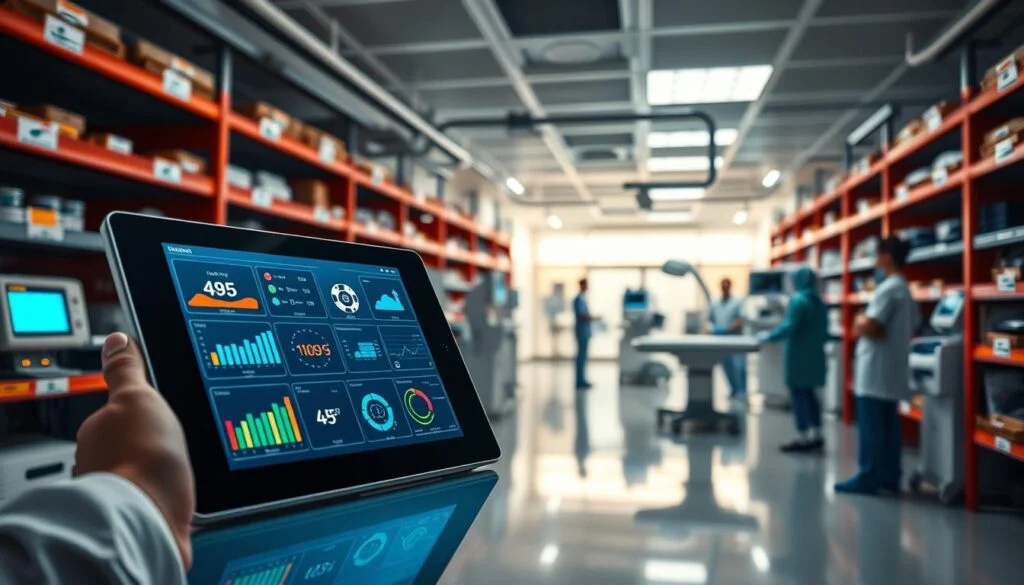
How IoT is Revolutionizing Hospital Inventory Management

A night-shift nurse once spent twenty minutes searching for a vital infusion pump before a scheduled treatment. That delay felt small, but it highlighted a bigger problem: missing devices and slow workflows cost time and can affect care.

Today, connected systems and embedded intelligence turn scattered items into tracked assets. With BLE tags on surgical tools and dashboards that analyze real-time data, teams find gear fast and keep supplies ready for patients.

This guide explains how combining edge analytics and cloud platforms creates operational efficiency across clinical areas. You will see how sensors, analytics, and secure integrations cut search time, reduce waste, and tie supply decisions to treatment pathways.

Iottive’s BLE app and AI-enabled solutions accelerate these programs, helping clinical leaders, supply teams, and IT plan an end-to-end modernization with built-in compliance and resilience.

IoT hospital inventory management, IoT in Healthcare, Smart Healthcare, AIoT

Key Takeaways

  • Connected device tracking reduces time spent locating gear and improves patient care continuity.
  • AI-enabled analytics turn raw data into actions like auto-replenishment and staff alerts.
  • Edge processing and cloud dashboards together enable faster, smarter decisions.
  • measurable gains include fewer expiries, lower stockouts, and better asset utilization.
  • Clinical leaders and supply teams can use this guide to plan secure, scalable deployments.
  • Iottive provides BLE app development and AIoT integrations to speed implementation.

Understanding the Shift: From Manual Stockrooms to Smart Healthcare Supply Chains

Paper logs and spreadsheet lists used to tell teams what was on the shelf — often too late. Facilities are now moving to connected systems that update supply states as items move, helping staff spend less time searching and more time on patient care.
A well-lit hospital room, pristine and organized, with medical equipment neatly arranged. In the foreground, a tablet displays a comprehensive asset dashboard, showcasing real-time inventory levels and supply chain data. The middle ground features a variety of essential hospital items, including IV drips, diagnostic tools, and sterilized surgical kits, all meticulously tracked and monitored by IoT sensors. The background subtly hints at the advanced AI algorithms powering the smart healthcare supply chain, with a soft, blue-tinged lighting that evokes a sense of technological sophistication. The overall scene conveys a harmonious blend of cutting-edge technology and efficient, patient-centric medical care.

What “inventory” covers on the floor

Inventory spans infusion pumps, ventilators, handheld ultrasound units, surgical tools, implants, medications, vaccines, blood products, linens, PPE, and spare parts. These items vary by criticality and storage needs, from cold-chain meds to bedside devices.

Why the timing is right

Affordable BLE and RFID, low‑latency edge analytics, and mature cloud platforms make real-time monitoring practical. Live data collection lets teams react instantly to use patterns in the OR, ICU, ED, and pharmacy.

  • Clinical impact: devices are available when needed; meds stay within temperature and expiry thresholds.
  • Operational shift: periodic counts give way to continuous monitoring and automated replenishment triggers.
  • Upstream benefits: improved forecasting, fewer stockouts, and reduced delays for patients.

Security-by-design matters because inventory events touch PHI-adjacent systems. Success also requires workflow integration and staff training. Partners like Iottive translate departmental needs into scalable solutions; contact www.iottive.com | sales@iottive.com.

IoT hospital inventory management: How connected systems transform availability, cost, and care

Connected tags and real‑time dashboards give teams a single view of gear from receiving dock to bedside.

End-to-end visibility and traceability for critical medical devices and supplies

Dock-to-shelf-to-bedside tracking uses BLE and RFID to show what you have, where it is, and its condition. This full-chain view links lot numbers and serials to procedures so recalls and quality checks finish faster.
A state-of-the-art hospital inventory management system, showcasing a sleek tablet interface displaying real-time data on various medical devices. The foreground features a close-up of the tablet, its screen illuminated with color-coded icons and graphs tracking inventory levels, asset utilization, and predictive maintenance. The middle ground reveals a bustling hospital setting, with nurses and doctors seamlessly interacting with the connected devices. In the background, a futuristic network of IoT sensors and AI-powered analytics engines work tirelessly to optimize resource allocation and patient care. Crisp lighting and a clean, minimalist aesthetic convey the efficiency and innovation transforming modern hospital operations.

Reducing stockouts, expiries, and shrinkage with automated alerts

Automated thresholds trigger replenishment and rotate soon‑to‑expire items to high‑use units. Door events, geofencing, and last‑seen timestamps cut shrinkage and misuse of mobile equipment.

Linking inventory to patient care pathways and clinical workflows

Tagging infusion pumps, imaging units, and consumables lets teams reserve equipment for scheduled cases and start sterilization cycles after use.

  • Predictive patterns: edge analytics spot abnormal consumption and suggest redistribution.
  • Operational alignment: inventory states feed EHR, ERP, and CMMS so biomed and IT prevent cancellations.
  • Outcome focus: better availability reduces delays and supports improved patient outcomes.

Iottive implements BLE tags, gateways, and mobile apps and integrates iot solutions with EHR/ERP/CMMS to align supplies with treatment. Contact: www.iottive.com | sales@iottive.com.

How It Works Today: Data flow, devices, and analytics in modern U.S. hospitals

Modern clinical floors stream continuous signals from devices, shelves, and sensors so teams see state changes as they happen.

Data capture and edge processing

Data collection starts at the capture layer: RFID tags on cases, BLE beacons on mobile equipment, smart shelves for meds, and environmental sensors for cold-chain control.

Gateways aggregate those feeds, filter noise, and apply business rules at the edge to cut latency before cloud sync.

Secure transmission and analytics

Encrypted channels, device authentication, and network segmentation protect patient data and supply records. TLS and role-based access enforce policy across healthcare systems.

Analytics run detection models for unusual usage, demand forecasting, and predictive maintenance so teams get actionable insights fast.

Real-time actions and auditability

Automated actions create POs, update par levels, send staff alerts, and post updates to EHR/ERP/CMMS. Bi-directional sync reserves items for scheduled cases.

Immutable logs record who accessed what and when, supporting recalls, billing accuracy, and compliance.

Iottive designs and integrates BLE apps, gateways, and cloud/mobile platforms to secure data transmission and drive automated actions. Contact: www.iottive.com | sales@iottive.com.
A high-tech hospital inventory management system, featuring a sleek tablet dashboard displaying real-time sensor data. Crisp, clean lines and modern industrial design elements create a sense of efficiency and innovation. Glowing IoT devices and data visualizations hover in the foreground, while the background showcases a hospital environment with subtle, muted tones. Warm, diffused lighting casts an inviting, futuristic glow, emphasizing the seamless integration of technology and healthcare. The overall scene conveys the power of IoT and AI in revolutionizing inventory tracking and optimization within the modern U.S. hospital setting.

Core Technologies Powering Smart Hospitals

A mix of short-range radios, barcode scans, and cellular links lets teams choose the right tool for each task.

Choosing a modality depends on read range, cost, and clinical workflow. Passive RFID suits bulk reads and sterile zones. BLE supports room-level RTLS and mobile workflows. QR codes work for low-frequency audits and low-cost tagging.

RFID vs. BLE vs. QR: choosing by use case and budget

Quick guide:

Technology Best use Range & battery Typical devices
Passive RFID Bulk reads, sterile stores Short, no battery Supply cases, trays
BLE Room-level RTLS, mobile gear Meters, battery tags Infusion pumps, portable scanners
QR Low-cost audits, labels Line-of-sight, no battery Consumables, charts

A state-of-the-art smart hospital, its core technologies on vivid display. In the foreground, a sleek tablet displays a real-time inventory dashboard, tracking critical medical assets through an interconnected IoT network. Hovering above, holographic interfaces and AI-powered analytics provide effortless insights, enabling precise stock management. The middle ground features futuristic hospital wards, where smart beds and robotic assistants work in harmony, delivering seamless patient care. In the background, a gleaming network of servers and supercomputers hums, powering the hospital's intelligent systems, a testament to the transformative power of cutting-edge technology. Soft lighting and a serene, minimalist aesthetic create an atmosphere of innovation and efficiency, capturing the essence of the modern, IoT-driven smart hospital.

Scaling and integration

mMTC and 5G RedCap scale thousands of connected devices across sites. Edge nodes run local inference to cut latency for ORs and pharmacies. The cloud then handles long-term analytics and cross-site optimization.

Interoperability essentials

Use FHIR, HL7/REST, and clear data models (UDI, lot, serial) to link EHR, ERP, and CMMS. Secure device identity, rotating credentials, and OTA updates keep systems safe.

Iottive delivers BLE app development, cloud & mobile integration, and custom platforms that tie hardware, firmware, and applications to hospital standards. Contact: www.iottive.com | sales@iottive.com.

Benefits and Business Impact: From operational efficiency to patient outcomes

Real-time tracking and smarter workflows cut search time and streamline tasks. This boosts operational efficiency and lets clinicians spend more time on patient care.

Short wins become lasting gains.

Real-time location tracking of equipment to cut search time and delays

Room-level tracking turns minutes of searching into seconds. Procedure delays drop and staff overtime falls. Healthcare providers see immediate workflow gains.

Predictive replenishment to stabilize critical-care levels

Predictive analytics forecast demand and trigger replenishment before shortages occur. Par levels stay balanced for ICU and ED needs, reducing rush orders.

Cost savings through automation, reduced waste, and fewer readmissions

Automated monitoring prevents expiry losses and protects cold-chain items. That lowers disposal costs and supports safer patient plans, which can reduce readmissions.
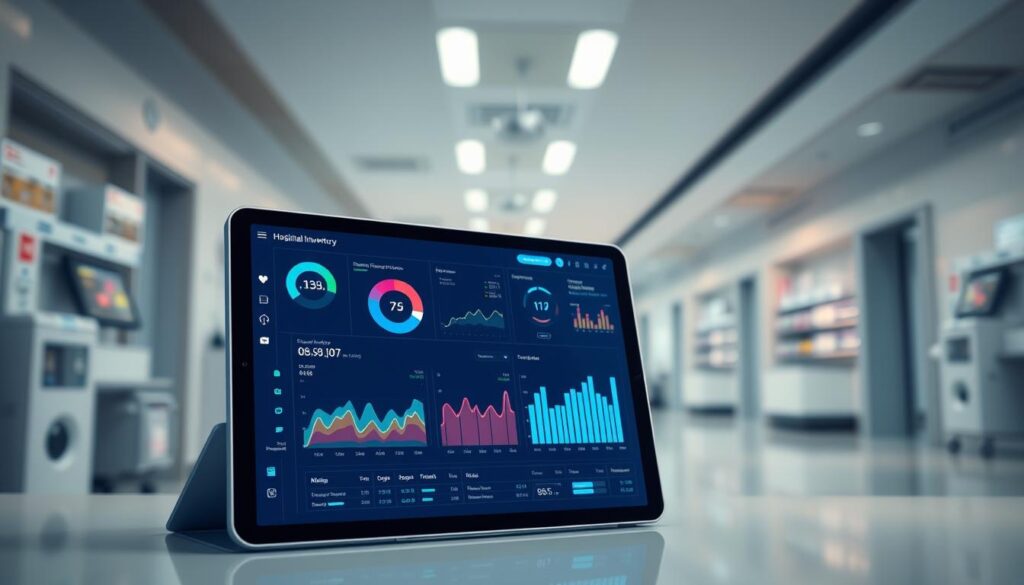
A modern hospital dashboard glows on a sleek tablet display, showcasing real-time data tracking of critical inventory. Vibrant visualizations and intuitive interfaces reveal insightful trends, from medication stocks to medical equipment. Powered by a network of IoT sensors and AI analytics, the system seamlessly monitors and optimizes inventory, ensuring patient care is never compromised. Crisp lighting accentuates the dashboard's clean lines and futuristic aesthetic, conveying the transformative impact of IoT technology on hospital operations and patient outcomes.

Benefit Metric Typical impact
Search time RTLS seconds vs minutes Procedure delays ↓, overtime ↓
Stock stability Predictive replenishment Rush orders ↓, stockouts ↓
Waste reduction Expiry & cold-chain alerts Disposals ↓, safety ↑

Iottive delivers measurable ROI with solutions that automate tracking and replenishment, integrate with mobile workflows, and improve patient outcomes. Contact: www.iottive.com | sales@iottive.com.

Implementation Roadmap: A practical path to AIoT-enabled inventory

A practical rollout begins with clear baselines for search time, stockouts, and utilization. Start small and prove value before broad deployment.

Assess and prioritize

Focus first on high-value units: OR, ICU, ED, and pharmacy. Measure current search time, expiry rates, and device use to set targets.

Pilot design

Define device choice, gateway placement, and SLAs for accuracy and read rates. Test the full pipeline from capture to secure cloud analytics.

Security and compliance by design

Build security into every step: device provisioning, authentication, encrypted channels, least-privilege access, and audit trails. Ensure HIPAA-aligned controls for patient-adjacent data.

Integration sprints

Map item masters, UDI/lot/serial, locations, and roles across EHR/ERP/CMMS. Use sprint-based API work streams to tie events, orders, and tasks to clinical workflows.

Scale and optimize

Expand unit by unit and tune predictive models, dashboards, and staff training. Schedule firmware updates, battery swaps, and lifecycle steps.

Phase Primary goal Key metric
Baseline Measure current state Search time, stockout rate
Pilot Validate tech & workflows Read accuracy, clinician satisfaction
Integrate Link to clinical systems Event sync rate, API latency
Scale Optimize and expand Reduced expiries, utilization gains

Iottive runs pilots to production, covering hardware selection, BLE app development, coverage tests, API integration to EHR/ERP/CMMS, and secure cloud/mobile deployment. Contact: www.iottive.com | sales@iottive.com.

Risk, Compliance, and Resilience: Building trustworthy healthcare IoT

Cyber threats now target clinical gear and supply chains, turning availability risks into patient-safety issues.

Cybersecurity threats and safeguards for connected medical environments

Ransomware hit 67% of organizations in 2024, and researchers have shown attacks on insulin pumps and pacemakers. Layered defenses matter.

  • Network and endpoint protection: end-to-end encryption, device authentication, and signed firmware.
  • Identity and lifecycle: unique device IDs, certificate rotation, secure boot, and patch pipelines.

Data privacy, access controls, and PHI minimization

Minimize patient data in tracking flows, apply role-based access, and log access attempts for anomaly detection. Align designs with HIPAA and audit requirements.

Device management and business continuity

Standardize provisioning, onboarding checklists, and retirement to reduce attack surface. Build offline modes, cellular failover, and prioritized alert escalation.

About Iottive

Iottive embeds security and compliance into BLE apps and end-to-end platforms. We deliver secure provisioning, audits, and incident runbooks so healthcare providers keep devices and data safe. Get in touch: www.iottive.com | sales@iottive.com.

Measuring Success and Looking Ahead

Measuring progress starts with simple questions: are items found faster, and are supply gaps shrinking?

Continuous feeds and clear metrics turn raw data into action. Teams should set baselines, then track how fast they can locate gear and how often stockouts occur.

KPIs that matter

Define baseline and targets for search time, stockout percentage, expired-item value, and turnaround time for replenishment.

Then add advanced metrics: utilization by unit, shrinkage rate, cold-chain excursions, and forecast accuracy versus actual consumption.

From insights to action

Use dashboards and real-time data to tie analytics to staffing, purchasing, and clinical quality. Visualize role-based views for nursing, pharmacy, and materials so teams can drill down to item, lot, or room.

Close the loop by converting insights to automated actions—PO creation, task assignments, and redistribution between units. Evaluate clinical impact by correlating on-time procedure starts with improved patient outcomes.

Iottive delivers dashboards and analytics that translate usage data into actions for supply chain, clinical ops, and finance. Contact: www.iottive.com | sales@iottive.com.

Conclusion

When systems and staff share timely data, delays shrink and care teams act faster. Connected platforms align operations with clinical needs so the right devices and supplies reach the bedside when patients need them.

Measurable wins include faster searches, fewer stockouts and expiries, stable par levels, and smoother surgical starts. Enablers are interoperable systems, edge analytics, reliable wireless (including 5G/RedCap), and sensors that feed secure data streams.

Security, privacy, and lifecycle controls keep trust and continuity. Start by assessing high-value departments, run a focused pilot with clear KPIs, and scale with governance and staff training.

Partner with Iottive to design, integrate, and operate tailored iot solutions that tie devices, analytics, and workflows to patient-first care. Schedule a consultation at www.iottive.com or email sales@iottive.com.

FAQ

What does “inventory” cover in a medical setting?

In a clinical environment, inventory includes medical devices (infusion pumps, monitors), medications, single‑use consumables (syringes, gowns), spare parts, and supporting supplies. These items support clinical workflows across the OR, ICU, ED, pharmacy, and outpatient units. Clear classification helps prioritize tracking, replenishment, and regulatory controls.

Why is the shift to connected supply chains happening now?

Advances in low‑power wireless sensors, widespread cellular and Wi‑Fi coverage, and affordable edge analytics let facilities gather real‑time data at scale. Combined with cloud platforms and machine learning, hospitals can predict demand, reduce waste, and link stock to patient care pathways—driving faster ROI than decades‑old manual systems.

How do real‑time location systems improve clinical availability?

Real‑time tracking removes wasted search time by pinpointing equipment and high‑use consumables. That reduces procedure delays, shortens turnover, and improves staff productivity. When devices are tagged and visible, clinicians spend less time hunting gear and more time on patient care.

Which tracking technologies are used, and how do you choose among them?

Common modalities include passive RFID for bulk reads, BLE beacons for room‑level location, and QR/barcodes for item‑level verification. Selection depends on range needs, cost, read frequency, and accuracy. For example, sterile trays may use RFID, while carts and expensive pumps often use BLE or active tags.

How does predictive replenishment reduce expiries and stockouts?

Predictive models analyze historical consumption, case schedules, and lead times to forecast demand. Systems trigger automated purchase orders or replenishment when thresholds approach, preventing expiries and shortages. This stabilizes critical‑care inventories and reduces waste and emergency sourcing costs.

What data sources feed analytics platforms in modern systems?

Platforms aggregate tag reads, sensor telemetry (temperature/humidity), EHR procedure logs, purchasing records, and CMMS maintenance data. Combining these sources enables anomaly detection, demand forecasting, and automated workflows that reflect both clinical and operational realities.

How are systems integrated with EHR, ERP, and maintenance tools?

Integration uses APIs, HL7/FHIR interfaces, and middleware to map item identifiers, transaction types, and location hierarchies. Tight mapping ensures inventory events update patient records, billing, and maintenance tickets in near real time, eliminating double entry and reconciliation delays.

What cybersecurity and privacy safeguards are required?

Secure deployments use device authentication, encrypted communications, network segmentation, and role‑based access controls. PHI minimization, audit logging, and compliance with HIPAA standards are essential. Regular patching and vulnerability management for connected devices reduce exposure.

How do hospitals ensure resilience and business continuity?

Resilience measures include local edge processing to maintain core functions offline, redundant gateways, automatic failover for cloud services, and escalation paths for manual overrides. These steps keep critical alerts and location services functioning during outages.

What KPIs should organizations track to measure success?

Focus on search time reduction, stockout rate, expiry waste percentage, time‑to‑replenish (TTR), and inventory carrying costs. Clinical metrics like on‑time case starts and reduced procedure delays tie operational gains to patient outcomes and ROI.

Which departments should be prioritized for pilots?

Start with high‑value, high‑impact areas: operating rooms, intensive care units, emergency departments, and central pharmacies. These zones have concentrated asset use, clear workflows, and measurable outcomes, making them ideal for demonstrating value.

How do edge analytics and cloud services work together?

Edge nodes handle low‑latency tasks—real‑time location, basic anomaly detection, and local alerts—while cloud analytics run heavier models for demand forecasting, historical reporting, and cross‑facility optimization. This split reduces bandwidth, improves responsiveness, and preserves data privacy.

What role does mobile access play for clinical staff?

Mobile apps provide on‑demand location searches, replenishment requests, and alerts at the point of care. Simple interfaces reduce friction for nurses and techs, speeding task completion and improving adherence to stock protocols.

How is device lifecycle and patch management handled at scale?

Centralized device management platforms provision credentials, track firmware versions, schedule patches, and manage decommissioning. Automated workflows and audit trails help maintain compliance and reduce the risk of unsupported devices in clinical use.

What are common barriers to adoption and how can they be overcome?

Barriers include legacy system integration, staff change resistance, and budget constraints. Address them with phased pilots, clear success metrics, executive sponsorship, and hands‑on staff training. Demonstrating fast wins in high‑impact areas builds momentum.

How do temperature and condition sensors protect sensitive supplies?

Continuous temperature and humidity monitoring with alerting prevents cold‑chain breaches for vaccines and biologics. Automated logs support compliance and batch investigations, reducing spoilage and regulatory risk.

Can these systems support multi‑facility networks and scaling?

Yes. Modern architectures use standardized APIs, cloud orchestration, and device provisioning to scale across campuses. Network planning for mMTC and 5G/RedCap options ensures reliable connectivity for thousands of connected devices.

How do analytics link inventory to patient outcomes?

By correlating supplies used per procedure, timing of availability, and readmission or delay metrics, analytics identify supply‑driven care gaps. That insight informs staffing, purchasing, and clinical pathways to improve outcomes and reduce avoidable harm.

What should a success criteria set include for a pilot?

Define targets for search time reduction, stockout decreases, expiry waste reduction, user adoption rates, and integration accuracy with EHR/ERP. Measurable financial and clinical KPIs help justify broader rollouts.

How are alerts and escalations managed to avoid alarm fatigue?

Configure tiered alerting with actionable thresholds, role‑based routing, and smart suppression during known events. Integrate with staff schedules and on‑call rosters so notifications reach the right person at the right time.

Where can providers find vendors and solution partners?

Evaluate vendors that demonstrate interoperability with major EHRs, strong security practices, and proven deployments in ORs, ICUs, and pharmacies. Look for partners offering end‑to‑end services: sensors, middleware, analytics, and implementation support.
Let’s Get Started

IMoT Powered Intelligent Monitoring of Patient Vitals & SOS Alerts for Smart Hospitals

Imagine a nurse receiving an instant notification about a patient’s irregular heartbeat while they sleep. Across town, a doctor reviews live updates from a wearable device, adjusting treatment plans before symptoms worsen. This isn’t science fiction—it’s the reality of modern healthcare powered by connected technology.

Intelligent Vitals Monitoring & SOS Alerts in Smart Hospitals

Hospitals now use advanced devices to track every heartbeat, breath, and movement. These tools send critical data directly to medical teams, enabling faster decisions. For example, a diabetic patient’s glucose monitor can alert staff hours before a crisis occurs. This shift from reactive to proactive care saves lives daily.

These innovations create safer environments by linking systems across facilities. When emergencies happen, automated alerts trigger immediate responses. Staff coordinate seamlessly, reducing delays. The result? Better outcomes and shorter recovery times.

Key Takeaways

  • Connected devices enable 24/7 tracking of critical health metrics
  • Instant alerts help medical teams respond to emergencies faster
  • Automated data sharing improves coordination between care providers
  • Proactive approaches reduce hospital readmissions and complications
  • Integrated technology enhances safety for high-risk patients

Overview of Smart Hospital Innovations

The fusion of IoT and artificial intelligence drives healthcare’s next evolution. Medical centers now combine real-time data streams with predictive analytics to anticipate needs before they arise. This shift transforms how professionals manage chronic conditions and emergency situations alike.

Intelligent Vitals Monitoring & SOS Alerts in Smart Hospitals

  • Cloud-connected sensors collecting 150+ health metrics per patient
  • Machine learning models analyzing patterns across millions of cases
  • Centralized dashboards updating care teams every 90 seconds

“We’ve moved from paper charts to living systems that learn,” notes Dr. Emily Torres, a digital health strategist. Her team reduced medication errors by 40% using automated cross-checks between pharmacy databases and wearable device data.

These innovations create ecosystems where information flows between departments effortlessly. Emergency rooms access ICU bed availability instantly. Pharmacies receive automatic refill requests when smart pill dispensers detect low supplies. The result? Faster decisions and reduced administrative burdens.

Modern facilities prioritize interconnected design from the ground up. Wireless networks support 10,000+ devices simultaneously. Secure data highways let MRI machines share results with surgeons’ tablets in under 3 seconds. This infrastructure makes responsive, patient-centered healthcare possible at scale.

Advanced IoT and Sensor Technologies in Smart Hospitals

Hospital equipment now communicates like never before. Connected tools collect data through skin-contact sensors and environment scanners. This constant stream of information flows to centralized systems, creating live health maps for every individual.

Wearable patient monitoring devices with advanced IOTTIVE sensors, showcasing a seamless integration of cutting-edge IoT technology for smart hospitals. Sleek, ergonomic devices worn comfortably on the body, equipped with state-of-the-art biometric sensors to continuously track vital signs. The devices are bathed in a soft, ambient glow, creating a calming, futuristic atmosphere. Strategically positioned cameras and lenses capture the devices from multiple angles, highlighting their sophisticated design and functionality. The overall scene conveys a sense of innovation and commitment to improving patient care through the latest advancements in medical IoT.

Wearable Sensors and Monitoring Devices

Thin wristbands track pulse patterns while patients move freely. The Reach Wrist Band stands out by sensing sudden drops in elevation—a potential fall. It sends location-specific alerts to nurses’ stations within 0.8 seconds. Rings with optical sensors measure blood oxygen during sleep without wires.

These discreet devices gather 18+ metrics hourly. They spot subtle changes like irregular breathing rhythms during physiotherapy. Custom thresholds trigger notifications when readings deviate from baselines. Staff intervene before minor issues escalate.

Smart Beds and Accessories

Centrella Smart+ Beds demonstrate how furniture becomes diagnostic tools. Pressure mats detect restlessness patterns linked to pain. Built-in scales track weight fluctuations between nurse visits. Motion lights activate when patients attempt to rise unsupervised.

Integrated sensors under mattresses monitor chest movements for respiration rates. Coupled with bedside monitors, they create redundant data streams. This dual-layer approach reduces false alarms by 63% in recent trials. Teams receive verified alerts through encrypted channels.

The Impact of Real-Time Monitoring on Patient Outcomes

When a cardiac unit at Johns Hopkins Hospital implemented live tracking tools, mortality rates dropped by 18% in six months. This demonstrates how real-time monitoring transforms care delivery. Continuous analysis of heart rhythms, oxygen levels, and respiratory rates allows teams to intercept crises before they escalate.


Modern platforms process 120+ health metrics per minute. Algorithms compare current readings against historical data, flagging deviations instantly. A 2023 UCLA study found these systems reduce medication errors by 33% compared to manual checks.

Metric Traditional Care Real-Time Systems
Response Time 22 minutes 98 seconds
Data Points/Hour 4 86
Error Rate 9.1% 2.4%
Readmissions 17% 6%

These tools excel in managing chronic conditions. Diabetic patients using glucose trackers with live alerts experienced 41% fewer emergencies. “The system caught my blood sugar drop while I slept,” shares Marcus Green, a user from Chicago. “Nurses arrived before I felt symptoms.”

Proactive approaches also reduce recovery times. Surgeons at Mayo Clinic adjusted post-op protocols using movement data from smart bandages. Patients regained mobility 25% faster than control groups.

By identifying trends across populations, healthcare providers develop targeted prevention strategies. Health networks using predictive models reduced pneumonia complications by 29% last year. This shift from generalized to precision care marks a new era in treatment effectiveness.

Intelligent Vitals Monitoring & SOS Alerts in Smart Hospitals

A physician receives a vibration alert on their smartwatch during morning rounds. The notification shows a 72-year-old’s blood pressure spiking dangerously in Ward 4B. This instant connection between patient and provider exemplifies modern care networks.

A state-of-the-art IOTTIVE emergency response system, integrated with smart hospital infrastructure, monitors patient vitals and SOS alerts in real-time. A sleek, minimalist control panel displays critical data, with holographic status indicators and intuitive touch interfaces. Ambient blue lighting creates a calming, futuristic atmosphere, while sophisticated sensors and IoT connectivity power rapid, automated emergency response. Crisp, high-resolution renders of the system's advanced hardware and software components fill the foreground, set against a backdrop of a smartly-lit, technology-infused hospital ward.

Advanced sensor arrays track 15+ biomarkers simultaneously. Chest patches measure respiratory depth. Finger clips record oxygen saturation every 12 seconds. “Our systems detect changes three hours faster than manual checks,” explains Dr. Linda Carter from Massachusetts General Hospital.

Machine learning filters routine fluctuations from critical patterns. A 2024 Stanford study found these algorithms reduce unnecessary alerts by 58% while maintaining 99.7% emergency detection accuracy. Custom thresholds adapt to individual histories – diabetic patients get tighter glucose monitoring ranges.

When emergencies occur, encrypted protocols activate response chains. Alerts route to:

  • Nearest available nurses via mobile badges
  • Central command centers with live floor maps
  • Specialist physicians based on condition type

Location beacons guide teams through corridors using AR overlays. This integration cut response times by 41% at New York-Presbyterian last year. Real-time data sharing lets providers review trends en route, preparing targeted interventions before arrival.

Continuous innovation refines these systems. Next-gen sensors now predict falls through gait analysis. Thermal imaging spots infections before fevers develop. As healthcare evolves, seamless tech partnerships keep patients safer at every stage.

Key Benefits for Healthcare Providers and Patients

A hospital administrator reviews monthly reports showing a 30% drop in supply waste after implementing connected systems. This efficiency gain illustrates how modern facilities benefit both staff and those receiving treatment. Automated tools handle repetitive tasks like medication logs, freeing nurses for complex care decisions.

A pristine hospital ward, bathed in soft, diffused light. In the foreground, a holographic dashboard displays a seamless flow of real-time healthcare efficiency metrics, powered by the IOTTIVE platform. Sleek, minimalist interfaces show key performance indicators, patient vitals, and automated SOS alerts. The middle ground features state-of-the-art medical equipment, gleaming with a sense of advanced technology. In the background, a panoramic view of the bustling smart hospital, where patients and providers move with purpose and efficiency. The overall atmosphere conveys a sense of innovative, data-driven healthcare, where technology enhances the delivery of care.

For healthcare providers, real-time data streams optimize bed rotations and equipment use. Predictive algorithms flag inventory shortages before they disrupt operations. One Chicago medical center reduced overtime costs by 22% using staff allocation models powered by live patient flow analytics.

Patients gain safer environments through constant tracking of critical metrics. A study in JAMA Network Open found continuous health observation cuts emergency response delays by 41%. “My team intervenes while issues are still manageable,” notes ICU director Dr. Rachel Nguyen. “Preventive approaches improve recovery speeds dramatically.”

Key advantages include:

  • 28% fewer paperwork errors in medication administration
  • 15-second average alert-to-response times for critical events
  • 19% higher satisfaction scores from personalized treatment plans

These systems create lasting improvements in healthcare quality. Remote tracking enables early discharge for stable cases, reducing readmission risks. Providers reinvest saved resources into staff training and advanced therapies, creating a cycle of enhanced care standards.

Critical IoT Devices for Patient Monitoring and SOS Alerting

A nurse adjusts an IV drip remotely as sensors detect irregular breathing patterns three rooms away. Modern healthcare relies on specialized tools that work silently but effectively. These devices form an invisible safety net, blending into hospital environments while delivering life-saving insights.

Smart IV pumps revolutionize medication delivery. Built-in drug libraries calculate precise dosages based on patient weight and condition. “Our systems flag dosage errors before they reach the bedside,” explains Maria Chen, a medical director at Cedars-Sinai. These equipment updates flow rates automatically when data from wearables indicates changing needs.

Imaging systems now share scans globally in seconds. MRI machines enhanced with AI reduce scan times by 25% while maintaining clarity. Radiologists review X-rays from home offices through secure cloud platforms. “Our cloud-based imaging systems cut diagnosis time by 40%,” notes Chen.

Essential monitoring tools include:

  • Wristbands tracking 12+ biomarkers during patient movement
  • Bed sensors detecting micro-changes in respiratory patterns
  • Wall-mounted air quality monitors adjusting ventilation automatically

Security sensors protect both people and assets. Access controls limit entry to authorized staff while tracking equipment locations. Thermal cameras identify fevers before patients report symptoms. These systems operate discreetly, ensuring safety without disrupting care workflows.

By integrating diverse IoT devices, medical teams gain 360-degree visibility. Real-time data flows from infusion pumps to emergency dashboards seamlessly. This connectivity allows healthcare providers to anticipate needs rather than react to crises.

Security and Vulnerability Best Practices for IoT in Healthcare

Medical devices transmitted 1.5 million unencrypted data packets daily at a Boston hospital before engineers discovered exposed login details. This incident highlights the urgent need for robust security protocols in connected healthcare environments.

Addressing Hardcoded Credentials

Default passwords in infusion pumps and imaging devices create easy entry points for attackers. The CVE-2022-22765 breach proved unchanged factory settings could expose patient information. Regular credential updates and multi-factor authentication reduce these risks significantly.

Ensuring Data Encryption and Compliance

Unprotected network communications allow interception of sensitive records. AES-256 encryption for data in transit and at rest meets HIPAA requirements. “Encryption isn’t optional—it’s the foundation of patient trust,” states cybersecurity expert Dr. Alan Weiss.

Vulnerability Impact Solution
Hardcoded Logins Unauthorized access Biometric authentication
Unencrypted Feeds Data interception TLS 1.3 protocols
SQL Injection Database breaches Input validation checks

Medical facilities must implement layered defenses. Automated systems now scan for vulnerabilities during device setup. Regular firmware updates patch exploits before they’re weaponized. These measures protect both healthcare providers and patients from evolving digital threats.

Integrating AI, Machine Learning, and Data Analytics in Smart Hospitals

A cardiologist reviews a 3D heart model generated by algorithms analyzing 18,000 similar cases. This precision exemplifies how modern facilities combine data streams with cognitive computing. Advanced analytics transform raw numbers into actionable insights, powering decisions that once required days of manual review.

Enhancing Diagnostic Accuracy

Machine vision now detects tumors in CT scans with 94% accuracy – outperforming human radiologists in specific applications. At Cleveland Clinic, AI models cross-reference genetic information with treatment outcomes to suggest personalized therapies. These systems learn from millions of cases, spotting patterns invisible to the human eye.

Optimizing Operational Efficiency

Predictive analytics reduce equipment downtime by forecasting MRI maintenance needs 72 hours in advance. One Texas hospital network cut emergency room wait times by 33% using patient flow models. Staff schedules now adapt dynamically based on real-time health metrics from monitoring devices.

The fusion of machine learning with healthcare workflows creates safer environments through error reduction. Pharmacy robots guided by AI dispense medications with 99.99% accuracy. As data-driven tools evolve, they redefine excellence in patient care while streamlining complex operations.

FAQ

How do IoT devices improve patient care in hospitals?

IoT devices like Philips HealthSuite-enabled wearables and Medtronic sensors enable continuous tracking of vital signs, such as heart rate and oxygen levels. This real-time data sharing with electronic medical records helps healthcare providers respond faster to critical changes, improving treatment accuracy.

What role do smart beds play in modern hospitals?

Stryker’s smart beds use embedded sensors to monitor patient movement, weight distribution, and posture. These systems alert staff about fall risks or bedsores while integrating data into platforms like Epic EHR for proactive care management.

How does real-time monitoring reduce hospital readmissions?

Systems like GE Healthcare’s CARESCAPE provide analytics on trends such as blood pressure or glucose levels. Early detection of anomalies allows timely interventions, reducing complications and readmission rates through personalized treatment plans.

What security measures protect IoT medical devices?

Cisco’s healthcare networks use AES-256 encryption for data transmission. Regular audits address hardcoded credentials, while platforms like Microsoft Azure IoT Hub ensure HIPAA-compliant access controls to safeguard patient information from breaches.

Can AI improve diagnostic processes in smart hospitals?

IBM Watson Health uses machine learning to analyze medical records and sensor data, identifying patterns humans might miss. This enhances diagnostic accuracy for conditions like sepsis, enabling faster, data-driven decisions during emergencies.

How do wearable devices streamline emergency alerts?

Apple Watch’s SOS feature and BioIntelliSense’s BioSticker track falls or irregular vitals. These devices trigger instant alerts to platforms like RapidSOS, ensuring rapid response teams can locate and assist patients within critical timeframes.

What infrastructure supports IoT integration in hospitals?

Siemens Healthineers offers scalable solutions combining edge computing and 5G connectivity. This infrastructure ensures seamless communication between devices, EHRs like Cerner, and staff, minimizing delays in care delivery.


Let’s Get Started