The Hidden Challenge: How Background Restrictions Impact Smart Safety Devices

Introduction

Smart safety devices have become an essential part of modern life, offering solutions for personal security, elder and child care, and pet tracking. Devices such as SOS systems, fall detection sensors, and GPS trackers ensure safety and peace of mind. However, while these devices rely on mobile applications to function effectively, they face an often-overlooked challenge: Background Restrictions.

Both Android and iOS impose strict background process restrictions to optimize battery life and enhance security. While these measures benefit users, they can also interfere with the real-time performance of smart safety devices, leading to delayed alerts, unreliable location tracking, and inconsistent data transmission.

In this blog, we will explore how these Background Restrictions impact various smart safety devices and what solutions can help mitigate these challenges.

Understanding Background Restrictions

To ensure better performance and user experience, mobile operating systems continuously evolve by implementing restrictions on background processes. Some of the key limitations include:

⦁ Background Process Restrictions:

Apps are often put into a suspended state, limiting their ability to run real-time monitoring and alerts.

⦁ Battery Optimization Policies:

Many OS versions restrict background activity to conserve battery life, which can result in delayed or missed notifications

⦁ Location Access Restrictions:

For privacy reasons, continuous GPS tracking is limited, affecting real-time tracking applications.

⦁ Network and Sensor Access Constraints:

Apps may face interruptions in accessing WiFi, Bluetooth, or mobile networks when running in the background, affecting IoT-based safety devices.

To ensure better performance and user experience, mobile operating systems continuously evolve by implementing restrictions on background processes. Some of the key limitations include:

Real-World Impact on Smart Safety Devices Caused by OS Limitations

1. SOS Devices

SOS devices rely on instant emergency alerts to notify caregivers or emergency contacts. However, Mobile OS Background Restrictions can cause:

⦁ Delayed message or call triggers.

⦁ Interruptions in continuous location sharing make it difficult to pinpoint a user’s location in real-time.

⦁ Challenges in keeping the app running actively for emergency response.

2. Remote Fall Detection Systems

Wearable and IoT-based fall detection systems monitor user movements to detect sudden falls. Mobile OS Background Restrictions can lead to:

⦁ Inconsistent data transmission between the wearable and the mobile app.

⦁ Delayed or missed alerts due to background restrictions.

⦁ Limitations in real-time monitoring and response time.

3. Elder and Kids Care Trackers

Devices that track the location of children and elderly individuals depend on seamless GPS and network connectivity. Mobile OS Background Restrictions can result in:

⦁ Delayed location updates, making real-time tracking ineffective.

⦁ App force-closing due to inactivity, leading to loss of monitoring.

⦁ Restricted notifications when an individual exits a predefined safe zone (geofencing).

4. Pet Trackers

Pet tracking devices use GPS and mobile networks to keep owners informed about their pet’s location. Mobile OS Background Restrictions can cause:

⦁ Gaps in GPS tracking due to suspended background services.

⦁ Connectivity issues when the app is not in the foreground.

⦁ Delays in receiving alerts if a pet goes out of a designated safe area.

5. Other IoT-Based Security Devices

Various IoT security devices, such as home monitoring systems and smart alarms, may also face:

⦁ Restrictions in real-time data synchronization.

⦁ Delays in push notifications or security alerts.

⦁ Limited background access to Bluetooth and WiFi networks, impacting device communication.

Workarounds and Solutions

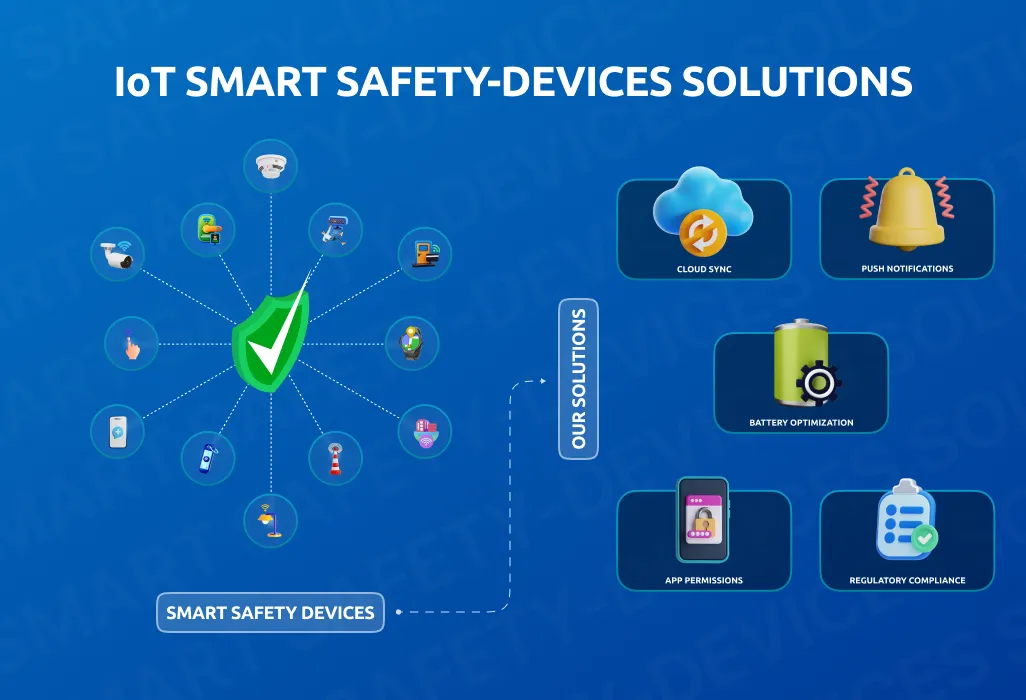
At IOTTIVE, we specialize in overcoming Mobile OS Background Restrictions to enhance the performance of smart safety devices. Our expertise in IoT, BLE, and Connected Devices allows us to implement robust solutions, including:

⦁ Optimizing App Permissions:

Ensuring that apps request and receive necessary permissions, such as “Always On” location access, helps maintain background functionality. Properly configured permissions prevent OS-imposed limitations on critical app features.

⦁ Leveraging Cloud-Based Processing:

Offloading data processing to cloud servers can reduce dependency on mobile background services and ensure seamless communication. This minimizes app activity requirements, improving performance and reliability.

⦁ Using Push Notification Services:

Implementing Firebase Cloud Messaging (FCM) or Apple Push Notification Service (APNS) helps ensure reliable alerts and real-time notifications, even when the app is in the background.

⦁ Battery Optimization Adjustments:

Many operating systems impose aggressive battery-saving policies that limit background activity. Educating users on disabling battery optimization for critical apps, configuring “Unrestricted” battery settings (on Android), and using foreground services ensures continuous monitoring and data transmission.

⦁ Foreground Services & Persistent Notifications:

Keeping essential services running in the foreground by utilizing persistent notifications ensures uninterrupted background operation. This technique is effective for location tracking, SOS alerts, and other critical real-time features.

⦁ Efficient Data Handling & Background Execution Limits:

Smart data compression, batching updates, and limiting resource-heavy background tasks can help apps work within OS constraints while maintaining performance.

⦁ Custom Watchdog Mechanisms:

Implementing in-app watchdog services that detect when background processes are restricted and restarting them automatically helps maintain continuous functionality.

Our tailored IoT solutions help businesses develop reliable, secure, and efficient smart safety applications that remain functional despite OS-imposed constraints.

Conclusion

Mobile OS Background Restrictions can impact the reliability of smart safety devices, leading to delayed alerts and interrupted monitoring. At IOTTIVE, we tackle these challenges with expert IoT solutions, ensuring seamless performance for your smart safety applications.
Looking to enhance your IoT devices? Partner with IOTTIVE today and take your smart safety solutions to the next level!


Contact us today!

The Rise of Beacons: Driving Smarter Solutions for the Modern World

Introduction

In the ever-evolving and competitive world of technology, beacons are among humankind’s most useful innovations. Beacons are small, low-power devices that send a unique signal to nearby smartphones or tablets. They don’t collect data or track users but provide information to apps, which can trigger actions based on how close the user is. Having worked in this industry for more than eight years, we’ve identified and addressed some of the major challenges faced by different sectors before using beacon technology.

Challenges Faced by Different Industries Before Using Beacon Technology

Beacon technology has addressed several challenges that industries previously struggled with. Here are some of the major issues faced by different sectors:

⦁ Product Finding (Retail Industry):

Difficulty in helping customers locate products quickly in-store, leading to inefficiencies and a poor shopping experience

⦁ Location-Based Alerts (Retail and Hospitality):

Challenges in delivering timely and relevant alerts without overwhelming or annoying users.

⦁ Indoor Navigation (Public Infrastructure and Healthcare):

GPS was unreliable indoors, making it difficult to navigate large and complex spaces like hospitals, airports, and malls.

⦁ Agriculture (Agriculture Industry):

Inability to effectively monitor crops, environmental conditions, and farming equipment, resulting in inefficient farming practices.

⦁ Safety (Construction and Manufacturing):

Delays in locating workers during emergencies and difficulties in monitoring safety protocols in hazardous environments.

⦁ Supply Chain Management (Logistics and Manufacturing):

Lack of real-time tracking and visibility across supply chains, leading to inefficiencies and delays in operations.

⦁ Customer Engagement (Retail and Marketing):

Difficulty in personalizing interactions and communicating with customers at the right time, impacting engagement and loyalty.

⦁ Smart Building Management (Real Estate and Facility Management):

Inefficiencies in optimizing energy usage and manually maintaining building facilities.

⦁ Tourism and Visitor Management (Tourism and Hospitality):

Issues with managing large crowds and providing personalized experiences for visitors at popular destinations.

⦁ Event Management (Entertainment and Events):

Challenges in managing crowd flow and keeping attendees informed during large-scale events.

⦁ Healthcare Monitoring (Healthcare):

Difficulties in tracking patients, managing medical equipment, and monitoring real-time health metrics efficiently.

⦁ Asset and Fleet Management (Transport and Logistics):

Problems with tracking assets, optimizing fleet routes, and performing predictive maintenance, lead to operational inefficiencies.

Innovative Solutions Delivered with Beacon Technology by IOTTIVE

Our extensive work with Beacon Technology has enabled us to deliver tailored solutions that address diverse client needs across various industries. Below is a detailed overview of the cutting-edge solutions we’ve provided and the industries they are suited for:

1. Safety Devices

Ensuring safety is paramount, and we’ve developed an application designed to integrate seamlessly with safety devices. One of the standout features of this app is its ability to maintain connectivity with the device even if the app is force-closed. The safety device includes a physical button that, when pressed during an emergency, triggers an alert or notification which can be a location or emergency signal on a designated recipient’s phone.

Industries

⦁ Personal Safety (Consumer-focused devices)

⦁ Healthcare (Patient or elderly care monitoring)

⦁ Corporate Workplaces (Workplace safety for hazardous environments)

⦁ Education (Campus safety for students and staff)

2. Location-Based Alerts

We successfully implemented a project that uses beacon proximity to provide real-time notifications. This application triggers a notification when someone comes within a defined range of a beacon, making it ideal for use cases like personalized retail marketing, museum tours, or workplace safety.

Industries

⦁ Retail (In-store promotions and customer engagement)

⦁ Hospitality (Hotel check-ins and personalized guest services)

⦁ Events & Exhibitions (Interactive displays or visitor engagement)

⦁ Museums (Location-based guided tours)

⦁ Industrial Workplaces (Proximity-based alerts for safety)

3. Indoor Navigation

Navigating large indoor spaces, such as shopping malls, airports, or hospitals, can be challenging, as GPS technology doesn’t work well indoors. To address this, we developed an application that leverages beacon technology to provide accurate indoor navigation. Users can follow step-by-step directions to their desired location, enhancing their experience and reducing confusion in complex environments.

Industries

⦁ Retail (Shopping malls and large retail chains)

⦁ Healthcare (Hospitals and clinics)

⦁ Transportation (Airports, railway stations, and bus terminals)

⦁ Education (University campuses)

⦁ Corporate Offices (Large office complexes or coworking spaces)

4. Agricultural Solutions

In the agriculture industry, challenges like pipeline management, equipment maintenance, and tracking can lead to inefficiencies. We addressed these issues by designing an application that helps farmers and operators locate pipelines and equipment accurately. This solution significantly reduces time spent on maintenance and ensures resources are effectively managed, ultimately boosting productivity in agricultural operations.

Industries

⦁ Agriculture (Farms, irrigation systems, and equipment tracking

⦁ Forestry (Monitoring tools and maintenance routes)

⦁ Water Management (Pipeline tracking and management)

5. Product Finding and Asset Tracking

Tracking critical assets and locating essential products are common challenges in industries like healthcare, retail, and agriculture. Using beacon technology, we developed applications that simplify these processes. For example:

Industries

⦁ Healthcare (Tracking medical equipment and patient management)

⦁ Retail (Inventory tracking and customer guidance)

⦁ Agriculture (Equipment and resource monitoring)

⦁ Warehousing & Logistics (Asset management and shipment tracking)

⦁ Manufacturing (Tool tracking and operational visibility)

Conclusion

Beacon technology has developed into an innovative solution across various industries, effectively addressing significant challenges such as real-time tracking, personalized customer engagement, and indoor navigation. By improving safety in hazardous environments and enhancing efficiency in agriculture and supply chain management, beacons are facilitating more intelligent and interconnected solutions for contemporary society.

As technology continues to advance, the potential applications of beacons will expand, enabling businesses to deliver innovative, customized experiences and streamline operations like never before. The journey of leveraging beacon technology is just beginning, promising a future of smarter, more efficient systems across every sector.

At IOTTIVE, we specialize in developing productivity-enhancing solutions powered by beacons. Let’s connect to explore the possibilities!


Contact us today!