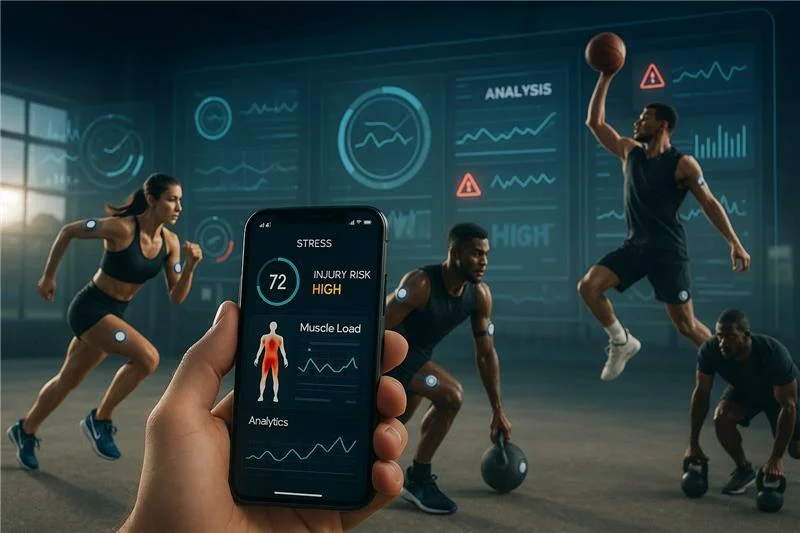
Reaction light systems are rising fast among serious athletes who want faster responses and better decision speed.
Modern setups like Reflexion use multi-panel LED arrays with thousands of diodes, capacitive touch, borosilicate glass, and robust aluminum frames. Mobile apps record every response and adjust difficulty over time.
Even fractions of a second can decide outcomes, so structured programs that mirror game cues help athletes turn faster reactions into on-field performance.
Networked lights and analytics train both the mind and body. That makes drills measurable, sport-specific, and repeatable for real progress toward the next level.
Key Takeaways
- Connected LED systems make reaction time work data-driven and practical for athletes.
- Smart lights target cognitive and physical elements to improve on-field performance.
- Small time gains matter; repeatable drills simulate live play under pressure.
- AI-guided programs track results and suggest personalized progressions.
- These tools integrate with strength work to boost success without overloading schedules.
Why AIoT LED Reaction Training Matters for Athletes Right Now
Split-second visual cues decide outcomes in many games, and light-based drills recreate those pressures in practice. Reaction time often separates a clutch play from a missed chance; tennis return windows, for example, sit in the low hundreds of milliseconds.
LED systems simulate game-like stimuli with random patterns, colors, and movement. They prompt quick physical responses and record every attempt. Coaches and athletes use those analytics to spot weak times and tailor progressions.
- Consistent, repeatable lights give immediate feedback and strengthen the ability to read cues.
- Structured sessions build confidence and transfer faster reads to the game.
- Compact gear and apps make it easy to add short, high-impact drills before or after practice.
| Benefit | How it Helps | Coach Use |
|---|---|---|
| Measurable times | Track progress session to session | Adjust intensity and focus areas |
| Game-like problems | Reduce guessing under pressure | Design sport-specific drills |
| Individualization | Target deficits efficiently | Save reps and boost athletic performance |
The Science of Reaction Time: Brain, Spinal Cord, and Rapid Responses
Understanding how the central nervous system turns visual cues into action clarifies where athletes win or lose time. Reaction time covers the interval from detecting a stimulus to completing a response, split into perception, processing, and response stages.
Perception, Processing, Response: How milliseconds decide success
Perception is the eye and nerves sending a signal. Processing is the brain interpreting that input and selecting a motor plan. The final response moves muscles to act.
Reactions vs. Reflexes: Brain-driven decisions versus spinal shortcuts
Simple reaction time uses one cue and one action. Complex reaction time asks the brain to choose among options—closer to real play. Reflexes run through the spinal cord for protective speed and bypass cortical processing.
Neuroplasticity and neural pathways: Training the brain for faster responses
Repetition strengthens pathways so signals travel faster and with fewer errors. The central and peripheral systems coordinate to turn a vision input into a precise body movement. LED drills target perception and processing and record responses to guide progress.
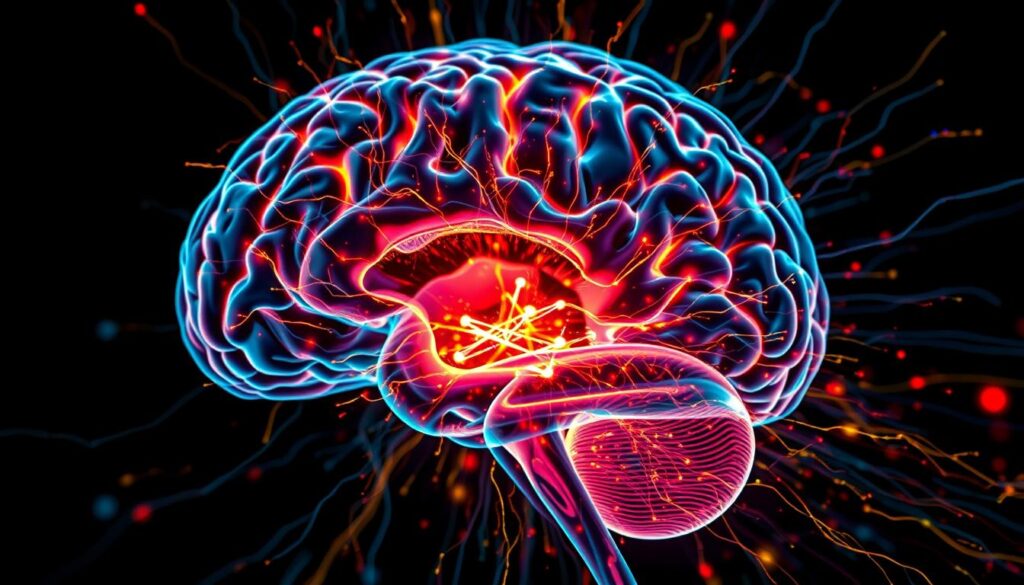
- Key point: Reaction is a trainable skill, not a fixed trait.
- Practical link: Practice with appropriate stimuli and complexity speeds real-world decision-making.
What Are Reaction Training Lights and How Do They Work?
LED panels and standalone lights create quick visual puzzles that force faster decisions and precise hand taps. These systems present flashing and moving colors in random patterns to simulate real game cues.
The most advanced equipment combines high LED density with capacitive touch behind tough borosilicate glass and an aluminum chassis. That design captures exact hand placement and timing, so every response is accurate enough for serious review.
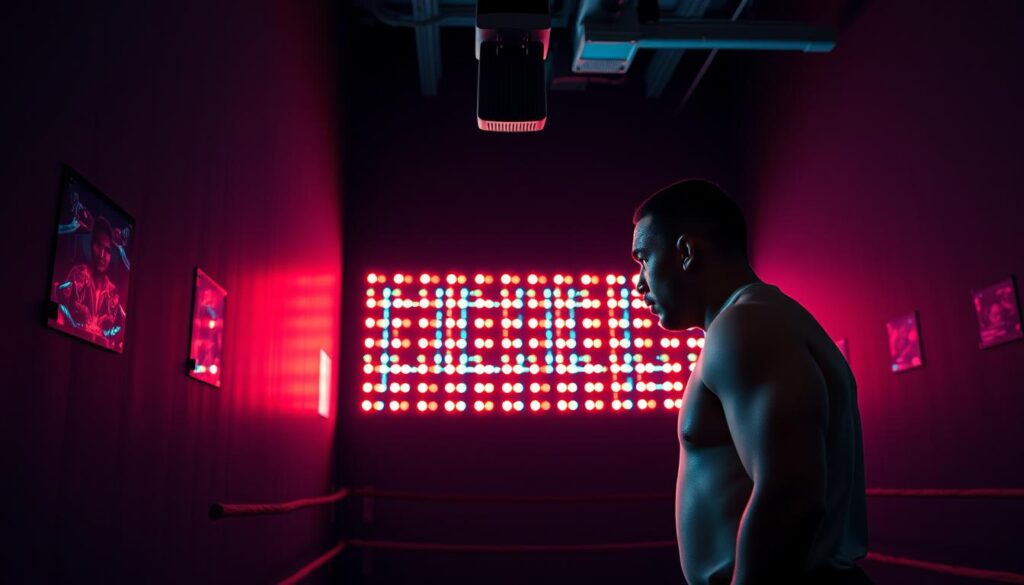
LED stimuli, patterns, and touch inputs that mimic game scenarios
Lights generate sequences—random colors, motion, and pattern length—that become the visual stimuli. Athletes tap targets to complete a task while the system logs the hit or miss and the millisecond gap to the touch.
Built-in analytics: Tracking response times, accuracy, and improvements
Mobile apps pair with the panels to record every attempt and compile response times and accuracy metrics. Coaches use trend lines to guide the next program and decide when to increase difficulty.
- An example session: lights activate in varied positions and hues; the athlete taps quickly; the system logs time and errors instantly.
- Programs escalate by shrinking time windows, adding distractor lights, or increasing pattern complexity.
- Rugged materials make daily gym use reliable, while analytics separate speed from accuracy so athletes balance aggression with control.
For coaches, centralized data shows which drills yield real time gains and where technique breaks down. Integrated analytics replace guesswork and let staff refine the program week by week.
AIoT Equipment Checklist and Setup for LED-Based Training
Good setup begins with durable panels and wireless lights placed for safe, repeatable work.
Selecting screens and panels: Choose a rigid LED panel with high LED density and reliable capacitive touch. Higher density improves target clarity and timing fidelity. Prioritize build quality—borosilicate glass and a sturdy frame reduce wear and keep feedback consistent.
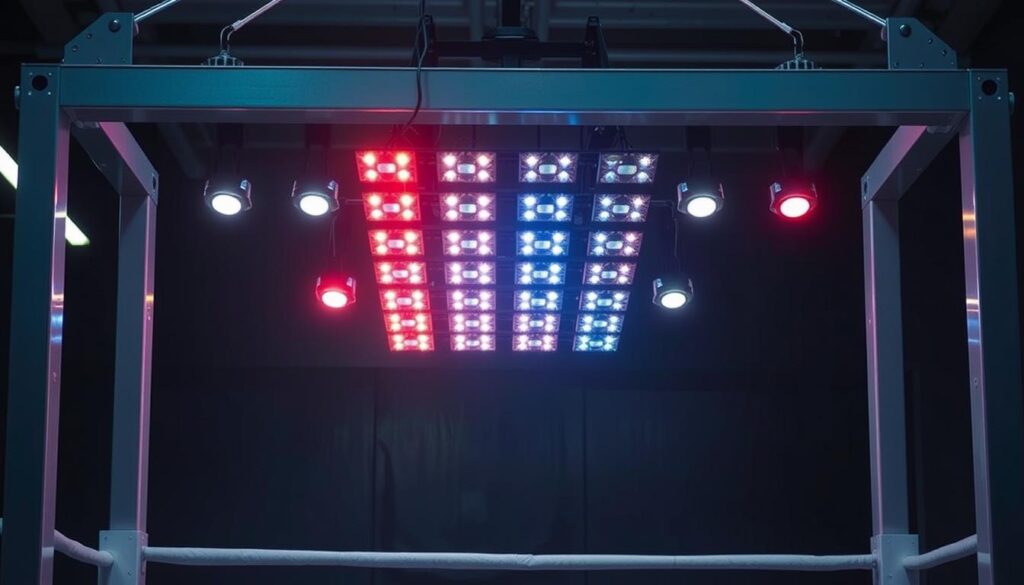
Connecting devices and configuring programs
Pair panels and standalone lights to the companion mobile app. Confirm firmware is current and test latency so the system logs every hit accurately. Start with a simple program that uses large time windows, then tighten those windows via analytics as ability improves.
Space planning and practical layout
For upper-body drills use two to four panels. For movement work, plan four to eight wireless lights spaced several feet apart to force short sprints and direction changes.
- Mark lanes and safe zones with cones so athletes can accelerate and stop without risk.
- Add height and angle variation to challenge peripheral vision and depth judgment.
- Keep a drill library in the app organized by speed, accuracy, and dual-task focus.
- Run routine checks: batteries, mounts, and clean touch surfaces before each session.
| Item | Why it matters | Suggested starting setup |
|---|---|---|
| Multi-panel LED screen | High-fidelity targets and hand-based timing | 2–4 panels, capacitive touch |
| Standalone wireless lights | Spatial sprints and full-body drills | 4–8 lights spaced 6–12 feet |
| Companion mobile app | Records times, manages programs, analyzes progress | Paired, firmware updated, latency tested |
| Cones & floor markers | Define lanes and safe acceleration zones | Use cones every 6–10 feet; mark decel area |
Step-by-Step How-To Program: From First Drill to Game-Ready Reflexes
Start with short, focused drills that build a clear baseline before adding speed or complexity. Record baseline time and accuracy on the first run so you can track progress.
Light Taps and Focused Taps
Begin with Light Taps on a touch screen using random colored boxes to measure raw response and accuracy. Run 4–6 reps of 20 seconds to set a starting time.
Move to Focused Taps by holding two start points between hits. This builds peripheral awareness and disciplined returns while keeping hand placement consistent.
Memory Patterns
Use short sequences of lights that must be reproduced immediately. Start with 3-step patterns and shrink the time window as success rises.
This drill trains rapid encoding and recall under pressure—vital for in-game visual memory.
Pursuit
Chase a moving light with a controlled cursor and hold when aligned. Alternate hands to balance coordination.
Pursuit improves smooth eye-hand control and reduces jitter when a player must track moving cues.
Sporadic and Suicide Sprints
Scatter standalone lights several feet apart for Sporadic Sprints. React to each activation with a low-stance touch and controlled decel.
For Suicide Sprints, place lights at staggered distances (for example, 5, 10, 15 meters). Sprint out-and-back in sequence to build whole-body response and pacing.
Dexterous Taps
Assign colors or shapes to a specific hand and force correct choices under a short time window. This improves decision speed, not just raw taps.
Reaction Ball and Cone Square
Finish sessions with low-tech complements. Do 3–5 rounds of a reaction ball drill for 1–2 minutes to practice unpredictable bounces.
Use a cone square (four cones, ~5 feet apart) for 1–2 minute randomized calls that train footwork and quick change of direction.
- Session sequencing: start with screen-based precision, add pattern and pursuit, then perform lights-based sprints, and end with low-tech work to reinforce transfer to game action.
- Log times, errors, and effort; adjust windows or target sizes weekly to keep progress steady without overload.
AIoT Reaction Training
Connected light systems act like a digital coach, pairing hardware with mobile apps to capture every response and visualize trends.
The system learns from repeated stimuli and athlete responses. Software analyzes which drills speed up performance and which need more work. That lets a program tune target size, speed, and sequence complexity to match ability and avoid stagnation.
Brain-focused metrics—accuracy under pressure and consistency across sets—feed daily and weekly adjustments. Dashboards align peaks with competition calendars so athletes hit form when it matters most.
- Personalization: Adaptive programs update difficulty in real time.
- Coach tools: Group views let staff individualize workloads during team sessions.
- Safety and pacing: Alerts and benchmarks flag readiness or fatigue.
- Efficiency: Automatic logging reduces admin, freeing time for coaching and skill feedback.
Vision-driven tasks also improve input quality to the nervous system, amplifying strength and skill work. The whole approach scales from individuals to teams while keeping progress measurable across a season.
Measuring Progress with AIoT: Metrics, Dashboards, and Personalization
Accurate logs and clear dashboards turn every touch and light hit into usable insight. Systems aggregate response times, accuracy, and variability for each session so coaches can see real improvements over time.
Key KPIs: response times, accuracy, variability, trends
Core metrics include median response time per drill, error rates by color or location, and variability that shows stability under fatigue. These numbers reveal whether a player is improving reaction skills or just guessing faster.
Adaptive difficulty: when to increase speed and complexity
Start by recording a baseline with large time windows and simple patterns. Monitor week-over-week trends and increase difficulty only after consistency improves. Apps can tighten time windows, add pattern length, or extend sprint distances to push performance safely.
- Dashboard example: median and 90th percentile times, error clusters, and weekly change to guide decisions.
- Tagging: label each drill so similar sessions compare fairly and reveal which protocol yields the best improvements.
- Contextual audits: correlate sleep, workload, and readiness to adjust session intensity and protect form.
| Metric | Why it matters | Coach action |
|---|---|---|
| Median times | Shows central tendency of speed | Tighten time window when stable |
| Error rate | Highlights decision or touch issues | Shift focus to accuracy drills |
| Variability | Indicates fatigue or inconsistency | Reduce load or add recovery |
Use leaderboards and personal records to motivate athletes, but gate recognition with accuracy thresholds so technique stays primary. Export session data for season reviews to link reaction gains to real performance outcomes like faster plays and fewer errors.
Smart measurement ensures training time prioritizes the drills that deliver the most improvements for athletes.
Safety, Focus, and Sports Vision Training Best Practices
Start every high-speed session by waking up the eyes and loosening key joints so the nervous system can perform.
Warm-ups and recovery: Begin with 5–7 minutes of dynamic mobility for the shoulders, hips, and ankles. Add simple visual tracking and fixation drills to prime visual skills and steady gaze.
Fatigue management: Keep sets short and measurable. Watch accuracy scores closely; falling accuracy signals the need to cut volume and preserve quality.
Attention control and distraction reduction
Focus strategies—single-task work, short breathing routines, and cue prioritization—limit cognitive load so athletes react faster with fewer errors.
Integrating sports vision therapy
Prescribed, monitored eye exercises reinforce eye–brain communication. Weekly in-office sessions plus at-home practice over weeks create lasting gains in tracking, depth judgment, and peripheral awareness.
“Close monitoring of visual exercises ensures steady progress and prevents training plateaus.”
| Area | Action | Why it helps |
|---|---|---|
| Warm-up | Mobility + visual tracking | Prepares body and brain for fast cues |
| Fatigue | Short sets; monitor accuracy | Maintains quality and reduces injury risk |
| Vision program | Weekly clinic + home drills | Builds durable visual skills and improves overall performance |
Progression tip: Increase complexity only after accuracy is stable to avoid reinforcing errors. Log subjective focus and recovery (sleep, hydration) alongside metrics to guide adjustments that help improve reaction time and long-term performance.
Conclusion
A clear program of staged light drills turns raw speed into reliable, game-ready reactions.
With structured LED work, analytics, and adaptive progressions, athletes can react quickly with better accuracy. Small improvements in reaction time add up to measurable success in competition.
Combine science-backed drills and dashboards to grow skills and track responses. Start with baselines, then evolve the program weekly as metrics stabilize.
Example roadmap: weeks 1–2 set a baseline; weeks 3–6 add complexity; weeks 7–10 refine accuracy at speed. This approach helps athletes of any level raise ability and lift overall athletic performance.
Commit to disciplined action—durable gear, consistent routines, and clear goals turn potential into consistent quick reaction when the game demands it and take your play to the next level.
FAQ
What is LED-based reaction training and how does it help athletes?
LED-based reaction systems use light stimuli, touch sensors, and movement targets to simulate game-like cues. They train perception, decision-making, and motor responses so athletes process visual inputs faster, improve hand-eye or foot-eye coordination, and shorten response times during competition.
How does the nervous system speed up responses?
Sensory organs detect a stimulus, the brain and spinal cord process it, and motor neurons send commands to muscles. Repeated practice strengthens neural pathways and decreases processing delays, so actions occur in fewer milliseconds. This benefits sprint starts, court plays, and quick on-field adjustments.
What’s the difference between reflexes and deliberate reactions?
Reflexes are automatic, spinal-mediated responses that bypass conscious thought, like pulling away from heat. Deliberate reactions involve perception, evaluation, and a motor decision in the brain. Training emphasizes both—automaticity for safety and speed, and trained decisions for tactical play.
Can vision-focused drills actually change neural wiring?
Yes. Neuroplasticity means repeated, specific practice reorganizes circuits in the brain and improves signal transmission. Visual drills that demand quick choices, pattern recall, and tracking help strengthen those networks for sustained gains in response and accuracy.
What types of LED stimuli and patterns mimic real-game situations?
Effective drills use randomized flashes, directional sequences, color or shape cues, and moving targets to mirror unpredictable plays. Combining peripheral flashes with central targets or multi-light patterns forces athletes to scan, decide, and act under pressure—closely matching sport demands.
What should I look for when choosing lights and touch panels?
Prioritize responsiveness, durable construction, bright visible LEDs, modular layout options, and low-latency touch sensors. Systems that offer flexible placement, wireless connectivity, and compatibility with mobile apps let you design sport-specific drills and scale training as needs evolve.
How do analytics and dashboards help improve performance?
Data on response times, hit accuracy, session variability, and trends reveal strengths and weaknesses. Dashboards let coaches set benchmarks, compare sessions, and adjust difficulty. Tracking progress objectively ensures drills target the right skills and show measurable improvement.
What are basic drills to start improving quick reactions?
Begin with simple light-tap or focused-tap drills to establish baseline speed. Add pursuit tasks for tracking, memory patterns for rapid recall, and sporadic sprints or cone sequences for whole-body responses. Progress from short, low-complexity reps to faster, decision-heavy sets.
Are low-tech options useful alongside LED systems?
Absolutely. Reaction balls, cone drills, and partner cue drills complement lights by building unpredictable bounces, change-of-direction, and spatial awareness. These tools develop athletic movement patterns that translate well to high-tech sessions.
How do I connect lights to apps and set up programs?
Most modern systems use Bluetooth or Wi‑Fi to pair with smartphones or tablets. Install the manufacturer app, follow pairing steps, choose or create drill templates, and calibrate sensor placement. Test latency and run a few trial reps before full sessions.
How should I space equipment in a training area?
Plan for clear sightlines, safe run paths, and sport-specific distances. Place lights to match movement patterns—short intervals for reaction speed, wider spreads for lateral agility. Ensure flooring, lighting, and obstacles meet safety standards for high-speed work.
When should I increase drill difficulty?
Raise speed, add distractors, or increase decision rules when accuracy stays high and response times improve consistently. Adaptive progression prevents plateaus: small, frequent challenges stimulate continued neural adaptation without overloading athletes.
What KPIs should coaches monitor during sessions?
Key metrics include average response time, best and worst times, accuracy percentage, trial-to-trial variability, and session trends. Use these to set targets, compare athletes, and tailor recovery or load adjustments based on objective data.
How do I keep training safe and avoid fatigue-related decline?
Begin with sport-specific warm-ups, schedule short high-quality sets, and include rest intervals to maintain focus. Monitor signs of cognitive or physical fatigue—slower reaction times or reduced accuracy—and reduce intensity or stop sessions when needed.
Can attention and distraction control be trained with lights?
Yes. Drills that add nonrelevant flashes, audio cues, or multitask demands teach athletes to filter distractions and maintain focus. Over time they improve selective attention, reducing false starts and poor decisions under pressure.
Should sports vision therapy be part of a long-term plan?
Integrating vision therapy can enhance visual processing, depth perception, and tracking. When combined with reactive drills, it supports lasting improvements in visual-motor skills that transfer directly to competitive performance.
How quickly can athletes expect measurable improvements?
Beginners may see initial gains in weeks due to better strategy and attention. Neuromuscular and neuroplastic changes that yield sustained, significant drops in response time typically appear over several months with consistent, progressive practice.
What common mistakes reduce training effectiveness?
Overloading sessions, neglecting recovery, using predictable drills, and failing to record metrics are common pitfalls. Keep sessions sport-specific, varied, and measurable to ensure steady adaptation and continued gains.