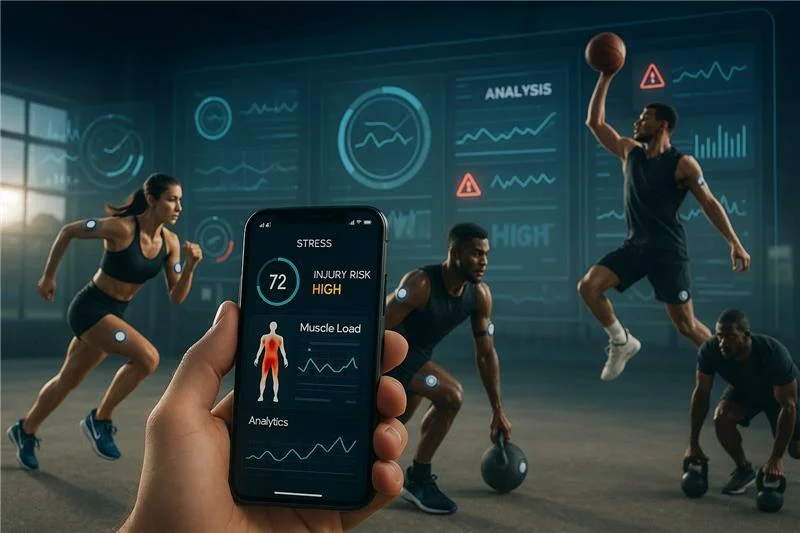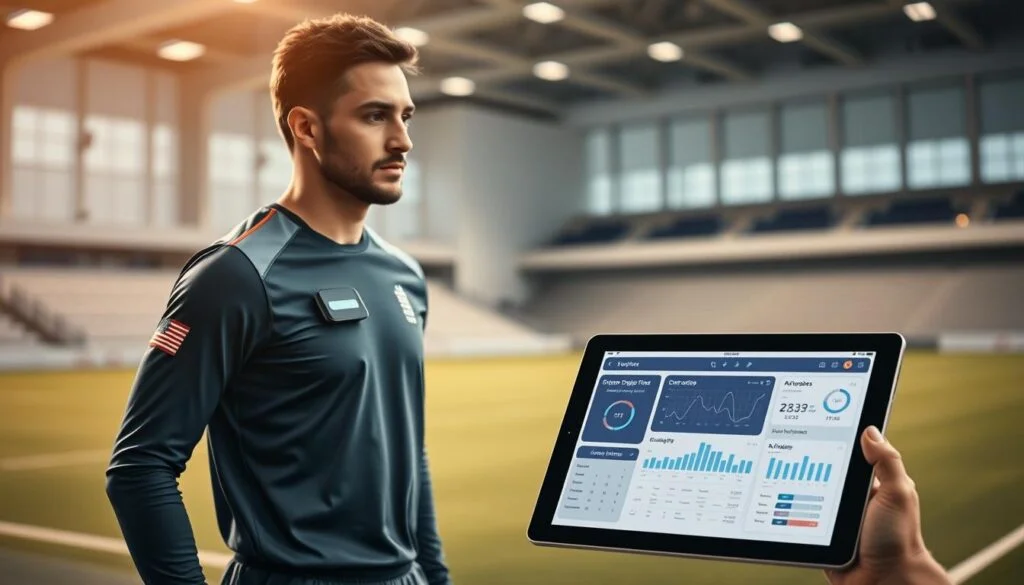
The world of sports is witnessing a significant transformation with the integration of artificial intelligence and Internet of Things technologies. Professional athletes, in particular, are prone to injuries, with nearly 50% suffering from preventable conditions due to inadequate monitoring and delayed detection.

As technology advances, wearable sensors and smart devices are being used to track athlete performance and detect potential issues before they become severe. This proactive approach enables coaches and medical professionals to intervene early, optimizing training regimens and reducing the risk of injury.
At the forefront of this innovation is Iottive, a trusted IoT, AIoT, and Mobile App Development company that specializes in Bluetooth-connected solutions and custom IoT platforms. Their cutting-edge technology is revolutionizing the way we monitor and maintain athlete health.
Key Takeaways
- AI and IoT technologies are transforming athlete health monitoring and injury prevention.
- Wearable sensors and smart devices provide real-time data analytics to detect potential injuries.
- Advanced algorithms optimize training regimens for peak athlete performance.
- Iottive‘s innovative solutions are revolutionizing the sports industry.
- Early detection and intervention reduce the risk of injury and improve overall athlete health.
The Evolution of Athlete Health Monitoring
Technological advancements have revolutionized the field of athlete health monitoring. The way athletes’ health is monitored has seen a significant transformation, driven by innovations in sports technology and data analysis.
Traditional Methods and Their Limitations
Traditionally, athlete health monitoring relied on manual observations and simple metrics. These methods had limitations, including subjective interpretations and delayed feedback. Coaches and trainers had to rely on manual tracking and analysis, which was time-consuming and prone to errors.
The Digital Revolution in Sports Health
The digital revolution has transformed athlete health monitoring through the use of IoT-enabled devices and sensors. Modern athlete monitoring solutions leverage real-time data collection and analysis to provide insights into athlete performance and health. This includes tracking biomechanics, physiological responses, and cognitive states. The integration of artificial intelligence with these systems enables predictive analytics for injury prevention.
The use of wearable devices and sensors embedded in equipment and facilities has created a comprehensive digital ecosystem around the athlete. This technology has democratized access to advanced sports science, allowing teams and organizations at all levels to benefit from data-driven decision making.
Understanding AI Sports Health Monitoring
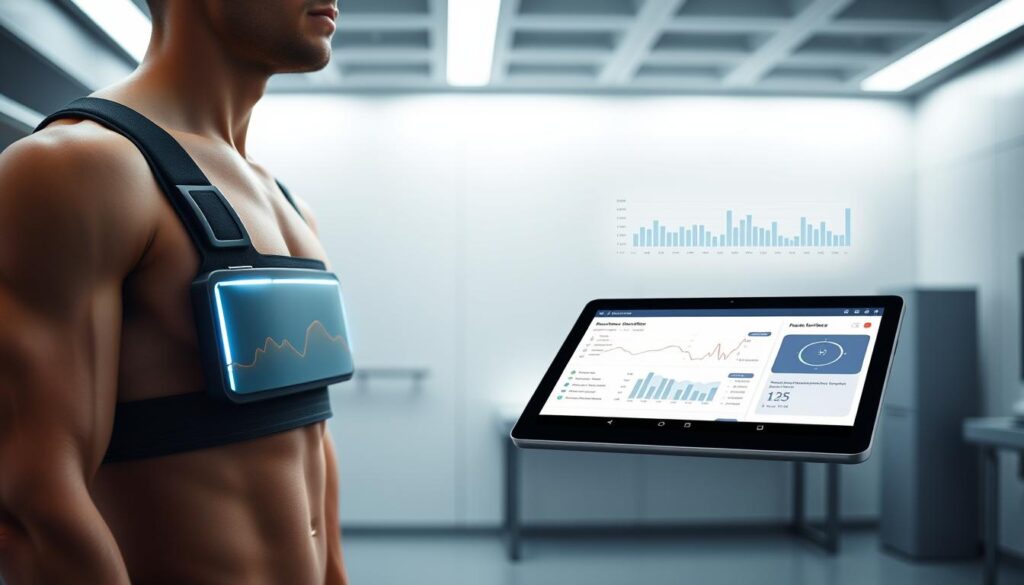
AI sports health monitoring is revolutionizing the way athletes train and recover. By leveraging advanced technologies, AI-powered systems can analyze various aspects of an athlete’s health and performance, providing valuable insights that were previously inaccessible.
Key Components of AI-Powered Health Systems
AI-powered health monitoring systems capture biomechanical data and convert it into actionable insights, greatly enhancing biomechanical analysis and improving precision in diagnostics and therapy. These systems rely on several key components to function effectively.
The primary elements include advanced sensors, machine learning algorithms, and data analytics tools. Together, they enable the collection, processing, and interpretation of complex data related to an athlete’s performance and health.
How Machine Learning Algorithms Analyze Athletic Performance
Machine learning algorithms play a crucial role in analyzing athletic performance by establishing normative data for individual athletes and comparing new data against these baselines to identify meaningful deviations. These algorithms can process multiple data streams simultaneously, correlating information from different sensors to create a comprehensive picture of an athlete’s movement patterns, physiological responses, and recovery status.
- Supervised learning techniques improve analytical capabilities over time.
- Unsupervised learning algorithms identify previously unknown patterns in performance data.
- Deep learning neural networks analyze complex movement patterns in three-dimensional space.
By utilizing these advanced analytical tools, coaches and trainers can gain a deeper understanding of athlete performance and make data-driven decisions to optimize training and prevent injuries.
IoT Technology in Athletic Performance Tracking
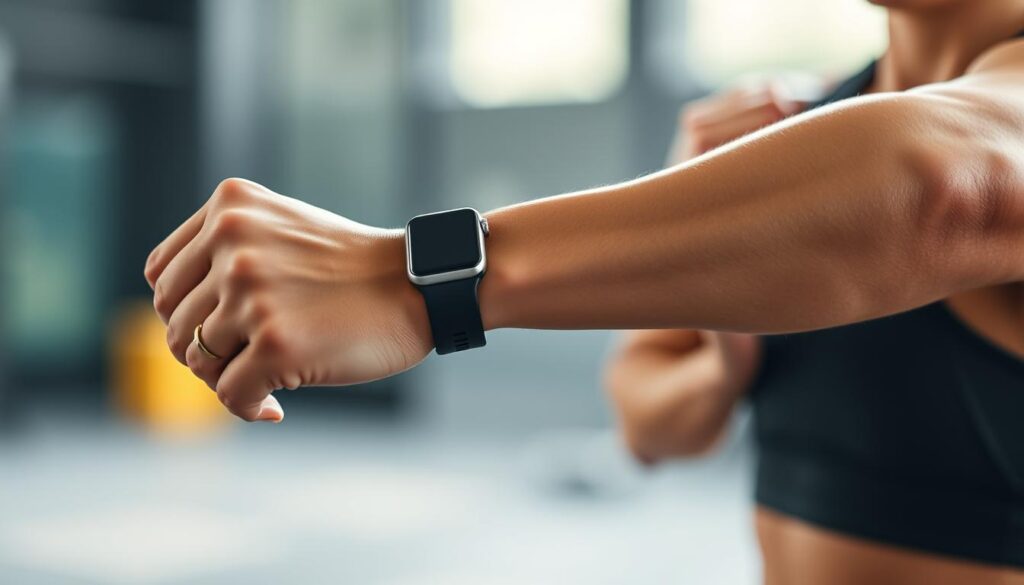
IoT technology is transforming the way athletes’ performance is tracked and analyzed. In the realm of sports, IoT devices play a crucial role in monitoring various metrics such as heart rate, motion, fatigue levels, and impact forces. These devices provide valuable insights that can directly impact performance and safety.
Wearable Sensors and Their Functionality
Wearable sensors are integral to IoT technology in sports, tracking biometric data through devices like smartwatches, fitness bands, and heart rate monitors. These devices enable coaches and athletes to monitor performance in real-time, making adjustments as needed to optimize training.
Data Collection and Transmission Systems
IoT data collection systems utilize various transmission protocols, including Bluetooth Low Energy (BLE) and cellular networks, to ensure reliable data transfer with minimal latency. Key features include:
- Edge computing capabilities for preliminary data processing on devices.
- Cloud-based storage for longitudinal analysis and predictive modeling.
- Data visualization tools for intuitive dashboards.
- API integration for comprehensive athlete monitoring ecosystems.
The development of these systems balances comprehensive data collection with practical considerations like battery life and ease of use, ensuring that technology enhances athletic performance without interference.
Real-Time Injury Prevention Through Smart Devices
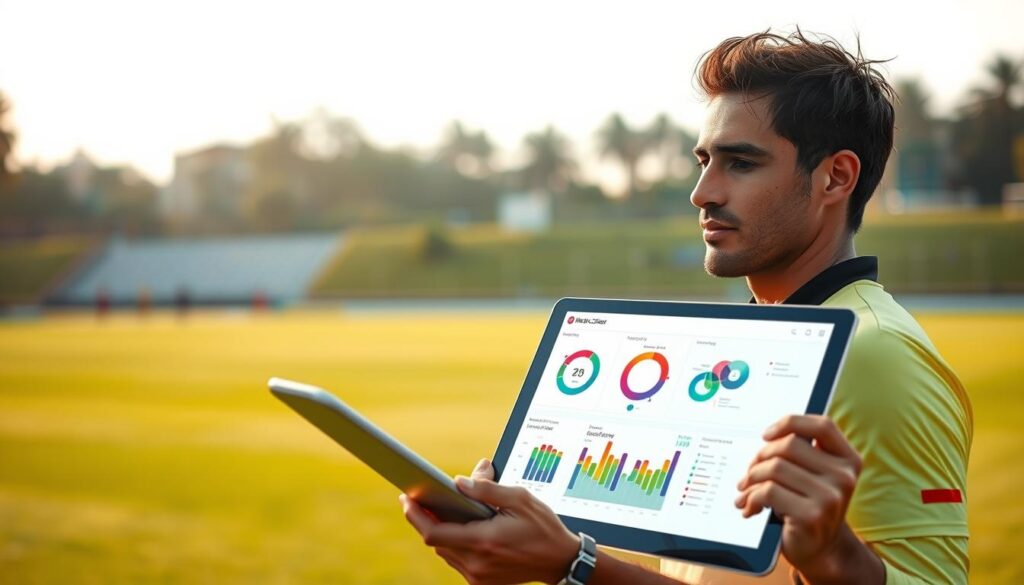
Real-time injury prevention is becoming a reality in sports thanks to advancements in smart device technology. By providing real-time insights into an athlete’s physical condition, biomechanics, and movement patterns, wearables can help prevent injuries, optimize performance, and accelerate recovery.
Biomechanical Analysis and Movement Pattern Detection
Biomechanical analysis is crucial in detecting potential injuries before they occur. Smart devices equipped with sensors can track an athlete’s movement patterns, identifying any irregularities that may lead to injury. This proactive approach enables coaches and athletes to make necessary adjustments to prevent injuries from happening.
Early Warning Systems for Potential Injuries
Early warning systems integrate multiple data streams to identify risk factors before they manifest as physical symptoms. These systems monitor not only biomechanical factors but also physiological indicators such as heart rate variability, sleep quality, and recovery metrics. By analyzing patterns in the data, machine learning algorithms can predict potential injuries, enabling a proactive approach to athlete health management.
| Feature | Description | Benefit |
|---|---|---|
| Biomechanical Analysis | Tracks movement patterns and detects irregularities | Prevents injuries by identifying potential issues early |
| Early Warning Systems | Integrates multiple data streams to predict potential injuries | Enables proactive approach to athlete health management |
| Real-Time Data | Provides real-time insights into athlete’s physical condition | Optimizes performance and accelerates recovery |
Mobile Recovery Apps: Personalized Rehabilitation
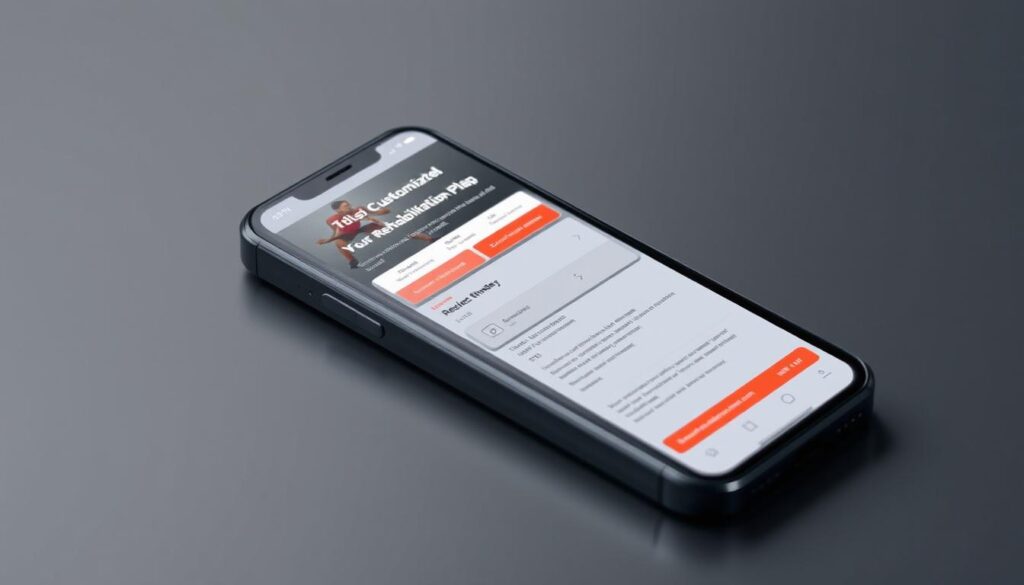
Athletes now have access to cutting-edge rehabilitation tools through mobile recovery apps that tailor recovery plans to individual needs. These apps leverage advanced technologies, including data analytics and AI, to create personalized rehabilitation programs.
Features of Effective Recovery Applications
Effective mobile recovery apps are equipped with a range of features that enhance the rehabilitation process. These include:
- Personalized exercise programming based on the athlete’s specific injury and progress.
- Progress tracking, allowing both athletes and therapists to monitor recovery.
- Guided exercise videos and tutorials to ensure correct form and technique.
- Integration with wearable sensors to collect real-time data on joint angles, muscle activity, and range of motion.
These features work together to create a comprehensive rehabilitation ecosystem.
Integration with Wearable Technology
The integration of mobile recovery apps with wearable technology represents a significant advancement in sports rehabilitation. Wearable sensors provide continuous monitoring of relevant metrics during rehabilitation exercises, ensuring that movements are performed correctly and within safe parameters for the athlete’s stage of recovery.
Data from wearables feeds directly into recovery applications, allowing for automatic adjustment of rehabilitation protocols based on objective data. This integration enables the creation of closed-loop rehabilitation systems where exercise prescriptions are continuously optimized based on real-time feedback from devices.
AI-Powered Training Optimization
By leveraging AI, coaches can now develop customized training plans tailored to individual athletes’ needs. This approach has transformed the sports landscape, enabling athletes to achieve peak performance while minimizing the risk of injury.
Customized Training Programs Based on Biometric Data
AI algorithms analyze biometric data to create personalized training programs. These programs are designed to optimize an athlete’s performance by taking into account various physiological metrics, such as heart rate, sleep quality, and muscle soreness.
The use of data analytics in sports training allows coaches to identify areas where athletes need improvement, thus tailoring the training regimen to address specific weaknesses.
Fatigue Monitoring and Recovery Management
Effective recovery is crucial for athletes to maintain peak performance. Fatigue monitoring systems utilize multiple data sources to assess an athlete’s readiness to train, including physiological markers and subjective wellness indicators.
By analyzing these metrics, coaches can implement targeted recovery strategies, such as cold therapy or nutritional interventions, to help athletes manage muscle fatigue and optimize their overall performance.
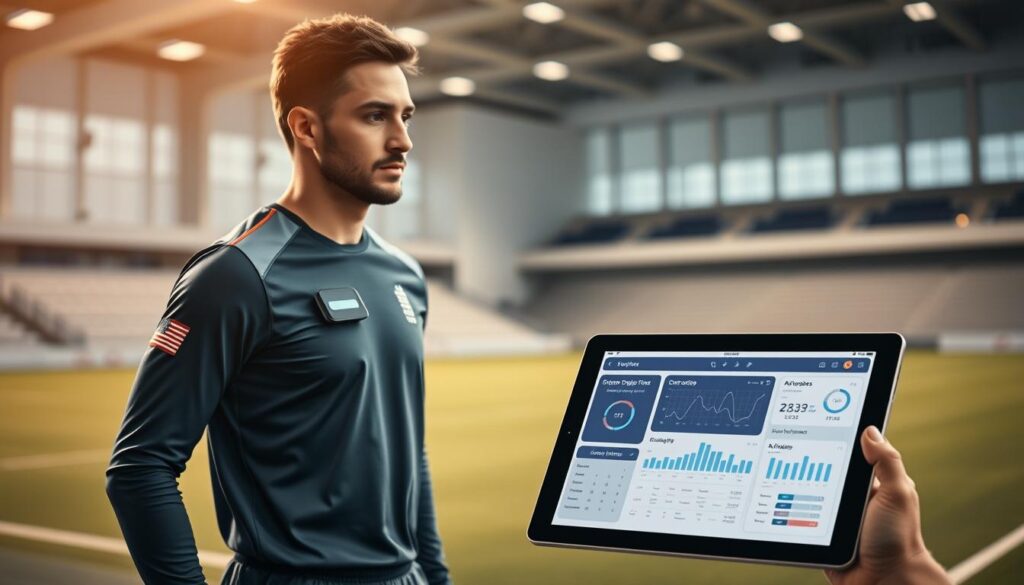
“The future of sports training lies in the ability to personalize programs based on detailed data analysis, ensuring that athletes can perform at their best while reducing the risk of injury.”
Data Analytics in Team Sports Management
Data analytics is revolutionizing team sports management by providing coaches and trainers with valuable insights into athlete performance and health. By analyzing data, junior academies and youth teams can evaluate the progress of athletes, scouts can identify promising juniors, and coaches can determine the strengths and weaknesses of their students.
Performance Metrics and Team Strategy Development
Performance metrics play a crucial role in team strategy development. Coaches use data analytics to assess athlete performance, identify areas for improvement, and develop targeted training programs. Key performance metrics include speed, agility, endurance, and other factors that contribute to an athlete’s overall performance.
- Analyzing individual stats helps coaches identify areas for improvement.
- Data-driven insights inform strategic decisions about team composition and strategy.
- Coaches can optimize training programs based on data-driven insights.
Injury Risk Assessment for Team Roster Management
Injury risk assessment is a critical component of team roster management. By analyzing data from various sources, including training loads, match demands, and injury history, teams can identify athletes at high risk of injury. This information enables coaches and medical staff to make informed decisions about training modifications, playing time management, and preventive interventions.
- Injury prevention strategies can be implemented to reduce the risk of injuries.
- Teams can use data analytics to evaluate the injury risk associated with potential signings or draft selections.
- Advanced analytics tools enable teams to simulate different roster management scenarios, optimizing the balance between performance and injury risk.
Case Studies: Successful Implementation in Professional Sports
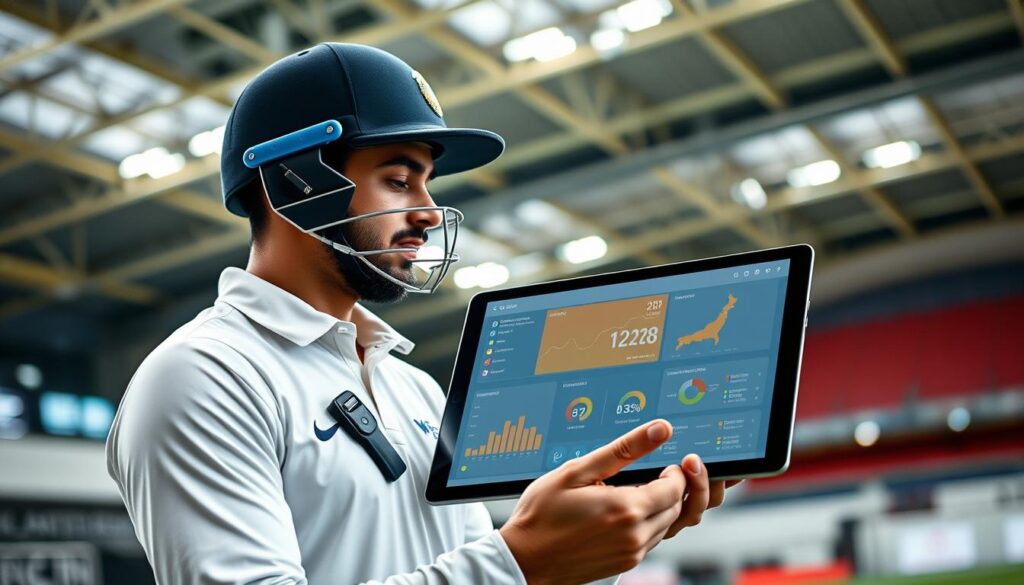
The use of AI and IoT in professional sports has revolutionized athlete health monitoring, with numerous successful implementations. Various sports leagues have adopted these technologies to improve athlete performance and reduce injuries.
NFL’s Next Gen Stats and Player Safety Initiatives
The NFL has implemented its Next Gen Stats program, which uses wearable technology and data analytics to track player movements and speed during games. This program has helped identify potential injury risks and improve player safety.
NBA’s Use of Wearable Technology
The NBA has also adopted wearable technology to monitor player performance and training loads. Teams use this data to optimize player recovery and prevent injuries, ultimately enhancing overall team performance.
European Football Clubs and GPS Tracking Systems
European football clubs have pioneered the use of GPS-based wearables to monitor players’ movements during training and matches. These devices track metrics such as distance covered, speed, and acceleration. By analyzing this data, coaches can adjust player workloads to prevent injuries and optimize training programs.
The integration of GPS tracking with video analysis creates powerful tools for evaluating both physical and tactical performance, allowing coaches to identify relationships between movement patterns and successful team play. This demonstrates how consistent long-term implementation of tracking technology can create competitive advantages through reduced injury rates and data-informed tactical development.
Challenges and Limitations in AI & IoT Health Monitoring
While AI and IoT have revolutionized athlete health monitoring, several challenges remain to be addressed. The effectiveness of these systems depends on various factors, including the accuracy of the data collected and the reliability of the devices used.
Data Privacy and Security Concerns
One of the significant challenges facing AI and IoT health monitoring systems is ensuring the privacy and security of athlete data. As these systems collect sensitive information, there is a risk of data breaches and unauthorized access. To mitigate this risk, it is essential to implement robust security measures, such as encryption and secure data storage.
Accuracy and Reliability Issues
Another challenge is ensuring the accuracy and reliability of the data provided by wearables. Inaccurate readings could lead to false alarms or, worse, missed injury warnings. It is essential that wearable devices undergo rigorous testing and calibration to ensure that they provide real-time feedback that is both accurate and reliable.
| Challenge | Description | Potential Solution |
|---|---|---|
| Sensor Accuracy | Sensor accuracy can be affected by various factors, including placement on the body and environmental conditions. | Rigorous testing and calibration of wearable devices. |
| Data Integration | The integration of data from multiple sensors and devices introduces additional complexity. | Standardization of data formats and protocols. |
| Algorithmic Variability | The variability in how different athletes move and respond physiologically creates challenges for creating algorithms. | Development of algorithms that can accurately interpret data across diverse populations. |
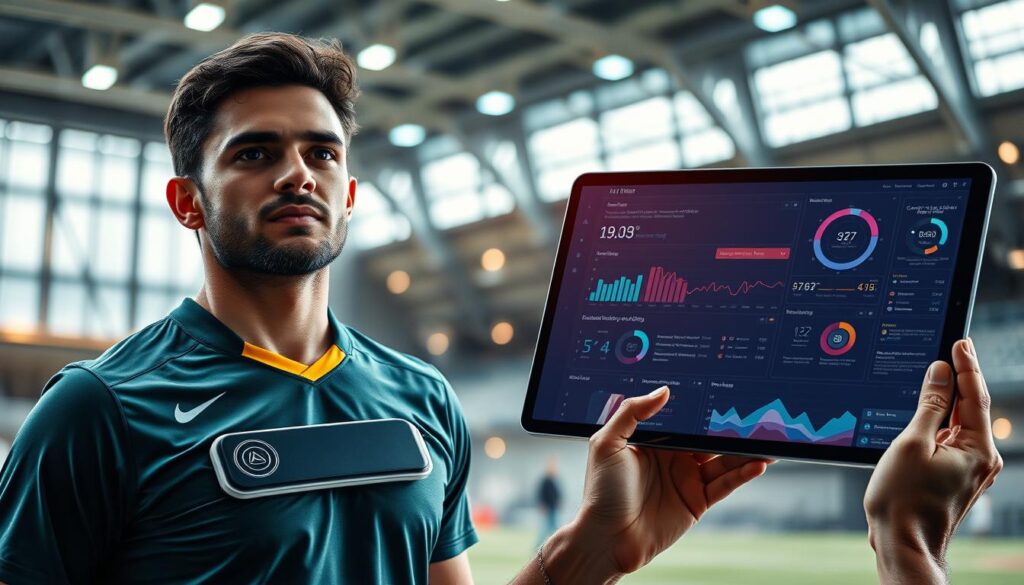
Future Trends in Athlete Health Monitoring Technology
As we look ahead, the convergence of AI, IoT, and immersive technologies is set to transform athlete health monitoring. The future of sports health is being shaped by the development of innovative applications that will revolutionize the way athletes train, recover, and perform.
Advanced Sensor Technology and Miniaturization
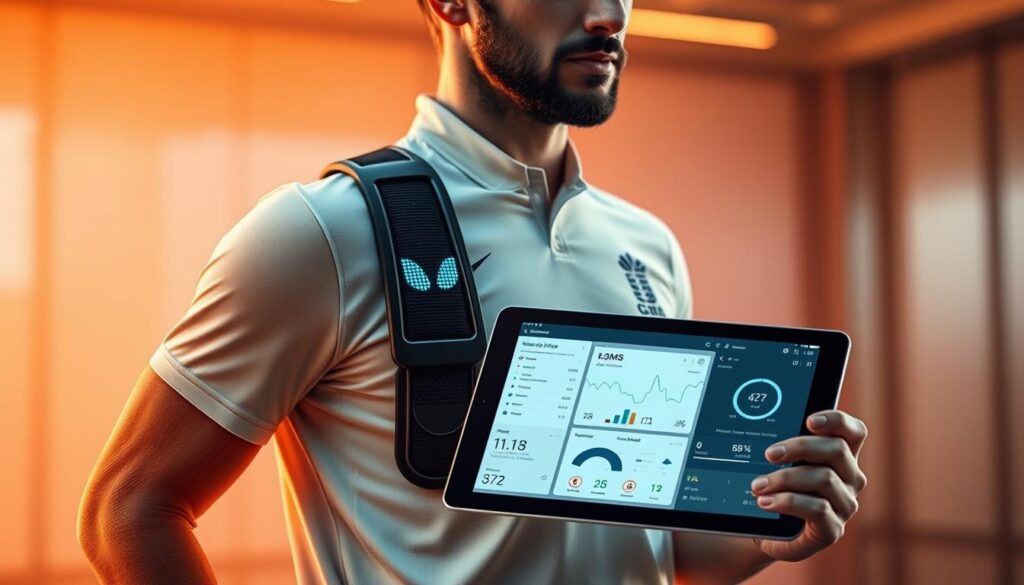
The development of advanced sensor technologies is leading to more sophisticated and miniaturized devices. These sensors will be able to capture a wider range of physiological and biomechanical data with greater speed and accuracy. As a result, athletes will have access to more detailed information about their health and performance, enabling them to make data-driven decisions.
Integration of AI, IoT, and Virtual Reality
The integration of AI, IoT, and virtual reality is expected to create immersive rehabilitation environments where athletes can perform recovery exercises with precise guidance and immediate feedback. This convergence of technologies will also enable sophisticated biomechanical analysis in simulated environments, allowing athletes to receive feedback on their movements without the physical stress of repeated real-world execution.
| Technology | Application | Benefits |
|---|---|---|
| AI | Personalized insights and recommendations | Improved performance and reduced injury risk |
| IoT | Real-time data collection and monitoring | Enhanced athlete safety and health monitoring |
| Virtual Reality | Immersive rehabilitation environments | Accelerated return-to-play timelines |
The future of athlete health monitoring lies in the integration of these cutting-edge technologies, creating comprehensive platforms that optimize both health and performance across all levels of sports.
Conclusion: The Transformative Impact of AI and IoT on Sports Health
The convergence of AI and IoT is redefining athlete health monitoring, offering unprecedented insights into athlete performance and health. These technologies have shifted the focus from reactive injury treatment to proactive injury prevention through continuous data collection and intelligent analysis. As a result, athletes at all levels can benefit from professional-grade health monitoring capabilities, potentially extending their careers.
Organizations that adopt these technologies gain a competitive edge through reduced injury rates and optimized recovery protocols. Iottive, a trusted IoT and AIoT solutions provider, offers services to develop custom athlete monitoring systems, including BLE app development and end-to-end IoT/AIoT solutions. Contact us at www.iottive.com or sales@iottive.com to leverage these transformative technologies.
FAQ
How does AI-powered health monitoring help prevent injuries in athletes?
AI-powered health monitoring systems analyze biometric data, such as heart rate, body temperature, and movement patterns, to identify potential risk factors for injuries. By detecting early warning signs, these systems enable coaches and trainers to take proactive measures to prevent injuries.
What is the role of wearable sensors in athletic performance tracking?
Wearable sensors, such as GPS tracking devices and accelerometers, collect data on an athlete’s movement patterns, speed, and distance. This information is transmitted to a central system, where it is analyzed to provide insights into the athlete’s performance and help optimize their training.
How do machine learning algorithms analyze athletic performance?
Machine learning algorithms analyze large datasets of athletic performance metrics, such as posture, speed, and distance, to identify patterns and trends. By analyzing these patterns, coaches and trainers can gain insights into an athlete’s strengths and weaknesses, and develop targeted training programs to improve their performance.
What are the benefits of using real-time data analytics in team sports management?
Real-time data analytics enable coaches and trainers to make informed decisions about team strategy and player deployment. By analyzing data on athlete performance, teams can gain a competitive edge and optimize their chances of success.
How do rehabilitation apps help athletes recover from injuries?
Rehabilitation apps provide personalized recovery plans, tailored to an individual athlete’s needs. These plans include exercises, stretches, and other interventions designed to promote healing and restore function.
What are the challenges associated with implementing AI and IoT health monitoring in professional sports?
The main challenges include ensuring data privacy and security, addressing accuracy and reliability issues, and integrating new technologies with existing systems.
How will advanced sensor technology and miniaturization impact athlete health monitoring?
Advanced sensor technology and miniaturization will enable the development of smaller, more sophisticated wearable devices that can collect a wider range of data on athlete performance and health.