
Top 5 Hospital Asset Tracking Systems In Upcoming Years

Once, a late-night procedure stalled because a needed ventilator could not be found. A nurse ran between units while the surgical team waited. That delay cost time, stress, and a tense moment for the patient.

Modern care should not hinge on where equipment sits. U.S. clinical teams move beyond spreadsheets to real-time visibility that turns raw data into action. Real-time location and usage insights help teams run preventive maintenance, cut rental spend, and reduce delays.
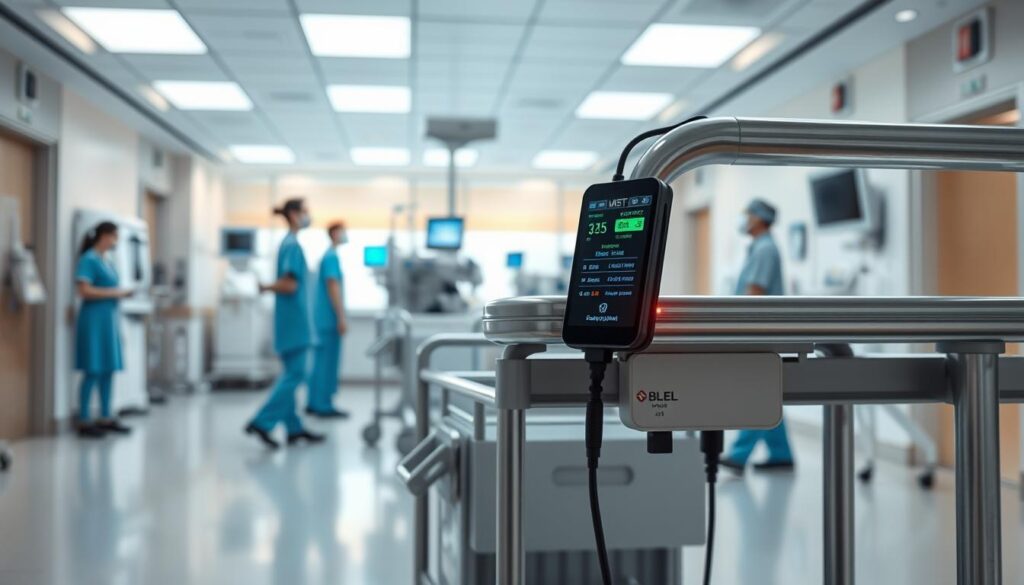
hospital asset tracking system, BLE and IoT-powered hospital inventory hub

This guide previews the 2025 landscape, from BLE and IoT-powered hospital inventory hub choices to RFID and RTLS options. You’ll learn how connected CMMS workflows sync work orders to location data. Expect clear ROI drivers: faster audits, better utilization, higher uptime, and measurable cost savings.

For inquiries, reach out: sales@iottiv.com | www.iottive.com

Key Takeaways

  • Real-time visibility moves teams from chasing equipment to delivering care.
  • BLE often wins for cost and battery life; RFID and UWB fit niche needs.
  • Connected CMMS closes the loop from location data to maintenance work orders.
  • ROI shows in faster audits, fewer rentals, and improved staff productivity.
  • Prioritize HIPAA-first security, role-based access, and phased rollouts.

The state of hospital asset tracking in 2025 and why it matters

By 2025, hospitals are leaving manual ledgers behind and adopting live location tools that change daily operations.

From spreadsheets to smart RTLS: eliminating downtime, loss, and hoarding

Legacy spreadsheets act as static ledgers. They don’t link location to maintenance or usage. That gap causes missed inspections, hoarded infusion pumps, and longer hunts before procedures.

Smart RTLS flips the script. It creates work orders automatically, sends tasks to technicians’ mobile apps, and uses geofencing to protect high-value items.

A modern hospital corridor, dimly lit with warm tones. In the foreground, a nurse approaches a medical cart, her movements highlighted by subtle shadows. The cart's surface is adorned with sleek, compact tracking devices, blinking with BLE signals. In the middle ground, doctors and staff navigate the space, their movements tracked seamlessly by the intelligent asset management system. The background reveals rows of equipment cabinets, their contents monitored in real-time, ensuring efficient inventory and preventing shortages. The atmosphere conveys a sense of calm efficiency, where technology seamlessly integrates with the hospital's operations, streamlining workflows and enhancing patient care.

Market momentum: why hospitals are investing to boost efficiency and compliance

Health systems are investing fast. The market is set to grow at over 15% CAGR through 2030. Benefits are clear: 20–25% fewer critical equipment issues, up to 90% less time locating gear, 15–30% lower rental spend, and ~40% faster audit prep.

Legacy tools Smart RTLS Impact
Manual lists, siloed data Real-time location and mobile workflows Faster retrieval, fewer delays
No maintenance orchestration Auto work orders by criticality Reduced equipment downtime
Hoarding and hidden demand Utilization analytics and alerts Equitable redistribution, lower rental costs

Operational efficiency ties directly to patient care and compliance readiness. Let’s connect for inquiry: sales@iottiv.com | www.iottive.com

What a modern hospital asset tracking system must deliver

Visibility must be practical, mobile-first, and tied to rules that reduce downtime and waste.

A bustling hospital ward, equipment and supplies tracked in real-time by a network of smart Bluetooth beacons. A doctor's tablet displays the live location of a critical care bed, its status updated seamlessly. Nurses navigate the corridors, their movements traced by the asset tracking system, ensuring every item is where it needs to be. Warm, diffused lighting casts a soothing glow, while high-resolution cameras capture the scene from multiple angles, providing a comprehensive view of the hospital's digital nervous system in action.

Real-time location and geofencing across multi-site facilities

Indoor GPS using rfid, BLE, or Wi‑Fi triangulation gives instant discovery across wings and campuses. Zone-based alerts flag when equipment moves outside permitted areas to prevent loss and hoarding.

Usage-driven preventive maintenance and AEM-ready workflows

Prioritize fixes by actual use, not just calendars. Systems capture run-time, cycles, and wear to trigger AEM-based PMs. That cuts unnecessary service and focuses techs where utilization and risk intersect.

Compliance and audit trails aligned to Joint Commission readiness

Automatic logs record inspections, calibrations, and PM. Single-click exports produce audit-ready documentation so managers meet compliance with less paperwork.

Mobile-first access, QR/NFC tagging, and work order execution

Technicians scan QR/NFC tags to pull histories, close work orders, and sync updates offline. Smart triage reorders queues so critical medical equipment gets priority service, lowering equipment downtime.

  • Lifecycle intelligence: combine usage and repair logs to guide replace-vs-repair choices with depreciation data.
  • Inventory controls: PAR levels and role-based access reduce silos and keep supplies balanced.
  • CMMS integration: alerts become action items to eliminate gaps between detection and remediation.

Let’s connect for inquiry: sales@iottiv.com | www.iottive.com

BLE vs RFID vs UWB vs barcodes: choosing the right RTLS stack

Selecting the right locating tech starts with clear goals: count accuracy, real-time updates, or sub-meter precision. Define whether you need fast storeroom counts, routine mobile device finds, or surgical-grade location before choosing a stack.
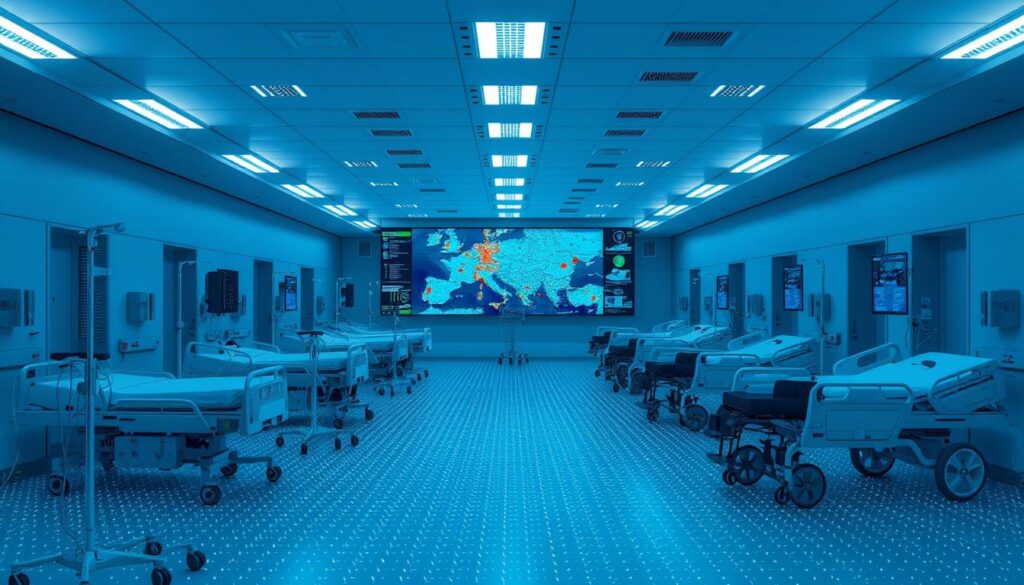
An expansive hospital ward, bathed in cool blue tones and crisp white lighting. In the foreground, a variety of medical equipment - IV stands, wheelchairs, and hospital beds - each equipped with sleek, modern BLE tracking tags, their signals pulsing in real-time. The middle ground reveals a complex network of overlapping RFID and UWB signals, visualized as a shimmering grid of data. In the background, a bank of large display screens showcases a live map of the facility, color-coded zones, and the precise locations of every trackable asset. The atmosphere is one of efficiency, control, and the seamless integration of cutting-edge RTLS technologies.

Barcodes for basics vs dynamic equipment realities

Barcodes are cheap and great for receiving and periodic audits.

They fail for items moved many times per shift. Use them for storerooms and controlled stock where scans are practical.

RFID trade-offs

Passive rfid tags cut tag cost but do not deliver live location. Active RFID improves visibility but raises reader and infrastructure costs, affecting total cost of ownership.

Why Bluetooth Low Energy often leads

BLE tags are affordable, work with smartphones, and scale via beacon networks. Proper tuning yields long battery life—often up to eight years—and lets teams tune accuracy where needed.

When UWB is worth the premium

UWB delivers sub-meter precision for high-criticality zones. Choose it when surgical or procedural workflows demand tight location tolerances despite higher deployment expense.

  • Decision criteria: accuracy needs, building materials, IT limits, battery cycles, and integration with Wi‑Fi.
  • Maintenance: reader density for rfid/uwb; beacon placement for BLE; and scheduled battery swaps.
  • Security and interference: pick encrypted channels and hospital-compliant policies.

Pragmatic hybrid: barcodes for storerooms, BLE for mobile equipment, and selective UWB where precision matters. Anchor any choice in ROI to cut search time, reduce equipment downtime, and boost operational efficiency.

Let’s connect for inquiry: sales@iottiv.com | www.iottive.com

Top hospital asset tracking systems to watch in the upcoming years

Leading vendors now bundle location, maintenance, and analytics into turnkey platforms. These platforms aim to cut search time, lower rental spend, and improve patient care by making device visibility actionable.

A modern hospital corridor bathed in bright, clinical lighting. In the foreground, a technician examines a medical device, its status displayed on a tablet interface. In the middle ground, nurses push gurneys down the hallway, each equipped with smart BLE tags for real-time asset tracking. In the background, a large dashboard displays the locations and status of critical hospital equipment, enabling efficient resource management. The atmosphere conveys a sense of technological prowess, seamless workflow, and patient-centric care.

BLE-centric RTLS platforms for rapid, scalable deployments

BLE-first solutions such as Kontakt.io enable quick rollouts using smartphones and beacon grids. They support PAR-level automation, alerts, and fleet analytics while keeping tag costs low.

Connected CMMS ecosystems that close the loop

Integrated CMMS transforms alerts into work orders. This syncs preventive maintenance, AEM routines, and audit-ready logs so teams spend less time on paperwork and more on uptime.

Enterprise suites for large campuses

Enterprise offerings from CenTrak, Stanley, and AeroScout-class vendors suit complex sites. They link to EHR, ERP, and cloud services to unify data across clinical and facilities teams.

IoT analytics and hybrid RFID/BLE approaches

IoT analytics provide utilization heatmaps and predictive insights to right-size fleets like pumps and defibrillators. Hybrid deployments use rfid for storerooms and BLE for mobile equipment, merged into a single dashboard for clear comparisons.

Platform Type Strength Best Use
BLE-centric Fast deploy, low tag cost Mobile equipment, rapid scale
Enterprise RTLS Deep integrations, high scalability Complex campuses, EHR/CMMS sync
Hybrid RFID/BLE Storeroom accuracy + mobile visibility Mixed environments, surgical tools
IoT analytics Utilization and compliance reports Fleet right-sizing, audit prep

Compare vendors by battery life, accuracy modes, mobile apps, API openness, SSO, and total cost of ownership. Align selection to clinical goals to gain measurable improvements in operational outcomes and patient care.

Let’s connect for inquiry: sales@iottiv.com | www.iottive.com

hospital asset tracking system, BLE and IoT-powered hospital inventory hub

One interoperable layer can turn scattered records into a live operations center for clinical and facilities teams.

A state-of-the-art hospital inventory hub, illuminated by soft, diffused lighting. In the foreground, an array of BLE-enabled smart tags track the real-time location of critical medical equipment, visualized as a glowing, interconnected network. The mid-ground reveals a sleek, minimalist user interface, showcasing detailed asset information and intuitive controls. In the background, a vast, modern hospital facility fades into the distance, conveying the scale and integration of this comprehensive asset tracking system. The overall atmosphere is one of efficiency, precision, and technological sophistication, perfectly suited to illustrate the "BLE and IoT-powered hospital inventory hub" section of the article.

Centralizing assets, data, and decisions in one interoperable hub

Unify records, PM schedules, and utilization so engineers and clinicians share the same source of truth. A connected CMMS merges work orders with device histories and gives single-click exports for compliance.

Integrations with EHR, ERP, CMMS, and RTLS to streamline workflows

Open APIs sync location feeds from rfid, Wi‑Fi, and beacon layers into one dashboard. This reduces duplicate entry and keeps status current across EHR and ERP views.

From visibility to action: alerts, triage, and automated tasking

Alerts become work orders automatically, then assign by skill and proximity. Mobile QR/NFC access pulls manuals and closes tasks at the bedside.

  • Usage-driven PM improves availability and extends equipment life.
  • Utilization heatmaps and PAR automation right-size inventory and curb hoarding.
  • Role-based access protects sensitive operational data while keeping teams informed.

Let’s connect for inquiry: sales@iottiv.com | www.iottive.com

Proven benefits and ROI drivers for U.S. hospitals

Concrete ROI figures show why visibility technology moves from pilot projects to enterprise rollouts. Modern deployments link location feeds with maintenance so teams measure real savings fast.

Higher uptime, lower rental and CapEx, and faster audits

Uptime improves: preventive maintenance and faster fault response cut cancellations. Facilities report 20–25% fewer critical equipment issues and meaningful drops in equipment downtime.

Costs fall: utilization analytics reduce rentals by 15–30% and help avoid unnecessary purchases. Many sites see up to a 4:1 ROI from reclaimed time and fewer failure events.

Audit readiness: automated logs and digital trails shrink prep time by ~40%, easing compliance work for engineering teams.

Better patient flow and staff productivity, less burnout

Visibility reduces search time—sometimes up to 90% less time locating gear—returning hours to nurses and biomeds. That extra time improves patient care and lowers staff stress.

Other gains include less hoarding via geofencing, clearer lifecycle decisions using depreciation data, and consistent benefits for both community centers and large academic campuses.

Baseline metrics to track: uptime, retrieval time, rentals, and audit hours. Measure these to validate program success.

Let’s connect for inquiry: sales@iottiv.com | www.iottive.com

Implementation roadmap: security, compliance, and scale

Start implementation by locking down data flows and access rules before any hardware goes live.

HIPAA-first design, encryption, and role-based access

Encrypt data in transit and at rest. Use SSO, MFA, and detailed audit logs to protect operational information. Role-based permissions limit views to what each team needs.

A phased rollout plan: pilots, PAR levels, and change management

Begin with a high-impact pilot to validate RTLS accuracy and mobile workflows. Tune PAR levels early to free up equipment and cut search time.

Train super-users, map stakeholders, and use short job aids. Collect feedback, then scale with measured waves.

Future-proofing with open APIs and sensor interoperability

Design integrations for EHR, ERP, and CMMS using open APIs. Plan for IoT sensor data to expand monitoring to temperature and vibration over time.

Phase Focus Key Outcome
Security Encryption, SSO/MFA, audit logs Compliance and protected data
Pilot RTLS validation, PAR tuning Quick wins in utilization
Scale Open APIs, lifecycle policies Interoperable, future-ready platform

Define AEM governance, tag lifecycles, and data-quality rules up front. Align reports to leadership goals: uptime, retrieval time, rentals, and audit hours for continuous improvement.

Let’s connect for inquiry:

sales@iottiv.com

www.iottive.com

Conclusion

When location, usage, and maintenance data converge, engineers and clinicians can stop searching and start fixing.

Replace static logs with a real-time platform that links location to automated work orders. A BLE-led RTLS often gives the best mix of cost and scale, while rfid and UWB fill precision or storeroom roles.

Must-have features include geofencing, usage-driven PM and AEM, digital audit trails, mobile QR/NFC workflows, and automatic work order creation. The payoff: higher uptime, fewer rentals, faster audits, lower costs, and better patient care.

Begin with a secure, phased rollout, open APIs, and strong change management to ensure adoption. For a discovery call to map requirements and pilot options, contact sales@iottiv.com | www.iottive.com.

FAQ

What are the key benefits of implementing a modern asset tracking solution in healthcare?

A modern solution reduces equipment downtime, cuts rental and capital costs, speeds audits, and improves staff productivity. It delivers real-time location, utilization metrics, and maintenance alerts so caregivers spend less time searching for pumps, monitors, and other devices and more time with patients.

How do BLE, RFID, UWB, and barcodes compare for equipment location?

Barcodes work well for inventory basics and low-cost tagging. RFID offers passive, low-cost tagging but can need complex readers. UWB gives centimeter-level precision for high-value workflows but costs more. Bluetooth Low Energy strikes a balance with good range, battery life, and scalability for many clinical use cases.

Can these platforms integrate with existing clinical systems like EHR and CMMS?

Yes. Leading platforms provide open APIs and native connectors for EHR, ERP, and CMMS so location events become actionable work orders, maintenance schedules, and clinical alerts. Integration reduces manual entry and improves compliance and audit trails.

How does real-time location improve preventive maintenance and uptime?

Location plus usage data enables condition-based or usage-driven maintenance. Systems can trigger preventive tasks when runtime thresholds are hit, lowering unexpected failures and extending equipment life while ensuring devices are available when needed.

What privacy and security controls should a hospital require?

Require HIPAA-first design, encrypted communications, role-based access, and regular vulnerability testing. Ensure data segregation, audit logging, and compliance documentation to satisfy IT and regulatory teams during evaluations.

How do I choose the right RTLS stack for a multi-site health system?

Assess accuracy needs, asset mobility, facility layout, and budget. Choose BLE for scalable deployments, UWB for high-precision zones, and RFID for tag-density problems. Prioritize open APIs, vendor interoperability, and a phased pilot before enterprise rollout.

What ROI timeline can hospitals expect after deployment?

Many systems show measurable benefits within 6–12 months through reduced rentals, fewer lost devices, faster audits, and improved staff efficiency. ROI depends on baseline inefficiencies, scope, and adoption of workflow automation.

How do hybrid solutions help in mixed clinical environments?

Hybrid solutions combine BLE, RFID, and barcodes to match technology to use case—BLE for mobile devices, RFID for sterile supply carts, and barcodes for consumables. This approach optimizes cost while covering diverse asset types.

What deployment approach minimizes disruption to clinical workflows?

Use a phased rollout: start with a pilot unit, validate PAR levels and workflows, refine tagging and alerts, then expand. Include clinical champions, training, and clear SOPs so staff adopt the new tools without workflow friction.

How do analytics and utilization reports drive better decision-making?

Analytics reveal hidden usage patterns, underused capital, and bottlenecks. Reports support staffing decisions, capital planning, and preventive maintenance prioritization, improving operational efficiency and patient throughput.

Are there off-the-shelf platforms recommended for rapid deployments?

Several BLE-centric vendors offer rapid, scalable deployments with cloud management and mobile apps for frontline staff. Evaluate vendors on pilot success, integration capabilities, and support for device lifecycle management.

What should be included in service-level agreements for these solutions?

SLAs should cover uptime guarantees, support response times, software updates, data retention policies, and performance metrics for location accuracy and battery life. Clear escalation paths help maintain operational continuity.

How do tracking solutions support compliance and audits?

They maintain tamper-evident logs, automated audit trails, and location history for each tagged device. This documentation simplifies inspections and helps demonstrate readiness for regulatory requirements.

What are common pitfalls to avoid during implementation?

Avoid inadequate change management, poor tagging strategies, skipping pilot testing, and ignoring integrations. These lead to low adoption, inaccurate data, and unmet ROI expectations.

How do systems handle battery life and tag maintenance?

Modern tags have extended battery life and remote monitoring for low-battery alerts. Workflow automation can schedule battery replacements during low-usage windows to avoid service gaps.


Let’s Get Started

Why Every Smart Hospital Needs a Real-Time Asset Tracking System

Hospitals manage thousands of medical devices daily, making asset management challenging. The complexity of hospital operations leads to inefficiencies and lost equipment, resulting in financial losses of about $4,000 per bed annually. In today’s digital age, smart technologies and IoT solutions, including advanced Asset Tracking systems, IoT, Sensors, are transforming asset tracking in a Smart Hospital environment, allowing smart hospitals to monitor equipment in real-time and improve operational efficiency through effective App Development that supports Real Time Reports.
Real-Time Asset Tracking in Hospitals System
The introduction of real-time asset tracking systems has been a game-changer, providing immediate visibility into equipment location, usage, and maintenance status. This not only reduces the incidence of lost or stolen equipment but also improves utilization and maintenance, ultimately leading to enhanced patient care and significant cost savings.

Key Takeaways

  • Hospitals face significant challenges in managing their assets manually, leading to inefficiencies and financial losses.
  • Real-time asset tracking systems offer a transformative solution by providing immediate visibility into medical assets and equipment.
  • The implementation of such asset tracking software can lead to improved inventory management and enhanced patient care.
  • Significant cost savings can be achieved through reduced loss and improved maintenance of hospital assets.
  • Adopting real-time asset tracking is crucial for hospitals aiming to leverage technology for operational efficiency.

The Critical Role of Asset Management in Modern Healthcare

In today’s healthcare landscape, asset management plays a vital role in ensuring quality patient care. Effective asset management enables hospitals to optimize the use of their equipment and resources, leading to improved operational efficiency and reduced costs.

The Scale of Hospital Asset Management Challenges

Hospitals face significant challenges in managing their assets, with the average hospital losing around $4,000 worth of equipment per bed annually in the US due to theft or loss. This not only results in substantial financial losses but also impacts patient care and satisfaction. The lack of effective asset tracking systems, including IoT solutions and real-time report capabilities, leads to equipment hoarding, unnecessary purchases, and maintenance inefficiencies, highlighting the need for a robust asset control management system.

Financial Impact of Poor Asset Tracking

Poor asset tracking has a direct and significant impact on hospital budgets. The financial losses due to lost or stolen equipment are substantial, with UK businesses losing £98.6 billion annually due to tracking mistakes. In hospitals, this translates to unnecessary duplicate purchases, operational disruptions, and poor asset utilization rates, ultimately affecting the return on investment for expensive medical equipment. Implementing advanced asset tracking solutions, including IoT sensors and real-time report capabilities, is essential for transforming hospitals into smart hospitals.

Financial Impact Description Estimated Cost
Lost/Stolen Equipment Equipment lost or stolen due to poor tracking $4,000 per bed annually
Duplicate Purchases Unnecessary purchases due to a lack of tracking Variable
Operational Disruptions Disruptions caused by unavailable equipment Variable

The financial implications of poor asset tracking are far-reaching, affecting not only the hospital’s bottom line but also its ability to provide quality patient care. Implementing a comprehensive asset tracking system can help mitigate these challenges and improve overall operational efficiency.

Understanding Real-Time Asset Tracking Systems for Smart Hospitals

Real-time asset tracking systems are revolutionizing the way hospitals manage their assets, ensuring that critical equipment is always available when needed. These systems utilize advanced technologies to provide hospitals with the ability to monitor and manage their assets more effectively.
Smart IoT Mobile Application Solution For Healthcare

Core Components of Hospital Asset Tracking Solutions

Hospital asset-tracking solutions rely on several core components to function effectively. These include IoT devices that connect via various networks such as LoRaWAN, Wi-Fi, or cellular, providing real-time updates on asset locations. The choice of network depends on the hospital’s specific needs, with LoRaWAN being particularly suitable due to its extensive coverage, low power consumption, and high security.
The use of RFID technology is also crucial, offering advantages over traditional barcode systems, including the ability to read multiple tags simultaneously and not requiring line-of-sight. RFID tags can be passive or active, with the latter providing longer read ranges and often used for tracking high-value or critical assets.

IoT and RFID Technology in Healthcare Asset Management

The integration of IoT and RFID technology has transformed healthcare asset management. IoT enables the connection of various devices, allowing for real-time monitoring of assets, including their location, condition, and utilization. RFID technology complements IoT by providing the identification and tracking capabilities necessary for asset management.
A notable example is a hospital in Turkey that successfully implemented RFID and IoT solutions to track over 200,000 items, significantly improving their ability to locate equipment quickly. This not only enhances operational efficiency but also ensures that patients receive the care they need promptly.

How Asset Tracking Technology Transforms Hospital Operations

The integration of asset tracking technology is revolutionizing hospital operations by enhancing efficiency and reducing costs. By leveraging advanced tracking systems, hospitals can optimize their resources, streamline processes, and improve patient care. This transformation is driven by the need for more efficient and effective management of hospital assets.

Creating a Connected Healthcare Environment

A connected healthcare environment is crucial for efficient hospital operations. Asset tracking technology enables hospitals to create a network of interconnected devices and assets, allowing for real-time monitoring and management. This connectivity is essential for optimizing equipment utilization and reducing downtime.
By implementing asset tracking solutions, hospitals can gain real-time insights into their operations, enabling data-driven decision-making. This connected environment also facilitates better communication among staff, improving collaboration and patient care.

Real-Time Location Systems (RTLS) Implementation

Real-Time Location Systems (RTLS) are a critical component of asset tracking technology in hospitals. RTLS enables the continuous tracking and monitoring of assets, personnel, and patients. The implementation of RTLS involves several key considerations, including infrastructure requirements, tag selection, and integration with existing hospital systems.
The following table illustrates the different location technologies used in RTLS and their applications within hospital areas:

Location Technology Application Hospital Area
Infrared Asset tracking, patient monitoring ICU, patient rooms
Ultrasound Asset tracking, staff tracking Operating rooms, wards
BLE (Bluetooth Low Energy) Asset tracking, patient monitoring Emergency department, patient rooms
Wi-Fi Asset tracking, staff tracking Hospital-wide, wards

As shown in the table, different location technologies are suited for various applications within hospital areas. The choice of technology depends on the specific needs of the hospital and the requirements of the RTLS implementation.

Key Benefits of Implementing Asset Tracking in Healthcare Facilities

Implementing asset tracking in healthcare facilities revolutionizes the way hospitals manage their resources. By utilizing real-time location systems and RFID technology, hospitals can significantly enhance their operational efficiency and patient care services.

Improved Inventory Management and Resource Utilization

Asset tracking enables hospitals to maintain accurate inventory levels, reducing the likelihood of equipment loss and minimizing the time spent searching for misplaced items. Nurses can save up to 72 minutes per shift by having quick access to necessary equipment, allowing them to focus more on patient care.
A study on hospital asset management revealed that effective tracking systems lead to better resource utilization, ensuring that equipment is used optimally across different departments.

Benefits Pre-Implementation Post-Implementation
Time spent searching for equipment 72 minutes/shift 0 minutes/shift
Equipment loss High Low
Staff satisfaction Low High

Enhanced Patient Care and Safety

By streamlining equipment management, hospitals can improve patient care and safety. Real-time tracking ensures that critical equipment is always available and in good working condition, reducing the risk of adverse events.
Moreover, asset tracking facilitates the maintenance of medical equipment, ensuring that it is properly calibrated and inspected regularly, thus enhancing patient safety.

Operational Efficiency and Time Savings

The implementation of asset tracking systems leads to significant operational efficiency and time savings. Automated workflows replace manual processes for equipment requests, transfers, and maintenance scheduling, reducing the administrative burden on hospital staff.
Operational data generated by tracking systems helps identify and eliminate bottlenecks in hospital workflows, further improving efficiency. As a result, hospitals can treat more patients with the same resources, enhancing their overall operational capacity.

Financial ROI of Smart Hospital Asset Tracking Systems

Real-Time Asset Tracking System in Smart Hospital
Smart hospital asset tracking systems offer a substantial return on investment through various cost-saving measures. By implementing real-time tracking technology, hospitals can significantly reduce operational costs and improve resource optimization.

Cost Reduction Through Loss Prevention

One of the main financial advantages of asset tracking is lowering losses caused by misplaced or stolen equipment. By monitoring assets in real-time, hospitals can avoid unnecessary costs on replacements, thus cutting overall expenses.
This proactive approach not only helps in tracking the location of each piece of equipment but also enables healthcare facilities to quickly identify and recover lost items, minimizing downtime. Furthermore, the integration of asset tracking systems can lead to enhanced accountability among staff, as they become more aware of the importance of safeguarding valuable medical equipment. This cultural shift towards responsibility further contributes to reducing losses and ensuring that resources are utilized efficiently.

Long-term Financial Benefits and Resource Optimization

Beyond immediate loss prevention, asset tracking provides long-term financial benefits, including optimized procurement, extended equipment lifecycles, and reduced maintenance costs. Utilization data enables hospitals to right-size their equipment inventory, avoiding unnecessary capital expenditures on underutilized equipment. Predictive maintenance capabilities reduce repair costs and extend the lifespan of expensive medical devices, maximizing the return on investment in asset tracking technology.
By optimizing resource utilization, hospitals can improve operational capacity, allowing them to serve more patients without proportional increases in equipment investment. This creates a compelling financial case for sustained investment in asset tracking solutions.

Real-World Applications of Asset Tracking in Smart Hospitals

Real-time asset tracking is becoming a cornerstone in modern hospitals, optimizing operations and elevating the quality of care. By implementing advanced tracking systems, hospitals can significantly improve their management of medical equipment, streamline patient flow, and enhance staff efficiency.

Medical Equipment Tracking and Maintenance

One of the primary applications of asset tracking in hospitals is the management of medical equipment. With the use of RFID and IoT technologies, hospitals can monitor the location and status of their equipment in real-time. This not only reduces the time spent searching for equipment but also ensures that all devices are properly maintained. According to research, hospital staff spend an average of 72 minutes per shift searching for medical equipment, diverting attention from patient care. By implementing asset tracking, hospitals can minimize this time waste.
“The use of RFID technology has transformed our equipment management process, allowing us to focus more on patient care rather than searching for equipment.” – A statement that reflects the experience of many hospitals that have adopted asset tracking solutions.

Patient Flow Optimization and Bed Management

Asset tracking also plays a crucial role in optimizing patient flow and bed management within hospitals. By tracking the location of patients, beds, and equipment, hospitals can streamline the admission, transfer, and discharge processes. This leads to reduced wait times, improved patient satisfaction, and more efficient use of hospital resources.
hospital asset tracking

Staff Efficiency and Workflow Improvements

Asset tracking directly improves staff efficiency by eliminating time-consuming searches and streamlining workflows. Real-time equipment location reduces nurse walking time and frustration, allowing more time for direct patient care activities. Moreover, tracking data helps optimize staff deployment by identifying peak usage times and areas for different equipment types. Automated workflows replace manual processes for equipment requests, cleaning verification, and transport coordination, further enhancing staff productivity.
For instance, by analyzing tracking data, hospitals can identify patterns in equipment usage and adjust their staffing accordingly. This not only improves operational efficiency but also enhances patient care by ensuring that staff are available when and where they are needed most.
In conclusion, the real-world applications of asset tracking in smart hospitals are multifaceted, ranging from medical equipment tracking and maintenance to patient flow optimization and staff efficiency improvements. As hospitals continue to adopt and refine these technologies, they can expect to see significant improvements in their operations and the quality of care they provide.

Specialized Use Cases for Hospital Asset Tracking

Specialized asset tracking use cases are emerging as a critical component in modern hospital operations. As healthcare facilities continue to adopt advanced tracking technologies, new applications are being discovered that enhance patient care, improve operational efficiency, and reduce costs.

Temperature-Sensitive Medication and Vaccine Monitoring

One of the critical use cases for asset tracking in hospitals is monitoring temperature-sensitive medications and vaccines. By utilizing temperature sensors integrated with RFID tags, hospitals can ensure that these critical assets remain within the required temperature range during storage and transportation. This not only helps in maintaining the efficacy of the medications but also aids in compliance with regulatory requirements.

Emergency Vehicle and Equipment Tracking

Asset tracking systems are also being used to monitor emergency vehicles and equipment. This includes tracking the location and status of ambulances, emergency response vehicles, and critical equipment such as defibrillators and ventilators. By ensuring that these assets are readily available and properly maintained, hospitals can improve response times and enhance patient care in emergencies.

High-Value Asset Security and Anti-Theft Measures

High-value asset security is another crucial application of asset tracking in hospitals. By implementing advanced tracking systems, hospitals can significantly reduce the risk of theft and loss of valuable equipment. For instance, geofencing capabilities can be used to create virtual boundaries around specific areas, triggering alerts if valuable assets are moved outside these areas. This not only deters theft but also aids in the recovery of stolen assets.

Use Case Benefits Technology Used
Temperature-Sensitive Medication Monitoring Ensures medication efficacy, regulatory compliance RFID, Temperature Sensors
Emergency Vehicle and Equipment Tracking Improves response times, enhances patient care GPS, RFID
High-Value Asset Security Reduces theft, aids in asset recovery Geofencing, RFID

By adopting these specialized asset tracking use cases, hospitals can not only improve their operational efficiency but also enhance patient care and reduce costs associated with lost or stolen assets.

Overcoming Common Healthcare Asset Management Challenges

Asset tracking technology plays a vital role in resolving common healthcare asset management issues. Hospitals face numerous challenges in managing their assets effectively, from equipment theft and loss to maintenance and regulatory compliance. A robust asset tracking system can help mitigate these challenges.
asset tracking system

Addressing Equipment Theft and Loss

Equipment theft and loss are significant concerns for healthcare facilities. Implementing an asset tracking system helps hospitals monitor the location and status of their assets in real-time, reducing the risk of theft and loss. This not only saves costs but also ensures that critical equipment is available when needed.

Streamlining Maintenance and Repair Processes

Regular maintenance is crucial for ensuring that medical equipment functions properly. An asset tracking system automates maintenance scheduling and tracking, making it easier for hospitals to keep their equipment in good working order. This leads to improved patient care and reduced downtime.

Ensuring Regulatory Compliance and Reporting

Regulatory compliance is a significant challenge for healthcare organizations. Asset tracking systems simplify compliance by automating documentation of equipment location, maintenance, and usage. This supports specific healthcare regulations, including Joint Commission requirements and FDA regulations for medical devices. Automated reporting capabilities reduce the administrative burden while improving accuracy.

  • Automated documentation of equipment maintenance and usage supports regulatory compliance.
  • Tracking data provides an audit trail that demonstrates due diligence during regulatory inspections.
  • Hospitals have used tracking systems to streamline accreditation processes and reduce compliance-related citations.

By addressing these common challenges, hospitals can improve their asset management practices, leading to better patient care and operational efficiency.

Integration Capabilities with Existing Hospital Systems

Smart Hospital Asset Tracking System.
Asset tracking systems that integrate with hospital management software are revolutionizing healthcare operations. By connecting with existing systems, these tracking solutions enable hospitals to optimize their asset utilization and streamline operations.

Connecting with Electronic Health Records (EHR)

One of the critical integrations for asset tracking systems is with Electronic Health Records (EHR). This connection allows for the seamless exchange of data between patient records and asset information, enhancing the overall efficiency of hospital operations. By integrating with EHR systems, hospitals can ensure that patient care is not delayed due to equipment unavailability.

Compatibility with Hospital Management Software

The compatibility of asset tracking systems with hospital management software is crucial for comprehensive asset lifecycle management. This integration enables automated reordering, optimized stock levels, and a closed-loop process for equipment repairs and preventive maintenance. When evaluating asset tracking solutions, hospitals should consider their compatibility with commonly used hospital management software platforms.
By integrating asset tracking with broader hospital management platforms, including facilities management, inventory control, and financial systems, hospitals can make better decisions and use resources more effectively. This integration enables comprehensive asset lifecycle management from procurement through retirement, with complete financial tracking.

Selecting the Right Asset Tracking Solution for Your Healthcare Face

As healthcare facilities evolve, the need for a sophisticated and adaptable asset tracking solution becomes increasingly important. Selecting the right system is crucial for enhancing operational efficiency, improving patient care, and reducing costs.

Key Features to Look for in Hospital Asset Tracking Systems

When evaluating asset tracking solutions, several key features should be considered. Real-time tracking capabilities are essential for monitoring the location and status of assets across the facility. Integration with existing systems, such as Electronic Health Records (EHRs) and Enterprise Resource Planning (ERP) software, is also vital for seamless operations. Additionally, a user-friendly interface and robust reporting tools can significantly enhance the usability of the system.

Scalability and Future-Proofing Considerations

It’s crucial to choose an asset tracking system that can grow with your hospital. A scalable architecture ensures that the system can accommodate an increasing number of tracked assets, users, and locations without compromising performance. Modular solutions that allow for the addition of advanced features, such as predictive maintenance and patient flow optimization, as needs evolve, are particularly valuable. When assessing vendors, consider their commitment to ongoing development and their ability to incorporate emerging technologies like artificial intelligence and machine learning into their solutions.
To ensure future-proofing, look for systems with open APIs and standards compliance. Evaluating a vendor’s innovation roadmap can provide insights into their ability to adapt to future healthcare needs. By choosing a system that is both scalable and forward-thinking, healthcare facilities can avoid the need for costly overhauls and ensure that their asset tracking solution continues to meet their evolving needs.

Implementation Best Practices for Hospital Asset Tracking

A well-planned implementation is key to the success of hospital asset tracking systems. To ensure a smooth transition, hospitals must consider several critical factors, including staff adoption and effective use of the new system.

Phased Deployment Strategies

Implementing a hospital asset tracking system in phases can help minimize disruptions and allow staff to gradually adapt to the new technology. This approach enables hospitals to test and refine their processes, ensuring a more successful rollout. By prioritizing high-value or critical assets, hospitals can maximize the benefits of their asset tracking system from the outset.

Staff Training and Change Management

Staff training is crucial for the successful adoption of any new system. Hospitals should develop role-specific training programs that focus on the benefits and functionality most relevant to each user group. Effective change management strategies, including clear communication and ongoing support, can help address resistance and build enthusiasm for the new tracking capabilities. Identifying and empowering champions within different departments can also provide valuable support and feedback to the implementation team.
As the saying goes, “You can’t manage what you can’t measure.” Effective asset tracking implementation requires a deep understanding of how staff interact with the system. “How easy your staff finds the system to use is key to its success,” emphasizing the need for intuitive and user-friendly technology.

Conclusion: The Future of Smart Hospitals with Real-Time Asset Tracking

Smart hospitals are leveraging real-time asset tracking to revolutionize patient care and operational efficiency. The urgency for digitizing healthcare today is stronger than ever, with hospitals facing mounting pressures from financial solvency to staff shortages, alongside high demand for healthcare services from an aging global population.
The applications of Real Time Location Systems (RTLS) in healthcare settings are endless, and the journey toward a true smart hospital is intricate – and must be part of an overarching digital transformation or IoT smart hospital solution. When implemented effectively, RTLS is a valuable asset in a hospital’s digital infrastructure, readily scalable and extendable.
The transformative impact of real-time asset tracking on hospital operations is significant, from improved resource utilization and staff efficiency to enhanced patient care and financial performance. As we look to the future, emerging technologies such as artificial intelligence for predictive analytics and augmented reality for equipment location will further enhance tracking capabilities.
Successful implementation depends on aligning tracking solutions with the hospital’s strategic objectives and ensuring they address real operational challenges. Healthcare facilities must evaluate their current asset management challenges and consider how real-time tracking could transform their operations and patient care delivery.
In conclusion, the integration of real-time asset tracking systems is a crucial step towards creating smarter, more efficient hospitals. As the healthcare landscape continues to evolve, embracing this technology will be key to improving patient outcomes, reducing costs, and enhancing the overall quality of care.

FAQ

What is the primary purpose of implementing a real-time location system in a healthcare facility?

The primary purpose is to improve the management of medical equipment, enhance patient care, and optimize operational efficiency by ensuring that assets are accurately located and utilized.

How does RFID technology contribute to healthcare asset management?

RFID technology enables the precise tracking of assets in real-time, reducing loss and improving the maintenance of medical equipment, thus ensuring that critical devices are available when needed.

What are the key benefits of using asset management software in hospitals?

The key benefits include improved inventory management, reduced costs associated with lost or misplaced equipment, and enhanced patient safety through the timely availability of necessary medical devices.

How can real-time asset tracking improve patient outcomes?

By ensuring that medical equipment is available and in good working order, healthcare providers can deliver timely and effective care, leading to better patient outcomes and reduced hospital stays.

What challenges do healthcare facilities face when implementing asset tracking systems?

Common challenges include integrating the tracking system with existing infrastructure, ensuring staff adoption, and maintaining the accuracy of the system over time.

How can asset tracking technology help in reducing healthcare costs?

By minimizing the loss of equipment, reducing the need for redundant purchases, and optimizing the use of existing resources, asset tracking can lead to significant cost savings.

What role does IoT play in modern healthcare asset management?

IoT enables the connection of medical devices and equipment to a network, allowing for real-time monitoring, data collection, and analysis, which can inform maintenance, utilization, and replacement decisions.

Can asset tracking systems help in improving staff efficiency?

Yes, by providing real-time information on the location and status of equipment, staff can quickly locate necessary devices, reducing the time spent searching and improving workflow efficiency.

How do healthcare facilities ensure the security of high-value assets?

By implementing asset tracking solutions that include security features such as alerts for unauthorized movement or removal, facilities can better protect valuable equipment.

What considerations are important when selecting an asset tracking solution?

Key considerations include the scalability of the system, its compatibility with existing systems, the level of support provided by the vendor, and the total cost of ownership.


Let’s Get Started