How AI & IoT are Transforming Athlete Health Monitoring

The world of sports is witnessing a significant transformation with the integration of artificial intelligence and Internet of Things technologies. Professional athletes, in particular, are prone to injuries, with nearly 50% suffering from preventable conditions due to inadequate monitoring and delayed detection.

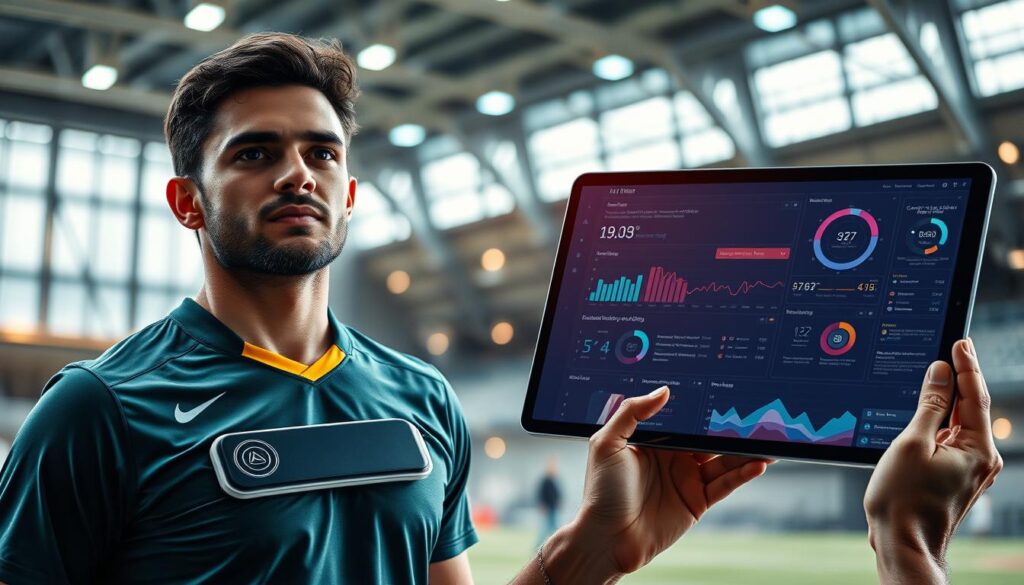
athlete health monitoring technology

As technology advances, wearable sensors and smart devices are being used to track athlete performance and detect potential issues before they become severe. This proactive approach enables coaches and medical professionals to intervene early, optimizing training regimens and reducing the risk of injury.

At the forefront of this innovation is Iottive, a trusted IoT, AIoT, and Mobile App Development company that specializes in Bluetooth-connected solutions and custom IoT platforms. Their cutting-edge technology is revolutionizing the way we monitor and maintain athlete health.

Key Takeaways

  • AI and IoT technologies are transforming athlete health monitoring and injury prevention.
  • Wearable sensors and smart devices provide real-time data analytics to detect potential injuries.
  • Advanced algorithms optimize training regimens for peak athlete performance.
  • Iottive‘s innovative solutions are revolutionizing the sports industry.
  • Early detection and intervention reduce the risk of injury and improve overall athlete health.

The Evolution of Athlete Health Monitoring

Technological advancements have revolutionized the field of athlete health monitoring. The way athletes’ health is monitored has seen a significant transformation, driven by innovations in sports technology and data analysis.

Traditional Methods and Their Limitations

Traditionally, athlete health monitoring relied on manual observations and simple metrics. These methods had limitations, including subjective interpretations and delayed feedback. Coaches and trainers had to rely on manual tracking and analysis, which was time-consuming and prone to errors.

The Digital Revolution in Sports Health

The digital revolution has transformed athlete health monitoring through the use of IoT-enabled devices and sensors. Modern athlete monitoring solutions leverage real-time data collection and analysis to provide insights into athlete performance and health. This includes tracking biomechanics, physiological responses, and cognitive states. The integration of artificial intelligence with these systems enables predictive analytics for injury prevention.

The use of wearable devices and sensors embedded in equipment and facilities has created a comprehensive digital ecosystem around the athlete. This technology has democratized access to advanced sports science, allowing teams and organizations at all levels to benefit from data-driven decision making.

Understanding AI Sports Health Monitoring
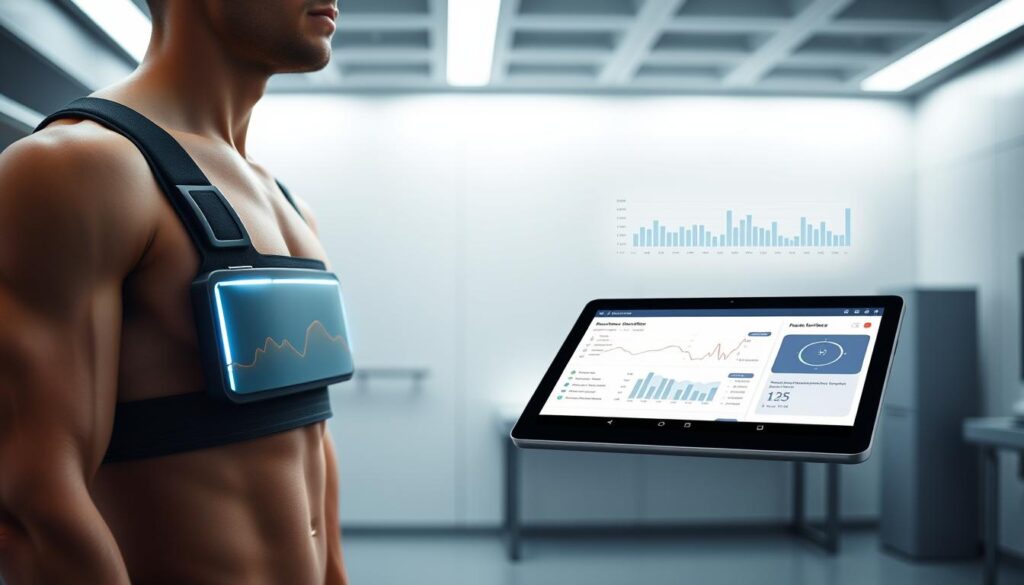
AI & IoT Athlete Health Monitoring Graphic

Learn More

AI sports health monitoring is revolutionizing the way athletes train and recover. By leveraging advanced technologies, AI-powered systems can analyze various aspects of an athlete’s health and performance, providing valuable insights that were previously inaccessible.

Key Components of AI-Powered Health Systems

AI-powered health monitoring systems capture biomechanical data and convert it into actionable insights, greatly enhancing biomechanical analysis and improving precision in diagnostics and therapy. These systems rely on several key components to function effectively.

The primary elements include advanced sensors, machine learning algorithms, and data analytics tools. Together, they enable the collection, processing, and interpretation of complex data related to an athlete’s performance and health.

How Machine Learning Algorithms Analyze Athletic Performance

Machine learning algorithms play a crucial role in analyzing athletic performance by establishing normative data for individual athletes and comparing new data against these baselines to identify meaningful deviations. These algorithms can process multiple data streams simultaneously, correlating information from different sensors to create a comprehensive picture of an athlete’s movement patterns, physiological responses, and recovery status.

  • Supervised learning techniques improve analytical capabilities over time.
  • Unsupervised learning algorithms identify previously unknown patterns in performance data.
  • Deep learning neural networks analyze complex movement patterns in three-dimensional space.

By utilizing these advanced analytical tools, coaches and trainers can gain a deeper understanding of athlete performance and make data-driven decisions to optimize training and prevent injuries.

IoT Technology in Athletic Performance Tracking
IoT injury tracker

Learn More

IoT technology is transforming the way athletes’ performance is tracked and analyzed. In the realm of sports, IoT devices play a crucial role in monitoring various metrics such as heart rate, motion, fatigue levels, and impact forces. These devices provide valuable insights that can directly impact performance and safety.

Wearable Sensors and Their Functionality

Wearable sensors are integral to IoT technology in sports, tracking biometric data through devices like smartwatches, fitness bands, and heart rate monitors. These devices enable coaches and athletes to monitor performance in real-time, making adjustments as needed to optimize training.

Data Collection and Transmission Systems

IoT data collection systems utilize various transmission protocols, including Bluetooth Low Energy (BLE) and cellular networks, to ensure reliable data transfer with minimal latency. Key features include:

  • Edge computing capabilities for preliminary data processing on devices.
  • Cloud-based storage for longitudinal analysis and predictive modeling.
  • Data visualization tools for intuitive dashboards.
  • API integration for comprehensive athlete monitoring ecosystems.

The development of these systems balances comprehensive data collection with practical considerations like battery life and ease of use, ensuring that technology enhances athletic performance without interference.

Real-Time Injury Prevention Through Smart Devices

Real-time injury prevention is becoming a reality in sports thanks to advancements in smart device technology. By providing real-time insights into an athlete’s physical condition, biomechanics, and movement patterns, wearables can help prevent injuries, optimize performance, and accelerate recovery.
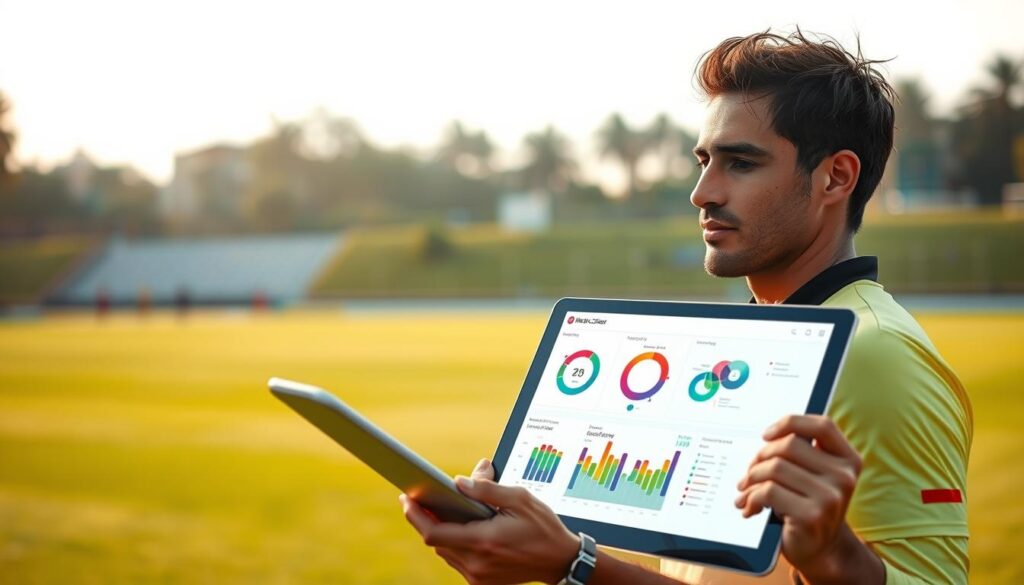
Real-Time Injury Prevention

Biomechanical Analysis and Movement Pattern Detection

Biomechanical analysis is crucial in detecting potential injuries before they occur. Smart devices equipped with sensors can track an athlete’s movement patterns, identifying any irregularities that may lead to injury. This proactive approach enables coaches and athletes to make necessary adjustments to prevent injuries from happening.

Early Warning Systems for Potential Injuries

Early warning systems integrate multiple data streams to identify risk factors before they manifest as physical symptoms. These systems monitor not only biomechanical factors but also physiological indicators such as heart rate variability, sleep quality, and recovery metrics. By analyzing patterns in the data, machine learning algorithms can predict potential injuries, enabling a proactive approach to athlete health management.

Feature Description Benefit
Biomechanical Analysis Tracks movement patterns and detects irregularities Prevents injuries by identifying potential issues early
Early Warning Systems Integrates multiple data streams to predict potential injuries Enables proactive approach to athlete health management
Real-Time Data Provides real-time insights into athlete’s physical condition Optimizes performance and accelerates recovery

Mobile Recovery Apps: Personalized Rehabilitation
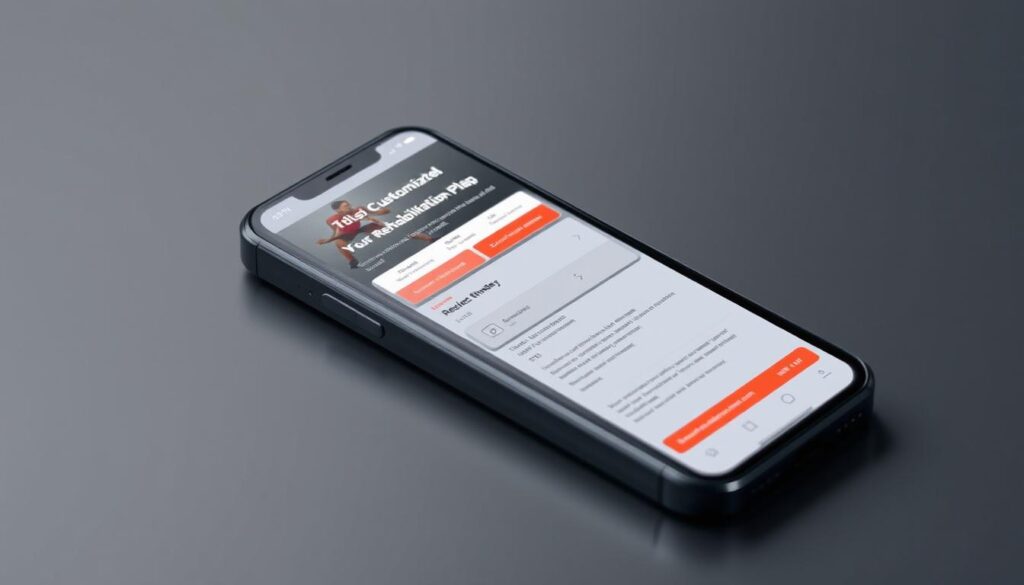
mobile recovery app

Learn More

Athletes now have access to cutting-edge rehabilitation tools through mobile recovery apps that tailor recovery plans to individual needs. These apps leverage advanced technologies, including data analytics and AI, to create personalized rehabilitation programs.

Features of Effective Recovery Applications

Effective mobile recovery apps are equipped with a range of features that enhance the rehabilitation process. These include:

  • Personalized exercise programming based on the athlete’s specific injury and progress.
  • Progress tracking, allowing both athletes and therapists to monitor recovery.
  • Guided exercise videos and tutorials to ensure correct form and technique.
  • Integration with wearable sensors to collect real-time data on joint angles, muscle activity, and range of motion.

These features work together to create a comprehensive rehabilitation ecosystem.

Integration with Wearable Technology

The integration of mobile recovery apps with wearable technology represents a significant advancement in sports rehabilitation. Wearable sensors provide continuous monitoring of relevant metrics during rehabilitation exercises, ensuring that movements are performed correctly and within safe parameters for the athlete’s stage of recovery.

Data from wearables feeds directly into recovery applications, allowing for automatic adjustment of rehabilitation protocols based on objective data. This integration enables the creation of closed-loop rehabilitation systems where exercise prescriptions are continuously optimized based on real-time feedback from devices.

AI-Powered Training Optimization

By leveraging AI, coaches can now develop customized training plans tailored to individual athletes’ needs. This approach has transformed the sports landscape, enabling athletes to achieve peak performance while minimizing the risk of injury.

Customized Training Programs Based on Biometric Data

AI algorithms analyze biometric data to create personalized training programs. These programs are designed to optimize an athlete’s performance by taking into account various physiological metrics, such as heart rate, sleep quality, and muscle soreness.

The use of data analytics in sports training allows coaches to identify areas where athletes need improvement, thus tailoring the training regimen to address specific weaknesses.

Fatigue Monitoring and Recovery Management

Effective recovery is crucial for athletes to maintain peak performance. Fatigue monitoring systems utilize multiple data sources to assess an athlete’s readiness to train, including physiological markers and subjective wellness indicators.

By analyzing these metrics, coaches can implement targeted recovery strategies, such as cold therapy or nutritional interventions, to help athletes manage muscle fatigue and optimize their overall performance.
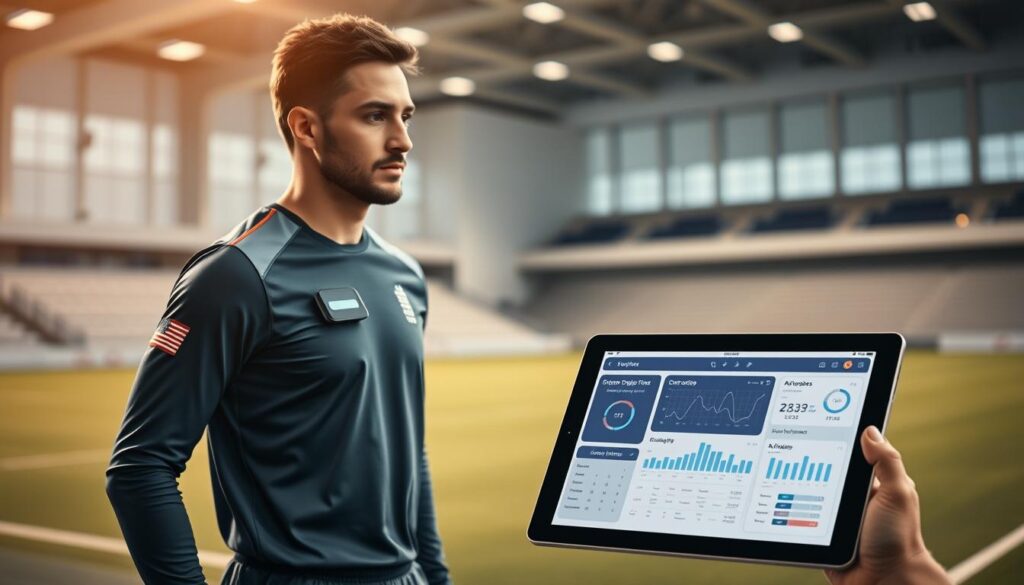
AI-Powered Training Optimization

“The future of sports training lies in the ability to personalize programs based on detailed data analysis, ensuring that athletes can perform at their best while reducing the risk of injury.”

Data Analytics in Team Sports Management

Data analytics is revolutionizing team sports management by providing coaches and trainers with valuable insights into athlete performance and health. By analyzing data, junior academies and youth teams can evaluate the progress of athletes, scouts can identify promising juniors, and coaches can determine the strengths and weaknesses of their students.

Performance Metrics and Team Strategy Development

Performance metrics play a crucial role in team strategy development. Coaches use data analytics to assess athlete performance, identify areas for improvement, and develop targeted training programs. Key performance metrics include speed, agility, endurance, and other factors that contribute to an athlete’s overall performance.

  • Analyzing individual stats helps coaches identify areas for improvement.
  • Data-driven insights inform strategic decisions about team composition and strategy.
  • Coaches can optimize training programs based on data-driven insights.

Injury Risk Assessment for Team Roster Management

Injury risk assessment is a critical component of team roster management. By analyzing data from various sources, including training loads, match demands, and injury history, teams can identify athletes at high risk of injury. This information enables coaches and medical staff to make informed decisions about training modifications, playing time management, and preventive interventions.

  • Injury prevention strategies can be implemented to reduce the risk of injuries.
  • Teams can use data analytics to evaluate the injury risk associated with potential signings or draft selections.
  • Advanced analytics tools enable teams to simulate different roster management scenarios, optimizing the balance between performance and injury risk.
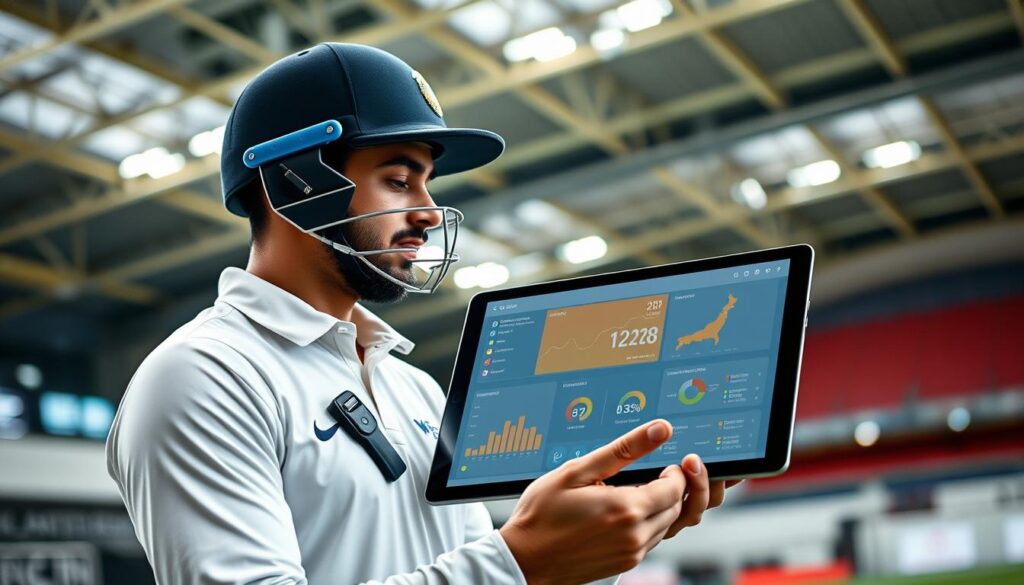
data analytics in sports

Case Studies: Successful Implementation in Professional Sports

The use of AI and IoT in professional sports has revolutionized athlete health monitoring, with numerous successful implementations. Various sports leagues have adopted these technologies to improve athlete performance and reduce injuries.

NFL’s Next Gen Stats and Player Safety Initiatives

The NFL has implemented its Next Gen Stats program, which uses wearable technology and data analytics to track player movements and speed during games. This program has helped identify potential injury risks and improve player safety.

NBA’s Use of Wearable Technology

The NBA has also adopted wearable technology to monitor player performance and training loads. Teams use this data to optimize player recovery and prevent injuries, ultimately enhancing overall team performance.

European Football Clubs and GPS Tracking Systems

European football clubs have pioneered the use of GPS-based wearables to monitor players’ movements during training and matches. These devices track metrics such as distance covered, speed, and acceleration. By analyzing this data, coaches can adjust player workloads to prevent injuries and optimize training programs.

The integration of GPS tracking with video analysis creates powerful tools for evaluating both physical and tactical performance, allowing coaches to identify relationships between movement patterns and successful team play. This demonstrates how consistent long-term implementation of tracking technology can create competitive advantages through reduced injury rates and data-informed tactical development.

Challenges and Limitations in AI & IoT Health Monitoring

While AI and IoT have revolutionized athlete health monitoring, several challenges remain to be addressed. The effectiveness of these systems depends on various factors, including the accuracy of the data collected and the reliability of the devices used.

Data Privacy and Security Concerns

One of the significant challenges facing AI and IoT health monitoring systems is ensuring the privacy and security of athlete data. As these systems collect sensitive information, there is a risk of data breaches and unauthorized access. To mitigate this risk, it is essential to implement robust security measures, such as encryption and secure data storage.

Accuracy and Reliability Issues

Another challenge is ensuring the accuracy and reliability of the data provided by wearables. Inaccurate readings could lead to false alarms or, worse, missed injury warnings. It is essential that wearable devices undergo rigorous testing and calibration to ensure that they provide real-time feedback that is both accurate and reliable.

Challenge Description Potential Solution
Sensor Accuracy Sensor accuracy can be affected by various factors, including placement on the body and environmental conditions. Rigorous testing and calibration of wearable devices.
Data Integration The integration of data from multiple sensors and devices introduces additional complexity. Standardization of data formats and protocols.
Algorithmic Variability The variability in how different athletes move and respond physiologically creates challenges for creating algorithms. Development of algorithms that can accurately interpret data across diverse populations.

AI and IoT in sports health monitoring

Future Trends in Athlete Health Monitoring Technology

As we look ahead, the convergence of AI, IoT, and immersive technologies is set to transform athlete health monitoring. The future of sports health is being shaped by the development of innovative applications that will revolutionize the way athletes train, recover, and perform.

Advanced Sensor Technology and Miniaturization

The development of advanced sensor technologies is leading to more sophisticated and miniaturized devices. These sensors will be able to capture a wider range of physiological and biomechanical data with greater speed and accuracy. As a result, athletes will have access to more detailed information about their health and performance, enabling them to make data-driven decisions.
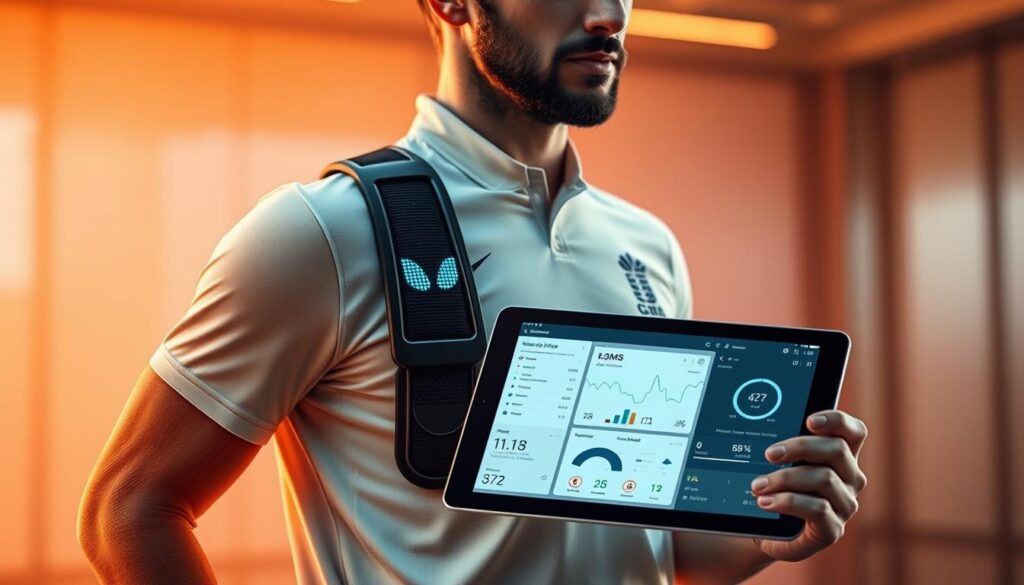
Advanced Sensor Technology

Integration of AI, IoT, and Virtual Reality

The integration of AI, IoT, and virtual reality is expected to create immersive rehabilitation environments where athletes can perform recovery exercises with precise guidance and immediate feedback. This convergence of technologies will also enable sophisticated biomechanical analysis in simulated environments, allowing athletes to receive feedback on their movements without the physical stress of repeated real-world execution.

Technology Application Benefits
AI Personalized insights and recommendations Improved performance and reduced injury risk
IoT Real-time data collection and monitoring Enhanced athlete safety and health monitoring
Virtual Reality Immersive rehabilitation environments Accelerated return-to-play timelines

The future of athlete health monitoring lies in the integration of these cutting-edge technologies, creating comprehensive platforms that optimize both health and performance across all levels of sports.

Conclusion: The Transformative Impact of AI and IoT on Sports Health

The convergence of AI and IoT is redefining athlete health monitoring, offering unprecedented insights into athlete performance and health. These technologies have shifted the focus from reactive injury treatment to proactive injury prevention through continuous data collection and intelligent analysis. As a result, athletes at all levels can benefit from professional-grade health monitoring capabilities, potentially extending their careers.

Organizations that adopt these technologies gain a competitive edge through reduced injury rates and optimized recovery protocols. Iottive, a trusted IoT and AIoT solutions provider, offers services to develop custom athlete monitoring systems, including BLE app development and end-to-end IoT/AIoT solutions. Contact us at www.iottive.com or sales@iottive.com to leverage these transformative technologies.

FAQ

How does AI-powered health monitoring help prevent injuries in athletes?

AI-powered health monitoring systems analyze biometric data, such as heart rate, body temperature, and movement patterns, to identify potential risk factors for injuries. By detecting early warning signs, these systems enable coaches and trainers to take proactive measures to prevent injuries.

What is the role of wearable sensors in athletic performance tracking?

Wearable sensors, such as GPS tracking devices and accelerometers, collect data on an athlete’s movement patterns, speed, and distance. This information is transmitted to a central system, where it is analyzed to provide insights into the athlete’s performance and help optimize their training.

How do machine learning algorithms analyze athletic performance?

Machine learning algorithms analyze large datasets of athletic performance metrics, such as posture, speed, and distance, to identify patterns and trends. By analyzing these patterns, coaches and trainers can gain insights into an athlete’s strengths and weaknesses, and develop targeted training programs to improve their performance.

What are the benefits of using real-time data analytics in team sports management?

Real-time data analytics enable coaches and trainers to make informed decisions about team strategy and player deployment. By analyzing data on athlete performance, teams can gain a competitive edge and optimize their chances of success.

How do rehabilitation apps help athletes recover from injuries?

Rehabilitation apps provide personalized recovery plans, tailored to an individual athlete’s needs. These plans include exercises, stretches, and other interventions designed to promote healing and restore function.

What are the challenges associated with implementing AI and IoT health monitoring in professional sports?

The main challenges include ensuring data privacy and security, addressing accuracy and reliability issues, and integrating new technologies with existing systems.

How will advanced sensor technology and miniaturization impact athlete health monitoring?

Advanced sensor technology and miniaturization will enable the development of smaller, more sophisticated wearable devices that can collect a wider range of data on athlete performance and health.


Let’s Get Started

Top 5 Hospital Asset Tracking Systems in 2025

The healthcare industry is witnessing a significant transformation with the adoption of advanced technologies like IoT and RFID to improve operational efficiency. One area where this is particularly evident is in hospital asset tracking. Hospitals lose billions annually due to misplaced or underutilized equipment, a problem that can be mitigated with the right tracking systems.

hospital asset tracking system,IoT-powered hospital inventory hub, AI hospital

With the global IoT in healthcare market valued at USD 53.64 billion in 2024 and expected to reach USD 368.06 billion by 2034, the importance of asset tracking systems cannot be overstated. These systems help automate preventive maintenance, track utilization, and provide real-time insights, enabling healthcare providers to deliver better care.

Key Takeaways

  • Top hospital asset tracking systems can significantly reduce equipment loss and improve operational efficiency.
  • IoT technology is revolutionizing healthcare by enabling real-time tracking and monitoring.
  • The right tracking system can help healthcare facilities make informed decisions and improve patient care.
  • Leading healthcare providers are adopting advanced asset tracking solutions to stay ahead.
  • The global IoT in healthcare market is expected to grow exponentially in the next decade.

The Critical Need for Hospital Asset Tracking in Modern Healthcare

Modern hospitals face significant challenges in managing their vast array of critical assets, from ventilators and surgical equipment to mobile monitors and diagnostic tools, all of which need to be properly maintained and readily available.

The complexity of healthcare environments demands efficient asset tracking systems to ensure that every piece of medical equipment is accounted for, maintained on time, and ready to use without delay or confusion.

Current Challenges in Hospital Asset Management

Many healthcare facilities still rely on outdated tracking methods like spreadsheets or legacy systems that merely record data without driving actionable insights. This leads to equipment hoarding, loss, and inefficient utilization.

  • Inadequate tracking methods result in wasted time searching for assets.
  • Lack of visibility into asset lifecycles leads to over-maintenance or neglect.
  • Inefficient management of equipment increases operational costs.

A dimly lit hospital ward, filled with the soft glow of medical equipment. In the foreground, a medical cart stands prominently, adorned with Bluetooth Low Energy (BLE) tags that track its location and movement. The tags emit a subtle blue light, casting an ethereal glow across the scene. In the middle ground, various other hospital assets - IV stands, wheelchairs, and monitoring devices - are also outfitted with BLE tags, their positions meticulously logged by the asset tracking system. The background is hazy, with the silhouettes of hospital staff moving about, their focus on delivering exceptional patient care. The overall mood is one of efficiency, order, and the critical importance of modern asset tracking in the fast-paced world of healthcare.

The Cost of Inefficient Asset Tracking in Healthcare

The financial impact of inefficient asset tracking is substantial, with hospitals experiencing increased capital expenditures due to unnecessary purchases and maintenance inefficiencies.

Challenge Impact
Inefficient Asset Tracking Increased Capital Expenditures
Equipment Downtime Directly Affects Patient Care
Lack of Visibility Premature Replacements and Increased Operational Costs

By understanding these challenges and their financial implications, healthcare facilities can begin to appreciate the critical need for effective hospital asset tracking systems.

Understanding Hospital Asset Tracking Systems

Hospital asset tracking systems are revolutionizing healthcare by providing real-time visibility into equipment location and status. These systems are more than just digital spreadsheets; they are comprehensive platforms that utilize advanced technologies to manage medical equipment throughout a healthcare network.

What is a Healthcare Asset Management Solution?

A healthcare asset management solution is a real-time platform that centralizes inventory, automates maintenance, tracks utilization, drives compliance, and provides analytics for every piece of physical equipment. By leveraging technologies like RFID, QR code tracking, IoT sensors, and Wi-Fi RTLS, these systems ensure that healthcare providers can answer critical questions about asset location, condition, usage history, and maintenance requirements.

These solutions go beyond simple inventory management by providing a unified ecosystem that connects equipment data with maintenance workflows, compliance requirements, and resource allocation decisions. This integration enables proactive management of assets, transforming passive tracking into a strategic advantage for healthcare facilities.

Key Technologies Powering Modern Hospital Asset Tracking

Modern hospital asset tracking systems employ a range of technologies to maintain continuous visibility of equipment. These include RFID tags, QR codes, IoT sensors, Bluetooth Low Energy (BLE) beacons, and Wi-Fi Real-Time Location Systems (RTLS). By combining these technologies, hospitals can achieve a comprehensive understanding of their asset utilization and optimize their management strategies.

A modern hospital ward filled with various medical equipment, including IV pumps, patient monitors, and medication carts. The foreground features several Bluetooth Low Energy (BLE) asset tracking tags affixed to the equipment, their LED indicators blinking softly. The middle ground shows healthcare staff moving around the ward, engaged in their duties. The background depicts a clean, well-lit environment with large windows providing natural illumination. The overall atmosphere conveys a sense of efficiency, organization, and technology-enabled asset management.

The integration of these technologies enables healthcare facilities to streamline their operations, reduce costs, and improve patient care. As the healthcare industry continues to evolve, the role of advanced asset tracking systems will become increasingly critical in ensuring the efficient management of medical equipment and devices.

Core Features of Effective Hospital Asset Tracking Systems

The backbone of any successful hospital asset management strategy is a robust tracking system with advanced features. Effective hospital asset tracking systems are designed to streamline operations, reduce costs, and improve patient care by ensuring that critical equipment is always available when needed.

Real-Time Location Tracking Capabilities

A key feature of modern asset tracking systems is their ability to provide real-time location tracking. Using technologies such as RFID, BLE, or Wi-Fi triangulation, these systems can pinpoint the exact location of equipment across departments, floors, or even buildings. “With real-time tracking, hospitals can eliminate the guesswork in locating equipment, saving time and reducing operational inefficiencies,” says an industry expert. Custom geofencing capabilities further enhance this feature by alerting staff if high-value equipment leaves designated areas.

Realistic photo of a modern hospital ward, bathed in bright, natural lighting filtering in through large windows. In the foreground, various medical equipment such as IV stands, monitors, and wheelchairs are tagged with small, discreet Bluetooth Low Energy (BLE) tracking devices. The tags are seamlessly integrated, blending into the equipment's design. In the middle ground, hospital staff move efficiently, consulting tablet devices that display the real-time location and status of the tagged assets. The background reveals a clean, organized workspace, with medical supplies and technology harmoniously integrated into the clinical environment.

Preventive Maintenance Scheduling

Another crucial feature is preventive maintenance scheduling. Advanced systems automatically flag assets due for inspection based on actual usage patterns, supporting Alternate Equipment Maintenance (AEM) programs. This ensures that maintenance is performed when necessary, rather than on a fixed schedule, thereby optimizing equipment performance and extending its lifespan.

Compliance and Documentation Management

Compliance and documentation management are also vital components. These systems maintain comprehensive digital records of all maintenance activities, inspection reports, and certifications, making it easier for hospitals to prepare for audits and demonstrate compliance with regulatory requirements.

By incorporating these core features, effective hospital asset tracking systems not only improve operational efficiency but also enhance patient care by ensuring that critical equipment is properly maintained and readily available.

Benefits of Implementing IoT-Powered Hospital Asset Tracking

By leveraging IoT-powered hospital asset tracking, healthcare facilities can achieve enhanced operational efficiency and patient care. The integration of IoT technology in hospital asset management isn’t just about knowing where assets are—it’s about unlocking performance across care, cost, and compliance.

Realistic photo of a modern hospital ward, softly lit with natural light from large windows. In the foreground, various medical equipment like IV stands, wheelchairs, and hospital beds are outfitted with Bluetooth Low Energy (BLE) tracking tags. The tags emit signals that are picked up by a network of IoT sensors installed throughout the room, allowing the hospital's asset management system to precisely track the location and status of each item in real-time. The middle ground shows medical staff interacting with the equipment, while the background depicts a serene and calming hospital environment.

Operational Efficiency and Workflow Improvements

Implementing IoT-powered hospital asset tracking systems leads to significant operational efficiency improvements. By eliminating time-consuming equipment searches, streamlining workflows, and reducing delays in patient care procedures, hospitals can optimize their resources. This results in shorter delays and smoother workflows, allowing medical staff to locate, clean, and prepare devices instantly, thus improving bed turnover and ensuring procedures run on time.

Cost Reduction and Resource Optimization

The financial benefits of IoT-powered hospital asset tracking are substantial. Tagging systems can cut equipment loss by up to 20%, while utilization data enables more informed decisions about asset allocation, potentially reducing rental spend by 15-30%. Additionally, condition monitoring and preventive schedules can stop equipment failures before they happen, leading to 20-25% fewer critical equipment issues and 90% less time spent locating gear.

Enhanced Patient Care and Safety

Enhanced patient care and safety are direct results of ensuring the right equipment is available at the right time. This reduces procedure delays and improves overall healthcare delivery outcomes. The integration of AI capabilities with IoT tracking creates predictive systems that can anticipate equipment needs, prevent failures before they occur, and optimize resource distribution based on historical usage patterns, ultimately leading to better patient care and safety.

Top 5 Hospital Asset Tracking Systems in 2025

With the projected CAGR of over 15% through 2030, the hospital asset tracking market is poised to revolutionize the way healthcare facilities manage their assets. As healthcare systems prioritize efficiency and compliance, the demand for advanced asset tracking solutions has never been higher.

A realistic photo of a modern hospital ward, bathed in warm, diffused lighting from overhead fixtures. In the foreground, various medical equipment such as IV stands, wheelchairs, and gurneys are adorned with small, discreet Bluetooth Low Energy (BLE) asset tracking tags. The tags glow softly, blending seamlessly with the equipment. In the middle ground, healthcare staff move purposefully, monitoring the location and status of assets on a centralized dashboard. The background reveals the clean, sterile environment of the ward, with pristine white walls and floors, and the faint hum of medical machinery. The overall scene conveys a sense of efficiency, organization, and patient-centric care enabled by the hospital's advanced asset tracking system.

Selection Criteria and Evaluation Methodology

Our evaluation of the top hospital asset tracking systems for 2025 is based on comprehensive criteria, including technological capabilities, integration potential with electronic health records, scalability, user experience, and total cost of ownership.

  • Technological capabilities, such as real-time location tracking and preventive maintenance scheduling
  • Integration potential with existing hospital infrastructure, including electronic health records and clinical information systems
  • Scalability and flexibility to adapt to changing healthcare needs
  • User experience and training requirements
  • Total cost of ownership, including implementation, maintenance, and support costs
Evaluation Criteria Description Weightage
Technological Capabilities Real-time location tracking, preventive maintenance scheduling, and actionable analytics 30%
Integration Potential Integration with electronic health records and clinical information systems 25%
Scalability and Flexibility Ability to adapt to changing healthcare needs and growing demands 20%
User Experience Ease of use, training requirements, and user satisfaction 15%
Total Cost of Ownership Implementation, maintenance, and support costs 10%

The evaluation methodology incorporated feedback from healthcare facilities currently using these systems, focusing on measurable improvements in asset utilization, maintenance efficiency, and overall return on investment.

1. CenTrak RTLS Asset Management Solution

Generate an image of a hospital staff member using a tablet to track medical equipment via CenTrak's RTLS system.

In the realm of healthcare asset management, CenTrak’s RTLS solution stands out for its precision and reliability. CenTrak specializes in real-time location services (RTLS) for the healthcare industry, helping track critical assets like wheelchairs and equipment.

Key Features and Capabilities

CenTrak’s RTLS Asset Management Solution offers highly accurate room-level location tracking capabilities, utilizing a combination of infrared, RFID, Bluetooth Low Energy, and Wi-Fi technologies. The system provides comprehensive asset visibility with customizable dashboards that display real-time location, status, and utilization metrics for all tagged hospital equipment.

The solution integrates seamlessly with existing hospital systems, including electronic health records and maintenance management platforms, creating a unified ecosystem for asset management.

Strengths and Limitations

The CenTrak solution excels in accuracy and reliability, with strengths including its scalability for multi-building healthcare networks and robust reporting capabilities. It has a proven track record of reducing equipment loss and rental costs. However, some healthcare facilities report that the initial implementation requires significant infrastructure investment, particularly for larger hospital campuses. Additionally, the advanced features come with a steeper learning curve for staff.

2. GE Healthcare AssetPlus

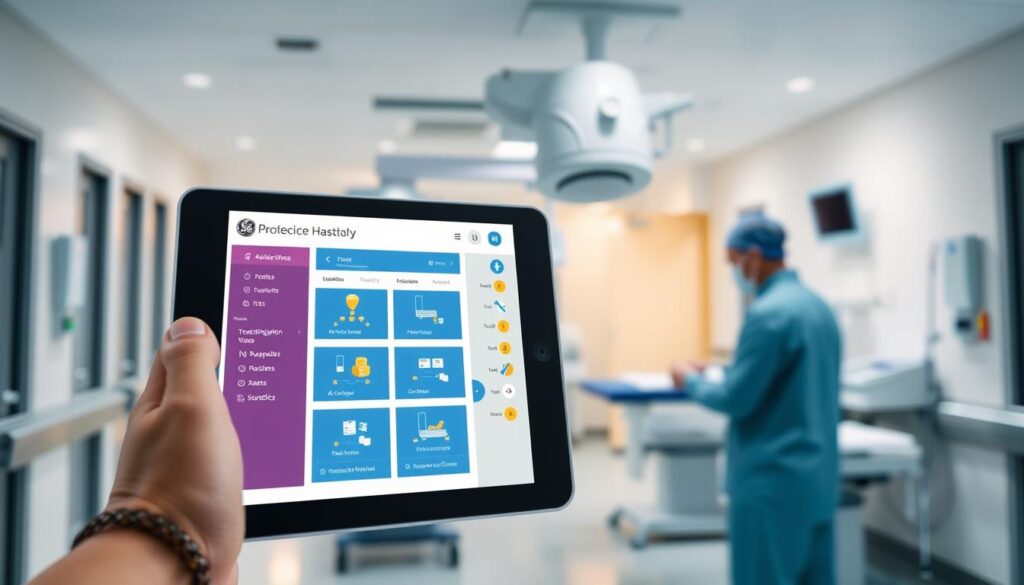
Generate an image of a hospital asset tracking system with GE Healthcare's AssetPlus interface on a tablet.

GE Healthcare’s AssetPlus is revolutionizing hospital asset management with its cutting-edge technology. This comprehensive IoT-powered hospital asset tracking system is designed to optimize asset utilization, reduce costs, and improve patient care.

Key Features and Capabilities

GE Healthcare’s AssetPlus offers a robust asset management solution that extends beyond simple tracking to include predictive maintenance, lifecycle management, and detailed utilization analytics for medical equipment. The system leverages GE’s extensive healthcare expertise to provide industry-specific workflows and equipment management protocols that align with regulatory requirements and best practices.

Some of the key features of AssetPlus include:

  • Robust integration capabilities with GE’s own medical devices and third-party equipment, creating a unified view of all hospital assets regardless of manufacturer.
  • Advanced predictive maintenance algorithms that analyze equipment usage patterns and performance metrics to anticipate potential failures before they impact patient care.

Strengths and Limitations

A key strength of AssetPlus is its ability to provide advanced analytics and insights that help healthcare providers optimize their asset utilization. However, some healthcare providers report that the system works best within GE-centric environments and may require additional configuration for facilities with diverse equipment inventories.

Despite this limitation, AssetPlus remains a powerful tool for hospitals looking to optimize their asset tracking and management. Its comprehensive features and capabilities make it a top contender in the hospital asset tracking market.

3. ASCOM Healthcare Communication Platform

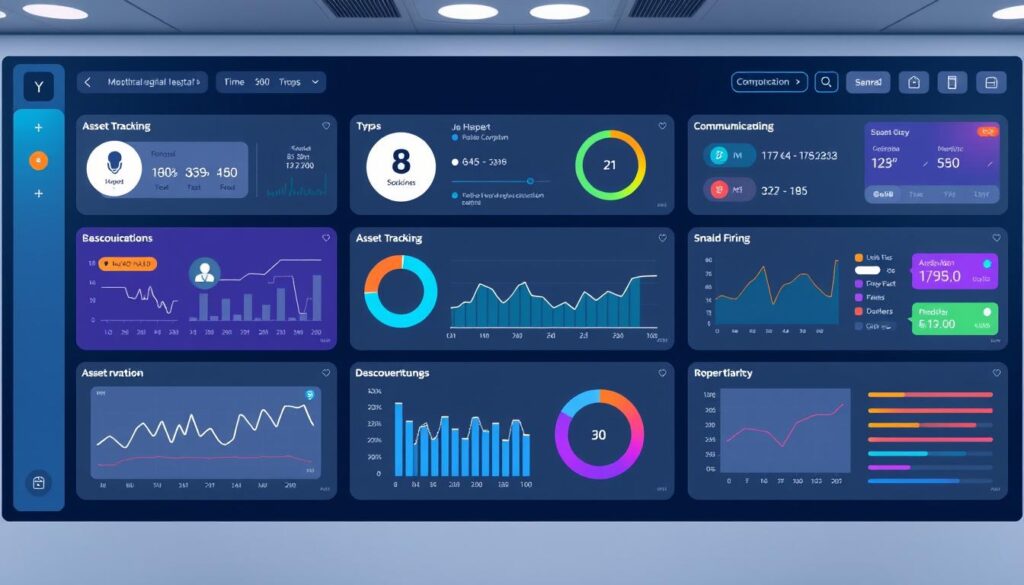
Generate an image of a hospital dashboard displaying real-time asset tracking and communication features.

The ASCOM Healthcare Communication Platform is revolutionizing hospital asset tracking by integrating it with a broader communication ecosystem. This innovative solution connects equipment management with clinical workflows and staff coordination, enhancing the overall efficiency of hospital operations.

Key Features and Capabilities

The ASCOM Healthcare Communication Platform distinguishes itself by integrating asset tracking capabilities within a broader communication ecosystem. This integration enables real-time alerts about equipment status to be delivered directly to the appropriate healthcare providers, streamlining clinical workflows.

The system’s advanced workflow automation triggers specific communication protocols based on asset location, status changes, or maintenance requirements. This feature ensures that hospital staff are always informed and up-to-date on asset availability and status.

Strengths and Limitations

A significant strength of the ASCOM solution is its unified approach to hospital operations, creating seamless connections between people, processes, and equipment to enhance overall patient care delivery. However, some users note that the dedicated asset tracking capabilities may not be as comprehensive as systems focused exclusively on equipment management.

Despite this limitation, the ASCOM Healthcare Communication Platform remains a robust solution for hospitals seeking to integrate asset tracking with clinical communication and workflow management.

4. Honeywell RTLS Asset Tracking System

Generate an image of a hospital staff member using a tablet to track medical equipment via Honeywell's RTLS Asset Tracking System.

With its advanced RTLS technology, Honeywell provides a top-tier asset tracking solution tailored to the healthcare industry’s unique needs. Honeywell’s RTLS Asset Tracking System leverages the company’s industrial expertise to deliver a robust, enterprise-grade solution specifically adapted for the unique challenges of healthcare environments.

Key Features and Capabilities

The Honeywell RTLS Asset Tracking System boasts several key features that make it an ideal choice for hospital asset management. These include:

  • Military-grade security protocols to ensure data protection and compliance with stringent healthcare information security requirements.
  • Exceptional durability and reliability in high-traffic hospital environments, with ruggedized tags designed to withstand frequent disinfection procedures.
  • A sophisticated analytics engine that transforms tracking data into actionable insights about equipment utilization patterns, bottlenecks, and optimization opportunities.

Strengths and Limitations

While the Honeywell RTLS Asset Tracking System excels in security and durability, some healthcare facilities report that the implementation process can be more complex compared to healthcare-native solutions. This may require additional configuration to align with clinical workflows. Nonetheless, the system’s features and capabilities make it a valuable investment for hospitals seeking to optimize their asset utilization and improve overall efficiency.

5. Midmark RTLS Asset Management

Generate an image of a hospital staff member using a tablet to track medical equipment with Midmark RTLS Asset Management

Midmark’s clinically-focused RTLS Asset Management system is designed to enhance patient care by optimizing the use of medical equipment across various hospital departments. This system is particularly beneficial for high-volume areas such as emergency departments and operating rooms.

Key Features and Capabilities

Midmark RTLS Asset Management offers a range of features that cater to the specific needs of healthcare facilities. These include:

  • Specialized solutions for different hospital environments, each with customized tracking protocols.
  • Purpose-built hardware components, such as unobtrusive tags and sensors, designed to maintain the healing environment.
  • An intuitive user interface that requires minimal training, facilitating rapid adoption across staff roles.

Strengths and Limitations

A notable strength of Midmark RTLS Asset Management is its ability to integrate with clinical workflows, enhancing operational efficiency. However, some healthcare facilities have reported that the system’s enterprise-wide analytics capabilities may not be as comprehensive as those offered by larger technology vendors.

Despite this limitation, Midmark RTLS Asset Management remains a robust solution for hospitals seeking to improve asset utilization and streamline their operations.

Implementation Considerations for Hospital Asset Tracking

As hospitals look to implement asset tracking, they must navigate a complex landscape of infrastructure and operational needs. Successful implementation requires a comprehensive understanding of the challenges and considerations involved.

Infrastructure and Deployment

The infrastructure requirements for hospital asset tracking systems are multifaceted. A thorough assessment of existing infrastructure is necessary, including wireless network coverage, power availability, and physical space for sensors and gateways throughout the facility. Signal interference is also a significant concern, as concrete walls, medical equipment, and complex building layouts can impact tracking accuracy and reliability.

  • Assess existing infrastructure, including wireless network coverage and power availability.
  • Consider signal interference and its potential impact on tracking accuracy.

Staff Training and Change Management

A comprehensive staff training program is essential for system adoption, ensuring that all users understand how to interact with the tracking technology and incorporate it into their daily workflows. Change management strategies should address potential resistance by clearly communicating the benefits of asset tracking for different stakeholder groups.

  • Develop a comprehensive staff training program to ensure successful system adoption.
  • Implement change management strategies to address potential resistance.

Future Trends in Hospital Asset Tracking Technology

The hospital asset tracking landscape is evolving rapidly with new technologies. As healthcare facilities continue to adopt innovative solutions, the integration of advanced technologies is set to revolutionize asset management. Future systems will not only track equipment but also anticipate needs, enhancing patient care and operational efficiency.

AI and Predictive Analytics Integration

Artificial Intelligence (AI) is poised to play a crucial role in the future of hospital asset tracking. By analyzing usage patterns and identifying equipment at risk of failure, AI-powered predictive maintenance will become increasingly prevalent. This proactive approach enables healthcare facilities to optimize asset utilization, reduce downtime, and improve overall healthcare delivery.

Blockchain for Enhanced Security and Compliance

Blockchain technology is emerging as a solution for enhanced security and compliance in asset tracking. By creating immutable records of equipment maintenance, usage, and chain of custody, blockchain can satisfy regulatory requirements and provide tamper-proof audit trails for high-value medical equipment. This not only addresses concerns about data integrity but also supports more transparent compliance reporting.

Conclusion: Selecting the Right Hospital Asset Tracking System for Your Facility

In the quest to enhance patient care and operational efficiency, hospitals must prioritize the adoption of a robust asset tracking system. Selecting the right hospital asset tracking system requires careful evaluation of your facility’s specific needs and long-term strategic goals.

The ideal system balances comprehensive tracking capabilities with user-friendly interfaces, encouraging adoption across all departments. Consider both initial implementation costs and long-term return on investment through improved equipment utilization and reduced loss.

For more information on optimizing your hospital’s asset management, contact us at www.iottive.com or sales@iottive.com.

FAQ

What is the primary purpose of implementing a medical equipment tracking system in healthcare facilities?

The primary purpose is to improve operational efficiency by ensuring that medical equipment is readily available when needed, reducing downtime, and streamlining maintenance schedules.

How do RFID and other technologies enhance asset management in healthcare?

RFID and other technologies enable real-time location tracking, automated inventory management, and more accurate data collection, leading to better decision-making and reduced costs.

What are the key benefits of using an electronic health record (EHR) system in conjunction with an asset tracking system?

Integrating EHRs with asset tracking systems allows for more accurate and efficient patient care, improved data security, and enhanced compliance with regulatory requirements.

How can healthcare providers ensure data security when implementing an asset tracking system?

Healthcare providers can ensure data security by selecting systems with robust security measures, such as encryption, access controls, and regular software updates, to protect sensitive information.

What role does predictive analytics play in modern asset management?

Predictive analytics helps healthcare organizations anticipate equipment failures, optimize maintenance schedules, and reduce downtime, ultimately improving patient care and reducing costs.

How can healthcare facilities measure the ROI of implementing an asset tracking system?

Healthcare facilities can measure ROI by tracking key performance indicators (KPIs) such as reduced equipment losses, improved equipment utilization, and decreased maintenance costs.

What are the common challenges associated with implementing an asset tracking system?

Common challenges include infrastructure requirements, staff training, and change management, as well as ensuring compliance with regulatory requirements and addressing potential data security concerns.

Let’s Get Started

Top 7 AI-Powered Delivery Drones for Last-Mile Logistics in 2025

On a rainy morning in Dallas, a small bakery kept a promise: warm bread at the door within 20 minutes.

The shop had partnered with a national retailer and a local operator that tested new AI delivery drones. The result was faster service and fewer cold complaints from customers.

AI delivery drones, IoT last-mile tracking, autonomous parcel delivery

Last-mile costs can eat nearly half of shipping budgets, and labor and traffic make traditional models fragile. In 2025, companies like Amazon, Wing, Walmart, and Zipline have pushed forward with bold pilots and approvals that change the landscape.

This report highlights seven platforms that matter to businesses and customers. We cover how modern technology, cloud integration, and smart sensors improve ETA accuracy and safety. You’ll also see the trade-offs—weather limits, energy density, and regulation—and how partners such as Iottive can help integrate BLE apps and IoT solutions for seamless operations.

Key Takeaways

  • Seven leading platforms are shaping rapid, precise package movement in 2025.
  • Smart sensors and cloud tools boost ETA accuracy and operational safety.
  • Regulatory gains like BVLOS approvals accelerate urban rollout.
  • Hybrid networks will balance air and ground to cut costs and emissions.
  • Choose partners wisely—build vs. buy matters for speed and scale.

Why last-mile logistics is pivoting to AI delivery drones in 2025

Rising costs and tighter schedules are forcing retailers and carriers to rethink how goods reach front doors.

Last-mile delivery now consumes nearly half of shipping cost for many retailers. Congestion and driver shortages make traditional routes slow and costly. Retailers want narrow windows and near-instant updates, so systems must be faster and smarter.

Iottive builds the foundations retailers and carriers need. Their platform blends BLE, cloud-mobile orchestration, and smart telemetry to turn manual routing into data-driven operations. This helps teams cut idle time and improve ETA accuracy.

Cost, congestion, and customer expectations reshaping the delivery chain

Urban traffic and parking friction increase dwell times. Automation and sky/sidewalk hybrids reduce miles and failed stops. Consumers now expect tight windows and proactive communications.

From pilots to scale: BVLOS permissions, FAA collaborations, and urban trials

Regulatory wins unlocked real growth. In Aug 2024 the UK CAA approved BVLOS testing. U.S. pilots with the FAA and partnerships in Dallas moved 15-minute drops into real markets. These steps let operators expand operations across areas and environments.

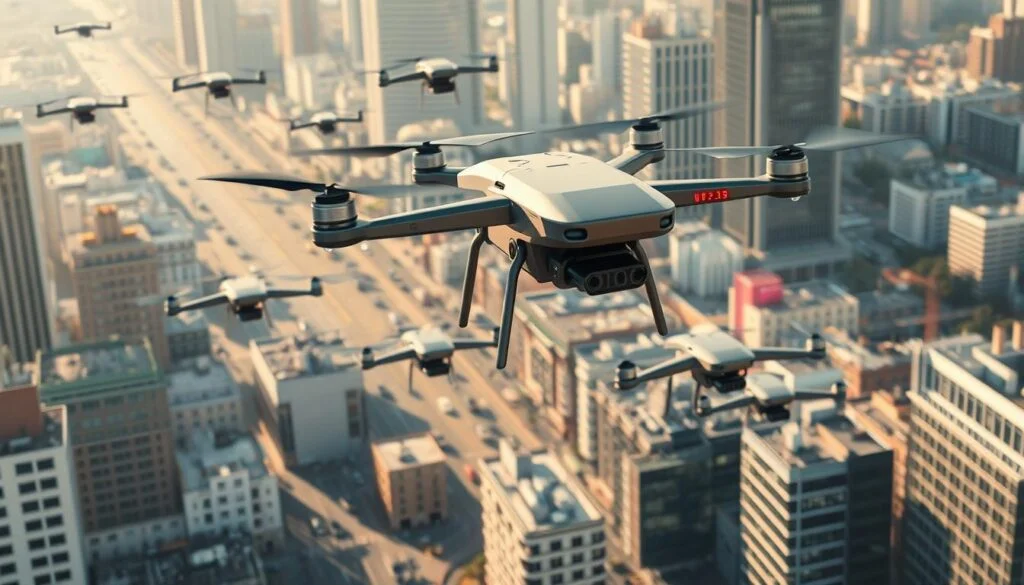
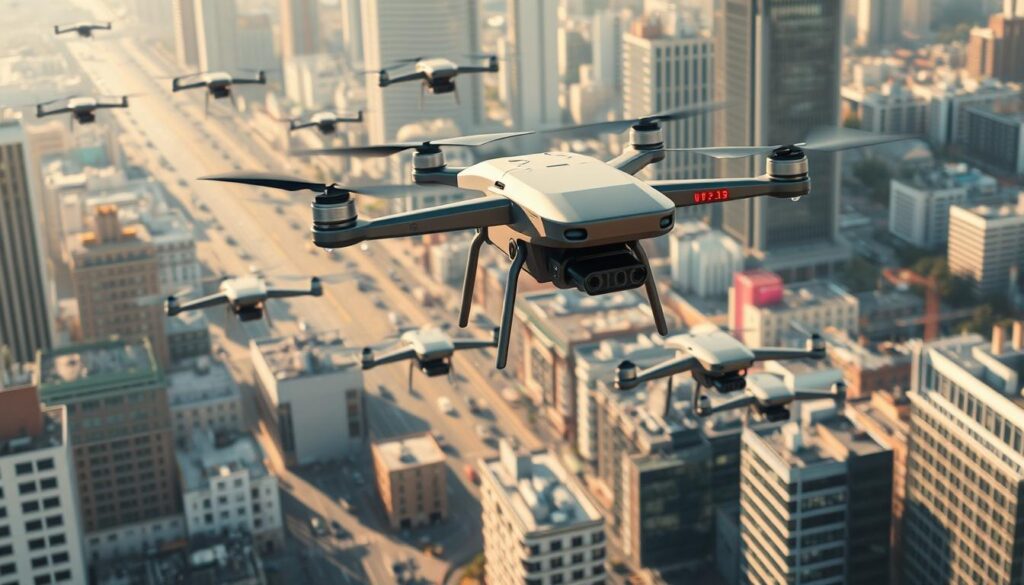
A fleet of sleek, futuristic delivery drones soaring gracefully over a bustling cityscape, their streamlined bodies glinting in the warm natural light. In the foreground, a drone carefully lowers a package into the waiting hands of a recipient, showcasing the precision and efficiency of this cutting-edge technology. The midground is filled with a diverse array of drones, each navigating the urban landscape with ease, while the background reveals a sprawling metropolis, hinting at the widespread adoption of this innovative last-mile logistics solution. The scene exudes a sense of modern progress and the seamless integration of AI-powered automation into our daily lives.

Challenge What helps Near-term result
High cost-to-serve Cloud software + telemetry Lower miles, fewer failed stops
Urban congestion Aerial corridors & smart routing Shorter transit time
Labor shortages Automation & operator assist Higher productivity

Top 7 AI-powered drones and platforms transforming autonomous parcel delivery

A new generation of aerial platforms is redefining how stores route small, time-sensitive orders to customers.

A fleet of sleek, AI-powered delivery drones soar over a bustling cityscape, their streamlined frames cutting gracefully through the crisp, natural daylight. The drones, each carrying a neatly packaged parcel, glide effortlessly between towering skyscrapers and along wide avenues, a testament to the cutting-edge technology transforming the last-mile logistics landscape. Captured from a wide-angle perspective, the scene conveys a sense of precision, efficiency, and the future of autonomous parcel delivery.

Amazon Prime Air MK30 uses lighter, quieter props and improved weather resilience. Tests in Italy (Dec 2024) and limited sites in CA and TX show lower noise and rain tolerance.

Alphabet’s Wing

Wing’s retail partnerships and a DoorDash tie-in (Dec 2024) illustrate how marketplaces can promise 15-minute windows by embedding flight slots into checkout flows.

Zipline

Zipline’s fixed-wing fleet has completed 600,000+ deliveries and nearly 100 million miles, proving range and reliability for medical and retail runs.

Walmart’s DroneUp network

Walmart blends partners like Zipline and DroneUp to hit sub-30-minute targets across multi-state corridors and varied environments.

Manna X-drone

Manna’s rotorcraft carries up to 3.5 kg at 80 km/h and supports seven to eight deliveries per hour—a model for dense urban food runs.

UPS Flight Forward

UPS focuses on healthcare logistics, certified operations, and regulated airspace to move time-critical packages with tight safety controls.

Flirtey / SkyDrop

Flirtey raised payload to 3.5 kg, added a parachute system and 60 m precision drops; commercial trials with Domino’s NZ are underway.

  • Why it matters: These companies map trade-offs in capacity, speed, safety, and routes so operators can pick models that match their service and regulatory needs.
  • Where Iottive fits: Iottive supports OEMs and platforms with BLE apps, mobile-cloud integration, and custom products that sync flight telemetry, package ID, and customer notifications end to end.
Platform Key advantage Notable metric
Amazon Prime Air MK30 Quieter props, light-rain resilience 25% lower perceived noise vs MK27-2
Wing Marketplace integration for rapid slots 15-minute DoorDash partnership (DFW)
Zipline Range and reliability 600K+ deliveries; ~100M miles
Manna High urban throughput 3.5 kg, 7–8 drops/hour; 100K+ deliveries

AI, IoT last-mile tracking, and cloud-based orchestration behind drone delivery

Smart orchestration layers now stitch weather, traffic, and crew data into reliable windows for customers.

Predictive ETAs and hybrid routing combine live weather, traffic feeds, crew performance, and cost metrics to generate tight time windows. Mature ML models can reach up to 98% ETA accuracy, while route optimization cuts miles by 10%+ and lowers total supply costs.

Real-time telemetry

BLE and 5G sensors stream package ID, condition, and chain-of-custody events to central systems. These feeds reconcile proof-of-handling with instant customer updates and fewer exceptions.

Driver and operator enablement

Voice briefs, stop intelligence, and guided exception handling shorten dwell times. Operator tools reduce hand-off errors and improve on-the-ground management across mixed routes.

Cloud vs on-prem

Cloud-first software scales quickly for peak times and rapid rollouts. On-prem remains for strict compliance, but most operations favor cloud agility for fast improvements and lower infrastructure costs.

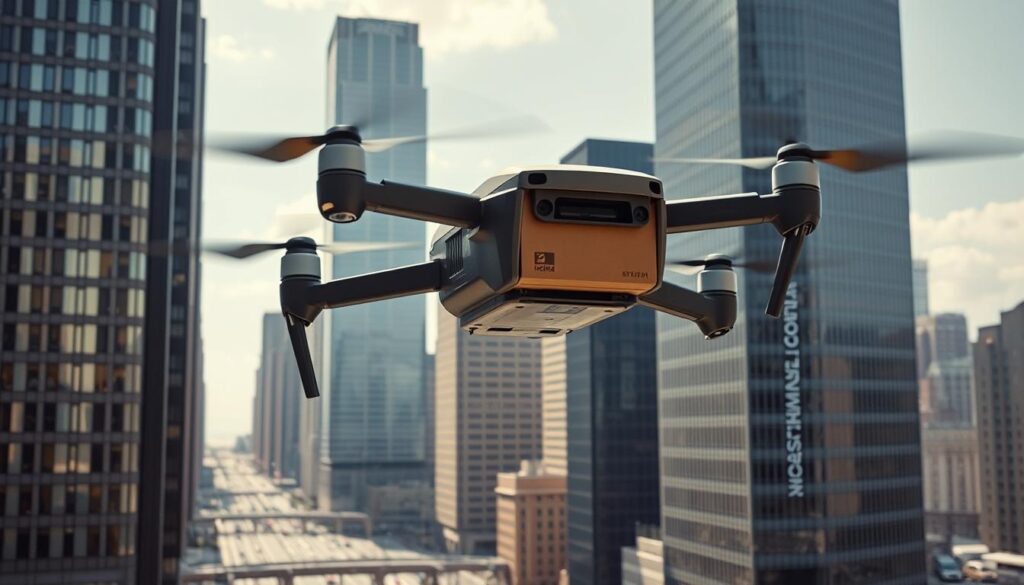
A photorealistic delivery drone hovers over a bustling urban landscape, package box firmly gripped in its advanced robotic claws. Beneath, an intricate web of IoT sensors and cloud-connected infrastructure tracks the drone's every movement, synchronizing its route with real-time traffic data and customer locations. Crisp natural daylight filters through towering skyscrapers, casting dynamic shadows that accentuate the drone's sleek, aerodynamic form. A wide-angle perspective captures the synergy between autonomous technology and last-mile logistics, showcasing the future of AI-powered delivery.

  • Where Iottive fits: End-to-end integration, BLE app development, cloud & mobile sync, and custom IoT products that bridge flight, sensor, and mobile endpoints for measurable efficiency gains.
Feature Benefit Metric
Predictive ETAs Reliable windows Up to 98% accuracy
Hybrid routing Fewer miles 10%+ reduction
Secure telemetry Proof-of-chain Instant reconciliation

Benefits and risks: Speed, sustainability, and the roadblocks to scale

A balanced network of aerial craft and ground robots lets operators tune cost and speed by area.

Operational gains are tangible: route optimization cuts miles by up to 10%+, supports sub-30-minute windows, and can push ETA accuracy toward 98% with mature models.

Efficiency and safety in real operations

These efficiency wins lower cost and improve on-time rates for customers. Sensors and cloud systems help teams spot exceptions and keep safety margins tight.

Sustainability edge

Electric flight can cut greenhouse gases by up to 84% per package and use as much as 94% less energy than diesel trucks. That matters for corporate supply goals and urban emissions targets.

Constraints to solve

Real risks remain: weather sensitivity, limited payload capacity, battery energy density, noise, privacy concerns, and strict safety rules. Public acceptance and permitting also shape rollout speed.

Ground robots vs aerial craft

Robots offer higher capacity and fewer airspace issues but trade off speed and need sidewalk infrastructure. A blended approach matches systems to environments and traffic patterns.

“Operators should tie telemetry and sensor data to KPIs to prove ROI — ETA accuracy, on-time rates, and reduced miles tell the story.”

Photorealistic delivery drone hovering above a bustling cityscape, its package box casting a long, dynamic shadow on the streets below. Sunlight filters through high-rise buildings, creating a warm, vibrant atmosphere. In the foreground, the drone's sleek, angular design symbolizes the speed and efficiency of modern logistics. However, in the middle ground, a crowd of pedestrians gazes upward with a mix of awe and concern, hinting at the societal implications and potential risks of this emerging technology. The background cityscape stretches out, suggesting both the vast scale and the complex infrastructure required to deploy such AI-powered delivery systems at scale.

Benefit Risk Impact
Fewer miles (10%+) Weather sensitivity Lower cost-to-serve
Sub-30-minute windows Payload limits Higher customer satisfaction
84% lower GHG Noise & privacy Stronger sustainability claims

Market signals: Real deployments, quick commerce momentum, and 2025 outlook

Real-world pilots are shifting from laboratory tests to paid routes in cities and rural corridors.

Q-commerce momentum is clear. Dark stores and micro-fulfillment bring stock closer to shoppers. That makes under-one-hour SLAs achievable for many retail and grocery operations.

Photorealistic delivery drone soaring over a bustling cityscape, package box in tow. The drone's sleek, aerodynamic design glides effortlessly through the natural daylight, capturing the dynamic energy of the urban environment below. In the foreground, the drone's camera-equipped nose protrudes, hinting at the advanced technology powering its precision flight. The middle ground features a maze of towering skyscrapers and busy streets, conveying the scale and momentum of the modern marketplace. The background is framed by a vibrant, cloud-dotted sky, lending an air of progress and possibility to the scene. A wide-angle lens captures the full scope of this futuristic vision of last-mile logistics.

Q-commerce acceleration

Rapid runs use compact hubs to cut routes and traffic exposure. Companies pair software with local micro-fulfillment to shave minutes off orders.

Healthcare and emergency use cases

Medical runs now carry blood and vaccines to remote clinics and disaster zones. NHS projects in the Scottish Highlands show urgent supplies can reach patients when roads fail.

Regulatory progress

Regulators are opening paths for scale: the UK CAA BVLOS rulings and FAA partnerships with firms like Wing support broader urban UTM evolution. These moves create safer, more efficient corridors.

What leaders are measuring

Operators focus on cost-to-serve, on-time rates, clear customer comms, and NPS. Those KPIs show whether new systems improve supply chain performance and service quality.

Build vs partner

Many businesses weigh in-house builds against vendor platforms. Iottive partners with enterprises to evaluate build-vs-buy and speed integration via BLE apps and mobile-cloud systems.

“Combine off-the-shelf platforms with bespoke modules to hit market fast while keeping control over core operations.”

Practical roadmap: prioritize compliance, safety cases, infrastructure, and software integration to avoid bottlenecks during deployment.

Area Signal Near-term impact Example
Q-commerce Dark stores + micro-fulfillment Under-1-hour SLAs in dense areas Retail chains testing rapid grocery runs
Healthcare Urgent medical runs Faster critical kit access in remote zones NHS Scotland vaccine transport
Regulation BVLOS and UTM updates Safer, longer routes; scaled operations UK CAA BVLOS; FAA urban partnerships
Operations Metrics & partnerships Validated ROI and faster time-to-value Iottive integration for BLE and cloud

Conclusion

A pragmatic blend of air and ground robots gives businesses a clear path to faster service and lower cost. Operators that pair aircraft, vans, and street robots match payloads to neighborhoods and keep safety and community impact front and center.

Integrated systems—sensors, BLE apps, and cloud platforms—turn telemetry into reliable ETAs and measurable improvements. AI‑driven routing can cut miles by up to 10% and reach about 98% ETA accuracy in mature setups.

Regulatory progress and better infrastructure will speed scale. Investment cases should link reduced time and miles to dashboards that leaders use for tradeoffs in labor and safety.

Iottive helps businesses operationalize the future with end‑to‑end solutions: BLE app development, cloud & mobile integration, and custom products. Start your roadmap: www.iottive.com | sales@iottive.com

FAQ

What makes these 2025 drone platforms different from earlier models?

Advances in onboard processing, quieter motors, improved weather tolerance, and better battery energy density let newer platforms fly longer, carry more, and operate in denser urban airspace. Cloud orchestration and edge compute give pilots and operators richer telemetry and predictive routing, reducing delays and exceptions.

How do regulations like BVLOS and FAA pathways affect rollout?

BVLOS approvals and FAA pilot programs are critical. They set operational limits, safety standards, and airspace rules that allow scale. Gaining permissions often requires robust detect-and-avoid systems, redundant comms, and documented safety cases — plus collaboration with local air traffic authorities.

Which companies lead commercial medical and retail missions?

Companies such as Zipline, UPS Flight Forward, Wing (Alphabet), Amazon Prime Air, Walmart’s DroneUp, Manna, and Flirtey have distinct strengths — from long-range fixed-wing runs for hospitals to dense urban point-to-point drops for retail. Each focuses on specific payloads, corridors, and regulatory niches.

How do on-ground robots compare to aerial vehicles for urban last-mile work?

Ground robots excel in heavy, high-capacity, short-range moves where surface infrastructure exists. Aerial vehicles win on speed and bypassing traffic. Trade-offs include noise, payload limits, and energy density for drones, versus sidewalk regulations and slower transit for robots.

What role does networked telemetry and sensors play in safe operations?

Telemetry from BLE, 5G, and other sensors supplies real-time position, package condition, and chain-of-custody data. That information feeds cloud orchestration systems to trigger contingency routing, operator alerts, and customer notifications — improving ETA accuracy and trust.

Can companies retrofit existing fleets with the orchestration tools they need?

Yes. Many software platforms offer hybrid on-prem and cloud modules so operators can integrate telemetry, routing, and voice-enabled operator tools without full hardware swaps. This reduces upfront costs and speeds pilots-to-scale transitions.

How much do these systems reduce emissions compared to truck routes?

Studies and field deployments show electric aerial and robotic systems can cut greenhouse gas emissions per parcel by large margins — in some cases up to roughly 80% lower — depending on route density, battery sourcing, and the replaced truck segment.

What are the main constraints still blocking mass adoption?

Key barriers include weather resilience, limited payload and flight time, energy density of batteries, urban noise, privacy concerns, and the need for mature detect-and-avoid certification. Solving those requires tech, regulation, and public acceptance.

How do companies measure success for these programs?

Operators track cost-to-serve, on-time rates, ETA accuracy, customer satisfaction and NPS, mission safety events, and utilization. Those KPIs guide whether to build internal capabilities or partner with specialized providers.

Are there proven emergency or healthcare use cases today?

Yes. Zipline and UPS Flight Forward have well-documented medical missions delivering blood, vaccines, and lab samples. These missions prioritize reliability, secure chain-of-custody, and certified airspace operations to meet clinical requirements.

What should a retailer consider when choosing between building or partnering?

Assess core competencies, capital readiness, speed-to-market needs, regulatory burden, and integration complexity. Partnering often accelerates deployments and reduces regulatory risk; building gives deeper control but demands large up-front investment and operational expertise.

How do predictive ETAs and hybrid routing improve customer experience?

Predictive models use weather, traffic, vehicle state, and historical trends to set reliable ETAs. Hybrid routing — mixing ground and air legs — optimizes cost and speed, enabling narrower delivery windows and higher on-time performance.

What safety systems are standard on certified commercial platforms?

Certified platforms typically include redundant propulsion, geofencing, detect-and-avoid sensors, secure comms, parachute or controlled-landing options for failures, and encrypted telemetry for chain-of-custody and audit trails.

How do operators handle noisy environments and urban privacy concerns?

Operators choose quieter propeller designs, limit flight hours, and create transparent community engagement programs. Privacy is addressed by minimizing onboard imaging, anonymizing telemetry, and complying with local data protection rules.

What infrastructure investments speed up scaling across cities?

Key investments include vertiports or landing pads, micro-fulfillment hubs near demand centers, secure charging stations, resilient 5G or private networks, and UTM-compatible traffic management integrations to coordinate flights safely.

Let’s Get Started

Top 7 Sports Injury Prediction Systems for 2025

Ten years ago a coach walked into a locker room with a gut feel that a player was run down. He had no clear data, only experience and a hunch. Today that same coach can open an app fed by GPS, HRV, sleep, and motion sensors to see a clear risk trend.

This review combines evidence from 68 studies (2015–2024) and field-tested platforms like WHOOP, Catapult, Polar, and Oura Ring to show how wearables plus machine learning flag emerging injuries and guide training choices.

We focus on real outcomes: earlier detection of overuse patterns, personalized workload control, and readiness scores that improve performance and health. Edge and cloud pipelines enable fast alerts while teams weigh latency, privacy, and model explainability.

The list that follows is evidence-aware. It explains sensors used, model classes (CNN, RNN/LSTM), validation metrics, and practical adoption by coaches and medical staff across U.S. programs and global research.

Sports Injury Prediction Systems, IoT in Sports, AI injury prediction

Key Takeaways

  • Top platforms pair GPS, HR/HRV, IMUs, and sleep data to guide training and recovery.
  • Machine learning (CNN, RNN/LSTM) enables real-time risk detection and personalized insight.
  • Evidence from 68 studies supports better injury prevention and performance optimization.
  • Edge vs. cloud processing balances speed and reliability for timely alerts.
  • Practical thresholds and readiness scores translate signals into coaching actions.

Why AI injury prediction and IoT in Sports matter right now

Wearable sensors and live analytics are changing how teams spot early warning signs and guard athlete health.

Modern devices collect heart rate, HRV, sleep, temperature, movement, and EMG and stream that data over BLE, ANT+, or Wi‑Fi to apps and cloud services. Continuous signals let models detect subtle trends tied to fatigue, workload spikes, and rising injury risk.

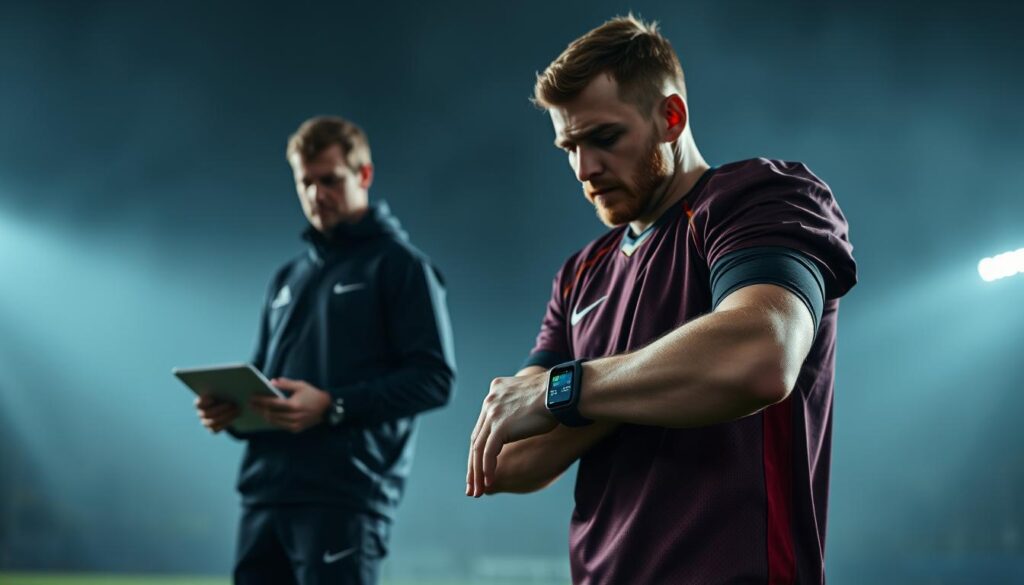
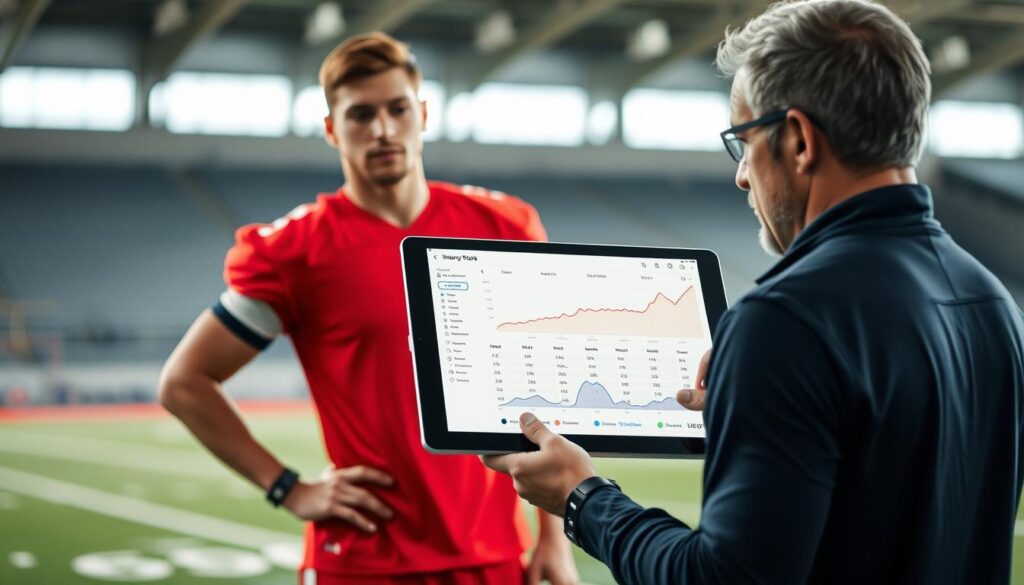
A football player standing on a dimly lit field, wearing a smart wristband that displays real-time injury risk data. In the background, a coach reviews the information on a tablet, a furrowed brow indicating their concern. Soft, dramatic lighting casts shadows across the scene, emphasizing the tension and urgency of the moment. The player's expression is one of focus and determination, aware of the potential risks they face. The image conveys the importance of AI-powered injury prediction and IoT technology in modern sports, where the well-being of athletes is paramount.

That flow enables real-time coaching adjustments and faster clinical escalation when thresholds trigger. Longitudinal records create baselines so deviations stand out early — a key factor for prevention and better performance over a season.

Teams now pair machine learning with clear care pathways so detected risks route to clinicians for timely action. Still, sensor variability and model generalizability demand calibration, transparent reporting, and quality controls.

Research from 2015–2024 shows validated models moving from labs to practice. The result is a shift from reactive treatment to measurable prevention, extending athlete careers and improving sports medicine outcomes.

How we selected the Top Sports Injury Prediction Systems

Selection began with a systematic literature sweep and practical deployment checks. We ran Boolean searches across PubMed, Google Scholar, IEEE Xplore, and ScienceDirect (2015–Apr 2024). Screening followed a simplified PRISMA flow: 472 records → 111 full texts → 68 included studies.

Evidence grading prioritized randomized trials and large cohorts. We flagged RCTs (12 ▲), cohort/observational studies (31 ■), and narrative syntheses (25 ●). Validation metrics focused on AUC and accuracy across soccer, basketball, running, rugby, and cycling datasets.

Evidence-backed criteria: sensors, models, validation, and real-world use

Core criteria included sensor breadth (GPS, HR/HRV, IMU, EMG, temperature, sleep), data quality controls, and pipelines for ingestion and preprocessing.

Model standards favored architectures matched to signals: CNN for spatial patterns, RNN/LSTM for time series, and baseline classifiers like logistic regression or SVM. We required clear validation splits and reported AUC/accuracy.

Grading rigor: RCTs, cohort data, and narrative synthesis

External validity and operationalization were essential. Systems with deployment in elite teams, collegiate runners, or rehab clinics scored higher. Transparency and explainability also influenced ranking for clinician and coach adoption.

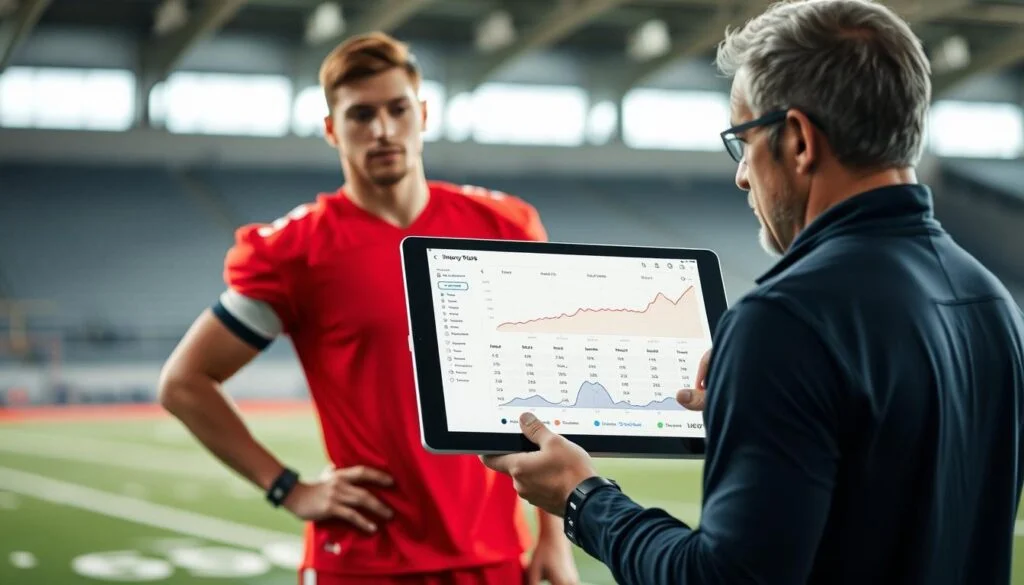
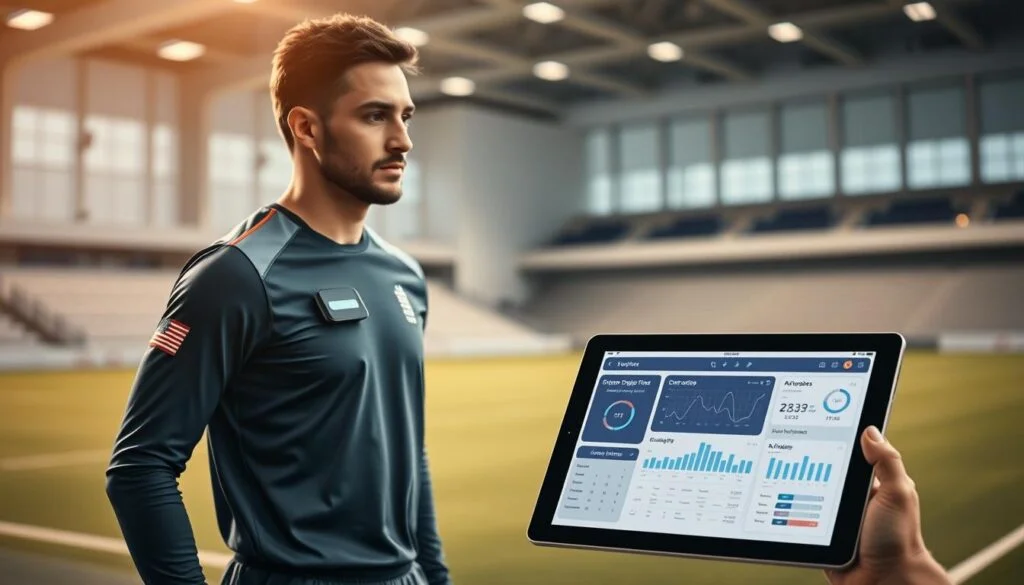
A high-resolution photograph of a football player wearing a smart wristband, with a coach reviewing injury risk data on a tablet in the background. The player is standing on a well-lit sports field, with a blurred, out-of-focus background that suggests a professional training facility. The coach's tablet displays a detailed graph or visualization, showcasing the various metrics and criteria used to assess the player's injury risk profile. The overall scene conveys a sense of scientific analysis and data-driven decision-making in the world of sports injury prediction.

Data governance and manufacturer support were part of the evaluation. We checked for privacy, consent, ownership clauses, and ongoing recalibration resources.

Criterion What we checked Why it matters
Sensor stack GPS, HR/HRV, IMU, EMG, temp, sleep Captures workload, physiology, and movement signals
Model validation AUC, accuracy, clear splits Shows generalizability and performance
Study design RCTs, cohorts, narratives Signals evidence strength and bias risk
Operational fit Real-world use, explainability, coach workflows Enables practical adoption and trust
  • Preference for devices with documented metrics (HRV, ACWR, gait asymmetry) and clear action thresholds.
  • Cross-sport generalizability was evaluated to limit overfitting to a single team or season.
  • Ongoing research and vendor support raised a product’s grade for long-term deployment.

Catapult Sports: GPS-driven load monitoring with machine learning insights

Catapult’s platform turns GPS and load metrics into coach-ready alerts that guide daily training choices. The system combines external movement measures with internal responses to give a complete picture of team workload and readiness.

Sensor stack and operational metrics

GPS, accelerometers, HR/HRV, movement load

Catapult captures distance, high-speed running, and accelerations alongside heart-rate and HRV. These signals quantify external and internal stress for each athlete.

AI approaches

Random forest ensembles detect multivariate risk patterns across GPS and HR features. RNNs model time-dependent load trends tied to soft-tissue events.

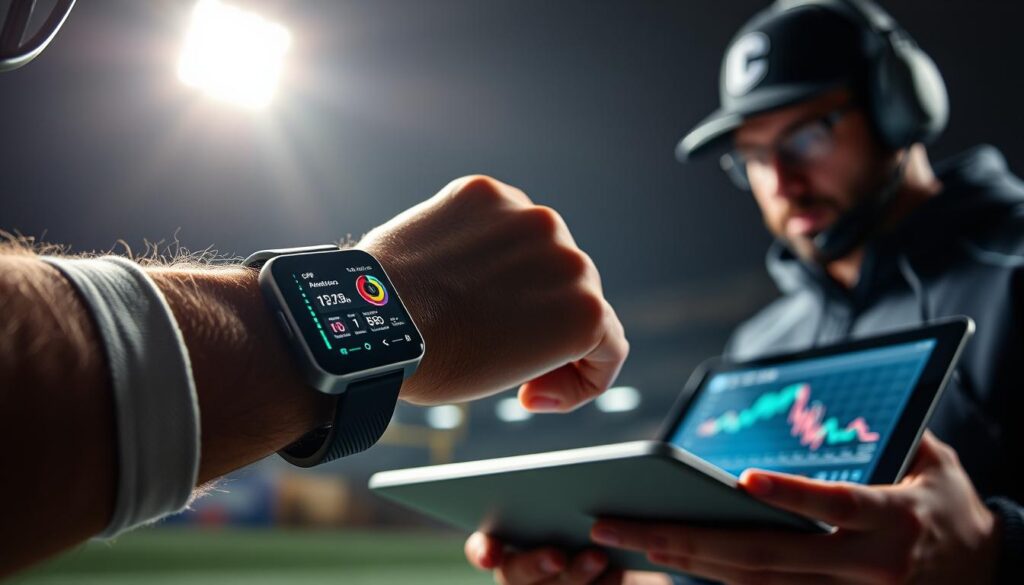
An immersive close-up photograph of a football player's wrist, showcasing a sleek GPS-enabled wearable device from Catapult Sports. The device's display illuminates with vibrant visualizations, displaying real-time data on athlete load, training metrics, and risk analysis. In the background, a coach intently reviews this data on a high-resolution tablet, leveraging machine learning insights to optimize the player's training regimen and prevent potential injuries. Dramatic lighting emphasizes the technical sophistication of the setup, creating a sense of futuristic sports science at work.

Key metrics include ACWR, intensity zones, and acute workload spikes that correlate with elevated risk. Elite soccer cohorts show AUC values up to 0.87 for soft-tissue event forecasting in controlled trials.

  • Live session dashboards and coach alerts for tapering and periodization.
  • Post-session analysis for trend review and return-to-play notes.
  • Seasonal retraining to keep models calibrated as team dynamics change.
Feature What it measures Why coaches use it Limitations
GPS & accelerometer Distance, sprints, accelerations Quantifies external load Placement and signal loss affect accuracy
HR / HRV Physiological load, recovery Tracks internal stress and readiness Artifact cleaning needed for quality
ML models Multivariate risk patterns, time-series trends Predicts elevated risk for overshoot events Needs retraining and transparent thresholds
Workflows Live monitoring and post-session reports Supports coaching decisions and clinician notes High-volume setups need robust pipelines

Catapult is best for elite team environments that need scalable monitoring, clear dashboards, and evidence-backed analytics. Transparent thresholds and medical interoperability build trust, while consistent sensor placement and device calibration remain key for reliable outcomes.

WHOOP: HRV-centered recovery scoring for injury risk modulation

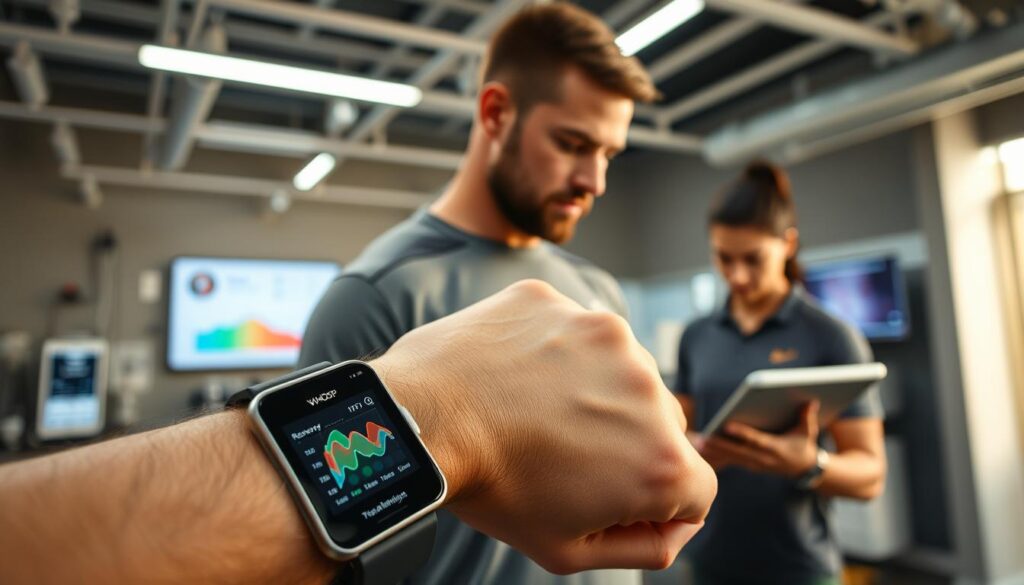
Daily readiness scores from WHOOP translate physiology into clear cues for workload and recovery. The platform measures HRV, strain, sleep staging, and skin temperature to generate a recovery index used by coaches and clinicians.

Physiology first: HRV, sleep staging, skin temperature

WHOOP focuses on internal load via morning HRV and detailed sleep metrics. Drops in HRV often signal parasympathetic fatigue and rising risk of adverse outcomes.

A professional athlete wearing a WHOOP fitness tracker, the screen displaying a detailed HRV (Heart Rate Variability) recovery score. In the foreground, the athlete's wrist is prominently featured, showcasing the sleek wearable device. In the middle ground, a coach or trainer is reviewing the data on a tablet, analyzing the athlete's recovery status and injury risk. The background depicts a well-equipped sports medicine facility, with modern equipment and a clean, clinical atmosphere. The lighting is warm and natural, highlighting the technology and the collaborative nature of the scene. The overall mood conveys a sense of proactive injury prevention and data-driven decision-making in the world of high-performance athletics.

Personalized thresholds: fatigue detection and ACWR alignment

The system builds tailored baselines so trends reflect a tailored individual profile. Strain scores align with ACWR concepts to guide conservative or aggressive training choices.

  • Actionable threshold: reduce intensity when morning HRV falls >20% from baseline.
  • Sleep rule: delay high-intensity sessions if sleep efficiency
  • Skin temp shifts can indicate illness or maladaptation and prompt load cuts.

“Consistent wear and morning routines improve signal quality and the value of daily coaching cues.”

Integration and care: WHOOP’s app-driven feedback supports adherence and flags athletes for clinician review if recovery scores stay low despite reduced training. Attention to consistent wearing and artifact handling is essential for reliable data and better performance optimization and injury prevention.

Oura Ring: Sleep-readiness intelligence for return-to-train decisions

Nightly signals can change the next day’s training plan. The Oura Ring records sleep stages, sleep efficiency, resting pulse surrogates, and skin temperature to build a daily readiness trend. Teams and clinicians use that trend to decide whether to progress sessions or hold back for recovery.

Recovery markers and thresholds

The ring flags low sleep quality — often defined in the literature as sleep efficiency below 75% or total sleep under 6 hours — as a sign to reduce intensity or volume. Temperature deviations greater than 1.5°C from an athlete’s baseline warn of heat stress or possible illness and prompt conservative load cuts.

A professional athlete wearing the sleek, titanium Oura Ring stands before a coach reviewing analytics on a tablet. Bright stadium lighting illuminates the scene, casting a warm glow. The athlete's expression is focused, conveying their commitment to optimizing their health and performance. The coach's brow is furrowed as they scrutinize the readiness data, making crucial decisions about the athlete's return-to-train protocol. The background blurs, emphasizing the importance of this moment where sleep-tracking intelligence informs the path to peak condition and injury prevention.

How to apply Oura readiness to training and rehab

  • Readiness score: combines sleep quality, resting physiology, and temp deviation to guide daily return-to-train choices.
  • Trend focus: multi-day declines matter more than single outliers for reliable decision-making.
  • Field complement: pairs well with load monitoring tools by covering the recovery side of the load-recovery balance.
  • Rehab use: readiness trends help stage progressions from low to moderate intensity during rehabilitation.

Best practices include consistent nighttime wear, morning check-ins, and matching objective scores with subjective wellness reports. Privacy matters: set clear, consensual data-sharing protocols for staff access.

“Component-level subscores reveal whether poor sleep, altered resting physiology, or temperature drove a readiness drop.”

Practical tip: integrate readiness into periodization during travel or congested schedules to reduce risk and protect performance and health.
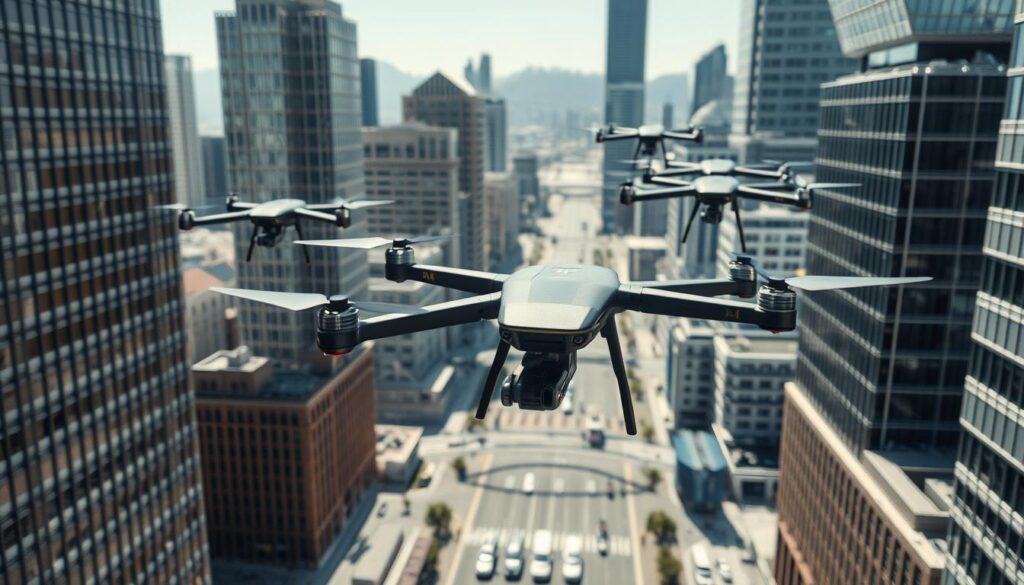
Polar Training Analytics: Integrated HR and GPS for balanced workload

Polar links internal cardiac markers with external pace and distance to highlight when to ease or push training.

From session data to risk signals: HR, HRV, speed, distance

Polar combines HR and HRV with GPS-derived speed and distance to calculate session strain and cumulative workload.

That mix turns raw metrics into clear risk signals, flagging intensity spikes or short recovery windows that can raise the chance of injuries.

Coaching cues: tapering, intensity modulation, recovery windows

Practical cues include tapering before key events, lowering session intensity when HRV trends fall, and extending recovery windows after high-load blocks.

Dashboards visualize recovery status and performance metrics so staff and athletes see day-to-day guidance without custom modeling.

“Consistent HR/HRV measurement protocols are essential for reliable coaching cues and better health outcomes.”

  • Combines internal load (HR/HRV) with external load (pace/distance) for session strain.
  • Translates session data into simple alerts for overload and recovery needs.
  • Works across pace-based sports and fits club or individual workflows.

AI-enhanced IMU platforms for runners: gait and cadence prediction models

Small, body-fixed sensors capture every step, letting coaches see how gait changes with fatigue. Foot pods and shoe-mounted IMUs record cadence, contact time, and left-right asymmetry on every run.

Models in action

CNNs extract features from raw gyroscope and accelerometer waveforms to spot subtle asymmetry and stride variability.

Logistic regression delivers an interpretable risk score that maps gait deviations to a simple alert for staff.

Use cases and evidence

Studies of collegiate runners using foot pods and gyros reported AUCs near 0.76 for forecasting biomechanical instability. That moderate performance supports practical screening and early-warning workflows.

Outputs translate into coaching actions: cadence tuning, footwear review, and targeted strength work to reduce asymmetry.

  • Continuous monitoring catches fatigue-related drift late in sessions.
  • Alerts trigger recovery-focused days when variability crosses thresholds.
  • Integration with training logs links biomechanical shifts to volume or intensity changes.
  • Proper sensor placement and periodic calibration minimize noise and keep results reproducible.

“Periodic model recalibration with fresh data keeps accuracy high across seasons.”

Basketball-specific monitoring suites: fatigue, balance, and overuse risk

On-court actions—rebounding, sprinting, and abrupt cuts—drive cumulative load that can erode resilience over a season.

Sensor fusion combines IMUs, indoor LPS/GPS substitutes, heart rate, and force plates to quantify jump load, deceleration stress, and lateral demands. These sensors collect continuous data and feed consolidated dashboards for coaching and medical staff.

Classifiers such as SVM and ANN have been applied to basketball cohorts to classify fatigue states and flag overuse risk. Observational research reports team-level accuracies near 81%, showing practical value for season-long monitoring.

In practice, the suite helps staff reduce jump volumes, manage back-to-back intensity, and add balance or landing drills. Individual baselines are essential to separate mid-season shifts from normal variability.

Continuous analysis lowers false alarms by adding context: travel, schedule density, and prior conditions. Integration with medical screens yields a fuller risk profile and targeted neuromuscular interventions.

  • Mitigate indoor positioning limits with multi-sensor corroboration.
  • Prioritize recovery modalities when fatigue flags persist across sessions.

“Sensor fusion paired with individualized baselines provides the clearest path to prevention and better performance.”

Rugby and multi-sport dashboards: deep learning for contact and noncontact injuries

Rugby and other team codes demand dashboards that translate complex time-series into clear daily actions. Coaches and clinicians now combine GPS, accelerometer, and gyroscope traces with heart metrics to get a fuller view of load and recovery.

Temporal dynamics: LSTM and deep nets for sequence data

LSTM and DNN architectures capture the sequence nature of matches and microcycles. They learn temporal patterns that single-shot classifiers miss, such as load accumulation after repeated collisions.

Controlled trials report AUCs up to 0.85 for squad-level risk stratification when models use labeled time-series and event annotations.

Operational outcomes: tapering guidance and RTS timing

Dashboards convert model probabilities into green/yellow/red statuses that guide tapering plans and return-to-sport milestones. Teams separate contact exposure from noncontact metrics by combining external exposure with internal response.

Practical workflows include rolling retraining windows to adapt to roster and style changes, strict event annotation for collisions, and edge processing to reduce stadium latency.

  • Coordination: coaches and medical staff reconcile alerts with exams.
  • Microcycle rule: reduce high-load drills for 48–72 hours after heavy contact matches to lower noncontact risks.
  • Transparency: clear risk communication keeps athletes informed and consenting.

Sports Injury Prediction Systems buyer’s guide for 2025

This buyer’s guide helps teams, clinicians, and performance staff choose tools that map signals to clear actions.

Match your sport and risk profile: metrics that matter

Metric-to-action checklist:

  • HRV drop >20% from baseline — reduce intensity that day.
  • ACWR >1.5 — taper volume and add recovery days.
  • SmO2 <50% at rest — avoid heavy eccentric loading.
  • Gait asymmetry >10% — begin neuromuscular rehabilitation.
  • Sleep efficiency <75% or <6 h — delay return-to-sport protocols.
  • Temperature deviation >1.5°C — halt high-load work and assess.

Model transparency and explainability: trust and adoption

Pick vendors that document AUC and accuracy by cohort and publish evidence grades. Explainable models build staff trust and improve athlete adherence.

“Clear rationale for each alert is essential for clinician sign-off and coach buy-in.”

Integration and scalability: teams, clinicians, and data pipelines

Check compatibility with athlete management platforms, EHRs, and common connectivity (BLE, ANT+, Wi‑Fi). Assess onboarding, sensor replacement logistics, calibration workflows, and vendor support.

  • Data governance: explicit consent, role-based access, and clear ownership terms.
  • Tailored individual baselines adapt thresholds to each athlete over time.
  • Plan a pilot with predefined success metrics and a clear total cost of ownership.

Inside the IoT in Sports stack: from sensors to real-time AI injury prediction

An end-to-end telemetry chain captures movement and physiology, then returns actionable guidance during sessions.

Wearables and sensors: GPS, HRV, EMG, IMUs, temperature

Multi-modal capture pairs GPS for external load with HR/HRV for autonomic state, IMUs for motion events, and EMG for muscle effort.

Sleep and skin temperature complete recovery context. Devices stream over BLE, ANT+, or Wi‑Fi for central processing.

Edge versus cloud inference: latency, bandwidth, and reliability

Edge inference runs simple models on-device for instant cues during training. Cloud analytics host heavier models and fleet retraining for cohort insights.

Resilience needs local buffering, integrity checks, and sync rules when connectivity drops to protect stored data.

Closed-loop feedback: alerts, training load tweaks, rehab progress

Closed loops turn model outputs into coach-facing alerts and automated session tweaks that enable prevention and staged rehab milestones.

  • API-first design for integration with athlete management platforms.
  • Encrypted transmission and role-based access secure sensitive data.
  • Telemetry metadata (session type, surface, weather) ensures correct context for alerts.

“Clear thresholds and progressive milestones make remote rehab measurable and safe.”

Validation that counts: from AUC to return-to-sport decisions

Validation should translate numeric performance into safe, actionable clinical choices.

Model performance: RNN/LSTM, CNN, SVM, and ensemble methods

Why AUC and accuracy matter: AUC is preferred for imbalanced team datasets because it reflects ranking ability across thresholds. Accuracy can be misleading when events are rare.

Representative results show strong external validity: soccer random forest/RNN AUC = 0.87 (RCT), rugby DNN AUC = 0.85 (RCT), basketball SVM/ANN accuracy = 81% (observational), running CNN/logistic AUC = 0.76 (narrative synthesis).

Compare families: LSTM/RNN handle sequence trends, CNNs extract waveform features, SVM/logistic models are interpretable, and ensembles (e.g., XGBoost) excel on tabular stacks. Choose based on signal type and clinical need.

Actionable thresholds: HRV drops, ACWR > 1.5, SmO2, gait asymmetry

Convert probabilities into concrete steps: HRV drop >20% → reduce intensity that day. ACWR >1.5 → taper volume. SmO2 <50% → avoid heavy eccentric loading. Gait asymmetry >10% → start neuromuscular rehab.

Calibration and re-validation each season keep predicted probabilities aligned with observed rates. Blend model scores with clinician exams and athlete-reported symptoms for final RTS calls.

“Transparent confidence intervals, clear validation splits, and explainable feature importance are essential for trust.”

Metric Use Study type
AUC Ranking model ability on rare events RCT reports (soccer, rugby)
Accuracy Simple correctness for balanced labels Observational cohorts (basketball)
Operational KPIs Precision, recall, adherence, incidence reduction Program monitoring across seasons
  • Require vendors to expose SHAP-style explanations for feature importance.
  • Monitor alert precision and intervention adherence as primary outcomes.
  • Recalibrate thresholds based on observed follow-up and confidence intervals.

Risks, ethics, and data quality in AI injury prediction

Advanced monitoring brings big benefits, but it also creates real operational and ethical challenges that teams must manage.

False positives and negatives can erode trust and disrupt training. A spurious alert may force unnecessary rest, altering periodization and athlete morale. Missed warnings let strain accumulate and delay care.

Sensor placement, signal noise, and cross-device variability degrade data quality. Poorly mounted units or differing firmware produce inconsistent measures that confuse models. Routine calibration and sensor QC protocols reduce drift and improve repeatability.

Generalizability and dataset limits

Many models train on small, sport-specific cohorts, which limits transfer to other teams or levels. Standardized data schemas and cross-validation across seasons and squads help close that gap.

Privacy, consent, and ownership

Explicit consent, data minimization, and clear ownership clauses protect athletes. Governance frameworks should spell out who can access raw measurements and for what purposes.

  • Operational fixes: routine recalibration, rolling retraining, and season-level cross-validation.
  • Security: de-identification, encryption, and access logs for all staff and vendors.
  • Ethics: require explainability for any alert that affects workload or selection.
  • Oversight: create an internal ethics board to review model updates and policy changes.
  • Education: train athletes and staff on device limits, expected false alarm rates, and how to respond to alerts.

“Transparent governance and clear data quality processes are essential to ensure tools help rather than harm athlete care.”

Conclusion

Teams now get near-real-time alerts that convert physiologic and motion trends into guided recovery steps.

Wearables plus AI enable continuous monitoring and personalized insight tied to thresholds such as an HRV drop >20% or ACWR >1.5. These rules, backed by multi-sport evidence, translate data into daily coaching and rehabilitation choices.

Responsible deployment requires attention to data quality, consent, and clear model explainability. Balanced edge–cloud architectures keep alerts timely while preserving privacy and audit trails.

Pilot thoughtfully, measure outcomes, recalibrate models each season, and train staff and athletes. With better datasets and transparent validation, predictive tools will become standard care across US sports and beyond.

FAQ

What criteria did you use to select the top wearable and analytics platforms for 2025?

We prioritized objective evidence and real-world utility. Key criteria included sensor fidelity (GPS, IMU, heart metrics), model validation against cohort or trial data, transparent performance metrics (AUC, sensitivity, specificity), and demonstrated deployment in teams or clinics. We also graded systems by explainability, integration ease, and clinician or coach adoption.

How do heart-rate variability and sleep metrics help reduce risk and optimize readiness?

Variations in heart-rate variability and sleep provide early signals of autonomic stress and recovery. Consistent drops in HRV or impaired sleep efficiency often precede decreased performance and higher likelihood of soft-tissue issues. Tracking these markers lets coaches adjust load, prescribe recovery, and make safer return-to-training decisions.

Are GPS and accelerometer stacks reliable for workload monitoring during competition?

Modern GPS combined with accelerometers and gyroscopes deliver robust external load estimates, especially for field sports. Accuracy improves with higher sampling rates and sensor fusion. For contact-heavy contexts, supplementing with force-plate or validated IMU data helps capture impacts and mechanical load more reliably.

What machine learning approaches are most effective for time-series risk forecasting?

Recurrent and temporal convolutional models (LSTM, GRU, TCN) handle longitudinal load and physiology data well. Ensembles and tree-based methods (random forest, gradient boosting) are effective for tabular features and interpretability. Best practice blends temporal models with explainable components to guide interventions.

How should teams balance edge inference versus cloud processing for live alerts?

Edge inference reduces latency and preserves bandwidth for real-time alerts, making it ideal for practice sessions and gameday. Cloud processing enables heavier analytics, model retraining, and cross-athlete benchmarking. A hybrid architecture that runs simple classifiers at the edge and syncs richer analysis to the cloud offers the best operational balance.

What common thresholds or markers trigger actionable interventions?

Practical thresholds include sustained ACWR elevations above common risk bounds, sizable HRV declines beyond individual baselines, notable gait asymmetry, and increased session-RPE with declining performance metrics. Teams should set personalized thresholds and validate them against outcomes to avoid excessive false alarms.

How do providers validate their tools to ensure clinical relevance?

Strong validation pathways include retrospective cohort analyses, prospective monitoring with blinded outcomes, and randomized or controlled trials where feasible. Reporting AUC, calibration, and decision-curve analyses helps stakeholders assess clinical utility and scalability.

What privacy and consent issues should organizations address when deploying monitoring tech?

Clear informed consent, defined data ownership, role-based access, and retention policies are essential. Organizations must comply with applicable laws like HIPAA where relevant, anonymize data for research, and establish governance over third-party sharing and analytics.

Can recreational athletes benefit from these platforms, or are they only for elite teams?

Many mobile and wearable solutions scale for recreational users. While elite environments demand higher sampling fidelity and integration, amateur athletes can gain value from sleep, HRV, and gait insights to reduce common overuse problems and optimize training load.

How do clinicians and coaches ensure model outputs lead to better decisions, not confusion?

Adopt systems with transparent feature importance, actionable alerts, and clear recommended actions. Combine algorithmic flags with clinical assessment and athlete feedback. Training staff on interpretation and embedding decision protocols reduces misuse and improves outcomes.

What are the main limitations and common failure modes of current platforms?

Limitations include sensor noise, limited generalizability outside training cohorts, overfitting on small datasets, and high false-positive rates without personalized baselines. Poor data pipelines and missing contextual factors, like psychosocial stressors, also reduce model effectiveness.

How important is integration with electronic medical records and performance software?

Integration streamlines care and enables actionable longitudinal views. Linking monitoring data with medical records, rehabilitation notes, and scheduling systems improves return-to-sport planning, reduces duplication, and supports multidisciplinary decision-making.

What should buyers prioritize in a purchasing decision for the coming season?

Match the platform to your athlete population and risk profile, demand transparent validation, ensure data interoperability, and confirm vendor support for deployment and clinician training. Also evaluate scalability, battery life, and total cost of ownership over multiple seasons.

How can organizations reduce bias and improve model fairness across diverse athlete groups?

Use diverse training data, stratify performance reporting by demographics and position, and perform subgroup validation. Regularly audit model predictions and recalibrate thresholds to avoid systematic under- or over-estimation for any group.

What role do rehabilitation metrics play in closed-loop systems?

Rehab metrics—like range of motion, load tolerance, and strength progression—feed into closed-loop systems to adjust training prescriptions and alert clinicians to stalls or regressions. Real-time feedback accelerates recovery while minimizing reinjury risk.

Let’s Get Started