RFID vs BLE: Which Asset Tracking Tech Fits Your Hospital?

It was late on a busy ward when a missing infusion pump delayed a procedure. Nurses searched hallways and closets while the patient waited. That short delay showed how device visibility affects patient care and staff stress.
RFID asset tracking in hospitals

This guide helps hospital leaders choose between RFID and BLE for equipment locating and workflow gains. We compare room‑level BLE accuracy to within 1–3 meters and the rapid, high‑volume audits that passive RFID can deliver.

Expect clear guidance on cost, scale, accuracy, integration with clinical systems, and ROI. Iottive brings hands‑on experience building BLE apps, cloud/mobile platforms, and end‑to‑end IoT solutions for healthcare teams.

Key Takeaways

  • BLE gives room‑level location; passive RFID excels at fast audits.
  • Choosing depends on device type, mobility patterns, and budget.
  • Integrations reduce wasted time and lower rental or replacement costs.
  • Scale considerations matter when moving from one ward to multi‑facility.
  • Iottive offers healthcare-ready BLE and IoT platforms to support deployment.

Choosing the right tech today: RFID or BLE for hospital asset tracking

Hospitals must weigh high‑volume audit speed against room‑level real‑time visibility when selecting a solution.

Use case matters: passive rfid best serves fast audits, PAR checks, and storeroom sweeps where many items are read at once. BLE excels for frequent location updates of mobile devices and equipment that move between wards.

Facility layout and materials affect performance and costs. Dense walls or long corridors can increase gateway or reader counts. Plan infrastructure around room density and throughput needs.

Data cadence is a key difference. BLE delivers continuous, near‑real‑time location (often 1–3 meters with sufficient gateways). rfid provides event‑based reads at chokepoints and during scheduled audits.

Operational goals—cutting search time, lowering rentals, and improving care coordination—should drive selection. Integrate location feeds with inventory and maintenance systems to surface repairs and reduce unnecessary hires and late fees.

For many hospitals a blended, phased approach works best. Start with audits where quick wins appear, then roll out BLE for high‑mobility devices. Iottive helps quantify benefits and design a right‑sized deployment to match budgets and timelines. Contact: www.iottive.com | sales@iottive.com

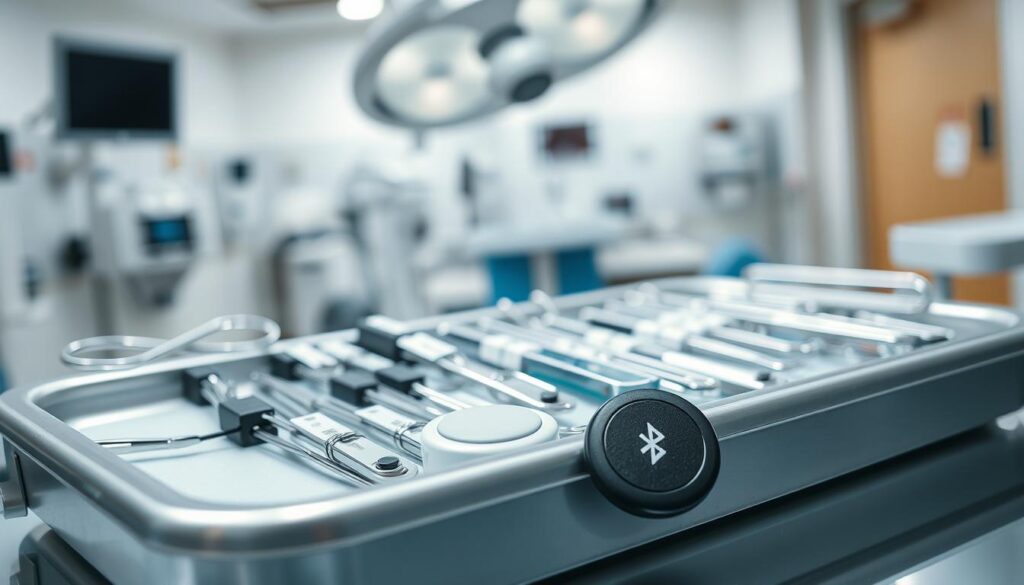
Detailed, realistic photo of a hospital medical equipment tray featuring a variety of RFID-tagged surgical tools and instruments. The tray is placed on a clean, stainless steel surface in a well-lit hospital room. Warm, natural lighting creates soft shadows and highlights the metallic textures. The tools are neatly organized, conveying a sense of order and efficiency in hospital asset management. The overall scene emphasizes the role of RFID technology in reducing lost or misplaced medical equipment, a crucial aspect of modern hospital operations.

How RFID and BLE compare for hospital asset management

Choosing the right mix of reads and real‑time updates reduces search time and boosts patient care.

RFID fundamentals: passive vs semi‑passive, readers, and audit workflows

rfid technology uses radio frequency fields to identify rfid tags on equipment. Passive tags are low cost; semi‑passive (BAP) add sensors. Specialized autoclave‑ready tags handle sterilization cycles.

Handheld readers or carts sweep wards for fast audits. Portal readers capture movements at chokepoints. Systems reconcile scans with inventory and maintenance records to flag repairs or losses.

BLE fundamentals: beacons, gateways, and room‑level location

Small beacons attach to devices and fixed gateways triangulate room‑level location. With enough gateways, accuracy is often 1–3 meters. Continuous updates support quick searches and alerts for high‑value equipment.

A hospital room filled with surgical tools, each tagged with a glowing RFID chip. A nurse's hand hovers over the tray, scanning the items with a handheld reader. The tools emit a soft blue light, their positions precisely tracked on a digital map displayed on a nearby tablet. The room is bathed in warm, natural lighting, conveying a sense of efficiency and control. The scene demonstrates how RFID technology can help hospitals manage their valuable assets, reducing the risk of lost or misplaced equipment.

When to use each: audits vs real‑time lookups

  • Use passive reads for large, scheduled inventory checks and compliance.
  • Use BLE for frequent lookups of infusion pumps, monitors, beds, and wheelchairs.
  • Combine both: periodic RFID counts plus persistent BLE visibility for inventory management and better patient care.
Component RFID BLE
Main parts rfid tags, readers, middleware beacons, gateways, cloud app
Data pattern Event reads at portals or audits Continuous room‑level updates
Best for High‑volume inventory verification Frequent lookups of mobile equipment
Infrastructure Readers, chokepoints, scan carts Gateway placements, network backhaul

Iottive’s BLE App Development and Cloud & Mobile Integration streamlines beacon and gateway data into maps, search, and alerts that help care teams find medical assets faster and save time.

RFID asset tracking in hospitals

Large inventories demand methods that find items fast and keep supply lists accurate.

Key benefits: reduced search time and better utilization

Rapid audits let staff sweep departments and update inventory quickly. That reduces time spent searching and frees clinicians to focus on patient care.

Visibility across wards lowers unnecessary rentals and helps avoid late return fees. Systems that read thousands of items at once can reveal unused equipment and improve utilization.

“Passive reads can turn hours of searching into minutes, saving staff time and cutting costs.”

A crisp, clean photograph of a hospital tray filled with various RFID-tagged surgical tools and equipment. The tray is placed on a stainless steel table, bathed in the warm, diffused lighting of the hospital environment. The RFID tags on the instruments are clearly visible, glinting subtly under the light. In the background, a blurred view of the bustling hospital activity, conveying the important role RFID plays in asset tracking and inventory management to reduce lost or misplaced medical equipment. The scene exudes a sense of efficiency, organization and patient safety.

Operational considerations: sterilization, maintenance, and compliance

Choose durable rfid tags for general equipment and autoclave‑resistant tags for sterilizable instruments. Place readers at chokepoints—sterile processing and loading docks—to capture movements between departments.

Integrate reads with asset management and maintenance schedules to flag devices due for service. Follow GS1 standards and keep audit trails to meet regulatory reviews.

Use case Typical benefit Notes
High-volume audits Faster inventory reconciliation Low-cost tags enable broad coverage
Preventive maintenance Scheduled servicing flagged Integrate with CMMS for work orders
Loss prevention Reduced shrinkage and rentals Visibility across beds, wheelchairs, laptops

Iottive designs end-to-end IoT solutions and rfid-friendly apps that streamline audits, alerts, and maintenance workflows for healthcare providers.

Accuracy, coverage, and infrastructure demands inside hospitals

Accuracy and coverage shape how well location systems work on clinical floors.

BLE can locate high-value equipment in real time to within 1–3 meters when gateways are placed on ceilings or walls and calibrated for room-level service.

Gateways need reliable power, network backhaul, and an initial calibration sweep. Proper placement reduces false positives and improves location tracking for pumps, monitors, beds, and wheelchairs.

Realistic photo of a hospital ward interior, showcasing a tray of surgical tools and equipment. The tray is equipped with RFID tags, highlighting their use in asset tracking to prevent lost items. The scene is bathed in warm, natural lighting, casting a calming, professional atmosphere. The ward features clean, modern medical equipment and furnishings, creating an environment focused on efficiency and patient care. The overall image conveys the importance of RFID technology in improving hospital operations and reducing asset loss.

Read ranges, chokepoints, and performance factors

Radio frequency read performance varies with tag type, reader power, antenna tuning, and environment. For passive rfid, optimize chokepoints at entrances, supply rooms, and sterile processing areas to capture bulk reads.

Readers and antennas should be tuned and tested to reduce missed reads. Tag orientation and shelving can affect read rates during high‑volume audits.

Coverage models and operational advice

  • BLE: continuous room updates for real-time visibility when gateway density is sufficient.
  • RFID: event-based reads that scale economically for many assets and fast audits.
  • Integrate both into a single systems view so staff-facing apps and management dashboards show one source of truth.

Start with dense BLE in critical care, pair RFID sweeps for storerooms, and choose hospital‑grade hardware to support sustainable operations. Iottive’s BLE App Development and Cloud & Mobile Integration translate gateway data into floor maps, search, alerts, and APIs for real-time visibility across healthcare workflows.

Total cost, ROI, and scaling from one ward to system‑wide deployment

Budget decisions require a clear split between upfront and ongoing costs. Upfront costs include tags and readers versus beacons and gateways. Ongoing costs cover software licensing, integration, maintenance, and battery replacement.

Upfront vs ongoing costs

  • Hardware: readers, gateways, and beacons or tags.
  • Software: cloud licenses, dashboards, and APIs.
  • Operations: integration, network, and routine maintenance.

Quantifying savings

Use the nurses’ benchmark: ~208 hours per year spent searching. Automating location reduces that time and reassigns it to care. Passive reads cut labor for manual counts, while BLE reduces time to find equipment and avoids rentals and late fees.
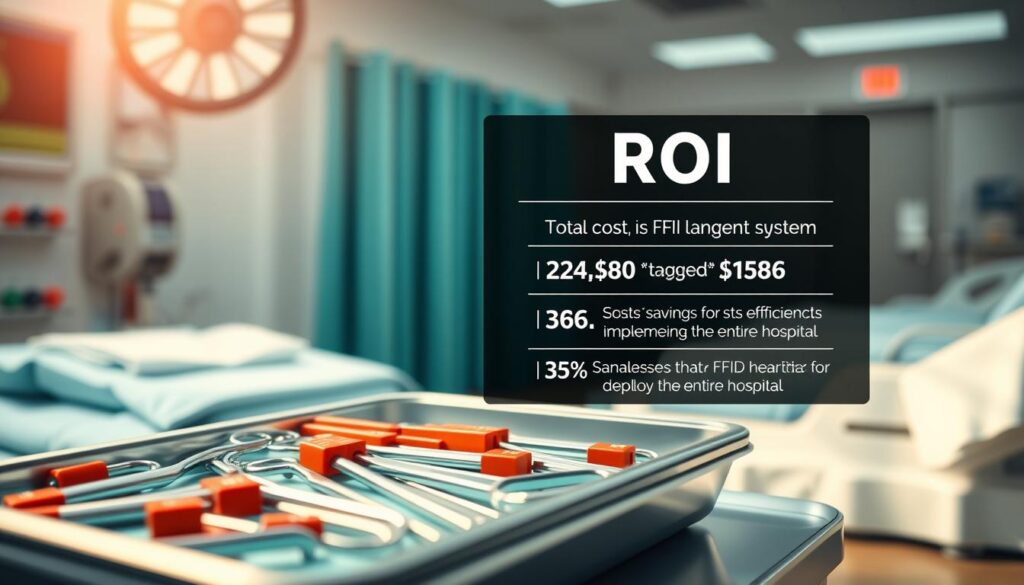
A high-resolution, photorealistic image depicting a hospital ward, with a prominent display showing a detailed breakdown of the total cost and return on investment (ROI) for implementing an RFID asset tracking system. The foreground features a neatly organized hospital tray with various RFID-tagged surgical tools, illustrating the practical application of the technology. The middle ground showcases the ROI analysis, with clear visualizations of cost savings, efficiency improvements, and the scalable benefits of deploying the system across the entire hospital. The background sets a serene, well-lit hospital environment, conveying a sense of professionalism and attention to detail in the asset management process.

Plan device density per floor for required accuracy and factor beacon battery life (multi‑year for devices like SPARROW). Include gateway resilience (KONA Micro battery backup) and cloud failover in TCO.

“A phased pilot validates savings, then scale by ward and facility with measurable ROI milestones.”

Phase Key cost items Primary ROI drivers
Pilot Beacons/tags, a few gateways, software fees Reduced search time, audit efficiency
Scale Expanded gateways/readers, integration, maintenance Fewer rentals, loss prevention, better utilization
Enterprise Multi‑site network, security, support contracts System‑wide visibility, lower total costs

Iottive delivers end‑to‑end IoT solutions, BLE apps, and cloud services to lower implementation costs and accelerate ROI for healthcare. Contact: www.iottive.com | sales@iottive.com

Integration and data flow: from tags to staff workflows

A clear data flow turns raw reads into timely alerts that staff can use at the point of care.

Connecting to CMMS, EHR, and inventory

Automated maintenance links reader events to CMMS for scheduled servicing, calibration alerts, and compliance records. That reduces missed checks and speeds repairs.

Linking EHR and inventory management adds context. Systems can show equipment readiness tied to patient schedules and procedure needs.

Cloud and mobile experiences for staff

Data moves from readers and gateways to cloud tracking software via standardized APIs. Dashboards and BI tools get clean, usable feeds for management reports.

  • Mobile maps and fast search by device type or ID.
  • Proximity guidance to the nearest equipment and simple status updates.
  • Alerts for dwell time, zone breaches, and maintenance due dates.

Data governance and resilience: role-based access, audit trails, PHI avoidance, and gateway battery backup keep systems reliable during outages.

“Iottive’s BLE App Development and Cloud & Mobile Integration accelerates integrations and reduces IT burden.”

Contact: www.iottive.com | sales@iottive.com

From pilot to production: your hospital implementation roadmap

Successful deployments balance technical validation with frontline workflows and safety checks. A clear roadmap keeps disruption low and helps teams adopt new systems fast.

Assessment and site survey: asset classes, risk areas, and infrastructure readiness

Start with a focused assessment. Catalog assets and equipment by class and clinical risk. Identify search hotspots and inventory choke points.

Run site surveys to validate BLE gateway density for target accuracy and reader placement for reliable reads, noting power and network availability.

Pilot design and validation: location accuracy, throughput, and safety protocols

Define KPIs: accuracy targets, audit throughput, time to find equipment, and safety outcomes. Test BLE placement and rfid reader chokepoints under real workflows.

Include infection control rules for tags and mounts. Consider LoRaWAN gateways with battery backup (KONA Micro) and hybrids (SPARROW) for resilience and long battery life.

Training and change management: adoption, policies, and continuous improvement

Build role-based training, quick guides, and help-desk paths for staff. Set governance for tag maintenance and systems ownership per unit.

  • Validate CMMS/EHR/inventory integrations during pilot.
  • Stage scale-up from ward → units → hospitals, refining placement and policies.
  • Use dashboards to monitor time to locate, audit rates, and maintenance compliance.

Iottive provides end‑to‑end IoT/AIoT solutions from site surveys and pilot design to training, rollout, and continuous improvement in healthcare. Contact: www.iottive.com | sales@iottive.com

Why choose Iottive for BLE, RFID, and end‑to‑end IoT in healthcare

Iottive builds practical IoT solutions that let clinical teams find devices fast and reduce wasted time. We combine Bluetooth engineering, cloud apps, and secure mobile UX to deliver measurable results for healthcare clients.

Our expertise spans full lifecycle delivery:

Our expertise: IoT/AIoT solutions, BLE app development, cloud & mobile integration

End‑to‑end capabilities include BLE app development, cloud integration, custom IoT platforms, and system APIs. We provide deployment playbooks, clinical UX design, and secure integrations with CMMS, EHR, and inventory systems.

Healthcare use cases we serve

We help teams manage infusion pumps, beds, wheelchairs, monitors, and IT devices. Our work reduces time to locate equipment, cuts rental and late fees, and lowers loss rates.

Capability Benefit Notes
BLE & rfid unification Room updates + fast audits Maps, search, alerts, analytics
Integrations Automated maintenance CMMS/EHR/inventory linkage
Reliability Continuous location visibility Gateway redundancy & battery backup

Flexible commercial models let hospitals pilot, scale, and measure ROI. To scope your asset tracking solution, schedule a discovery session at www.iottive.com or email sales@iottive.com.

Conclusion

Prioritize solutions that cut search time for nurses and deliver measurable ROI quickly.

Use BLE for continuous, room‑level location tracking of mobile medical equipment and use RFID for scalable, high‑volume audits of tags and storerooms. A blended approach often offers the best coverage across varied device types and floor plans.

Connect tracking software to CMMS, EHR, and inventory management so reads drive maintenance, reduce rentals and late fees, and lower loss. Plan gateway density, battery life, and infection‑control mounts during pilots.

Start small, validate KPIs, then expand across hospital systems with resilient gateways and clear reporting dashboards. Partner with Iottive to scope a right‑sized solution and kick off rapid, measurable gains: www.iottive.com | sales@iottive.com.

FAQ

What are the core differences between RFID and BLE for hospital asset monitoring?

RFID uses radio tags read by fixed or handheld readers and excels at fast, high-volume scans for inventories and audit workflows. BLE relies on battery-powered beacons and gateways to provide continuous, room-level visibility and real-time location of mobile devices like infusion pumps and portable monitors. Choose RFID for rapid audits and BLE when you need live location and staff notifications.

Which technology is better for tracking infusion pumps and other frequently moved devices?

For devices moved often across wards, BLE provides the persistent, near-real-time location that clinicians need to find pumps and start care faster. RFID can supplement BLE by supporting nightly or frequent bulk audits to reconcile inventory and detect losses without installing many battery-dependent tags.

How do read range and accuracy compare between these systems in clinical settings?

BLE typically delivers room-level accuracy around 1–3 meters when gateways are placed correctly. Passive RFID read ranges vary from a few centimeters with handhelds to several meters at choke points with fixed readers, making it ideal for corridor or doorway scans and batch audits rather than continuous room-level tracking.

What infrastructure is required to deploy BLE or RFID across a ward or entire hospital?

BLE needs a grid of gateways or access points with power and backhaul, plus battery-powered tags and a cloud/mobile app. RFID requires readers at chokepoints or handheld units, durable tags, and integration with inventory software. Both need network connectivity, a management console, and security controls to protect patient and device data.

How do costs compare and what affects total cost of ownership?

Upfront costs include tags, readers/gateways, installation, and software. Ongoing costs cover battery replacement for active tags, maintenance, support, and cloud services. BLE often has higher tag costs and battery upkeep but delivers real-time value; RFID can be lower per-tag for passive solutions and cuts audit labor dramatically. ROI depends on savings in nurse time, reduced rentals, and fewer misplaced devices.

Can these systems integrate with CMMS, EHR, or inventory software?

Yes. Modern solutions expose APIs or use HL7/FHIR connectors to push location and maintenance events into CMMS and EHR workflows. Integration enables scheduled maintenance alerts, compliance records, and faster device lookup directly from clinician apps or asset management dashboards.

What operational considerations should I plan for around sterilization and cleaning?

Tags and beacons must be selected for sterilization resistance or placed in protective housings compatible with cleaning agents. Procurement teams should require medical-grade enclosures and validate tag performance after routine disinfection cycles to prevent read failures and ensure patient safety.

How do you measure savings like reduced search time and fewer rentals?

Track baseline metrics: average search time per device, number of rented units, and loss incidents. After deployment, measure reductions in nurse minutes spent searching, decreases in rental invoices, and lower write-offs for missing devices. Translate time savings into labor cost reductions and compare against system costs for ROI calculations.

What are best practices when piloting a location solution before system-wide rollout?

Start with a site survey to map assets, traffic patterns, and signal obstacles. Pilot a representative ward, validate location accuracy and throughput, and test integrations with maintenance and clinical workflows. Collect user feedback, refine tag placement and gateway density, and document SOPs before scaling.

How do you manage battery life and device density for BLE deployments?

Choose beacons with long-life batteries, optimize reporting intervals, and implement remote battery monitoring. Plan density based on device counts per ward and expected movement. Regular maintenance schedules and automated alerts for low battery help keep coverage reliable during multi-facility rollouts.

What compliance and data security measures are essential for these systems?

Ensure encryption for data in transit and at rest, role-based access controls, audit logging, and secure APIs. Adhere to HIPAA where patient-related metadata appears and perform regular vulnerability scans. Vendor contracts should include data residency, breach notification, and support SLAs.

Can a hybrid approach combining RFID and BLE offer advantages?

Yes. A hybrid strategy uses RFID for rapid, high-volume audits and BLE for continuous room-level tracking of critical, mobile devices. This combination maximizes inventory accuracy, reduces search time, and minimizes costs by applying each technology where it performs best.

What hospital use cases benefit most from real-time visibility and alerts?

High-value, time-sensitive equipment such as infusion pumps, ventilators, anesthesia machines, and portable monitors benefit greatly. Real-time alerts reduce delays in patient treatment, prevent duplication of purchases or rentals, and help critical care teams locate devices during emergencies.

How should hospitals plan growth from a single ward pilot to system-wide deployment?

Use pilot data to model device density, gateway and reader placement, and recurring costs. Create phased rollouts by clinical area, align with IT and facilities for power and network readiness, train staff, and establish governance for change management and continuous optimization.

What support should you expect from a vendor during implementation?

Expect site assessment, hardware provisioning, integration services, pilot validation, on-site or remote training, and ongoing technical support. Vendors should provide analytics, dashboarding, and professional services to tune accuracy and reporting for clinical workflows.


Let’s Get Started

Top 5 Hospital Asset Tracking Systems in 2025

The healthcare industry is witnessing a significant transformation with the adoption of advanced technologies like IoT and RFID to improve operational efficiency. One area where this is particularly evident is in hospital asset tracking. Hospitals lose billions annually due to misplaced or underutilized equipment, a problem that can be mitigated with the right tracking systems.

hospital asset tracking system,IoT-powered hospital inventory hub, AI hospital

With the global IoT in healthcare market valued at USD 53.64 billion in 2024 and expected to reach USD 368.06 billion by 2034, the importance of asset tracking systems cannot be overstated. These systems help automate preventive maintenance, track utilization, and provide real-time insights, enabling healthcare providers to deliver better care.

Key Takeaways

  • Top hospital asset tracking systems can significantly reduce equipment loss and improve operational efficiency.
  • IoT technology is revolutionizing healthcare by enabling real-time tracking and monitoring.
  • The right tracking system can help healthcare facilities make informed decisions and improve patient care.
  • Leading healthcare providers are adopting advanced asset tracking solutions to stay ahead.
  • The global IoT in healthcare market is expected to grow exponentially in the next decade.

The Critical Need for Hospital Asset Tracking in Modern Healthcare

Modern hospitals face significant challenges in managing their vast array of critical assets, from ventilators and surgical equipment to mobile monitors and diagnostic tools, all of which need to be properly maintained and readily available.

The complexity of healthcare environments demands efficient asset tracking systems to ensure that every piece of medical equipment is accounted for, maintained on time, and ready to use without delay or confusion.

Current Challenges in Hospital Asset Management

Many healthcare facilities still rely on outdated tracking methods like spreadsheets or legacy systems that merely record data without driving actionable insights. This leads to equipment hoarding, loss, and inefficient utilization.

  • Inadequate tracking methods result in wasted time searching for assets.
  • Lack of visibility into asset lifecycles leads to over-maintenance or neglect.
  • Inefficient management of equipment increases operational costs.

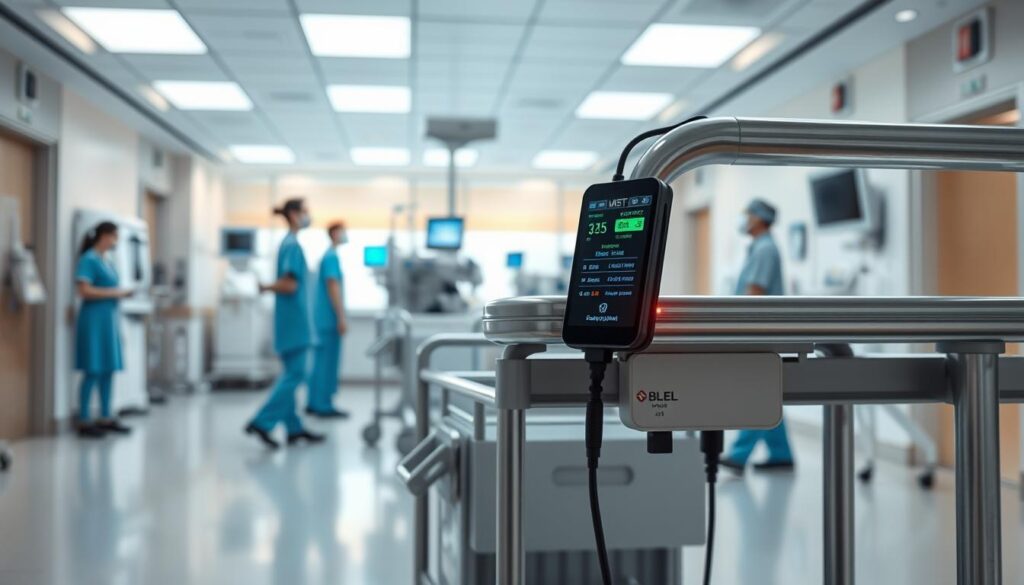
A dimly lit hospital ward, filled with the soft glow of medical equipment. In the foreground, a medical cart stands prominently, adorned with Bluetooth Low Energy (BLE) tags that track its location and movement. The tags emit a subtle blue light, casting an ethereal glow across the scene. In the middle ground, various other hospital assets - IV stands, wheelchairs, and monitoring devices - are also outfitted with BLE tags, their positions meticulously logged by the asset tracking system. The background is hazy, with the silhouettes of hospital staff moving about, their focus on delivering exceptional patient care. The overall mood is one of efficiency, order, and the critical importance of modern asset tracking in the fast-paced world of healthcare.

The Cost of Inefficient Asset Tracking in Healthcare

The financial impact of inefficient asset tracking is substantial, with hospitals experiencing increased capital expenditures due to unnecessary purchases and maintenance inefficiencies.

Challenge Impact
Inefficient Asset Tracking Increased Capital Expenditures
Equipment Downtime Directly Affects Patient Care
Lack of Visibility Premature Replacements and Increased Operational Costs

By understanding these challenges and their financial implications, healthcare facilities can begin to appreciate the critical need for effective hospital asset tracking systems.

Understanding Hospital Asset Tracking Systems

Hospital asset tracking systems are revolutionizing healthcare by providing real-time visibility into equipment location and status. These systems are more than just digital spreadsheets; they are comprehensive platforms that utilize advanced technologies to manage medical equipment throughout a healthcare network.

What is a Healthcare Asset Management Solution?

A healthcare asset management solution is a real-time platform that centralizes inventory, automates maintenance, tracks utilization, drives compliance, and provides analytics for every piece of physical equipment. By leveraging technologies like RFID, QR code tracking, IoT sensors, and Wi-Fi RTLS, these systems ensure that healthcare providers can answer critical questions about asset location, condition, usage history, and maintenance requirements.

These solutions go beyond simple inventory management by providing a unified ecosystem that connects equipment data with maintenance workflows, compliance requirements, and resource allocation decisions. This integration enables proactive management of assets, transforming passive tracking into a strategic advantage for healthcare facilities.

Key Technologies Powering Modern Hospital Asset Tracking

Modern hospital asset tracking systems employ a range of technologies to maintain continuous visibility of equipment. These include RFID tags, QR codes, IoT sensors, Bluetooth Low Energy (BLE) beacons, and Wi-Fi Real-Time Location Systems (RTLS). By combining these technologies, hospitals can achieve a comprehensive understanding of their asset utilization and optimize their management strategies.

A modern hospital ward filled with various medical equipment, including IV pumps, patient monitors, and medication carts. The foreground features several Bluetooth Low Energy (BLE) asset tracking tags affixed to the equipment, their LED indicators blinking softly. The middle ground shows healthcare staff moving around the ward, engaged in their duties. The background depicts a clean, well-lit environment with large windows providing natural illumination. The overall atmosphere conveys a sense of efficiency, organization, and technology-enabled asset management.

The integration of these technologies enables healthcare facilities to streamline their operations, reduce costs, and improve patient care. As the healthcare industry continues to evolve, the role of advanced asset tracking systems will become increasingly critical in ensuring the efficient management of medical equipment and devices.

Core Features of Effective Hospital Asset Tracking Systems

The backbone of any successful hospital asset management strategy is a robust tracking system with advanced features. Effective hospital asset tracking systems are designed to streamline operations, reduce costs, and improve patient care by ensuring that critical equipment is always available when needed.

Real-Time Location Tracking Capabilities

A key feature of modern asset tracking systems is their ability to provide real-time location tracking. Using technologies such as RFID, BLE, or Wi-Fi triangulation, these systems can pinpoint the exact location of equipment across departments, floors, or even buildings. “With real-time tracking, hospitals can eliminate the guesswork in locating equipment, saving time and reducing operational inefficiencies,” says an industry expert. Custom geofencing capabilities further enhance this feature by alerting staff if high-value equipment leaves designated areas.

Realistic photo of a modern hospital ward, bathed in bright, natural lighting filtering in through large windows. In the foreground, various medical equipment such as IV stands, monitors, and wheelchairs are tagged with small, discreet Bluetooth Low Energy (BLE) tracking devices. The tags are seamlessly integrated, blending into the equipment's design. In the middle ground, hospital staff move efficiently, consulting tablet devices that display the real-time location and status of the tagged assets. The background reveals a clean, organized workspace, with medical supplies and technology harmoniously integrated into the clinical environment.

Preventive Maintenance Scheduling

Another crucial feature is preventive maintenance scheduling. Advanced systems automatically flag assets due for inspection based on actual usage patterns, supporting Alternate Equipment Maintenance (AEM) programs. This ensures that maintenance is performed when necessary, rather than on a fixed schedule, thereby optimizing equipment performance and extending its lifespan.

Compliance and Documentation Management

Compliance and documentation management are also vital components. These systems maintain comprehensive digital records of all maintenance activities, inspection reports, and certifications, making it easier for hospitals to prepare for audits and demonstrate compliance with regulatory requirements.

By incorporating these core features, effective hospital asset tracking systems not only improve operational efficiency but also enhance patient care by ensuring that critical equipment is properly maintained and readily available.

Benefits of Implementing IoT-Powered Hospital Asset Tracking

By leveraging IoT-powered hospital asset tracking, healthcare facilities can achieve enhanced operational efficiency and patient care. The integration of IoT technology in hospital asset management isn’t just about knowing where assets are—it’s about unlocking performance across care, cost, and compliance.

Realistic photo of a modern hospital ward, softly lit with natural light from large windows. In the foreground, various medical equipment like IV stands, wheelchairs, and hospital beds are outfitted with Bluetooth Low Energy (BLE) tracking tags. The tags emit signals that are picked up by a network of IoT sensors installed throughout the room, allowing the hospital's asset management system to precisely track the location and status of each item in real-time. The middle ground shows medical staff interacting with the equipment, while the background depicts a serene and calming hospital environment.

Operational Efficiency and Workflow Improvements

Implementing IoT-powered hospital asset tracking systems leads to significant operational efficiency improvements. By eliminating time-consuming equipment searches, streamlining workflows, and reducing delays in patient care procedures, hospitals can optimize their resources. This results in shorter delays and smoother workflows, allowing medical staff to locate, clean, and prepare devices instantly, thus improving bed turnover and ensuring procedures run on time.

Cost Reduction and Resource Optimization

The financial benefits of IoT-powered hospital asset tracking are substantial. Tagging systems can cut equipment loss by up to 20%, while utilization data enables more informed decisions about asset allocation, potentially reducing rental spend by 15-30%. Additionally, condition monitoring and preventive schedules can stop equipment failures before they happen, leading to 20-25% fewer critical equipment issues and 90% less time spent locating gear.

Enhanced Patient Care and Safety

Enhanced patient care and safety are direct results of ensuring the right equipment is available at the right time. This reduces procedure delays and improves overall healthcare delivery outcomes. The integration of AI capabilities with IoT tracking creates predictive systems that can anticipate equipment needs, prevent failures before they occur, and optimize resource distribution based on historical usage patterns, ultimately leading to better patient care and safety.

Top 5 Hospital Asset Tracking Systems in 2025

With the projected CAGR of over 15% through 2030, the hospital asset tracking market is poised to revolutionize the way healthcare facilities manage their assets. As healthcare systems prioritize efficiency and compliance, the demand for advanced asset tracking solutions has never been higher.

A realistic photo of a modern hospital ward, bathed in warm, diffused lighting from overhead fixtures. In the foreground, various medical equipment such as IV stands, wheelchairs, and gurneys are adorned with small, discreet Bluetooth Low Energy (BLE) asset tracking tags. The tags glow softly, blending seamlessly with the equipment. In the middle ground, healthcare staff move purposefully, monitoring the location and status of assets on a centralized dashboard. The background reveals the clean, sterile environment of the ward, with pristine white walls and floors, and the faint hum of medical machinery. The overall scene conveys a sense of efficiency, organization, and patient-centric care enabled by the hospital's advanced asset tracking system.

Selection Criteria and Evaluation Methodology

Our evaluation of the top hospital asset tracking systems for 2025 is based on comprehensive criteria, including technological capabilities, integration potential with electronic health records, scalability, user experience, and total cost of ownership.

  • Technological capabilities, such as real-time location tracking and preventive maintenance scheduling
  • Integration potential with existing hospital infrastructure, including electronic health records and clinical information systems
  • Scalability and flexibility to adapt to changing healthcare needs
  • User experience and training requirements
  • Total cost of ownership, including implementation, maintenance, and support costs
Evaluation Criteria Description Weightage
Technological Capabilities Real-time location tracking, preventive maintenance scheduling, and actionable analytics 30%
Integration Potential Integration with electronic health records and clinical information systems 25%
Scalability and Flexibility Ability to adapt to changing healthcare needs and growing demands 20%
User Experience Ease of use, training requirements, and user satisfaction 15%
Total Cost of Ownership Implementation, maintenance, and support costs 10%

The evaluation methodology incorporated feedback from healthcare facilities currently using these systems, focusing on measurable improvements in asset utilization, maintenance efficiency, and overall return on investment.

1. CenTrak RTLS Asset Management Solution

Generate an image of a hospital staff member using a tablet to track medical equipment via CenTrak's RTLS system.

In the realm of healthcare asset management, CenTrak’s RTLS solution stands out for its precision and reliability. CenTrak specializes in real-time location services (RTLS) for the healthcare industry, helping track critical assets like wheelchairs and equipment.

Key Features and Capabilities

CenTrak’s RTLS Asset Management Solution offers highly accurate room-level location tracking capabilities, utilizing a combination of infrared, RFID, Bluetooth Low Energy, and Wi-Fi technologies. The system provides comprehensive asset visibility with customizable dashboards that display real-time location, status, and utilization metrics for all tagged hospital equipment.

The solution integrates seamlessly with existing hospital systems, including electronic health records and maintenance management platforms, creating a unified ecosystem for asset management.

Strengths and Limitations

The CenTrak solution excels in accuracy and reliability, with strengths including its scalability for multi-building healthcare networks and robust reporting capabilities. It has a proven track record of reducing equipment loss and rental costs. However, some healthcare facilities report that the initial implementation requires significant infrastructure investment, particularly for larger hospital campuses. Additionally, the advanced features come with a steeper learning curve for staff.

2. GE Healthcare AssetPlus

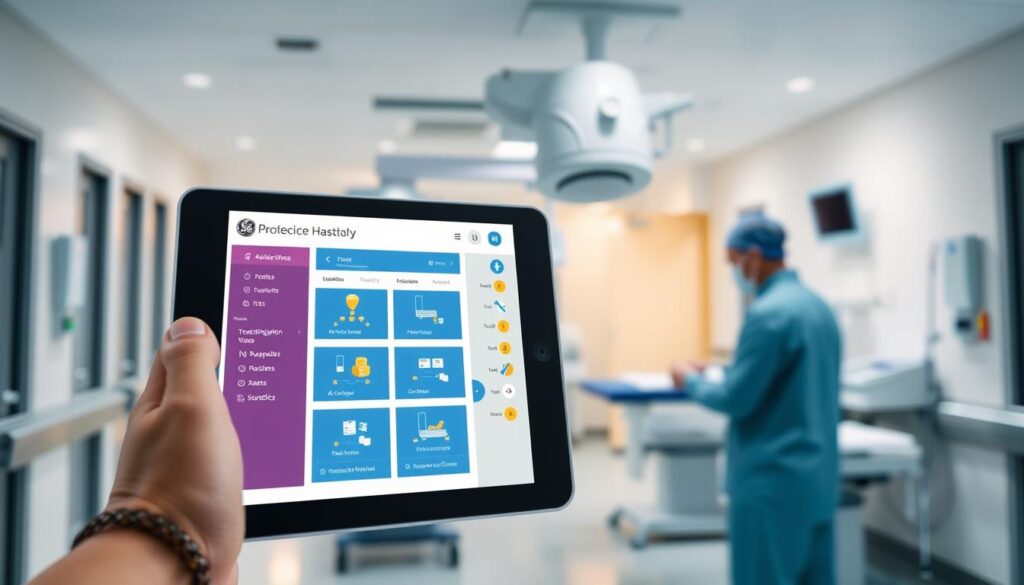
Generate an image of a hospital asset tracking system with GE Healthcare's AssetPlus interface on a tablet.

GE Healthcare’s AssetPlus is revolutionizing hospital asset management with its cutting-edge technology. This comprehensive IoT-powered hospital asset tracking system is designed to optimize asset utilization, reduce costs, and improve patient care.

Key Features and Capabilities

GE Healthcare’s AssetPlus offers a robust asset management solution that extends beyond simple tracking to include predictive maintenance, lifecycle management, and detailed utilization analytics for medical equipment. The system leverages GE’s extensive healthcare expertise to provide industry-specific workflows and equipment management protocols that align with regulatory requirements and best practices.

Some of the key features of AssetPlus include:

  • Robust integration capabilities with GE’s own medical devices and third-party equipment, creating a unified view of all hospital assets regardless of manufacturer.
  • Advanced predictive maintenance algorithms that analyze equipment usage patterns and performance metrics to anticipate potential failures before they impact patient care.

Strengths and Limitations

A key strength of AssetPlus is its ability to provide advanced analytics and insights that help healthcare providers optimize their asset utilization. However, some healthcare providers report that the system works best within GE-centric environments and may require additional configuration for facilities with diverse equipment inventories.

Despite this limitation, AssetPlus remains a powerful tool for hospitals looking to optimize their asset tracking and management. Its comprehensive features and capabilities make it a top contender in the hospital asset tracking market.

3. ASCOM Healthcare Communication Platform

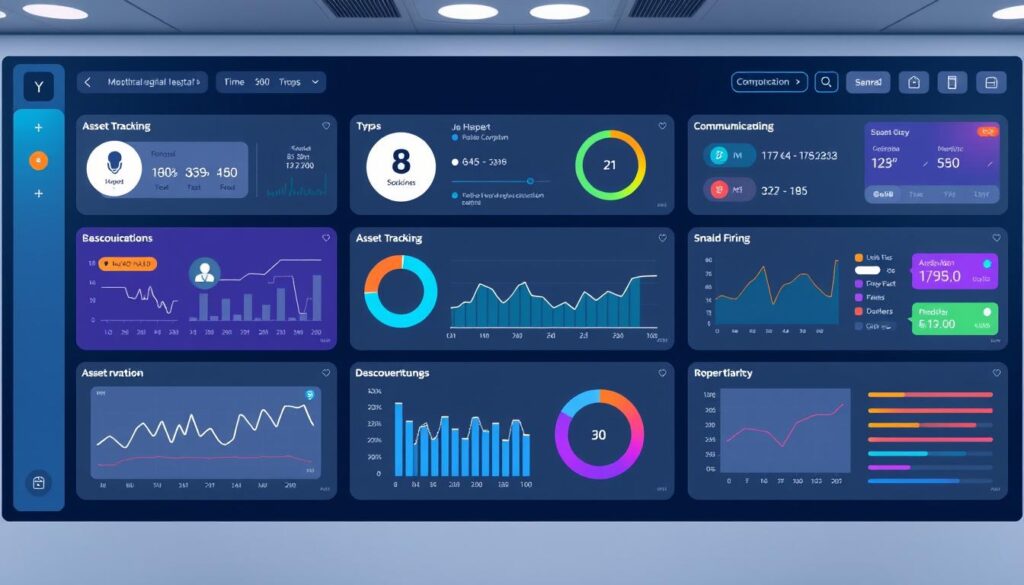
Generate an image of a hospital dashboard displaying real-time asset tracking and communication features.

The ASCOM Healthcare Communication Platform is revolutionizing hospital asset tracking by integrating it with a broader communication ecosystem. This innovative solution connects equipment management with clinical workflows and staff coordination, enhancing the overall efficiency of hospital operations.

Key Features and Capabilities

The ASCOM Healthcare Communication Platform distinguishes itself by integrating asset tracking capabilities within a broader communication ecosystem. This integration enables real-time alerts about equipment status to be delivered directly to the appropriate healthcare providers, streamlining clinical workflows.

The system’s advanced workflow automation triggers specific communication protocols based on asset location, status changes, or maintenance requirements. This feature ensures that hospital staff are always informed and up-to-date on asset availability and status.

Strengths and Limitations

A significant strength of the ASCOM solution is its unified approach to hospital operations, creating seamless connections between people, processes, and equipment to enhance overall patient care delivery. However, some users note that the dedicated asset tracking capabilities may not be as comprehensive as systems focused exclusively on equipment management.

Despite this limitation, the ASCOM Healthcare Communication Platform remains a robust solution for hospitals seeking to integrate asset tracking with clinical communication and workflow management.

4. Honeywell RTLS Asset Tracking System

Generate an image of a hospital staff member using a tablet to track medical equipment via Honeywell's RTLS Asset Tracking System.

With its advanced RTLS technology, Honeywell provides a top-tier asset tracking solution tailored to the healthcare industry’s unique needs. Honeywell’s RTLS Asset Tracking System leverages the company’s industrial expertise to deliver a robust, enterprise-grade solution specifically adapted for the unique challenges of healthcare environments.

Key Features and Capabilities

The Honeywell RTLS Asset Tracking System boasts several key features that make it an ideal choice for hospital asset management. These include:

  • Military-grade security protocols to ensure data protection and compliance with stringent healthcare information security requirements.
  • Exceptional durability and reliability in high-traffic hospital environments, with ruggedized tags designed to withstand frequent disinfection procedures.
  • A sophisticated analytics engine that transforms tracking data into actionable insights about equipment utilization patterns, bottlenecks, and optimization opportunities.

Strengths and Limitations

While the Honeywell RTLS Asset Tracking System excels in security and durability, some healthcare facilities report that the implementation process can be more complex compared to healthcare-native solutions. This may require additional configuration to align with clinical workflows. Nonetheless, the system’s features and capabilities make it a valuable investment for hospitals seeking to optimize their asset utilization and improve overall efficiency.

5. Midmark RTLS Asset Management

Generate an image of a hospital staff member using a tablet to track medical equipment with Midmark RTLS Asset Management

Midmark’s clinically-focused RTLS Asset Management system is designed to enhance patient care by optimizing the use of medical equipment across various hospital departments. This system is particularly beneficial for high-volume areas such as emergency departments and operating rooms.

Key Features and Capabilities

Midmark RTLS Asset Management offers a range of features that cater to the specific needs of healthcare facilities. These include:

  • Specialized solutions for different hospital environments, each with customized tracking protocols.
  • Purpose-built hardware components, such as unobtrusive tags and sensors, designed to maintain the healing environment.
  • An intuitive user interface that requires minimal training, facilitating rapid adoption across staff roles.

Strengths and Limitations

A notable strength of Midmark RTLS Asset Management is its ability to integrate with clinical workflows, enhancing operational efficiency. However, some healthcare facilities have reported that the system’s enterprise-wide analytics capabilities may not be as comprehensive as those offered by larger technology vendors.

Despite this limitation, Midmark RTLS Asset Management remains a robust solution for hospitals seeking to improve asset utilization and streamline their operations.

Implementation Considerations for Hospital Asset Tracking

As hospitals look to implement asset tracking, they must navigate a complex landscape of infrastructure and operational needs. Successful implementation requires a comprehensive understanding of the challenges and considerations involved.

Infrastructure and Deployment

The infrastructure requirements for hospital asset tracking systems are multifaceted. A thorough assessment of existing infrastructure is necessary, including wireless network coverage, power availability, and physical space for sensors and gateways throughout the facility. Signal interference is also a significant concern, as concrete walls, medical equipment, and complex building layouts can impact tracking accuracy and reliability.

  • Assess existing infrastructure, including wireless network coverage and power availability.
  • Consider signal interference and its potential impact on tracking accuracy.

Staff Training and Change Management

A comprehensive staff training program is essential for system adoption, ensuring that all users understand how to interact with the tracking technology and incorporate it into their daily workflows. Change management strategies should address potential resistance by clearly communicating the benefits of asset tracking for different stakeholder groups.

  • Develop a comprehensive staff training program to ensure successful system adoption.
  • Implement change management strategies to address potential resistance.

Future Trends in Hospital Asset Tracking Technology

The hospital asset tracking landscape is evolving rapidly with new technologies. As healthcare facilities continue to adopt innovative solutions, the integration of advanced technologies is set to revolutionize asset management. Future systems will not only track equipment but also anticipate needs, enhancing patient care and operational efficiency.

AI and Predictive Analytics Integration

Artificial Intelligence (AI) is poised to play a crucial role in the future of hospital asset tracking. By analyzing usage patterns and identifying equipment at risk of failure, AI-powered predictive maintenance will become increasingly prevalent. This proactive approach enables healthcare facilities to optimize asset utilization, reduce downtime, and improve overall healthcare delivery.

Blockchain for Enhanced Security and Compliance

Blockchain technology is emerging as a solution for enhanced security and compliance in asset tracking. By creating immutable records of equipment maintenance, usage, and chain of custody, blockchain can satisfy regulatory requirements and provide tamper-proof audit trails for high-value medical equipment. This not only addresses concerns about data integrity but also supports more transparent compliance reporting.

Conclusion: Selecting the Right Hospital Asset Tracking System for Your Facility

In the quest to enhance patient care and operational efficiency, hospitals must prioritize the adoption of a robust asset tracking system. Selecting the right hospital asset tracking system requires careful evaluation of your facility’s specific needs and long-term strategic goals.

The ideal system balances comprehensive tracking capabilities with user-friendly interfaces, encouraging adoption across all departments. Consider both initial implementation costs and long-term return on investment through improved equipment utilization and reduced loss.

For more information on optimizing your hospital’s asset management, contact us at www.iottive.com or sales@iottive.com.

FAQ

What is the primary purpose of implementing a medical equipment tracking system in healthcare facilities?

The primary purpose is to improve operational efficiency by ensuring that medical equipment is readily available when needed, reducing downtime, and streamlining maintenance schedules.

How do RFID and other technologies enhance asset management in healthcare?

RFID and other technologies enable real-time location tracking, automated inventory management, and more accurate data collection, leading to better decision-making and reduced costs.

What are the key benefits of using an electronic health record (EHR) system in conjunction with an asset tracking system?

Integrating EHRs with asset tracking systems allows for more accurate and efficient patient care, improved data security, and enhanced compliance with regulatory requirements.

How can healthcare providers ensure data security when implementing an asset tracking system?

Healthcare providers can ensure data security by selecting systems with robust security measures, such as encryption, access controls, and regular software updates, to protect sensitive information.

What role does predictive analytics play in modern asset management?

Predictive analytics helps healthcare organizations anticipate equipment failures, optimize maintenance schedules, and reduce downtime, ultimately improving patient care and reducing costs.

How can healthcare facilities measure the ROI of implementing an asset tracking system?

Healthcare facilities can measure ROI by tracking key performance indicators (KPIs) such as reduced equipment losses, improved equipment utilization, and decreased maintenance costs.

What are the common challenges associated with implementing an asset tracking system?

Common challenges include infrastructure requirements, staff training, and change management, as well as ensuring compliance with regulatory requirements and addressing potential data security concerns.

Let’s Get Started

Top 5 Hospital Asset Tracking Systems In Upcoming Years

Once, a late-night procedure stalled because a needed ventilator could not be found. A nurse ran between units while the surgical team waited. That delay cost time, stress, and a tense moment for the patient.

Modern care should not hinge on where equipment sits. U.S. clinical teams move beyond spreadsheets to real-time visibility that turns raw data into action. Real-time location and usage insights help teams run preventive maintenance, cut rental spend, and reduce delays.

hospital asset tracking system, BLE and IoT-powered hospital inventory hub

This guide previews the 2025 landscape, from BLE and IoT-powered hospital inventory hub choices to RFID and RTLS options. You’ll learn how connected CMMS workflows sync work orders to location data. Expect clear ROI drivers: faster audits, better utilization, higher uptime, and measurable cost savings.

For inquiries, reach out: sales@iottiv.com | www.iottive.com

Key Takeaways

  • Real-time visibility moves teams from chasing equipment to delivering care.
  • BLE often wins for cost and battery life; RFID and UWB fit niche needs.
  • Connected CMMS closes the loop from location data to maintenance work orders.
  • ROI shows in faster audits, fewer rentals, and improved staff productivity.
  • Prioritize HIPAA-first security, role-based access, and phased rollouts.

The state of hospital asset tracking in 2025 and why it matters

By 2025, hospitals are leaving manual ledgers behind and adopting live location tools that change daily operations.

From spreadsheets to smart RTLS: eliminating downtime, loss, and hoarding

Legacy spreadsheets act as static ledgers. They don’t link location to maintenance or usage. That gap causes missed inspections, hoarded infusion pumps, and longer hunts before procedures.

Smart RTLS flips the script. It creates work orders automatically, sends tasks to technicians’ mobile apps, and uses geofencing to protect high-value items.

A modern hospital corridor, dimly lit with warm tones. In the foreground, a nurse approaches a medical cart, her movements highlighted by subtle shadows. The cart's surface is adorned with sleek, compact tracking devices, blinking with BLE signals. In the middle ground, doctors and staff navigate the space, their movements tracked seamlessly by the intelligent asset management system. The background reveals rows of equipment cabinets, their contents monitored in real-time, ensuring efficient inventory and preventing shortages. The atmosphere conveys a sense of calm efficiency, where technology seamlessly integrates with the hospital's operations, streamlining workflows and enhancing patient care.

Market momentum: why hospitals are investing to boost efficiency and compliance

Health systems are investing fast. The market is set to grow at over 15% CAGR through 2030. Benefits are clear: 20–25% fewer critical equipment issues, up to 90% less time locating gear, 15–30% lower rental spend, and ~40% faster audit prep.

Legacy tools Smart RTLS Impact
Manual lists, siloed data Real-time location and mobile workflows Faster retrieval, fewer delays
No maintenance orchestration Auto work orders by criticality Reduced equipment downtime
Hoarding and hidden demand Utilization analytics and alerts Equitable redistribution, lower rental costs

Operational efficiency ties directly to patient care and compliance readiness. Let’s connect for inquiry: sales@iottiv.com | www.iottive.com

What a modern hospital asset tracking system must deliver

Visibility must be practical, mobile-first, and tied to rules that reduce downtime and waste.

A bustling hospital ward, equipment and supplies tracked in real-time by a network of smart Bluetooth beacons. A doctor's tablet displays the live location of a critical care bed, its status updated seamlessly. Nurses navigate the corridors, their movements traced by the asset tracking system, ensuring every item is where it needs to be. Warm, diffused lighting casts a soothing glow, while high-resolution cameras capture the scene from multiple angles, providing a comprehensive view of the hospital's digital nervous system in action.

Real-time location and geofencing across multi-site facilities

Indoor GPS using rfid, BLE, or Wi‑Fi triangulation gives instant discovery across wings and campuses. Zone-based alerts flag when equipment moves outside permitted areas to prevent loss and hoarding.

Usage-driven preventive maintenance and AEM-ready workflows

Prioritize fixes by actual use, not just calendars. Systems capture run-time, cycles, and wear to trigger AEM-based PMs. That cuts unnecessary service and focuses techs where utilization and risk intersect.

Compliance and audit trails aligned to Joint Commission readiness

Automatic logs record inspections, calibrations, and PM. Single-click exports produce audit-ready documentation so managers meet compliance with less paperwork.

Mobile-first access, QR/NFC tagging, and work order execution

Technicians scan QR/NFC tags to pull histories, close work orders, and sync updates offline. Smart triage reorders queues so critical medical equipment gets priority service, lowering equipment downtime.

  • Lifecycle intelligence: combine usage and repair logs to guide replace-vs-repair choices with depreciation data.
  • Inventory controls: PAR levels and role-based access reduce silos and keep supplies balanced.
  • CMMS integration: alerts become action items to eliminate gaps between detection and remediation.

Let’s connect for inquiry: sales@iottiv.com | www.iottive.com

BLE vs RFID vs UWB vs barcodes: choosing the right RTLS stack

Selecting the right locating tech starts with clear goals: count accuracy, real-time updates, or sub-meter precision. Define whether you need fast storeroom counts, routine mobile device finds, or surgical-grade location before choosing a stack.

An expansive hospital ward, bathed in cool blue tones and crisp white lighting. In the foreground, a variety of medical equipment - IV stands, wheelchairs, and hospital beds - each equipped with sleek, modern BLE tracking tags, their signals pulsing in real-time. The middle ground reveals a complex network of overlapping RFID and UWB signals, visualized as a shimmering grid of data. In the background, a bank of large display screens showcases a live map of the facility, color-coded zones, and the precise locations of every trackable asset. The atmosphere is one of efficiency, control, and the seamless integration of cutting-edge RTLS technologies.

Barcodes for basics vs dynamic equipment realities

Barcodes are cheap and great for receiving and periodic audits.

They fail for items moved many times per shift. Use them for storerooms and controlled stock where scans are practical.

RFID trade-offs

Passive rfid tags cut tag cost but do not deliver live location. Active RFID improves visibility but raises reader and infrastructure costs, affecting total cost of ownership.

Why Bluetooth Low Energy often leads

BLE tags are affordable, work with smartphones, and scale via beacon networks. Proper tuning yields long battery life—often up to eight years—and lets teams tune accuracy where needed.

When UWB is worth the premium

UWB delivers sub-meter precision for high-criticality zones. Choose it when surgical or procedural workflows demand tight location tolerances despite higher deployment expense.

  • Decision criteria: accuracy needs, building materials, IT limits, battery cycles, and integration with Wi‑Fi.
  • Maintenance: reader density for rfid/uwb; beacon placement for BLE; and scheduled battery swaps.
  • Security and interference: pick encrypted channels and hospital-compliant policies.

Pragmatic hybrid: barcodes for storerooms, BLE for mobile equipment, and selective UWB where precision matters. Anchor any choice in ROI to cut search time, reduce equipment downtime, and boost operational efficiency.

Let’s connect for inquiry: sales@iottiv.com | www.iottive.com

Top hospital asset tracking systems to watch in the upcoming years

Leading vendors now bundle location, maintenance, and analytics into turnkey platforms. These platforms aim to cut search time, lower rental spend, and improve patient care by making device visibility actionable.

A modern hospital corridor bathed in bright, clinical lighting. In the foreground, a technician examines a medical device, its status displayed on a tablet interface. In the middle ground, nurses push gurneys down the hallway, each equipped with smart BLE tags for real-time asset tracking. In the background, a large dashboard displays the locations and status of critical hospital equipment, enabling efficient resource management. The atmosphere conveys a sense of technological prowess, seamless workflow, and patient-centric care.

BLE-centric RTLS platforms for rapid, scalable deployments

BLE-first solutions such as Kontakt.io enable quick rollouts using smartphones and beacon grids. They support PAR-level automation, alerts, and fleet analytics while keeping tag costs low.

Connected CMMS ecosystems that close the loop

Integrated CMMS transforms alerts into work orders. This syncs preventive maintenance, AEM routines, and audit-ready logs so teams spend less time on paperwork and more on uptime.

Enterprise suites for large campuses

Enterprise offerings from CenTrak, Stanley, and AeroScout-class vendors suit complex sites. They link to EHR, ERP, and cloud services to unify data across clinical and facilities teams.

IoT analytics and hybrid RFID/BLE approaches

IoT analytics provide utilization heatmaps and predictive insights to right-size fleets like pumps and defibrillators. Hybrid deployments use rfid for storerooms and BLE for mobile equipment, merged into a single dashboard for clear comparisons.

Platform Type Strength Best Use
BLE-centric Fast deploy, low tag cost Mobile equipment, rapid scale
Enterprise RTLS Deep integrations, high scalability Complex campuses, EHR/CMMS sync
Hybrid RFID/BLE Storeroom accuracy + mobile visibility Mixed environments, surgical tools
IoT analytics Utilization and compliance reports Fleet right-sizing, audit prep

Compare vendors by battery life, accuracy modes, mobile apps, API openness, SSO, and total cost of ownership. Align selection to clinical goals to gain measurable improvements in operational outcomes and patient care.

Let’s connect for inquiry: sales@iottiv.com | www.iottive.com

hospital asset tracking system, BLE and IoT-powered hospital inventory hub

One interoperable layer can turn scattered records into a live operations center for clinical and facilities teams.

A state-of-the-art hospital inventory hub, illuminated by soft, diffused lighting. In the foreground, an array of BLE-enabled smart tags track the real-time location of critical medical equipment, visualized as a glowing, interconnected network. The mid-ground reveals a sleek, minimalist user interface, showcasing detailed asset information and intuitive controls. In the background, a vast, modern hospital facility fades into the distance, conveying the scale and integration of this comprehensive asset tracking system. The overall atmosphere is one of efficiency, precision, and technological sophistication, perfectly suited to illustrate the "BLE and IoT-powered hospital inventory hub" section of the article.

Centralizing assets, data, and decisions in one interoperable hub

Unify records, PM schedules, and utilization so engineers and clinicians share the same source of truth. A connected CMMS merges work orders with device histories and gives single-click exports for compliance.

Integrations with EHR, ERP, CMMS, and RTLS to streamline workflows

Open APIs sync location feeds from rfid, Wi‑Fi, and beacon layers into one dashboard. This reduces duplicate entry and keeps status current across EHR and ERP views.

From visibility to action: alerts, triage, and automated tasking

Alerts become work orders automatically, then assign by skill and proximity. Mobile QR/NFC access pulls manuals and closes tasks at the bedside.

  • Usage-driven PM improves availability and extends equipment life.
  • Utilization heatmaps and PAR automation right-size inventory and curb hoarding.
  • Role-based access protects sensitive operational data while keeping teams informed.

Let’s connect for inquiry: sales@iottiv.com | www.iottive.com

Proven benefits and ROI drivers for U.S. hospitals

Concrete ROI figures show why visibility technology moves from pilot projects to enterprise rollouts. Modern deployments link location feeds with maintenance so teams measure real savings fast.

Higher uptime, lower rental and CapEx, and faster audits

Uptime improves: preventive maintenance and faster fault response cut cancellations. Facilities report 20–25% fewer critical equipment issues and meaningful drops in equipment downtime.

Costs fall: utilization analytics reduce rentals by 15–30% and help avoid unnecessary purchases. Many sites see up to a 4:1 ROI from reclaimed time and fewer failure events.

Audit readiness: automated logs and digital trails shrink prep time by ~40%, easing compliance work for engineering teams.

Better patient flow and staff productivity, less burnout

Visibility reduces search time—sometimes up to 90% less time locating gear—returning hours to nurses and biomeds. That extra time improves patient care and lowers staff stress.

Other gains include less hoarding via geofencing, clearer lifecycle decisions using depreciation data, and consistent benefits for both community centers and large academic campuses.

Baseline metrics to track: uptime, retrieval time, rentals, and audit hours. Measure these to validate program success.

Let’s connect for inquiry: sales@iottiv.com | www.iottive.com

Implementation roadmap: security, compliance, and scale

Start implementation by locking down data flows and access rules before any hardware goes live.

HIPAA-first design, encryption, and role-based access

Encrypt data in transit and at rest. Use SSO, MFA, and detailed audit logs to protect operational information. Role-based permissions limit views to what each team needs.

A phased rollout plan: pilots, PAR levels, and change management

Begin with a high-impact pilot to validate RTLS accuracy and mobile workflows. Tune PAR levels early to free up equipment and cut search time.

Train super-users, map stakeholders, and use short job aids. Collect feedback, then scale with measured waves.

Future-proofing with open APIs and sensor interoperability

Design integrations for EHR, ERP, and CMMS using open APIs. Plan for IoT sensor data to expand monitoring to temperature and vibration over time.

Phase Focus Key Outcome
Security Encryption, SSO/MFA, audit logs Compliance and protected data
Pilot RTLS validation, PAR tuning Quick wins in utilization
Scale Open APIs, lifecycle policies Interoperable, future-ready platform

Define AEM governance, tag lifecycles, and data-quality rules up front. Align reports to leadership goals: uptime, retrieval time, rentals, and audit hours for continuous improvement.

Let’s connect for inquiry:

sales@iottiv.com

www.iottive.com

Conclusion

When location, usage, and maintenance data converge, engineers and clinicians can stop searching and start fixing.

Replace static logs with a real-time platform that links location to automated work orders. A BLE-led RTLS often gives the best mix of cost and scale, while rfid and UWB fill precision or storeroom roles.

Must-have features include geofencing, usage-driven PM and AEM, digital audit trails, mobile QR/NFC workflows, and automatic work order creation. The payoff: higher uptime, fewer rentals, faster audits, lower costs, and better patient care.

Begin with a secure, phased rollout, open APIs, and strong change management to ensure adoption. For a discovery call to map requirements and pilot options, contact sales@iottiv.com | www.iottive.com.

FAQ

What are the key benefits of implementing a modern asset tracking solution in healthcare?

A modern solution reduces equipment downtime, cuts rental and capital costs, speeds audits, and improves staff productivity. It delivers real-time location, utilization metrics, and maintenance alerts so caregivers spend less time searching for pumps, monitors, and other devices and more time with patients.

How do BLE, RFID, UWB, and barcodes compare for equipment location?

Barcodes work well for inventory basics and low-cost tagging. RFID offers passive, low-cost tagging but can need complex readers. UWB gives centimeter-level precision for high-value workflows but costs more. Bluetooth Low Energy strikes a balance with good range, battery life, and scalability for many clinical use cases.

Can these platforms integrate with existing clinical systems like EHR and CMMS?

Yes. Leading platforms provide open APIs and native connectors for EHR, ERP, and CMMS so location events become actionable work orders, maintenance schedules, and clinical alerts. Integration reduces manual entry and improves compliance and audit trails.

How does real-time location improve preventive maintenance and uptime?

Location plus usage data enables condition-based or usage-driven maintenance. Systems can trigger preventive tasks when runtime thresholds are hit, lowering unexpected failures and extending equipment life while ensuring devices are available when needed.

What privacy and security controls should a hospital require?

Require HIPAA-first design, encrypted communications, role-based access, and regular vulnerability testing. Ensure data segregation, audit logging, and compliance documentation to satisfy IT and regulatory teams during evaluations.

How do I choose the right RTLS stack for a multi-site health system?

Assess accuracy needs, asset mobility, facility layout, and budget. Choose BLE for scalable deployments, UWB for high-precision zones, and RFID for tag-density problems. Prioritize open APIs, vendor interoperability, and a phased pilot before enterprise rollout.

What ROI timeline can hospitals expect after deployment?

Many systems show measurable benefits within 6–12 months through reduced rentals, fewer lost devices, faster audits, and improved staff efficiency. ROI depends on baseline inefficiencies, scope, and adoption of workflow automation.

How do hybrid solutions help in mixed clinical environments?

Hybrid solutions combine BLE, RFID, and barcodes to match technology to use case—BLE for mobile devices, RFID for sterile supply carts, and barcodes for consumables. This approach optimizes cost while covering diverse asset types.

What deployment approach minimizes disruption to clinical workflows?

Use a phased rollout: start with a pilot unit, validate PAR levels and workflows, refine tagging and alerts, then expand. Include clinical champions, training, and clear SOPs so staff adopt the new tools without workflow friction.

How do analytics and utilization reports drive better decision-making?

Analytics reveal hidden usage patterns, underused capital, and bottlenecks. Reports support staffing decisions, capital planning, and preventive maintenance prioritization, improving operational efficiency and patient throughput.

Are there off-the-shelf platforms recommended for rapid deployments?

Several BLE-centric vendors offer rapid, scalable deployments with cloud management and mobile apps for frontline staff. Evaluate vendors on pilot success, integration capabilities, and support for device lifecycle management.

What should be included in service-level agreements for these solutions?

SLAs should cover uptime guarantees, support response times, software updates, data retention policies, and performance metrics for location accuracy and battery life. Clear escalation paths help maintain operational continuity.

How do tracking solutions support compliance and audits?

They maintain tamper-evident logs, automated audit trails, and location history for each tagged device. This documentation simplifies inspections and helps demonstrate readiness for regulatory requirements.

What are common pitfalls to avoid during implementation?

Avoid inadequate change management, poor tagging strategies, skipping pilot testing, and ignoring integrations. These lead to low adoption, inaccurate data, and unmet ROI expectations.

How do systems handle battery life and tag maintenance?

Modern tags have extended battery life and remote monitoring for low-battery alerts. Workflow automation can schedule battery replacements during low-usage windows to avoid service gaps.


Let’s Get Started

Automated Hospital Asset Management: Improving Compliance and Cost-Efficiency

Imagine a nurse rushing to find a vital signs monitor during an emergency, only to discover it’s missing from its usual spot. This scenario plays out daily in U.S. hospitals, where misplaced equipment costs thousands per bed annually. With over 1,700 types of medical devices in use, the stakes for efficient resource oversight have never been higher.

automated hospital asset management

Recent data reveals a harsh truth: facilities lose roughly $4,000 worth of equipment per bed yearly. These losses ripple through budgets, inflating operational costs and delaying critical care. As the industry evolves, forward-thinking organizations are turning to smart solutions that blend real-time tracking with predictive analytics.

The shift toward automated oversight isn’t just about recovering missing items. It’s a strategic move to prevent losses before they occur. Advanced tools like RFID tags and IoT sensors now offer instant visibility into equipment locations and maintenance needs. This technological leap could save the sector billions while improving patient outcomes.

With the market for these solutions projected to grow 30% annually through 2026, hospitals face a clear choice: adapt or hemorrhage resources. This guide explores practical strategies for implementing systems that protect budgets without compromising care quality.

Key Takeaways

  • U.S. hospitals lose approximately $4,000 in equipment per bed each year
  • Real-time tracking technologies reduce search time for critical devices by up to 75%
  • Automated systems can cut equipment replacement costs by 30-50% annually
  • IoT-enabled maintenance alerts prevent 89% of device failures before they occur
  • Compliance violations drop by 65% with digital audit trails
  • Implementation costs typically pay for themselves within 18 months

Understanding Hospital Asset Management and Its Challenges

Portable monitors vanish like socks in a laundry room across medical centers nationwide. This reality fuels a $3,144 annual overspend per bed – nearly double what facilities paid 15 years ago. Resource management struggles create ripple effects that strain budgets and test staff patience daily.

Vanishing Acts in Medical Centers

Wheelchairs disappear between floors. Infusion pumps get buried in storage closets. Diagnostic tools migrate through departments without records. Emergency scenarios worsen these issues when teams relocate devices rapidly. One Chicago medical center reported 43% of its portable EKG machines were missing or misplaced during peak hours.

hospital asset management challenges

When Time and Money Evaporate

Nurses waste 150 weekly hours hunting for gear – time that could treat 23 more patients daily. Delayed procedures frustrate care teams and risk outcomes. “We’ve had surgeons wait 40 minutes for a sterilized scope,” admits a Florida hospital administrator.

Facilities overbuy devices by 20% to compensate for losses, inflating storage expenses. Paper-based logs fail to track maintenance schedules, leading to unexpected repair bills. These hidden costs drain budgets that could fund new technologies or staff training.

Modern solutions address these gaps through digital visibility. Real-time location systems slash search times while preventing unnecessary purchases. The next section explores how data-driven approaches transform these persistent challenges.

The Importance of Real-Time Data in Medical Equipment Tracking

Manual inventory methods crumble under the pressure of fast-paced clinical environments. Paper logs and spreadsheets create ghost equipment lists that bear little resemblance to reality. A Boston hospital recently discovered 22% of its infusion pumps existed only on paper – misplaced or lost in service corridors.

real-time asset tracking

From Manual Records to Automated Systems

Outdated tracking approaches cost hospitals 18 minutes per shift searching for devices. Staff errors in recording locations leave equipment effectively invisible. “Our defibrillator logs matched reality only 63% of the time,” reveals a Texas facility’s operations director.

Modern solutions use Bluetooth Low Energy (BLE) tags that update locations every 30 seconds. These wireless trackers require no specialized scanners – nurses view real-time positions on hospital-issued tablets. Maintenance alerts trigger automatically when devices approach service deadlines.

Three critical shifts occur with automated tracking:

  • Search times drop 79% when staff see equipment locations on floor maps
  • Preventive maintenance compliance jumps from 54% to 89%
  • Equipment reuse rates improve by 33% through usage pattern analysis

Integration with electronic health records creates unexpected efficiencies. An Ohio medical center reduced MRI wait times by 41% after linking scanner availability to patient schedules. Real-time data doesn’t just find missing devices – it reshapes how hospitals utilize their technological investments.

Leveraging Assets Tracking and Healthcare Systems for Enhanced Compliance

In the maze of hospital corridors, lost equipment isn’t just inconvenient—it’s a compliance risk. Integrated platforms merge location visibility with regulatory safeguards, cutting search times by 30% and equipment losses by 20%. These tools transform chaotic inventories into organized networks where every device serves its purpose.

healthcare compliance systems

Core Features of Integrated Platforms

Modern solutions combine real-time mapping with automated workflows. Sensors update equipment locations every 15 seconds, while dashboards show maintenance schedules and calibration deadlines. One Midwest hospital reduced sterilization errors by 58% after linking its endoscopes to cleaning protocols.

Key functionalities include:

  • Usage analytics revealing underused devices
  • Auto-generated reports for Joint Commission audits
  • Maintenance alerts sent directly to biomed teams

Ensuring Regulatory Compliance

Digital trails document every equipment interaction, from disinfection cycles to patient deployments. When inspectors request proof of ventilator calibration, administrators pull records in seconds. Automated reminders prevent 92% of missed recertifications in top-performing facilities.

Case Studies and Real-World Impact

Arizona’s largest medical network slashed MRI wait times by 41% after implementing smart tracking. Their system flags available scanners, matching them with scheduled patients. ROI appeared in 14 months through reduced rental costs and staff overtime.

Similar projects show:

  • 35% faster emergency response times
  • 18% fewer duplicate purchases
  • 79% improvement in audit readiness scores

Step-by-Step Guide to Implementing Automated Asset Management

Picture a hospital IT director mapping sensor placements while nurses review real-time equipment locations on mobile devices. This collaborative scene illustrates modern implementation strategies that balance technical precision with staff needs. Effective deployment requires careful coordination between departments and technologies.

automated asset management implementation

Preparing for Implementation

Start with a full inventory audit. Catalog every IV pump, ventilator, and wheelchair across departments. Identify which items need urgent tracking based on loss history and clinical importance. Top-tier facilities form teams combining IT specialists, nurses, and finance leaders to align priorities.

Choose tracking tools matching your facility’s layout. RFID works best for large areas, while Bluetooth tags suit compact spaces. Test different options in high-traffic zones like ERs before full rollout. One Virginia hospital saved $18,000 monthly by phasing in tags for portable monitors first.

Monitoring and Optimization

Track search time reductions and maintenance compliance weekly. Update dashboards to show which MRI machines get used most or which floors lose EKG leads. “Our alerts reduced missing equipment reports by 67% in three months,” shares a California hospital’s operations chief.

Gather staff feedback quarterly. Adjust training materials when nurses report confusing interface elements. Successful hospitals revise their systems every 6-12 months as new technologies emerge. Continuous improvement turns initial investments into long-term gains.

Utilizing Technology: RFID, Bluetooth, and IoT in Healthcare Facilities

The beep of a scanner cuts through hospital noise as nurses locate critical devices in seconds. Modern facilities blend RFID, Bluetooth Low Energy (BLE), and IoT to create smart networks that outpace traditional methods. These tools work together like a digital nervous system, sensing equipment locations while predicting maintenance needs.

rfid bluetooth iot healthcare facilities

Benefits of RFID and BLE Tags

RFID tags excel in tracking high-value devices within departments. Passive versions cost 80% less than active systems, with readers priced between $1,000-$5,000. BLE tags revolutionize mobile gear tracking, transmitting through walls for six years on one battery. Nurses use hospital-issued tablets to find tagged equipment instantly.

Key advantages emerge:

  • BLE gateways cost under $100 vs. traditional RFID infrastructure
  • Real-time updates every 15 seconds for emergency equipment
  • Environmental sensors monitor sterilization compliance

Role of IoT in Asset Tracking

IoT transforms standalone tags into predictive networks. Ventilators share usage data to optimize cleaning schedules, while MRI machines auto-alert technicians about coil wear. Cloud platforms reduce on-site hardware needs, cutting IT costs by 40% in some networks.

Advanced systems now:

  • Predict infusion pump failures 72 hours early
  • Sync maintenance alerts with staff calendars
  • Generate heatmaps showing underused devices

This technological triad creates adaptive ecosystems where equipment availability matches patient demand. Facilities report 31% fewer delayed procedures after implementation.

Benefits of Automated Asset Management in Hospitals

Nurses at a New York medical center reclaimed 23 minutes per shift after implementing smart tracking – time now spent administering medications and comforting anxious families. This transformation illustrates how modern management tools create cascading benefits across clinical operations.

Empowering Care Teams Through Efficiency

Automated systems slash equipment search times by 79%, freeing staff for critical tasks. Mobile dashboards show real-time locations of IV pumps and wheelchairs, reducing inter-department calls by 44%. One California hospital reported 31% faster emergency responses after implementing floor-specific gear alerts.

Metric Manual Systems Automated Solutions
Daily Search Time 68 minutes 14 minutes
Equipment Utilization 62% 89%
Maintenance Costs $18,500/month $9,200/month

Financial Impact and Sustainability

Hospitals using automated management reduce equipment purchases by 19% annually through better inventory control. Predictive maintenance cuts repair costs by 37%, while real-time usage data prevents overstocking. A Midwest network achieved 214% ROI in 16 months by optimizing ventilator deployments.

These systems create lasting change: 92% of facilities report improved patient satisfaction scores within six months. When nurses spend less time hunting gear and more time delivering care, everyone benefits – from overworked staff to recovering patients.

Navigating Compliance and Cost-Efficiency Challenges

Hospitals face dual pressures: meeting strict regulations while controlling operational costs. Automated solutions bridge this gap by turning compliance into a strategic advantage rather than a bureaucratic burden.

Real-time data visibility slashes audit preparation time from hours to minutes. Digital logs automatically document equipment sterilization cycles and calibration dates, cutting compliance violations by 65% in early adopters. Facilities avoid $12,000+ in average annual fines through automated record-keeping.

Cost control improves through smarter resource allocation. Predictive maintenance alerts reduce repair expenses by 37%, while usage analytics prevent over-purchasing. One Tennessee hospital network saved $2.1 million annually by optimizing its infusion pump fleet based on actual demand patterns.

These technologies create ripple effects. Nurses spend 79% less time locating devices, redirecting energy toward patient care. Equipment utilization rates climb as staff easily find available tools, reducing the need for duplicate purchases.

By integrating compliance safeguards with financial analytics, hospitals achieve both regulatory adherence and budget stability. The result? Safer patient care delivered through leaner, more responsive operations.

FAQ

How does automated asset management reduce equipment loss in hospitals?

Automated systems use RFID tags, Bluetooth beacons, or IoT sensors to monitor medical equipment in real time. This minimizes manual errors, speeds up location checks, and reduces misplaced items. Facilities like Mayo Clinic have reported up to 30% fewer losses after adopting these tools.

What role does real-time tracking play in improving patient care?

Instant visibility into device locations cuts waiting times for critical tools like infusion pumps or defibrillators. For example, Johns Hopkins reduced equipment retrieval time by 45%, ensuring staff spend less time searching and more time treating patients.

Can RFID tags integrate with existing hospital software platforms?

Yes. Most modern RFID solutions, such as those by CenTrak or GE Healthcare, sync with EHRs and inventory databases. This creates a unified platform for tracking usage, maintenance schedules, and compliance data without overhauling existing infrastructure.

How do automated systems help hospitals meet regulatory compliance standards?

These systems log maintenance records, sterilization cycles, and equipment usage automatically. Tools like IBM Maximo generate audit-ready reports, ensuring adherence to Joint Commission or FDA guidelines while reducing manual paperwork errors.

What steps ensure smooth implementation of asset tracking technology?

Start with a pilot program in high-need areas like the ER or OR. Train staff on software interfaces, test hardware compatibility, and phase in IoT sensors gradually. Cleveland Clinic’s rollout involved cross-departmental teams to address workflow adjustments early.

What cost-saving benefits do IoT solutions offer healthcare facilities?

IoT-driven predictive maintenance cuts repair costs by flagging issues before failures occur. Massachusetts General Hospital saved .1M annually by reducing rental fees and optimizing device utilization through real-time analytics.

How does real-time data improve staff productivity in medical settings?

Nurses and technicians save 20–30 minutes per shift by avoiding manual inventory checks. Platforms like Sonitor use wayfinding maps to guide staff directly to available devices, streamlining workflows in large facilities.

What challenges do facilities face when upgrading from manual tracking methods?

Initial costs, staff resistance, and data migration are common hurdles. Solutions like adopting scalable cloud-based software (e.g., Oracle’s asset management suite) and phased hardware deployment help ease transitions while demonstrating quick ROI.


Let’s Get Started