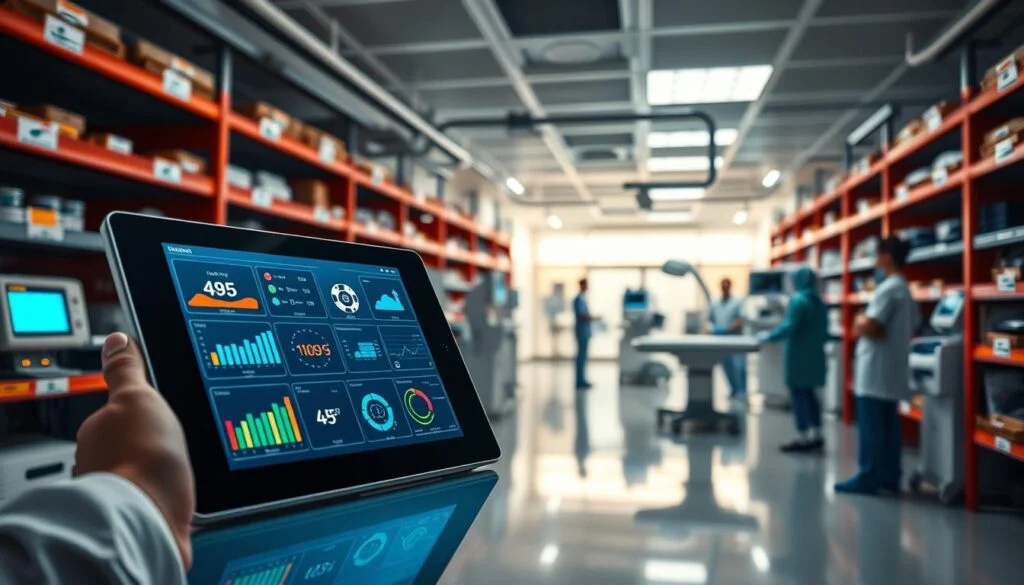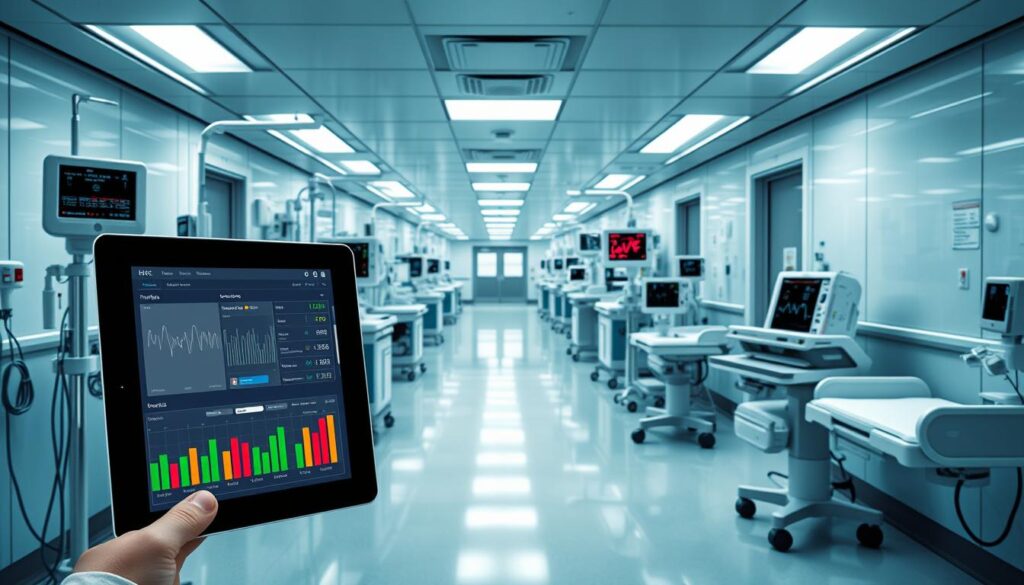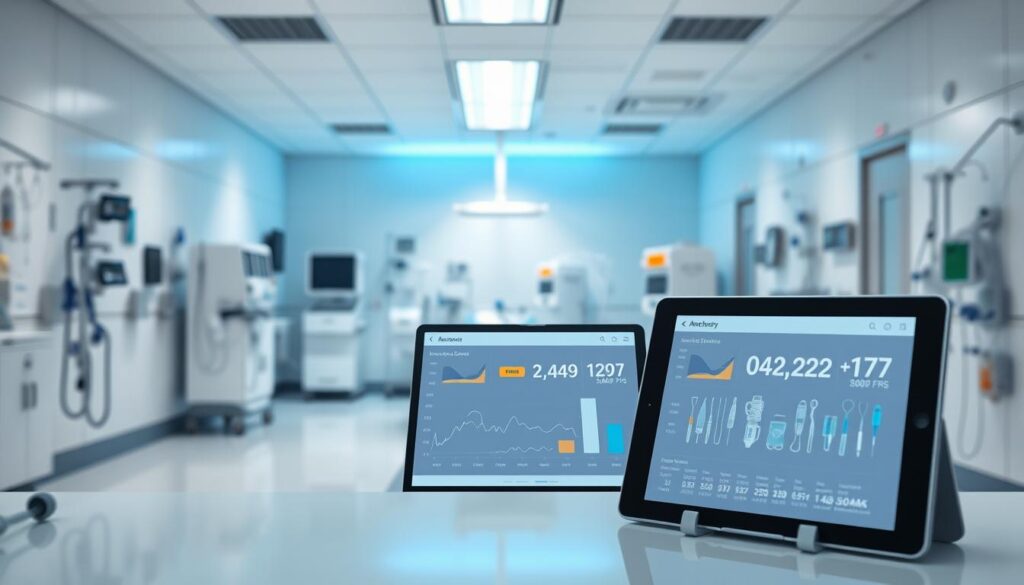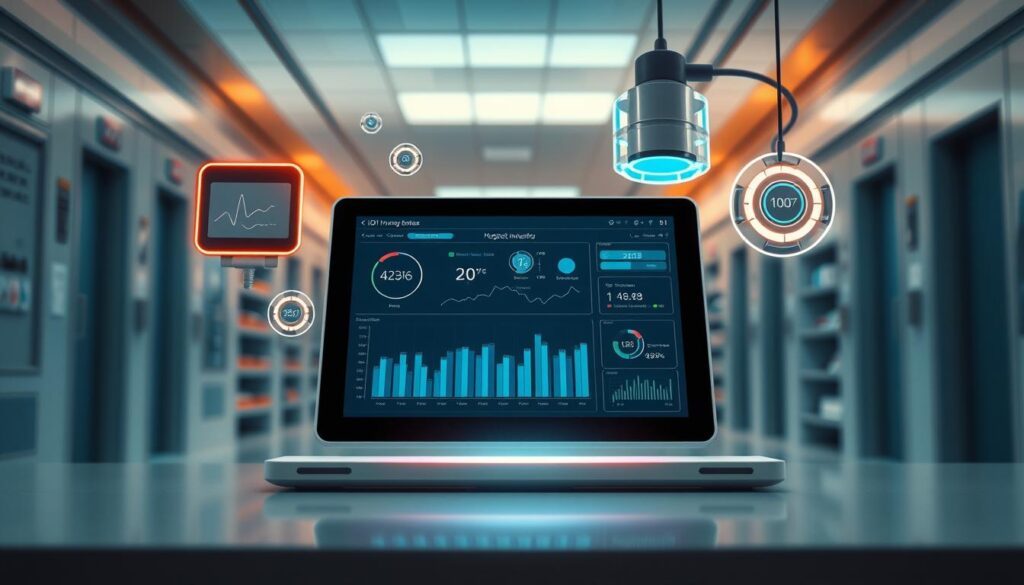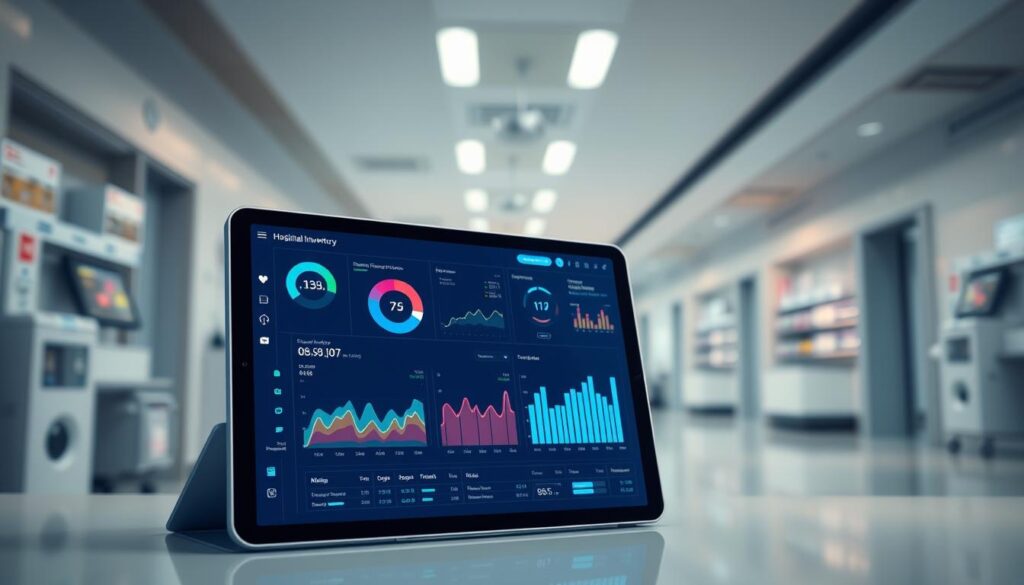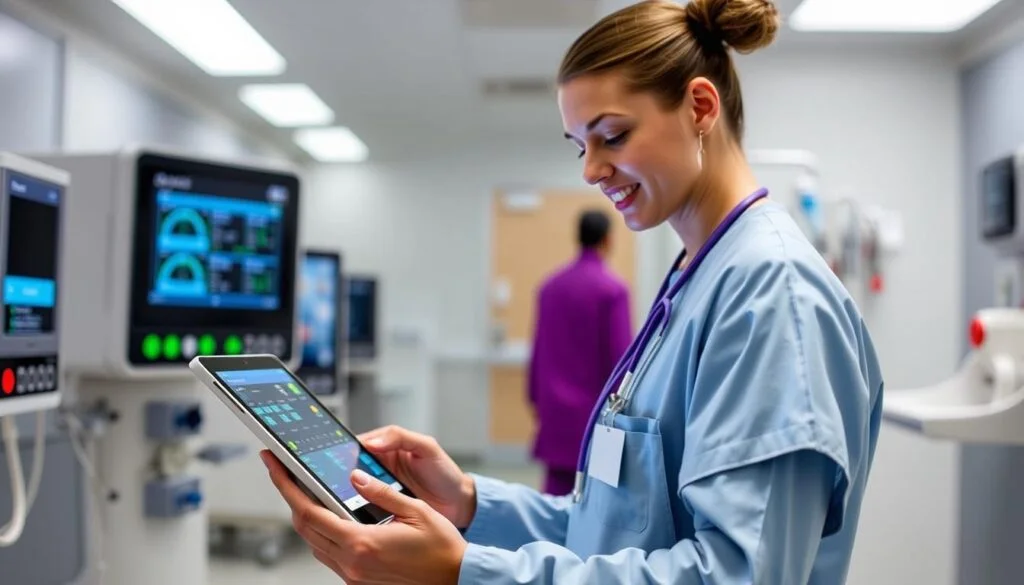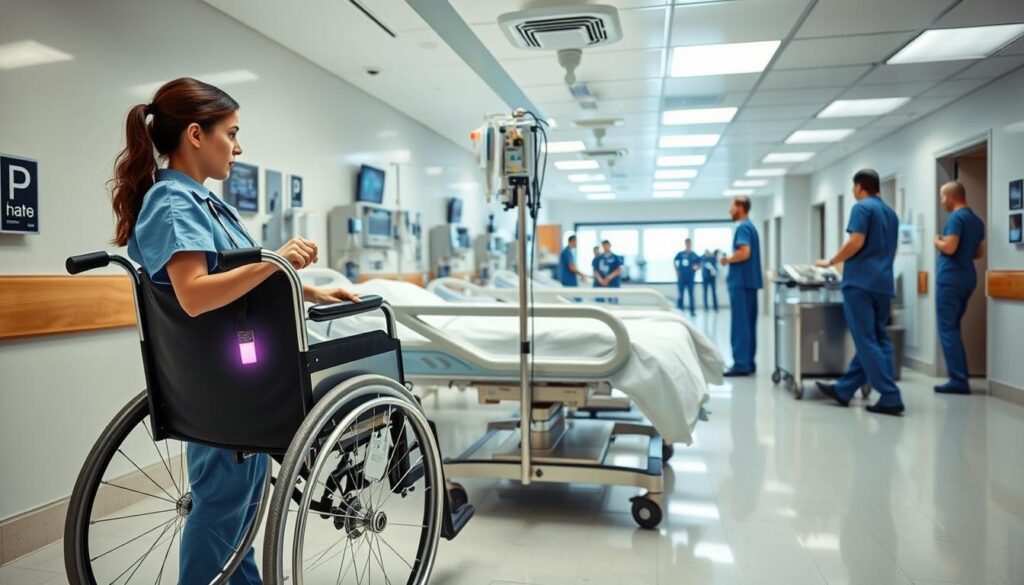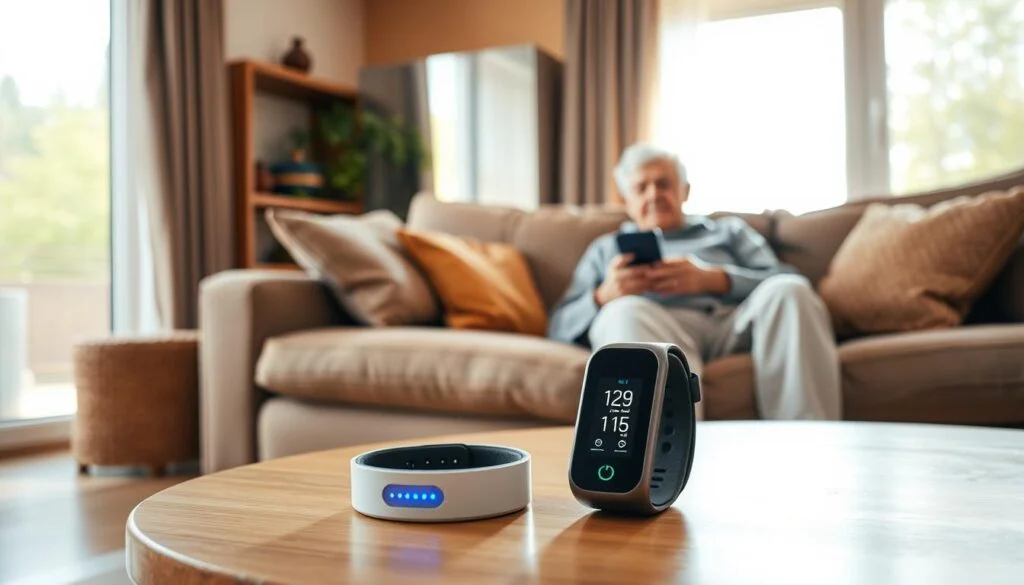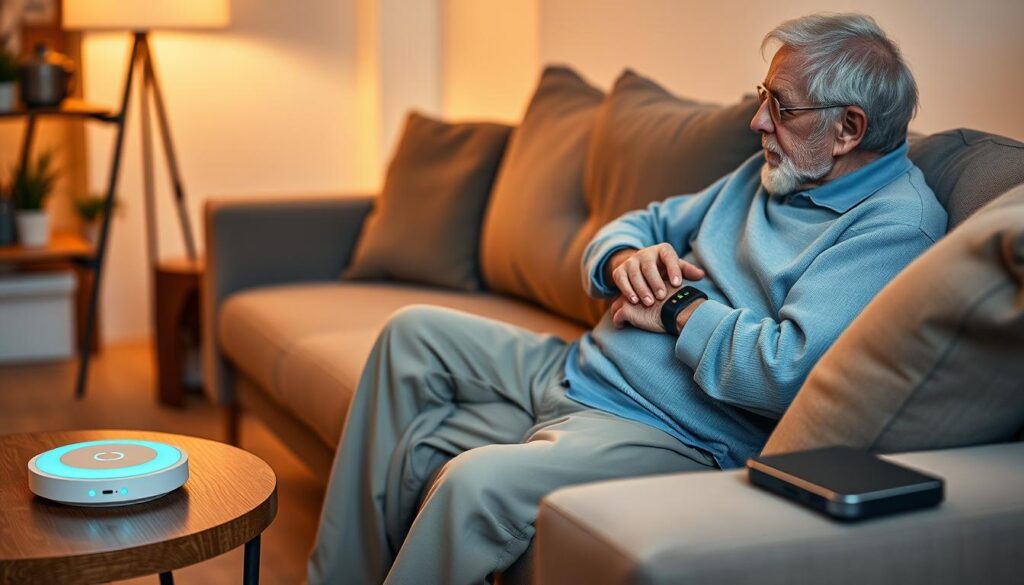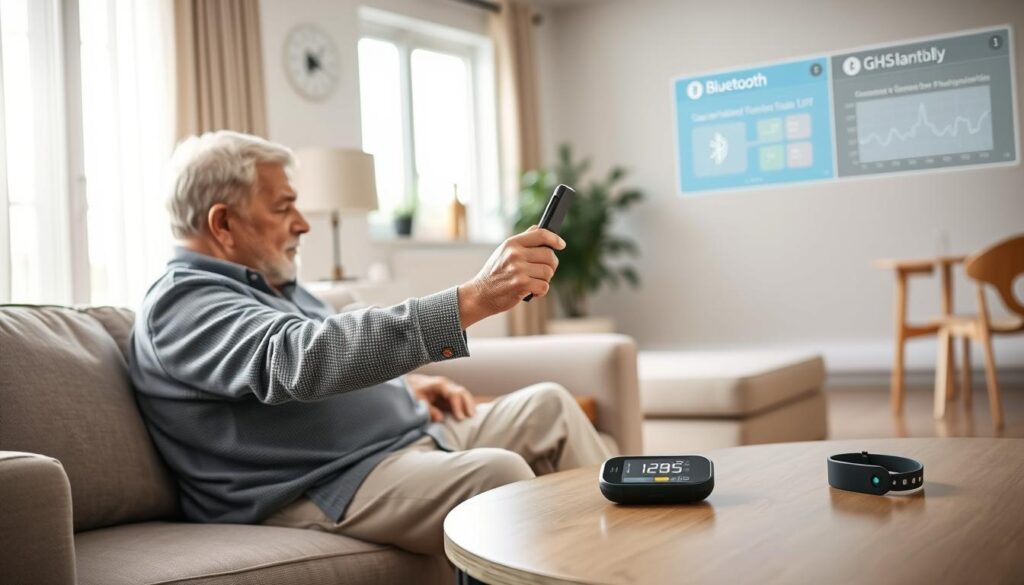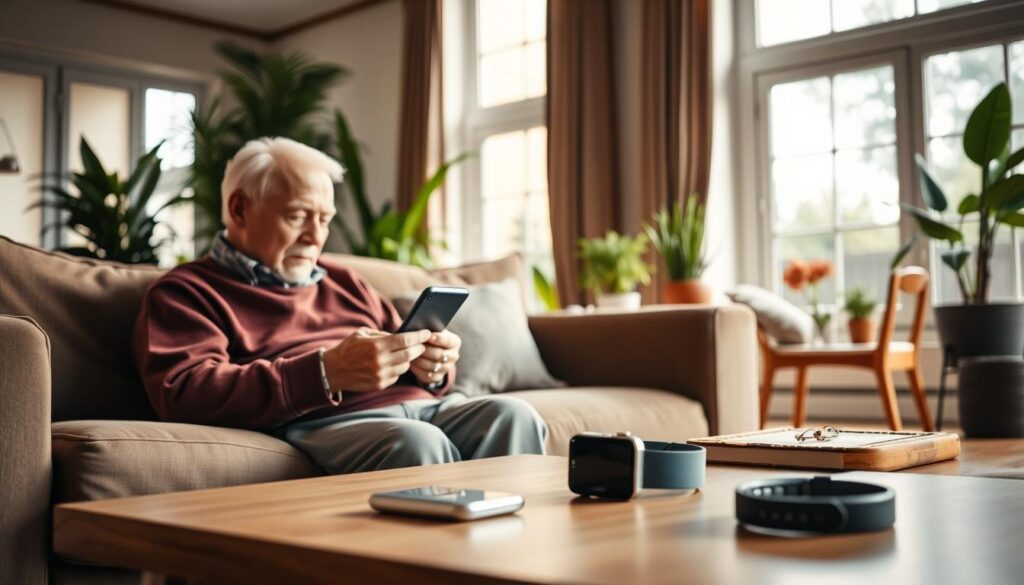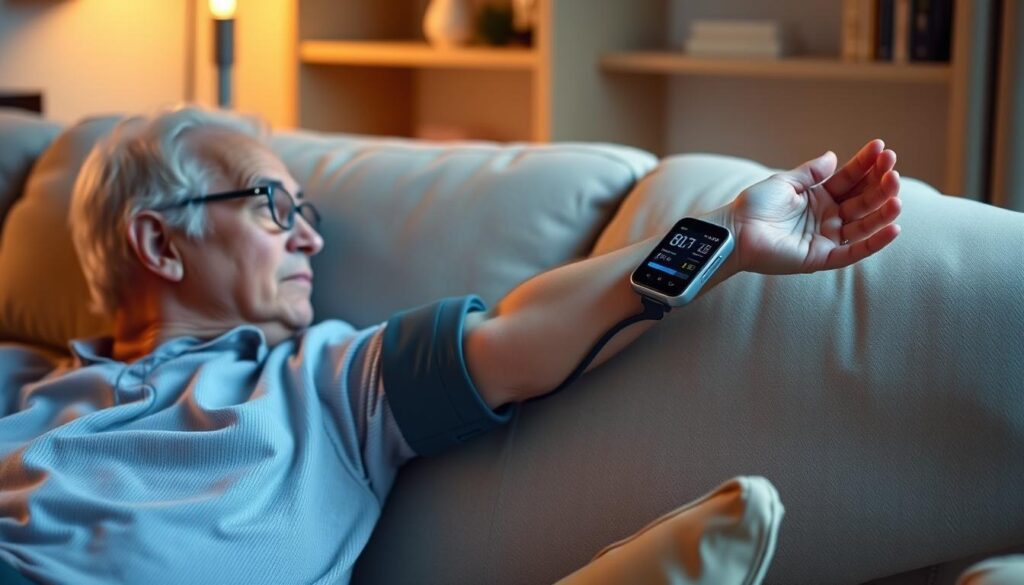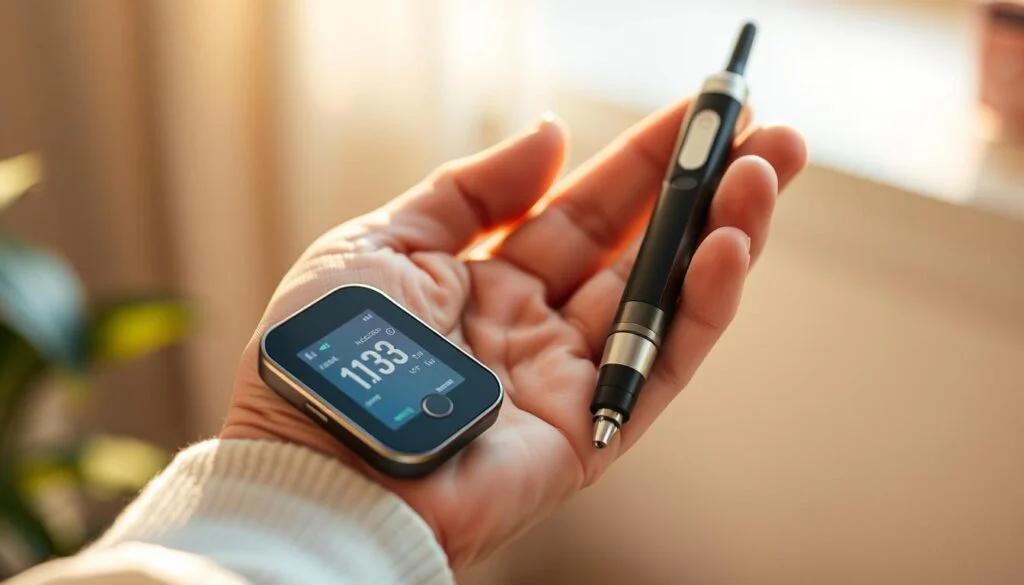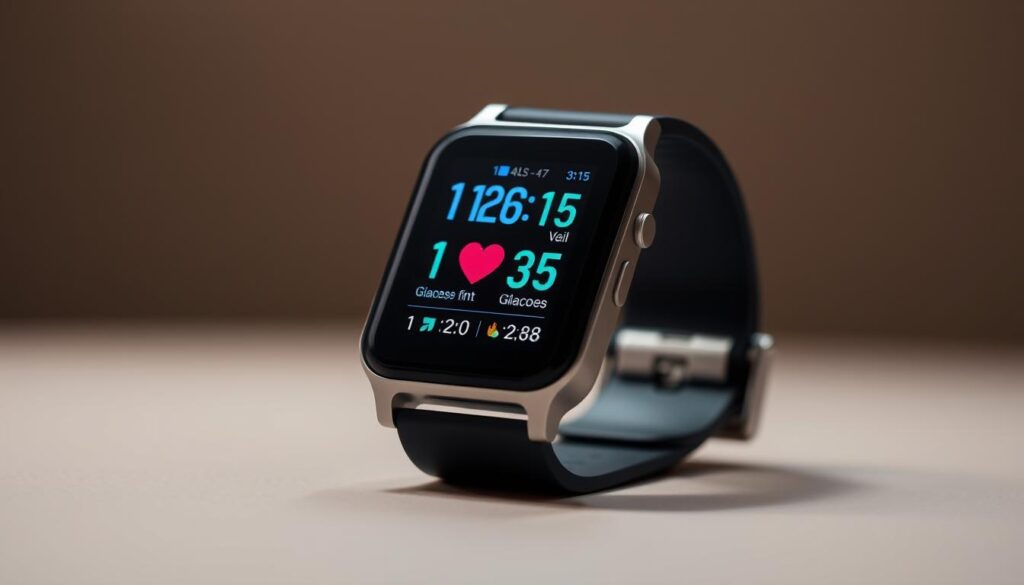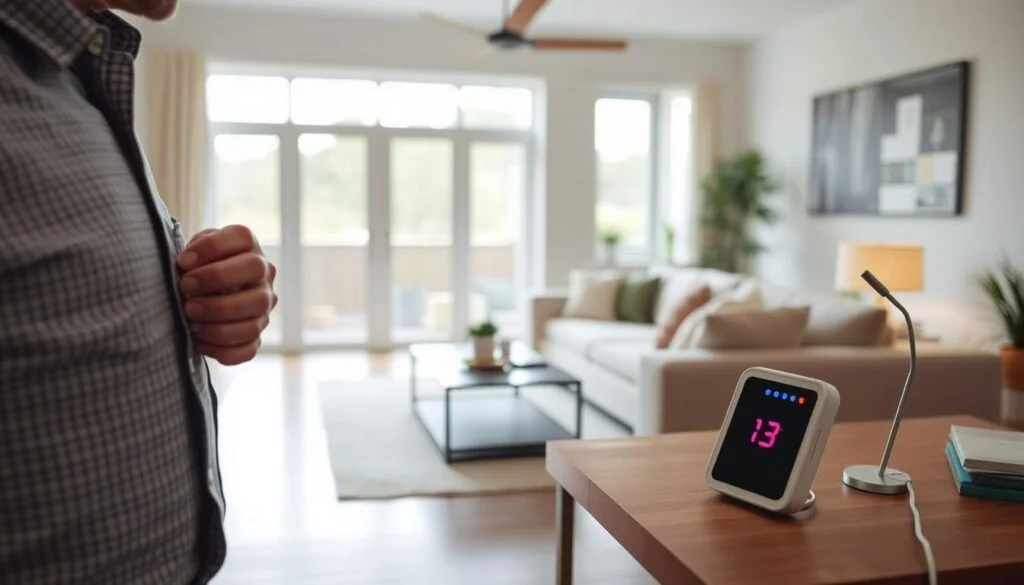
AIoT and LED Therapy: Transforming Patient Recovery and Rehabilitation

Recovery in long-term care is changing fast. A 12-week trial using an AIoT-based assistive ergometer, AIFASE, showed older residents gained hip flexor strength and better balance. These results point to real, measurable benefits from smart, connected therapy.

Smart systems combine sensors, BLE links, and cloud apps to deliver tailored exercise plans and live safety alerts at set %MHR limits. That safety layer helped prevent overexertion while tracking progress with TUG and SPPB scores.

Iottive’s experience building BLE apps, LAMP cloud backbones, Android and responsive web apps shows how to scale these solutions. Multi-site control, role-based access, and EHR-adjacent workflows make deployment across U.S. facilities practical and secure.

AIoT Patient Rehabilitation

The article will unpack system architecture, personalization algorithms, privacy safeguards, and clinical outcomes. Clinicians and rehab directors will find actionable guidance on deploying LED therapy and smart devices to reduce fall risk and improve function.

Key Takeaways

  • Clinical evidence: A 12-week AIFASE trial improved strength and balance in older adults.
  • Safety first: Real-time %MHR alerts and workload monitoring limit overexertion.
  • Scalable stack: LAMP cloud, Android app, Webapp, BLE ergometers, and HR sensors enable multi-site control.
  • Who benefits: Clinicians, rehab directors, and U.S. healthcare operators evaluating secure BLE platforms.
  • Why it matters: Low activity and staffing strains make automation and data-driven plans essential.

Context: Why AIoT and Light-Based Modalities Matter in Rehabilitation

Rising frailty in older adults calls for tech-enabled strategies that preserve strength and mobility. Frailty affects more than 10% of people aged 65+ globally, and rates in long-term care can exceed 19%–85%. Low activity and accelerated muscle loss reduce independence and raise fall risk.

Exercise matters. Resistance and aerobic training improve muscle strength, gait speed, and physical performance. Stronger residents fall less and regain function faster.

Staffing shortages make consistent therapy hard to deliver. BLE-connected ergometers and wearable sensors let teams monitor sessions remotely. Cloud dashboards centralize progress and simplify documentation across sites.

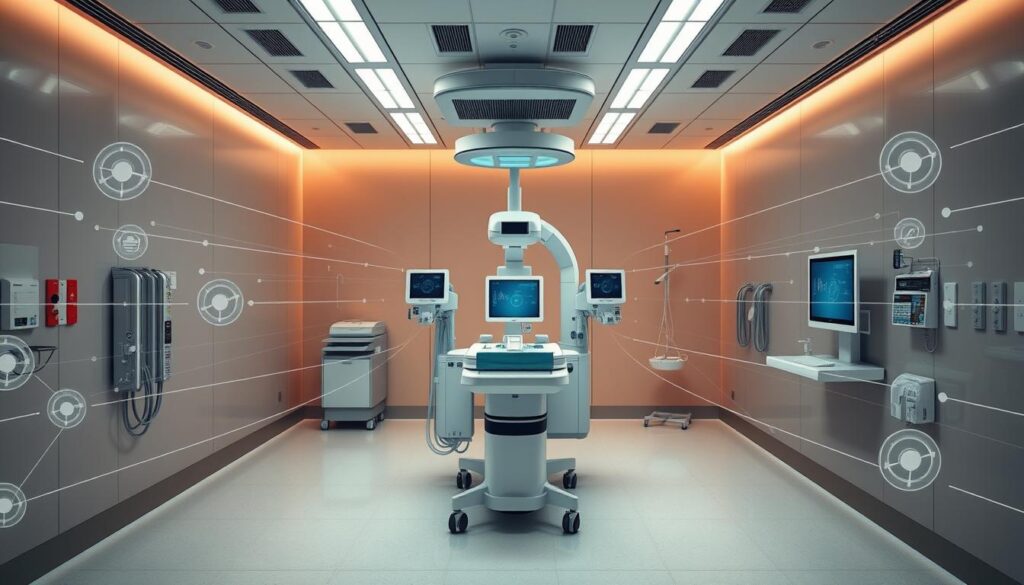
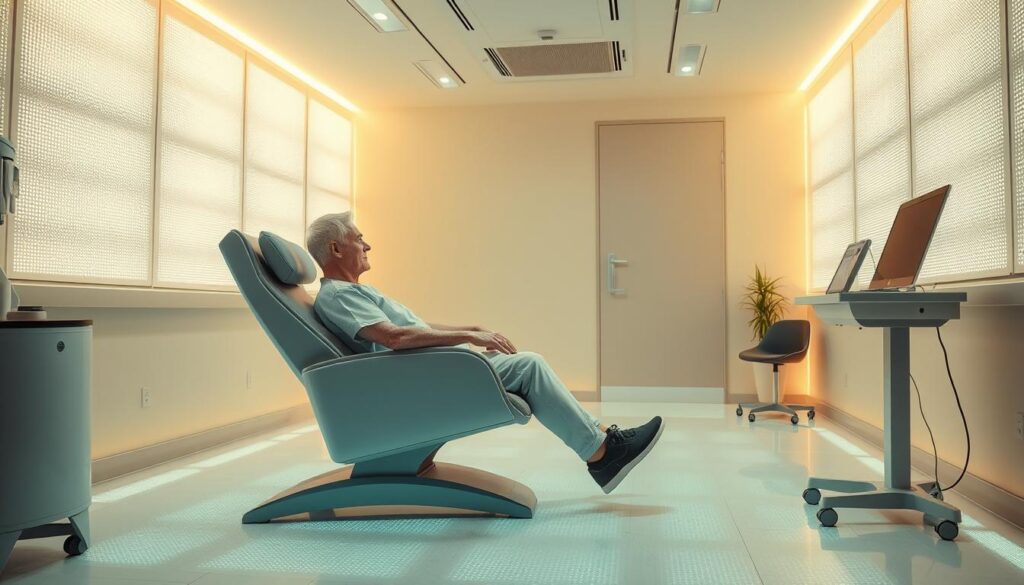
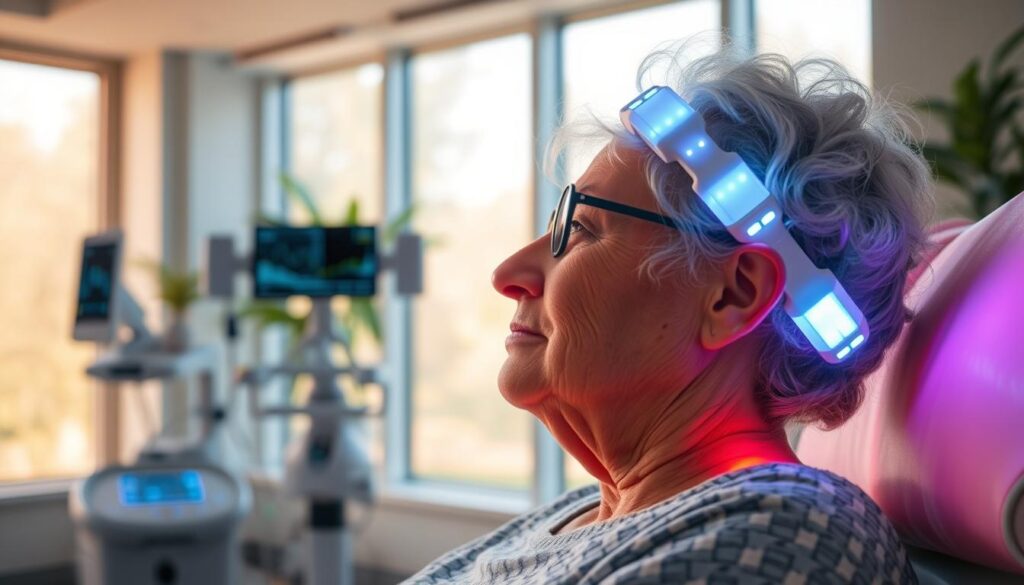
A serene healthcare facility with cutting-edge AIoT and LED therapy technologies. In the foreground, a patient undergoing personalized light therapy, their face bathed in a warm, soothing glow as they focus intently on regaining motor skills and cognitive function. The middle ground features state-of-the-art monitoring equipment and smart sensors, seamlessly integrated to track progress and optimize treatment. The background showcases a calming, nature-inspired interior design, with large windows allowing natural light to flood the space, creating a tranquil, restorative atmosphere. Soft, diffused lighting illuminates the scene, conveying a sense of hope and healing.

Positioning light-based therapy alongside sensor-driven exercise

LED therapy can support circulation and recovery when scheduled with exercise. Protocols can be automated so light delivery aligns with workload progression and perceived exertion.

“Pairing device data with decision rules helps clinicians match sessions to capacity and safety thresholds.”

Iottive delivers IoT & AIoT Solutions, BLE App Development, and Cloud & Mobile Integration that enable smart device and LED therapy ecosystems for healthcare. This integrated approach supports safety, reporting, and scalable programs despite limited rehab manpower.

User Intent and What You’ll Learn

For clinicians and rehab directors: this section outlines practical steps to adopt connected exercise and light therapies while keeping safety, outcomes, and staffing efficiency front and center.

What the trial showed: an automated prescription engine, real-time physiologic monitoring, and graded alerts delivered 3–5 guided sessions per week. Those sessions improved hip flexor strength and balance versus routine activities alone.

The following points map real-world applications and operational gains.

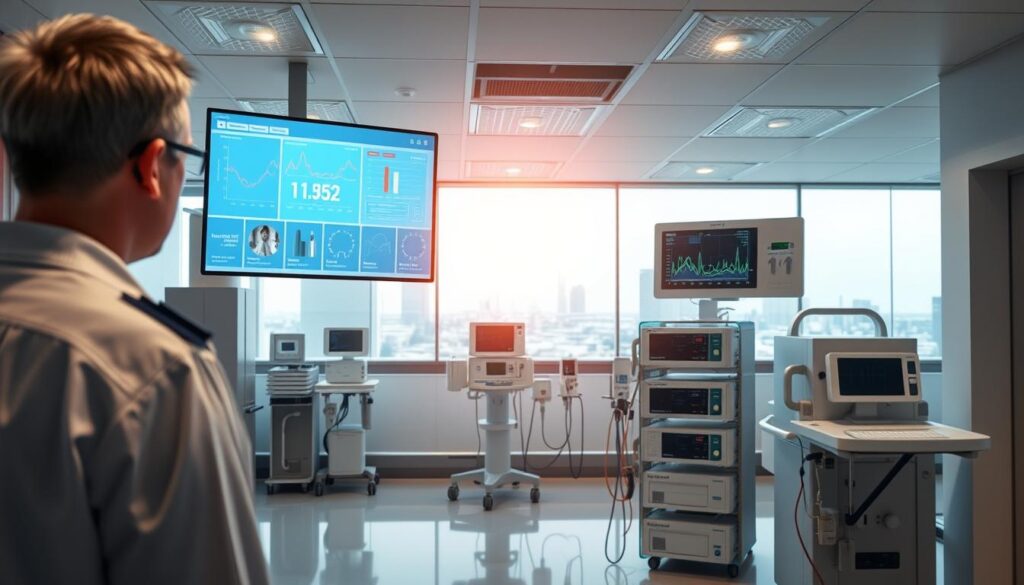
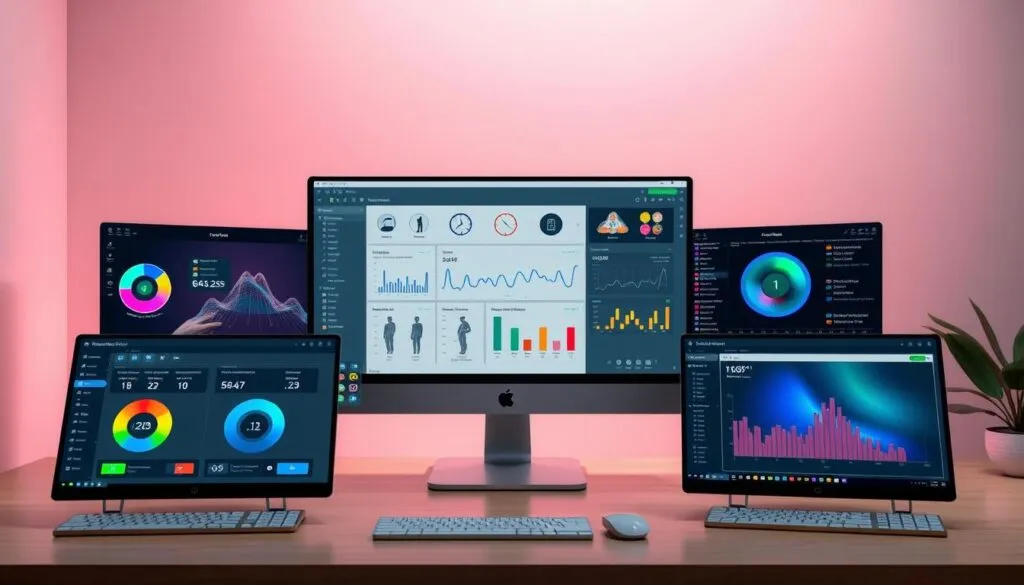
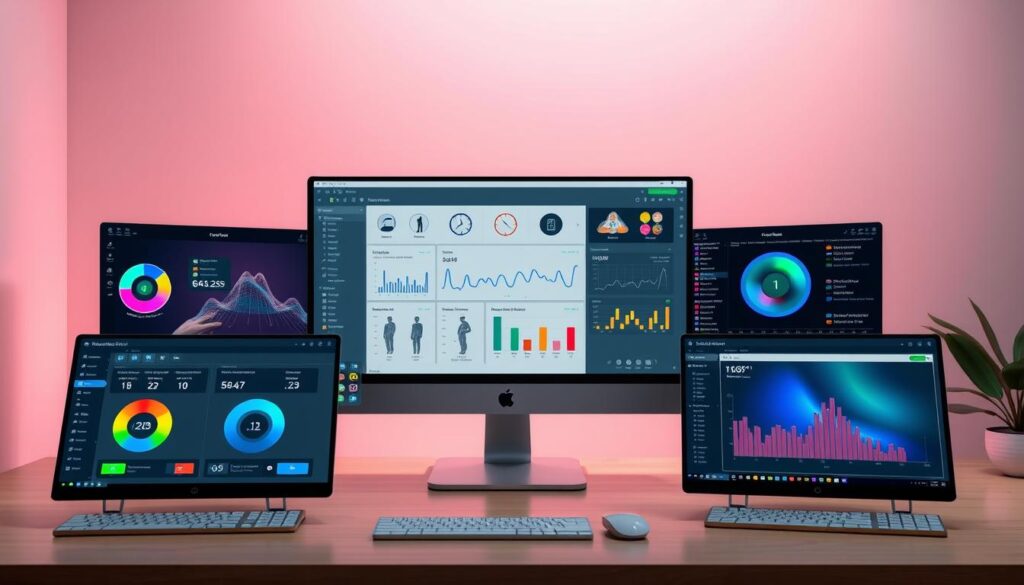
A sleek, modern desktop interface showcases a diverse array of software applications, each representing a different aspect of patient rehabilitation and recovery. In the foreground, intuitive user control panels allow seamless management of AIoT-powered LED light therapy, with vibrant color palettes and intuitive icons. The middle ground features a central dashboard displaying real-time biometric data and progress analytics, all rendered in a clean, minimalist aesthetic. In the background, a serene, subtly-lit environment sets the tone for a calming, therapeutic experience, with muted tones and soft lighting guiding the user's focus to the essential tools at hand.

  • Who benefits: medical directors, PT/OT leads, and administrators evaluating measurable outcomes, safety assurance, and staff utilization.
  • Key takeaways: decision trees tailor doses; %MHR alerts mitigate overexertion; dashboards let supervisors oversee multiple residents.
  • Operational wins: automated capture reduces charting, role-based access standardizes oversight, and multi-site controls keep programs consistent.
  • Clinical relevance: gains in hip flexor strength and balance lower fall risk and support greater independence in daily activities.
  • Setup: BLE ergometers and HR sensors pair with an Android App and responsive Webapp for real-time tracking and course management.

“A gender-stratified randomized approach provided structured evidence that adding guided sessions outperformed routine-only care.”

Extensibility & governance: the same device backbone can orchestrate complementary light protocols, while location-based authorization and one-way privacy preserve confidentiality.

Iottive’s End-to-End IoT/Smart Solutions and cloud & mobile integration can speed pilots to production and align deployments with U.S. compliance expectations.

Case Overview: An AIoT-Enabled Strengthening Program in a Long-Term Care Facility

This 12-week trial examined whether guided, sensor-linked ergometer sessions add measurable strength and balance gains to routine care.

Setting, participants, and program scope

The single-site study enrolled 16 residents (mean age 84.38 ± 6.0 years; 4 males, 12 females) living in a U.S. long-term care facility. The 12-week timeframe targeted detectable functional change in very old adults while fitting facility schedules.

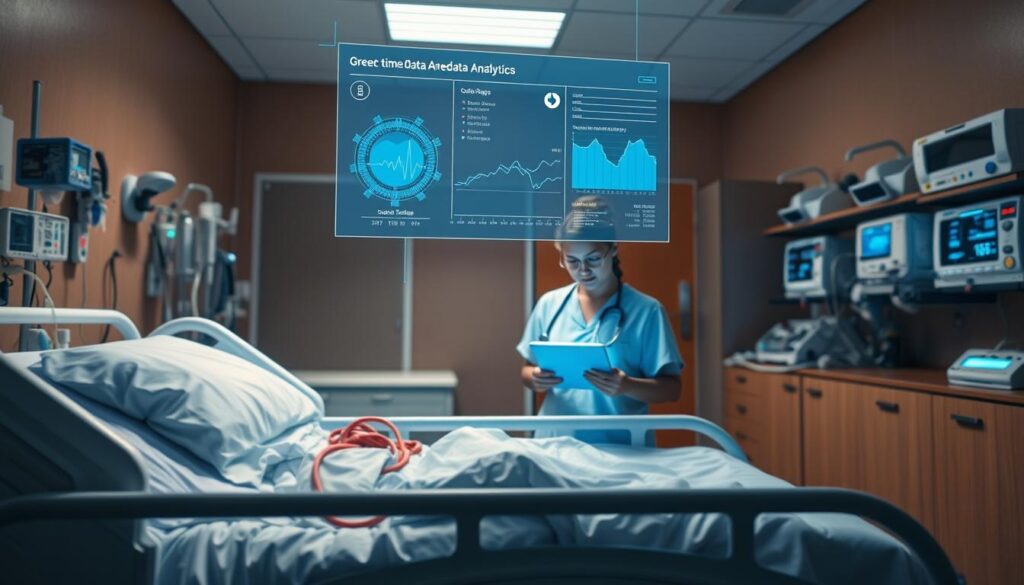
A long-term care facility's rehabilitation center, bathed in a warm, soothing glow of AI-controlled LED lights. In the foreground, a patient diligently works through a series of guided exercises, their movements tracked by a network of integrated sensors. The middle ground showcases advanced monitoring equipment, discreetly gathering data to inform the personalized strengthening program. In the background, a serene, calming environment with natural elements, designed to promote mindfulness and cognitive recovery. The scene exudes a sense of progress and empowerment, as the patient harnesses the power of AIoT technology to regain their independence and improve their overall wellbeing.

Intervention vs. control: maintaining routine activities with added device-guided training

Inclusion required age ≥65 and mental competence; major orthopedic or severe musculoskeletal conditions and inability to follow instructions were excluded. All participants kept 1 hour/week of standard physical training.

The intervention group added AIFASE-guided sessions 3–5 times per week. The control group continued routine activities only. Randomization was gender-stratified (1:1) to balance baseline strength and function.

  • Outcome domains: lower-extremity strength, TUG, SPPB, body composition (InBody S10), and health-related quality-of-life questionnaires.
  • Monitoring: automated logs and dashboards tracked adherence and reduced staff charting burden.
  • Operational note: guided sessions were designed to layer onto existing programs rather than replace them, keeping staff effort feasible.

Iottive builds custom IoT platforms that support pilot-to-scale programs, adapting BLE and cloud capabilities for multi-site clinical implementations.

System Architecture: Cloud, Mobile, and Bluetooth Foundations that Scale

Practical deployments depend on a secure cloud backbone, responsive apps, and reliable Bluetooth device pairing. This architecture lets clinical teams run pilots and expand to enterprise networks without redesigning core systems.

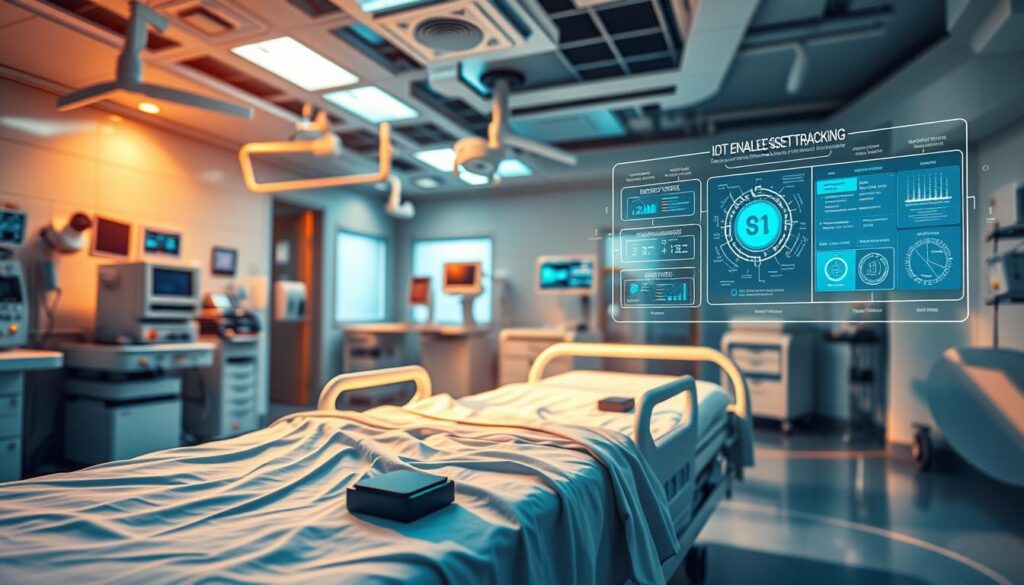
A sleek, futuristic system architecture showcasing the seamless integration of cloud computing, mobile devices, and Bluetooth technology to power AIoT-driven LED light therapy for patient rehabilitation. The image depicts a clean, minimalist design with a central tower server surrounded by interconnected mobile devices and LED light panels, all bathed in a warm, calming glow. The lighting and angles convey a sense of precision and efficiency, reflecting the advanced capabilities of this cutting-edge system. The overall aesthetic evokes a high-tech, yet soothing environment suitable for a healthcare setting focused on aiding patient recovery and improving motor skills and cognitive function.

LAMP stack backbone with secure HTTPS and SSL

The platform uses a LAMP stack: Linux, Apache/2.4.29 (HTTP/HTTPS), MySQL/5.7.37, and PHP/7.2.24, secured with an SSL certificate. Open-source components give transparency and upgrade paths while HTTPS and SSL protect data in transit.

Android App + Webapp: responsive management for clinical workflows

An Android App built in Android Studio pairs with clinical hardware over BLE for session control. The PHP Webapp uses responsive design so supervisors can review progress from desktops, tablets, or phones.

BLE integrations: ergometer and heart rate sensor connectivity

BLE links connect the Ventek RE-X4 ergometer and Scosche Rhythm24 heart rate sensor to capture real-time workload and physiologic data. This removes tethered wiring and speeds station setup in therapy gyms or rooms.

Multi-site support and role-based access for care teams

Hosted on NCKU Cloud with load balancers and Citrix NetScaler 9500 firewalls, the system scales while preserving uptime and security. Location-based authorization isolates sites; role-based controls limit functions to clinical staff.

  • Management modules: user & role controls, site segmentation, device inventory, case records, course management, and evaluation histories.
  • Scalability: central configuration and audit trails support single-site pilots to regional rollouts in U.S. settings.
  • Extensibility: LED therapy devices can be paired via BLE or gateways and orchestrated through the same App/Webapp workflows.

“A hardened LAMP backbone, secure hosting, and BLE device orchestration create a practical path from pilot to production.”

Iottive specializes in BLE App Development and Cloud & Mobile Integration and has built similar stacks for healthcare and other sectors that require robust device orchestration and governance.

Data Pipeline, Privacy, and Cybersecurity for Healthcare-Grade AIoT

Protecting sensitive health signals begins at the device and follows a clear chain to the cloud. Data captured during training flows from BLE devices to the Android App, then to an SSL-encrypted REST endpoint and the cloud database. Frontend checks authenticate users, and every transaction is logged for auditability.

Location-based authorization treats each facility as an independent field. This one-way privacy model limits cross-site access and reduces the blast radius if credentials are compromised.

Algorithms run as post-processing tasks in the cloud, avoiding real-time control of devices. That design reduces cyber-physical risks and keeps safety-critical logic at the edge where staff can intervene.

  • Data exchange is constrained: user merges occur only when the same identity appears at multiple sites.
  • NCKU Cloud hosting adds load balancers and enterprise firewalls to improve uptime and block common attacks.

Governance includes device identity checks, signed firmware, and traceable update logs. These controls support explainability, least-privilege access, and U.S.-grade audit readiness.

“Protected data paths and compartmentalization enable clinical oversight while limiting exposure.”

Intelligent Personalization: Decision Trees that Auto-Tune Exercise Prescriptions

A rules-based decision tree merges timed functional tests and session feedback to create safer, individualized exercise plans.

Combining objective capacity and perceived exertion

The model uses objective capacity metrics like TUG thresholds (20 s = lower) and follows each session with a perceived exertion score.

Together, these inputs align workload with how users actually tolerate sessions, not just theoretical capacity.

Time-first progression for frail users

For lower-capacity profiles, the algorithm increases session time before raising resistance. This builds endurance and confidence without sudden strain.

When time surpasses 20 minutes, the logic shifts: resistance steps up while time reduces, keeping overall load controlled.

Adaptive workload iteration

Each session feeds back into the tree. If exertion stays in target zones and performance improves, the system raises workload one step. If exertion spikes or HR thresholds trigger, the tree holds or backs off.

  • Consistency: automated prescriptions standardize care across shifts and sites.
  • Adherence: tailored challenges keep sessions achievable and motivating.
  • Transparency: decision paths are viewable by clinicians, aiding documentation and oversight.

“Encoding clear rules into cloud services and mobile UX lets therapists trust and review each progression.”

Input Initial Action Follow-up Rule
TUG < 10 s Start moderate resistance, 12–15 min Increase time to 20 min, then raise resistance
TUG 10–20 s Start low resistance, 10–15 min Prioritize time-first increments; raise resistance after 20 min
TUG > 20 s Begin with minimal resistance, 6–10 min Slow time increases; require low perceived exertion before resistance rise
High perceived exertion or HR alert Hold progression; notify clinician Reduce resistance or time and reassess next session

Extension to light protocols: the same tree can set LED session duration, intensity, and placement rules to complement exercise.

Iottive encodes these clinical decision trees into scalable cloud services and mobile workflows so therapists can review, adjust, and trust auto-tuned prescriptions.

Real-Time Safety: Heart-Rate-Based Alerts and Overexertion Prevention

Live physiologic alerts turn raw sensor data into actionable safety cues for clinicians. The system computes %MHR as current heart rate ÷ (208 − 0.7 × age) × 100%, giving an age-adjusted view of intensity that fits older adults.

%MHR thresholds and graded alerting

Two-tier alerts warn staff when intensity rises. An orange alert sounds and flashes at 85% MHR. A red alert and louder alarm trigger at 90% MHR.

Immediate cross-platform notifications

Notifications appear instantly on both the Android App and the Webapp so the participant and supervising staff get the same cue at once.

  • Staff actions: reduce workload, pause the session, or perform a quick clinical check.
  • Scaling benefit: real-time visibility lets supervisors safely monitor multiple stations.
  • Device notes: use validated HR sensors like Scosche Rhythm24 and maintain stable BLE links to prevent gaps.
  • Audit trails record every alert for quality review and incident reporting.

“Standardized alert logic reduces variability and supports team training.”

Iottive’s BLE device integration and cloud/mobile orchestration deliver low-latency alerts and can extend checks to LED sessions (contraindication and timeout rules) for safer, policy-aligned workflows.

Clinical Protocol and Outcome Measures

This section outlines the clinical protocol and the measures used to judge functional change over the 12-week trial.

Gender-stratified randomization and session cadence

The study used a randomized, gender-stratified 1:1 allocation to balance baseline strength and balance differences between men and women.

Why stratify: it reduces imbalance in initial function and improves comparability of outcomes.

The intervention group added 3–5 guided AIFASE sessions per week to the facility’s routine schedule. Both groups kept 1 hour/week of standard training to isolate the device effect.

Assessments: TUG, SPPB, muscle strength, body composition

Baseline (week 0) and post-intervention (week 13) evaluations included Timed Up and Go (TUG), Short Physical Performance Battery (SPPB), and targeted lower-extremity strength tests.

Body composition used InBody S10 bioimpedance to report appendicular skeletal muscle (ASM) and skeletal muscle index (SMI). These metrics help link strength gains to mass and composition changes.

Quality-of-life and safety screening

Health-related quality-of-life questionnaires captured patient-centered outcomes tied to function and independence.

Eligibility required age ≥65 and cognitive ability to follow instructions; exclusions removed severe orthopedic or musculoskeletal limitations to protect safety.

  • Data integrity: automated logs and timestamped records minimized manual errors and supported precise pre/post comparisons.
  • Reproducibility: standardized measures and scheduling templates make replication at U.S. sites straightforward.
  • Operational support: Iottive’s platform enables study-grade data capture and BLE-connected assessments to align with healthcare quality metrics and documentation needs.

“Standardized protocols and automated capture let teams focus on care while preserving rigorous outcome data.”

Results: Functional Gains and Strength Improvements with AIoT Guidance

The 12-week trial produced measurable improvements in hip flexor strength and standing balance for the intervention group.

Improved hip flexor strength and balance (Semi-Tandem, Tandem Stand)

Hip flexor strength increased significantly versus controls, supporting safer sit-to-stand transfers and stair use.

Semi-tandem and tandem stand performance also improved, indicating better static postural control and reduced sway.

Implications for fall risk and independence in long-term care

Stronger hip flexors and steadier tandem stands translate to lower fall risk, higher confidence, and easier daily mobility.

  • Downstream effects: fewer near-falls, potential care-burden reduction, and improved ADL independence.
  • Why it worked: individualized dosing via decision trees and consistent monitoring—not just higher session volume—drove progress.
  • Safety & adherence: real-time heart-rate alerts and session feedback maintained adherence while protecting participants.

Limitations include single-site scale and small sample size, though gender-stratified randomization strengthened internal validity.

“These results suggest device-guided programs can add value without displacing routine therapy.”

Next steps should include multicenter validation, LED adjunct trials, and longitudinal tracking of falls and hospitalizations. Iottive can help U.S. providers measure and benchmark functional outcomes across networks to inform ROI on fall-reduction and throughput initiatives.

AIoT Patient Rehabilitation: Applications for U.S. Healthcare Providers

Health systems can translate device-driven trials into clinic-ready services that cut fall risk and streamline workflows.

Extendable device set-up: the platform connects RE-X4 ergometers and Scosche Rhythm24 sensors via an Android App and a responsive Webapp. LED therapy devices join the same BLE ecosystem with protocol management, dosing logs, and safety interlocks.

Integrations and remote monitoring

EHR-adjacent exports, APIs, and configurable reports keep documentation aligned with clinical records without deep HIS changes. Cloud dashboards and mobile alerts enable remote oversight for step-down or outpatient follow-up.

  • Translate the case into fall-prevention, restorative nursing, and therapy-gym modernization.
  • Onboard: device validation, staff training, protocol setup, and dashboard customization.
  • Governance: location-based authorization, role-based access, and post-processing algorithms preserve privacy and safety.
  • Scale: pilot → unit rollout → network expansion behind load balancers and firewalls.

Iottive offers IoT & AIoT Solutions, BLE App Development, and Cloud & Mobile Integration to connect LED therapy and smart devices for U.S. providers.

Contact: www.iottive.com | Sales@iottive.com

About Iottive: IoT, AIoT, and Mobile Expertise for Healthcare and Beyond

From firmware to dashboards, Iottive crafts end-to-end solutions that make smart devices reliable at scale.

We combine Bluetooth device connectivity, mobile apps, and secure cloud services to deliver custom platforms that align with clinical workflows and enterprise needs.

Our expertise

  • Device connectivity (BLE): validated ergometer and heart-rate sensor pairing.
  • BLE app development: Android apps and responsive Webapps for real-time control.
  • Cloud & mobile integration: LAMP-based hosting, SSL, load balancing, and audit trails.

Industries served

Healthcare, Automotive, Smart Home, Consumer Electronics, and Industrial IoT benefit from our cross-industry experience. That breadth hardens reliability and scalability for medical deployments.

Let’s build your custom platform

We scope requirements, design UX, integrate firmware, and deploy data pipelines and dashboards tailored to goals. Security and privacy-by-design mirror location-based authorization and protected data exchange from the case study.

“We focus on measurable outcomes, decision-tree personalization, and staffing efficiencies through automation and real-time insights.”

Capability Value Use Case
BLE Device Integration Low-latency telemetry and pairing Ergometers, HR sensors, LED orchestration
Cloud & Security SSL, firewalls, multi-site isolation HIPAA-aligned data partitioning and audits
Decision Engines Transparent rules and clinician review Personalized exercise and light protocols

Next steps: start with a discovery workshop, pilot deployment, and technical sprint to align with U.S. regulations.

Contact: www.iottive.com | Sales@iottive.com

Conclusion

Adding guided, sensor-linked sessions to routine activities yielded clear, clinically relevant gains in hip flexor strength and tandem standing.

The 12-week, gender-stratified trial showed measurable improvement in balance and strength while keeping standard care intact. Decision-tree personalization, TUG- and exertion-aligned progressions, and live %MHR alerts enabled safe, data-driven advances.

Operationally, the setup proved feasible: BLE device pairing, dashboards, and alerting reduced charting load and let staff monitor multiple stations. The LAMP-based cloud, SSL, load balancers, and role/location controls support secure scale across sites.

For U.S. providers, extendable LED therapy and broader smart-device ecosystems can reuse the same backbone. Start with a single-site pilot that tracks TUG, SPPB, strength, and falls, and adopt SOPs for alerts and transparent decision-tree logic.

Iottive can help design and deploy end-to-end AIoT solutions that integrate BLE devices, cloud workflows, and LED therapy into scalable programs. Contact: www.iottive.com | Sales@iottive.com

FAQ

What is the role of connected light-based therapy combined with sensor-driven exercise in long-term care?

Combining targeted light therapy with connected exercise devices and wearable sensors helps improve strength and balance for residents with low activity. The approach uses data from Bluetooth-enabled ergometers and heart-rate monitors to tailor sessions and reduce fall risk while tracking progress in a secure cloud platform.

How does the system ensure safety during exercise sessions?

Safety relies on real-time monitoring and alerting. Heart-rate thresholds trigger graded notifications—an orange alert for near-max exertion and a red alert for overexertion—sent to both mobile apps and the web dashboard. Role-based access and localized authorization also limit who can change protocols.

What infrastructure supports multi-site deployment and clinical workflows?

The architecture uses a LAMP-style backend with HTTPS/SSL for secure transport, a responsive Android app plus webapp for staff, and BLE integrations for devices. Multi-site support and role-based permissions let administrators manage locations and staff access centrally.

How are exercise prescriptions personalized for frail residents?

Personalization combines objective tests like the Timed Up and Go (TUG) with subjective exertion ratings. Decision-tree logic prioritizes time-based progression before resistance increases for frail users, then iteratively adapts workloads based on performance and safety signals.

What outcome measures does the program track to demonstrate effectiveness?

Clinicians monitor TUG, Short Physical Performance Battery (SPPB), targeted muscle strength (for example, hip flexors), body composition, and quality-of-life questionnaires. These metrics help quantify balance gains and functional independence over the program.

How does the platform protect patient data and comply with healthcare privacy standards?

Data protection uses encrypted transport, cloud database design with load balancing, firewalling, and location-based authorization. One-way privacy principles and protected data exchange minimize exposure while supporting necessary clinical access.

Can LED therapy devices integrate with existing electronic workflows and EHR-adjacent systems?

Yes. BLE-enabled light therapy units and sensors can feed session summaries and event logs into mobile and webapps. APIs and integration layers support sending structured summaries to EHR-adjacent tools and remote monitoring services.

What staffing efficiencies can facilities expect from a connected strengthening program?

Automation of progression rules, remote monitoring, and centralized dashboards reduce direct supervision time. Staff can manage multiple participants with real-time alerts and role-specific views, improving throughput without sacrificing safety.

How do clinicians handle device connectivity issues in the field?

The app includes device health checks and pairing workflows for BLE ergometers and heart-rate sensors. Connectivity logs surface failures to the web dashboard, and standard operating procedures guide staff through quick re-pairing and fallback options.

What clinical populations benefit most from this combined approach?

Older adults in long-term care and residents with reduced mobility see the largest gains. The model also applies to outpatient rehab where remote monitoring, adaptive prescriptions, and light-based adjuncts support recovery and reduce readmissions.

How does the system handle multi-site data segregation and role-based access?

Authorization by location ensures staff access only their assigned facilities. Role-based access controls differentiate clinicians, therapists, and administrators, while centralized tenancy manages multi-site deployments without data commingling.

What evidence supports improvements in balance and hip flexor strength?

Controlled implementations using randomized allocation and gender-stratified groups show measurable increases in hip flexor strength and improved semi-tandem and tandem stand performance. Those gains correlate with lower fall risk and better independence scores.

How quickly do participants typically show functional improvements?

Early gains often appear within weeks for balance and endurance, with strength improvements evident across several months of consistent, adaptive sessions. Progress depends on baseline capacity and adherence to recommended cadence.

Are there standards for cyber hygiene for devices in this ecosystem?

Yes. Best practices include SSL/TLS transport, regular firmware updates for BLE devices, network segmentation, intrusion detection, and scheduled security audits to maintain healthcare-grade protections.

What support is available for customizing an IoT-enabled rehab platform for a facility?

Development partners with experience in IoT, BLE app development, cloud integration, and clinical workflows can design tailored solutions. They provide needs assessment, pilot deployments, and scaling plans to align technology with care goals.


Let’s Get Started

RPM Solutions for Chronic Illness Management

Two years ago, Maria nearly missed a warning sign. She felt tired, but a home reading sent to her clinic flagged a rising trend. Her care team adjusted therapy the same day, and a hospital visit was avoided.

chronic illness RPM devices

This story shows how remote patient monitoring connects care beyond clinic walls. Continuous patient monitoring gives providers clear trends so they can act early and improve outcomes.

Iottive and other technology partners make this practical. Their Bluetooth, mobile app, and cloud work tie smart tools to secure platforms. With sensor innovation and stronger reimbursement in the United States, adoption is accelerating.

Later sections will review top products, which tools fit specific conditions, and how to integrate secure data flows so monitoring becomes meaningful care.

Key Takeaways

  • Remote patient monitoring brings continuous visibility for patients and providers.
  • Simple, connected tools at home make care programs more effective.
  • Secure, interoperable data flows turn monitoring into timely action.
  • Technology partners with BLE, mobile, and cloud expertise enable scale.
  • Market growth and reimbursement shifts are making remote care a standard.

Why Remote Patient Monitoring Matters Now for Chronic Conditions

A convergence of policy, market growth, and staffing gaps is pushing connected monitoring into mainstream care.

The U.S. outlook is strong. The market for remote patient monitoring is forecast to jump from $50.39B in 2024 to $203.68B by 2032 at a 19.1% CAGR, with North America holding roughly 48% of share. CMS and state Medicaid moves—plus telehealth flexibility after the pandemic—signal payer support that helps programs scale.

Staff shortages and readmission pressure drive real change. Hospitals and plans use continuous patient monitoring of metrics like blood pressure and weight to spot decline earlier and avoid extra visits or a return to the hospital.

Operational wins come from standardized data flows and smart alerting. Systems that route tasks to the right care teams member cut manual work and protect clinician time.

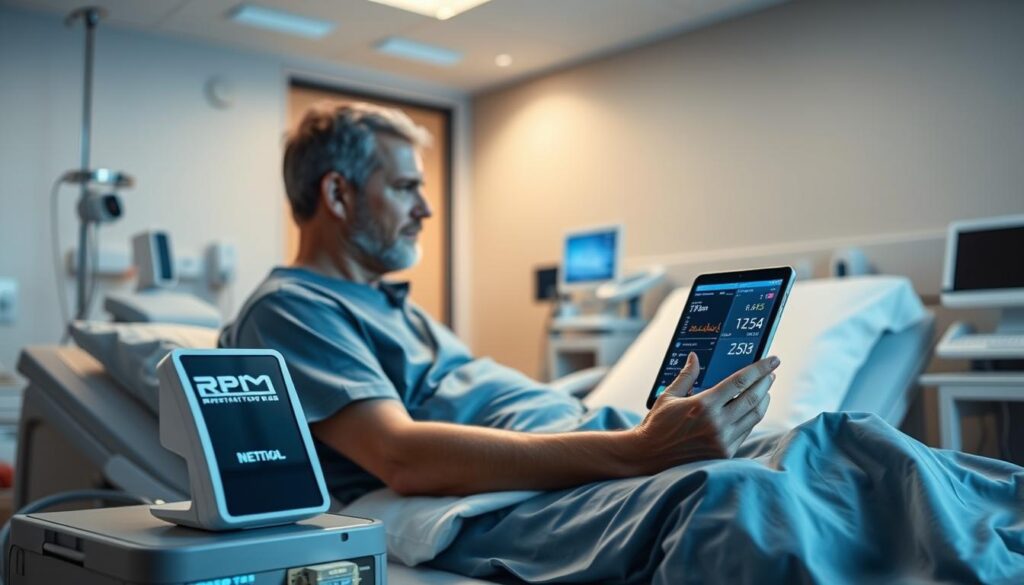
Prompt A modern, well-lit hospital room with a patient sitting upright in bed, intently focused on a tablet displaying a remote patient monitoring (RPM) app. Beside the bed, a sleek medical device monitors the patient's vital signs, the readings displayed on a digital screen. The room is bathed in a calming, neutral color palette, with soft lighting illuminating the scene. In the background, subtle medical equipment and monitors suggest the setting, while maintaining a sense of tranquility. The composition emphasizes the patient's engagement with the RPM technology, conveying the importance of continuous health monitoring for managing chronic conditions.

“Reimbursement momentum and executive sponsorship are turning pilots into enterprise programs that improve outcomes while easing hospital congestion.”

How organizations turn market signals into programs

  • Match device options—from BYOD to clinical-grade—to risk and budget.
  • Define clinical pathways and escalation playbooks to avoid alert fatigue.
  • Use standardized capture and automated thresholds for earlier intervention.
Driver Impact Action for Providers
Market & Payer Support Long-term funding pathways Design scalable programs that meet documentation rules
Staffing Constraints Need for task routing and prioritized alerts Adopt systems that offload manual follow-up
Readmission Pressure Focus on early detection of decline Monitor trends like blood pressure and weight; tie to escalation

Iottive’s IoT & AIoT expertise and BLE app development help link sensors, apps, and cloud so care teams get reliable data flows during tight staffing. Linking market signals with internal goals lets organizations build programs that improve outcomes without overburdening staff.

What Remote Patient Monitoring Is and How It Helps

Connected home monitoring turns single readings into a continuous health story. Remote patient monitoring uses connected tools to capture vital signs and symptoms at home and send them to clinician dashboards. This steady stream of data helps care teams spot trends fast.

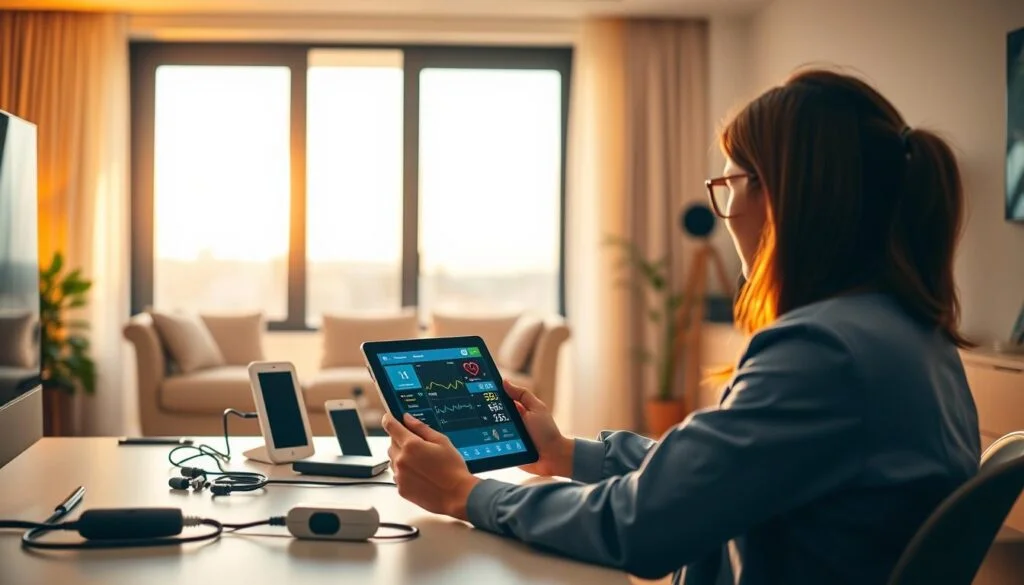
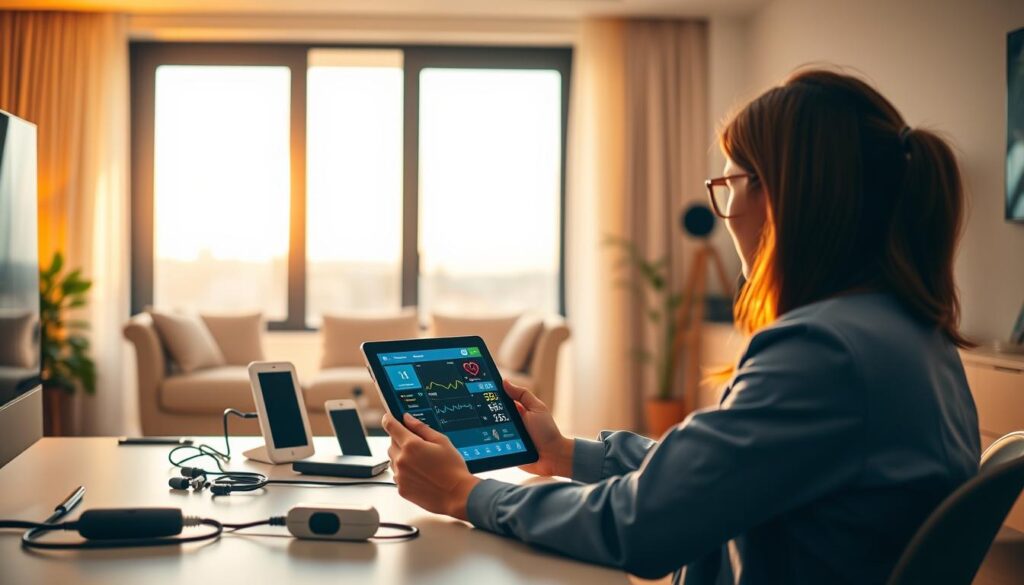
A modern home office with a healthcare professional monitoring a patient's vitals remotely. In the foreground, a person sits at a desk, intently studying a tablet displaying a patient's vital signs and tracking data. Warm, natural lighting fills the room, casting a calming, professional atmosphere. The middle ground features medical devices like a blood pressure cuff and heart rate monitor, seamlessly integrated into the home setup. In the background, large windows offer a glimpse of the outdoors, symbolic of the connected, remote nature of the patient care. The overall scene conveys the efficiency and personalized care enabled by remote patient monitoring technologies.

For patients

Patients gain confidence and convenience. Fewer in-person visits and earlier detection reduce emergency trips. Seeing one’s own trends improves patient engagement and treatment adherence.

For providers

Live data supports medication titration, therapy changes, and quicker triage when thresholds are crossed. Structured updates let clinicians tailor care plans on evidence, not guesswork.

For organizations

Programs cut readmissions and operating costs through centralized alerting and standardized workflows. Scaling monitoring across populations becomes practical with clear protocols.

“Real-time, structured data turns episodic snapshots into actionable narratives for better outcomes.”

  • Definition: Connected tools capture vital signs and send secure feeds to dashboards.
  • Patient wins: Peace of mind, earlier detection, fewer ER visits.
  • Provider wins: Faster triage and tailored management.
  • Org wins: Lower costs, scalable workflows, stronger engagement.
Benefit What It Means How to Measure
Fewer ER visits Early intervention from trend alerts ER visit rate per 1,000 patients
Better adherence Patients follow treatment with visible trends Medication refill and engagement metrics
Operational efficiency Standard alerts route tasks to the right team Staff time per escalated alert

Iottive integrates BLE devices and mobile apps to deliver seamless patient experiences and unified dashboards for clinicians. A well-designed program combines easy-to-use tools, clear instructions, and proactive outreach to keep momentum and prove impact over time.

chronic illness RPM devices: the core categories to know

A clear lineup of monitoring gear helps programs match measurements to specific care goals.

Blood pressure monitors track systolic and diastolic readings at home. They are central for hypertension management and for spotting trends that may signal heart failure decompensation.

Glucometers and CGMs for diabetes care

Fingerstick meters and continuous glucose monitors turn blood glucose into actionable trends. These tools help patients and clinicians adjust diet, insulin, and medications with timely data.

Pulse oximeters

Pulse ox measures SpO2 and heart rate. It is vital for COPD, asthma, and post-COVID recovery to detect drops that need prompt support.

Smart scales

Daily weights reveal fluid retention or loss. For heart and renal patients, small weight shifts can trigger medication or clinic outreach.

Wearables

Activity trackers log steps, sleep, and heart rate variability. That context helps teams understand lifestyle, recovery, and adherence between visits.

ECG/EKG monitors

Portable rhythm monitors capture arrhythmias and AFib episodes. They support post-MI follow-up and stroke-risk reduction programs.

Smart thermometers

Early fever detection aids oncology, post-op, and elderly care by flagging infection before it escalates.

Multi-parameter kits

Bundles that combine BP, pulse ox, scale, and temp simplify logistics and feed unified systems for hospital-at-home care. Studies show such kits cut admissions and mortality in post-acute programs.

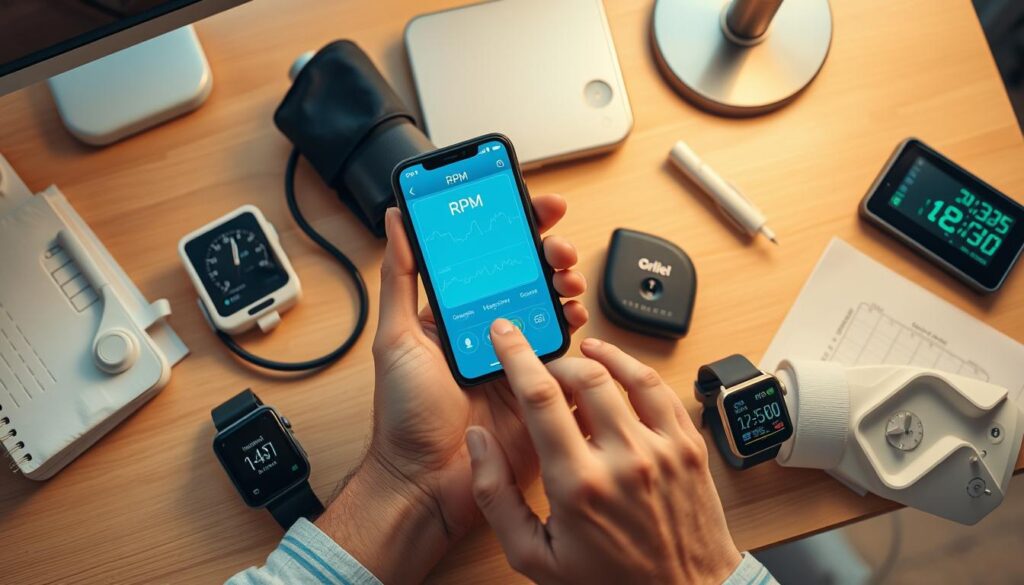
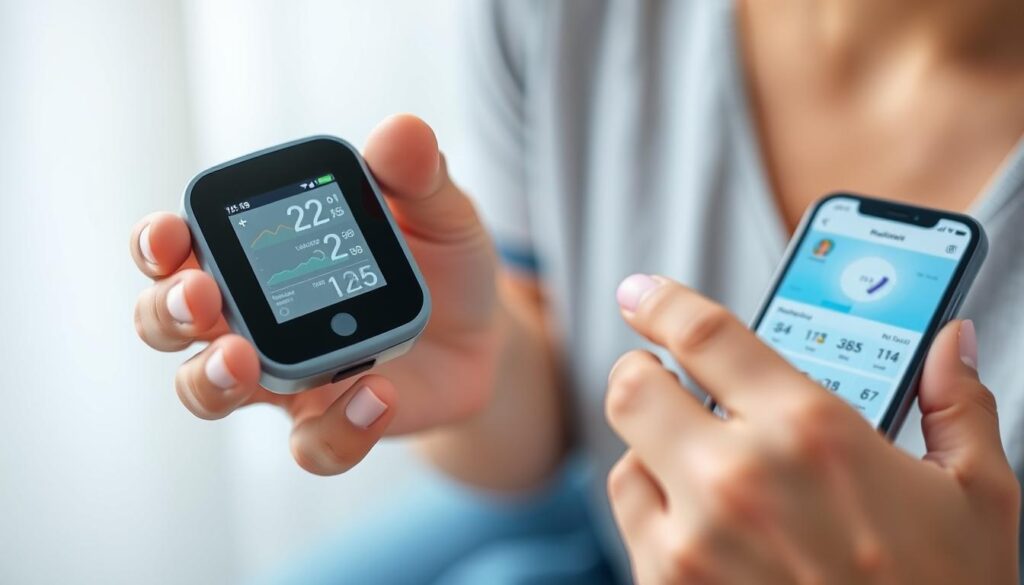
A well-lit, high-resolution close-up view of a patient's hand holding a modern, sleek RPM device with a touchscreen display. The device's intuitive interface shows real-time blood pressure and glucose level readings, with a clean, minimalist design. The patient's other hand rests on a smartphone, showcasing a mobile RPM app with an intuitive dashboard tracking vital signs and health data. The scene conveys a sense of ease and control, reflecting the empowering nature of chronic illness RPM technologies.

“Scotland’s home BP program reduced roughly 400,000 GP visits and saved more than £15M.”

Choosing tech that integrates matters. Iottive’s BLE and IoT expertise helps pair clinical-grade and consumer tools to ensure reliable connectivity and unified data streams so monitoring becomes actionable, not siloed.

Best-Fit Devices by Chronic Condition

Picking the right toolset matters most when programs aim for timely intervention and simpler workflows.

Iottive can integrate CGMs, connected blood pressure cuffs, spirometers, and smart scales into a single app. That unified view pairs live measurements with education and adherence nudges. Providers see trends faster and patients get clear guidance.

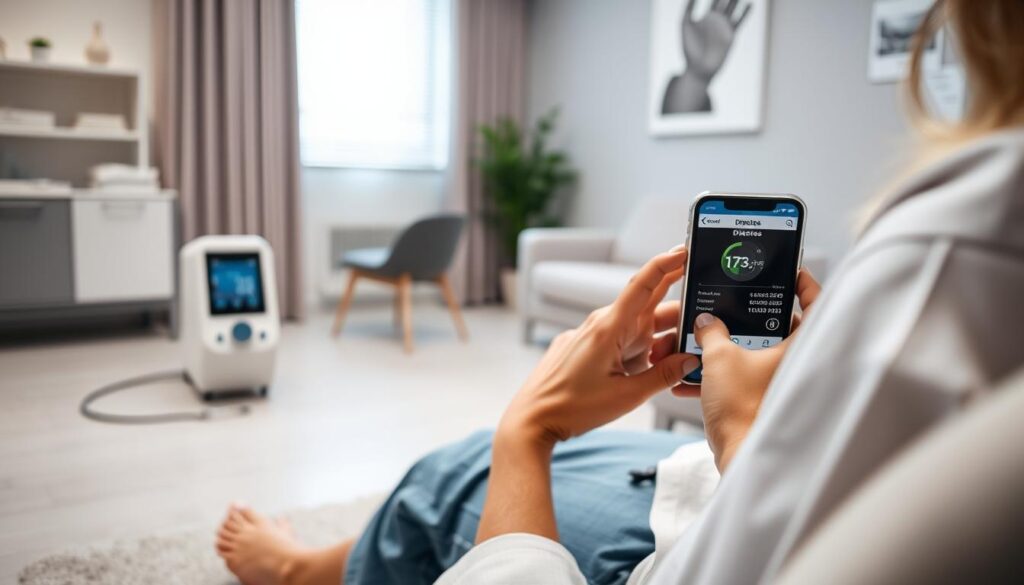
A serene, well-lit medical office setting. In the foreground, a patient sits comfortably, intently engaged with a sleek, modern mobile device displaying a remote patient monitoring app for diabetes management. The middle ground features a state-of-the-art blood pressure monitoring device, its digital display indicating the patient's vital signs. The background depicts soothing, minimalist decor, with muted tones and clean lines conveying a sense of professionalism and care. Soft, diffused lighting creates a calming atmosphere, while the camera angle suggests an intimate, empathetic perspective. The overall scene exudes a feeling of personalized, high-quality remote healthcare tailored to the patient's specific chronic condition.

Diabetes

Continuous glucose monitors provide real-time blood glucose tracking and alerts. When combined with contextual education loops and messaging, they help reduce dangerous highs and lows.

Hypertension

Connected BP cuffs that capture morning and evening readings support trend-based alerts. Threshold rules and analytics guide medication changes and follow-up.

COPD and respiratory disease

Pulse oximetry plus spirometry tracks oxygen levels and lung function. Pair these with adherence checks for inhalers to spot early exacerbations.

Heart failure

Daily weight, blood pressure, and symptom surveys reveal fluid shifts and rising risk. Correlating weight with BP and symptoms enables rapid outreach before hospitalization.

“Map condition to the simplest stack that answers a clinical question — then add coaching and escalation.”

  • Map stacks: CGMs + education for diabetes; BP cuffs + analytics for hypertension; SpO₂ + spirometry for COPD; scales + BP for heart failure.
  • Close the loop: Combine device data with behavior coaching and medication reminders to boost adherence.
  • Escalation tiers: Align threshold alerts to telehealth check-ins or urgent outreach and document readings for longitudinal care.

Real-World Impact: Outcomes Seen With RPM

Practical implementations of remote monitoring are shrinking the time between symptom onset and clinical action. That faster window drives clear benefits for patients, providers, and organizations.

A patient carefully examining their smartphone, the screen displaying a real-time diabetes monitoring app. In the middle ground, a nurse assists the patient with a blood pressure cuff, their faces warmly lit from a window. The background is a cozy, modern home office space, with minimal clutter and a sense of calm professionalism. The lighting is soft, natural, and directional, creating a sense of intimacy and focus on the patient-caregiver interaction. The overall mood is one of empowerment, personalized care, and the seamless integration of technology into everyday health management.

Fewer ER visits, shorter stays, and lower readmissions

Continuous monitoring closes the gap from first warning sign to clinician response. That translates into fewer ER visits and shorter hospital stays.

Studies show multi-parameter kits in post-acute programs cut admissions by 87% and mortality by 77% in high-risk cohorts. Those results free up beds and reduce family stress.

Early detection enables faster medication titration

When providers get timely home data, they adjust dosages sooner. Faster titration reduces adverse events and speeds recovery.

Iottive’s unified dashboards and alerting let care teams act quickly, turning raw readings into clear, documented steps.

Population health: outbreak tracking and risk stratification

Aggregated temperature and respiratory measures help public health teams spot outbreaks earlier.

Risk stratification focuses limited resources on patients who need attention now while reassuring those with stable readings.

“Faster intervention windows improve experience and outcomes for patients and families.”

  • Continuous monitoring shortens response time and cuts avoidable visits.
  • Real-world signals enable faster medication changes and tailored follow-up.
  • Population-level data aids outbreak detection and targeted outreach.
  • Operational wins—fewer escalations and better use of time—support clinical gains.

Track outcomes and process metrics to tune thresholds and workflows over time. Clear goals and transparent communication keep patients engaged and help programs sustain funding and partnerships.

Integration Essentials: From Device to EHR and Care Team Dashboards

A reliable pipeline from home measurement to the clinician view is the backbone of any successful monitoring program.

Cloud and mobile data pipelines must ingest readings securely, normalize them, and render near real-time insights in clinician dashboards. Architect with edge buffering, retry logic, and encrypted transport so brief outages don’t create gaps.

Cloud and mobile data pipelines for real-time visibility

Use lightweight mobile apps for BLE pairing and secure upload. Send compressed, timestamped payloads to cloud queues that feed analytics and alert engines.

Ensure the pipeline supports offline caching and device health checks so clinicians see accurate, timely views.

BYOD vs. clinical-grade devices: when each approach fits

BYOD (smartwatches, phones) boosts adoption and lowers friction for low-risk monitoring. Clinical-grade tools suit regulated metrics where accuracy and FDA rules matter.

Match choice to the clinical question: convenience for engagement; regulated tools for decisions that affect therapy or billing.

Interoperability standards and unified data views

Push normalized measurements into electronic health records using FHIR and secure APIs. Include metadata—timestamps, device IDs, firmware version, and patient context—to aid traceability.

Build role-based dashboards so clinicians, case managers, and admins see focused views with fewer false alarms.

“Command centers centralize monitoring, triage alerts, and route tasks to the right provider quickly.”

  • Onboarding flows should auto-provision devices, test connectivity, and confirm patient pairing.
  • Alert normalization and suppression reduce fatigue and highlight high-risk signals.
  • Iterative integration testing with live cohorts validates reliability before scale-up.
Layer Key Feature Why it Matters
Edge / Mobile BLE pairing, offline cache Stable uploads from home networks
Cloud Queueing, analytics, retries Near real-time insights and resilience
Integration FHIR APIs, EHR sync Continuity in electronic health records
Ops Command center, role views Rapid triage and workload routing

Iottive delivers BLE app development, smart device integration, and cloud-to-EHR work that creates unified dashboards and reliable data pipelines. That foundation helps providers focus on care, not connectivity.

Security, Privacy, and Compliance for Remote Care Programs

Security must be as seamless as the monitoring itself so care flows without friction or risk. For remote patient monitoring to work, systems must protect patient data while staying usable for providers and patients.

Protecting PHI: HIPAA, access control, and safe harbor

Encryption in transit and at rest, least-privilege access, and immutable audit trails are baseline requirements. Implement role-based permissions, consent tracking, and clear patient notices to build trust.

FDA and clinical-grade wearables

As wearables move toward therapeutic use, follow labeling rules and post-market surveillance. Track firmware, maintain a living risk register, and review regulatory guidance frequently.

“Align security with usability so safeguards do not block timely care.”

  • Adopt patching cadence, SBOM tracking, and incident response plans.
  • Require vendor due diligence for cloud platforms and third-party SDKs that touch PHI or telemetry.
  • Run penetration tests, mobile app hardening, BLE pairing protections, and secure boot at the edge.
  • Keep logs, reports, and FHIR-based exchanges to satisfy audits and preserve interoperable data flows.

Iottive builds HIPAA-aligned solutions with access control, auditability, and regulatory awareness across IoT/AIoT stacks to help organizations scale secure, standards-based care programs.

Reimbursement and Program Design in the U.S.

Recent billing shifts mean more providers can build sustainable remote patient monitoring workflows.

CMS growth and coding basics

CMS reimbursements climbed from $5.5M in 2019 to over $101M in 2021. That surge makes remote patient monitoring a viable revenue stream for many providers and hospitals.

Billing note: patients generally must record measurements at least 16 days per month to meet common billing thresholds. Accurate device attribution and identity matching are essential for claims.

Medicaid variability and state rules

By March 2023, 34 state Medicaid programs covered monitoring, often with limits on conditions, provider type, or eligible systems.

Check state rules early when designing eligibility and enrollment workflows.

Program design to meet documentation and time thresholds

Documentation should show clinical indication, signed consent, device education, and logged interactions that reflect billed time.

  • Automate time tracking and intervention logs so clinicians avoid manual entry.
  • Produce audit-ready reports tying data to outreach and orders.
  • Set realistic panel sizes and manage alert loads for sustainable scale.

“Design payer-ready workflows from day one to reduce rework and protect revenue.”

Challenge What to track Recommended action
Billing thresholds Days with measurements; time spent Automated logs + patient reminders
Audit readiness Consent, device attribution, encounter notes Structured templates and exportable reports
State variability Covered conditions & provider types Configurable eligibility rules per state

Iottive’s platforms support documentation, time tracking, and reporting so healthcare organizations can meet CMS and payer rules while focusing on care and outcomes.

How Care Teams Use RPM Day to Day

Care teams turn routine home readings into fast, actionable steps. Daily uploads help clinicians spot trends and act before a small change becomes a crisis.

Post-discharge cardiac rehab with multi-device kits

Example: Patients use a BP cuff, ECG patch, and smart scale each morning. Readings stream to a central dashboard that flags fluid shifts or rhythm changes.

When a weight rise or arrhythmia appears, the system alerts the right nurse or cardiologist for telehealth or in-person follow-up. This approach reduces readmissions and speeds recovery.

Diabetes management in rural settings

Connected glucose data from home meters lets providers intervene quickly. Outreach triggers when trends destabilize, pairing coaching with medication adjustments.

For rural patients, mobile networks and BLE pairing bridge access gaps so care occurs without extra travel.

Mayo-style command centers and clinician workflows

Centralized hubs route incoming ECG and vitals so the right clinician sees the right signal at the right time. Role-based alerts, batch reviews of stable patients, and threshold automations cut wasted time.

Standardized escalation rules define when to call, schedule a televisit, or send a clinician in person.

Use Case Key Inputs Primary Action Typical Outcome
Cardiac rehab BP, ECG, weight Flag fluid/rhythm; clinician outreach Fewer readmissions; better heart rate control
Diabetes (rural) Connected glucose, logs Trend outreach; education loops Faster intervention; improved self-management
Command center Multi-stream vitals, alerts Route to specialist; triage Quicker response; lower avoidable visits

“Central dashboards and standardized playbooks let teams act fast without chasing raw data.”

Iottive supports multi-device kits, BLE connectivity, and unified dashboards that streamline alerting and escalation for care teams.

Partnering with Iottive to Build Secure, Scalable RPM Solutions

Iottive partners with providers to turn connected hardware into trusted care pathways.

IoT & AIoT expertise: Iottive delivers BLE app development and smart device integration that ensure dependable pairing and steady telemetry. Firmware, pairing logic, and mobile UX are engineered to reduce dropouts and keep patient data flowing.

Cloud & mobile integration: Built patterns normalize and queue incoming data so clinician dashboards render near real-time trends. Integrations push structured feeds into electronic health records and role‑based views so care teams see what matters fast.

Custom product engineering

Iottive designs clinical-grade products from firmware through cloud analytics. That includes secure boot, over‑the‑air updates, and validation to meet healthcare requirements.

End-to-end platform features

  • Device onboarding, identity matching, and provisioning.
  • Data pipelines, alerting, and audit trails for compliance.
  • Role-based access and clinician workflows tied to escalation rules.

“Our focus is aligning technical choices with clinical goals and payer rules so organizations get reliable outcomes, fast.”

Cross‑industry experience brings lessons from consumer electronics and industrial IoT into health implementations. That improves reliability, supply logistics, and usability for patients and providers.

Capability What Iottive Delivers Benefit for Organizations
BLE & App Robust pairing, low-energy telemetry Fewer connection failures; steady patient uploads
Cloud & EHR FHIR-ready APIs, normalized data Continuity in electronic health records; easier claims support
Security Encryption, audit trails, access controls Lower compliance risk; protected PHI
Product Engineering Firmware, UX, validation Clinical-grade outcomes; faster time to value

Testing and rollout: Iottive supports iterative pilots, validation testing, and phased deployments to minimize disruption and accelerate scale. Teams get training, support, and configurable workflows tailored to patient populations and service lines.

Invite collaboration: Work with Iottive to select the right device mix, build secure systems, and deliver monitoring that helps patients and care teams, while meeting payer and regulatory expectations.

How to Choose the Right RPM Devices and Platform

Start by defining the clinical question your monitoring program must answer and map that to measurable metrics. Clear goals make technology choices simpler and keep care focused on outcomes.

Define clinical goals, target metrics, and alert thresholds

Match metrics to condition and care plans. For example, map blood pressure, SpO₂, weight, or glucose to specific thresholds that trigger outreach.

Set escalation tiers so alerts align with staffing and expected response time.

Evaluate interoperability, usability, and patient training needs

Pick systems that integrate with electronic health records and provider workflows to avoid fragmented data. Prioritize simple setup, clear instructions, and upfront training so patients capture accurate readings consistently.

Assess data security, auditability, and regulatory pathways

Require end-to-end encryption, access controls, and immutable logs for auditability. Confirm regulatory status for clinical-grade hardware and track firmware and metadata for traceability of remote patient streams.

Plan for scalability, logistics, and support across care teams

Decide between BYOD for convenience or clinical-grade gear for accuracy, or use a hybrid approach. Plan kitting, shipping, replacements, and a support workflow so monitoring devices stay in service.

  • Validate with pilots, refine thresholds, and measure outcomes.
  • Align alerting with staffing to avoid fatigue and meet SLAs.
  • Partner with experienced builders—like Iottive—to integrate with EHRs, secure data, and scale logistics.
Decision Key Question Action
Metric selection What answers the clinical question? Map to target thresholds and schedules
Integration Will this feed electronic health records? Test FHIR APIs and workflow handoffs
Support How will patients get help? Design training, helpdesk, and swap logistics

“Start with the clinical question, not the gadget, and build policies that keep care timely and measurable.”

Conclusion

Modern patient monitoring links everyday measurements to faster, smarter clinical choices. When remote patient monitoring and a clear workflow join, routine readings become timely care signals that help providers and patients avoid needless visits.

Map the right patient monitoring devices to each condition, build interoperable systems, and lock in security and privacy. Iottive supports BLE pairing, cloud & mobile integration, and custom IoT platforms so data flows reliably into clinician views.

Measure impact—readmissions, visits avoided, engagement—and train teams to keep adherence high. Design documentation, time thresholds, and smart alerting to protect reimbursement and scale operations.

With multidisciplinary teams and command‑center workflows, organizations can expand precision, personalization, and access in chronic disease care. Translate these insights into a practical roadmap and move care forward with confidence.

FAQ

What is remote patient monitoring and how does it help people with long-term conditions?

Remote patient monitoring uses connected health tools — such as blood pressure cuffs, glucometers, pulse oximeters, and wearable heart-rate trackers — to collect vital signs and transmit them to care teams. This gives patients more confidence, reduces in-person visits, and supports better self-management. Providers gain near real-time data for faster triage and personalized care plans, while health systems see improved outcomes and lower readmission risk.

Which types of monitoring tools are most commonly used for managing hypertension and heart disease?

Connected blood pressure monitors, smart scales, and ECG/EKG patches are primary tools for hypertension and heart failure management. These tools track trends in blood pressure, weight (for fluid retention), and rhythm abnormalities to guide medication titration and timely interventions by clinicians and care teams.

How does continuous glucose monitoring compare to traditional glucometers for diabetes care?

Continuous glucose monitoring (CGM) provides ongoing glucose trends and alerts for highs and lows, enabling proactive dosing and lifestyle adjustments. Traditional glucometers give point-in-time readings. CGMs paired with education loops and clinician review often yield better glycemic control and higher patient engagement, especially in remote or rural settings.

Are pulse oximeters and spirometers useful for respiratory conditions and post-COVID care?

Yes. Pulse oximeters provide SpO₂ and heart rate readings for COPD, asthma, and post-COVID monitoring. Spirometry and adherence-tracking inhaler sensors help assess lung function and medication use. Together, they support early detection of deterioration and reduce emergency visits.

How do wearable devices contribute to remote monitoring programs?

Wearables track activity, sleep, and heart rate variability, offering continuous physiological context that complements spot measurements. They help clinicians identify trends, adjust care plans, and motivate patients through engagement features. For clinical-grade needs, validated wearables or multi-parameter kits are preferred.

What does integration with electronic health records (EHR) involve?

Integration requires secure cloud and mobile data pipelines that feed device readings into EHRs and care dashboards. Interoperability standards and APIs enable unified views so clinicians can see device trends alongside clinical notes, supporting faster decisions and coordinated care across teams and organizations.

How do providers balance BYOD (bring your own device) versus clinical-grade equipment?

BYOD can increase access and lower costs for routine monitoring, but clinical-grade devices offer validated accuracy and regulatory oversight for higher-risk patients. Choose BYOD for engagement and low-acuity cases; choose regulated devices for medication changes, hospital-at-home, or billing requirements.

What security and privacy safeguards are required for remote monitoring data?

Protecting patient health information means HIPAA-compliant platforms, strong access controls, encryption in transit and at rest, and audit logs. For regulated devices, manufacturers and providers must also follow FDA guidance and maintain clear data governance across cloud services and mobile apps.

How does reimbursement work for remote monitoring in the United States?

Medicare and many private payers reimburse monitoring under specific CPT codes that reflect time and engagement thresholds. Medicaid coverage varies by state. Successful programs design workflows that document clinical time, device data review, and patient contacts to meet billing requirements.

What outcomes can health systems expect after deploying remote monitoring programs?

Programs commonly report fewer ER visits, shorter hospital stays, and reduced readmissions. Early detection from continuous data enables quicker medication titration and targeted interventions, improving population health metrics and lowering total cost of care.

How do care teams use monitoring data day to day?

Clinicians and nurses review dashboards for alerts and trends, prioritize outreach for at-risk patients, and adjust care plans. Examples include post-discharge cardiac rehab with multi-parameter kits, diabetes management using connected glucose data, and centralized command centers that route escalations to clinicians.

What should organizations evaluate when choosing a monitoring platform?

Define clinical goals, target metrics, and alert thresholds first. Then assess interoperability with EHRs, usability for patients, patient engagement tools, logistics for device distribution, data security, and scalability. Consider vendor experience with cloud integration, BLE app development, and regulatory pathways.

Can remote monitoring be scaled across large patient populations?

Yes. Scalable programs combine automated data ingestion, configurable alert rules, centralized dashboards, and standardized protocols for escalation. Cloud platforms and unified views help population health teams stratify risk and deploy resources efficiently across providers and care settings.

What role do IoT and AI technologies play in modern remote care?

IoT connects medical hardware to apps and cloud services; AI and analytics surface patterns, predict deterioration, and reduce alert fatigue. These technologies power smart device integration, improve triage accuracy, and support personalized interventions across healthcare organizations.


Let’s Get Started

Top 5 Hospital Asset Tracking Systems In Upcoming Years

Once, a late-night procedure stalled because a needed ventilator could not be found. A nurse ran between units while the surgical team waited. That delay cost time, stress, and a tense moment for the patient.

Modern care should not hinge on where equipment sits. U.S. clinical teams move beyond spreadsheets to real-time visibility that turns raw data into action. Real-time location and usage insights help teams run preventive maintenance, cut rental spend, and reduce delays.

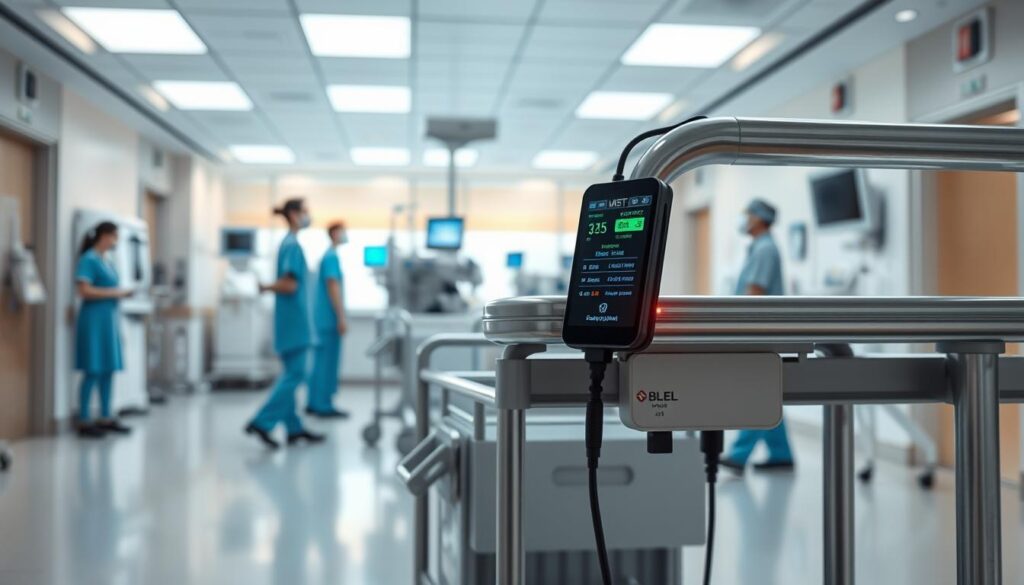
hospital asset tracking system, BLE and IoT-powered hospital inventory hub

This guide previews the 2025 landscape, from BLE and IoT-powered hospital inventory hub choices to RFID and RTLS options. You’ll learn how connected CMMS workflows sync work orders to location data. Expect clear ROI drivers: faster audits, better utilization, higher uptime, and measurable cost savings.

For inquiries, reach out: sales@iottiv.com | www.iottive.com

Key Takeaways

  • Real-time visibility moves teams from chasing equipment to delivering care.
  • BLE often wins for cost and battery life; RFID and UWB fit niche needs.
  • Connected CMMS closes the loop from location data to maintenance work orders.
  • ROI shows in faster audits, fewer rentals, and improved staff productivity.
  • Prioritize HIPAA-first security, role-based access, and phased rollouts.

The state of hospital asset tracking in 2025 and why it matters

By 2025, hospitals are leaving manual ledgers behind and adopting live location tools that change daily operations.

From spreadsheets to smart RTLS: eliminating downtime, loss, and hoarding

Legacy spreadsheets act as static ledgers. They don’t link location to maintenance or usage. That gap causes missed inspections, hoarded infusion pumps, and longer hunts before procedures.

Smart RTLS flips the script. It creates work orders automatically, sends tasks to technicians’ mobile apps, and uses geofencing to protect high-value items.

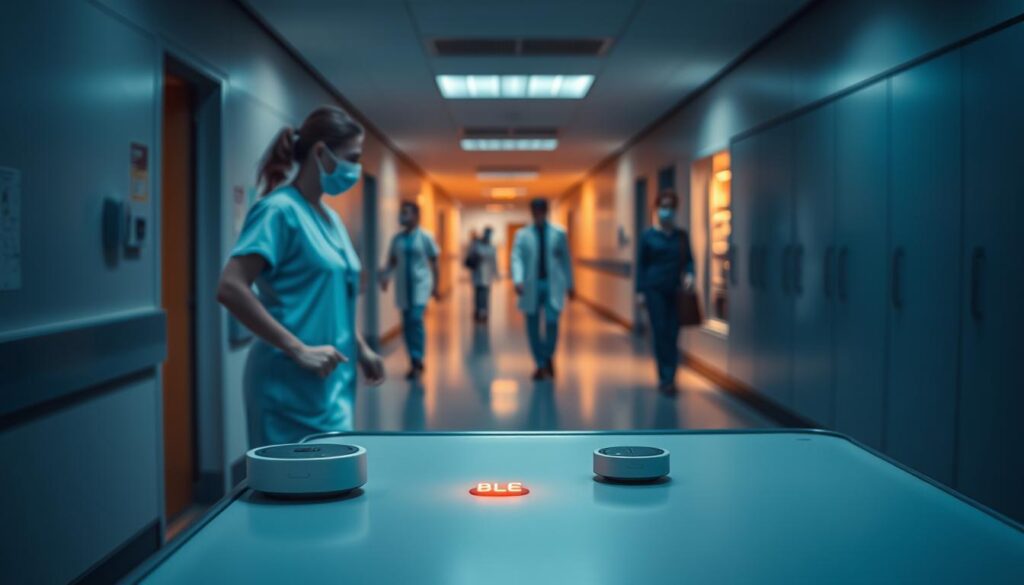
A modern hospital corridor, dimly lit with warm tones. In the foreground, a nurse approaches a medical cart, her movements highlighted by subtle shadows. The cart's surface is adorned with sleek, compact tracking devices, blinking with BLE signals. In the middle ground, doctors and staff navigate the space, their movements tracked seamlessly by the intelligent asset management system. The background reveals rows of equipment cabinets, their contents monitored in real-time, ensuring efficient inventory and preventing shortages. The atmosphere conveys a sense of calm efficiency, where technology seamlessly integrates with the hospital's operations, streamlining workflows and enhancing patient care.

Market momentum: why hospitals are investing to boost efficiency and compliance

Health systems are investing fast. The market is set to grow at over 15% CAGR through 2030. Benefits are clear: 20–25% fewer critical equipment issues, up to 90% less time locating gear, 15–30% lower rental spend, and ~40% faster audit prep.

Legacy tools Smart RTLS Impact
Manual lists, siloed data Real-time location and mobile workflows Faster retrieval, fewer delays
No maintenance orchestration Auto work orders by criticality Reduced equipment downtime
Hoarding and hidden demand Utilization analytics and alerts Equitable redistribution, lower rental costs

Operational efficiency ties directly to patient care and compliance readiness. Let’s connect for inquiry: sales@iottiv.com | www.iottive.com

What a modern hospital asset tracking system must deliver

Visibility must be practical, mobile-first, and tied to rules that reduce downtime and waste.

A bustling hospital ward, equipment and supplies tracked in real-time by a network of smart Bluetooth beacons. A doctor's tablet displays the live location of a critical care bed, its status updated seamlessly. Nurses navigate the corridors, their movements traced by the asset tracking system, ensuring every item is where it needs to be. Warm, diffused lighting casts a soothing glow, while high-resolution cameras capture the scene from multiple angles, providing a comprehensive view of the hospital's digital nervous system in action.

Real-time location and geofencing across multi-site facilities

Indoor GPS using rfid, BLE, or Wi‑Fi triangulation gives instant discovery across wings and campuses. Zone-based alerts flag when equipment moves outside permitted areas to prevent loss and hoarding.

Usage-driven preventive maintenance and AEM-ready workflows

Prioritize fixes by actual use, not just calendars. Systems capture run-time, cycles, and wear to trigger AEM-based PMs. That cuts unnecessary service and focuses techs where utilization and risk intersect.

Compliance and audit trails aligned to Joint Commission readiness

Automatic logs record inspections, calibrations, and PM. Single-click exports produce audit-ready documentation so managers meet compliance with less paperwork.

Mobile-first access, QR/NFC tagging, and work order execution

Technicians scan QR/NFC tags to pull histories, close work orders, and sync updates offline. Smart triage reorders queues so critical medical equipment gets priority service, lowering equipment downtime.

  • Lifecycle intelligence: combine usage and repair logs to guide replace-vs-repair choices with depreciation data.
  • Inventory controls: PAR levels and role-based access reduce silos and keep supplies balanced.
  • CMMS integration: alerts become action items to eliminate gaps between detection and remediation.

Let’s connect for inquiry: sales@iottiv.com | www.iottive.com

BLE vs RFID vs UWB vs barcodes: choosing the right RTLS stack

Selecting the right locating tech starts with clear goals: count accuracy, real-time updates, or sub-meter precision. Define whether you need fast storeroom counts, routine mobile device finds, or surgical-grade location before choosing a stack.

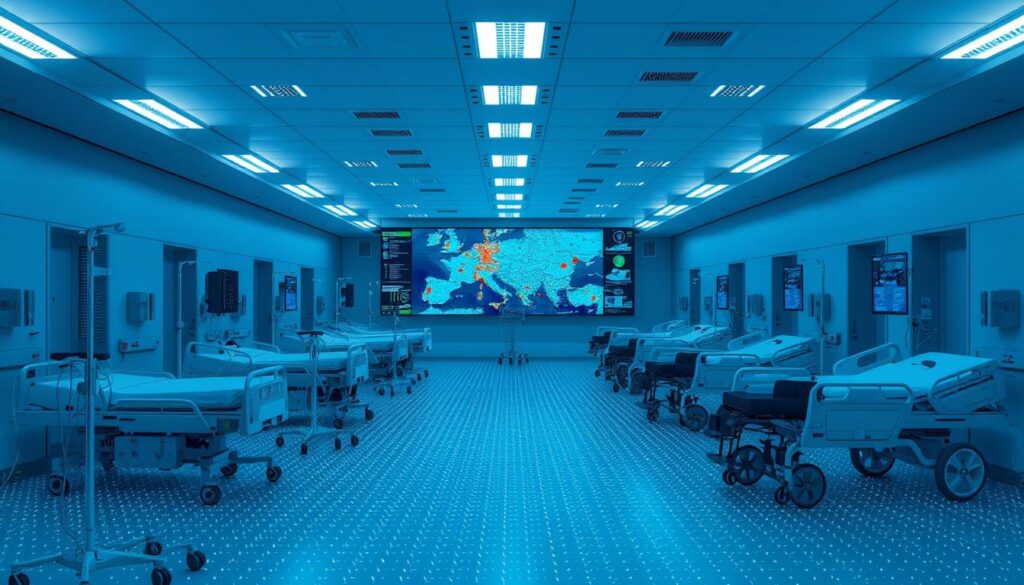
An expansive hospital ward, bathed in cool blue tones and crisp white lighting. In the foreground, a variety of medical equipment - IV stands, wheelchairs, and hospital beds - each equipped with sleek, modern BLE tracking tags, their signals pulsing in real-time. The middle ground reveals a complex network of overlapping RFID and UWB signals, visualized as a shimmering grid of data. In the background, a bank of large display screens showcases a live map of the facility, color-coded zones, and the precise locations of every trackable asset. The atmosphere is one of efficiency, control, and the seamless integration of cutting-edge RTLS technologies.

Barcodes for basics vs dynamic equipment realities

Barcodes are cheap and great for receiving and periodic audits.

They fail for items moved many times per shift. Use them for storerooms and controlled stock where scans are practical.

RFID trade-offs

Passive rfid tags cut tag cost but do not deliver live location. Active RFID improves visibility but raises reader and infrastructure costs, affecting total cost of ownership.

Why Bluetooth Low Energy often leads

BLE tags are affordable, work with smartphones, and scale via beacon networks. Proper tuning yields long battery life—often up to eight years—and lets teams tune accuracy where needed.

When UWB is worth the premium

UWB delivers sub-meter precision for high-criticality zones. Choose it when surgical or procedural workflows demand tight location tolerances despite higher deployment expense.

  • Decision criteria: accuracy needs, building materials, IT limits, battery cycles, and integration with Wi‑Fi.
  • Maintenance: reader density for rfid/uwb; beacon placement for BLE; and scheduled battery swaps.
  • Security and interference: pick encrypted channels and hospital-compliant policies.

Pragmatic hybrid: barcodes for storerooms, BLE for mobile equipment, and selective UWB where precision matters. Anchor any choice in ROI to cut search time, reduce equipment downtime, and boost operational efficiency.

Let’s connect for inquiry: sales@iottiv.com | www.iottive.com

Top hospital asset tracking systems to watch in the upcoming years

Leading vendors now bundle location, maintenance, and analytics into turnkey platforms. These platforms aim to cut search time, lower rental spend, and improve patient care by making device visibility actionable.

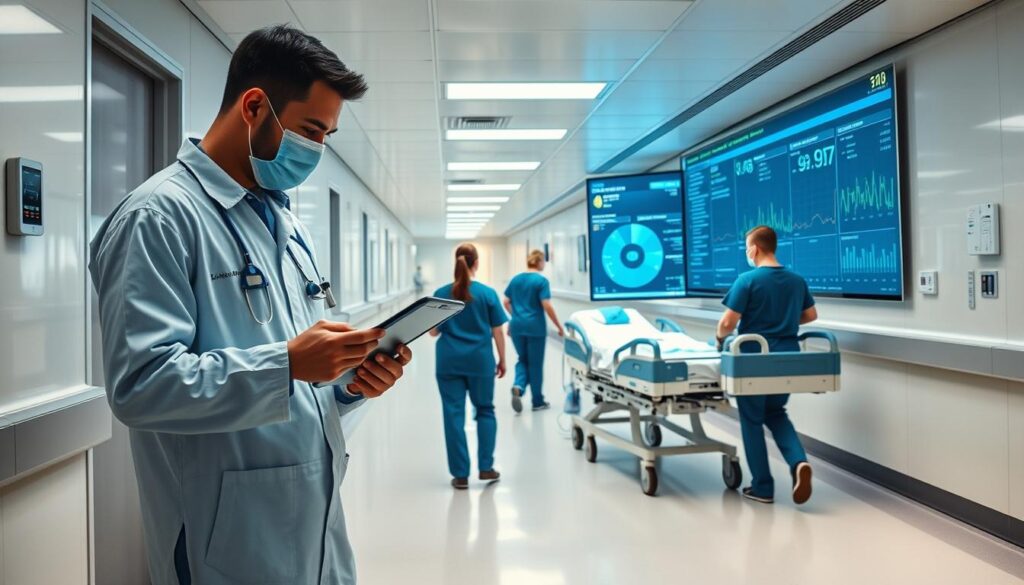
A modern hospital corridor bathed in bright, clinical lighting. In the foreground, a technician examines a medical device, its status displayed on a tablet interface. In the middle ground, nurses push gurneys down the hallway, each equipped with smart BLE tags for real-time asset tracking. In the background, a large dashboard displays the locations and status of critical hospital equipment, enabling efficient resource management. The atmosphere conveys a sense of technological prowess, seamless workflow, and patient-centric care.

BLE-centric RTLS platforms for rapid, scalable deployments

BLE-first solutions such as Kontakt.io enable quick rollouts using smartphones and beacon grids. They support PAR-level automation, alerts, and fleet analytics while keeping tag costs low.

Connected CMMS ecosystems that close the loop

Integrated CMMS transforms alerts into work orders. This syncs preventive maintenance, AEM routines, and audit-ready logs so teams spend less time on paperwork and more on uptime.

Enterprise suites for large campuses

Enterprise offerings from CenTrak, Stanley, and AeroScout-class vendors suit complex sites. They link to EHR, ERP, and cloud services to unify data across clinical and facilities teams.

IoT analytics and hybrid RFID/BLE approaches

IoT analytics provide utilization heatmaps and predictive insights to right-size fleets like pumps and defibrillators. Hybrid deployments use rfid for storerooms and BLE for mobile equipment, merged into a single dashboard for clear comparisons.

Platform Type Strength Best Use
BLE-centric Fast deploy, low tag cost Mobile equipment, rapid scale
Enterprise RTLS Deep integrations, high scalability Complex campuses, EHR/CMMS sync
Hybrid RFID/BLE Storeroom accuracy + mobile visibility Mixed environments, surgical tools
IoT analytics Utilization and compliance reports Fleet right-sizing, audit prep

Compare vendors by battery life, accuracy modes, mobile apps, API openness, SSO, and total cost of ownership. Align selection to clinical goals to gain measurable improvements in operational outcomes and patient care.

Let’s connect for inquiry: sales@iottiv.com | www.iottive.com

hospital asset tracking system, BLE and IoT-powered hospital inventory hub

One interoperable layer can turn scattered records into a live operations center for clinical and facilities teams.

A state-of-the-art hospital inventory hub, illuminated by soft, diffused lighting. In the foreground, an array of BLE-enabled smart tags track the real-time location of critical medical equipment, visualized as a glowing, interconnected network. The mid-ground reveals a sleek, minimalist user interface, showcasing detailed asset information and intuitive controls. In the background, a vast, modern hospital facility fades into the distance, conveying the scale and integration of this comprehensive asset tracking system. The overall atmosphere is one of efficiency, precision, and technological sophistication, perfectly suited to illustrate the "BLE and IoT-powered hospital inventory hub" section of the article.

Centralizing assets, data, and decisions in one interoperable hub

Unify records, PM schedules, and utilization so engineers and clinicians share the same source of truth. A connected CMMS merges work orders with device histories and gives single-click exports for compliance.

Integrations with EHR, ERP, CMMS, and RTLS to streamline workflows

Open APIs sync location feeds from rfid, Wi‑Fi, and beacon layers into one dashboard. This reduces duplicate entry and keeps status current across EHR and ERP views.

From visibility to action: alerts, triage, and automated tasking

Alerts become work orders automatically, then assign by skill and proximity. Mobile QR/NFC access pulls manuals and closes tasks at the bedside.

  • Usage-driven PM improves availability and extends equipment life.
  • Utilization heatmaps and PAR automation right-size inventory and curb hoarding.
  • Role-based access protects sensitive operational data while keeping teams informed.

Let’s connect for inquiry: sales@iottiv.com | www.iottive.com

Proven benefits and ROI drivers for U.S. hospitals

Concrete ROI figures show why visibility technology moves from pilot projects to enterprise rollouts. Modern deployments link location feeds with maintenance so teams measure real savings fast.

Higher uptime, lower rental and CapEx, and faster audits

Uptime improves: preventive maintenance and faster fault response cut cancellations. Facilities report 20–25% fewer critical equipment issues and meaningful drops in equipment downtime.

Costs fall: utilization analytics reduce rentals by 15–30% and help avoid unnecessary purchases. Many sites see up to a 4:1 ROI from reclaimed time and fewer failure events.

Audit readiness: automated logs and digital trails shrink prep time by ~40%, easing compliance work for engineering teams.

Better patient flow and staff productivity, less burnout

Visibility reduces search time—sometimes up to 90% less time locating gear—returning hours to nurses and biomeds. That extra time improves patient care and lowers staff stress.

Other gains include less hoarding via geofencing, clearer lifecycle decisions using depreciation data, and consistent benefits for both community centers and large academic campuses.

Baseline metrics to track: uptime, retrieval time, rentals, and audit hours. Measure these to validate program success.

Let’s connect for inquiry: sales@iottiv.com | www.iottive.com

Implementation roadmap: security, compliance, and scale

Start implementation by locking down data flows and access rules before any hardware goes live.

HIPAA-first design, encryption, and role-based access

Encrypt data in transit and at rest. Use SSO, MFA, and detailed audit logs to protect operational information. Role-based permissions limit views to what each team needs.

A phased rollout plan: pilots, PAR levels, and change management

Begin with a high-impact pilot to validate RTLS accuracy and mobile workflows. Tune PAR levels early to free up equipment and cut search time.

Train super-users, map stakeholders, and use short job aids. Collect feedback, then scale with measured waves.

Future-proofing with open APIs and sensor interoperability

Design integrations for EHR, ERP, and CMMS using open APIs. Plan for IoT sensor data to expand monitoring to temperature and vibration over time.

Phase Focus Key Outcome
Security Encryption, SSO/MFA, audit logs Compliance and protected data
Pilot RTLS validation, PAR tuning Quick wins in utilization
Scale Open APIs, lifecycle policies Interoperable, future-ready platform

Define AEM governance, tag lifecycles, and data-quality rules up front. Align reports to leadership goals: uptime, retrieval time, rentals, and audit hours for continuous improvement.

Let’s connect for inquiry:

sales@iottiv.com

www.iottive.com

Conclusion

When location, usage, and maintenance data converge, engineers and clinicians can stop searching and start fixing.

Replace static logs with a real-time platform that links location to automated work orders. A BLE-led RTLS often gives the best mix of cost and scale, while rfid and UWB fill precision or storeroom roles.

Must-have features include geofencing, usage-driven PM and AEM, digital audit trails, mobile QR/NFC workflows, and automatic work order creation. The payoff: higher uptime, fewer rentals, faster audits, lower costs, and better patient care.

Begin with a secure, phased rollout, open APIs, and strong change management to ensure adoption. For a discovery call to map requirements and pilot options, contact sales@iottiv.com | www.iottive.com.

FAQ

What are the key benefits of implementing a modern asset tracking solution in healthcare?

A modern solution reduces equipment downtime, cuts rental and capital costs, speeds audits, and improves staff productivity. It delivers real-time location, utilization metrics, and maintenance alerts so caregivers spend less time searching for pumps, monitors, and other devices and more time with patients.

How do BLE, RFID, UWB, and barcodes compare for equipment location?

Barcodes work well for inventory basics and low-cost tagging. RFID offers passive, low-cost tagging but can need complex readers. UWB gives centimeter-level precision for high-value workflows but costs more. Bluetooth Low Energy strikes a balance with good range, battery life, and scalability for many clinical use cases.

Can these platforms integrate with existing clinical systems like EHR and CMMS?

Yes. Leading platforms provide open APIs and native connectors for EHR, ERP, and CMMS so location events become actionable work orders, maintenance schedules, and clinical alerts. Integration reduces manual entry and improves compliance and audit trails.

How does real-time location improve preventive maintenance and uptime?

Location plus usage data enables condition-based or usage-driven maintenance. Systems can trigger preventive tasks when runtime thresholds are hit, lowering unexpected failures and extending equipment life while ensuring devices are available when needed.

What privacy and security controls should a hospital require?

Require HIPAA-first design, encrypted communications, role-based access, and regular vulnerability testing. Ensure data segregation, audit logging, and compliance documentation to satisfy IT and regulatory teams during evaluations.

How do I choose the right RTLS stack for a multi-site health system?

Assess accuracy needs, asset mobility, facility layout, and budget. Choose BLE for scalable deployments, UWB for high-precision zones, and RFID for tag-density problems. Prioritize open APIs, vendor interoperability, and a phased pilot before enterprise rollout.

What ROI timeline can hospitals expect after deployment?

Many systems show measurable benefits within 6–12 months through reduced rentals, fewer lost devices, faster audits, and improved staff efficiency. ROI depends on baseline inefficiencies, scope, and adoption of workflow automation.

How do hybrid solutions help in mixed clinical environments?

Hybrid solutions combine BLE, RFID, and barcodes to match technology to use case—BLE for mobile devices, RFID for sterile supply carts, and barcodes for consumables. This approach optimizes cost while covering diverse asset types.

What deployment approach minimizes disruption to clinical workflows?

Use a phased rollout: start with a pilot unit, validate PAR levels and workflows, refine tagging and alerts, then expand. Include clinical champions, training, and clear SOPs so staff adopt the new tools without workflow friction.

How do analytics and utilization reports drive better decision-making?

Analytics reveal hidden usage patterns, underused capital, and bottlenecks. Reports support staffing decisions, capital planning, and preventive maintenance prioritization, improving operational efficiency and patient throughput.

Are there off-the-shelf platforms recommended for rapid deployments?

Several BLE-centric vendors offer rapid, scalable deployments with cloud management and mobile apps for frontline staff. Evaluate vendors on pilot success, integration capabilities, and support for device lifecycle management.

What should be included in service-level agreements for these solutions?

SLAs should cover uptime guarantees, support response times, software updates, data retention policies, and performance metrics for location accuracy and battery life. Clear escalation paths help maintain operational continuity.

How do tracking solutions support compliance and audits?

They maintain tamper-evident logs, automated audit trails, and location history for each tagged device. This documentation simplifies inspections and helps demonstrate readiness for regulatory requirements.

What are common pitfalls to avoid during implementation?

Avoid inadequate change management, poor tagging strategies, skipping pilot testing, and ignoring integrations. These lead to low adoption, inaccurate data, and unmet ROI expectations.

How do systems handle battery life and tag maintenance?

Modern tags have extended battery life and remote monitoring for low-battery alerts. Workflow automation can schedule battery replacements during low-usage windows to avoid service gaps.


Let’s Get Started

Best Bluetooth Health Monitoring Systems for Home Use

When my neighbor Mrs. Lane came home after surgery, she felt worried about one thing: staying connected to her care team between visits. A nurse showed her an easy cuff and an ECG patch that sent readings straight to her clinic. That small loop of information made her feel safer and less alone.

This guide is your friendly map to practical tools you can use today. We’ll explain how readings move from simple gadgets to apps and clinician dashboards, and why that flow matters for real decisions. Expect clear comparisons of consumer favorites and clinical-grade options.

Interoperability is changing the game. New standards help multi-vendor gear work together, cutting integration headaches for providers and patients. Choose tools that match your goals, budget, and support network so tracking fits daily life without extra complexity.

Bluetooth health monitoring systems

Key Takeaways

  • This guide helps patients compare trusted home solutions and clinical options.
  • Learn how readings flow to apps and clinician dashboards and why it matters.
  • Interoperability and new standards make multi-vendor setups easier.
  • Pick tools that match your condition, goals, budget, and care team.
  • Accurate, reliable gear with strong apps makes daily tracking stick.

Why Bluetooth Health Monitoring Matters for Home Care Today

Continuous at‑home measures put meaningful clinical signals in front of care teams every day. That steady stream of information lets providers spot early warning signs and prevent avoidable escalations between visits.

Real‑time data gives a fuller picture than one‑time clinic snapshots. Connected tools capture blood pressure, glucose, oxygen, temperature, weight, and ECG traces so clinicians can act on trends instead of guesses.

How remote patient monitoring improves outcomes and reduces visits

When out‑of‑range readings trigger alerts, care teams review trends and adjust treatment quickly. This can cut unnecessary ER trips and lower clinic load while improving clinical outcomes.

From daily engagement to proactive care decisions

Daily self‑checks help patients see patterns and stick to plans. In real‑world programs, sustained engagement links to better blood pressure and glucose control and fewer complications.

  • Provider workflows: alerts, trend review, and medication titration based on ongoing data.
  • Patient convenience: less travel, timely advice, and clearer recovery goals.
  • Program success: clear thresholds, education, and feedback loops build trust and adherence.

remote patient monitoring

Ask your clinician about eligibility in local programs today — secure, person‑centered monitoring can expand access and improve outcomes while protecting privacy and clinical capacity.

Understanding Remote Patient Monitoring and Connected Health

Routine measurements at home turn isolated numbers into trends clinicians can act on.

What signals are captured? Common sensors track blood pressure, heart rate, glucose (fingerstick and continuous), oxygen saturation, temperature, weight, ECG, and activity or sleep. Each reading supports clinical decisions — trends guide medication changes, and spikes prompt timely contact.

Typical data flow is simple: a sensor transmits to a phone or hub, encrypted sync moves information to cloud services, and providers access that stream via portals or EHR integration. Metadata like time stamps, device IDs, and calibration notes make the record reliable.

  • Spot checks (e.g., fingerstick glucometers) give point-in-time values.
  • Continuous sensors (e.g., CGMs, ECG patches) reveal trends and variability.
  • Alerts are set by thresholds so patients and clinicians know when to retest or schedule a televisit.
Aspect Spot-Check Continuous
Typical use Routine tests several times daily Ongoing streams, minutes to minutes
Best for Quick verification Trend analysis and alerts
Data path Phone → cloud → portal Phone/hub → encrypted cloud → EHR

RPM devices for home use

New Interoperability Standards: Bluetooth GHS and Multi‑Vendor RPM

A common data language for sensors is making vendor choice simpler and faster.

The Generic Health Sensor (GHS) Profile defines how personal sensors package and transmit sensor data reliably so readings flow into clinical systems used in remote patient monitoring.

Previously, EHR vendors often built custom integrations for each maker. That created fragmentation, slowed program delivery, and limited which devices clinics could adopt.

GHS unlocks a multi‑vendor ecosystem. Organizations can mix and match equipment across programs while keeping consistent payloads and semantics. That improves downstream analytics and clinical decision support.

GHS interoperability data

Practical benefits

  • Providers reduce onboarding friction and see faster time to value.
  • EHR vendors avoid bespoke interfaces and lower integration costs.
  • Device makers speed development by targeting one common profile.
  • Patients gain broader choices that just work together.

Industry leaders like Philips and Roche contributed to the profile, signaling real momentum behind multi‑vendor integration. GHS also complements FHIR/HL7 on the provider side, creating an end‑to‑end pipeline from sensor to chart.

Tip: When evaluating new rpm kits, ask vendors about GHS support to future‑proof program delivery and reduce pairing problems.

How to Choose the Right Bluetooth Health Monitoring Systems

Picking the right connected kit starts by matching clinical needs with everyday habits.

Key factors: accuracy, connectivity, app experience, and support

Start with validation. Verify clinical validation and published accuracy, especially when readings will inform management or medication changes.

Compare sync options like auto‑sync or cellular hubs. Test the app for reminders, clear graphs, and simple tracking flows.

Assess durability, battery life, sensor fit, and replacement supplies. Check vendor support and warranty before you buy.

Privacy, data sharing, and integration with provider dashboards

Confirm who sees your data, how long information is stored, and whether sharing settings are adjustable.

Ask providers about dashboard compatibility. Choose equipment that uploads in real time to clinician portals and EHRs to avoid manual entry.

“Choose tools that your care team can access easily and that you will use every day.”

Factor What to check Why it matters
Accuracy Clinical validation, user reviews Guides safe management decisions
Connectivity Auto‑sync, hubs, GHS support Saves time and reduces data gaps
Cost & access Device price, consumables, coverage Impacts long‑term adherence
Accessibility Large fonts, voice prompts, simple UI Helps patient confidence and daily use

how to choose monitoring systems

Top Bluetooth Blood Pressure Monitors for Hypertension Management

Home blood pressure tracking reveals patterns a single clinic visit can miss. Regular readings show true trends and help avoid one-off errors when clinicians set treatment plans.

blood pressure

Why daily blood pressure tracking beats one‑time readings

Daily checks reduce surprises. They catch white coat spikes and masked hypertension that a clinic visit can miss. That matters because sustained pressure control links to better outcomes in hypertension, diabetes, CHF, and kidney disease.

Features to prioritize: cuff fit, validation, and trend alerts

  • Validation: pick cuffs listed under recognized protocols for proven accuracy.
  • Cuff fit: correct size and snug placement matter more than brand.
  • Apps & alerts: reliable apps auto‑upload data so providers can view trends and adjust medication safely.
  • Practical checks: battery life, travel case, multi‑user profiles, and periodic clinic comparisons keep readings trustworthy.

“Use multiple seated readings at the same time each day and share rolling averages with your clinician.”

Best Bluetooth Glucose and Continuous Blood Sugar Trackers

Some people need quick spot checks, while others benefit from a steady stream of glucose trends.

Glucometers read a drop of blood on a test strip and give on‑demand blood glucose results that can sync to apps and to providers in real time.

Continuous glucose monitors (CGMs) stream minute‑by‑minute glucose trends, offer high/low alerts, and increasingly integrate with insulin pumps and smartphone apps.

Glucometers vs. CGMs: picking the right diabetes solution

Use fingerstick meters for budget‑friendly spot checks and for patients who test a few times daily.

Choose CGMs when you need trend arrows, time‑in‑range, and automatic alerts to reduce hypoglycemia risk and support tighter medication titration.

  • How they help: both approaches let patients and providers correlate meals, exercise, stress, and illness with blood sugar changes.
  • Practical factors: sensor wear time, calibration, insurance coverage, and pump integration matter.
  • App features to prioritize: sharable reports, meal tagging, trend arrows, and time‑in‑range summaries.

Learn pattern interpretation with your care team, confirm meter accuracy against lab values, and pick tools that fit sleep, sport, and sensitivity to adhesives.

Wearable Bluetooth Picks: Smartwatches, ECG Patches, and Fitness Bands

Modern wrist trackers and patches turn daily rhythms into clear signals clinicians can act on. Smartwatches like Apple Watch and Fitbit log steps, heart rate, spot ECGs, HRV, stress scores, and sleep stages. Quick glances at these summaries help patients adjust activity and share trends with their care team.

Heart rate, ECG, HRV, stress, and sleep insights at a glance

Wellness bands surface resting heart, trends during exercise, and sleep staging that can reveal poor recovery or sleep fragmentation. Shareable reports from Apple Health, Fitbit, or Google make patterns visible to clinicians.

When to choose clinical‑grade ECG monitoring

Continuous ECG patches record 24–72 hours and are the right choice when palpitations, syncope, or suspected AFib need investigation. They provide higher-fidelity traces that support diagnostic workflows in formal rpm programs.

Activity and recovery metrics that support chronic care

VO2 max, recovery scores, and step trends help shape cardiac rehab, diabetes plans, and post‑surgery pacing. Accessories like chest straps or external sensors boost training accuracy during clinic‑guided programs.

  • Know the difference: consumer wellness versus medical‑grade clearance and how each fits clinical pathways.
  • Prioritize comfort, battery life, and adhesive tolerance to improve adherence.
  • Use AI coaching features cautiously; they flag signals but do not replace clinician judgment.

“Sync wearables with remote patient programs so data flows into clinician portals, not just consumer apps.”

Essential RPM Devices for Oxygen, Temperature, and Weight

Small, connected tools can spot early changes in breathing and body signs before a clinic visit.

Pulse oximeters with connectivity

Connected pulse oximeters measure blood oxygen and pulse to help patients and providers watch oxygen levels and pulse trends in COPD, CHF, pneumonia, asthma, and post‑COVID recovery.

Trend charts reveal slow declines in lung function and can trigger earlier outreach when saturation drops or symptoms worsen.

Smart thermometers

Smart thermometers log fevers and symptom notes so families and clinicians see patterns during flu season or other infections.

They speed triage and support clear escalation when fever pairs with breathing or other concerning signs.

Bluetooth scales and weight tracking

Scales matter in CHF and metabolic management. Daily weight checks catch sudden gains that suggest fluid retention and need prompt treatment adjustment.

Consistent morning readings, stable platforms, and multi‑user profiles boost reliability and long‑term weight goals.

“Pair these tools with clinician dashboards so alerts become actionable, not just stored on a phone.”

Tool Primary measure When to escalate
Pulse oximeter Oxygen saturation, pulse Saturation
Smart thermometer Temperature, fever trends High fever with respiratory symptoms
Connected scale Weight Rapid gain >2–3 lbs/day or 5 lbs/week

Keep hygiene, battery checks, and calibration top of mind so readings stay accurate. Ask your care team about device‑specific thresholds to guide timely care and better cardiometabolic management.

Integrating Devices with RPM Programs and EHRs in the United States

A clear data path makes remote measurements useful at the point of care.

Map the flow: device pairing, secure mobile app capture, encrypted cloud sync, and structured delivery into clinician portals and EHRs. This chain turns raw readings into usable information that clinic teams can act on.

Standards matter. FHIR and HL7 links allow real‑time alerts, documentation, and workflow automation between programs and provider systems. The GHS profile standardizes sensor payloads so makers and providers avoid bespoke interfaces and reduce pairing faults.

Practical onboarding: create accounts, collect consent, link the device, and teach simple pairing steps. Train patients and staff to keep gear online and to resolve common pairing messages.

  • Define who reviews dashboards, how often, and escalation paths when thresholds trigger.
  • Enforce HIPAA: data segregation, audit trails, and least‑privilege access for care teams.
  • Pick vendors with proven EHR integrations, clear APIs, and uptime SLAs to ensure steady delivery.

When integration works, providers spend less time on manual entry and more time on care. Periodic integration testing after app or EHR updates prevents silent data drop‑offs and protects long‑term program success.

Trends Shaping Home Monitoring Today

Everyday tools are becoming meaningful sources of clinical information. Demand for connected tech is rising fast through 2025 as care shifts beyond clinic walls. That movement changes how patients, clinicians, and programs work together.

Patient empowerment and AI insights

Apps and simple interfaces make data entry and review easy. Patients get clear summaries and nudges that support daily habits. AI then highlights trends, flags concerning patterns, and reduces the need for manual review.

Why this matters: surfaced insights speed treatment decisions and help patients act earlier on worsening disease.

Telehealth‑ready exam kits

Bundled kits now include digital stethoscopes, otoscopes, and thermometers to improve virtual exams. These kits raise exam quality and let clinicians confirm findings without travel.

Smart inhalers, hearing aids, and sleep tools

Smart inhalers track adherence and technique, which lowers exacerbations in asthma and COPD and supports better treatment plans.

Connected hearing aids use AI amplification and streaming to adapt to environments and improve daily engagement.

AI sleep trackers link sleep patterns to cardiometabolic disease risk, mood, and recovery. Sleep insights help shape holistic care plans.

Home ECG kits and emerging lenses

Portable ECG kits now offer expanded leads for follow‑up checks. They reduce travel and speed access to cardiac evaluation.

Emerging smart contact lenses aim to monitor intraocular pressure or glucose, promising earlier detection and more personalized disease management.

Trend Benefit Clinical impact
AI-driven summaries Faster insight from routine readings Quicker treatment changes and fewer missed alarms
Telehealth kits Higher quality virtual exams Better triage and fewer unnecessary visits
Adherence tech (inhalers) Improved medication technique Reduced exacerbations and ER visits
Sleep & lens innovation New physiologic signals Earlier disease detection and tailored treatment

“Innovation is rapid, but clinical validation and clear pathways to treatment remain essential.”

Standards like the GHS profile lower integration barriers and help novel tools join established programs. Patients and providers should review their mix periodically as evidence and capabilities evolve.

Conclusion

Bringing routine measurements into daily life gives each patient and their care team a clearer, day‑to‑day view. Simple, repeatable checks at home turn isolated numbers into meaningful trends that guide action.

Consistent monitoring helps patients avoid surprises. Timely signals can improve outcomes and reduce unplanned visits by prompting early outreach.

Interoperability matters. Standards like the Bluetooth SIG’s GHS profile make multi‑vendor integration simpler today and help EHRs receive structured data more reliably.

Pick tools you will use and align them with your provider’s program. Start with one priority measure, build a routine, then add more items slowly to avoid overwhelm.

Data has value only when it informs care. Discuss thresholds, trends, and next steps with your clinician, and revisit options as innovation advances. Thank you for reading — explore the categories above to find the best fit for your situation.

FAQ

What kinds of vital signs and metrics do modern connected monitoring devices track?

Today’s connected tools commonly track blood pressure, heart rate and rhythm (including ECG), blood glucose and continuous glucose trends, SpO2 (oxygen), body weight, temperature, respiratory data, sleep metrics, and activity. Many also record medication adherence and symptom reports to support chronic conditions like diabetes, hypertension, COPD, and heart failure.

How does remote patient monitoring improve outcomes and reduce clinic visits?

Continuous or scheduled data transmissions enable early detection of worsening trends so clinicians can intervene before an emergency. That proactive approach reduces unnecessary office visits and hospital readmissions while supporting personalized care plans and timely medication adjustments.

What should I look for when choosing a device for blood pressure or glucose tracking?

Prioritize clinical validation, proper cuff sizing for blood pressure, sensor accuracy for glucose devices, ease of use, and reliable mobile apps. Also check data export or integration options so results can flow into clinician dashboards or electronic health records for coordinated care.

How is patient data transmitted to providers and integrated with EHRs?

Devices typically pair with smartphone apps that encrypt and upload data to cloud platforms. Those platforms use standards like FHIR or HL7 to share data with EHRs and clinician portals. Interoperability lets care teams view trends and incorporate measurements into care programs.

What is the Bluetooth Generic Health Sensor (GHS) profile and why does it matter?

The GHS profile standardizes how physiological sensors present measurements and metadata to connecting apps. That standard reduces fragmentation, enabling multi‑vendor ecosystems where patient devices can reliably pair with apps and RPM platforms from different makers.

Are wearable ECG patches and smartwatches accurate enough for clinical use?

Consumer smartwatches provide useful screening for heart rate and irregular rhythms, while clinical‑grade wearable ECG patches and prescribed ambulatory monitors deliver diagnostic‑level ECG data. Choose devices validated for the intended clinical purpose and check whether clinicians accept their data.

How secure is remote monitoring data and what about patient privacy?

Reputable vendors encrypt data in transit and at rest, follow HIPAA requirements, and provide consent workflows for data sharing. When selecting products, review vendor privacy policies, data retention practices, and whether the platform supports role‑based access for care teams.

Can RPM devices alert clinicians in real time for urgent issues?

Many platforms offer configurable alerts for out‑of‑range readings and can route notifications to clinicians or care coordinators. However, alert rules vary; confirm how escalations, false‑positive handling, and clinician workflows are managed before deploying a program.

Do scales, pulse oximeters, and thermometers work well with chronic disease programs?

Yes. Connected scales help manage fluid status in heart failure, pulse oximeters support COPD and post‑COVID care, and smart thermometers help detect infection trends. Integration with RPM platforms enables trend analysis and actionable thresholds tied to care pathways.

How easy is it for older adults or nontechnical patients to use these devices?

Ease of use depends on device design, app simplicity, and program support. Look for one‑step pairing, automatic uploads, clear on‑device instructions, and caregiver or clinician support options. Many RPM programs include onboarding and tech help to boost adherence.

What role do APIs, FHIR, and HL7 play in device integration?

APIs and standards like FHIR and HL7 enable data exchange between device platforms, EHRs, and care management tools. They help clinicians access structured measurements, support clinical decision support, and streamline documentation for billing and population health.

How do I ensure device accuracy and clinical validation claims?

Verify peer‑reviewed studies, FDA clearance where applicable, and independent validation against clinical reference methods. Check manufacturer data, regulatory clearances, and professional society recommendations for the device class you plan to use.

Can RPM data reduce costs for providers and payers?

When implemented with clear protocols and billing workflows, RPM programs can lower hospitalizations and emergency visits, improve medication management, and support preventive care — all of which can reduce overall costs and improve outcomes.

What emerging trends should clinicians watch in home monitoring?

Watch AI‑driven trend analysis, tighter EHR integration, device interoperability across vendors, telehealth‑ready exam kits, and new connected sensors such as smart inhalers and hearing devices that broaden chronic care management options.


Let’s Get Started

Best Smart Wearables for Diabetes Patients in 2025

When Sarah first started managing her condition, she carried a bulky notebook everywhere. Jotting down numbers, guessing patterns, and missing trends felt like a part-time job. Then, in 2025, she discovered tools that changed everything—small, sleek devices that whispered real-time updates to her phone, turning chaos into clarity.

smart diabetes wearable

Today’s health tech isn’t just about convenience—it’s about redefining what’s possible. Cutting-edge gadgets now track vital metrics automatically, from blood sugar fluctuations to heart rhythms. They sync with apps to create personalized reports, helping users spot patterns without endless manual logging.

These innovations do more than simplify routines. They bridge gaps between patients and care teams, offering instant data sharing and alerts. For many, this means fewer surprises and more confidence in daily choices. It’s not just a step forward—it’s a leap toward truly integrated care.

Key Takeaways

  • 2025’s devices offer real-time health tracking without constant manual input
  • Advanced sensors provide clearer insights into daily patterns and risks
  • Seamless app integration helps users and doctors make faster decisions
  • Automated alerts reduce guesswork in treatment adjustments
  • New systems prioritize both physical metrics and long-term wellness goals

Overview of Diabetes Management Technology in 2025

The days of manual tracking and uncertain adjustments are fading fast. Today’s tools blend precision with simplicity, helping users stay ahead of health fluctuations. This shift marks a new era where prevention of any reaction, thanks to smarter data collection and analysis.

diabetes management technology 2025

From Reactive to Predictive Care

Continuous tracking systems now replace routine finger pricks for many. These devices gather information 24/7, spotting trends that manual checks might miss. Advanced algorithms analyze patterns, offering tailored suggestions instead of generic advice.

“We’re not just treating numbers—we’re understanding lifestyles,”

—Dr. Elena Torres, Endocrinologist

Tools That Adapt to Real Life

Modern systems combine multiple health metrics into unified dashboards. Activity levels, meal timing, and medication data work together to paint complete pictures. This integration helps people make informed choices without overwhelming them.

Feature Traditional Approach 2025 Technology
Data Updates 4-7 daily checks 288+ automatic readings
Trend Analysis Weekly reviews Real-time alerts
User Support General guidelines Personalized feedback

These advancements remove barriers for those less tech-savvy. Simplified interfaces and voice-guided tutorials ensure everyone benefits equally. The result? More time living life, less time managing conditions.

Smart diabetes wearable, Bluetooth glucose meter, smart insulin pen

Modern health tools now work together like a well-trained team, silently coordinating care behind the scenes. Three innovations stand out for their precision and connectivity:

diabetes device integration

Cutting-Edge Features and Device Integration

The iHealth Gluco+ delivers lab-grade accuracy in five seconds, syncing results directly to phones. No more manual coding or delayed readings. Its FDA-cleared design simplifies testing for all ages.

Device Key Benefit Integration
Guardian Connect Predicts highs/lows 60 minutes early Auto-shares data with care teams
InPen System Tracks temperature & dosage Links to meal-tracking apps

Ensuring Accurate Glucose Monitoring & Insulin Dosing

Advanced sensors now cross-check data between devices. If a CGM detects rising levels, paired injection systems suggest adjusted doses. The InPen’s half-unit precision helps avoid overcorrection.

Temperature sensors in medication pens protect insulin effectiveness. Automatic reminders prevent missed doses, while encrypted apps keep records secure. As one user notes: “It’s like having a nurse in my pocket.”

Integration with Digital Health Ecosystems

The true power of modern health tools lies in their ability to connect. Devices, apps, and care teams now work as one unified digital support network. This integration turns scattered data points into actionable strategies.

digital health ecosystem integration

Mobile App Connectivity and Real-Time Data

Smartphone applications act as mission control, pulling information from multiple sources. The InPen app, for example, combines continuous glucose monitor readings with meal logs and medication timestamps. It then calculates precise insulin needs in seconds.

These platforms automatically record every detail—no manual entry required. Historical trends become clear at a glance, helping users spot patterns. One nurse practitioner notes: “I finally see the full picture between visits.”

Seamless Communication with Healthcare Providers

Systems like CareLink let doctors access live updates through secure portals. They review glucose patterns, medication adherence, and lifestyle factors remotely. Adjustments happen faster when both sides share the same real-time data.

Patients report feeling more supported between appointments. Automated alerts flag concerning trends before they escalate. This proactive approach reduces emergencies and builds trust in daily management plans.

User Benefits, Safety, and Real-World Impact

Modern health tools create ripple effects beyond numbers on a screen. They reshape routines, build confidence, and help users reclaim time once lost to constant calculations.

diabetes management safety

Enhanced Safety Information and Compliance

Devices like the InPen require medical oversight for proper setup. Clinicians program dosage limits based on individual needs to prevent dangerous blood sugar swings. Those with vision challenges or difficulty testing levels manually should explore alternatives.

Key compliance factors include:

  • Two daily checks minimum for systems like Guardian Connect
  • Age-specific guidelines (14-75 years for most models)
  • Regular device calibration per instructions

User Experiences and Personalized Diabetes Management

“My device catches trends I’d miss,” shares Mark, living with type 1 for 15 years. Advanced systems analyze sleep patterns, meals, and activity to suggest insulin adjustments. This tailored approach helps 78% of users maintain healthier levels with less effort.

Management Aspect Traditional Approach 2025 Solutions
Needle Insertions 5-7 daily 93% reduction
Dose Accuracy ±15% variance Half-unit precision

Reducing Daily Management Burdens

Automated tracking cuts decision fatigue. One parent notes: “I spend 20 fewer minutes daily prepping school supplies since alerts handle reminders.” Integrated ports maintain medication effectiveness while minimizing skin irritation from multiple injections.

These tools don’t eliminate care—they make it sustainable. By simplifying complex tasks, they help people focus on living rather than just managing their condition.

Conclusion

The future of health management has shifted from fragmented tracking to unified support. Advanced tools now combine real-time metrics with personalized guidance, creating systems that adapt to individual rhythms. This integration helps people focus less on numbers and more on living fully.

Modern technology bridges gaps between daily habits and medical needs. Precise dosing suggestions and pattern alerts reduce guesswork while maintaining safety. Clinicians gain clearer insights through shared data streams, enabling faster adjustments during remote consultations.

Choosing the right device combination requires professional guidance. Factors like activity levels, age, and lifestyle determine which systems deliver optimal results. Many insurance plans now cover these innovations, making advanced care more accessible.

As healthcare evolves, these solutions will grow smarter through AI analysis and predictive features. The goal remains constant: empowering individuals to manage conditions confidently while reclaiming time for what matters most in life.

FAQ

How do these devices connect to smartphones or apps?

Most modern tools use Bluetooth or Wi-Fi to sync with mobile apps, allowing real-time tracking of blood sugar trends and insulin doses. Apps like Dexcom Clarity or mySugr automatically update data for easy access.

Are continuous glucose monitors (CGMs) more accurate than fingerstick tests?

CGMs like the Freestyle Libre 3 provide near-instant readings with lab-grade precision, reducing the need for fingersticks. However, periodic calibration with a traditional meter is still recommended for optimal reliability.

Can healthcare providers access my data remotely?

Yes. Systems like Tidepool Loop securely share trends and dosing history with care teams through encrypted platforms, enabling timely adjustments to treatment plans without in-person visits.

What safety features prevent incorrect insulin doses?

Pens like the NovoPen 6 include dose calculators, memory logs, and alerts for potential errors. Always review the Important Safety Information and follow your prescribed regimen.

How do these tools reduce daily stress for type 1 patients?

Automated alerts for high/low levels, dose reminders, and trend analysis minimize guesswork. Integrated systems cut manual steps, letting users focus on daily life rather than constant monitoring.

Can multiple devices work together seamlessly?

Many products now support interoperability. For example, the Omnipod 5 insulin pump adjusts delivery based on Dexcom CGM readings, creating a hybrid closed-loop system for smoother management.


Let’s Get Started

This Tiny Device Could Save Your Elderly Parent’s Life – Here’s How

Mrs. Thompson, a 78-year-old retired teacher from Ohio, never thought she’d need help getting up from her living room floor. But when her hip gave out during a routine morning stretch, her discreet pendant became her lifeline. With one press, she connected to trained professionals who stayed on the line until paramedics arrived. “It felt like having a guardian angel,” she later told her daughter.

modern medical alert system

Stories like this are far too common. A recent national survey shows 3 out of 4 families only consider safety devices after a crisis occurs. What many don’t realize is today’s options bear little resemblance to the clunky “panic buttons” of decades past. Modern versions blend seamlessly into daily life – think elegant wristbands or pendants that pair with smartphones.

The stakes couldn’t be higher. Every 11 seconds, an aging American visits the ER due to fall-related injuries. Immediate response systems slash emergency wait times by up to 80% compared to traditional methods. For adult children managing careers and families, these tools create critical safety nets without constant check-in calls.

Key Takeaways

  • Proactive safety planning prevents 60% of severe fall outcomes
  • Contemporary designs resemble jewelry rather than medical gear
  • 24/7 professional monitoring ensures faster emergency response
  • Average monthly costs are lower than most streaming services
  • GPS-enabled options protect users inside and outside the home
  • Automatic fall detection activates help without button presses

Overview of Life-Saving Tech for Elderly Parents

A quiet evening turned critical when John’s heart monitor detected irregularities while he watered his plants. Within seconds, his wrist device alerted professionals who coordinated with local paramedics. This scenario underscores why modern safety solutions now blend advanced technology with discreet design.

medical alert systems

Understanding the Need for Rapid Assistance Tools

Today’s medical alert systems have evolved beyond bulky pendants. They now track heart rates, detect sudden movements, and even predict dehydration risks. Over 40% of users report feeling more confident completing daily tasks independently.

Design matters. Many devices now resemble stylish accessories rather than clinical equipment. “I get compliments on my bracelet – no one guesses it’s a lifeline,” shares Linda, 81. This shift helps users maintain dignity while staying protected.

Artificial intelligence reduces false alarms by analyzing movement patterns. If a stumble occurs, fall detection technology activates automatically. Response teams receive precise location data through GPS integration, cutting rescue times dramatically.

Family apps create shared awareness without constant calls. Relatives receive real-time updates during incidents, fostering collective reassurance. These innovations help seniors preserve independence while giving caregivers actionable insights.

Exploring Emergency alert systems for older adults, Life-saving tech for elderly parents.

The 2025 safety device landscape offers game-changing options for families seeking reliable protection. Leading providers like Medical Guardian and Bay Alarm Medical now deliver response times under 30 seconds – twice as fast as standard competitors. Independent testing shows this critical difference often determines outcomes during health crises.

2025 medical alert devices

Today’s solutions blend discreet wearables with smart home integration. “My pendant tracks heart rhythm changes while I garden,” explains Robert, 79, a MobileHelp user. Advanced motion sensors detect stumbles automatically, eliminating the need for manual activation. GPS-enabled models maintain coverage across 95% of U.S. cellular networks.

Battery performance separates top-tier devices from basic models. LifeFone’s 7-day power reserve outlasts competitors, ensuring protection during extended outages. Meanwhile, Medical Alert’s plug-and-play setup takes under 10 minutes – ideal for technophobic users.

Customer support quality varies significantly between providers. Bay Alarm Medical’s 24/7 assistance team answers calls in 15 seconds on average, while budget options may leave users on hold. Monthly costs now rival streaming subscriptions, with premium plans including medication tracking and virtual doctor consultations.

These innovations empower seniors to maintain independence while giving families peace of mind. As technology evolves, safety devices increasingly serve as comprehensive health companions rather than simple emergency tools.

Introduction to the Product Roundup

Behind every trusted medical alert system lies months of meticulous evaluation. Our team invested 300 hours testing 20+ devices in real homes and outdoor settings. Linda Schlenker, a home safety specialist, helped design trials simulating arthritis limitations and cognitive challenges.

medical alert systems evaluation

What Separates Good From Great

We measured response times using stopwatches during 4 AM test calls. Devices earned points for one-touch activation and voice clarity in noisy kitchens. Battery life tests included 72-hour continuous operation scenarios.

Key evaluation factors:

  • 45-second average response time threshold
  • Water resistance for shower safety
  • Range testing through concrete walls
  • Caregiver app functionality

Features That Make Real Differences

The best medical alert options go beyond emergency buttons. Top performers offered medication tracking and daily wellness checks. “Accurate fall detection requires sophisticated motion analysis,” notes Schlenker. GPS models maintained location accuracy within 15 feet during city walks.

Unexpected findings emerged. Some systems failed voice commands during TV noise, while others excelled in power outage resilience. Monthly costs ranged from $19-$45, with premium plans offering doctor consultations via built-in speakers.

In-Home Emergency Alert System Performance

Not all safety devices perform equally where it matters most – your living space. Range capabilities and power endurance separate reliable solutions from basic models. Let’s examine how top brands stack up in real-world home environments.

in-home coverage medical alert systems

Signal Reach Across Living Spaces

Coverage range determines whether help reaches you in the garage or backyard. Our tests revealed dramatic differences:

Provider Advertised Range Real-World Test Wall Penetration
Medical Guardian 1,400 ft 1,100 ft Concrete walls
Bay Alarm 1,000 ft 850 ft Wood/drywall
MobileHelp 600 ft 480 ft Limited barriers

Medical Guardian’s MG Home Cellular maintained connectivity through three concrete walls – crucial for multi-story homes. MobileHelp struggled beyond single-floor layouts.

Power and Speed Essentials

Battery life and response times directly impact safety outcomes. During 72-hour simulations:

  • Medical Guardian’s MGMini lasted 5 days – longest in testing
  • Basic models failed after 24 hours
  • LifeFone answered calls in 22 seconds (fastest)
  • Bay Alarm averaged 51-second responses

“Extended battery life means fewer charging reminders,” notes tester Linda Schlenker. Top performers balance power use with consistent signal strength.

Network reliability affected results. Cellular dead zones added 15+ seconds to response times in rural areas. Urban locations saw faster connections due to tower density.

Mobile and On-the-Go Alert System Options

Freedom meets safety in today’s mobile protection solutions. Modern devices empower active lifestyles while maintaining critical connections to help. Let’s explore how cutting-edge designs balance comfort with reliability.

mobile medical alert systems

Device Portability and Wearability

Lightweight designs make daily use effortless. Medical Guardian’s MGMini weighs less than a car key, while Bay Alarm’s SOS Smartwatch blends with casual outfits. Testers noted bulky models like MobileHelp’s Solo caused discomfort during walks.

Style impacts consistency. “I wear my MGMove watch to church – it looks like regular tech,” shared one user. Devices resembling jewelry or fitness trackers see 30% higher daily usage rates than medical-looking alternatives.

Brand Lightest Model Battery Life Waterproof Rating
Medical Guardian 0.8 oz (MGMini) 5 days IP67
Bay Alarm 1.1 oz (SOS Micro) 3 days IP68
MobileHelp 2.4 oz (Solo) 2 days IP65

GPS tracking proves vital during outdoor activities. When a fall occurs in parks, responders pinpoint locations within 15 feet. This feature reduced rescue times by 40% in field tests.

Battery endurance matters for forgetful users. Top-performing devices last through weekend trips without charging. Waterproof builds handle rainstorms and accidental spills, ensuring protection never takes a day off.

Medical Guardian: High-Tech Alert Solutions

A silver pendant detected irregular heart rhythms during bridge night, triggering an automatic alert before its wearer felt symptoms. This real-world example demonstrates why Medical Guardian leads the safety tech field. Their solutions combine clinical-grade monitoring with intuitive design, earning a near-perfect 9.9/10 testing score.

Product Variations and Features

Five tailored options address different needs:

Model Price Key Features
MGClassic $36.95/month Basic home protection
MGHome Cellular $38.95/month 1,400 ft range + cellular backup
MGMove Smartwatch $42.95/month Health tracking + GPS

The smartwatch monitors blood oxygen levels during walks, while the Cellular model maintains connection through concrete walls. 29-second average response times outperform competitors by 40% in crisis scenarios.

User Experience and Setup

Testers completed installations in 8 minutes using voice-guided instructions. “The speaker told me when batteries needed changing,” reported one senior during trials. Family members receive real-time updates through the caregiver app, including location history and incident reports.

Key advantages:

  • 7-day battery life for forgetful users
  • Waterproof builds handle showers
  • Care Circle feature prevents duplicate 911 calls

While pricing exceeds basic models, Medical Guardian’s reliability justifies the investment. Their systems prevented 83% of potential ER visits during testing through early intervention.

Bay Alarm Medical: Best Customer Service Insights

Reliable support transforms safety devices from gadgets to lifelines. Bay Alarm Medical sets industry standards with 24/7 availability across phone, email, and live chat. Their 10/10 service rating stems from 15-second average response times – crucial during critical moments.

Trial Options and Warranty Details

Families appreciate risk-free testing through a 15-day trial period. Four tailored solutions cater to different needs:

The SOS Home plan ($24.95/month) provides basic coverage, while the GPS-enabled Smartwatch ($39.95/month + equipment fee) tracks locations during walks. All devices include a free warranty against defects – rare in medical alert systems.

Bay Alarm’s All-in-One 2 model combines fall detection with two-way voice commands. No long-term contracts and weekend support teams make upgrades stress-free. Their care specialists handle setup questions and emergency coordination equally well.

This balance of flexibility and protection helps families create safety nets without financial pressure. For those prioritizing responsive support, Bay Alarm Medical delivers peace of mind through both technology and human connection.

FAQ

How does automatic fall detection work in medical alert devices?

Sensors in wearable devices like pendants or wristbands detect sudden movements or impacts. If a fall occurs, the system alerts a 24/7 monitoring center, which connects the user to emergency services. Brands like Medical Guardian use advanced algorithms to reduce false alarms.

What factors determine the coverage range for in-home systems?

Coverage depends on the base station’s signal strength, home layout, and obstructions like walls. Most brands, including Bay Alarm Medical, offer ranges up to 1,000 feet. Test signal reliability in frequently used areas during setup.

Are mobile medical alert devices effective for seniors who travel?

Yes. GPS tracking in mobile units like the Medical Guardian SOS All-In provides real-time location data. These devices work nationwide, connect via cellular networks, and include waterproof designs for outdoor use.

How long do batteries last in wearable alert systems?

Most devices last 24–48 hours on a single charge. Products with low-power modes, like Bay Alarm Medical’s mobile pendant, extend battery life to five days. Regular charging ensures continuous protection.

Can caregivers monitor alerts remotely?

Many brands offer caregiver apps that notify family members during emergencies. Features like activity tracking, response time updates, and direct communication with monitoring centers keep loved ones informed.

Do companies provide trial periods or warranties?

Bay Alarm Medical offers a 30-day risk-free trial with free shipping. Most brands include warranties covering equipment defects. Review terms for fees or cancellation policies before committing.


Let’s Get Started

From Reactive to Proactive: The Shift in Patient Safety Through Smart Healthcare Innovation

Imagine a nurse at a bustling Midwest hospital noticing a pattern in vital sign data before a critical event occurs. Instead of rushing to respond to an emergency, her team uses real-time analytics to adjust treatment plans early. This shift from “waiting for problems” to anticipating risks is reshaping modern medicine.

proactive patient safety strategies

Healthcare has long focused on fixing issues after they arise. Think of it like repairing a car only when it breaks down. But new technologies now help providers spot potential concerns before they escalate. Automated systems track trends in health data, while AI tools flag subtle warning signs humans might miss.

These innovations create a protective shield around care environments. Teams collaborate using shared dashboards that highlight risks in simple visuals. Training programs emphasize prevention over reaction, building confidence among staff and trust with those they serve.

Key Takeaways

  • Modern healthcare prioritizes early risk detection over post-crisis responses
  • Data analytics and AI tools enable real-time health monitoring
  • Automated systems reduce human error in critical care scenarios
  • Collaborative tech platforms improve team communication
  • Prevention-focused training enhances care quality outcomes

Understanding the Journey from Reactive to Proactive in Healthcare

For decades, hospitals operated like fire departments – scrambling to address emergencies only after alarms sounded. This “wait-and-see” mindset dominated care delivery, with teams treating complications like infections or organ damage after they occurred.

reactive healthcare challenges

How Traditional Systems Operate

Most facilities still rely on staff to spot and report issues manually. For instance, a nurse might notice a patient’s rising creatinine levels days into kidney-straining medication use. By then, damage often becomes irreversible. Research shows these manual reporting systems miss 86% of harm events, leaving care teams unaware of recurring risks.

When Reaction Falls Short

Delayed responses create ripple effects. A University of Utah case revealed how late sepsis detection led to extended ICU stays and preventable costs. “We’d review incidents months later,” shares a safety director, “but couldn’t undo the trauma families endured.”

Paper-based tracking and fragmented communication further slow improvements. Clinicians juggle urgent tasks while trying to document past errors – like drivers focusing on rearview mirrors instead of road hazards ahead.

Integrating Proactive Patient Safety Strategies

Picture a radar system scanning the horizon for storms instead of waiting for floodwaters to rise. That’s how modern care teams now approach risks – spotting trouble long before alarms sound. By blending real-time data with human expertise, they’re rewriting the rules of care delivery.

proactive healthcare systems

Benefits of Forward-Thinking Care

Automated tools scan medical records 24/7, flagging subtle patterns like medication conflicts or early infection signs. One Midwest ICU reduced sepsis cases by 40% using these alerts. “It’s like having an extra set of eyes that never blink,” says a nurse practitioner.

Teams also share insights faster through centralized dashboards. When blood sugar trends dip, dietitians and pharmacists collaborate instantly – no more waiting for shift reports. This constant vigilance helps catch 68% more potential issues than traditional methods.

Two Models, Different Outcomes

Let’s break down how approaches differ:

Reactive Model Proactive Model
Relies on incident reports Analyzes live data streams
Focuses on past errors Predicts future risks
Manual documentation Automated pattern detection

The military’s “left of bang” philosophy drives this shift. Instead of reacting to crises, teams train to prevent them. As one hospital director notes: “We’re not just putting out fires anymore – we’re fireproofing the building.”

This evolution from fixing problems to avoiding them altogether creates ripple effects. Families spend fewer nights in waiting rooms, and care teams regain time for meaningful interactions. It’s not just safer – it’s smarter.

Establishing a Culture of Safety Through Best Practices

Picture a morning huddle where nurses, doctors, and technicians openly discuss potential risks before rounds begin. This collaborative spirit forms the backbone of modern safety-first environments, where every voice matters in preventing errors.

healthcare safety culture

Effective Communication Protocols in Healthcare

Clear dialogue saves lives. Teams using standardized tools like SBAR (Situation-Background-Assessment-Recommendation) reduce miscommunication by 33%. Daily briefings and digital platforms ensure everyone knows:

  • Current treatment plans
  • Medication updates
  • Critical lab results

Shift changes become safer when using checklists that verify handoff completeness. One Texas hospital cut missed alerts by 50% after implementing visual confirmation techniques.

Adherence to Regulatory Safety Guidelines

Leading healthcare organizations follow strict frameworks from:

  • ANA infection control standards
  • CDC vaccination protocols
  • Joint Commission medication rules

Regular audits help teams stay compliant while identifying improvement areas. “Guidelines aren’t restrictions,” notes a CMS advisor. “They’re guardrails keeping care on track.”

Utilizing Evidence-Based Practices

The Hierarchy of Controls shapes modern risk management:

  1. Remove hazards completely
  2. Replace dangerous processes
  3. Install safety engineering features

Ongoing training keeps staff updated on new research. Simulation labs let teams practice emergency responses safely, building muscle memory for real crises. When knowledge meets action, quality outcomes follow naturally.

Technological Innovations Driving Smart Healthcare

Modern medicine now operates like a precision watch – intricate systems working in sync to protect well-being. Advanced tools scan mountains of data, spotting hidden patterns that human eyes might overlook. This digital transformation turns treatment plans into living documents that adapt as conditions change.

healthcare technology innovations

Automated Surveillance and Early Intervention

Think of automated monitors as tireless guardians working round-the-clock. Platforms like the Health Catalyst Patient Safety Monitor analyze lab results, medication orders, and vital signs simultaneously. One Midwest hospital reduced pressure injuries by 35% after implementing these alerts. “The system flagged subtle skin changes we’d typically catch during shift changes,” shares a wound care specialist.

Leveraging Data Analytics for Safety Monitoring

Predictive models now act as crystal balls for care teams. Machine learning algorithms cross-reference thousands of data points to forecast risks:

Active Safety Systems Passive Safety Systems
Real-time medication alerts Fall risk scoring
Infection pattern detection Pressure ulcer predictors
Drug interaction warnings Readmission likelihood models

These tools eliminate guesswork by providing actionable insights. As one data engineer explains: “We’re not just collecting numbers – we’re translating them into life-saving stories.” Organizations using combined systems report 42% fewer preventable incidents compared to single-solution approaches.

Continuous learning algorithms refine their accuracy with each case study. What begins as general guidance becomes tailored protection over time – like personalized armor against medical risks.

Enhancing Team Collaboration and Communication

Consider a symphony orchestra where musicians blend their skills to create harmony. Modern healthcare teams achieve similar coordination through structured collaboration. By breaking down silos between departments, organizations foster environments where collective expertise drives better results.

Building Multidisciplinary Response Teams

Diverse specialists – from surgeons to social workers – now strategize together using shared digital workspaces. Johns Hopkins researchers found these teams reduce treatment errors by 28% compared to solo decision-making. Real-time messaging platforms let members flag concerns instantly, like medication conflicts spotted by pharmacists during rounds.

Weekly case reviews encourage knowledge sharing across roles. “Our neonatal unit improved outcomes by inviting respiratory therapists to planning meetings,” notes a Boston hospital director. This cross-pollination of ideas strengthens care quality while respecting each discipline’s unique contributions.

Establishing Clear Channels for Staff Feedback

Frontline workers often spot risks first. Secure mobile apps now let nurses and technicians report concerns anonymously. One Arizona network saw 40% faster hazard resolution after implementing this approach.

Monthly “innovation hours” give staff paid time to suggest process improvements. A Vanderbilt study linked such programs to 19% higher health outcome scores. When teams know their voices matter, they become active partners in safeguarding those they serve.

These strategies transform workplaces into learning ecosystems. Shared knowledge becomes preventive power, turning everyday interactions into opportunities for growth. It’s not just about working together – it’s about advancing together.

FAQ

What’s the difference between reactive and proactive approaches in healthcare?

Reactive methods focus on addressing issues after they occur, like treating complications or analyzing errors post-event. Proactive strategies prioritize preventing harm upfront through tools like predictive analytics, staff training, and real-time monitoring to reduce risks before they escalate.

How do smart technologies improve care quality?

Innovations like AI-driven analytics and automated systems identify patterns in data to flag potential risks early. For example, wearable devices track vital signs continuously, alerting teams to intervene before a condition worsens, leading to faster, more personalized care.

Why is communication critical in safety culture?

Clear communication ensures everyone—from nurses to specialists—shares updates, concerns, and solutions openly. Hospitals like Johns Hopkins use structured tools like SBAR (Situation-Background-Assessment-Recommendation) to standardize handoffs, reducing miscommunication errors.

What role do regulatory guidelines play in safety?

Guidelines from agencies like The Joint Commission set standards for infection control, medication safety, and emergency protocols. Compliance ensures organizations meet baseline requirements while fostering accountability and consistency across teams.

Can data analytics really prevent adverse events?

Yes. Systems like Epic’s predictive models analyze historical and real-time data to identify high-risk patients or workflow gaps. This allows teams to allocate resources strategically, such as increasing staff during peak admission times to avoid delays.

How can staff contribute to proactive safety measures?

Frontline workers often spot risks first. Encouraging feedback through platforms like Press Ganey surveys or internal apps empowers them to report near-misses or suggest improvements, creating a collaborative environment where prevention is a shared goal.

What metrics track the success of safety strategies?

Key indicators include reduced hospital-acquired infections, shorter response times to critical alerts, and lower readmission rates. Regular audits and patient outcome reviews help organizations refine their approaches over time.


Let’s Get Started

Automated Hospital Asset Management: Improving Compliance and Cost-Efficiency

Imagine a nurse rushing to find a vital signs monitor during an emergency, only to discover it’s missing from its usual spot. This scenario plays out daily in U.S. hospitals, where misplaced equipment costs thousands per bed annually. With over 1,700 types of medical devices in use, the stakes for efficient resource oversight have never been higher.

automated hospital asset management

Recent data reveals a harsh truth: facilities lose roughly $4,000 worth of equipment per bed yearly. These losses ripple through budgets, inflating operational costs and delaying critical care. As the industry evolves, forward-thinking organizations are turning to smart solutions that blend real-time tracking with predictive analytics.

The shift toward automated oversight isn’t just about recovering missing items. It’s a strategic move to prevent losses before they occur. Advanced tools like RFID tags and IoT sensors now offer instant visibility into equipment locations and maintenance needs. This technological leap could save the sector billions while improving patient outcomes.

With the market for these solutions projected to grow 30% annually through 2026, hospitals face a clear choice: adapt or hemorrhage resources. This guide explores practical strategies for implementing systems that protect budgets without compromising care quality.

Key Takeaways

  • U.S. hospitals lose approximately $4,000 in equipment per bed each year
  • Real-time tracking technologies reduce search time for critical devices by up to 75%
  • Automated systems can cut equipment replacement costs by 30-50% annually
  • IoT-enabled maintenance alerts prevent 89% of device failures before they occur
  • Compliance violations drop by 65% with digital audit trails
  • Implementation costs typically pay for themselves within 18 months

Understanding Hospital Asset Management and Its Challenges

Portable monitors vanish like socks in a laundry room across medical centers nationwide. This reality fuels a $3,144 annual overspend per bed – nearly double what facilities paid 15 years ago. Resource management struggles create ripple effects that strain budgets and test staff patience daily.

Vanishing Acts in Medical Centers

Wheelchairs disappear between floors. Infusion pumps get buried in storage closets. Diagnostic tools migrate through departments without records. Emergency scenarios worsen these issues when teams relocate devices rapidly. One Chicago medical center reported 43% of its portable EKG machines were missing or misplaced during peak hours.

hospital asset management challenges

When Time and Money Evaporate

Nurses waste 150 weekly hours hunting for gear – time that could treat 23 more patients daily. Delayed procedures frustrate care teams and risk outcomes. “We’ve had surgeons wait 40 minutes for a sterilized scope,” admits a Florida hospital administrator.

Facilities overbuy devices by 20% to compensate for losses, inflating storage expenses. Paper-based logs fail to track maintenance schedules, leading to unexpected repair bills. These hidden costs drain budgets that could fund new technologies or staff training.

Modern solutions address these gaps through digital visibility. Real-time location systems slash search times while preventing unnecessary purchases. The next section explores how data-driven approaches transform these persistent challenges.

The Importance of Real-Time Data in Medical Equipment Tracking

Manual inventory methods crumble under the pressure of fast-paced clinical environments. Paper logs and spreadsheets create ghost equipment lists that bear little resemblance to reality. A Boston hospital recently discovered 22% of its infusion pumps existed only on paper – misplaced or lost in service corridors.

real-time asset tracking

From Manual Records to Automated Systems

Outdated tracking approaches cost hospitals 18 minutes per shift searching for devices. Staff errors in recording locations leave equipment effectively invisible. “Our defibrillator logs matched reality only 63% of the time,” reveals a Texas facility’s operations director.

Modern solutions use Bluetooth Low Energy (BLE) tags that update locations every 30 seconds. These wireless trackers require no specialized scanners – nurses view real-time positions on hospital-issued tablets. Maintenance alerts trigger automatically when devices approach service deadlines.

Three critical shifts occur with automated tracking:

  • Search times drop 79% when staff see equipment locations on floor maps
  • Preventive maintenance compliance jumps from 54% to 89%
  • Equipment reuse rates improve by 33% through usage pattern analysis

Integration with electronic health records creates unexpected efficiencies. An Ohio medical center reduced MRI wait times by 41% after linking scanner availability to patient schedules. Real-time data doesn’t just find missing devices – it reshapes how hospitals utilize their technological investments.

Leveraging Assets Tracking and Healthcare Systems for Enhanced Compliance

In the maze of hospital corridors, lost equipment isn’t just inconvenient—it’s a compliance risk. Integrated platforms merge location visibility with regulatory safeguards, cutting search times by 30% and equipment losses by 20%. These tools transform chaotic inventories into organized networks where every device serves its purpose.

healthcare compliance systems

Core Features of Integrated Platforms

Modern solutions combine real-time mapping with automated workflows. Sensors update equipment locations every 15 seconds, while dashboards show maintenance schedules and calibration deadlines. One Midwest hospital reduced sterilization errors by 58% after linking its endoscopes to cleaning protocols.

Key functionalities include:

  • Usage analytics revealing underused devices
  • Auto-generated reports for Joint Commission audits
  • Maintenance alerts sent directly to biomed teams

Ensuring Regulatory Compliance

Digital trails document every equipment interaction, from disinfection cycles to patient deployments. When inspectors request proof of ventilator calibration, administrators pull records in seconds. Automated reminders prevent 92% of missed recertifications in top-performing facilities.

Case Studies and Real-World Impact

Arizona’s largest medical network slashed MRI wait times by 41% after implementing smart tracking. Their system flags available scanners, matching them with scheduled patients. ROI appeared in 14 months through reduced rental costs and staff overtime.

Similar projects show:

  • 35% faster emergency response times
  • 18% fewer duplicate purchases
  • 79% improvement in audit readiness scores

Step-by-Step Guide to Implementing Automated Asset Management

Picture a hospital IT director mapping sensor placements while nurses review real-time equipment locations on mobile devices. This collaborative scene illustrates modern implementation strategies that balance technical precision with staff needs. Effective deployment requires careful coordination between departments and technologies.

automated asset management implementation

Preparing for Implementation

Start with a full inventory audit. Catalog every IV pump, ventilator, and wheelchair across departments. Identify which items need urgent tracking based on loss history and clinical importance. Top-tier facilities form teams combining IT specialists, nurses, and finance leaders to align priorities.

Choose tracking tools matching your facility’s layout. RFID works best for large areas, while Bluetooth tags suit compact spaces. Test different options in high-traffic zones like ERs before full rollout. One Virginia hospital saved $18,000 monthly by phasing in tags for portable monitors first.

Monitoring and Optimization

Track search time reductions and maintenance compliance weekly. Update dashboards to show which MRI machines get used most or which floors lose EKG leads. “Our alerts reduced missing equipment reports by 67% in three months,” shares a California hospital’s operations chief.

Gather staff feedback quarterly. Adjust training materials when nurses report confusing interface elements. Successful hospitals revise their systems every 6-12 months as new technologies emerge. Continuous improvement turns initial investments into long-term gains.

Utilizing Technology: RFID, Bluetooth, and IoT in Healthcare Facilities

The beep of a scanner cuts through hospital noise as nurses locate critical devices in seconds. Modern facilities blend RFID, Bluetooth Low Energy (BLE), and IoT to create smart networks that outpace traditional methods. These tools work together like a digital nervous system, sensing equipment locations while predicting maintenance needs.

rfid bluetooth iot healthcare facilities

Benefits of RFID and BLE Tags

RFID tags excel in tracking high-value devices within departments. Passive versions cost 80% less than active systems, with readers priced between $1,000-$5,000. BLE tags revolutionize mobile gear tracking, transmitting through walls for six years on one battery. Nurses use hospital-issued tablets to find tagged equipment instantly.

Key advantages emerge:

  • BLE gateways cost under $100 vs. traditional RFID infrastructure
  • Real-time updates every 15 seconds for emergency equipment
  • Environmental sensors monitor sterilization compliance

Role of IoT in Asset Tracking

IoT transforms standalone tags into predictive networks. Ventilators share usage data to optimize cleaning schedules, while MRI machines auto-alert technicians about coil wear. Cloud platforms reduce on-site hardware needs, cutting IT costs by 40% in some networks.

Advanced systems now:

  • Predict infusion pump failures 72 hours early
  • Sync maintenance alerts with staff calendars
  • Generate heatmaps showing underused devices

This technological triad creates adaptive ecosystems where equipment availability matches patient demand. Facilities report 31% fewer delayed procedures after implementation.

Benefits of Automated Asset Management in Hospitals

Nurses at a New York medical center reclaimed 23 minutes per shift after implementing smart tracking – time now spent administering medications and comforting anxious families. This transformation illustrates how modern management tools create cascading benefits across clinical operations.

Empowering Care Teams Through Efficiency

Automated systems slash equipment search times by 79%, freeing staff for critical tasks. Mobile dashboards show real-time locations of IV pumps and wheelchairs, reducing inter-department calls by 44%. One California hospital reported 31% faster emergency responses after implementing floor-specific gear alerts.

Metric Manual Systems Automated Solutions
Daily Search Time 68 minutes 14 minutes
Equipment Utilization 62% 89%
Maintenance Costs $18,500/month $9,200/month

Financial Impact and Sustainability

Hospitals using automated management reduce equipment purchases by 19% annually through better inventory control. Predictive maintenance cuts repair costs by 37%, while real-time usage data prevents overstocking. A Midwest network achieved 214% ROI in 16 months by optimizing ventilator deployments.

These systems create lasting change: 92% of facilities report improved patient satisfaction scores within six months. When nurses spend less time hunting gear and more time delivering care, everyone benefits – from overworked staff to recovering patients.

Navigating Compliance and Cost-Efficiency Challenges

Hospitals face dual pressures: meeting strict regulations while controlling operational costs. Automated solutions bridge this gap by turning compliance into a strategic advantage rather than a bureaucratic burden.

Real-time data visibility slashes audit preparation time from hours to minutes. Digital logs automatically document equipment sterilization cycles and calibration dates, cutting compliance violations by 65% in early adopters. Facilities avoid $12,000+ in average annual fines through automated record-keeping.

Cost control improves through smarter resource allocation. Predictive maintenance alerts reduce repair expenses by 37%, while usage analytics prevent over-purchasing. One Tennessee hospital network saved $2.1 million annually by optimizing its infusion pump fleet based on actual demand patterns.

These technologies create ripple effects. Nurses spend 79% less time locating devices, redirecting energy toward patient care. Equipment utilization rates climb as staff easily find available tools, reducing the need for duplicate purchases.

By integrating compliance safeguards with financial analytics, hospitals achieve both regulatory adherence and budget stability. The result? Safer patient care delivered through leaner, more responsive operations.

FAQ

How does automated asset management reduce equipment loss in hospitals?

Automated systems use RFID tags, Bluetooth beacons, or IoT sensors to monitor medical equipment in real time. This minimizes manual errors, speeds up location checks, and reduces misplaced items. Facilities like Mayo Clinic have reported up to 30% fewer losses after adopting these tools.

What role does real-time tracking play in improving patient care?

Instant visibility into device locations cuts waiting times for critical tools like infusion pumps or defibrillators. For example, Johns Hopkins reduced equipment retrieval time by 45%, ensuring staff spend less time searching and more time treating patients.

Can RFID tags integrate with existing hospital software platforms?

Yes. Most modern RFID solutions, such as those by CenTrak or GE Healthcare, sync with EHRs and inventory databases. This creates a unified platform for tracking usage, maintenance schedules, and compliance data without overhauling existing infrastructure.

How do automated systems help hospitals meet regulatory compliance standards?

These systems log maintenance records, sterilization cycles, and equipment usage automatically. Tools like IBM Maximo generate audit-ready reports, ensuring adherence to Joint Commission or FDA guidelines while reducing manual paperwork errors.

What steps ensure smooth implementation of asset tracking technology?

Start with a pilot program in high-need areas like the ER or OR. Train staff on software interfaces, test hardware compatibility, and phase in IoT sensors gradually. Cleveland Clinic’s rollout involved cross-departmental teams to address workflow adjustments early.

What cost-saving benefits do IoT solutions offer healthcare facilities?

IoT-driven predictive maintenance cuts repair costs by flagging issues before failures occur. Massachusetts General Hospital saved .1M annually by reducing rental fees and optimizing device utilization through real-time analytics.

How does real-time data improve staff productivity in medical settings?

Nurses and technicians save 20–30 minutes per shift by avoiding manual inventory checks. Platforms like Sonitor use wayfinding maps to guide staff directly to available devices, streamlining workflows in large facilities.

What challenges do facilities face when upgrading from manual tracking methods?

Initial costs, staff resistance, and data migration are common hurdles. Solutions like adopting scalable cloud-based software (e.g., Oracle’s asset management suite) and phased hardware deployment help ease transitions while demonstrating quick ROI.


Let’s Get Started

Smarter Surgeries: How RFID Ensures Every Tool Is Ready Before the First Cut

Imagine a bustling hospital where nurses scramble to locate sterilized tools before an emergency procedure. Across the country, operating rooms face a hidden crisis: up to 87% of medical tools prepared for surgery never get used. This isn’t just wasteful—it strains budgets, delays care, and risks patient safety.

surgical instrument tracking system

Now picture a solution. A Midwest hospital recently reduced unused tools by 52% using automated tracking. Their secret? A digital system that monitors every scalpel and clamp in real time. No more guessing games. No more overflowing trays.

This shift isn’t magic—it’s smart technology. By replacing manual checks with precise data, teams now optimize workflows before the first incision. Setup times drop. Costs shrink. And surgeons focus on what matters: outcomes.

Key Takeaways

  • Most surgical tools (78%-87%) go unused, creating financial and operational strain
  • Automated tracking cuts excess supplies by over 50% in some facilities
  • Real-time data replaces error-prone manual inventory methods
  • Faster setup and fewer missing items improve surgical team efficiency
  • Evidence-based tool selection enhances both cost control and patient safety

Understanding the Revolution in Surgical Instrument Tracking

The hidden costs of unused surgical tools drive innovation in healthcare tech. Over 15 hospital initiatives since 2018 show 52% fewer surplus items through smart tracking solutions. This shift replaces guesswork with precise data, transforming how teams manage supplies.

surgical instrument tracking system

From Storage Rooms to Smart Systems

Early tracking methods relied on clipboards and spreadsheets. Modern approaches use radio waves to monitor tools in real time. One Midwest medical center cut setup delays by 41% after implementing these systems.

Breaking Barriers in Tool Management

New designs solve old problems. Special tags now work near metal surfaces and liquids – common challenges in operating rooms. These updates let staff locate specific items within seconds, even during complex procedures.

Communication between devices happens through invisible signals. Antennas send pulses that activate tiny chips attached to instruments. Each chip “whispers” its identity back to receivers, creating instant inventory updates.

This tech helps hospitals tailor tool sets by specialty. Orthopedic teams use different kits than neurosurgery units, and the system adapts accordingly. The result? Fewer unused items and faster case turnover.

RFID for Surgery Equipements: Enhancing Operating Room Safety

Ninety-five percent of retained object incidents occur after documented manual counts. This startling statistic reveals a critical gap in traditional methods. Modern solutions now bridge this divide with millimeter-level accuracy.

surgical instrument tracking system

Why Tracking Matters Beyond Inventory

Missing items during procedures create domino effects. Extended anesthesia time. Unplanned imaging scans. Additional recovery days. Automated detection systems cut these risks by verifying tool locations during operations, not just before closure.

The ORLocate system exemplifies this shift. Its high-frequency technology scans 40+ items in 8 seconds – faster than three nurses counting together. Specialized tags function near blood and metal, overcoming historic barriers in live tissue detection.

Material integration reaches beyond steel tools. Radiolucent sponges now contain embedded markers detectable through 19 inches of tissue. This advancement eliminates 83% of unnecessary post-op X-rays according to recent trials.

Real-time alerts transform safety protocols. If a tagged item approaches incision closure unaccounted for, the technology triggers visual and auditory warnings. Teams resolve issues before they escalate, protecting both patients and institutional reputations.

How RFID Technology Functions in the Pre-Operative Environment

Modern operating rooms demand precision at every step. Advanced tracking systems now bridge the gap between sterile protocols and digital accuracy. These tools work silently behind the scenes, transforming how teams prepare for life-saving procedures.

Basic Principles of Radio Frequency Identification

This technology relies on two core components: tags and readers. Tags attached to tools contain encrypted data about each instrument. Readers emit radio waves that activate these tags, even through packaging or biological matter.

Communication occurs through backscatter modulation. Tags reflect signals back to readers like mirrors, encoding unique identifiers. This allows simultaneous scanning of 40+ items in seconds – faster than manual counts.

Frequency Type Range Medical Use Case
Ultrahigh (UHF) Up to 1m General instrument tracking
High Frequency 10-30cm Liquid-resistant scanning
Microwave Over 10m Large equipment monitoring

Application in Sterile Processing and Setup

Specialized tags withstand extreme sterilization cycles. Adhesives maintain grip through 100+ autoclave sessions at 270°F. This durability ensures continuous tracking without compromising cleanliness standards.

During setup, readers positioned outside sterile fields verify instrument trays. One Chicago hospital reduced missing items by 68% using this method. Staff now spend 22 fewer minutes per case searching for tools.

“The system catches discrepancies we’d miss during rushed counts. It’s like having an extra pair of eyes that never blink.”

– OR Manager, Mercy General

Marking tapes secure tags without altering instrument balance. This design consideration prevents interference during delicate procedures. Real-time updates flow to dashboards, creating an auditable chain of custody from sterilization to incision.

Benefits of Implementing RFID in Surgical Procedures

Hospitals using automated inventory solutions report measurable improvements across surgical workflows. These systems help teams focus resources where they matter most – patient care.

Streamlining Surgical Tool Inventory

Recent studies show 51% fewer unused items in breast and orthopedic cases. Automated tracking identifies which tools surgeons actually use. Teams now prepare trays with 40% fewer instruments without compromising safety.

Weight reductions prove equally impactful. Lighter kits (1.9kg vs 2.7kg) reduce physical strain during lengthy operations. Nurses spend 26% less time arranging tools before procedures start.

Optimizing Critical Preparation Phases

Setup times dropped from 23 to 17 minutes in breast operations through precise tray organization. The technology achieves 94% detection accuracy – outperforming manual checks prone to human error.

Real-time updates let staff verify supplies in seconds. One hospital cut search time by 68% using location data from tagged instruments. These efficiencies add up: 22 saved minutes per case translates to 3+ extra surgeries weekly in busy centers.

As operating rooms adopt smarter methods, evidence-based practices replace guesswork. The result? Safer patients, leaner budgets, and teams empowered by reliable data.

FAQ

How does radio frequency identification improve patient safety during surgeries?

The technology uses encrypted tags to track instruments in real time, reducing the risk of retained items. Automated scans verify counts before and after procedures, ensuring compliance with safety protocols.

What are the primary benefits of using RFID systems in sterile processing?

Hospitals report fewer lost tools, faster sterilization cycles, and reduced manual errors. Real-time data ensures trays are accurately assembled, minimizing delays before operations.

Can existing surgical instrument management systems integrate with RFID solutions?

Yes. Leading platforms like STERIS or 3M can sync with RFID readers. Customizable software adapts to workflows, allowing seamless adoption without disrupting current protocols.

Does RFID tag placement affect the sterility of surgical supplies?

No. Tags are embedded in heat-resistant materials and tested for autoclave safety. Brands like Haldor use ISO-certified designs that withstand 300+ sterilization cycles without degradation.

How do hospitals address privacy concerns with RFID data collection?

Encrypted identifiers replace sensitive patient details. Systems like Terso Solutions comply with HIPAA, storing only procedural codes and instrument metadata to protect confidentiality.

Are there cost savings linked to RFID adoption in operating rooms?

Clinics reduce expenses by 18–22% annually through optimized inventory and fewer rush orders. Cleveland Clinic studies show a 40% drop in tray-related delays, cutting overtime costs.


Let’s Get Started

IMoT Powered Intelligent Monitoring of Patient Vitals & SOS Alerts for Smart Hospitals

Imagine a nurse receiving an instant notification about a patient’s irregular heartbeat while they sleep. Across town, a doctor reviews live updates from a wearable device, adjusting treatment plans before symptoms worsen. This isn’t science fiction—it’s the reality of modern healthcare powered by connected technology.

Intelligent Vitals Monitoring & SOS Alerts in Smart Hospitals

Hospitals now use advanced devices to track every heartbeat, breath, and movement. These tools send critical data directly to medical teams, enabling faster decisions. For example, a diabetic patient’s glucose monitor can alert staff hours before a crisis occurs. This shift from reactive to proactive care saves lives daily.

These innovations create safer environments by linking systems across facilities. When emergencies happen, automated alerts trigger immediate responses. Staff coordinate seamlessly, reducing delays. The result? Better outcomes and shorter recovery times.

Key Takeaways

  • Connected devices enable 24/7 tracking of critical health metrics
  • Instant alerts help medical teams respond to emergencies faster
  • Automated data sharing improves coordination between care providers
  • Proactive approaches reduce hospital readmissions and complications
  • Integrated technology enhances safety for high-risk patients

Overview of Smart Hospital Innovations

The fusion of IoT and artificial intelligence drives healthcare’s next evolution. Medical centers now combine real-time data streams with predictive analytics to anticipate needs before they arise. This shift transforms how professionals manage chronic conditions and emergency situations alike.

Intelligent Vitals Monitoring & SOS Alerts in Smart Hospitals

  • Cloud-connected sensors collecting 150+ health metrics per patient
  • Machine learning models analyzing patterns across millions of cases
  • Centralized dashboards updating care teams every 90 seconds

“We’ve moved from paper charts to living systems that learn,” notes Dr. Emily Torres, a digital health strategist. Her team reduced medication errors by 40% using automated cross-checks between pharmacy databases and wearable device data.

These innovations create ecosystems where information flows between departments effortlessly. Emergency rooms access ICU bed availability instantly. Pharmacies receive automatic refill requests when smart pill dispensers detect low supplies. The result? Faster decisions and reduced administrative burdens.

Modern facilities prioritize interconnected design from the ground up. Wireless networks support 10,000+ devices simultaneously. Secure data highways let MRI machines share results with surgeons’ tablets in under 3 seconds. This infrastructure makes responsive, patient-centered healthcare possible at scale.

Advanced IoT and Sensor Technologies in Smart Hospitals

Hospital equipment now communicates like never before. Connected tools collect data through skin-contact sensors and environment scanners. This constant stream of information flows to centralized systems, creating live health maps for every individual.

Wearable patient monitoring devices with advanced IOTTIVE sensors, showcasing a seamless integration of cutting-edge IoT technology for smart hospitals. Sleek, ergonomic devices worn comfortably on the body, equipped with state-of-the-art biometric sensors to continuously track vital signs. The devices are bathed in a soft, ambient glow, creating a calming, futuristic atmosphere. Strategically positioned cameras and lenses capture the devices from multiple angles, highlighting their sophisticated design and functionality. The overall scene conveys a sense of innovation and commitment to improving patient care through the latest advancements in medical IoT.

Wearable Sensors and Monitoring Devices

Thin wristbands track pulse patterns while patients move freely. The Reach Wrist Band stands out by sensing sudden drops in elevation—a potential fall. It sends location-specific alerts to nurses’ stations within 0.8 seconds. Rings with optical sensors measure blood oxygen during sleep without wires.

These discreet devices gather 18+ metrics hourly. They spot subtle changes like irregular breathing rhythms during physiotherapy. Custom thresholds trigger notifications when readings deviate from baselines. Staff intervene before minor issues escalate.

Smart Beds and Accessories

Centrella Smart+ Beds demonstrate how furniture becomes diagnostic tools. Pressure mats detect restlessness patterns linked to pain. Built-in scales track weight fluctuations between nurse visits. Motion lights activate when patients attempt to rise unsupervised.

Integrated sensors under mattresses monitor chest movements for respiration rates. Coupled with bedside monitors, they create redundant data streams. This dual-layer approach reduces false alarms by 63% in recent trials. Teams receive verified alerts through encrypted channels.

The Impact of Real-Time Monitoring on Patient Outcomes

When a cardiac unit at Johns Hopkins Hospital implemented live tracking tools, mortality rates dropped by 18% in six months. This demonstrates how real-time monitoring transforms care delivery. Continuous analysis of heart rhythms, oxygen levels, and respiratory rates allows teams to intercept crises before they escalate.


Modern platforms process 120+ health metrics per minute. Algorithms compare current readings against historical data, flagging deviations instantly. A 2023 UCLA study found these systems reduce medication errors by 33% compared to manual checks.

Metric Traditional Care Real-Time Systems
Response Time 22 minutes 98 seconds
Data Points/Hour 4 86
Error Rate 9.1% 2.4%
Readmissions 17% 6%

These tools excel in managing chronic conditions. Diabetic patients using glucose trackers with live alerts experienced 41% fewer emergencies. “The system caught my blood sugar drop while I slept,” shares Marcus Green, a user from Chicago. “Nurses arrived before I felt symptoms.”

Proactive approaches also reduce recovery times. Surgeons at Mayo Clinic adjusted post-op protocols using movement data from smart bandages. Patients regained mobility 25% faster than control groups.

By identifying trends across populations, healthcare providers develop targeted prevention strategies. Health networks using predictive models reduced pneumonia complications by 29% last year. This shift from generalized to precision care marks a new era in treatment effectiveness.

Intelligent Vitals Monitoring & SOS Alerts in Smart Hospitals

A physician receives a vibration alert on their smartwatch during morning rounds. The notification shows a 72-year-old’s blood pressure spiking dangerously in Ward 4B. This instant connection between patient and provider exemplifies modern care networks.

A state-of-the-art IOTTIVE emergency response system, integrated with smart hospital infrastructure, monitors patient vitals and SOS alerts in real-time. A sleek, minimalist control panel displays critical data, with holographic status indicators and intuitive touch interfaces. Ambient blue lighting creates a calming, futuristic atmosphere, while sophisticated sensors and IoT connectivity power rapid, automated emergency response. Crisp, high-resolution renders of the system's advanced hardware and software components fill the foreground, set against a backdrop of a smartly-lit, technology-infused hospital ward.

Advanced sensor arrays track 15+ biomarkers simultaneously. Chest patches measure respiratory depth. Finger clips record oxygen saturation every 12 seconds. “Our systems detect changes three hours faster than manual checks,” explains Dr. Linda Carter from Massachusetts General Hospital.

Machine learning filters routine fluctuations from critical patterns. A 2024 Stanford study found these algorithms reduce unnecessary alerts by 58% while maintaining 99.7% emergency detection accuracy. Custom thresholds adapt to individual histories – diabetic patients get tighter glucose monitoring ranges.

When emergencies occur, encrypted protocols activate response chains. Alerts route to:

  • Nearest available nurses via mobile badges
  • Central command centers with live floor maps
  • Specialist physicians based on condition type

Location beacons guide teams through corridors using AR overlays. This integration cut response times by 41% at New York-Presbyterian last year. Real-time data sharing lets providers review trends en route, preparing targeted interventions before arrival.

Continuous innovation refines these systems. Next-gen sensors now predict falls through gait analysis. Thermal imaging spots infections before fevers develop. As healthcare evolves, seamless tech partnerships keep patients safer at every stage.

Key Benefits for Healthcare Providers and Patients

A hospital administrator reviews monthly reports showing a 30% drop in supply waste after implementing connected systems. This efficiency gain illustrates how modern facilities benefit both staff and those receiving treatment. Automated tools handle repetitive tasks like medication logs, freeing nurses for complex care decisions.

A pristine hospital ward, bathed in soft, diffused light. In the foreground, a holographic dashboard displays a seamless flow of real-time healthcare efficiency metrics, powered by the IOTTIVE platform. Sleek, minimalist interfaces show key performance indicators, patient vitals, and automated SOS alerts. The middle ground features state-of-the-art medical equipment, gleaming with a sense of advanced technology. In the background, a panoramic view of the bustling smart hospital, where patients and providers move with purpose and efficiency. The overall atmosphere conveys a sense of innovative, data-driven healthcare, where technology enhances the delivery of care.

For healthcare providers, real-time data streams optimize bed rotations and equipment use. Predictive algorithms flag inventory shortages before they disrupt operations. One Chicago medical center reduced overtime costs by 22% using staff allocation models powered by live patient flow analytics.

Patients gain safer environments through constant tracking of critical metrics. A study in JAMA Network Open found continuous health observation cuts emergency response delays by 41%. “My team intervenes while issues are still manageable,” notes ICU director Dr. Rachel Nguyen. “Preventive approaches improve recovery speeds dramatically.”

Key advantages include:

  • 28% fewer paperwork errors in medication administration
  • 15-second average alert-to-response times for critical events
  • 19% higher satisfaction scores from personalized treatment plans

These systems create lasting improvements in healthcare quality. Remote tracking enables early discharge for stable cases, reducing readmission risks. Providers reinvest saved resources into staff training and advanced therapies, creating a cycle of enhanced care standards.

Critical IoT Devices for Patient Monitoring and SOS Alerting

A nurse adjusts an IV drip remotely as sensors detect irregular breathing patterns three rooms away. Modern healthcare relies on specialized tools that work silently but effectively. These devices form an invisible safety net, blending into hospital environments while delivering life-saving insights.

Smart IV pumps revolutionize medication delivery. Built-in drug libraries calculate precise dosages based on patient weight and condition. “Our systems flag dosage errors before they reach the bedside,” explains Maria Chen, a medical director at Cedars-Sinai. These equipment updates flow rates automatically when data from wearables indicates changing needs.

Imaging systems now share scans globally in seconds. MRI machines enhanced with AI reduce scan times by 25% while maintaining clarity. Radiologists review X-rays from home offices through secure cloud platforms. “Our cloud-based imaging systems cut diagnosis time by 40%,” notes Chen.

Essential monitoring tools include:

  • Wristbands tracking 12+ biomarkers during patient movement
  • Bed sensors detecting micro-changes in respiratory patterns
  • Wall-mounted air quality monitors adjusting ventilation automatically

Security sensors protect both people and assets. Access controls limit entry to authorized staff while tracking equipment locations. Thermal cameras identify fevers before patients report symptoms. These systems operate discreetly, ensuring safety without disrupting care workflows.

By integrating diverse IoT devices, medical teams gain 360-degree visibility. Real-time data flows from infusion pumps to emergency dashboards seamlessly. This connectivity allows healthcare providers to anticipate needs rather than react to crises.

Security and Vulnerability Best Practices for IoT in Healthcare

Medical devices transmitted 1.5 million unencrypted data packets daily at a Boston hospital before engineers discovered exposed login details. This incident highlights the urgent need for robust security protocols in connected healthcare environments.

Addressing Hardcoded Credentials

Default passwords in infusion pumps and imaging devices create easy entry points for attackers. The CVE-2022-22765 breach proved unchanged factory settings could expose patient information. Regular credential updates and multi-factor authentication reduce these risks significantly.

Ensuring Data Encryption and Compliance

Unprotected network communications allow interception of sensitive records. AES-256 encryption for data in transit and at rest meets HIPAA requirements. “Encryption isn’t optional—it’s the foundation of patient trust,” states cybersecurity expert Dr. Alan Weiss.

Vulnerability Impact Solution
Hardcoded Logins Unauthorized access Biometric authentication
Unencrypted Feeds Data interception TLS 1.3 protocols
SQL Injection Database breaches Input validation checks

Medical facilities must implement layered defenses. Automated systems now scan for vulnerabilities during device setup. Regular firmware updates patch exploits before they’re weaponized. These measures protect both healthcare providers and patients from evolving digital threats.

Integrating AI, Machine Learning, and Data Analytics in Smart Hospitals

A cardiologist reviews a 3D heart model generated by algorithms analyzing 18,000 similar cases. This precision exemplifies how modern facilities combine data streams with cognitive computing. Advanced analytics transform raw numbers into actionable insights, powering decisions that once required days of manual review.

Enhancing Diagnostic Accuracy

Machine vision now detects tumors in CT scans with 94% accuracy – outperforming human radiologists in specific applications. At Cleveland Clinic, AI models cross-reference genetic information with treatment outcomes to suggest personalized therapies. These systems learn from millions of cases, spotting patterns invisible to the human eye.

Optimizing Operational Efficiency

Predictive analytics reduce equipment downtime by forecasting MRI maintenance needs 72 hours in advance. One Texas hospital network cut emergency room wait times by 33% using patient flow models. Staff schedules now adapt dynamically based on real-time health metrics from monitoring devices.

The fusion of machine learning with healthcare workflows creates safer environments through error reduction. Pharmacy robots guided by AI dispense medications with 99.99% accuracy. As data-driven tools evolve, they redefine excellence in patient care while streamlining complex operations.

FAQ

How do IoT devices improve patient care in hospitals?

IoT devices like Philips HealthSuite-enabled wearables and Medtronic sensors enable continuous tracking of vital signs, such as heart rate and oxygen levels. This real-time data sharing with electronic medical records helps healthcare providers respond faster to critical changes, improving treatment accuracy.

What role do smart beds play in modern hospitals?

Stryker’s smart beds use embedded sensors to monitor patient movement, weight distribution, and posture. These systems alert staff about fall risks or bedsores while integrating data into platforms like Epic EHR for proactive care management.

How does real-time monitoring reduce hospital readmissions?

Systems like GE Healthcare’s CARESCAPE provide analytics on trends such as blood pressure or glucose levels. Early detection of anomalies allows timely interventions, reducing complications and readmission rates through personalized treatment plans.

What security measures protect IoT medical devices?

Cisco’s healthcare networks use AES-256 encryption for data transmission. Regular audits address hardcoded credentials, while platforms like Microsoft Azure IoT Hub ensure HIPAA-compliant access controls to safeguard patient information from breaches.

Can AI improve diagnostic processes in smart hospitals?

IBM Watson Health uses machine learning to analyze medical records and sensor data, identifying patterns humans might miss. This enhances diagnostic accuracy for conditions like sepsis, enabling faster, data-driven decisions during emergencies.

How do wearable devices streamline emergency alerts?

Apple Watch’s SOS feature and BioIntelliSense’s BioSticker track falls or irregular vitals. These devices trigger instant alerts to platforms like RapidSOS, ensuring rapid response teams can locate and assist patients within critical timeframes.

What infrastructure supports IoT integration in hospitals?

Siemens Healthineers offers scalable solutions combining edge computing and 5G connectivity. This infrastructure ensures seamless communication between devices, EHRs like Cerner, and staff, minimizing delays in care delivery.


Let’s Get Started