Tracking Fitness Smarter: IoT Bands for Real-Time Sports Insights

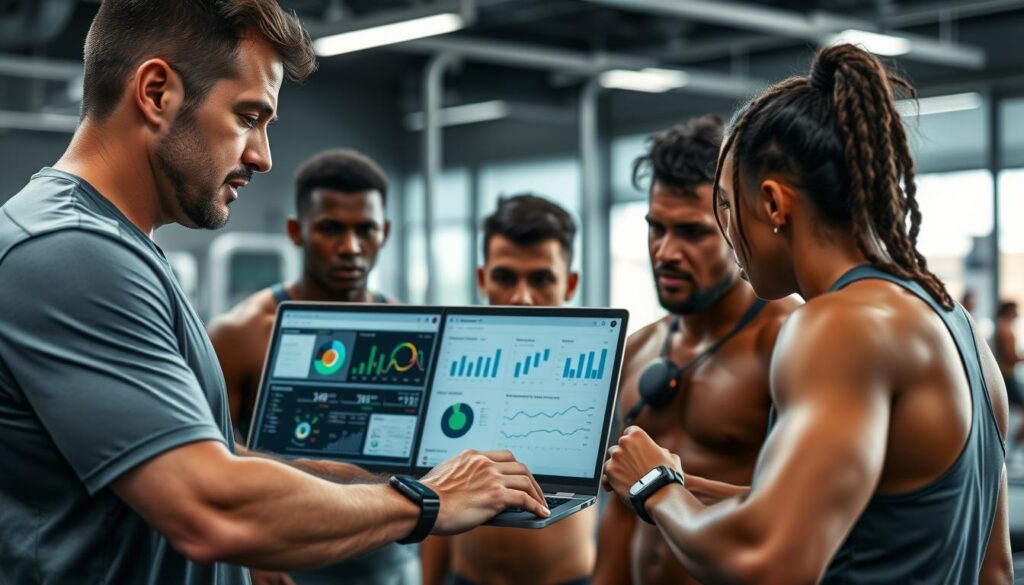
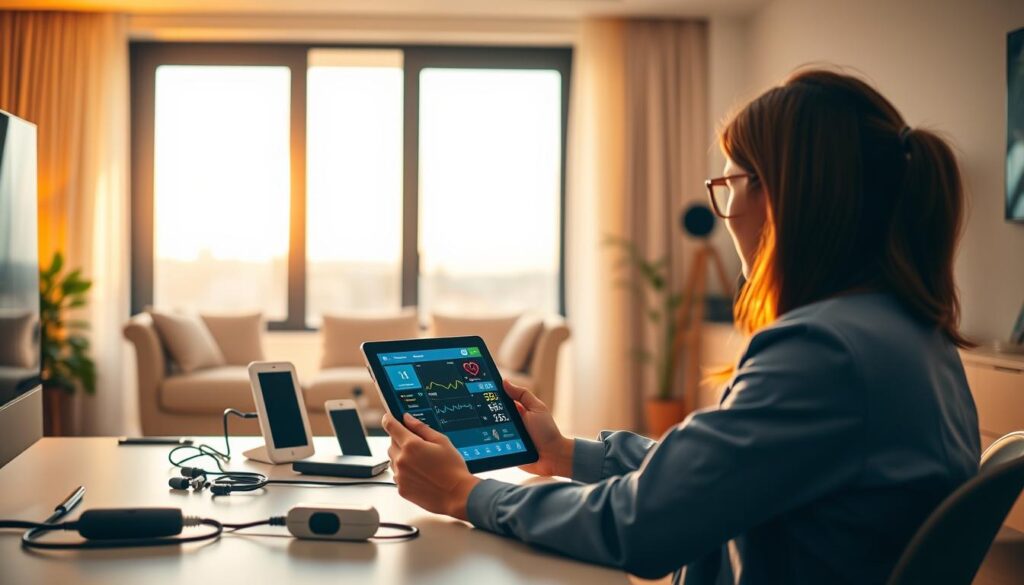
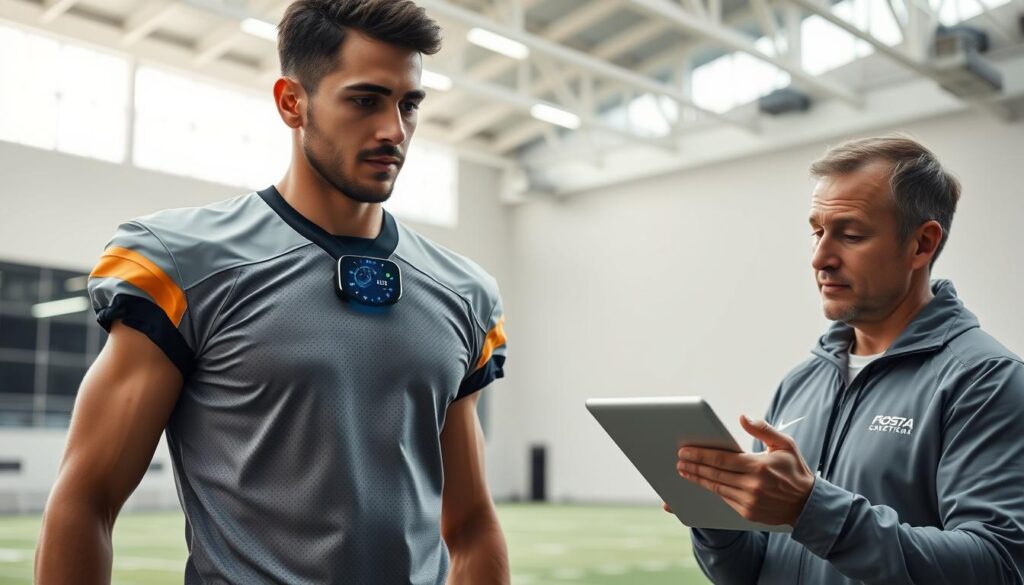
Imagine a coach at halftime tapping an app and seeing real-time workload and recovery for every player.

Last season a college runner shared how a simple wrist readout cut her injury risk and boosted race pace. That moment showed how connected wearables can turn raw sensor streams into coaching-grade insight.
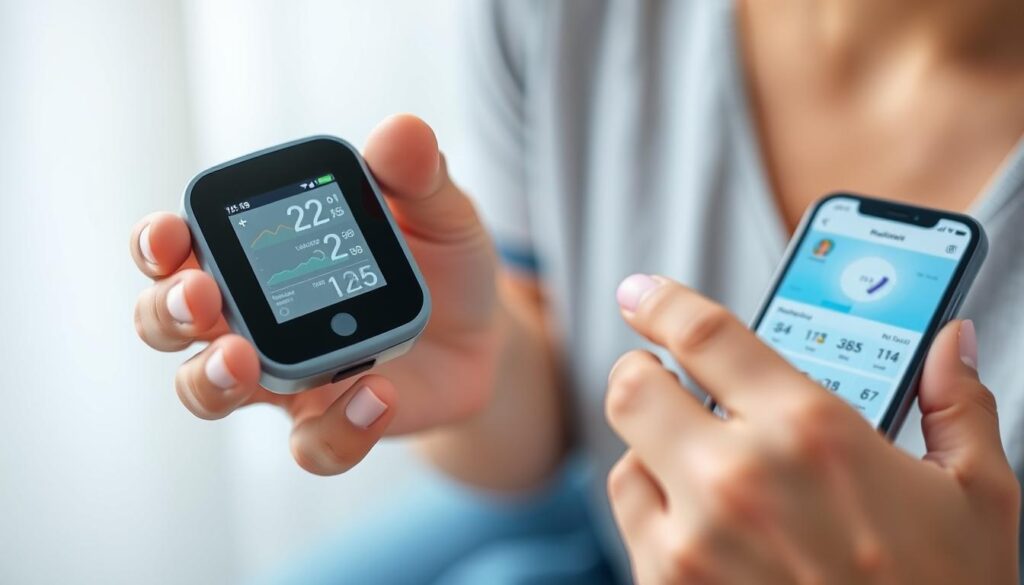
This Ultimate Guide will define an IoT fitness band, a wearable sports tracker, and a BLE athlete device. It will explain how BLE-centered links and edge-to-cloud analytics turn sensors into action during workouts.

Market momentum matters: forecasts show the wearables and iot market rising sharply through 2029. Whether you build hardware, pick SDKs, or plan a cloud pipeline, this guide bridges strategy and hands-on engineering.

Iottive is introduced as an end-to-end partner for BLE apps, cloud/mobile integration, and secure, scalable data systems. Contact: www.iottive.com | sales@iottive.com

Key Takeaways

  • Real-time insights come from fast connectivity, edge analytics, and clean data flows.
  • Market growth and shipment forecasts make now the time to invest in wearables.
  • The guide covers sensors, connectivity, AI coaching, security, and OTA reliability.
  • Examples like Apple Watch, WHOOP, and Garmin show real-world use cases.
  • Iottive offers practical help for apps, firmware, and cloud integration.

Why Wearable Sports Tech Matters Today

Real-time readouts are turning raw sensor output into actionable coaching advice.

User intent here is simple: learn how to plan, build, or integrate connected gear that improves performance, recovery, and safety.

User intent and what you’ll learn in this Ultimate Guide

This guide walks product leaders and engineers through market trends, sensor stacks, connectivity, edge/cloud pipelines, AI coaching, and coach-facing dashboards.

Outcomes include better training decisions, proactive recovery, in-session adjustments, and higher engagement in consumer fitness apps.

  • Clarify use cases and map metrics like heart rate, HRV, acceleration, and sleep to KPIs.
  • Choose the right category of devices, SDKs, and APIs to speed development and cut risk.
  • Address privacy, secure data flows, and OTA updates as core requirements.
Sector Example Use Key Benefit
Healthcare Remote patient monitoring Reduced readmissions
Retail & Logistics AR-assisted workflows, tap-to-pay Faster operations
Fitness industry Real-time coaching and recovery Improved performance

Iottive helps stakeholders prioritize features, define MVP scope, and design scalable app and cloud architecture aligned to measurable outcomes.

The Evolution and Market Momentum of Wearables and IoT

A decade ago step counts ruled; today sensors, edge AI, and cloud sync shape training decisions. The pace of change matters for product teams and brands planning scale.

From pedometers to AI-powered smart wearables

Early pedometers tracked steps. Modern sensor suites measure heart, motion, and sleep. On‑device processing now reduces latency and protects privacy while surfacing actionable guidance.

Key 2024–2025 stats: shipments, adoption, and trendlines

Market value is projected from $70.30B (2024) to $152.82B (2029). IDC reports ~538M shipments in 2024 with growth past 600M by 2028. The fitness tracker market alone was $55.5B in 2024 and may exceed $94B by 2027.

What rapid growth means for app builders and brands

Growth forces focus on interoperability, privacy, and OTA reliability to keep users engaged. Popular names like Apple Watch and Garmin set expectations for precision and battery life.

  • Broaden personas as rings, smart clothing, and AR expand the product set.
  • Prioritize flexible app architecture and measurable rollout metrics—active units, sync reliability, retention, and subscription conversion.
  • Take look at partnering with experienced IoT partners to speed development and avoid costly rewrites.

IoT fitness band, wearable sports tracker, BLE athlete device: Core Definitions

Choosing the right hardware begins with clear definitions of common product classes and their trade-offs. Each class targets different goals: long battery life, high-fidelity streams, or comfort for continuous wear. Iottive helps teams map those trade-offs to budget, roadmap, and KPIs.

  • IoT fitness band: A lightweight, sensor-focused piece built for long uptime and continuous monitoring of core metrics like heart rate and sleep. It favors battery life and simple sync intervals.
  • Wearable sports tracker: Multi-sensor hardware—wrist, chest, or apparel—that often adds GPS/ANT+, sport modes, and richer analytics for performance tracking.
  • BLE athlete device: A performance-grade Bluetooth Low Energy strap or pod made for low-latency, high-reliability streaming during sessions and matches.

Overlap and contrasts: All three capture biometrics and motion, but they differ in form factor, connectivity options (BLE, Wi‑Fi, 5G, LPWAN), SDK openness, and battery trade-offs. Examples include Oura Ring, WHOOP Strap, and medical products like FreeStyle Libre.

Mobile and cloud implications: Choice affects data models, sync cadence, storage policies, and compliance. Wellness-class products often use relaxed validation, while medical-grade offerings require strict integrity, testing, and regulatory controls.

Sensor Stack and Athlete Metrics That Matter

Good metric design starts with picking sensors that match the training question you want to answer.

Core biosensors capture physiology: optical heart rate for continuous pacing, HRV proxies for recovery, ECG for rhythm checks, SpO2 for oxygen saturation, body temperature trends, and respiration for load.

Motion and biomechanics

Accelerometers and gyroscopes map movement and form. GPS provides speed and distance outdoors. RFID offers low-latency position tracking indoors.

Linking metrics to outcomes

HRV guides recovery windows. Sleep quality affects next-day power and injury risk. Temperature shifts can flag illness or overtraining.

  • Sampling rates and on-device filtering matter during high movement; validation harnesses improve accuracy.
  • GPS trades range for latency; RFID gives precise indoor location with lower delay.
  • Fusing biometric and motion data raises confidence in load, fatigue, and injury estimates.

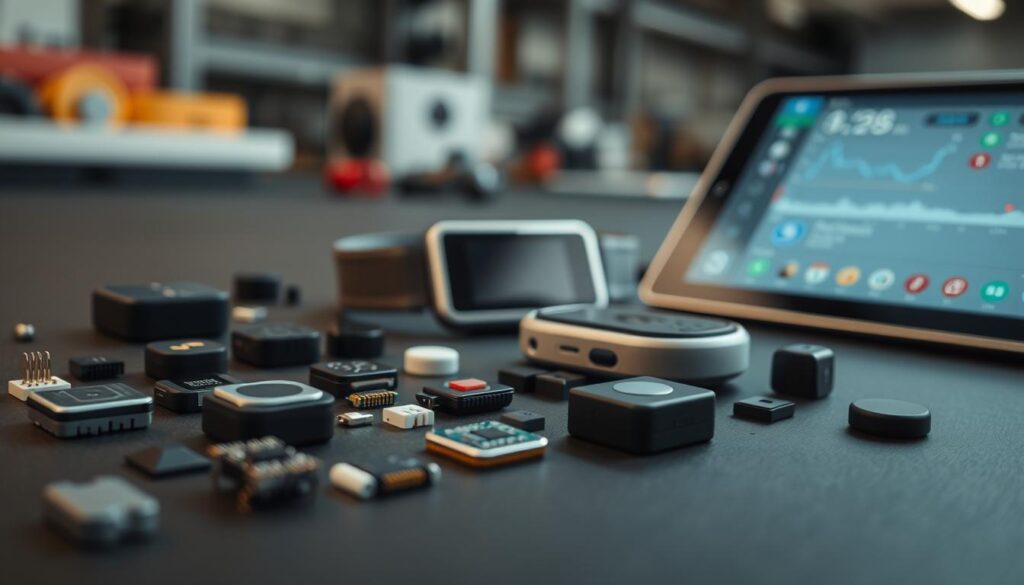
Consumer and medical products differ in calibration, accuracy targets, and regulatory controls. Iottive builds sensor integrations and validation harnesses to ensure metric accuracy across heart rate, HRV, SpO2, body temperature, respiration, GPS, and RFID.

Metric Typical Sensor Key Outcome
Heart rate Optical HR / ECG Intensity control, recovery pacing
HRV RR intervals from optical/ECG Daily recovery readiness
SpO2 Optical sensor Oxygen monitoring, altitude adaptation
Motion & biome Accel + gyro + GPS/RFID Form analysis, speed, and position
Sleep & temp Actigraphy + temp sensors Recovery tracking, illness detection

Connectivity Deep Dive: Why BLE Leads for Sports Wearables

Choosing the right radio and protocol decides whether real-time metrics reach a coach or die in a noisy arena.

Low-energy Bluetooth dominates because it balances power and throughput for continuous heart and motion streams. Many modern devices also include ANT+ for multi-sensor pairing and classic Bluetooth or Wi‑Fi for higher-bandwidth transfers like bulk sync or firmware updates.

Protocol trade-offs in real-world use

Compare options in practice:

Protocol Strength When to use
Low-energy Bluetooth Low power, good latency Real-time HR/IMU streaming, long sessions
Classic Bluetooth / Wi‑Fi High throughput Bulk sync, firmware downloads, cloud uploads
ANT+ Robust multi-sensor broadcast Broadcasting to head units and multiple receivers
LoRaWAN / LPWAN Long range, tiny payloads Endurance tracking, remote asset telemetry

Practical trade-offs for sessions and arenas

High sample rates for HR and IMU need more power. Tune sampling to the training question to preserve battery life.

In crowded RF environments, use adaptive retries, larger MTU sizes, and managed connection intervals to reduce packet loss.

“Reliable pairing and encrypted channels are non‑negotiable when personal health data flows in real time.”

OTA management matters: use staged rollouts over BLE and Wi‑Fi to limit field risk and ensure secure firmware updates.

Iottive optimizes connection intervals, MTU settings, and retry policies as part of multi-protocol development. That tuning balances latency, throughput, and battery so teams get consistent, secure data during training and matches.

From Device to Insight: Data Pipeline Architecture

A clear data pipeline turns raw telemetry into coach-ready insight in seconds. A robust flow maps sampling, preprocessing, transfer, and storage so teams get fast, reliable feedback during training.
On‑device processing, mobile app sync, and edge analytics

Run basic filtering and feature extraction on the hardware to cut bandwidth and latency. Send summarized packets to the app for buffering when the connection pauses.

Edge analytics handles immediate alerts and low-latency coaching cues. The mobile app can host heavier fusion work before cloud ingestion.

Cloud ingestion, secure data storage, and real-time dashboards

Ingest buffered streams into queues and store in time-series stores and feature repositories. Role-based dashboards show live metrics for coaches, players, and admins.

Encrypt in transit and at rest, tokenize sessions, and rotate keys to protect sensitive metrics. Iottive unifies cloud and mobile integration to deliver consistent models and scalable analytics.

OTA updates and firmware management for reliability

Use versioning, delta updates, staged rollouts, and Nordic DFU-style flows to reduce field risk. Plan rollbacks and monitor update success rates.

“Reliable OTA and strong encryption keep real-time streams trustworthy.”

  • Map end-to-end: sampling → preprocess → transfer → cloud ingestion.
  • Monitor sync success, crash reports, and degraded streams.
  • Design dashboards for low-latency monitoring and clear action cues.

AI and AIoT: Personalized Coaching and Injury Prevention

Personalized coaching is shifting from hindsight reports to moment-by-moment guidance. Iottive builds AIoT solutions that fuse heart, motion, and context to provide personalized recommendations and proactive risk alerts.

Adaptive training plans use HRV, heart rate, fatigue markers, and biomechanics to tune load per session. Models interpret HRV trends and motion signatures to suggest training intensity and rest windows.

Early warning and modeling

Impact sensors and IMU streams spot spikes that precede soft-tissue strain or concussion risk. Feature engineering extracts peak acceleration, load symmetry, and fatigue drift. Sleep and stress context raise prediction accuracy.

“Explainable models help coaches trust recommendations and act with confidence.”

  • Edge models for low latency; cloud for continual learning and model updates.
  • Fairness and transparency ensure outputs are explainable to users and coaches.
  • Mental health trends are flagged as guidance, not diagnosis, with recovery protocols suggested.
Capability Signal Benefit
Adaptive load HRV, HR Safer progression
Strain detection IMU peaks Early intervention
Readiness scoring Sleep + stress Better session timing

Iottive integrates these AI workflows into mobile and cloud apps with MLOps, monitoring, and secure updates for reliable production development.

Real-Time Game and Training Insights for Coaches and Teams

Coaches need crisp, live feeds to spot fatigue before a player slows down. Low-latency streams let staff act the moment a pattern emerges, not after the match ends.
Live speed, distance, acceleration, and load monitoring

GPS, RFID, and IMU streams combine to show speed, distance, acceleration, and player load. Sewn-in chips and team kits deliver position and peak‑g forces to coach dashboards in seconds.

In-session decisions: substitutions, tactics, and workload balance

Use these metrics to time subs, tweak press intensity, and balance minutes across lines. Clear thresholds and color coding make alerts glanceable during fast play.

  • Reliability: adaptive retries, antenna placement, and RF zoning reduce packet loss in crowded stadiums.
  • UI best practices: simple thresholds, big color cues, and one-tap actions for quick decisions.
  • Privacy: role-based access and consent frameworks keep medical data restricted to staff.
  • Post-session: export cleaned datasets and sync highlights with video review tools.

Resilience matters: offline caching and eventual sync prevent data loss during connectivity dips. Iottive builds low-latency pipelines and coach-facing apps that prioritize clarity and stable monitoring for real match use cases.

Sports Use Cases Across Levels: Pros, Colleges, and Everyday Athletes

From varsity fields to neighborhood tracks, connected tools are shaping training at every level. Pro leagues pair goal-line sensors and VAR to give referees fast, reliable evidence during high-pressure calls.

Colleges and academies use GPS vests and RFID tags to monitor load, speed, and positional work. Those programs focus on development and injury prevention with daily monitoring and tailored drills.

Consumers rely on rings, smart watches, and bands for health monitoring and daily goals. Products like Apple Watch and Samsung Galaxy Watch offer ECG, SpO2, and GPS. Oura and WHOOP emphasize sleep and recovery, while medical wearables such as FreeStyle Libre and Zio Patch support continuous clinical monitoring.

Integration notes: SDKs from Apple, Garmin, and others shape app strategies. Wellness apps should avoid medical claims unless cleared by regulators.

  • Grassroots access improves equity — affordable trackers bring pro-level insights to more users.
  • Pick hardware by sport, age, and competition level: GPS for outdoor team play, IMU for form, rings for sleep focus.
  • Iottive unifies diverse ecosystems into consistent, scalable apps across pro, college, and consumer tiers.
Level Common Tools Primary Benefit
Professional Goal-line, VAR, GPS vests Accurate officiating and tactical choices
College/Academy GPS vests, RFID, IMU Development insights, injury prevention
Consumer Rings, watches, bands, medical devices Daily health monitoring and recovery

Designing the Companion Mobile App Experience

A focused mobile interface helps users glance at readiness and sleep quality without confusion. The companion app should surface key metrics fast and teach what each one means.
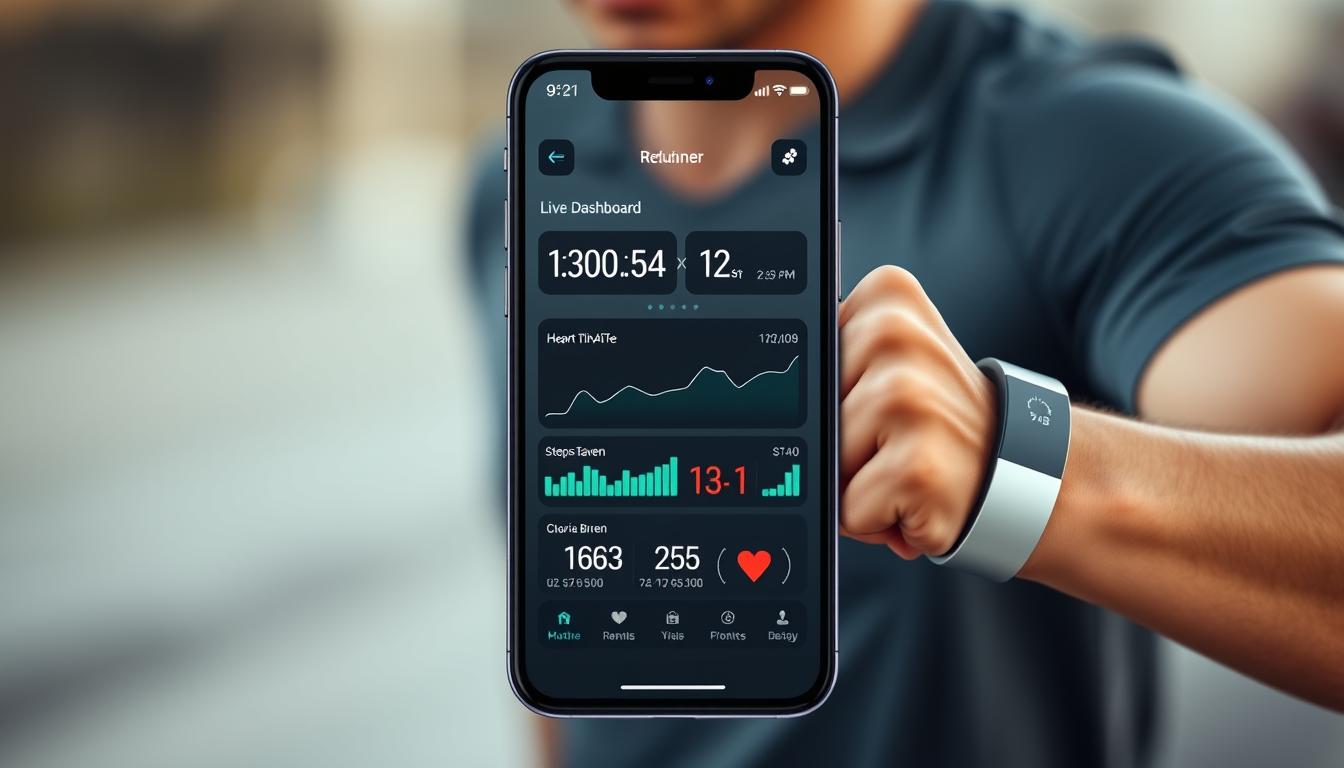
Visualizing heart rate, sleep, and training load simply

Show a clear timeline for data heart signals and HRV. Use compact charts for short sessions and exploded views for deep dives.

Keep color, labels, and one-tap tooltips so users interpret sleep quality and load quickly.

Gamification, community, and privacy-first UX

Engagement features like streaks, badges, and leaderboards boost retention. Social feeds and challenges encourage referrals.

Pair those with granular consent screens, easy sharing controls, and simple deletion options to protect user trust.

“Design for quick decisions, clear consent, and gradual learning — users will stick with what feels fair and helpful.”

  • Onboarding: auto-calibrate sensors, set baselines, and tailor goals with minimal steps.
  • Accessibility: high contrast, scalable text, and voice support for inclusive use.
  • Notifications: action-driven prompts, limited frequency, and smart quiet hours.
  • Modular architecture: iterate on features and experiments without heavy rewrites.
Feature Benefit Example Pattern
Heart & HRV view Instant intensity cues Mini timeline + peak markers
Sleep quality card Better recovery decisions Score + actionable tips
Community challenges Higher retention Weekly goals + leaderboards

Security, Privacy, and Compliance in Wearable Data

Protecting personal telemetry starts with simple, enforced controls across transport, storage, and admin tools. Sensitive health streams demand layered defenses from the sensor link to cloud analytics.

Encryption, key management, and access control

Encrypt in transit and at rest using TLS 1.2+/AES-256. For transport over short-range radios, use authenticated pairing and session keys.

Rotate keys, enforce HSM-backed key storage, and require MFA for admin consoles. Role-based access limits who can view raw health records.

Minimization, anonymization, and consent

Store only needed metrics and use deterministic or differential anonymization for analytics. Keep raw PHI separate and tokenized for lookup only when required.

Design consent flows, parental controls, and easy deletion to honor data subject rights under CCPA and similar laws.

“Security-by-design and periodic penetration testing make data protections real, not just policy.”

Control Best Practice Benefit
Transport encryption TLS / Authenticated session keys Protects streams in transit
Data storage AES-256 + tokenization Limits exposure of PII
Admin access MFA + RBAC + audit logs Prevents insider misuse
Compliance HIPAA & CCPA alignment Reduces legal risk

Iottive implements encryption, anonymization, role-based access, and compliance-ready architectures for both medical devices and wellness products. We run vendor due diligence, build incident response playbooks, and provide breach notification support to keep teams and users safe.

Building Your Wearable Solution: Development Roadmap

Begin by mapping the coach and player journeys, then convert those flows into clear success metrics. Use a short discovery sprint to define target personas, priority use cases, and the minimal set of metrics that prove value.
Discovery, selection, and early planning

Identify which equipment and devices meet your use cases. Score options by accuracy, battery life, SDK maturity, and integration cost.

Deliverables: persona maps, success KPIs, chosen device category, and an MVP scope for app development.

Multi-platform SDK and API strategy

Evaluate third-party SDKs, prefer those with clear docs and stable APIs. Abstract raw streams to a common schema to handle fragmentation across vendors.

Integration patterns and connectivity resilience

Design GATT profiles for compact telemetry and retries for intermittent links. Buffer and sync logic in the app avoids data loss during short dropouts.

QA, release engineering, and cloud scale

Test metric accuracy, end-to-end latency, and battery under real sessions. Build OTA firmware pipelines, mobile CI/CD, and staged rollouts to reduce field risk.

Phase Primary Outcome Key Checks
Discovery Validated use cases & KPIs Persona tests, success metrics
Integration Stable multi-vendor sync SDK evaluation, schema mapping
QA & Release Reliable in-field behavior Accuracy tests, latency profiling, OTA success rate
Scale & Governance Secure, real-time analytics Schemas, retention, lineage, RBAC

Data governance matters: define schemas, retention, and lineage early to support both real-time and batch analytics. Decide which ML features to build and which to license.

“Ship small, measure fast, and iterate on metrics that drive behavior.”

Iottive offers end-to-end support—from discovery and device selection to SDK/API integration, QA, and scalable cloud analytics—to keep development on schedule and aligned to measurable outcomes.

Monetization and Business Models in Fitness Wearables

Turning sensor streams into steady income starts with a simple value ladder. Offer clear, incremental value so users upgrade when benefits are obvious.

Subscriptions, AI coaching, and B2B partnerships

Subscription tiers work well: free basic metrics, mid-tier recovery insights, and premium AI coaching plus team dashboards.

Positioning tip: sell outcomes — better recovery, lower injury risk, and time saved for coaches.

  • License dashboards to teams, insurers, or gyms for stable B2B revenue.
  • Offer data-driven services like benchmarking and predictive maintenance for gym equipment.
  • Bundle hardware with retail partners or employer wellness programs to widen reach.

“Monetization must map to measurable user value and easy upgrade paths.”

Model Offer Success Metric
Subscription Recovery + AI coaching ARPU, churn
B2B licensing Team dashboards LTV, contract value
Data services Benchmarking engagement, referrals

Common hurdles include development costs, privacy compliance, SDK fragmentation, and battery limits. Mitigate these with staged rollouts, strong encryption, API standardization, and careful app development.

Iottive helps teams design pricing experiments, instrument analytics, and attribute revenue to features so product and business decisions stay aligned with real user outcomes in the fitness industry.

Interoperability, Device Fragmentation, and Vendor Lock-In

When products speak different protocols, a clear abstraction layer keeps feature velocity high.

Fragmentation comes from varied radios, SDK quality, firmware cadence, and inconsistent data schemas. Left unchecked, this raises integration costs and risks long-term lock-in.
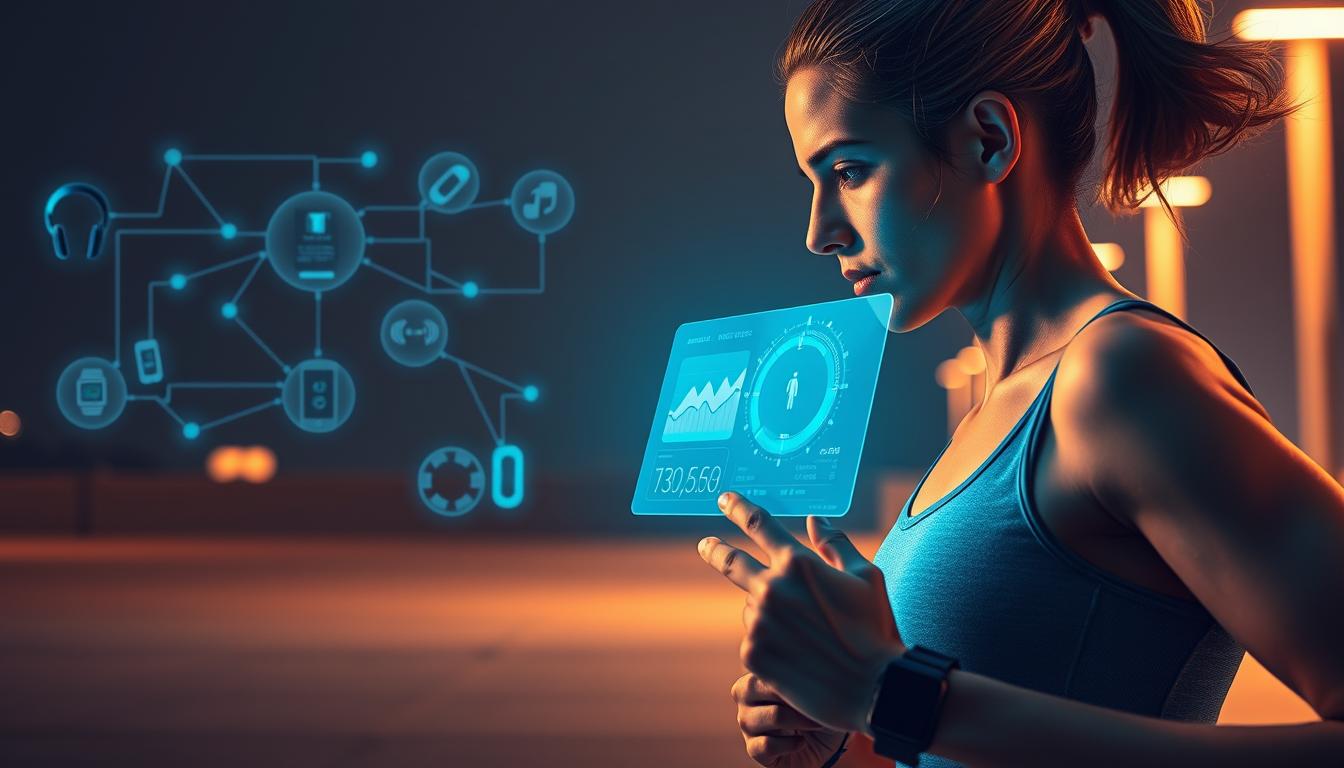
Best practices to future-proof your stack

API-first design and modular adapters make onboarding new products fast. Normalize incoming streams so analytics and the app see a single schema.

  • Map fragmentation sources: protocols, SDKs, firmware schedules, and schemas.
  • Use versioned contracts and tolerant parsers to allow schema evolution without breaking reports.
  • Favor open standards and document fallbacks for proprietary constraints.
  • Run contract tests and vendor monitoring to catch regressions early.
  • Procure with portability clauses to avoid single-vendor reliance and protect data access.

Iottive implements abstraction layers and adapter patterns that let teams support heterogeneous fleets while keeping development pace steady. Roadmaps stay flexible to add rings, smart clothing, or other emerging categories without rework.

“Design for many vendors, not just one — it saves time and protects value.”

Trends to Watch: Smart Clothing, Rings, AR/VR, and Beyond

New form factors—textile sensors, discreet rings, and head-mounted AR—are expanding where and how we capture meaningful body signals. These shifts will change coaching, recovery, and daily monitoring across the fitness industry.

Where the industry is headed next

Smart clothing now captures posture, muscle activation, and form for coaching-grade feedback. Smart rings continue to gain adoption because they work 24/7 and excel at sleep and readiness signals.

AR glasses and VR platforms create guided form correction and immersive classes. These interfaces lift home engagement and add new training contexts for coaches and users.

  • Sensor miniaturization and battery advances let sensors move to new wear locations with better comfort.
  • On‑device AI reduces reliance on connectivity and makes real‑time guidance more reliable.
  • Privacy expectations rise as always-on wearables enter more life contexts.

Integration tips: add new categories with adapter layers, normalize schemas, and validate SDK maturity before wide rollout. Iottive evaluates vendor SDKs, roadmap fit, and total cost of ownership to help teams adopt smart apparel, rings, AR/VR, and other emerging devices without refactoring core systems.

Why Iottive: End-to-End IoT, AIoT, and BLE App Development for Sports

From prototype to global rollout, Iottive guides teams through product development that connects sensors, apps, and cloud analytics. We focus on practical outcomes: reliable telemetry, clear dashboards, and secure data flows for coaches and users.

Our expertise: IoT & AIoT solutions, BLE apps, cloud & mobile integration

Core strengths: BLE app development, multi‑device SDK integrations, and scalable cloud data pipelines that feed real‑time dashboards.

We build OTA firmware pipelines (Nordic DFU patterns), web BLE integrations, and MLOps for AI‑driven personalization.

Industries served and how we deliver secure, real-time data products

We serve Healthcare, Automotive, Smart Home, Consumer Electronics, and Industrial sectors. Our teams ship secure, compliant platforms with encryption, RBAC, and privacy‑first UX.

QA & field testing: sensor accuracy, latency profiling, and battery endurance under real training conditions ensure products work at scale.

Contact

Engagement models: discovery and rapid prototyping, pilot deployments, then global scale‑out with ongoing support.

“Validate your roadmap, scope an MVP, or scale existing products with a partner who knows end‑to‑end integration.”

Get in touch:www.iottive.com | sales@iottive.com

Conclusion

When telemetry is reliable and fast, training choices shift from guesswork to evidence. Clear, timely data helps coaches, players, and staff see readiness, load, and recovery in the moment.

Recap: sensors, low-latency connectivity, and edge-to-cloud pipelines turn signals into real-time performance insight. The benefits iot shows across pro, college, and consumer fitness include better training decisions, faster recovery plans, and safer play. Iottive supports end-to-end delivery of secure, real-time products.

Take a look at interoperability to avoid vendor lock-in as new devices and technology arrive. Prioritize privacy-first UX, strong encryption, compliance readiness, and robust OTA management. Define top use cases and success metrics before choosing SDKs.

Business models like subscriptions, AI coaching, and B2B services sustain growth when backed by accurate, timely analytics. Contact Iottive for a discovery session and technical assessment: www.iottive.com | sales@iottive.com.

FAQ

What metrics do modern wearables track for sports and health?

Modern trackers capture heart rate, heart rate variability (HRV), ECG, SpO2, skin temperature, and respiration. They also record motion data with accelerometers and gyroscopes, GPS for speed and distance, and sleep stages to assess recovery. These signals help coaches and users monitor training load, fatigue, and overall well‑being in real time.

How does Bluetooth Low Energy compare to Wi‑Fi or ANT+ for real‑time sports use?

Bluetooth Low Energy (BLE) balances low power draw with sufficient data throughput and device compatibility, making it ideal for continuous heart rate and sensor sync during activity. Wi‑Fi offers higher bandwidth but drains batteries faster. ANT+ is reliable for some sports sensors but has narrower ecosystem support. BLE’s ubiquity in phones and companion apps is a major advantage.

How accurate are heart rate and HRV readings from wrist sensors?

Optical heart rate sensors perform well for steady-state exercise and daily monitoring but may lose accuracy during very high‑intensity, rapid wrist movement. Chest straps and ECG-capable wearables deliver higher precision. For HRV, on-wrist readings are useful for trends and recovery guidance, while clinical-grade ECG remains the gold standard for diagnostics.

Can these systems provide real‑time coaching and injury risk alerts?

Yes. With on‑device processing and edge analytics, systems can deliver adaptive training cues and flag early signs of injury risk using patterns in HRV, load, and biomechanical data. AI models analyze trends and trigger alerts or modified plans in the companion mobile app for coaches and athletes.

What is the typical data flow from sensor to dashboard?

Data usually flows from the sensor to a paired smartphone via BLE, where initial processing and buffering occur. The app syncs with cloud services for further analytics, long‑term storage, and dashboard visualization. Secure APIs enable real‑time dashboards for teams and OTA updates to manage firmware.

How is user data secured and what compliance should I consider?

Secure implementations use encryption in transit (TLS) and at rest, role‑based access control, and anonymization for analytics. For medical or quasi‑medical features, HIPAA and local privacy laws like CCPA must be considered. Regular audits and strong key management reduce breach risk.

What are best practices to maximize battery life without losing essential data?

Balance sampling rates and on‑device processing: perform initial feature extraction on the sensor, batch sync to the phone, and use event‑driven high‑rate sampling only when needed. Optimize BLE connection intervals and enable adaptive sensing profiles for different activity modes.

How can app builders support multiple vendor products and avoid lock‑in?

Use vendor SDKs and open standards where possible, design a modular SDK/API layer, and implement a device abstraction that normalizes sensor outputs. This lets you add new hardware without heavy rework and reduces vendor dependency over time.

Are these wearables suitable for clinical monitoring or medical use?

Many consumer products provide wellness insights but are not medical devices. For clinical use, choose FDA‑cleared or CE‑marked hardware and follow regulatory requirements for data handling, validation, and reporting. Medical deployments usually require stricter accuracy, documentation, and privacy controls.

What analytics and AI features deliver the most value to athletes and teams?

Useful features include personalized training plans based on HRV and recovery, fatigue prediction, workload balancing, and biomechanical risk detection. Visual dashboards with live metrics like speed, acceleration, and load help coaches make in‑session decisions and substitutions.

How do you validate sensor accuracy and system latency before launch?

Conduct lab and field tests comparing sensors to reference instruments (ECG, spirometers, motion capture). Measure end‑to‑end latency from sensing to dashboard and test across network conditions. Run user trials to evaluate real‑world performance and battery impact.

What monetization models work best for companion apps?

Successful models include subscription tiers for advanced coaching, paywalled analytics dashboards for teams, one‑time hardware bundles with premium app features, and B2B partnerships with clubs or health providers. Data‑driven services and AI coaching often drive recurring revenue.

How can developers ensure good UX for visualizing heart rate and sleep data?

Prioritize clear, concise visuals with trend indicators and actionable advice. Use color and simple thresholds to show zones (rest, aerobic, peak). Offer summaries and deep dives, let users customize goals, and keep privacy settings prominent and easy to manage.

What trends should product teams watch for in the next 2–3 years?

Expect growth in smart clothing and rings, tighter AR/VR integrations, improved on‑device AI for faster insights, and broader interoperability standards. Advances in low‑power sensors and biometric accuracy will expand use cases for both elite sports and everyday wellness.
Let’s Get Started

From Data to Action: How IoT & AI Prevent Athlete Injuries

Nearly 50% of professional athletes suffer from injuries that could be prevented with better monitoring and early detection. The NFL’s innovative “Digital Athlete” program, powered by data and AI, is a pioneering example of how technology can help prevent injuries. Traditional methods, such as stretching and warm-ups, are still essential, but they don’t address the data-driven needs of today’s athletes.

sports health tracker

The integration of IoT technology and AI is revolutionizing injury prevention in sports through real-time data collection and analysis. Wearable technology provides unprecedented insights into athlete health and performance, enabling coaches and athletes to make proactive health decisions.

Key Takeaways

  • The use of IoT and AI in sports medicine is transforming athlete safety and performance outcomes.
  • Real-time data collection and analysis are crucial for preventing injuries.
  • Wearable technology provides valuable insights into athlete health and performance.
  • Proactive prevention is becoming increasingly important in modern sports.
  • The NFL’s “Digital Athlete” program is a pioneering example of injury prediction technology.

The Rising Epidemic of Sports Injuries

The sports world is witnessing an alarming rise in injuries, threatening the careers of athletes across various disciplines. This surge in injuries not only affects athletes’ performance but also has significant financial implications for sports organizations.

The need for effective prevention and monitoring strategies has become more pressing than ever. By leveraging wearables and advanced data analytics, teams can now adopt a proactive approach to managing athlete health.

Current Statistics and Impact on Athletic Careers

Recent statistics reveal a disturbing trend in sports injuries, with many athletes facing career-threatening conditions. The impact on their careers is significant, often resulting in lost playing time, decreased performance, and in severe cases, premature retirement. Data analysis plays a crucial role in understanding these trends and identifying potential risk factors.

By examining patterns in injury data, sports medicine professionals can develop targeted interventions to mitigate risks and improve athlete health.

The Shift from Reactive to Proactive Injury Management

The traditional reactive approach to sports injuries is giving way to a more proactive strategy, driven by advancements in technology. Continuous monitoring through wearables enables the collection of real-time data on athlete biometrics and kinematics, allowing for early detection of potential issues.

  • Continuous monitoring enables the early detection of potential issues, reducing the risk of severe injuries.
  • Data-driven insights facilitate informed decision-making regarding athlete training and recovery protocols.
  • The proactive approach not only prevents injuries but also optimizes athlete performance and extends their careers.

Understanding IoT Athlete Monitoring Systems

IoT athlete monitoring systems represent a significant advancement in sports medicine, offering real-time insights into athlete health and performance. These systems leverage wearable technology to track various physiological and biomechanical parameters, enabling coaches and trainers to make data-driven decisions.

Wearable Sensor Technology in Sports

Wearable sensor technology has become increasingly prevalent in sports, allowing for the collection of detailed physiological data during training and competition. This technology enables the monitoring of athletes’ vital signs and movement patterns in real-time.

Types of Biometric Data Collected

IoT wearables can collect a wide range of biometric data, including heart rate, body temperature, and muscle fatigue indicators. This information is crucial for understanding an athlete’s physical state and identifying potential injury risks.

Real-Time Monitoring vs. Traditional Assessment Methods

Traditional assessment methods, such as periodic physicals and fitness tests, have limitations in capturing an athlete’s condition during intense training or competition. In contrast, real-time monitoring through IoT devices provides immediate feedback, allowing for instant adjustments to training intensity or recovery protocols. This continuous data collection creates comprehensive athlete profiles, revealing patterns and trends that periodic assessments may miss, ultimately enhancing injury prevention and optimizing performance.

The Science Behind AI Injury Prediction

Athlete monitoring and injury prevention with IoT and AI

By leveraging machine learning algorithms, AI systems can now predict injuries with remarkable accuracy. This capability is revolutionizing the field of sports medicine, enabling teams to take proactive measures to prevent injuries to their athletes.

How Machine Learning Algorithms Detect Injury Risk Patterns

Machine learning algorithms are at the heart of AI injury prediction systems. These algorithms analyze vast amounts of data to identify patterns that may indicate a heightened risk of injury. By processing information on athletes‘ past injuries, training regimens, and biomechanical data, AI can forecast potential injuries before they occur.

Predictive Analytics and Biomechanical Assessment

Predictive analytics combines historical and real-time data to predict future outcomes. In the context of sports injuries, this involves assessing an athlete’s biomechanics, such as movement patterns and physical condition, to identify potential risks. This technology enables coaches and trainers to adjust training programs to mitigate these risks.

Case Study: The NFL’s “Digital Athlete” Program

The NFL’s “Digital Athlete” program is a groundbreaking initiative that utilizes AI and IoT technology to predict and prevent injuries. By integrating impact sensors into helmets and leveraging advanced AI analytics, the program creates digital models of players to assess injury risk. This program demonstrates the practical application of AI injury prevention in one of the world’s most physically demanding sports.

The use of AI in injury prevention is transforming how teams manage player safety and performance. As this technology continues to evolve, it is likely to have a significant impact on the future of sports medicine.

Critical Metrics for Injury Prevention

Effective injury prevention in sports requires a multifaceted approach that incorporates various critical metrics. By monitoring and analyzing these metrics, coaches and trainers can identify potential risks and take proactive measures to prevent injuries.

Heart Rate Variability (HRV) and Recovery Status

Heart Rate Variability (HRV) is a crucial indicator of an athlete’s recovery status. HRV measures the variation in time between heartbeats, providing insights into the autonomic nervous system’s balance. A lower HRV may indicate fatigue or stress, suggesting that an athlete needs rest. By monitoring HRV, coaches can adjust training programs to ensure adequate recovery and prevent overtraining.

Movement Pattern Analysis and Biomechanical Imbalances

Movement pattern analysis is vital for identifying biomechanical imbalances that could lead to injury. IoT wearables and AI-powered systems can analyze an athlete’s movement patterns, detecting anomalies that may indicate potential issues. For instance, abnormal running mechanics can lead to overuse injuries if not addressed. By correcting these imbalances through targeted training, athletes can reduce their risk of injury.

Training Load Management and Fatigue Indicators

Training load management is critical for preventing fatigue-related injuries. IoT devices can track various fatigue indicators, such as elevated resting heart rate and decreased power output. By analyzing these metrics, coaches can determine when athletes are approaching overtraining and adjust their training loads accordingly. Proper training load management ensures that athletes can perform at their best while minimizing the risk of injury.

Metric Description Importance
HRV Measures the variation in time between heartbeats Indicates recovery status and fatigue levels
Movement Pattern Analysis Analyzes an athlete’s movement patterns to detect biomechanical imbalances Helps prevent injuries by identifying potential issues
Training Load Management Monitors and adjusts training loads to prevent overtraining Crucial for maintaining athlete performance and preventing fatigue-related injuries

Injury Prevention Metrics

Mobile Recovery Trackers: Bridging the Gap Between Data and Action

The integration of mobile technology in sports has given rise to innovative recovery tracking solutions that are revolutionizing athlete care. Mobile recovery trackers are designed to provide athletes and coaches with real-time data and insights, enabling them to make informed decisions about recovery protocols.

Features of Effective Recovery Applications

Effective recovery applications offer a range of features, including personalized recovery plans, real-time monitoring, and data analytics. These features enable athletes to track their progress and make adjustments as needed. At Iottive, we specialize in Mobile App Development and Cloud & Mobile Integration, creating solutions that connect wearable devices with user-friendly mobile applications for effective health monitoring and recovery tracking.

Personalized Recovery Protocols Through Mobile Platforms

Mobile recovery trackers allow for the creation of personalized recovery protocols tailored to individual athletes’ needs. By analyzing data from wearable devices and other sources, these platforms provide coaches and medical staff with valuable insights to inform their decisions. The NBA, for example, uses wearable devices from Catapult Sports to track player load, movement, and fatigue levels, helping teams identify when players are at risk of injury.

Integration with Team Management Systems

Mobile recovery trackers can be integrated with broader team management systems, providing coaches and medical staff with comprehensive athlete monitoring capabilities. This integration enables coordinated approaches to athlete management, facilitating communication between athletes, coaches, medical staff, and strength and conditioning specialists. By leveraging these integrated systems, teams can make data-driven decisions at both individual and team levels, optimizing training plans and recovery strategies.

Implementing a Data-Driven Injury Prevention Program

The key to successful injury prevention lies in implementing a data-driven program that combines cutting-edge technology with expert knowledge. By leveraging IoT and AI technologies, sports teams can gain valuable insights into athlete health and performance.

Building the Technology Infrastructure

A robust technology infrastructure is essential for a data-driven injury prevention program. This includes wearable sensor technology and data analytics platforms that can collect and process large amounts of data. Companies like Iottive specialize in custom IoT products and end-to-end IoT/AIoT/smart solutions, helping organizations build the necessary infrastructure.

data-driven injury prevention

Establishing Baseline Measurements and Individual Profiles

To effectively prevent injuries, it’s crucial to establish baseline measurements and individual profiles for each athlete. This involves collecting data on various biometric markers, such as heart rate variability and training load. By analyzing this data, coaches and trainers can identify potential risk factors and develop targeted interventions.

Creating Intervention Protocols Based on Data Triggers

Effective intervention protocols are critical to preventing injuries. These protocols should be triggered by specific data patterns or threshold breaches in athlete monitoring systems. For example, if an athlete’s heart rate variability falls below a certain threshold, the protocol might include modifying their training regimen or initiating recovery protocols. By having clear communication channels and responsibility assignments, teams can respond promptly and effectively to potential injury risks.

  • Develop intervention protocols based on data triggers and research evidence.
  • Establish clear communication channels and responsibility assignments.
  • Continuously monitor and adjust protocols to optimize injury prevention.

Real-World Success Stories: Teams and Athletes Transformed by Technology

Technology is transforming the sports landscape, with numerous teams and athletes benefiting from advanced injury prevention systems. By leveraging IoT athlete monitoring and AI-driven analytics, sports organizations can now proactively manage athlete health.

Professional Sports Organizations Leading the Way

Professional sports teams have been at the forefront of adopting innovative technologies to enhance athlete safety. For instance, the NFL’s “Digital Athlete” program uses AI and machine learning to predict and prevent injuries. This has led to a significant reduction in injury rates among participating athletes.

Team Technology Used Outcome
NFL Teams AI-driven injury prediction Reduced injury rates
NBA Teams Wearable sensor technology Improved player availability

Collegiate and Amateur Athletics Applications

The benefits of injury prevention technology are not limited to professional sports. Collegiate and amateur athletic programs are also adopting these innovations to protect their athletes. AI-based solutions, such as telemedicine and wearable technologies, are making comprehensive injury evaluation and rehabilitation programs more accessible.

injury prevention technology

By implementing data-driven injury prevention programs, coaches can make informed decisions to safeguard athlete health and optimize performance. As the technology continues to evolve, we can expect to see even more effective applications in the future.

Conclusion: The Future of Sports Medicine in the Age of Data

The integration of IoT and AI in sports medicine is revolutionizing athlete care by providing data-driven approaches to injury prevention. As technology evolves, we can expect more advanced sensors and AI-driven models that offer real-time injury predictions and personalized training plans. Future wearables will track key data like muscle fatigue and joint stress, enabling coaches to make proactive adjustments to prevent injury. With these innovations, IoT will play a crucial role in keeping athletes safer, improving performance, and extending careers. Iottive is positioned to help organizations implement cutting-edge IoT and AI solutions for athlete monitoring and injury prevention, enhancing overall health and sports performance.

The future of sports medicine looks promising with the continued adoption of these technologies across all levels of sport, creating a safer and more sustainable sporting environment.

FAQ

How does heart rate variability (HRV) impact injury prevention in sports?

Heart rate variability is a critical metric for assessing an athlete’s recovery status and readiness to train. By analyzing HRV, coaches and trainers can adjust training loads to prevent overtraining and reduce the risk of injuries.

What is the role of wearable sensor technology in athlete monitoring?

Wearable sensors track various biometric data, including heart rate, movement patterns, and muscle fatigue. This information enables coaches to identify potential injury risks and develop targeted interventions to mitigate them.

How do machine learning algorithms detect injury risk patterns?

By analyzing large datasets, machine learning algorithms can identify complex patterns and anomalies in biometric data that may indicate an increased risk of injury. This enables coaches and trainers to take proactive measures to prevent injuries.

What are the benefits of using mobile recovery trackers for athletes?

Mobile recovery trackers provide athletes with personalized recovery protocols and real-time feedback on their progress. This helps athletes optimize their recovery, reduce the risk of injuries, and improve overall performance.

How can training load management help prevent injuries?

By analyzing training load data, coaches can identify athletes who are at risk of overtraining and adjust their training programs accordingly. This helps prevent injuries and ensures that athletes are adequately prepared for competition.

What is the significance of biomechanical assessment in injury prevention?

Biomechanical assessment helps identify movement patterns and imbalances that may contribute to injury risk. By addressing these issues through targeted interventions, coaches and trainers can reduce the risk of injuries and improve overall athlete health.

Let’s Get Started


Best Wearables to Prevent Player Injuries and Monitor Health

Professional athletes are no strangers to the risk of injury, with nearly 50% suffering from preventable harm. The sports industry is turning to wearable technology to address this issue, leveraging monitoring and data analysis to enhance player safety. Companies like Iottive, a trusted IoT and AIoT development firm, are at the forefront of this innovation.

wearable injury tracker, AI fatigue monitor, IoT health analytics

By utilizing sensors and real-time data transmission, these devices enable coaches and trainers to make informed decisions about training loads and recovery protocols, ultimately reducing the risk of fatigue-related injuries. As the sports industry continues to adopt these cutting-edge technologies, the potential for improved athlete safety and performance grows.

Key Takeaways

  • Wearable technology is revolutionizing athlete monitoring and injury prevention.
  • Nearly 50% of professional athlete injuries can be prevented with proper monitoring.
  • Real-time data transmission enables informed decisions about training and recovery.
  • Iottive is a leading developer of IoT and AIoT solutions for sports safety.
  • Smart devices are transforming athlete health monitoring and safety protocols.

The Growing Problem of Sports Injuries

As sports continue to push the boundaries of human performance, the incidence of injuries has emerged as a critical issue that demands attention. The dynamic nature of athletic performance requires more than traditional methods of injury prevention; it necessitates a data-driven approach to athlete health management.

Statistics on Sports-Related Injuries

Sports-related injuries are a significant concern, with millions of athletes suffering from various types of injuries each year. According to recent statistics, the rate of injuries in sports remains alarmingly high.

Sport Injury Rate per 1,000 Athletes
Football 4.84
Basketball 3.59
Soccer 2.51

The statistics underscore the need for effective injury prevention strategies. Monitoring athlete health and detecting early signs of fatigue can play a crucial role in reducing injury rates.

The Physical and Financial Impact of Injuries

Sports injuries not only have a physical impact on athletes but also significant financial implications for sports organizations and healthcare systems. The cost of treating sports injuries runs into billions of dollars annually.

Injuries can lead to prolonged periods of recovery, affecting an athlete’s career longevity and overall performance. Moreover, the financial burden of medical treatments and rehabilitation can be substantial.

The Need for Preventive Measures

Traditional injury prevention methods, such as stretching and warm-ups, are essential but insufficient for today’s athletes. There is a growing need for preventive measures that can identify risk factors before they result in injuries.

Data-driven preventive measures, including monitoring and detection technologies, can help in providing personalized interventions. These methods can improve safety and reduce the incidence of injuries, ultimately enhancing athlete welfare and performance consistency.

By adopting advanced preventive measures, sports organizations can not only improve athlete health but also reduce healthcare costs associated with injury treatments. The use of wearable technology represents a significant step forward in this direction.

Understanding IoT Technology in Sports

The Internet of Things (IoT) is revolutionizing the sports industry by providing real-time data and insights that help prevent injuries and improve athlete performance. IoT refers to the network of physical objects—devices, sensors, and wearables—that connect to the internet and exchange data. In sports, IoT-enabled devices are integrated with sensors that collect and transmit real-time data to coaches, trainers, and athletes themselves.

What is IoT and How Does It Work?

IoT technology involves the use of sensors and devices that collect and transmit data over the internet. In the context of sports, these devices can be worn by athletes or integrated into their equipment. The data collected can include various physiological and performance metrics, such as heart rate, speed, and movement patterns. This information is then analyzed to provide insights into athlete performance and health.

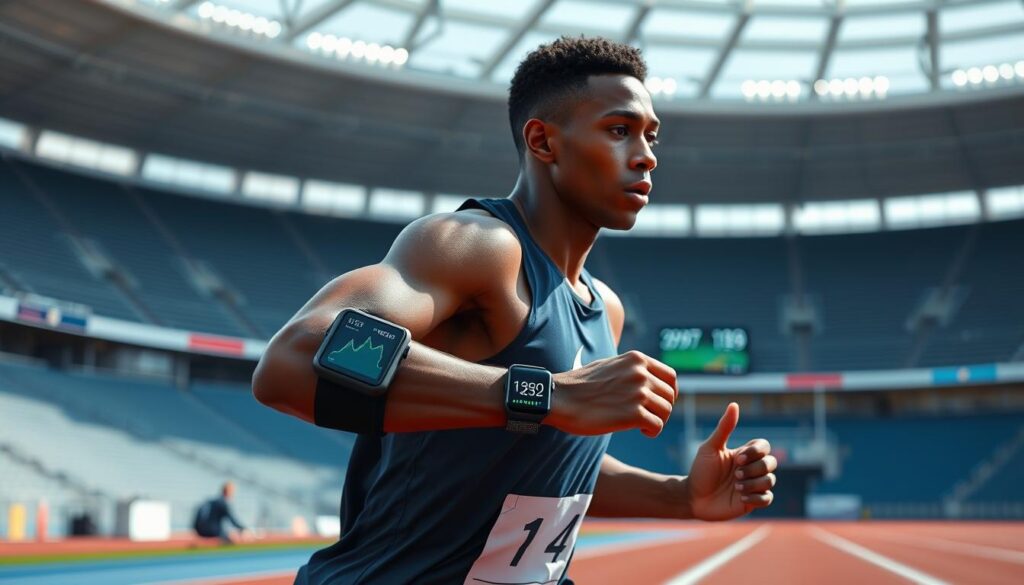
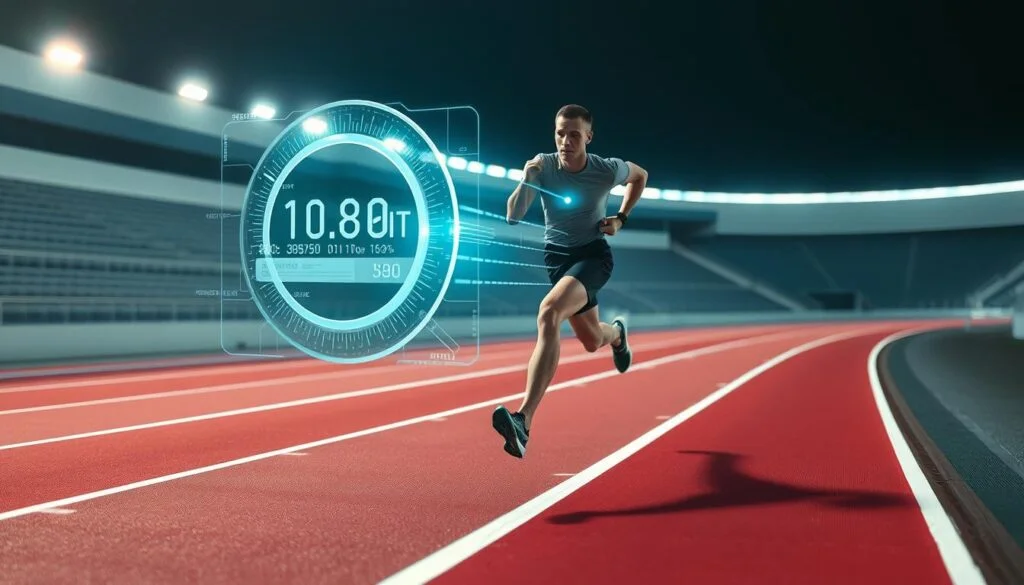
A high-resolution, photorealistic image of a sprinter in a sports stadium, wearing a futuristic-looking wearable armband and smartwatch that display real-time biometric data and fitness analytics. The athlete is mid-stride, with a determined expression, surrounded by a vibrant, technologically-advanced environment. The background features a panoramic view of the stadium, with stadium seating, scoreboard, and other IoT-enabled sports equipment visible. The lighting is crisp and natural, capturing the energy and dynamism of the scene. The overall mood is one of innovation, performance, and the integration of cutting-edge technology into the world of sports.

The Evolution of IoT in Sports

The application of IoT in sports has evolved significantly over the years. Initially, IoT devices were used primarily for basic fitness tracking. However, advancements in technology have led to the development of more sophisticated wearables that can monitor a wide range of physiological and biomechanical metrics. This evolution has enabled more effective monitoring and analysis of athlete data, leading to improved performance and reduced injury risk.

Key Benefits of IoT-Enabled Devices for Athletes

IoT-enabled devices offer several key benefits for athletes, including:

  • Continuous monitoring of athlete health and performance, enabling the detection of subtle changes that might indicate injury risk.
  • Objective data collection, removing subjective bias from athlete self-reporting regarding fatigue, pain, or readiness to train.
  • Personalized training and recovery protocols based on individual physiological responses rather than one-size-fits-all approaches.
  • Remote monitoring, allowing coaches and medical staff to track athletes’ conditions even when they’re training independently or during off-seasons.

By leveraging these benefits, IoT technology is enhancing athlete safety and improving overall performance. The use of IoT-enabled devices is becoming increasingly prevalent in the sports industry, and its impact is expected to continue growing in the coming years.

How Wearable Technology is Revolutionizing Sports Safety

Wearable devices are revolutionizing sports safety by offering real-time insights into athlete health, fatigue levels, and potential injury risks. These advanced technologies have moved beyond basic fitness tracking, providing a wealth of data that coaches and trainers can use to make informed decisions about athlete safety and performance.

Beyond Basic Fitness Tracking

Modern wearable devices have evolved significantly from their predecessors, which were primarily focused on step tracking and basic physiological metrics. Today’s wearables are equipped with sophisticated sensors capable of monitoring a wide range of metrics, including heart rate variability, muscle fatigue, and impact forces. According to a recent study, the use of wearables in sports has led to a significant reduction in injury rates, with some teams reporting a decrease of up to 30% in contact injuries.

“The data from wearables has been a game-changer for us,” says Coach John Smith of the XYZ Football Team. “We can now monitor our players’ fatigue levels and adjust their training accordingly, reducing the risk of injury and improving overall performance.”

A high-resolution, detailed image of a professional sprinter in sleek sportswear, wearing a compact smartwatch and a slim, unobtrusive armband sensor. The athlete is mid-stride, captured in sharp focus, against a blurred background of a modern sports facility with track markings and spectator stands. The watch and armband display real-time biometric data, highlighting the benefits of wearable technology in monitoring athlete health and performance during training and competition.

Real-Time Monitoring Capabilities

One of the most significant advantages of wearable technology is its ability to provide real-time monitoring of athlete health and performance. Devices equipped with advanced sensors can track metrics such as heart rate, GPS data, and muscle activity, providing coaches and trainers with immediate insights into athlete fatigue and potential injury risks. For instance, GPS tracking devices can monitor an athlete’s movement patterns, allowing coaches to detect early signs of fatigue and adjust training loads accordingly.

Real-time monitoring enables coaches to make data-driven decisions about athlete safety, pulling players from games or practices if necessary to prevent injuries. This capability is particularly valuable in contact sports, where the risk of injury is high. By continuously monitoring athlete health, teams can reduce the risk of serious injuries and improve overall player safety.

Data-Driven Decision Making for Coaches and Trainers

The wealth of data provided by wearable devices is transforming the way coaches and trainers approach athlete development and safety. By analyzing data on athlete fatigue, performance metrics, and injury risk, coaches can optimize training programs to balance performance improvement with injury risk management. For example, data analytics platforms can aggregate individual athlete data to inform team-wide training approaches, identifying patterns that might not be apparent when looking at athletes in isolation.

  • Coaches use wearable data to optimize training loads and manage injury risk through periodization strategies.
  • Data visualization tools make complex information accessible to coaches without requiring advanced statistical knowledge.
  • The cultural shift required for traditional coaches to embrace data-driven approaches is significant, but successful teams are managing this transition by integrating data analysis into their existing coaching practices.

By leveraging the insights gained from wearable technology, coaches and trainers can make more informed decisions, ultimately enhancing athlete safety and performance. As the technology continues to evolve, we can expect to see even more sophisticated applications of wearable data in sports.

Wearable Injury Trackers: The Future of Injury Prevention

The advent of wearable injury trackers is revolutionizing the way athletes train and compete. These devices are designed to monitor athlete health, predict potential injuries, and provide insights that can help prevent them.

Image of an athlete wearing a wearable injury tracker during a training session

How Injury Trackers Work

Wearable injury trackers utilize advanced sensors to monitor various physiological and biomechanical parameters. These can include heart rate, muscle strain, and movement patterns. By analyzing data from these sensors, injury trackers can identify early signs of fatigue or improper biomechanics that might lead to injury.

The accuracy of these devices is crucial, as it directly impacts their effectiveness in preventing injuries. Advanced algorithms process the data collected, providing features such as real-time monitoring and predictive analytics.

Key Features to Look For

When selecting a wearable injury tracker, several features are essential to consider. These include the type and quality of sensors used, the device’s ability to provide real-time data, and its accuracy in detecting potential issues.

Additionally, the ease of use, comfort, and compatibility with existing training systems are important factors. Coaches and athletes should look for devices that offer comprehensive analytics and insights to inform training decisions.

Top Injury Tracking Devices on the Market

Several wearable injury trackers are currently available, each with its unique features and benefits. Devices like Catapult’s OptimEye series, STATSports’ APEX system, and WHOOP’s recovery monitoring platform are among the leading options.

Catapult’s OptimEye series, for example, offers advanced GPS and accelerometer data, providing insights into athlete movement and exertion.

STATSports’ APEX system is known for its ability to track a wide range of metrics, including heart rate and muscle load.

WHOOP’s recovery monitoring platform focuses on monitoring recovery and strain, helping athletes optimize their training and reduce the risk of injury.

AI Fatigue Monitors: Preventing Overtraining and Exhaustion

Generate an image of an athlete wearing a wearable AI fatigue monitor device during a training session.

Overtraining and exhaustion are significant concerns for athletes, and AI fatigue monitors offer a solution. These advanced systems utilize artificial intelligence to track and analyze an athlete’s physiological data, providing insights into their fatigue levels and helping prevent overtraining.

The Science Behind Fatigue Detection

Fatigue detection is grounded in understanding how an athlete’s body responds to training and competition. Heart rate variability (HRV) is a key metric used in fatigue monitoring. HRV refers to the variation in time between each heartbeat, which can indicate an athlete’s readiness to perform. AI algorithms analyze HRV data alongside other physiological metrics to assess an athlete’s fatigue level.

Research has shown that HRV can be an effective indicator of an athlete’s recovery status and readiness for intense training. By leveraging AI to analyze HRV and other data, coaches and trainers can make informed decisions about an athlete’s training regimen.

How AI Algorithms Predict and Prevent Fatigue

AI algorithms play a crucial role in predicting and preventing fatigue. These algorithms can analyze vast amounts of data from various sources, including wearable devices, training logs, and even environmental conditions. By identifying patterns and anomalies in the data, AI can predict when an athlete is at risk of overtraining or exhaustion.

Machine learning (ML) techniques, including traditional methods like decision trees and support vector machines, as well as advanced techniques such as deep learning, are employed to analyze multi-source datasets. This enables the detection of subtle patterns that may indicate impending fatigue.

Leading AI Fatigue Monitoring Solutions

Several AI-powered fatigue monitoring solutions are currently available, each offering unique features and capabilities. Some of the leading solutions include:

  • Firstbeat Analytics: Utilizes AI to analyze physiological data, including HRV, to provide insights into an athlete’s recovery and readiness.
  • WHOOP Recovery: Employs AI algorithms to analyze strain, recovery, and sleep data, providing a comprehensive view of an athlete’s fatigue status.
  • Oura Ring’s Readiness Score: Uses AI to analyze sleep, activity, and other physiological data to provide a readiness score, indicating an athlete’s preparedness for training.
  • Kinexon: Offers a team-focused solution that integrates individual athlete fatigue monitoring into team-wide load management systems.
  • Kitman Labs: Provides a comprehensive platform that includes AI-driven fatigue monitoring and performance optimization tools.

These solutions not only provide accurate fatigue assessments but also offer user-friendly interfaces and actionable recommendations for coaches and athletes. By leveraging AI fatigue monitors, teams can optimize their training regimens, reduce the risk of injury, and improve overall performance.

IoT Health Analytics: Turning Data into Actionable Insights

IoT health analytics platforms are transforming the sports industry by providing comprehensive insights into athlete well-being. By leveraging data from various sources, these platforms enable teams to make informed decisions about athlete health and performance.

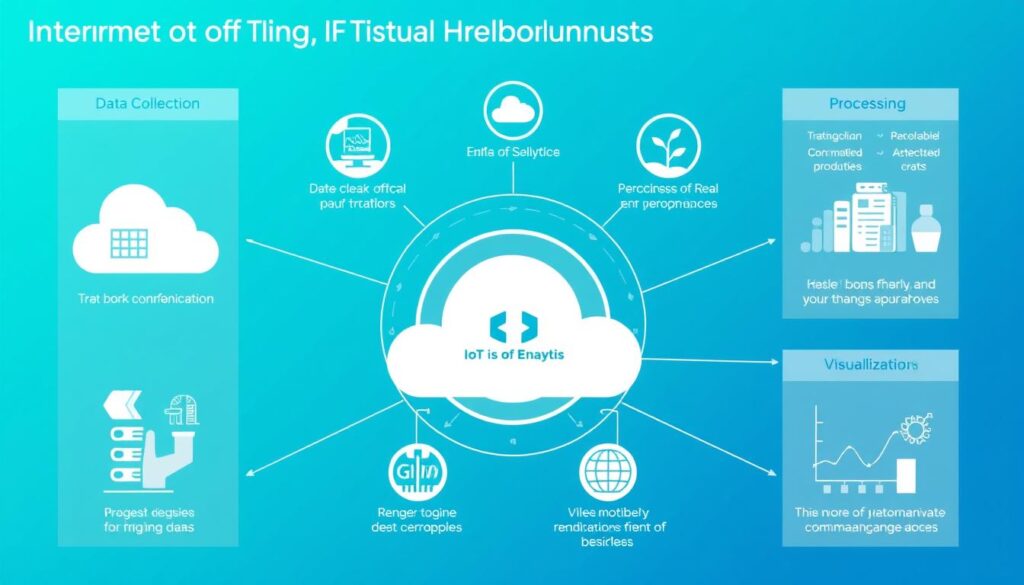
An infographic illustrating the components of an IoT health analytics platform

The Power of Comprehensive Health Data

Comprehensive health data is crucial for understanding athlete well-being. IoT devices can track a range of physiological metrics, including heart rate, sleep patterns, and fatigue levels. This data provides a holistic view of an athlete’s health, enabling coaches and trainers to identify potential issues before they become serious.

The analysis of this data is critical for gaining insights into athlete health. By examining trends and patterns, teams can develop targeted interventions to improve athlete well-being and performance.

Analytics Platforms for Sports Teams

Several analytics platforms are designed specifically for sports teams, offering advanced monitoring and analysis capabilities. These platforms can integrate data from various sources, including wearable devices, electronic health records, and training data.

For instance, Catapult Sports offers a comprehensive analytics platform that provides real-time insights into athlete health and performance. Their platform includes features such as fatigue tracking and injury prediction.

Interpreting and Applying Health Analytics

Interpreting health analytics correctly is crucial for making informed decisions. It’s essential to consider the context in which the data is collected, including factors like travel schedules, competition calendars, and environmental conditions.

Coaches and trainers must also be aware of common misinterpretations of health data and take steps to avoid making flawed decisions. By applying best practices in data analysis, teams can ensure that they are using health analytics effectively to improve athlete health and performance.

For example, by continuously monitoring athlete fatigue levels, teams can make incremental adjustments to training programs to prevent overtraining and reduce the risk of injury.

Biomechanics Monitoring and Injury Prevention

Advanced motion sensors in wearables can track athletes’ biomechanics in real-time, providing valuable insights into their movement patterns. This technology has revolutionized the field of sports science, enabling coaches and trainers to identify potential issues before they become serious injuries.

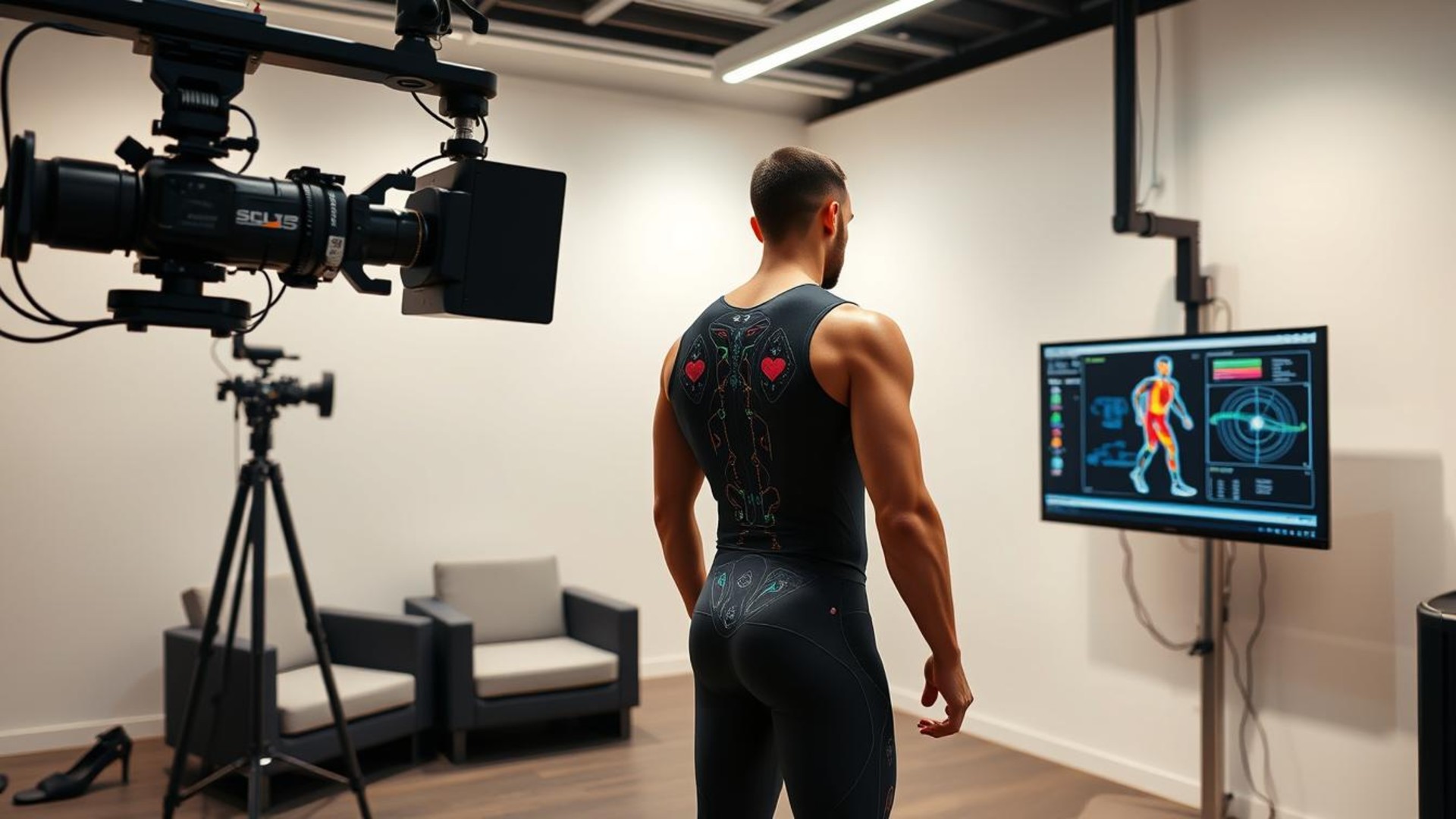
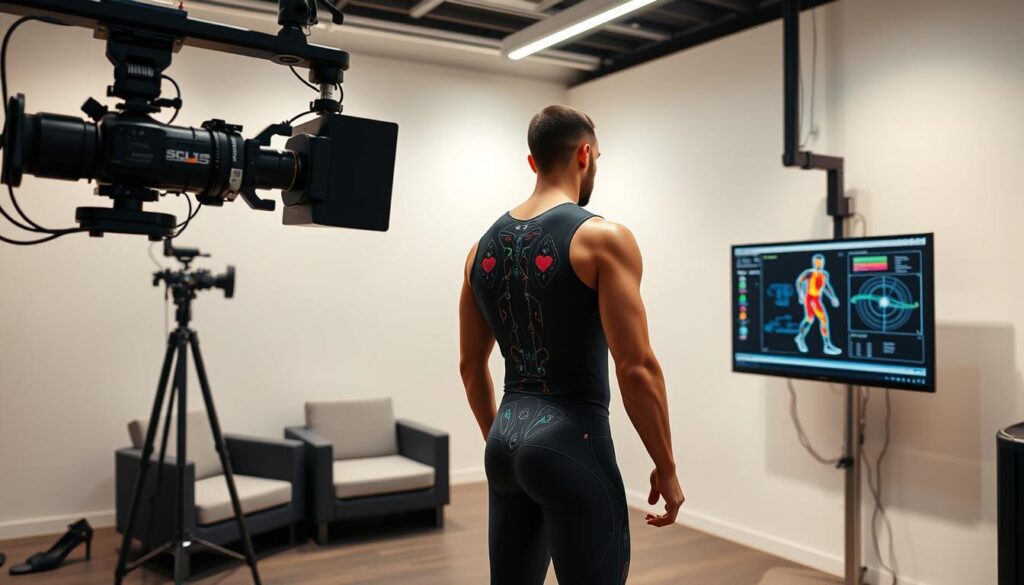
A high-tech biomechanics lab with advanced motion capture cameras and sensors monitoring a professional athlete's movements. The athlete is wearing a sleek, black bodysuit with embedded sensors that track joint angles, muscle activity, and overall fatigue levels. On the nearby monitor, a detailed 3D visualization of the athlete's body displays real-time biomechanics data, including heart rate, respiratory patterns, and predicted injury risk. The lab has a clean, modern aesthetic with stark white walls, minimalist furniture, and warm, focused lighting that highlights the athlete's form and the intricate instrumentation. An atmosphere of precision, innovation, and athlete-centric care pervades the scene.

Understanding Movement Patterns

Biomechanics monitoring involves analyzing the way athletes move, including their posture, stride, and other movement patterns. By using IoT wearables equipped with motion sensors, coaches can collect detailed data on an athlete’s biomechanics. This information is crucial for understanding how athletes perform and where they might be at risk of injury.

For instance, in sports like running or jumping, understanding the impact of repetitive stress on joints is vital. Wearables can track the stress and strain on an athlete’s muscles and joints, providing insights into their fatigue levels and potential risk of overuse injuries.

Detecting Irregularities Before They Cause Injury

One of the key benefits of biomechanics monitoring is the ability to detect irregularities in movement patterns before they lead to injuries. By analyzing the data collected from wearables, coaches and trainers can identify techniques or methods that are not optimal and correct them before they cause harm.

For example, a wearable device might detect that an athlete is landing awkwardly after a jump, putting excessive stress on their knee. By providing real-time feedback, the wearable can help the athlete adjust their patterns of movement to reduce the risk of injury.

Corrective Measures Based on Biomechanical Data

Once irregularities in movement patterns are identified, coaches and trainers can develop targeted interventions to correct these issues. This might involve adjusting an athlete’s training regimen, modifying their techniques, or incorporating specific exercises to strengthen vulnerable areas.

For instance, if data from a wearable indicates that an athlete has a tendency to overstride, leading to potential stress fractures, a coach might implement a training program to improve the athlete’s flexibility and strength, thereby reducing the risk of such injuries. By leveraging biomechanical monitoring and data analysis, athletes can optimize their performance while minimizing the risk of injury.

As noted by a sports science expert, “The use of biomechanics monitoring has been a game-changer in our training programs. We’ve seen a significant reduction in injuries among our athletes, and their overall performance has improved dramatically.”

“The use of biomechanics monitoring has been a game-changer in our training programs. We’ve seen a significant reduction in injuries among our athletes, and their overall performance has improved dramatically.”

Sports Science Expert

Impact Detection Technology for Contact Sports

The use of impact detection technology in contact sports is revolutionizing how we approach player safety and injury prevention. In sports like football, rugby, and hockey, the risk of head injuries such as concussions is a major concern. Wearable devices equipped with impact sensors can measure the force and direction of collisions, immediately alerting medical teams if the impact reaches dangerous levels.

Head Impact Monitoring Systems

Head impact monitoring systems are designed to detect and analyze the impact of collisions on an athlete’s head. These systems typically involve wearable devices that contain accelerometers and gyroscopes to measure the magnitude and direction of impacts. The data collected is then used to assess the risk of injury and provide insights into the mechanisms of head injuries.

Key Features:

  • Real-time monitoring and alerts
  • Detailed impact analysis
  • Integration with medical records for comprehensive injury assessment

Joint and Bone Impact Sensors

While head injuries are a significant concern, joint and bone impacts are also critical in contact sports. Wearable sensors designed for joints and bones can detect abnormal stress and impact patterns, helping to prevent injuries that could sideline athletes. These sensors are particularly useful in sports where lower extremity injuries are common.

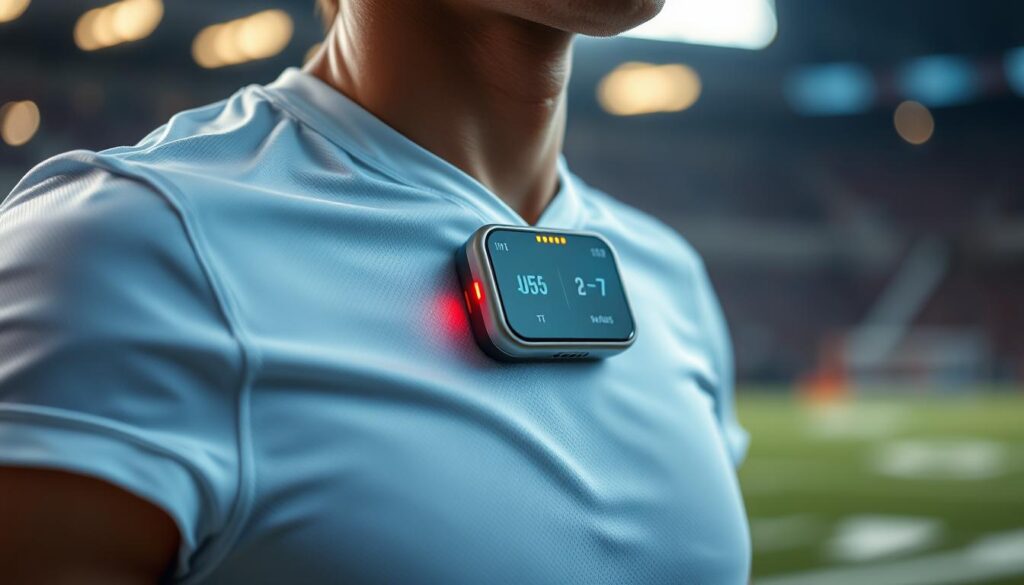
A high-tech wearable device with sensors embedded in a sleek, lightweight band monitors an athlete's movements and impact during intense contact sports. Precise accelerometers and gyroscopes capture every twist, turn, and collision, while integrated biometric trackers monitor vital signs. Illuminated indicator lights flash to signal potential injuries, allowing coaches and trainers to quickly assess and respond. The device's minimalist design blends seamlessly with the athlete's uniform, maintaining a clean, professional appearance on the field. Crisp, detailed textures and a brushed metal finish convey a sense of advanced, cutting-edge technology engineered for elite performance.

Sport Type of Injury Detection Method
Football Concussions Headgear sensors
Rugby Joint injuries Wearable joint sensors
Hockey Head and body impacts Helmet and body-worn sensors

Real-World Applications in Football, Hockey, and Rugby

The application of impact detection technology is being seen across various contact sports. In the NFL, the Head Health Initiative has incorporated impact monitoring technology to better understand concussion mechanisms and evaluate the effectiveness of rule changes. Similarly, professional rugby unions are using impact monitoring to develop safer tackling techniques and inform decisions about contact training limitations.

Youth and amateur sports organizations are also adapting professional-level impact monitoring technology to protect developing athletes who may be more vulnerable to concussion effects. Testimonials from players, coaches, and medical staff highlight how impact detection technology has changed their approach to safety in contact sports, emphasizing the importance of data-driven decision making for enhanced player safety.

By leveraging impact detection technology, sports organizations can significantly reduce the risk of injury, improve player safety, and enhance overall performance. As the technology continues to evolve, we can expect to see even more sophisticated systems that provide deeper insights into the dynamics of contact sports.

Recovery Monitoring and Management

The key to preventing overtraining and injuries lies in understanding and managing an athlete’s recovery process. Wearable technology has made it possible to monitor various physiological metrics that indicate an athlete’s recovery status, enabling coaches and trainers to make data-driven decisions.

Tracking Recovery Metrics

Recovery monitoring involves tracking several key metrics, including heart rate variability (HRV), muscle tension, and sleep patterns. HRV, in particular, is a valuable indicator of an athlete’s autonomic nervous system balance and overall recovery status. Wearables equipped with HRV monitoring capabilities can provide insights into an athlete’s readiness to train.

Other important metrics include muscle soreness, which can be quantified using subjective scales or objective measurements like surface electromyography. Sleep quality and duration are also critical, as inadequate sleep can significantly impair physical performance and increase the risk of injury.

Metric Description Importance
Heart Rate Variability (HRV) Indicator of autonomic nervous system balance High
Muscle Tension Measure of muscle soreness and recovery Medium
Sleep Patterns Quality and duration of sleep High

Optimizing Rest Periods

One of the primary benefits of recovery monitoring is the ability to optimize rest periods. By analyzing data from wearables, coaches can determine the optimal duration and frequency of rest days, ensuring that athletes are adequately recovered before returning to intense training.

This approach helps prevent overtraining syndrome, which can manifest as decreased performance, persistent fatigue, and increased injury risk. Early detection of overtraining signs through wearable monitoring allows for timely intervention, reducing the risk of severe consequences.

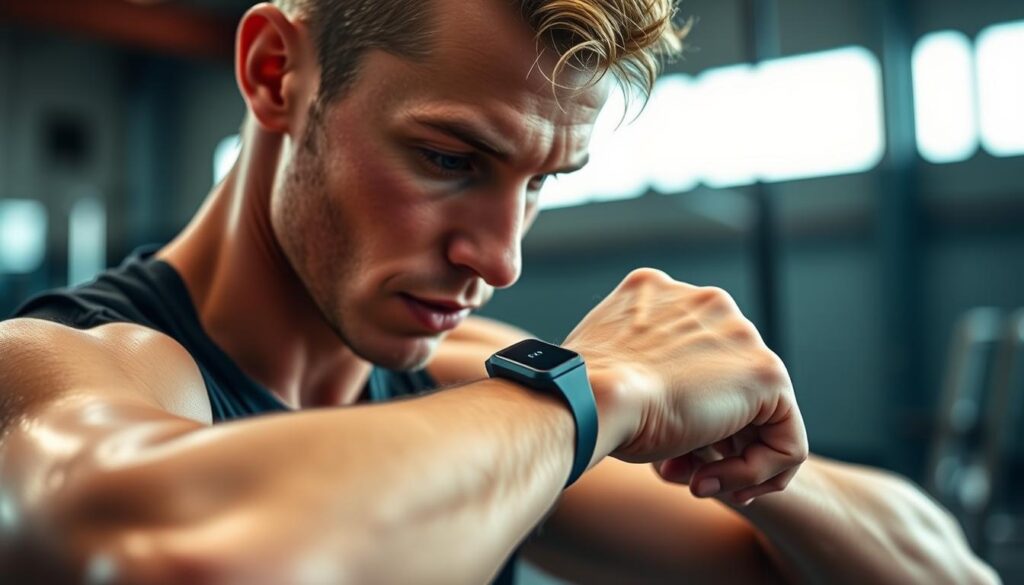
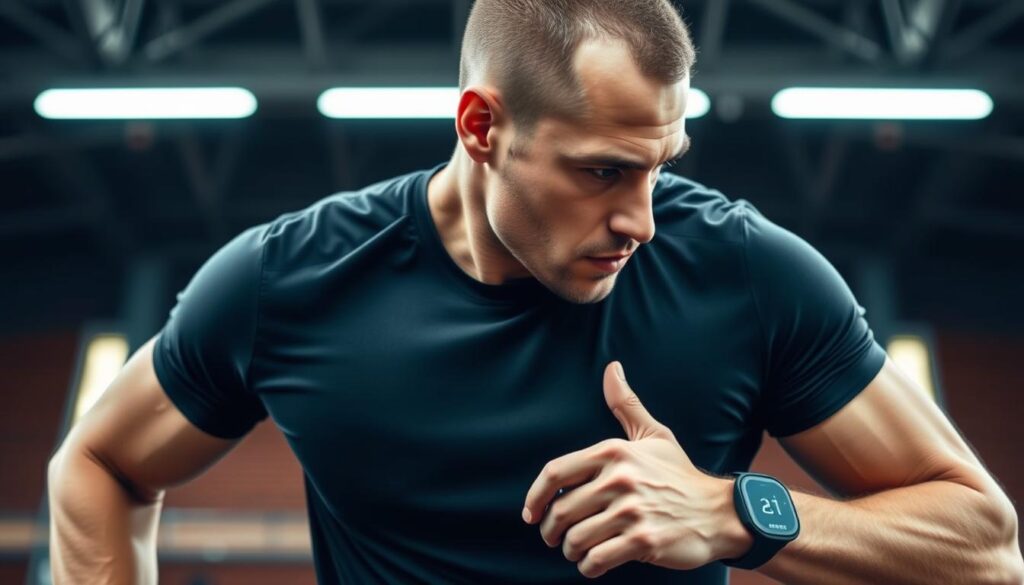
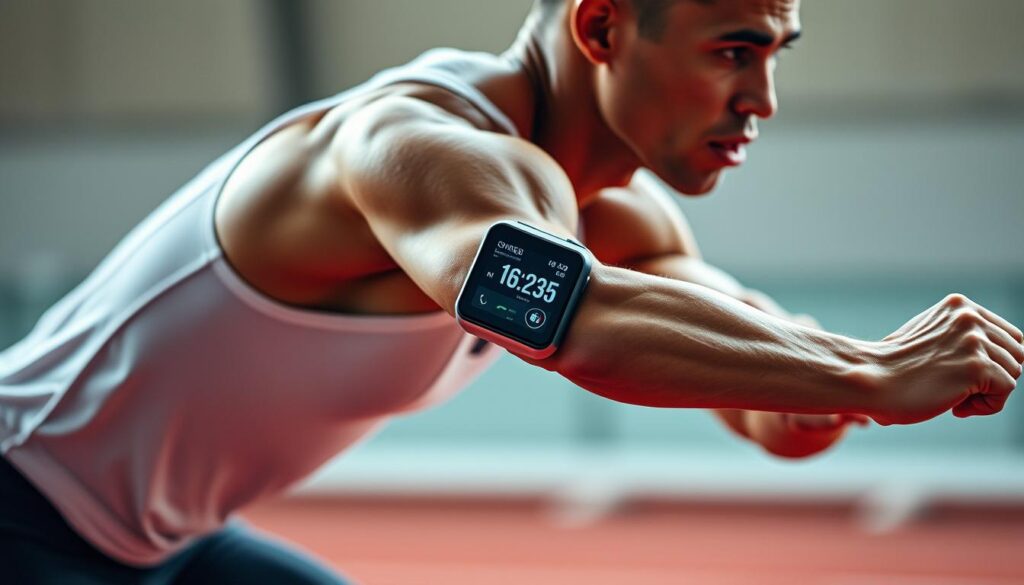
A close-up photograph of a runner's arm adorned with a sleek fitness tracker and smartwatch, data streams flowing across their digital displays. The athlete's face radiates concentration as they monitor their recovery metrics, brow furrowed with determination. Soft, directional lighting illuminates the scene, casting subtle shadows that accentuate the wearable's form and the runner's focused expression. The background is blurred, keeping the viewer's attention squarely on the recovery data and the athlete's dedication to optimizing their performance.

Preventing Chronic Injuries Through Proper Recovery

Inadequate recovery is a significant contributor to chronic overuse injuries. By monitoring recovery metrics and adjusting training regimens accordingly, athletes can avoid the accumulation of microtrauma that often leads to such injuries.

Case studies have shown that systematic recovery monitoring can significantly reduce chronic injury rates among athletes. For instance, a professional soccer team that implemented HRV-based recovery monitoring saw a notable decrease in overuse injuries and improved overall performance.

  • Early detection of overtraining signs
  • Personalized training adjustments based on recovery data
  • Optimized seasonal periodization to peak at the right times

By leveraging recovery monitoring technologies, athletes and coaches can work together to create a safer, more effective training environment. This proactive approach not only enhances performance but also prioritizes athlete well-being and longevity in their sport.

Smart Clothing and Embedded Sensors

Smart clothing, embedded with advanced sensors, is transforming the sports industry by providing real-time data on athlete performance and health. These innovative garments are designed to monitor various physiological and biomechanical parameters, offering insights that can enhance training, prevent injuries, and optimize recovery.

The Evolution of Smart Fabrics

The development of smart fabrics has been a significant technological advancement in the textile industry. By integrating sensors and conductive materials into clothing, manufacturers can now produce garments that not only provide comfort but also monitor vital signs and physical metrics.

Key advancements in smart fabrics include: – Integration of conductive yarns for data transmission – Development of washable and durable sensors – Enhanced comfort and flexibility

Benefits of Sensor-Embedded Clothing

Sensor-embedded clothing offers numerous benefits for athletes, including real-time monitoring of physiological data such as heart rate, muscle activity, and breathing patterns. This information can be used to optimize training, prevent overtraining, and reduce the risk of injury.

The data collected from these garments can also help coaches and trainers tailor their programs to the individual needs of each athlete, enhancing overall performance.

Top Smart Clothing Options for Athletes

Several companies are leading the way in smart clothing technology, offering a range of products designed for different sports and activities.

Athos Training System: Known for their EMG-embedded garments, Athos provides detailed insights into muscle activity, helping athletes optimize their training.

Hexoskin: Offers biometric shirts that track heart rate, breathing rate, and other vital signs, providing a comprehensive view of an athlete’s physiological state.

Sensoria: Their smart socks and running garments monitor foot strike patterns, stride length, and cadence, offering valuable data for runners and other athletes.

Wearable Technology in Professional Sports: Case Studies

Wearable devices are revolutionizing the way professional sports teams approach player monitoring and injury prevention. By leveraging advanced technologies, teams can now gather detailed insights into athlete health and performance, enabling data-driven decisions that enhance both safety and competitiveness.

NFL’s Implementation of Head Impact Technology

The NFL has partnered with Riddell to implement the InSite Impact Sensing System in helmets, providing real-time data on the magnitude and location of head impacts. This technology has been instrumental in understanding the effects of head trauma on players, allowing for more effective monitoring and prevention strategies. By analyzing the data collected, the NFL can better understand the risks associated with different types of impacts and develop targeted interventions to reduce the incidence of head injuries.

The implementation of head impact technology has marked a significant step forward in player safety, demonstrating the league’s commitment to protecting its athletes. As the technology continues to evolve, it is likely to play an increasingly important role in shaping NFL safety protocols.

NBA’s Use of Performance and Fatigue Monitoring

The NBA has embraced wearable technology to enhance player performance and manage fatigue. By utilizing wearable devices from Catapult Sports, teams can track player load, movement, and fatigue levels in real-time. This data enables coaches and trainers to make informed decisions about player rotation, practice intensity, and recovery strategies, ultimately optimizing performance while minimizing the risk of injury.

The use of wearable technology in the NBA highlights the league’s proactive approach to athlete care. By closely monitoring player health and adjusting strategies accordingly, teams can gain a competitive edge while prioritizing the well-being of their athletes.

European Football’s Approach to Injury Prevention

Top European football clubs have implemented comprehensive wearable monitoring systems to reduce injuries in a sport characterized by minimal substitution opportunities and a congested fixture schedule. Clubs like Liverpool FC have dramatically reduced soft tissue injuries by integrating GPS tracking, heart rate monitoring, and subjective wellness data. This holistic approach to athlete care enables teams to identify potential issues before they become serious problems, allowing for targeted interventions that maintain performance while reducing injury risk.

The use of wearable technology in European football also extends to academy systems, where it is used to track young players’ development and ensure the safe progression of training loads as they mature physically. Insights from sports science staff at leading clubs reveal how they translate wearable data into practical training modifications, balancing performance enhancement with injury prevention.

By adopting wearable technology, European football clubs are not only improving player health and safety but also gaining a competitive advantage through data-driven decision-making. As the technology continues to evolve, it is likely to play an increasingly important role in shaping the future of the sport.

Challenges and Concerns with Wearable Technology

While wearable devices have revolutionized athlete monitoring and injury prevention, several concerns need to be addressed. The use of wearables in sports has introduced a new paradigm, but it is crucial to acknowledge the challenges associated with these technologies.

Data Security and Privacy Issues

One of the biggest concerns surrounding IoT wearables is the security of the data they collect. Athletes’ physiological data, movement patterns, and even injury history are highly sensitive information. Ensuring the privacy and security of this data is paramount. There is a risk of data breaches and unauthorized access, which could have serious implications for athletes’ privacy and competitive advantage.

Data encryption and secure storage solutions are essential to mitigate these risks. Moreover, compliance with data protection regulations such as GDPR and HIPAA is crucial for organizations using wearable technology.

Accuracy and Reliability Concerns

Another challenge is ensuring the accuracy and reliability of the data provided by wearables. Inaccurate data can lead to misinformed decisions regarding athlete health and performance. The reliability of wearable devices depends on various factors, including sensor quality, calibration, and software algorithms.

To address these concerns, manufacturers must invest in rigorous testing and validation processes. Additionally, continuous monitoring and feedback mechanisms can help identify and rectify accuracy issues promptly.

Cost and Accessibility Challenges

The adoption of wearable technology also faces challenges related to cost and accessibility. The total cost of ownership for wearable systems includes not just hardware but also subscription fees, maintenance costs, and the staff expertise needed to interpret the data.

  • The financial barriers to wearable technology adoption are particularly significant for smaller organizations, lower-level competitions, and underserved communities.
  • Alternative models for technology access, such as shared resources and scaled-down systems, can help make wearables more accessible.
  • Technology companies can play a crucial role by offering tiered pricing models, educational initiatives, and refurbished equipment programs.

Addressing these challenges is essential to ensure that wearable technology is both effective and equitable. By doing so, we can maximize the benefits of wearables in preventing injuries and enhancing athlete performance.

The Future of Wearable Technology in Sports

The future of wearable technology in sports is poised to revolutionize injury prevention and athlete performance. As we look ahead, it’s clear that wearable devices will continue to play a vital role in monitoring athlete health and enhancing their capabilities.

Emerging Technologies and Innovations

The sports industry is on the brink of a technological revolution, with wearable devices at the forefront. Advanced sensors are being developed to track a wider range of physiological and biomechanical metrics, providing coaches and trainers with more detailed insights into athlete performance and health. These innovations are expected to drive significant advancements in injury prevention and treatment.

One of the key emerging trends is the integration of wearables with other technologies such as augmented reality (AR) and virtual reality (VR). This convergence is likely to enhance training methodologies, allowing athletes to receive real-time feedback on their technique and performance. For instance, AR can be used to provide visual cues to athletes during training, helping them adjust their movements to prevent injuries.

AI and Machine Learning Advancements

Artificial intelligence (AI) and machine learning (ML) are set to play a crucial role in the future of wearable technology in sports. These technologies will enable wearables to analyze vast amounts of data, providing personalized insights and recommendations for athletes. AI-driven models will be able to predict potential injuries based on historical data and real-time monitoring, allowing for proactive measures to be taken.

Moreover, AI and ML will facilitate the development of more sophisticated fatigue monitoring systems. These systems will be able to detect early signs of fatigue and alert coaches and trainers to take preventive measures, thereby reducing the risk of injury.

Predictions for the Next Generation of Wearables

Looking ahead to the next 5-10 years, we can expect wearable technology to become even more integrated into the fabric of sports. Wearable devices will become more affordable and accessible, bridging the gap between professional and amateur athletes. This democratization of technology will lead to a more informed and proactive approach to athlete health across all levels of sports.

Furthermore, we predict that wearables will evolve to include more active intervention capabilities. For example, exoskeletons that provide support when fatigue is detected, or smart equipment that adapts to changing conditions, will become more prevalent. These advancements will not only enhance performance but also significantly reduce the risk of injury.

In conclusion, the future of wearable technology in sports is bright, with emerging technologies, AI, and ML driving significant advancements. As wearables continue to evolve, they will play an increasingly important role in shaping the future of sports medicine, athletic training, and coaching methodologies.

How Iottive is Transforming Sports Technology

Create an image of Iottive's IoT solutions for sports technology

Iottive is revolutionizing the sports technology landscape with its innovative IoT solutions. By integrating cutting-edge technology with sports applications, Iottive is enhancing athlete health and performance. Their expertise spans various industries, including Healthcare, Automotive, Smart Home, Consumer Electronics, and Industrial IoT.

Iottive’s Expertise in IoT and AIoT Solutions

Iottive’s proficiency in IoT and AIoT integration is evident in their sports technology applications. They develop wearable injury trackers that monitor athlete health in real-time, providing valuable insights for coaches and trainers.

Their AI fatigue monitor systems help teams optimize training loads, reducing the risk of overtraining injuries. This is achieved through advanced data analytics and machine learning algorithms that predict athlete fatigue.

Custom IoT Platforms for Sports Applications

Iottive designs custom IoT platforms tailored to the specific needs of sports organizations. These platforms facilitate the integration of various data sources, creating a comprehensive view of athlete health and performance.

Their IoT health analytics capabilities enable sports teams to make data-driven decisions, improving overall performance and reducing injury risk. By leveraging these platforms, teams can optimize their training programs and enhance athlete well-being.

Success Stories and Implementations

Iottive’s implementation of IoT solutions has yielded impressive results in various sports applications. For instance, their wearable injury trackers have been adopted by several professional sports teams, providing real-time monitoring and injury prevention.

One notable success story involves a professional football team that implemented Iottive’s AI fatigue monitoring system. As a result, they saw a significant reduction in overtraining injuries, improving overall team performance.

Testimonials from sports professionals who have worked with Iottive highlight the effectiveness of their technology solutions in improving injury prevention efforts. By providing concrete examples of their impact, Iottive demonstrates its commitment to transforming sports technology.

Implementing Wearable Technology: Best Practices

Implementing wearable technology in sports requires a strategic approach to maximize its benefits. The effective integration of wearables can enhance athlete performance, reduce injuries, and improve overall team health.

Integration with Existing Training Programs

To get the most out of wearable technology, it’s essential to integrate it with existing training programs. This involves:

  • Assessing current training methodologies and identifying areas where wearable technology can add value
  • Collaborating with coaches and trainers to ensure that wearable data is used effectively
  • Adjusting training programs based on insights gained from wearable monitoring and data analysis

By integrating wearable technology with training programs, teams can make data-driven decisions that enhance athlete performance and reduce the risk of injury.

Educating Athletes and Coaches

Education is key to the successful adoption of wearable technology. Athletes and coaches need to understand how to use the technology effectively and interpret the data it provides.

Training sessions should be conducted to:

  • Familiarize athletes and coaches with the wearable devices and their features
  • Explain how to interpret the data and information provided by the wearables
  • Demonstrate how to use the insights gained to improve performance and prevent injuries

By educating athletes and coaches, teams can ensure that wearable technology is used to its full potential, enhancing overall accuracy in performance tracking and injury prevention.

Measuring ROI and Performance Improvements

To justify the investment in wearable technology, teams need to measure its return on investment (ROI) and performance improvements. This involves:

Metric Pre-Implementation Post-Implementation
Injury Rate 10 injuries/season 5 injuries/season
Days Lost to Injury 50 days/season 20 days/season
Medical Costs $100,000/season $40,000/season

By tracking these metrics, teams can quantify the benefits of wearable technology and make data-driven decisions to further improve performance and reduce injuries. The monitoring capabilities of wearables provide valuable information that can be used to optimize training programs and enhance athlete health.

Ensuring the accuracy of the data collected is crucial for making informed decisions. Regular calibration and validation of wearable devices can help maintain accuracy.

Conclusion

By integrating IoT technology into sports, wearables are providing real-time data that is crucial for preventing injuries and optimizing athlete performance. This marks a significant shift from reactive treatment to proactive monitoring, a paradigm change that has been enabled by advancements in wearable technology.

The evolution of sports injury prevention has been remarkable, with wearable devices now capable of detecting fatigue, monitoring biomechanics, and tracking recovery metrics. These devices, ranging from impact sensors to fatigue monitors, contribute to a comprehensive approach to athlete health and safety. By leveraging these technologies, coaches and trainers can make data-driven decisions, reducing the risk of injury and enhancing overall performance.

A key takeaway from our exploration of wearable technology in sports is the importance of a holistic approach. This involves combining technology with proper training methodologies, recovery protocols, and individualized athlete management. Such an approach not only prevents injuries but also optimizes athlete performance, underscoring the multifaceted benefits of wearables in sports.

As we look to the future, it’s clear that continued advances in wearable technology will further transform sports medicine and athletic performance. Innovations in AI and machine learning will enhance the capabilities of wearables, providing even more nuanced insights into athlete health. Organizations that embrace these innovations will be better positioned to protect their athletes and gain a competitive edge.

The future of sports is undoubtedly intertwined with the future of wearable technology. As wearables continue to evolve, we can expect to see even more sophisticated monitoring and data analysis capabilities. This will not only improve athlete safety but also redefine the boundaries of human performance.

In conclusion, wearable technology is revolutionizing the sports industry by providing real-time insights into athlete health and performance. By adopting a holistic approach that integrates technology with training and recovery protocols, organizations can significantly enhance athlete well-being and performance. As we move forward, the continued advancement of wearables will be pivotal in shaping the future of sports.

FAQ

How accurate are wearable devices in detecting physiological signals?

The accuracy of wearable devices in detecting physiological signals, such as heart rate variability and electromyography (EMG), depends on various factors, including the type of sensor used, the quality of the device, and the individual’s physical characteristics.

Can wearable technology really help prevent sports injuries?

Yes, wearable technology can help prevent sports injuries by monitoring an athlete’s physiological data, detecting early warning signs of fatigue, and providing insights into their biomechanics and movement patterns.

What are the benefits of using IoT-enabled devices for athletes?

IoT-enabled devices offer several benefits for athletes, including real-time monitoring capabilities, data-driven decision making, and improved safety and performance.

How do AI algorithms predict and prevent fatigue?

AI algorithms predict and prevent fatigue by analyzing an athlete’s physiological data, such as heart rate and sleep patterns, and identifying patterns and trends that may indicate fatigue or overtraining.

What are the key features to look for in a wearable injury tracker?

When selecting a wearable injury tracker, look for features such as ECG monitoring, impact detection, and biomechanics analysis, as well as the ability to provide real-time alerts and insights into an athlete’s physiological data.

How can smart clothing with embedded sensors benefit athletes?

Smart clothing with embedded sensors can benefit athletes by providing real-time monitoring of their physiological data, such as heart rate and breathing rate, and offering insights into their biomechanics and movement patterns.

What are the challenges associated with implementing wearable technology in sports?

The challenges associated with implementing wearable technology in sports include data security and privacy concerns, accuracy and reliability issues, and cost and accessibility challenges.

What is the future of wearable technology in sports?

The future of wearable technology in sports is expected to be shaped by emerging technologies and innovations, such as AI and machine learning advancements, and the development of new sensors and devices that can provide even more insights into an athlete’s physiological data and performance.

How AI & IoT are Transforming Athlete Health Monitoring

The world of sports is witnessing a significant transformation with the integration of artificial intelligence and Internet of Things technologies. Professional athletes, in particular, are prone to injuries, with nearly 50% suffering from preventable conditions due to inadequate monitoring and delayed detection.

athlete health monitoring technology

As technology advances, wearable sensors and smart devices are being used to track athlete performance and detect potential issues before they become severe. This proactive approach enables coaches and medical professionals to intervene early, optimizing training regimens and reducing the risk of injury.

At the forefront of this innovation is Iottive, a trusted IoT, AIoT, and Mobile App Development company that specializes in Bluetooth-connected solutions and custom IoT platforms. Their cutting-edge technology is revolutionizing the way we monitor and maintain athlete health.

Key Takeaways

  • AI and IoT technologies are transforming athlete health monitoring and injury prevention.
  • Wearable sensors and smart devices provide real-time data analytics to detect potential injuries.
  • Advanced algorithms optimize training regimens for peak athlete performance.
  • Iottive‘s innovative solutions are revolutionizing the sports industry.
  • Early detection and intervention reduce the risk of injury and improve overall athlete health.

The Evolution of Athlete Health Monitoring

Technological advancements have revolutionized the field of athlete health monitoring. The way athletes’ health is monitored has seen a significant transformation, driven by innovations in sports technology and data analysis.

Traditional Methods and Their Limitations

Traditionally, athlete health monitoring relied on manual observations and simple metrics. These methods had limitations, including subjective interpretations and delayed feedback. Coaches and trainers had to rely on manual tracking and analysis, which was time-consuming and prone to errors.

The Digital Revolution in Sports Health

The digital revolution has transformed athlete health monitoring through the use of IoT-enabled devices and sensors. Modern athlete monitoring solutions leverage real-time data collection and analysis to provide insights into athlete performance and health. This includes tracking biomechanics, physiological responses, and cognitive states. The integration of artificial intelligence with these systems enables predictive analytics for injury prevention.

The use of wearable devices and sensors embedded in equipment and facilities has created a comprehensive digital ecosystem around the athlete. This technology has democratized access to advanced sports science, allowing teams and organizations at all levels to benefit from data-driven decision making.

Understanding AI Sports Health Monitoring

AI & IoT Athlete Health Monitoring Graphic

Learn More

AI sports health monitoring is revolutionizing the way athletes train and recover. By leveraging advanced technologies, AI-powered systems can analyze various aspects of an athlete’s health and performance, providing valuable insights that were previously inaccessible.

Key Components of AI-Powered Health Systems

AI-powered health monitoring systems capture biomechanical data and convert it into actionable insights, greatly enhancing biomechanical analysis and improving precision in diagnostics and therapy. These systems rely on several key components to function effectively.

The primary elements include advanced sensors, machine learning algorithms, and data analytics tools. Together, they enable the collection, processing, and interpretation of complex data related to an athlete’s performance and health.

How Machine Learning Algorithms Analyze Athletic Performance

Machine learning algorithms play a crucial role in analyzing athletic performance by establishing normative data for individual athletes and comparing new data against these baselines to identify meaningful deviations. These algorithms can process multiple data streams simultaneously, correlating information from different sensors to create a comprehensive picture of an athlete’s movement patterns, physiological responses, and recovery status.

  • Supervised learning techniques improve analytical capabilities over time.
  • Unsupervised learning algorithms identify previously unknown patterns in performance data.
  • Deep learning neural networks analyze complex movement patterns in three-dimensional space.

By utilizing these advanced analytical tools, coaches and trainers can gain a deeper understanding of athlete performance and make data-driven decisions to optimize training and prevent injuries.

IoT Technology in Athletic Performance Tracking

IoT injury tracker

Learn More

IoT technology is transforming the way athletes’ performance is tracked and analyzed. In the realm of sports, IoT devices play a crucial role in monitoring various metrics such as heart rate, motion, fatigue levels, and impact forces. These devices provide valuable insights that can directly impact performance and safety.

Wearable Sensors and Their Functionality

Wearable sensors are integral to IoT technology in sports, tracking biometric data through devices like smartwatches, fitness bands, and heart rate monitors. These devices enable coaches and athletes to monitor performance in real-time, making adjustments as needed to optimize training.

Data Collection and Transmission Systems

IoT data collection systems utilize various transmission protocols, including Bluetooth Low Energy (BLE) and cellular networks, to ensure reliable data transfer with minimal latency. Key features include:

  • Edge computing capabilities for preliminary data processing on devices.
  • Cloud-based storage for longitudinal analysis and predictive modeling.
  • Data visualization tools for intuitive dashboards.
  • API integration for comprehensive athlete monitoring ecosystems.

The development of these systems balances comprehensive data collection with practical considerations like battery life and ease of use, ensuring that technology enhances athletic performance without interference.

Real-Time Injury Prevention Through Smart Devices

Real-time injury prevention is becoming a reality in sports thanks to advancements in smart device technology. By providing real-time insights into an athlete’s physical condition, biomechanics, and movement patterns, wearables can help prevent injuries, optimize performance, and accelerate recovery.

Real-Time Injury Prevention

Biomechanical Analysis and Movement Pattern Detection

Biomechanical analysis is crucial in detecting potential injuries before they occur. Smart devices equipped with sensors can track an athlete’s movement patterns, identifying any irregularities that may lead to injury. This proactive approach enables coaches and athletes to make necessary adjustments to prevent injuries from happening.

Early Warning Systems for Potential Injuries

Early warning systems integrate multiple data streams to identify risk factors before they manifest as physical symptoms. These systems monitor not only biomechanical factors but also physiological indicators such as heart rate variability, sleep quality, and recovery metrics. By analyzing patterns in the data, machine learning algorithms can predict potential injuries, enabling a proactive approach to athlete health management.

Feature Description Benefit
Biomechanical Analysis Tracks movement patterns and detects irregularities Prevents injuries by identifying potential issues early
Early Warning Systems Integrates multiple data streams to predict potential injuries Enables proactive approach to athlete health management
Real-Time Data Provides real-time insights into athlete’s physical condition Optimizes performance and accelerates recovery

Mobile Recovery Apps: Personalized Rehabilitation

mobile recovery app

Learn More

Athletes now have access to cutting-edge rehabilitation tools through mobile recovery apps that tailor recovery plans to individual needs. These apps leverage advanced technologies, including data analytics and AI, to create personalized rehabilitation programs.

Features of Effective Recovery Applications

Effective mobile recovery apps are equipped with a range of features that enhance the rehabilitation process. These include:

  • Personalized exercise programming based on the athlete’s specific injury and progress.
  • Progress tracking, allowing both athletes and therapists to monitor recovery.
  • Guided exercise videos and tutorials to ensure correct form and technique.
  • Integration with wearable sensors to collect real-time data on joint angles, muscle activity, and range of motion.

These features work together to create a comprehensive rehabilitation ecosystem.

Integration with Wearable Technology

The integration of mobile recovery apps with wearable technology represents a significant advancement in sports rehabilitation. Wearable sensors provide continuous monitoring of relevant metrics during rehabilitation exercises, ensuring that movements are performed correctly and within safe parameters for the athlete’s stage of recovery.

Data from wearables feeds directly into recovery applications, allowing for automatic adjustment of rehabilitation protocols based on objective data. This integration enables the creation of closed-loop rehabilitation systems where exercise prescriptions are continuously optimized based on real-time feedback from devices.

AI-Powered Training Optimization

By leveraging AI, coaches can now develop customized training plans tailored to individual athletes’ needs. This approach has transformed the sports landscape, enabling athletes to achieve peak performance while minimizing the risk of injury.

Customized Training Programs Based on Biometric Data

AI algorithms analyze biometric data to create personalized training programs. These programs are designed to optimize an athlete’s performance by taking into account various physiological metrics, such as heart rate, sleep quality, and muscle soreness.

The use of data analytics in sports training allows coaches to identify areas where athletes need improvement, thus tailoring the training regimen to address specific weaknesses.

Fatigue Monitoring and Recovery Management

Effective recovery is crucial for athletes to maintain peak performance. Fatigue monitoring systems utilize multiple data sources to assess an athlete’s readiness to train, including physiological markers and subjective wellness indicators.

By analyzing these metrics, coaches can implement targeted recovery strategies, such as cold therapy or nutritional interventions, to help athletes manage muscle fatigue and optimize their overall performance.

AI-Powered Training Optimization

“The future of sports training lies in the ability to personalize programs based on detailed data analysis, ensuring that athletes can perform at their best while reducing the risk of injury.”

Data Analytics in Team Sports Management

Data analytics is revolutionizing team sports management by providing coaches and trainers with valuable insights into athlete performance and health. By analyzing data, junior academies and youth teams can evaluate the progress of athletes, scouts can identify promising juniors, and coaches can determine the strengths and weaknesses of their students.

Performance Metrics and Team Strategy Development

Performance metrics play a crucial role in team strategy development. Coaches use data analytics to assess athlete performance, identify areas for improvement, and develop targeted training programs. Key performance metrics include speed, agility, endurance, and other factors that contribute to an athlete’s overall performance.

  • Analyzing individual stats helps coaches identify areas for improvement.
  • Data-driven insights inform strategic decisions about team composition and strategy.
  • Coaches can optimize training programs based on data-driven insights.

Injury Risk Assessment for Team Roster Management

Injury risk assessment is a critical component of team roster management. By analyzing data from various sources, including training loads, match demands, and injury history, teams can identify athletes at high risk of injury. This information enables coaches and medical staff to make informed decisions about training modifications, playing time management, and preventive interventions.

  • Injury prevention strategies can be implemented to reduce the risk of injuries.
  • Teams can use data analytics to evaluate the injury risk associated with potential signings or draft selections.
  • Advanced analytics tools enable teams to simulate different roster management scenarios, optimizing the balance between performance and injury risk.

data analytics in sports

Case Studies: Successful Implementation in Professional Sports

The use of AI and IoT in professional sports has revolutionized athlete health monitoring, with numerous successful implementations. Various sports leagues have adopted these technologies to improve athlete performance and reduce injuries.

NFL’s Next Gen Stats and Player Safety Initiatives

The NFL has implemented its Next Gen Stats program, which uses wearable technology and data analytics to track player movements and speed during games. This program has helped identify potential injury risks and improve player safety.

NBA’s Use of Wearable Technology

The NBA has also adopted wearable technology to monitor player performance and training loads. Teams use this data to optimize player recovery and prevent injuries, ultimately enhancing overall team performance.

European Football Clubs and GPS Tracking Systems

European football clubs have pioneered the use of GPS-based wearables to monitor players’ movements during training and matches. These devices track metrics such as distance covered, speed, and acceleration. By analyzing this data, coaches can adjust player workloads to prevent injuries and optimize training programs.

The integration of GPS tracking with video analysis creates powerful tools for evaluating both physical and tactical performance, allowing coaches to identify relationships between movement patterns and successful team play. This demonstrates how consistent long-term implementation of tracking technology can create competitive advantages through reduced injury rates and data-informed tactical development.

Challenges and Limitations in AI & IoT Health Monitoring

While AI and IoT have revolutionized athlete health monitoring, several challenges remain to be addressed. The effectiveness of these systems depends on various factors, including the accuracy of the data collected and the reliability of the devices used.

Data Privacy and Security Concerns

One of the significant challenges facing AI and IoT health monitoring systems is ensuring the privacy and security of athlete data. As these systems collect sensitive information, there is a risk of data breaches and unauthorized access. To mitigate this risk, it is essential to implement robust security measures, such as encryption and secure data storage.

Accuracy and Reliability Issues

Another challenge is ensuring the accuracy and reliability of the data provided by wearables. Inaccurate readings could lead to false alarms or, worse, missed injury warnings. It is essential that wearable devices undergo rigorous testing and calibration to ensure that they provide real-time feedback that is both accurate and reliable.

Challenge Description Potential Solution
Sensor Accuracy Sensor accuracy can be affected by various factors, including placement on the body and environmental conditions. Rigorous testing and calibration of wearable devices.
Data Integration The integration of data from multiple sensors and devices introduces additional complexity. Standardization of data formats and protocols.
Algorithmic Variability The variability in how different athletes move and respond physiologically creates challenges for creating algorithms. Development of algorithms that can accurately interpret data across diverse populations.

AI and IoT in sports health monitoring

Future Trends in Athlete Health Monitoring Technology

As we look ahead, the convergence of AI, IoT, and immersive technologies is set to transform athlete health monitoring. The future of sports health is being shaped by the development of innovative applications that will revolutionize the way athletes train, recover, and perform.

Advanced Sensor Technology and Miniaturization

The development of advanced sensor technologies is leading to more sophisticated and miniaturized devices. These sensors will be able to capture a wider range of physiological and biomechanical data with greater speed and accuracy. As a result, athletes will have access to more detailed information about their health and performance, enabling them to make data-driven decisions.

Advanced Sensor Technology

Integration of AI, IoT, and Virtual Reality

The integration of AI, IoT, and virtual reality is expected to create immersive rehabilitation environments where athletes can perform recovery exercises with precise guidance and immediate feedback. This convergence of technologies will also enable sophisticated biomechanical analysis in simulated environments, allowing athletes to receive feedback on their movements without the physical stress of repeated real-world execution.

Technology Application Benefits
AI Personalized insights and recommendations Improved performance and reduced injury risk
IoT Real-time data collection and monitoring Enhanced athlete safety and health monitoring
Virtual Reality Immersive rehabilitation environments Accelerated return-to-play timelines

The future of athlete health monitoring lies in the integration of these cutting-edge technologies, creating comprehensive platforms that optimize both health and performance across all levels of sports.

Conclusion: The Transformative Impact of AI and IoT on Sports Health

The convergence of AI and IoT is redefining athlete health monitoring, offering unprecedented insights into athlete performance and health. These technologies have shifted the focus from reactive injury treatment to proactive injury prevention through continuous data collection and intelligent analysis. As a result, athletes at all levels can benefit from professional-grade health monitoring capabilities, potentially extending their careers.

Organizations that adopt these technologies gain a competitive edge through reduced injury rates and optimized recovery protocols. Iottive, a trusted IoT and AIoT solutions provider, offers services to develop custom athlete monitoring systems, including BLE app development and end-to-end IoT/AIoT solutions. Contact us at www.iottive.com or sales@iottive.com to leverage these transformative technologies.

FAQ

How does AI-powered health monitoring help prevent injuries in athletes?

AI-powered health monitoring systems analyze biometric data, such as heart rate, body temperature, and movement patterns, to identify potential risk factors for injuries. By detecting early warning signs, these systems enable coaches and trainers to take proactive measures to prevent injuries.

What is the role of wearable sensors in athletic performance tracking?

Wearable sensors, such as GPS tracking devices and accelerometers, collect data on an athlete’s movement patterns, speed, and distance. This information is transmitted to a central system, where it is analyzed to provide insights into the athlete’s performance and help optimize their training.

How do machine learning algorithms analyze athletic performance?

Machine learning algorithms analyze large datasets of athletic performance metrics, such as posture, speed, and distance, to identify patterns and trends. By analyzing these patterns, coaches and trainers can gain insights into an athlete’s strengths and weaknesses, and develop targeted training programs to improve their performance.

What are the benefits of using real-time data analytics in team sports management?

Real-time data analytics enable coaches and trainers to make informed decisions about team strategy and player deployment. By analyzing data on athlete performance, teams can gain a competitive edge and optimize their chances of success.

How do rehabilitation apps help athletes recover from injuries?

Rehabilitation apps provide personalized recovery plans, tailored to an individual athlete’s needs. These plans include exercises, stretches, and other interventions designed to promote healing and restore function.

What are the challenges associated with implementing AI and IoT health monitoring in professional sports?

The main challenges include ensuring data privacy and security, addressing accuracy and reliability issues, and integrating new technologies with existing systems.

How will advanced sensor technology and miniaturization impact athlete health monitoring?

Advanced sensor technology and miniaturization will enable the development of smaller, more sophisticated wearable devices that can collect a wider range of data on athlete performance and health.

Let’s Get Started

Top 7 Sports Injury Prediction Systems for 2025

Ten years ago a coach walked into a locker room with a gut feel that a player was run down. He had no clear data, only experience and a hunch. Today that same coach can open an app fed by GPS, HRV, sleep, and motion sensors to see a clear risk trend.

This review combines evidence from 68 studies (2015–2024) and field-tested platforms like WHOOP, Catapult, Polar, and Oura Ring to show how wearables plus machine learning flag emerging injuries and guide training choices.

We focus on real outcomes: earlier detection of overuse patterns, personalized workload control, and readiness scores that improve performance and health. Edge and cloud pipelines enable fast alerts while teams weigh latency, privacy, and model explainability.

The list that follows is evidence-aware. It explains sensors used, model classes (CNN, RNN/LSTM), validation metrics, and practical adoption by coaches and medical staff across U.S. programs and global research.

Sports Injury Prediction Systems, IoT in Sports, AI injury prediction

Key Takeaways

  • Top platforms pair GPS, HR/HRV, IMUs, and sleep data to guide training and recovery.
  • Machine learning (CNN, RNN/LSTM) enables real-time risk detection and personalized insight.
  • Evidence from 68 studies supports better injury prevention and performance optimization.
  • Edge vs. cloud processing balances speed and reliability for timely alerts.
  • Practical thresholds and readiness scores translate signals into coaching actions.

Why AI injury prediction and IoT in Sports matter right now

Wearable sensors and live analytics are changing how teams spot early warning signs and guard athlete health.

Modern devices collect heart rate, HRV, sleep, temperature, movement, and EMG and stream that data over BLE, ANT+, or Wi‑Fi to apps and cloud services. Continuous signals let models detect subtle trends tied to fatigue, workload spikes, and rising injury risk.

A football player standing on a dimly lit field, wearing a smart wristband that displays real-time injury risk data. In the background, a coach reviews the information on a tablet, a furrowed brow indicating their concern. Soft, dramatic lighting casts shadows across the scene, emphasizing the tension and urgency of the moment. The player's expression is one of focus and determination, aware of the potential risks they face. The image conveys the importance of AI-powered injury prediction and IoT technology in modern sports, where the well-being of athletes is paramount.

That flow enables real-time coaching adjustments and faster clinical escalation when thresholds trigger. Longitudinal records create baselines so deviations stand out early — a key factor for prevention and better performance over a season.

Teams now pair machine learning with clear care pathways so detected risks route to clinicians for timely action. Still, sensor variability and model generalizability demand calibration, transparent reporting, and quality controls.

Research from 2015–2024 shows validated models moving from labs to practice. The result is a shift from reactive treatment to measurable prevention, extending athlete careers and improving sports medicine outcomes.

How we selected the Top Sports Injury Prediction Systems

Selection began with a systematic literature sweep and practical deployment checks. We ran Boolean searches across PubMed, Google Scholar, IEEE Xplore, and ScienceDirect (2015–Apr 2024). Screening followed a simplified PRISMA flow: 472 records → 111 full texts → 68 included studies.

Evidence grading prioritized randomized trials and large cohorts. We flagged RCTs (12 ▲), cohort/observational studies (31 ■), and narrative syntheses (25 ●). Validation metrics focused on AUC and accuracy across soccer, basketball, running, rugby, and cycling datasets.

Evidence-backed criteria: sensors, models, validation, and real-world use

Core criteria included sensor breadth (GPS, HR/HRV, IMU, EMG, temperature, sleep), data quality controls, and pipelines for ingestion and preprocessing.

Model standards favored architectures matched to signals: CNN for spatial patterns, RNN/LSTM for time series, and baseline classifiers like logistic regression or SVM. We required clear validation splits and reported AUC/accuracy.

Grading rigor: RCTs, cohort data, and narrative synthesis

External validity and operationalization were essential. Systems with deployment in elite teams, collegiate runners, or rehab clinics scored higher. Transparency and explainability also influenced ranking for clinician and coach adoption.

A high-resolution photograph of a football player wearing a smart wristband, with a coach reviewing injury risk data on a tablet in the background. The player is standing on a well-lit sports field, with a blurred, out-of-focus background that suggests a professional training facility. The coach's tablet displays a detailed graph or visualization, showcasing the various metrics and criteria used to assess the player's injury risk profile. The overall scene conveys a sense of scientific analysis and data-driven decision-making in the world of sports injury prediction.

Data governance and manufacturer support were part of the evaluation. We checked for privacy, consent, ownership clauses, and ongoing recalibration resources.

Criterion What we checked Why it matters
Sensor stack GPS, HR/HRV, IMU, EMG, temp, sleep Captures workload, physiology, and movement signals
Model validation AUC, accuracy, clear splits Shows generalizability and performance
Study design RCTs, cohorts, narratives Signals evidence strength and bias risk
Operational fit Real-world use, explainability, coach workflows Enables practical adoption and trust
  • Preference for devices with documented metrics (HRV, ACWR, gait asymmetry) and clear action thresholds.
  • Cross-sport generalizability was evaluated to limit overfitting to a single team or season.
  • Ongoing research and vendor support raised a product’s grade for long-term deployment.

Catapult Sports: GPS-driven load monitoring with machine learning insights

Catapult’s platform turns GPS and load metrics into coach-ready alerts that guide daily training choices. The system combines external movement measures with internal responses to give a complete picture of team workload and readiness.

Sensor stack and operational metrics

GPS, accelerometers, HR/HRV, movement load

Catapult captures distance, high-speed running, and accelerations alongside heart-rate and HRV. These signals quantify external and internal stress for each athlete.

AI approaches

Random forest ensembles detect multivariate risk patterns across GPS and HR features. RNNs model time-dependent load trends tied to soft-tissue events.

An immersive close-up photograph of a football player's wrist, showcasing a sleek GPS-enabled wearable device from Catapult Sports. The device's display illuminates with vibrant visualizations, displaying real-time data on athlete load, training metrics, and risk analysis. In the background, a coach intently reviews this data on a high-resolution tablet, leveraging machine learning insights to optimize the player's training regimen and prevent potential injuries. Dramatic lighting emphasizes the technical sophistication of the setup, creating a sense of futuristic sports science at work.

Key metrics include ACWR, intensity zones, and acute workload spikes that correlate with elevated risk. Elite soccer cohorts show AUC values up to 0.87 for soft-tissue event forecasting in controlled trials.

  • Live session dashboards and coach alerts for tapering and periodization.
  • Post-session analysis for trend review and return-to-play notes.
  • Seasonal retraining to keep models calibrated as team dynamics change.
Feature What it measures Why coaches use it Limitations
GPS & accelerometer Distance, sprints, accelerations Quantifies external load Placement and signal loss affect accuracy
HR / HRV Physiological load, recovery Tracks internal stress and readiness Artifact cleaning needed for quality
ML models Multivariate risk patterns, time-series trends Predicts elevated risk for overshoot events Needs retraining and transparent thresholds
Workflows Live monitoring and post-session reports Supports coaching decisions and clinician notes High-volume setups need robust pipelines

Catapult is best for elite team environments that need scalable monitoring, clear dashboards, and evidence-backed analytics. Transparent thresholds and medical interoperability build trust, while consistent sensor placement and device calibration remain key for reliable outcomes.

WHOOP: HRV-centered recovery scoring for injury risk modulation

Daily readiness scores from WHOOP translate physiology into clear cues for workload and recovery. The platform measures HRV, strain, sleep staging, and skin temperature to generate a recovery index used by coaches and clinicians.

Physiology first: HRV, sleep staging, skin temperature

WHOOP focuses on internal load via morning HRV and detailed sleep metrics. Drops in HRV often signal parasympathetic fatigue and rising risk of adverse outcomes.

A professional athlete wearing a WHOOP fitness tracker, the screen displaying a detailed HRV (Heart Rate Variability) recovery score. In the foreground, the athlete's wrist is prominently featured, showcasing the sleek wearable device. In the middle ground, a coach or trainer is reviewing the data on a tablet, analyzing the athlete's recovery status and injury risk. The background depicts a well-equipped sports medicine facility, with modern equipment and a clean, clinical atmosphere. The lighting is warm and natural, highlighting the technology and the collaborative nature of the scene. The overall mood conveys a sense of proactive injury prevention and data-driven decision-making in the world of high-performance athletics.

Personalized thresholds: fatigue detection and ACWR alignment

The system builds tailored baselines so trends reflect a tailored individual profile. Strain scores align with ACWR concepts to guide conservative or aggressive training choices.

  • Actionable threshold: reduce intensity when morning HRV falls >20% from baseline.
  • Sleep rule: delay high-intensity sessions if sleep efficiency
  • Skin temp shifts can indicate illness or maladaptation and prompt load cuts.

“Consistent wear and morning routines improve signal quality and the value of daily coaching cues.”

Integration and care: WHOOP’s app-driven feedback supports adherence and flags athletes for clinician review if recovery scores stay low despite reduced training. Attention to consistent wearing and artifact handling is essential for reliable data and better performance optimization and injury prevention.

Oura Ring: Sleep-readiness intelligence for return-to-train decisions

Nightly signals can change the next day’s training plan. The Oura Ring records sleep stages, sleep efficiency, resting pulse surrogates, and skin temperature to build a daily readiness trend. Teams and clinicians use that trend to decide whether to progress sessions or hold back for recovery.

Recovery markers and thresholds

The ring flags low sleep quality — often defined in the literature as sleep efficiency below 75% or total sleep under 6 hours — as a sign to reduce intensity or volume. Temperature deviations greater than 1.5°C from an athlete’s baseline warn of heat stress or possible illness and prompt conservative load cuts.

A professional athlete wearing the sleek, titanium Oura Ring stands before a coach reviewing analytics on a tablet. Bright stadium lighting illuminates the scene, casting a warm glow. The athlete's expression is focused, conveying their commitment to optimizing their health and performance. The coach's brow is furrowed as they scrutinize the readiness data, making crucial decisions about the athlete's return-to-train protocol. The background blurs, emphasizing the importance of this moment where sleep-tracking intelligence informs the path to peak condition and injury prevention.

How to apply Oura readiness to training and rehab

  • Readiness score: combines sleep quality, resting physiology, and temp deviation to guide daily return-to-train choices.
  • Trend focus: multi-day declines matter more than single outliers for reliable decision-making.
  • Field complement: pairs well with load monitoring tools by covering the recovery side of the load-recovery balance.
  • Rehab use: readiness trends help stage progressions from low to moderate intensity during rehabilitation.

Best practices include consistent nighttime wear, morning check-ins, and matching objective scores with subjective wellness reports. Privacy matters: set clear, consensual data-sharing protocols for staff access.

“Component-level subscores reveal whether poor sleep, altered resting physiology, or temperature drove a readiness drop.”

Practical tip: integrate readiness into periodization during travel or congested schedules to reduce risk and protect performance and health.

Polar Training Analytics: Integrated HR and GPS for balanced workload

Polar links internal cardiac markers with external pace and distance to highlight when to ease or push training.

From session data to risk signals: HR, HRV, speed, distance

Polar combines HR and HRV with GPS-derived speed and distance to calculate session strain and cumulative workload.

That mix turns raw metrics into clear risk signals, flagging intensity spikes or short recovery windows that can raise the chance of injuries.

Coaching cues: tapering, intensity modulation, recovery windows

Practical cues include tapering before key events, lowering session intensity when HRV trends fall, and extending recovery windows after high-load blocks.

Dashboards visualize recovery status and performance metrics so staff and athletes see day-to-day guidance without custom modeling.

“Consistent HR/HRV measurement protocols are essential for reliable coaching cues and better health outcomes.”

  • Combines internal load (HR/HRV) with external load (pace/distance) for session strain.
  • Translates session data into simple alerts for overload and recovery needs.
  • Works across pace-based sports and fits club or individual workflows.

AI-enhanced IMU platforms for runners: gait and cadence prediction models

Small, body-fixed sensors capture every step, letting coaches see how gait changes with fatigue. Foot pods and shoe-mounted IMUs record cadence, contact time, and left-right asymmetry on every run.

Models in action

CNNs extract features from raw gyroscope and accelerometer waveforms to spot subtle asymmetry and stride variability.

Logistic regression delivers an interpretable risk score that maps gait deviations to a simple alert for staff.

Use cases and evidence

Studies of collegiate runners using foot pods and gyros reported AUCs near 0.76 for forecasting biomechanical instability. That moderate performance supports practical screening and early-warning workflows.

Outputs translate into coaching actions: cadence tuning, footwear review, and targeted strength work to reduce asymmetry.

  • Continuous monitoring catches fatigue-related drift late in sessions.
  • Alerts trigger recovery-focused days when variability crosses thresholds.
  • Integration with training logs links biomechanical shifts to volume or intensity changes.
  • Proper sensor placement and periodic calibration minimize noise and keep results reproducible.

“Periodic model recalibration with fresh data keeps accuracy high across seasons.”

Basketball-specific monitoring suites: fatigue, balance, and overuse risk

On-court actions—rebounding, sprinting, and abrupt cuts—drive cumulative load that can erode resilience over a season.

Sensor fusion combines IMUs, indoor LPS/GPS substitutes, heart rate, and force plates to quantify jump load, deceleration stress, and lateral demands. These sensors collect continuous data and feed consolidated dashboards for coaching and medical staff.

Classifiers such as SVM and ANN have been applied to basketball cohorts to classify fatigue states and flag overuse risk. Observational research reports team-level accuracies near 81%, showing practical value for season-long monitoring.

In practice, the suite helps staff reduce jump volumes, manage back-to-back intensity, and add balance or landing drills. Individual baselines are essential to separate mid-season shifts from normal variability.

Continuous analysis lowers false alarms by adding context: travel, schedule density, and prior conditions. Integration with medical screens yields a fuller risk profile and targeted neuromuscular interventions.

  • Mitigate indoor positioning limits with multi-sensor corroboration.
  • Prioritize recovery modalities when fatigue flags persist across sessions.

“Sensor fusion paired with individualized baselines provides the clearest path to prevention and better performance.”

Rugby and multi-sport dashboards: deep learning for contact and noncontact injuries

Rugby and other team codes demand dashboards that translate complex time-series into clear daily actions. Coaches and clinicians now combine GPS, accelerometer, and gyroscope traces with heart metrics to get a fuller view of load and recovery.

Temporal dynamics: LSTM and deep nets for sequence data

LSTM and DNN architectures capture the sequence nature of matches and microcycles. They learn temporal patterns that single-shot classifiers miss, such as load accumulation after repeated collisions.

Controlled trials report AUCs up to 0.85 for squad-level risk stratification when models use labeled time-series and event annotations.

Operational outcomes: tapering guidance and RTS timing

Dashboards convert model probabilities into green/yellow/red statuses that guide tapering plans and return-to-sport milestones. Teams separate contact exposure from noncontact metrics by combining external exposure with internal response.

Practical workflows include rolling retraining windows to adapt to roster and style changes, strict event annotation for collisions, and edge processing to reduce stadium latency.

  • Coordination: coaches and medical staff reconcile alerts with exams.
  • Microcycle rule: reduce high-load drills for 48–72 hours after heavy contact matches to lower noncontact risks.
  • Transparency: clear risk communication keeps athletes informed and consenting.

Sports Injury Prediction Systems buyer’s guide for 2025

This buyer’s guide helps teams, clinicians, and performance staff choose tools that map signals to clear actions.

Match your sport and risk profile: metrics that matter

Metric-to-action checklist:

  • HRV drop >20% from baseline — reduce intensity that day.
  • ACWR >1.5 — taper volume and add recovery days.
  • SmO2 <50% at rest — avoid heavy eccentric loading.
  • Gait asymmetry >10% — begin neuromuscular rehabilitation.
  • Sleep efficiency <75% or <6 h — delay return-to-sport protocols.
  • Temperature deviation >1.5°C — halt high-load work and assess.

Model transparency and explainability: trust and adoption

Pick vendors that document AUC and accuracy by cohort and publish evidence grades. Explainable models build staff trust and improve athlete adherence.

“Clear rationale for each alert is essential for clinician sign-off and coach buy-in.”

Integration and scalability: teams, clinicians, and data pipelines

Check compatibility with athlete management platforms, EHRs, and common connectivity (BLE, ANT+, Wi‑Fi). Assess onboarding, sensor replacement logistics, calibration workflows, and vendor support.

  • Data governance: explicit consent, role-based access, and clear ownership terms.
  • Tailored individual baselines adapt thresholds to each athlete over time.
  • Plan a pilot with predefined success metrics and a clear total cost of ownership.

Inside the IoT in Sports stack: from sensors to real-time AI injury prediction

An end-to-end telemetry chain captures movement and physiology, then returns actionable guidance during sessions.

Wearables and sensors: GPS, HRV, EMG, IMUs, temperature

Multi-modal capture pairs GPS for external load with HR/HRV for autonomic state, IMUs for motion events, and EMG for muscle effort.

Sleep and skin temperature complete recovery context. Devices stream over BLE, ANT+, or Wi‑Fi for central processing.

Edge versus cloud inference: latency, bandwidth, and reliability

Edge inference runs simple models on-device for instant cues during training. Cloud analytics host heavier models and fleet retraining for cohort insights.

Resilience needs local buffering, integrity checks, and sync rules when connectivity drops to protect stored data.

Closed-loop feedback: alerts, training load tweaks, rehab progress

Closed loops turn model outputs into coach-facing alerts and automated session tweaks that enable prevention and staged rehab milestones.

  • API-first design for integration with athlete management platforms.
  • Encrypted transmission and role-based access secure sensitive data.
  • Telemetry metadata (session type, surface, weather) ensures correct context for alerts.

“Clear thresholds and progressive milestones make remote rehab measurable and safe.”

Validation that counts: from AUC to return-to-sport decisions

Validation should translate numeric performance into safe, actionable clinical choices.

Model performance: RNN/LSTM, CNN, SVM, and ensemble methods

Why AUC and accuracy matter: AUC is preferred for imbalanced team datasets because it reflects ranking ability across thresholds. Accuracy can be misleading when events are rare.

Representative results show strong external validity: soccer random forest/RNN AUC = 0.87 (RCT), rugby DNN AUC = 0.85 (RCT), basketball SVM/ANN accuracy = 81% (observational), running CNN/logistic AUC = 0.76 (narrative synthesis).

Compare families: LSTM/RNN handle sequence trends, CNNs extract waveform features, SVM/logistic models are interpretable, and ensembles (e.g., XGBoost) excel on tabular stacks. Choose based on signal type and clinical need.

Actionable thresholds: HRV drops, ACWR > 1.5, SmO2, gait asymmetry

Convert probabilities into concrete steps: HRV drop >20% → reduce intensity that day. ACWR >1.5 → taper volume. SmO2 <50% → avoid heavy eccentric loading. Gait asymmetry >10% → start neuromuscular rehab.

Calibration and re-validation each season keep predicted probabilities aligned with observed rates. Blend model scores with clinician exams and athlete-reported symptoms for final RTS calls.

“Transparent confidence intervals, clear validation splits, and explainable feature importance are essential for trust.”

Metric Use Study type
AUC Ranking model ability on rare events RCT reports (soccer, rugby)
Accuracy Simple correctness for balanced labels Observational cohorts (basketball)
Operational KPIs Precision, recall, adherence, incidence reduction Program monitoring across seasons
  • Require vendors to expose SHAP-style explanations for feature importance.
  • Monitor alert precision and intervention adherence as primary outcomes.
  • Recalibrate thresholds based on observed follow-up and confidence intervals.

Risks, ethics, and data quality in AI injury prediction

Advanced monitoring brings big benefits, but it also creates real operational and ethical challenges that teams must manage.

False positives and negatives can erode trust and disrupt training. A spurious alert may force unnecessary rest, altering periodization and athlete morale. Missed warnings let strain accumulate and delay care.

Sensor placement, signal noise, and cross-device variability degrade data quality. Poorly mounted units or differing firmware produce inconsistent measures that confuse models. Routine calibration and sensor QC protocols reduce drift and improve repeatability.

Generalizability and dataset limits

Many models train on small, sport-specific cohorts, which limits transfer to other teams or levels. Standardized data schemas and cross-validation across seasons and squads help close that gap.

Privacy, consent, and ownership

Explicit consent, data minimization, and clear ownership clauses protect athletes. Governance frameworks should spell out who can access raw measurements and for what purposes.

  • Operational fixes: routine recalibration, rolling retraining, and season-level cross-validation.
  • Security: de-identification, encryption, and access logs for all staff and vendors.
  • Ethics: require explainability for any alert that affects workload or selection.
  • Oversight: create an internal ethics board to review model updates and policy changes.
  • Education: train athletes and staff on device limits, expected false alarm rates, and how to respond to alerts.

“Transparent governance and clear data quality processes are essential to ensure tools help rather than harm athlete care.”

Conclusion

Teams now get near-real-time alerts that convert physiologic and motion trends into guided recovery steps.

Wearables plus AI enable continuous monitoring and personalized insight tied to thresholds such as an HRV drop >20% or ACWR >1.5. These rules, backed by multi-sport evidence, translate data into daily coaching and rehabilitation choices.

Responsible deployment requires attention to data quality, consent, and clear model explainability. Balanced edge–cloud architectures keep alerts timely while preserving privacy and audit trails.

Pilot thoughtfully, measure outcomes, recalibrate models each season, and train staff and athletes. With better datasets and transparent validation, predictive tools will become standard care across US sports and beyond.

FAQ

What criteria did you use to select the top wearable and analytics platforms for 2025?

We prioritized objective evidence and real-world utility. Key criteria included sensor fidelity (GPS, IMU, heart metrics), model validation against cohort or trial data, transparent performance metrics (AUC, sensitivity, specificity), and demonstrated deployment in teams or clinics. We also graded systems by explainability, integration ease, and clinician or coach adoption.

How do heart-rate variability and sleep metrics help reduce risk and optimize readiness?

Variations in heart-rate variability and sleep provide early signals of autonomic stress and recovery. Consistent drops in HRV or impaired sleep efficiency often precede decreased performance and higher likelihood of soft-tissue issues. Tracking these markers lets coaches adjust load, prescribe recovery, and make safer return-to-training decisions.

Are GPS and accelerometer stacks reliable for workload monitoring during competition?

Modern GPS combined with accelerometers and gyroscopes deliver robust external load estimates, especially for field sports. Accuracy improves with higher sampling rates and sensor fusion. For contact-heavy contexts, supplementing with force-plate or validated IMU data helps capture impacts and mechanical load more reliably.

What machine learning approaches are most effective for time-series risk forecasting?

Recurrent and temporal convolutional models (LSTM, GRU, TCN) handle longitudinal load and physiology data well. Ensembles and tree-based methods (random forest, gradient boosting) are effective for tabular features and interpretability. Best practice blends temporal models with explainable components to guide interventions.

How should teams balance edge inference versus cloud processing for live alerts?

Edge inference reduces latency and preserves bandwidth for real-time alerts, making it ideal for practice sessions and gameday. Cloud processing enables heavier analytics, model retraining, and cross-athlete benchmarking. A hybrid architecture that runs simple classifiers at the edge and syncs richer analysis to the cloud offers the best operational balance.

What common thresholds or markers trigger actionable interventions?

Practical thresholds include sustained ACWR elevations above common risk bounds, sizable HRV declines beyond individual baselines, notable gait asymmetry, and increased session-RPE with declining performance metrics. Teams should set personalized thresholds and validate them against outcomes to avoid excessive false alarms.

How do providers validate their tools to ensure clinical relevance?

Strong validation pathways include retrospective cohort analyses, prospective monitoring with blinded outcomes, and randomized or controlled trials where feasible. Reporting AUC, calibration, and decision-curve analyses helps stakeholders assess clinical utility and scalability.

What privacy and consent issues should organizations address when deploying monitoring tech?

Clear informed consent, defined data ownership, role-based access, and retention policies are essential. Organizations must comply with applicable laws like HIPAA where relevant, anonymize data for research, and establish governance over third-party sharing and analytics.

Can recreational athletes benefit from these platforms, or are they only for elite teams?

Many mobile and wearable solutions scale for recreational users. While elite environments demand higher sampling fidelity and integration, amateur athletes can gain value from sleep, HRV, and gait insights to reduce common overuse problems and optimize training load.

How do clinicians and coaches ensure model outputs lead to better decisions, not confusion?

Adopt systems with transparent feature importance, actionable alerts, and clear recommended actions. Combine algorithmic flags with clinical assessment and athlete feedback. Training staff on interpretation and embedding decision protocols reduces misuse and improves outcomes.

What are the main limitations and common failure modes of current platforms?

Limitations include sensor noise, limited generalizability outside training cohorts, overfitting on small datasets, and high false-positive rates without personalized baselines. Poor data pipelines and missing contextual factors, like psychosocial stressors, also reduce model effectiveness.

How important is integration with electronic medical records and performance software?

Integration streamlines care and enables actionable longitudinal views. Linking monitoring data with medical records, rehabilitation notes, and scheduling systems improves return-to-sport planning, reduces duplication, and supports multidisciplinary decision-making.

What should buyers prioritize in a purchasing decision for the coming season?

Match the platform to your athlete population and risk profile, demand transparent validation, ensure data interoperability, and confirm vendor support for deployment and clinician training. Also evaluate scalability, battery life, and total cost of ownership over multiple seasons.

How can organizations reduce bias and improve model fairness across diverse athlete groups?

Use diverse training data, stratify performance reporting by demographics and position, and perform subgroup validation. Regularly audit model predictions and recalibrate thresholds to avoid systematic under- or over-estimation for any group.

What role do rehabilitation metrics play in closed-loop systems?

Rehab metrics—like range of motion, load tolerance, and strength progression—feed into closed-loop systems to adjust training prescriptions and alert clinicians to stalls or regressions. Real-time feedback accelerates recovery while minimizing reinjury risk.

Let’s Get Started

Choosing the Right Sports Performance Tracker for Your Team

Two seasons ago, a high school coach brought a single device to practice and watched a quiet shift in how the team prepared. One clear dashboard turned guesswork into coaching decisions, and players began to recover smarter.

Today the market is booming: forecasts point to a multi‑billion dollar wearable market and rapid growth in related technology. Modern devices give real‑time data on HRV, muscle fatigue, VO2 estimates, and recovery. Brands like Oura Ring, Apple Watch Ultra, and Catapult show how varied options can be.

Choosing the right sports performance tracker means matching features to roster needs, from simple heart metrics to advanced GPS and EMG textiles. Integration matters: BLE, cloud sync, and mobile apps must work together without siloing insights.

Iottive builds end‑to‑end IoT and BLE solutions that connect devices, firmware, and apps so teams get usable data fast. Avoid feature overload and ownership gaps. Start with clear goals, secure data flows, and a partner who can scale with your program.

sports performance tracker, AI sports analytics, wearable athlete training

Key Takeaways

  • Select devices that map to coachable goals, not gadget lists.
  • Look for real‑time metrics like HRV and movement workloads to inform recovery.
  • Prioritize BLE, cloud, and mobile integration to keep data flowing.
  • Avoid siloed platforms and choose partners who offer end‑to‑end solutions.
  • Balance budget and adoption: smaller programs can scale affordably.
  • Iottive can help architect custom solutions that grow with your team.

Why Sports Performance Tracking Matters Now

Investment and adoption curves are tipping now; teams that delay risk falling behind. Rapid growth in the market is not just hype. Wearable tech is projected to hit USD 186.14B by 2030 (13.6% CAGR), while sports technology is forecast at USD 86.22B by 2033 (16.62% CAGR).

A professional sports performance tracking dashboard displayed on a laptop screen, surrounded by a team of athletes wearing wearable devices. Bright overhead lighting casts a warm glow, highlighting the detailed analytics and real-time data visualizations. The coach intently examines the screen, making notes and adjusting parameters as the team members glance over their shoulders, engaged in the review process. The atmosphere is one of focused determination, with a sense of collaboration and a shared drive to optimize the team's training and performance.

Market momentum: Wearables to $186.14B by 2030, sports tech to $86.22B by 2033

That influx of capital means more devices, lower costs, and faster integration. In the NFL, roughly 250 trackers can capture 200+ data points per play. Those numbers show how sensors change coaching decisions in real time.

From clipboards to AI: Real-time, predictive, and personalized performance

With AI sports analytics and machine learning, teams move from basic analysis to predictive analytics. Modern devices add HRV, sleep architecture, stress markers, and fatigue models.

  • Faster insights: real-time data shortens feedback loops during practice.
  • Injury prevention: models flag risk and help coaches reduce exposure.
  • Fan engagement: broadcasts gain live heat maps and richer metrics.

Iottive helps teams respond to market growth by building scalable IoT and BLE-connected apps, plus integrated cloud/mobile platforms tailored for U.S. organizations. Contact: www.iottive.com | sales@iottive.com.

sports performance tracker

The right ecosystem blends rugged field sensors with daily wellness devices to create a single source of truth.

Defining the category: A practical system is more than a gadget. It combines field devices like Catapult Vector units, smart textiles (Hexoskin, Sensoria), and consumer rings or watches (Oura, Apple Watch Ultra, Samsung Galaxy Watch 6 Pro) into unified systems that collect, sync, and turn tracking into coach-ready metrics.

Team vs. individual needs: Start with roster-wide standards—GPS load and heart rate zones—then add role-specific metrics for positional demands. Balance rugged hardware for contact sessions with consumer tools that capture recovery and daily health.

High-quality photograph of a sports coach reviewing a team performance dashboard on a laptop computer, with athletes wearing wearable devices in the background. The scene is captured in a well-lit, modern office setting with sleek, minimalist furniture and equipment. The dashboard displays real-time data visualizations and analytics, reflecting the team's training metrics, progress, and overall performance. The coach's expression conveys a sense of focused analysis and decision-making, as they carefully evaluate the data to improve the team's training and strategy.

  • Prioritize platforms that unify data across strength, medical, and tactical staff.
  • Choose sensors that match your sport: EMG, pressure insoles, bio-patches, and GPS.
  • Ensure quick setup, reliable syncing, and clear dashboards for busy coaches.
Component Use Example
GPS & motion Workload and speed Catapult Vector S7/T7
Smart textiles EMG and posture Hexoskin, Sensoria
Consumer recovery Sleep and HRV Oura, Apple Watch Ultra

Partner note: Iottive builds custom IoT solutions—BLE app development, sensor integration, and cloud/mobile platforms—to unite devices, data, and team workflows. Contact: www.iottive.com | sales@iottive.com.

Key Metrics That Move the Needle

Good metrics separate guesswork from action by showing what to change next. Below are the core signal groups coaches and medical staff should monitor to guide sessions, reduce risk, and sharpen results.

A group of athletes wearing performance tracking wearables, their heart rate metrics displayed on a high-resolution laptop screen in the foreground. Warm, indirect lighting casts a soft glow over the scene, highlighting the concentrated expressions of the coach as they review the data. The background is slightly blurred, drawing the viewer's focus to the central display of heart rate, pace, and other key performance indicators that could make the difference between victory and defeat.

Cardio intelligence

Heart rate zones and trends drive conditioning plans. Devices like Polar and Whoop provide heart rate variability and rate variability trends that flag readiness and early overload.

Biomechanics and movement

Smart textiles and pressure footwear (Hexoskin, pressure insoles) reveal gait, jump forces, and asymmetries. Tracking movement patterns helps tune mechanics and lower unnecessary load.

Recovery and readiness

Sleep architecture and fatigue modeling turn nightly data into next-day guidance. Use these metrics to schedule hard sessions when recovery is high and scale back when readiness drops.

Environment and context

Heat, humidity, altitude, and air quality change risk profiles. Contextual sensors let coaches adjust intensity and hydration before problems occur.

  • Iottive can integrate cardio, biomechanical, and environmental sensing into custom dashboards via BLE, cloud, and mobile apps for coaches and medical teams. Contact: www.iottive.com | sales@iottive.com.
Metric Why it matters Example source
Heart rate zones Individualize conditioning Polar
Movement patterns Improve mechanics, reduce load Hexoskin / insoles
Sleep & readiness Schedule intensity Whoop

What’s Inside Today’s Wearables

Modern consumer and pro gear now packs a surprising mix of sensors and form factors into small, rugged housings.

Sensor suites have expanded beyond simple heart and GPS. Today’s systems pair GPS, EMG in smart textiles, pressure insoles, and bio-patches to capture movement, metabolic signals, and biomechanics.

Smart textiles from Hexoskin and Sensoria add EMG and posture cues. Rings like the Oura Ring 4 deliver HR, temperature, sleep, and stress insights in a low‑profile form factor.

Watches such as Apple Watch Ultra and Samsung Galaxy Watch 6 Pro add VO2, ECG, SpO2, and blood pressure trends. Biometric patches track lactate, electrolytes, hydration, and core temperature for on‑the‑spot metabolic feedback.

A high-tech display showcases an array of sleek, cutting-edge wearable sensors and devices. In the foreground, a variety of sports performance trackers and fitness monitors are meticulously rendered, their elegant designs and intelligent interfaces hinting at the wealth of data they collect. In the middle ground, a coach reviews the analytics on a laptop, intently studying the team's performance data. In the background, athletes stride across the scene, their bodies adorned with the latest wearable tech, capturing every movement and vital sign. Dramatic lighting casts dramatic shadows, underscoring the cutting-edge technology at work. The overall atmosphere conveys the future of sports performance analysis and coaching, where data-driven insights empower teams to achieve new levels of excellence.

Real-time coaching and next-gen form factors

Live audio prompts, vibration cues, and automated alerts keep users on pace and in target heart ranges. Smart contact lenses are emerging to overlay AR cues and monitor glucose without bulk.

Iottive develops BLE-connected apps and custom IoT products that integrate GPS, EMG textiles, pressure insoles, and bio-patches into unified mobile and cloud experiences. Contact: www.iottive.com | sales@iottive.com.

Sensor What it measures Common form
GPS & motion Position, speed, work rate Vests, small units
EMG & textiles Muscle activation, posture Smart shirts (Hexoskin, Sensoria)
Pressure insoles Ground contact, force maps Footwear inserts
Bio-patches & rings Metabolic markers, HR, temp Adhesive patches, Oura Ring 4

AI Sports Analytics: From Data to Decisions

Modern pipelines transform hundreds of live signals into decisions coaches can trust.

a detailed, realistic photo of a professional sports coach reviewing team performance analytics on a laptop computer, surrounded by athletes wearing wearable fitness trackers. the coach's expression is focused and serious as they analyze data visualizations on the laptop screen. the athletes are gathered around, looking at the dashboard and discussing the insights. the scene is set in a modern, well-equipped sports training facility, with sleek, high-tech equipment and lighting that highlights the coach and athletes. the image conveys the use of advanced AI-driven analytics to optimize team training and strategy.

Predictive analytics flag injury risks and suggest optimal training loads before problems appear. Supervised models use heart rate, rate variability, workload, and movement patterns to score short‑term risk.

Predictive analytics: Injury risk flags and optimal training load

Predictive analytics combine labeled injury histories with current session data. This helps staff reduce injuries and tailor daily plans.

Personalized training: Athlete-specific plans, role demands, recovery windows

Machine learning and clustering build individual baselines. Models adapt plans by role, recovery, and historical response.

Tactical intelligence: Heat maps, positional analysis, match-up optimization

Real-time data feeds tactical dashboards for lineup, spacing, and matchup choices. These insights support in‑game decisions and fan engagement displays.

Long-term development: Talent ID, performance ceilings, career modeling

Systems learn across seasons to forecast ceilings and career arcs. That long view helps scouts and coaches plan growth and recovery cycles.

Use case Methods Output
Injury prevention Supervised models, workload ratios Risk scores, alert windows
Personal plans Unsupervised clustering, adaptive models Role‑specific sessions, recovery timing
Tactical ops Positional heat maps, pattern detection Sub plans, matchup insights

Iottive builds AIoT pipelines that link devices to cloud models for predictive analytics, personalized programs, and real-time coaching dashboards. Contact: www.iottive.com | sales@iottive.com.

Sport-Specific Considerations for Wearable Athlete Training

Different disciplines demand different sensors and KPIs to turn raw signals into useful coaching cues. Match gear to context so data informs clear decisions without overwhelming staff.

Field sports: load and collision monitoring

Catapult GPS systems offer centimeter-level movement tracking and heat maps for tactical analysis. Use GPS vests to quantify workload across practices and matches.

Collision monitoring helps manage contact and supports injury prevention strategies by flagging high-impact exposures early.

Court sports: jumps, lateral work, substitutions

Basketball setups capture vertical jump force, landing impact, and lateral movement metrics. These signals guide fatigue-based substitutions and drill design.

Endurance disciplines: power and metabolic thresholds

Integrate power meters, pace, and heart rate trends to set metabolic thresholds. That approach balances intensity, efficiency, and recovery across long cycles.

Aquatics: waterproof biometrics and stroke timing

Waterproof sensors record stroke efficiency, breathing patterns, and turn timing without breaking rhythm. Low-drag devices keep data valid in swim conditions.

Precision sports: swing mechanics and impact physics

Tennis and golf motion-capture tools analyze swing mechanics and impact physics. Use those insights to correct mechanics and avoid overuse injuries.

  • Set sport-specific movement patterns and KPIs that align with tactical plans and conditioning blocks.
  • Choose devices that fit the environment—secure vests, low-drag swim modules, or lightweight racquet sensors.
  • Blend health and fitness metrics with on-field data so development stays sustainable.
Discipline Core sensors Key KPI
Field GPS vests, impact sensors Workload, collision counts
Court IMU jump sensors, lateral motion Jump force, landing load
Endurance Power meters, HR monitors FTP, pace efficiency
Aquatics Waterproof bio-patches Stroke rate, turn time
Precision Motion capture, impact sensors Swing speed, impact angle

Iottive can tailor sensor fusion and dashboards to sport-specific KPIs—from GPS collision monitoring in football to jump analysis in basketball and stroke metrics in swimming. Contact: www.iottive.com | sales@iottive.com.

Integration, Platforms, and Data Strategy

When platforms speak the same language, staff spend less time reconciling numbers and more time acting.

Start by centralizing systems so every coach sees one consistent set of metrics. A unified platform prevents silos and standardizes how teams measure load, intensity, and readiness.

Unified data platforms: Breaking down silos and standardizing metrics

Central systems ingest streams from many devices and normalize definitions. That makes analysis comparable across drills, departments, and seasons.

Video + wearables: Biomechanical validation and complete profiles

Combine film and sensor streams to confirm what metrics mean in context. Video adds biomechanical clarity and helps convert raw signals into actionable insights for coaches.

Edge, 5G, and latency: Faster loops for real-time coaching

Edge processing and 5G cut lag so alerts and cues happen on the sideline. Faster loops improve on-field adjustments and help staff act on fresh monitoring data.

Focus Benefit Example
Centralization Consistent metrics for all staff Unified dashboard
Video fusion Biomechanical validation Sync sensor + film
Edge & 5G Low latency alerts On-field feedback

Iottive specializes in BLE app development and cloud & mobile integration to unify wearables, smart devices, and custom IoT products into secure, scalable platforms. Contact: www.iottive.com | sales@iottive.com.

Privacy, Ethics, and Policy for Teams in the United States

Managing personal biometric records requires policies as precise as the sensors that collect them. Teams must balance daily monitoring with clear consent, robust security, and fair use so data becomes a tool for care rather than a source of risk.

Biometric data governance: Define ownership and consent up front. Make it clear what is collected, how long it is retained, and who can access it. Build role-based access so coaches, medical staff, and admins see only what they need.

Encryption, consent, and secure systems

Encryption at rest and in transit protects sensitive health and injury records. Require vendors to support modern standards and document incident response and deletion workflows when people leave a program.

Fairness and explainability

Algorithms can bias outcomes if training sets are narrow. Use explainability tools like LIME and SHAP so recommendations produce clear, testable insights. Vendors should disclose model behavior so coaches can trust and challenge results.

Operational best practices:

  • Document consent and ownership policies for athletes and staff.
  • Apply strong encryption and strict access controls across systems.
  • Audit datasets and models for bias; include diverse reviewers.
  • Limit fan engagement content to avoid exposing health or injury details.
  • Train staff on ethical data use and maintain clear offboarding processes.

Equity matters in the current market. Pursue partnerships, grants, and shared programs to reduce gaps in access to modern technologies. Iottive designs systems with encryption, consent workflows, and role-based access to help U.S. teams operationalize data ownership and compliance. Contact: www.iottive.com | sales@iottive.com.

How Iottive Helps Teams Build the Right System

Iottive turns scattered device signals into a single, usable platform for coaches and staff. We engineer end-to-end solutions that link hardware, firmware, BLE apps, and cloud services so daily work is simpler and faster.

IoT & AIoT end-to-end: BLE app development, cloud/mobile integration

Our BLE app development ensures reliable pairing, low-latency syncing, and robust data capture across complex sessions. Cloud and mobile integration deliver secure pipelines, role-based dashboards, and alerting for timely decisions.

Custom trackers and smart textiles: Sensor fusion for team-specific KPIs

We design custom devices and smart textiles that fuse sensors into clear metrics—jump force, collision counts, or stroke timing—so coaches see actionable summaries, not raw streams.

From prototype to platform: Scalable IoT products with real-time analytics

From prototype to production, we build scalable systems that evolve with your needs. Edge and 5G support low-latency monitoring, while our analytics layer surfaces next steps for staff, not just charts.

  • Data governance: role-based access and encryption built in.
  • Practical deployments: aligned to budget and timeline.

Ready to build? Visit www.iottive.com or email sales@iottive.com to start.

Conclusion

Practical systems emphasize simple, repeatable metrics that staff can act on every day.

Wearables and AI sports analytics deliver real‑time feedback and predictive fatigue models that can improve training efficiency by up to 25%.

Prioritize recovery as much as hard sessions to limit overtraining and protect long‑term health. Use quick feedback loops so coaches adjust loads while players are still in session.

Track patterns in readiness, workload, and technique to guide smarter progressions and fewer setbacks. Keep data practices transparent so athletes trust the system and adoption stays high.

Iottive partners with teams to turn strategy into working IoT/AIoT solutions—BLE apps, cloud and mobile, and custom devices—so you can track what matters and act faster. Contact: www.iottive.com | sales@iottive.com.

FAQ

How do I choose the right tracker for my team’s needs?

Start by defining your goals — injury prevention, load management, or tactical insight. Match those goals to sensors and metrics: heart rate and HRV for recovery, GPS and accelerometers for movement, and force sensors for impact. Consider roster size, budget, and integration with your existing video or athlete-management systems. Prioritize devices that offer secure cloud export and open APIs so coaches and data staff can build custom reports.

Why is tracking athlete health and output more urgent now?

Two forces are driving adoption: expanding market options and better analytics. Wearable and sports-technology investment has surged, unlocking cheaper sensors and faster connectivity. At the same time, predictive models can flag overuse and optimize load, reducing time lost to injury and improving readiness across a season.

What types of devices and platforms make up this category?

The ecosystem includes body-worn sensors (vests, straps, rings), smart textiles with embedded EMG or pressure sensors, insoles, and patch biometrics. Those devices feed platforms that normalize data, apply models, and deliver dashboards or automated alerts. Look for vendors who offer sensor fusion and documented data schemas.

How do I balance team-wide standards with position-specific needs?

Set core metrics everyone tracks (load, HRV, sleep, readiness) to compare across the roster. Layer role-specific measures on top — sprint distance and collisions for backs, jump forces for forwards, power meters for cyclists. That hybrid approach preserves comparability while capturing the nuances of each role.

Which cardio and heart metrics matter most for monitoring readiness?

Track resting heart rate trends, heart rate variability (HRV), training zones, and cardiac drift during sessions. These indicators reveal fatigue, autonomic balance, and adaptation. Use baselines and rolling averages rather than single days to spot meaningful changes.

What movement and biomechanical data should I prioritize?

Key measures include peak and average acceleration, change-of-direction loads, jump height and landing forces, and asymmetry metrics. Combine inertial data with force sensors or video to validate mechanics and identify compensations that raise injury risk.

How can wearables help with recovery and readiness tracking?

Wearables capture sleep duration and architecture, nocturnal HRV, and daily load to inform readiness scores. When paired with wellness surveys and context (travel, match congestion), these metrics support actionable recovery strategies like individualized rest, modified sessions, or targeted interventions.

What environmental factors should teams monitor?

Heat, humidity, altitude, and air quality affect exertion and hydration needs. Integrate local environmental sensors or public APIs so load prescriptions and cooling strategies adapt to conditions and reduce heat-related risk.

What sensors are common in modern devices?

Typical suites include GPS, IMUs (accelerometer/gyroscope), optical heart-rate sensors, EMG-enabled textiles, pressure insoles, and biochemical patches for sweat analysis. Manufacturers are also experimenting with new form factors like rings and smart clothing for less intrusive long-term wear.

Can real-time coaching features improve on-field decisions?

Yes. Low-latency feedback such as pacing cues, automated alerts for unsafe loads, or live audio prompts lets staff intervene during practice and matches. Achieving this requires reliable connectivity (BLE, 5G, edge compute) and workflow integration so coaches trust the alerts.

How do predictive models reduce injury risk?

Predictive analytics combine historical loads, recovery markers, biomechanical patterns, and competition schedules to generate risk flags. When models are transparent and regularly validated, teams can adjust training load or prescribe targeted rehab to reduce avoidable injuries.

How personalized can training plans get with modern tools?

Very granular. Systems can tailor volume, intensity, and recovery windows to each individual using trends in HRV, session-RPE, and performance outputs. This personalization improves adaptation while minimizing overtraining for each roster member.

How do teams use data for tactical and positional insights?

Combining positional tracking with event data creates heat maps, spacing models, and matchup analytics. Coaches use those insights to plan substitutions, optimize formations, and exploit opponent tendencies based on objective movement and workload metrics.

What sport-specific differences should I expect when selecting tools?

Field sports need robust GPS and collision monitoring. Court sports demand high-frequency jump and lateral metrics. Endurance disciplines focus on metabolic power and efficiency, while aquatics require waterproof biometrics and stroke analysis. Choose systems validated for your sport’s movements and environments.

How important is platform integration and data strategy?

Critical. A unified data platform prevents silos, standardizes metrics, and enables longitudinal analysis. Integrate wearables with video systems and athlete-management software so staff get a single source of truth for monitoring health, load, and tactical planning.

What are the privacy and ethical basics U.S. teams must follow?

Treat biometric data as sensitive. Implement encryption at rest and in transit, clear consent processes, role-based access controls, and data-retention policies. Also ensure model explainability to address bias and support fair decisions about selection or medical care.

How can a technology partner help build a custom system?

A capable partner can design BLE mobile apps, integrate cloud analytics, develop custom sensors or smart textiles, and scale prototypes into production. Work with experienced IoT and edge-compute vendors to align hardware, software, and coaching workflows for long-term impact.


Let’s Get Started

RPM Solutions for Chronic Illness Management

Two years ago, Maria nearly missed a warning sign. She felt tired, but a home reading sent to her clinic flagged a rising trend. Her care team adjusted therapy the same day, and a hospital visit was avoided.

chronic illness RPM devices

This story shows how remote patient monitoring connects care beyond clinic walls. Continuous patient monitoring gives providers clear trends so they can act early and improve outcomes.

Iottive and other technology partners make this practical. Their Bluetooth, mobile app, and cloud work tie smart tools to secure platforms. With sensor innovation and stronger reimbursement in the United States, adoption is accelerating.

Later sections will review top products, which tools fit specific conditions, and how to integrate secure data flows so monitoring becomes meaningful care.

Key Takeaways

  • Remote patient monitoring brings continuous visibility for patients and providers.
  • Simple, connected tools at home make care programs more effective.
  • Secure, interoperable data flows turn monitoring into timely action.
  • Technology partners with BLE, mobile, and cloud expertise enable scale.
  • Market growth and reimbursement shifts are making remote care a standard.

Why Remote Patient Monitoring Matters Now for Chronic Conditions

A convergence of policy, market growth, and staffing gaps is pushing connected monitoring into mainstream care.

The U.S. outlook is strong. The market for remote patient monitoring is forecast to jump from $50.39B in 2024 to $203.68B by 2032 at a 19.1% CAGR, with North America holding roughly 48% of share. CMS and state Medicaid moves—plus telehealth flexibility after the pandemic—signal payer support that helps programs scale.

Staff shortages and readmission pressure drive real change. Hospitals and plans use continuous patient monitoring of metrics like blood pressure and weight to spot decline earlier and avoid extra visits or a return to the hospital.

Operational wins come from standardized data flows and smart alerting. Systems that route tasks to the right care teams member cut manual work and protect clinician time.

Prompt A modern, well-lit hospital room with a patient sitting upright in bed, intently focused on a tablet displaying a remote patient monitoring (RPM) app. Beside the bed, a sleek medical device monitors the patient's vital signs, the readings displayed on a digital screen. The room is bathed in a calming, neutral color palette, with soft lighting illuminating the scene. In the background, subtle medical equipment and monitors suggest the setting, while maintaining a sense of tranquility. The composition emphasizes the patient's engagement with the RPM technology, conveying the importance of continuous health monitoring for managing chronic conditions.

“Reimbursement momentum and executive sponsorship are turning pilots into enterprise programs that improve outcomes while easing hospital congestion.”

How organizations turn market signals into programs

  • Match device options—from BYOD to clinical-grade—to risk and budget.
  • Define clinical pathways and escalation playbooks to avoid alert fatigue.
  • Use standardized capture and automated thresholds for earlier intervention.
Driver Impact Action for Providers
Market & Payer Support Long-term funding pathways Design scalable programs that meet documentation rules
Staffing Constraints Need for task routing and prioritized alerts Adopt systems that offload manual follow-up
Readmission Pressure Focus on early detection of decline Monitor trends like blood pressure and weight; tie to escalation

Iottive’s IoT & AIoT expertise and BLE app development help link sensors, apps, and cloud so care teams get reliable data flows during tight staffing. Linking market signals with internal goals lets organizations build programs that improve outcomes without overburdening staff.

What Remote Patient Monitoring Is and How It Helps

Connected home monitoring turns single readings into a continuous health story. Remote patient monitoring uses connected tools to capture vital signs and symptoms at home and send them to clinician dashboards. This steady stream of data helps care teams spot trends fast.

A modern home office with a healthcare professional monitoring a patient's vitals remotely. In the foreground, a person sits at a desk, intently studying a tablet displaying a patient's vital signs and tracking data. Warm, natural lighting fills the room, casting a calming, professional atmosphere. The middle ground features medical devices like a blood pressure cuff and heart rate monitor, seamlessly integrated into the home setup. In the background, large windows offer a glimpse of the outdoors, symbolic of the connected, remote nature of the patient care. The overall scene conveys the efficiency and personalized care enabled by remote patient monitoring technologies.

For patients

Patients gain confidence and convenience. Fewer in-person visits and earlier detection reduce emergency trips. Seeing one’s own trends improves patient engagement and treatment adherence.

For providers

Live data supports medication titration, therapy changes, and quicker triage when thresholds are crossed. Structured updates let clinicians tailor care plans on evidence, not guesswork.

For organizations

Programs cut readmissions and operating costs through centralized alerting and standardized workflows. Scaling monitoring across populations becomes practical with clear protocols.

“Real-time, structured data turns episodic snapshots into actionable narratives for better outcomes.”

  • Definition: Connected tools capture vital signs and send secure feeds to dashboards.
  • Patient wins: Peace of mind, earlier detection, fewer ER visits.
  • Provider wins: Faster triage and tailored management.
  • Org wins: Lower costs, scalable workflows, stronger engagement.
Benefit What It Means How to Measure
Fewer ER visits Early intervention from trend alerts ER visit rate per 1,000 patients
Better adherence Patients follow treatment with visible trends Medication refill and engagement metrics
Operational efficiency Standard alerts route tasks to the right team Staff time per escalated alert

Iottive integrates BLE devices and mobile apps to deliver seamless patient experiences and unified dashboards for clinicians. A well-designed program combines easy-to-use tools, clear instructions, and proactive outreach to keep momentum and prove impact over time.

chronic illness RPM devices: the core categories to know

A clear lineup of monitoring gear helps programs match measurements to specific care goals.

Blood pressure monitors track systolic and diastolic readings at home. They are central for hypertension management and for spotting trends that may signal heart failure decompensation.

Glucometers and CGMs for diabetes care

Fingerstick meters and continuous glucose monitors turn blood glucose into actionable trends. These tools help patients and clinicians adjust diet, insulin, and medications with timely data.

Pulse oximeters

Pulse ox measures SpO2 and heart rate. It is vital for COPD, asthma, and post-COVID recovery to detect drops that need prompt support.

Smart scales

Daily weights reveal fluid retention or loss. For heart and renal patients, small weight shifts can trigger medication or clinic outreach.

Wearables

Activity trackers log steps, sleep, and heart rate variability. That context helps teams understand lifestyle, recovery, and adherence between visits.

ECG/EKG monitors

Portable rhythm monitors capture arrhythmias and AFib episodes. They support post-MI follow-up and stroke-risk reduction programs.

Smart thermometers

Early fever detection aids oncology, post-op, and elderly care by flagging infection before it escalates.

Multi-parameter kits

Bundles that combine BP, pulse ox, scale, and temp simplify logistics and feed unified systems for hospital-at-home care. Studies show such kits cut admissions and mortality in post-acute programs.

A well-lit, high-resolution close-up view of a patient's hand holding a modern, sleek RPM device with a touchscreen display. The device's intuitive interface shows real-time blood pressure and glucose level readings, with a clean, minimalist design. The patient's other hand rests on a smartphone, showcasing a mobile RPM app with an intuitive dashboard tracking vital signs and health data. The scene conveys a sense of ease and control, reflecting the empowering nature of chronic illness RPM technologies.

“Scotland’s home BP program reduced roughly 400,000 GP visits and saved more than £15M.”

Choosing tech that integrates matters. Iottive’s BLE and IoT expertise helps pair clinical-grade and consumer tools to ensure reliable connectivity and unified data streams so monitoring becomes actionable, not siloed.

Best-Fit Devices by Chronic Condition

Picking the right toolset matters most when programs aim for timely intervention and simpler workflows.

Iottive can integrate CGMs, connected blood pressure cuffs, spirometers, and smart scales into a single app. That unified view pairs live measurements with education and adherence nudges. Providers see trends faster and patients get clear guidance.

A serene, well-lit medical office setting. In the foreground, a patient sits comfortably, intently engaged with a sleek, modern mobile device displaying a remote patient monitoring app for diabetes management. The middle ground features a state-of-the-art blood pressure monitoring device, its digital display indicating the patient's vital signs. The background depicts soothing, minimalist decor, with muted tones and clean lines conveying a sense of professionalism and care. Soft, diffused lighting creates a calming atmosphere, while the camera angle suggests an intimate, empathetic perspective. The overall scene exudes a feeling of personalized, high-quality remote healthcare tailored to the patient's specific chronic condition.

Diabetes

Continuous glucose monitors provide real-time blood glucose tracking and alerts. When combined with contextual education loops and messaging, they help reduce dangerous highs and lows.

Hypertension

Connected BP cuffs that capture morning and evening readings support trend-based alerts. Threshold rules and analytics guide medication changes and follow-up.

COPD and respiratory disease

Pulse oximetry plus spirometry tracks oxygen levels and lung function. Pair these with adherence checks for inhalers to spot early exacerbations.

Heart failure

Daily weight, blood pressure, and symptom surveys reveal fluid shifts and rising risk. Correlating weight with BP and symptoms enables rapid outreach before hospitalization.

“Map condition to the simplest stack that answers a clinical question — then add coaching and escalation.”

  • Map stacks: CGMs + education for diabetes; BP cuffs + analytics for hypertension; SpO₂ + spirometry for COPD; scales + BP for heart failure.
  • Close the loop: Combine device data with behavior coaching and medication reminders to boost adherence.
  • Escalation tiers: Align threshold alerts to telehealth check-ins or urgent outreach and document readings for longitudinal care.

Real-World Impact: Outcomes Seen With RPM

Practical implementations of remote monitoring are shrinking the time between symptom onset and clinical action. That faster window drives clear benefits for patients, providers, and organizations.

A patient carefully examining their smartphone, the screen displaying a real-time diabetes monitoring app. In the middle ground, a nurse assists the patient with a blood pressure cuff, their faces warmly lit from a window. The background is a cozy, modern home office space, with minimal clutter and a sense of calm professionalism. The lighting is soft, natural, and directional, creating a sense of intimacy and focus on the patient-caregiver interaction. The overall mood is one of empowerment, personalized care, and the seamless integration of technology into everyday health management.

Fewer ER visits, shorter stays, and lower readmissions

Continuous monitoring closes the gap from first warning sign to clinician response. That translates into fewer ER visits and shorter hospital stays.

Studies show multi-parameter kits in post-acute programs cut admissions by 87% and mortality by 77% in high-risk cohorts. Those results free up beds and reduce family stress.

Early detection enables faster medication titration

When providers get timely home data, they adjust dosages sooner. Faster titration reduces adverse events and speeds recovery.

Iottive’s unified dashboards and alerting let care teams act quickly, turning raw readings into clear, documented steps.

Population health: outbreak tracking and risk stratification

Aggregated temperature and respiratory measures help public health teams spot outbreaks earlier.

Risk stratification focuses limited resources on patients who need attention now while reassuring those with stable readings.

“Faster intervention windows improve experience and outcomes for patients and families.”

  • Continuous monitoring shortens response time and cuts avoidable visits.
  • Real-world signals enable faster medication changes and tailored follow-up.
  • Population-level data aids outbreak detection and targeted outreach.
  • Operational wins—fewer escalations and better use of time—support clinical gains.

Track outcomes and process metrics to tune thresholds and workflows over time. Clear goals and transparent communication keep patients engaged and help programs sustain funding and partnerships.

Integration Essentials: From Device to EHR and Care Team Dashboards

A reliable pipeline from home measurement to the clinician view is the backbone of any successful monitoring program.

Cloud and mobile data pipelines must ingest readings securely, normalize them, and render near real-time insights in clinician dashboards. Architect with edge buffering, retry logic, and encrypted transport so brief outages don’t create gaps.

Cloud and mobile data pipelines for real-time visibility

Use lightweight mobile apps for BLE pairing and secure upload. Send compressed, timestamped payloads to cloud queues that feed analytics and alert engines.

Ensure the pipeline supports offline caching and device health checks so clinicians see accurate, timely views.

BYOD vs. clinical-grade devices: when each approach fits

BYOD (smartwatches, phones) boosts adoption and lowers friction for low-risk monitoring. Clinical-grade tools suit regulated metrics where accuracy and FDA rules matter.

Match choice to the clinical question: convenience for engagement; regulated tools for decisions that affect therapy or billing.

Interoperability standards and unified data views

Push normalized measurements into electronic health records using FHIR and secure APIs. Include metadata—timestamps, device IDs, firmware version, and patient context—to aid traceability.

Build role-based dashboards so clinicians, case managers, and admins see focused views with fewer false alarms.

“Command centers centralize monitoring, triage alerts, and route tasks to the right provider quickly.”

  • Onboarding flows should auto-provision devices, test connectivity, and confirm patient pairing.
  • Alert normalization and suppression reduce fatigue and highlight high-risk signals.
  • Iterative integration testing with live cohorts validates reliability before scale-up.
Layer Key Feature Why it Matters
Edge / Mobile BLE pairing, offline cache Stable uploads from home networks
Cloud Queueing, analytics, retries Near real-time insights and resilience
Integration FHIR APIs, EHR sync Continuity in electronic health records
Ops Command center, role views Rapid triage and workload routing

Iottive delivers BLE app development, smart device integration, and cloud-to-EHR work that creates unified dashboards and reliable data pipelines. That foundation helps providers focus on care, not connectivity.

Security, Privacy, and Compliance for Remote Care Programs

Security must be as seamless as the monitoring itself so care flows without friction or risk. For remote patient monitoring to work, systems must protect patient data while staying usable for providers and patients.

Protecting PHI: HIPAA, access control, and safe harbor

Encryption in transit and at rest, least-privilege access, and immutable audit trails are baseline requirements. Implement role-based permissions, consent tracking, and clear patient notices to build trust.

FDA and clinical-grade wearables

As wearables move toward therapeutic use, follow labeling rules and post-market surveillance. Track firmware, maintain a living risk register, and review regulatory guidance frequently.

“Align security with usability so safeguards do not block timely care.”

  • Adopt patching cadence, SBOM tracking, and incident response plans.
  • Require vendor due diligence for cloud platforms and third-party SDKs that touch PHI or telemetry.
  • Run penetration tests, mobile app hardening, BLE pairing protections, and secure boot at the edge.
  • Keep logs, reports, and FHIR-based exchanges to satisfy audits and preserve interoperable data flows.

Iottive builds HIPAA-aligned solutions with access control, auditability, and regulatory awareness across IoT/AIoT stacks to help organizations scale secure, standards-based care programs.

Reimbursement and Program Design in the U.S.

Recent billing shifts mean more providers can build sustainable remote patient monitoring workflows.

CMS growth and coding basics

CMS reimbursements climbed from $5.5M in 2019 to over $101M in 2021. That surge makes remote patient monitoring a viable revenue stream for many providers and hospitals.

Billing note: patients generally must record measurements at least 16 days per month to meet common billing thresholds. Accurate device attribution and identity matching are essential for claims.

Medicaid variability and state rules

By March 2023, 34 state Medicaid programs covered monitoring, often with limits on conditions, provider type, or eligible systems.

Check state rules early when designing eligibility and enrollment workflows.

Program design to meet documentation and time thresholds

Documentation should show clinical indication, signed consent, device education, and logged interactions that reflect billed time.

  • Automate time tracking and intervention logs so clinicians avoid manual entry.
  • Produce audit-ready reports tying data to outreach and orders.
  • Set realistic panel sizes and manage alert loads for sustainable scale.

“Design payer-ready workflows from day one to reduce rework and protect revenue.”

Challenge What to track Recommended action
Billing thresholds Days with measurements; time spent Automated logs + patient reminders
Audit readiness Consent, device attribution, encounter notes Structured templates and exportable reports
State variability Covered conditions & provider types Configurable eligibility rules per state

Iottive’s platforms support documentation, time tracking, and reporting so healthcare organizations can meet CMS and payer rules while focusing on care and outcomes.

How Care Teams Use RPM Day to Day

Care teams turn routine home readings into fast, actionable steps. Daily uploads help clinicians spot trends and act before a small change becomes a crisis.

Post-discharge cardiac rehab with multi-device kits

Example: Patients use a BP cuff, ECG patch, and smart scale each morning. Readings stream to a central dashboard that flags fluid shifts or rhythm changes.

When a weight rise or arrhythmia appears, the system alerts the right nurse or cardiologist for telehealth or in-person follow-up. This approach reduces readmissions and speeds recovery.

Diabetes management in rural settings

Connected glucose data from home meters lets providers intervene quickly. Outreach triggers when trends destabilize, pairing coaching with medication adjustments.

For rural patients, mobile networks and BLE pairing bridge access gaps so care occurs without extra travel.

Mayo-style command centers and clinician workflows

Centralized hubs route incoming ECG and vitals so the right clinician sees the right signal at the right time. Role-based alerts, batch reviews of stable patients, and threshold automations cut wasted time.

Standardized escalation rules define when to call, schedule a televisit, or send a clinician in person.

Use Case Key Inputs Primary Action Typical Outcome
Cardiac rehab BP, ECG, weight Flag fluid/rhythm; clinician outreach Fewer readmissions; better heart rate control
Diabetes (rural) Connected glucose, logs Trend outreach; education loops Faster intervention; improved self-management
Command center Multi-stream vitals, alerts Route to specialist; triage Quicker response; lower avoidable visits

“Central dashboards and standardized playbooks let teams act fast without chasing raw data.”

Iottive supports multi-device kits, BLE connectivity, and unified dashboards that streamline alerting and escalation for care teams.

Partnering with Iottive to Build Secure, Scalable RPM Solutions

Iottive partners with providers to turn connected hardware into trusted care pathways.

IoT & AIoT expertise: Iottive delivers BLE app development and smart device integration that ensure dependable pairing and steady telemetry. Firmware, pairing logic, and mobile UX are engineered to reduce dropouts and keep patient data flowing.

Cloud & mobile integration: Built patterns normalize and queue incoming data so clinician dashboards render near real-time trends. Integrations push structured feeds into electronic health records and role‑based views so care teams see what matters fast.

Custom product engineering

Iottive designs clinical-grade products from firmware through cloud analytics. That includes secure boot, over‑the‑air updates, and validation to meet healthcare requirements.

End-to-end platform features

  • Device onboarding, identity matching, and provisioning.
  • Data pipelines, alerting, and audit trails for compliance.
  • Role-based access and clinician workflows tied to escalation rules.

“Our focus is aligning technical choices with clinical goals and payer rules so organizations get reliable outcomes, fast.”

Cross‑industry experience brings lessons from consumer electronics and industrial IoT into health implementations. That improves reliability, supply logistics, and usability for patients and providers.

Capability What Iottive Delivers Benefit for Organizations
BLE & App Robust pairing, low-energy telemetry Fewer connection failures; steady patient uploads
Cloud & EHR FHIR-ready APIs, normalized data Continuity in electronic health records; easier claims support
Security Encryption, audit trails, access controls Lower compliance risk; protected PHI
Product Engineering Firmware, UX, validation Clinical-grade outcomes; faster time to value

Testing and rollout: Iottive supports iterative pilots, validation testing, and phased deployments to minimize disruption and accelerate scale. Teams get training, support, and configurable workflows tailored to patient populations and service lines.

Invite collaboration: Work with Iottive to select the right device mix, build secure systems, and deliver monitoring that helps patients and care teams, while meeting payer and regulatory expectations.

How to Choose the Right RPM Devices and Platform

Start by defining the clinical question your monitoring program must answer and map that to measurable metrics. Clear goals make technology choices simpler and keep care focused on outcomes.

Define clinical goals, target metrics, and alert thresholds

Match metrics to condition and care plans. For example, map blood pressure, SpO₂, weight, or glucose to specific thresholds that trigger outreach.

Set escalation tiers so alerts align with staffing and expected response time.

Evaluate interoperability, usability, and patient training needs

Pick systems that integrate with electronic health records and provider workflows to avoid fragmented data. Prioritize simple setup, clear instructions, and upfront training so patients capture accurate readings consistently.

Assess data security, auditability, and regulatory pathways

Require end-to-end encryption, access controls, and immutable logs for auditability. Confirm regulatory status for clinical-grade hardware and track firmware and metadata for traceability of remote patient streams.

Plan for scalability, logistics, and support across care teams

Decide between BYOD for convenience or clinical-grade gear for accuracy, or use a hybrid approach. Plan kitting, shipping, replacements, and a support workflow so monitoring devices stay in service.

  • Validate with pilots, refine thresholds, and measure outcomes.
  • Align alerting with staffing to avoid fatigue and meet SLAs.
  • Partner with experienced builders—like Iottive—to integrate with EHRs, secure data, and scale logistics.
Decision Key Question Action
Metric selection What answers the clinical question? Map to target thresholds and schedules
Integration Will this feed electronic health records? Test FHIR APIs and workflow handoffs
Support How will patients get help? Design training, helpdesk, and swap logistics

“Start with the clinical question, not the gadget, and build policies that keep care timely and measurable.”

Conclusion

Modern patient monitoring links everyday measurements to faster, smarter clinical choices. When remote patient monitoring and a clear workflow join, routine readings become timely care signals that help providers and patients avoid needless visits.

Map the right patient monitoring devices to each condition, build interoperable systems, and lock in security and privacy. Iottive supports BLE pairing, cloud & mobile integration, and custom IoT platforms so data flows reliably into clinician views.

Measure impact—readmissions, visits avoided, engagement—and train teams to keep adherence high. Design documentation, time thresholds, and smart alerting to protect reimbursement and scale operations.

With multidisciplinary teams and command‑center workflows, organizations can expand precision, personalization, and access in chronic disease care. Translate these insights into a practical roadmap and move care forward with confidence.

FAQ

What is remote patient monitoring and how does it help people with long-term conditions?

Remote patient monitoring uses connected health tools — such as blood pressure cuffs, glucometers, pulse oximeters, and wearable heart-rate trackers — to collect vital signs and transmit them to care teams. This gives patients more confidence, reduces in-person visits, and supports better self-management. Providers gain near real-time data for faster triage and personalized care plans, while health systems see improved outcomes and lower readmission risk.

Which types of monitoring tools are most commonly used for managing hypertension and heart disease?

Connected blood pressure monitors, smart scales, and ECG/EKG patches are primary tools for hypertension and heart failure management. These tools track trends in blood pressure, weight (for fluid retention), and rhythm abnormalities to guide medication titration and timely interventions by clinicians and care teams.

How does continuous glucose monitoring compare to traditional glucometers for diabetes care?

Continuous glucose monitoring (CGM) provides ongoing glucose trends and alerts for highs and lows, enabling proactive dosing and lifestyle adjustments. Traditional glucometers give point-in-time readings. CGMs paired with education loops and clinician review often yield better glycemic control and higher patient engagement, especially in remote or rural settings.

Are pulse oximeters and spirometers useful for respiratory conditions and post-COVID care?

Yes. Pulse oximeters provide SpO₂ and heart rate readings for COPD, asthma, and post-COVID monitoring. Spirometry and adherence-tracking inhaler sensors help assess lung function and medication use. Together, they support early detection of deterioration and reduce emergency visits.

How do wearable devices contribute to remote monitoring programs?

Wearables track activity, sleep, and heart rate variability, offering continuous physiological context that complements spot measurements. They help clinicians identify trends, adjust care plans, and motivate patients through engagement features. For clinical-grade needs, validated wearables or multi-parameter kits are preferred.

What does integration with electronic health records (EHR) involve?

Integration requires secure cloud and mobile data pipelines that feed device readings into EHRs and care dashboards. Interoperability standards and APIs enable unified views so clinicians can see device trends alongside clinical notes, supporting faster decisions and coordinated care across teams and organizations.

How do providers balance BYOD (bring your own device) versus clinical-grade equipment?

BYOD can increase access and lower costs for routine monitoring, but clinical-grade devices offer validated accuracy and regulatory oversight for higher-risk patients. Choose BYOD for engagement and low-acuity cases; choose regulated devices for medication changes, hospital-at-home, or billing requirements.

What security and privacy safeguards are required for remote monitoring data?

Protecting patient health information means HIPAA-compliant platforms, strong access controls, encryption in transit and at rest, and audit logs. For regulated devices, manufacturers and providers must also follow FDA guidance and maintain clear data governance across cloud services and mobile apps.

How does reimbursement work for remote monitoring in the United States?

Medicare and many private payers reimburse monitoring under specific CPT codes that reflect time and engagement thresholds. Medicaid coverage varies by state. Successful programs design workflows that document clinical time, device data review, and patient contacts to meet billing requirements.

What outcomes can health systems expect after deploying remote monitoring programs?

Programs commonly report fewer ER visits, shorter hospital stays, and reduced readmissions. Early detection from continuous data enables quicker medication titration and targeted interventions, improving population health metrics and lowering total cost of care.

How do care teams use monitoring data day to day?

Clinicians and nurses review dashboards for alerts and trends, prioritize outreach for at-risk patients, and adjust care plans. Examples include post-discharge cardiac rehab with multi-parameter kits, diabetes management using connected glucose data, and centralized command centers that route escalations to clinicians.

What should organizations evaluate when choosing a monitoring platform?

Define clinical goals, target metrics, and alert thresholds first. Then assess interoperability with EHRs, usability for patients, patient engagement tools, logistics for device distribution, data security, and scalability. Consider vendor experience with cloud integration, BLE app development, and regulatory pathways.

Can remote monitoring be scaled across large patient populations?

Yes. Scalable programs combine automated data ingestion, configurable alert rules, centralized dashboards, and standardized protocols for escalation. Cloud platforms and unified views help population health teams stratify risk and deploy resources efficiently across providers and care settings.

What role do IoT and AI technologies play in modern remote care?

IoT connects medical hardware to apps and cloud services; AI and analytics surface patterns, predict deterioration, and reduce alert fatigue. These technologies power smart device integration, improve triage accuracy, and support personalized interventions across healthcare organizations.


Let’s Get Started

From Field to Data: How IoT is Powering Player Performance Insights

One afternoon, a coach paused mid-drill. An athlete seemed off—slower reactions, shallow breath. The coach sent the player to the sidelines and checked a live dashboard.

That quick check changed the practice. Connected sensors had flagged rising temperature and a dip in cadence. Cloud and edge systems combined to turn those signals into clear, timely insights.

IoT sports analytics, real-time player tracking, AI sports strategy tools

This guide shows how wearable sensors, BLE and Bluetooth gateways, 5G and LPWANs, plus cloud-edge computing form a seamless pipeline. Iottive’s end-to-end capabilities in BLE app development, firmware, and cloud integration help teams move from concept to reliable solutions.

Expect clear examples—from instrumented apparel to smart eyewear—plus practical templates for KPIs, governance, and integration with coaching workflows. The result: faster decisions, safer athletes, and better game performance across the industry.

Key Takeaways

  • Connected devices translate on-field actions into usable data and insights.
  • Cloud-edge systems reduce latency where milliseconds matter.
  • Interoperability prevents costly data silos and keeps systems future-ready.
  • Iottive offers BLE, mobile, and cloud expertise to deliver end-to-end solutions.
  • Deployments unlock faster decisions, safer athletes, and enhanced fan experiences.

Why IoT Sports Analytics Matter Right Now

Decision-makers in U.S. sports seek systems that convert large data flows into clear coaching actions. Teams and leagues want practical, market-ready approaches that tie device signals to health, training, and game outcomes.

User intent in the United States market

In the U.S., organizations look for fast validation and measurable ROI. Executives view projections for analytics and AI adoption as a signal: pilots must move to scale. Investment drivers include monitoring, forecasting, and mobile apps that assess skill and workload.

From stats to strategy: turning vast amounts data into decisions

Sensors and apps broaden access to usable insights for coaches and athletes. Unified systems beat siloed stats by delivering curated dashboards, alerts, and role-based access that guide training and in-game choices.

  • KPIs matter: availability, latency, and accuracy ensure data improves performance.
  • Map use cases to ROI: reduce injury risk and grow revenue via engagement and sponsorship.
  • Start small, validate fast, then scale with coach involvement to secure adoption.

Iottive understands U.S. team and league needs and can help align programs with compliance and mobile expectations. Contact: www.iottive.com | sales@iottive.com.

Core Technologies Behind Connected Sports Performance

A layered tech stack — from on-body sensors to cloud services — makes precise performance monitoring possible in busy venues.

Sensors and wearables capture heart rate, temperature, hydration, and motion. IMUs record biomechanics. Optical and electrical sensors read pulse and hydration markers. Temperature sensors enforce safety thresholds during intense training.

A high-resolution, detailed close-up image of various sensors and electronic components used in IoT and connected sports performance tracking. The foreground features a collection of small, low-profile sensors including accelerometers, gyroscopes, GPS modules, and heart rate monitors, neatly arranged on a matte black surface. The middle ground shows a wearable GPS tracker device with sleek, minimalist design. In the background, a coach's tablet displays live data visualizations and analytics from the connected sensors. The image has a technical, industrial aesthetic with carefully balanced lighting that highlights the intricate details of the sensors and electronic parts.

Connectivity stack

Bluetooth Low Energy suits low-power wearables. 5G handles high-throughput uplinks with low latency. LPWANs cover wide venue ranges when many devices are present.

Cloud and edge computing

Process urgent alerts at the edge to cut delay. Use cloud storage for historical analytics and coach dashboards. Balance both to protect battery life and scale systems.

Interoperability and resilience

Standard schemas and APIs prevent vendor lock-in. Secure device identity, OTA updates, and telemetry pipelines keep systems reliable as sensors multiply.

“Modular architectures let teams add new sensors without rebuilding core integrations.”

Layer Function Example
Wearable Capture heart rate, motion, temp BLE earbuds, chest straps, IMU patches
Connectivity Transport and range BLE, Wi‑Fi, 5G, LPWAN
Processing Edge alerts; cloud analytics Edge nodes; cloud time-series DBs

Iottive builds BLE firmware, mobile apps, and cloud integration to keep data flowing. Contact: www.iottive.com | sales@iottive.com.

IoT Data Pipeline: From Field Devices to Actionable Insights

A reliable pipeline turns raw sensor signals on the field into clear, actionable dashboards for coaches. A good design balances latency, cost, and privacy while moving data from devices to visualization.

A futuristic data pipeline visualization depicting the flow of IoT sensor data from a live tennis match. In the foreground, a coach reviews insights on a tablet, monitoring player performance metrics captured by GPS trackers. The middle ground shows an abstract data stream flowing through interconnected nodes, visualizing the real-time processing and analysis of the sensor data. In the background, a sleek, minimalist data center with glowing server racks and cooling systems provides the infrastructure powering this intelligent sports analytics platform. The scene is illuminated by soft, directional lighting, creating a sense of technological sophistication and seamless integration between the physical and digital realms.

Gateway choices and WAN considerations

Choose gateways based on range and power needs. BLE fits short-range, low-power wearables. Zigbee supports resilient mesh networks. LoRaWAN covers long-range, low-throughput stadium zones.

Cloud platforms and storage patterns

Use managed platforms—AWS IoT Core, Azure IoT Hub, or GCP Cloud IoT Core—for secure onboarding and certificate management.

Storage tiers: hot (S3/Blob/GCS) for recent streams, warm for aggregated sets, cold for archival. DynamoDB or other NoSQL stores hold metadata and fast lookups.

Streaming, processing, and machine learning

Ingest with Kinesis or Pub/Sub, transform with Glue or equivalent, and feed ML services like Azure ML or GCP AutoML for anomaly detection and injury prediction.

Edge preprocessing and batching cut latency. Schema validation and calibration logs keep the datasets trustworthy.

Dashboards and coach-facing design

Design for roles: coaches, medical staff, and athletes need views with thresholds, alerts, and drill-downs. Power BI, Tableau, and Google Data Studio map well to these workflows.

  • Compare gateways: BLE, Zigbee, LoRaWAN for range and power trade-offs.
  • Secure message routing via AWS IoT Core / Azure IoT Hub / GCP Core.
  • Hot/warm/cold storage with S3/Blob/GCS and DynamoDB for metadata.
  • Streaming with Kinesis + Glue to deliver clean, coach-ready datasets.
  • Privacy-by-design: minimal collection, encryption, and granular access control.

“Iottive builds end-to-end pipelines—from BLE gateway integration to AWS/Azure/GCP ingestion and mobile visualization—so teams can act on insights fast.”

Contact: www.iottive.com | sales@iottive.com

IoT sports analytics, real-time player tracking, AI sports strategy tools

Combining wearable telemetry with vision feeds turns raw signals into coach-ready insights. Iottive links GPS/IMU devices and edge video to cloud ML so staff get positional and workload views during sessions and games.

Live stacks to optimize training and tactics

Define stacks that pair GPS, IMU wearables, and on-field video for instant positional maps and load metrics. Edge inference trims latency so coaches see readiness scores and zone maps fast.

Predictive models for injuries and workload

Machine learning models use cumulative load, sleep surrogates, and intensity spikes to forecast soft-tissue risks. Heart rate variability and acceleration load indexes guide training programs, substitutions, and recovery days.

Feature Input Output
Live position GPS + vision Heatmaps, zone maps
Workload load IMU + heart rate Readiness score, sub suggestions
Injury forecast History + sleep + load Risk % and recovery plan

Role-based dashboards share tailored views with medical staff, strength coaches, and head coaches. Alerts flag threshold breaches like hydration or core temperature to protect athletes. Iottive blends device telemetry, video, and app UX into a single solution for better decisions and player availability. Contact: www.iottive.com | sales@iottive.com.

On-Body and On-Field: Smart Apparel, Footwear, and Equipment

Footwear insoles, EMG shirts, and instrumented bats bring lab-grade metrics onto the field. These devices capture movement, muscle load, and impact details so coaches and athletes get clear, useful data during training and games.

A high-tech smart sneaker with embedded sensors, designed to track athletic performance. The sleek, modern design features a translucent, futuristic upper with glowing accents, capturing the essence of cutting-edge sports technology. The midsole houses an array of advanced sensors, meticulously capturing every movement and data point, from stride length to impact force. Bathed in a cool, futuristic lighting, the scene conveys a sense of precision, innovation, and the seamless integration of technology into athletic apparel.

Smart footwear metrics

Modern insoles house gyroscopes, accelerometers, magnetometers, pedometers, barometric sensors, physiologic sensors, and GPS.

Outputs: speed, distance, acceleration, gait symmetry, and foot strike. Coaches use these to refine technique and lower injury risk.

EMG-enabled apparel

EMG shirts detect muscle activation patterns and early fatigue. That data feeds recovery plans and session intensity adjustments.

Instrumented equipment

Smart balls, bats, rackets, and clubs log swing speed, impact location, and spin. Examples include StanceBeam-style sensors and OpenCV ball detection, plus Microsoft’s bat work for swing angle and shot quality.

Device Key Sensors Coaching Outcome
Footwear insole Accel, gyro, barometer, GPS Gait symmetry, stride cues
EMG apparel Surface EMG arrays Fatigue detection, load balancing
Instrumented bat/ball Impact sensors, vision Swing feedback, drill personalization

Combine heart rate and workload with motion metrics to produce a readiness score. Calibration, fit, durability, and battery life matter most in high-contact and wet environments. Iottive builds Bluetooth-connected firmware, apps, and cloud dashboards so athletes focus on drills, not devices. Contact: www.iottive.com | sales@iottive.com.

In-Game Strategy and Coaching Enhanced by AI

Coaches need fast, clear surfaces that turn video and sensor feeds into actionable guidance during a game. Iottive combines computer vision with wearable telemetry to deliver concise visuals and live suggestions that fit a coach’s workflow.

Real Image of A professional tennis match captured in a dynamic, data-driven moment. In the foreground, two players engage in an intense rally, their movements tracked by GPS sensors embedded in their uniforms. The coach, standing on the sideline, intently studies a tablet displaying live analytics - a tapestry of lines, charts, and insights that inform their strategic decisions. The court is bathed in warm, golden light, creating a sense of energy and focus. The background blurs, drawing the viewer's attention to the fusion of physical performance and digital intelligence that powers modern sports coaching.

Computer vision and video breakdown

Vision systems tag formations, pressing triggers, and spacing to reveal patterns that are hard to see live.

These clips highlight recurring runs, weak zones, and set-piece tendencies. Coaches get high-signal snippets for quick review.

Real-time decision support and opponent analysis

Decision engines recommend tactical shifts, matchups, and substitutions based on evolving context and pregame scouting data.

Blended telemetry—video plus sensor data—increases confidence in calls on tempo control, transitions, and set plays.

  • Delivery: simplified tablet screens on the bench for fast comprehension.
  • Governance: replayability and audit logs let teams review and improve choices after the match.
  • Operational notes: latency budgets and staff change management are critical so recommendations arrive in time and earn trust.

“Iottive tailors AI surfaces to each team’s terms and coaching philosophy, balancing privacy and competitive integrity.”

Stadium and Operations: The Smart Venue Advantage

A smart venue layers connectivity and apps to turn every seat into a personalized experience.

A packed stadium buzzes with energy as fans cheer passionately, their faces illuminated by the warm glow of stadium lighting. In the foreground, a player wearing a GPS tracker deftly moves across the court, their every movement captured by a high-resolution camera. On the sidelines, a coach intently studies a tablet displaying live analytics, using the data to guide the team's strategy. The atmosphere is electric, the sense of anticipation palpable, as the stadium comes alive with the thrill of the game.

Fan engagement grows when personalized content and AR overlays surface stats, 360 replays, and offers on a fan’s device.

Exclusive apps guide parking, restrooms, and seat upgrades. They also enable in-seat ordering and contextual coupons to lift revenue and satisfaction.

Facility management and crowd flow

Crowd flow analytics cut wait times by optimizing entry, concessions, and egress. Dashboards unify security, maintenance, and guest services for faster decisions.

Energy and facility optimization tune HVAC and schedule cleaning based on real occupancy. This reduces costs and improves comfort.

Use Case What it Delivers Iottive Role
Personalized content & AR Live overlays, replays, offers BLE beacons, mobile apps, cloud
Crowd & safety Flow maps, incident alerts Edge sensors, operations dashboards
Facility efficiency HVAC tuning, smart cleaning Occupancy sensing, analytics backend

Accessibility features include wayfinding and assistive content for fans with different needs. AR-capable eyewear extends premium experiences in suites and clubs.

Privacy matters: explicit consent flows and clear data choices keep fan trust high while enabling personalized journeys.

“Iottive delivers mobile apps, BLE beacons, and cloud backends to power personalized fan experiences and efficient venue operations.”

Contact: www.iottive.com | sales@iottive.com

Market Signals: Adoption, Growth, and Competitive Edge

Market growth is reshaping how teams invest in data-driven performance and fan experience. Forecasts show the global sports analytics market reaching about $22B by 2030 and sports-focused AI near $19.9B the same year. These figures justify timing for measured investment.

Early adopters turn insights into on-field wins and off-field revenue by linking device signals to ticketing, sponsorship, and training programs. Consolidation and platform standards are reducing integration risk, making scale more feasible.

Where growth is fastest

  • Player monitoring and wearable-driven performance.
  • Video analytics and personalization for fan experience.
  • Venue operations and automated workflows.
Metric 2030 Projection Why it matters
Global market $22B Capital availability and vendor maturity
AI segment $19.9B Predictive models and automation
Fastest growth Monitoring, video, personalization Direct impact on performance & revenue

Iottive advises on platform choices, hiring, and a 12–24 month roadmap to translate market signals into measurable ROI. Plan budgets that tie spend to outcomes like fewer injuries, higher attendance, and sponsor activation to protect upside potential.

Privacy, Security, and Compliance in Athlete Data

Protecting biometric streams starts with design choices that span device firmware, gateways, and cloud platforms. Secure defaults reduce risk and keep coaches focused on training and performance rather than breaches.

Protecting biometric data across devices, networks, and cloud

Encrypt data in transit and at rest. Use TLS, certificate pinning, and device attestation so sensor-to-gateway channels stay private.

Edge processing keeps identifiers local when possible. That lowers exposure and preserves latency budgets for game monitoring.

Role-based access and policy frameworks for teams and leagues

Implement least-privilege access for coaches, medical staff, and operations. Token scopes, secure key management, and audit logs meet league and regulatory needs.

  • Minimize collection, set retention limits, and anonymize for research.
  • Segment athlete and venue networks to isolate risks and protect uptime.
  • Run vendor due diligence and contract controls for third-party data handling.
  • Practice incident runbooks and tabletop drills tailored to game-day scenarios.

Iottive embeds encryption, secure device identity, OTA updates, and role-based mobile/cloud access into architectures from day one.

Contact: www.iottive.com | sales@iottive.com.

From Pilot to Scale: A Practical Roadmap for Teams and Leagues

A clear roadmap helps teams move from small tests to full-season rollout without disrupting training routines.

Start by defining objectives and KPIs. Set measurable goals for wins, availability, and fan satisfaction. Add data governance rules for privacy and retention.

Define objectives, KPIs, and data governance

Keep goals simple and linked to outcomes. Track availability, performance, and recovery metrics. Use role-based access and retention policies from day one.

Select sensors, connectivity, and platforms aligned to use cases

Pick sensors and gateways that match venue limits, battery life, and accuracy needs. Choose cloud services that fit team skills and integration pace.

Pilot, validate, and integrate into coaching workflows

Run a quick pilot with a subset of athletes. Validate accuracy in real sessions and get coach feedback fast.

Phase Focus Outcome
Discovery Objectives, KPIs, governance Clear success criteria
Pilot Sensors, sample athletes, sessions Validated metrics & coach buy-in
Scale Device lifecycle, OTA, SLAs Full integration into game and training

Plan for scale: budget by phases, staff data ops, and document ROI. Lean on Iottive for discovery, prototyping, and full-stack rollout to speed integration into coaching and ops. Contact: www.iottive.com | sales@iottive.com.

Real-World Inspiration: Notable Use Cases and Tools

Practical deployments show how wearable apparel and eyewear turn lab measures into on-field guidance. These examples make clear how teams and coaches move from signals to smart decisions.

EMG-enabled apparel for muscle load insights

Athos uses EMG arrays in garments to reveal muscle activation and fatigue patterns.

Coaching value: clearer load management, form feedback, and faster, data-backed choices that protect athletes and boost performance.

Advanced trackers and smart eyewear for live stats

GlassUp smart glasses overlay live and historical metrics when a coach focuses on an athlete. 3L Labs builds rehab trackers that spot early movement issues and support recovery.

  • Precise muscle load distribution and fatigue detection.
  • Context-aware overlays to deepen coach and fan understanding.
  • Rehab-focused monitoring that links performance with medical insights.
  • BLE apps that simplify setup, syncing, and alerts for staff and athletes.

Iottive partners with brands to bring EMG apparel, smart eyewear, and advanced trackers to market with BLE apps and enterprise cloud dashboards.

These examples span court, field, track, and pool. Teams can monetize via deployments, consumer subscriptions, and sponsor integrations. Contact: www.iottive.com | sales@iottive.com.

Partnering for Success: How Iottive Builds End-to-End Sports IoT

Iottive delivers turn-key programs that tie hardware, firmware, mobile apps, and cloud services into one dependable platform. We focus on clear goals, rapid prototyping, and standards-based interfaces so teams and venues get usable data fast.

Our expertise: IoT & AIoT Solutions, BLE App Development, Cloud & Mobile Integration

We build BLE apps and firmware, then connect them to secure cloud pipelines and dashboards. That integration reduces silos and shortens time-to-value for performance and fan engagement programs.

Custom products and platforms for athlete monitoring and fan experiences

  • End-to-end delivery: hardware integration, BLE app development, cloud pipelines, and visualization.
  • Athlete monitoring: coach-friendly dashboards with secure, low-latency data and OTA firmware updates.
  • Fan experiences: personalized mobile apps, AR features, and loyalty components to boost engagement.

Industries served and Bluetooth-connected solutions

We work across healthcare, automotive, smart home, consumer electronics, and industrial sectors. Cross-industry lessons speed delivery and improve robustness.

“Standards and interoperability are central to future-proofing investments.”

Ready to scope a project? Contact Iottive for discovery sessions and custom applications—from smart footwear to stadium apps. www.iottive.com | sales@iottive.com

Conclusion

Conclusion

When technology and coaching align, data becomes a dependable guide for daily practice and long-term planning.

Connected systems transform training, recovery, and match preparation by turning sensor feeds into timely, trustworthy analytics that support smarter decisions and better athlete care.

Secure, interoperable technologies ensure signals become action without vendor lock-in or privacy risk. Smart venues also lift fan experience while optimizing operations and revenue.

Take a measured roadmap: set objectives, pilot quickly, integrate with workflows, then scale. This approach protects athlete safety and yields durable performance gains.

Iottive is ready to help design, build, and scale these programs. Contact a discovery session: www.iottive.com | sales@iottive.com. Assess your stack, spot quick wins, and build a 12–24 month plan to seize the next era of competitive impact.

FAQ

What is the value of connected field devices for improving athlete performance?

Connected field devices capture metrics like heart rate, biomechanics, and workload to give coaches clear, actionable insights. These devices help tailor training programs, reduce injury risk, and improve decision-making during practices and games. Integration with cloud platforms and machine learning provides quick feedback so staff can adjust sessions the same day.

How do wearables and smart apparel differ in the data they provide?

Wearables typically focus on heart rate, GPS-derived speed and distance, and simple motion metrics. Smart apparel and EMG-enabled garments go deeper, measuring muscle activation, fatigue indicators, and recovery needs. Combining both types of data gives a richer view of performance and helps refine conditioning and load management.

Which connectivity options work best inside stadiums and training facilities?

Bluetooth Low Energy works well close to athletes for device pairing, while Wi‑Fi and 5G provide higher bandwidth for video and streaming. LPWANs and LoRaWAN suit long-range telemetry and lower-power sensors. The right mix depends on latency needs, device density, and infrastructure budget.

What role do cloud and edge compute play in in-game decision support?

Edge compute handles low-latency tasks—like live motion analysis and immediate alerts—while cloud platforms such as AWS, Azure, or Google Cloud scale storage, batch processing, and model training. Together they power dashboards that support coaching decisions and post-game analysis.

How can teams prevent data silos and ensure interoperability between systems?

Adopting common standards, open APIs, and middleware that translates formats helps systems share information. Choosing vendors who support exportable formats and integrating through cloud platforms reduces vendor lock-in and keeps athlete and match data unified for analysis.

What machine learning models are most useful for predicting injuries?

Models that combine workload metrics, biometric signals, and historical injury records—such as gradient boosting and time-series deep learning—work well. They flag elevated risk by detecting deviations in workload, sleep, or recovery, enabling targeted intervention and load adjustments.

How do teams use live tracking to optimize tactics and training sessions?

Real-time location and biometric data reveal spacing, effort patterns, and substitution effects. Coaches adjust tactics, simulate opponent scenarios, and tailor drills to close tactical gaps. Live dashboards let staff compare players’ current outputs to baseline fitness and match plan demands.

What are common gateway and streaming choices for moving sensor data to analytics platforms?

Gateways often bridge BLE or Zigbee sensors to local networks, then forward to cloud services using secure MQTT or HTTPS. For streaming and processing, teams rely on managed services for ingestion, low-latency processing, and model inference to feed live dashboards and alerts.

Which visualization approaches help coaches and athletes act on complex data?

Simple, role-specific dashboards win: heat maps for positioning, trend lines for load, and event-linked video clips for situational learning. Visual cues and automated summaries reduce cognitive load so coaches focus on decisions rather than raw numbers.

How can teams balance fan engagement features with athlete privacy and security?

Teams should anonymize biometric streams, implement role-based access, and obtain clear consent for any fan-facing content. Strong encryption, regular audits, and compliance with privacy standards protect athlete data while allowing personalized fan experiences like AR overlays and live stats.

What pilot steps should organizations follow before scaling a connected performance program?

Start by defining objectives and KPIs, choose a focused use case, select compatible sensors and platforms, and run a controlled pilot. Validate data quality, integrate with coaching workflows, and iterate before broader rollouts to ensure operational fit and ROI.

What commercial platforms support end-to-end telemetry, storage, and analytics?

Major cloud providers—Amazon Web Services, Microsoft Azure, and Google Cloud—offer IoT and machine learning services tailored for telemetry, storage, and real-time processing. Specialized vendors provide sport-specific integrations for athlete monitoring, video tagging, and fan engagement.

How do smart equipment innovations—like instrumented balls or rackets—add value?

Instrumented gear captures impact forces, spin, and strike location that wearable sensors can’t. That data enhances skill coaching, technique correction, and product development for manufacturers. When fused with wearable metrics, teams get a fuller picture of performance drivers.

What operational benefits do smart venues deliver beyond fan features?

Smart venues improve safety with crowd-flow analytics, optimize energy use with sensor-driven controls, and streamline facility operations via predictive maintenance. These efficiencies reduce costs and enhance the overall event experience for teams and attendees.

Which metrics matter most for workload management and recovery planning?

Key metrics include acute and chronic workload ratios, heart-rate variability, sleep quality, and muscle activation patterns. Tracking these over time helps staff schedule rest, adjust intensity, and lower injury risk while maximizing performance readiness.

How should organizations secure biometric data across devices, networks, and cloud?

Use end-to-end encryption, enforce least-privilege access, and implement centralized identity and access management. Regular security testing and clear retention policies ensure compliance with league and regional privacy requirements.

What examples exist of successful EMG apparel or advanced eyewear in pro settings?

Professional teams and training centers now use EMG-enabled garments to monitor muscle load during rehab and high-performance cycles. Smart eyewear and heads-up displays support situational awareness for coaches and broadcasters by overlaying live stats and tactical cues.

How can vendors and teams collaborate to build custom monitoring and fan experience solutions?

Begin with shared goals, co-design pilots, and define integration points for sensors, mobile apps, and cloud services. Agile development, joint testing, and phased deployments help align technical capabilities with coaching needs and fan engagement strategies.


Let’s Get Started

Top 7 Player Performance Tracking Systems in Upcoming Years

Imagine a coach walking onto the field with a single question: “How do we make every practice count?” A cracked bat, a smart ball ping, and a coach peering at a live readout changed one afternoon into a plan. That split-second data helped the team fix a swing and avoid an injury the next week.

This guide maps how connected equipment, sensors, and devices will reshape player performance. We cover the full stack — from wearables and instrumented gear to venue sensors and cloud platforms. Expect clear examples, like sensor-equipped bats and smart balls, and practical ways organizations use data to improve health and fitness.

Over the next few years, teams and leagues will lean on technology to turn raw metrics into immediate insights for coaches and players. This section previews seven system categories, the value they deliver, and what development teams must consider to build reliable solutions.

AI sports tracking, IoT athlete monitoring, mobile sports analytics

Key Takeaways

  • Connected equipment and sensors will change how coaches make decisions in real time.
  • Player systems include wearables, smart equipment, optical platforms, and integrated solutions.
  • Data and device interoperability matter for safe, actionable performance insights.
  • Industry momentum is driven by performance gains, health benefits, and new revenue models.
  • Evaluating systems requires attention to sensors, development, reliability, and real-world workflows.

Why performance tracking matters now: present-day benchmarks, future payoffs

Coaches now rely on live metrics to shape daily training and reduce injury risk. Clear, objective data helps teams move from guesswork to repeatable gains. Sensors in gear, clothing, and venues capture movement, ball speed, and environment to inform smarter sessions.

A high-tech athlete monitoring system, captured in a vibrant, dynamic scene. In the foreground, a sportsman dons a smart vest with a live, holographic overlay of real-time performance metrics - heart rate, oxygen levels, speed, and more. The athlete stands in a well-lit, modern training facility, the background blurred yet hinting at state-of-the-art equipment and facilities. Beams of light cast dramatic shadows, emphasizing the technological integration. The overall atmosphere conveys a sense of precision, progression, and the future of athletic performance tracking.

User intent and outcomes center on three goals: enhance performance, prevent injuries, and optimize recovery. Good programs let coaches tailor load and drills to each player’s readiness.

User intent and outcomes

  • Enhance performance: use heart rate, speed, and movement metrics to refine plans.
  • Prevent injuries: watch fatigue, workload, and movement quality to reduce injury risk.
  • Optimize recovery: track sleep and activity balance to support readiness.

KPI snapshot

Key metrics include heart rate, movement patterns, speed, fatigue markers, load distribution, and technical accuracy. These measures give coaches actionable insights to adjust intensity, volume, or focus.

Data quality, consent, and role-based access are essential. Simple, useful dashboards win adoption and produce the incremental wins that compound across seasons.

Top 7 player performance tracking systems shaping the next few years

A new class of devices captures precise movement and recovery data every day. These categories map where teams get useful signals, from readiness scores to impact alerts. Below are the seven system types coaches and staff should evaluate.

A sleek and futuristic sports performance tracking system, featuring a high-tech athlete donning a smart vest displaying real-time biometric data overlays. The scene is bathed in a cool, futuristic lighting, with a smooth, minimalist background that emphasizes the advanced technology. The athlete's movements are captured from an dynamic, three-quarter angle, highlighting the seamless integration of the wearable sensors and the data visualizations. The overall atmosphere conveys a sense of cutting-edge innovation shaping the future of player performance monitoring.

Wearable biometrics and smart wearables

What they measure: heart rate, sleep quality, and muscle activity. Baseline levels and daily deltas reveal fatigue and recovery trends.

Coaches use those deltas to set session intensity and rest windows that help athletes avoid injuries.

Smart sports equipment with embedded systems

Rackets, shoes, and clubs now include processors and sensors to measure swing mechanics, gait, and impact at the moment of action.

Examples like NBA smart basketballs and instrumented bats validate on‑field use and feed technique adjustments.

Optical and sensor-based player & ball tracking

RFID tags, IMUs, and computer vision fuse to map movement, speed, and spatial positioning with high fidelity during drills and games.

Edge video analytics and coaching tools

Low‑latency video processing lets coaches tag clips, review form, and share insights quickly. Mobile dashboards speed decisions in practice.

Safety and injury‑prevention devices

Smart helmets and knee braces detect risky loads and impact forces. Early alerts change drill plans and reduce injury risk.

Environmental and venue monitoring

Temperature, humidity, and air quality sensors help staff adjust workloads and hydration protocols in real time — Wimbledon offers a successful example.

Integrated recovery and health ecosystems

Central platforms combine wearable and equipment data into one readiness profile. That unified view helps coaches plan workloads across levels and the season.

  • Interoperability matters: open data lets teams move information across devices and platforms without vendor lock‑in.
  • Decisions enabled: load adjustments, technique fixes, altered drills, and targeted recovery plans that help athletes maintain performance.

Best practices to evaluate systems: accuracy, latency, and reliability

Evaluate systems by focusing first on measurement fidelity and how that fidelity holds up under real practice loads.

A high-tech sports laboratory with state-of-the-art motion capture systems and data visualization displays. In the foreground, a professional athlete wearing a smart vest with an augmented reality overlay showcasing real-time performance metrics like speed, power, accuracy, and stamina. The middle ground features various sensors, cameras, and diagnostic equipment monitoring the athlete's movements and biometrics. The background is a sleek, minimalist space with clean lines, neutral tones, and soft, diffused lighting, creating a serene, scientific atmosphere.

Ground-truthing matters. Demand validation that benchmarks accuracy against gold-standard measurements. Ensure sampling rate and rate stability match the motion speed you need to capture.

Ground-truthing performance metrics

Use synchronized references—high-speed cameras or lab sensors—to verify incoming data streams.

Sensor fusion (IMUs, RFID, and video) improves signal quality, but verify alignment across streams to avoid misleading insights.

Edge vs. cloud trade-offs

Decide what must run at the edge for low-latency feedback and what can run in the cloud for deep modeling and historical analysis.

Concrete targets help set expectations: well-architected systems can reach 93.45% accuracy with 12.34 ms time-to-feedback and 98.37% data reliability when edge and cloud are balanced.

“Validate sampling rates, monitor drift, and pilot at increasing complexity so staff trust the numbers in real sessions.”

  • Calibration & reliability: periodic calibration, drift detection, and environmental compensation.
  • Coach guidance: interpret confidence intervals and error bounds before changing drills.
  • Operational checks: battery life, sensor placement, and uptime must match training demands.
  • Documentation: record validation methods and outcomes for transparent procurement decisions.

Run pilots before scale. Start small, collect data, and iterate so the system delivers consistent insights without adding staff friction.

AI sports tracking, IoT athlete monitoring, mobile sports analytics

Well-architected systems bridge on-device sensing and team dashboards so decisions happen in seconds. Design starts with clear layers that move raw signals into useful guidance for coaches and athletes.

Designing a unified stack: sensors, data pipelines, models, and apps

Sensors capture reliable motion and bio signals. Data pipelines clean, align, and timestamp inputs for consistent use.

Machine learning models then turn that stream into cues, readiness scores, and event tags. Role-based apps expose simple actions for coaches, compact cues for athletes, and detailed trends for performance staff.

From insights to action: coach and athlete feedback loops in real time

Place low-latency models at the edge for instant corrections and keep deeper models in the cloud for season-long patterns.

“Small, timely feedback—rep by rep—changes technique more than weekly reports.”

A professional athlete wearing a sleek, high-tech smart vest stands on a dimly lit sports field, surrounded by a holographic display of real-time biometric data and IoT performance metrics. Soft, dramatic lighting casts dynamic shadows, highlighting the athlete's muscular form and intense focus. The background fades into an ethereal, futuristic landscape, blending seamlessly with the cutting-edge technology. The scene conveys the intersection of human athleticism and advanced IoT monitoring, capturing the essence of cutting-edge sports analytics.

Layer Role Example
Sensors Capture IMU in connected shoes
Pipeline Clean & Sync Gateway timestamping
Models & Apps Translate & Act Edge rep cue; coach dashboard

Integration uses standard APIs and data formats, plus governance for model versioning, A/B tests, and drift checks. Prioritize privacy-by-design and secure provisioning so staff trust every alert during practice and games.

Embedded intelligence in sports equipment: from processors to practical gains

Embedded processors now let gear make sense of motion in real time, right on the device. Low-power chips and optimized firmware capture high-fidelity signals while keeping batteries alive across long sessions.

A athlete wearing a Tshirt, and on tshirt form-fitting sports vest with an embedded digital display showcasing real-time performance metrics. The vest's intelligent design seamlessly integrates sensors and processors, tracking the wearer's vital signs, speed, and movement data. Surrounded by a minimalist, high-tech environment, the scene exudes a sense of cutting-edge innovation in sports technology. Subtle lighting highlights the athlete's determined expression, while a blurred background emphasizes the focus on the advanced sportswear. The overall composition conveys the fusion of human physicality and embedded intelligence, reflecting the future of player performance tracking systems.

Precision tracking and energy-efficient wearables

Precision matters. On-device signal conditioning and sensor fusion record swing plane, ground contact timing, and muscle activation with minimal latency.

That precision helps coaches link technique changes to performance and recovery outcomes. Wearable sensors for heart rate, temperature, and motion feed session logs and readiness scores in team platforms.

  • Energy-efficient design: low-power MCUs and duty-cycled sensors extend runtime and reduce charging tasks.
  • Hybrid processing: rep-level cues run on-device; deeper models run in the cloud for season trends.
  • Accuracy practices: calibration, consistent placement, and robust filtering sustain reliable measurements in real play.

Durability and ergonomics ensure devices survive impacts, weather, and cleaning without losing function. Integrated apps visualize progress, flag anomalies, and help staff act faster.

Feature Practical Gain Design Consideration
On-device processing Instant rep feedback Low-latency firmware, power budget
Precision sensors Quantified technique metrics Calibration, placement consistency
Wearable biometrics Better load & recovery planning Comfort, skin contact quality
Durable enclosures Reliable field use Materials, sealing, sanitation

Iterative field development proves value: validate that embedded solutions change movement, reduce errors under fatigue, and improve readiness across busy schedules.

Connectivity choices that make or break accuracy and battery life

Connectivity choices shape how reliably devices deliver real‑time cues during practice and competition.

Short-range: Bluetooth Low Energy (BLE) is best for on‑body sensors and wearables. BLE keeps pairing stable and conserves battery so session flow stays smooth.

High-throughput: Wi‑Fi fits smart gym equipment and stations where video or bulk uploads support immediate review by coaches and staff.

Long-range options and low power

NB‑IoT works well for city‑wide coverage and reliable long‑distance telemetry from equipment in the field. LoRaWAN extends to 10–15 km and suits endurance events with infrequent packets and long battery life.

5G and edge computing for time-sensitive feedback

Use 5G and edge gateways when rep‑level feedback must happen in milliseconds. Edge processing reduces lag so cues arrive within a rep, enabling actionable corrections.

  • Security & interference: plan encryption and channel management for crowded arenas to protect data integrity.
  • Battery vs bandwidth: right‑size each system—high bandwidth for video, low power for remote sensors.
  • Fail-safe tips: local buffering and deferred sync prevent data loss during outages.

“Match connectivity to the device role: the right network lowers cost, extends uptime, and helps prevent injuries by delivering timely alerts.”

From lab to field: proven use cases and measurable results

Field trials prove that well‑integrated systems deliver clear, repeatable gains for teams and staff. Real deployments show how reliable data and fast feedback change coaching plans and reduce risk.

Pro teams and events

NBA smart basketballs embed sensors that quantify touch, rotation, and speed to speed player development and refine technique.

NFL shoulder pads with Zebra RFID capture position, movements, and collision profiles to support tactics and help prevent injuries.

Wimbledon uses environmental devices to guide scheduling, hydration, and heat rules so players and fans stay safer during extreme conditions.

Academic benchmark and field translation

A hybrid TCN + BiLSTM + Attention model proved 93.45% accuracy with 12.34 ms latency across 147 athletes in track, basketball, soccer, and swimming. The study balanced edge responsiveness with cloud analytics and reached 98.37% reliability.

Validated machine learning models move from lab prototypes to field systems when pipelines, synchronization, and robust data handling are included. That process preserves accuracy and shortens time-to-action for coaches.

  • Heart rate and workload metrics map to player levels and fatigue so staff can tune session intensity.
  • Movement metrics from devices and wearables identify skill gaps and prescribe targeted drills.
  • Reliability and sync across streams are essential so staff trust live numbers during games and practice.

“Start with proven applications, then iterate development to match your competitive context and staffing model.”

Implementation playbook for U.S. programs: integration, compliance, and scaling

A clear rollout plan turns promising prototypes into reliable tools that coaches and staff actually use. Build a stepwise development path that ties market research to pilot outcomes and a staged rollout. Start small, learn fast, and expand only after staff trust the system.

Data privacy, consent, and role-based access

Protect sensitive health and performance records. Implement consent flows and role-based apps so coaches, physicians, and trainers see only what they need.

Document retention, audit logs, and institutional policy alignment must be baked into contracts and training plans.

Systems integration with existing devices, apps, and workflows

Plan for APIs, unified data models, and vendor-neutral formats to reduce friction. Map current workflows and meet staff where they operate.

  • Development checklist: needs assessment, hardware selection, software build, pilot testing, refinement, and rollout.
  • Operational expectations: uptime SLAs, support hours, and scheduled updates during off‑season.
  • Procurement & governance: success metrics, data ownership terms, exit clauses, and clinical review of injury thresholds.
  • Scale & observability: network planning, device provisioning, secure updates, and dashboards for system health.
  • Change management: training for coaches and athletes, clear docs, and feedback channels tied to iterative improvements.

“Partner with experienced vendors and industry experts to speed development and meet compliance while protecting player welfare.”

Conclusion

Today’s platforms turn raw signals into short, actionable instructions coaches can use rep to rep.

Connected equipment, embedded sensors, and real-time models deliver clear insights that improve consistency and on-field performance. These advances create faster feedback loops and support smarter training choices.

Teams benefit most when solutions fit daily workflows. Integration with staff routines turns data into planned drills, targeted recovery, and better load management for athletes.

Start with high-impact use cases, validate accuracy and latency, then scale. Well-validated systems with clear benchmarks protect decision quality and help athletes perform while lowering risk.

Invest in interoperable design and coach-centric tools to extract lasting value. Ongoing evaluation ensures each upgrade measurably enhances performance and recovery across a season.

FAQ

What metrics should coaches prioritize when choosing a player performance tracking system?

Coaches should focus on heart rate, movement patterns, speed, fatigue, external load, readiness, and accuracy. Also consider sleep and recovery metrics, muscle activity, and contextual data like environmental conditions. These KPIs help detect fatigue, guide training load, and reduce injury risk while improving conditioning and technique.

How do wearable biometrics compare to optical and sensor-based tracking?

Wearable biometrics provide direct physiological signals such as heart rate and muscle activity and excel at monitoring recovery and internal load. Optical and sensor-based systems — including IMUs, RFID tags, and computer vision — offer precise positional data and ball tracking. Combining both via sensor fusion yields richer insights and better validation of movement and exertion metrics.

What accuracy and latency targets are realistic for real-time feedback?

Aim for sampling rates and fusion methods that keep latency under a few tens of milliseconds for timely coaching cues. Accuracy depends on the metric — positional tracking often targets sub-meter precision, while heart-rate variability requires consistent sampling. Validate systems against ground-truth lab measures and field tests to confirm reliability.

Should teams prioritize edge processing or cloud analytics?

Use edge processing for low-latency coach feedback, safety alerts, and battery savings. Cloud analytics suits long-term modeling, heavy machine learning, and cross-player comparisons. Many programs adopt a hybrid stack: immediate inference at the edge, deeper analysis and model training in the cloud.

How can smart equipment like connected shoes or racket sensors improve performance?

Embedded sensors capture force, orientation, and stroke mechanics directly from the tool, enabling precise technique analysis and actionable coaching cues. These devices can detect asymmetries, load spikes, and technique drift to prevent overuse injuries and optimize equipment choices and fit.

What role do environmental and venue sensors play in training programs?

Environmental monitoring tracks temperature, humidity, air quality, and surface conditions to adjust load, hydration, and recovery plans. These inputs help coaches tailor sessions, reduce heat-related risks, and ensure consistent training conditions for reliable metrics.

How do safety systems like smart helmets and braces reduce injury risk?

Smart safety devices measure impact forces, joint loads, and abnormal movement patterns to trigger alerts or modify practice intensity. When combined with load and fatigue metrics, they enable proactive interventions, targeted rehab, and data-informed return-to-play decisions.

What are best practices for validating a new monitoring system?

Ground-truth bench tests, cross-validate with laboratory tools, and run field trials across different playing surfaces and intensities. Check sensor fusion stability, sampling consistency, and repeatability. Document validation protocols to meet compliance and stakeholder confidence.

How do teams address data privacy and consent when deploying tracking systems?

Implement role-based access, encrypted data storage, and clear consent procedures. Limit personal data sharing, anonymize datasets for research, and follow HIPAA or state privacy laws where applicable. Transparent policies build trust among players and staff.

What connectivity options best balance battery life and data needs?

Choose BLE for short-range, low-power telemetry; Wi‑Fi for high-throughput sessions; NB‑IoT or LoRaWAN for sparse telemetry over long ranges; and 5G when ultra-low latency and large data transfers are required. Match the protocol to session goals and power constraints.

Can small programs scale these systems affordably?

Yes. Begin with modular stacks: low-cost wearables, mobile apps for local analysis, and selective cloud services. Prioritize metrics that drive the biggest outcomes, integrate with existing devices, and phase investments as ROI becomes clear.

How do recovery ecosystems integrate with daily coaching workflows?

Recovery platforms synthesize sleep, HRV, muscle soreness, and load to produce readiness scores and action plans. Deliver concise, coach-friendly insights via mobile apps and automated alerts to guide session adjustments and personalized rehab plans.


Let’s Get Started

The Best Wearable Trackers for Monitoring Player Speed and Stamina

One afternoon, a high school coach paused practice when a tablet lit up with real-time data. A starter’s sprint totals dropped and his heart rate stayed high. The coach swapped drills, cut reps, and the player’s recovery improved by the next scrimmage.

This is the kind of instant insight tech now brings to teams. From NFL-grade Catapult GPS vests to WHOOP sleep and HRV tools, and ShotTracker for court work, modern devices turn raw numbers into clear guidance.

We’ll outline AI speed monitor tools, agility performance wearable options, and GPS-based trackers so athletes and coaches can match gear to goals. Expect coverage of metrics like speed, distance, player load, and heart rate, plus recovery cues that shape smarter training and in-game choices.

wearable sports tracker

Key Takeaways

  • Real-time data helps coaches make on-the-spot decisions to protect players.
  • Top brands like Catapult and WHOOP bring pro-level insights to schools and clubs.
  • Choose between AI speed monitor, GPS trackers, and agility performance wearable types based on sport needs.
  • Focus on useful metrics: distance, load, heart rate, and recovery markers.
  • Battery life, comfort, and app clarity matter as much as sensor accuracy.

Why wearable sports tracker technology is redefining athlete performance right now

Today’s on-body sensors turn raw numbers into clear guidance that teams can act on immediately.

Coaches, athletes, and parents want simple information: is an athlete ready today, or should they rest? Devices like WHOOP (sleep, HRV, strain) and Garmin Forerunner (VO2 max estimates) make that call clearer. Premier League GPS vests and court systems show live stamina, speed, and positioning so staff can adjust work on the spot.

data

Accuracy, safety, and usefulness are the top questions families ask. Teams look for clear recovery and heart rate markers that guide when to push and when to ease off. That lowers the chance of injuries while keeping training effective.

  • Immediate clarity: real-time data helps coaches make faster decisions about rotations and drills.
  • Non-intrusive setup: many wearable devices give positioning and rate checks without slowing practice.
  • Privacy basics: leagues and clubs must secure consent and limit who sees player information.

Start simple: track a few key metrics, learn what they mean, then scale features as teams and athletes grow into the tech.

How wearable devices track speed, stamina, and agility

Sensors on the body and in gear work together to turn raw signals into clear training cues coaches can use.

sensors

Core sensors explained

Accelerometers measure linear motion and help count steps, accelerations, and sudden starts. Gyroscopes record rotation and direction changes, which reveal cutting and turning patterns.

GPS trackers map outdoor distance and positioning, giving reliable distance splits and field coverage. Heart rate monitors capture effort in real time and link work output to exertion.

From heart rate to HRV

Heart rate shows immediate effort. Heart rate variability (HRV) reveals recovery trends and early fatigue signs.

WHOOP and similar devices use HRV and strain scores to flag when to ease back or push hard.

Real-time capture and training insights

Combined data produce movement patterns: sprint counts, distance covered, and positional heat maps. Catapult blends acceleration, distance, and top runs into a workload number that coaches use to cap sessions.

  • Outdoor field work: GPS gives best location and distance accuracy.
  • Indoor settings: accelerometer and gyroscope data often outperform GPS.
  • Syncing to apps delivers live dashboards so athletes and coaches make instant calls.

Track consistent baselines. That keeps comparisons true and helps athletes spot real gains instead of device variance.

AI speed monitor and real-time coaching feedback

Machine models running on chest and wrist sensors turn noisy readings into trusted insights for training. These systems classify movements, spot shifts in patterns, and give coaches quick, actionable data during practice and games.

speed monitor of sprint runners

Machine learning on the wrist and chest: identifying movements and predicting trends

An AI speed monitor converts raw sensor streams into labeled movements and objective ratings. That lets staff compare a player’s stride, acceleration bursts, and heart rate against age-based norms.

Live decisions in practice and games: pushing, pulling back, and reducing injury risk

Real-time data helps coaches make split-second decisions. When models flag fatigue or a drop in rate, teams can pull a player to cut risk of injuries and aid recovery.

Benchmarking performance over time with objective ratings

Helios is a solid example: its Stride Recognition spots left/right stride quality and benchmarks skill by age without new field hardware.

Use case What it flags Coach action
Technique drift Changes in movement patterns Correct form, shorten session
Early fatigue Decline in acceleration or heart rate consistency Substitute, reduce reps
Skill benchmarking Objective ratings over time Set targets, gamify training

Simple dashboards surface only the day’s key metrics so teams can align fast. Coaches should set clear thresholds (for HRV, rate decline, or symmetry loss) to make consistent, data-driven decisions.

Pick devices and sensors that match the sport and environment so models see clean signals. The goal is straightforward: give each player transparent feedback that improves training and protects their health.

Choosing an agility performance wearable for drills and game-speed training

A simple, reliable device should highlight first-step bursts and direction losses so training stays focused. Pick gear that maps the exact movements that matter for game play. That keeps drills short, clear, and repeatable.

Agility, explosiveness, and change-of-direction metrics that matter

Focus on first-step acceleration, change-of-direction efficiency, and how movement patterns degrade under fatigue. These metrics show where a player loses form and where coaching helps most.

How devices capture game-like drills

Small sensors measure acceleration, rotation, and vertical force during short sprints, shuttles, and jumps. That raw data becomes useful when it is tied to repeatable drills and consistent setups.

movement patterns devices

Why Hyper Speed stands out in practice

Hyper Speed tracks speed, change-of-direction, and vertical jump with a removable sensor and a real-time app. Setup uses an easy tripod and works at home or on fields. Reviews praise quick setup, youth-friendly bands, and motivating live feedback.

Choosing by comfort, form factor, and decisions

  • Prefer wrist or clip-on options that don’t alter running form.
  • Pick sensors that detect short sprints, shuttles, and jumps with reliable rep counts.
  • Log the same drills so week-to-week gains reflect true improvement, not setup changes.

Keep metrics tight: a small set of clear numbers helps coaches and players make better decisions and spot technique breakdowns before injuries occur.

Spotlight on leading trackers and how teams use them

Here are the standout systems pro and youth teams deploy for clearer session data and smarter recovery.

trackers data insights

Catapult GPS vests

Catapult vests log sprint speed, total distance, and player load. Teams in football, basketball, and soccer use these numbers to set limits on practice intensity.

Coaches balance workloads across players with this data to cut injury risk. The result: clearer session plans and safer training days.

WHOOP bands

WHOOP focuses on sleep, strain, and heart rate variability to guide daily readiness. Athletes and teams use its recovery score to decide whether to push or rest.

For example, a low HRV and high strain often mean a lighter session to reduce fatigue and injury chance.

Helios Core for hockey

Helios Core uses machine learning and Stride Recognition to separate left and right skating strides. It provides age-based benchmarks and gamified progress with no new infrastructure.

Hyper Speed

Hyper Speed captures speed, change metrics, and vertical jump with a removable sensor and a live app. Teams praise fast setup and motivating feedback that keeps players engaged.

Device Key metrics Best fit
Catapult GPS vests Sprint speed, distance, total load Outdoor field sports (football, soccer), basketball
WHOOP bands Sleep, HRV, strain Recovery-focused tracking for athletes and teams
Helios Core Stride recognition, benchmarks Hockey and skating programs (zero infra)
Hyper Speed Speed, jump, live feedback Drill work, agility and jump sessions

Bottom line: pick devices that match the sport and goals. Teams win when insights are actionable, fit into practice flow, and tie tracking to sleep and recovery habits.

Wearables in action across sports like soccer, football, basketball, and track

Different sports tap specific signals — GPS outdoors, motion sensors indoors — to guide daily decisions. This makes it easier for coaches to manage work, rest, and drills for teams and players.

Soccer and football: positioning, high-volume runs, and stamina

Premier League sides use GPS vests to track positioning and high-speed running volumes. Coaches tally high-intensity efforts so players share load and avoid overwork.

Football programs use distance and acceleration data to balance drills. That reduces injury risk without hurting on-field results.

Basketball: shooting, movement efficiency, and fatigue signals

NBA teams bring ShotTracker into practice to analyze shooting sessions and court positioning. The tool shows which movements lead to better shots and where fatigue shows up late in drills.

Heart rate and recovery cues then guide substitutions or lighter reps when fatigue trends appear mid-practice.

Hockey and running: stride quality, acceleration, and pacing

Helios Core highlights stride patterns on ice so hockey athletes refine acceleration and efficiency. Runners use sensors to pace distance and sharpen interval splits.

Across all fields, pattern analysis uncovers movement inefficiencies that sap late-game speed. Clean GPS outdoors and accelerometers indoors keep data reliable.

  • Keep test sets consistent so player comparisons are fair.
  • Use simplified dashboards so athletes see clear action steps from complex data.

“Use consistent drills and the right sensors for the setting — that’s how data turns into better choices.”

From data to decisions: optimizing training, recovery, and injury prevention

Smart use of daily numbers helps teams keep training loads steady and recovery strong.

How coaches turn readings into action: rate monitors and HRV guide session intensity. WHOOP’s HRV and strain show readiness, while Catapult’s total load blends distance, acceleration, and rate to manage workload.

Use clear thresholds. When heart rate patterns or HRV drop beyond set limits, coaches adjust drills or cut reps to lower injury risk. Teams like the Seattle Seahawks have tracked sleep to support recovery during long seasons.

Simple process coaches can follow

  • Plan: set session goals and thresholds.
  • Capture: collect heart rate, HRV, and load each day.
  • Review: check trends for fatigue and risk.
  • Decide: alter intensity or rest based on insights.
Metric What it signals Coach action
HRV drop Poor recovery Light session, extra sleep focus
High strain Cumulative load Reduce reps, active recovery
Rising heart rate at rest Onset fatigue or illness Medical check, lower intensity
Back-to-back high loads Injury risk rises Insert rest day, monitor closely

Athlete checklist: warm-up quality, HR/HRV, perceived fatigue, and last session load. Log a short note too — numbers need context. Combining heart rate, HRV, and speed trends gives clearer insights than any single metric.

Privacy, ethics, and ownership: handling athlete data in teams and leagues

Sensitive athlete records can shape careers, so leagues need firm policies on access and use. Clear rules help players trust the system and let staff use information to improve training and health.

Why ownership and consent matter: data should belong to the athlete or be shared only with explicit consent. Teams and leagues must explain who sees what and why.

Contracts, consent, and safeguarding sensitive information

  • Ownership & consent: state who owns collected data and require written consent before sharing.
  • Safeguarding information: encrypt records, limit access, and separate medical files from coaching dashboards.
  • Example risk: if declining performance trends are used to cut a player’s contract, that misuse harms careers and trust.
  • Contract clauses: include retention limits, anonymization steps, and deletion at season end.
  • Approved uses: allow training, medical care, and rehab, but ban non-consensual scouting or contract decisions.
  • Audits & portals: schedule periodic audits and give athletes a portal to view and export their records.
  • Staff training: privacy education reduces human error and lowers legal risk.
  • Cross-team sharing: leagues should standardize protections so data sharing between clubs is fair and secure.

Build trust: clear communication keeps focus on improving health and sleep metrics rather than policing people. Strong governance encourages athletes to engage with tracking for better outcomes.

Area Best practice Why it matters
Retention Define limits and deletion Protects player careers
Anonymization Use for research or league reports Reduces legal and ethical risk
Access Role-based permissions Keeps sensitive information private

Buying guide: how to pick the best wearable sports tracker for your goals

A buying plan begins by matching the most useful sensors to the sport and session type. Start with what you want to measure and who will use the data daily.

Match features to sport: GPS, sensors, and accuracy

Outdoor field teams should favor GPS-based systems like Catapult for accurate distance and position. For indoor court work, pick devices with strong accelerometer and gyroscope data.

Helios is useful for hockey—benchmarks and gamified progress need no new infra. Hyper Speed gives live drill results with an easy tripod setup for home or field.

App experience: dashboards, benchmarks, and team reporting

Check for real-time dashboards, clear benchmarks, and export options. WHOOP’s app emphasizes readiness, sleep, and HRV for recovery-focused athletes.

Fit, comfort, battery life, and durability for daily training

  • Match form factor to movement so gear doesn’t change running or cutting.
  • Compare battery life and ruggedness for daily use.
  • Choose systems that integrate with team workflows and offer flexible alerts so coaches can use data on the fly.

“Pick the features that change decisions, not the one with the flashiest spec.”

Conclusion

Pro-grade insights are now practical for every team. Catapult’s GPS load, WHOOP’s sleep and HRV readiness, Helios’ stride recognition, and Hyper Speed’s live jump and speed feedback show how data turns into better results for players and coaches.

The payoff is simple: smarter training, safer recovery, and clearer gains in on-field performance. Pick devices that match your environment, start with one priority metric, and use consistent benchmarks to build trust.

Example: pairing GPS load with sleep and HRV helps plan peak weeks with confidence. Athletes across sports like soccer, hockey, and track can access these tools without pro budgets.

Now is the time to align training and recovery before the next big game.

FAQ

What features should I prioritize when choosing a device to track player speed and stamina?

Look for GPS accuracy, reliable accelerometers and gyroscopes, and a chest or wrist sensor that captures heart rate and heart rate variability (HRV). Battery life, comfort, and durability matter for daily training. Also check the app for real-time dashboards, distance and sprint metrics, and team reporting so coaches can turn data into actionable training decisions.

How do these devices measure sprint speed and change-of-direction efforts?

Devices combine GPS for distance and top-end speed with inertial sensors (accelerometers and gyroscopes) to detect acceleration, deceleration, and lateral movement. Algorithms translate those signals into sprint count, peak speed, and agility or change-of-direction metrics coaches use to design drills and reduce injury risk.

What does heart rate variability (HRV) tell me about recovery and fatigue?

HRV reflects autonomic nervous system balance and helps indicate readiness to train. A higher HRV typically signals better recovery and lower fatigue; a lower HRV can warn of strain or illness. Teams use HR and HRV together with load metrics to adjust session intensity and plan recovery strategies like sleep optimization.
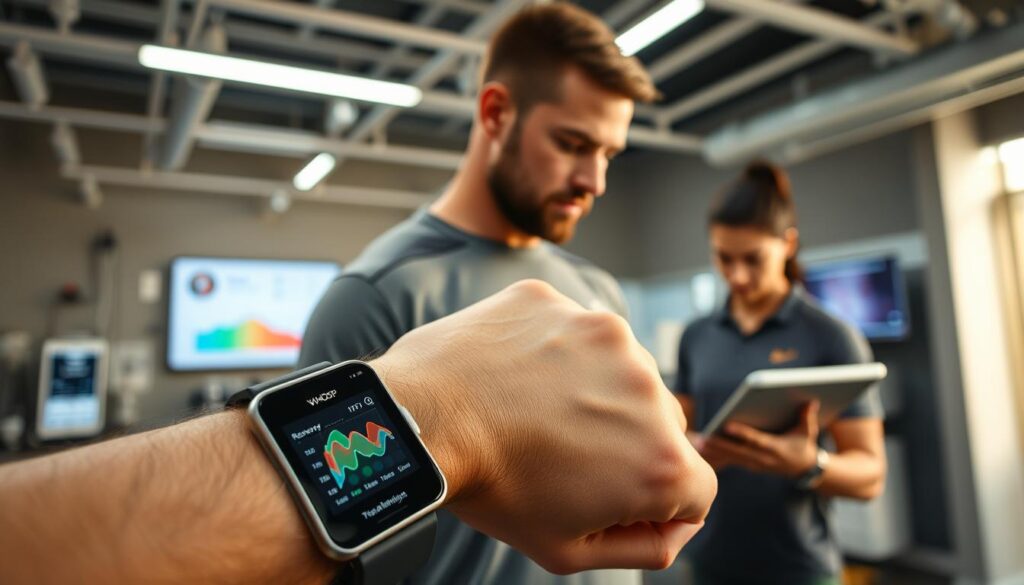
Can these systems give useful real-time coaching feedback during games or practice?

Yes. Many setups provide live metrics—like current speed, recent sprint load, and strain—so coaches can make immediate decisions to push or pull players. Real-time alerts help manage workload, prevent overexertion, and reduce injury risk during high-intensity moments.

How do teams protect player privacy and sensitive performance data?

Teams should use clear contracts and informed consent, restrict access to authorized staff, and follow data protection best practices. Encryption, anonymized reports, and retention policies help safeguard information. League rules and collective bargaining agreements can also dictate ownership and use of biometric data.

Do pro-grade systems like Catapult or WHOOP really help lower injury risk?

When used correctly, yes. Catapult-style GPS vests quantify sprint volume and total load, while WHOOP-style bands track sleep, strain, and HRV for recovery planning. Integrating these metrics lets staff balance load across training cycles and spot fatigue trends linked to higher injury risk.

What are the main differences between chest straps and wrist bands for heart rate monitoring?

Chest straps typically provide more consistent heart rate data during high-intensity and rapid movement because they detect electrical signals. Wrist bands are more convenient and track HR trends, HRV, and sleep, but they can be less accurate during explosive efforts. Choose based on your sport and the precision you need.

Can youth athletes and parents benefit from these devices, or are they only for elite teams?

Youth athletes and parents can benefit when devices are used to teach pacing, recovery, and safe progression. For younger players, focus on simple, age-appropriate metrics—distance, perceived effort, and basic HR trends—while ensuring consent and data privacy practices are followed by clubs.

How often should teams benchmark players to track progress over a season?

Regular benchmarking every 4–8 weeks usually works well. Frequent monitoring of sprint speed, distance covered, and HRV provides trend data, while periodic performance tests establish objective ratings for agility, vertical jump, and endurance. Use benchmarks to adjust training blocks and monitor return-to-play.

Will these systems work indoors, like in basketball or hockey arenas where GPS may be unreliable?

Yes. For indoor use, inertial measurement units (IMUs) with accelerometers and gyroscopes excel at capturing movement, acceleration, and change-of-direction. Some solutions add local positioning systems (LPS) or ultra-wideband (UWB) to improve indoor positioning and distance tracking.

How do I match features to my sport: soccer, football, basketball, or track?

Match sensor accuracy and metrics to demands: soccer and football need GPS precision and high-speed running measures; basketball favors movement efficiency, fatigue, and short-burst detection; track benefits from accurate timing and sprint splits. Consider app reporting, battery life, and how teams will use the data in planning and recovery.

What app experience should coaches look for in a system?

Coaches need intuitive real-time dashboards, customizable alerts, historical benchmarks, and team reporting. Look for easy data export, automated reports, and actionable insights that translate raw numbers into training adjustments and individualized recovery plans.

How do these systems help with return-to-play decisions after injury?

They provide objective measures of load tolerance, sprint capacity, and movement symmetry. Comparing pre-injury benchmarks with current outputs helps clinicians and coaches decide when an athlete safely meets performance milestones and reduce re-injury risk during reintegration.

Are there affordable options that still deliver useful insights for amateur teams?

Yes. Lower-cost devices and subscription services offer core metrics—distance, basic speed, HR trends, and HRV—suitable for amateur clubs. Prioritize sensor quality and a clear coaching app. Start with essential metrics and scale up as your staff gains experience interpreting data.

How do teams use distance, sprint counts, and load metrics to plan training and reduce fatigue?

Teams analyze acute versus chronic load ratios, sprint frequency, and total distance to spot spikes that increase injury risk. Coaches then modulate session intensity, prescribe recovery modalities, or alter practice design to balance stress and adaptation across the season.

What role does sleep tracking play in athlete performance management?

Sleep data links directly to recovery, cognitive function, and injury risk. Monitoring sleep duration and quality alongside HRV and strain helps staff set recovery priorities, adjust training loads, and recommend interventions like sleep hygiene or schedule changes to boost readiness.
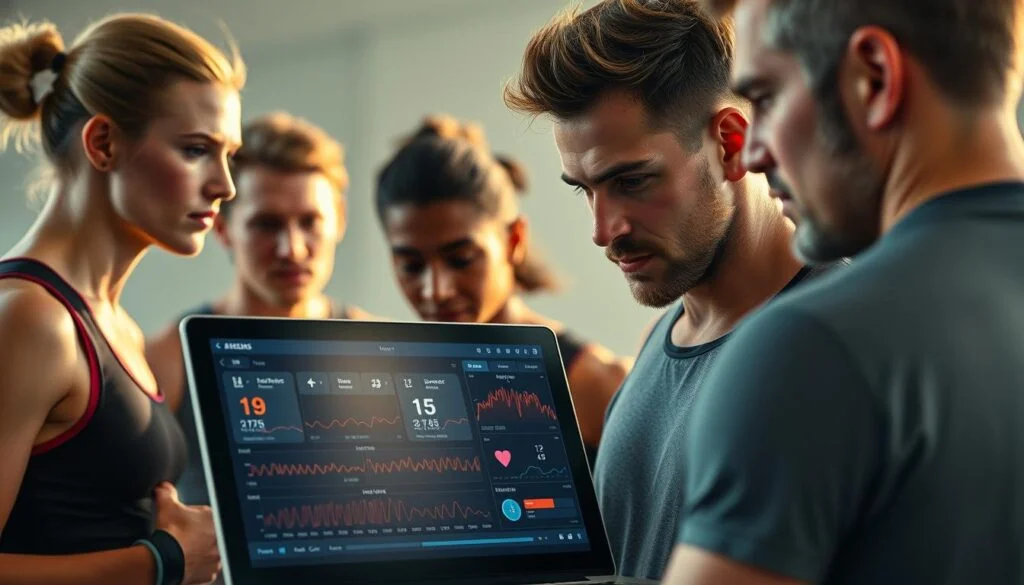
How reliable are vertical jump and explosiveness measures from modern devices?

Many devices now provide solid vertical jump and power estimates using IMUs or force-sensing peripherals. Accuracy depends on sensor placement and calibration. For consistent longitudinal tracking, use the same device and protocol so coaches can detect real changes over time.
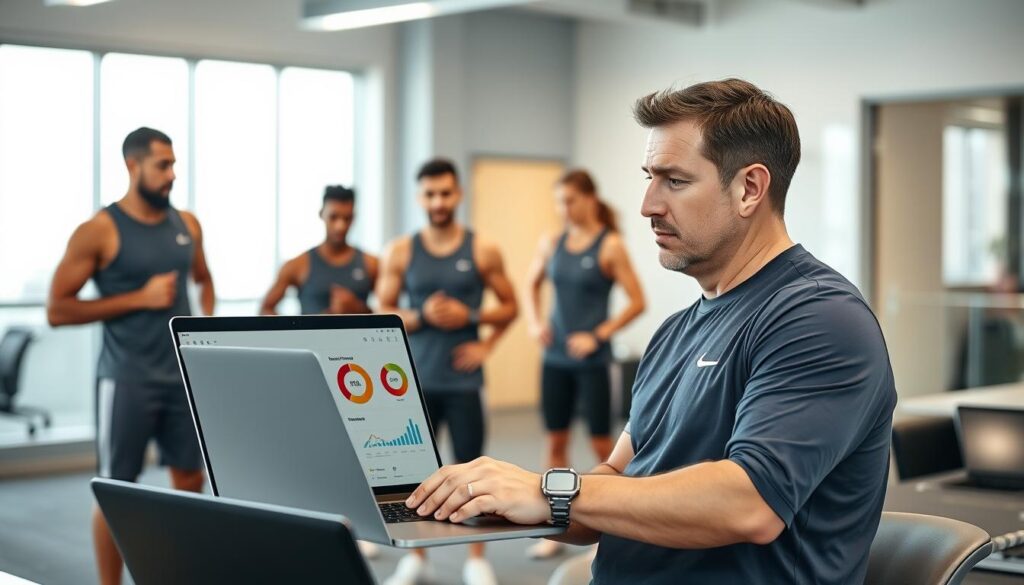
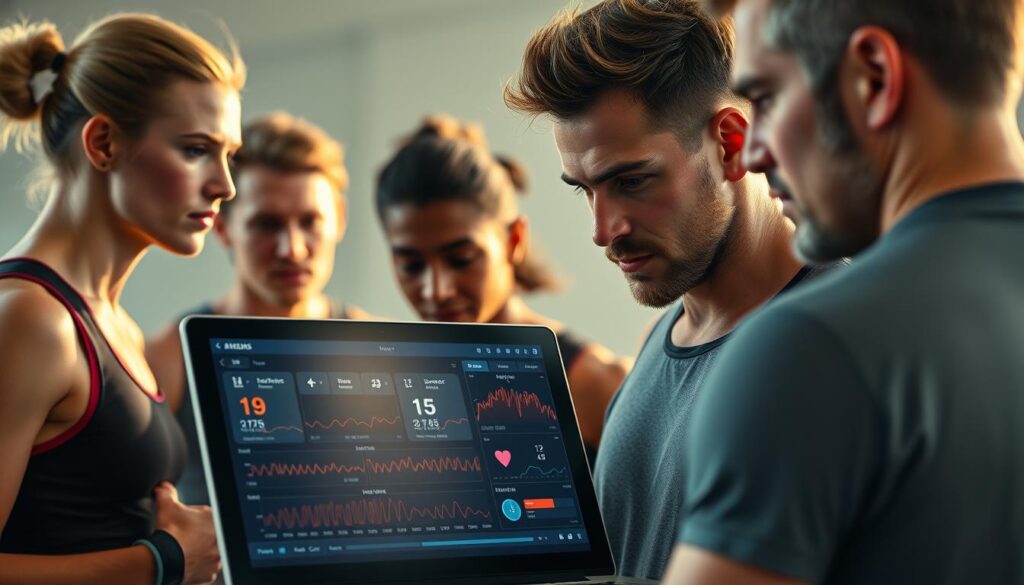
What common pitfalls should teams avoid when implementing a tracking program?

Avoid data overload without staff who can interpret it, inconsistent device wearing, and poor consent processes. Don’t rely solely on raw numbers—combine sensor data with coaching context, wellness questionnaires, and medical input for balanced decisions.


Let’s Get Started