Choosing the Right Injury Prevention & Health Monitoring System with Smart Sports IoT Solution

Coach Ramirez once spotted a quiet shift in a star player’s step during a pregame warm-up. The change was subtle, but paired with continuous data it became a clear sign to pause and assess.

The right system turns raw readings into timely insights. Teams can spot fatigue, tune training, and shorten downtime by acting early.
AI injury tracker, IoT health monitoring, wearable recovery app

Modern solutions combine an AI injury tracker, IoT health monitoring, and a wearable recovery app so coaches and clinicians see the same numbers. This unified way avoids data silos and speeds decisions.

Expect devices that capture heart rate, movement patterns, and load metrics, then feed cloud platforms for simple dashboards. Choosing the right partner, like Iottive, ensures BLE device integration, secure data flows, and faster time-to-value.

Key Takeaways

  • Unified systems turn data into actionable insights for safety and performance.
  • Continuous monitoring helps detect risks earlier and guide recovery plans.
  • Look for validated devices, comfort, and reliable battery life.
  • Platform integration avoids silos and aligns medical and coaching teams.
  • Expert partners speed deployment and tailor solutions to your team.

Why Smart Sports IoT Now: The Future of Injury Prevention and Athlete Care

Continuous sensing and smart analytics let staff spot subtle trends long before symptoms show.

From reactive treatment to proactive, real-time prevention

Teams are moving from periodic checks to nonstop data collection that enables timely intervention. Continuous streams of data create context around load, sleep, and activity so clinicians and coaches make aligned choices fast.

Future outlook: edge artificial intelligence, better sensors, and continuous monitoring

Advances in sensor fidelity and battery life mean devices will be more accurate and comfortable. Edge machine learning will analyze signals near the athlete to lower latency and protect privacy.
A bustling sports training facility, with athletes clad in sleek, high-tech activewear, their every movement and vital sign meticulously tracked by an array of wearable sensors. In the foreground, a dedicated coach intently monitors a tablet, analyzing real-time data on the team's health and performance metrics. The bright, modern lighting casts a warm, energetic glow, while the background reveals a state-of-the-art gymnasium, filled with cutting-edge fitness equipment and a sense of forward-thinking innovation. This scene captures the future of injury prevention and athlete care, where smart sports IoT solutions empower coaches to optimize training and safeguard the well-being of their team.

“Proactive care depends on clean data and clear workflows so insights become consistent action across teams.”

  • Practical impact: wearables and devices can reveal fatigue and biomechanical shifts before they worsen.
  • Platform role: cloud dashboards aggregate multi-athlete trends for benchmarking and season planning.
  • Partner value: Iottive’s end-to-end IoT/AIoT and BLE expertise helps deploy sensor-to-dashboard solutions that support proactive care models.

AI injury tracker, IoT health monitoring, wearable recovery app

A modern sports stack links sensor-rich devices with cloud analysis to turn signals into clear action.
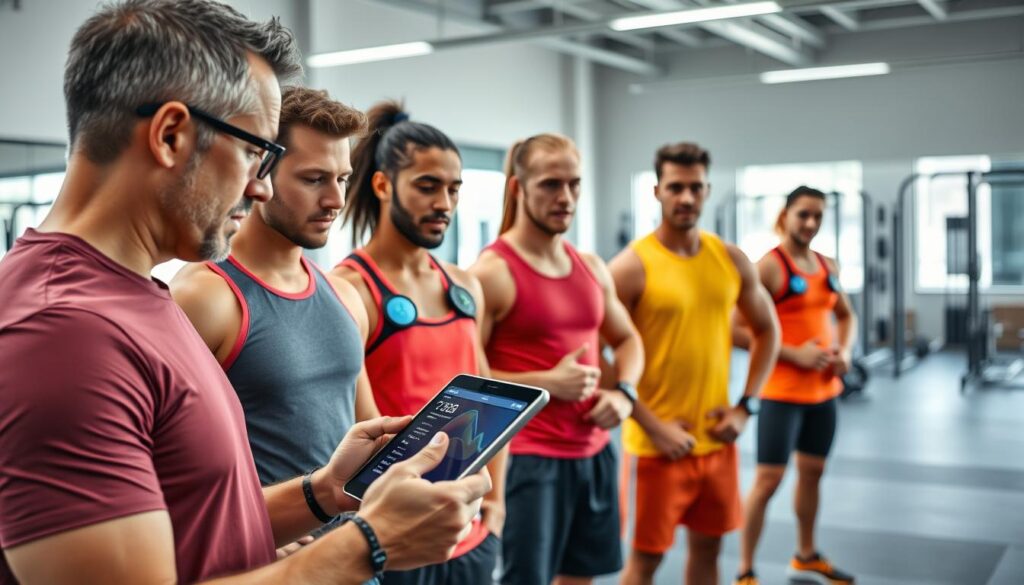
A group of professional athletes in a sports training facility, wearing various wearable devices that track their vital signs, movement, and recovery data. In the foreground, a coach intently monitors the team's health metrics on a sleek tablet device, using cutting-edge AI-powered software to optimize their training and injury prevention strategies. The middle ground features the athletes, clad in vibrant activewear, with a range of smartwatches, fitness trackers, and sensor-embedded garments seamlessly integrated into their workout routine. The background showcases the modern, well-equipped gym setting, with state-of-the-art equipment and a clean, minimalist aesthetic. The overall scene conveys a sense of high-tech efficiency, personalized healthcare, and a holistic approach to athlete wellness and performance.

Core definitions and how they work together

  • AI injury tracker: software and models that turn sensor readings into early warnings, risk scores, and actionable recommendations across an athlete’s lifecycle.
  • IoT health monitoring: the end-to-end pipeline—devices, gateways, mobile apps, and cloud services—that delivers continuous visibility into key metrics.
  • Wearable recovery app: the user layer that converts analysis into daily plans, checklists, and feedback to support adherence.

Where each fits in a modern sports medicine workflow

Sensors and wearables capture heart rate, respiration, temperature, SpO2, activity, and sleep plus sport-specific biomechanics.

Mobile software manages BLE syncing and short-term storage. Cloud services handle long-term storage, analysis, alerts, and dashboards.

Professionals—from athletic trainers to team physicians—use the same insights to inform prevention, return-to-play timelines, and day-to-day rehab decisions.

Example: combine fitness trackers for wellness baselines with EMG or impact sensors for biomechanics. That mix gives a fuller view of load and movement quality.

Key metrics—HRV, load, asymmetry, sleep quality, and impact events—roll up into dashboards and alerts aligned to training phases and medical checkpoints.

The Data That Matters: Heart rate, HRV, sleep, activity, and impact insights

Clear, consistent signals from sensors let teams spot meaningful shifts before they affect performance.

Physiological metrics

Core signals include heart rate, respiration, temperature, and SpO2. Consistent baselines make deviations easier to interpret as actionable signs.

Movement and biomechanics

Gait patterns, joint load, asymmetry, and impact forces reveal form breakdowns early. Sports-grade wearables and helmet systems record head impacts and mechanical stress.
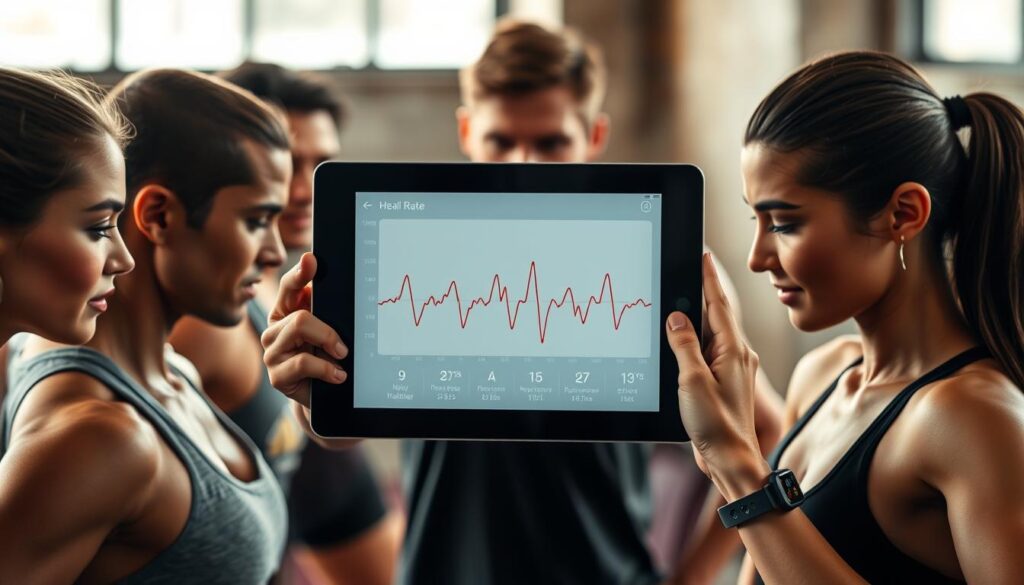
A close-up view of a tablet screen displaying real-time heart rate data, surrounded by athletes wearing fitness trackers during an intense training session. The screen shows a clean, intuitive interface with a prominent heart rate graph, highlighting the vital information needed for injury prevention and health monitoring. The athletes, clad in activewear, are engaged in their workouts, their expressions focused and determined. The scene is bathed in a warm, natural lighting, creating a sense of purpose and professionalism. The overall composition emphasizes the importance of data-driven insights in optimizing athletic performance and well-being.

Recovery signals

Sleep stages and sleep efficiency map to restoration needs. Heart rate variability adds context for fatigue and guides training intensity against subjective readiness.

  • Device features: multi-sensor fusion, onboard analysis, and ECG or PPG improve heart insights and reduce false alarms.
  • Data normalization: platforms like Iottive aggregate data across sensors to create unified dashboards for coaches and clinicians.
  • Performance indicators: strain, readiness, and load metrics link daily activity levels to longer-term risk and season planning.

From Sensors to Decisions: How AI and machine learning turn real-time data into action

Sensor streams become decisions when models turn noisy signals into clear guidance for staff and athletes.

A dynamic sports training facility, bathed in warm hues of golden hour. In the foreground, a coach intently studies a tablet, analyzing real-time data from the wearable devices of their athletes. Nearby, the team is engaged in intense physical activities, their every movement captured by a network of sensors. The middle ground is a seamless blend of technology and human performance, where insights gleaned from the data drive tailored training and injury prevention strategies. The background hints at a future where AI and machine learning empower smart sports solutions, turning raw information into actionable decisions that optimize athlete wellbeing and unlock their full potential.

Raw accelerometer, PPG, and ECG feeds pass through pipelines that remove noise and extract features. Feature extraction and analysis power anomaly detection and practical insights for teams.

Anomaly detection and early warning signs to prevent injuries

Models flag abrupt drops in HRV, sudden sleep disturbances, and high-impact events as early warning signs. Those alerts prompt clinician review and targeted investigation.

Personalized plans: adaptive training and recovery recommendations

Personalized plans adapt daily based on incoming data. Heart rate and movement features combine to estimate exertion and set performance targets that respect cumulative stress.

  • Real-time nudges: in-session feedback helps adjust load on the spot.
  • Longitudinal analysis: cloud aggregation reveals trends for season planning.
  • Validation and trust: model validation, clinician sign-off, and auditable, evidence-based data keep recommendations credible.

“On-device models cut latency; cloud models learn from cohorts. The right balance keeps responses fast while improving accuracy over time.”

Iottive builds machine learning pipelines, BLE integrations, and cloud bridges that turn sensor feeds into clinician-ready recommendations and clear athlete feedback. This pipeline helps teams act fast to prevent injuries and protect long-term performance.

Key Use Cases Across Sports: Prevention, detection, recovery, and performance

Teams use targeted data streams to catch fatigue early, fix technique, and speed safe returns to play. Practical use cases show how signals become action across practice, competition, and rehab.
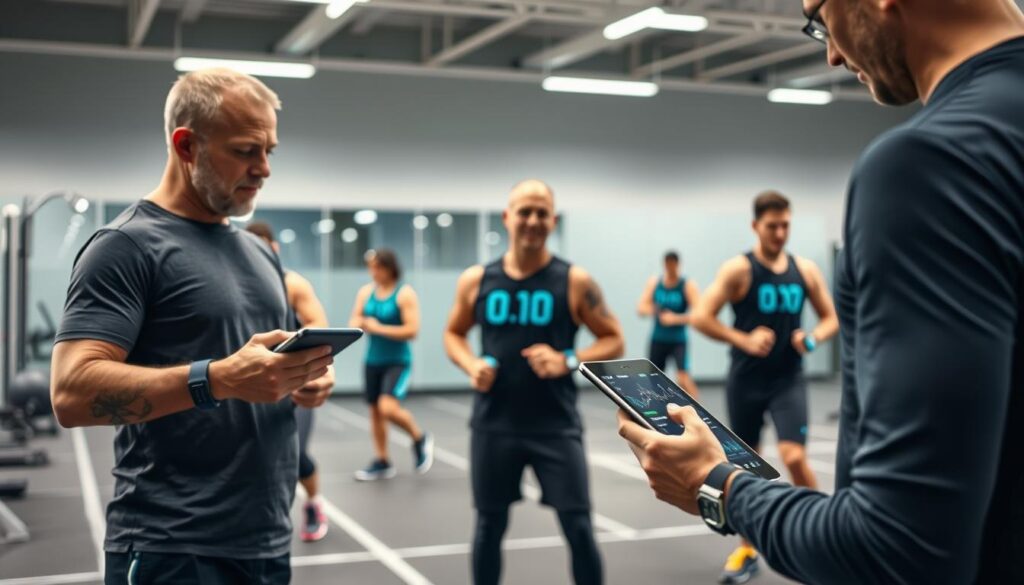
A scene depicting fatigue monitoring in sports training. In the foreground, a coach reviews real-time health metrics on a tablet, closely observing a team of athletes wearing cutting-edge wearable devices. The middle ground shows the athletes engaged in various exercises, their movements tracked by the smart IoT system. The background features a well-equipped sports facility with modern lighting and clean, minimalist design. The overall mood is one of scientific precision and proactive health management, highlighting the key role of data-driven injury prevention and performance optimization in today's elite sports.

Monitoring fatigue to prevent overuse injuries

Fatigue monitoring combines heart rate variability, heart rate, sleep, and strain to flag rising load. Timely alerts let coaches scale sessions and prevent injuries before symptoms appear.

Biomechanics correction to reduce strain and improper technique

Motion trackers capture stride, asymmetry, and load to reveal technique breakdowns. Coaches use that data to prescribe drills that correct form and lower long-term strain.

Head impact detection and rapid concussion response

Helmet or mouthguard sensors quantify impact magnitude and direction. Immediate sideline alerts start established concussion protocols and protect athletes at the moment of contact.

Post-injury rehab tracking and return-to-play confidence

Recovery tracking logs adherence to exercises, range of motion, and day-over-day readiness. Combined with team dashboards, this data coordinates therapists, athletic trainers, and physicians.

“Clear roles and escalation pathways turn detection events into fast, consistent decisions that protect athletes while sustaining performance.”

  • Example: combine trackers and a team dashboard so rehab tasks, progress, and clearance notes flow between staff.
  • Devices must balance comfort and accuracy to capture valid data across travel, practice, and competition.
  • Connecting these data streams focuses on the clinical signs staff value, so alerts become action—not noise.

Choosing Components: Wearables, smart garments, footwear sensors, and BLE connectivity

Match each device to a clear objective: load, muscle effort, stride, or daily readiness. Picking components this way keeps data actionable and reduces athlete burden.

Smartwatches and fitness trackers capture heart rate, activity, and sleep. They give broad daily context and are easy to deploy across a roster.

Smart clothing and EMG wearables

EMG garments measure muscle activation and effort. They guide load distribution and help design targeted recovery plans during rehab blocks.

Footwear and motion sensors

Foot sensors log impact and pressure distribution. Use them to find asymmetries, refine stride, and reduce mechanical stress in training.

BLE app development

Reliable BLE flows enable low-power syncing, background reconnection, and timely alerts without draining batteries. Think pairing UX, power management, and secure local storage.

  • Device features that matter: sensor fidelity, battery life, comfort, and BLE reliability for continuous data flow.
  • Combine general-purpose fitness trackers with sport-specific sensors for a fuller picture of daily readiness and performance.
  • Integration patterns: SDKs, firmware updates, and encrypted mobile storage to keep data safe and apps responsive.
Component Primary Signals Key Benefit When to Use
Smartwatches / Fitness trackers Heart rate, activity, sleep Roster-level baseline and daily readiness Daily wellness and session planning
EMG smart garments Muscle activation, effort Targeted muscle load and rehab guidance Rehab blocks and technique tuning
Footwear & motion sensors Impact, pressure, stride metrics Gait analysis and asymmetry detection Running loads and biomechanical review
BLE & Edge gateways Device sync, local preprocessing Low-latency sync and power savings Continuous collection with minimal friction

Iottive specializes in BLE development, cloud and mobile integration, and custom products that combine smartwatches, EMG garments, footwear sensors, and gateways into scalable solutions.

Solution Architecture: Cloud and mobile integration for coaches, clinicians, and athletes

A layered platform connects devices, mobile clients, and cloud services so staff see one consistent view.

Blueprint: sensors stream to BLE gateways and mobile clients, which push secure payloads to cloud ingestion services. That flow preserves context and delivers reliable real-time data to dashboards and role-based mobile screens.

Edge vs. cloud trade-offs

On-device machine learning filters noise and classifies activity for fast alerts and better privacy. Cloud models aggregate multi-user datasets to improve models and produce cohort-level insights.

Dashboards, alerts, and feedback loops

Dashboards prioritize signals, readiness scores, and progress against recovery goals. Alerts use thresholds, cooldowns, and escalation paths to cut false positives and drive meaningful action.

Development must cover cross-platform mobile work, BLE performance, offline sync, and secure ingestion so clinicians can trust the data history during clearance decisions.

Layer Role Key Benefit
Sensors & devices Capture signals at source High-fidelity inputs for analysis
Edge / Mobile Local filtering & alerts Low-latency feedback and privacy
Cloud & Analytics Aggregation & machine learning Cohort insights and model updates
Apps & Dashboards Role-based views Actionable insights and feedback

“Design choices should make it simple to add new sensors and scale models across teams.”

Governance: access controls, audit logs, and encrypted storage protect health data while enabling clinician review. A modular solutions stack lets teams roll out components without rebuilding core integrations.

Selection Criteria: How to evaluate a smart sports IoT system for your needs

A practical shortlist focuses on accuracy, integration, usability, and compliance from day one.

Accuracy, reliability, and validation of metrics

Assess how sensors perform under sport conditions. Check repeatability, tolerance to motion, and sweat effects.

Validate metrics like heart rate, activity levels, and sleep against lab references and field tests. Plan trials across training drills and competition to confirm real-world fidelity.

Interoperability: APIs, EHR compatibility, and data standards

Prefer API-first vendors with secure webhooks and support for common healthcare formats. EHR integration reduces silos and speeds clinician workflows.

Look for open interfaces that let IT map feeds into existing clinical systems without heavy rework.

User experience: comfort, battery life, and adherence

Comfort and intuitive mobile flows drive long-term use. Test battery life across multi-day travel and peak activity levels.

UX research and clinician feedback improve adherence and trust in daily plans and alerts.

Security, privacy, and compliance considerations (HIPAA)

Require encryption at rest and in transit, role-based access, and full audit trails. These controls protect patient privacy and meet regulatory needs.

Vendor roadmaps and development support matter. Iottive helps with validation planning, API-first integration, and HIPAA-aligned architectures to match your long-term plans.

“Choose solutions that meet performance targets while protecting data and organizational risk profiles.”

Real-World Inspirations: What elite sports and health leaders are using

Elite teams pair league-proven devices with club systems to turn season-long signals into clear coaching steps.

Examples across leagues

Load, GPS, and impact sensing in action

NFL clubs deploy Riddell’s InSite helmet for impact detection and fast sideline checks. The NBA uses Catapult sensors to manage load and reduce fatigue across dense schedules.

European football relies on GPS wearables to track distance, speed, and acceleration. Those feeds map to load thresholds tied to lower injuries and smarter session planning.

Consumer-to-pro bridge

Apple Watch, WHOOP, and Oura supply heart rate, heart rate variability, and sleep metrics that slot into team dashboards. Combining team-grade devices with consumer wearable devices widens coverage without losing fidelity.

League Device Type Primary Use
NFL Helmet sensors (Riddell InSite) Impact detection and sideline workflow
NBA Player GPS & IMU (Catapult) Load tracking and fatigue management
European Football GPS wearables Distance, speed, acceleration thresholds

“These inspirations show how data-led choices keep athletes safe and sustain performance across a season.”

Iottive integrates Catapult, GPS systems, Apple HealthKit, WHOOP, and Oura SDKs into unified analytics so coaches use consistent data for planning and AI-driven model updates.

Overcoming Challenges: Data quality, bias, equity, and clinician adoption

High-quality signals make the difference between a false alarm and an action coaches can trust. Focused work on sensor setup and signal processing improves the usefulness of every reading.

Improving signal quality and reducing false alarms

  • Calibrate sensors and give clear placement guidance so devices collect consistent data.
  • Use motion-artifact filters, adaptive thresholds, and contextual baselines to raise signal-to-noise over time.
  • Iottive supports firmware and edge development that reduces this noise at the source.

Inclusive models and clinician adoption

Diverse training datasets and continuous bias audits help ensure models apply across age, gender, and ethnicity. Equity also means offering loaner programs and cost-sensitive bundles so more athletes access the same tools.

Privacy and security use encryption, access control, and audit logs to build trust among professionals and athletes. Integrations with EHRs and clinician-centric UX reduce clicks and highlight the most relevant signs, improving adoption.

“Clear signals, fair models, and usable workflows turn data into shared decisions that better prevent injuries.”

About Iottive: End-to-end IoT/AIoT development for smart sports solutions

Iottive delivers full-stack development from firmware through cloud so teams launch connected sports platforms faster.

Expertise in BLE app development, cloud & mobile integration, and custom IoT products

Development covers BLE firmware, mobile clients, secure ingestion, and analytics dashboards.

Our engineering blends embedded work with cloud pipelines so multi-sensor feeds become coach- and clinician-ready.

Industry experience across multiple sectors

We apply patterns proven in Healthcare, Automotive, Smart Home, Consumer Electronics, and Industrial IoT.

Cross-industry lessons speed delivery and lower risks for sports programs with specific operational needs.

Build your monitoring, wearable devices, or recovery-centric platform

  • End-to-end development: firmware, BLE app development, cloud & mobile integration, and analytics.
  • Device integration: unify diverse devices and wearable devices into cohesive solutions that reduce integration work.
  • Tailored to needs: role-based features, secure access, and timely feedback for coaches, clinicians, and athletes.
  • Design for adherence and comfort so wearables fit daily routines and season rhythms.
  • We help you launch a recovery-focused platform that scales with your program.

Ready to align scope, timelines, and outcomes? Start a conversation at www.iottive.com or sales@iottive.com.

Conclusion

, A unified platform turns diverse signals into straightforward guidance staff can act on every day.

Recap: A well-chosen system unites data from wearables and devices into clear insights that improve health, performance, and season-long recovery outcomes.

The best path fits daily routines and uses monitoring and feedback to deliver just-in-time nudges without overload. Standardize around validated metrics—like heart rate, HRV, sleep, and load—so return-to-play and training calls stay consistent and defensible.

Bridge consumer and pro ecosystems to gather the right signal quality while keeping comfort and adherence high. Proactive prevention, focused rehab plans, and tight feedback loops reduce risk and boost availability when it matters most.

Iottive is ready to design end-to-end solutions—BLE apps, cloud analytics, and mobile experiences—to move you from strategy to execution. Contact www.iottive.com | sales@iottive.com.

FAQ

What should I consider when choosing a smart sports monitoring system?

Look for validated metrics, reliable sensors, comfortable hardware, strong battery life, and seamless connectivity. Prioritize systems with clear data standards, API support, and clinician- or coach-facing dashboards to turn measurements into actionable plans.

How do real-time systems shift care from reactive to proactive?

Continuous data capture and edge analytics enable early detection of abnormal patterns such as rising fatigue or altered gait. That allows coaches and clinicians to intervene sooner with load adjustments, technique changes, or rest prescriptions before problems escalate.

What roles do sensors, wearables, and software play together?

Sensors capture physiological and biomechanical signals; firmware and BLE handle transmission; mobile and cloud software aggregate, analyze, and visualize data. Machine learning models then convert raw inputs into readiness scores, trend alerts, and personalized recommendations.

Which physiological metrics are most useful for athlete care?

Heart rate, heart rate variability (HRV), respiration rate, SpO2, and skin temperature offer insight into stress, recovery, and illness. Combining these with sleep and subjective wellness data improves prediction of readiness and fatigue.

What movement measures help detect mechanical risk?

Gait symmetry, joint load estimates, stride length, impact force, and range-of-motion trends flag technique problems and overuse risk. EMG and inertial sensors add muscle activation and timing context to refine interventions.

How do systems identify early warning signs for problems?

Anomaly detection models monitor baselines and flag deviations in physiological or biomechanical signals. Multimodal patterns—like elevated resting heart rate plus poor sleep and reduced stride efficiency—trigger prioritized alerts for review.

Can these solutions create personalized training and recovery plans?

Yes. Adaptive algorithms use individual baselines, response history, and sport-specific thresholds to suggest load adjustments, recovery modalities, and progressions. Coaches can tailor plans while clinicians manage rehab milestones.

What use cases deliver the most value across sports?

Monitoring fatigue to prevent overuse, correcting biomechanics to lower strain, detecting head impacts for rapid concussion response, and tracking rehab progress for safe return-to-play are high-impact applications for teams and athletes.

Which device types are best for different monitoring needs?

Smartwatches and wrist trackers suit broad physiological monitoring. Smart garments and EMG wearables are ideal for muscle activation and movement patterns. Footwear sensors excel at stride and load analysis. Choose hardware based on the primary metrics you need.

How important is BLE and app design in device integration?

Very important. Low-energy Bluetooth ensures reliable data transfer with minimal battery drain. Well-designed mobile apps manage firmware updates, pairing, real-time sync, and user prompts that boost adherence and data quality.

Should processing happen at the edge or in the cloud?

Use edge processing for low-latency alerts and to protect privacy when raw signals are sensitive. Cloud analytics support heavy model training, long-term trend analysis, and cross-athlete benchmarking. A hybrid approach often works best.

What evaluation criteria should organizations use when selecting a solution?

Assess accuracy and validation, interoperability with EHRs or performance platforms, user comfort and adherence, battery life, and compliance with security and privacy standards such as HIPAA where applicable.

Which commercial products bridge consumer and pro workflows?

Devices like Apple Watch, WHOOP, and Oura provide high-quality physiological data that teams and clinicians often integrate into broader workflows using APIs and supplemental sensors for sport-specific insights.

How do teams reduce false alarms and improve data quality?

Improve sensor placement, use signal filtering, calibrate models to population subsets, and combine multiple data streams. Regular validation and clinician review of flagged events help tune thresholds and reduce alert fatigue.

How can developers ensure inclusive, unbiased models?

Train on diverse datasets that reflect different ages, sexes, skin tones, body types, and skill levels. Continuously audit model performance and provide transparent error rates so clinicians can interpret outputs responsibly.

What privacy and security measures are essential for athlete data?

Implement encryption in transit and at rest, enforce role-based access controls, maintain audit logs, and comply with regional regulations such as HIPAA when handling protected health information. Clear consent flows and data minimization help maintain trust.

What experience does a full-service IoT development partner bring?

A capable partner delivers BLE app development, firmware expertise, cloud and mobile integration, data pipelines, and domain experience across healthcare, consumer electronics, and sports. That speeds time-to-market and reduces integration risk.
Let’s Get Started

The Best Wearable Trackers for Monitoring Player Speed and Stamina

One afternoon, a high school coach paused practice when a tablet lit up with real-time data. A starter’s sprint totals dropped and his heart rate stayed high. The coach swapped drills, cut reps, and the player’s recovery improved by the next scrimmage.

This is the kind of instant insight tech now brings to teams. From NFL-grade Catapult GPS vests to WHOOP sleep and HRV tools, and ShotTracker for court work, modern devices turn raw numbers into clear guidance.

We’ll outline AI speed monitor tools, agility performance wearable options, and GPS-based trackers so athletes and coaches can match gear to goals. Expect coverage of metrics like speed, distance, player load, and heart rate, plus recovery cues that shape smarter training and in-game choices.

wearable sports tracker

Key Takeaways

  • Real-time data helps coaches make on-the-spot decisions to protect players.
  • Top brands like Catapult and WHOOP bring pro-level insights to schools and clubs.
  • Choose between AI speed monitor, GPS trackers, and agility performance wearable types based on sport needs.
  • Focus on useful metrics: distance, load, heart rate, and recovery markers.
  • Battery life, comfort, and app clarity matter as much as sensor accuracy.

Why wearable sports tracker technology is redefining athlete performance right now

Today’s on-body sensors turn raw numbers into clear guidance that teams can act on immediately.

Coaches, athletes, and parents want simple information: is an athlete ready today, or should they rest? Devices like WHOOP (sleep, HRV, strain) and Garmin Forerunner (VO2 max estimates) make that call clearer. Premier League GPS vests and court systems show live stamina, speed, and positioning so staff can adjust work on the spot.

data

Accuracy, safety, and usefulness are the top questions families ask. Teams look for clear recovery and heart rate markers that guide when to push and when to ease off. That lowers the chance of injuries while keeping training effective.

  • Immediate clarity: real-time data helps coaches make faster decisions about rotations and drills.
  • Non-intrusive setup: many wearable devices give positioning and rate checks without slowing practice.
  • Privacy basics: leagues and clubs must secure consent and limit who sees player information.

Start simple: track a few key metrics, learn what they mean, then scale features as teams and athletes grow into the tech.

How wearable devices track speed, stamina, and agility

Sensors on the body and in gear work together to turn raw signals into clear training cues coaches can use.

sensors

Core sensors explained

Accelerometers measure linear motion and help count steps, accelerations, and sudden starts. Gyroscopes record rotation and direction changes, which reveal cutting and turning patterns.

GPS trackers map outdoor distance and positioning, giving reliable distance splits and field coverage. Heart rate monitors capture effort in real time and link work output to exertion.

From heart rate to HRV

Heart rate shows immediate effort. Heart rate variability (HRV) reveals recovery trends and early fatigue signs.

WHOOP and similar devices use HRV and strain scores to flag when to ease back or push hard.

Real-time capture and training insights

Combined data produce movement patterns: sprint counts, distance covered, and positional heat maps. Catapult blends acceleration, distance, and top runs into a workload number that coaches use to cap sessions.

  • Outdoor field work: GPS gives best location and distance accuracy.
  • Indoor settings: accelerometer and gyroscope data often outperform GPS.
  • Syncing to apps delivers live dashboards so athletes and coaches make instant calls.

Track consistent baselines. That keeps comparisons true and helps athletes spot real gains instead of device variance.

AI speed monitor and real-time coaching feedback

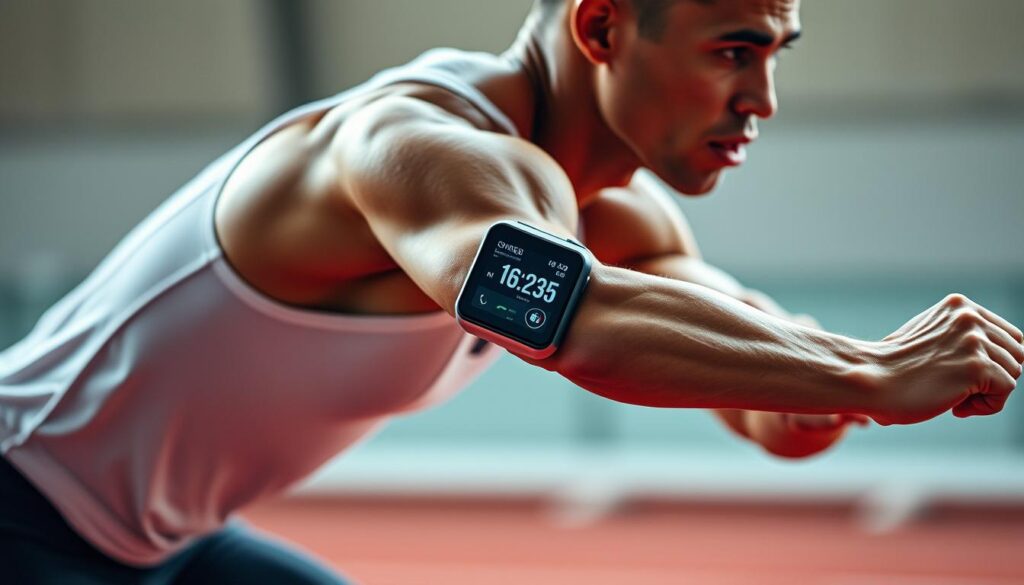
Machine models running on chest and wrist sensors turn noisy readings into trusted insights for training. These systems classify movements, spot shifts in patterns, and give coaches quick, actionable data during practice and games.

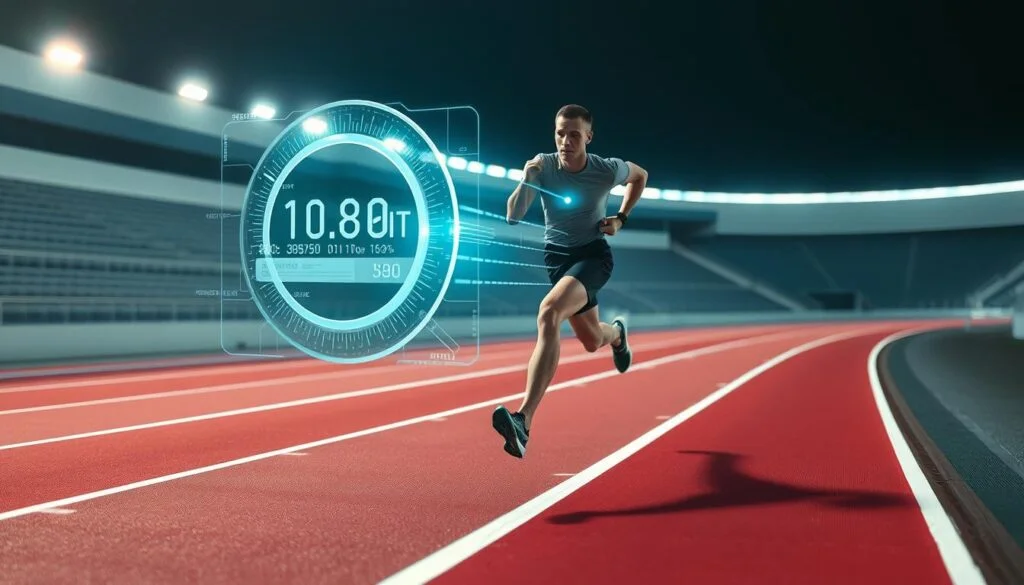
speed monitor of sprint runners

Machine learning on the wrist and chest: identifying movements and predicting trends

An AI speed monitor converts raw sensor streams into labeled movements and objective ratings. That lets staff compare a player’s stride, acceleration bursts, and heart rate against age-based norms.

Live decisions in practice and games: pushing, pulling back, and reducing injury risk

Real-time data helps coaches make split-second decisions. When models flag fatigue or a drop in rate, teams can pull a player to cut risk of injuries and aid recovery.

Benchmarking performance over time with objective ratings

Helios is a solid example: its Stride Recognition spots left/right stride quality and benchmarks skill by age without new field hardware.

Use case What it flags Coach action
Technique drift Changes in movement patterns Correct form, shorten session
Early fatigue Decline in acceleration or heart rate consistency Substitute, reduce reps
Skill benchmarking Objective ratings over time Set targets, gamify training

Simple dashboards surface only the day’s key metrics so teams can align fast. Coaches should set clear thresholds (for HRV, rate decline, or symmetry loss) to make consistent, data-driven decisions.

Pick devices and sensors that match the sport and environment so models see clean signals. The goal is straightforward: give each player transparent feedback that improves training and protects their health.

Choosing an agility performance wearable for drills and game-speed training

A simple, reliable device should highlight first-step bursts and direction losses so training stays focused. Pick gear that maps the exact movements that matter for game play. That keeps drills short, clear, and repeatable.

Agility, explosiveness, and change-of-direction metrics that matter

Focus on first-step acceleration, change-of-direction efficiency, and how movement patterns degrade under fatigue. These metrics show where a player loses form and where coaching helps most.

How devices capture game-like drills

Small sensors measure acceleration, rotation, and vertical force during short sprints, shuttles, and jumps. That raw data becomes useful when it is tied to repeatable drills and consistent setups.

movement patterns devices

Why Hyper Speed stands out in practice

Hyper Speed tracks speed, change-of-direction, and vertical jump with a removable sensor and a real-time app. Setup uses an easy tripod and works at home or on fields. Reviews praise quick setup, youth-friendly bands, and motivating live feedback.

Choosing by comfort, form factor, and decisions

  • Prefer wrist or clip-on options that don’t alter running form.
  • Pick sensors that detect short sprints, shuttles, and jumps with reliable rep counts.
  • Log the same drills so week-to-week gains reflect true improvement, not setup changes.

Keep metrics tight: a small set of clear numbers helps coaches and players make better decisions and spot technique breakdowns before injuries occur.

Spotlight on leading trackers and how teams use them

Here are the standout systems pro and youth teams deploy for clearer session data and smarter recovery.

trackers data insights

Catapult GPS vests

Catapult vests log sprint speed, total distance, and player load. Teams in football, basketball, and soccer use these numbers to set limits on practice intensity.

Coaches balance workloads across players with this data to cut injury risk. The result: clearer session plans and safer training days.

WHOOP bands

WHOOP focuses on sleep, strain, and heart rate variability to guide daily readiness. Athletes and teams use its recovery score to decide whether to push or rest.

For example, a low HRV and high strain often mean a lighter session to reduce fatigue and injury chance.

Helios Core for hockey

Helios Core uses machine learning and Stride Recognition to separate left and right skating strides. It provides age-based benchmarks and gamified progress with no new infrastructure.

Hyper Speed

Hyper Speed captures speed, change metrics, and vertical jump with a removable sensor and a live app. Teams praise fast setup and motivating feedback that keeps players engaged.

Device Key metrics Best fit
Catapult GPS vests Sprint speed, distance, total load Outdoor field sports (football, soccer), basketball
WHOOP bands Sleep, HRV, strain Recovery-focused tracking for athletes and teams
Helios Core Stride recognition, benchmarks Hockey and skating programs (zero infra)
Hyper Speed Speed, jump, live feedback Drill work, agility and jump sessions

Bottom line: pick devices that match the sport and goals. Teams win when insights are actionable, fit into practice flow, and tie tracking to sleep and recovery habits.

Wearables in action across sports like soccer, football, basketball, and track

Different sports tap specific signals — GPS outdoors, motion sensors indoors — to guide daily decisions. This makes it easier for coaches to manage work, rest, and drills for teams and players.

Soccer and football: positioning, high-volume runs, and stamina

Premier League sides use GPS vests to track positioning and high-speed running volumes. Coaches tally high-intensity efforts so players share load and avoid overwork.

Football programs use distance and acceleration data to balance drills. That reduces injury risk without hurting on-field results.

Basketball: shooting, movement efficiency, and fatigue signals

NBA teams bring ShotTracker into practice to analyze shooting sessions and court positioning. The tool shows which movements lead to better shots and where fatigue shows up late in drills.

Heart rate and recovery cues then guide substitutions or lighter reps when fatigue trends appear mid-practice.

Hockey and running: stride quality, acceleration, and pacing

Helios Core highlights stride patterns on ice so hockey athletes refine acceleration and efficiency. Runners use sensors to pace distance and sharpen interval splits.

Across all fields, pattern analysis uncovers movement inefficiencies that sap late-game speed. Clean GPS outdoors and accelerometers indoors keep data reliable.

  • Keep test sets consistent so player comparisons are fair.
  • Use simplified dashboards so athletes see clear action steps from complex data.

“Use consistent drills and the right sensors for the setting — that’s how data turns into better choices.”

From data to decisions: optimizing training, recovery, and injury prevention

Smart use of daily numbers helps teams keep training loads steady and recovery strong.

How coaches turn readings into action: rate monitors and HRV guide session intensity. WHOOP’s HRV and strain show readiness, while Catapult’s total load blends distance, acceleration, and rate to manage workload.

Use clear thresholds. When heart rate patterns or HRV drop beyond set limits, coaches adjust drills or cut reps to lower injury risk. Teams like the Seattle Seahawks have tracked sleep to support recovery during long seasons.

Simple process coaches can follow

  • Plan: set session goals and thresholds.
  • Capture: collect heart rate, HRV, and load each day.
  • Review: check trends for fatigue and risk.
  • Decide: alter intensity or rest based on insights.
Metric What it signals Coach action
HRV drop Poor recovery Light session, extra sleep focus
High strain Cumulative load Reduce reps, active recovery
Rising heart rate at rest Onset fatigue or illness Medical check, lower intensity
Back-to-back high loads Injury risk rises Insert rest day, monitor closely

Athlete checklist: warm-up quality, HR/HRV, perceived fatigue, and last session load. Log a short note too — numbers need context. Combining heart rate, HRV, and speed trends gives clearer insights than any single metric.

Privacy, ethics, and ownership: handling athlete data in teams and leagues

Sensitive athlete records can shape careers, so leagues need firm policies on access and use. Clear rules help players trust the system and let staff use information to improve training and health.

Why ownership and consent matter: data should belong to the athlete or be shared only with explicit consent. Teams and leagues must explain who sees what and why.

Contracts, consent, and safeguarding sensitive information

  • Ownership & consent: state who owns collected data and require written consent before sharing.
  • Safeguarding information: encrypt records, limit access, and separate medical files from coaching dashboards.
  • Example risk: if declining performance trends are used to cut a player’s contract, that misuse harms careers and trust.
  • Contract clauses: include retention limits, anonymization steps, and deletion at season end.
  • Approved uses: allow training, medical care, and rehab, but ban non-consensual scouting or contract decisions.
  • Audits & portals: schedule periodic audits and give athletes a portal to view and export their records.
  • Staff training: privacy education reduces human error and lowers legal risk.
  • Cross-team sharing: leagues should standardize protections so data sharing between clubs is fair and secure.

Build trust: clear communication keeps focus on improving health and sleep metrics rather than policing people. Strong governance encourages athletes to engage with tracking for better outcomes.

Area Best practice Why it matters
Retention Define limits and deletion Protects player careers
Anonymization Use for research or league reports Reduces legal and ethical risk
Access Role-based permissions Keeps sensitive information private

Buying guide: how to pick the best wearable sports tracker for your goals

A buying plan begins by matching the most useful sensors to the sport and session type. Start with what you want to measure and who will use the data daily.

Match features to sport: GPS, sensors, and accuracy

Outdoor field teams should favor GPS-based systems like Catapult for accurate distance and position. For indoor court work, pick devices with strong accelerometer and gyroscope data.

Helios is useful for hockey—benchmarks and gamified progress need no new infra. Hyper Speed gives live drill results with an easy tripod setup for home or field.

App experience: dashboards, benchmarks, and team reporting

Check for real-time dashboards, clear benchmarks, and export options. WHOOP’s app emphasizes readiness, sleep, and HRV for recovery-focused athletes.

Fit, comfort, battery life, and durability for daily training

  • Match form factor to movement so gear doesn’t change running or cutting.
  • Compare battery life and ruggedness for daily use.
  • Choose systems that integrate with team workflows and offer flexible alerts so coaches can use data on the fly.

“Pick the features that change decisions, not the one with the flashiest spec.”

Conclusion

Pro-grade insights are now practical for every team. Catapult’s GPS load, WHOOP’s sleep and HRV readiness, Helios’ stride recognition, and Hyper Speed’s live jump and speed feedback show how data turns into better results for players and coaches.

The payoff is simple: smarter training, safer recovery, and clearer gains in on-field performance. Pick devices that match your environment, start with one priority metric, and use consistent benchmarks to build trust.

Example: pairing GPS load with sleep and HRV helps plan peak weeks with confidence. Athletes across sports like soccer, hockey, and track can access these tools without pro budgets.

Now is the time to align training and recovery before the next big game.

FAQ

What features should I prioritize when choosing a device to track player speed and stamina?

Look for GPS accuracy, reliable accelerometers and gyroscopes, and a chest or wrist sensor that captures heart rate and heart rate variability (HRV). Battery life, comfort, and durability matter for daily training. Also check the app for real-time dashboards, distance and sprint metrics, and team reporting so coaches can turn data into actionable training decisions.

How do these devices measure sprint speed and change-of-direction efforts?

Devices combine GPS for distance and top-end speed with inertial sensors (accelerometers and gyroscopes) to detect acceleration, deceleration, and lateral movement. Algorithms translate those signals into sprint count, peak speed, and agility or change-of-direction metrics coaches use to design drills and reduce injury risk.

What does heart rate variability (HRV) tell me about recovery and fatigue?

HRV reflects autonomic nervous system balance and helps indicate readiness to train. A higher HRV typically signals better recovery and lower fatigue; a lower HRV can warn of strain or illness. Teams use HR and HRV together with load metrics to adjust session intensity and plan recovery strategies like sleep optimization.

Can these systems give useful real-time coaching feedback during games or practice?

Yes. Many setups provide live metrics—like current speed, recent sprint load, and strain—so coaches can make immediate decisions to push or pull players. Real-time alerts help manage workload, prevent overexertion, and reduce injury risk during high-intensity moments.

How do teams protect player privacy and sensitive performance data?

Teams should use clear contracts and informed consent, restrict access to authorized staff, and follow data protection best practices. Encryption, anonymized reports, and retention policies help safeguard information. League rules and collective bargaining agreements can also dictate ownership and use of biometric data.

Do pro-grade systems like Catapult or WHOOP really help lower injury risk?

When used correctly, yes. Catapult-style GPS vests quantify sprint volume and total load, while WHOOP-style bands track sleep, strain, and HRV for recovery planning. Integrating these metrics lets staff balance load across training cycles and spot fatigue trends linked to higher injury risk.

What are the main differences between chest straps and wrist bands for heart rate monitoring?

Chest straps typically provide more consistent heart rate data during high-intensity and rapid movement because they detect electrical signals. Wrist bands are more convenient and track HR trends, HRV, and sleep, but they can be less accurate during explosive efforts. Choose based on your sport and the precision you need.

Can youth athletes and parents benefit from these devices, or are they only for elite teams?

Youth athletes and parents can benefit when devices are used to teach pacing, recovery, and safe progression. For younger players, focus on simple, age-appropriate metrics—distance, perceived effort, and basic HR trends—while ensuring consent and data privacy practices are followed by clubs.

How often should teams benchmark players to track progress over a season?

Regular benchmarking every 4–8 weeks usually works well. Frequent monitoring of sprint speed, distance covered, and HRV provides trend data, while periodic performance tests establish objective ratings for agility, vertical jump, and endurance. Use benchmarks to adjust training blocks and monitor return-to-play.

Will these systems work indoors, like in basketball or hockey arenas where GPS may be unreliable?

Yes. For indoor use, inertial measurement units (IMUs) with accelerometers and gyroscopes excel at capturing movement, acceleration, and change-of-direction. Some solutions add local positioning systems (LPS) or ultra-wideband (UWB) to improve indoor positioning and distance tracking.

How do I match features to my sport: soccer, football, basketball, or track?

Match sensor accuracy and metrics to demands: soccer and football need GPS precision and high-speed running measures; basketball favors movement efficiency, fatigue, and short-burst detection; track benefits from accurate timing and sprint splits. Consider app reporting, battery life, and how teams will use the data in planning and recovery.

What app experience should coaches look for in a system?

Coaches need intuitive real-time dashboards, customizable alerts, historical benchmarks, and team reporting. Look for easy data export, automated reports, and actionable insights that translate raw numbers into training adjustments and individualized recovery plans.

How do these systems help with return-to-play decisions after injury?

They provide objective measures of load tolerance, sprint capacity, and movement symmetry. Comparing pre-injury benchmarks with current outputs helps clinicians and coaches decide when an athlete safely meets performance milestones and reduce re-injury risk during reintegration.

Are there affordable options that still deliver useful insights for amateur teams?

Yes. Lower-cost devices and subscription services offer core metrics—distance, basic speed, HR trends, and HRV—suitable for amateur clubs. Prioritize sensor quality and a clear coaching app. Start with essential metrics and scale up as your staff gains experience interpreting data.

How do teams use distance, sprint counts, and load metrics to plan training and reduce fatigue?

Teams analyze acute versus chronic load ratios, sprint frequency, and total distance to spot spikes that increase injury risk. Coaches then modulate session intensity, prescribe recovery modalities, or alter practice design to balance stress and adaptation across the season.

What role does sleep tracking play in athlete performance management?

Sleep data links directly to recovery, cognitive function, and injury risk. Monitoring sleep duration and quality alongside HRV and strain helps staff set recovery priorities, adjust training loads, and recommend interventions like sleep hygiene or schedule changes to boost readiness.

How reliable are vertical jump and explosiveness measures from modern devices?

Many devices now provide solid vertical jump and power estimates using IMUs or force-sensing peripherals. Accuracy depends on sensor placement and calibration. For consistent longitudinal tracking, use the same device and protocol so coaches can detect real changes over time.

What common pitfalls should teams avoid when implementing a tracking program?

Avoid data overload without staff who can interpret it, inconsistent device wearing, and poor consent processes. Don’t rely solely on raw numbers—combine sensor data with coaching context, wellness questionnaires, and medical input for balanced decisions.


Let’s Get Started