Top 5 Fleet Monitoring Solutions for Autonomous Taxi Operators

On a rainy Thursday, an operations manager watched a map fill with delays. Vehicles stood idle in traffic, drivers lost hours, and fuel bills climbed. That single shift highlighted a simple truth: without real-time visibility, costs and downtime multiply fast.

Modern systems combine AI fleet tracking, IoT taxi monitoring, cloud analytics, and firmware updates to turn raw sensor data into clear actions. Together, these tools give managers instant vehicle health, location, and performance insights so teams can cut fuel use, reduce unplanned repairs, and boost safety.

fleet monitoring solutions

This guide previews five solution categories—telematics and IoT platforms, computer-vision safety stacks, predictive maintenance suites, route optimization engines, and unified command centers. It explains how to pick technology, set KPIs, and measure total cost of ownership before scaling in dense U.S. cities where congestion and regulation raise the bar for uptime.

Key Takeaways

  • Real-time visibility cuts costs tied to fuel and downtime.
  • Integrated systems turn sensor data into actionable decisions.
  • Five solution categories map to common operational needs.
  • Managers must weigh KPIs and total cost before scaling.
  • Safety, efficiency, and lower costs flow from better data use.

Why Autonomous Taxi Fleets Need AI and IoT Now

Mounting costs from fuel, congestion, and unplanned repairs are squeezing margins. Fuel represents nearly 30% of typical operating expenses, while congestion costs ~43 lost hours and $771 per driver each year.

Rising fuel costs, systemic traffic delays, and maintenance issues are the top cost centers for modern vehicle operations. Manual spreadsheets and static routing no longer cut it; they waste fuel and raise accident risk.

fleet management

Rising fuel, traffic, and maintenance pressures

Real downtime from unplanned maintenance disrupts schedules and hurts revenue. Traffic patterns and weather make routing brittle when decisions are reactive.

From manual tracking to proactive operations

Real-time data pipelines feed models that enable predictive maintenance and dynamic route planning. Connected systems fuse traffic, road conditions, and pickup windows to cut idle time and delays.

  • Safety dividend: early issue detection and driver behavior alerts reduce incidents.
  • Manager benefits: live insights let managers resolve issues before they escalate, improving uptime.
  • Quick wins: deploy telematics, enable continuous diagnostics, and pilot AI-assisted route planning to curb costs within weeks.

“Companies that embrace connected systems now will gain higher utilization, better adherence to service windows, and more predictable costs.”

Core Concepts for Autonomous Taxi Management

Driverless operations shift focus from seat-time to sensor-time, changing how teams run vehicles day to day. Remote supervision, higher sensor density, and continuous telemetry make oversight more like software ops than traditional dispatch.

How operations differ from traditional fleets

Remote operators replace some in-vehicle tasks. Vehicles stream GPS, speed, engine diagnostics, and sensor data nonstop. That continuous feed changes how managers set policy and safety rules.

Telematics, vision, and edge basics

The telematics stack combines GPS, accelerometers, and engine sensors to send real-time signals to systems used by managers. Computer vision uses cameras and LIDAR for 360° awareness, lane warnings, and incident capture.

Edge computing runs low-latency inference on-board so the vehicle can react before cloud round-trips complete. Cloud platforms then aggregate fleet-level data for performance analysis, model training, and maintenance planning.

fleet management

Practical outcome: tighter diagnostics, over-the-air updates, and resilient route planning keep availability high in changing road and traffic conditions.

AI fleet tracking, IoT taxi monitoring, autonomous taxi management

Live operational visibility turns raw sensor feeds into immediate, actionable dispatch decisions.

fleet management

Real-time visibility: location, status, and utilization for every vehicle

GPS position, engine diagnostics, and utilization metrics combine to give managers a live view of each vehicle. This single view prevents theft, tightens ETA estimates, and shows which assets need service.

Data pipelines: sensors, telematics, and cloud analytics working together

Sensor streams are normalized, enriched, and fed into cloud analytics. The result is clear insights and ranked dispatch priorities based on health, proximity, and demand.

From insights to automation: alerts, dispatch, and route adjustments

Real-time systems trigger alerts for maintenance thresholds, geofence breaches, and safety events. Dynamic route adjustments use traffic and weather to steer vehicles toward demand hotspots and reduce idle time.

  • Integration with ADAS and video telematics adds context for incidents and improves claims handling.
  • Automated reassignment smooths utilization peaks and boosts uptime, lowering fuel and maintenance costs.
  • These solutions scale across regions while keeping responsiveness high for daily operations.

Predictive Maintenance to Reduce Downtime and Extend Vehicle Life

Using sensor history and live diagnostics, teams can spot failing parts before they cause a breakdown.

Predictive maintenance analyzes real-time diagnostics and historical patterns to forecast component failures. This lets operations schedule service during low-demand windows and keep availability high.

predictive maintenance

Using diagnostics and historical data to forecast failures

Models combine sensor trends, repair logs, and usage data to flag likely failures. Alerts surface issues in cooling, brakes, and battery health before they impair performance.

Scheduling service during planned windows to maximize availability

Planned service reduces emergency repairs and protects the customer experience. Pulling a vehicle at the right time also preserves routes and lowers fuel waste from unexpected downtime.

  • Cost benefits: fewer roadside fixes, smarter parts inventory, and better technician utilization.
  • Remote diagnostics: shorten time to resolution and enable preemptive parts ordering.
  • Records and compliance: consistent maintenance logs improve resale value and lifecycle outcomes.

Practical steps for fleet managers: integrate alert feeds into existing work queues, set low-demand windows for service, and map alerts to parts and technician workflows. Small pilots that tie diagnostics to dispatch yield quick, measurable gains.

Safety, Monitoring, and Incident Prevention in Driverless Operations

Safety systems must spot risks before a minor event becomes a major incident on busy streets. In-cabin and outward vision combine with automated controls to lower collision risk and improve response times.

safety

Computer vision for in-cabin and 360° external awareness

Computer vision detects more than 20 risky behaviors, sending instant in-cab alerts for distraction, drowsiness, and seatbelt violations. Outward cameras flag rolling stops, tailgating, and sudden lane changes to protect people on the road.

ADAS, fallback behaviors, and automated interventions

Advanced driver assistance systems provide anticipatory interventions and automated fallback actions. When conditions degrade, the vehicle can execute a safe pull‑over and alert support while logging over 1,000 metrics per second.

Real-time coaching, anomaly detection, and post-incident evidence

Real-time coaching corrects driver behavior immediately, lifting safety metrics in days. Anomaly detection surfaces emerging risks so managers can act before incidents escalate.

  • High-quality video and metadata speed insurance claims and exoneration.
  • Insights feed maintenance planning when sensors show issues that affect control or visibility.
  • Integration with policies and continuous improvement builds a stronger safety culture across the fleet.

Route Optimization and Dispatching with Real-Time Data

Dynamic routing engines recalculate paths in seconds to meet tight pickup windows and reduce idle miles. These systems fuse live traffic, weather, and service windows so dispatchers can react before delays cascade.

Traffic-aware route planning adapts to current road speeds, incidents, and weather to reroute vehicles and protect ETAs. The shortest distance often costs more in fuel and time when congestion or poor road quality appears.

Traffic, weather, and delivery windows for dynamic replanning

Dynamic route planning uses live traffic feeds and weather data to meet service windows and avoid hazardous conditions.

When a road incident appears, the system recalculates and assigns the best nearby vehicle to reduce response time and idle miles.

Geospatial analytics to balance shortest time vs. lowest fuel consumption

Geospatial models weigh terrain, stop density, and traffic patterns to choose routes that cut fuel consumption and travel time.

Optimization balances time against fuel use so operators reduce empty repositioning and increase completed trips per shift.

  • Dispatch logic assigns the nearest suitable vehicle to lower response time and idle mileage.
  • Smoothed utilization reduces peaks and improves driver shifts and vehicle availability.
  • Route adjustments respect maintenance windows and charging/refueling needs.
  • Improved ETA accuracy boosts customer communication and predictability.

“Algorithmic routing has driven measurable reductions in travel time and fuel use for major parcel operators.”

Metric Before After Impact
Average travel time 45 min 34 min -24% time
Fuel consumption 8.5 mpg 10.2 mpg +20% efficiency
Idle miles per shift 15 mi 7 mi -53% idle

Fuel Efficiency and Cost Reduction Strategies

A data-first approach to route selection and driver behavior turns fuel into a predictable line item.

Minimizing idle time, harsh acceleration, and unnecessary distance cuts waste and extends component life. Reducing idling and hard braking lowers fuel use and limits wear on brakes and drivetrains.

Smart route design avoids congestion-prone corridors even when the distance grows slightly. That trade-off often improves overall efficiency and reduces stop‑and‑go consumption.

Automated fuel management and consumption analytics

Automated fuel management reconciles card transactions, telematics feeds, and route logs to expose anomalies. This process flags mismatches between gallons bought and expected consumption per trip.

Consumption analytics link terrain, congestion patterns, and speed profiles to benchmarks. Teams use those insights to set idling thresholds, speed rules, and exception alerts.

  • Driver coaching on efficient driving lowers fuel and maintenance costs by cutting harsh events.
  • Programmatic policies enforce idling limits and speed governance via in-vehicle prompts and back-end rules.
  • Start with high-variance vehicles and drivers, then scale playbooks across the fleet.

Result: lower consumption, fewer repairs, and reduced emissions — delivering both cost savings and environmental benefit.

Technical Architecture: Building an AI-Enabled, IoT-Connected Robotaxi Fleet

A robust technical architecture ties in-vehicle processing to cloud analytics to keep operations responsive in dense cities.

Telematics, sensors, and edge compute

Start in the vehicle: telematics devices (GPS, fuel and engine health) pair with sensors for tire pressure and temperature. Edge computers run low-latency inference and buffer high-frequency telemetry when connectivity drops.

Cloud storage, ML orchestration, and data modeling

Secure transmission moves streams into cloud data lakes on AWS, Azure, or Google Cloud. Use MongoDB, Cassandra, or SQL for hot and cold tiers to handle telemetry, video, and event logs with low latency.

  • MLOps deploys, monitors, and retrains models for predictive maintenance, route optimization, and anomaly detection.
  • Observability and cost governance keep cloud spend aligned with performance goals and reduced fuel consumption.

Integration, APIs, and layered security

Middleware and REST/gRPC APIs bridge legacy dispatch, billing, and CRM tools to modern services. Emphasize layered security: encryption in motion and at rest, strong IAM, and continuous vulnerability scanning.

“Design for rugged hardware, network failover, and repeatable MLOps to sustain vehicle uptime in mixed urban conditions.”

Outcome: a resilient system that delivers scalable data management, secure operations, and measurable reductions in downtime.

Evaluating the Top 5 Fleet Monitoring Solutions for Autonomous Taxis

A clear evaluation framework helps managers pick solutions that deliver measurable operational wins. Focus on real-world tests that mirror peak traffic, varied routes, and mixed weather so results reflect true costs and benefits.

Must-have capabilities

Predictive maintenance must use diagnostics and historical data to predict failures before they occur.

ADAS and 360° vision should reduce incident rates and provide high-quality evidence for each event.

Real-time dispatch must react to traffic and weather and reassign vehicles to protect ETAs and efficiency.

Scalability, openness, and U.S. readiness

Prioritize open APIs, fast data export, and integration speed with existing fleet management tools. Verify U.S. compliance, data residency, and privacy controls for multi-region rollouts.

TCO, KPIs, and proof-of-value

Estimate costs across devices, cameras, connectivity (4G/5G), cloud storage, analytics, and support SLAs. Track KPIs: uptime, pickup adherence, fuel consumption, incident rate, and customer satisfaction.

  • Evaluation factors: accuracy, latency, urban coverage, and resilience.
  • Common issues: data quality and change management—vendors should provide onboarding and clear mitigation plans.
  • Run a 90-day pilot with milestones, target metrics, and decision gates for scaling.

Conclusion

Operational leaders who combine real-time data with strong KPIs see faster improvements in uptime and cost control.

Connected technology, analytics, and automation lift fleet management by improving safety, efficiency, and costs across daily operations. Predictive analytics drives smarter maintenance and route optimization to cut downtime and consumption.

Managers should focus on data quality, KPI discipline, and continuous optimization cycles. Start with a pilot, measure on-time performance, incident reduction, and fuel consumption, then scale by proof of value.

Secure, resilient architectures and clear API integration keep systems compliant under varied conditions. Prioritize customer satisfaction as the north-star metric and move from insight to execution with tracking-driven workflows, maintenance rigor, and route-level optimization.

Assess vendors against must-have capabilities and total cost of ownership to choose solutions that fit company size, markets, and growth timelines.

FAQ

What are the top capabilities to look for in monitoring solutions for autonomous taxi operators?

Look for real-time vehicle location and status, predictive maintenance alerts, camera-based safety features, edge computing for low-latency decisions, and open APIs for integration. Prioritize solutions that combine telematics, diagnostics, and cloud analytics to give operators immediate visibility into vehicle health, utilization, and route performance.

Why do driverless fleets need machine learning and connected sensors now?

Rising fuel costs, congestion, and unplanned downtime make reactive operations expensive. Machine learning with connected sensors lets operators predict failures, optimize routes, and automate dispatch. This shift from manual tracking to proactive, data-driven operations reduces costs and improves availability and rider experience.

How does a driverless or tele-operated vehicle change fleet operational needs?

Without a human driver, management must focus more on remote supervision, sensor integrity, software updates, and redundancy. Emphasis moves toward health monitoring of compute units, camera and lidar systems, secure communications, and automated fallback behaviors to ensure safety and continuity.

What core technologies power robotaxi operations?

Key technologies include telematics for vehicle telemetry, computer vision for environment and in-cabin awareness, edge computing for fast decision-making, and cloud platforms for aggregation and model training. Together they create data pipelines that enable diagnostics, real-time alerts, and automated control.

How do predictive maintenance systems reduce downtime and extend vehicle life?

Predictive systems analyze diagnostics and historical patterns to forecast component failures before they occur. That lets operators schedule service in planned windows, replace parts proactively, and avoid costly breakdowns, increasing uptime and extending vehicle lifespans.

What safety measures are essential for monitoring driverless operations?

Essential measures include 360° external sensors and in-cabin cameras for anomaly detection, ADAS-style fallback behaviors, automated interventions when needed, and secure logging for post-incident evidence. Real-time coaching and anomaly alerts help maintain safe operations.

How does real-time data improve routing and dispatching?

Real-time feeds on traffic, weather, and vehicle status allow dynamic replanning to meet delivery windows and reduce delays. Geospatial analytics help balance fastest routes with lower energy use, while automated dispatching matches vehicles to demand efficiently.

What tactics reduce fuel consumption and operational costs for robotaxi fleets?

Reduce idle time, limit harsh acceleration and braking, and optimize routes to cut unnecessary miles. Automated fuel management and consumption analytics reveal trends and hotspots so managers can act on driver behavior and routing choices to lower costs.

What does a robust technical architecture for connected robotaxis include?

A robust architecture combines in-vehicle telematics and sensors, edge compute for latency-sensitive tasks, cloud storage and model orchestration for analytics, and secure APIs for integration with dispatch and maintenance tools. Cybersecurity and compliance are critical across all layers.

How should operators evaluate the top monitoring platforms for autonomous vehicles?

Evaluate platforms on predictive maintenance accuracy, camera and ADAS integration, real-time dispatch features, scalability, openness (APIs), and U.S. regulatory readiness. Calculate total cost of ownership—hardware, software, connectivity, and support—and require KPIs demonstrating efficiency, safety, customer satisfaction, and uptime.


Let’s Get Started

The Best Wearable Trackers for Monitoring Player Speed and Stamina

One afternoon, a high school coach paused practice when a tablet lit up with real-time data. A starter’s sprint totals dropped and his heart rate stayed high. The coach swapped drills, cut reps, and the player’s recovery improved by the next scrimmage.

This is the kind of instant insight tech now brings to teams. From NFL-grade Catapult GPS vests to WHOOP sleep and HRV tools, and ShotTracker for court work, modern devices turn raw numbers into clear guidance.

We’ll outline AI speed monitor tools, agility performance wearable options, and GPS-based trackers so athletes and coaches can match gear to goals. Expect coverage of metrics like speed, distance, player load, and heart rate, plus recovery cues that shape smarter training and in-game choices.

wearable sports tracker

Key Takeaways

  • Real-time data helps coaches make on-the-spot decisions to protect players.
  • Top brands like Catapult and WHOOP bring pro-level insights to schools and clubs.
  • Choose between AI speed monitor, GPS trackers, and agility performance wearable types based on sport needs.
  • Focus on useful metrics: distance, load, heart rate, and recovery markers.
  • Battery life, comfort, and app clarity matter as much as sensor accuracy.

Why wearable sports tracker technology is redefining athlete performance right now

Today’s on-body sensors turn raw numbers into clear guidance that teams can act on immediately.

Coaches, athletes, and parents want simple information: is an athlete ready today, or should they rest? Devices like WHOOP (sleep, HRV, strain) and Garmin Forerunner (VO2 max estimates) make that call clearer. Premier League GPS vests and court systems show live stamina, speed, and positioning so staff can adjust work on the spot.

data

Accuracy, safety, and usefulness are the top questions families ask. Teams look for clear recovery and heart rate markers that guide when to push and when to ease off. That lowers the chance of injuries while keeping training effective.

  • Immediate clarity: real-time data helps coaches make faster decisions about rotations and drills.
  • Non-intrusive setup: many wearable devices give positioning and rate checks without slowing practice.
  • Privacy basics: leagues and clubs must secure consent and limit who sees player information.

Start simple: track a few key metrics, learn what they mean, then scale features as teams and athletes grow into the tech.

How wearable devices track speed, stamina, and agility

Sensors on the body and in gear work together to turn raw signals into clear training cues coaches can use.

sensors

Core sensors explained

Accelerometers measure linear motion and help count steps, accelerations, and sudden starts. Gyroscopes record rotation and direction changes, which reveal cutting and turning patterns.

GPS trackers map outdoor distance and positioning, giving reliable distance splits and field coverage. Heart rate monitors capture effort in real time and link work output to exertion.

From heart rate to HRV

Heart rate shows immediate effort. Heart rate variability (HRV) reveals recovery trends and early fatigue signs.

WHOOP and similar devices use HRV and strain scores to flag when to ease back or push hard.

Real-time capture and training insights

Combined data produce movement patterns: sprint counts, distance covered, and positional heat maps. Catapult blends acceleration, distance, and top runs into a workload number that coaches use to cap sessions.

  • Outdoor field work: GPS gives best location and distance accuracy.
  • Indoor settings: accelerometer and gyroscope data often outperform GPS.
  • Syncing to apps delivers live dashboards so athletes and coaches make instant calls.

Track consistent baselines. That keeps comparisons true and helps athletes spot real gains instead of device variance.

AI speed monitor and real-time coaching feedback

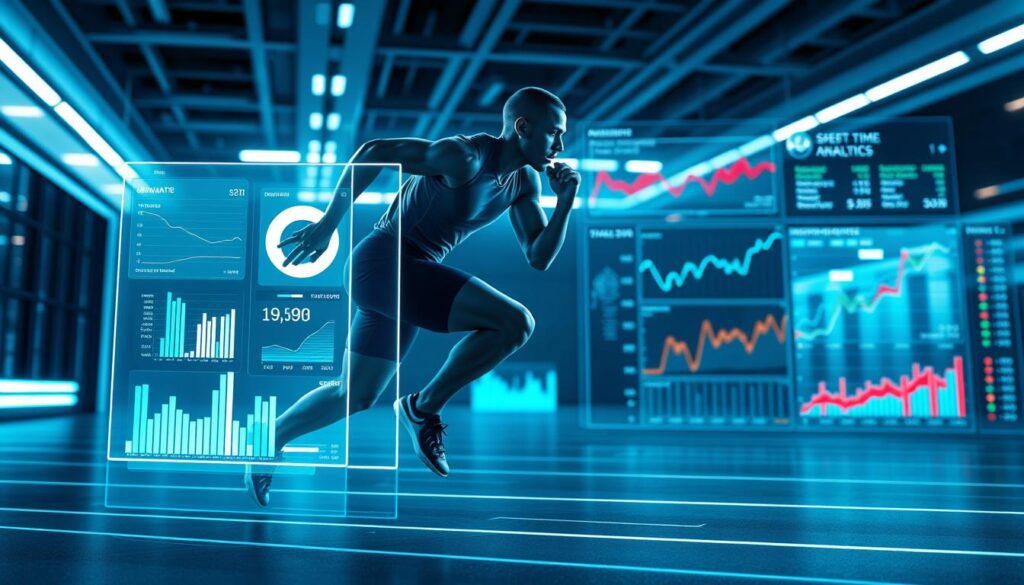
Machine models running on chest and wrist sensors turn noisy readings into trusted insights for training. These systems classify movements, spot shifts in patterns, and give coaches quick, actionable data during practice and games.

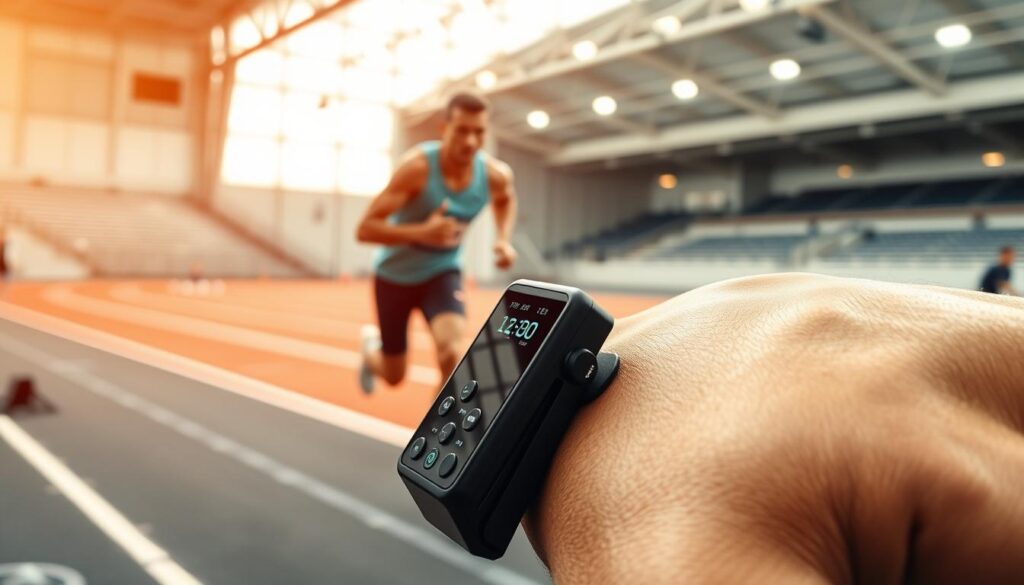
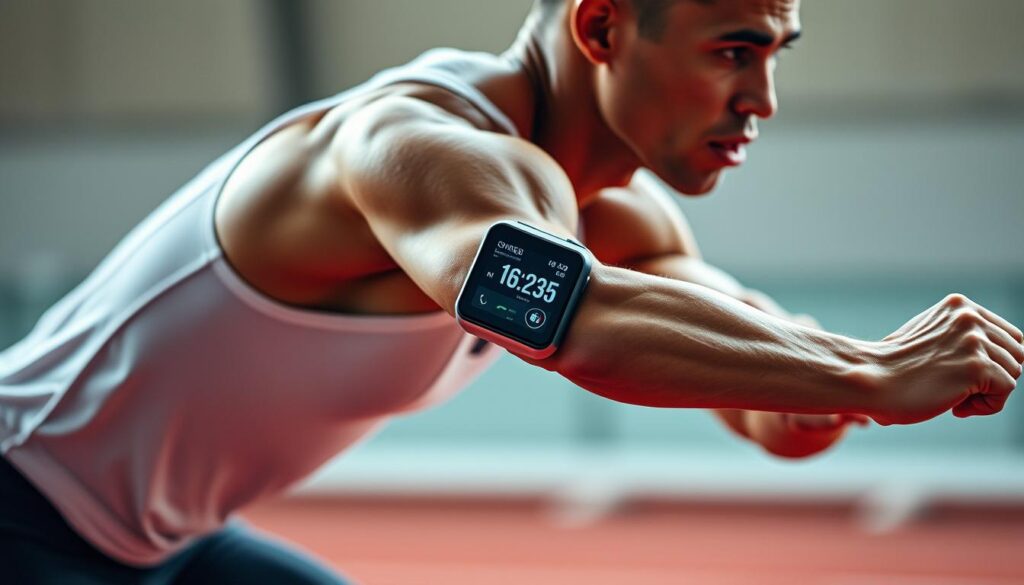
speed monitor of sprint runners

Machine learning on the wrist and chest: identifying movements and predicting trends

An AI speed monitor converts raw sensor streams into labeled movements and objective ratings. That lets staff compare a player’s stride, acceleration bursts, and heart rate against age-based norms.

Live decisions in practice and games: pushing, pulling back, and reducing injury risk

Real-time data helps coaches make split-second decisions. When models flag fatigue or a drop in rate, teams can pull a player to cut risk of injuries and aid recovery.

Benchmarking performance over time with objective ratings

Helios is a solid example: its Stride Recognition spots left/right stride quality and benchmarks skill by age without new field hardware.

Use case What it flags Coach action
Technique drift Changes in movement patterns Correct form, shorten session
Early fatigue Decline in acceleration or heart rate consistency Substitute, reduce reps
Skill benchmarking Objective ratings over time Set targets, gamify training

Simple dashboards surface only the day’s key metrics so teams can align fast. Coaches should set clear thresholds (for HRV, rate decline, or symmetry loss) to make consistent, data-driven decisions.

Pick devices and sensors that match the sport and environment so models see clean signals. The goal is straightforward: give each player transparent feedback that improves training and protects their health.

Choosing an agility performance wearable for drills and game-speed training

A simple, reliable device should highlight first-step bursts and direction losses so training stays focused. Pick gear that maps the exact movements that matter for game play. That keeps drills short, clear, and repeatable.

Agility, explosiveness, and change-of-direction metrics that matter

Focus on first-step acceleration, change-of-direction efficiency, and how movement patterns degrade under fatigue. These metrics show where a player loses form and where coaching helps most.

How devices capture game-like drills

Small sensors measure acceleration, rotation, and vertical force during short sprints, shuttles, and jumps. That raw data becomes useful when it is tied to repeatable drills and consistent setups.

movement patterns devices

Why Hyper Speed stands out in practice

Hyper Speed tracks speed, change-of-direction, and vertical jump with a removable sensor and a real-time app. Setup uses an easy tripod and works at home or on fields. Reviews praise quick setup, youth-friendly bands, and motivating live feedback.

Choosing by comfort, form factor, and decisions

  • Prefer wrist or clip-on options that don’t alter running form.
  • Pick sensors that detect short sprints, shuttles, and jumps with reliable rep counts.
  • Log the same drills so week-to-week gains reflect true improvement, not setup changes.

Keep metrics tight: a small set of clear numbers helps coaches and players make better decisions and spot technique breakdowns before injuries occur.

Spotlight on leading trackers and how teams use them

Here are the standout systems pro and youth teams deploy for clearer session data and smarter recovery.

trackers data insights

Catapult GPS vests

Catapult vests log sprint speed, total distance, and player load. Teams in football, basketball, and soccer use these numbers to set limits on practice intensity.

Coaches balance workloads across players with this data to cut injury risk. The result: clearer session plans and safer training days.

WHOOP bands

WHOOP focuses on sleep, strain, and heart rate variability to guide daily readiness. Athletes and teams use its recovery score to decide whether to push or rest.

For example, a low HRV and high strain often mean a lighter session to reduce fatigue and injury chance.

Helios Core for hockey

Helios Core uses machine learning and Stride Recognition to separate left and right skating strides. It provides age-based benchmarks and gamified progress with no new infrastructure.

Hyper Speed

Hyper Speed captures speed, change metrics, and vertical jump with a removable sensor and a live app. Teams praise fast setup and motivating feedback that keeps players engaged.

Device Key metrics Best fit
Catapult GPS vests Sprint speed, distance, total load Outdoor field sports (football, soccer), basketball
WHOOP bands Sleep, HRV, strain Recovery-focused tracking for athletes and teams
Helios Core Stride recognition, benchmarks Hockey and skating programs (zero infra)
Hyper Speed Speed, jump, live feedback Drill work, agility and jump sessions

Bottom line: pick devices that match the sport and goals. Teams win when insights are actionable, fit into practice flow, and tie tracking to sleep and recovery habits.

Wearables in action across sports like soccer, football, basketball, and track

Different sports tap specific signals — GPS outdoors, motion sensors indoors — to guide daily decisions. This makes it easier for coaches to manage work, rest, and drills for teams and players.

Soccer and football: positioning, high-volume runs, and stamina

Premier League sides use GPS vests to track positioning and high-speed running volumes. Coaches tally high-intensity efforts so players share load and avoid overwork.

Football programs use distance and acceleration data to balance drills. That reduces injury risk without hurting on-field results.

Basketball: shooting, movement efficiency, and fatigue signals

NBA teams bring ShotTracker into practice to analyze shooting sessions and court positioning. The tool shows which movements lead to better shots and where fatigue shows up late in drills.

Heart rate and recovery cues then guide substitutions or lighter reps when fatigue trends appear mid-practice.

Hockey and running: stride quality, acceleration, and pacing

Helios Core highlights stride patterns on ice so hockey athletes refine acceleration and efficiency. Runners use sensors to pace distance and sharpen interval splits.

Across all fields, pattern analysis uncovers movement inefficiencies that sap late-game speed. Clean GPS outdoors and accelerometers indoors keep data reliable.

  • Keep test sets consistent so player comparisons are fair.
  • Use simplified dashboards so athletes see clear action steps from complex data.

“Use consistent drills and the right sensors for the setting — that’s how data turns into better choices.”

From data to decisions: optimizing training, recovery, and injury prevention

Smart use of daily numbers helps teams keep training loads steady and recovery strong.

How coaches turn readings into action: rate monitors and HRV guide session intensity. WHOOP’s HRV and strain show readiness, while Catapult’s total load blends distance, acceleration, and rate to manage workload.

Use clear thresholds. When heart rate patterns or HRV drop beyond set limits, coaches adjust drills or cut reps to lower injury risk. Teams like the Seattle Seahawks have tracked sleep to support recovery during long seasons.

Simple process coaches can follow

  • Plan: set session goals and thresholds.
  • Capture: collect heart rate, HRV, and load each day.
  • Review: check trends for fatigue and risk.
  • Decide: alter intensity or rest based on insights.
Metric What it signals Coach action
HRV drop Poor recovery Light session, extra sleep focus
High strain Cumulative load Reduce reps, active recovery
Rising heart rate at rest Onset fatigue or illness Medical check, lower intensity
Back-to-back high loads Injury risk rises Insert rest day, monitor closely

Athlete checklist: warm-up quality, HR/HRV, perceived fatigue, and last session load. Log a short note too — numbers need context. Combining heart rate, HRV, and speed trends gives clearer insights than any single metric.

Privacy, ethics, and ownership: handling athlete data in teams and leagues

Sensitive athlete records can shape careers, so leagues need firm policies on access and use. Clear rules help players trust the system and let staff use information to improve training and health.

Why ownership and consent matter: data should belong to the athlete or be shared only with explicit consent. Teams and leagues must explain who sees what and why.

Contracts, consent, and safeguarding sensitive information

  • Ownership & consent: state who owns collected data and require written consent before sharing.
  • Safeguarding information: encrypt records, limit access, and separate medical files from coaching dashboards.
  • Example risk: if declining performance trends are used to cut a player’s contract, that misuse harms careers and trust.
  • Contract clauses: include retention limits, anonymization steps, and deletion at season end.
  • Approved uses: allow training, medical care, and rehab, but ban non-consensual scouting or contract decisions.
  • Audits & portals: schedule periodic audits and give athletes a portal to view and export their records.
  • Staff training: privacy education reduces human error and lowers legal risk.
  • Cross-team sharing: leagues should standardize protections so data sharing between clubs is fair and secure.

Build trust: clear communication keeps focus on improving health and sleep metrics rather than policing people. Strong governance encourages athletes to engage with tracking for better outcomes.

Area Best practice Why it matters
Retention Define limits and deletion Protects player careers
Anonymization Use for research or league reports Reduces legal and ethical risk
Access Role-based permissions Keeps sensitive information private

Buying guide: how to pick the best wearable sports tracker for your goals

A buying plan begins by matching the most useful sensors to the sport and session type. Start with what you want to measure and who will use the data daily.

Match features to sport: GPS, sensors, and accuracy

Outdoor field teams should favor GPS-based systems like Catapult for accurate distance and position. For indoor court work, pick devices with strong accelerometer and gyroscope data.

Helios is useful for hockey—benchmarks and gamified progress need no new infra. Hyper Speed gives live drill results with an easy tripod setup for home or field.

App experience: dashboards, benchmarks, and team reporting

Check for real-time dashboards, clear benchmarks, and export options. WHOOP’s app emphasizes readiness, sleep, and HRV for recovery-focused athletes.

Fit, comfort, battery life, and durability for daily training

  • Match form factor to movement so gear doesn’t change running or cutting.
  • Compare battery life and ruggedness for daily use.
  • Choose systems that integrate with team workflows and offer flexible alerts so coaches can use data on the fly.

“Pick the features that change decisions, not the one with the flashiest spec.”

Conclusion

Pro-grade insights are now practical for every team. Catapult’s GPS load, WHOOP’s sleep and HRV readiness, Helios’ stride recognition, and Hyper Speed’s live jump and speed feedback show how data turns into better results for players and coaches.

The payoff is simple: smarter training, safer recovery, and clearer gains in on-field performance. Pick devices that match your environment, start with one priority metric, and use consistent benchmarks to build trust.

Example: pairing GPS load with sleep and HRV helps plan peak weeks with confidence. Athletes across sports like soccer, hockey, and track can access these tools without pro budgets.

Now is the time to align training and recovery before the next big game.

FAQ

What features should I prioritize when choosing a device to track player speed and stamina?

Look for GPS accuracy, reliable accelerometers and gyroscopes, and a chest or wrist sensor that captures heart rate and heart rate variability (HRV). Battery life, comfort, and durability matter for daily training. Also check the app for real-time dashboards, distance and sprint metrics, and team reporting so coaches can turn data into actionable training decisions.

How do these devices measure sprint speed and change-of-direction efforts?

Devices combine GPS for distance and top-end speed with inertial sensors (accelerometers and gyroscopes) to detect acceleration, deceleration, and lateral movement. Algorithms translate those signals into sprint count, peak speed, and agility or change-of-direction metrics coaches use to design drills and reduce injury risk.

What does heart rate variability (HRV) tell me about recovery and fatigue?

HRV reflects autonomic nervous system balance and helps indicate readiness to train. A higher HRV typically signals better recovery and lower fatigue; a lower HRV can warn of strain or illness. Teams use HR and HRV together with load metrics to adjust session intensity and plan recovery strategies like sleep optimization.

Can these systems give useful real-time coaching feedback during games or practice?

Yes. Many setups provide live metrics—like current speed, recent sprint load, and strain—so coaches can make immediate decisions to push or pull players. Real-time alerts help manage workload, prevent overexertion, and reduce injury risk during high-intensity moments.

How do teams protect player privacy and sensitive performance data?

Teams should use clear contracts and informed consent, restrict access to authorized staff, and follow data protection best practices. Encryption, anonymized reports, and retention policies help safeguard information. League rules and collective bargaining agreements can also dictate ownership and use of biometric data.

Do pro-grade systems like Catapult or WHOOP really help lower injury risk?

When used correctly, yes. Catapult-style GPS vests quantify sprint volume and total load, while WHOOP-style bands track sleep, strain, and HRV for recovery planning. Integrating these metrics lets staff balance load across training cycles and spot fatigue trends linked to higher injury risk.

What are the main differences between chest straps and wrist bands for heart rate monitoring?

Chest straps typically provide more consistent heart rate data during high-intensity and rapid movement because they detect electrical signals. Wrist bands are more convenient and track HR trends, HRV, and sleep, but they can be less accurate during explosive efforts. Choose based on your sport and the precision you need.

Can youth athletes and parents benefit from these devices, or are they only for elite teams?

Youth athletes and parents can benefit when devices are used to teach pacing, recovery, and safe progression. For younger players, focus on simple, age-appropriate metrics—distance, perceived effort, and basic HR trends—while ensuring consent and data privacy practices are followed by clubs.

How often should teams benchmark players to track progress over a season?

Regular benchmarking every 4–8 weeks usually works well. Frequent monitoring of sprint speed, distance covered, and HRV provides trend data, while periodic performance tests establish objective ratings for agility, vertical jump, and endurance. Use benchmarks to adjust training blocks and monitor return-to-play.

Will these systems work indoors, like in basketball or hockey arenas where GPS may be unreliable?

Yes. For indoor use, inertial measurement units (IMUs) with accelerometers and gyroscopes excel at capturing movement, acceleration, and change-of-direction. Some solutions add local positioning systems (LPS) or ultra-wideband (UWB) to improve indoor positioning and distance tracking.

How do I match features to my sport: soccer, football, basketball, or track?

Match sensor accuracy and metrics to demands: soccer and football need GPS precision and high-speed running measures; basketball favors movement efficiency, fatigue, and short-burst detection; track benefits from accurate timing and sprint splits. Consider app reporting, battery life, and how teams will use the data in planning and recovery.

What app experience should coaches look for in a system?

Coaches need intuitive real-time dashboards, customizable alerts, historical benchmarks, and team reporting. Look for easy data export, automated reports, and actionable insights that translate raw numbers into training adjustments and individualized recovery plans.

How do these systems help with return-to-play decisions after injury?

They provide objective measures of load tolerance, sprint capacity, and movement symmetry. Comparing pre-injury benchmarks with current outputs helps clinicians and coaches decide when an athlete safely meets performance milestones and reduce re-injury risk during reintegration.

Are there affordable options that still deliver useful insights for amateur teams?

Yes. Lower-cost devices and subscription services offer core metrics—distance, basic speed, HR trends, and HRV—suitable for amateur clubs. Prioritize sensor quality and a clear coaching app. Start with essential metrics and scale up as your staff gains experience interpreting data.

How do teams use distance, sprint counts, and load metrics to plan training and reduce fatigue?

Teams analyze acute versus chronic load ratios, sprint frequency, and total distance to spot spikes that increase injury risk. Coaches then modulate session intensity, prescribe recovery modalities, or alter practice design to balance stress and adaptation across the season.

What role does sleep tracking play in athlete performance management?

Sleep data links directly to recovery, cognitive function, and injury risk. Monitoring sleep duration and quality alongside HRV and strain helps staff set recovery priorities, adjust training loads, and recommend interventions like sleep hygiene or schedule changes to boost readiness.

How reliable are vertical jump and explosiveness measures from modern devices?

Many devices now provide solid vertical jump and power estimates using IMUs or force-sensing peripherals. Accuracy depends on sensor placement and calibration. For consistent longitudinal tracking, use the same device and protocol so coaches can detect real changes over time.

What common pitfalls should teams avoid when implementing a tracking program?

Avoid data overload without staff who can interpret it, inconsistent device wearing, and poor consent processes. Don’t rely solely on raw numbers—combine sensor data with coaching context, wellness questionnaires, and medical input for balanced decisions.


Let’s Get Started

Best Bluetooth Health Monitoring Systems for Home Use

When my neighbor Mrs. Lane came home after surgery, she felt worried about one thing: staying connected to her care team between visits. A nurse showed her an easy cuff and an ECG patch that sent readings straight to her clinic. That small loop of information made her feel safer and less alone.

This guide is your friendly map to practical tools you can use today. We’ll explain how readings move from simple gadgets to apps and clinician dashboards, and why that flow matters for real decisions. Expect clear comparisons of consumer favorites and clinical-grade options.

Interoperability is changing the game. New standards help multi-vendor gear work together, cutting integration headaches for providers and patients. Choose tools that match your goals, budget, and support network so tracking fits daily life without extra complexity.

Bluetooth health monitoring systems

Key Takeaways

  • This guide helps patients compare trusted home solutions and clinical options.
  • Learn how readings flow to apps and clinician dashboards and why it matters.
  • Interoperability and new standards make multi-vendor setups easier.
  • Pick tools that match your condition, goals, budget, and care team.
  • Accurate, reliable gear with strong apps makes daily tracking stick.

Why Bluetooth Health Monitoring Matters for Home Care Today

Continuous at‑home measures put meaningful clinical signals in front of care teams every day. That steady stream of information lets providers spot early warning signs and prevent avoidable escalations between visits.

Real‑time data gives a fuller picture than one‑time clinic snapshots. Connected tools capture blood pressure, glucose, oxygen, temperature, weight, and ECG traces so clinicians can act on trends instead of guesses.

How remote patient monitoring improves outcomes and reduces visits

When out‑of‑range readings trigger alerts, care teams review trends and adjust treatment quickly. This can cut unnecessary ER trips and lower clinic load while improving clinical outcomes.

From daily engagement to proactive care decisions

Daily self‑checks help patients see patterns and stick to plans. In real‑world programs, sustained engagement links to better blood pressure and glucose control and fewer complications.

  • Provider workflows: alerts, trend review, and medication titration based on ongoing data.
  • Patient convenience: less travel, timely advice, and clearer recovery goals.
  • Program success: clear thresholds, education, and feedback loops build trust and adherence.

remote patient monitoring

Ask your clinician about eligibility in local programs today — secure, person‑centered monitoring can expand access and improve outcomes while protecting privacy and clinical capacity.

Understanding Remote Patient Monitoring and Connected Health

Routine measurements at home turn isolated numbers into trends clinicians can act on.

What signals are captured? Common sensors track blood pressure, heart rate, glucose (fingerstick and continuous), oxygen saturation, temperature, weight, ECG, and activity or sleep. Each reading supports clinical decisions — trends guide medication changes, and spikes prompt timely contact.

Typical data flow is simple: a sensor transmits to a phone or hub, encrypted sync moves information to cloud services, and providers access that stream via portals or EHR integration. Metadata like time stamps, device IDs, and calibration notes make the record reliable.

  • Spot checks (e.g., fingerstick glucometers) give point-in-time values.
  • Continuous sensors (e.g., CGMs, ECG patches) reveal trends and variability.
  • Alerts are set by thresholds so patients and clinicians know when to retest or schedule a televisit.
Aspect Spot-Check Continuous
Typical use Routine tests several times daily Ongoing streams, minutes to minutes
Best for Quick verification Trend analysis and alerts
Data path Phone → cloud → portal Phone/hub → encrypted cloud → EHR

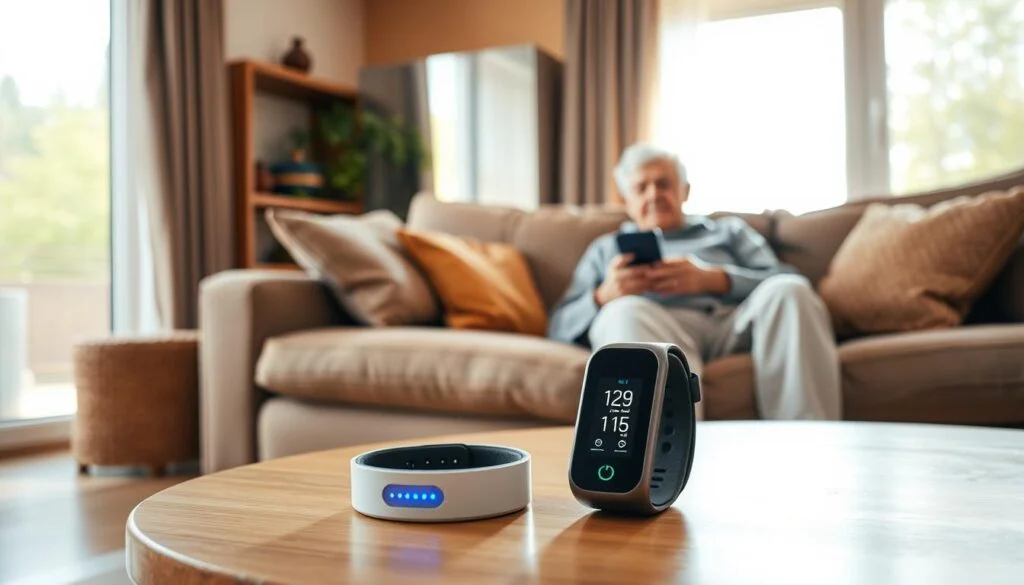
RPM devices for home use

New Interoperability Standards: Bluetooth GHS and Multi‑Vendor RPM

A common data language for sensors is making vendor choice simpler and faster.

The Generic Health Sensor (GHS) Profile defines how personal sensors package and transmit sensor data reliably so readings flow into clinical systems used in remote patient monitoring.

Previously, EHR vendors often built custom integrations for each maker. That created fragmentation, slowed program delivery, and limited which devices clinics could adopt.

GHS unlocks a multi‑vendor ecosystem. Organizations can mix and match equipment across programs while keeping consistent payloads and semantics. That improves downstream analytics and clinical decision support.

GHS interoperability data

Practical benefits

  • Providers reduce onboarding friction and see faster time to value.
  • EHR vendors avoid bespoke interfaces and lower integration costs.
  • Device makers speed development by targeting one common profile.
  • Patients gain broader choices that just work together.

Industry leaders like Philips and Roche contributed to the profile, signaling real momentum behind multi‑vendor integration. GHS also complements FHIR/HL7 on the provider side, creating an end‑to‑end pipeline from sensor to chart.

Tip: When evaluating new rpm kits, ask vendors about GHS support to future‑proof program delivery and reduce pairing problems.

How to Choose the Right Bluetooth Health Monitoring Systems

Picking the right connected kit starts by matching clinical needs with everyday habits.

Key factors: accuracy, connectivity, app experience, and support

Start with validation. Verify clinical validation and published accuracy, especially when readings will inform management or medication changes.

Compare sync options like auto‑sync or cellular hubs. Test the app for reminders, clear graphs, and simple tracking flows.

Assess durability, battery life, sensor fit, and replacement supplies. Check vendor support and warranty before you buy.

Privacy, data sharing, and integration with provider dashboards

Confirm who sees your data, how long information is stored, and whether sharing settings are adjustable.

Ask providers about dashboard compatibility. Choose equipment that uploads in real time to clinician portals and EHRs to avoid manual entry.

“Choose tools that your care team can access easily and that you will use every day.”

Factor What to check Why it matters
Accuracy Clinical validation, user reviews Guides safe management decisions
Connectivity Auto‑sync, hubs, GHS support Saves time and reduces data gaps
Cost & access Device price, consumables, coverage Impacts long‑term adherence
Accessibility Large fonts, voice prompts, simple UI Helps patient confidence and daily use

how to choose monitoring systems

Top Bluetooth Blood Pressure Monitors for Hypertension Management

Home blood pressure tracking reveals patterns a single clinic visit can miss. Regular readings show true trends and help avoid one-off errors when clinicians set treatment plans.

blood pressure

Why daily blood pressure tracking beats one‑time readings

Daily checks reduce surprises. They catch white coat spikes and masked hypertension that a clinic visit can miss. That matters because sustained pressure control links to better outcomes in hypertension, diabetes, CHF, and kidney disease.

Features to prioritize: cuff fit, validation, and trend alerts

  • Validation: pick cuffs listed under recognized protocols for proven accuracy.
  • Cuff fit: correct size and snug placement matter more than brand.
  • Apps & alerts: reliable apps auto‑upload data so providers can view trends and adjust medication safely.
  • Practical checks: battery life, travel case, multi‑user profiles, and periodic clinic comparisons keep readings trustworthy.

“Use multiple seated readings at the same time each day and share rolling averages with your clinician.”

Best Bluetooth Glucose and Continuous Blood Sugar Trackers

Some people need quick spot checks, while others benefit from a steady stream of glucose trends.

Glucometers read a drop of blood on a test strip and give on‑demand blood glucose results that can sync to apps and to providers in real time.

Continuous glucose monitors (CGMs) stream minute‑by‑minute glucose trends, offer high/low alerts, and increasingly integrate with insulin pumps and smartphone apps.

Glucometers vs. CGMs: picking the right diabetes solution

Use fingerstick meters for budget‑friendly spot checks and for patients who test a few times daily.

Choose CGMs when you need trend arrows, time‑in‑range, and automatic alerts to reduce hypoglycemia risk and support tighter medication titration.

  • How they help: both approaches let patients and providers correlate meals, exercise, stress, and illness with blood sugar changes.
  • Practical factors: sensor wear time, calibration, insurance coverage, and pump integration matter.
  • App features to prioritize: sharable reports, meal tagging, trend arrows, and time‑in‑range summaries.

Learn pattern interpretation with your care team, confirm meter accuracy against lab values, and pick tools that fit sleep, sport, and sensitivity to adhesives.

Wearable Bluetooth Picks: Smartwatches, ECG Patches, and Fitness Bands

Modern wrist trackers and patches turn daily rhythms into clear signals clinicians can act on. Smartwatches like Apple Watch and Fitbit log steps, heart rate, spot ECGs, HRV, stress scores, and sleep stages. Quick glances at these summaries help patients adjust activity and share trends with their care team.

Heart rate, ECG, HRV, stress, and sleep insights at a glance

Wellness bands surface resting heart, trends during exercise, and sleep staging that can reveal poor recovery or sleep fragmentation. Shareable reports from Apple Health, Fitbit, or Google make patterns visible to clinicians.

When to choose clinical‑grade ECG monitoring

Continuous ECG patches record 24–72 hours and are the right choice when palpitations, syncope, or suspected AFib need investigation. They provide higher-fidelity traces that support diagnostic workflows in formal rpm programs.

Activity and recovery metrics that support chronic care

VO2 max, recovery scores, and step trends help shape cardiac rehab, diabetes plans, and post‑surgery pacing. Accessories like chest straps or external sensors boost training accuracy during clinic‑guided programs.

  • Know the difference: consumer wellness versus medical‑grade clearance and how each fits clinical pathways.
  • Prioritize comfort, battery life, and adhesive tolerance to improve adherence.
  • Use AI coaching features cautiously; they flag signals but do not replace clinician judgment.

“Sync wearables with remote patient programs so data flows into clinician portals, not just consumer apps.”

Essential RPM Devices for Oxygen, Temperature, and Weight

Small, connected tools can spot early changes in breathing and body signs before a clinic visit.

Pulse oximeters with connectivity

Connected pulse oximeters measure blood oxygen and pulse to help patients and providers watch oxygen levels and pulse trends in COPD, CHF, pneumonia, asthma, and post‑COVID recovery.

Trend charts reveal slow declines in lung function and can trigger earlier outreach when saturation drops or symptoms worsen.

Smart thermometers

Smart thermometers log fevers and symptom notes so families and clinicians see patterns during flu season or other infections.

They speed triage and support clear escalation when fever pairs with breathing or other concerning signs.

Bluetooth scales and weight tracking

Scales matter in CHF and metabolic management. Daily weight checks catch sudden gains that suggest fluid retention and need prompt treatment adjustment.

Consistent morning readings, stable platforms, and multi‑user profiles boost reliability and long‑term weight goals.

“Pair these tools with clinician dashboards so alerts become actionable, not just stored on a phone.”

Tool Primary measure When to escalate
Pulse oximeter Oxygen saturation, pulse Saturation
Smart thermometer Temperature, fever trends High fever with respiratory symptoms
Connected scale Weight Rapid gain >2–3 lbs/day or 5 lbs/week

Keep hygiene, battery checks, and calibration top of mind so readings stay accurate. Ask your care team about device‑specific thresholds to guide timely care and better cardiometabolic management.

Integrating Devices with RPM Programs and EHRs in the United States

A clear data path makes remote measurements useful at the point of care.

Map the flow: device pairing, secure mobile app capture, encrypted cloud sync, and structured delivery into clinician portals and EHRs. This chain turns raw readings into usable information that clinic teams can act on.

Standards matter. FHIR and HL7 links allow real‑time alerts, documentation, and workflow automation between programs and provider systems. The GHS profile standardizes sensor payloads so makers and providers avoid bespoke interfaces and reduce pairing faults.

Practical onboarding: create accounts, collect consent, link the device, and teach simple pairing steps. Train patients and staff to keep gear online and to resolve common pairing messages.

  • Define who reviews dashboards, how often, and escalation paths when thresholds trigger.
  • Enforce HIPAA: data segregation, audit trails, and least‑privilege access for care teams.
  • Pick vendors with proven EHR integrations, clear APIs, and uptime SLAs to ensure steady delivery.

When integration works, providers spend less time on manual entry and more time on care. Periodic integration testing after app or EHR updates prevents silent data drop‑offs and protects long‑term program success.

Trends Shaping Home Monitoring Today

Everyday tools are becoming meaningful sources of clinical information. Demand for connected tech is rising fast through 2025 as care shifts beyond clinic walls. That movement changes how patients, clinicians, and programs work together.

Patient empowerment and AI insights

Apps and simple interfaces make data entry and review easy. Patients get clear summaries and nudges that support daily habits. AI then highlights trends, flags concerning patterns, and reduces the need for manual review.

Why this matters: surfaced insights speed treatment decisions and help patients act earlier on worsening disease.

Telehealth‑ready exam kits

Bundled kits now include digital stethoscopes, otoscopes, and thermometers to improve virtual exams. These kits raise exam quality and let clinicians confirm findings without travel.

Smart inhalers, hearing aids, and sleep tools

Smart inhalers track adherence and technique, which lowers exacerbations in asthma and COPD and supports better treatment plans.

Connected hearing aids use AI amplification and streaming to adapt to environments and improve daily engagement.

AI sleep trackers link sleep patterns to cardiometabolic disease risk, mood, and recovery. Sleep insights help shape holistic care plans.

Home ECG kits and emerging lenses

Portable ECG kits now offer expanded leads for follow‑up checks. They reduce travel and speed access to cardiac evaluation.

Emerging smart contact lenses aim to monitor intraocular pressure or glucose, promising earlier detection and more personalized disease management.

Trend Benefit Clinical impact
AI-driven summaries Faster insight from routine readings Quicker treatment changes and fewer missed alarms
Telehealth kits Higher quality virtual exams Better triage and fewer unnecessary visits
Adherence tech (inhalers) Improved medication technique Reduced exacerbations and ER visits
Sleep & lens innovation New physiologic signals Earlier disease detection and tailored treatment

“Innovation is rapid, but clinical validation and clear pathways to treatment remain essential.”

Standards like the GHS profile lower integration barriers and help novel tools join established programs. Patients and providers should review their mix periodically as evidence and capabilities evolve.

Conclusion

Bringing routine measurements into daily life gives each patient and their care team a clearer, day‑to‑day view. Simple, repeatable checks at home turn isolated numbers into meaningful trends that guide action.

Consistent monitoring helps patients avoid surprises. Timely signals can improve outcomes and reduce unplanned visits by prompting early outreach.

Interoperability matters. Standards like the Bluetooth SIG’s GHS profile make multi‑vendor integration simpler today and help EHRs receive structured data more reliably.

Pick tools you will use and align them with your provider’s program. Start with one priority measure, build a routine, then add more items slowly to avoid overwhelm.

Data has value only when it informs care. Discuss thresholds, trends, and next steps with your clinician, and revisit options as innovation advances. Thank you for reading — explore the categories above to find the best fit for your situation.

FAQ

What kinds of vital signs and metrics do modern connected monitoring devices track?

Today’s connected tools commonly track blood pressure, heart rate and rhythm (including ECG), blood glucose and continuous glucose trends, SpO2 (oxygen), body weight, temperature, respiratory data, sleep metrics, and activity. Many also record medication adherence and symptom reports to support chronic conditions like diabetes, hypertension, COPD, and heart failure.

How does remote patient monitoring improve outcomes and reduce clinic visits?

Continuous or scheduled data transmissions enable early detection of worsening trends so clinicians can intervene before an emergency. That proactive approach reduces unnecessary office visits and hospital readmissions while supporting personalized care plans and timely medication adjustments.

What should I look for when choosing a device for blood pressure or glucose tracking?

Prioritize clinical validation, proper cuff sizing for blood pressure, sensor accuracy for glucose devices, ease of use, and reliable mobile apps. Also check data export or integration options so results can flow into clinician dashboards or electronic health records for coordinated care.

How is patient data transmitted to providers and integrated with EHRs?

Devices typically pair with smartphone apps that encrypt and upload data to cloud platforms. Those platforms use standards like FHIR or HL7 to share data with EHRs and clinician portals. Interoperability lets care teams view trends and incorporate measurements into care programs.

What is the Bluetooth Generic Health Sensor (GHS) profile and why does it matter?

The GHS profile standardizes how physiological sensors present measurements and metadata to connecting apps. That standard reduces fragmentation, enabling multi‑vendor ecosystems where patient devices can reliably pair with apps and RPM platforms from different makers.

Are wearable ECG patches and smartwatches accurate enough for clinical use?

Consumer smartwatches provide useful screening for heart rate and irregular rhythms, while clinical‑grade wearable ECG patches and prescribed ambulatory monitors deliver diagnostic‑level ECG data. Choose devices validated for the intended clinical purpose and check whether clinicians accept their data.

How secure is remote monitoring data and what about patient privacy?

Reputable vendors encrypt data in transit and at rest, follow HIPAA requirements, and provide consent workflows for data sharing. When selecting products, review vendor privacy policies, data retention practices, and whether the platform supports role‑based access for care teams.

Can RPM devices alert clinicians in real time for urgent issues?

Many platforms offer configurable alerts for out‑of‑range readings and can route notifications to clinicians or care coordinators. However, alert rules vary; confirm how escalations, false‑positive handling, and clinician workflows are managed before deploying a program.

Do scales, pulse oximeters, and thermometers work well with chronic disease programs?

Yes. Connected scales help manage fluid status in heart failure, pulse oximeters support COPD and post‑COVID care, and smart thermometers help detect infection trends. Integration with RPM platforms enables trend analysis and actionable thresholds tied to care pathways.

How easy is it for older adults or nontechnical patients to use these devices?

Ease of use depends on device design, app simplicity, and program support. Look for one‑step pairing, automatic uploads, clear on‑device instructions, and caregiver or clinician support options. Many RPM programs include onboarding and tech help to boost adherence.

What role do APIs, FHIR, and HL7 play in device integration?

APIs and standards like FHIR and HL7 enable data exchange between device platforms, EHRs, and care management tools. They help clinicians access structured measurements, support clinical decision support, and streamline documentation for billing and population health.

How do I ensure device accuracy and clinical validation claims?

Verify peer‑reviewed studies, FDA clearance where applicable, and independent validation against clinical reference methods. Check manufacturer data, regulatory clearances, and professional society recommendations for the device class you plan to use.

Can RPM data reduce costs for providers and payers?

When implemented with clear protocols and billing workflows, RPM programs can lower hospitalizations and emergency visits, improve medication management, and support preventive care — all of which can reduce overall costs and improve outcomes.

What emerging trends should clinicians watch in home monitoring?

Watch AI‑driven trend analysis, tighter EHR integration, device interoperability across vendors, telehealth‑ready exam kits, and new connected sensors such as smart inhalers and hearing devices that broaden chronic care management options.


Let’s Get Started

Top 7 AI-Based Safety Systems for Autonomous Vehicles in 2025

On a rainy Tuesday, a commuter watched a car ahead brake gently as a cyclist swerved. The scene felt ordinary until the driver later learned the car used an advanced system that fused camera, radar, and lidar data to act in an instant.

That quick response shows how artificial intelligence helps vehicles perceive the world, plan paths, and assess risk. These systems turn raw sensor input into a clear 3D model so a car can choose the best action in fractions of a second.

In this article, we preview seven key safety systems, from object detection and behavior prediction to ethical decision support and fail‑safe control that hands off to a human if needed. Supporting tech like HD maps, 5G links, and GPU accelerators shrink response times and enable continuous updates.

There is huge promise for smoother traffic, fewer crashes, and more reliable transportation. Yet limits remain: bad weather, mapping gaps, and cyber threats demand careful design and oversight. A safety‑first approach is the only way to earn trust as this revolution moves forward.

autonomous vehicles

Key Takeaways

  • Artificial intelligence fuses sensors into a 3D model for fast decisions.
  • Seven systems—from detection to fail‑safe control—shape modern cars.
  • HD maps, 5G, and GPUs cut latency and enable smarter updates.
  • Challenges include weather, coverage gaps, and cybersecurity risks.
  • Safety‑first design builds public trust and advances the future of transportation.

Why Safety Is the True North for Self‑Driving Cars in 2025

By 2025, public confidence in automated transport hinges on one thing above all: demonstrable reduction in crashes on the road.

Over 1.35 million people die in road crashes each year, mostly from human error. Modern systems use artificial intelligence to keep constant attention, enforce safe gaps, and react faster than distracted or impaired drivers.

Yet high‑profile incidents remind us that technology alone is not enough. The 2018 Uber fatal crash underlined the need for redundant systems, rigorous software validation, and vigilant driver monitoring for safe handoffs.

Companies now rely on large‑scale simulation, shadow‑mode testing, and staged rollouts to validate performance. Robust incident data collection and transparent reporting build trust with regulators and the public.

  • Design and oversight: safety must guide every decision.
  • Operational readiness: trained drivers and monitoring keep transitions safe.
  • System resilience: secure connectivity and authenticated updates matter.

Improvement is continuous: fleets learn from diverse conditions, ethical guardrails are debated publicly, and industry, academia, and governments align on traffic rules and benchmarks.

road safety

“Reducing harm on our streets is the only acceptable metric for progress.”

Understanding the Building Blocks: From Sensors to Decisions

Perception and fusion layers form the backbone that lets machines understand complex traffic scenes. These elements turn raw inputs into a shared picture the control stack can act on.

Computer vision for environmental perception

High‑resolution cameras plus deep neural networks label pixels as cars, pedestrians, cyclists, signs, and lights. Models trained on vast, diverse data sets enable robust detection in day, night, rain, or snow.

Machine learning improves recognition over time as fleets add edge cases. Compute accelerators run inference on board so perception stays fast and local.

perception cameras sensors

Sensor fusion to create a 3D world model

Radar, lidar, ultrasonic, and camera feeds are fused to overcome single‑sensor limits. The result is a continuous 3D map aligned to HD maps for centimeter‑level localization.

Algorithms feed that world model into prediction, planning, and control so the system obeys traffic rules and prioritizes safe maneuvers. If some sensors degrade, fail‑safe modes favor the most reliable inputs to keep performance graceful.

  • Perception → Prediction → Planning → Control is the pipeline that turns understanding into action.
  • Continuous updates refine models as new fleet data improves edge case coverage.

The Top Seven AI Safety Systems Powering Autonomous Vehicles

A layered set of technologies turns sensor data into split‑second decisions that reduce crash risk.

Below are the seven core systems and how they interlock to deliver robust, end‑to‑end autonomy focused on avoiding collisions and obeying traffic rules.

object detection

Object detection and classification

Deep learning models label pedestrians, cars, bikes, and signs with high accuracy. Models improve as fleets add edge cases and new datasets.

Behavior prediction

Prediction models estimate paths for pedestrians, cyclists, and other vehicles. Anticipating a sudden swerve or a jaywalk buys critical reaction time.

Anomaly and hazard detection

Specialized detectors flag unusual obstacles or erratic actors. When anomalies appear, the stack slows or reroutes to reduce risk.

Motion and path planning

Planners respect right‑of‑way, speed limits, and safe gaps while optimizing comfort and efficiency. They translate intent into smooth, lawful maneuvers.

Navigation and localization with HD maps

Map‑anchored localization gives lane‑level position and context for precise turns, merges, and complex intersections.

Real‑time risk assessment and ethical decision support

Risk modules score trade‑offs in split seconds, prioritizing human safety and legal compliance when options conflict.

Redundancy and fail‑safe control

Multiple sensors, backup compute, and graceful degradation protect performance under faults. Safe‑stop protocols and human handoff procedures complete the chain.

System Primary Role Key Benefit Validation
Object detection Perception High‑accuracy identification across scenes Large annotated datasets and on‑road tests
Behavior prediction Forecasting Early anticipation of actor actions Scenario simulations and real traces
Anomaly detection Alerting Detects rare or unexpected hazards Edge‑case mining and synthetic tests
Motion planning Trajectory generation Lawful, smooth maneuvers with safe gaps Rule‑compliance checks and closed‑loop sims
HD map localization Positioning Centimeter‑level lane context Map maintenance and field validation
Risk & ethical support Decision scoring Human‑centered trade‑off handling Policy reviews and stakeholder audits
Redundancy & fail‑safe Resilience Graceful degradation and safe handoffs Fault injection and backup testing

AI autonomous driving safety, IoT vehicle monitoring, self-driving prevention.

Edge sensors and networked alerts let modern stacks spot trouble ahead and respond before small issues grow.

Telematics and V2X feeds stream status, location, and hazard warnings from cars to edge and cloud systems. That flow creates real‑time alerts for roadside risks, component faults, or route hazards.

When a sensor flags a sudden brake or tire anomaly, the platform can nudge a nearby car to slow, change lanes, or stop if a risk threshold is met. These nudges cut reaction time and reduce escalation.

Fleets deliver continuous insights that refine models and lower false positives. Over time, shared data sharpens prediction and improves uptime through predictive maintenance.

AI autonomous driving safety

  • Practical solutions: telematics diagnostics, V2X work‑zone warnings, and over‑the‑air policy pushes.
  • Operational tools: dashboards for triage, quick policy updates, and operator visibility across assets.
  • Trust tech: blockchain can lock decision logs and OTA history to aid audits and transparency.
Layer Function Benefit
Edge sensors Local status and hazard detection Millisecond alerts, immediate action
Cloud analytics Aggregate insights and model updates Better prediction, fewer false alarms
Connectivity (V2X) Roadside and fleet messaging Proactive reroutes and warnings

“Privacy‑by‑design keeps personal data minimal while teams gain actionable insights.”

ROI is clear: fewer roadside events, lower repair bills, and higher uptime for fleets. Automakers can deploy these layers today to reduce risk and improve operations.

IoT Vehicle Monitoring: From Edge Sensors to Cloud Insights

Edge sensors stream condition data while cloud tools turn those feeds into actionable fleet plans.

Telematics streams for health and status

Telematics devices collect engine, battery, brake, and tire metrics in real time. That raw data flags anomalies before they grow into road hazards.

With 5G, cars receive OTA updates, live traffic, and V2X messages that shorten response time. Cloud analytics then aggregate streams so fleet teams can predict failures and schedule repairs.

telematics sensors data

V2X messaging to anticipate road events

V2X warns of sudden slowdowns, emergency vehicles, work zones, and signal phase/timing at intersections. Edge processing filters noise and ensures critical alerts propagate instantly.

Standard APIs let companies scale multi‑vendor deployments and integrate with shop systems to auto-order parts and book service, boosting efficiency and uptime.
  • Security: encrypted links and signed firmware for telematics units.
  • Cloud management: predictive maintenance, routing, and fault analytics.
  • KPIs: fault trends, intervention rate, mean time between failures, compliance score.
Layer Function Benefit
Edge Sensor fusion & filtering Low latency alerts
Cloud Aggregation & analytics Actionable maintenance
Network 5G & V2X Faster sync and OTA updates

Result: better-prepared cars, fewer surprises on the road, and smoother trips for passengers and fleet operators alike.

Self‑Driving Prevention Technologies That Avert Crashes Before They Happen

Systems that spot risk before it becomes a crash are changing how cars share the road.

Proactive collision prediction and avoidance

Collision detection analyzes surrounding motion, road geometry, and intent cues to score risk in real time.

Predictive models fuse trajectories, map context, and subtle intent signals from nearby drivers and pedestrians. When scores cross thresholds, the control stack can apply early braking, make a gentle lane shift, or reroute around a blockage.

Continuous learning from near‑misses refines thresholds so interventions fall only when needed. Comfort calibration keeps maneuvers smooth to maintain passenger trust.

  • V2X alerts reveal hidden hazards beyond line of sight and boost onboard forecasts.
  • Transparent logs record decisions for post‑event analysis and model tuning.
  • Redundant sensors keep prevention robust in poor weather or partial occlusion.
Function Benefit Metric
Risk scoring Faster, principled decisions Lower reaction time
Proactive maneuvers Smoother avoidance Fewer abrupt brakes
Policy prioritization Human safety first Reduced crash rates

“Prevention tech turns seconds of foresight into measurable drops in collisions and claims.”

High‑Definition Mapping and Continuous Localization for Safer Autonomy

Rich map layers — lane edges, stop bars, and signal positions — make decisions less ambiguous at merges.

HD maps enriched by lidar and camera runs provide centimeter-level detail for lane markings, curbs, and signage. That lane‑level context—stop lines, guardrails, and signal locations—helps planners predict intent and make maneuvers more predictable for other road users.

Localization aligns onboard sensors and perception patterns to map features to reach centimeter accuracy. Redundant inputs—GNSS, visual landmarks from cameras, and inertial sensors—keep position reliable in urban canyons and tunnels.

Continuous map maintenance loops detect change, validate edits, and push OTA updates over 5G so fleets stay synchronized. When maps are stale or missing, systems fall back to onboard perception and adopt conservative speed and gap policies.

  • Map confidence scores feed planners to adjust speed and following distance when uncertainty is high.
  • Better map fidelity reduces ambiguous choices at merges and unprotected turns, improving comfort and performance.
  • Privacy and security matter: encrypted map storage and authenticated updates protect sensitive map and localization data.

“Investing in mapping yields fewer route errors and smoother trajectories for cars on complex roads.”

Onboard Compute, 5G, and Edge AI: Enablers of Split‑Second Safety Decisions

Low‑latency compute and links are the backbone that turns sensor data into timely control.

Modern automotive platforms use multicore computers with GPU accelerators to run perception and planning at video frame rates. That compute lets models spot hazards and plan maneuvers in the time available before an incident.

GPU and accelerator platforms for real‑time inference

GPUs and dedicated accelerators process camera, radar, and lidar streams on the car. This on‑board execution reduces cloud dependency and yields millisecond loop times.

Low‑latency connectivity for updates and V2X

5G supports frequent OTA updates for models and maps without taking units out of service. V2X messages enable cooperative braking and green‑light speed advisories that improve flow and reduce reaction time.

Resilience features include compute partitioning, safety islands that isolate critical functions from infotainment, watchdogs, thermal controls, and failover between nodes. Deterministic performance under complex scenes is essential to maintain trust and measurable performance gains.

Component Role Benefit
GPU / Accelerator Real‑time inference Perception at video rates
Edge AI Local decision loops Millisecond reactions
5G / V2X Connectivity Fast updates & cooperative actions

“Investing in compute and links cuts reaction time and lowers incident rates.”

Data and Automotive Analytics: Fueling Safer Decisions at Scale

Rich, diverse driving records let engineers find rare edge cases and tune algorithms to behave well in the messy real world.

Massive driving datasets and model training

Petabyte-scale datasets from fleets and test runs are the backbone of modern perception and prediction. Diverse scenes help models spot pedestrians, cyclists, and unusual road geometry.

Training strategies address class imbalance and rare events by oversampling, targeted annotation, and synthetic augmentation. Simulation fills gaps so teams can stress-test corner cases before a rollout.

Predictive analytics for safety and efficiency

Predictive models surface actionable insights like component wear, risky routes, and weather exposure. That lets fleet managers schedule service and improve route efficiency.

MLOps pipelines enforce curation, versioning, validation, and rollback so model updates deploy safely. KPI dashboards track intervention frequency, collision avoidance success, and energy efficiency to measure impact.

  • Privacy: anonymization and differential privacy protect riders while preserving signal quality.
  • Collaboration: companies share non‑competitive datasets and benchmarks to raise industry performance.
  • Outcome: faster learning cycles yield better decisions for cars and riders.

“Data maturity separates pilot projects from scalable, measurable improvements across fleets.”

Fleet Safety Management for Autonomous Shuttles and Trucks

Command hubs turn telematics and predictive analytics into actionable alerts so teams can act before a fault becomes a roadside problem.

Real‑time command centers display fleet metrics, health alerts, and geo‑fenced behaviors. Operators see compliance flags, routing exceptions, and incident trends on one screen.

Predictive maintenance catches wear in brakes, batteries, and drivetrains early. That reduces downtime and keeps service levels consistent across routes.

Routing policies, lane rules, and speed governors enforce safe behavior on different road types. Policies push updates fleet‑wide and log each change for audits.

  • Operator oversight supports teleoperation or supervised handoffs when manual control is needed.
  • Compliance tracking logs inspections, software versions, and required U.S. incident reports.
  • Training programs teach teams to read analytics and take corrective action fast.
  • Partnerships with cities coordinate curb use and dedicated pickup zones for smoother traffic flow.

Customer experience improves with reliable ETAs and fewer interruptions. Every policy update, software deploy, and hardware swap is kept in an audit trail for traceability and continuous improvement.

“Proactive fleet management turns data into dependable service on road networks.”

Predictive Maintenance That Keeps Autonomous Systems Safe

Continuous health checks let operators act on trends, not surprises.

Battery, brake, and engine health diagnostics

Onboard sensors feed live data to models that forecast component wear and schedule service before performance degrades.

Brake checks include pad thickness, rotor temperature trends, and regenerative braking anomalies. Battery analytics monitor cell balance, internal resistance, and predicted range under load. Engine and motor telemetry flags misfires, overheating, or inverter faults early.

  • Models forecast wear to book service windows and reduce roadside events.
  • Automated repair recommendations pre-stage parts and reserve shop time to cut downtime and costs.
  • Maintenance logs feed design feedback, warranty analysis, and improved systems over time.
Metric Benefit Impact
Unplanned stops Predictive alerts Reduced by 40% (typical)
Component life Condition‑based service Extended 20–30%
Operational costs Automated scheduling Lowered repair costs and downtime

“Reliable maintenance keeps stopping distances consistent and handling predictable.”

Cybersecurity by Design for Connected, Self‑Driving Vehicles

Creating trustworthy systems starts with layered defenses that protect control networks, sensors, and update channels.

Hardened ECUs, secure boot, and network segmentation form the base. Each electronic control unit (ECU) should verify firmware at start, limit exposed services, and live behind segmented in‑vehicle networks that keep noncritical domains away from control buses.

Cryptographic signing for over‑the‑air packages ensures only authenticated updates install. Rollback protections stop attackers from forcing unsafe configurations while fail‑safe checks validate new code before it handles motion control.

Intrusion detection for CAN and Ethernet links can flag odd traffic and isolate compromised segments immediately. Sensor interfaces must be hardened to prevent spoofing that could mislead perception or downstream algorithms.

  • Rigorous software QA, red teaming, and coordinated disclosure programs find flaws before release.
  • Incident response playbooks plus telemetry speed containment and recovery.
  • Third‑party risk management audits suppliers of hardware, firmware, and cloud solutions.
Measure Benefit Outcome
Encrypted OTA & signing Trusted updates Lower system compromise risk
Network segmentation & IDS Limit blast radius Faster isolation
Privacy by design Minimized data exposure Stronger user trust

“Strong cybersecurity reduces the systemic risk that a breach causes crashes or service loss.”

Complying with emerging U.S. automotive frameworks and embedding privacy controls helps companies meet regulation and lower operational risk. In short, good cyber hygiene protects people, data, and the broader mobility ecosystem.

Human Factors, Driver Monitoring, and Safe Handoffs

Driver readiness matters as much as perception: systems must confirm a human can take control quickly.

Camera-based driver monitoring tracks gaze, head pose, and blink patterns to detect inattention or drowsiness. When readiness is low, the system begins a graduated alert sequence so drivers regain awareness before a handoff.

Multimodal alerts—visual cues on the dash, spoken prompts, and gentle haptic pulses—escalate if a manual takeover is required. Clear HMI shows current mode, capability limits, and a confidence cue so people understand when control returns to them.

  • Training & education: short in-car tutorials and seatbelt reminders set expectations and improve rider compliance.
  • Fallback protocols: slow, staged deceleration, hazard lights, and a safe pull-over plan reduce abrupt handoffs.
  • Accessibility: voice, large text, and tactile options support older adults and riders with disabilities.

Every handoff is logged for analysis. Human-centered design and clear communication measurably cut confusion, reduce interventions, and improve the overall travel experience in modern transportation.

Regulatory, Liability, and Ethical Guardrails for AI on the Road

Clear legal and ethical rules will shape how new systems operate on public roads.

U.S. regulators now focus on safety assessment, mandatory incident reporting, and cybersecurity requirements. These standards set expectations for testing, disclosure, and continuous oversight of automotive technology.

Liability must be shared fairly. Manufacturers, software providers, and fleet operators need defined roles for product defects, over‑the‑air updates, and shared control cases so people know who is responsible after crashes.

Transparent, auditable decision logs are essential. Post‑incident reviews depend on immutable records that explain split‑second decisions and support independent analysis.

Ethics committees and community input guide hard choices. Public participation helps frame rules for unavoidable collision scenarios and aligns intelligence design with social values.

Standardized safety metrics, harmonized interstate rules, and sandbox pilots with cities speed responsible rollout. Insurers are creating premiums tied to continuous performance, and clear disclosure of system limits prevents misuse and overtrust.

“Clear guardrails unlock faster, safer innovation while protecting people and the public interest.”

Performance, Cost, and ROI: Safety that Scales

A clear business case ties technical upgrades to reduced operating costs and faster fleet growth.

Predictive maintenance and smart scheduling cut downtime and lower repair costs. That raises return on investment by keeping more units in service and cutting insurance claims.

Over‑the‑air tuning improves performance and comfort across many vehicles without swapping hardware. Rollouts can be staggered so teams validate outcomes and limit disruption.

  • Standard operating rules, geo‑fenced policies, and phased software updates control risk while scaling.
  • Optimized routing and condition‑based service reduce energy use, wear, and overall costs.
  • Data partnerships and fleet analytics deliver actionable insights that speed learning across platforms.
Area Business Levers Key Metric
Maintenance Predictive scheduling, parts pre‑staging Cost per mile
Operations Geo‑fencing, SOPs, staggered rollouts Mean time to intervention
Performance OTA tuning, telemetry insights Incident rate

“Scaling proven systems across a fleet turns one‑off gains into lasting financial value.”

What’s Next: Transformers, 5G/Edge, and Blockchain in Autonomous Safety

Looking ahead, new model designs promise a step change in how cars perceive complex scenes and predict motion. Transformer‑based deep learning unifies perception and prediction so systems see objects and forecast intent in a single pass. That reduces latency and improves scene consistency.

Next‑gen perception and situational awareness

Edge/cloud split: critical loops stay on board for predictable, real‑time control while heavy learning and retraining run in the cloud. This pattern keeps response time low and enables frequent model improvement.

5G network slicing can reserve bandwidth and prioritize safety traffic for low, predictable latency. That helps V2X messages and OTA patches arrive fast when time matters.

Blockchain adds tamper‑proof logs of event data, OTA provenance, and parts traceability. Immutable records make audits and certification easier and build public trust.

Innovation Role Impact
Transformers Unified perception & prediction Fewer false positives, better context
5G / Edge Low‑latency links & offload Faster updates, reliable V2X
Blockchain Immutable logs & provenance Transparent audits, traceable updates
Federated & self‑supervised learning Private, scalable model growth Lower labeling cost, broader coverage

Verification and benchmarks will be key. Open tests and clear metrics let regulators verify large models meet standards. Together, these technologies promise a revolution in how intelligence, data, and compute deliver smoother, safer rides and simpler paths to certification.

“Open benchmarks and verifiable logs will drive a safety‑first innovation revolution.”

Conclusion

The path ahead blends sensor fusion, HD maps, V2X links, and fast analytics to make transportation safer and more reliable.

Recap: seven layered systems — from perception and prediction to redundancy and ethical decision support — work together so cars respond well in real conditions. Telemetry and map context extend a car’s sight beyond line of sight.

Data and analytics drive continuous improvement and predictive maintenance. Industry, regulators, and communities share responsibility to set clear metrics and transparent reporting so progress is measurable.

Human‑centered design, strong cybersecurity, and evolving tech like transformers, 5G/edge, and blockchain will push the next gains. Evaluate solutions by proven performance, not hype, for a future where autonomous vehicles earn trust mile by mile on U.S. roads.

FAQ

What are the top safety systems powering modern self‑drivers?

The leading systems include object detection and classification, behavior prediction for people and vehicles, anomaly and hazard detection, safe motion and path planning, HD mapping with localization, real‑time risk assessment, and redundancy with fail‑safe control. Together these systems create layered protection on the road.

How do cameras and lidar work together for environmental perception?

Cameras provide rich color and texture for classification, while lidar gives precise depth and shape. Sensor fusion merges both into a coherent 3D model so the platform can detect objects, judge distances, and track motion reliably in varied light and weather.

What role do deep learning models play in object detection?

Deep neural networks analyze sensor inputs to recognize cars, pedestrians, cyclists, signs, and obstacles. These models classify objects and estimate bounding boxes and velocities, enabling downstream planners to make safe, timely decisions.

How does behavior prediction improve road safety?

Behavior prediction models estimate future trajectories of pedestrians, cyclists, and other drivers. Predicting likely moves reduces surprises and lets the control system plan smoother, safer maneuvers that avoid conflicts before they escalate.

What is anomaly and hazard detection in dynamic scenes?

Anomaly detection flags unusual patterns — like sudden stops, debris on the lane, or atypical pedestrian actions. Hazard systems combine model outputs and telematics to trigger evasive plans or warn remote operators when risk rises.

How do motion and path planners balance rules and safety?

Planners use optimization and rule-based layers to follow traffic law while minimizing collision risk. They generate trajectories that respect speed limits and lane geometry and include contingency options if conditions change.

Why are HD maps essential for precise navigation?

High‑definition maps add lane geometry, traffic signs, and curb details with centimeter accuracy. When fused with localization, they help maintain correct lanes, anticipate intersections, and support safer routing in complex areas.

What is real‑time risk assessment and ethical decision support?

Risk assessment scores scenarios continuously, weighing speed, visibility, and road users. Ethical decision modules guide choices when tradeoffs arise, prioritizing harm minimization while documenting rationale for accountability.

How does redundancy and fail‑safe control protect passengers?

Redundancy duplicates critical sensors, compute, and actuators so the system can hand off control if one component fails. Fail‑safe modes slow the vehicle to a safe stop or hand control to a trained operator to prevent harm.

What is telematics streaming and how does it help fleet safety?

Telematics streams send vehicle status, diagnostics, and driving metrics to the cloud. Fleet managers use those insights for routing, maintenance scheduling, and spotting risky patterns that need intervention.

How does V2X messaging anticipate road events?

Vehicle‑to‑everything messages share position, speed, and intent with nearby cars and infrastructure. This low‑latency exchange reveals hazards beyond line of sight, enabling early braking or rerouting to avoid incidents.

What technologies prevent collisions before they happen?

Proactive systems combine predictive models, sensor fusion, and fast control loops to predict collision likelihood and execute avoidance maneuvers. Integration with onboard actuators and connected infrastructure sharpens response time.

Why is continuous map maintenance important?

Roads evolve. Continuous updates ensure map accuracy for lane changes, construction zones, and new signage. Regular map maintenance reduces localization drift and helps systems make correct context‑aware choices.

What hardware enables split‑second inference on board?

GPU and dedicated accelerators provide the parallel compute needed for real‑time perception and planning. Combined with optimized software stacks, they keep latency low so the stack can react within milliseconds.

How does low‑latency connectivity improve system performance?

Fast links let vehicles receive map updates, traffic data, and V2X alerts quickly. Low latency supports coordinated maneuvers, remote interventions when necessary, and timely model updates without compromising onboard autonomy.

How do large driving datasets improve model training?

Massive, labeled driving data exposes models to diverse scenarios and rare events. That variety reduces blind spots in model behavior, improves generalization, and reduces the chance of unexpected failures on the road.

What is predictive analytics for operational safety?

Predictive analytics uses historical and real‑time data to forecast component failures, risky routes, or driver behavior trends. Operators then schedule maintenance or retrain models proactively to lower incident rates.

How do fleet safety systems scale for shuttles and trucks?

Fleet systems centralize monitoring, automate updates, and apply uniform safety policies. They optimize routing for efficiency and risk reduction, while analytics identify common hazards across vehicles that need design fixes.

What diagnostics support predictive maintenance for brakes and batteries?

Onboard sensors track temperature, voltage, wear, and performance indicators. Algorithms analyze those streams to predict degradation so teams replace parts before failures affect safety or uptime.

How is cybersecurity addressed for connected platforms?

Security practices harden over‑the‑air systems, sensors, and control networks through encryption, secure boot, intrusion detection, and regular audits. Strong identity and key management prevent unauthorized commands.

How are human factors and driver monitoring handled during handoffs?

Systems monitor driver attention and readiness with cameras and biometrics. Handoffs follow graded alerts, allowing humans time to take control. Clear feedback and fallback strategies reduce confusion in critical moments.

What regulatory and liability frameworks guide deployment?

Agencies like NHTSA and state regulators set testing and reporting rules. Manufacturers implement logging and transparent safety cases so liability is clarified and regulators can assess system performance fairly.

How do performance, cost, and ROI affect safety decisions?

Teams weigh sensor and compute costs against risk reduction and operational savings. Investments that lower incident rates and downtime often deliver strong ROI through reduced claims and improved service reliability.

What emerging tech will shape the next generation of perception?

Transformer‑based models, wider 5G/edge deployments, and distributed ledger solutions for secure data sharing are maturing. These advances promise richer situational awareness and more trustworthy model updates at scale.


Let’s Get Started

How AI Sports Analytics is Revolutionizing Athlete Training

When a high school sprinter shaved a hundredth of a second off her time, it began with a tiny code change inside a chip. Coaches had long relied on stopwatches and eye contact, but linking sensors, low‑power radios and on-device models turned raw motion into clear, timely insights.

wearable performance monitor for sportman

Today, AI sports analytics and connected sensors blend to give teams and athletes context that goes beyond simple box scores. Edge processing and Bluetooth LE let devices fuse dozens of signals—body motion, ball flight, and equipment response—without draining batteries.

In this article we will explain why this technology matters now, how data moves from sensors to usable insights, which metrics truly change results, and how on‑device models speed decisions during practice and competition.

Key Takeaways

  • Edge processing and Bluetooth LE make continuous, low‑power monitoring feasible.
  • Combining multiple data streams reveals gains measured in milliseconds and millimeters.
  • Wearable performance monitor devices collect and process signals for real‑time action.
  • Models surface subtle patterns missed by manual observation during fast play.
  • Privacy, reliability, and battery life are essential for field deployment.

Why AIoT wearables matter in sports performance today

Market forces and rising injury rates have pushed adoption of on-body data systems into the mainstream. The global market for sports wearables is projected to reach $249.88 billion by 2030, with a 19.5% CAGR from 2025–2030, which signals broad interest across the sports industry.

Devices now stream real-time movement and physiologic metrics that help teams and athletes spot fatigue, imbalance, and overload. With machine learning and big data, apps detect patterns and anomalies so coaches can intervene before issues worsen.

Timing is critical. Dense schedules and greater competitive pressure make continuous monitoring a tool for immediate adjustments that protect health and boost results within the same session.

  • Quantified momentum: Rapid market growth means measurable gains are accessible at youth and pro levels.
  • Proactive care: Objective signals shift the model from reactive to preventive, supporting injury prevention and recovery.
  • Coach efficiency: Better data helps refine training loads, intensities, and recovery windows in near real time.

sports performance insights

Benefit Who Impact
Real-time alerts Coaches & athletes Reduce overload, faster adjustments
Pattern detection Medical staff Early injury prevention
Scalable insights Clubs & academies Consistent training quality across budgets

Industry rollout requires clear governance, privacy safeguards, and interoperability. Those elements let teams deploy solutions at scale while keeping player trust and data secure.

AI sports analytics, IoT player tracking, wearable performance monitor

Modern athlete tracking solutions combine inertial sensors, anchors, and location services to measure parameters in near real time. These systems turn raw motion into usable data that informs coaching decisions and training plans.

The term analytics refers to models that learn from body and ball inputs to grade performance, set benchmarks, and prescribe targeted drills.

IoT player tracking describes the network of beacons and on‑body units that localize athletes on the field, quantify speed changes, and assess movement quality with high accuracy.

IoT player tracking

Devices aggregate streams from accelerometers, gyroscopes, magnetometers, and GNSS to capture both mechanics and position. STATSports’ Apex, used by top English Premier League clubs, reports heart rate, distance, sprints, accelerations, impacts, and step balance in match conditions.

  • Bluetooth LE syncs processed data to phones and tablets, minimizing latency and power draw so coaches can make informed decisions mid‑session.
  • Models improve over time as labeled session and match data increase, boosting metric reliability.
  • Football and field sports gain most from positional context, while indoor and individual disciplines focus on movement signatures and speed profiles.

How data flows: from body-worn sensors to real-time insights

A single wrist sensor can begin a chain that turns raw motion into immediate coaching cues.

data flow sensors

Sensors on the body—accelerometers, gyroscopes, heart rate and environment units—collect biomechanical and physiological data. Embedded algorithms filter, segment, and extract features before packets leave the device.

Summarized packets travel over low‑latency Bluetooth LE to a phone or web app, then to cloud storage for longitudinal analysis across training cycles. This on‑device preprocessing lowers bandwidth, saves battery, and shortens time to insight.

Reliability safeguards include error correction, adaptive retransmission in crowded venues, and calibration routines that keep tracking fidelity high. Precise sensor placement and sync are essential for valid step counts and event tagging.

Security uses TLS/SSL, authenticated access, and role‑based permissions to protect athlete data. From a single acceleration spike, filters create features, a model tags the event, and dashboards deliver a recommendation to coaches within seconds.

Key performance and health metrics athletes track

A targeted dashboard of internal and external signs helps coaches shape every drill, rest day, and return‑to‑play plan.

heart rate metrics

Foundational physiology centers on heart rate and heart rate variability. Together they contextualize internal load, readiness, and autonomic balance when paired with external work.

External load includes total distance, current and max speed, sprint counts, accelerations, and decelerations. These metrics map session goals and cumulative workload across microcycles.

Dynamic stress load, impacts, and step balance act as early flags for asymmetry or excessive strain. Those signals often precede fatigue or soft‑tissue issues and guide targeted interventions.

Advanced markers—VO2 max estimates, power output, lactic acid proxies, and muscle fatigue indicators—profile aerobic and anaerobic capacity for individual fitness plans.

  • Movement signatures and technical consistency inform skill acquisition and efficiency.
  • Integrating internal and external data reveals patterns that shape drill intensity, duration, and recovery.
  • Metric choice must match sport demands and an athlete’s role to avoid clutter and improve decision making.

Coaches use these measures to align sessions with tapering, competition, and return‑to‑play milestones for better on‑field results.

Edge AI in action: from raw data to predictive modeling

Local model inference converts many raw sensor streams into compact signals that guide training and risk reduction. Edge devices analyze both historical and real‑time data to surface meaningful patterns that affect preparation and on‑field performance.

edge predictive data

Feature extraction reduces multi‑sensor input into lightweight vectors that compact models can classify. Those models quantify intensity, classify movement, and forecast short‑term responses without a network connection.

Training pipelines tune algorithms on labeled session archives using methods like scaled conjugate gradient to speed convergence. Once validated, models deploy to low‑power SoC technology such as Nordic’s nRF54 Series for on‑chip inference.

  • Local processing cuts transmission, extends battery life, and supports full‑session analytics.
  • Pattern detection flags workload spikes, technique drift, and risky deceleration profiles linked to soft‑tissue stress.
  • Edge analytics enables early prevention by recommending adjustments before issues escalate.

Validation ties outputs to match video and longitudinal data to raise accuracy. A continuous feedback loop retrains models from new sessions so teams and the athlete gain better forecasts across a season.

Injury prevention and recovery: smarter strategies with wearables

Small deviations in movement patterns can signal growing fatigue and rising injury risk. Continuous biomechanical analysis surfaces asymmetry, excessive load, or poor form that correlate with higher injury odds.

Systems set alerting thresholds for safe heart rate zones and sudden spikes in decelerations. Those alerts let coaches and staff intervene during training to adjust technique or reduce load.

Recovery intelligence blends sleep quality, HRV, and muscle soreness markers. Together they guide individualized rest days and speed return to full function.

  • Prevention strategies: progressive loading plans, technique cues, and constraint‑led drills informed by objective metrics.
  • Real‑time workflows: coaches use dashboards to change sets, reps, or drill selection mid‑session to protect athletes while preserving training goals.
  • Return‑to‑play guardrails: stepwise load progression and movement quality milestones verified by device metrics.

Successful programs pair data with clear athlete feedback loops and medical collaboration. Simple visual summaries boost adherence and make prevention and recovery part of daily training culture.

Focus Metric Action
Load Total work & decels Reduce volume, adjust drills
Recovery Sleep & HRV Plan rest day
Form Symmetry & range Technique cueing

Real-world use cases across sports

Real deployments show how device data shapes practice plans and game‑day choices across multiple disciplines.

In football, clubs pair positional feeds with inertial metrics to manage workload and spot sudden intensity drops. Elite teams using STATSports combine distance, speed, and heart‑rate zones to time substitutions and adjust training loads.

Ice hockey programs quantify skating speed and shift workload to balance lines during tight schedules. Coaches use shift‑level data to plan recovery between games and keep fitness high across a season.

Basketball staff track jumps, lateral movement, and acute:chronic loads to tune plyometrics and reduce lower‑limb risk. Cricket teams analyze batting swings and bowling mechanics to refine technique and limit repetitive stress.

Swimmers rely on stroke counts, pace, distance, and session duration to structure intervals and improve turns and starts. Ball tracking adds trajectory, spin, and bounce data to assess pass quality and shot accuracy.

  • Unified datasets align practice KPIs with competition demands.
  • Individualized blocks translate metrics into tailored training for athletes and players.
  • Actionable patterns let coaches balance fitness goals with sustainable workload planning.

Under the hood: connectivity, sensors, and chipsets that enable AIoT

A compact mix of sensors, radios, and processors turns motion and physiology into usable signals at the edge.

Modern systems integrate accelerometers, gyroscopes, magnetometers, GNSS/augmented GNSS, and heart monitors inside small devices. This stack supports multi‑modal capture for better accuracy and context during training.

Bluetooth LE offers low energy, stable data rate, and quick pairing with an app and field dashboards. Local SoCs like Nordic’s nRF54 Series add CPU/DSP cores and ML accelerators so feature extraction and inference run on the device.

  • Reduced airtime: on‑chip processing sends only critical packets, saving battery and preserving bandwidth in crowded venues.
  • Maintenance: calibration routines, drift correction, and sync ensure consistent reads across sessions and extend uptime.
  • Durability & security: designs resist sweat, shocks, and temperature swings while TLS/SSL and strong authentication protect heart and movement data.

Facilities often use 5G backhaul for bulk uploads and fleet management, complementing Bluetooth LE for real‑time needs. Together, this technology keeps data flowing with the reliability teams expect in live field environments.

From data to decisions: apps, algorithms, and implementation

A clear workflow turns raw sensor signals into timely coaching actions on and off the field.

Start with a four‑step chain: collect data via accelerometers, gyroscopes, and heart monitors; transmit and store wirelessly to a phone, computer, or cloud; analyze with machine learning and big‑data algorithms; then share actionable feedback so coaches adjust plans.

Security matters: encrypt connections with TLS/SSL, enforce access control, and keep audit trails for compliance.

  1. Sensor selection and pilot testing.
  2. App configuration, dashboard design, and staff training.
  3. Analytics pipelines that convert raw tracking data into readiness scores, risk flags, and drill‑level evaluations.
  4. Feedback loops that let coaches make informed decisions and personalize training.

UI/UX should offer role‑based views for coaches, athletes, and medical staff, with configurable alerts aligned to team strategies. Start with a core KPI set, validate against video and outcomes, then expand features as trust grows.

Efficiency tips: automate reports, sync with calendar tools, and run monthly model reviews to update thresholds, recalibrate sensors, and drive continuous improvement.

“Good tools surface clear insights that let coaches act fast and protect athlete health.”

Conclusion

Local processing and secure pipelines let staff act on movement and heart data within a single session. This shortens the loop from event to insight and supports faster adjustments that protect athletes and boost training results.

Practical wins include early detection of risky patterns, tailored recovery plans for muscle and fatigue, and clearer return‑to‑play checks that reduce injury and speed recovery.

Across football, court, and endurance domains the same technology adapts KPIs and models to fit sport demands. Teams must guard heart and movement data with TLS/SSL and strict access controls to keep trust high.

Start small: pick a few clear KPIs, validate models, maintain sensors, and iterate. Do that and the industry can scale tools that truly improve athlete health, training, and long‑term performance.

FAQ

What is a wearable AIoT sports performance tracker for athletes?

A wearable AIoT sports performance tracker combines body sensors, wireless connectivity, and on-device intelligence to collect and analyze movement, heart rate, and workload data. Athletes and coaches use it to measure speed, acceleration, muscle load, and recovery metrics in real time, enabling smarter training decisions and injury risk reduction.

Why do wearables matter in performance today?

Modern wearables turn physiological and motion signals into actionable insights. They reveal fatigue patterns, session load, and readiness so teams can adjust training volume, manage recovery, and improve conditioning. This helps improve consistency, reduce overuse injuries, and optimize game-day preparation.

How do analytics and connectivity work together in these systems?

Sensors capture raw signals—accelerometers, gyroscopes, ECGs—and stream them via Bluetooth or LTE to edge processors or cloud services. Algorithms clean and fuse the data, producing metrics like sprint count, heart rate variability, and workload scores, which appear in apps for coaches and athletes.

What does the data pipeline look like from sensors to insights?

The pipeline starts with sensor capture, then signal filtering and event detection on a chipset, followed by feature extraction and model inference either on-device or in the cloud. Finally, visual dashboards and alerts deliver recommendations for training, load management, and recovery.

Which performance and health metrics are most valuable?

Key metrics include heart rate, heart rate variability, sleep quality, training load, sprint distance, acceleration profiles, and muscle strain indicators. These measures help monitor cardiovascular stress, neuromuscular fatigue, and readiness to perform.

What role does edge intelligence play in predictions?

Edge intelligence runs models close to the sensor, lowering latency and preserving privacy. It detects patterns in real time—like abnormal gait or rising fatigue—and triggers alerts or adaptive training cues without constant cloud reliance, improving safety and responsiveness.

How do wearables help prevent injuries and speed recovery?

By tracking workload trends and physiological responses, devices flag sudden spikes or chronic overload that raise injury risk. Combined with recovery metrics—sleep, HRV, muscle oxygenation—coaches can tailor load reduction, rehab exercises, and return-to-play timelines.

Can these systems be used across different sports?

Yes. Devices and algorithms adapt to sport-specific demands—from football and rugby to cycling and track—by tuning event detection and thresholds. Use cases include monitoring impact exposure in contact sports and power output in endurance events.

What hardware and connectivity enable reliable sensing?

Reliable systems use multi-axis MEMS sensors, optical and electrical heart sensors, and low-power SoCs with Bluetooth Low Energy or cellular links. Quality firmware, secure data protocols, and battery management are essential for continuous, accurate capture.

How do apps and algorithms turn data into coaching decisions?

Apps visualize trends, compare session data to baselines, and surface predictive alerts. Algorithms rate injury risk, estimate fatigue, and recommend session intensity. Coaches use these outputs to adjust drills, periodize training, and individualize recovery plans.

What about data privacy and ownership?

Athletes should confirm who owns and can access their data. Look for devices and platforms with clear consent, encryption, anonymization options, and compliance with privacy standards to protect health information.

How accurate are physiological measures like heart rate variability and muscle oxygenation?

Accuracy varies by sensor quality and placement. Chest straps and medical-grade ECGs are most accurate for heart signals; wrist sensors are convenient but can be noisier. Calibration, sensor contact, and validated algorithms improve reliability.

How do teams implement this technology without overwhelming staff?

Start with pilot programs focused on a small set of metrics tied to clear goals—injury reduction or performance gains. Train staff on interpreting dashboards, set automated alerts, and phase rollout to scale adoption without adding excessive workload.

What are common limitations and how are they addressed?

Limitations include sensor noise, battery life, and model bias from limited datasets. Address them with better hardware, signal-processing techniques, frequent firmware updates, and diverse training data to improve generalization.

Which vendors and platforms are reputable in this space?

Choose established brands with peer-reviewed validation, enterprise support, and strong security practices. Evaluate product trials, integration with existing athlete-management systems, and evidence of improved outcomes in real deployments.


Let’s Get Started

Best Smart Wearables for Diabetes Patients in 2025

When Sarah first started managing her condition, she carried a bulky notebook everywhere. Jotting down numbers, guessing patterns, and missing trends felt like a part-time job. Then, in 2025, she discovered tools that changed everything—small, sleek devices that whispered real-time updates to her phone, turning chaos into clarity.

smart diabetes wearable

Today’s health tech isn’t just about convenience—it’s about redefining what’s possible. Cutting-edge gadgets now track vital metrics automatically, from blood sugar fluctuations to heart rhythms. They sync with apps to create personalized reports, helping users spot patterns without endless manual logging.

These innovations do more than simplify routines. They bridge gaps between patients and care teams, offering instant data sharing and alerts. For many, this means fewer surprises and more confidence in daily choices. It’s not just a step forward—it’s a leap toward truly integrated care.

Key Takeaways

  • 2025’s devices offer real-time health tracking without constant manual input
  • Advanced sensors provide clearer insights into daily patterns and risks
  • Seamless app integration helps users and doctors make faster decisions
  • Automated alerts reduce guesswork in treatment adjustments
  • New systems prioritize both physical metrics and long-term wellness goals

Overview of Diabetes Management Technology in 2025

The days of manual tracking and uncertain adjustments are fading fast. Today’s tools blend precision with simplicity, helping users stay ahead of health fluctuations. This shift marks a new era where prevention of any reaction, thanks to smarter data collection and analysis.

diabetes management technology 2025

From Reactive to Predictive Care

Continuous tracking systems now replace routine finger pricks for many. These devices gather information 24/7, spotting trends that manual checks might miss. Advanced algorithms analyze patterns, offering tailored suggestions instead of generic advice.

“We’re not just treating numbers—we’re understanding lifestyles,”

—Dr. Elena Torres, Endocrinologist

Tools That Adapt to Real Life

Modern systems combine multiple health metrics into unified dashboards. Activity levels, meal timing, and medication data work together to paint complete pictures. This integration helps people make informed choices without overwhelming them.

Feature Traditional Approach 2025 Technology
Data Updates 4-7 daily checks 288+ automatic readings
Trend Analysis Weekly reviews Real-time alerts
User Support General guidelines Personalized feedback

These advancements remove barriers for those less tech-savvy. Simplified interfaces and voice-guided tutorials ensure everyone benefits equally. The result? More time living life, less time managing conditions.

Smart diabetes wearable, Bluetooth glucose meter, smart insulin pen

Modern health tools now work together like a well-trained team, silently coordinating care behind the scenes. Three innovations stand out for their precision and connectivity:

diabetes device integration

Cutting-Edge Features and Device Integration

The iHealth Gluco+ delivers lab-grade accuracy in five seconds, syncing results directly to phones. No more manual coding or delayed readings. Its FDA-cleared design simplifies testing for all ages.

Device Key Benefit Integration
Guardian Connect Predicts highs/lows 60 minutes early Auto-shares data with care teams
InPen System Tracks temperature & dosage Links to meal-tracking apps

Ensuring Accurate Glucose Monitoring & Insulin Dosing

Advanced sensors now cross-check data between devices. If a CGM detects rising levels, paired injection systems suggest adjusted doses. The InPen’s half-unit precision helps avoid overcorrection.

Temperature sensors in medication pens protect insulin effectiveness. Automatic reminders prevent missed doses, while encrypted apps keep records secure. As one user notes: “It’s like having a nurse in my pocket.”

Integration with Digital Health Ecosystems

The true power of modern health tools lies in their ability to connect. Devices, apps, and care teams now work as one unified digital support network. This integration turns scattered data points into actionable strategies.

digital health ecosystem integration

Mobile App Connectivity and Real-Time Data

Smartphone applications act as mission control, pulling information from multiple sources. The InPen app, for example, combines continuous glucose monitor readings with meal logs and medication timestamps. It then calculates precise insulin needs in seconds.

These platforms automatically record every detail—no manual entry required. Historical trends become clear at a glance, helping users spot patterns. One nurse practitioner notes: “I finally see the full picture between visits.”

Seamless Communication with Healthcare Providers

Systems like CareLink let doctors access live updates through secure portals. They review glucose patterns, medication adherence, and lifestyle factors remotely. Adjustments happen faster when both sides share the same real-time data.

Patients report feeling more supported between appointments. Automated alerts flag concerning trends before they escalate. This proactive approach reduces emergencies and builds trust in daily management plans.

User Benefits, Safety, and Real-World Impact

Modern health tools create ripple effects beyond numbers on a screen. They reshape routines, build confidence, and help users reclaim time once lost to constant calculations.

diabetes management safety

Enhanced Safety Information and Compliance

Devices like the InPen require medical oversight for proper setup. Clinicians program dosage limits based on individual needs to prevent dangerous blood sugar swings. Those with vision challenges or difficulty testing levels manually should explore alternatives.

Key compliance factors include:

  • Two daily checks minimum for systems like Guardian Connect
  • Age-specific guidelines (14-75 years for most models)
  • Regular device calibration per instructions

User Experiences and Personalized Diabetes Management

“My device catches trends I’d miss,” shares Mark, living with type 1 for 15 years. Advanced systems analyze sleep patterns, meals, and activity to suggest insulin adjustments. This tailored approach helps 78% of users maintain healthier levels with less effort.

Management Aspect Traditional Approach 2025 Solutions
Needle Insertions 5-7 daily 93% reduction
Dose Accuracy ±15% variance Half-unit precision

Reducing Daily Management Burdens

Automated tracking cuts decision fatigue. One parent notes: “I spend 20 fewer minutes daily prepping school supplies since alerts handle reminders.” Integrated ports maintain medication effectiveness while minimizing skin irritation from multiple injections.

These tools don’t eliminate care—they make it sustainable. By simplifying complex tasks, they help people focus on living rather than just managing their condition.

Conclusion

The future of health management has shifted from fragmented tracking to unified support. Advanced tools now combine real-time metrics with personalized guidance, creating systems that adapt to individual rhythms. This integration helps people focus less on numbers and more on living fully.

Modern technology bridges gaps between daily habits and medical needs. Precise dosing suggestions and pattern alerts reduce guesswork while maintaining safety. Clinicians gain clearer insights through shared data streams, enabling faster adjustments during remote consultations.

Choosing the right device combination requires professional guidance. Factors like activity levels, age, and lifestyle determine which systems deliver optimal results. Many insurance plans now cover these innovations, making advanced care more accessible.

As healthcare evolves, these solutions will grow smarter through AI analysis and predictive features. The goal remains constant: empowering individuals to manage conditions confidently while reclaiming time for what matters most in life.

FAQ

How do these devices connect to smartphones or apps?

Most modern tools use Bluetooth or Wi-Fi to sync with mobile apps, allowing real-time tracking of blood sugar trends and insulin doses. Apps like Dexcom Clarity or mySugr automatically update data for easy access.

Are continuous glucose monitors (CGMs) more accurate than fingerstick tests?

CGMs like the Freestyle Libre 3 provide near-instant readings with lab-grade precision, reducing the need for fingersticks. However, periodic calibration with a traditional meter is still recommended for optimal reliability.

Can healthcare providers access my data remotely?

Yes. Systems like Tidepool Loop securely share trends and dosing history with care teams through encrypted platforms, enabling timely adjustments to treatment plans without in-person visits.

What safety features prevent incorrect insulin doses?

Pens like the NovoPen 6 include dose calculators, memory logs, and alerts for potential errors. Always review the Important Safety Information and follow your prescribed regimen.

How do these tools reduce daily stress for type 1 patients?

Automated alerts for high/low levels, dose reminders, and trend analysis minimize guesswork. Integrated systems cut manual steps, letting users focus on daily life rather than constant monitoring.

Can multiple devices work together seamlessly?

Many products now support interoperability. For example, the Omnipod 5 insulin pump adjusts delivery based on Dexcom CGM readings, creating a hybrid closed-loop system for smoother management.


Let’s Get Started

Smart Rackets to AI Shoes: How IoT Devices Are Transforming Tennis Training

When 16-year-old Emma stepped onto her local California court last summer, her backhand felt stuck in a rut. Her coach suggested trying a sensor-equipped racket—a decision that revealed hidden flaws in her swing angle and grip pressure. Within weeks, real-time metrics helped her correct techniques that years of traditional coaching had overlooked.
iot devices tennis training
This shift mirrors a global transformation in athletics. Connected tools now capture granular details like ball impact velocity and lateral movement efficiency. Experts predict the market for athletic tech will grow by over 15% annually through 2027, fueled by demand for precision analytics.
Modern equipment goes beyond basic wearables. Shoes with embedded sensors map footwork patterns, while cloud-connected systems compare players’ stats against professional benchmarks. Coaches at academies like IMG Florida use these insights to tailor drills, proving innovation isn’t just for Grand Slam contenders.
The numbers speak volumes: The sports tech sector surpassed $13 billion in 2022, with tennis driving significant adoption. From weekend enthusiasts to collegiate athletes, users gain access to metrics that optimize everything from recovery times to strategic shot selection.

Key Takeaways

  • Global sports tech market growing at 20.8% annually through 2030
  • Wearable devices projected to increase 4% in revenue by 2029
  • Real-time swing and footwork analysis replaces guesswork
  • AI systems provide personalized improvement strategies
  • Connected tools benefit recreational and pro players alike

Introduction to IoT in Tennis Training

Coaches once relied on instinct and experience to guide athletes. Today, interconnected devices deliver precise metrics during every drill. This shift marks a turning point in how players refine techniques and prevent injuries.
iot tennis training solutions

The Digital Intersection of Sports and Technology

Connected tools now bridge physical training with digital insights. Wearables track heart rates, while court-side sensors analyze footwork efficiency. These data streams help identify patterns invisible to the naked eye.
Major academies use cloud platforms to compare athletes’ stats across regions. A junior player in Miami can benchmark their serve speed against peers in Paris. This global approach accelerates skill development through shared knowledge.

The Evolution of Tennis Training with IoT

Traditional methods focused on repetition and observational feedback. Modern systems capture 500+ data points per session—from racket angle to ball spin. Coaches build personalized regimens using metrics that highlight exact areas needing improvement.
Embedded sensors in equipment provide instant alerts for risky movements. For example, excessive wrist rotation during backhands triggers real-time corrections. This proactive approach reduces strain injuries by 32% in collegiate programs.

Smart Sports, Player Performance Review using IoT and AIoT

Tennis development now hinges on numbers once considered unmeasurable. Coaches analyze footwork patterns through motion-tracking soles and assess stroke precision via impact-sensitive racket handles. This approach turns every practice into a laboratory of quantifiable progress.
tennis performance data analytics

Essential Measurements Shaping Modern Coaching

Court sensors capture 3D movement maps, showing how athletes position themselves during volleys. These systems track lateral speed changes down to 0.1 mph, revealing inefficient recovery steps. Real-time feedback helps adjust strategies mid-drill rather than post-session.
Ball trajectory cameras detect spin variations invisible to human eyes. A topspin shot’s rotation rate now gets quantified, helping players replicate successful serves. One academy reduced double faults by 18% using this data to refine toss consistency.
Energy expenditure algorithms calculate calorie burn per match segment. Coaches spot when exertion levels drop during critical points, enabling stamina management training. Predictive models flag injury risks by comparing joint stress patterns across sessions.
Cloud platforms convert raw numbers into visual dashboards. Color-coded heatmaps display shot placement trends, while progress timelines highlight technique improvements. This clarity helps athletes connect daily drills to long-term growth.

Advanced Sensor Technologies in Tennis Equipment

Modern tennis equipment hums with invisible intelligence. Sensors woven into rackets and shoes capture details once lost between swings and steps. This silent data revolution transforms how players refine techniques—one precise measurement at a time.
tennis equipment sensor technologies

Bluetooth LE, RFID, and Embedded Sensors

Bluetooth Low Energy (BLE) chips in racket handles transmit swing metrics to phones mid-match. Unlike bulkier devices, these components last 40+ hours on a single charge. RFID tags in court barriers automatically log practice duration, eliminating manual tracking errors.
Footwear now houses pressure-sensitive insoles. These embedded sensors detect weight shifts during serves, showing whether players lean too far forward or backward. One coach noted, “We adjusted stance patterns for 73% of our trainees after seeing their balance data.”

Enhancing Data Accuracy and Athlete Insights

Advanced calibration ensures sensors work flawlessly in humidity or heat. A 2023 study found smart rackets maintained 98% measurement consistency across climates. This reliability helps athletes trust the numbers guiding their adjustments.
Multi-sensor systems cross-reference footwork and swing timing. Coaches spot correlations—like late backswings causing rushed returns. These insights turn raw stats into actionable strategies, proving technology’s role in evolving traditional training methods.

Enhancing Training with AI-Driven Smart Gear

Elite players now access hyper-personalized feedback through clothing and tools that think alongside them. This gear captures biological signals and movement patterns, turning every drill into a data goldmine.
heart rate monitoring tennis gear

Wearable Devices and Heart Rate Monitoring

Fitness trackers like WHOOP measure heart rate variability during matches. They show how stress impacts shot accuracy. One college team reduced overtraining injuries by 29% after adopting these monitoring solutions.
Real-time pulse data helps athletes adjust intensity. A rising heart rate during serves might signal tension. Coaches use this to teach breathing techniques mid-game.

Customizable Training Programs Using AI Insights

Algorithms process sleep quality, exertion levels, and recovery metrics. They build daily plans targeting weak spots. “The system noticed my footwork slowed after 45 minutes—now we train endurance differently,” notes a ranked junior player.
AI identifies patterns across thousands of data points. It might suggest altering grip pressure or adjusting warm-up routines based on fatigue trends.

Integration of Connected Apparel and Equipment

Sensor-lined shirts track muscle engagement during swings. Shoes sync with rackets to analyze weight transfer timing. This equipment integration creates 360-degree performance profiles.
Data flows between devices instantly. A player’s smart visor can display stroke correction tips while their shoes monitor lateral push-off force. Together, they help athletes refine techniques holistically.

Real-Time Data Analytics for Performance Optimization

During a tense collegiate match last season, a coach spotted her athlete’s fading lateral speed through a tablet dashboard. Within minutes, she adjusted strategy using live metrics – turning potential defeat into a three-set victory. This instant decision-making exemplifies how real-time analytics reshape tennis development.
real-time tennis analytics

Analyzing Movement Patterns and Speed

Court sensors now track 40+ micro-movements per second. Coaches see exactly when footwork slows during cross-court sprints. A recent study found players improve court coverage efficiency by 19% using this feedback.

Metric Traditional Analysis Real-Time Tracking
Speed Measurement Stopwatch timing 0.01s precision sensors
Movement Errors Post-session review Instant vibration alerts
Energy Expenditure Estimated averages Calorie burn per stroke

Live Feedback for Immediate Improvement

Connected wristbands now buzz when serve toss height drops below optimal levels. Players correct techniques mid-rally rather than waiting for timeouts. One academy reduced unforced errors by 22% using these instant alerts.
Cloud platforms process data streams during matches. Coaches receive heatmaps showing opponent weak zones within seconds. This information flow transforms how teams adapt strategies under pressure.

Athlete-Centered Innovations: Smart Rackets and AI Shoes

At a recent junior tournament in Orlando, coaches noticed something revolutionary—players adjusting their stance mid-match based on live data from their shoes. This shift toward individualized feedback marks a new era where gear adapts to the user rather than the reverse.

Tracking Movements and Performance Metrics

Racket sensors now map 12 impact zones, showing exactly where balls connect during serves. Coaches use this data to refine grip adjustments by millimeter-level precision. One academy reported 27% fewer mishits after implementing these insights.
Footwear with pressure grids reveals weight distribution patterns during lateral movements. Athletes track balance shifts through color-coded dashboards, spotting tendencies like excessive heel pressure during volleys. Real-time vibration alerts help correct foot placement before errors compound.

The Future of Personalized Training

Machine learning algorithms now craft drills matching each player’s biomechanics. A college standout shared: “My program focuses on explosive lateral starts—exactly where my metrics lag.” Systems analyze thousands of data points to pinpoint specific needs traditional methods might miss.
Emerging tech syncs equipment feedback with recovery metrics. Shoes might suggest cooling protocols after detecting fatigue patterns, while rackets recommend tension adjustments based on swing consistency. This holistic approach turns every practice into tailored skill-building sessions.

Expanding the Horizon: IoT Applications Beyond Tennis

Connected technologies now reshape entire sports ecosystems. Venues evolve into intelligent hubs where every element works in sync. This transformation extends far beyond individual training tools.

Smart Stadiums and Enhanced Fan Engagement

Modern arenas use environmental sensors to maintain perfect conditions. These systems adjust temperature and air quality based on real-time crowd density. Fans receive personalized experience upgrades through apps suggesting shortest concession lines.
SeatGeek’s mobile platform demonstrates the power of digital solutions. Their 45% quarterly revenue jump in 2021 highlights fan demand for seamless ticketing services. Live stats displays and instant replay access keep audiences engaged between points.

Innovative Ticketing and Crowd Management Solutions

RFID wristbands eliminate entry bottlenecks at major tournaments. Security teams monitor flow patterns using AI-powered cameras. This dual approach boosts efficiency while reducing wait times by 60% in pilot programs.
NFC-enabled tickets do more than grant access. They guide fans to parking spots and merchandise stands via Bluetooth beacons. Such integrations create cohesive experiences that keep spectators returning season after season.
These advancements prove connected solutions benefit everyone involved. From maintenance crews to ticket holders, IoT-driven stadiums set new standards for safety and enjoyment in live sports.

FAQ

How do IoT devices improve tennis training efficiency?

Connected tools like rackets with embedded sensors track swing speed, spin, and impact angles. This data helps coaches tailor drills to address weaknesses while reducing guesswork in practice sessions.

What performance metrics are tracked using AIoT in sports?

Metrics include heart rate variability, movement speed, shot accuracy, and fatigue levels. Wearables like WHOOP straps or Garmin watches sync with apps to provide actionable insights for optimizing recovery and intensity.

Which technologies power smart tennis equipment?

Bluetooth LE enables real-time data transfer between gear and apps. RFID tags in courts monitor player positioning, while gyroscopes in shoes analyze footwork patterns for injury prevention.

Can real-time analytics change gameplay during matches?

Yes. Devices like Babolat Play rackets send live feedback on stroke efficiency, allowing players to adjust tactics mid-game. Coaches also use this data for strategic timeouts or substitutions.

How does AI personalize training programs for athletes?

Algorithms process historical data and biometric inputs to create adaptive regimens. For example, Nike’s Adapt shoes auto-adjust fit based on movement intensity, balancing comfort with performance needs.

What role do smart stadiums play beyond player tracking?

Venues like Arthur Ashe Stadium use IoT for crowd flow management, energy-efficient lighting, and instant replay stats on screens. Beacon tech sends concession offers to fans’ phones based on seat location.

Are there security risks with sports IoT devices?

Encrypted connections and regular firmware updates minimize vulnerabilities. Brands like Polar prioritize end-to-end encryption for heart rate monitors to protect athlete health data from breaches.


Let’s Get Started

This Tiny Device Could Save Your Elderly Parent’s Life – Here’s How

Mrs. Thompson, a 78-year-old retired teacher from Ohio, never thought she’d need help getting up from her living room floor. But when her hip gave out during a routine morning stretch, her discreet pendant became her lifeline. With one press, she connected to trained professionals who stayed on the line until paramedics arrived. “It felt like having a guardian angel,” she later told her daughter.

modern medical alert system

Stories like this are far too common. A recent national survey shows 3 out of 4 families only consider safety devices after a crisis occurs. What many don’t realize is today’s options bear little resemblance to the clunky “panic buttons” of decades past. Modern versions blend seamlessly into daily life – think elegant wristbands or pendants that pair with smartphones.

The stakes couldn’t be higher. Every 11 seconds, an aging American visits the ER due to fall-related injuries. Immediate response systems slash emergency wait times by up to 80% compared to traditional methods. For adult children managing careers and families, these tools create critical safety nets without constant check-in calls.

Key Takeaways

  • Proactive safety planning prevents 60% of severe fall outcomes
  • Contemporary designs resemble jewelry rather than medical gear
  • 24/7 professional monitoring ensures faster emergency response
  • Average monthly costs are lower than most streaming services
  • GPS-enabled options protect users inside and outside the home
  • Automatic fall detection activates help without button presses

Overview of Life-Saving Tech for Elderly Parents

A quiet evening turned critical when John’s heart monitor detected irregularities while he watered his plants. Within seconds, his wrist device alerted professionals who coordinated with local paramedics. This scenario underscores why modern safety solutions now blend advanced technology with discreet design.

medical alert systems

Understanding the Need for Rapid Assistance Tools

Today’s medical alert systems have evolved beyond bulky pendants. They now track heart rates, detect sudden movements, and even predict dehydration risks. Over 40% of users report feeling more confident completing daily tasks independently.

Design matters. Many devices now resemble stylish accessories rather than clinical equipment. “I get compliments on my bracelet – no one guesses it’s a lifeline,” shares Linda, 81. This shift helps users maintain dignity while staying protected.

Artificial intelligence reduces false alarms by analyzing movement patterns. If a stumble occurs, fall detection technology activates automatically. Response teams receive precise location data through GPS integration, cutting rescue times dramatically.

Family apps create shared awareness without constant calls. Relatives receive real-time updates during incidents, fostering collective reassurance. These innovations help seniors preserve independence while giving caregivers actionable insights.

Exploring Emergency alert systems for older adults, Life-saving tech for elderly parents.

The 2025 safety device landscape offers game-changing options for families seeking reliable protection. Leading providers like Medical Guardian and Bay Alarm Medical now deliver response times under 30 seconds – twice as fast as standard competitors. Independent testing shows this critical difference often determines outcomes during health crises.

2025 medical alert devices

Today’s solutions blend discreet wearables with smart home integration. “My pendant tracks heart rhythm changes while I garden,” explains Robert, 79, a MobileHelp user. Advanced motion sensors detect stumbles automatically, eliminating the need for manual activation. GPS-enabled models maintain coverage across 95% of U.S. cellular networks.

Battery performance separates top-tier devices from basic models. LifeFone’s 7-day power reserve outlasts competitors, ensuring protection during extended outages. Meanwhile, Medical Alert’s plug-and-play setup takes under 10 minutes – ideal for technophobic users.

Customer support quality varies significantly between providers. Bay Alarm Medical’s 24/7 assistance team answers calls in 15 seconds on average, while budget options may leave users on hold. Monthly costs now rival streaming subscriptions, with premium plans including medication tracking and virtual doctor consultations.

These innovations empower seniors to maintain independence while giving families peace of mind. As technology evolves, safety devices increasingly serve as comprehensive health companions rather than simple emergency tools.

Introduction to the Product Roundup

Behind every trusted medical alert system lies months of meticulous evaluation. Our team invested 300 hours testing 20+ devices in real homes and outdoor settings. Linda Schlenker, a home safety specialist, helped design trials simulating arthritis limitations and cognitive challenges.

medical alert systems evaluation

What Separates Good From Great

We measured response times using stopwatches during 4 AM test calls. Devices earned points for one-touch activation and voice clarity in noisy kitchens. Battery life tests included 72-hour continuous operation scenarios.

Key evaluation factors:

  • 45-second average response time threshold
  • Water resistance for shower safety
  • Range testing through concrete walls
  • Caregiver app functionality

Features That Make Real Differences

The best medical alert options go beyond emergency buttons. Top performers offered medication tracking and daily wellness checks. “Accurate fall detection requires sophisticated motion analysis,” notes Schlenker. GPS models maintained location accuracy within 15 feet during city walks.

Unexpected findings emerged. Some systems failed voice commands during TV noise, while others excelled in power outage resilience. Monthly costs ranged from $19-$45, with premium plans offering doctor consultations via built-in speakers.

In-Home Emergency Alert System Performance

Not all safety devices perform equally where it matters most – your living space. Range capabilities and power endurance separate reliable solutions from basic models. Let’s examine how top brands stack up in real-world home environments.

in-home coverage medical alert systems

Signal Reach Across Living Spaces

Coverage range determines whether help reaches you in the garage or backyard. Our tests revealed dramatic differences:

Provider Advertised Range Real-World Test Wall Penetration
Medical Guardian 1,400 ft 1,100 ft Concrete walls
Bay Alarm 1,000 ft 850 ft Wood/drywall
MobileHelp 600 ft 480 ft Limited barriers

Medical Guardian’s MG Home Cellular maintained connectivity through three concrete walls – crucial for multi-story homes. MobileHelp struggled beyond single-floor layouts.

Power and Speed Essentials

Battery life and response times directly impact safety outcomes. During 72-hour simulations:

  • Medical Guardian’s MGMini lasted 5 days – longest in testing
  • Basic models failed after 24 hours
  • LifeFone answered calls in 22 seconds (fastest)
  • Bay Alarm averaged 51-second responses

“Extended battery life means fewer charging reminders,” notes tester Linda Schlenker. Top performers balance power use with consistent signal strength.

Network reliability affected results. Cellular dead zones added 15+ seconds to response times in rural areas. Urban locations saw faster connections due to tower density.

Mobile and On-the-Go Alert System Options

Freedom meets safety in today’s mobile protection solutions. Modern devices empower active lifestyles while maintaining critical connections to help. Let’s explore how cutting-edge designs balance comfort with reliability.

mobile medical alert systems

Device Portability and Wearability

Lightweight designs make daily use effortless. Medical Guardian’s MGMini weighs less than a car key, while Bay Alarm’s SOS Smartwatch blends with casual outfits. Testers noted bulky models like MobileHelp’s Solo caused discomfort during walks.

Style impacts consistency. “I wear my MGMove watch to church – it looks like regular tech,” shared one user. Devices resembling jewelry or fitness trackers see 30% higher daily usage rates than medical-looking alternatives.

Brand Lightest Model Battery Life Waterproof Rating
Medical Guardian 0.8 oz (MGMini) 5 days IP67
Bay Alarm 1.1 oz (SOS Micro) 3 days IP68
MobileHelp 2.4 oz (Solo) 2 days IP65

GPS tracking proves vital during outdoor activities. When a fall occurs in parks, responders pinpoint locations within 15 feet. This feature reduced rescue times by 40% in field tests.

Battery endurance matters for forgetful users. Top-performing devices last through weekend trips without charging. Waterproof builds handle rainstorms and accidental spills, ensuring protection never takes a day off.

Medical Guardian: High-Tech Alert Solutions

A silver pendant detected irregular heart rhythms during bridge night, triggering an automatic alert before its wearer felt symptoms. This real-world example demonstrates why Medical Guardian leads the safety tech field. Their solutions combine clinical-grade monitoring with intuitive design, earning a near-perfect 9.9/10 testing score.

Product Variations and Features

Five tailored options address different needs:

Model Price Key Features
MGClassic $36.95/month Basic home protection
MGHome Cellular $38.95/month 1,400 ft range + cellular backup
MGMove Smartwatch $42.95/month Health tracking + GPS

The smartwatch monitors blood oxygen levels during walks, while the Cellular model maintains connection through concrete walls. 29-second average response times outperform competitors by 40% in crisis scenarios.

User Experience and Setup

Testers completed installations in 8 minutes using voice-guided instructions. “The speaker told me when batteries needed changing,” reported one senior during trials. Family members receive real-time updates through the caregiver app, including location history and incident reports.

Key advantages:

  • 7-day battery life for forgetful users
  • Waterproof builds handle showers
  • Care Circle feature prevents duplicate 911 calls

While pricing exceeds basic models, Medical Guardian’s reliability justifies the investment. Their systems prevented 83% of potential ER visits during testing through early intervention.

Bay Alarm Medical: Best Customer Service Insights

Reliable support transforms safety devices from gadgets to lifelines. Bay Alarm Medical sets industry standards with 24/7 availability across phone, email, and live chat. Their 10/10 service rating stems from 15-second average response times – crucial during critical moments.

Trial Options and Warranty Details

Families appreciate risk-free testing through a 15-day trial period. Four tailored solutions cater to different needs:

The SOS Home plan ($24.95/month) provides basic coverage, while the GPS-enabled Smartwatch ($39.95/month + equipment fee) tracks locations during walks. All devices include a free warranty against defects – rare in medical alert systems.

Bay Alarm’s All-in-One 2 model combines fall detection with two-way voice commands. No long-term contracts and weekend support teams make upgrades stress-free. Their care specialists handle setup questions and emergency coordination equally well.

This balance of flexibility and protection helps families create safety nets without financial pressure. For those prioritizing responsive support, Bay Alarm Medical delivers peace of mind through both technology and human connection.

FAQ

How does automatic fall detection work in medical alert devices?

Sensors in wearable devices like pendants or wristbands detect sudden movements or impacts. If a fall occurs, the system alerts a 24/7 monitoring center, which connects the user to emergency services. Brands like Medical Guardian use advanced algorithms to reduce false alarms.

What factors determine the coverage range for in-home systems?

Coverage depends on the base station’s signal strength, home layout, and obstructions like walls. Most brands, including Bay Alarm Medical, offer ranges up to 1,000 feet. Test signal reliability in frequently used areas during setup.

Are mobile medical alert devices effective for seniors who travel?

Yes. GPS tracking in mobile units like the Medical Guardian SOS All-In provides real-time location data. These devices work nationwide, connect via cellular networks, and include waterproof designs for outdoor use.

How long do batteries last in wearable alert systems?

Most devices last 24–48 hours on a single charge. Products with low-power modes, like Bay Alarm Medical’s mobile pendant, extend battery life to five days. Regular charging ensures continuous protection.

Can caregivers monitor alerts remotely?

Many brands offer caregiver apps that notify family members during emergencies. Features like activity tracking, response time updates, and direct communication with monitoring centers keep loved ones informed.

Do companies provide trial periods or warranties?

Bay Alarm Medical offers a 30-day risk-free trial with free shipping. Most brands include warranties covering equipment defects. Review terms for fees or cancellation policies before committing.


Let’s Get Started

5 Things You Didn’t Know Your IoT-Based Vehicle Tracking System Could Do

Jake, a small business owner in Texas, almost lost a $15,000 refrigerated shipment last summer. His delivery van’s cooling system failed mid-route, but he didn’t find out until the customer complained about spoiled goods. What he didn’t realize? His fleet’s tracking tech could’ve alerted him before the temperature spiked – saving money and his reputation.

IoT vehicle tracking capabilities

Modern tracking solutions do more than follow dots on a map. They combine GPS precision with smart sensors and cloud analytics to transform how companies manage mobile assets. These tools collect over 20 types of data – from engine health to driver behavior – updating every 30 seconds.

Three core elements make this possible: location devices in each automobile, wireless networks that transmit information, and central platforms that turn raw numbers into actionable insights. This setup helps businesses cut fuel costs by up to 25% and reduce late deliveries by 40%, according to industry reports.

With 267 million smart trackers expected worldwide by 2027, understanding these systems isn’t just helpful – it’s becoming essential for staying competitive. Let’s explore features most users never discover until they really need them.

Key Takeaways

  • Modern trackers monitor more than location – they track temperature, humidity, and mechanical issues
  • Combines GPS devices, wireless networks, and cloud platforms for real-time updates
  • Reduces operational costs through fuel efficiency and route optimization
  • Provides historical data to improve decision-making and accountability
  • Alerts managers about potential issues before they become emergencies

Introduction to IoT-Based Vehicle Tracking System

A construction firm in Nevada slashed equipment downtime by 18% last quarter. Their secret? Sensors that flagged hydraulic issues before breakdowns occurred. This illustrates how modern monitoring tech works – it’s not just about pinpoints on screens.

real-time fleet monitoring

How Smart Sensors Transform Operations

These tools combine GPS precision with motion detectors and environmental scanners. Cellular networks and satellites keep data flowing 24/7, even in desert job sites or mountain passes. Key components include:

  • Onboard diagnostics readers for engine health
  • Temperature/humidity sensors for cargo protection
  • Driver ID tags linking behavior to specific operators

Advanced platforms analyze 15+ metrics simultaneously, from tire pressure to sudden braking patterns. Geofencing alerts managers when assets leave designated zones, while maintenance predictions cut repair costs by up to 30%.

Choosing the Right Solution

Entry-level options focus on location updates and basic reports. Mid-tier packages add fuel tracking and custom alerts. Enterprise systems integrate with existing software like ERP platforms, offering:

  • Predictive analytics for supply chain optimization
  • Driver coaching modules with safety scoring
  • Customizable dashboards for different team roles

Scalability matters – your chosen solution should handle 50% more assets without performance drops. Look for providers offering free data migration when upgrading plans.

Exploring Key Capabilities and Innovations

A Florida logistics company recently prevented $23,000 in perishable losses during a heatwave. Their secret? Temperature alerts triggered automatically when reefer trailers deviated from safe ranges. This showcases how modern platforms fuse multiple data streams into actionable intelligence.

real-time data analytics

Real-Time Tracking and Data Analytics

Today’s solutions analyze 40+ metrics simultaneously, transforming raw numbers into operational gold. Beyond basic location updates, gyroscopes detect harsh turns while infrared sensors monitor cargo conditions. Machine learning spots patterns humans miss – like predicting battery failures 14 hours before they occur.

Cloud platforms process information from OBD-II ports and environmental scanners. This reveals hidden correlations between driving habits and fuel efficiency. One food distributor reduced refrigeration costs by 19% simply by adjusting delivery schedules based on temperature trends.

Integrating Diverse IoT Sensors and Communication Protocols

Modern systems speak every language of connectivity. Cellular networks handle highway data streams while LPWAN manages rural asset tracking. Bluetooth beacons automate yard check-ins, eliminating manual scans. This hybrid approach ensures 98% uptime across mixed fleets.

APIs bridge the gap between telematics and business tools. Dispatch software now auto-adjusts routes using live traffic predictions. Maintenance teams receive prioritized work orders when vibration sensors detect impending part failures. The result? Operations that adapt faster than market conditions change.

Optimizing Fleet Management with Real-Time Data

A Midwest delivery service cut fuel expenses by 22% last month using live traffic pattern analysis. Their secret? Algorithms that reroute drivers around bottlenecks before delays occur. This demonstrates how modern telematics transform mobile asset oversight.

fleet optimization data

Enhancing Route Optimization and Operations

Advanced platforms process 50+ data streams to calculate fuel-efficient paths. Machine learning cross-references weather forecasts with historical traffic flows. One beverage distributor reduced idling by 37% using automated engine shutdowns during prolonged stops.

Predictive analytics flag maintenance needs using engine diagnostics and driving patterns. Sensors detect irregular vibrations in transmissions weeks before failures. Service teams receive prioritized alerts, cutting repair costs by up to 28%.

Dynamic rerouting handles urgent changes seamlessly. When storms close highways, systems instantly plot alternative paths. Dispatchers adjust schedules without manual calculations – critical for time-sensitive medical deliveries.

Driver coaching modules identify harsh braking and acceleration trends. Safety scores linked to incentive programs reduced accident rates by 41% in one case study. Managers now allocate resources using live utilization dashboards instead of guesswork.

Enhancing Vehicle Safety and Operational Efficiency

A hospital network in Arizona reduced ambulance response times by 15% last year using driver behavior analytics. Their secret? Real-time monitoring that flags aggressive maneuvers while vehicles are in motion. This approach demonstrates how modern telematics protect both drivers and cargo through proactive measures.

driver safety monitoring

Smart Monitoring for Risk Prevention

Advanced platforms track 12+ safety metrics to create driver safety profiles. Key indicators include:

  • Speed limit compliance rates
  • Frequency of sudden stops
  • Cornering G-force measurements
  • Seatbelt usage patterns

The system sends instant alerts when detecting erratic steering or frequent lane deviations. Managers can review trip replays with timestamped incidents – perfect for coaching sessions. One logistics firm saw 33% fewer insurance claims after implementing this feature.

Predictive maintenance tools analyze engine data and component wear. Vibration sensors detect unusual patterns in transmissions 80 hours before failures. Fluid level monitors trigger service alerts when brake pads reach critical thinness. These features help organizations cut repair costs by 19% on average.

Environmental scanners add another layer of protection. Cabin cameras detect distracted driving through eye-tracking tech. External sensors measure road surface conditions, warning drivers about hydroplaning risks. Combined with fatigue alerts from steering patterns, these tools create comprehensive safety nets.

Maximizing ROI: Cost Savings and Resource Management

A Colorado bakery chain saved $8,400 monthly on diesel costs after overhauling their delivery strategy. Their secret? Real-time data showing which trucks burned excess fuel during morning traffic. This proves how modern monitoring tools turn operational leaks into profit streams.

fuel cost savings tracking

Reducing Fuel Costs and Minimizing Downtime

Route optimization slashes fuel use by 15-30% in most fleets. Algorithms analyze traffic patterns, road grades, and weather to plot efficient paths. One petroleum distributor cut idle time by 41% using automated engine shutdowns.

Predictive maintenance prevents costly breakdowns. Vibration sensors detect transmission issues 50+ hours before failure. Fluid monitors track oil quality, reducing engine replacements by 19%.

Cost-Saving Strategy Data Source Typical Savings
Route Optimization GPS tracking + traffic APIs 22% fuel reduction
Predictive Maintenance OBD-II sensors 31% fewer repairs
Driver Coaching Acceleration monitors 17% lower insurance

Detailed asset tracking helps businesses make smarter equipment decisions. Usage reports show which vehicles work hardest – critical for replacement planning. One landscaping company right-sized their fleet using 12-month utilization data, saving $56,000 annually.

Insurance discounts reward safety improvements. Systems that document seatbelt compliance and speed limits can lower premiums by 9-14%. Combined with accident reduction features, these tools deliver ROI that compounds yearly.

Industry Applications: From Logistics to Emergency Services

Specialized telematics solutions now power operations across 7 major sectors – each with unique needs. These tools adapt to specific workflows while maintaining core benefits like transparency and efficiency.

Urban Mobility & Infrastructure Management

Public transit networks achieve 98% on-time performance using live location updates. Sensors monitor:

  • Bus departure/arrival times at each stop
  • Passenger load levels through weight sensors
  • Engine diagnostics during steep urban routes

Construction teams track equipment usage down to minute-level activity. Geofencing ensures bulldozers stay within project zones, while idle alerts reduce fuel waste. One New York contractor reclaimed 22% of machinery costs through better utilization reports.

Specialized Fleet Optimization

Rental companies prevent unauthorized cross-border trips using automated boundary alerts. Sensors detect:

  • Off-road driving in leased sedans
  • Cargo van overloading through axle monitors
  • After-hours usage via ignition tracking

Emergency dispatch centers shave 90 seconds off response times using priority routing. Paramedic units receive real-time traffic updates while en route. Fire departments coordinate multiple units through shared location dashboards during major incidents.

Integrating IoT Devices for Seamless Connectivity

A Chicago cold storage company prevented $12,000 in product loss when door sensors alerted managers about a malfunctioning freezer truck. This showcases how interconnected tech creates safety nets through instant communication between machines and teams.

Cloud Integration and Mobile Application Benefits

Modern platforms like ThingsBoard process 500+ data points per second, transforming raw inputs into clear dashboards. Cloud systems store information securely while making it accessible via any web browser. Managers check live locations or review historical routes during audits – no special software required.

Mobile apps push critical alerts directly to phones. Drivers receive reroute suggestions during traffic jams, while maintenance crews get prioritized repair tickets. Role-based access ensures each user sees only relevant data, from executives monitoring fuel costs to technicians reviewing engine diagnostics.

Ensuring Data Security with Advanced Protocols

Encryption standards like RSA and ECDSA protect information during transmission. TLS protocols create secure tunnels for location updates and sensor readings. Multi-factor authentication adds extra layers – even if passwords get compromised, hackers can’t access live tracking feeds.

Audit logs track every system interaction, helping companies meet compliance standards. Regular security updates patch vulnerabilities before exploits occur. These measures let businesses harness IoT power without risking sensitive operational data.

FAQ

How does real-time tracking improve fleet operations?

Real-time tracking uses GPS and IoT devices to provide live location updates, enabling businesses to optimize routes, reduce delays, and improve delivery accuracy. This minimizes fuel waste and enhances customer satisfaction through precise ETAs.

Can IoT sensors monitor vehicle health beyond location?

Yes. Advanced sensors track engine performance, tire pressure, fuel levels, and driver behavior. This data helps identify maintenance needs early, reducing breakdown risks and extending vehicle lifespan while improving safety.

What industries benefit most from these systems?

Logistics, construction, emergency services, and urban transportation fleets gain significant advantages. Custom solutions help track assets, streamline deliveries, monitor heavy machinery, and ensure rapid emergency response times.

How do these systems reduce operational costs?

By analyzing fuel usage patterns, idle times, and route efficiency, businesses cut expenses. Predictive maintenance also lowers repair costs and prevents costly downtime caused by unexpected failures.

Are IoT tracking platforms compatible with existing software?

Most modern systems integrate seamlessly with cloud platforms and mobile apps via APIs. This allows fleets to sync data with tools like Samsara or Geotab for unified management without overhauling current infrastructure.

How secure is the data collected by IoT devices?

Reputable providers use encryption protocols like TLS/SSL and multi-factor authentication to protect data. Regular updates and secure cloud storage ensure sensitive information remains safe from breaches.

Can small businesses justify the investment in IoT tracking?

Absolutely. Scalable solutions cater to fleets of all sizes. Even small teams see ROI through fuel savings, reduced overtime, and improved asset utilization—often within months of deployment.


Let’s Get Started

Upgrade Your Golf Game with Smart Clubs and Swing Trackers

Meet Jake, a weekend warrior who spent years battling inconsistency on the course. Despite endless practice, his shots veered left or right without warning. Then came a breakthrough: a palm-sized swing analyzer borrowed from a friend. Within minutes, it revealed his tempo was erratic and his clubface angle inconsistent at impact. Suddenly, years of frustration had clear solutions.

modern golf swing analysis tools

Jake’s story isn’t unique. Players everywhere now access tools once exclusive to touring pros. Sensors and apps break down every detail – from backswing length to ball spin rates. This isn’t magic; it’s measurable science transforming how athletes train.

Today’s gear goes beyond basic stats. Real-time feedback systems highlight flaws invisible to the naked eye. Whether you’re tweaking your stance or refining follow-through, data replaces guesswork. Best part? These innovations fit any budget, helping casual players and serious competitors alike.

Key Takeaways

  • Pro-level performance insights now available for all skill levels
  • Instant feedback pinpoints exact areas needing improvement
  • Combines sensors, apps, and GPS for complete training ecosystems
  • Eliminates reliance on subjective “feel” during practice
  • Affordable options create personalized improvement plans

The Evolution of Golf Technology

Imagine holding a hickory-shafted club from the 1920s – no grip sensors, no weight sensors, just wood and guesswork. Fast forward to today’s training sessions where players review 3D swing models between shots. This transformation didn’t happen overnight, but it’s redefining how athletes master their craft.

From Traditional Clubs to Smart Equipment

Early equipment focused on durability over precision. Leather grips and wooden heads gave way to carbon-fiber composites and microchips. Now, embedded sensors measure grip pressure and shaft flex during every motion. Coaches once relied on slow-motion video; today’s systems analyze 500 data points per second.

Wireless connectivity turns practice ranges into labs. A single session generates metrics about tempo, rotation, and impact angles. These insights travel instantly to apps, creating personalized drills. No more waiting for weekly lessons to fix persistent errors.

Advancements in Sensor and Feedback Systems

Modern devices use AI to spot patterns humans miss. Tiny accelerometers track wrist movements, while pressure mats map weight shifts. One tour coach notes: “We’ve moved from fixing obvious flaws to optimizing millimeter-level adjustments.”

Real-time audio cues help players correct mid-swing. Vibration alerts signal closed clubfaces, while earbuds whisper tempo reminders. This instant feedback loop turns range time into targeted improvement, not mindless repetition. The pros’ secret? Tech that adapts to their unique biomechanics – now available to everyone.

Deep Dive: Golf – Smart clubs and swing trackers

Picture this: a device smaller than your wallet that deciphers your swing’s hidden flaws. Today’s training aids turn raw motion into actionable insights, helping players fix errors they never knew existed.

swing analyzer technology

Overview of Innovative Products

The HackMotion analyzer redefines wrist mechanics analysis. Strapping onto your lead arm, it tracks 270 degrees of wrist movement during every stroke. Real-time audio cues alert you to excessive flexion – a common culprit behind slices and weak contact.

Blast Golf’s sensor attaches to any grip, transforming standard equipment into smart trainers. It measures critical metrics like backswing length and face rotation timing. At $179.95, this Tour-proven tool offers:

  • Instant tempo analysis for full swings and putts
  • Stroke-by-stroke comparison against ideal benchmarks
  • Personalized drills based on session data

How Technology Transforms Your Stroke

These devices create digital mirrors of your mechanics. The HackMotion system reveals how wrist angles influence clubface alignment at impact. One user reported: “I corrected my hook in two range sessions by monitoring extension patterns.”

Blast’s metrics expose tempo inconsistencies that feel “normal” to players. Its vibration feedback teaches rhythmic transitions between backswing and downswing phases. Result? Cleaner strikes and tighter shot dispersion – without endless video reviews.

Modern analyzers don’t just collect data; they translate physics into improvement. By focusing on measurable changes rather than vague “feel,” players develop repeatable motions that withstand pressure situations. The future of practice lives in your bag – and it speaks your language.

Expert Reviews and Real-World Performance

When top athletes stake their careers on tech, attention follows. Over 200 competitive players now rely on sensor-driven insights to refine their techniques – and their trust speaks volumes.

golf swing analyzers comparison

In-Depth Analysis from Tour Pros

Bryson DeChambeau credits his precision to deWiz’s sequencing analysis: “It transformed how I manage transition timing.” Lydia Ko pairs this system with her coach’s expertise, creating drills that address milliseconds-long inconsistencies.

“The metrics eliminate debates about what happened during a stroke. Instant clarity means faster fixes.”

Fredrik Lindblom, Pro Instructor

Comparing Top Models and Their Features

Three devices dominate pro-level training:

Model Key Metrics Price Best For
deWiz Golf Tempo, sequencing $499 Advanced players
Blast Motion Rotation, impact timing $179.95 Mid-handicap improvement
Arccos Caddie Shot tracking, GPS $199.99 Course strategy

Blast’s 8-hour battery outperforms rivals during marathon practice sessions. Meanwhile, deWiz’s haptic feedback helps users feel corrections immediately. Beginners favor Arccos for its GPS-guided course management.

Optimizing Your Golf Swing with Advanced Metrics

What separates a choppy stroke from a buttery-smooth motion? The answer lives in numbers. Modern training tools decode your mechanics with surgical precision, turning raw motion into improvement blueprints.

golf swing metrics analysis

Measuring Swing Speed and Tempo

Sports Radar’s speed tracker reveals power leaks instantly. One player gained 12 yards off the tee by adjusting his hip rotation timing – data he’d never get from mirror drills. Tempo ratios matter just as much: Tour pros maintain 1.8:1 to 2.2:1 backswing-to-downswing timing in putting strokes.

Blast Golf’s system shows how milliseconds impact consistency. Their sensors measure backstroke duration (0.57-0.63s for elites) and forward stroke speed (0.29-0.31s). Why guess when you can match proven benchmarks?

Improving Short Game and Putting Techniques

Attack angles decide wedge performance. Top players keep theirs between -10° and 0° for crisp contact. Amateurs often swing steeper, losing spin control. Adjusting by 3°-5° can transform bunker escapes and pitch shots.

Putting metrics expose hidden flaws. Face angles beyond ±0.3° at impact cause missed 6-footers. One 18-handicapper fixed his push misses by monitoring real-time face alignment data during practice.

Skill Level Tempo Ratio Goal Attack Angle Target
Scratch 1.9:1 -4° to -2°
10 Handicap 2.0:1 -6° to -3°
20 Handicap 2.1:1 -8° to -5°

These aren’t abstract numbers – they’re your roadmap to lower scores. Start measuring, start improving.

Leveraging Mobile Apps for On-the-Go Training

Your smartphone just became your personal swing coach. Modern apps turn backyard drills into studio-quality sessions, offering pro-level insights without bulky equipment.

mobile golf training apps

Real-Time Video Analysis and Data Capture

SportsBox AI revolutionizes practice with instant 3D modeling. Record a standard video, and its AI tracks pelvis sway, shoulder tilt, and spine angles. No markers or sensors needed – just your phone’s camera. One user improved hip rotation by 18% after spotting imbalances in their 3D avatar.

V1 Golf App elevates video review. Its premium version ($9.99/month) lets you draw lines, compare swings side-by-side, and scrub frame-by-frame. Coaches often use it for remote lessons, but self-taught players love its slow-motion analysis tools.

Integrating Smart Feedback for Practice Sessions

Tour Tempo Total Game trains rhythm like a metronome for your stroke. For $25, it teaches tempo ratios proven across 500+ Tour players. Example: Full swings target a 3:1 backswing-to-downswing ratio. Haptic cues in the app help users internalize timing.

These tools create actionable plans from raw data. SportsBox generates drills targeting specific body angles, while V1’s cloud storage tracks progress across months. Instant feedback loops mean adjustments happen mid-session, not days later.

App Key Feature Price Best Use Case
SportsBox AI 3D biomechanics tracking Free trial + subscription Body mechanics refinement
Tour Tempo Tempo ratio training $25 one-time Rhythm improvement
V1 Golf Frame-by-frame analysis Free/$9.99 monthly Technical swing adjustments

Whether you’re analyzing takeaway positions at the range or reviewing putts in your living room, these apps deliver immediate insights. They’re proof that world-class training now fits in your pocket.

Enhancing Course Management and Strategic Play

Course strategy just got a tech-powered makeover. Modern systems turn guesswork into precise calculations, helping players choose smarter targets and avoid trouble spots. Real-time data now guides decisions from tee to green.

Wrist-Worn Course Intelligence

The Shot Scope V5 GPS watch maps 36,000+ layouts worldwide. Know exact yardages to bunkers, water hazards, and green sections before each stroke. Sixteen club tags auto-track every shot, building stats on fairways hit and scoring trends.

Arccos’ AI caddie analyzes millions of shots to suggest optimal clubs. It learns your patterns – like frequent misses left – and adjusts recommendations mid-round. One user cut three strokes by following its layup advice on par fives.

These systems reveal hidden weaknesses through strokes gained analysis. See which parts of your game cost the most shots compared to peers. Instant feedback transforms practice into targeted improvement sessions.

No more scribbling notes or forgetting club distances. Tech handles the tracking while you focus on execution. The result? Confident choices that match your skills and course challenges.

FAQ

How do smart clubs improve my performance?

These tools use sensors to track metrics like swing speed, angle, and tempo. They give instant feedback through apps, helping you adjust technique and build consistency. Pros use similar data to refine their strokes during practice.

What metrics should I focus on during training?

Prioritize tempo, club path, and ball contact quality. Devices like Arccos or Garmin Approach track these in real time. For short game work, focus on putting stroke consistency and wedge distances—metrics that directly lower scores.

Are swing analyzers worth the investment?

Yes, if you’re serious about progress. Models like Blast Motion or Rapsodo analyze full swings and putting strokes. They highlight flaws you might miss, turning practice sessions into targeted improvements. Many offer video analysis synced with data for deeper insights.

Can mobile apps replace in-person coaching?

Apps like V1 Golf or Zepp complement coaching by capturing swing details on video. They overlay metrics like clubface angle or backswing length, making it easier to spot trends. However, pairing tech with pro feedback accelerates growth faster than solo use.

How does GPS tech help during rounds?

Shot-tracking features in devices like Shot Scope map your performance across courses. They show patterns in distances, hazards, and club selection—helping you strategize smarter. Over time, this data reveals where to focus practice for lower scores.

Do these tools work for high handicappers?

Absolutely. Brands like TaylorMade and Cobra design user-friendly systems. Metrics like swing speed or ball flight help beginners build fundamentals faster. Even basic feedback on grip or alignment can shave strokes quickly.

How long does it take to see results?

Consistency is key. Using analyzers 2-3 times weekly during focused practice often shows progress in 4-6 weeks. Track changes in metrics like putts per round or fairways hit to measure improvement objectively.