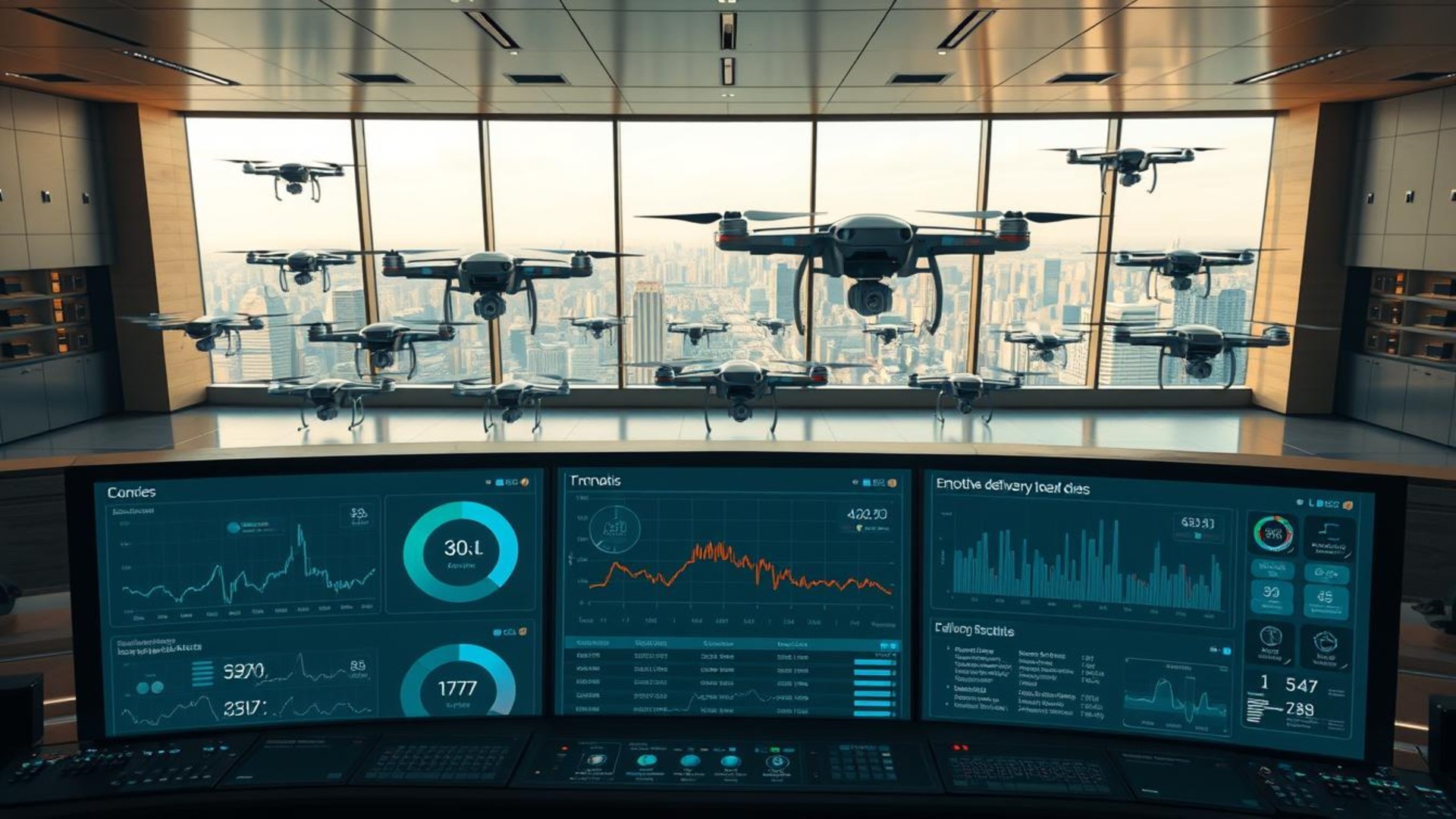
How Cloud-Based Updates Keep Delivery Drones Secure and Efficient

On a rainy afternoon, a local courier watched a small delivery craft reroute around a worksite thanks to a last‑minute adjustment sent from the cloud. That quick fix avoided a return trip and a costly service call. It also highlighted how modern fleets rely on remote software and firmware delivery to stay safe and reliable.

Cloud-based update pipelines make it possible to roll out new features, enforce compliance, and deliver security patches to fleets at scale. With secure transport, signed packages, and dual-partition rollback, teams can deploy changes without grounding missions.

Iottive’s experience in BLE apps, cloud integration, and custom platforms shows how integration between cloud, edge computing, and local systems turns raw data into near‑real‑time decisions. This approach reduces service truck rolls, speeds feature delivery, and keeps operations compliant across regulated airspace.
drone OTA updates, IoT drone patching, AI drone performance tuning.

Key Takeaways

  • Cloud pipelines enable zero‑touch deployments and safe rollbacks.
  • Signed packages and encrypted transport are baseline security.
  • Edge computing cuts response time and lowers bandwidth use.
  • Remote tuning and predictive maintenance boost fleet efficiency.
  • Standard protocols and robust system design prevent failures during installs.

Why Continuous Updates Matter for Delivery Drones in a Hyperconnected Future

Regular, cloud-driven rollouts keep delivery fleets resilient as software, regulations, and threats evolve.

Over 29 billion connected devices are expected to rely on remote patching by 2030, which shows the scale of the challenge for modern delivery systems. Continuous delivery protects fleets from emerging vulnerabilities and ensures ongoing security and compliance as policies and dependencies shift.

Frequent, small packages reduce service interruptions. Background downloads, incremental payloads, and staged switchovers cut downtime and let operations remain on schedule. These approaches also lower manual service costs and keep mission times predictable.

Maintaining synchronized software across varied environments avoids version drift and fragmented systems. That consistency improves energy use, preserves SLAs, and builds customer trust in on‑time delivery performance.
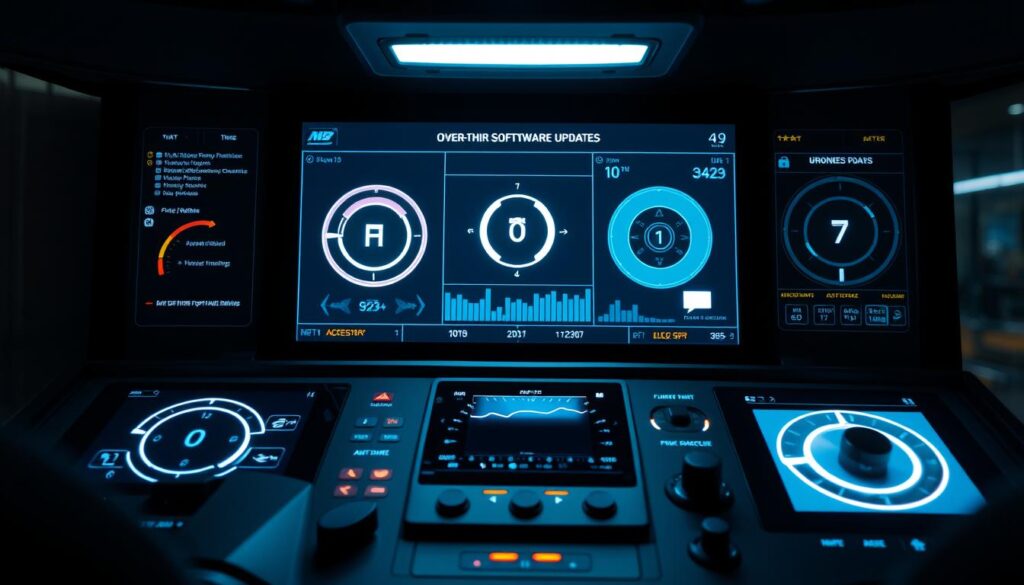
A modern, well-lit drone control dashboard displays a real-time overview of over-the-air software updates. Sleek interfaces and intuitive controls showcase the seamless integration of continuous firmware improvements, ensuring peak efficiency and security for a fleet of delivery drones. The dashboard's crisp displays and subtle ambient lighting convey a sense of technological sophistication, underscoring the crucial role of reliable, up-to-date systems in a hyperconnected future of autonomous logistics.

  • Continuous delivery encodes policy changes and audit logs for regulators and risk teams.
  • Common challenges include variable connectivity, fragmented systems, and version drift.
  • Iottive’s integration expertise streamlines cross‑platform rollouts to sustain security and compliance without heavy overhead.

Next: the architecture and security pipeline design that make continuous updating practical at scale.

From Ground Crews to the Cloud: What Over‑the‑Air Means for Drone Fleets

Moving routine servicing from depots to a central platform transforms how fleets stay mission‑ready.

Fleet operators cut costs and time by avoiding truck rolls and depot visits. Remote distribution schedules installs during charging or low‑use windows to prevent lost delivery time.

Centralized management scales to thousands of aircraft using staged rollouts, policy controls, and dashboards for version tracking. Incremental packages and multicast reduce file sizes and network bills.

Dual‑partition installs with automatic rollback preserve uptime and prevent bricking. Queued downloads resume after interruptions and verify integrity before switching to the new image.
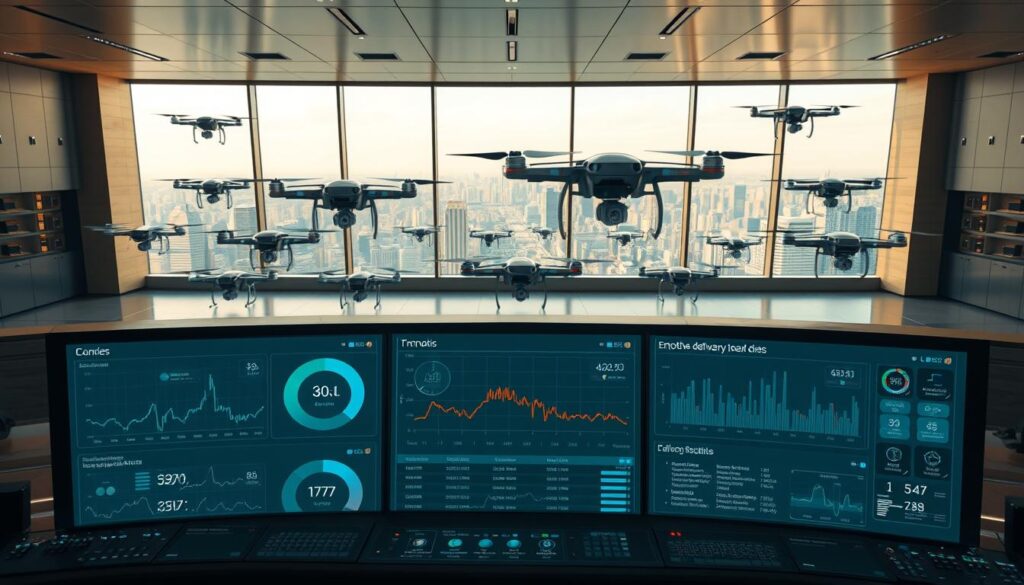
A modern, well-lit control center with a massive panoramic display showcasing a fleet of delivery drones. In the foreground, a sleek dashboard interface displays detailed telemetry and over-the-air update statuses for each drone. Sophisticated 3D visualizations depict the real-time progress of remote software patches being seamlessly pushed to the vehicles. The background features an expansive view of the city skyline through floor-to-ceiling windows, suggesting the scale and complexity of the cloud-based fleet management system. The overall mood is one of technological sophistication, efficiency, and control.

“Automated validation on first boot and edge processing turn a nightly patch into a safe, low‑risk maintenance window.”

  • Cost and time: fewer truck rolls, lower cellular/SATCOM costs via delta packages.
  • Uptime: rollback and dual partitions reduce mission failures and downtime.
  • Operations: scheduling and orchestration unify hubs to avoid peak‑hour disruption.
  • Resilience: edge computing enables fast checks and post‑install self‑tests.
Challenge Cloud Solution Benefit
High field service costs Remote distribution, multicast, delta packages Lower costs, faster rollouts
Interrupted downloads Queued resumes with integrity checks Safe installs, fewer failures
Risk of bricking Dual‑partition + automatic rollback Improved uptime
Bandwidth limits on missions Edge processing and incremental payloads Reduced data use, faster processing

Example: a regional delivery fleet pushes a battery‑management patch overnight via multicast. Devices validate the image on first boot and report telemetry. Management sees success rates in the dashboard and schedules any remedial work during daytime lulls.

Iottive combines cloud/mobile integration with on‑device processing so teams centralize control while keeping flexibility for routes, hubs, and SLAs. That pairing turns maintenance data into proactive fixes before issues become field failures.

Inside a Robust Drone OTA Architecture

A reliable update architecture puts the server and device client in clear, complementary roles to keep fleets safe and mission-ready.

Server role: the authoritative system hosts signed software packages, authenticates devices, and schedules staged rollouts. It manages policy, maintains the repository, and pushes telemetry-based approvals during canary phases.

Device client: the execution agent requests packages, verifies signatures and checksums, and performs installs on the inactive partition. Clients report health checks and rollback triggers to the server after first boot.
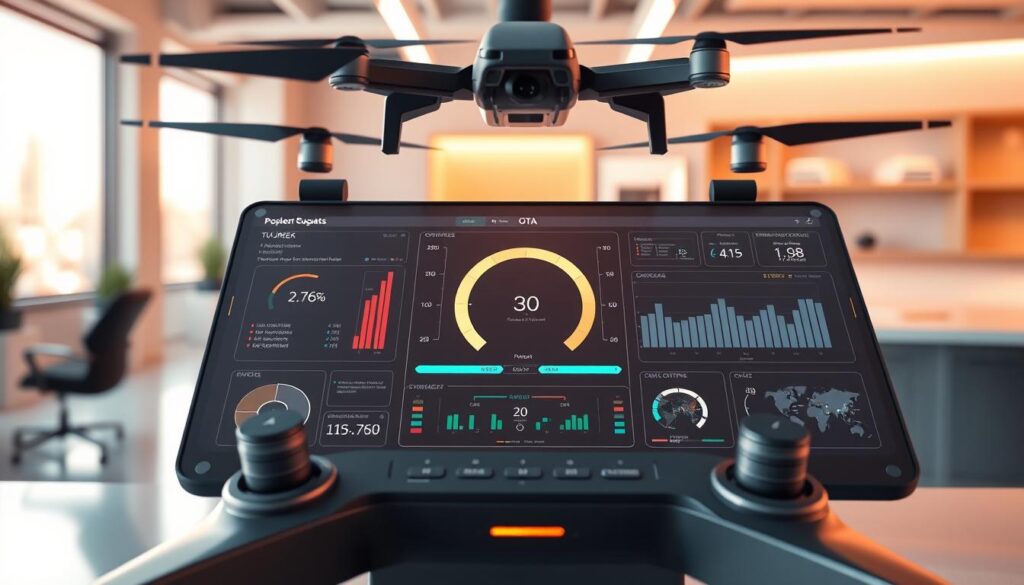
A photorealistic 3D rendering of a sleek, futuristic drone control dashboard, showcasing a robust over-the-air (OTA) software update process. The dashboard displays a detailed progress bar, real-time metrics, and visual indicators, all bathed in the warm glow of a well-lit, modern office environment. Crisp, high-resolution graphics and a clean, minimalist design convey a sense of efficiency and technological sophistication. The scene is captured from a slightly elevated angle, allowing the viewer to appreciate the dashboard's comprehensive data visualization and intuitive user interface, essential for keeping delivery drones secure and operationally efficient.

Secure transport and resilience

TLS via HTTPS, MQTT, or CoAP encrypts data in transit. Signed artifacts and hash-based integrity checks prevent tampering. Power-loss resilience and partial-download resumption protect against failures during install.

Efficiency, storage, and monitoring

Dual-partition design allows instant switch and automatic rollback if post-install checks fail. Incremental (delta) packages and multicast delivery save bandwidth for clustered hubs.

Capability How it works Benefit
Diff & decompress algorithms BSDiff, zstd chunking Faster processing, smaller storage footprint
Repository & CDN Scaled stores + edge nodes near hubs Lower latency, reduced transfer costs
Hardware checks Staging storage, sensor health, thermal limits Prevents installs that stress components
Canary rollout 1% → telemetry → 10% → general Limits downtime and operational risk

Operations and maintenance integrate with dashboards for compliance logging, exception handling, and automated ticketing. This infrastructure supports safer deployments and clearer audit trails for future maintenance.

Choosing Centralized, Edge-Based, or Hybrid Update Models

Picking the right model starts with where you operate and how the fleet communicates.

Centralized cloud control: simplicity vs. bottlenecks

Centralized systems simplify management and integration. They work well for small to medium fleets with stable connectivity.

At scale, however, a single control plane can create bandwidth and scheduling bottlenecks. That raises costs and increases the risk of delayed installs.

Edge distribution: latency cuts for large fleets

Edge-based models move packages to local nodes near hubs. This reduces latency and eases long-haul data transmission.

Local caching and multicast lower backhaul use and speed routine rollouts. Edge computing also enables store‑and‑forward where connectivity is intermittent.

Hybrid orchestration: balancing scale, cost, and resilience

Hybrid orchestration keeps critical controls centralized while routing routine packages through regional edge servers.

This approach balances infrastructure trade‑offs: CDN vs. dedicated edge hardware, storage needs, and automated deployments across geographies.
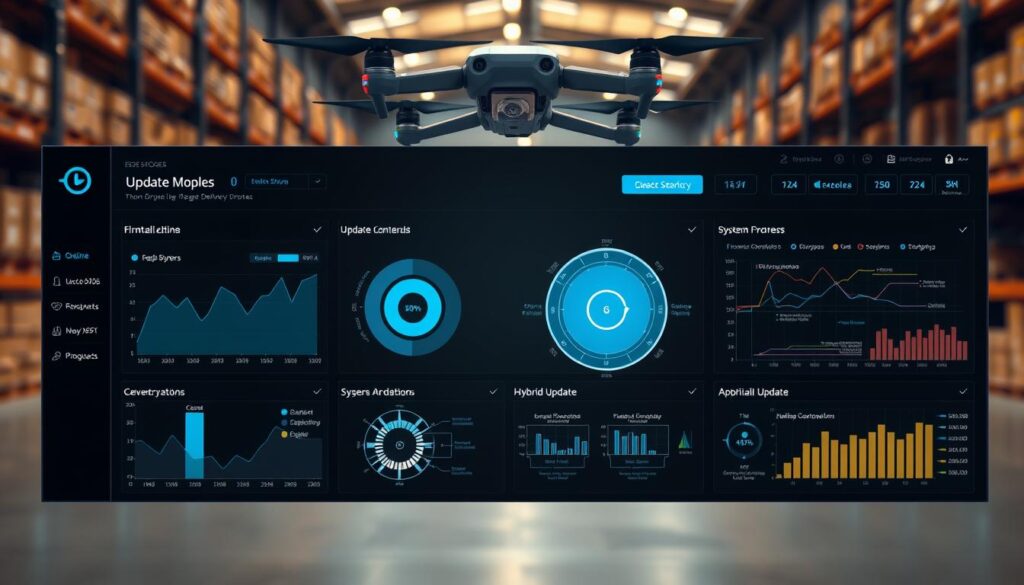
A photorealistic dashboard interface showcasing edge computing update models for drone operations. Sleek, minimalist design with dynamic graphs and data visualizations. The foreground displays real-time metrics on firmware versions, update progress, and system health across a fleet of delivery drones. The middle ground features technical diagrams and schematics detailing centralized, edge-based, and hybrid update architectures. The background subtly hints at an indoor warehouse setting with warm, balanced lighting illuminating the scene. Crisp, high-fidelity rendering with a sense of depth and technical precision.

Model Best for Key benefits
Centralized Small/medium fleets Simple management, unified policy, lower integration overhead
Edge-based Large regional fleets Reduced latency, lower data transmission, local multicast
Hybrid Nationwide networks Scalable control, cost optimization, resilience with local caching
  • Operations gains: localized monitoring, autonomous scheduling, and repair window alignment.
  • Hardware needs: caching, cryptographic validation, and secure access at edge nodes.
  • Applications: hybrid models excel where connectivity varies and urgent fixes are required.

Security First: Hardening the Update Pipeline End to End

Protecting the delivery pipeline starts with building identity and integrity controls into every layer of the system.

Authentication, signatures, and integrity checks

Signed packages and hash validation ensure software comes from a trusted build and remains unchanged in transit. Mutual authentication between servers and devices prevents unauthorized pushes.

Use TLS transport, strict cipher suites, and package signing from the build server through to device installation. Dual‑partition rollbacks and post‑install health checks reduce the risk of mission‑critical failures.

Zero‑trust device identity and encrypted storage

Zero‑trust means unique device identities, mutual certs, and least‑privilege access by default. Certificate rotation and short-lived tokens keep long‑lived fleets manageable.

Store keys and artifacts in encrypted storage or secure enclaves (TPM‑like hardware) to resist tampering and theft. Iottive implements these controls for regulated environments to help maintain compliance.

Mitigating cybersecurity risks in networked systems

  • Processing safeguards: pre‑install dependency validation, memory and storage checks, and policy gates to prevent corrupted installs.
  • Operational controls: role‑based access, audit trails, alerting, and SOC integration for faster incident response.
  • Continuous hygiene: SBOM tracking, vulnerability scanning, and automated patch workflows to close emerging issues.
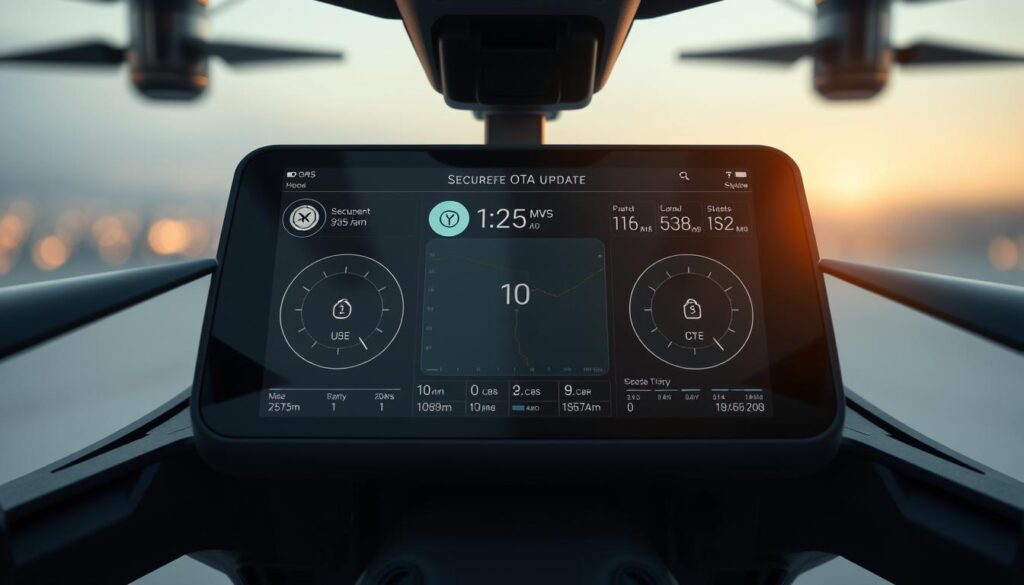
Photorealistic drone control dashboard, showing a secure end-to-end OTA update process in progress. Sleek, modern interface with clean lines and muted tones. Detailed readouts display update status, progress bars, and system diagnostics. Subtle lighting casts a warm glow, creating a sense of reliability and trust. Carefully positioned camera angle provides an immersive, first-person perspective, inviting the viewer to imagine themself as the drone operator overseeing the critical security update. Realistic textures, materials, and shadows enhance the sense of depth and realism.

Edge considerations are essential: secure edge caches, certificate pinning, and encrypted channels between regional nodes and central servers preserve integrity across distributed computing and operations.

Regulatory and Safety Considerations for U.S. Operations

Maintaining safety in national airspace requires systems that push rule changes and proof-of-installation records in real time.

Coordinating with UTM and airspace restrictions in real time

Integration with UTM and ATC feeds lets fleets receive temporary flight restrictions and reroute missions quickly.

Policy packages can encode geo-fencing, altitude caps, and speed limits so devices enforce constraints automatically.

An immediate route change can be delivered, validated, and enforced before a mission deviates from compliance.

Documentation, audits, and maintaining compliance via remote policy delivery

Iottive supports audit-ready logging that records who approved each build and when each device installed it.

Complete logs, test evidence, and retained artifacts form automated audit packages for regulators and partners.

Version pinning, rollback reports, and device identity proofs provide traceability for every change.

  • Safety outcomes: rapid policy changes adjust max altitude, speed, and no‑fly zones fleetwide.
  • Management value: timestamped approvals and install success data reduce audit friction.
  • Operational readiness: training materials and emergency procedures can be pushed to crews to keep practices consistent.
  • Resilience: edge caches preserve policy availability when backhaul connectivity is limited in the field.

Monitoring and analysis dashboards surface noncompliant devices for remediation before flight, shortening response time and improving mission safety.

Edge Computing: The Update Accelerator for Real-Time Drone Decisions

Local computing turns raw sensor streams into instant actions, shrinking decision loops from seconds to milliseconds.

Onboard inference runs models close to the sensors so obstacle avoidance, route changes, and anomaly detection happen immediately. This cuts response time and preserves mission continuity when backhaul is slow.

Workflow: capture, on-site processing, and platform integration

First, multi-sensor capture records RGB, thermal, LiDAR, and multispectral data. Second, local processing filters and summarizes the data into compact alerts.

Third, summaries sync with cloud platforms for fleet-wide visibility and longer-term analysis. Iottive engineers SWaP-aware edge solutions that link field inference with mobile and cloud integration.

SWaP-aware hardware, connectivity, and resilience

Lightweight accelerators (Jetson, Movidius, Snapdragon), SSD staging, and fanless enclosures balance weight and endurance. Connectivity options include Wi‑Fi, LTE, and 5G, with hybrid models sending only summaries to save bandwidth.

  • Algorithms tuned for embedded inference trade accuracy for energy to protect mission time.
  • Built-in monitoring validates model health after remote model installs and detects drift.
  • Geotagged alerts, path optimization, and automatic re-tasking enable faster, autonomous responses.

“Edge cuts response from seconds to milliseconds, enabling near‑real‑time human detection in field SAR use cases.”

AI Drone Performance Tuning in the Field

In-field model distribution shortens the gap between lab training and real-world behavior under varied weather and lighting.

Onboard model updates push refined models to vehicles so navigation, object tracking, and precise landings improve from actual mission data. Edge-based vision and lightweight processing let systems react locally with low latency.

Embedded algorithms are tuned for energy and compute constraints. Quantization, pruning, and memory allocation balance accuracy and flight endurance while keeping inference fast.

  • Training workflows use fleet telemetry and annotated clips to raise detection confidence and cut false positives.
  • Federated learning keeps raw footage on-device and shares gradients to improve global models while preserving privacy.
  • Sensor fusion—RGB, thermal, and LiDAR—boosts robustness in low light and bad weather.

Safety and lifecycle practices include canary A/B tests, model versioning, and rollback of weights if metrics degrade. Operational playbooks validate releases on test routes before general release.

Iottive integrates data labeling, BLE-connected tools, cloud/mobile pipelines, and monitoring so teams close the loop from capture to deployment and see real gains in field performance and safety.

Predictive Maintenance Powered by IoT Sensors and ML

Smart sensor arrays and machine learning flag subtle changes in motors and batteries that humans can miss.

Health telemetry: motors, batteries, stress, and environment

Define a simple telemetry stack that streams vibration, motor RPM, temperature, battery voltage/current, structural strain, and ambient conditions. Short, secure software agents collect and encrypt this data for local and cloud processing.

Anomaly detection to prevent failures and reduce downtime

Algorithms correlate rising vibration with heat patterns to predict bearing wear or cell imbalance. Edge computing raises immediate alerts while cloud analysis finds long-term trends and refines thresholds.

Integrating cloud analytics with edge alerts

Operations workflows link alerts to CMMS tickets, reserve parts, and schedule service windows. This reduces unexpected failures, extends component life, and lowers maintenance costs.

Telemetry Analysis Action
Vibration, temp, battery Edge anomaly scoring + cloud trend analysis Immediate alert, scheduled service
Strain, RPM, environment Correlation models for wear patterns Parts pre-order, technician dispatch
Voltage/current logs Cell imbalance detection Battery swap before failure

“A fleet avoided in‑flight failures after models flagged rising motor vibration, prompting a proactive service cycle.”

Iottive integrates sensor telemetry, edge alerts, and cloud analytics so teams gain clear monitoring, auditable logs, and training playbooks that keep compliance and performance aligned.

Flight Path Optimization and Dynamic Routing via AI

Real‑time route adaptation fuses live weather, traffic, and airspace notices to keep missions safe and punctual.

Multi‑source data fusion blends weather feeds, NOTAMs, terrain maps, and live ATC/UTM telemetry to build a per‑mission route that meets regulatory constraints and operational goals.

Live weather, no‑fly zones, and ATC integration

Routing engines ingest short‑term forecasts and temporary restrictions to reroute before a mission starts or mid‑flight. Integration with ATC/UTM systems and cloud dispatch pushes compliant paths directly to flight controllers.

Multi‑objective optimization: time, power, safety, compliance

Algorithms solve tradeoffs between fastest arrival, minimal energy use, and strict safety margins. Models use historical telemetry to predict headwinds and adjust altitude and speed proactively.

  • Edge inference handles local obstacle avoidance and collision checks with millisecond processing.
  • Cloud planning optimizes corridor‑level traffic and schedules across hubs.
  • Automated training loops learn from completed missions to improve future route selection.
Capability Where it runs Benefit
Immediate collision avoidance Edge Faster reactions, fewer detours
Corridor planning & scheduling Cloud Better throughput, predictable time windows
Headwind/energy models Hybrid Lower energy use, extended range

Validation compares predicted routes to ground truth using telemetry analysis and accuracy metrics. Continuous dashboards show success rates and guide model retraining.

Hardware and systems require reliable GNSS/RTK, redundant sensors, and preflight health checks so paths execute as planned. These capabilities help operations reduce detours, save energy, and raise schedule predictability.

Computer Vision at the Edge: Faster Inspections and Safer Deliveries

Onboard vision systems shrink reaction times by running detection and classification where sensors collect data.

Onboard detection for autonomy in low-connectivity environments

Local processing lets vehicles navigate and complete delivery tasks when network links are weak. Edge computing performs object detection, landing‑zone checks, and obstacle avoidance with millisecond latency.

That resilience keeps operations moving and reduces the need to stream large volumes of data back to the cloud.

Thermal, LiDAR, and multispectral use cases

Sensor fusion combines RGB, thermal, LiDAR, and multispectral feeds to find people, spot heat anomalies, and verify safe drop sites. Algorithms weight each sensor by condition so systems remain accurate across varied environments.

Processing pipelines and hardware trade‑offs

Onboard pipelines run detection, classification, and lightweight tracking. Only compact results and selected frames are synced to the cloud, saving bandwidth and storage.

Choices between NVIDIA Jetson, Intel Movidius, and Qualcomm Snapdragon Flight balance compute, weight, and power to meet SWaP hardware requirements.

  • Applications: infrastructure inspection, residential deliveries, and visual localization for precise landings.
  • Accuracy: continuous calibration, seasonal domain adaptation, and field testing keep models reliable.
  • Security: models reside in protected storage, streams can be encrypted, and signed packages secure model distribution.

Integration and operations

Edge-to-cloud patterns upload annotated evidence when connectivity returns for review and collaborative decision-making. Maintenance routines include camera health checks, lens-cleaning alerts, and scheduled recalibration via secure remote procedures.

“Local obstacle avoidance in a narrow alley caused an immediate reroute, then uploaded mission evidence for later analysis.”

drone OTA updates, IoT drone patching, AI drone performance tuning

Schedule installs during charging windows and low‑traffic periods to protect mission timing and customer expectations. Iottive implements scheduling that defers noncritical feature delivery until vehicles are idle or docked. That simple choice lowers downtime and keeps SLAs intact.

Scheduling strategies and background installs

Background downloads with prevalidation let devices fetch signed packages and verify checksums before any switchover. Dual‑partition switching then reduces visible disruption to a short reboot or partition flip.

Best practices include minimum battery thresholds, GNSS lock checks, and safe‑landing confirmation before final switchover. Watchdog timers and automatic rollback guard against install failures.

Compression, delta delivery, and bandwidth management

Delta and dictionary‑based compression shrink payloads and cut data transmission and costs. Depot multicast and peer‑to‑peer transfers in hangars improve bandwidth efficiency for clustered fleets.

CI/CD integration promotes signed artifacts, staged rollouts, and telemetry gates so telemetry validates installs before broader promotion. Co‑deploying models and sensors firmware prevents runtime conflicts and keeps perception stacks aligned.

  • Power‑safe installs and thermal throttling protect hardware during processing.
  • Dependency graphs and signature checks ensure software and model compatibility.
  • Rollback + telemetry capture accelerate root‑cause analysis after failures.

Avoiding Common OTA Pitfalls in Drone Programs

Simple lapses—like unsigned packages or oversized payloads—cause the largest operational headaches.

Missing encryption, weak authentication, or absent integrity checks open fleets to tampering and service failures. Fix this with signed artifacts, checksums, and mutual certs so packages are verifiable before install.

Oversized payloads increase downtime during installs and raise failure risk in low‑bandwidth environments. Prefer incremental or delta delivery and depot multicast to shrink transfers and shorten mission impact.

Compatibility, staged rollouts, and success monitoring

Rollbacks and dual partitions prevent bricking after a bad install. Combine canary groups, phased rollouts, and telemetry gates to catch regressions early and limit blast radius.

System-level checks for firmware, application, and model versions stop runtime conflicts. Pre‑install resource checks and pause/resume for intermittent links reduce processing stress at the edge and cut downtime.

  • Monitor install rates, crash spikes, and battery drain via dashboards and alerts.
  • Plan for variable connectivity, temperature extremes, and vibration in field environments.
  • Communicate change logs, operator schedules, and advance notices to crews.

Iottive bakes security by design, staged rollouts, telemetry, and automated rollback into end-to-end platforms to reduce risk across the entire lifecycle.

Common issue Mitigation Operational benefit
Unsigned or tampered packages Package signing + checksum validation Prevents unauthorized installs
Oversized payloads Delta delivery + multicast Lower downtime, reduced bandwidth
No rollback plan Dual partitions + automatic rollback Reduces bricking and mission failures
Poor visibility Telemetry dashboards + alerting Faster remediation and trend detection

Seamless Integration with Cloud and Mobile Platforms

When edge summaries stream to backend platforms, operators get instant context to guide scheduling and fixes.

Data pipelines, real-time monitoring, and fleet orchestration

Edge capture condenses sensor feeds into compact summaries that flow to cloud storage and annotation systems like Anvil Labs. This minimizes bandwidth while preserving actionable detail.

Real‑time monitoring feeds dashboards and orchestration engines. Operators see install status, health metrics, and delivery KPIs to schedule remediations or promote staged rollouts.

APIs, SDKs, and mobile apps for operations and maintenance

Integration patterns use REST APIs, gRPC, and SDKs to connect fleet controllers, update servers, and maintenance platforms. Containerized services and orchestration tools secure scalable workflows.

Mobile‑first tools—BLE provisioning apps and field diagnostics—let crews verify installs and trigger safe switchover at the pad. Role‑based access and audit logs keep management and compliance simple.

Component Function Benefit
Edge processing Summarize & prefilter sensor data Lower costs, reduced latency
Cloud platform Storage, annotation, orchestration Scalable analysis, centralized management
APIs & SDKs Integrate controllers and maintenance systems Faster automation, repeatable workflows
Mobile apps Provisioning and field control Faster on‑pad operations, better connectivity

Security and requirements include encrypted streams, certificate lifecycle management, and network segmentation to protect data and systems. Multi‑region infra, CDN, and IaC enable repeatable, compliant deployments.

Software lifecycle hooks automate build signing, policy checks, and staged promotions so releases meet policy gates before wide delivery. That seamless integration shortens time‑to‑value and reduces operational friction.

“Hybrid edge‑cloud pipelines turn raw telemetry into operational decisions while keeping costs and latency in check.”

Iottive offers Cloud & Mobile Integration, BLE App Development, and Custom IoT Platforms to unify telemetry, provisioning, and fleet operations. Contact: www.iottive.com | sales@iottive.com.

Cost, Uptime, and ROI: Making the Business Case

A clear ROI model ties fewer field visits and optimized bandwidth to measurable savings each quarter.

Reducing truck rolls, data transmission, and manual maintenance

Iottive quantifies cost savings from remote delivery and edge-enabled logic by modeling fewer depot visits, smaller payload sizes, and lower labor for scheduling and installs.

Edge summarization cuts raw data transfer by sending compact alerts instead of full streams. Background and incremental installs shrink visible downtime during service windows.

Measuring downtime avoided and performance gains

Dual-partition rollovers, staged rollouts, and automated rollback prevent fleet-wide outages and reduce mission interruptions.

Tie efficiency and performance to KPIs: on-time delivery rates, route adherence, and battery health trends. That links technical work to business outcomes and management reporting.

Metric What to measure Business benefit
Truck rolls avoided Number of field visits/year Lower labor & travel costs
Bandwidth reduction GB/month after edge summarization Reduced data transfer costs
Downtime avoided Minutes of service interruptions Higher uptime, fewer SLA penalties
Maintenance events Unplanned vs. predicted repairs Lower spare parts and labor spend

“Quantify baseline, pilot gains, and scaled impact to present a CFO-friendly business case.”

Where Iottive Fits: End-to-End IoT/AIoT for Secure Drone Updates

Iottive delivers a unified platform that connects BLE provisioning, cloud orchestration, and on-device processing.

This approach creates secure, auditable flows for software delivery, model distribution, and device lifecycle management.

BLE apps, cloud and mobile integration, and custom IoT platforms

Iottive’s solutions cover BLE-assisted provisioning, mobile diagnostics, and backend orchestration. Teams use these tools to manage versions, push signed artifacts, and verify installs with audit logs.

Edge capabilities include on-device inference, resilient caching, and model workflows that reduce bandwidth and speed remediation.

Industry-ready solutions and applications

Iottive builds systems for healthcare, automotive, smart home, consumer electronics, and industrial sectors. Each application is tailored for compliance and operational needs.

Hardware consulting guides SWaP-aware choices, storage sizing, and rugged designs to match field constraints.

Contact: www.iottive.com | sales@iottive.com

Management and maintenance dashboards unify telemetry, version status, and automated rollouts. This gives teams clear visibility and faster fault resolution.

Capability What it does Benefit
Secure delivery Signed packages, encrypted storage Regulatory compliance and tamper resistance
Edge & model workflows On-device inference, model rollbacks Lower latency and safer deployments
Integration & data APIs, telemetry pipelines, mobile apps Seamless integration with existing systems
Hardware & support SWaP guidance, durable designs, training Faster time-to-value and sustained uptime

“Trusted IoT, AIoT, and mobile app development that secures devices and streamlines fleet management.”

Conclusion

Conclusion

A resilient update strategy pairs centralized control with regional caches and on‑site validation to limit risk. Cloud-based delivery, reinforced by edge computing, forms the foundation for secure, efficient, and scalable delivery operations.

Signed, encrypted packages with dual partitions and incremental delivery protect safety and maintain system reliability. These measures, combined with AI-driven advancements in routing, predictive maintenance, and onboard vision, raise uptime and reduce costs.

Robust systems integration and smart computing placement cut latency and bandwidth use. Data‑informed decisions and continuous improvement shorten incident response and improve customer outcomes.

Iottive is ready to partner on secure end‑to‑end solutions—BLE apps, cloud/mobile integration, and AIoT workflows—to future‑proof delivery programs. Contact: www.iottive.com | sales@iottive.com.

FAQ

What are the main benefits of cloud-based updates for delivery drones?

Cloud-based delivery of software and firmware improves safety, reduces downtime, and speeds feature delivery. Centralized orchestration enables consistent security patches, telemetry aggregation for analytics, and scalable rollout strategies that cut operational costs and manual maintenance. This leads to better fleet efficiency, compliance, and faster time-to-value for new capabilities.

Why do continuous updates matter for fleets in a hyperconnected future?

Continuous updates keep devices secure, compliant, and operational as threats, airspace rules, and software expectations evolve. Regular delivery of fixes and model improvements prevents obsolescence, preserves data integrity, and ensures systems operate reliably with low downtime. They also support ongoing performance tuning and predictive maintenance driven by telemetry and machine learning.

How do over-the-air systems compare with manual servicing for fleet uptime and cost?

Over-the-air approaches minimize truck rolls and hands-on interventions by delivering patches and configuration changes remotely. This increases fleet availability, reduces labor and parts costs, and allows staged rollouts to mitigate risk. Manual servicing still plays a role for hardware failures, but remote delivery dramatically improves scale and time-to-repair.

What components make up a robust update architecture?

A resilient architecture includes an update server, device client, secure transport, and integrity verification. Best practices use dual-partition designs or rollback mechanisms to avoid bricking, incremental and multicast delivery to save bandwidth, and logging for monitoring. Edge nodes can offload heavy processing and reduce latency for large fleets.

Which secure protocols are recommended for transmitting update packages?

Use encryption and authenticated channels such as HTTPS and secure MQTT. For constrained links, CoAP with DTLS can be appropriate. Signatures, integrity checks, and strong key management ensure that only verified packages install on devices, protecting the supply chain and runtime environment.

Should organizations choose centralized, edge-based, or hybrid update models?

Centralized control offers simplicity and unified policy, but can create bottlenecks. Pure edge distribution lowers latency for time-critical fixes and on-site inference, while hybrid models balance scale, resilience, and cost. The right mix depends on fleet size, connectivity, regulatory needs, and compute constraints.

How do you prevent bricking during an update?

Implement dual-partition or A/B firmware schemes so the device boots from a known-good image if the new install fails. Include verification steps, staged rollouts, and rollback triggers. Maintain power-management safeguards and test updates in simulated environments before mass deployment.

What security measures harden the update pipeline end to end?

Employ code signing, mutual authentication, encrypted storage, and zero-trust device identity. Monitor for anomalies in delivery, rotate keys, and enforce least privilege in cloud components. Regular audits and automated compliance checks close gaps across the update lifecycle.

How do regulatory and safety requirements affect update practices in the U.S.?

Updates must support real-time coordination with airspace management (UTM) and respect temporary flight restrictions. Maintain documentation, audit trails, and versioned configurations to demonstrate compliance. Rapid distribution of safety-critical patches is often needed to meet regulatory expectations.

What role does edge computing play in update strategies?

Edge nodes enable on-site inference and preprocessing, reducing round-trip delays and bandwidth use. They accelerate decision-making—cutting response times from seconds to milliseconds—and can stage updates locally for intermittent connectivity. Hardware must account for SWaP constraints and durability.

How are AI models updated in the field without compromising privacy?

Use federated learning and privacy-preserving aggregation to improve models from distributed telemetry without sending raw sensor data to the cloud. Secure model signing, versioning, and validation prevent corrupt or adversarial models from degrading safety or performance.

How does predictive maintenance integrate with update systems?

Telemetry from sensors—batteries, motors, and structural stress—feeds cloud analytics and edge alerts. Machine learning flags anomalies and triggers targeted updates or maintenance actions. Integrating alerts with workflow and parts inventories reduces unplanned downtime and repair costs.

What techniques reduce bandwidth during mass rollouts?

Use delta compression, incremental patches, multicast delivery, and content-addressable distribution to limit transmitted bytes. Scheduling updates during low-traffic periods and using local edge caches further reduce data transmission costs and speed delivery.

How do teams measure ROI from remote update programs?

Track reduced truck rolls, decreased mean time to repair, improved uptime, and lower data transmission costs. Compare baseline maintenance spend with post-deployment metrics and quantify safety incidents avoided and operational efficiencies gained.

What are common pitfalls to avoid in remote update programs?

Avoid oversized payloads, missing rollback mechanisms, weak authentication, and poor compatibility testing. Lack of staged rollouts and insufficient monitoring can cause widespread failures. Plan staging, validation pipelines, and continuous monitoring to mitigate these risks.

How do platforms integrate with cloud and mobile tools for operations?

Modern platforms expose APIs, SDKs, and mobile apps for fleet orchestration, real-time monitoring, and maintenance workflows. They connect telemetry pipelines to analytics, support alerts, and provide role-based access controls to streamline operations and audits.

What infrastructure is needed to support secure, large-scale update delivery?

You need scalable cloud services for orchestration, content distribution networks, edge nodes or gateways, robust device identity systems, and monitoring stacks. Include incident response playbooks, automated testing, and compliance tooling to ensure resilience and regulatory alignment.

How can organizations ensure updates do not harm mission-critical functions?

Perform canary releases, staged rollouts, and real-world testing on representative hardware. Maintain clear fallback states, health checks, and automated rollback criteria. Coordinate release windows to minimize disruption to active operations.

What example use cases gain the most from advanced update strategies?

Time-sensitive delivery, medical supply transport, infrastructure inspection, and large-scale logistics all benefit. These environments need rapid patching, real-time routing, onboard vision updates, and predictive maintenance to preserve safety and service levels.

Which vendors or platforms are recognized for secure IoT update solutions?

Look for providers with proven device management, code-signing, and distribution capabilities, such as AWS IoT Device Management, Microsoft Azure IoT Hub, and Google Cloud IoT. Evaluate third-party specialists for edge orchestration, security hardening, and industry-specific compliance.

How do teams monitor success and detect failures after rollout?

Use telemetry dashboards, automated health checks, and alerting integrated with incident management. Track installation rates, error logs, rollback triggers, and performance KPIs. Correlate analytics with maintenance records to close the loop on fixes.

What are recommended scheduling strategies and fail-safes for background installs?

Schedule updates during low-activity windows, respect power and mission constraints, and allow pause/resume semantics. Include preflight checks, signature verification, and transactional install steps that can revert to the previous partition on failure.

How does compression and delta delivery affect onboard storage and compute requirements?

Smaller payloads ease storage and reduce processing overhead, enabling devices with limited memory and compute to accept updates. However, applying deltas requires verification logic and occasional temporary storage; design systems to meet these SWaP-aware constraints.

How can organizations balance cost, uptime, and resilience?

Adopt hybrid distribution, optimize bandwidth with deltas and multicast, and implement staged rollouts to limit blast radius. Measure trade-offs between centralized simplicity and edge resilience, then align architecture to expected scale and regulatory demands.

How does iottive support end-to-end update and device management?

iottive provides BLE apps, cloud and mobile integration, and customizable IoT platforms that handle secure delivery, device identity, and telemetry pipelines. Their solutions support healthcare, automotive, industrial, and smart-home use cases with integration tools, monitoring, and compliance features.
Let’s Get Started

Top 5 Drone Fleet Monitoring Systems for Smarter Logistics

One morning a regional hub faced a surprise outage: a key delivery run stalled when several units reported low power and a navigation glitch. The team switched to a new monitoring approach that combined on-board processing with cloud analytics. Within weeks they cut downtime and kept schedules on track.

AI drone fleet tracking, IoT drone health monitoring, autonomous logistics drone

This Best Practices Guide helps U.S. logistics leaders compare top solutions for AI drone fleet tracking and align toolsets with business goals. Expect guidance on reducing downtime with proactive checks, boosting route efficiency with analytics, and extending battery life through smarter charging cycles.

Iottive brings end-to-end integration skills in BLE, mobile apps, and custom IoT platforms to help teams deploy resilient platforms. The guide covers vendor fit, API interoperability, compliance basics, and ROI levers that raise reliability and cut costs.

Key Takeaways

  • Match systems to use cases like yard mapping or hub-to-hub delivery.
  • Use on-board processing plus cloud analytics to turn raw data into action.
  • Prioritize interoperability: APIs, SDKs, and BLE telemetry matter.
  • Proactive maintenance and predictive alerts reduce downtime.
  • Assess vendors for WMS/TMS integration and regulatory support.

Why smarter drone fleet monitoring matters now for U.S. logistics

Rising parcel volumes and congested yards demand smarter aerial oversight across U.S. supply chains. Short staffing and tighter windows make timely visibility essential for last-mile and middle-mile success.

Modern systems turn raw data into operational intelligence. Integrating artificial intelligence enables automated mission planning, predictive maintenance, and compliance reporting as flights scale. That reduces aborted missions and improves throughput.

  • Faster site mapping and inventory checks cut manual walk rounds.
  • Continuous geo-awareness supports U.S. airspace compliance.
  • Telemetry from batteries and motors enables proactive maintenance.
  • Unified dashboards standardize alerts across multiple drone models.
Operational Need Business Benefit How Iottive Helps
Real-time visibility Faster exception handling Connects drones, edge devices, and mobile apps
Predictive maintenance Less unexpected downtime Telemetry integration and analytics
Compliance & geo-awareness Safer scale-up in U.S. airspace Digitally logged reports and secure integrations

For rapid deployments and U.S. compliance support, contact Iottive at www.iottive.com | sales@iottive.com.

Search intent and what you’ll learn in this Best Practices Guide

Logistics teams are asking for a pragmatic guide to match airborne systems to real operational goals. This section sets clear search intent: readers want unbiased evaluation criteria, concrete platform capabilities, and a step-by-step roadmap for practical adoption.

Iottive supports discovery workshops to define requirements and success metrics before platform selection. Use those workshops to assess needs, pick appropriate technology, and set training and compliance plans.

Effective adoption follows a simple flow: assess requirements, pilot selected systems, train staff, ensure regulatory readiness, and monitor live operations. The guide operationalizes each step so teams can reduce incident rates, increase mission success, and streamline reporting.

  • Outcomes: fewer incidents, higher mission success, standardized reporting.
  • Audience: operations directors, safety managers, innovation leads, and IT/OT architects.
  • Framework: evaluation criteria, data architecture, security, cost modeling, and KPIs.

Templates, vendor checklists, and phased timelines help turn technical concepts—computer vision, machine learning, and NLP—into real applications like yard scans, asset tracking, and automated inspections.

Key advantages and must-have capabilities for intelligent fleet management

Combining edge processing with cloud dashboards turns telemetry into clear operational decisions. That mix drives measurable gains: higher mission success, lower manual oversight, faster incident response, and better SLA performance.

  • Core benefits: increased uptime, reduced labor for routine checks, quicker incident detection, and improved SLA adherence.
  • Must-have capabilities: automated mission planning, real-time telemetry dashboards, predictive maintenance, and geo-fenced compliance checks.
  • Interoperability: support mixed models and payloads, expose standardized APIs/SDKs, and provide a mobile UX for field operators and supervisors.
  • Analytics essentials: anomaly detection on telemetry streams, trend analysis for battery life, and utilization insights by site and mission type.
  • Safety & resilience: obstacle avoidance, lost-link handling, return-to-home logic, edge intelligence for degraded connectivity, and automated incident logs for audits.
Capability Business Benefit How Iottive Helps
Telemetry dashboards Faster decisions BLE telematics + mobile apps
Predictive maintenance Lower downtime Analytics pipelines and alerts
Interoperability Scale across sites APIs, SDKs, plugin architecture

Well-architected systems combine data, intelligence, and process to scale operations safely and cost-effectively.

Evaluation criteria for the top 5 drone fleet monitoring systems

A clear scoring rubric helps teams compare perception, automation, and compliance features side by side.

Perception and intelligent control

Evaluate embedded computer vision for obstacle avoidance and inspection. Check model update workflows, latency, and support for natural-language tasking.

Operational automation and reliability

Look for dynamic route optimization, automated re-tasking, and coordinated multi-unit operations. Verify battery analytics, motor vibration trends, and edge decision-making during loss of connectivity.

Compliance, security, and scale

Confirm automated flight logging, airspace awareness layers, and configurable FAA-ready reports. Inspect encryption at rest and in transit, role-based access, and secure device onboarding.

Criteria What to test Why it matters
Perception Computer vision accuracy, model updates Safer missions and better inspections
Automation Route optimization, task allocation Faster ops and lower manual load
Security & compliance Encryption, logging, FAA reports Regulatory readiness and trusted data
Scalability Telemetry throughput, concurrency tests Reliable performance at scale

Iottive assists with technical due diligence, proof-of-concept validation, and system integration to de-risk selection and speed deployment.

Top 5 systems for AI-powered drone fleet management in logistics

Top commercial platforms combine real-time planning engines with deep telemetry streams to keep operations predictable. Modern solutions automate mission planning, forecast maintenance from sensor data, and produce compliance reports. Global flights hit 19.5 million in 2024, making scalable systems essential.

Platform A

Strengths: rapid mission planning that ingests terrain, weather, and no-fly zones to produce safe routes at scale.

Platform B

Strengths: deep predictive maintenance with battery cycle analytics, motor current anomaly detection, and environmental stress metrics.

Platform C

Strengths: advanced computer vision for inspections, high defect-detection accuracy, and on-device processing for low latency.

Platform D

Strengths: compliance workflows with automated logs, configurable checklists, and live air traffic overlays for risk reduction.

Platform E

Strengths: open ecosystem with APIs, SDKs, webhooks, and connectors to cloud analytics and mobile workforce tools. Iottive can integrate selected platforms with BLE telemetry and existing apps to speed adoption.

“Compare planning engines by how they ingest terrain, weather, and no-fly data to generate safe, efficient missions at scale.”

Platform Core strength Why it matters
Platform A Real-time planning Better mission success and scheduling
Platform B Predictive maintenance Lower downtime and costs
Platform C Computer vision Faster inspections with accuracy
Platform D Compliance Reduced regulatory risk
Platform E Open integrations Easier enterprise adoption

AI technologies transforming fleet monitoring

Modern perception and prediction tools turn sensor streams into clear guidance for operators. These tools combine vision, models, and natural‑language interfaces to speed decisions on site.

A fleet of advanced computer vision drones hovers above a bustling modern logistics depot, their sleek frames bathed in soft natural light filtering through large windows. On the ground, digital monitoring screens display real-time data analytics, tracking the drones' movements and efficiency. The drones' cameras and sensors seamlessly integrate with the depot's AI-powered management systems, optimizing delivery routes and monitoring fleet performance with unparalleled precision. This integrated system of autonomous aerial vehicles and intelligent analytics represents the future of smarter, more efficient logistics management.

Computer vision for obstacle avoidance and inspection

CNN-based perception recognizes objects and hazards in real time. That reduces collisions and finds infrastructure defects during routine runs.

Machine learning for routes and maintenance

Machine learning optimizes routes using energy, weather, and timing constraints. Predictive models forecast battery and component failures so teams service units before incidents occur.

NLP for tasking and accessibility

Natural-language interfaces let operators assign missions and request status without complex menus. This lowers training time and speeds frontline response.

Capability Benefit Implementation note
Vision (CNN) Real-time hazard detection Edge inference for low latency
Predictive models Fewer unexpected failures Requires labeled data and retraining
NLP tasking Faster mission assignment Governance for ambiguous commands

Integration: feed model outputs into dashboards, alerts, and automated workflows. Iottive operationalizes these capabilities through AIoT solutions and mobile interfaces, closing the loop with continuous retraining and strict version control before wide release.

AI drone fleet tracking, IoT drone health monitoring, autonomous logistics drone

Real‑time telemetry and smart sensors give operations teams a single source of truth for every mission.

Define end‑to‑end tracking as location, status, payload, and component metrics combined into one live view. This unified picture speeds decisions and reduces confusion for operators in yard and hub environments.

Use BLE and internet things sensors to capture battery cycles, motor current, and payload bay status. Early anomaly detection flags unusual temperature or draw patterns so teams can act before failures occur.

  • Automated tasks: recurring yard scans, inventory checks, and scheduled inspections with minimal human input.
  • Proactive alerts: thresholds based on cycle counts and temperature that trigger service workflows.
  • Data flows: edge → cloud analytics → operator apps with role‑based views and secure onboarding.

Business outcomes include fewer canceled missions, longer component life, and tighter schedule adherence. Integration with maintenance management systems can auto‑create work orders when thresholds are breached.

KPI What to measure Target
MTBF Mean time between failures Increase year‑over‑year
Battery cycle utilization Charge/discharge patterns Optimize to extend life
Predictive vs reactive Maintenance ratio Higher predictive percentage

Train operators to read dashboards and act on alerts. Clear roles and simple workflows ensure measured data drives faster, safer maintenance and better operational management.

Implementation roadmap: from pilot to scaled autonomous operations

Begin with a focused pilot to prove data quality and operational value before broad rollouts. Start small so teams can see quick wins and build confidence.

A photorealistic indoor depot scene, bathed in natural light from skylights. In the foreground, a fleet of delivery drones stand ready for launch, their sleek bodies and advanced avionics reflected in the polished concrete floor. In the middle ground, digital monitoring screens display detailed telemetry and route optimization data, guiding the autonomous operations. The background features shelving units and logistical infrastructure, hinting at the scale and complexity of the drone fleet management system. The overall atmosphere conveys a sense of cutting-edge technology, efficiency, and a strategic roadmap towards scaled autonomous logistics.

Phased rollout: start with flight logging and analytics, then automate missions

Launch a narrow pilot that captures automated flight logs, baseline analytics, and simple dashboards. Use those results to validate telemetry reliability and safety cases.

Training and change management to overcome resistance

Train operators and supervisors with hands-on sessions and role-based guides. Appoint local change champions to share learning and speed adoption.

Continuous monitoring and iteration for safety and efficiency gains

Implement alert tuning, model performance tracking, and incident postmortems. Define governance for roles, access, and sign-off on new behaviors.

“Start with verifiable data, then scale automation only after safety and integration are proven.”

  • Integrations: sync mission records with compliance and maintenance systems for quick wins.
  • Security: encrypted data flows, secure identities, and regular key rotation.
  • Scale planning: forecast telemetry throughput, storage, and API capacity.

Iottive supports pilots, integrations, operator training, and phased automation with managed services to lower risk and speed value.

Data architecture for real-time telemetry, analytics, and digital twins

A robust data backbone ties live telemetry to predictive models and digital twins for faster, safer operations.

Start by declaring telemetry streams: GNSS, IMU, video, and battery metrics. Normalize these streams into time-aligned records for control loops and analytics.

Edge processing versus cloud pipelines

Edge handles latency-sensitive tasks like obstacle avoidance and short-term guidance. That keeps critical decisions local when connectivity drops.

Cloud hosts heavy analytics, model training, compliance reporting, and fleet-wide insights. It also archives raw data for audits and retraining.

“Place instant intelligence at the edge, then use cloud scale to refine models and maintain audit trails.”

  • Digital twins represent hubs, routes, and missions to simulate throughput impacts.
  • Data lifecycle: ingestion → storage → feature extraction → model scoring → dashboards → archival.
  • Reliability: buffer during outages, apply back-pressure, and enable replay for consistency.
Topic Design Note Business Value
Telemetry normalization Timestamp, schema, metadata Accurate analytics and control
MLOps Model registry, canary rollouts, drift detection Safe, repeatable updates
Observability Metrics, logs, traces Rapid anomaly detection

Iottive architects cloud and mobile integrations plus edge pipelines to sync data with digital twins and operational apps. Strong privacy controls, schema standards, and closed-loop integrations with maintenance and enterprise systems complete the picture.

Scaling operations: coordinating multiple drones like autonomous air traffic

A modern depot filled with an impressive fleet of delivery drones, their sleek, silver bodies hovering gracefully under the warm glow of natural lighting. In the foreground, several drones are meticulously inspected and prepared for their next mission, their intricate components visible on nearby digital monitoring screens. The middle ground is a choreographed dance of drones taking off and landing, their propellers whirring as they navigate the indoor space with precision. In the background, rows of charging stations and maintenance bays suggest the sheer scale of this autonomous air traffic, a testament to the future of smart logistics.

Coordinating multiple drones across busy yards works like managing small airports. Cloud and edge orchestration schedule missions and prevent conflicts. Iottive links orchestration to mobile apps so field teams see live status.

Orchestration schedules concurrent missions with conflict-free routing. Dynamic tasking reassigns missions by battery, weather, and route load in real time. Collision avoidance follows separation standards that mirror air traffic principles.

Shared situational awareness gives supervisors live maps, overlays, and health indicators. Throughput improves with queueing, priority rules, and automation guardrails. Human-on-the-loop oversight handles safety-critical calls.

Focus What it delivers Why it matters
Scheduling & routing Conflict-free missions Higher asset utilization
Real-time tasking Dynamic reassignment Faster anomaly response
Shared maps & status Supervisor visibility Consistent execution
Data & compliance Reliable telemetry and logs Audit-ready reports

Test at increasing scale to validate resilience under peak loads. Robust data—accurate geofencing and low-latency telemetry—enables safe management and reliable automation. The result: steady operations, faster responses, and repeatable performance across sites for any drone fleet.

Security, privacy, and regulatory compliance in the United States

Data protection, access controls, and strict device hygiene form the backbone of safe operations. Platforms must embed technical controls and mapped workflows so teams can prove compliance during audits.

Data encryption, access control, and secure device management

Encrypt telemetry and media in transit and at rest. Use TLS for streams, AES-256 for storage, and regular key rotation aligned to enterprise policy.

Limit access with least-privilege roles, multi-factor authentication, and complete audit logs for operator and admin actions. Iottive implements RBAC and secure onboarding to enforce these rules.

FAA rules, airspace constraints, and automated compliance

Map FAA workflows into software: automated pre-flight checks, geofence enforcement, and instant incident reports. Systems can export audit-ready logs and flag potential violations to operators in real time.

Risk management for crowded airspace and BVLOS operations

Address BVLOS with detect-and-avoid, redundant comms, and documented safety cases. Model crowded airspace risks and enable dynamic rerouting to preserve safe separation from other air traffic.

Control Benefit Iottive Implementation
Encryption & key rotation Protects telemetry and media TLS streams, AES-256 storage, scheduled key rotation
Access & audit Accountability and least privilege RBAC, MFA, full operator/admin logs
Device lifecycle Trusted devices and patching Identity provisioning, firmware signing, OTA updates
Regulatory workflows Faster audits, fewer violations Pre-flight checks, geofence enforcement, automated reports

Culture matters: combine vendor risk assessments, pen tests, and periodic reviews with privacy-by-design for minimal PII capture. This steady governance sustains scale and public trust.

Cost modeling and ROI: from capex to ongoing fleet efficiency

A clear cost model turns technical choices into measurable business outcomes for operations teams.

A modern, well-lit depot facility with a fleet of sleek, high-tech delivery drones hovering above a central control room. The drones are outfitted with advanced sensors and monitoring systems, their paths and performance data displayed on large digital screens. In the foreground, a detailed cost analysis model visualizes the operational efficiency and return on investment of the drone fleet, with charts and graphs illuminating the financial data. The overall scene conveys a sense of technological sophistication and data-driven decision making, highlighting the power of cost modeling to optimize logistics operations.

Start by separating capital expenses from ongoing operating costs. List aircraft, payloads, spares, and initial software licenses as capex. Put subscriptions, cloud storage, and support under opex.

Line-item cost areas

Hardware & software: purchase, payloads, subscriptions, and cloud. Include integration fees for WMS/TMS/ERP connectors.

People & training: certification, operator training, and change management to sustain safe operations.

Maintenance & compliance: spares, scheduled servicing, and regulatory filing or certification fees.

Value levers and ROI timing

Quantify gains from fewer manual inspections, faster incident response, and better maintenance schedules. Include risk-adjusted savings from fewer incidents and potential insurance reductions.

Rollout tip: show early wins from analytics and automated logging before full autonomy to shorten payback.

Cost Category Example Business Impact
Capex Aircraft, payloads, spares One-time asset investment
Opex Software subs, cloud, support Recurring operational spend
Integration & services WMS/TMS/ERP, custom dev Reduced time-to-value, unified alerts
Compliance & training Certs, audits, training budgets Lower regulatory risk, safer ops
  • Model sensitivity to mission volume, flight duration, and battery lifecycle to estimate cost per mission.
  • Plan marginal cost per additional site as orchestration matures to see scale economics.
  • Watch hidden costs: data egress, manual data wrangling, and fragmented tooling—these raise TCO fast.

Iottive can estimate integration, development, and managed services costs and map them to clear value drivers so finance and operations agree on ROI timelines.

Industry applications shaping logistics value chains

Cross-industry sensor platforms are reshaping how goods move from field to warehouse. Industries such as agriculture, construction, and energy supply practical use cases that logistics teams can adopt.

In yard operations, common applications include yard mapping, inventory verification, perimeter security, and rapid incident response. These tasks cut manual checks and speed turnarounds.

Precision agriculture adds value through crop monitoring and crop health scans that feed harvest planning and cold‑chain readiness. That same mission output helps plan pickups and reduce spoilage.

Construction use cases bring progress tracking, as‑built comparisons, and hazard detection to staging areas. Energy inspections of lines and substations tie into supply nodes and right‑of‑way corridors.

Advanced sensors—thermal and multispectral—expand detection for safety and asset protection. Mission outputs become usable when they flow into planning, maintenance, and compliance systems.

Industry Primary applications Logistics tie-in
Agriculture Crop monitoring, yield prediction Harvest scheduling, cold‑chain alerts
Construction Site surveys, progress verification Staging accuracy, fewer reworks
Energy Infrastructure inspections, ROW checks Safer supply routes, reduced stoppages

Cross-industry best practices create repeatable models and shared data schemas. Iottive’s cross‑industry experience helps teams reuse intelligence, reduce truck rolls, and show measurable outcomes like fewer stoppages and better resource allocation.

KPI framework for operational excellence in logistics drone fleets

Clear KPIs turn telemetry into actionable steps that keep operations running and risks low.

photorealistic 3D rendering of an expansive KPI dashboard for a drone operations center, with a sleek and modern design featuring multiple high-resolution digital displays showcasing real-time data analytics on drone fleet performance, operational efficiency, and key logistics metrics; the dashboard is set against the backdrop of a well-lit, technologically-advanced depot filled with a fleet of delivery drones, conveying a sense of efficiency, precision, and technological sophistication for smart logistics management

Build concise dashboards that show uptime, mission success, battery cycles, safety incidents, and SLA adherence in one view. Iottive links mobile and web apps to backend systems so teams see live results and receive automated reports.

Core metrics and how to act on them

  • Fleet uptime & mission success: trigger maintenance scheduling when uptime dips.
  • Battery cycle utilization: adjust charge policies and reorder spares based on trends.
  • Safety incidents & SLA adherence: auto-create tickets and escalate to supervisors.
KPI Primary data source Operational action
Uptime / mission success Automated flight logs, telemetry Rebalance missions; schedule service
Battery cycles Charge/discharge records, maintenance logs Replace cells; tune charging profiles
Incidents & SLA Exception reports, operator notes Escalate, retrain staff, update SOPs
Leading indicators Alert response times, operator workload Optimize staffing and alerts

“Turn KPIs into routines: measure, act, and feed results back into short improvement sprints.”

Use benchmarking across sites, set thresholds tied to compliance, and automate escalations when metrics drift. Visualize role-specific dashboards for operations, maintenance, and safety teams and close the loop with continuous improvement cycles supported by Iottive.

Future trends: what’s next for intelligent drone operations

The next wave of capability emphasizes on-device intelligence and cooperative mission behavior for real-world scale. Expect systems that push decisioning to the edge, share situational data across units, and tie live state to rich simulations for safer planning.

Edge AI for resilient autonomy without constant connectivity

Edge processing runs perception and short-term control locally, enabling latency-free obstacle avoidance and mission adaptation when links drop. That reduces aborted missions and keeps operations safe in low-connectivity areas.

Iottive can prototype on-device models and deployment pipelines so teams test changes quickly and safely.

Advanced swarming algorithms for multi-drone collaboration

Swarming enables cooperative coverage, dynamic formation changes, and real-time information sharing to maximize efficiency. Modern algorithms use reinforcement learning and consensus logic to adapt formations to changing tasks and environments.

Interoperability standards will be key so mixed vendors can join a shared airspace without friction.

5G, IoT, and digital twins for real-time synchronization and planning

High-bandwidth uplinks raise video and telemetry fidelity for control rooms and analytics systems. Digital twins let teams simulate missions, test policies, and forecast throughput and safety impacts before live runs.

As machine learning models evolve, teams must add governance: validation, explainability, staged rollouts, and strong cybersecurity to protect more distributed intelligence.

“Prototype at scale: validate edge models, test swarm behavior, and run digital twins before broad rollout.”

  • Predict convergence with ground robotics and automated facilities for fully synchronized operations.
  • Plan talent shifts: tools, MLOps, and security skills will accelerate safe iteration.
  • Address cyber risk through zero-trust, signed firmware, and segmented telemetry channels.

Iottive can prototype edge intelligence, swarming telemetry, and digital twin integrations to help U.S. teams test future trends quickly and reduce deployment risk.

Solution selection checklist for logistics leaders

Begin with a clear checklist that ties business goals to technical validation and operator readiness.

Use structured scoring and hands-on proofs to reduce risk and speed value.

  • Define business goals, success metrics, and compliance requirements before shortlisting systems.
  • Score perception, machine learning, and natural‑language tasking plus predictive maintenance capabilities.
  • Evaluate security: encryption, access control, and secure device onboarding practices.
  • Test airspace awareness and automated reporting workflows aligned to U.S. rules.
  • Verify interoperability: APIs/SDKs, data schemas, and mobile or edge support for your sites.
  • Check scalability under concurrent missions and telemetry loads for real operational stress.
  • Assess usability for operators and supervisors with role‑based dashboards and alerts.
  • Confirm vendor support, documentation, training, and service level agreements.
  • Model TCO and ROI with realistic mission volumes and maintenance schedules to show payback.
  • Plan a pilot with clear exit criteria and integration milestones to de‑risk rollout.

Iottive offers vendor‑neutral evaluations, integration planning, and POCs to validate fit before commitment. Follow this checklist to turn technical choices into measurable efficiency gains and to meet common operational challenges while keeping teams aligned.

About Iottive: IoT, AIoT, and BLE expertise for end-to-end drone fleet solutions

From device firmware to cloud pipelines, Iottive delivers end-to-end systems that shorten time-to-value for connected devices. We integrate BLE telemetry, gateways, and mobile apps so operators get reliable, actionable data fast.

Iottive combines internet things engineering with secure device management and cloud analytics. Our services include BLE app development, embedded firmware, and scalable backend pipelines that support artificial intelligence model outputs and real-time alerts.

We connect to WMS, TMS, and ERP platforms to enable closed-loop maintenance and automated work orders. That integration reduces manual steps and improves asset management across sites.

Capability Benefit Example implementation
BLE telemetry & firmware Reliable local sensing Low-latency sensor feeds to mobile apps
Cloud & MLOps Continuous model updates Canary rollouts and drift monitoring
Security & onboarding Trusted devices Encrypted flows, RBAC, secure provisioning
Digital twins & testing Safe feature rollouts Simulations and test harnesses for mission validation

We translate artificial intelligence, computer vision, and NLP into clear operator workflows so frontline teams can act with confidence. Examples include alert prioritization, automated inspections, and an ai-powered drone checklist for pre-flight safety.

We offer training, documentation, and change management to drive adoption. Invite us to run a discovery pilot and roadmap tailored to U.S. requirements.

“Effective integration blends edge processing, cloud analytics, and secure device management to accelerate time-to-value.”

Contact: www.iottive.com | sales@iottive.com

Conclusion

Practical pilots that tie telemetry to business KPIs are the fastest route from proof‑of‑concept to measurable value.

AI-enabled systems for drones deliver clear gains in safety, reliability, and throughput when paired with strong governance. Evaluation should weigh artificial intelligence strength, automation maturity, compliance readiness, security posture, and scalability.

Build on a sound data architecture: edge + cloud pipelines, observability, and digital twins to plan and recover. Institute encryption, access controls, and audit logs as standard practice.

Look to future trends—edge intelligence, swarming, and 5G—to shape roadmaps. Track KPIs and engage experienced integrators to de‑risk adoption and speed outcomes.

Iottive can partner from strategy to scale—connect to discuss goals and an actionable roadmap. www.iottive.com | sales@iottive.com

FAQ

What are the top capabilities to look for in a modern drone fleet monitoring system?

Look for advanced computer vision for obstacle avoidance and inspection, machine learning for route optimization and predictive maintenance, real-time telemetry and analytics, automated mission planning, secure device management, and strong airspace compliance workflows that match FAA rules.

How does predictive maintenance improve operational uptime?

Predictive maintenance uses sensor data and algorithms to forecast failures before they occur. That reduces unplanned downtime, extends battery and component life, lowers repair costs, and improves mission reliability through scheduled servicing based on actual condition rather than fixed intervals.

What role does edge processing play versus cloud analytics?

Edge processing enables low-latency decisions such as collision avoidance and immediate anomaly detection directly on the vehicle. Cloud analytics handle aggregated telemetry, long-term trend analysis, and training of machine learning models. A hybrid architecture balances responsiveness with scalable insights.

How can teams safely scale from pilot projects to multi-vehicle operations?

Adopt a phased rollout: begin with flight logging and basic analytics, validate automated missions in controlled airspace, implement training and change management, then add swarm coordination and BVLOS procedures. Continuous monitoring and incremental automation lower risk and improve outcomes.

What are best practices for compliance and secure data handling in U.S. airspace?

Implement strong encryption, role-based access control, secure provisioning for Internet of Things devices, and audit trails. Keep systems aligned with FAA guidance, file required waivers for BVLOS, and integrate real-time airspace awareness to avoid restricted zones and ensure automated reporting.

Which KPIs matter most for logistics operations using aerial systems?

Prioritize uptime, mission success rate, battery cycle health, time-to-repair, safety incidents, and SLA adherence. These metrics link directly to operational cost, delivery reliability, and customer satisfaction.

How do advanced sensors and computer vision enable new logistics tasks?

High-resolution cameras, thermal imagers, and LIDAR enable precise parcel identification, drop-off verification, infrastructure inspection, and obstacle detection. Computer vision algorithms turn sensor feeds into actionable events like automated landing checks or anomaly flags.

What security risks should organizations mitigate when deploying connected aerial systems?

Address device spoofing, insecure firmware updates, telemetry interception, and unauthorized access. Use secure boot, signed updates, encrypted communications, and continuous vulnerability management to reduce exposure.

How does predictive routing reduce operational costs?

Predictive routing applies machine learning to traffic patterns, wind forecasts, and historical mission data to select energy-efficient paths, reducing flight time and battery consumption while improving on-time performance.

What infrastructure is required for real-time telemetry and digital twin models?

You need low-latency connectivity (edge nodes or 5G where available), scalable cloud storage and processing pipelines, streaming analytics, and a digital twin platform that mirrors live telemetry for simulation, what-if analysis, and planning.

Can natural-language tasking make operations more accessible?

Yes. Natural-language interfaces let operators set missions, request status updates, and create routines using simple commands. This reduces training time and enables non-specialists to manage common tasks safely when paired with strong validation checks.

What cost components should be included in an ROI model?

Include hardware acquisition, software licensing, connectivity, training, maintenance, compliance costs, and expected savings from automation, reduced downtime, and improved delivery efficiency to build a comprehensive ROI estimate.

How do teams ensure multi-vehicle coordination like urban air traffic?

Use centralized traffic management with real-time position sharing, deconfliction algorithms, time-slot scheduling, and redundant communications. Simulate scenarios with digital twins before live deployment to validate safety procedures.

What future trends will most impact logistics operations?

Expect more edge intelligence for resilient autonomy, advanced swarming for collaborative tasks, wider 5G adoption for low-latency links, and richer digital twins for synchronized planning and predictive decision-making.

How should logistics leaders evaluate vendors for an integrated solution?

Assess technical capabilities (vision, learning, automation), security posture, FAA readiness, integration with cloud and mobile ecosystems, total cost of ownership, and vendor experience in real-world logistics deployments.

Let’s Get Started

Top 7 AI-Powered Delivery Drones for Last-Mile Logistics in 2025

On a rainy morning in Dallas, a small bakery kept a promise: warm bread at the door within 20 minutes.

The shop had partnered with a national retailer and a local operator that tested new AI delivery drones. The result was faster service and fewer cold complaints from customers.

AI delivery drones, IoT last-mile tracking, autonomous parcel delivery

Last-mile costs can eat nearly half of shipping budgets, and labor and traffic make traditional models fragile. In 2025, companies like Amazon, Wing, Walmart, and Zipline have pushed forward with bold pilots and approvals that change the landscape.

This report highlights seven platforms that matter to businesses and customers. We cover how modern technology, cloud integration, and smart sensors improve ETA accuracy and safety. You’ll also see the trade-offs—weather limits, energy density, and regulation—and how partners such as Iottive can help integrate BLE apps and IoT solutions for seamless operations.

Key Takeaways

  • Seven leading platforms are shaping rapid, precise package movement in 2025.
  • Smart sensors and cloud tools boost ETA accuracy and operational safety.
  • Regulatory gains like BVLOS approvals accelerate urban rollout.
  • Hybrid networks will balance air and ground to cut costs and emissions.
  • Choose partners wisely—build vs. buy matters for speed and scale.

Why last-mile logistics is pivoting to AI delivery drones in 2025

Rising costs and tighter schedules are forcing retailers and carriers to rethink how goods reach front doors.

Last-mile delivery now consumes nearly half of shipping cost for many retailers. Congestion and driver shortages make traditional routes slow and costly. Retailers want narrow windows and near-instant updates, so systems must be faster and smarter.

Iottive builds the foundations retailers and carriers need. Their platform blends BLE, cloud-mobile orchestration, and smart telemetry to turn manual routing into data-driven operations. This helps teams cut idle time and improve ETA accuracy.

Cost, congestion, and customer expectations reshaping the delivery chain

Urban traffic and parking friction increase dwell times. Automation and sky/sidewalk hybrids reduce miles and failed stops. Consumers now expect tight windows and proactive communications.

From pilots to scale: BVLOS permissions, FAA collaborations, and urban trials

Regulatory wins unlocked real growth. In Aug 2024 the UK CAA approved BVLOS testing. U.S. pilots with the FAA and partnerships in Dallas moved 15-minute drops into real markets. These steps let operators expand operations across areas and environments.

A fleet of sleek, futuristic delivery drones soaring gracefully over a bustling cityscape, their streamlined bodies glinting in the warm natural light. In the foreground, a drone carefully lowers a package into the waiting hands of a recipient, showcasing the precision and efficiency of this cutting-edge technology. The midground is filled with a diverse array of drones, each navigating the urban landscape with ease, while the background reveals a sprawling metropolis, hinting at the widespread adoption of this innovative last-mile logistics solution. The scene exudes a sense of modern progress and the seamless integration of AI-powered automation into our daily lives.

Challenge What helps Near-term result
High cost-to-serve Cloud software + telemetry Lower miles, fewer failed stops
Urban congestion Aerial corridors & smart routing Shorter transit time
Labor shortages Automation & operator assist Higher productivity

Top 7 AI-powered drones and platforms transforming autonomous parcel delivery

A new generation of aerial platforms is redefining how stores route small, time-sensitive orders to customers.

A fleet of sleek, AI-powered delivery drones soar over a bustling cityscape, their streamlined frames cutting gracefully through the crisp, natural daylight. The drones, each carrying a neatly packaged parcel, glide effortlessly between towering skyscrapers and along wide avenues, a testament to the cutting-edge technology transforming the last-mile logistics landscape. Captured from a wide-angle perspective, the scene conveys a sense of precision, efficiency, and the future of autonomous parcel delivery.

Amazon Prime Air MK30 uses lighter, quieter props and improved weather resilience. Tests in Italy (Dec 2024) and limited sites in CA and TX show lower noise and rain tolerance.

Alphabet’s Wing

Wing’s retail partnerships and a DoorDash tie-in (Dec 2024) illustrate how marketplaces can promise 15-minute windows by embedding flight slots into checkout flows.

Zipline

Zipline’s fixed-wing fleet has completed 600,000+ deliveries and nearly 100 million miles, proving range and reliability for medical and retail runs.

Walmart’s DroneUp network

Walmart blends partners like Zipline and DroneUp to hit sub-30-minute targets across multi-state corridors and varied environments.

Manna X-drone

Manna’s rotorcraft carries up to 3.5 kg at 80 km/h and supports seven to eight deliveries per hour—a model for dense urban food runs.

UPS Flight Forward

UPS focuses on healthcare logistics, certified operations, and regulated airspace to move time-critical packages with tight safety controls.

Flirtey / SkyDrop

Flirtey raised payload to 3.5 kg, added a parachute system and 60 m precision drops; commercial trials with Domino’s NZ are underway.

  • Why it matters: These companies map trade-offs in capacity, speed, safety, and routes so operators can pick models that match their service and regulatory needs.
  • Where Iottive fits: Iottive supports OEMs and platforms with BLE apps, mobile-cloud integration, and custom products that sync flight telemetry, package ID, and customer notifications end to end.
Platform Key advantage Notable metric
Amazon Prime Air MK30 Quieter props, light-rain resilience 25% lower perceived noise vs MK27-2
Wing Marketplace integration for rapid slots 15-minute DoorDash partnership (DFW)
Zipline Range and reliability 600K+ deliveries; ~100M miles
Manna High urban throughput 3.5 kg, 7–8 drops/hour; 100K+ deliveries

AI, IoT last-mile tracking, and cloud-based orchestration behind drone delivery

Smart orchestration layers now stitch weather, traffic, and crew data into reliable windows for customers.

Predictive ETAs and hybrid routing combine live weather, traffic feeds, crew performance, and cost metrics to generate tight time windows. Mature ML models can reach up to 98% ETA accuracy, while route optimization cuts miles by 10%+ and lowers total supply costs.

Real-time telemetry

BLE and 5G sensors stream package ID, condition, and chain-of-custody events to central systems. These feeds reconcile proof-of-handling with instant customer updates and fewer exceptions.

Driver and operator enablement

Voice briefs, stop intelligence, and guided exception handling shorten dwell times. Operator tools reduce hand-off errors and improve on-the-ground management across mixed routes.

Cloud vs on-prem

Cloud-first software scales quickly for peak times and rapid rollouts. On-prem remains for strict compliance, but most operations favor cloud agility for fast improvements and lower infrastructure costs.

A photorealistic delivery drone hovers over a bustling urban landscape, package box firmly gripped in its advanced robotic claws. Beneath, an intricate web of IoT sensors and cloud-connected infrastructure tracks the drone's every movement, synchronizing its route with real-time traffic data and customer locations. Crisp natural daylight filters through towering skyscrapers, casting dynamic shadows that accentuate the drone's sleek, aerodynamic form. A wide-angle perspective captures the synergy between autonomous technology and last-mile logistics, showcasing the future of AI-powered delivery.

  • Where Iottive fits: End-to-end integration, BLE app development, cloud & mobile sync, and custom IoT products that bridge flight, sensor, and mobile endpoints for measurable efficiency gains.
Feature Benefit Metric
Predictive ETAs Reliable windows Up to 98% accuracy
Hybrid routing Fewer miles 10%+ reduction
Secure telemetry Proof-of-chain Instant reconciliation

Benefits and risks: Speed, sustainability, and the roadblocks to scale

A balanced network of aerial craft and ground robots lets operators tune cost and speed by area.

Operational gains are tangible: route optimization cuts miles by up to 10%+, supports sub-30-minute windows, and can push ETA accuracy toward 98% with mature models.

Efficiency and safety in real operations

These efficiency wins lower cost and improve on-time rates for customers. Sensors and cloud systems help teams spot exceptions and keep safety margins tight.

Sustainability edge

Electric flight can cut greenhouse gases by up to 84% per package and use as much as 94% less energy than diesel trucks. That matters for corporate supply goals and urban emissions targets.

Constraints to solve

Real risks remain: weather sensitivity, limited payload capacity, battery energy density, noise, privacy concerns, and strict safety rules. Public acceptance and permitting also shape rollout speed.

Ground robots vs aerial craft

Robots offer higher capacity and fewer airspace issues but trade off speed and need sidewalk infrastructure. A blended approach matches systems to environments and traffic patterns.

“Operators should tie telemetry and sensor data to KPIs to prove ROI — ETA accuracy, on-time rates, and reduced miles tell the story.”

Photorealistic delivery drone hovering above a bustling cityscape, its package box casting a long, dynamic shadow on the streets below. Sunlight filters through high-rise buildings, creating a warm, vibrant atmosphere. In the foreground, the drone's sleek, angular design symbolizes the speed and efficiency of modern logistics. However, in the middle ground, a crowd of pedestrians gazes upward with a mix of awe and concern, hinting at the societal implications and potential risks of this emerging technology. The background cityscape stretches out, suggesting both the vast scale and the complex infrastructure required to deploy such AI-powered delivery systems at scale.

Benefit Risk Impact
Fewer miles (10%+) Weather sensitivity Lower cost-to-serve
Sub-30-minute windows Payload limits Higher customer satisfaction
84% lower GHG Noise & privacy Stronger sustainability claims

Market signals: Real deployments, quick commerce momentum, and 2025 outlook

Real-world pilots are shifting from laboratory tests to paid routes in cities and rural corridors.

Q-commerce momentum is clear. Dark stores and micro-fulfillment bring stock closer to shoppers. That makes under-one-hour SLAs achievable for many retail and grocery operations.

Photorealistic delivery drone soaring over a bustling cityscape, package box in tow. The drone's sleek, aerodynamic design glides effortlessly through the natural daylight, capturing the dynamic energy of the urban environment below. In the foreground, the drone's camera-equipped nose protrudes, hinting at the advanced technology powering its precision flight. The middle ground features a maze of towering skyscrapers and busy streets, conveying the scale and momentum of the modern marketplace. The background is framed by a vibrant, cloud-dotted sky, lending an air of progress and possibility to the scene. A wide-angle lens captures the full scope of this futuristic vision of last-mile logistics.

Q-commerce acceleration

Rapid runs use compact hubs to cut routes and traffic exposure. Companies pair software with local micro-fulfillment to shave minutes off orders.

Healthcare and emergency use cases

Medical runs now carry blood and vaccines to remote clinics and disaster zones. NHS projects in the Scottish Highlands show urgent supplies can reach patients when roads fail.

Regulatory progress

Regulators are opening paths for scale: the UK CAA BVLOS rulings and FAA partnerships with firms like Wing support broader urban UTM evolution. These moves create safer, more efficient corridors.

What leaders are measuring

Operators focus on cost-to-serve, on-time rates, clear customer comms, and NPS. Those KPIs show whether new systems improve supply chain performance and service quality.

Build vs partner

Many businesses weigh in-house builds against vendor platforms. Iottive partners with enterprises to evaluate build-vs-buy and speed integration via BLE apps and mobile-cloud systems.

“Combine off-the-shelf platforms with bespoke modules to hit market fast while keeping control over core operations.”

Practical roadmap: prioritize compliance, safety cases, infrastructure, and software integration to avoid bottlenecks during deployment.

Area Signal Near-term impact Example
Q-commerce Dark stores + micro-fulfillment Under-1-hour SLAs in dense areas Retail chains testing rapid grocery runs
Healthcare Urgent medical runs Faster critical kit access in remote zones NHS Scotland vaccine transport
Regulation BVLOS and UTM updates Safer, longer routes; scaled operations UK CAA BVLOS; FAA urban partnerships
Operations Metrics & partnerships Validated ROI and faster time-to-value Iottive integration for BLE and cloud

Conclusion

A pragmatic blend of air and ground robots gives businesses a clear path to faster service and lower cost. Operators that pair aircraft, vans, and street robots match payloads to neighborhoods and keep safety and community impact front and center.

Integrated systems—sensors, BLE apps, and cloud platforms—turn telemetry into reliable ETAs and measurable improvements. AI‑driven routing can cut miles by up to 10% and reach about 98% ETA accuracy in mature setups.

Regulatory progress and better infrastructure will speed scale. Investment cases should link reduced time and miles to dashboards that leaders use for tradeoffs in labor and safety.

Iottive helps businesses operationalize the future with end‑to‑end solutions: BLE app development, cloud & mobile integration, and custom products. Start your roadmap: www.iottive.com | sales@iottive.com

FAQ

What makes these 2025 drone platforms different from earlier models?

Advances in onboard processing, quieter motors, improved weather tolerance, and better battery energy density let newer platforms fly longer, carry more, and operate in denser urban airspace. Cloud orchestration and edge compute give pilots and operators richer telemetry and predictive routing, reducing delays and exceptions.

How do regulations like BVLOS and FAA pathways affect rollout?

BVLOS approvals and FAA pilot programs are critical. They set operational limits, safety standards, and airspace rules that allow scale. Gaining permissions often requires robust detect-and-avoid systems, redundant comms, and documented safety cases — plus collaboration with local air traffic authorities.

Which companies lead commercial medical and retail missions?

Companies such as Zipline, UPS Flight Forward, Wing (Alphabet), Amazon Prime Air, Walmart’s DroneUp, Manna, and Flirtey have distinct strengths — from long-range fixed-wing runs for hospitals to dense urban point-to-point drops for retail. Each focuses on specific payloads, corridors, and regulatory niches.

How do on-ground robots compare to aerial vehicles for urban last-mile work?

Ground robots excel in heavy, high-capacity, short-range moves where surface infrastructure exists. Aerial vehicles win on speed and bypassing traffic. Trade-offs include noise, payload limits, and energy density for drones, versus sidewalk regulations and slower transit for robots.

What role does networked telemetry and sensors play in safe operations?

Telemetry from BLE, 5G, and other sensors supplies real-time position, package condition, and chain-of-custody data. That information feeds cloud orchestration systems to trigger contingency routing, operator alerts, and customer notifications — improving ETA accuracy and trust.

Can companies retrofit existing fleets with the orchestration tools they need?

Yes. Many software platforms offer hybrid on-prem and cloud modules so operators can integrate telemetry, routing, and voice-enabled operator tools without full hardware swaps. This reduces upfront costs and speeds pilots-to-scale transitions.

How much do these systems reduce emissions compared to truck routes?

Studies and field deployments show electric aerial and robotic systems can cut greenhouse gas emissions per parcel by large margins — in some cases up to roughly 80% lower — depending on route density, battery sourcing, and the replaced truck segment.

What are the main constraints still blocking mass adoption?

Key barriers include weather resilience, limited payload and flight time, energy density of batteries, urban noise, privacy concerns, and the need for mature detect-and-avoid certification. Solving those requires tech, regulation, and public acceptance.

How do companies measure success for these programs?

Operators track cost-to-serve, on-time rates, ETA accuracy, customer satisfaction and NPS, mission safety events, and utilization. Those KPIs guide whether to build internal capabilities or partner with specialized providers.

Are there proven emergency or healthcare use cases today?

Yes. Zipline and UPS Flight Forward have well-documented medical missions delivering blood, vaccines, and lab samples. These missions prioritize reliability, secure chain-of-custody, and certified airspace operations to meet clinical requirements.

What should a retailer consider when choosing between building or partnering?

Assess core competencies, capital readiness, speed-to-market needs, regulatory burden, and integration complexity. Partnering often accelerates deployments and reduces regulatory risk; building gives deeper control but demands large up-front investment and operational expertise.

How do predictive ETAs and hybrid routing improve customer experience?

Predictive models use weather, traffic, vehicle state, and historical trends to set reliable ETAs. Hybrid routing — mixing ground and air legs — optimizes cost and speed, enabling narrower delivery windows and higher on-time performance.

What safety systems are standard on certified commercial platforms?

Certified platforms typically include redundant propulsion, geofencing, detect-and-avoid sensors, secure comms, parachute or controlled-landing options for failures, and encrypted telemetry for chain-of-custody and audit trails.

How do operators handle noisy environments and urban privacy concerns?

Operators choose quieter propeller designs, limit flight hours, and create transparent community engagement programs. Privacy is addressed by minimizing onboard imaging, anonymizing telemetry, and complying with local data protection rules.

What infrastructure investments speed up scaling across cities?

Key investments include vertiports or landing pads, micro-fulfillment hubs near demand centers, secure charging stations, resilient 5G or private networks, and UTM-compatible traffic management integrations to coordinate flights safely.

Let’s Get Started

How Cloud-Based Updates Keep Autonomous Vehicles Secure and Efficient

One rainy night, a fleet manager tapped a notification on her phone and rolled out a critical security fix to cars parked across town. She watched progress bars climb while drivers slept, and by morning the fleet ran smoother with no dealership visits.

Cloud-powered update systems now link mobile apps, BLE modules, and secure firmware pipelines so teams can deliver new features and fixes without costly recalls. Modern automotive systems rely on networks of ECUs and ADAS, and software faults drove over 13 million recalls in 2024.

That rise in software recalls makes a proactive release strategy essential. With the right cloud orchestration, manufacturers can push firmware updates and software safely, using smart air choices like Wi‑Fi or 5G to balance cost and speed.

AV OTA updates, IoT vehicle patching, AI performance tuning

Iottive offers end-to-end solutions for BLE app development, cloud integration, and secure pipelines to help teams ship faster and protect brand trust.

Key Takeaways

  • Cloud delivery lets teams fix software and add new features without dealer visits.
  • Continuous firmware updates reduce recall exposure and protect reputation.
  • Secure pipelines and rollback plans are critical for safety and compliance.
  • Choosing the right air link (Wi‑Fi vs cellular) shapes cost and timing.
  • Iottive provides end-to-end design and integration for reliable update programs.

Why Autonomous Vehicles Depend on Cloud-Based Updates for Security and Efficiency

As cars shift from hardware-first to software-led designs, cloud orchestration becomes the backbone of reliability and safety.

Software-defined vehicles now house 100+ ECUs and tens of millions of code lines. That scale means manufacturers need centralized management to keep systems aligned across suppliers and model years.

Cloud delivery makes continuous software updates possible. Instead of rare IVI patches once a year, fleets receive faster fixes for security gaps and feature improvements. This reduces time-to-fix for vulnerabilities and shrinks exposure windows for cybersecurity threats.

Benefits for manufacturers include coordinated rollouts, version visibility across fleets, and rollback controls that protect safety-critical modules.

The owner experience and safety payoff

Drivers get unobtrusive, smartphone-like update flows that add new features and improve reliability without dealership trips. Clear communication builds trust and turns recall anxiety into steady product improvement.

  • Centralized visibility for coordinated releases
  • Rapid delivery of security and firmware fixes
  • Roadmaps that plan years of support across components

Iottive‘s end-to-end cloud & mobile integration helps automotive manufacturers operationalize SDV strategies for uptime, safety, and new features. Contact: www.iottive.com | sales@iottive.com.
AV OTA updates, IoT vehicle patching, AI performance tuning

Modern automotive fleets rely on remote delivery to keep software and control code current.

Definitions: An ota update is the remote delivery of both application code and firmware to on‑board systems. FOTA refers specifically to firmware updates for embedded controllers and low‑level parts that control sensors, brakes, and powertrain.

Layer distinctions: Application software adds features and user experience changes. Firmware governs hardware behavior and safety‑critical control. Both are needed to reduce vulnerabilities and preserve system stability.

A sleek, futuristic cityscape at dusk, with towering skyscrapers and glowing holograms illuminating the night sky. In the foreground, a networked fleet of autonomous vehicles seamlessly navigating the urban landscape, their dashboard screens displaying real-time OTA updates and performance optimization data. Subtle holographic overlays provide a glimpse into the complex systems governing their secure, cloud-based connectivity. The scene conveys a sense of technological advancement, efficiency, and the seamless integration of vehicles with the smart city infrastructure.

What real-world patching covers

IoT vehicle patching maps to orchestration across ECUs, telematics units, gateways, and edge devices. Teams manage signed packages, versioning, and staged rollouts so limited memory or compute on ECUs won’t fail during install.

Architectures and delivery

Pick Edge‑to‑Cloud for direct installs, Gateway‑to‑Cloud when a central unit coordinates local parts, or Edge‑Gateway‑Cloud when gateways distribute compressed, delta firmware packages. Incremental updates cut air bandwidth and lower delivery cost.

Model and runtime work

AI performance tuning includes model refreshes, validation on fresh data, and compact runtime builds for sensor fusion and planning modules. Development pipelines must sign artifacts, run integrity checks, and support quick rollback for safety.

Iottive designs and integrates secure FOTA/ota flows, BLE app development, and cloud & mobile integration to scale patching from gateways to edge devices. Contact: www.iottive.com | sales@iottive.com.

The Recall Reality: Costs, Risks, and How OTA Reduces Exposure

Today’s recalls demand faster, more surgical responses than ever before.

Recall events carry clear line-item costs and hidden fallout. Hardware fixes can run $500–$2,000 per car, while software remedies often cost $300–$500. Add brand damage, scheduling bottlenecks, and regulatory fines—like the $130M penalty for late reporting—and totals climb quickly.

In 2025, 3.5 million U.S. vehicles were recalled across 197 issues. Rapid, cloud-driven delivery compresses fixes from weeks or months to days or hours. That speed shrinks exposure to vulnerabilities and improves owner experience.

Turning recalls into controlled responses

Staged rollouts begin with a small canary group, monitor telemetry data, and expand only when metrics look healthy. This approach limits risk and cuts time-to-remediation for software defects.

Delivering firmware updates and software update packages over the air eases service-center load. Technicians can then focus on hardware repairs, reducing dealer backlog and customer inconvenience.

Impact Traditional Recall Cloud Staged Rollout
Per-unit cost $500–$2,000 $300–$500 (software)
Time to fix Weeks–Months Hours–Days
Service load High — dealer visits Lower — remote delivery
Regulatory reporting Complex, slow Auditable, fast

Management and orchestration tie engineering, support, and field teams to a single plan. Clear audit trails and campaign versions simplify reporting and limit penalties.

Iottive helps automotive manufacturers accelerate secure delivery, auditing, and staged deployments so service centers stay focused and owners stay informed. www.iottive.com | sales@iottive.com.

Inside the Stack: How Vehicle OTA Works from Edge to Cloud

A reliable update pipeline starts with choosing the right architecture for each fleet mix. Edge-to-cloud lets endpoints pull packages directly. Gateway-to-cloud updates a central unit that then distributes to local modules. Edge-gateway-cloud combines both for constrained networks.

A cross-section of a vehicle's electronic architecture, showcasing the intricate interplay between the edge devices, the vehicle's central processing unit, and the cloud-based update servers. The foreground displays a sleek, futuristic dashboard with seamlessly integrated touchscreens, sensors, and microcontrollers, all communicating via a high-speed data bus. The middle ground reveals the vehicle's central computing unit, a powerful processor encased in a heat-dissipating housing, surrounded by a network of wiring harnesses. In the background, a stylized representation of the cloud infrastructure, with servers, databases, and communication protocols, all working in harmony to deliver secure, efficient over-the-air software updates to the vehicle.

Architectures compared

Pick direct delivery when connectivity is consistent and units can verify large payloads. Use gateway-mediated patterns where bandwidth, caching, or local coordination matter.

Data flows and orchestration

Packaging, signing, and policy targeting happen in the cloud. Schedules control download windows over air interfaces. Install, validation, and telemetry return to management dashboards for rollbacks or confirmations.

Why these systems differ from phones

Vehicles host many ECUs from multiple suppliers. That creates compatibility and safety constraints that demand strict version control and A/B partitioning to avoid bricking modules.

Iottive’s Cloud & Mobile Integration and Custom IoT Products teams architect Edge-to-Cloud and Gateway patterns to ensure dependable orchestration, versioning, and telemetry across fleets. www.iottive.com | sales@iottive.com.

Advanced OTA Capabilities Built for Automotive

A safe update program combines partitioning, delta delivery, and tight version control to reduce risk.

Iottive implements A/B partitioning, delta delivery, and whole-vehicle configuration management as part of end-to-end solutions. These capabilities preserve drivability while shrinking delivery windows.

A sleek, high-tech automotive dashboard with a large, vibrant touchscreen display showcasing advanced over-the-air (OTA) update capabilities. The dashboard is illuminated by a soft, ambient glow, creating a modern, futuristic atmosphere. Intricate circuitry and control panels surround the display, hinting at the sophisticated engineering within. In the background, a blurred cityscape can be seen through the windshield, emphasizing the vehicle's integration with the connected, digital world. The image conveys a sense of innovation, efficiency, and the seamless integration of technology in the automotive industry.

A/B partitions and instant rollback

A/B partitions keep one bootable image while a second image installs. If post-install checks fail, the system flips back instantly to the known-good image.

This design prevents bricking and preserves control of critical hardware during a failed install.

Delta delivery and compression

Delta updates send only changed bytes between versions. Compression cuts gigabyte payloads to manageable sizes.

Smaller transfers reduce airtime, cost, and the overall time customers wait for new features or firmware fixes.

Configuration management and staged rollouts

Software configuration management synchronizes versions across ECUs so interdependent systems remain compatible.

Staged rollouts and canary fleets validate real‑world behavior before broad promotion, using metrics gates for safety.

Capability Benefit Key Check
A/B Partitioning Instant rollback; avoids bricking Post-install boot health
Delta & Compression Lower bandwidth; faster delivery Checksum & delta validation
Config Management Whole-system reliability Version compatibility matrix
Staged Rollouts Controlled risk; measurable gates Telemetry and canary metrics

Reliability, logging, and security

Preflight validation, power-state checks, signature verification, and post-install health signals mark success. Throttling, backoff, and resumable downloads improve completion rates.

Comprehensive audit logs record versions, timestamps, and outcomes for analysis and regulatory readiness. End-to-end signature checks defend against tampering and preserve trust.

Iottive ties these features into turnkey delivery so owners get seamless background enhancements and teams retain firm control and traceability. www.iottive.com | sales@iottive.com.

Connectivity Choices: Wi‑Fi vs Cellular for Time-Sensitive and Large Updates

Choosing the right link for delivery changes how fast and cheaply a fix reaches cars on the road.

A futuristic, high-tech illustration depicting the choice between Wi-Fi and cellular connectivity for autonomous vehicles. In the foreground, a sleek, self-driving car navigates a city landscape, with the two connectivity options represented as glowing, interconnected networks. The middle ground features towering skyscrapers and infrastructure, symbolizing the urban environment. The background is a vibrant, neon-tinged sky, conveying a sense of technological advancement and innovation. The lighting is dramatic, with cool, blue tones for the Wi-Fi network and warm, orange hues for the cellular network, highlighting their distinct properties. The camera angle is slightly elevated, offering a panoramic view that emphasizes the scale and complexity of the connectivity choices facing autonomous vehicles.

Teams must match urgency to channel. Use cellular for critical fixes that need immediate delivery. Reserve Wi‑Fi for big, nonurgent packages like maps or infotainment feature bundles.

When to use cellular versus Wi‑Fi

Cellular provides reach and predictable time-to-delivery for urgent software and firmware fixes.

Wi‑Fi offers higher throughput and lower cost for bulk delivery of new features and data-heavy packages.

Managing costs, networks, and user experience

  • Cost controls: enforce bandwidth caps, schedule downloads off-peak, and prefer opportunistic Wi‑Fi when available.
  • User experience: give clear prompts, flexible scheduling, and resume downloads when coverage returns.
  • Network tradeoffs: cellular wins for timeliness; Wi‑Fi wins for bulk and lower carrier fees.
Package Type Preferred Link Key Control Risk Mitigation
Urgent security fix Cellular (LTE/5G) Immediate rollout; throttles Resumable downloads; integrity checks
Large feature release Wi‑Fi Scheduled off-peak delivery Delta delivery; prefetching
Map/IVI data Wi‑Fi preferred Background prefetch Checksum validation; encryption
Mixed-priority fleets Hybrid (dynamic switch) Telemetry-driven policy Geo-segmentation; carrier-aware rollouts

Iottive helps teams design connectivity policies that balance cellular and Wi‑Fi, protect data in motion, and minimize driver friction. www.iottive.com | sales@iottive.com.

EV vs ICE: Practical Differences in Performing OTA Updates

Electric cars often let engineers run full-system installs while parked, which changes how teams schedule remote fixes. EV architectures can keep many systems powered without the engine, so large packages install while the car charges. That reduces user effort and shortens the window for intervention.

A modern, well-lit garage interior, with an electric vehicle and a traditional internal combustion engine vehicle parked side-by-side. The EV has a sleek, futuristic design, while the ICE car has a more classic aesthetic. The lighting casts a warm, inviting glow, highlighting the contrasting technological advancements between the two vehicles. In the foreground, a large holographic display shows the process of an over-the-air software update being applied to the EV, with a simplified visual representation of the update progress and status. In the background, a technician is working on the ICE vehicle, manually connecting a diagnostic tool, emphasizing the practical differences in update experiences between the two vehicle types.

Power states, update windows, and why EVs enable smoother OTA

EVs provide stable power and often maintain thermal and control systems while plugged in. This makes long installs and integrity checks safe.

ICE platforms usually limit accessory power. Some modules won’t stay active unless the engine runs. That demands shorter installs or user involvement.

Designing update experiences drivers actually complete

Human-centered flows boost completion rates. Tie scheduling to charging or parking events, and prompt drivers via companion apps for consent and progress.

  • Use small bundles during short idle windows for ICE cars.
  • Deliver larger firmware packages when EVs are plugged in with Wi‑Fi.
  • Verify power and connectivity before install and confirm post-install health before returning control.

Safety first: never run critical system installs while the car is in motion. Telemetry should inform smarter schedules so recommendations match real driver habits.

Iottive consults on human-centered update flows—scheduling, prompts, and mobile app tie-ins—to increase completion across EV and ICE fleets. www.iottive.com | sales@iottive.com.

From Safety to Speed: AI Performance Tuning and ADAS/AV Model Updates

Model refresh cycles now shape how quickly driver assistance can adapt to new roads and weather.

Model lifecycle starts with fleet data collection and automated drift detection. Teams validate candidates in shadow mode before any live deployment.

Validation and staged delivery

Safety first: rollouts begin small, with strict thresholds for false positives, latency, and handoff stability. Rapid rollback paths protect drivers if metrics degrade.

“Shadow testing and canary fleets turn research models into dependable on-road features.”

Edge constraints and packaging

Perception and fusion modules need compact runtimes for limited compute and memory. Packaging includes versioned dependencies so systems can revert cleanly when needed.

  • Monitor post-deploy telemetry: latency, false alarms, handoff events.
  • Sign and verify model packages for strong cybersecurity and integrity.
  • Coordinate model, firmware, and software releases to avoid compatibility gaps.

Result: safer enhancements, better detection in poor weather, and smoother control that drivers notice. Iottive’s AIoT expertise supports safe model delivery, packaging ML artifacts, validating performance, and coordinating rollbacks for ADAS and autonomy. www.iottive.com | sales@iottive.com.

Security, Compliance, and Failure Management in Automotive OTA

Secure delivery hinges on cryptographic controls, clear policies, and tested recovery paths.

End-to-end encryption, artifact signing, and integrity checks form the core defenses. Encrypt data in transit and at rest, sign each software and firmware package, and verify checksums before install. These steps block tampering and preserve trust.

Regulatory readiness and audit trails

Maintain complete logs of timestamps, version changes, and install outcomes. Automated reports support investigations and limit liability.

Failure playbooks and recovery

Design resumable downloads, safe states, and A/B partitions so systems can revert without loss of drivability. Define clear service-center handoffs when manual repair is needed.

  • Policy controls: target only authorized recipients to limit blast radius.
  • Key management: rotate certificates and run continuous vulnerability scans.
  • Operational controls: separate duties and apply least-privilege access.
  • Communications: provide owner notices that explain what changed and why.
Control Benefit Key Check
Encryption & Signing Stops tampering; ensures integrity Signature verification pre-install
Audit Trails Speeds reporting; limits liability Comprehensive timestamped logs
Failure Playbook Faster recovery; fewer service visits Resumable downloads; A/B rollback
Key Rotation Keeps trust chain current Automated certificate expiry checks

Iottive builds secure-by-design pipelines with encryption, signing, audit logging, and recovery mechanisms aligned to compliance and liability needs. www.iottive.com | sales@iottive.com.

How Iottive Helps: End-to-End IoT/AIoT/Smart Solutions for Vehicle Updates

Iottive turns complex firmware pipelines into reliable delivery channels for manufacturers. We plan, build, and operate secure update programs that span endpoints, gateways, and cloud services. Our approach reduces time-to-fix and improves owner experience with clear communications and dependable installs.

Our expertise

IoT & AIoT Solutions, BLE App Development, Cloud & Mobile Integration, Custom IoT Products

  • End-to-end delivery: architecture choices (Edge-to-Cloud, Gateway-to-Cloud, Edge-Gateway-Cloud) and staged rollouts.
  • BLE app work: companion apps that drive intuitive consent, scheduling, and reliable confirmation flows.
  • Custom products: firmware and systems integration that keeps mixed hardware dependable across fleets.

Industry focus

We serve Healthcare, Automotive, Smart Home, Consumer Electronics, and Industrial IoT. Cross-domain best practices inform safer, faster rollouts for automotive programs.

Delivery, security, and model support

We emphasize delivery excellence: telemetry-driven targeting, canary groups, and data-informed improvements after each release.

Security-by-design is embedded from day one—encryption, signing, audit logging, and robust recovery strategies protect systems and compliance needs.

“A staged rollout with telemetry gates turns risk into measurable progress.”

Capability Benefit How we verify
Staged rollouts & telemetry Lower blast radius; faster remediation Canary metrics and automated gates
Delta delivery & A/B partitions Faster installs; instant rollback Checksum validation and boot health checks
Model packaging & validation Safer model refreshes for ADAS systems Shadow testing and rollback thresholds

Result: manufacturers get measurable reductions in time-to-fix, higher install completion, and a path to deliver new features and firmware safely at scale.

Partner with a trusted team: Iottive provides tailored solutions and hands-on development to bring secure software updates and enhancements to life. Contact us: www.iottive.com | sales@iottive.com

Conclusion

Cloud-driven delivery compresses fix timelines so fleets recover in days, not weeks. This lowers recall cost and gets new features into owners’ hands with minimal disruption.

Reliable programs combine firmware resilience, staged rollouts, strong security, and precise orchestration across components. Proper version discipline prevents compatibility gaps and preserves drivability.

Automotive manufacturers that operationalize remote update programs cut costs, protect brand trust, and move faster than competitors. Use a mixed air strategy—cellular for urgent fixes and Wi‑Fi for bulk packages—to balance speed and cost.

Iottive can help you plan, pilot, and scale a secure, reliable ota program—from strategy to deployment. Contact our experts to scope goals for install success, time-to-install, and owner satisfaction. Thank you. www.iottive.com | sales@iottive.com.

FAQ

What is a cloud-based update system for autonomous vehicles and why does it matter?

A cloud-based update system delivers software and firmware changes from a centralized platform to distributed cars. It matters because it keeps driving systems secure, fixes bugs quickly, and adds features without dealership visits. This approach improves uptime, reduces recalls, and helps manufacturers respond fast to safety issues.

How do continuous updates change the ownership experience compared to traditional recalls?

Continuous updates let manufacturers push fixes and improvements over the air, minimizing the need for physical recalls. Owners get new features and safety patches faster. That reduces downtime and lowers costs while improving overall reliability and customer satisfaction.

What’s the difference between OTA, FOTA, and general software updates in cars?

OTA (over-the-air) is the general term for wireless delivery of software. FOTA (firmware-over-the-air) specifically updates low-level firmware on ECUs and modules. General software updates cover apps, middleware, and higher-level vehicle functions. Each targets different components and has distinct safety and validation needs.

What does vehicle patching cover across ECUs, gateways, and edge devices?

Patching spans electronic control units (ECUs), domain gateways, telematics units, and edge compute nodes. It includes firmware fixes, security patches, driver updates for sensors, and configuration changes. Proper orchestration ensures compatibility across suppliers and prevents system conflicts.

How is machine learning tuned and deployed safely over the air?

ML model updates require dataset validation, simulated testing, and staged rollouts. Teams validate models for drift, run A/B comparisons, and deploy to canary fleets first. Rollback mechanisms and integrity checks ensure models can be reverted if performance degrades in real-world conditions.

How do staged rollouts and canary fleets reduce recall risk?

Staged rollouts let teams release updates to a small subset of vehicles, monitor telemetry, and catch regressions before broad deployment. Canary fleets act as early detectors for issues. This approach converts big, risky recalls into controlled, data-driven responses.

What are the common architectures for update delivery from edge to cloud?

Common patterns include direct edge-to-cloud, gateway-to-cloud, and hybrid edge-gateway-cloud. The choice depends on latency, bandwidth, supplier topology, and safety constraints. Hybrid models help distribute validation and reduce single points of failure.

Why are cars different from smartphones when it comes to software delivery?

Cars include multiple safety-critical ECUs, long vehicle lifecycles, and supplier diversity. Deliveries must account for real-time constraints, hardware variation, and strict safety standards. This complexity requires more rigorous validation and auditability than consumer devices.

What features prevent bricking and ensure reliable installs?

A/B partitioning, atomic installs, and instant rollback protect against bricking. Delta updates, checksums, and staged verification help ensure installs complete successfully. Combined, these features maintain availability even during failed updates.

How do delta updates and compression help with large fleets?

Delta updates send only changed bytes instead of full images, greatly reducing payload size. Compression and patch optimization lower bandwidth use and cost. This makes frequent updates feasible across large fleets without overloading networks.

Which connectivity option is best for time-sensitive safety patches: cellular or Wi‑Fi?

Use cellular (LTE/5G) for urgent safety patches when immediate reach is critical. Wi‑Fi works for large feature updates and nonurgent payloads to save mobile data. Most manufacturers employ a policy that prioritizes critical fixes over cellular and schedules big downloads for Wi‑Fi.

How do power state differences between EVs and ICE cars affect update windows?

EVs can often provide stable power during updates and support longer maintenance windows, enabling smoother installs. ICE vehicles may have more restricted power availability, so updates often occur while the engine runs or during service visits. Update scheduling must account for these differences.

How are AI and ADAS model updates validated before deployment?

Validation includes backtesting on labeled datasets, closed-loop simulation, real-world shadow testing, and metric thresholds for safety and performance. Teams use validation gates, canary testing, and telemetry monitoring to ensure models meet safety and reliability standards before wider rollout.

What security measures protect update integrity and prevent tampering?

Secure update chains use end-to-end encryption, cryptographic signatures, and hardware-backed root of trust. Integrity checks, certificate pinning, and strict key management prevent unauthorized images. Audit logs and attestation help demonstrate compliance.

How do manufacturers handle audit trails and regulatory reporting for software delivery?

They maintain comprehensive logs of version history, deployment timestamps, and device acknowledgments. Systems generate reports for regulators showing provenance, test results, and rollback actions. This traceability supports liability protection and compliance audits.

What happens if an update fails mid-install?

Modern systems support resumable downloads, automatic rollback to a safe partition, and diagnostic logging for service centers. Failure playbooks define next steps: retry logic, user notifications, and, if needed, a service-center handoff with detailed fault data.

How can a company like Iottive help with whole-vehicle update programs?

Iottive offers end-to-end solutions including cloud integration, secure delivery pipelines, and edge software design. They bring experience in embedded firmware, mobile and cloud integration, and industry-specific compliance to reduce risk and accelerate deployments.

How do teams manage costs and user experience during large downloads?

Teams combine delta updates, scheduled Wi‑Fi windows, and user notifications to avoid surprise data charges. They monitor network costs, prioritize essential patches, and optimize UX to ensure drivers understand and complete updates.

Where can I learn more or request support from Iottive?

Visit www.iottive.com or email sales@iottive.com to discuss integration, security, and deployment strategies for connected cars. Their team can advise on cloud pipelines, embedded design, and fleet-scale delivery plans.

Let’s Get Started

How LiDAR is Revolutionizing Autonomous Navigation – Smart Automation

One evening, a fleet operator watched a vehicle adjust its path while sipping coffee. The update came through a mobile app that tied edge sensors, cloud analytics, and an over-the-air firmware patch together. Within seconds the team could make informed decisions and keep passengers safe.

This guide shows how LiDAR-driven 3D sensing and modern algorithms let autonomous vehicles process vast amounts of data from cameras, RADAR, and ultrasonics. These inputs help the vehicle perceive the road, predict movement, and plan safe driving around changing traffic and conditions.

Iottive builds end-to-end IoT platforms that bridge BLE-enabled edge devices, mobile apps, and cloud dashboards. Operators can monitor map accuracy, push OTA updates, and fine-tune systems from any connected device. That blend of edge compute and cloud models is why transportation is moving toward smarter, scalable automation.

LiDAR mapping for AVs, AI route optimization, self-driving navigation

Key Takeaways

  • LiDAR-powered 3D sensing helps vehicles process large streams of data for safer decisions.
  • HD maps, GPS/INS, and SLAM enable precise positioning for complex road layouts.
  • Complementary sensors—RADAR, cameras, ultrasonics—boost resilience in varied conditions.
  • Iottive’s IoT and mobile solutions connect vehicles to cloud analytics and OTA updates.
  • Advances in edge compute and learning algorithms make fleet-wide improvements possible.

Why LiDAR-led autonomy matters now: user intent, scope, and what this Ultimate Guide covers

Product leaders, engineers, and operations teams need clear answers about how autonomous vehicles gather and use data to improve overall safety and efficiency.

This guide explains the full scope: perception, localization, planning, and resilient systems that handle changing road conditions and traffic patterns.

A bustling urban landscape filled with sleek, autonomous vehicles navigating the streets with precision. In the foreground, a state-of-the-art self-driving car equipped with advanced LiDAR sensors, its carefully-calibrated array of laser beams sweeping the environment to map the surroundings in striking 3D detail. The middle ground features a variety of other autonomous models, their smooth, aerodynamic designs seamlessly blending with the cityscape of towering skyscrapers and bustling pedestrian traffic. Overhead, the warm glow of the midday sun casts a natural, ambient light, illuminating the scene with a sense of technological progress and efficient mobility. This harmonious symphony of man and machine showcases the transformative power of LiDAR-driven autonomy, paving the way for a future of smart, connected transportation.

We show practical steps to evaluate systems, reduce risk, and map investments to measurable safety gains.

  • How sensor families work together to supply detailed information for lane-level decisions.
  • How machine learning and algorithms consume vast amounts of multimodal data to make informed decisions quickly.
  • Priorities for prototyping, testing, and governance so teams can act with confidence.

“Iottive helps teams validate assumptions fast with BLE telemetry, rapid sensor prototypes, and cloud dashboards.”

Focus Why it matters Key deliverable
Perception Detailed, lane-level scene understanding in low visibility Reliable sensor fusion and object lists
Decision systems Real-time planning under variable traffic Predictive models and control policies
Operations Rapid validation with fleet data BLE telemetry, cloud dashboards, OTA updates

The perception backbone: LiDAR, radar, cameras, ultrasonics, and sensor fusion working together

Modern perception systems fuse diverse sensor streams to build a clear, real-time picture of the surroundings. This layered approach turns raw signals into the actionable data a vehicle needs to detect objects, estimate speed, and plan safe maneuvers.

LiDAR for high-resolution 3D environmental mapping and obstacle detection

LiDAR emits laser pulses to produce dense point clouds that reconstruct nearby surroundings. These clouds enable accurate object detection and lane-relative positioning, which helps early recognition of obstacles in complex environments.

RADAR for long-range speed and distance in adverse weather

RADAR tracks distance and speed reliably through fog, rain, and snow. Its long-range capability complements higher-resolution sensors by giving consistent motion estimates for distant objects and vehicles.

A bustling city street bathed in warm, natural daylight. In the foreground, a self-driving car equipped with an array of state-of-the-art sensors - a high-resolution LiDAR system sweeping the scene, complemented by radar modules and a suite of cameras capturing a comprehensive 360-degree view. The LiDAR's precise 3D mapping blends seamlessly with the radar's long-range object detection and the cameras' detailed color and texture information, creating a multifaceted perception backbone for autonomous navigation. The car's sleek, aerodynamic design emphasizes its cutting-edge technology, ready to safely navigate the urban environment.

Camera vision, ultrasonics, and fusion

Cameras read lanes, traffic signs, and semantic scene cues. They offer rich color and texture that help classify pedestrians and objects, though lighting can affect performance.

Ultrasonic sensors fill short-range gaps during parking and low-speed maneuvers. Together, sensor fusion aligns detections across modalities so algorithms and learning models keep consistent tracks and improve safety on busy roads.

“Iottive streams synchronized sensor data so teams can visualize point clouds, camera frames, and RADAR tracks in real time.”

  • Trade-offs: LiDAR resolution vs. cost; RADAR reliability vs. lower spatial detail; cameras’ richness vs. lighting sensitivity.
  • Iottive’s BLE and IoT gateways help teams profile noise, validate calibration, and iterate faster on fusion pipelines.

Localization and maps: HD maps, GPS, and SLAM powering precise vehicle positioning

A reliable position estimate blends HD map layers, GNSS telemetry with inertial backups, and SLAM that adapts to changing streets.

HD maps supply centimeter-level road geometry, lane markings, and traffic assets. That detailed information helps planners make lane-precise decisions and supports safer maneuvers in dense urban canyons.

GPS plus INS gives redundancy when satellite signals bounce or drop in tunnels. Combining GNSS and inertial systems stabilizes pose estimates so vehicles keep trustworthy position data while driving.

A city street scene with a self-driving car navigating the roads, its LiDAR sensors scanning the surroundings in vivid detail. The car is centered in the frame, its sleek, aerodynamic design conveying a sense of advanced technology. In the foreground, high-definition maps and GPS data are overlaid, providing precise localization and navigation information. In the middle ground, buildings, trees, and other urban elements create a realistic backdrop, bathed in natural daylight. The camera angle is a wide, panoramic view, capturing the seamless integration of the vehicle's autonomous systems with the real-world environment. The overall atmosphere is one of cutting-edge innovation, efficiency, and the future of transportation.

SLAM in dynamic environments

SLAM builds maps on the fly when prebuilt coverage is missing. It helps with immediate perception and detection of new obstacles.

But SLAM can drift and needs compute resources. Algorithms constrain error growth by fusing sensor data and anchoring to map primitives.

  • Cameras, radar, and LiDAR align to map layers to refine vehicle pose and improve perception.
  • Accurate object association between sensors and map features avoids misdetections that could harm safety margins.
  • Iottive’s telemetry visualizes alignment, audits drift, and enables OTA map updates so fleets stay synchronized.

“Iottive streams GPS/INS and SLAM outputs to help teams compare localization streams and detect anomalies.”

From perception to decisions: AI, deep learning, and behavioral prediction inside AV brains

Deep learning and forecasting let a vehicle predict nearby movement and choose safer, smoother maneuvers.

Deep learning for object detection, tracking, and scene understanding

Convolutional networks translate images and point data into labeled objects and semantic context. CNNs handle object detection and recognition, while trackers keep persistent IDs as objects move.

Scene understanding adds lanes, crosswalks, and occlusion cues so planners have richer information when making decisions.

Behavioral prediction to anticipate pedestrians, cyclists, and vehicle trajectories

Prediction models fuse past motion, scene context, and intent signals to forecast paths. This includes trajectory forecasting, intent detection, and real-time risk assessment.

Accurate forecasts let the control system select speed and gap acceptance that balance comfort, speed, and safety in traffic.

Reinforcement learning and model predictive control for path planning

Reinforcement learning uncovers high-level strategies by trial and error in simulation. Model predictive control refines short-horizon plans to meet safety envelopes while smoothing motion.

Runtime constraints demand low-latency inference on edge hardware so decisions stay timely when conditions change quickly.

Iottive’s AIoT solutions help teams curate labeled datasets, instrument edge sensors and BLE devices, and stream synchronized data to cloud dashboards. That workflow speeds model iteration for detection, tracking, and prediction.

“Curated data and robust labeling reduce bias and make decisions reflect real-world conditions across varied weather and scenes.”

Component Function Benefit
Deep learning Detects and classifies objects, builds scene context Improved perception accuracy and richer inputs for planning
Behavioral prediction Forecasts trajectories and intent Better anticipation of pedestrians and vehicles, lower risk
Reinforcement learning + MPC Strategy discovery and short-horizon control Smoother, safer path planning under constraints
AIoT data pipelines Collects synchronized sensor and BLE data, labels datasets Faster model iteration and validated performance on real roads

A hyper-detailed, photorealistic self-driving car navigates a bustling city street, its LiDAR sensors sweeping the environment with precision. The vehicle's complex neural networks analyze the intricate dance of pedestrians, cyclists, and other cars, predicting their behaviors in real-time to ensure safe, efficient navigation. The scene is bathed in warm, natural daylight, casting subtle shadows and highlights that enhance the technical details of the autonomous system. The composition is a wide, panoramic shot that captures the full scope of the vehicle's sensory awareness and decision-making capabilities, perfectly illustrating the "From perception to decisions" section of the article.

LiDAR mapping for AVs, AI route optimization, self-driving navigation: putting it all together

Predictive models turn streams of sensor information into timely decisions that avoid hazards and keep schedules.

Trajectory forecasting and intent detection feed planners with short-horizon predictions about pedestrians, cyclists, and nearby vehicles. Those forecasts shape candidate paths that respect traffic rules and passenger comfort.

Control systems then apply model predictive control to turn forecasts into smooth, feasible steering and speed commands. This keeps maneuvers both safe and efficient in dense traffic.

A bustling city street scene at midday, with a sleek, autonomous vehicle maneuvering through traffic, its LiDAR sensors scanning the environment in real-time. The car's advanced navigation system maps out the optimal route, anticipating the movements of pedestrians and other vehicles. The sunlight casts long shadows, highlighting the intricate details of the car's sensors and the surrounding architecture. In the background, high-rise buildings and bustling sidewalks create a dynamic, technologically-advanced urban landscape, showcasing the integration of LiDAR-powered self-driving technology into the modern cityscape.

Trajectory forecasting, intent detection, and risk assessment in real time

Fast classifiers and regressors use camera semantics, radar speed cues, and lidar point structure to guess intent. Risk scores rise when uncertainty spikes or objects cross predicted paths.

When scores cross thresholds, planners choose conservative actions and the control loop tightens to reduce collision risk.

Adaptive speed, lane selection, and proactive braking for overall safety

Adaptive loops coordinate speed, lane choice, and braking so the vehicle keeps flow while avoiding obstacles. MPC balances comfort, legal limits, and emergency handling.

Runtime guardrails provide fallback maneuvers when models disagree or sensors degrade. These guardrails enforce simple safe behaviors so edge cases do not cascade.

“Iottive connects telematics, BLE edge streams, and OTA model updates so operators can validate changes rapidly in the field.”

  • Forecasts inform planners that pick safe, efficient maneuvers through dense traffic.
  • Sensors—lidar, radar, cameras, ultrasonics—combine to detect objects early and keep trajectories smooth as road conditions change.
  • Deep learning models and systems logic convert sensor information into decisions that respect comfort, regulations, and right-of-way.
  • Iottive closes the loop with telematics, logging, and OTA updates to operationalize improvements across vehicles.

Resilience in the real world: weather conditions, edge cases, and redundancy strategies

Real-world roads force autonomous systems to cope with sudden weather shifts and rare events without losing safety.

Multimodal sensing keeps a vehicle aware when conditions change. In rain, fog, or snow, radar still measures speed and range while cameras and lidar may lose detail.

Operating through rain, fog, and snow with complementary sensors

Designs use radar as the weather-hardened backbone, ultrasonics for near-field checks, and cameras when visibility is good. Fusion preserves perception of objects across mixed environments.

Control logic then selects conservative maneuvers if confidence drops. Reducing speed and widening gaps keeps pedestrians and traffic safer during uncertain moments.

Handling rare events: emergency vehicles, road obstructions, and detours

Edge cases like emergency responders or unexpected obstructions need fast detection, classification, and a clear response policy. Systems flag unusual data streams and switch to fail-safe behaviors.

Iottive supplies redundant BLE and IoT pathways plus cloud alerts so operators see sensor health and intervene or schedule fixes before risks grow.

“Redundancy and test-driven detour scenarios are essential to keep vehicles operational and safe in messy, real roads.”

Connected mobility: V2X, 5G, and smart city integration that boost efficiency

When vehicles and infrastructure exchange live signals, traffic becomes a cooperative system rather than isolated agents. Low-latency 5G and V2X links deliver timely data that helps vehicles coordinate merges, crossings, and platoons. This reduces stop-and-go behavior and raises overall efficiency on the road.

Cooperative driving, platooning, and traffic signal coordination

V2X and 5G let vehicles share position, speed, and signal-phase information so they can form tight, safe platoons. Platooning improves fuel use and throughput while lowering congestion.

Signal phase and timing (SPaT) messages give vehicles a forecast of upcoming light phases. Navigation timing that uses SPaT reduces stops, saves energy, and keeps schedules on track.

Fleet planning and AI-driven efficiency

Fleet operators use machine learning and advanced algorithms to balance demand, schedule preventive maintenance, and make quick decisions during peak traffic. Models analyze streaming data to reroute vehicles around jams and shift capacity where riders need it most.

Edge and cloud streams synchronize dispatch, vehicle health, and handoffs so control remains reliable. These systems lower downtime and improve on-time performance for ride-hailing and delivery services.

“Iottive builds V2X-ready IoT stacks and mobile apps that tie vehicles to traffic signals, curbside systems, and dispatch tools.”

  • 5G and V2X share traffic and signal information to coordinate merges, crossings, and platoons.
  • Machine learning helps fleets balance demand and make timely decisions in peak traffic.
  • SPaT timing cuts stops and boosts energy efficiency and schedule adherence.
  • Edge-to-cloud data flows sync dispatch, maintenance, and driverless handoffs for safe control.
  • Iottive integrates sensors and system telemetry with city infrastructure to operationalize connected mobility plans.

Beyond passenger cars: transit, logistics, and agriculture use cases

Autonomous systems are proving their value in transit networks, urban delivery, and precision farming operations. These sectors rely on synchronized data, robust sensors, and practical planning to deliver real benefits in real environments.

Autonomous shuttles and buses improve transportation access and lower emissions. Transit agencies deploy on‑demand shuttles that keep schedules punctual and assist riders with limited mobility. Coordinated with traffic systems, these vehicles cut wait times and shrink local carbon footprints.

Autonomous shuttles and buses for accessible, low-emission public transport

Shuttles use sensor fusion, predictive models, and fleet data to stay reliable in mixed traffic. Operators tune performance with OTA updates and BLE telemetry so services adapt without long downtime.

Autonomous delivery vehicles for reliable, 24/7 last-mile logistics

Delivery vehicles run around the clock using planning and continuous data to avoid congestion and maintain SLAs. Predictive maintenance reduces surprises and keeps fleets moving in dense urban settings.

Autonomous farming equipment for precision agriculture and sustainability

Field vehicles pair GPS, sensors, and models to guide planting and harvesting. Precision workflows raise yields, save water, and lower input waste across varied environments.

Iottive helps transit agencies, logistics operators, and ag‑tech firms deploy BLE beacons, smart gateways, and cloud/mobile integrations. These products enable fleet monitoring, OTA updates, and real‑time dashboards that keep multi‑vehicle operations coordinated.

Use case Primary benefit Operational need
Transit shuttles Improved accessibility and lower emissions Traffic coordination, passenger apps, OTA updates
Delivery vehicles 24/7 service with higher SLA adherence Predictive maintenance, congestion data, fleet orchestration
Farming equipment Precision planting and resource efficiency Field connectivity, sensor telemetry, model updates
  • Practical challenges include rural connectivity, uneven road conditions, and unexpected obstacles that planning systems must handle gracefully.
  • Fleet monitoring and cloud integrations ensure operators react fast to sensor faults or changing traffic and weather conditions.

Challenges to solve on the road to scale: safety, regulation, and ethics

Scaling autonomous systems demands more than smart models and fast processors; it needs verified evidence that vehicles behave safely under real conditions.

Testing and validation must blend long-running simulation with staged public road trials. Simulators speed iteration, while on-road data supplies the detailed information regulators expect.

Testing, validation, and fail-safes for reliability

Teams should run exhaustive scenario tests, then confirm results with monitored road trials. Redundancy in sensors and control paths preserves operation when components fail.

Fail-safes must hand control to conservative behaviors when confidence falls. Auditable logs and synchronized data streams help engineers reproduce and fix faults fast.

Regulatory frameworks, liability, and data privacy in the United States

U.S. rules require clarity on who is liable after an incident and strict protections for personal data. Transparent logs and device identity make it easier to make informed assessments.

Iottive supports safety cases with auditable data pipelines and privacy-by-design architectures to help teams meet regulatory expectations.

Transparent AI and ethical decision-making in complex scenarios

Ethical frameworks must guide algorithms when trade-offs arise, especially around pedestrians and vulnerable road users. Explainable models build public trust.

“Openness in testing and clear logs are essential to show how decisions are made and why safe outcomes follow.”

Challenge Key action Outcome
Validation Simulate, then test on public roads with monitored trials Verified performance and detailed information for safety cases
Redundancy Dual sensors, backup control, health monitoring Continued control under faults and higher reliability
Regulation & privacy Auditable logs, device identity, privacy-by-design Clear liability paths and compliant data practices
Ethics & transparency Explainable models and public demonstrations Increased trust and accountable decisions

Summary: Rigorous testing, layered fail-safes, clear logs, and ethical transparency let teams scale with confidence. Secure device management and strong data practices turn compliance into an ongoing capability.

Conclusion

When data streams link to learning pipelines, each trip improves future vehicle performance.

Autonomous vehicles rely on a layered stack: perception, localization, planning, and control. That stack helps vehicles handle road and traffic challenges with growing confidence.

High-quality data and continuous learning keep models and algorithms improving as fleets scale. The payoff is clear: better safety, smoother navigation, and improved operational efficiency across transportation networks.

Plan pilots that tie sensors, cameras, and telemetry to cloud dashboards so you can turn insights into measurable gains. Partner with Iottive for BLE devices, mobile apps, and cloud platforms that accelerate deployment and de-risk innovation.

FAQ

What role does LiDAR play in modern autonomous vehicle perception?

LiDAR provides high-resolution 3D scans of the environment, enabling vehicles to detect shapes, distances, and obstacles in real time. When combined with radar, cameras, and ultrasonic sensors, it improves object detection and helps control systems make safer driving decisions.

How do different sensors work together to improve safety?

Sensor fusion merges data from 3D scanners, radar, cameras, and ultrasonics to cover each technology’s blind spots. Cameras handle signs and lane markings, radar measures speed at long range, ultrasonics manage close obstacles, and fusion algorithms create a consistent view for perception and planning.

Can autonomous systems localize accurately in urban environments?

Yes. High-definition maps, GPS aided by inertial measurement units, and SLAM methods work together to give centimeter-level vehicle positioning. Redundant localization reduces drift and helps vehicles navigate complex streets reliably.

How do AI and machine learning enable decision-making in autonomous vehicles?

Deep learning models detect and classify objects, while behavioral prediction forecasts trajectories of pedestrians, cyclists, and other vehicles. Reinforcement learning and model predictive control convert those predictions into safe trajectories, speed adjustments, and lane choices.

What systems manage route planning and adaptive driving behavior?

Planning stacks use trajectory forecasting, intent detection, and risk assessment to choose safe paths. They adjust speed, lane selection, and braking proactively to avoid collisions and improve traffic flow while balancing comfort and efficiency.

How do autonomous vehicles handle adverse weather and visibility issues?

Vehicles rely on complementary sensors—radar for penetrating rain and fog, cameras for visual cues when conditions allow, and 3D scanning for geometry. Redundancy and sensor calibration, plus conservative behavior under low confidence, keep operations resilient.

What happens during rare or unexpected events on the road?

Systems detect anomalies like emergency vehicles, sudden obstructions, or detours and switch to safe fallback strategies. These include reduced speed, increased following distance, or requesting remote operator support when needed.

How does connected infrastructure improve autonomous driving performance?

V2X communications and low-latency networks such as 5G let vehicles share traffic signals, hazard alerts, and cooperative maneuvers. This boosts route efficiency, enables platooning, and helps fleet operators optimize dispatch and routing.

Are autonomous technologies useful beyond private cars?

Absolutely. Autonomous shuttles, delivery vehicles, and farm equipment use the same perception and planning building blocks to provide accessible transit, reliable last-mile logistics, and precision agriculture that reduces waste and boosts productivity.

What are the main safety and regulatory challenges for wide deployment?

Scaling up requires rigorous testing, validation frameworks, and fail-safe mechanisms. Clear U.S. regulations on liability, data privacy, and certification are essential, along with transparent decision-making in edge cases to earn public trust.

How is privacy protected when vehicles collect vast amounts of sensor data?

Developers anonymize or aggregate sensor streams, apply strict data governance, and follow regional privacy laws. Limiting retention, encrypting transmissions, and providing transparency about data use help protect users.

How do companies validate autonomous systems before public use?

Validation combines simulation, closed-track testing, and staged on-road trials. Companies use scenario libraries, edge-case catalogs, and performance metrics to measure perception accuracy, planning robustness, and safe fallback behavior.


Let’s Get Started

IoT and AI-Based Safety Systems for Autonomous Vehicles in 2025

On a wet Thursday morning, a fleet manager in Phoenix watched an alert flash on a tablet.

The message came from a connected system that had seen a sudden lane obstruction and pushed a route update to nearby cars. The manager routed two trucks away from the hazard, and a small pileup was avoided.

This scene shows how artificial intelligence and connected sensors work together to make fast decisions on U.S. roads. Real-time perception, radar and camera fusion, edge GPUs, HD maps, and 5G/V2X links let systems detect obstacles, plan paths, and update software over the air.

Leaders such as Waymo, Tesla, NVIDIA, and Cruise use simulation and synthetic data to test rare events off public streets. This article will explain how the autonomy stack, telematics, and continuous diagnostics aim to reduce crashes and keep traffic moving toward a safer future.

AI autonomous driving safety, IoT vehicle monitoring, self-driving prevention.

Key Takeaways

  • How artificial intelligence and telematics converge to boost road safety in 2025.
  • Main components: perception, prediction, planning, and control for autonomous vehicles.
  • Edge GPUs, HD maps, and 5G/V2X deliver millisecond decisions for critical moves.
  • Simulation and synthetic data help validate behavior without public-road risk.
  • Fleet tools and OTA updates speed diagnostics and repair to lower downtime.

The 2025 Landscape: How AI and IoT Are Shaping Autonomous Vehicles in the United States

By 2025, networks of sensors and powerful on-board processors have reshaped how cars sense and react.

Artificial intelligence now functions as the on-road brain. Onboard GPUs handle streams from cameras, LiDAR, and radar to spot obstacles and plan routes in milliseconds.

High-definition maps add centimeter-level context. Cloud services push map updates and large model training, while edge compute runs real-time inference inside each vehicle.

Sleek autonomous vehicles navigating a bustling highway in the year 2025, their advanced AI systems scanning the environment for potential hazards. A high-tech overlay displays real-time data, highlighting road conditions, obstacles, and hazards detected by an intricate network of IoT sensors. The scene exudes a sense of futuristic efficiency and safety, with the cars seamlessly merging and maneuvering through traffic, guided by the intelligent integration of AI and IoT technologies. Crisp, high-definition rendering, with a cinematic depth of field and dramatic lighting, captures the dynamic and cutting-edge nature of this vision for the future of transportation.

  • 5G and V2X enable fast updates, cooperative awareness, and remote diagnostics that improve traffic flow and reduce delays.
  • Consortia collect petabytes of driving data and use simulation to cover rare situations and complex intersections.
  • Automakers, mapping providers, and software companies partner to scale reliable systems across U.S. roads.
Component Role Impact on Roads
Edge Compute Real-time inference on-board Lower latency for split-second maneuvers
HD Maps Centimeter localization Better lane and sign recognition
5G / V2X OTA updates & cooperative alerts Faster traffic coordination
Simulation Generative scenarios for rare events Accelerated development and testing

Despite rapid progress, dynamic construction zones and unpredictable human behavior remain key situations for ongoing development. The goal is clear: reduce crashes, widen mobility access, and smooth traffic across cities and interstates.

Inside the Autonomous Driving Stack: From Perception to Control

The stack organizes raw sensor inputs into timely, reliable outputs that guide every maneuver on the road.

Perception fuses data from cameras, LiDAR, radar, and ultrasonics to produce object lists and lane geometry. CNN-based computer vision powers semantic segmentation, traffic signs recognition, and robust object detection under varied lighting. Redundancy and calibration preserve accuracy when sensors face occlusion or noise.

Prediction uses sequence models and probabilistic learners to forecast pedestrian and vehicle motions. These forecasts let planners reduce conflict points and choose safer paths before hazards appear.

A serene highway at dusk, an autonomous vehicle navigates the lanes, its sensors and AI processors working in harmony. In the foreground, a vivid augmented reality overlay depicts a detailed perception of the environment - recognized objects, hazards, and potential threats, all highlighted in a sleek, futuristic interface. The middle ground features the car's elegant silhouette, its exterior gleaming under warm, directional lighting. In the distance, a sprawling cityscape fades into the horizon, hinting at the car's advanced integration with the IoT ecosystem. The scene conveys a sense of technological sophistication, safety, and the seamless fusion of human and machine intelligence in the autonomous driving experience.

Path Planning and Decision Making

Path planning combines rule-compliant optimization, reinforcement learning, and MDPs to balance comfort, efficiency, and legal compliance. Algorithms weigh options, score trajectories, and make split-second decisions to handle merges, turns, and lane changes.

Control and Actuation

Control layers translate planned trajectories into steering, throttle, and braking commands. Model predictive control anticipates future states, while neural controllers and feedback loops refine actuation for smooth response and precise control.

Layer Main Methods Key Output
Perception CNNs, sensor fusion Objects, lanes, traffic signs
Prediction Sequence models, probabilistic forecasts Trajectories of pedestrians and vehicles
Planning RL, MDPs, optimization Trajectories and maneuvers
Control MPC, neural controllers Actuation commands

Across layers, low decision latency and synchronized subsystems keep cars responsive. Sensor fusion anchored to HD maps secures lane-level localization and improves detection of vulnerable road users. Together, these systems raise accuracy and help fleets operate more reliably in complex traffic.

Technological Enablers for Safe Autonomy in 2025

Local inference on powerful hardware prevents cloud latency from affecting critical control cycles.

Onboard compute and GPUs sustain real-time perception, planning, and control. Multicore CPUs and GPU accelerators run neural networks for sensor fusion and computer vision with deterministic schedules. Companies such as NVIDIA and Intel optimize frameworks so inference meets strict time budgets and redundancy demands.

High-definition maps built from LiDAR and camera sweeps give centimeter-level localization. These maps add lane geometry, speed limits, and traffic control context that improve positioning and reduce margin-of-error on the road.

High-definition, hyper-realistic maps of a futuristic highway, showcasing AI-driven hazard detection and real-time analytics overlaid on the road network. The scene depicts a self-driving car navigating the complex urban landscape, with detailed 3D terrain, photorealistic building facades, and dynamic traffic patterns. The maps are rendered in vibrant colors, with crisp details and a seamless integration of digital information, creating a visually stunning and technologically advanced representation of autonomous vehicle infrastructure. Soft, diffused lighting casts a warm glow, conveying a sense of sophistication and progress. The overall atmosphere evokes a glimpse into the near-future of safe, AI-powered transportation.

5G, V2X and data at scale

High-speed networks support OTA updates, cooperative messages, and real-time diagnostics. 5G and V2X let cars share alerts and receive map patches with low latency.

Massive driving datasets from fleets and simulation fuel model development. Large, diverse data sets help models generalize across U.S. regions and weather. Improved sensor resolution and dynamic range boost detection in low light and adverse conditions.

Enabler Role Benefit
Edge GPUs Real-time inference Deterministic control loops
HD Maps Lane-level context Improved localization
5G / V2X Connectivity Faster updates & cooperative alerts
Large Datasets Model training Robust generalization

AI autonomous driving safety, IoT vehicle monitoring, self-driving prevention

A mix of real-time detection, emergency braking and lane-keeping now forms the first line of collision avoidance.

From ADAS to Autonomy: Preventing collisions with real-time detection and AEB

Real-time detection fuses feeds from cameras and short-range sensors to flag hazards. When algorithms judge risk, automatic emergency braking (AEB) and lane assist act within milliseconds.

These baseline systems scale into higher levels of autonomy by sharing decisions with planners and actuators. Sign and signal recognition helps cars behave lawfully and predictably at intersections.

A sleek, autonomous electric vehicle navigates a serene highway, its exterior dotted with an array of sensors. Overlaying the vehicle's windshield, a real-time AI-powered hazard detection system displays data-rich visuals, alerting the driver to potential road obstacles, weather conditions, and traffic patterns. The car's interior features a sophisticated IoT dashboard, providing the driver with comprehensive vehicle diagnostics, route optimization, and remote monitoring capabilities. Bathed in a warm, golden light, the scene conveys a sense of technological sophistication and seamless integration between autonomous driving and intelligent IoT systems, ensuring maximum safety and efficiency on the roads of 2025.

Driver and Occupant Monitoring for safe handoffs and attention assurance

Driver-facing cameras and behavior models verify readiness for smooth handoffs. Clear HMI prompts and tactile alerts guide drivers to take control when systems request it.

Fleet-Scale IoT Vehicle Monitoring: Telemetry, diagnostics, and maintenance alerts

Telematics streams health data and diagnostics to fleet operators. Over-the-air updates patch software, tune models, and push bug fixes that improve overall performance.

Explainable AI to increase trust, transparency, and regulatory readiness

Interpretable outputs show why a decision fired, aiding engineers and regulators during post-incident reviews. Traceable logic supports compliance with standards such as ISO 26262 and builds user trust.

  • Connected ADAS: AEB, lane-keeping, and detection form a prevention-first stack.
  • Maintenance: Predictive alerts reduce downtime and hidden faults.
  • User experience: Timely alerts, clear prompts, and transparent reasoning improve driver confidence on every road.

Connectivity That Protects: IoT Systems Powering Safer Self-Driving Cars

Connected networks now act as a safety backbone, moving updates and alerts where they belong fast.

A sleek, futuristic autonomous vehicle glides smoothly down a winding highway, its sensors and connectivity systems constantly monitoring the surroundings. In the foreground, a holographic overlay displays real-time AI-powered hazard detection, highlighting potential risks and obstacles with precision. The middle ground features interconnected IoT devices and networks, weaving a protective web of data that shields the car and its passengers. The background is a serene, futuristic cityscape, bathed in a warm, comforting glow that conveys a sense of technological harmony and safety. The overall scene evokes a future where connectivity and AI-driven safety work in tandem to empower the next generation of autonomous vehicles.

Telematics gathers health metrics and performance data from fleets. This stream shows sensor status, actuator response times, and error logs. Engineers use the data to spot trends and tune systems before problems surface.

Over-the-air updates roll out bug fixes, perception upgrades, and calibration patches on a controlled cycle. Rapid OTA distribution reduces downtime and keeps cars running the latest code without service visits.

V2X Communications

V2X messages broadcast hazards, weather alerts, and work-zone notices. Cooperative merging and signal phase timing help smooth traffic and cut conflict points. These messages improve situational awareness for nearby vehicles and infrastructure.

Edge vs. Cloud

Time-critical perception and control remain on-vehicle so decisions stay deterministic when links drop. The cloud aggregates telemetry, trains models, and recommends fleet policies. Together they balance low latency with large-scale learning.

Localized events—weather cells or incidents—are shared fleet-wide to enable proactive rerouting and reduced congestion. Major companies now offer end-to-end connectivity stacks that prioritize secure, reliable links and clear decision authority at the car level.

Capability Where It Runs Benefit
Telemetry & Health Edge capture, cloud aggregation Faster diagnostics and predictive maintenance
OTA Updates Cloud distribution, edge install Rapid fixes and feature rollout
V2X Alerts Edge broadcast & receive Shared hazard awareness, smoother traffic
Model Training Cloud Fleet-wide improvements and analytics

Testing What Matters: Generative AI, Simulation, and Synthetic Data

Digital twins and physics engines let developers stress-test planning and control under millions of scenarios.

Synthetic environments recreate rare, high-risk situations—jaywalking, aggressive merges, and sudden obstructions—without endangering the public. These labs let teams measure how perception and path planning behave when conditions are extreme.

Data augmentation adds weather, lighting, and asset variability so models generalize. Techniques include glare simulation, wet-road textures, occlusion modeling, and varied object appearance for more robust object detection.

Validation at Scale

Millions of simulated miles stress-test algorithms before real-road rollout. Teams use scenario coverage metrics, accuracy thresholds, and failure-mode analysis to judge readiness.

“Waymo runs tens of millions of virtual miles per day to probe edge cases.”

  • Industry examples: Waymo’s virtual miles, Tesla’s FSD simulation, NVIDIA Drive Sim, Cruise’s digital cities.
  • Precise sensor and texture modeling boosts perception fidelity and better trains driver models for varied behavior.
  • Simulation shortens development time and speeds safer releases to cars and fleets.

Benefits and Impact in 2025: Safety, Mobility, and Efficiency

Predictive sensing and consistent rule adherence aim to reduce crashes that stem from human delay.

Enhanced safety results from systems that react faster than people and follow traffic rules reliably. Studies show lane departure warnings and automatic interventions cut certain crash types by measurable percentages. This lowers injuries and emergency response time on U.S. roads.

Mobility gains expand access. Autonomous shuttles and ride-hailing services extend trips for seniors and people with limited mobility. More shared options shrink first- and last-mile gaps and improve transit reach.

Operational and environmental efficiency

Fleet coordination, optimized routing, and platooning reduce fuel use and congestion. Predictive maintenance uses data to cut downtime and lower operating costs for logistics and public transit.

As fleets electrify, smoother traffic flow and fewer idle cycles translate to smaller emissions per mile.

“Computer-controlled systems promise more consistent compliance with signs and rules, improving accuracy in complex scenarios.”

User trust and productivity

Predictable behavior, clear feedback, and transparent explanations build acceptance. Passengers reclaim time for work or rest while cars handle routine travel.

Benefit Quantified Impact Who Wins
Crash reduction Lowered human-error incidents by an estimated 20–40% in tested scenarios Drivers, pedestrians, first responders
Operational cost Up to 15% savings via route optimization and predictive maintenance Logistics operators, transit agencies
Accessibility Expanded service coverage for seniors and disabled riders Communities and public transit users
Emissions Reduced idle time and smoother flow cuts emissions as fleets electrify Cities and regulators

Challenges and Risk Management on the Road to Full Autonomy

Protecting communication channels and ensuring reliable failover are central to risk management for modern vehicles.

Cybersecurity, software reliability, and redundancy

Hardening communications is essential: encrypted links, secure OTA pipelines, and intrusion detection guard fleets from remote compromise.

Engineers pair that with redundancy and failover. Multiple compute lanes, watchdogs, and cold-start recovery reduce the chance of a control or perception outage.

Weather, perception limits, and sensor fusion complexity

Precipitation, fog, and low light degrade sensors and complicate sensor fusion. Robust calibration, adaptive filters, and model retraining help maintain object and sign recognition under harsh conditions.

Testing across varied conditions and synthesizing rare situations improves algorithms and prepares systems for edge scenarios on the road.

Ethics, liability, and U.S. regulatory compliance (ISO 26262)

Clear decision frameworks and audit trails make it easier to assign liability and meet U.S. standards. ISO 26262 practices guide systematic development, traceability, and functional validation.

Human factors matter: driver monitoring, explicit handoff prompts, and limits on system capabilities prevent misuse and overreliance by drivers.

“Comprehensive logging and explainable outputs support root-cause analysis and regulatory review.”

  • Map and signage variability require runtime checks and fallback behaviors for temporary work zones.
  • Incident response needs traceable logs, explainability, and fast update cycles to fix faults in the field.

Conclusion

Bringing together sensor intelligence, fleet connectivity, and realistic simulation shortens the time from lab to lane.

Artificial intelligence supplies core perception, prediction, planning, and control that make cars responsive. Connected systems deliver OTA updates, diagnostics, and V2X cooperation so fleets learn and adapt faster.

Generative simulation and rich data let teams test rare events at scale without risk. Functional safety practices and explainable outputs help meet U.S. standards and build public trust on every road.

Balanced innovation—focused on robust testing, cybersecurity, and clear explainability—will speed wider adoption. Over time, better models, denser data, and stronger edge hardware will cut the time to safer, more reliable vehicles on American streets.

FAQ

What are the core layers of the autonomy stack and how do they work together?

The stack has five main layers: perception (computer vision, traffic sign recognition, object detection using convolutional neural networks), prediction (behavior forecasting for pedestrians, cyclists, and other vehicles), planning (path planning and decision making using reinforcement learning, Markov decision processes, and rule compliance), control (model predictive control and neural controllers with feedback loops), and localization (sensor fusion of cameras, LiDAR, radar, ultrasonics, and high-definition maps). Each layer feeds the next: perception detects, prediction forecasts intent, planning chooses safe trajectories, control executes maneuvers, and localization keeps the system positioned in the world.

How do onboard compute and edge inference affect real-time performance?

Modern systems rely on powerful GPUs and specialized accelerators mounted on the vehicle to run neural networks at low latency. Edge inference reduces round-trip time compared with cloud processing, enabling timely emergency braking, obstacle avoidance, and lane-keeping. High-throughput compute paired with optimized models ensures decisions occur within the tight time budgets required for safety.

What role do HD maps and sensor fusion play in accurate localization?

High-definition maps supply centimeter-level landmarks and road geometry that complement on-board sensors. Sensor fusion merges data from cameras, LiDAR, radar, and GPS to reduce individual sensor weaknesses. Together they improve positional accuracy, keep the system robust in tunnels or urban canyons, and support precise path planning and control.

How can telematics and over-the-air updates improve safety after deployment?

Telematics collect telemetry, diagnostics, and driving metrics from fleets. Engineers use that data to spot failure modes and tune models. Over-the-air updates let manufacturers deploy software patches, perception model improvements, or configuration changes without physical recalls. This continuous delivery loop tightens safety and reliability over time.

What testing methods address rare edge cases and adverse weather?

Developers combine real-world data with synthetic environments and simulation. Generative approaches and data augmentation introduce varied weather, lighting, and scene variability so models see rare conditions during training. Closed-loop simulators, such as NVIDIA Drive Sim or Waymo’s virtual miles, reproduce edge cases repeatedly for validation before road deployment.

How does fleet-scale telemetry help with maintenance and operational efficiency?

Fleet telemetry streams diagnostics and sensor health metrics to central systems. Predictive maintenance algorithms flag components at risk, schedule service, and reduce downtime. For logistics and ride-hailing, this improves uptime, fuel efficiency, and operator routing decisions while lowering total cost of ownership.

What are the main cybersecurity and software reliability concerns?

Risks include remote compromise of telematics, corrupted model updates, and denial-of-service attacks on connectivity links. Mitigations use secure boot, signed updates, redundancy across sensors and compute, intrusion detection, and rigorous software verification. Functional safety standards like ISO 26262 guide reliability and failure-mode planning.

How do V2X and 5G enhance coordination and hazard awareness?

Vehicle-to-everything communications and 5G enable low-latency sharing of road conditions, traffic signals, and hazard warnings between vehicles and infrastructure. That shared context augments sensors for occluded hazards, cooperative maneuvers, and smoother traffic flow, particularly in dense urban corridors.

What is explainable model design and why does it matter for regulation?

Explainable design produces models and decision logs that humans and regulators can inspect. Transparent reasoning, causal attribution, and interpretable behavior traces build trust and make it easier to demonstrate compliance with safety standards and liability frameworks during investigations.

Which industry examples show current progress in simulation and testing?

Leading programs include Waymo’s large-scale virtual miles, Tesla’s FSD simulation fleet, NVIDIA Drive Sim for hardware-in-the-loop validation, and Cruise’s digital city environments. Each combines real-world telemetry with synthetic testing to accelerate corner-case discovery and model hardening.

How do perception limits and weather affect system performance?

Adverse weather and low visibility degrade camera and LiDAR returns and increase false negatives. Sensor fusion helps, but systems must detect degraded conditions and adjust behavior—slowing, rejecting automation, or handing control to a human. Robust models, redundant sensors, and conservative planning mitigate risk.

What measures ensure safe handoffs between automated systems and human drivers?

Driver and occupant monitoring systems track gaze, head pose, and engagement. When the system detects inattention or an inability to take control, it issues graded alerts, attempts gentle interventions, and, if necessary, performs a safe stop. Clear human-machine interfaces and defined handoff procedures reduce confusion.


Let’s Get Started

Top 5 Fleet Monitoring Solutions for Autonomous Taxi Operators

On a rainy Thursday, an operations manager watched a map fill with delays. Vehicles stood idle in traffic, drivers lost hours, and fuel bills climbed. That single shift highlighted a simple truth: without real-time visibility, costs and downtime multiply fast.

Modern systems combine AI fleet tracking, IoT taxi monitoring, cloud analytics, and firmware updates to turn raw sensor data into clear actions. Together, these tools give managers instant vehicle health, location, and performance insights so teams can cut fuel use, reduce unplanned repairs, and boost safety.

fleet monitoring solutions

This guide previews five solution categories—telematics and IoT platforms, computer-vision safety stacks, predictive maintenance suites, route optimization engines, and unified command centers. It explains how to pick technology, set KPIs, and measure total cost of ownership before scaling in dense U.S. cities where congestion and regulation raise the bar for uptime.

Key Takeaways

  • Real-time visibility cuts costs tied to fuel and downtime.
  • Integrated systems turn sensor data into actionable decisions.
  • Five solution categories map to common operational needs.
  • Managers must weigh KPIs and total cost before scaling.
  • Safety, efficiency, and lower costs flow from better data use.

Why Autonomous Taxi Fleets Need AI and IoT Now

Mounting costs from fuel, congestion, and unplanned repairs are squeezing margins. Fuel represents nearly 30% of typical operating expenses, while congestion costs ~43 lost hours and $771 per driver each year.

Rising fuel costs, systemic traffic delays, and maintenance issues are the top cost centers for modern vehicle operations. Manual spreadsheets and static routing no longer cut it; they waste fuel and raise accident risk.

fleet management

Rising fuel, traffic, and maintenance pressures

Real downtime from unplanned maintenance disrupts schedules and hurts revenue. Traffic patterns and weather make routing brittle when decisions are reactive.

From manual tracking to proactive operations

Real-time data pipelines feed models that enable predictive maintenance and dynamic route planning. Connected systems fuse traffic, road conditions, and pickup windows to cut idle time and delays.

  • Safety dividend: early issue detection and driver behavior alerts reduce incidents.
  • Manager benefits: live insights let managers resolve issues before they escalate, improving uptime.
  • Quick wins: deploy telematics, enable continuous diagnostics, and pilot AI-assisted route planning to curb costs within weeks.

“Companies that embrace connected systems now will gain higher utilization, better adherence to service windows, and more predictable costs.”

Core Concepts for Autonomous Taxi Management

Driverless operations shift focus from seat-time to sensor-time, changing how teams run vehicles day to day. Remote supervision, higher sensor density, and continuous telemetry make oversight more like software ops than traditional dispatch.

How operations differ from traditional fleets

Remote operators replace some in-vehicle tasks. Vehicles stream GPS, speed, engine diagnostics, and sensor data nonstop. That continuous feed changes how managers set policy and safety rules.

Telematics, vision, and edge basics

The telematics stack combines GPS, accelerometers, and engine sensors to send real-time signals to systems used by managers. Computer vision uses cameras and LIDAR for 360° awareness, lane warnings, and incident capture.

Edge computing runs low-latency inference on-board so the vehicle can react before cloud round-trips complete. Cloud platforms then aggregate fleet-level data for performance analysis, model training, and maintenance planning.

fleet management

Practical outcome: tighter diagnostics, over-the-air updates, and resilient route planning keep availability high in changing road and traffic conditions.

AI fleet tracking, IoT taxi monitoring, autonomous taxi management

Live operational visibility turns raw sensor feeds into immediate, actionable dispatch decisions.

fleet management

Real-time visibility: location, status, and utilization for every vehicle

GPS position, engine diagnostics, and utilization metrics combine to give managers a live view of each vehicle. This single view prevents theft, tightens ETA estimates, and shows which assets need service.

Data pipelines: sensors, telematics, and cloud analytics working together

Sensor streams are normalized, enriched, and fed into cloud analytics. The result is clear insights and ranked dispatch priorities based on health, proximity, and demand.

From insights to automation: alerts, dispatch, and route adjustments

Real-time systems trigger alerts for maintenance thresholds, geofence breaches, and safety events. Dynamic route adjustments use traffic and weather to steer vehicles toward demand hotspots and reduce idle time.

  • Integration with ADAS and video telematics adds context for incidents and improves claims handling.
  • Automated reassignment smooths utilization peaks and boosts uptime, lowering fuel and maintenance costs.
  • These solutions scale across regions while keeping responsiveness high for daily operations.

Predictive Maintenance to Reduce Downtime and Extend Vehicle Life

Using sensor history and live diagnostics, teams can spot failing parts before they cause a breakdown.

Predictive maintenance analyzes real-time diagnostics and historical patterns to forecast component failures. This lets operations schedule service during low-demand windows and keep availability high.

predictive maintenance

Using diagnostics and historical data to forecast failures

Models combine sensor trends, repair logs, and usage data to flag likely failures. Alerts surface issues in cooling, brakes, and battery health before they impair performance.

Scheduling service during planned windows to maximize availability

Planned service reduces emergency repairs and protects the customer experience. Pulling a vehicle at the right time also preserves routes and lowers fuel waste from unexpected downtime.

  • Cost benefits: fewer roadside fixes, smarter parts inventory, and better technician utilization.
  • Remote diagnostics: shorten time to resolution and enable preemptive parts ordering.
  • Records and compliance: consistent maintenance logs improve resale value and lifecycle outcomes.

Practical steps for fleet managers: integrate alert feeds into existing work queues, set low-demand windows for service, and map alerts to parts and technician workflows. Small pilots that tie diagnostics to dispatch yield quick, measurable gains.

Safety, Monitoring, and Incident Prevention in Driverless Operations

Safety systems must spot risks before a minor event becomes a major incident on busy streets. In-cabin and outward vision combine with automated controls to lower collision risk and improve response times.

safety

Computer vision for in-cabin and 360° external awareness

Computer vision detects more than 20 risky behaviors, sending instant in-cab alerts for distraction, drowsiness, and seatbelt violations. Outward cameras flag rolling stops, tailgating, and sudden lane changes to protect people on the road.

ADAS, fallback behaviors, and automated interventions

Advanced driver assistance systems provide anticipatory interventions and automated fallback actions. When conditions degrade, the vehicle can execute a safe pull‑over and alert support while logging over 1,000 metrics per second.

Real-time coaching, anomaly detection, and post-incident evidence

Real-time coaching corrects driver behavior immediately, lifting safety metrics in days. Anomaly detection surfaces emerging risks so managers can act before incidents escalate.

  • High-quality video and metadata speed insurance claims and exoneration.
  • Insights feed maintenance planning when sensors show issues that affect control or visibility.
  • Integration with policies and continuous improvement builds a stronger safety culture across the fleet.

Route Optimization and Dispatching with Real-Time Data

Dynamic routing engines recalculate paths in seconds to meet tight pickup windows and reduce idle miles. These systems fuse live traffic, weather, and service windows so dispatchers can react before delays cascade.

Traffic-aware route planning adapts to current road speeds, incidents, and weather to reroute vehicles and protect ETAs. The shortest distance often costs more in fuel and time when congestion or poor road quality appears.

Traffic, weather, and delivery windows for dynamic replanning

Dynamic route planning uses live traffic feeds and weather data to meet service windows and avoid hazardous conditions.

When a road incident appears, the system recalculates and assigns the best nearby vehicle to reduce response time and idle miles.

Geospatial analytics to balance shortest time vs. lowest fuel consumption

Geospatial models weigh terrain, stop density, and traffic patterns to choose routes that cut fuel consumption and travel time.

Optimization balances time against fuel use so operators reduce empty repositioning and increase completed trips per shift.

  • Dispatch logic assigns the nearest suitable vehicle to lower response time and idle mileage.
  • Smoothed utilization reduces peaks and improves driver shifts and vehicle availability.
  • Route adjustments respect maintenance windows and charging/refueling needs.
  • Improved ETA accuracy boosts customer communication and predictability.

“Algorithmic routing has driven measurable reductions in travel time and fuel use for major parcel operators.”

Metric Before After Impact
Average travel time 45 min 34 min -24% time
Fuel consumption 8.5 mpg 10.2 mpg +20% efficiency
Idle miles per shift 15 mi 7 mi -53% idle

Fuel Efficiency and Cost Reduction Strategies

A data-first approach to route selection and driver behavior turns fuel into a predictable line item.

Minimizing idle time, harsh acceleration, and unnecessary distance cuts waste and extends component life. Reducing idling and hard braking lowers fuel use and limits wear on brakes and drivetrains.

Smart route design avoids congestion-prone corridors even when the distance grows slightly. That trade-off often improves overall efficiency and reduces stop‑and‑go consumption.

Automated fuel management and consumption analytics

Automated fuel management reconciles card transactions, telematics feeds, and route logs to expose anomalies. This process flags mismatches between gallons bought and expected consumption per trip.

Consumption analytics link terrain, congestion patterns, and speed profiles to benchmarks. Teams use those insights to set idling thresholds, speed rules, and exception alerts.

  • Driver coaching on efficient driving lowers fuel and maintenance costs by cutting harsh events.
  • Programmatic policies enforce idling limits and speed governance via in-vehicle prompts and back-end rules.
  • Start with high-variance vehicles and drivers, then scale playbooks across the fleet.

Result: lower consumption, fewer repairs, and reduced emissions — delivering both cost savings and environmental benefit.

Technical Architecture: Building an AI-Enabled, IoT-Connected Robotaxi Fleet

A robust technical architecture ties in-vehicle processing to cloud analytics to keep operations responsive in dense cities.

Telematics, sensors, and edge compute

Start in the vehicle: telematics devices (GPS, fuel and engine health) pair with sensors for tire pressure and temperature. Edge computers run low-latency inference and buffer high-frequency telemetry when connectivity drops.

Cloud storage, ML orchestration, and data modeling

Secure transmission moves streams into cloud data lakes on AWS, Azure, or Google Cloud. Use MongoDB, Cassandra, or SQL for hot and cold tiers to handle telemetry, video, and event logs with low latency.

  • MLOps deploys, monitors, and retrains models for predictive maintenance, route optimization, and anomaly detection.
  • Observability and cost governance keep cloud spend aligned with performance goals and reduced fuel consumption.

Integration, APIs, and layered security

Middleware and REST/gRPC APIs bridge legacy dispatch, billing, and CRM tools to modern services. Emphasize layered security: encryption in motion and at rest, strong IAM, and continuous vulnerability scanning.

“Design for rugged hardware, network failover, and repeatable MLOps to sustain vehicle uptime in mixed urban conditions.”

Outcome: a resilient system that delivers scalable data management, secure operations, and measurable reductions in downtime.

Evaluating the Top 5 Fleet Monitoring Solutions for Autonomous Taxis

A clear evaluation framework helps managers pick solutions that deliver measurable operational wins. Focus on real-world tests that mirror peak traffic, varied routes, and mixed weather so results reflect true costs and benefits.

Must-have capabilities

Predictive maintenance must use diagnostics and historical data to predict failures before they occur.

ADAS and 360° vision should reduce incident rates and provide high-quality evidence for each event.

Real-time dispatch must react to traffic and weather and reassign vehicles to protect ETAs and efficiency.

Scalability, openness, and U.S. readiness

Prioritize open APIs, fast data export, and integration speed with existing fleet management tools. Verify U.S. compliance, data residency, and privacy controls for multi-region rollouts.

TCO, KPIs, and proof-of-value

Estimate costs across devices, cameras, connectivity (4G/5G), cloud storage, analytics, and support SLAs. Track KPIs: uptime, pickup adherence, fuel consumption, incident rate, and customer satisfaction.

  • Evaluation factors: accuracy, latency, urban coverage, and resilience.
  • Common issues: data quality and change management—vendors should provide onboarding and clear mitigation plans.
  • Run a 90-day pilot with milestones, target metrics, and decision gates for scaling.

Conclusion

Operational leaders who combine real-time data with strong KPIs see faster improvements in uptime and cost control.

Connected technology, analytics, and automation lift fleet management by improving safety, efficiency, and costs across daily operations. Predictive analytics drives smarter maintenance and route optimization to cut downtime and consumption.

Managers should focus on data quality, KPI discipline, and continuous optimization cycles. Start with a pilot, measure on-time performance, incident reduction, and fuel consumption, then scale by proof of value.

Secure, resilient architectures and clear API integration keep systems compliant under varied conditions. Prioritize customer satisfaction as the north-star metric and move from insight to execution with tracking-driven workflows, maintenance rigor, and route-level optimization.

Assess vendors against must-have capabilities and total cost of ownership to choose solutions that fit company size, markets, and growth timelines.

FAQ

What are the top capabilities to look for in monitoring solutions for autonomous taxi operators?

Look for real-time vehicle location and status, predictive maintenance alerts, camera-based safety features, edge computing for low-latency decisions, and open APIs for integration. Prioritize solutions that combine telematics, diagnostics, and cloud analytics to give operators immediate visibility into vehicle health, utilization, and route performance.

Why do driverless fleets need machine learning and connected sensors now?

Rising fuel costs, congestion, and unplanned downtime make reactive operations expensive. Machine learning with connected sensors lets operators predict failures, optimize routes, and automate dispatch. This shift from manual tracking to proactive, data-driven operations reduces costs and improves availability and rider experience.

How does a driverless or tele-operated vehicle change fleet operational needs?

Without a human driver, management must focus more on remote supervision, sensor integrity, software updates, and redundancy. Emphasis moves toward health monitoring of compute units, camera and lidar systems, secure communications, and automated fallback behaviors to ensure safety and continuity.

What core technologies power robotaxi operations?

Key technologies include telematics for vehicle telemetry, computer vision for environment and in-cabin awareness, edge computing for fast decision-making, and cloud platforms for aggregation and model training. Together they create data pipelines that enable diagnostics, real-time alerts, and automated control.

How do predictive maintenance systems reduce downtime and extend vehicle life?

Predictive systems analyze diagnostics and historical patterns to forecast component failures before they occur. That lets operators schedule service in planned windows, replace parts proactively, and avoid costly breakdowns, increasing uptime and extending vehicle lifespans.

What safety measures are essential for monitoring driverless operations?

Essential measures include 360° external sensors and in-cabin cameras for anomaly detection, ADAS-style fallback behaviors, automated interventions when needed, and secure logging for post-incident evidence. Real-time coaching and anomaly alerts help maintain safe operations.

How does real-time data improve routing and dispatching?

Real-time feeds on traffic, weather, and vehicle status allow dynamic replanning to meet delivery windows and reduce delays. Geospatial analytics help balance fastest routes with lower energy use, while automated dispatching matches vehicles to demand efficiently.

What tactics reduce fuel consumption and operational costs for robotaxi fleets?

Reduce idle time, limit harsh acceleration and braking, and optimize routes to cut unnecessary miles. Automated fuel management and consumption analytics reveal trends and hotspots so managers can act on driver behavior and routing choices to lower costs.

What does a robust technical architecture for connected robotaxis include?

A robust architecture combines in-vehicle telematics and sensors, edge compute for latency-sensitive tasks, cloud storage and model orchestration for analytics, and secure APIs for integration with dispatch and maintenance tools. Cybersecurity and compliance are critical across all layers.

How should operators evaluate the top monitoring platforms for autonomous vehicles?

Evaluate platforms on predictive maintenance accuracy, camera and ADAS integration, real-time dispatch features, scalability, openness (APIs), and U.S. regulatory readiness. Calculate total cost of ownership—hardware, software, connectivity, and support—and require KPIs demonstrating efficiency, safety, customer satisfaction, and uptime.


Let’s Get Started

Top 7 AI-Based Safety Systems for Autonomous Vehicles in 2025

On a rainy Tuesday, a commuter watched a car ahead brake gently as a cyclist swerved. The scene felt ordinary until the driver later learned the car used an advanced system that fused camera, radar, and lidar data to act in an instant.

That quick response shows how artificial intelligence helps vehicles perceive the world, plan paths, and assess risk. These systems turn raw sensor input into a clear 3D model so a car can choose the best action in fractions of a second.

In this article, we preview seven key safety systems, from object detection and behavior prediction to ethical decision support and fail‑safe control that hands off to a human if needed. Supporting tech like HD maps, 5G links, and GPU accelerators shrink response times and enable continuous updates.

There is huge promise for smoother traffic, fewer crashes, and more reliable transportation. Yet limits remain: bad weather, mapping gaps, and cyber threats demand careful design and oversight. A safety‑first approach is the only way to earn trust as this revolution moves forward.

autonomous vehicles

Key Takeaways

  • Artificial intelligence fuses sensors into a 3D model for fast decisions.
  • Seven systems—from detection to fail‑safe control—shape modern cars.
  • HD maps, 5G, and GPUs cut latency and enable smarter updates.
  • Challenges include weather, coverage gaps, and cybersecurity risks.
  • Safety‑first design builds public trust and advances the future of transportation.

Why Safety Is the True North for Self‑Driving Cars in 2025

By 2025, public confidence in automated transport hinges on one thing above all: demonstrable reduction in crashes on the road.

Over 1.35 million people die in road crashes each year, mostly from human error. Modern systems use artificial intelligence to keep constant attention, enforce safe gaps, and react faster than distracted or impaired drivers.

Yet high‑profile incidents remind us that technology alone is not enough. The 2018 Uber fatal crash underlined the need for redundant systems, rigorous software validation, and vigilant driver monitoring for safe handoffs.

Companies now rely on large‑scale simulation, shadow‑mode testing, and staged rollouts to validate performance. Robust incident data collection and transparent reporting build trust with regulators and the public.

  • Design and oversight: safety must guide every decision.
  • Operational readiness: trained drivers and monitoring keep transitions safe.
  • System resilience: secure connectivity and authenticated updates matter.

Improvement is continuous: fleets learn from diverse conditions, ethical guardrails are debated publicly, and industry, academia, and governments align on traffic rules and benchmarks.

road safety

“Reducing harm on our streets is the only acceptable metric for progress.”

Understanding the Building Blocks: From Sensors to Decisions

Perception and fusion layers form the backbone that lets machines understand complex traffic scenes. These elements turn raw inputs into a shared picture the control stack can act on.

Computer vision for environmental perception

High‑resolution cameras plus deep neural networks label pixels as cars, pedestrians, cyclists, signs, and lights. Models trained on vast, diverse data sets enable robust detection in day, night, rain, or snow.

Machine learning improves recognition over time as fleets add edge cases. Compute accelerators run inference on board so perception stays fast and local.

perception cameras sensors

Sensor fusion to create a 3D world model

Radar, lidar, ultrasonic, and camera feeds are fused to overcome single‑sensor limits. The result is a continuous 3D map aligned to HD maps for centimeter‑level localization.

Algorithms feed that world model into prediction, planning, and control so the system obeys traffic rules and prioritizes safe maneuvers. If some sensors degrade, fail‑safe modes favor the most reliable inputs to keep performance graceful.

  • Perception → Prediction → Planning → Control is the pipeline that turns understanding into action.
  • Continuous updates refine models as new fleet data improves edge case coverage.

The Top Seven AI Safety Systems Powering Autonomous Vehicles

A layered set of technologies turns sensor data into split‑second decisions that reduce crash risk.

Below are the seven core systems and how they interlock to deliver robust, end‑to‑end autonomy focused on avoiding collisions and obeying traffic rules.

object detection

Object detection and classification

Deep learning models label pedestrians, cars, bikes, and signs with high accuracy. Models improve as fleets add edge cases and new datasets.

Behavior prediction

Prediction models estimate paths for pedestrians, cyclists, and other vehicles. Anticipating a sudden swerve or a jaywalk buys critical reaction time.

Anomaly and hazard detection

Specialized detectors flag unusual obstacles or erratic actors. When anomalies appear, the stack slows or reroutes to reduce risk.

Motion and path planning

Planners respect right‑of‑way, speed limits, and safe gaps while optimizing comfort and efficiency. They translate intent into smooth, lawful maneuvers.

Navigation and localization with HD maps

Map‑anchored localization gives lane‑level position and context for precise turns, merges, and complex intersections.

Real‑time risk assessment and ethical decision support

Risk modules score trade‑offs in split seconds, prioritizing human safety and legal compliance when options conflict.

Redundancy and fail‑safe control

Multiple sensors, backup compute, and graceful degradation protect performance under faults. Safe‑stop protocols and human handoff procedures complete the chain.

System Primary Role Key Benefit Validation
Object detection Perception High‑accuracy identification across scenes Large annotated datasets and on‑road tests
Behavior prediction Forecasting Early anticipation of actor actions Scenario simulations and real traces
Anomaly detection Alerting Detects rare or unexpected hazards Edge‑case mining and synthetic tests
Motion planning Trajectory generation Lawful, smooth maneuvers with safe gaps Rule‑compliance checks and closed‑loop sims
HD map localization Positioning Centimeter‑level lane context Map maintenance and field validation
Risk & ethical support Decision scoring Human‑centered trade‑off handling Policy reviews and stakeholder audits
Redundancy & fail‑safe Resilience Graceful degradation and safe handoffs Fault injection and backup testing

AI autonomous driving safety, IoT vehicle monitoring, self-driving prevention.

Edge sensors and networked alerts let modern stacks spot trouble ahead and respond before small issues grow.

Telematics and V2X feeds stream status, location, and hazard warnings from cars to edge and cloud systems. That flow creates real‑time alerts for roadside risks, component faults, or route hazards.

When a sensor flags a sudden brake or tire anomaly, the platform can nudge a nearby car to slow, change lanes, or stop if a risk threshold is met. These nudges cut reaction time and reduce escalation.

Fleets deliver continuous insights that refine models and lower false positives. Over time, shared data sharpens prediction and improves uptime through predictive maintenance.

AI autonomous driving safety

  • Practical solutions: telematics diagnostics, V2X work‑zone warnings, and over‑the‑air policy pushes.
  • Operational tools: dashboards for triage, quick policy updates, and operator visibility across assets.
  • Trust tech: blockchain can lock decision logs and OTA history to aid audits and transparency.
Layer Function Benefit
Edge sensors Local status and hazard detection Millisecond alerts, immediate action
Cloud analytics Aggregate insights and model updates Better prediction, fewer false alarms
Connectivity (V2X) Roadside and fleet messaging Proactive reroutes and warnings

“Privacy‑by‑design keeps personal data minimal while teams gain actionable insights.”

ROI is clear: fewer roadside events, lower repair bills, and higher uptime for fleets. Automakers can deploy these layers today to reduce risk and improve operations.

IoT Vehicle Monitoring: From Edge Sensors to Cloud Insights

Edge sensors stream condition data while cloud tools turn those feeds into actionable fleet plans.

Telematics streams for health and status

Telematics devices collect engine, battery, brake, and tire metrics in real time. That raw data flags anomalies before they grow into road hazards.

With 5G, cars receive OTA updates, live traffic, and V2X messages that shorten response time. Cloud analytics then aggregate streams so fleet teams can predict failures and schedule repairs.

telematics sensors data

V2X messaging to anticipate road events

V2X warns of sudden slowdowns, emergency vehicles, work zones, and signal phase/timing at intersections. Edge processing filters noise and ensures critical alerts propagate instantly.

Standard APIs let companies scale multi‑vendor deployments and integrate with shop systems to auto-order parts and book service, boosting efficiency and uptime.

  • Security: encrypted links and signed firmware for telematics units.
  • Cloud management: predictive maintenance, routing, and fault analytics.
  • KPIs: fault trends, intervention rate, mean time between failures, compliance score.
Layer Function Benefit
Edge Sensor fusion & filtering Low latency alerts
Cloud Aggregation & analytics Actionable maintenance
Network 5G & V2X Faster sync and OTA updates

Result: better-prepared cars, fewer surprises on the road, and smoother trips for passengers and fleet operators alike.

Self‑Driving Prevention Technologies That Avert Crashes Before They Happen

Systems that spot risk before it becomes a crash are changing how cars share the road.

Proactive collision prediction and avoidance

Collision detection analyzes surrounding motion, road geometry, and intent cues to score risk in real time.

Predictive models fuse trajectories, map context, and subtle intent signals from nearby drivers and pedestrians. When scores cross thresholds, the control stack can apply early braking, make a gentle lane shift, or reroute around a blockage.

Continuous learning from near‑misses refines thresholds so interventions fall only when needed. Comfort calibration keeps maneuvers smooth to maintain passenger trust.

  • V2X alerts reveal hidden hazards beyond line of sight and boost onboard forecasts.
  • Transparent logs record decisions for post‑event analysis and model tuning.
  • Redundant sensors keep prevention robust in poor weather or partial occlusion.
Function Benefit Metric
Risk scoring Faster, principled decisions Lower reaction time
Proactive maneuvers Smoother avoidance Fewer abrupt brakes
Policy prioritization Human safety first Reduced crash rates

“Prevention tech turns seconds of foresight into measurable drops in collisions and claims.”

High‑Definition Mapping and Continuous Localization for Safer Autonomy

Rich map layers — lane edges, stop bars, and signal positions — make decisions less ambiguous at merges.

HD maps enriched by lidar and camera runs provide centimeter-level detail for lane markings, curbs, and signage. That lane‑level context—stop lines, guardrails, and signal locations—helps planners predict intent and make maneuvers more predictable for other road users.

Localization aligns onboard sensors and perception patterns to map features to reach centimeter accuracy. Redundant inputs—GNSS, visual landmarks from cameras, and inertial sensors—keep position reliable in urban canyons and tunnels.

Continuous map maintenance loops detect change, validate edits, and push OTA updates over 5G so fleets stay synchronized. When maps are stale or missing, systems fall back to onboard perception and adopt conservative speed and gap policies.

  • Map confidence scores feed planners to adjust speed and following distance when uncertainty is high.
  • Better map fidelity reduces ambiguous choices at merges and unprotected turns, improving comfort and performance.
  • Privacy and security matter: encrypted map storage and authenticated updates protect sensitive map and localization data.

“Investing in mapping yields fewer route errors and smoother trajectories for cars on complex roads.”

Onboard Compute, 5G, and Edge AI: Enablers of Split‑Second Safety Decisions

Low‑latency compute and links are the backbone that turns sensor data into timely control.

Modern automotive platforms use multicore computers with GPU accelerators to run perception and planning at video frame rates. That compute lets models spot hazards and plan maneuvers in the time available before an incident.

GPU and accelerator platforms for real‑time inference

GPUs and dedicated accelerators process camera, radar, and lidar streams on the car. This on‑board execution reduces cloud dependency and yields millisecond loop times.

Low‑latency connectivity for updates and V2X

5G supports frequent OTA updates for models and maps without taking units out of service. V2X messages enable cooperative braking and green‑light speed advisories that improve flow and reduce reaction time.

Resilience features include compute partitioning, safety islands that isolate critical functions from infotainment, watchdogs, thermal controls, and failover between nodes. Deterministic performance under complex scenes is essential to maintain trust and measurable performance gains.

Component Role Benefit
GPU / Accelerator Real‑time inference Perception at video rates
Edge AI Local decision loops Millisecond reactions
5G / V2X Connectivity Fast updates & cooperative actions

“Investing in compute and links cuts reaction time and lowers incident rates.”

Data and Automotive Analytics: Fueling Safer Decisions at Scale

Rich, diverse driving records let engineers find rare edge cases and tune algorithms to behave well in the messy real world.

Massive driving datasets and model training

Petabyte-scale datasets from fleets and test runs are the backbone of modern perception and prediction. Diverse scenes help models spot pedestrians, cyclists, and unusual road geometry.

Training strategies address class imbalance and rare events by oversampling, targeted annotation, and synthetic augmentation. Simulation fills gaps so teams can stress-test corner cases before a rollout.

Predictive analytics for safety and efficiency

Predictive models surface actionable insights like component wear, risky routes, and weather exposure. That lets fleet managers schedule service and improve route efficiency.

MLOps pipelines enforce curation, versioning, validation, and rollback so model updates deploy safely. KPI dashboards track intervention frequency, collision avoidance success, and energy efficiency to measure impact.

  • Privacy: anonymization and differential privacy protect riders while preserving signal quality.
  • Collaboration: companies share non‑competitive datasets and benchmarks to raise industry performance.
  • Outcome: faster learning cycles yield better decisions for cars and riders.

“Data maturity separates pilot projects from scalable, measurable improvements across fleets.”

Fleet Safety Management for Autonomous Shuttles and Trucks

Command hubs turn telematics and predictive analytics into actionable alerts so teams can act before a fault becomes a roadside problem.

Real‑time command centers display fleet metrics, health alerts, and geo‑fenced behaviors. Operators see compliance flags, routing exceptions, and incident trends on one screen.

Predictive maintenance catches wear in brakes, batteries, and drivetrains early. That reduces downtime and keeps service levels consistent across routes.

Routing policies, lane rules, and speed governors enforce safe behavior on different road types. Policies push updates fleet‑wide and log each change for audits.

  • Operator oversight supports teleoperation or supervised handoffs when manual control is needed.
  • Compliance tracking logs inspections, software versions, and required U.S. incident reports.
  • Training programs teach teams to read analytics and take corrective action fast.
  • Partnerships with cities coordinate curb use and dedicated pickup zones for smoother traffic flow.

Customer experience improves with reliable ETAs and fewer interruptions. Every policy update, software deploy, and hardware swap is kept in an audit trail for traceability and continuous improvement.

“Proactive fleet management turns data into dependable service on road networks.”

Predictive Maintenance That Keeps Autonomous Systems Safe

Continuous health checks let operators act on trends, not surprises.

Battery, brake, and engine health diagnostics

Onboard sensors feed live data to models that forecast component wear and schedule service before performance degrades.

Brake checks include pad thickness, rotor temperature trends, and regenerative braking anomalies. Battery analytics monitor cell balance, internal resistance, and predicted range under load. Engine and motor telemetry flags misfires, overheating, or inverter faults early.

  • Models forecast wear to book service windows and reduce roadside events.
  • Automated repair recommendations pre-stage parts and reserve shop time to cut downtime and costs.
  • Maintenance logs feed design feedback, warranty analysis, and improved systems over time.
Metric Benefit Impact
Unplanned stops Predictive alerts Reduced by 40% (typical)
Component life Condition‑based service Extended 20–30%
Operational costs Automated scheduling Lowered repair costs and downtime

“Reliable maintenance keeps stopping distances consistent and handling predictable.”

Cybersecurity by Design for Connected, Self‑Driving Vehicles

Creating trustworthy systems starts with layered defenses that protect control networks, sensors, and update channels.

Hardened ECUs, secure boot, and network segmentation form the base. Each electronic control unit (ECU) should verify firmware at start, limit exposed services, and live behind segmented in‑vehicle networks that keep noncritical domains away from control buses.

Cryptographic signing for over‑the‑air packages ensures only authenticated updates install. Rollback protections stop attackers from forcing unsafe configurations while fail‑safe checks validate new code before it handles motion control.

Intrusion detection for CAN and Ethernet links can flag odd traffic and isolate compromised segments immediately. Sensor interfaces must be hardened to prevent spoofing that could mislead perception or downstream algorithms.

  • Rigorous software QA, red teaming, and coordinated disclosure programs find flaws before release.
  • Incident response playbooks plus telemetry speed containment and recovery.
  • Third‑party risk management audits suppliers of hardware, firmware, and cloud solutions.
Measure Benefit Outcome
Encrypted OTA & signing Trusted updates Lower system compromise risk
Network segmentation & IDS Limit blast radius Faster isolation
Privacy by design Minimized data exposure Stronger user trust

“Strong cybersecurity reduces the systemic risk that a breach causes crashes or service loss.”

Complying with emerging U.S. automotive frameworks and embedding privacy controls helps companies meet regulation and lower operational risk. In short, good cyber hygiene protects people, data, and the broader mobility ecosystem.

Human Factors, Driver Monitoring, and Safe Handoffs

Driver readiness matters as much as perception: systems must confirm a human can take control quickly.

Camera-based driver monitoring tracks gaze, head pose, and blink patterns to detect inattention or drowsiness. When readiness is low, the system begins a graduated alert sequence so drivers regain awareness before a handoff.

Multimodal alerts—visual cues on the dash, spoken prompts, and gentle haptic pulses—escalate if a manual takeover is required. Clear HMI shows current mode, capability limits, and a confidence cue so people understand when control returns to them.

  • Training & education: short in-car tutorials and seatbelt reminders set expectations and improve rider compliance.
  • Fallback protocols: slow, staged deceleration, hazard lights, and a safe pull-over plan reduce abrupt handoffs.
  • Accessibility: voice, large text, and tactile options support older adults and riders with disabilities.

Every handoff is logged for analysis. Human-centered design and clear communication measurably cut confusion, reduce interventions, and improve the overall travel experience in modern transportation.

Regulatory, Liability, and Ethical Guardrails for AI on the Road

Clear legal and ethical rules will shape how new systems operate on public roads.

U.S. regulators now focus on safety assessment, mandatory incident reporting, and cybersecurity requirements. These standards set expectations for testing, disclosure, and continuous oversight of automotive technology.

Liability must be shared fairly. Manufacturers, software providers, and fleet operators need defined roles for product defects, over‑the‑air updates, and shared control cases so people know who is responsible after crashes.

Transparent, auditable decision logs are essential. Post‑incident reviews depend on immutable records that explain split‑second decisions and support independent analysis.

Ethics committees and community input guide hard choices. Public participation helps frame rules for unavoidable collision scenarios and aligns intelligence design with social values.

Standardized safety metrics, harmonized interstate rules, and sandbox pilots with cities speed responsible rollout. Insurers are creating premiums tied to continuous performance, and clear disclosure of system limits prevents misuse and overtrust.

“Clear guardrails unlock faster, safer innovation while protecting people and the public interest.”

Performance, Cost, and ROI: Safety that Scales

A clear business case ties technical upgrades to reduced operating costs and faster fleet growth.

Predictive maintenance and smart scheduling cut downtime and lower repair costs. That raises return on investment by keeping more units in service and cutting insurance claims.

Over‑the‑air tuning improves performance and comfort across many vehicles without swapping hardware. Rollouts can be staggered so teams validate outcomes and limit disruption.

  • Standard operating rules, geo‑fenced policies, and phased software updates control risk while scaling.
  • Optimized routing and condition‑based service reduce energy use, wear, and overall costs.
  • Data partnerships and fleet analytics deliver actionable insights that speed learning across platforms.
Area Business Levers Key Metric
Maintenance Predictive scheduling, parts pre‑staging Cost per mile
Operations Geo‑fencing, SOPs, staggered rollouts Mean time to intervention
Performance OTA tuning, telemetry insights Incident rate

“Scaling proven systems across a fleet turns one‑off gains into lasting financial value.”

What’s Next: Transformers, 5G/Edge, and Blockchain in Autonomous Safety

Looking ahead, new model designs promise a step change in how cars perceive complex scenes and predict motion. Transformer‑based deep learning unifies perception and prediction so systems see objects and forecast intent in a single pass. That reduces latency and improves scene consistency.

Next‑gen perception and situational awareness

Edge/cloud split: critical loops stay on board for predictable, real‑time control while heavy learning and retraining run in the cloud. This pattern keeps response time low and enables frequent model improvement.

5G network slicing can reserve bandwidth and prioritize safety traffic for low, predictable latency. That helps V2X messages and OTA patches arrive fast when time matters.

Blockchain adds tamper‑proof logs of event data, OTA provenance, and parts traceability. Immutable records make audits and certification easier and build public trust.

Innovation Role Impact
Transformers Unified perception & prediction Fewer false positives, better context
5G / Edge Low‑latency links & offload Faster updates, reliable V2X
Blockchain Immutable logs & provenance Transparent audits, traceable updates
Federated & self‑supervised learning Private, scalable model growth Lower labeling cost, broader coverage

Verification and benchmarks will be key. Open tests and clear metrics let regulators verify large models meet standards. Together, these technologies promise a revolution in how intelligence, data, and compute deliver smoother, safer rides and simpler paths to certification.

“Open benchmarks and verifiable logs will drive a safety‑first innovation revolution.”

Conclusion

The path ahead blends sensor fusion, HD maps, V2X links, and fast analytics to make transportation safer and more reliable.

Recap: seven layered systems — from perception and prediction to redundancy and ethical decision support — work together so cars respond well in real conditions. Telemetry and map context extend a car’s sight beyond line of sight.

Data and analytics drive continuous improvement and predictive maintenance. Industry, regulators, and communities share responsibility to set clear metrics and transparent reporting so progress is measurable.

Human‑centered design, strong cybersecurity, and evolving tech like transformers, 5G/edge, and blockchain will push the next gains. Evaluate solutions by proven performance, not hype, for a future where autonomous vehicles earn trust mile by mile on U.S. roads.

FAQ

What are the top safety systems powering modern self‑drivers?

The leading systems include object detection and classification, behavior prediction for people and vehicles, anomaly and hazard detection, safe motion and path planning, HD mapping with localization, real‑time risk assessment, and redundancy with fail‑safe control. Together these systems create layered protection on the road.

How do cameras and lidar work together for environmental perception?

Cameras provide rich color and texture for classification, while lidar gives precise depth and shape. Sensor fusion merges both into a coherent 3D model so the platform can detect objects, judge distances, and track motion reliably in varied light and weather.

What role do deep learning models play in object detection?

Deep neural networks analyze sensor inputs to recognize cars, pedestrians, cyclists, signs, and obstacles. These models classify objects and estimate bounding boxes and velocities, enabling downstream planners to make safe, timely decisions.

How does behavior prediction improve road safety?

Behavior prediction models estimate future trajectories of pedestrians, cyclists, and other drivers. Predicting likely moves reduces surprises and lets the control system plan smoother, safer maneuvers that avoid conflicts before they escalate.

What is anomaly and hazard detection in dynamic scenes?

Anomaly detection flags unusual patterns — like sudden stops, debris on the lane, or atypical pedestrian actions. Hazard systems combine model outputs and telematics to trigger evasive plans or warn remote operators when risk rises.

How do motion and path planners balance rules and safety?

Planners use optimization and rule-based layers to follow traffic law while minimizing collision risk. They generate trajectories that respect speed limits and lane geometry and include contingency options if conditions change.

Why are HD maps essential for precise navigation?

High‑definition maps add lane geometry, traffic signs, and curb details with centimeter accuracy. When fused with localization, they help maintain correct lanes, anticipate intersections, and support safer routing in complex areas.

What is real‑time risk assessment and ethical decision support?

Risk assessment scores scenarios continuously, weighing speed, visibility, and road users. Ethical decision modules guide choices when tradeoffs arise, prioritizing harm minimization while documenting rationale for accountability.

How does redundancy and fail‑safe control protect passengers?

Redundancy duplicates critical sensors, compute, and actuators so the system can hand off control if one component fails. Fail‑safe modes slow the vehicle to a safe stop or hand control to a trained operator to prevent harm.

What is telematics streaming and how does it help fleet safety?

Telematics streams send vehicle status, diagnostics, and driving metrics to the cloud. Fleet managers use those insights for routing, maintenance scheduling, and spotting risky patterns that need intervention.

How does V2X messaging anticipate road events?

Vehicle‑to‑everything messages share position, speed, and intent with nearby cars and infrastructure. This low‑latency exchange reveals hazards beyond line of sight, enabling early braking or rerouting to avoid incidents.

What technologies prevent collisions before they happen?

Proactive systems combine predictive models, sensor fusion, and fast control loops to predict collision likelihood and execute avoidance maneuvers. Integration with onboard actuators and connected infrastructure sharpens response time.

Why is continuous map maintenance important?

Roads evolve. Continuous updates ensure map accuracy for lane changes, construction zones, and new signage. Regular map maintenance reduces localization drift and helps systems make correct context‑aware choices.

What hardware enables split‑second inference on board?

GPU and dedicated accelerators provide the parallel compute needed for real‑time perception and planning. Combined with optimized software stacks, they keep latency low so the stack can react within milliseconds.

How does low‑latency connectivity improve system performance?

Fast links let vehicles receive map updates, traffic data, and V2X alerts quickly. Low latency supports coordinated maneuvers, remote interventions when necessary, and timely model updates without compromising onboard autonomy.

How do large driving datasets improve model training?

Massive, labeled driving data exposes models to diverse scenarios and rare events. That variety reduces blind spots in model behavior, improves generalization, and reduces the chance of unexpected failures on the road.

What is predictive analytics for operational safety?

Predictive analytics uses historical and real‑time data to forecast component failures, risky routes, or driver behavior trends. Operators then schedule maintenance or retrain models proactively to lower incident rates.

How do fleet safety systems scale for shuttles and trucks?

Fleet systems centralize monitoring, automate updates, and apply uniform safety policies. They optimize routing for efficiency and risk reduction, while analytics identify common hazards across vehicles that need design fixes.

What diagnostics support predictive maintenance for brakes and batteries?

Onboard sensors track temperature, voltage, wear, and performance indicators. Algorithms analyze those streams to predict degradation so teams replace parts before failures affect safety or uptime.

How is cybersecurity addressed for connected platforms?

Security practices harden over‑the‑air systems, sensors, and control networks through encryption, secure boot, intrusion detection, and regular audits. Strong identity and key management prevent unauthorized commands.

How are human factors and driver monitoring handled during handoffs?

Systems monitor driver attention and readiness with cameras and biometrics. Handoffs follow graded alerts, allowing humans time to take control. Clear feedback and fallback strategies reduce confusion in critical moments.

What regulatory and liability frameworks guide deployment?

Agencies like NHTSA and state regulators set testing and reporting rules. Manufacturers implement logging and transparent safety cases so liability is clarified and regulators can assess system performance fairly.

How do performance, cost, and ROI affect safety decisions?

Teams weigh sensor and compute costs against risk reduction and operational savings. Investments that lower incident rates and downtime often deliver strong ROI through reduced claims and improved service reliability.

What emerging tech will shape the next generation of perception?

Transformer‑based models, wider 5G/edge deployments, and distributed ledger solutions for secure data sharing are maturing. These advances promise richer situational awareness and more trustworthy model updates at scale.


Let’s Get Started

Prevent Accidents Before They Happen: Smart Driver Monitoring Systems

Imagine a late-night drive home after a long workday. Your eyelids feel heavy, and the highway lines blur slightly. Suddenly, a soft chime sounds from your dashboard, followed by a voice alert: “Time for a break.” This isn’t science fiction—it’s how modern safety tools quietly intervene to protect lives.

Road safety has entered a new era. Cutting-edge solutions now analyze behavior patterns and physical cues to predict risks before they escalate. These innovations address a sobering truth: over 90% of collisions involve preventable human mistakes. By combining real-time alerts with adaptive protocols, they create a safety net that adapts to individual needs.

Whether you’re safeguarding a family vehicle or managing a commercial fleet, these technologies offer tailored protection. Some solutions focus on momentary lapses, while others track long-term patterns. The common thread? They transform how we approach road safety—from hoping accidents won’t happen to actively preventing them.

Key Takeaways

  • Modern safety tools use behavior analysis to predict and prevent risks
  • Over 90% of collisions involve preventable human factors
  • Real-time alerts help address momentary lapses in focus
  • Solutions adapt to personal or commercial safety needs
  • Continuous monitoring bridges human attention gaps
  • Technology shifts safety strategies from reactive to proactive

Introduction to Smart Driver Monitoring Systems

Modern vehicles now carry more processing power than the Apollo moon missions. This computational muscle fuels safety innovations that work like digital co-pilots, analyzing human behavior to prevent mishaps. Transportation authorities report that 94% of crashes stem from avoidable errors—a gap these technologies aim to close.

smart driver safety systems

How Modern Vehicles Protect Operators

Industrial vehicles now feature multi-layered protection networks. Infrared sensors scan for microsleep indicators, while steering pattern analysis detects attention lapses. One logistics manager noted: “Our collision rates dropped 40% in six months after implementation—it’s like having an extra set of eyes that never blink.”

Safety Feature Traditional Methods Smart Technology
Attention Tracking Manual supervisor checks Continuous biometric analysis
Response Time Post-incident reports Instant visual/audio alerts
Data Collection Paper logs Cloud-based behavior patterns

Why Early Intervention Matters

Commercial operators can’t afford reaction-based strategies. A single prevented accident saves an average of $150,000 in direct costs—not counting reputational damage. These solutions create safety buffers through:

  • Pattern recognition for high-risk scenarios
  • Customizable alert thresholds
  • Historical performance tracking

The National Safety Council confirms organizations using such tools see 58% faster response to emerging risks. As roads grow busier, prevention-focused systems become essential partners in operational safety.

Innovative Features of Our Advanced Safety Solutions

Modern safety tools do more than react – they anticipate. Picture this: during a routine coffee break, a delivery van’s safety tech spots subtle changes in steering patterns before the operator feels tired. This proactive approach defines today’s protective innovations.

advanced safety solutions

Real Time Alerts and Data Analytics

Instant notifications form the first line of defense. When sensors detect early warning signs, three-stage alerts activate:

  • Subtle dashboard lights
  • Progressive audio tones
  • Steering wheel vibrations

These layered signals adapt to urgency levels. A transportation supervisor shared: “Our teams respond 73% faster to seat vibrations than speaker alerts – it’s discreet yet effective.”

Feature Legacy Tech Smart Solution
Alert Activation After incident Pre-event prediction
Data Storage Local drives Encrypted cloud
System Integration Separate units Vehicle network sync

Behind the scenes, analytics engines process thousands of data points hourly. Fleet managers access:

  • Weekly performance trends
  • Route-specific risk scores
  • Custom improvement plans

This combination of immediate action and long-term analysis creates what engineers call “safety momentum” – each journey builds smarter protection than the last.

Driver monitoring system, drowsiness detection, driver fatigue AI, face tracking: A Closer Look

Every 24 seconds, a crash occurs on U.S. roads—many preventable through technological intervention. Modern safety solutions combine infrared sensors with adaptive algorithms to interpret human behavior. These tools don’t just watch; they understand.

Comprehensive Integration of Cutting-Edge Technologies

Infrared dashcams work with pattern-analysis engines to spot micro-changes in alertness. One logistics company reported: “Our system caught a 0.3-second eyelid droop during a midnight haul—something human supervisors might miss.”

facial recognition safety tech

These integrated networks compare real-time data against personalized baselines. Initial setup photos establish normal expressions and eye positions. Continuous analysis tracks deviations as small as 15% from these benchmarks.

How Facial Recognition Enhances Safety

Advanced algorithms map 68 facial points to detect subtle shifts. A fleet manager explained: “It’s like having a biometric analyst riding shotgun—without the coffee breaks.” Key indicators include:

  • Micro-expressions lasting under 0.5 seconds
  • Head tilt angles beyond 12 degrees
  • Asymmetric lip movements

This layered approach reduces false alarms by 43% compared to basic motion sensors. By learning individual quirks—like habitual squints or resting expressions—the tech adapts to each user. The result? Protection that feels personal, not intrusive.

Integrating Advanced Driver Assistance for Fleet and Commercial Use

Commercial transportation networks face unique safety challenges that demand tailored solutions. Guardian South East Asia bridges this gap with specialized support, offering both advanced driver assistance technologies and hands-on implementation guidance. Their approach transforms vehicle safety from an afterthought to a core operational asset.

fleet safety installation

Benefits for Fleet Managers and Private Drivers

Centralized control panels give transportation teams unprecedented oversight. One logistics director noted: “We reduced near-miss incidents by 52% within three months—the data insights revolutionized our training programs.” Key advantages include:

Fleet Advantages Private User Benefits
Multi-vehicle tracking Personalized alert systems
Insurance discount eligibility 24/7 risk prevention
Regulatory compliance tools Compact design

Both commercial and personal users gain real-time protection against attention lapses. The technology adapts to different vehicle types without compromising functionality.

Installation Services and Easy Setup Guidelines

Guardian’s certified technicians complete installations in under 90 minutes per vehicle. The process focuses on three core principles:

  • Discreet equipment placement
  • Minimal wiring
  • Driver visibility preservation

A fleet supervisor shared: “Our team was operational within hours—the color-coded cables and visual guides made everything intuitive.” Post-installation support includes live troubleshooting and quarterly system checks to ensure peak performance.

Future Trends in Driver Fatigue Detection and Road Safety

The next generation of road safety tools is emerging from research labs, blending artificial intelligence with everyday accessories. These innovations don’t just respond to danger—they learn to anticipate it through continuous interaction with human operators and vehicle systems.

future road safety tech

Smart Integration Beyond the Dashboard

Machine learning now powers systems that adapt to individual rhythms. ReadiML’s neural networks analyze over 200 behavioral signals—from grip pressure to climate control adjustments—to predict alertness drops. “Our models spot fatigue patterns 18 minutes before visible symptoms appear,” explains a lead developer at the tech firm.

Wearables are becoming critical data sources. The ReadiWatch tracks:

  • Heart rate variability during lane changes
  • Micro-muscle tremors in steering hands
  • Body temperature fluctuations

App-based solutions like ReadiOne take prevention further. Users complete 90-second alertness tests before starting engines, combining cognitive puzzles with camera-based reaction checks. Fleet managers report 61% fewer fatigue-related incidents when combining these tools with in-vehicle systems.

Detection technology now focuses on prediction over reaction. Advanced algorithms cross-reference:

  1. Historical driving patterns
  2. Real-time biometric data
  3. Road condition updates

This multi-source approach creates safety nets that tighten before risks escalate. As one transportation director noted: “It’s like having a crystal ball that shows trouble coming—with instructions to avoid it.”

Maximizing Road Safety Through Continuous Monitoring

Early morning commutes and late-night deliveries share a hidden risk: gradual declines in operator alertness that standard safety checks often miss. Modern protection networks address this through integrated frameworks that combine real-time tracking with holistic wellness support.

Effective programs merge technological insights with human-centered practices. “Our best results came from pairing live data feeds with scheduled wellness checks,” notes a safety officer at a Midwest trucking firm. This dual approach creates adaptive safety nets that strengthen over time.

Building Sustainable Alertness Practices

Three elements define successful initiatives:

  • Biometric sensors synced with break management software
  • Anonymous reporting channels for safety concerns
  • Monthly performance reviews highlighting improvement areas
Traditional Approach Modern Strategy
Annual training seminars Interactive micro-lessons
Generic break schedules Personalized rest intervals
Incident-based reviews Predictive risk modeling

Operators using these layered systems report 37% fewer attention lapses during long hauls. The key lies in creating feedback loops – when vibration alerts pair with hydration reminders, users naturally develop safer habits.

Forward-thinking organizations now treat vehicle tech as one component in broader health ecosystems. By aligning alert systems with sleep quality trackers and nutrition guides, they address root causes rather than just symptoms. This shift transforms safety from a compliance checkbox to a competitive advantage.

Conclusion

Road safety has entered a new era where prevention outpaces reaction. Modern vehicle technologies now act as silent guardians, blending real-time alerts with long-term pattern analysis. These solutions don’t just respond to emergencies—they build layered defenses against human error.

Effective protection requires more than gadgets. It demands seamless integration with operational workflows and personal habits. Organizations adopting these tools report stronger safety cultures, with teams actively preventing risks rather than just reacting to them.

The true power lies in combining instant warnings with predictive insights. Operators receive actionable feedback through discreet vibrations or visual cues, while managers gain data-driven strategies for improvement. This dual approach addresses both momentary lapses and chronic issues.

As these technologies evolve, their success hinges on balancing innovation with practicality. Future advancements must prioritize user-friendly designs and adaptable frameworks. When implemented thoughtfully, they create safer roads by turning every journey into an opportunity for growth.

The path forward is clear: proactive protection saves lives. By embracing smart solutions today, we lay the groundwork for accident-free transportation tomorrow.

FAQ

How do smart safety solutions reduce accidents caused by human error?

These tools analyze behavior patterns like eye movement and head position in real time. They send instant alerts for signs of distraction or fatigue, allowing immediate corrective action to prevent collisions.

What makes AI-powered fatigue management more effective than traditional methods?

Machine learning algorithms process thousands of data points—including facial expressions and steering patterns—to detect subtle signs of tiredness earlier. This proactive approach reduces risks compared to reactive dash warnings or manual checks.

Can these technologies integrate with existing fleet management software?

Yes. Leading systems like Nauto and Netradyne offer API compatibility, enabling seamless data sharing with platforms such as Samsara or Geotab. This helps fleet operators track safety metrics alongside logistics analytics.

How does facial recognition improve commercial vehicle safety?

Cameras equipped with infrared sensors monitor blink rates, gaze direction, and head tilt—even in low light. Paired with edge computing devices, they identify distraction cues without compromising driver privacy.

Are there customization options for different vehicle types?

Solutions like Seeing Machines’ FOVIO® adapt to trucks, buses, or rideshares. Adjustable sensitivity thresholds and modular hardware ensure compatibility with diverse cabin layouts and operational needs.

What role do wearables play in future road safety innovations?

Devices like smartwatches or EEG headbands are being tested to measure biometrics such as heart rate variability. When synced with onboard systems, they provide layered insights into operator alertness.

How quickly can alerts be triggered during critical situations?

Advanced edge processing delivers sub-200-millisecond response times. For context, that’s faster than a human reaction to visual stimuli, enabling timely interventions like lane-keep assists or emergency braking.


Let’s Get Started

Predictive Vehicle Maintenance Using AI and IoT: A Game Changer for Drivers

Imagine cruising down a sunlit highway when your dashboard lights up like a Christmas tree. A sudden breakdown leaves you stranded, facing a $1,200 repair bill. This nightmare scenario happened to my neighbor Sarah last month. Her trusted sedan’s transmission failed without warning, but here’s the twist: that same week, her mechanic discovered the issue could’ve been spotted weeks earlier using data from her automobile’s built-in sensors.

Today’s automobiles are rolling data centers. Since the 1990s, onboard diagnostic systems have tracked engine performance. Now, advanced networks in modern machines monitor everything from brake wear to battery health. These systems generate real-time insights once visible only to specialists with expensive tools.

What changed? Cloud-connected devices now analyze this flood of information instantly. Instead of waiting for parts to fail, smart algorithms detect subtle patterns—a slight temperature rise here, a minor pressure drop there. This shift from guessing games to precise forecasting is transforming how we care for our rides.

Key Takeaways

  • Modern automobiles contain hundreds of sensors tracking performance metrics
  • Diagnostic capabilities evolved from basic engine checks to comprehensive system monitoring
  • Cloud-based analysis turns raw data into actionable maintenance alerts
  • Proactive care reduces unexpected breakdowns by up to 75%
  • Early problem detection can slash repair costs by half

Understanding Predictive Maintenance in the Automotive Industry

Modern drivers no longer need to guess when their ride needs attention. Instead of waiting for parts to fail, smart systems analyze patterns in engine behavior, tire pressure, and electrical systems. This approach transforms how we handle upkeep, shifting from calendar-based checks to data-driven decisions.

predictive maintenance benefits

Benefits of Proactive Vehicle Care

Catching issues early saves money. For example, fixing a worn brake pad before metal grinds on metal can cut repair costs by 40%. Components last longer when maintained at optimal times, preserving overall vehicle health.

Reduced downtime means fewer surprises. Fleet operators report 30% fewer missed deliveries thanks to timely alerts. Drivers avoid being stranded, while shops streamline workflows for better efficiency.

The Role of AI and IoT in Modern Maintenance

Connected sensors act as a machine’s nervous system. They track vibrations, temperatures, and energy use 24/7. Advanced algorithms then compare this data to historical patterns, spotting deviations invisible to humans.

One auto manufacturer slashed warranty claims by 22% using these insights. Their system flags battery issues three months before failure, giving owners ample time to act. This synergy between data collection and analysis redefines what’s possible in the industry.

Predictive car maintenance, AI car repair, IoT vehicle diagnostics.

Your engine hums quietly as you drive, unaware that hidden networks are working to keep it running smoothly. Three technological forces now collaborate beneath the hood: pattern-recognition software, self-learning analysis tools, and interconnected detection devices.

automotive sensor networks

Pattern-based forecasting systems combine past performance records with live updates from detection units. A 2023 study showed these tools can identify 89% of transmission issues before symptoms appear. Real-time updates from dozens of measurement points create a constantly evolving health report.

Self-learning analysis examines information streams most humans would find overwhelming. One manufacturer’s software processes 2,400 data points per second, spotting tiny irregularities in combustion cycles or lubrication efficiency. “These tools hear problems before they scream,” explains Detroit-based technician Marco Rivera.

Connected detection grids form a web of oversight across critical systems. Vibration trackers in wheel hubs communicate with temperature sensors near catalytic converters. This constant conversation between parts enables early warnings about component strain – often weeks before traditional methods would notice.

Together, these innovations create a safety net that learns as it operates. Mechanics receive specific alerts about weakening parts rather than generic error codes. Drivers gain confidence knowing their ride’s condition gets monitored with microscopic precision during every mile.

Data Collection, Integration, and AI-Driven Insights

Your ride whispers secrets in binary code – if you know how to listen. Modern machines produce over 25 gigabytes of data daily from wheel sensors, engine monitors, and climate controls. This flood of information holds the key to preventing breakdowns, but only when properly harnessed.

Challenges in Data Quality and Format Diversity

Combining measurements from different sources feels like translating 15 languages at once. Brake sensors might report in percentages, while battery monitors use voltage scales. Older models lack standardized formats, creating mismatches that confuse analysis systems.

data integration challenges

Missing entries pose another hurdle. A 2023 study found 12% of tire pressure readings get lost during wireless transmission. “Gaps in historical data make patterns harder to spot,” notes data engineer Priya Kapoor. “It’s like predicting weather with half a radar image.”

Tools and Best Practices for Data Cleansing

Smart tools now tackle these issues head-on. Integration platforms convert RPMs, temperatures, and vibration levels into a common language. Cleansing algorithms hunt for outliers – like a transmission running cooler than physics allows – and either fix errors or flag them for review.

Top performers follow three rules:

  • Standardize measurements across all sensors
  • Run automatic validation checks every 24 hours
  • Store cleaned information in searchable databases

These steps transform chaotic numbers into reliable insights. One fleet manager reduced false alerts by 68% after implementing such systems, proving that clean data drives smarter decisions.

Exploring the Predictive Maintenance Process

Hidden beneath every mile-driven lies a digital blueprint of mechanical health. Transforming raw numbers into actionable insights requires meticulous preparation and intelligent systems working in tandem.

predictive maintenance process

Data Preparation and Feature Engineering

Raw information streams from sensors and service records resemble scattered puzzle pieces. Data scientists organize these fragments through:

  • Normalizing measurement units across temperature, pressure, and vibration sensors
  • Filling gaps in historical records using pattern-based imputation
  • Identifying 12-15 critical indicators per system through statistical analysis

Feature engineering transforms chaotic inputs into meaningful signals. One European manufacturer discovered wheel-bearing failures correlate more strongly with temperature change rates than absolute heat levels.

Model Development, Training, and Deployment

Choosing the right tools separates accurate forecasts from digital guesswork. Supervised machine learning excels when training on labeled failure data, while unsupervised methods spot anomalies in unfamiliar scenarios.

Training involves feeding models years of operational records. Performance gets tested through metrics like:

  • Precision: 92% accurate bearing failure predictions
  • Recall: Detecting 89% of impending battery issues
  • Latency: Generating alerts within 0.8 seconds of anomaly detection

Deployed models become tireless sentinels, scanning live data feeds 24/7. They evolve through monthly updates incorporating new failure patterns and component behaviors.

Key Components of AI Predictive Maintenance

While you’re focused on the road, complex digital guardians work silently under your seat. These intelligent systems combine pattern recognition with historical insights to protect your ride’s longevity.

AI predictive maintenance components

Spotting Trouble Before It Strikes

Sophisticated algorithms scan live sensor feeds like tireless watchdogs. They flag unusual vibrations in wheel bearings or unexpected temperature spikes in exhaust components. A 2023 trial by Bosch revealed these tools detect 83% of coolant pump issues before drivers notice symptoms.

From Warnings to Action Plans

When anomalies appear, diagnostic engines spring into action. They cross-reference 12+ data points to identify whether a battery voltage drop stems from aging cells or a faulty alternator. This precision helps technicians replace only what’s needed, avoiding unnecessary part swaps.

Life expectancy models crunch numbers from past replacements and current performance. They might reveal a timing belt has 8,000 miles left – enough for three months of commuting. “These estimates transform how shops stock parts and schedule appointments,” says Ford service manager Lena Choi.

Optimization engines then weave these insights into service calendars. Critical brake repairs get prioritized over less urgent cabin filter changes. The result? 41% fewer roadside emergencies reported by early adopters last year.

Comparing Predictive Maintenance with Traditional Approaches

Picture this: two drivers face identical engine troubles. One pays $900 for emergency repairs after a breakdown. The other spends $300 fixing the same issue weeks earlier. This difference defines modern upkeep strategies.

Reactive: The Costly Gamble

Fixing problems after they occur feels budget-friendly initially. But emergency labor rates and rushed part deliveries inflate bills. Studies show reactive methods increase long-term costs by 35-50% compared to proactive plans.

Preventive: Calendar-Driven Care

Time-based schedules prevent some surprises but waste resources. Replacing flawless filters every 6,000 miles burns cash. Mechanics report 20% of preventive work addresses non-urgent “just in case” fixes.

Condition-Based: Smarter Monitoring

Threshold-based systems mark progress. Monitoring brake thickness or battery voltage helps, but manual checks create gaps. Fleet managers note 12% efficiency gains over preventive plans, though downtime remains unpredictable.

The Predictive Advantage

Data-driven forecasts transform upkeep from guessing game to precision science. Initial setup costs deter some, but early adopters report 68% fewer breakdowns and 41% longer part lifespans. “It’s like having X-ray vision for your engine,” remarks Toyota service director Amy Chen.

Downtime shrinks from days to hours as shops receive detailed repair blueprints beforehand. This shift saves drivers 7-9 hours monthly previously lost to unplanned garage visits – time better spent enjoying the open road.

Emerging Technologies Shaping the Future

Tomorrow’s automotive innovations emerge from laboratories today. Cutting-edge tools now analyze mechanical behavior with unprecedented precision, powered by three revolutionary approaches to pattern recognition and data processing.

Deep Learning, Reinforcement Learning, and Transfer Learning

Deep neural networks digest chaotic sensor readings like tire vibration patterns or alternator hums. These systems uncover hidden correlations – a 2024 MIT study showed they detect 94% of suspension issues traditional methods miss.

Reinforcement learning transforms maintenance scheduling into dynamic optimization. Algorithms test different service intervals, learning which strategies extend part lifespans best. One European fleet operator achieved 19% longer brake rotor life using this method.

Transfer learning breaks down data silos between models. Knowledge from truck transmissions now helps predict sedan differential failures. “This cross-pollination cuts model training time by months,” explains NVIDIA engineer Raj Patel.

Cloud Computing and IoT Advancements

Cloud platforms process millions of simultaneous data streams. Real-time analysis of 15,000+ engines identifies regional fuel quality trends affecting injector performance. These insights help mechanics address location-specific wear patterns.

Next-gen sensors monitor components previously deemed unmeasurable. Ultrasonic tire tread scanners and electromagnetic oil quality detectors provide richer diagnostics. Connected systems share findings across entire fleets, creating collective intelligence that boosts reliability for all participants.

Edge computing brings analysis closer to the source. Onboard processors now make critical decisions in 0.3 seconds – faster than sending data to distant servers. This hybrid approach ensures swift responses while maintaining cloud-powered learning capabilities.

Implementation Challenges and Integration Considerations

Rolling out advanced upkeep solutions demands more than just cutting-edge algorithms. Organizations face twin hurdles: building robust technical foundations and connecting new tools with legacy operations.

Infrastructure and Computing Resource Requirements

Processing millions of sensor readings requires serious firepower. Cloud platforms handle heavy workloads but need constant internet access. Edge computing analyzes data locally, reducing latency for critical alerts.

Hybrid setups balance speed and power. One logistics company uses onboard processors for urgent decisions while sending historical patterns to remote servers. This approach cut their server costs by 34% last year.

Ensuring Seamless System Integration

Merging new systems with existing tools often feels like solving a 3D puzzle. Dealership software might use different codes than factory databases. Standardized APIs help bridge these gaps.

Security remains paramount. Encrypted data tunnels protect sensitive information between components. Regular updates ensure compatibility as manufacturers release new models.

While initial setup costs deter some owners, the long-term payoff justifies the investment. Proper integration creates a cohesive network that anticipates problems before they disrupt journeys.

FAQ

How do AI and IoT technologies collaborate in modern vehicle care?

Advanced sensors collect real-time information on engine performance, temperature, and wear patterns. Machine learning algorithms analyze this data to identify irregularities, enabling early detection of potential failures before they escalate.

What advantages does proactive maintenance offer over traditional methods?

Proactive strategies reduce unplanned downtime by 30–50% according to industry studies. Systems like GM’s OnStar or Tesla’s over-the-air updates optimize part replacements based on actual wear, improving efficiency and extending component lifespans.

What challenges do diverse data formats create for diagnostics?

Varied sensor outputs and legacy onboard systems require standardized protocols. Tools like Bosch’s IoT Suite use adaptive algorithms to harmonize temperature readings, vibration metrics, and oil quality indicators into actionable insights.

How does machine learning enhance failure forecasting accuracy?

Deep learning models from companies like Siemens process historical patterns and current operating conditions. These systems predict remaining useful life for critical parts like timing belts or batteries with up to 92% precision, minimizing roadside emergencies.

Why is edge computing vital for real-time vehicle monitoring?

Local data processing in systems like Ford’s Power-Up reduces cloud dependency. This enables instant response to abnormal brake pad temperatures or transmission stress during highway driving, preventing catastrophic breakdowns.

How do cloud platforms enhance maintenance solutions?

AWS IoT Fleetwise aggregates fleet-wide data, identifying trends across thousands of vehicles. Service centers use these insights to prioritize coolant system checks or turbocharger inspections based on regional climate impacts.

What makes predictive strategies more cost-effective than reactive approaches?

MIT research shows predictive models cut repair expenses by 25–30% through optimized scheduling. Instead of emergency alternator replacements, shops can order parts and book appointments during routine service windows, reducing labor costs.


Let’s Get Started